|
|
|
| synonym |
|
| description |
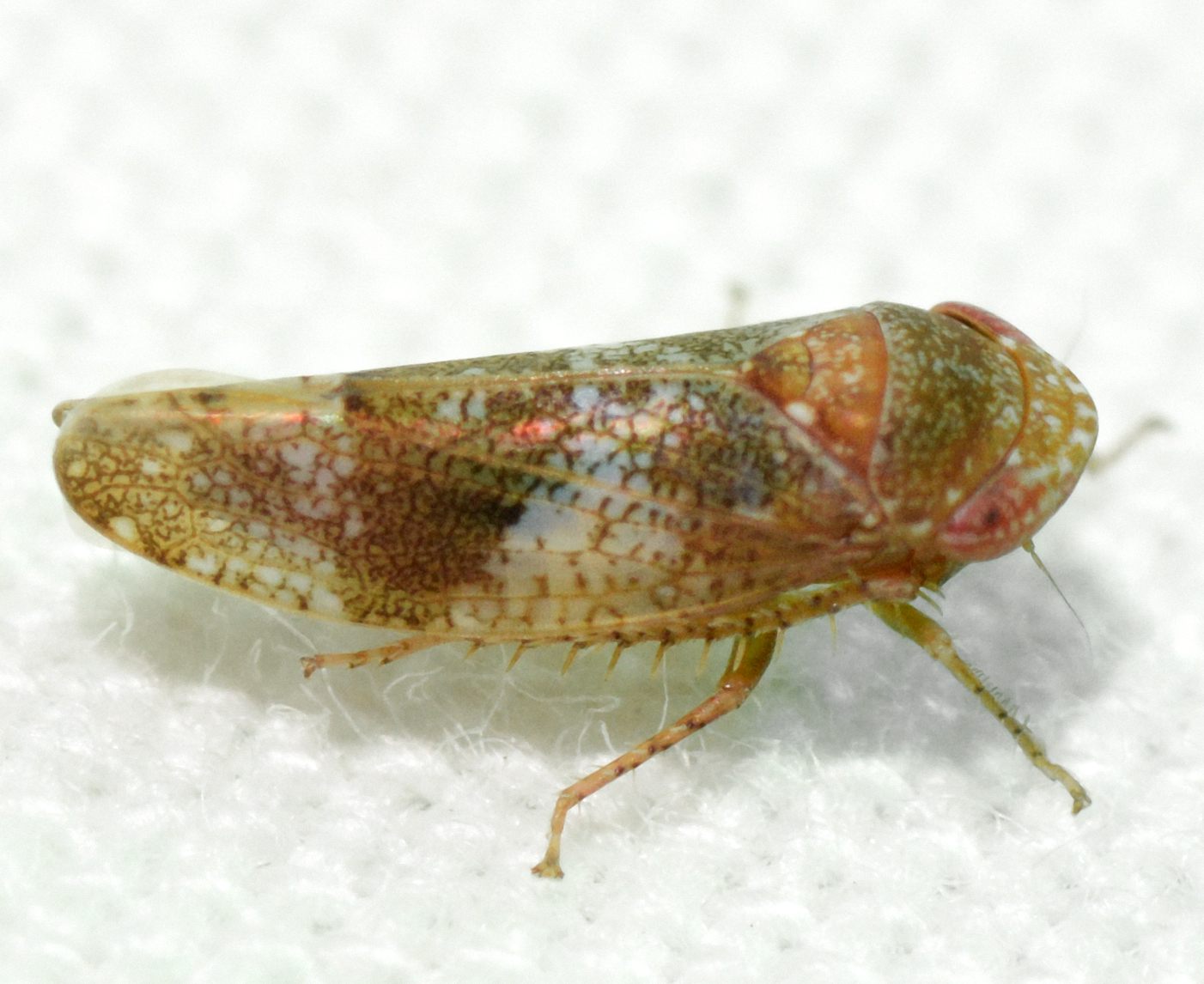
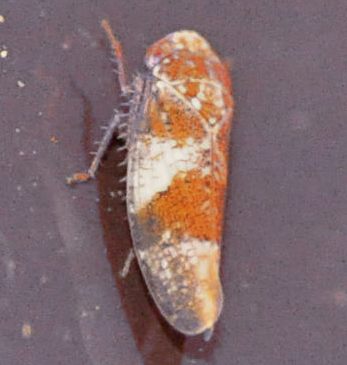
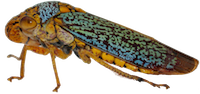
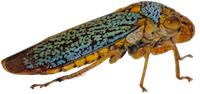
A brownish species, heavily covered with reddish-brown retiuclations. There is a large rufous-brown transverse band across the middle of the wings, forming a prominent saddle. The bordering pale areas have dense reticulations, resulting in a dirty brown appearance to these whitish bands. The base of the wings, scutellum, pronotum, and vertex are concolorous and reddish-brown. The female pregenital sternite has a broad, deep angular notch in the middle of the posterior margin from which arises a strap-like process that is as long as it is wide and is slightly bifid at the apex. Adults are 4.0-4.5 mm long. Nymphs are a pale reddish color overall. (Lindsay, 1940)
For more images of this species, see: BG. |
| distribution |
Primarily Southeastern North America, as far west as Colorado and New Mexico, and as far north as Iowa and South Dakota (Lindsay, 1940) |
| abundance |
Uncommon to rare. Recorded from a couple counties in the Coastal Plain; probably more abundant in the right habitat. |
| seasonal_occurrence | |
| habitat |
Has been found in mixed hardwood forest edge habitat. |
| plant associates |
Found on the weed Lamb's Quarter (Chenopodium album) (BG). On Chenopodium, it can produce bright reddish spots from its feeding punctures. It frequently causes economic damage to spinach, swiss chard, and beets, which all belong to the same family as Chenopodium. (DeLong 1948) |
| behavior |
Can be attracted with a light. |
| comments |
This species very closely resembles N. chenopodii. Ball (1939) stated that helenae was smaller (chenopodii is 4.5-5.5 mm) and had heavier brown vermiculations in the pale bands surrounding the saddle on the wings, meaning that the pale areas were not ivory like in chenopodii and instead were dirty in color. Helenae has a vertex that is proportionately longer, twice as wide than long and only slightly longer in the middle than near the eye; chenopodii has a vertex that is noticeably longer in the middle. The pronotum of helenae is as long as or shorter than the head, while in chenopodii the pronotum is as long as or longer than the head. Additionally, while the female pregenital sternite of helenae has a deep angular notch from which arises a strap-like process, whereas in chenopodii the margin is only faintly indented on either side of the strap.
Lindsay (1940) and Ball (1939) noted the similarity between these two species but concluded that helenae replaced chenopodii in the southern United States, specifically "the entire cotton belt." While helenae and chenopodii had distinctive features in the extremes of their distribution (size, shape of vertex, shape of scutellum, degree of coloration and genitalia features), it appeared that the two species intergraded where their ranges met (in the central U.S., specifically Kansas and the vicinity). There was such a level of convergence in these characteristics where the ranges of the two species met that the two species were virtually indistinguishable externally, with even the male genitalia of the two in near agreement. This may indicate that the two species hybridize with one another, or are not truly distinct species. Chenopodii has been reported from North Carolina, but these are apparently mistakes and/or misidentifications; according to Lindsay and Ball, chenopodii does not occur in the Southeast so, presumably, all the southeastern specimens that look like chenopodii should be helenae. Further studies are clearly needed to determine the status of these two Norvellina. |
status |
[Native:]
[Introduced:]
[Extirpated:] | | list_type |
[Official:]
[Provisional:] |
| adult_id | Unmistakable and widely known Identifiable from good quality photos of unworn specimens
Identifiable from photos showing undersides, or other specialized views [e.g., legs, face]
Identifiable only by close inspection of structural features or by DNA analysis NULL |
| nymph_id | Unmistakable and widely known Identifiable from good quality photos, especially where associated with known host plants
Identifiable from close inspection of specimens or by DNA analysis
Identifiable only through rearing to adulthood NULL |
| G_rank |
|
| S_rank |
|
| rank_comments |
|
| tribe |
Platymetopiini |
| subgenus |
|
Species Photo Gallery for Norvellina helenae No Common Name |
 | Photo by: Kyle Kittelberger, Brian Bockhahn, Paul Scharf
Halifax Co.
Comment: mixed hardwood forest habitat, grass lawn |  | Photo by: Kyle Kittelberger, Brian Bockhahn
Cumberland Co.
Comment: attracted at night with a light |
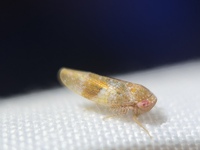 | Photo by: Kelli Ashby
Durham Co.
Comment: At UV light | 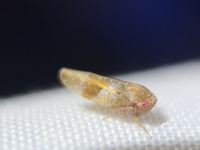 | Photo by: Kelli Ashby
Durham Co.
Comment: At UV light |
|

 »
»