|
|
|
| synonym |
|
| description |
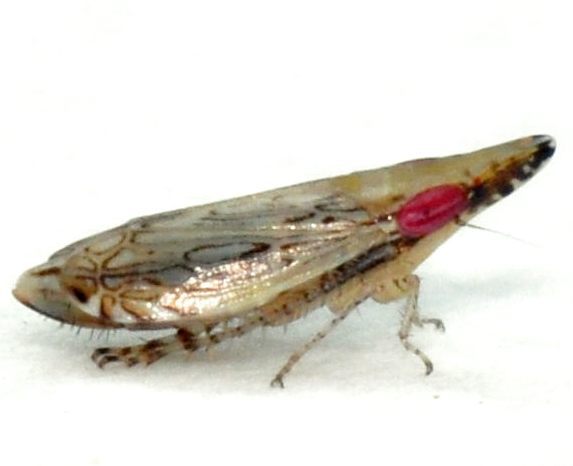
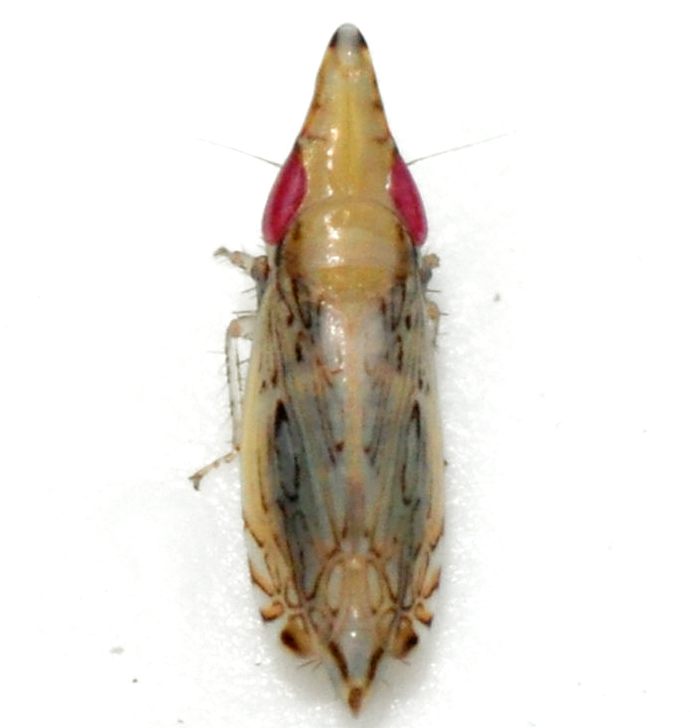
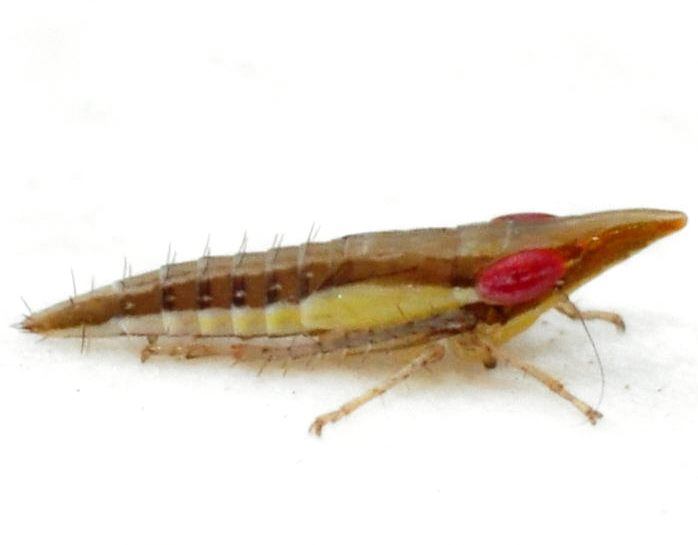
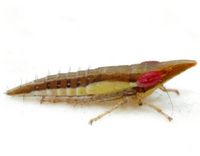
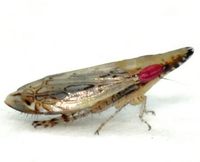
A small, pale brownish leafhopper with a distinctive body. The wings are a pale gray with thin black markings around the wing veins. The head, thorax, and rear part of the wings are a pale brown, almost tan color; the face is stramineous as well, with an interocular line with three or more small, dentate projections from the lower margin (giving a saw-like pattern). The very long head, longer than other members of this genus, is distinctive for this species. The eyes are also a bright red, contrasting with the rest of the body (and hence the name 'pyrops'). The female pregenital sternite has the posterior margin concave in the middle, with an M-shaped notch that has a dark brown to black border. The male genital plates are rounded, narrowing towards rounded apxes. Adult males are 3.6-4.0 mm long, while females are 3.8-4.9 mm. The nymph has the characteristic long head and red eyes found on the adult. There are two broad brown lines running down the length of the body, and the sides of the abdomen have a yellowish tint. (Whitcomb & Hicks 1988)
For diagrams of this species, see: 3I. |
| distribution |
Eastern United States, primarily the Southeast but found as far north as Pennsylvania and Illinois and as far west as Kansas (Whitcomb & Hicks 1988) |
| abundance |
Recorded from several counties in the Piedmont and coastal plain, where it was locally abundant. Probably more abundant in the state in the right habitat. |
| seasonal_occurrence | |
| habitat |
Has been found in grassy and brushy field habitat near forest edge. |
| plant associates |
Aristida longespica (three-awned grass/slim-spike/spike needlegrass), Aristida dichotoma, Aristida spp. (Whitcomb & Hicks 1988) |
| behavior |
|
| comments |
|
status |
[Native:]
[Introduced:]
[Extirpated:] | | list_type |
[Official:]
[Provisional:] |
| adult_id | Unmistakable and widely known Identifiable from good quality photos of unworn specimens
Identifiable from photos showing undersides, or other specialized views [e.g., legs, face]
Identifiable only by close inspection of structural features or by DNA analysis NULL |
| nymph_id | Unmistakable and widely known Identifiable from good quality photos, especially where associated with known host plants
Identifiable from close inspection of specimens or by DNA analysis
Identifiable only through rearing to adulthood NULL |
| G_rank |
|
| S_rank |
|
| rank_comments |
|
| tribe |
Paralimnini |
| subgenus |
|
Species Photo Gallery for Flexamia pyrops No Common Name |
 | Photo by: Kyle Kittelberger, Brian Bockhahn, Paul Scharf
Vance Co.
Comment: Field/pine tree edge habitat. Many adults and nymphs | 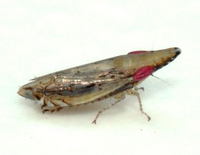 | Photo by: Kyle Kittelberger, Brian Bockhahn, Paul Scharf
Vance Co.
Comment: Field/pine tree edge habitat. Many adults and nymphs |
 | Photo by: Kyle Kittelberger, Brian Bockhahn, Paul Scharf
Vance Co.
Comment: Field/pine tree edge habitat. Many adults and nymphs | 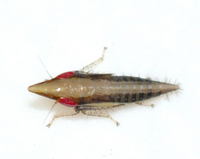 | Photo by: Kyle Kittelberger, Brian Bockhahn, Paul Scharf
Vance Co.
Comment: Field/pine tree edge habitat. Many adults and nymphs |
 | Photo by: Kyle Kittelberger, Brian Bockhahn, Paul Scharf
Vance Co.
Comment: Field/pine tree edge habitat. Many adults and nymphs | 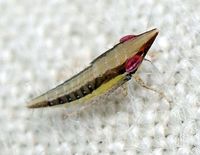 | Photo by: Paul Scharf, B Bockhahn
Stanly Co.
Comment: Nymph. Caught sweeping |
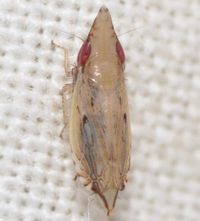 | Photo by: Kyle Kittelberger, Paul Scharf
Dare Co.
Comment: grassy, brushy habitat |

 »
»