|
|
|
| synonym |
|
| description |
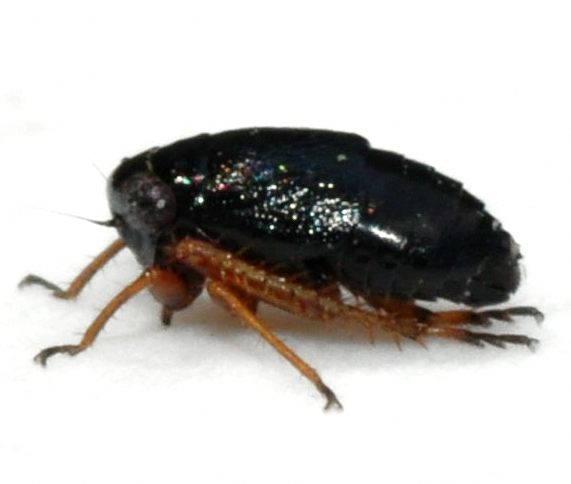
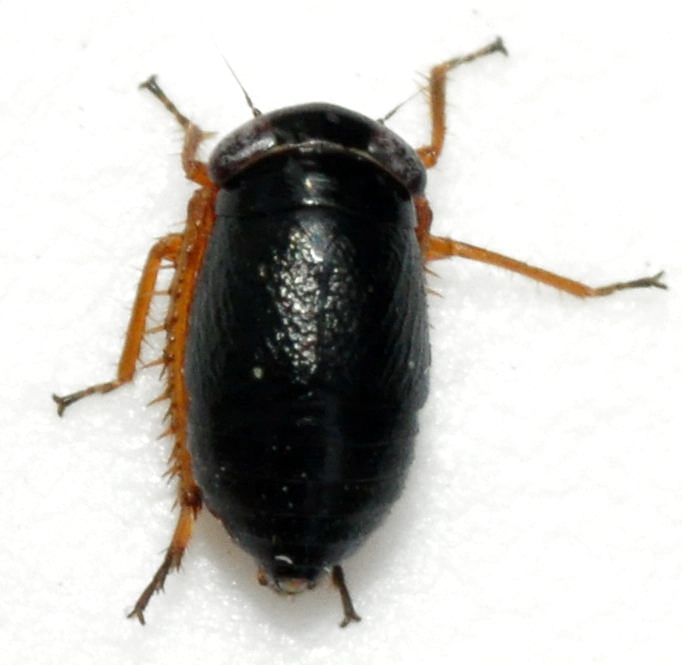
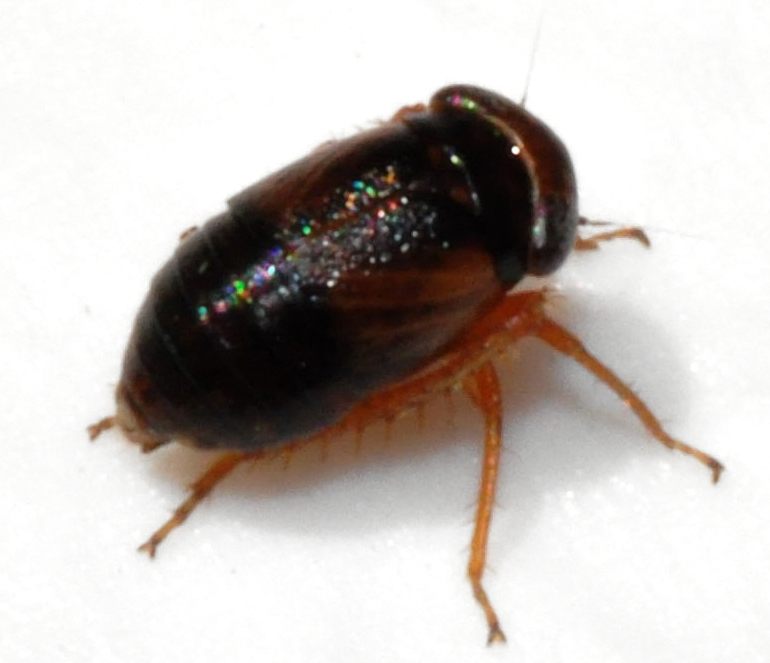
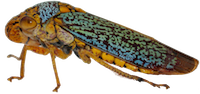
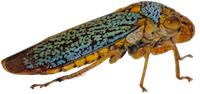
A species with a robust, short head and a shining black coloration. Adults are brachypterous, meaning they have short wings. The pronotum and abdomen are also short (abdomen is inflated in females), with the pronotum being three times as wide as long. Rarely does this species have macropterous, long-winged adults. The eyes are black with silver-speckles, and the legs are orange with dark feet. The female pregenital sternite is broadly and convexly rounded. The male subgenital plates have the outer margins convexly rounded to bluntly-tipped apices. Adults are 3 to 4 mm long. (Lawson, 1920; DeLong, 1948)
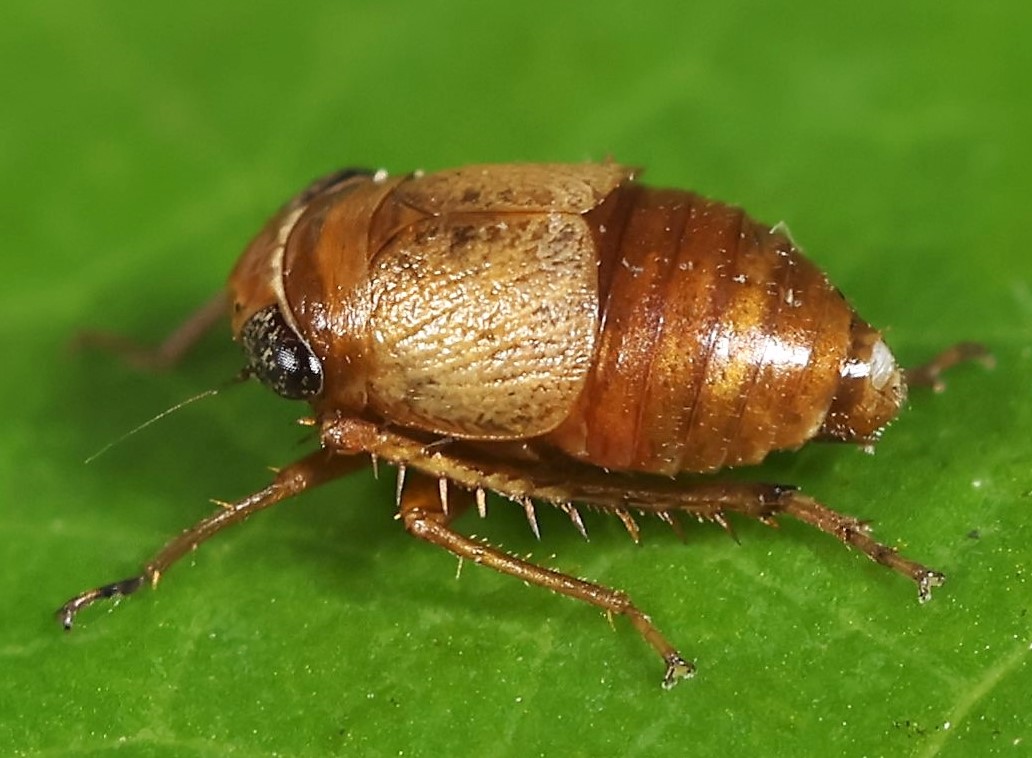
There is a uniformly reddish-brown form with the last segment of the abdomen and ovipositor dark, and the eyes and ocelli dark too. This form is known as D. gammaroides var. fulva and primarily occurs in the western and central U.S. (Lawson, 1920)
Another form, D. gammaroides var. flava, has a black vertex, pronotum and basal section of the abdomen, but the wings and final two or three segments of the abdomen are yellow (DeLong, 1948). |
| distribution |
An uncommon species found widely across much of North America (3I). |
| abundance |
Infrequently encountered, uncommon to rare- recorded from a few counties in the Piedmont and mountains; possibly more abundant in the right habitat. |
| seasonal_occurrence | |
| habitat |
Recorded in field/forest edge habitat. |
| plant associates |
Grindelia ssp. (Lawson, 1920) |
| behavior |
|
| comments |
|
status |
[Native:]
[Introduced:]
[Extirpated:] | | list_type |
[Official:]
[Provisional:] |
| adult_id | Unmistakable and widely known Identifiable from good quality photos of unworn specimens
Identifiable from photos showing undersides, or other specialized views [e.g., legs, face]
Identifiable only by close inspection of structural features or by DNA analysis NULL |
| nymph_id | Unmistakable and widely known Identifiable from good quality photos, especially where associated with known host plants
Identifiable from close inspection of specimens or by DNA analysis
Identifiable only through rearing to adulthood NULL |
| G_rank |
|
| S_rank |
|
| rank_comments |
|
| tribe |
Chiasmini |
| subgenus |
|
Species Photo Gallery for Driotura gammaroides No Common Name |
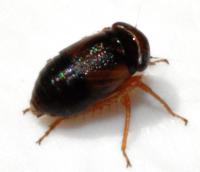 | Photo by: Kyle Kittelberger, Brian Bockhahn, Paul Scharf
Vance Co.
Comment: Field/forest edge habitat. The first image shows a color variety | 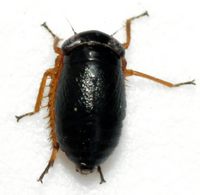 | Photo by: Kyle Kittelberger, Brian Bockhahn, Paul Scharf
Vance Co.
Comment: Field/forest edge habitat. The first image shows a color variety |
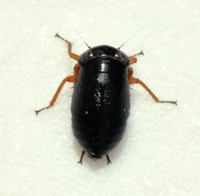 | Photo by: Kyle Kittelberger, Brian Bockhahn, Paul Scharf
Vance Co.
Comment: Field/forest edge habitat | 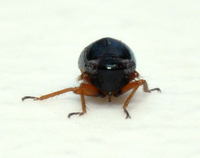 | Photo by: Kyle Kittelberger, Brian Bockhahn, Paul Scharf
Vance Co.
Comment: Field/forest edge habitat |
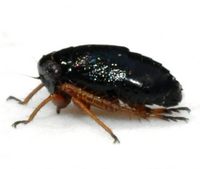 | Photo by: Kyle Kittelberger, Brian Bockhahn, Paul Scharf
Vance Co.
Comment: Field/forest edge habitat. The first image shows a color variety | 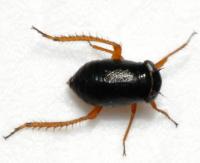 | Photo by: Kyle Kittelberger, Brian Bockhahn, Paul Scharf
Vance Co.
Comment: Field/forest edge habitat. The first image shows a color variety |
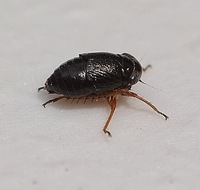 | Photo by: Paul Scharf, Kyle Kittelberger, Brian Bockhahn
Vance Co.
Comment: Caught sweeping | 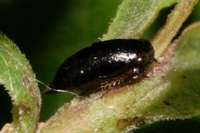 | Photo by: Scott Bolick
Randolph Co.
Comment: |
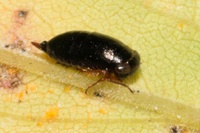 | Photo by: Scott Bolick
Randolph Co.
Comment: | 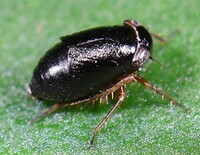 | Photo by: Rob Van Epps
Iredell Co.
Comment: Caught sweeping in grassy/weedy field. |
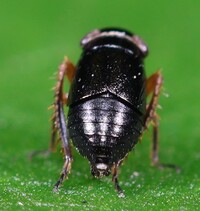 | Photo by: Rob Van Epps
Iredell Co.
Comment: Caught sweeping in grassy/weedy field. | 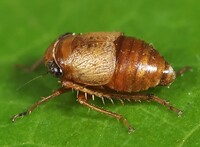 | Photo by: Rob Van Epps
Mecklenburg Co.
Comment: Caught sweeping in a field. There were several black individuals and this one var. "fulva". |
|

 »
»