|
|
|
| synonym |
|
| description |
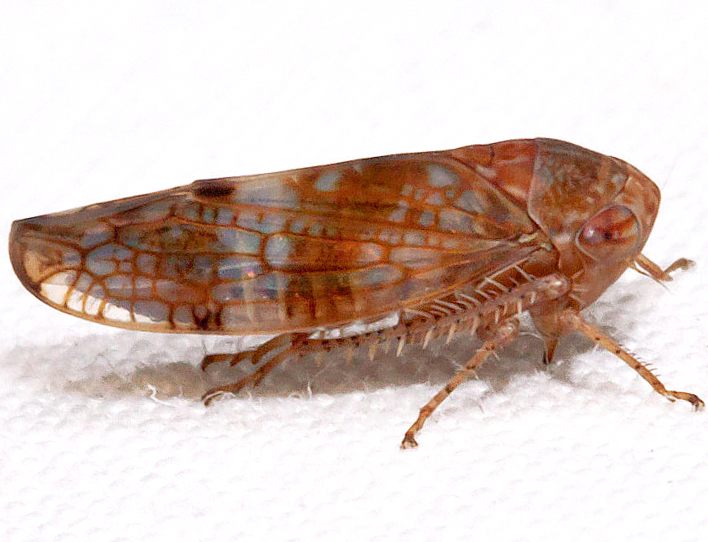
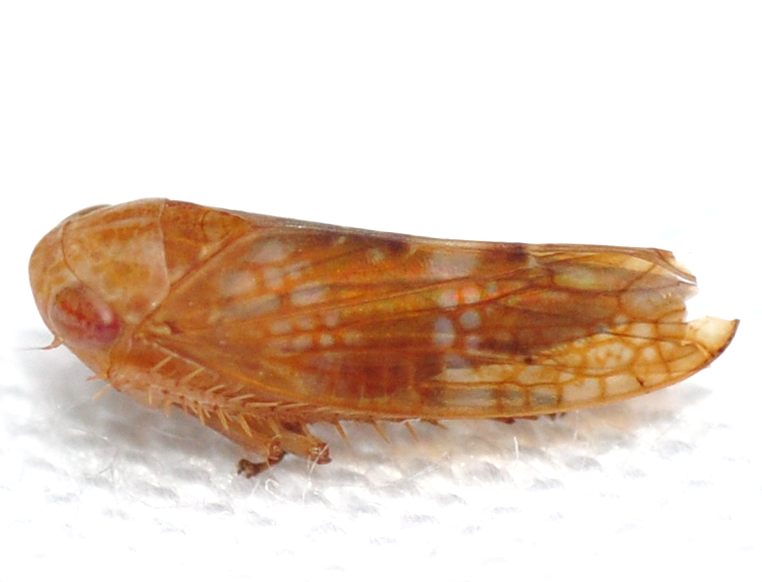
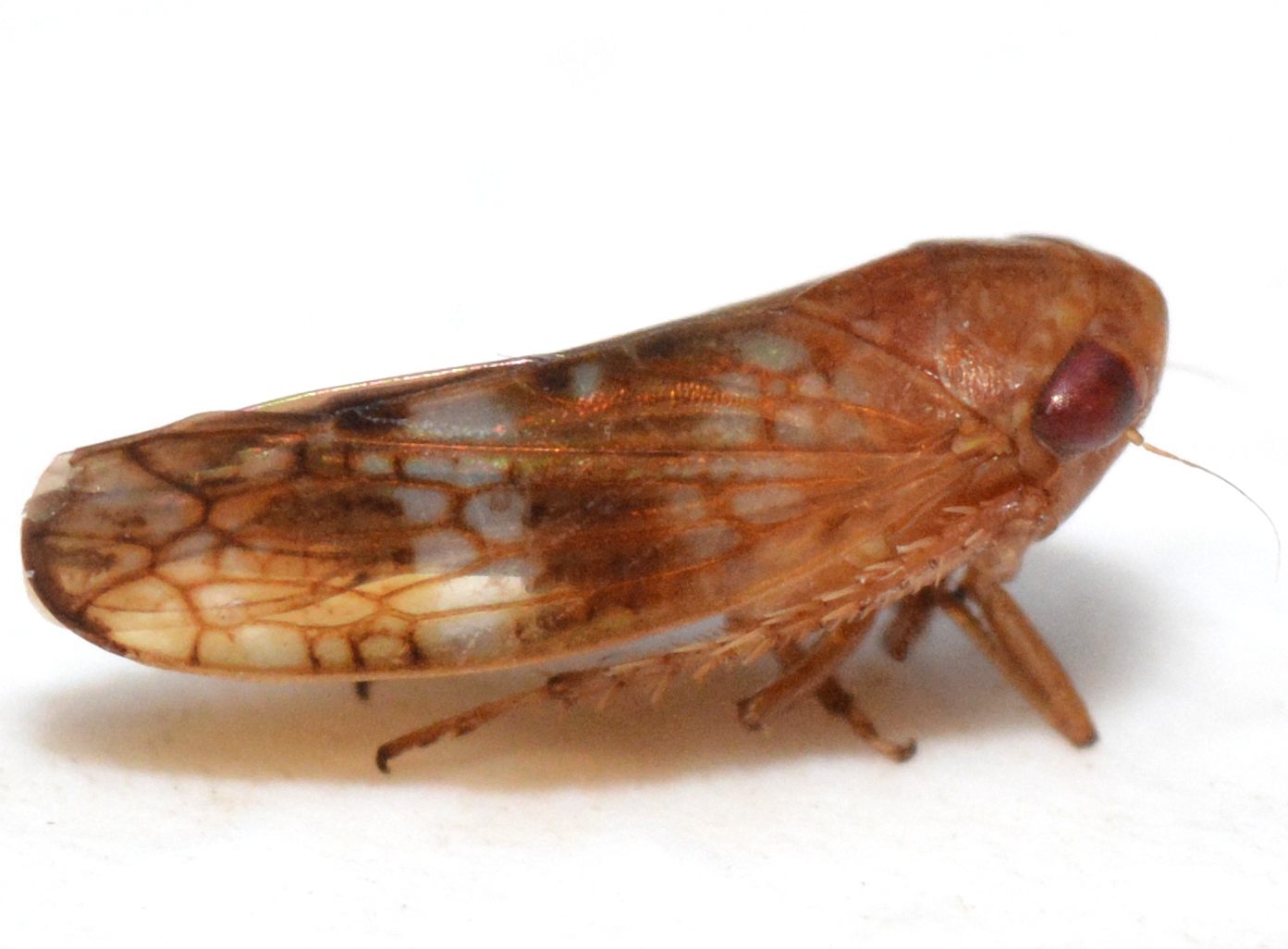
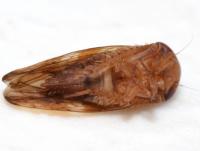
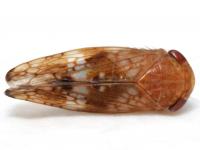
An orange, brownish species with two pale bands and two darker brown orange-brown bands on the wings. Adult males are 4.5 mm, while females are 5.5 mm. The vertex, pronotum, and scutellum are yellow-brown to orange, and the face and clypeus are yellow. The vertex is rounded, almost parallel-margined, and is about three times as wide between the eyes as the length in the middle. The tegmen of the female is semihyaline to white, with two reddish-brown crossbands that are separated by a light band about as wide as either. The males are similar, except that the anterior band covers the entire basal half of the tegmen. The wing veins for both sexes are always tawny, and the apical cells of the wings are typically infuscated. The male pygofer is broad, but truncate at the apex. (Hepner, 1939) The pregenital sternite is broadly rounded, with a slightly protruding median tooth; the median part at least is embrowned.
For more images of this species, see: BG. |
| distribution |
An uncommon species recorded primarily from the Southeast but found as far west as the central United States and as far north as Canada (BG). |
| abundance |
Uncommon, recorded from several counties in the Piedmont; likely more abundant in the right habitat. |
| seasonal_occurrence | |
| habitat |
Has been found near mixed hardwood forest edge. Noted from scrub oak/pitch pine barrens in New England (Chandler & Hamilton, 2017). |
| plant associates |
Oak and pitch pine (Chandler & Hamilton, 2017) |
| behavior |
Can be attracted at night with a light. |
| comments |
This species is most similar to Agallia modesta, and the two have been confused online up until recently. It is noted as being more highly colored than modesta (Hepner, 1939). A. modesta is seemingly more orange and less-banded overall. A. meridiana could also be confused with Menosoma cincta, but note the wing pattern of A. meridiana with the two pale bands. |
status |
[Native:]
[Introduced:]
[Extirpated:] | | list_type |
[Official:]
[Provisional:] |
| adult_id | Unmistakable and widely known Identifiable from good quality photos of unworn specimens
Identifiable from photos showing undersides, or other specialized views [e.g., legs, face]
Identifiable only by close inspection of structural features or by DNA analysis NULL |
| nymph_id | Unmistakable and widely known Identifiable from good quality photos, especially where associated with known host plants
Identifiable from close inspection of specimens or by DNA analysis
Identifiable only through rearing to adulthood NULL |
| G_rank |
|
| S_rank |
|
| rank_comments |
|
| tribe |
Platymetopiini |
| subgenus |
|
Species Photo Gallery for Aligia meridiana No Common Name |
 | Photo by: Ken Childs
Out Of State Co.
Comment: | 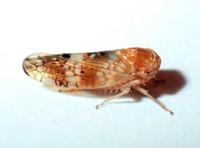 | Photo by: Rob Van Epps
Mecklenburg Co.
Comment: Weedy/grassy area near woods. |
 | Photo by: Kyle Kittelberger, Brian Bockhahn
Rockingham Co.
Comment: female | 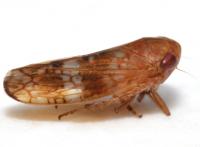 | Photo by: Kyle Kittelberger, Brian Bockhahn
Rockingham Co.
Comment: female |
 | Photo by: Kyle Kittelberger, Brian Bockhahn
Rockingham Co.
Comment: female | 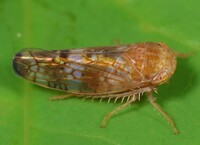 | Photo by: Rob Van Epps
Mecklenburg Co.
Comment: |
|

 »
»