
|
|
|
| synonym |
Chlorotettix fumidus |
| description |
A somewhat dark species, described as appearing black but in reality being dark green or yellowish-brown. The crown has the anterior half slightly darker than the posterior portion. The eyes are blackish, and the pronotum has a large black spot behind each eye. The wings have smoky costal margins and apexes and are overall brownish subhyaline. The abdominal terga are brown, giving the impression that the forewing is dark brown. The male subgenital plates are triangular, with the lateral margins slightly sinuate laterally. The female pregenital sternite has the posterior margin with a deep V-shaped excavation that extends over half the length of the segment, with the lateral margins slightly produced laterally. Adult males are 7.2-7.9 mm long, while females are 7.5-8.0 mm. (DeLong 1918, Cwikla 1988)
For pics of a pinned specimen, see: 3I. |
| distribution |
Eastern United States; rarely encountered. |
| abundance |
Recorded from a couple counties in the Piedmont, rare; likely under collected. |
| seasonal_occurrence | |
| habitat |
Wet meadows and grassy areas; sometimes a hillside species |
| plant associates |
|
| behavior |
|
| comments |
NOTE: Chlorotettix is a notoriously difficult genus to identify to species visually; a majority of the species are various shade of yellow and green, and they can only be reliably distinguished by looking at genital features. Therefore, it is very important for all Chlorotettix species other than distinctive ones like necopinus to obtain a picture of the underside.
This species is noted as "resembling C. tergatus so closely in coloration and structural characters that the two can scarcely be distinguished by external characters. Usually melanotus is darker in color" though (DeLong 1948). However, the male plates of melanotus are a little broader at the tip and more strongly rounded. This species is also very similar to C. fuscus, but seemingly (??) doesn't have the broken transverse band on the vertex that C. fuscus has. Additionally, while the pregenital sternites are very similar between fuscus and melanotus (they are different from tergatus), fuscus seems to have a wider excavation and less concave (wider) posterior margin on either side of the excavation compared to melanotus. Additionally, it can be differentiated from fuscus and tergatus by the short, curved pygofer spine and the bifurcate aedeagal processes in the posterior aspect. |
status |
[Native:]
[Introduced:]
[Extirpated:] | | list_type |
[Official:]
[Provisional:] |
| adult_id | Unmistakable and widely known Identifiable from good quality photos of unworn specimens
Identifiable from photos showing undersides, or other specialized views [e.g., legs, face]
Identifiable only by close inspection of structural features or by DNA analysis NULL |
| nymph_id | Unmistakable and widely known Identifiable from good quality photos, especially where associated with known host plants
Identifiable from close inspection of specimens or by DNA analysis
Identifiable only through rearing to adulthood NULL |
| G_rank |
|
| S_rank |
|
| rank_comments |
|
| tribe |
Pendarini |
| subgenus |
|
Species Photo Gallery for Chlorotettix melanotus No Common Name |
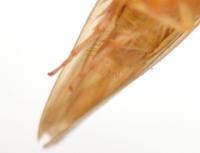 | Photo by: Kyle Kittelberger
Out Of State Co.
Comment: male; NCSU specimen |

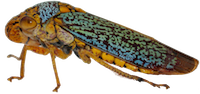
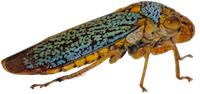 »
»