|
|
|
| synonym |
|
| description |
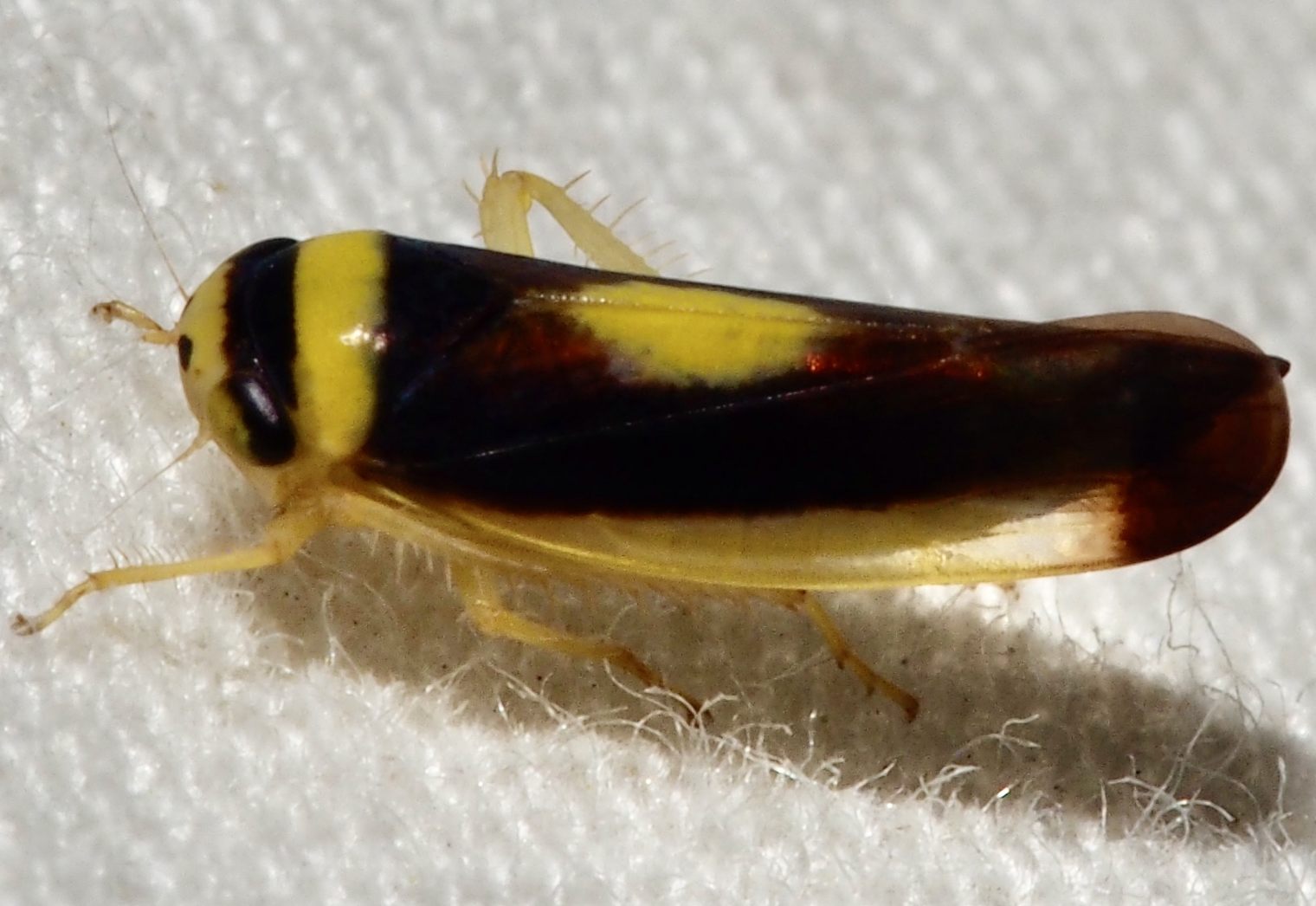
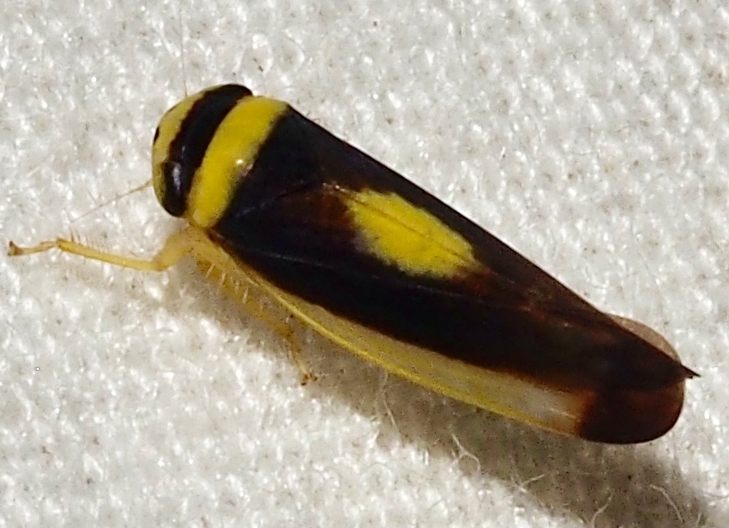
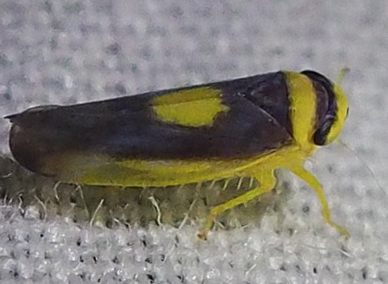
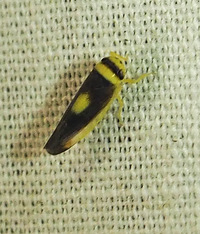
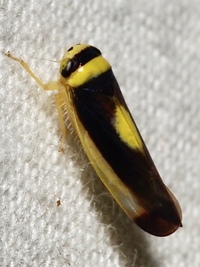
The head and thorax are black and yellow, with the wings blackish-brown and yellow. The black band on the anterior margin of the pronotum extends notably onto the posterior margin of the vertex, resulting in a thicker and more prominent band on the body. The head has the anterior margin rounded. The female pregenital sternite is about 3 times as wide as long, with the posterior margin somewhat concave on either side of a median spatulate process, with the median emargination broadly V-shaped and deep; the spatulate process is about 5 times as long as the basal width and is produced considerably beyond the posterior margin, with the sides parallel and the apex bifid. Adults are 4.5-5.0 mm long. (Beirne, 1956; Nielson, 1957)
For images of pinned specimens, see: BOLD. For more images of live individuals, see: BG. For diagrams of the genitalia, see: 3I. |
| distribution |
Rare and infrequently encountered in eastern North America, from Ontario west to Kansas (TW) and as far south now as Arkansas. |
| abundance |
Rare, recorded recently from a few counties in the Piedmont and mountains. Likely over-looked and under-collected. |
| seasonal_occurrence | |
| habitat |
Low vegetation bordering woods (Nielson, 1957) |
| plant associates |
? |
| behavior |
Can be attracted at night with a light. |
| comments |
This species is extremely similar to C. clitellarius, and in some cases where photos are not high quality or not showing key features, an ID may not be possible. Superficial body characters can be helpful in distinguishing the two species, with furculatus more robust in size and having the claval spot on the forewings not reaching the basal apex of the scutellum (Nielson, 1957). The black band at the posterior margin of the vertex also separates this species from clitellarius, which has a largely unmarked, yellowish vertex (Beirne, 1956). |
status |
[Native:]
[Introduced:]
[Extirpated:] | | list_type |
[Official:]
[Provisional:] |
| adult_id | Unmistakable and widely known Identifiable from good quality photos of unworn specimens
Identifiable from photos showing undersides, or other specialized views [e.g., legs, face]
Identifiable only by close inspection of structural features or by DNA analysis NULL |
| nymph_id | Unmistakable and widely known Identifiable from good quality photos, especially where associated with known host plants
Identifiable from close inspection of specimens or by DNA analysis
Identifiable only through rearing to adulthood NULL |
| G_rank |
|
| S_rank |
|
| rank_comments |
|
| tribe |
Athysanini |
| subgenus |
|
Species Photo Gallery for Colladonus furculatus No Common Name |
 | Photo by: R Emmitt
Orange Co.
Comment: likes the bottom of the moth sheet. | 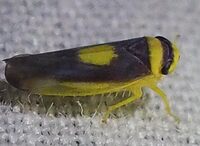 | Photo by: R Emmitt
Orange Co.
Comment: likes the bottom of the moth sheet. State record |
 | Photo by: R Emmitt
Orange Co.
Comment: | 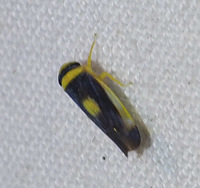 | Photo by: Randy L Emmitt
Orange Co.
Comment: uv light |
 | Photo by: Merrill Lynch
Watauga Co.
Comment: Came to uv light sheet on my porch | 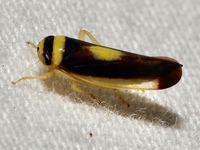 | Photo by: Merrill Lynch
Watauga Co.
Comment: Came to uv light sheet on my porch |
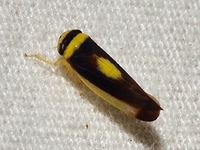 | Photo by: Merrill Lynch
Watauga Co.
Comment: Came to uv light sheet on my porch | 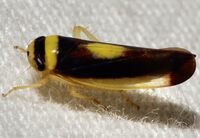 | Photo by: Merrill Lynch
Watauga Co.
Comment: Came to uv light sheet on my porch |
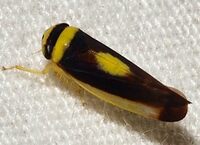 | Photo by: Merrill Lynch
Watauga Co.
Comment: Came to uv light sheet on my porch |  | Photo by: Ted Wilcox
Watauga Co.
Comment: Landed on my wife's leg gaiter while hiking om the MST on BRP. |
 | Photo by: Ted Wilcox
Watauga Co.
Comment: Landed on my wife\'s leg gaiter while hiking om the MST on BRP. | 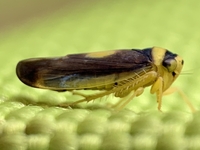 | Photo by: Ted Wilcox
Watauga Co.
Comment: Landed on my wife\\\'s leg gaiter while hiking om the MST on BRP. |
|

 »
»