Moths of North Carolina
Home Page
Recent Entries
Recent Account Updates
County Searches
General Search
Submit a Public Record
Larval Hosts
References
Maps
Draft Checklists
Family Photo Gallery
Family PDFs
NC Biodiversity Project
Comments
Significant Contributors
Scientific Name:
Common Name:
Family (Alpha):
Choose a Family
ACROLEPIIDAE-False Diamondback Moths
ADELIDAE-Fairy moths
ALUCITIDAE-Many-plumed Moths
AMPHISBATIDAE-
ARGYRESTHIIDAE-Shiny Head-standing Moths
AUTOSTICHIDAE-Autostichid Moths
BATRACHEDRIDAE-Batrachedrid Moths
BEDELLIIDAE-Bedelliid Moths
BLASTOBASIDAE-Blastobasid Moths
BOMBYCIDAE-Silkworm Moths
BUCCULATRICIDAE-Ribbed Cocoon-maker Moths
CARPOSINIDAE-Fruitworm Moths
CHOREUTIDAE-Metalmark Moths
COLEOPHORIDAE-Casebearer Moths and Relatives
COSMOPTERIGIDAE-Cosmopterigid Moths
COSSIDAE-Carpenter Moths, Goat Moths
CRAMBIDAE-Grass Moths, Snout Moths
DEPRESSARIIDAE-
DREPANIDAE-Hook-tips and Thyatirid Moths
DRYADAULIDAE-
ELACHISTIDAE-Grassminer Moths and Relatives
EPERMENIIDAE-Fringe-tufted Moths
EPIPYROPIDAE-Planthopper Parasite Moths
EREBIDAE-Erebid Moths
ERIOCRANIIDAE-Eriocraniid Moths
EUTELIIDAE-Euteliid Moths
GALACTICIDAE-Galacticid Moths
GELECHIIDAE-Gelechiid Moths; Twirler Moths
GEOMETRIDAE-Geometer Moths, Loopers
GLYPHIDOCERIDAE-Glyphidocerid Moths
GLYPHIPTERIGIDAE-Sedge Moths
GRACILLARIIDAE-Leafblotch miner moths
HELIOZELIDAE-Shield bearer moths
HEPIALIDAE-Ghost or Swift Moths
HYBLAEIDAE-
INCURVARIIDAE-Leafcutter Moths
LASIOCAMPIDAE-Tent Caterpillar Moths, Lappet Moths
LECITHOCERIDAE-Long-horned Moths
LIMACODIDAE-Slug Caterpillar Moths
LIMOCODIDAE-
LYONETIIDAE-Lyonetiid Moths
MEGALOPYGIDAE-Flannel Moths
MICROPTERIGIDAE-Mandibulate Moths
MIMALLONIDAE-
MOMPHIDAE-Mompha Moths
NEPTICULIDAE-Minute leaf miners
NOCTUIDAE-Owlet Moths
NOLIDAE-
NOTODONTIDAE-Prominents
OECOPHORIDAE-Oecophorid Moths
OPOSTEGIDAE-
PELEOPODIDAE-
PLUTELLIDAE-Diamondback Moths
PRODOXIDAE-Yucca Moths
PSYCHIDAE-Bagworm Moths
PTEROPHORIDAE-Plume Moths
PYRALIDAE-Pyralid Moths, Snout Moths
SATURNIIDAE-Giant Silkworm Moths
SCHRECKENSTEINIIDAE-Schreckensteiniid Moths
SCYTHRIDIDAE-
SESIIDAE-Clearwing Moths
SPHINGIDAE-Sphinx Moths
THYATIRIDAE-
THYRIDIDAE-Window-winged Moths
TINEIDAE-Clothes moths
TISCHERIIDAE-Tischerid Moths
TORTRICIDAE-Leafroller Moths
URANIIDAE-
URODIDAE-Urodid Moths
XYLORYCTIDAE-
YPONOMEUTIDAE-Ermine Moths
YPSOLOPHIDAE-Ypsolophid Moths
ZYGAENIDAE-
«
Home
»
View
PDF
Depressariidae Members:
Agonopterix alstroemeriana
Agonopterix argillacea
Agonopterix atrodorsella
Agonopterix canadensis
Agonopterix clemensella
Agonopterix curvilineella
Agonopterix eupatoriiella
Agonopterix flavicomella
Agonopterix hyperella
Agonopterix lythrella
Agonopterix pulvipennella
Agonopterix robiniella
Agonopterix senicionella
Agonopterix thelmae
Agonopterix unidentified species
Agonopterix walsinghamella
Antaeotricha albulella
Antaeotricha decorosella
Antaeotricha humilis
Antaeotricha leucillana
Antaeotricha osseella
Antaeotricha schlaegeri
Antaeotricha unidentified species
Bibarrambla allenella
Ethmia longimaculella
Ethmia trifurcella
Ethmia zelleriella
Eupragia hospita
Gonioterma mistrella
Machimia tentoriferella
Menesta melanella
Menesta tortriciformella
Nites maculatella
Nites ostryella
Pseuderotis obiterella
Psilocorsis cryptolechiella
Psilocorsis quercicella
Psilocorsis reflexella
Rectiostoma xanthobasis
Scythropiodes issikii
Semioscopis aurorella
Semioscopis merriccella
Semioscopis packardella
Menesta
Members:
Menesta melanella
Menesta tortriciformella
6 NC Records
Menesta tortriciformella
Clemens, 1860 - No Common Name
Taxonomy
Superfamily:
Gelechioidea
Family:
Depressariidae
Subfamily:
Stenomatinae
P3 Number:
59a0249
MONA Number:
1030.00
Identification
Field Guide Descriptions:
Online Resources:
MPG
,
BugGuide
,
iNaturalist
,
Google
,
BAMONA
,
GBIF
,
BOLD
Technical Description, Adults:
Duckworth (1964)
Technical Description, Immature Stages:
Braun (1915b)
Adult Markings:
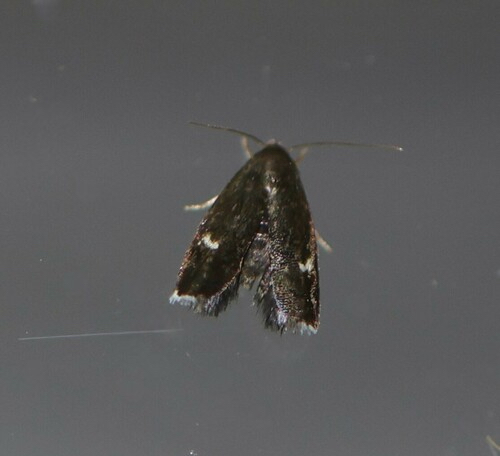
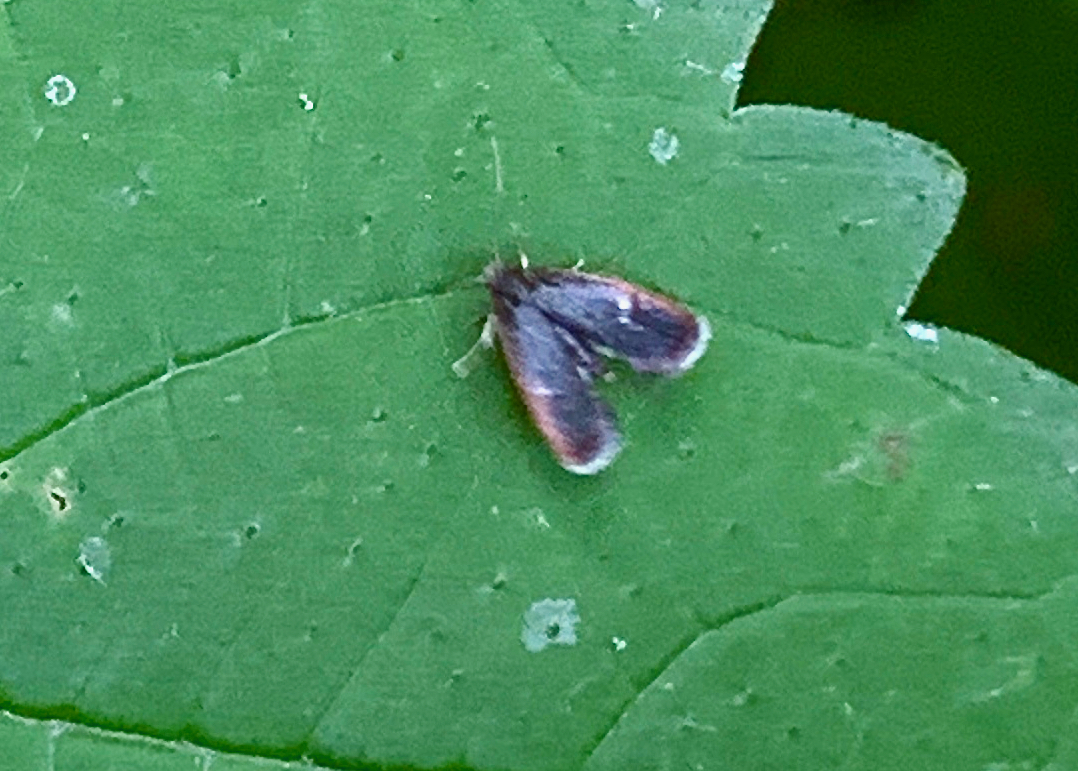
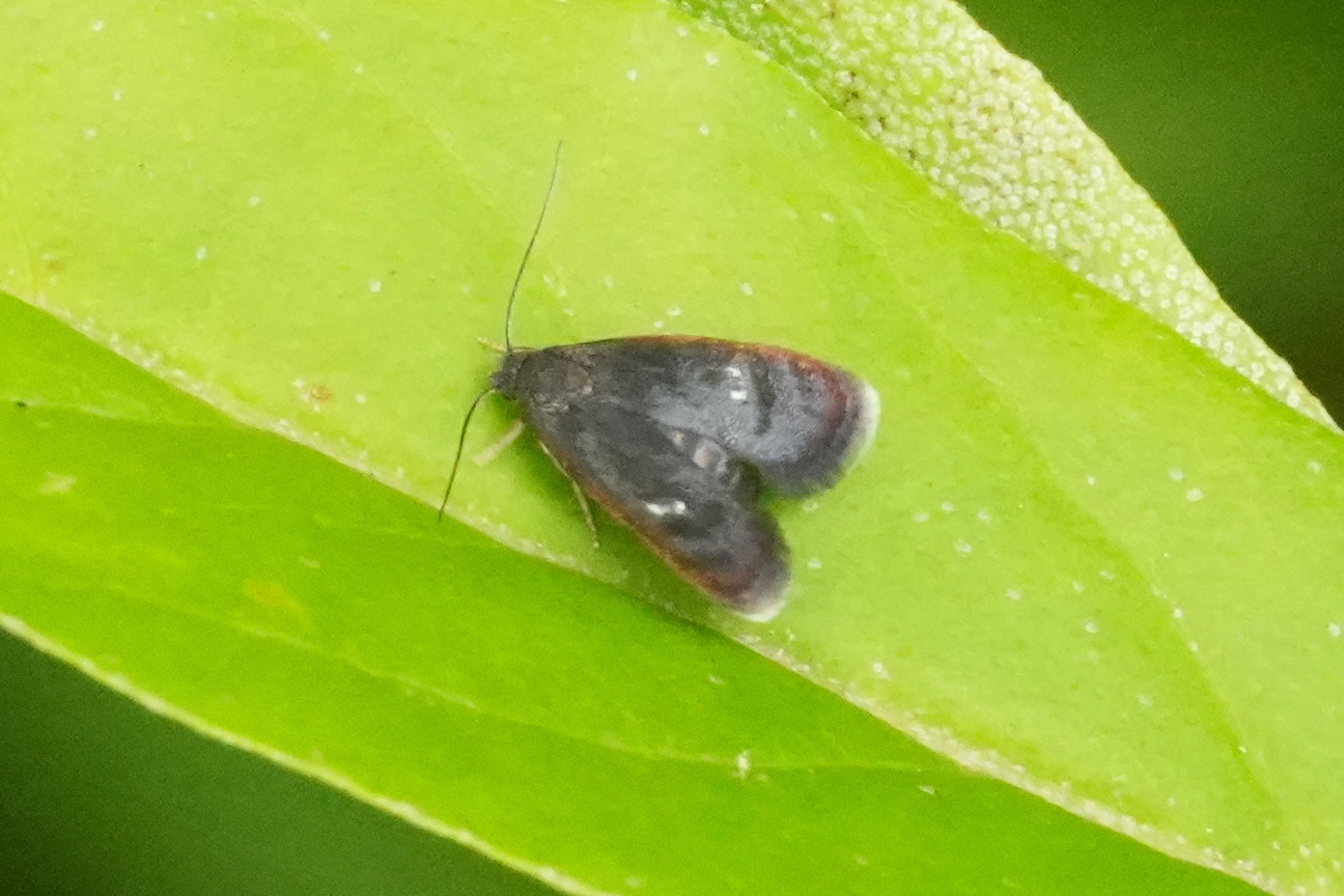
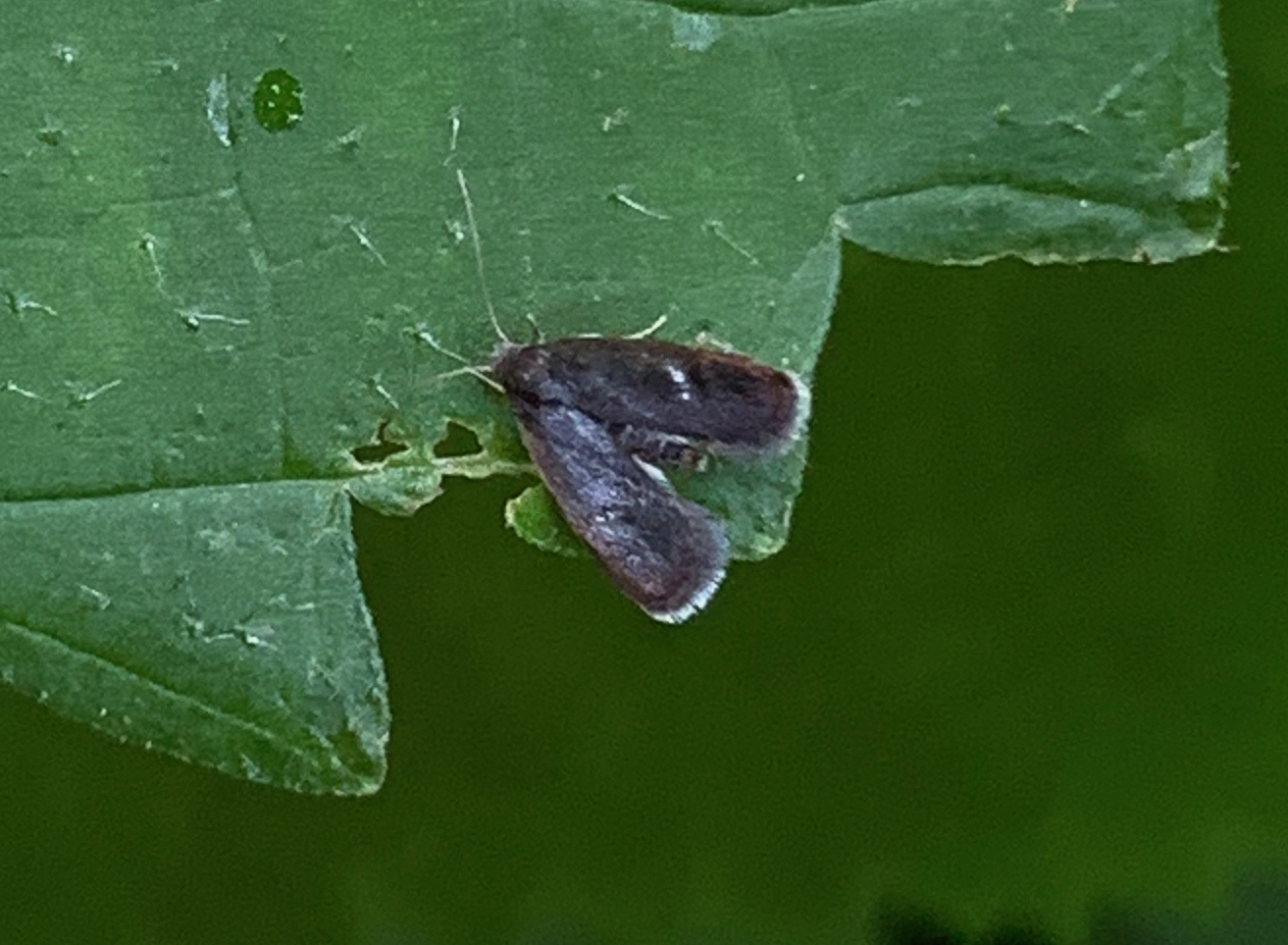
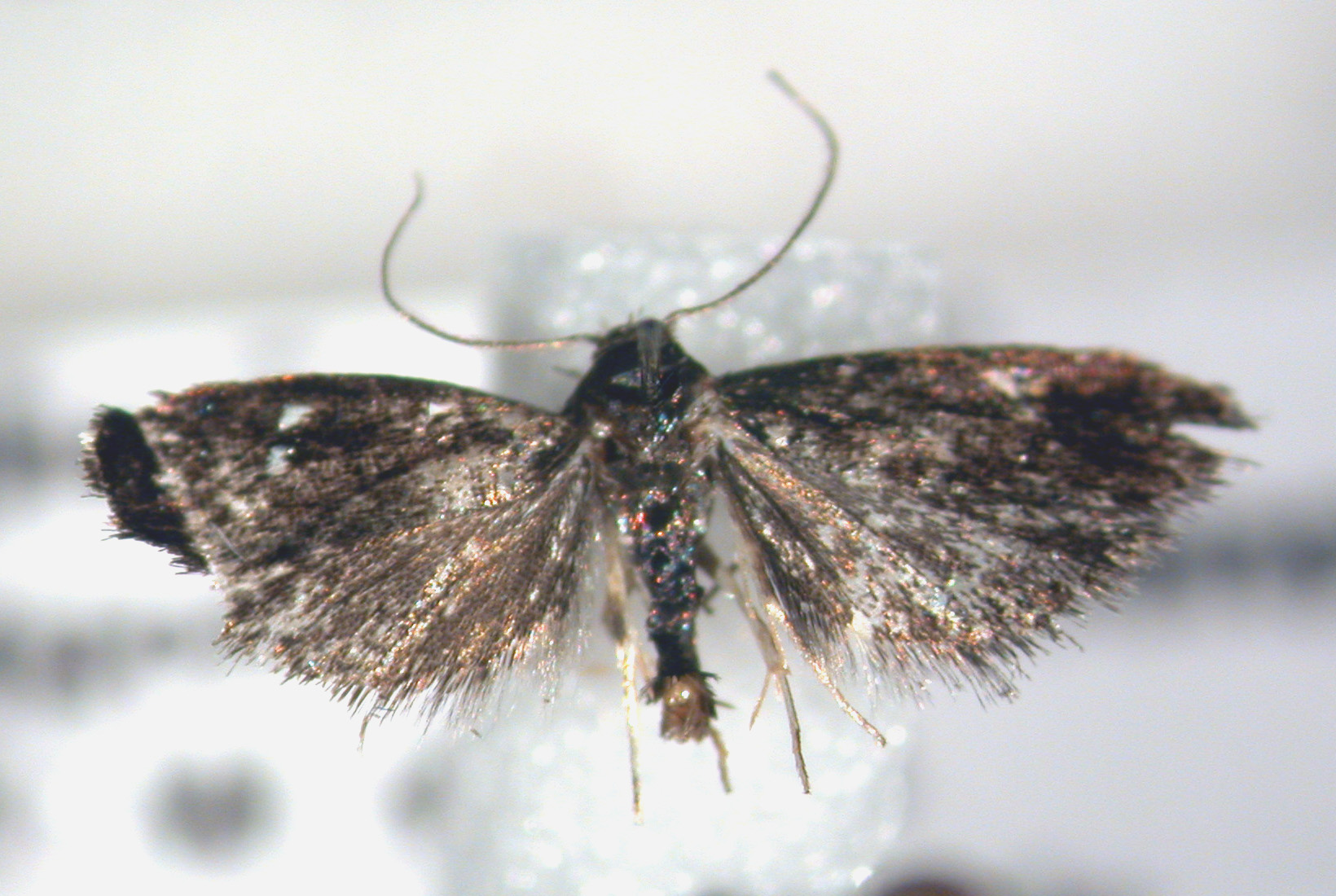
Menesta tortriciformella
is a small moth with a blackish-brown forewing that has a short, white, transverse line near the middle of the wing and a white apical fringe. The following detailed description is based on that of Duckworth (1964). The face is white and the labial palp white with fuscous shading. The thorax is brown dorsally, with a grayish hue. The forewing is uniformly blackish-brown with greenish-violet reflections, with the only conspicuous mark being a short, transverse, white line below the costa at around two-thirds the wing length from the base. The apical cilia is usually brown at the base and white at the outer margin, but in some individuals the entire fringe is brown. The hindwing is a lighter brown, with the cilia brown and tipped with white apically. The legs are white but shaded anteriorly with fuscous, especially at the apex of the tibia and the apices of the tarsi. The hindtibia has conspicuously long hairs.
Menesta tortriciformella
can be confused with
M. melanella
, but the latter has a large white spot near the middle of the wing that touches the costa, versus a short white line that does not reach the costa in
M. tortriciformella
.
Wingspan:
9-10 mm (Duckworth, 1964)
Adult Structural Features:
Duckworth (1964) has descriptions and illustrations of the male and female genitalia.
Adult ID Requirements:
Identifiable from good quality photos of unworn specimens.
Immatures and Development:
The following description of the larval life history is based on Braun’s (1915b) report for larvae that used Tall Blackberry (
Rubus villosus
) in southern Ohio. Each larva feeds on the lower surface of the leaf beneath a protective web of silk. The web initially begins in the angle between the midrib and a lateral vein, then extends along the midrib and outwardly between two lateral veins. The web is densest near its beginning, which is used as a shelter to retreat to when the larva is disturbed. At first the larva skeletonizes a narrow portion of the leaf that extends from the angle along a lateral vein, or rarely from the angle along the midrib itself. The upper epidermis is left intact in the basal part of this area, but farther out holes are made, but often with a fragment of the upper epidermis left intact.
As the larva grows, it increases the extent of its web and cuts out pieces of leaf to consume that are at the outer edge of the web. When doing so, a narrow line is cut through the lower epidermis and mesophyll tissue that encloses an irregular oval or circular space, while the upper epidermis is left intact. Everything is consumed except for the upper epidermis, which becomes brownish and shrivels. Progressively larger cuts of tissue are made as the web is extended outward to cover these. At maturity, the web is thickened near the angle and drawn into an oval cocoon-like mass, within which the characteristic short and broadly flattened pupa is formed. In Braun’s (1915b)study, small to mid-sized larvae were first observed on 19 June and the adults emerged from 11-18 July. A second brood appeared late in the summer that overwintered and produced adults that emerged the following spring.
Chambers (1875) made observations that were very similar to those of Braun (1915b) for larvae that were feeding on the undersides of American Hazelnut. He noted that the web is so thin that the white larva can be seen through it.
Distribution in North Carolina
Distribution:
Menesta tortriciformella
occurs in eastern North America, including portions of southern Canada (Ontario; Quebec; New Brunswick; Nova Scotia) and much of the eastern US east of the Mississippi River, where it occurs from New Hampshire and Vermont southwestward to northern Florida, Georgia and Alabama, and westward to Mississippi, Tennessee, western Kentucky and illinois. Isolated records are also known from eastern Texas and Minnesota, This species is absent or rare in most of the southeastern Coastal Plain. As of 2025, all of our records are from the Piedmont and Blue Ridge.
County Map:
Clicking on a county returns the records for the species in that county.
Flight Dates:
High Mountains (HM) ≥ 4,000 ft.
Low Mountains (LM) < 4,000 ft.
Piedmont (Pd)
Coastal Plain (CP)
Click on graph to enlarge
Flight Comments:
The adults have been found from April through August in different areas of the range, with a seasonal peak in May through July. As of 2025, our records range from late-May through late-August.
Habitats and Life History
Habitats:
Local populations are commonly found in open woods along forest edges and other open habitats.
Larval Host Plants:
The larvae appear to use several hosts, including those from different families of plants. The reported hosts include American Hornbeam (
Carpinus caroliniana
), chestnut (
Castanea
sp.), American Hazelnut (
Corylus americana
) and Tall Blackberry (
Rubus villosus
) (Braun, 1915b; Robinson et al., 2010; Eiseman, 2024). -
View
Observation Methods:
The adults are often seen resting on the upper surfaces of leaves during the day; they do not appear to be strongly attracted to lights.
Wikipedia
Status in North Carolina
Natural Heritage Program Status:
GNR [S2S4]
Natural Heritage Program Ranks:
State Protection:
Comments:
We have only six records as of 2025, which may reflect the fact that the adults are not strongly attracted to lights.
Photo Gallery for
Menesta tortriciformella
- None
Photos: 5
Recorded by: Will Bennett on 2025-06-14
Watauga Co.
Comment: iNat record - iNat: https://www.inaturalist.org/observations/289671104
Recorded by: Rob Van Epps on 2024-07-17
Mecklenburg Co.
Comment: iNat record - iNat: https://www.inaturalist.org/observations/231008387
Recorded by: Becky Elkin on 2023-06-10
Buncombe Co.
Comment:
Recorded by: Becky Elkin on 2023-06-10
Buncombe Co.
Comment:
Recorded by: J.B. Sullivan on 2019-05-30
Ashe Co.
Comment:
 »
»