Moths of North Carolina
Home Page
Recent Entries
Recent Account Updates
County Searches
General Search
Submit a Public Record
Larval Hosts
References
Maps
Draft Checklists
Family Photo Gallery
Family PDFs
NC Biodiversity Project
Comments
Significant Contributors
Scientific Name:
Common Name:
Family (Alpha):
Choose a Family
ACROLEPIIDAE-False Diamondback Moths
ADELIDAE-Fairy moths
ALUCITIDAE-Many-plumed Moths
AMPHISBATIDAE-
ARGYRESTHIIDAE-Shiny Head-standing Moths
AUTOSTICHIDAE-Autostichid Moths
BATRACHEDRIDAE-Batrachedrid Moths
BEDELLIIDAE-Bedelliid Moths
BLASTOBASIDAE-Blastobasid Moths
BOMBYCIDAE-Silkworm Moths
BUCCULATRICIDAE-Ribbed Cocoon-maker Moths
CARPOSINIDAE-Fruitworm Moths
CHOREUTIDAE-Metalmark Moths
COLEOPHORIDAE-Casebearer Moths and Relatives
COSMOPTERIGIDAE-Cosmopterigid Moths
COSSIDAE-Carpenter Moths, Goat Moths
CRAMBIDAE-Grass Moths, Snout Moths
DEPRESSARIIDAE-
DREPANIDAE-Hook-tips and Thyatirid Moths
DRYADAULIDAE-
ELACHISTIDAE-Grassminer Moths and Relatives
EPERMENIIDAE-Fringe-tufted Moths
EPIPYROPIDAE-Planthopper Parasite Moths
EREBIDAE-Erebid Moths
ERIOCRANIIDAE-Eriocraniid Moths
EUTELIIDAE-Euteliid Moths
GALACTICIDAE-Galacticid Moths
GELECHIIDAE-Gelechiid Moths; Twirler Moths
GEOMETRIDAE-Geometer Moths, Loopers
GLYPHIDOCERIDAE-Glyphidocerid Moths
GLYPHIPTERIGIDAE-Sedge Moths
GRACILLARIIDAE-Leafblotch miner moths
HELIOZELIDAE-Shield bearer moths
HEPIALIDAE-Ghost or Swift Moths
HYBLAEIDAE-
INCURVARIIDAE-Leafcutter Moths
LASIOCAMPIDAE-Tent Caterpillar Moths, Lappet Moths
LECITHOCERIDAE-Long-horned Moths
LIMACODIDAE-Slug Caterpillar Moths
LIMOCODIDAE-
LYONETIIDAE-Lyonetiid Moths
MEGALOPYGIDAE-Flannel Moths
MICROPTERIGIDAE-Mandibulate Moths
MIMALLONIDAE-
MOMPHIDAE-Mompha Moths
NEPTICULIDAE-Minute leaf miners
NOCTUIDAE-Owlet Moths
NOLIDAE-
NOTODONTIDAE-Prominents
OECOPHORIDAE-Oecophorid Moths
OPOSTEGIDAE-
PELEOPODIDAE-
PLUTELLIDAE-Diamondback Moths
PRODOXIDAE-Yucca Moths
PSYCHIDAE-Bagworm Moths
PTEROPHORIDAE-Plume Moths
PYRALIDAE-Pyralid Moths, Snout Moths
SATURNIIDAE-Giant Silkworm Moths
SCHRECKENSTEINIIDAE-Schreckensteiniid Moths
SCYTHRIDIDAE-
SESIIDAE-Clearwing Moths
SPHINGIDAE-Sphinx Moths
THYATIRIDAE-
THYRIDIDAE-Window-winged Moths
TINEIDAE-Clothes moths
TISCHERIIDAE-Tischerid Moths
TORTRICIDAE-Leafroller Moths
URANIIDAE-
URODIDAE-Urodid Moths
XYLORYCTIDAE-
YPONOMEUTIDAE-Ermine Moths
YPSOLOPHIDAE-Ypsolophid Moths
ZYGAENIDAE-
«
Home
»
View
PDF
Oecophoridae Members:
Callima argenticinctella
Carolana ascriptella
Decantha boreasella
Decantha stecia
Eido trimaculella
Fabiola edithella
Fabiola shaleriella
Fabiola tecta
Idioglossa miraculosa
Inga cretacea
Inga sparsiciliella
Mathildana flipria
Mathildana newmanella
Polix coloradella
Promalactis suzukiella
Stathmopoda aenea
Stathmopoda elyella
Ymeldia janae
Polix
Members:
Polix coloradella
1 NC Records
Polix coloradella
(Walsingham, 1888) - Skunk Moth
Taxonomy
Family:
Oecophoridae
Tribe:
Oecophorini
P3 Number:
59a0054
MONA Number:
1058.00
Other Common Name:
The Skunk
Identification
Field Guide Descriptions:
Online Resources:
MPG
,
BugGuide
,
iNaturalist
,
Google
,
BAMONA
,
GBIF
,
BOLD
Adult Markings:
Polix coloradella
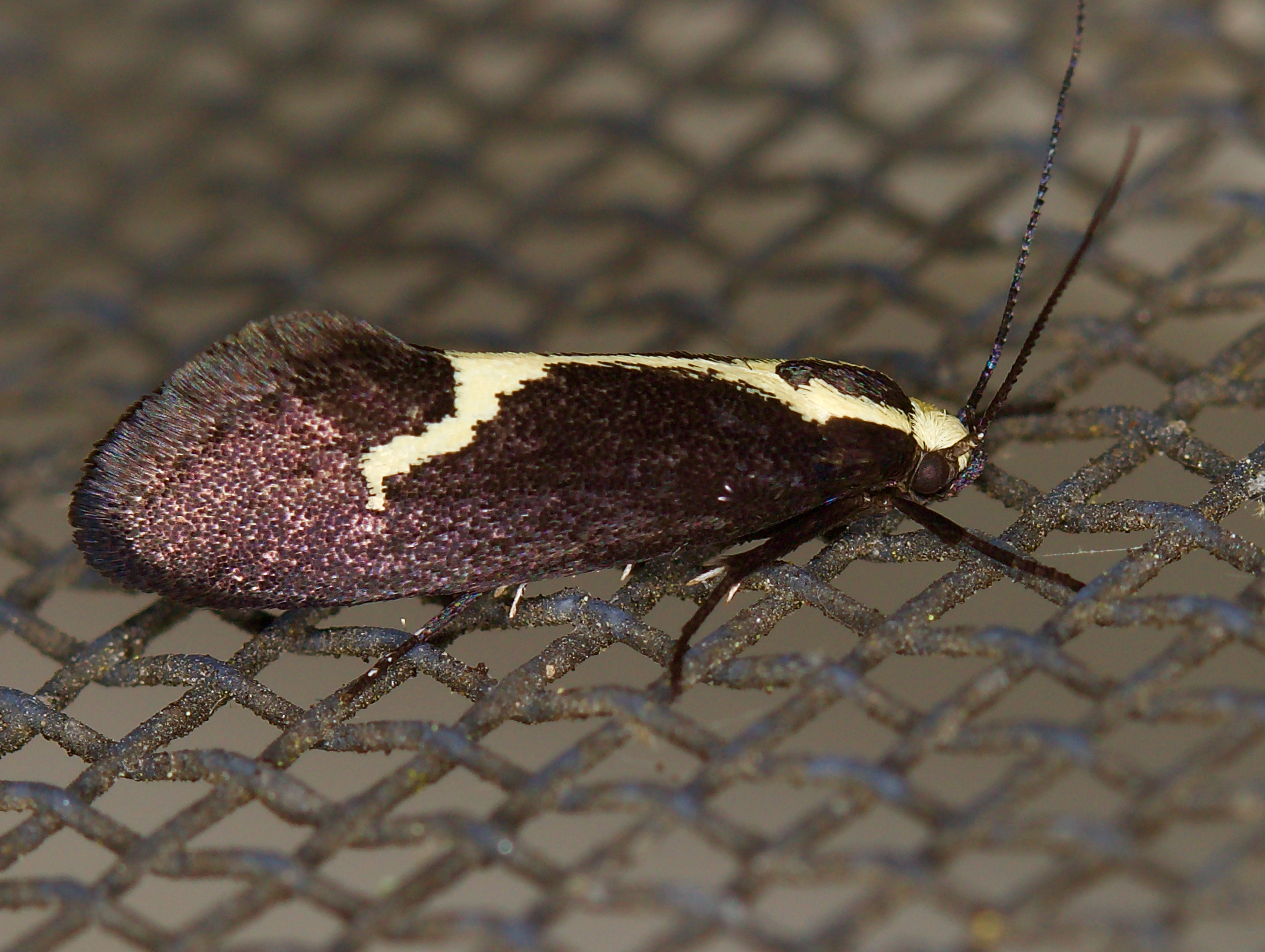
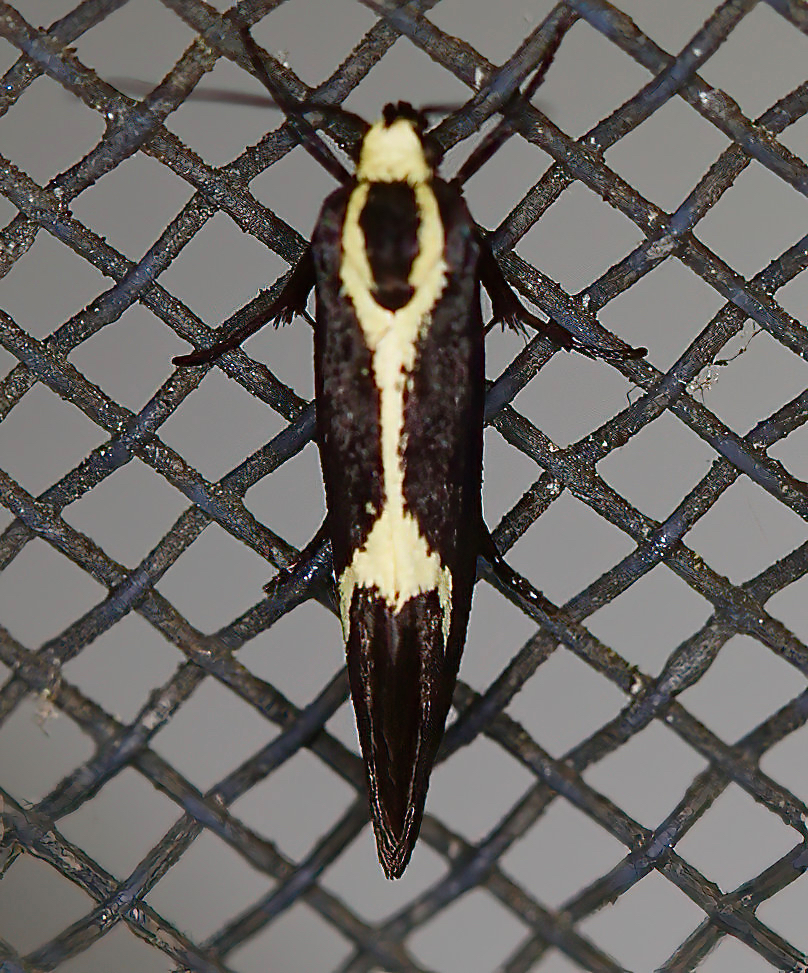
is a strikingly marked moth that has patterning that is reminiscent of that of a Striped Skunk. Most of the body is a rich dark-chocolate brown except for contrasting white lines and patches. The head is white above, while the thorax is dark brown centrally with a white line on each side. The forewing is also dark-brown except for a white streak that begins near the wing base on the inner margin. The white streak continues narrowly along the inner margin to near one-half the length of the wing, then angles inward and terminates before reaching the center of the wing. The line often expands to form a triangular spot at the point where it angles inward, and before narrowing towards the center of the wing. Specimens from the eastern US generally conform to this pattern, but those from western North America can deviate substantially.
Forewing Length:
5.5-9.5 mm (Hodges, 1974).
Adult ID Requirements:
Identifiable from good quality photos of unworn specimens.
Immatures and Development:
The larva commonly feed within decaying wood and cankers that are caused by fungi on pines, Douglas fir, alders, hawthorns and apples (Hodges, 1974). They also feed within fungal bodies that are on dead wood, or immediately below tree bark where the fungal body is attached (Lawrence and Powell, 1969).
Yothers (1942) studies this species in Washington state where they commonly inhabit cancers on apple trees. The larvae in this region live within the cankers and spin webbing that entangles dead bodies, cast skins, and the frass of numerous insects that also inhabit the cankers. The larvae feed on the dead and decaying wood and bark, particularly on the old, aphid-killed and frost-killed callus tissue. These dead, friable tissues are often found riddled with burrows of the larvae. The larvae actively move throughout the callus outside of the burrows and often deposit their frass in their webbing. They are almost white when young, but darken with age to become brown or pink. After reaching 9-12 mm in length, they pupate within the callus. Pupae in this study were found between the middle of April and the end of June, with adults present from I May to 24 June.
Larvae ID Requirements:
Identifiable only through rearing to adulthood.
Distribution in North Carolina
Distribution:
Polix coloradella
is broadly distributed across North America in cool, mesic, forested habitats. The northern part of the range includes Alaska and most of southern Canada from British Columbia eastward to New Brunswick and Prince Edward Island. It extends southward from the Pacific Northwest to central California, and through the Rocky Mountain states to Colorado and northern New Mexico. In the eastern US the range extends from the Dakotas eastward through the Great Lakes region to the New England states, and southward through the Appalachian region to Pennsylvania, West Virginia and southeastern Kentucky. As of 2025, we have a single record from Madison County that is the southernmost record for the eastern US.
County Map:
Clicking on a county returns the records for the species in that county.
Flight Dates:
High Mountains (HM) ≥ 4,000 ft.
Low Mountains (LM) < 4,000 ft.
Piedmont (Pd)
Coastal Plain (CP)
Click on graph to enlarge
Flight Comments:
The adults have been observed from April through August in different areas of the range, with a peak in June and July. As of 2025, our one record is from mid-June.
Habitats and Life History
Habitats:
Local populations are generally found in both deciduous and coniferous forests in cool climates. Our one record as of 2025 was from a mesic hardwood forest in the Blue Ridge.
Larval Host Plants:
The larva commonly feed within decaying wood and cankers that are caused by fungi on pines, Douglas fir, alders, hawthorns and apples. They also feed within fungal bodies that are on dead wood, or immediately below tree bark where the fungal body is attached. (Yothers, 1942; Hodges, 1974; Lawrence and Powell, 1969; Powell and Opler, 2009). As of 2025, we do not have any host records for North Carolina. -
View
Observation Methods:
The larvae are attracted to lights and have been reared from fungal bodies and cankers that were maintained indoors.
Wikipedia
Status in North Carolina
Natural Heritage Program Status:
Natural Heritage Program Ranks:
GNR [S1S3]
State Protection:
Comments:
As of 2025, we have a single record of this species from a rich hardwood slope in the Blue Ridge. This appears to be the southernmost record for this species in the eastern US.
Photo Gallery for
Polix coloradella
- Skunk Moth
Photos: 2
Recorded by: Jim Petranka and Becky Elkin on 2022-06-14
Madison Co.
Comment: From 4.300' in a northern hardwood forest.
Recorded by: Jim Petranka and Becky Elkin on 2022-06-14
Madison Co.
Comment:
 »
»