Moths of North Carolina
Home Page
Recent Entries
Recent Account Updates
County Searches
General Search
Submit a Public Record
Larval Hosts
References
Maps
Draft Checklists
Family Photo Gallery
Family PDFs
NC Biodiversity Project
Comments
Significant Contributors
Scientific Name:
Common Name:
Family (Alpha):
Choose a Family
ACROLEPIIDAE-False Diamondback Moths
ADELIDAE-Fairy moths
ALUCITIDAE-Many-plumed Moths
AMPHISBATIDAE-
ARGYRESTHIIDAE-Shiny Head-standing Moths
AUTOSTICHIDAE-Autostichid Moths
BATRACHEDRIDAE-Batrachedrid Moths
BEDELLIIDAE-Bedelliid Moths
BLASTOBASIDAE-Blastobasid Moths
BOMBYCIDAE-Silkworm Moths
BUCCULATRICIDAE-Ribbed Cocoon-maker Moths
CARPOSINIDAE-Fruitworm Moths
CHOREUTIDAE-Metalmark Moths
COLEOPHORIDAE-Casebearer Moths and Relatives
COSMOPTERIGIDAE-Cosmopterigid Moths
COSSIDAE-Carpenter Moths, Goat Moths
CRAMBIDAE-Grass Moths, Snout Moths
DEPRESSARIIDAE-
DREPANIDAE-Hook-tips and Thyatirid Moths
DRYADAULIDAE-
ELACHISTIDAE-Grassminer Moths and Relatives
EPERMENIIDAE-Fringe-tufted Moths
EPIPYROPIDAE-Planthopper Parasite Moths
EREBIDAE-Erebid Moths
ERIOCRANIIDAE-Eriocraniid Moths
EUTELIIDAE-Euteliid Moths
GALACTICIDAE-Galacticid Moths
GELECHIIDAE-Gelechiid Moths; Twirler Moths
GEOMETRIDAE-Geometer Moths, Loopers
GLYPHIDOCERIDAE-Glyphidocerid Moths
GLYPHIPTERIGIDAE-Sedge Moths
GRACILLARIIDAE-Leafblotch miner moths
HELIOZELIDAE-Shield bearer moths
HEPIALIDAE-Ghost or Swift Moths
HYBLAEIDAE-
INCURVARIIDAE-Leafcutter Moths
LASIOCAMPIDAE-Tent Caterpillar Moths, Lappet Moths
LECITHOCERIDAE-Long-horned Moths
LIMACODIDAE-Slug Caterpillar Moths
LIMOCODIDAE-
LYONETIIDAE-Lyonetiid Moths
MEGALOPYGIDAE-Flannel Moths
MICROPTERIGIDAE-Mandibulate Moths
MIMALLONIDAE-
MOMPHIDAE-Mompha Moths
NEPTICULIDAE-Minute leaf miners
NOCTUIDAE-Owlet Moths
NOLIDAE-
NOTODONTIDAE-Prominents
OECOPHORIDAE-Oecophorid Moths
OPOSTEGIDAE-
PELEOPODIDAE-
PLUTELLIDAE-Diamondback Moths
PRODOXIDAE-Yucca Moths
PSYCHIDAE-Bagworm Moths
PTEROPHORIDAE-Plume Moths
PYRALIDAE-Pyralid Moths, Snout Moths
SATURNIIDAE-Giant Silkworm Moths
SCHRECKENSTEINIIDAE-Schreckensteiniid Moths
SCYTHRIDIDAE-
SESIIDAE-Clearwing Moths
SPHINGIDAE-Sphinx Moths
THYATIRIDAE-
THYRIDIDAE-Window-winged Moths
TINEIDAE-Clothes moths
TISCHERIIDAE-Tischerid Moths
TORTRICIDAE-Leafroller Moths
URANIIDAE-
URODIDAE-Urodid Moths
XYLORYCTIDAE-
YPONOMEUTIDAE-Ermine Moths
YPSOLOPHIDAE-Ypsolophid Moths
ZYGAENIDAE-
«
Home
»
View
PDF
Oecophoridae Members:
Callima argenticinctella
Carolana ascriptella
Decantha boreasella
Decantha stecia
Eido trimaculella
Fabiola edithella
Fabiola shaleriella
Fabiola tecta
Idioglossa miraculosa
Inga cretacea
Inga sparsiciliella
Mathildana flipria
Mathildana newmanella
Polix coloradella
Promalactis suzukiella
Stathmopoda aenea
Stathmopoda elyella
Ymeldia janae
Eido
Members:
Eido trimaculella
44 NC Records
Eido trimaculella
(Fitch, 1856) - Three-spotted Concealer Moth
Taxonomy
Superfamily:
Gelechioidea
Family:
Oecophoridae
Subfamily:
Oecophorinae
Tribe:
Oecophorini
P3 Number:
59a0062
MONA Number:
1068.00
Identification
Field Guide Descriptions:
Beadle and Leckie (2012)
Online Resources:
MPG
,
BugGuide
,
iNaturalist
,
Google
,
BAMONA
,
GBIF
,
BOLD
Technical Description, Adults:
Hodges (1974)
Adult Markings:
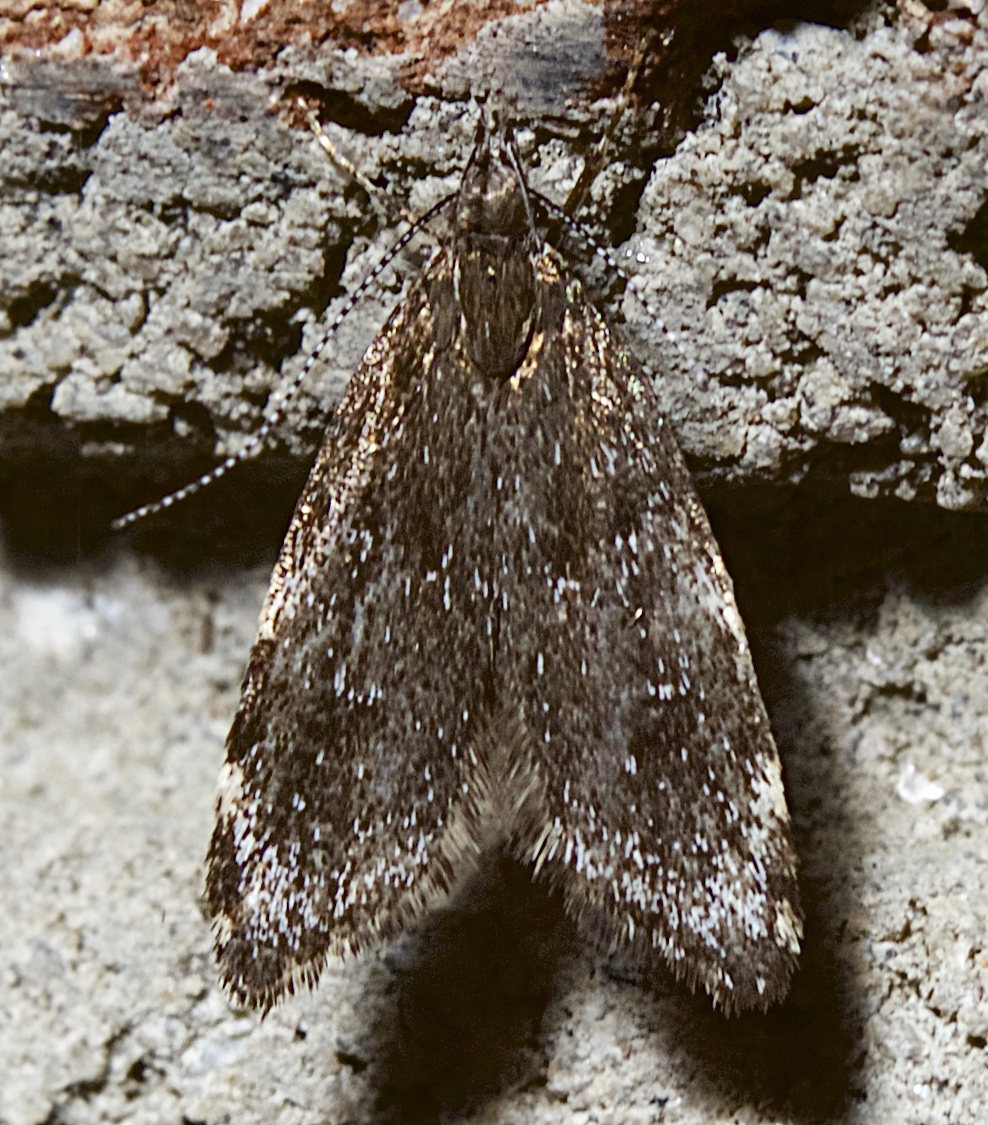
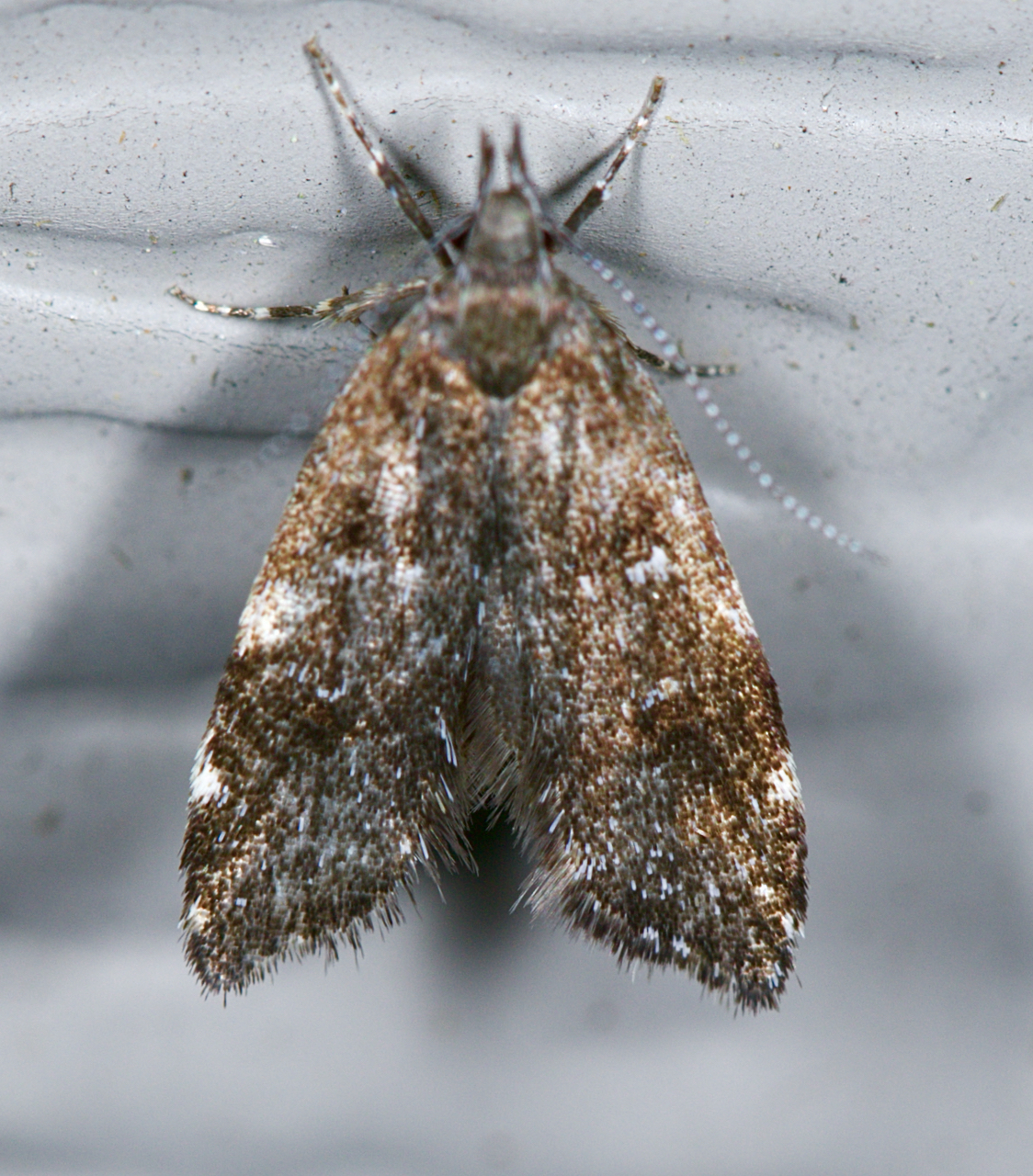
The following is primarily based on the descriptions by Busck (1909) and Forbes (1923). The antenna is annulated with black and white, with each joint having a large white scale on the upper side. The third joint of the labial palp is blackish with two longitudinal white lines that terminate just before the base. The second joint is white-tipped and has a pointed ventral tuft of scales. The forewing is noticeably triangular, with a subfalcate apex and arched costa. The ground color is luteus but masked by a heavily dusting of fuscous coloration that produces an overall dusky brown color. White scales are sprinkling across the forewing and are most concentrated on the apical third where they sometimes form a whitish subterminal band. Three small pale costal spots are usually evident; one in the middle, one at the apical third that is the largest, and one just before the apex. The fringe is dark with a double series of pale bars, and the hindwing is dark. The patterning on this species is somewhat variable. The subfalcate apex and arched costa create a distinctive shape which, along with the maculation, is diagnostic.
Wingspan:
13-16 mm (Busck, 1909)
Forewing Length:
5-8 mm (Hodges, 1974)
Adult ID Requirements:
Identifiable from good quality photos of unworn specimens.
Immatures and Development:
The larvae are fungus-feeders and are known to feed on bracket fungi (Hodges, 1974; Lawrence and Powell, 1969). They live in webbing beneath the fruiting body. Populations are univoltine and the larvae may overwinter in the fruiting body, although this has not been verified.
Larvae ID Requirements:
Identifiable only through rearing to adulthood.
Distribution in North Carolina
Distribution:
Eido trimaculella
is widely distributed in eastern North America, with a few scattered records in the West in British Columbia, Alberta, and Saskatchewan. In the East, it occurs in southern Canada (Manitoba to Nova Scotia) and throughout most of the eastern US from the New England states south to Florida and westward to Louisiana, Arkansas, Illinois, and Minnesota. As of 2020, all of our records are from either the Piedmont or lower elevations in the mountains.
County Map:
Clicking on a county returns the records for the species in that county.
Flight Dates:
High Mountains (HM) ≥ 4,000 ft.
Low Mountains (LM) < 4,000 ft.
Piedmont (Pd)
Coastal Plain (CP)
Click on graph to enlarge
 »
»