Moths of North Carolina
Home Page
Recent Entries
Recent Account Updates
County Searches
General Search
Submit a Public Record
Larval Hosts
References
Maps
Draft Checklists
Family Photo Gallery
Family PDFs
NC Biodiversity Project
Comments
Significant Contributors
Scientific Name:
Common Name:
Family (Alpha):
Choose a Family
ACROLEPIIDAE-False Diamondback Moths
ADELIDAE-Fairy moths
ALUCITIDAE-Many-plumed Moths
AMPHISBATIDAE-
ARGYRESTHIIDAE-Shiny Head-standing Moths
AUTOSTICHIDAE-Autostichid Moths
BATRACHEDRIDAE-Batrachedrid Moths
BEDELLIIDAE-Bedelliid Moths
BLASTOBASIDAE-Blastobasid Moths
BOMBYCIDAE-Silkworm Moths
BUCCULATRICIDAE-Ribbed Cocoon-maker Moths
CARPOSINIDAE-Fruitworm Moths
CHOREUTIDAE-Metalmark Moths
COLEOPHORIDAE-Casebearer Moths and Relatives
COSMOPTERIGIDAE-Cosmopterigid Moths
COSSIDAE-Carpenter Moths, Goat Moths
CRAMBIDAE-Grass Moths, Snout Moths
DEPRESSARIIDAE-
DREPANIDAE-Hook-tips and Thyatirid Moths
DRYADAULIDAE-
ELACHISTIDAE-Grassminer Moths and Relatives
EPERMENIIDAE-Fringe-tufted Moths
EPIPYROPIDAE-Planthopper Parasite Moths
EREBIDAE-Erebid Moths
ERIOCRANIIDAE-Eriocraniid Moths
EUTELIIDAE-Euteliid Moths
GALACTICIDAE-Galacticid Moths
GELECHIIDAE-Gelechiid Moths; Twirler Moths
GEOMETRIDAE-Geometer Moths, Loopers
GLYPHIDOCERIDAE-Glyphidocerid Moths
GLYPHIPTERIGIDAE-Sedge Moths
GRACILLARIIDAE-Leafblotch miner moths
HELIOZELIDAE-Shield bearer moths
HEPIALIDAE-Ghost or Swift Moths
HYBLAEIDAE-
INCURVARIIDAE-Leafcutter Moths
LASIOCAMPIDAE-Tent Caterpillar Moths, Lappet Moths
LECITHOCERIDAE-Long-horned Moths
LIMACODIDAE-Slug Caterpillar Moths
LIMOCODIDAE-
LYONETIIDAE-Lyonetiid Moths
MEGALOPYGIDAE-Flannel Moths
MICROPTERIGIDAE-Mandibulate Moths
MIMALLONIDAE-
MOMPHIDAE-Mompha Moths
NEPTICULIDAE-Minute leaf miners
NOCTUIDAE-Owlet Moths
NOLIDAE-
NOTODONTIDAE-Prominents
OECOPHORIDAE-Oecophorid Moths
OPOSTEGIDAE-
PELEOPODIDAE-
PLUTELLIDAE-Diamondback Moths
PRODOXIDAE-Yucca Moths
PSYCHIDAE-Bagworm Moths
PTEROPHORIDAE-Plume Moths
PYRALIDAE-Pyralid Moths, Snout Moths
SATURNIIDAE-Giant Silkworm Moths
SCHRECKENSTEINIIDAE-Schreckensteiniid Moths
SCYTHRIDIDAE-
SESIIDAE-Clearwing Moths
SPHINGIDAE-Sphinx Moths
THYATIRIDAE-
THYRIDIDAE-Window-winged Moths
TINEIDAE-Clothes moths
TISCHERIIDAE-Tischerid Moths
TORTRICIDAE-Leafroller Moths
URANIIDAE-
URODIDAE-Urodid Moths
XYLORYCTIDAE-
YPONOMEUTIDAE-Ermine Moths
YPSOLOPHIDAE-Ypsolophid Moths
ZYGAENIDAE-
«
Home
»
View
PDF
Scythrididae Members:
Landryia impositella
Scythris basilaris
Scythris charon
Scythris fuscicomella
Scythris sinensis
Scythris trivinctella
Landryia
Members:
Landryia impositella
12 NC Records
Landryia impositella
(Zeller, 1855) - No Common Name
Taxonomy
Family:
Scythrididae
P3 Number:
59a1723
MONA Number:
1662.00
Identification
Field Guide Descriptions:
Online Resources:
MPG
,
BugGuide
,
iNaturalist
,
Google
,
BAMONA
,
GBIF
,
BOLD
Technical Description, Adults:
Landry (1991)
Technical Description, Immature Stages:
Eiseman (2022)
Adult Markings:
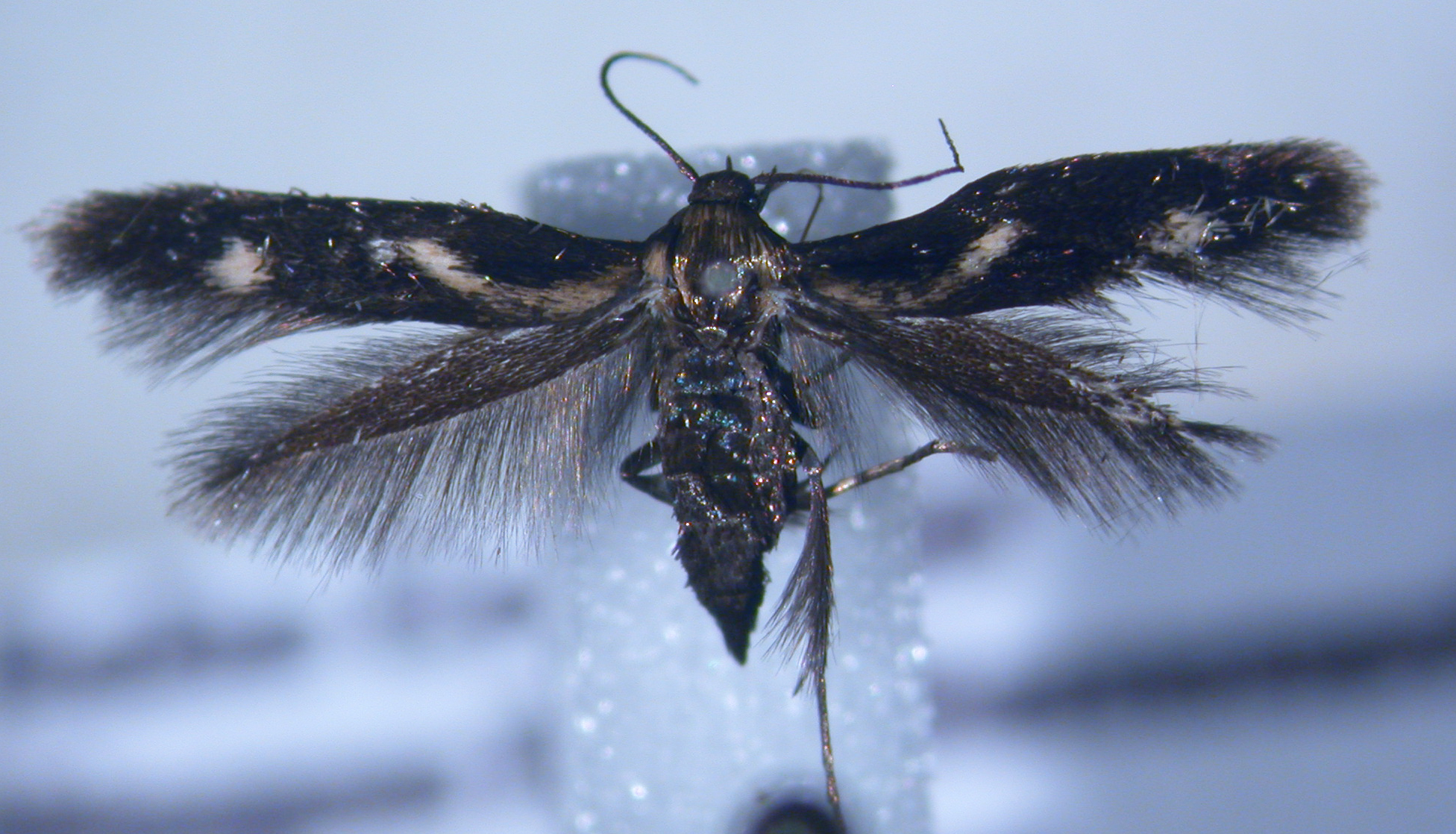
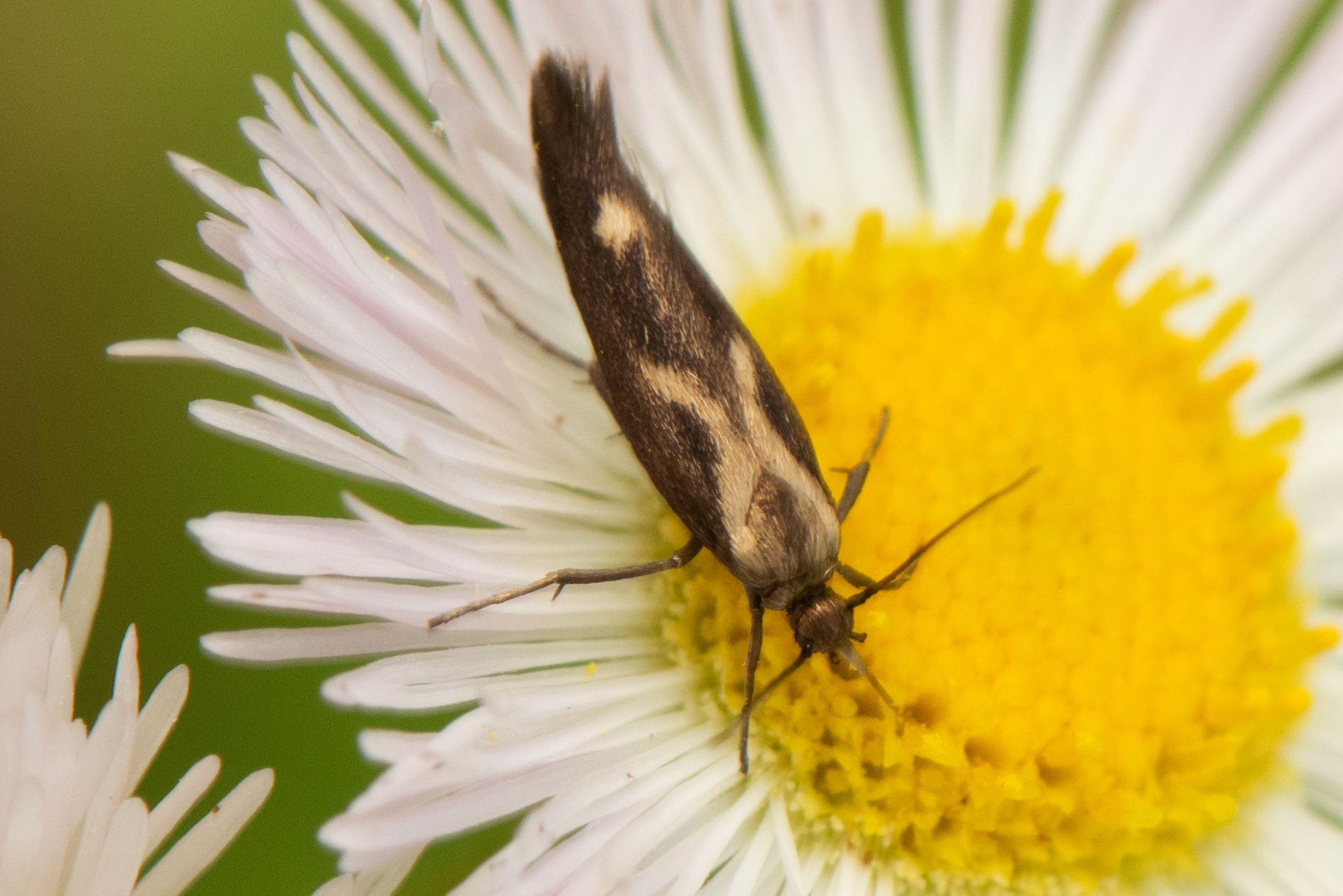
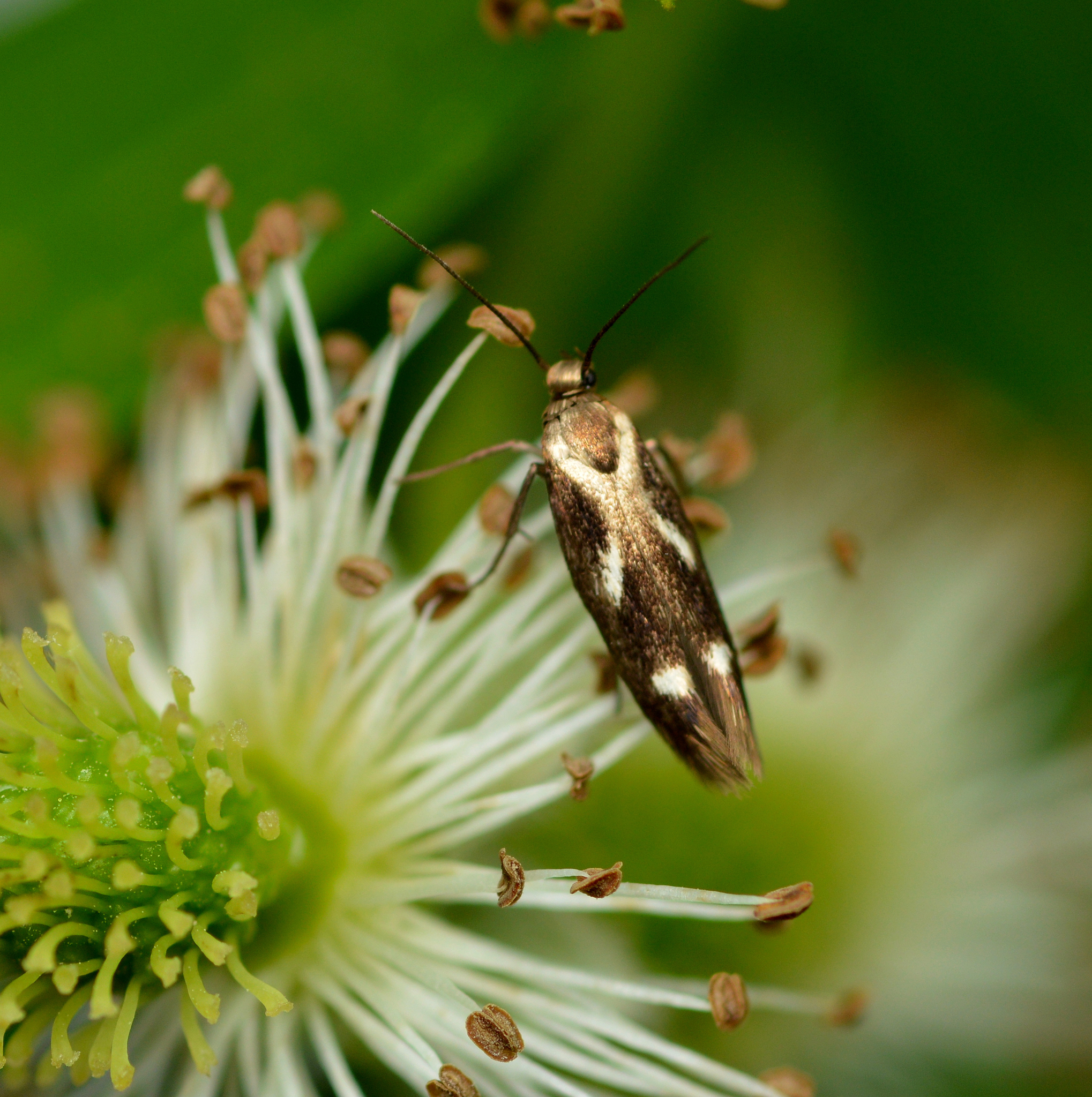
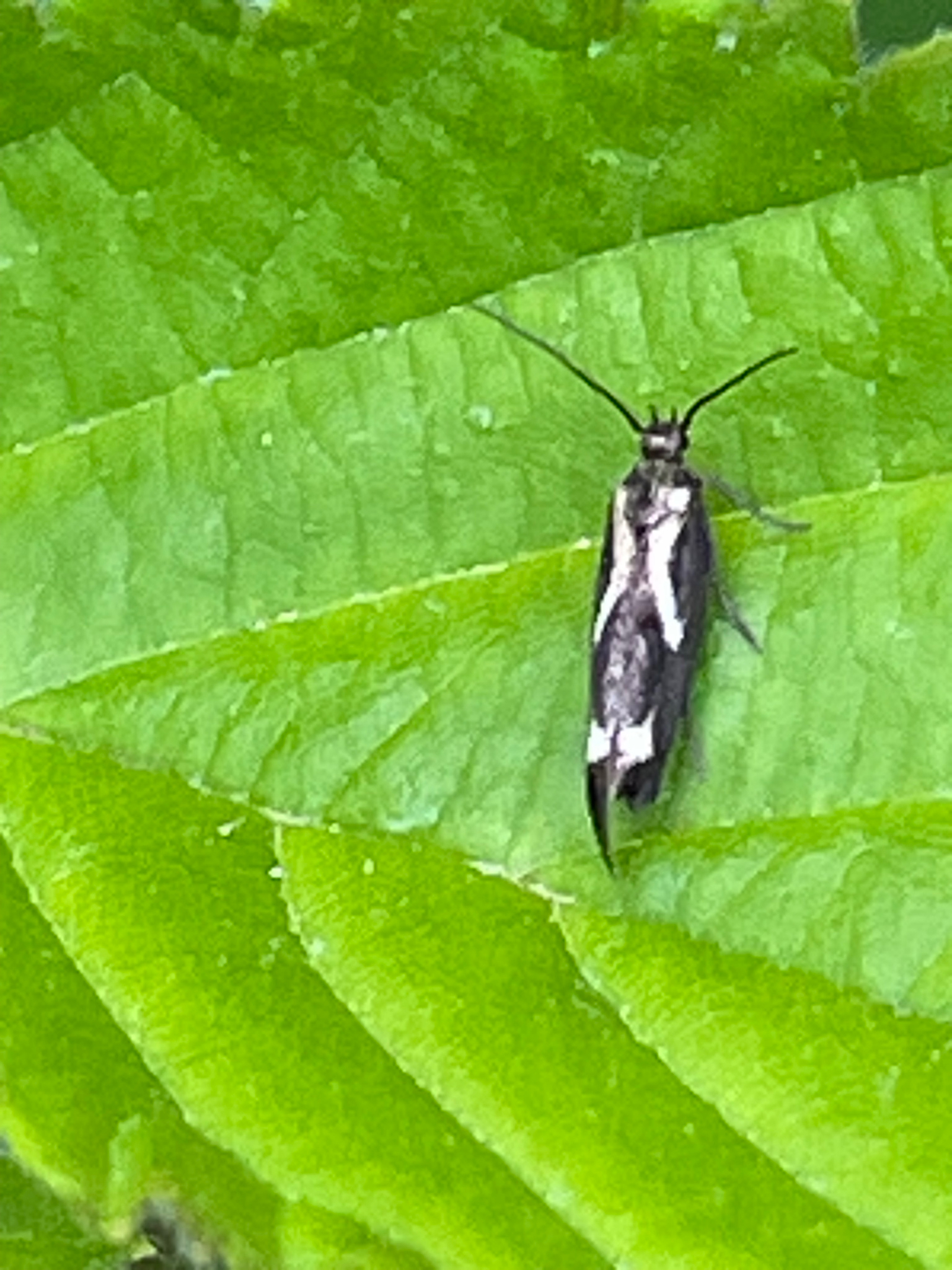
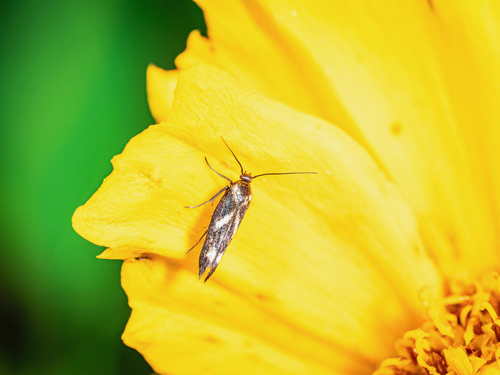
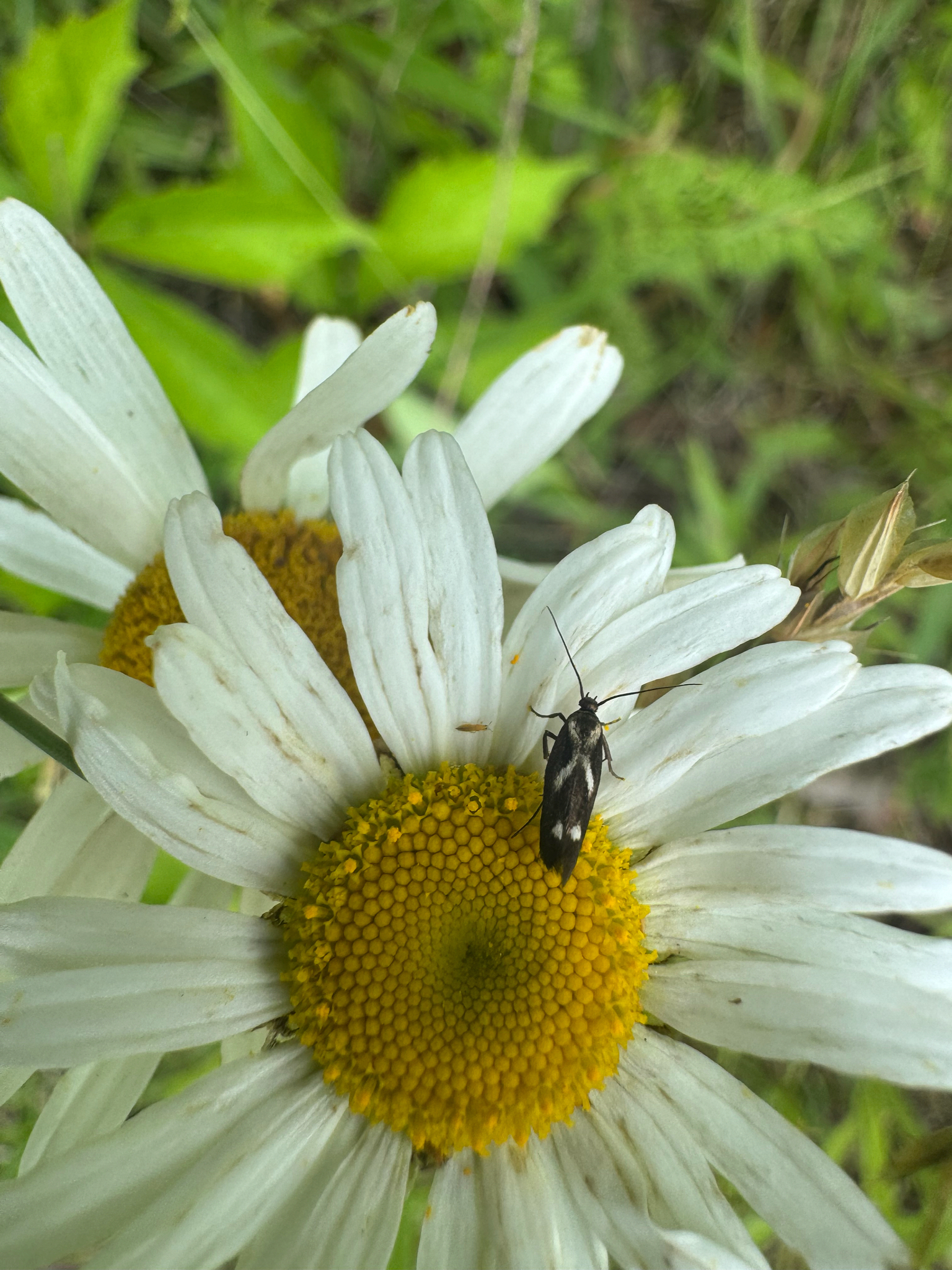
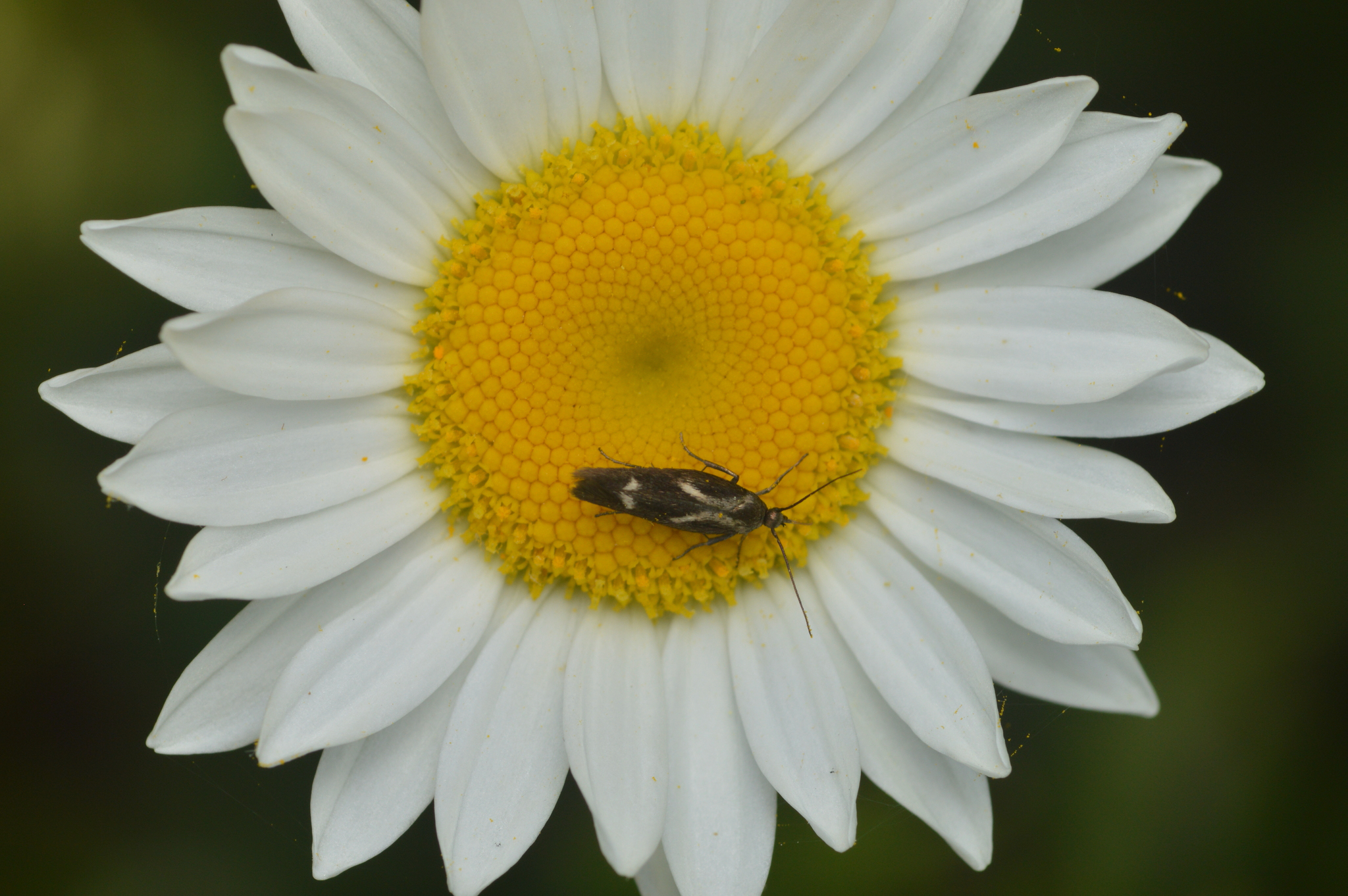
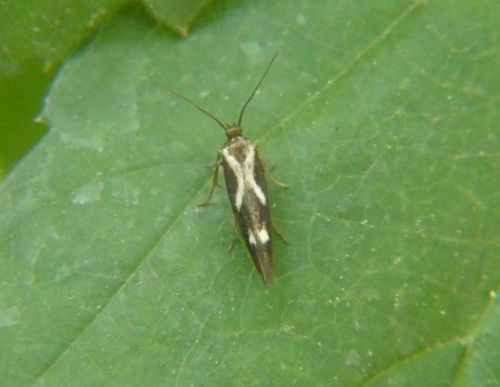
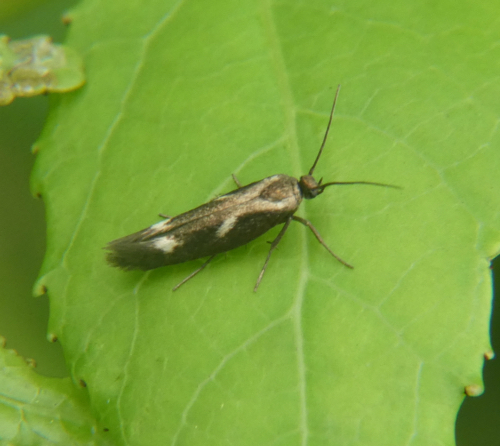
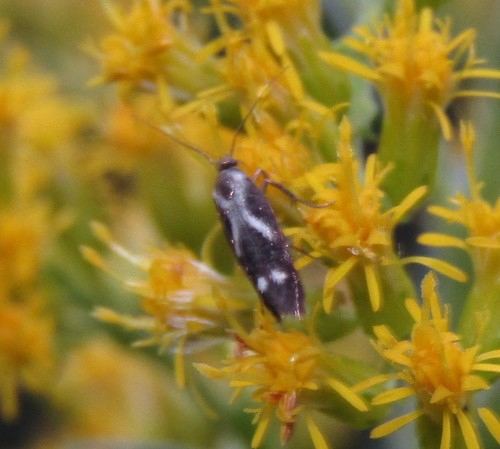
In this species, the forewing ground color can be brown, olive-brown, dark-brown, or blackish-brown, with a moderate or marked brassy, cupreous or purplish metallic luster (Landry, 1991). Most specimens have two whitish or pale-ochreous fasciae, with one in the basal half and the other in the pre-apical area at the end of the cell. The basal fascia extends from the base below the fold, then curves for a short distance posteriorly along inner margin before curving towards the costal margin. It terminated just before the costa. In populations in the eastern US, the second fascia is most commonly represented as a well-defined spot in the subapical region. Landry (1991) noted that specimens are occasionally encountered that have the fasciae greatly reduced or entirely missing. Other variants are also discribed in his publication.
Landry (1991) noted that the adults of
L. impositella
can be very similar to those of
L. matutella
in size, color and fasciate pattern of the forewings, but that the pale fasciae are more distinct and more sharply defined than in
L. matutella
. The latter is not known from North Carolina and has a more northern and western distribution. The great majority of specimens from the eastern US and NC have the basal fascia that produces an hourglass pattern when resting individuals are viewed from above. These conform to
L. impositella
as described and illustrated by Landry (1991), while BOLD specimens of
L. matutella
do not show any specimens of
L. matutella
with the hourglass pattern. As such, the real issue with confusing
L. impositella
with
L. matutella
is when a specimen only has either a basal and pre-apical spot, or a greatly reduced patterning with little markings. These should be dissected to confirm their identity.
Forewing Length:
Males 5.0-6.5 mm; females 4.8-6.1 mm
Adult Structural Features:
Landry (1991) has detailed descriptions and illustrations of the male and female genitalia and other structural features.
Adult ID Requirements:
Identifiable from good quality photos of unworn specimens.
Immatures and Development:
The larva feeds within a blotch or irregularly elongated, undersurface mine on the leaves of asters, but will retreat from this when not feeding or when disturbed. It makes its retreat along a thin silken trail that usually leads to a slight web at the base of the mined leaf or stem (Eiseman, 2022). The fully-fed larva spins a cocoon under the web. Populations in Illinois appear to be bivoltine (Microleps.org), with larvae in the first brood maturing at the end of June and producing adults in mid-July. Larvae in the second brood mature in September and overwinter, then pupate in the spring.
Larvae ID Requirements:
Identifiable only through rearing to adulthood.
Distribution in North Carolina
Distribution:
Landry (1991) documented this species as occurring through a broad swath of North America in areas with mesic conditions and cool climates. This includes much of southern Canada from British Columbia to Nova Scotia, portions of the northern and central Rockies, and in the eastern US from New Hampshire, Massachusetts and New York westward to Illinois and Iowa, and southward to Maryland, Pennsylvania, Kentucky, eastern Tennessee, North Carolina, central Georgia and central Alabama. As of 2025, All of our records are from the Piedmont and lower-elevations in the Blue Ridge.
County Map:
Clicking on a county returns the records for the species in that county.
Flight Dates:
High Mountains (HM) ≥ 4,000 ft.
Low Mountains (LM) < 4,000 ft.
Piedmont (Pd)
Coastal Plain (CP)
Click on graph to enlarge
Flight Comments:
Landry (1991) noted that the adults occur from mid- or late-May in the southern parts of the range, to early-September in northern and montane locations. As of 2025, our records are from mid-April through early-July.
Habitats and Life History
Habitats:
Local populations are generally associated with sunny or partially-sunny habitats such as open, mesic woodlands, road and powerline corridors, cleared areas along hiking trail, and similar sites that support the host species.
Larval Host Plants:
Larvae have been reared from various species of asters (Landry, 1991; Eiseman, 2022), including Heartleaf Aster (
Symphyotrichum cordifolium
), Smooth Blue Aster (
S. laeve
), Calico Aster (
S. lateriflorum
), New England Aster (
S. novae-angliae
) and Purplestem Aster (
S. puniceum
). -
View
Observation Methods:
The adults are diurnal and are often seen nectaring on wildflowers such as
Erigeron
spp.; also look for the mines on the undersides of Heartleaf Aster and other asters.
Wikipedia
Status in North Carolina
Natural Heritage Program Status:
Natural Heritage Program Ranks:
GNR [S3S4]
State Protection:
Comments:
Photo Gallery for
Landryia impositella
- None
Photos: 10
Recorded by: jim4cjc on 2025-05-29
Buncombe Co.
Comment: iNat record - iNat: https://www.inaturalist.org/observations/294456502
Recorded by: Ryan Chaffee on 2025-05-22
Orange Co.
Comment: iNat record - iNat: https://www.inaturalist.org/observations/294456502
Recorded by: Robby Deans on 2025-05-00
Rockingham Co.
Comment: iNat record - iNat: https://www.inaturalist.org/observations/295817553
Recorded by: Doug Bruce on 2025-04-18
Swain Co.
Comment: iNat record - iNat: https://www.inaturalist.org/observations/294456502
Recorded by: winston12345 on 2024-05-02
Gaston Co.
Comment: iNat record - https://www.inaturalist.org/observations/212979557
Recorded by: J.B. Sullivan on 2022-06-08
Ashe Co.
Comment:
Recorded by: Robby Deans on 2022-05-09
Forsyth Co.
Comment: iNat record - iNat: https://www.inaturalist.org/observations/120410898
Recorded by: Jamie Simancas on 2022-05-03
Guilford Co.
Comment: iNat record - iNat: https://www.inaturalist.org/observations/115231474
Recorded by: Jamie Simancas on 2021-07-03
Guilford Co.
Comment: iNat record - iNat: https://www.inaturalist.org/observations/82321263
Recorded by: jfox16 on 2019-09-00
Davidson Co.
Comment: iNat record - iNat:https://www.inaturalist.org/photos/51668036