Moths of North Carolina
Scientific Name:
Common Name:
Family (Alpha):
« Home »
View PDFGelechiidae Members: Pseudotelphusa Members: 4 NC Records

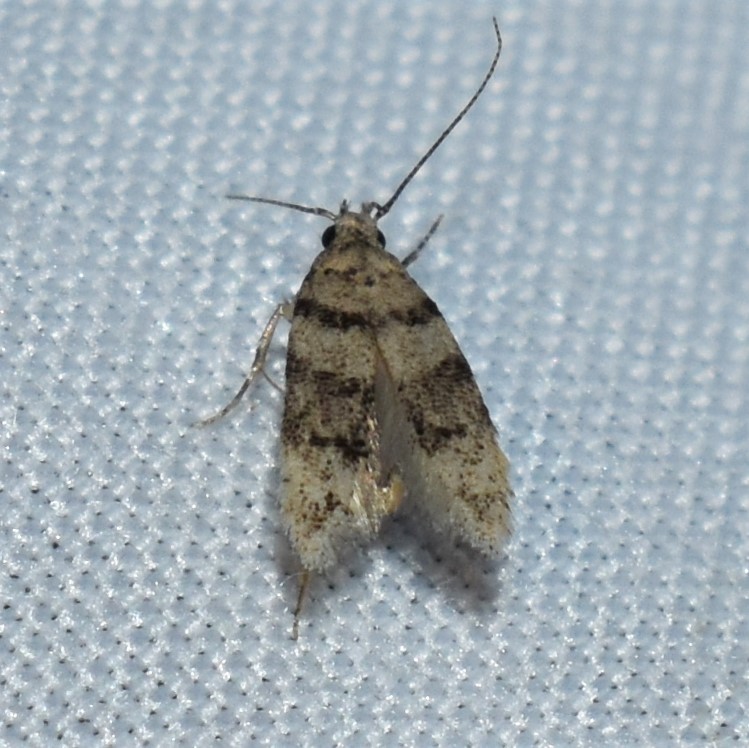
Pseudotelphusa fuscopunctella (Clemens, 1863) - No Common Name


Pseudotelphusa fuscopunctellaPseudotelphusa fuscopunctella
Taxonomy
Family:
Gelechiidae
P3 Number:
59a0782
MONA Number:
1871.00
Comments: Pseudotelphusa species in eastern North America constitute a taxonomically challenging group, with several described species that have similar patterning, along with one or more species that are likely undescribed. Little effort has been put forth to correlate DNA barcoding with external morphology and genitalia, so there is still much uncertainty in this regard. Many of our assignments of specimens to species are provisional and will remain so until additional information becomes available that will clarify the taxonomic status of populations in North Carolina.
Identification
Field Guide Descriptions: Online Resources: MPG, BugGuide, iNaturalist, Google, BAMONA, GBIF, BOLD                                                                                 
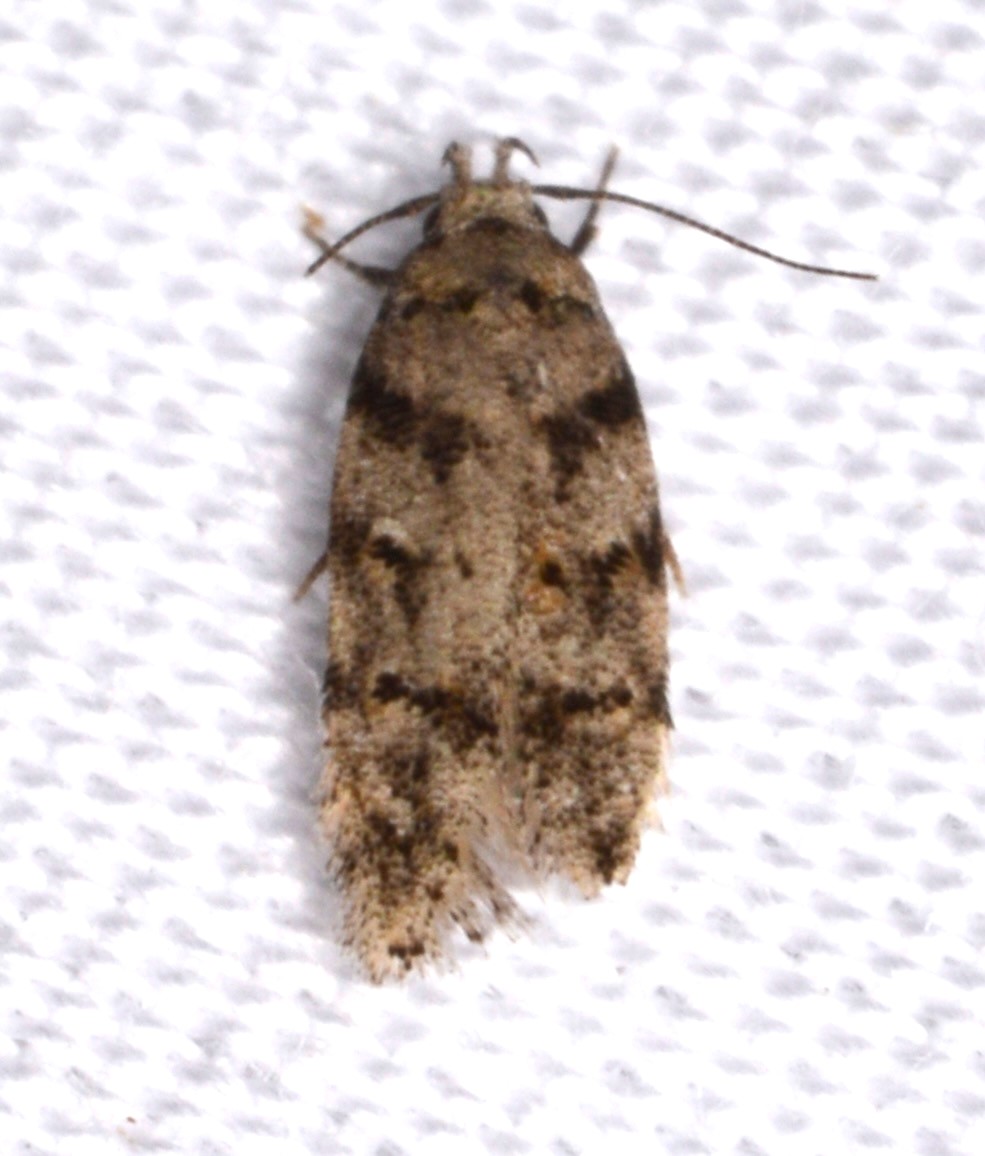
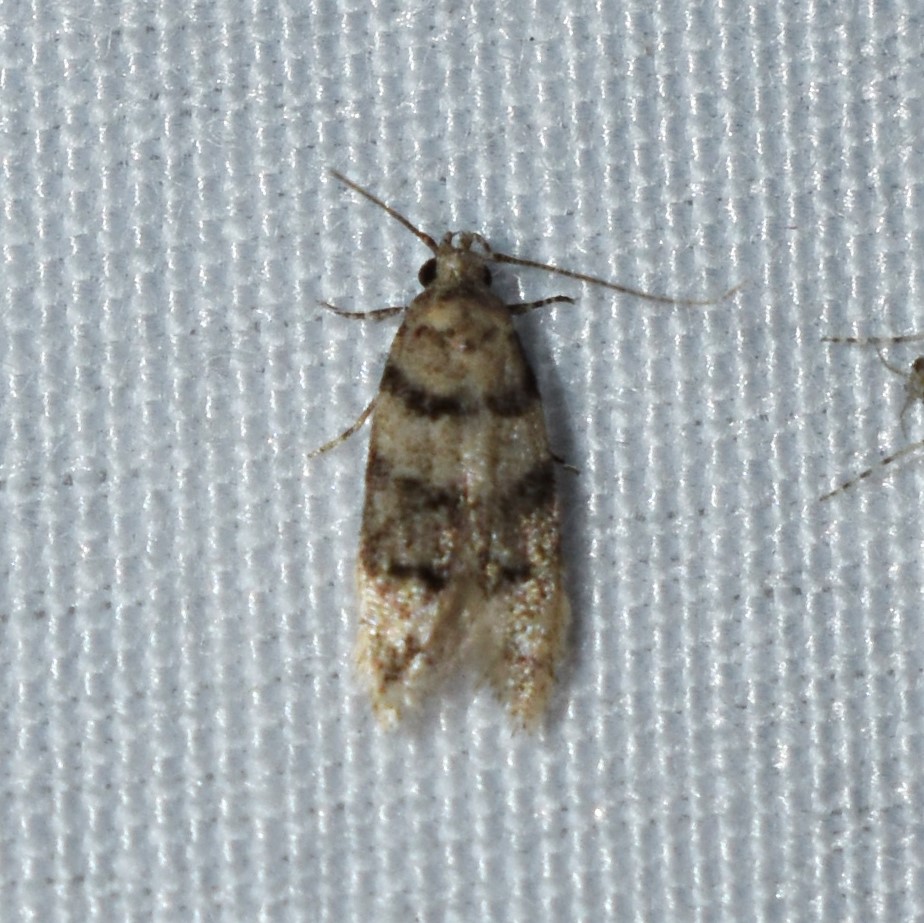
Adult Markings: Pseudotelphusa fuscopunctella is a small, brownish to grayish-brown moth with three incomplete, darker bands on the forewing and a boldly banded labial palp. The following description is based in part on that of Clemens (1863). The second segment of the labial palp is dark fuscous, while the terminal segment is gray, with a prominent black ring near the middle and a second just below the tip. The antenna is dark fuscous, and the head and thorax gray with scattered darker scales. The forewing ground color varies from gray to light brown and is speckled with darker scales. The ground is overlain with three black marks that include, 1) a broad, outwardly-oblique, sub-basal band that extends from the costa and terminates just before reaching the inner margin, 2) a black spot or blotch on the costa near the middle, and 3) a similar spot on the costa at around three-fourths the wing length. All of the marks have irregular, diffuse margins. One or two smaller, diffuse, black spots with pale scales along the margin are often found inward from the second and third costal marks to produce two fragmented bands that parallel each other and the more prominent sub-basal band. The fringe is a shade lighter than the forewing ground color and has three or four faint, darker blotches at the base. The hindwing is light brown or grayish-brown with a concave outer margin and a prominent, elongated, concolorous fringe. The pattern on individals can vary substantially, particularly with regards to the degree to which the three dark bands on the forewing are expressed.

Pseudotelphusa fuscopunctella can be confused with several other Pseudotelphusa that have similar patterning and we recommend examining genitalia for accurate determinations. This species has an overall brown color, while most of our others have a grayer or whiter ground color.
Adult ID Requirements: Identifiable only by close inspection of structural features or by DNA analysis.
Larvae ID Requirements: Identifiable only through rearing to adulthood.
Distribution in North Carolina
Distribution: Pseudotelphusa fuscopunctella is found throughout much of the eastern US, from Maine southward to southern Florida, and westward to Louisiana, Arkansas, Indiana and Illinois. As of 2025, we have only a few records, with one from the Sandhills and the others from the eastern Piedmont.
County Map: Clicking on a county returns the records for the species in that county.
Pseudotelphusa fuscopunctellaAlamance Alexander Alleghany Anson Ashe Avery Beaufort Bertie Bladen Brunswick Buncombe Burke Cabarrus Caldwell Camden Carteret Caswell Catawba Chatham Cherokee Chowan Clay Cleveland Columbus Craven Cumberland Currituck Dare Davidson Davie Duplin Durham Edgecombe Forsyth Franklin Gaston Gates Graham Granville Greene Guilford Halifax Harnett Haywood Henderson Hertford Hoke Hyde Iredell Jackson Johnston Jones Lee Lenoir Lincoln Macon Madison Martin McDowell Mecklenburg Mitchell Montgomery Moore Nash New Hanover Northampton Onslow Orange Pamlico Pasquotank Pender Perquimans Person Pitt Polk Randolph Richmond Robeson Rockingham Rowan Rutherford Sampson Scotland Stanly Stokes Surry Swain Transylvania Tyrrell Union Vance Wake Warren Washington Watauga Wayne Wilkes Wilson Yadkin Yancey
Flight Dates:
High Mountains (HM) ≥ 4,000 ft.
Low Mountains (LM) < 4,000 ft.
Piedmont (Pd)
Coastal Plain (CP)

Click on graph to enlarge
Image showing flight dates by month for High Mountains greater than 4,000 feet, Low Mountains, Piedmont, and Coastal Plain: adults.
Habitats and Life History
Habitats:
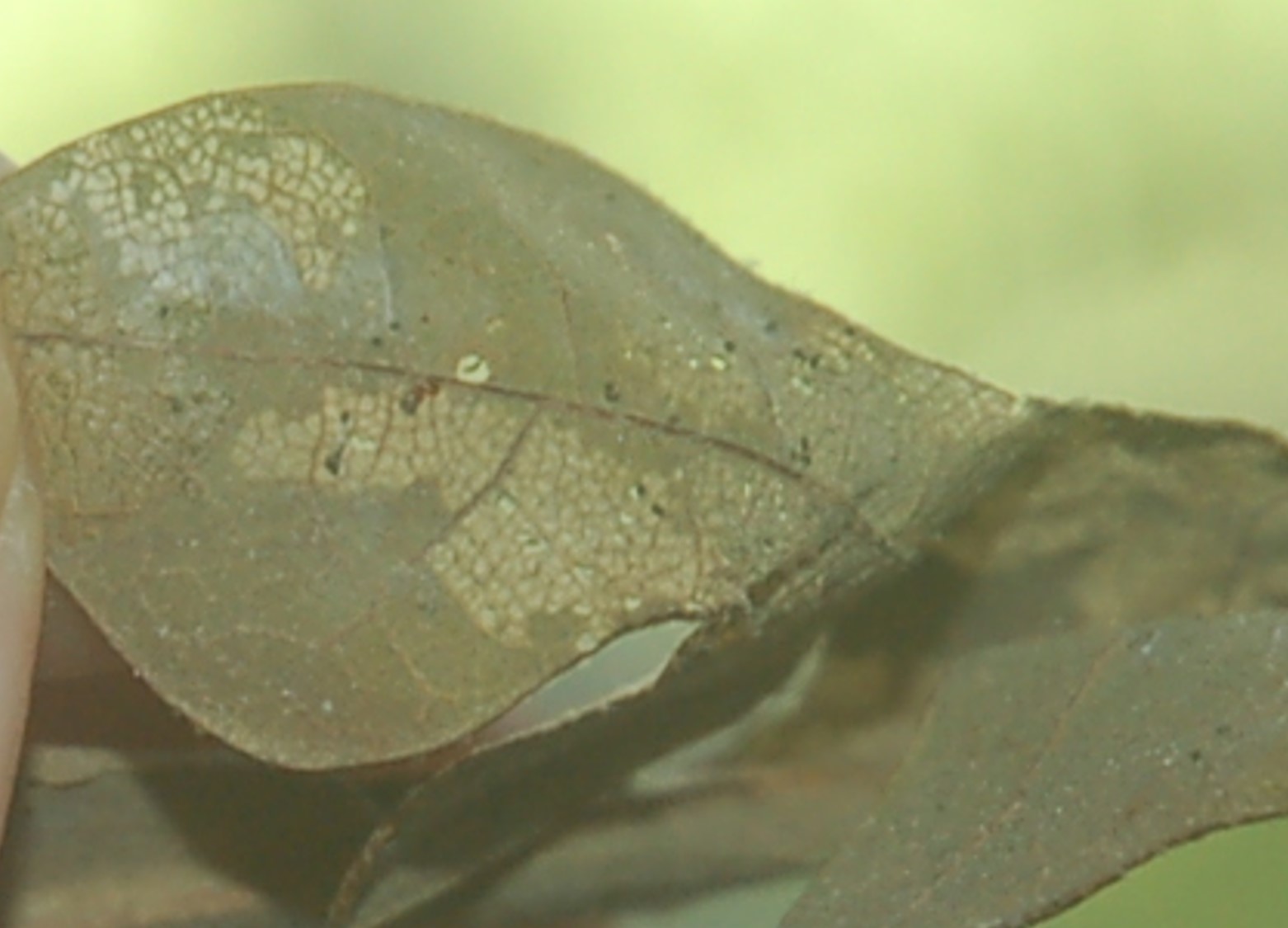
Larval Host Plants: Host plants are poorly documented. In North Carolina, Tracy Feldman has reared a larva from Post Oak (Quercus stellata). - View
Wikipedia
Status in North Carolina
Natural Heritage Program Status:
Natural Heritage Program Ranks:
State Protection:
Comments:

 Photo Gallery for Pseudotelphusa fuscopunctella - None

Photos: 6
Pseudotelphusa fuscopunctella
Recorded by: David George, Stephen Dunn, Jeff Niznik on 2023-08-18
Caswell Co.
Comment:
Pseudotelphusa fuscopunctella
Recorded by: David George, Jeff Niznik on 2023-06-10
Durham Co.
Comment:
Pseudotelphusa fuscopunctella
Recorded by: David George, Jeff Niznik on 2023-06-10
Durham Co.
Comment:
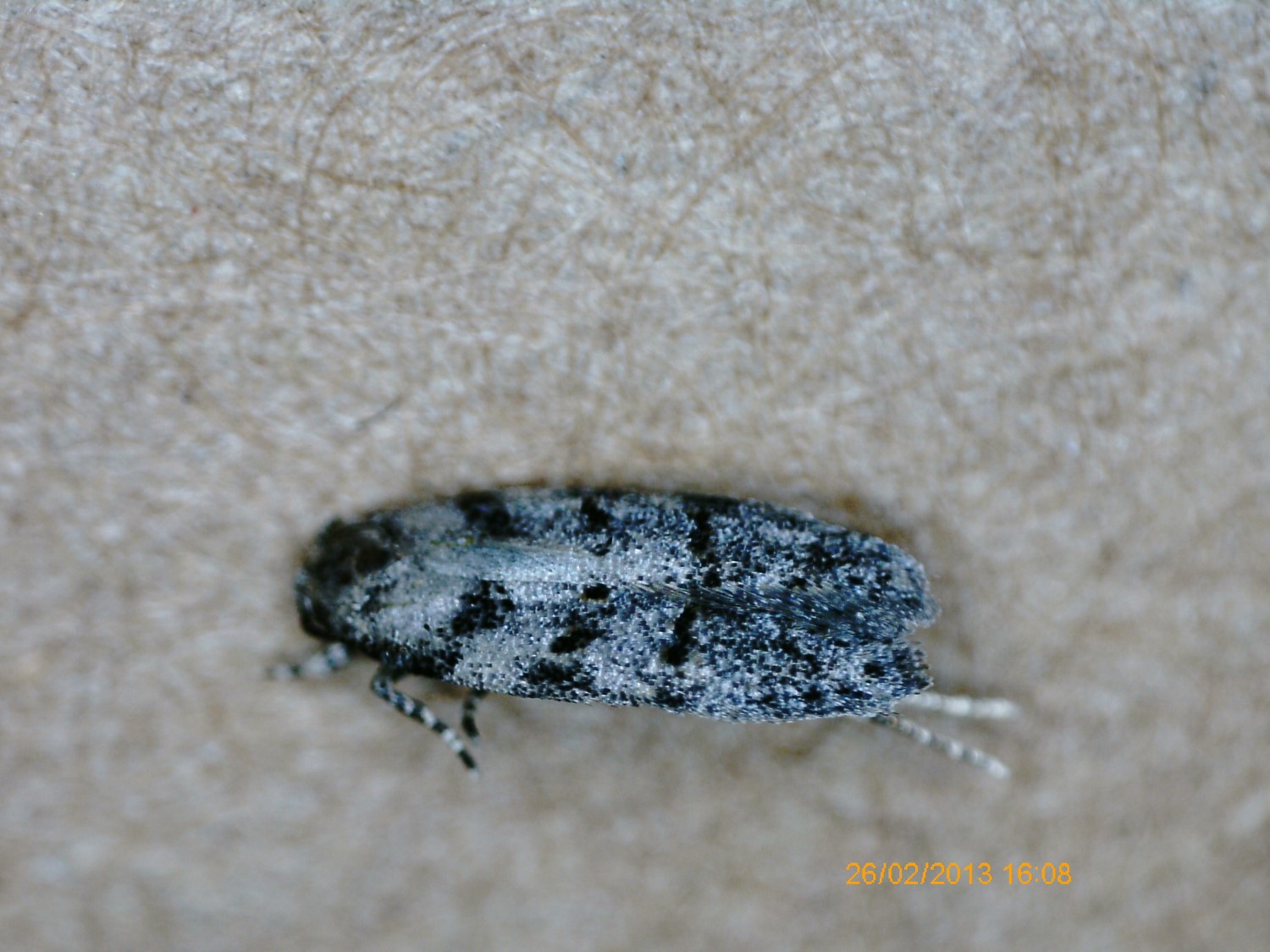
Pseudotelphusa fuscopunctella
Recorded by: Tracy S Feldman on 2018-06-14
Wake Co.
Comment: Identified by Sangmi Lee.
Pseudotelphusa fuscopunctella
Recorded by: Tracy S Feldman on 2018-06-14
Wake Co.
Comment:
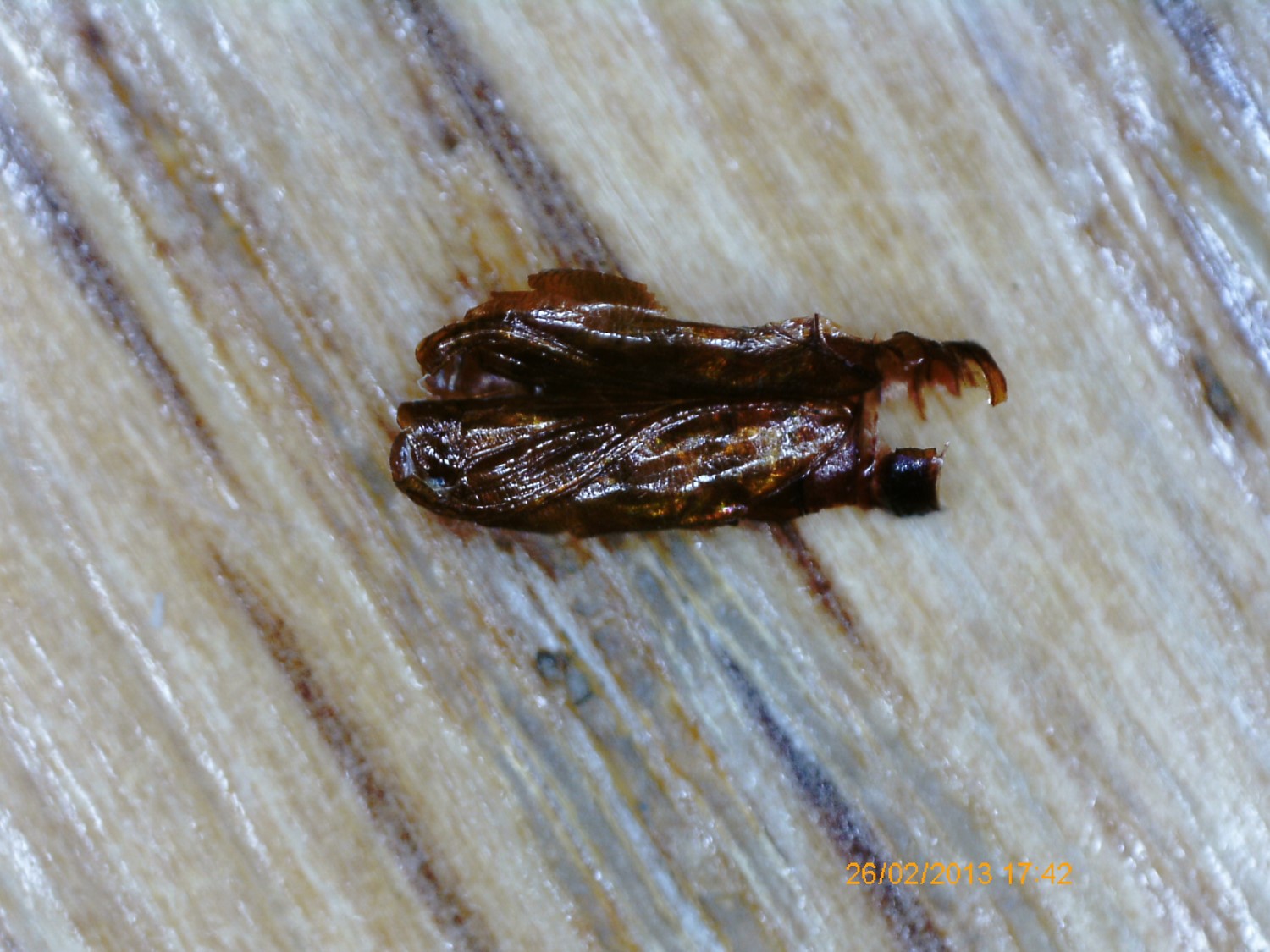
Pseudotelphusa fuscopunctella
Recorded by: Tracy S Feldman on 2018-06-14
Wake Co.
Comment: reared from Quercus stellata, bycatch collected with another specimen. It fed on the surface, tying leaves together, then pupated in the leaves.