Moths of North Carolina
Scientific Name:
Common Name:
Family (Alpha):
« Home »
View PDFGelechiidae Members: Helcystogramma Members: 13 NC Records

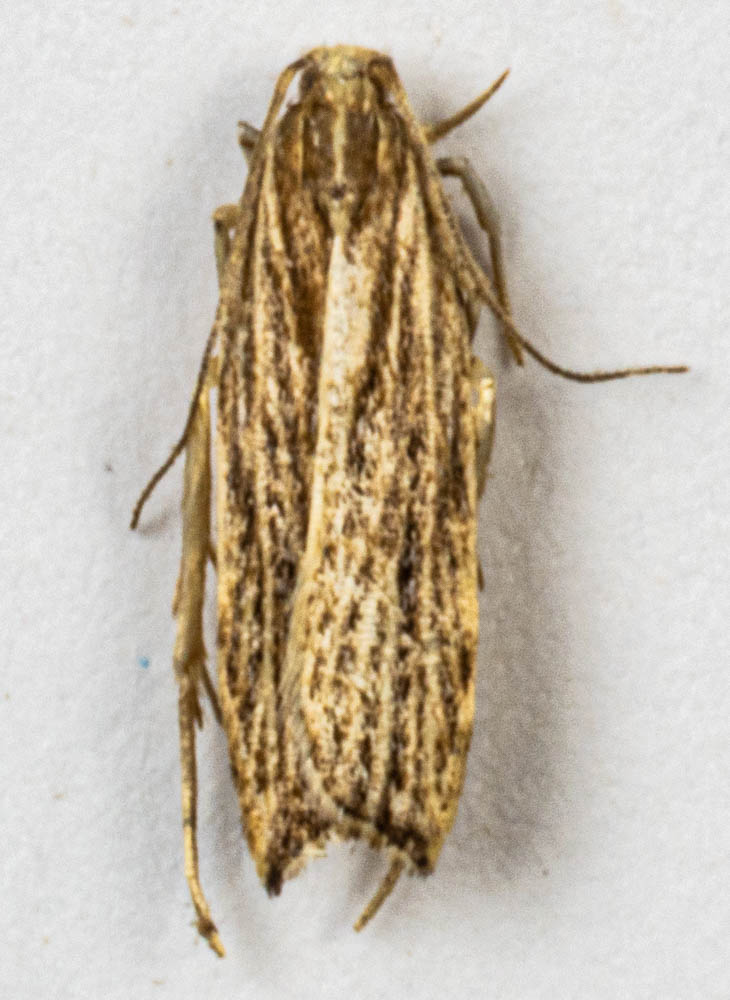
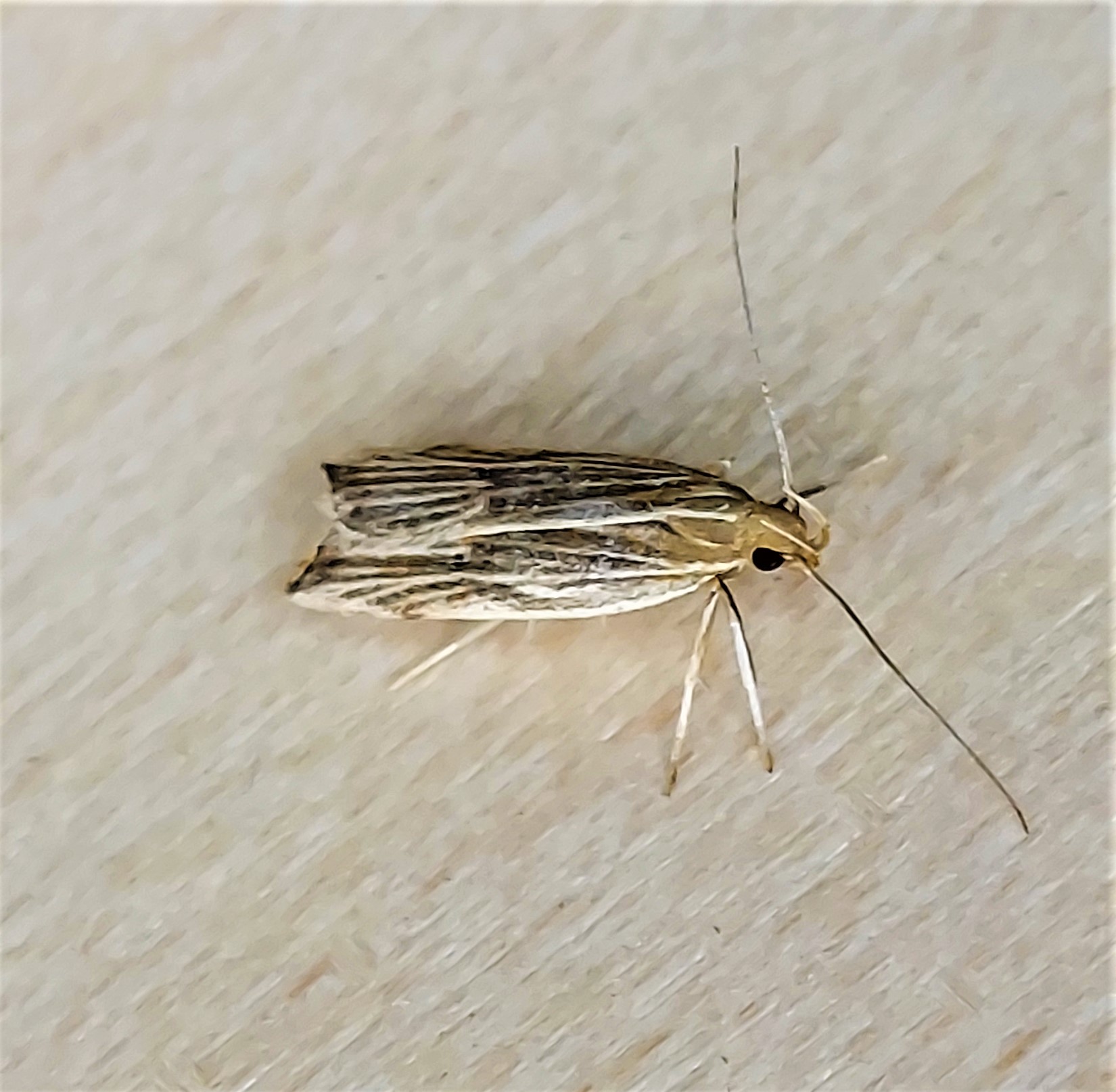
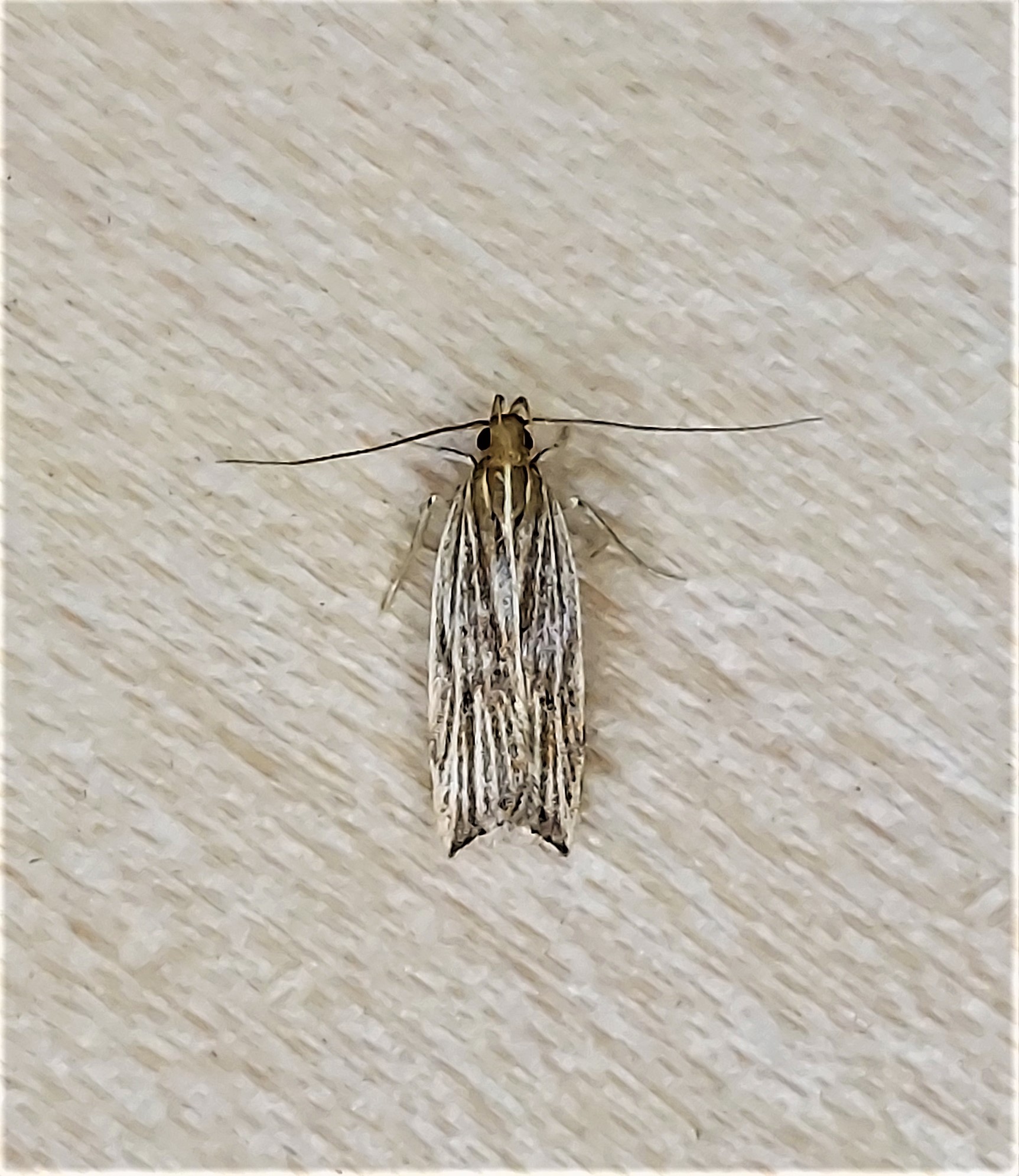
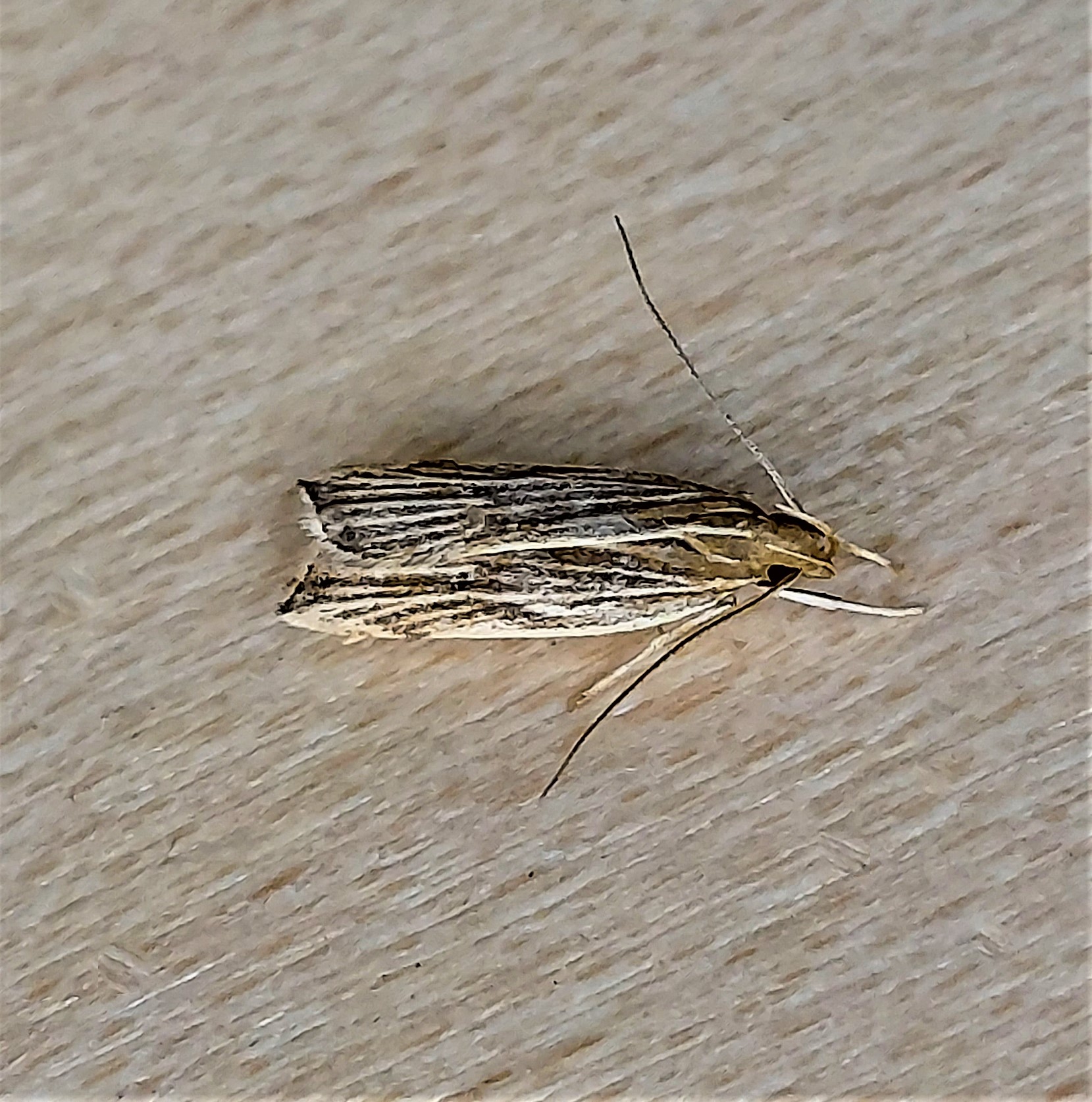
Helcystogramma hystricella (Braun, 1921) - Lanceolate Helcystogramma


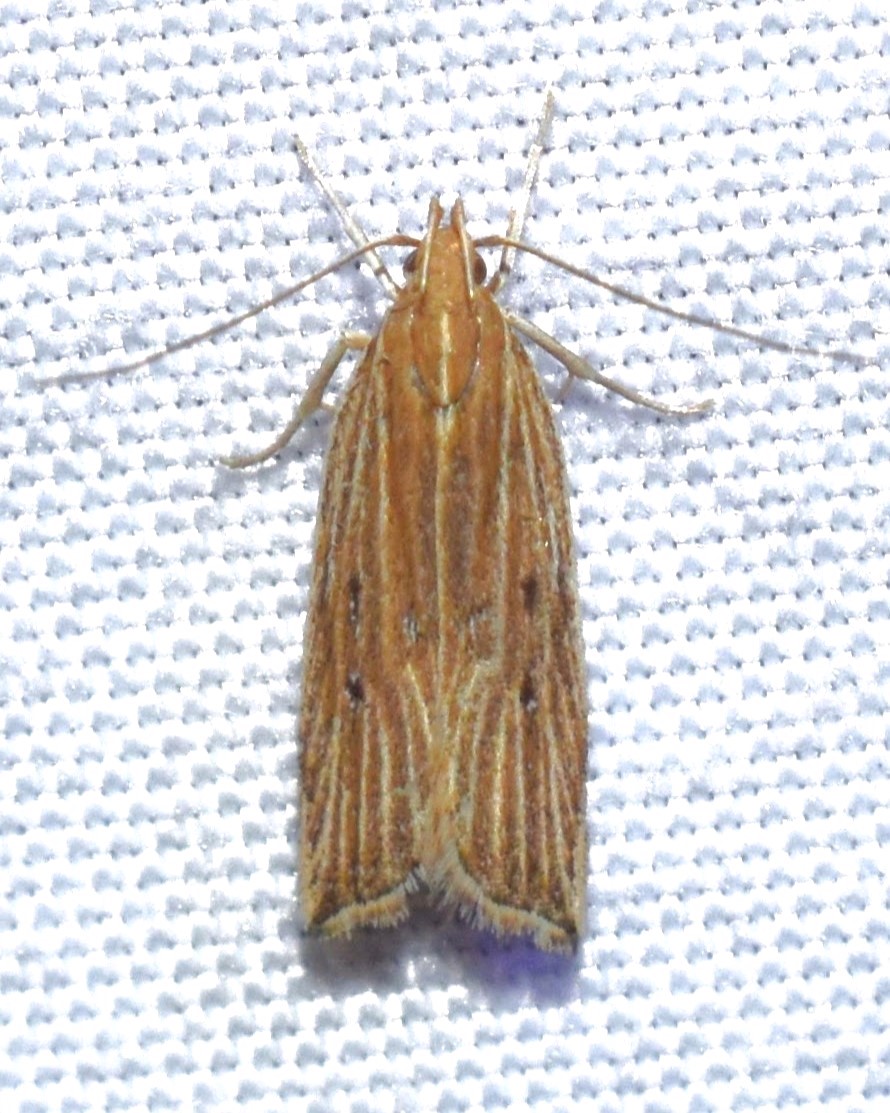
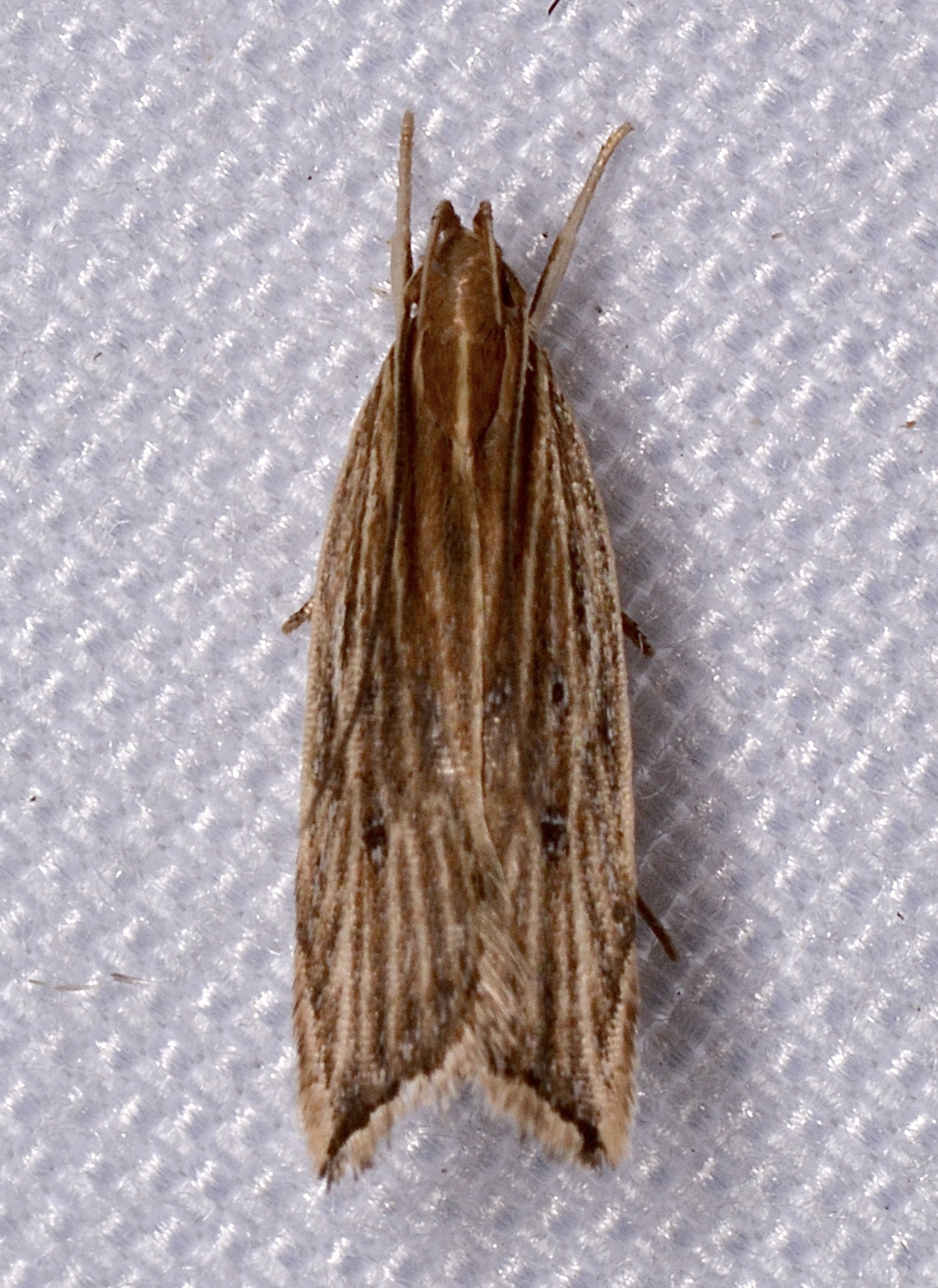
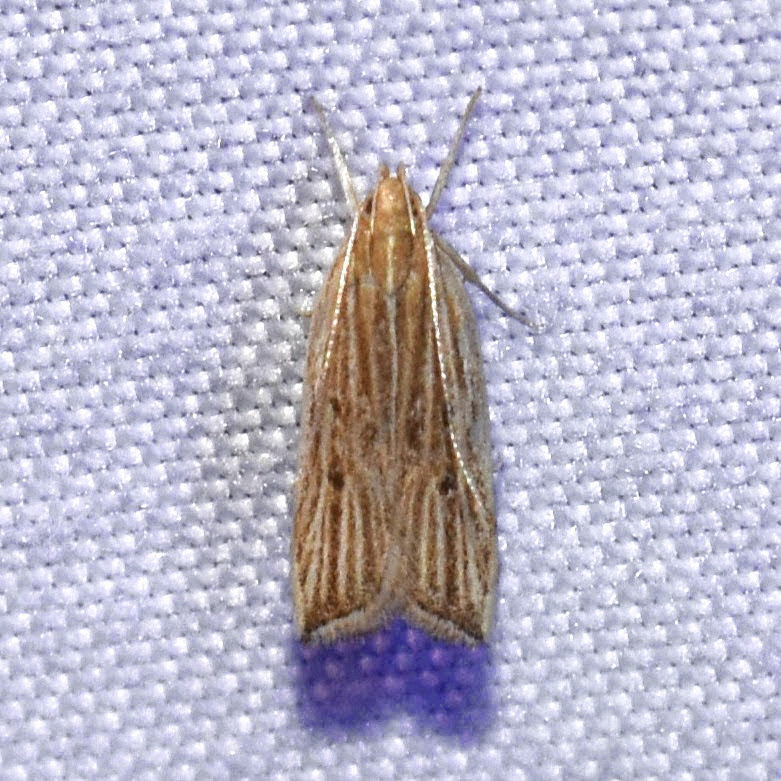
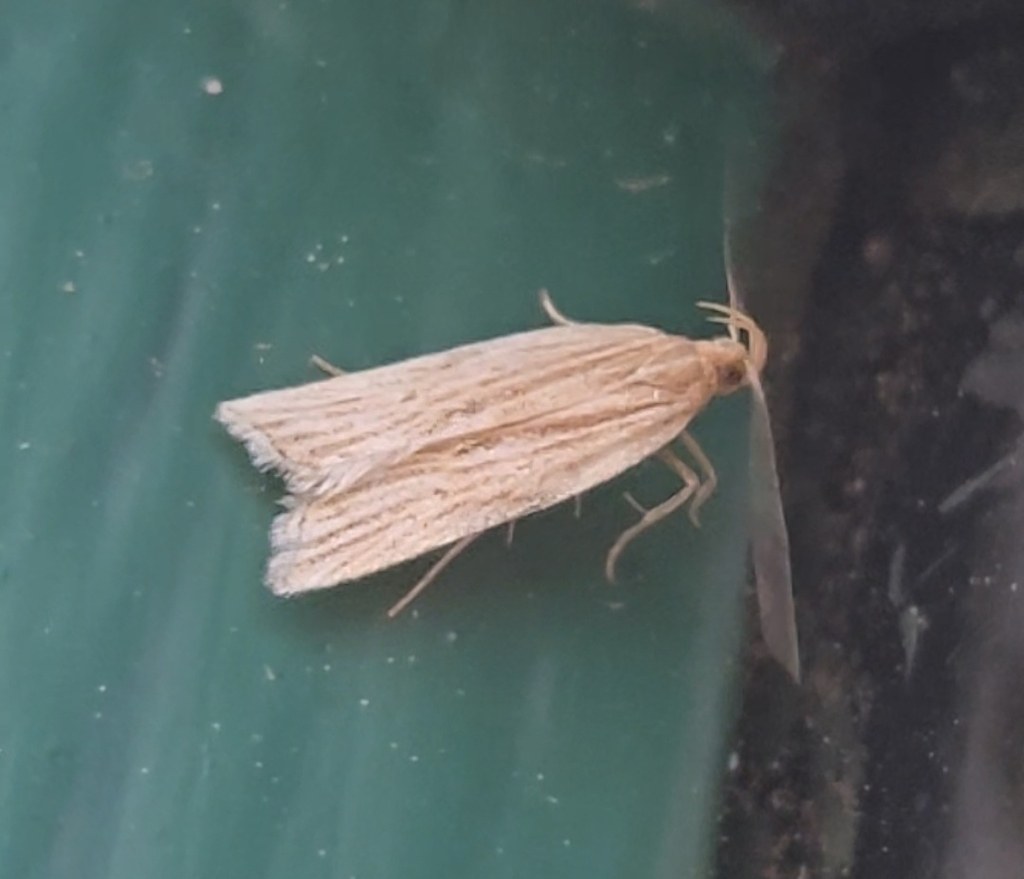
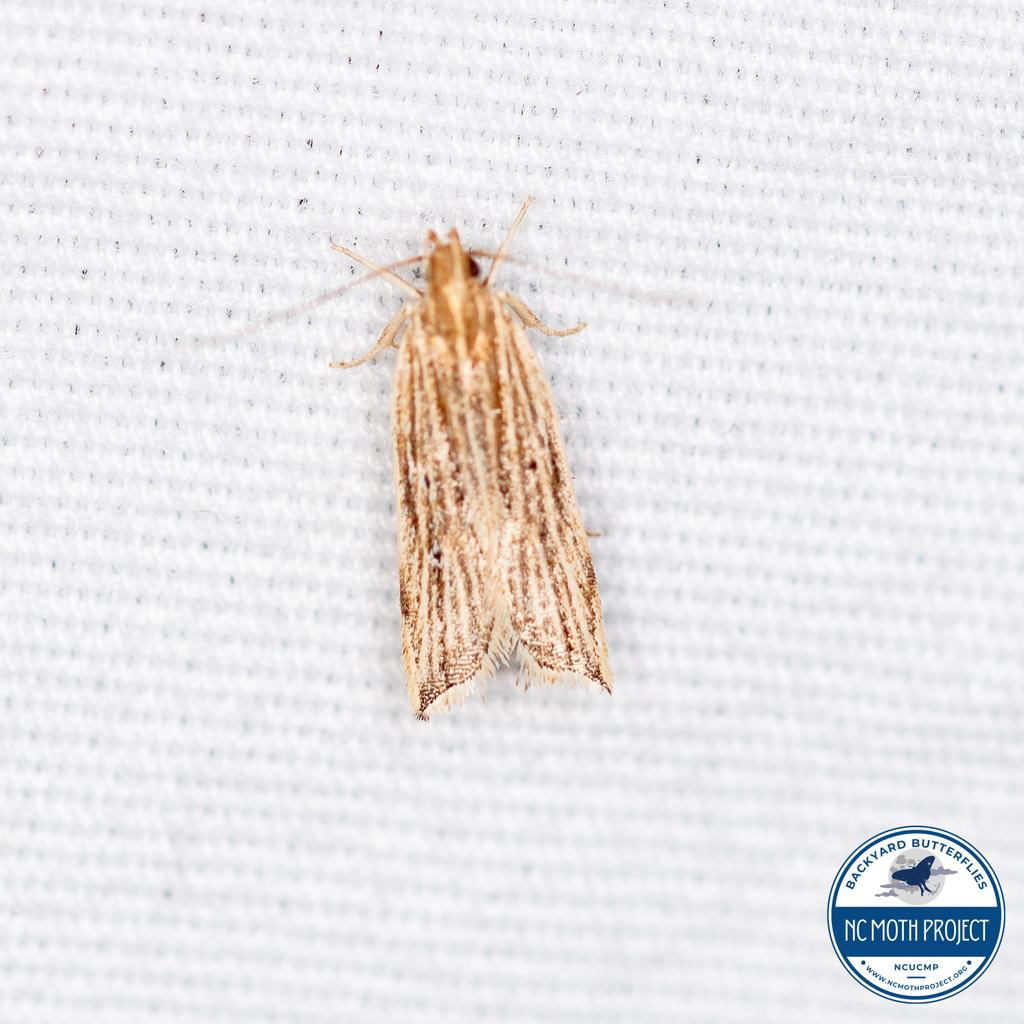
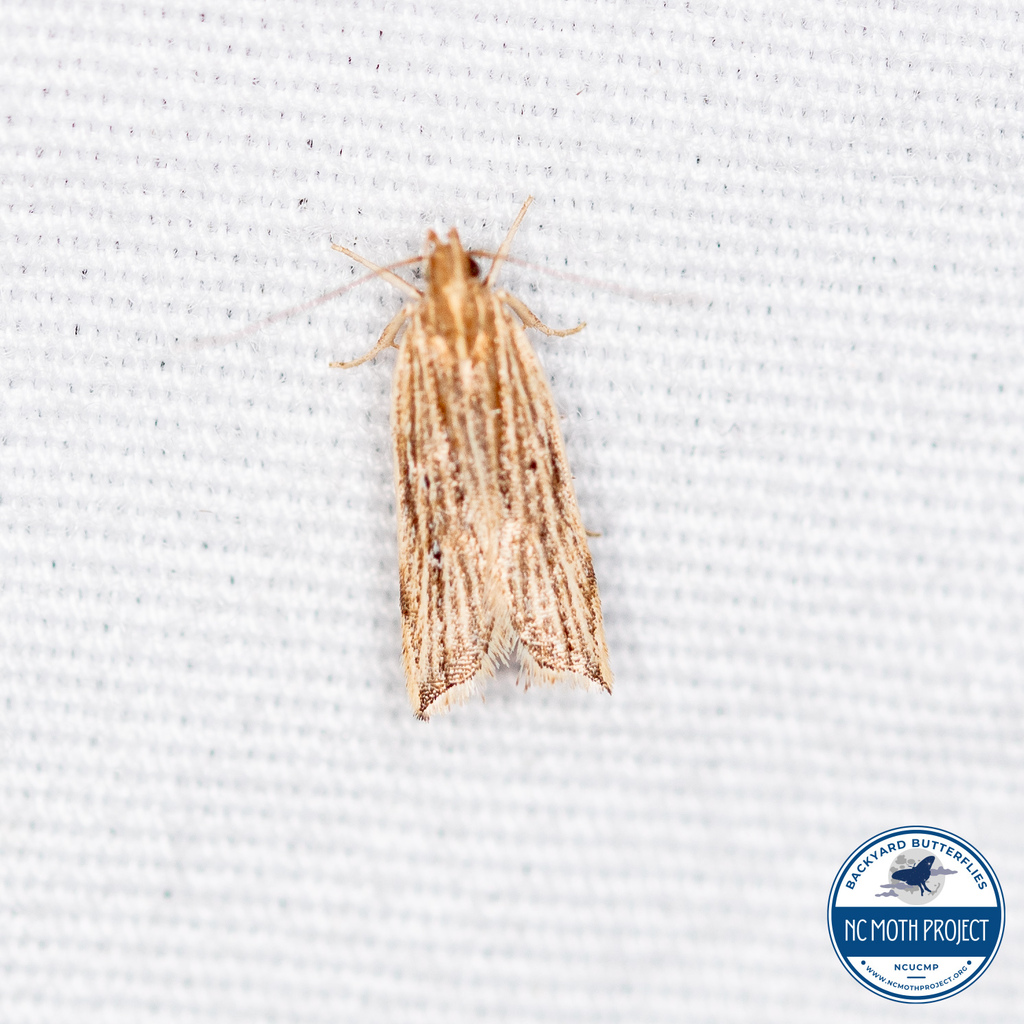
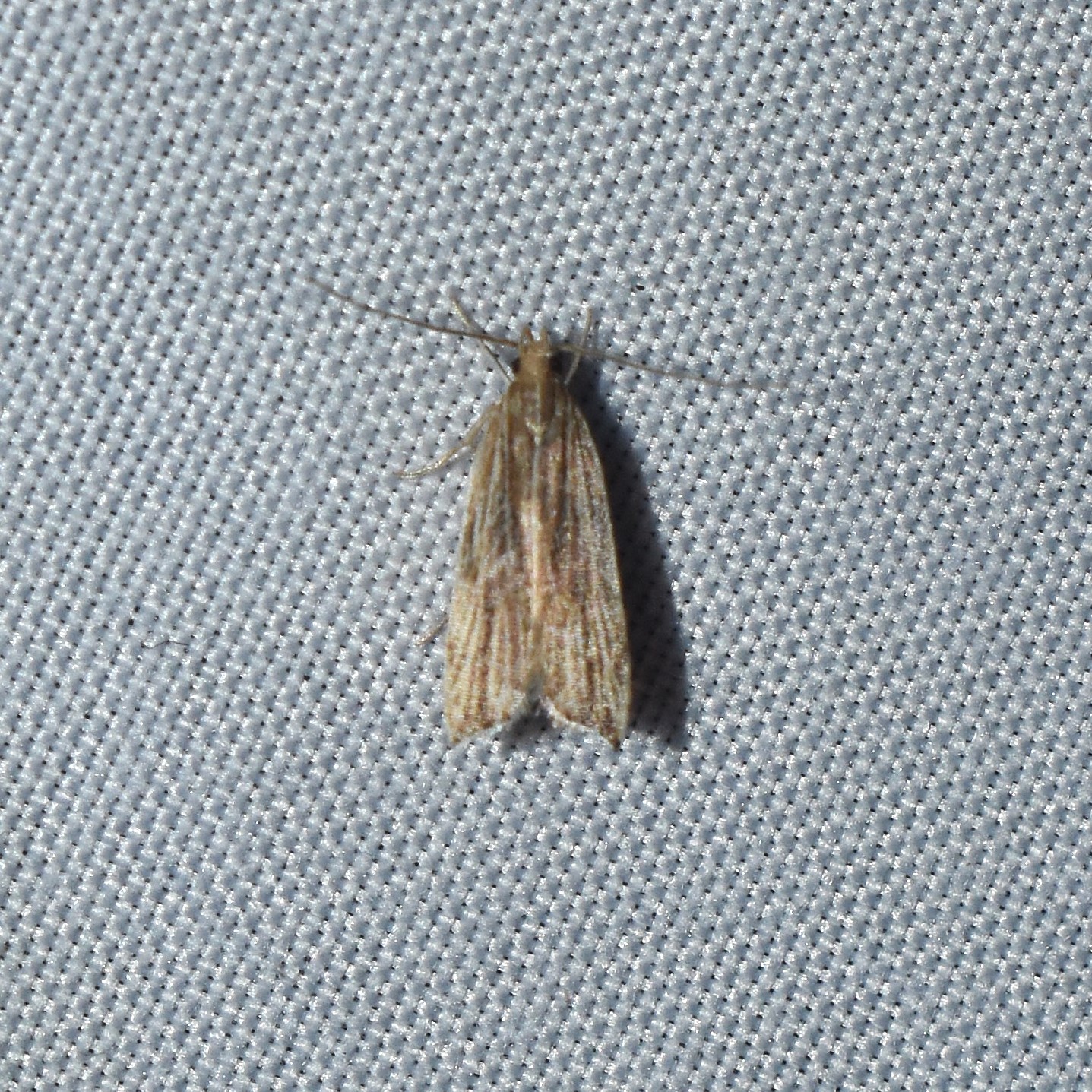
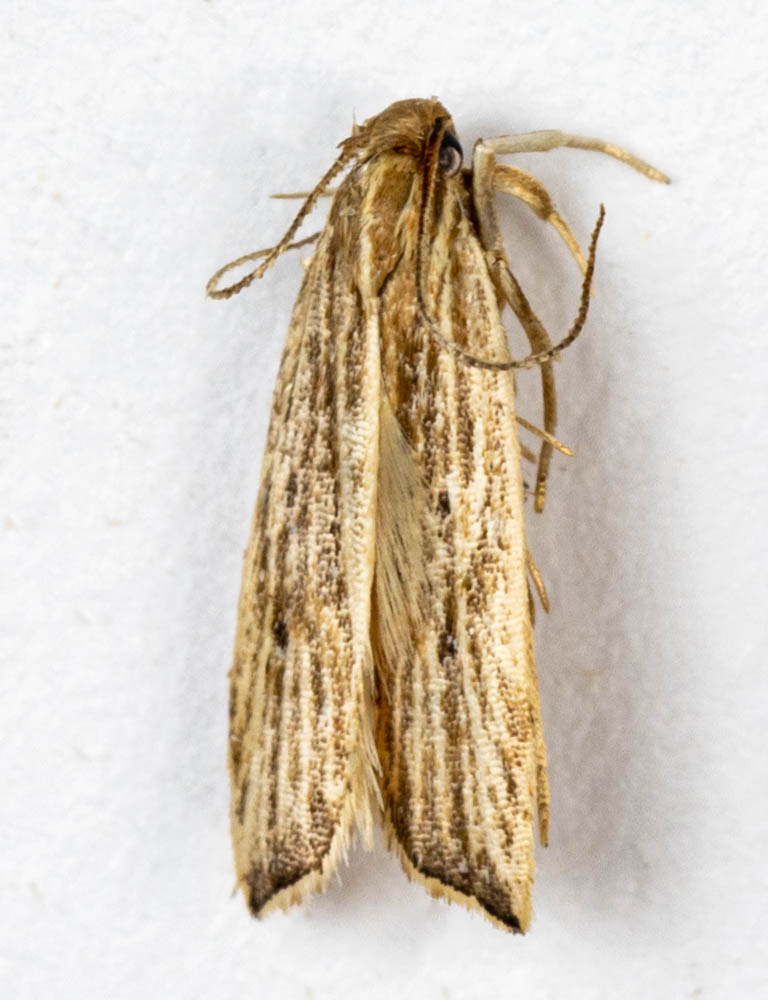
Helcystogramma hystricellaHelcystogramma hystricellaHelcystogramma hystricella
Taxonomy
Superfamily:
Gelechioidea
Family:
Gelechiidae
Subfamily:
Dichomeridinae
P3 Number:
59a0505
MONA Number:
2268.00
Other Common Name:
Lanceolate Moth
Identification
Field Guide Descriptions: Beadle and Leckie (2012)Online Resources: MPG, BugGuide, iNaturalist, Google, BAMONA, GBIF, BOLDTechnical Description, Adults: Hodges (1986)Technical Description, Immature Stages: Braun (1921)                                                                                 
Adult Markings: Helcystogramma hystricella is a distinctive species with a spear-shaped body form when resting, and a rich-brown color with pale veins that produce a striated appearance. The following description is based mostly on that on Braun (1921) who reared specimens from the Cincinnati area.

The face is pale straw-colored and the head reddish-brown. The labial palp is long, recurved and finely-tapered, with the tip reaching to the back of the head. The palp is light reddish-brown and finely-scaled, with the upper and lower edges having a fine white line from the base to the apex. The antenna is brownish and banded beneath with white, while the thorax is reddish-brown with a pale stripe through the midline.

The forewing varies from reddish-brown to fuscous and has the veins distinctly outlined with a pale straw color. The costal and dorsal margins, and a streak from the middle to the end of the cell, are also pale to whitish. The wing has three black spots that are edged with pale or white scales. These include a pair at around two-fifths the wing length from the base -- with one in the middle of the cell and the other in the fold -- and a third spot at the end of the cell at around three-fifths the wing length. The outer margin has a narrow line of blackish scales that contrasts sharply with the paler scales at the base of the fringe. The cilia has two parallel fuscous lines, with the outer one usually darker and broader. The hindwing is whitish-tan or grayish, and the legs straw-colored.
Wingspan: 13-15 mm (Braun, 1921).
Forewing Length: 5.0-7.5 (Hodges, 1986).
Adult Structural Features: Hodges (1986) has descriptions and illustrations of the male and female genitalia.
Adult ID Requirements: Identifiable from good quality photos of unworn specimens.
Immatures and Development: Braun (1921) reared a series of adults that were living and feeding within the rolled leaves of Eastern Bottlebrush-grass (Elymus hystrix), and noted that there are several generations each year. Larvae in the last brood overwinter in the leaves, which are rolled lengthwise. The overwintering larvae resume feeding in the spring, with the adults emerging in April and May.

The larva are boldly marked with a series of contrasting colors and patterns. The head is reddish-brown, with the lateral margins a darker reddish-brown. The dark reddish-brown continues onto the whitish first thoracic segment as two posteriorly converging lines. This is followed by four body segments (two thoracic; two abdominal) that are dark reddish-brown, with the anterior margins of the second and third thoracic segments whitish. The remaining abdominal segments are white, with a white mid-dorsal longitudinal stripe that is lined on either side by a wide, dark, reddish-brown patch. A wide, oblique reddish-brown line extends from the patch on each side and slants posteriorly to the ventral edge of the abdominal segment.
Larvae ID Requirements: Identifiable from good quality photos, especially where associated with known host plants.
Distribution in North Carolina
Distribution: Helcystogramma hystricella is found in eastern North America and mostly in regions with moderate to cooler climates. The range extends from Massachusetts, Vermont and New York westward across the Great Lakes region (including southern Ontario) to Nebraska, Wisconsin and Minnesota, then southward to Oklahoma, Missouri, northern Tennessee, Kentucky, West Virginia, northern Virginia, and North Carolina. As of 2025, we have a cluster of records from the eastern Piedmont, as well as one from a lower-elevation site in the Blue Ridge.
County Map: Clicking on a county returns the records for the species in that county.
Helcystogramma hystricellaAlamance Alexander Alleghany Anson Ashe Avery Beaufort Bertie Bladen Brunswick Buncombe Burke Cabarrus Caldwell Camden Carteret Caswell Catawba Chatham Cherokee Chowan Clay Cleveland Columbus Craven Cumberland Currituck Dare Davidson Davie Duplin Durham Edgecombe Forsyth Franklin Gaston Gates Graham Granville Greene Guilford Halifax Harnett Haywood Henderson Hertford Hoke Hyde Iredell Jackson Johnston Jones Lee Lenoir Lincoln Macon Madison Martin McDowell Mecklenburg Mitchell Montgomery Moore Nash New Hanover Northampton Onslow Orange Pamlico Pasquotank Pender Perquimans Person Pitt Polk Randolph Richmond Robeson Rockingham Rowan Rutherford Sampson Scotland Stanly Stokes Surry Swain Transylvania Tyrrell Union Vance Wake Warren Washington Watauga Wayne Wilkes Wilson Yadkin Yancey
Flight Dates:
High Mountains (HM) ≥ 4,000 ft.
Low Mountains (LM) < 4,000 ft.
Piedmont (Pd)
Coastal Plain (CP)

Click on graph to enlarge
Image showing flight dates by month for High Mountains greater than 4,000 feet, Low Mountains, Piedmont, and Coastal Plain: adults.
Flight Comments: The adults have been found from April through October in different areas of the range. As of 2025, our records are from late-April through late-October, with local populations likely producing three broods per year.
Habitats and Life History
Habitats: Local populations are typically found in mesic to moist hardwood forests or mixed pine-hardwood forests. Bottlebrush Grass, which appears to be the primary host, prefers circumneutral to basic, nutrient-rich soils.
Larval Host Plants: Larvae have been observed feeding on Eastern Bottlebrush-grass (Elymus hystrix) (Braun, 1921), which appears to be the primary host. There is also a BugGuide record (Michael Palmer, 2017) of a larva feeding on Hairy Woodland Brome (Bromus pubescens) in Oklahoma. - View
Observation Methods: The adults are attracted to lights. More information is needed on host use in North Carolina and elsewhere.
Wikipedia
See also Habitat Account for Rich Wet-Mesic Hardwood Forests
Status in North Carolina
Natural Heritage Program Status:
Natural Heritage Program Ranks: GNR S2S3
State Protection: Has no legal protection, although permits are required to collect it on state parks and other public lands.
Comments: This is a primarily northern species (Moth Photographers Group, accessed 2022-06-21). We have records from eight sites for this species in North Carolina as of 2025, with all but one within the Piedmont. The distribution of its host plant indicates that it could be more widespread, at least within stands of mesic forests.

 Photo Gallery for Helcystogramma hystricella - Lanceolate Helcystogramma

Photos: 13
Helcystogramma hystricella
iNaturalist
Recorded by: izi_izi - Izzy Ibarra on 2025-03-23
Buncombe Co.
Comment: iNat record - https://www.inaturalist.org/observations/266802890***(c) Izzy Ibarra, some rights reserved (CC BY-NC)| Public Positional Accuracy=19 m Elevation=2244 feet
Helcystogramma hystricella
Recorded by: David George, Jeff Niznik, Stephen Dunn on 2024-08-02
Chatham Co.
Comment:
Helcystogramma hystricella
iNaturalist
Recorded by: liorcarlson - Lior Carlson on 2024-07-29
Forsyth Co.
Comment: iNat record - https://www.inaturalist.org/observations/232744877***(c) Lior Carlson, some rights reserved (CC BY-SA)| Public Positional Accuracy=296 m Elevation=756 feet
Helcystogramma hystricella
Recorded by: Lior S. Carlson, Dean Furbish on 2024-07-29
Forsyth Co.
Comment:
Helcystogramma hystricella
Recorded by: David George, Stephen Dunn, Jeff Niznik, Patrick Coin on 2024-06-22
Chatham Co.
Comment:
Helcystogramma hystricella
Recorded by: David George, Stephen Dunn, Jeff Niznik on 2024-04-29
Chatham Co.
Comment:
Helcystogramma hystricella
Recorded by: Jeff Niznik on 2024-04-24
Orange Co.
Comment:
Helcystogramma hystricella
Recorded by: David George, Stephen Dunn, Jeff Niznik, Larry Chen on 2023-10-28
Orange Co.
Comment:
Helcystogramma hystricella
Recorded by: Steve Hall on 2022-08-02
Durham Co.
Comment:
Helcystogramma hystricella
Recorded by: Steve Hall on 2022-06-30
Durham Co.
Comment:
Helcystogramma hystricella
Recorded by: Gary Maness on 2022-06-18
Guilford Co.
Comment:
Helcystogramma hystricella
Recorded by: Gary Maness on 2022-06-18
Guilford Co.
Comment:
Helcystogramma hystricella
Recorded by: Gary Maness on 2022-06-18
Guilford Co.
Comment:

Photos of Helcystogramma hystricella from iNaturalist

Helcystogramma hystricella
© liorcarlson - Lior Carlson - 2024-07-29 - Forsyth Co.
iNat record
Helcystogramma hystricella
© izi_izi - Izzy Ibarra - 2025-03-23 - Buncombe Co.
iNat record