Moths of North Carolina
Scientific Name:
Common Name:
Family (Alpha):
« Home »
View PDFGelechiidae Members: Dichomeris Members: 17 NC Records

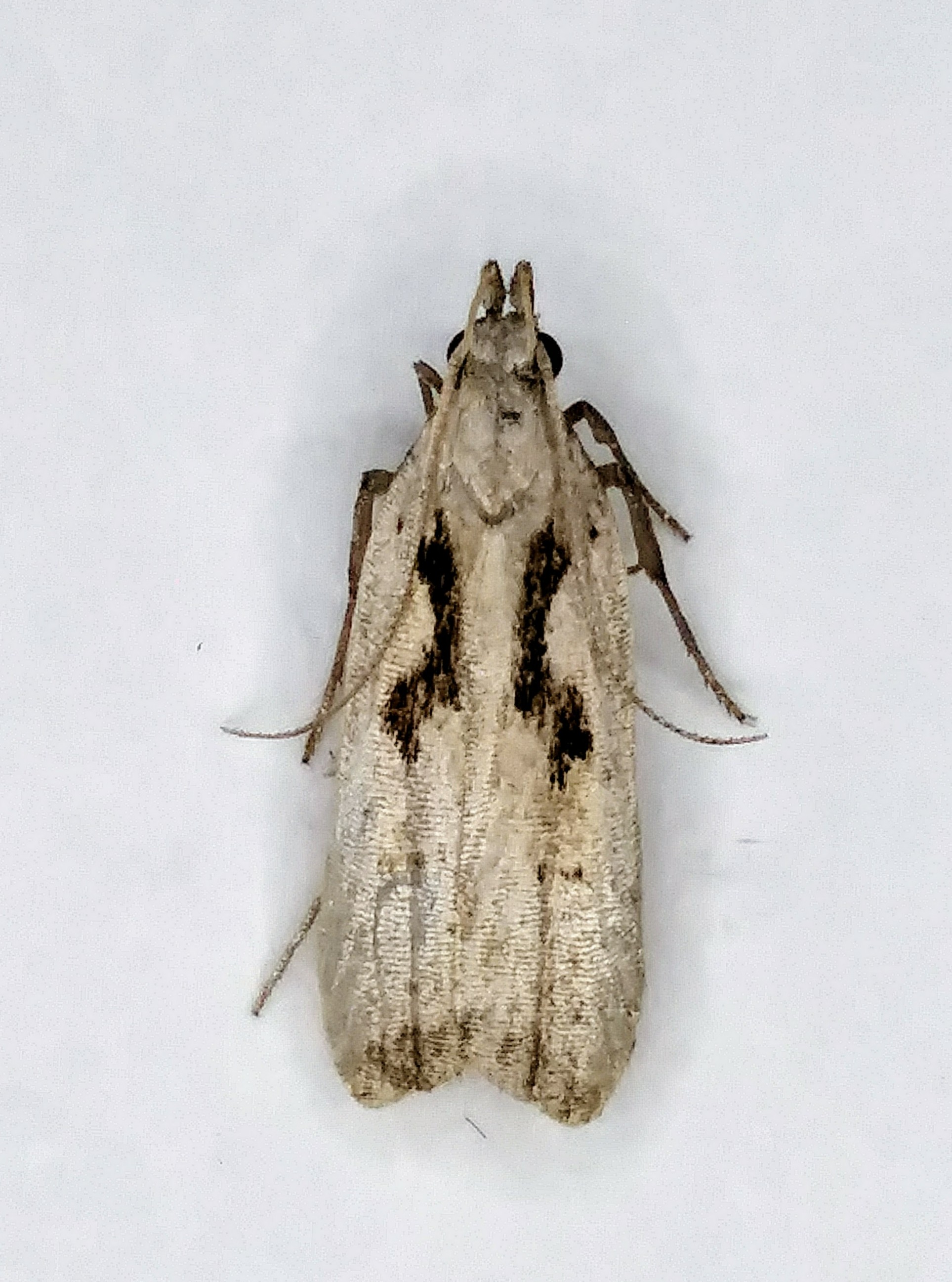
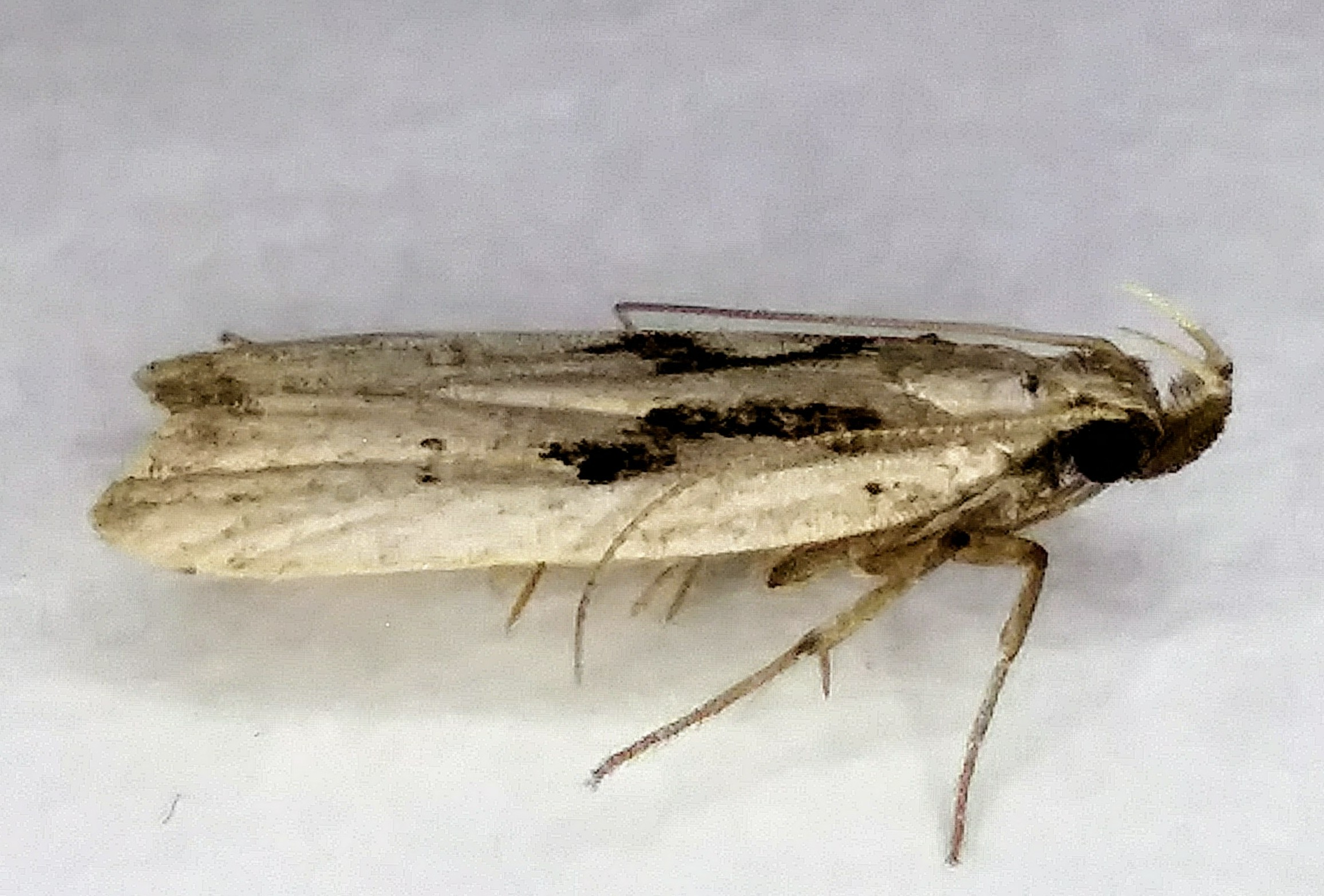
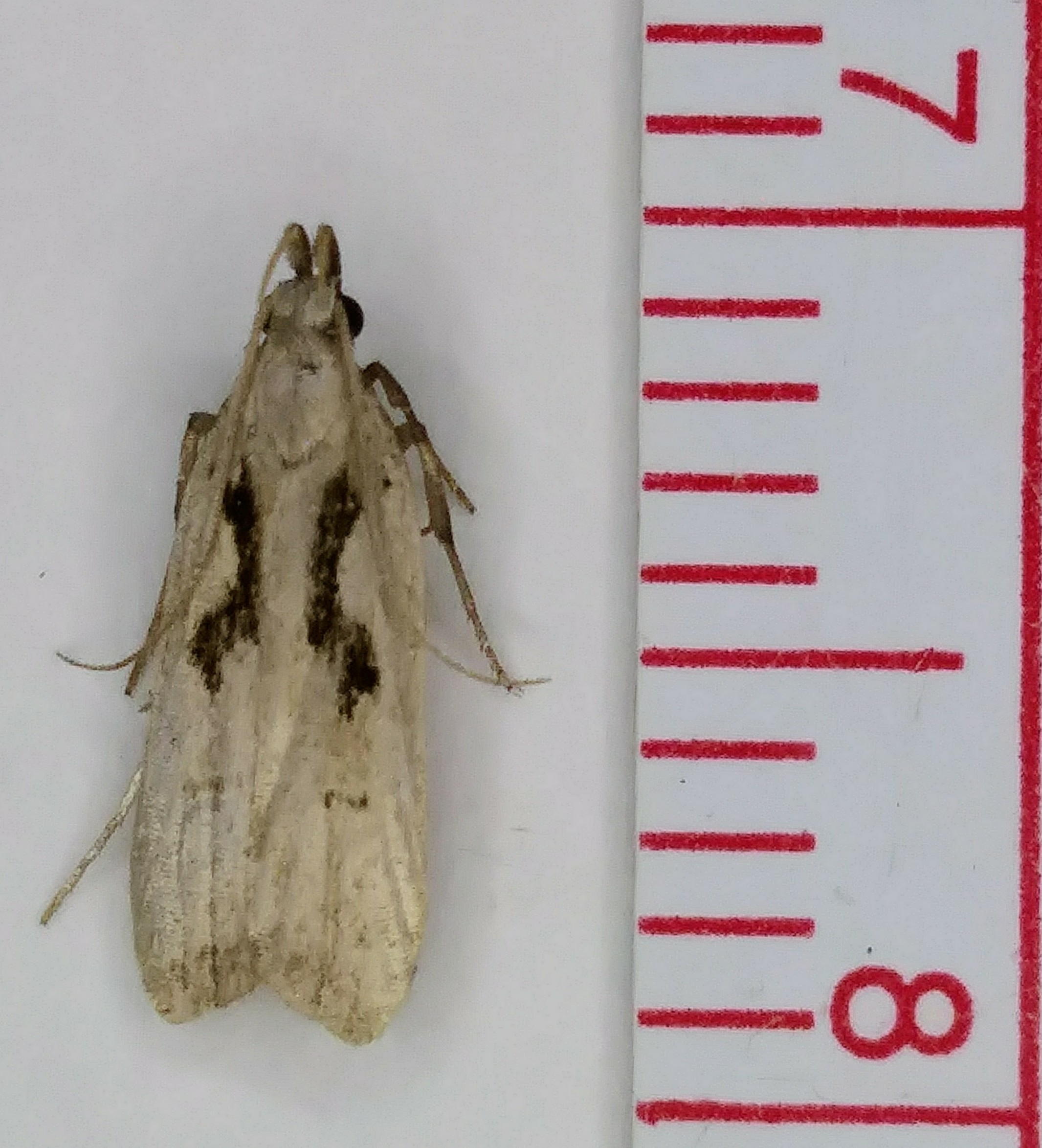
Dichomeris laetitia Hodges, 1986 - No Common Name


Dichomeris laetitiaDichomeris laetitiaDichomeris laetitiaDichomeris laetitia
Taxonomy
Superfamily:
Gelechioidea
Family:
Gelechiidae
Subfamily:
Dichomeridinae
P3 Number:
59a0545
MONA Number:
2294.30
Identification
Field Guide Descriptions: Online Resources: MPG, BugGuide, iNaturalist, Google, BAMONA, GBIF, BOLDTechnical Description, Adults: Hodges (1986).                                                                                  
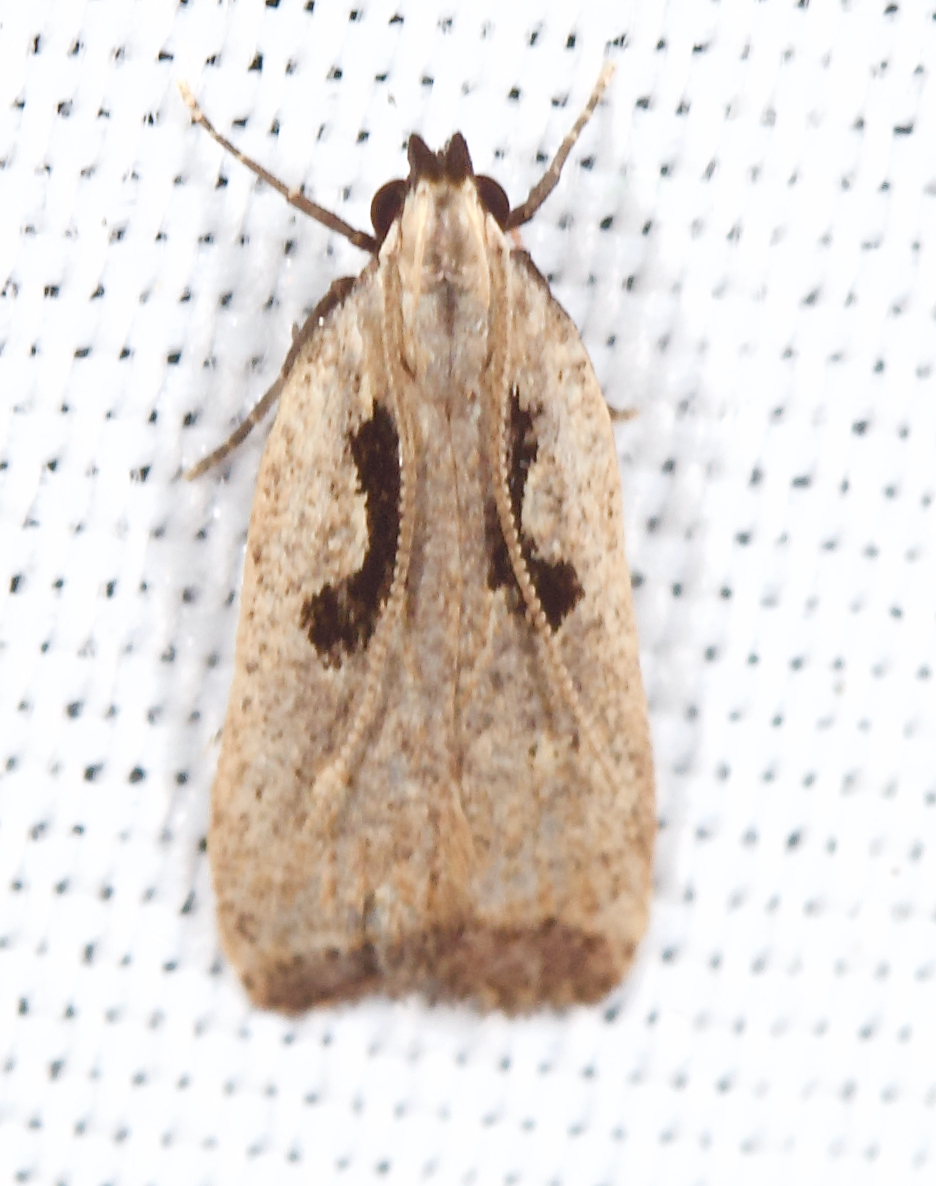
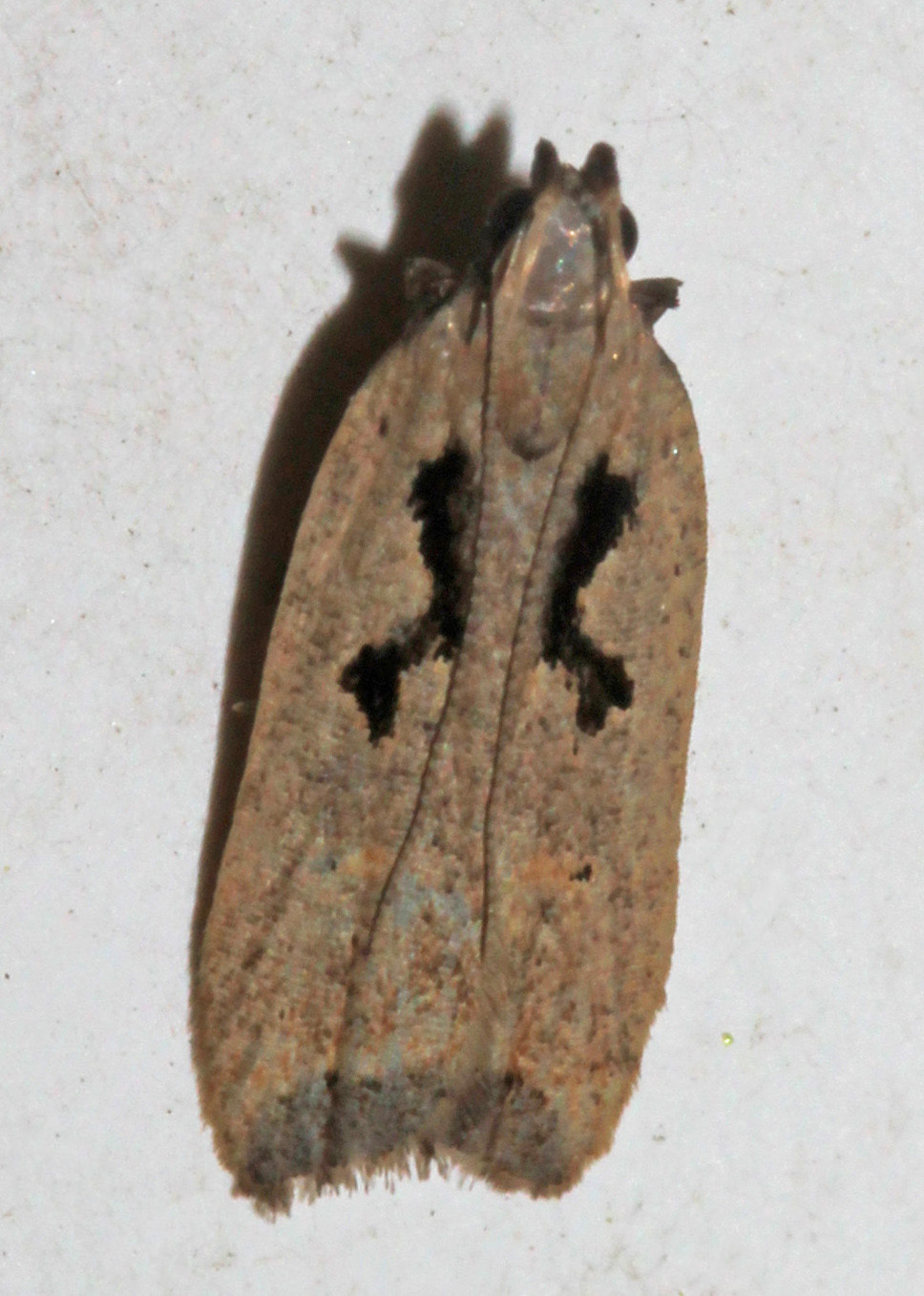
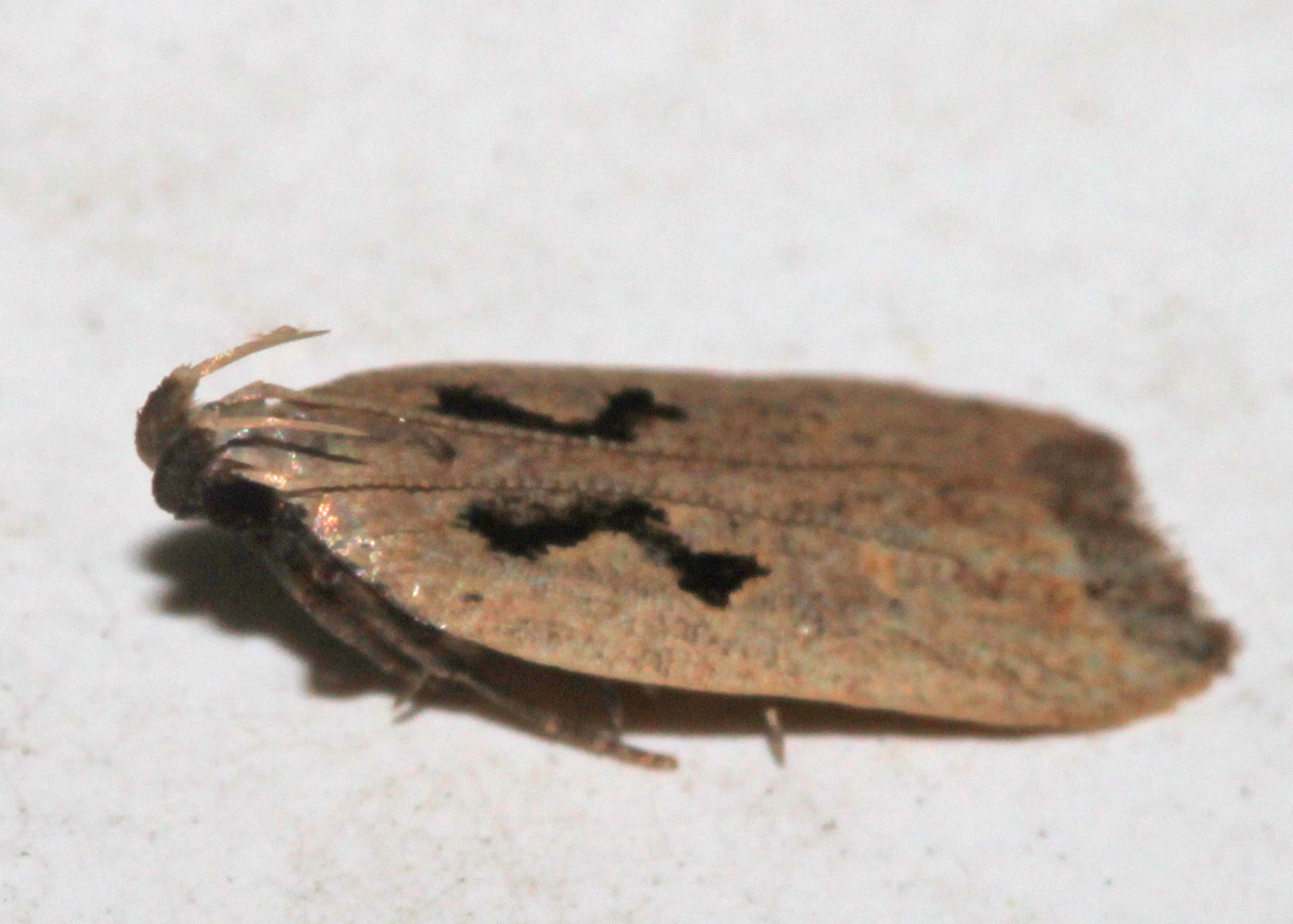
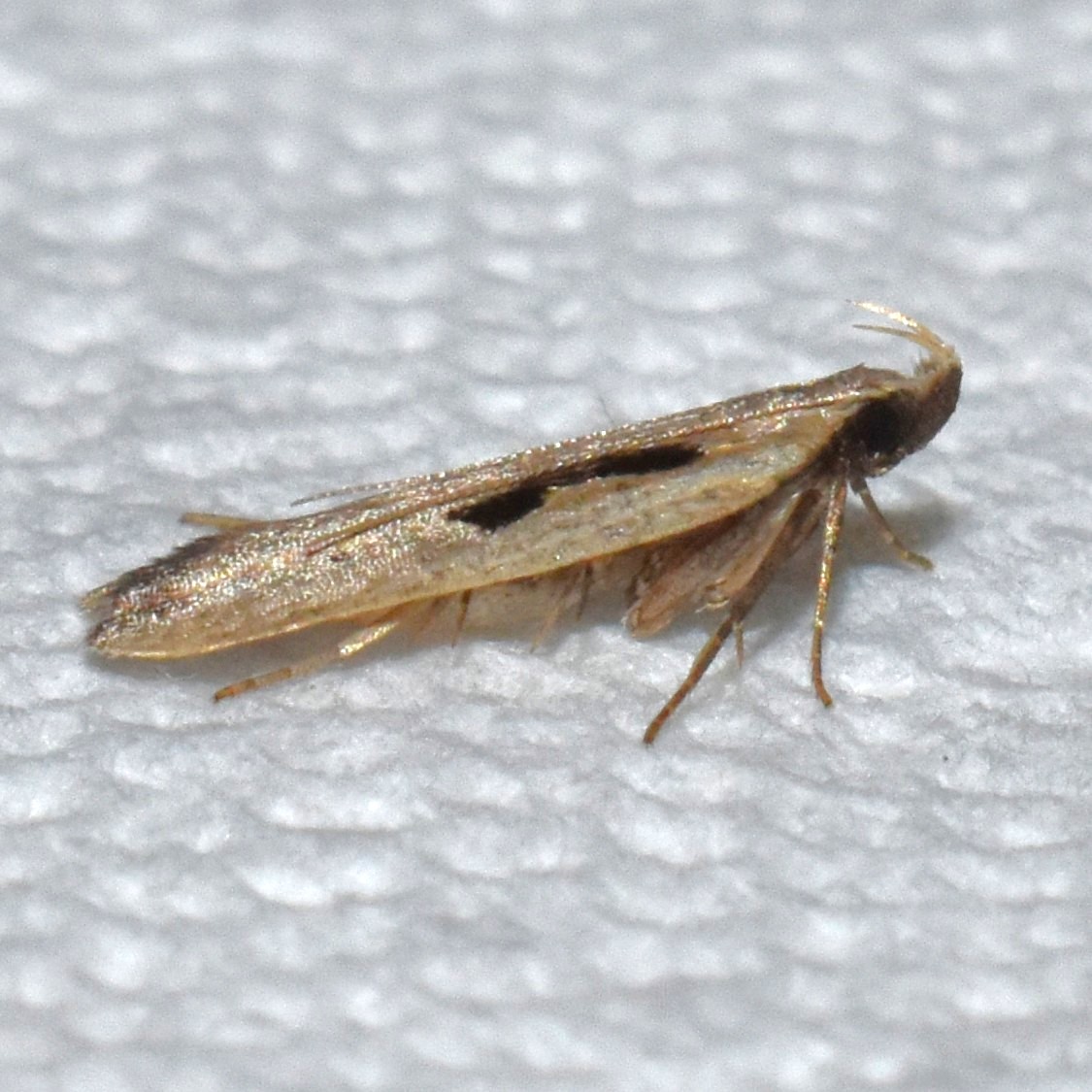
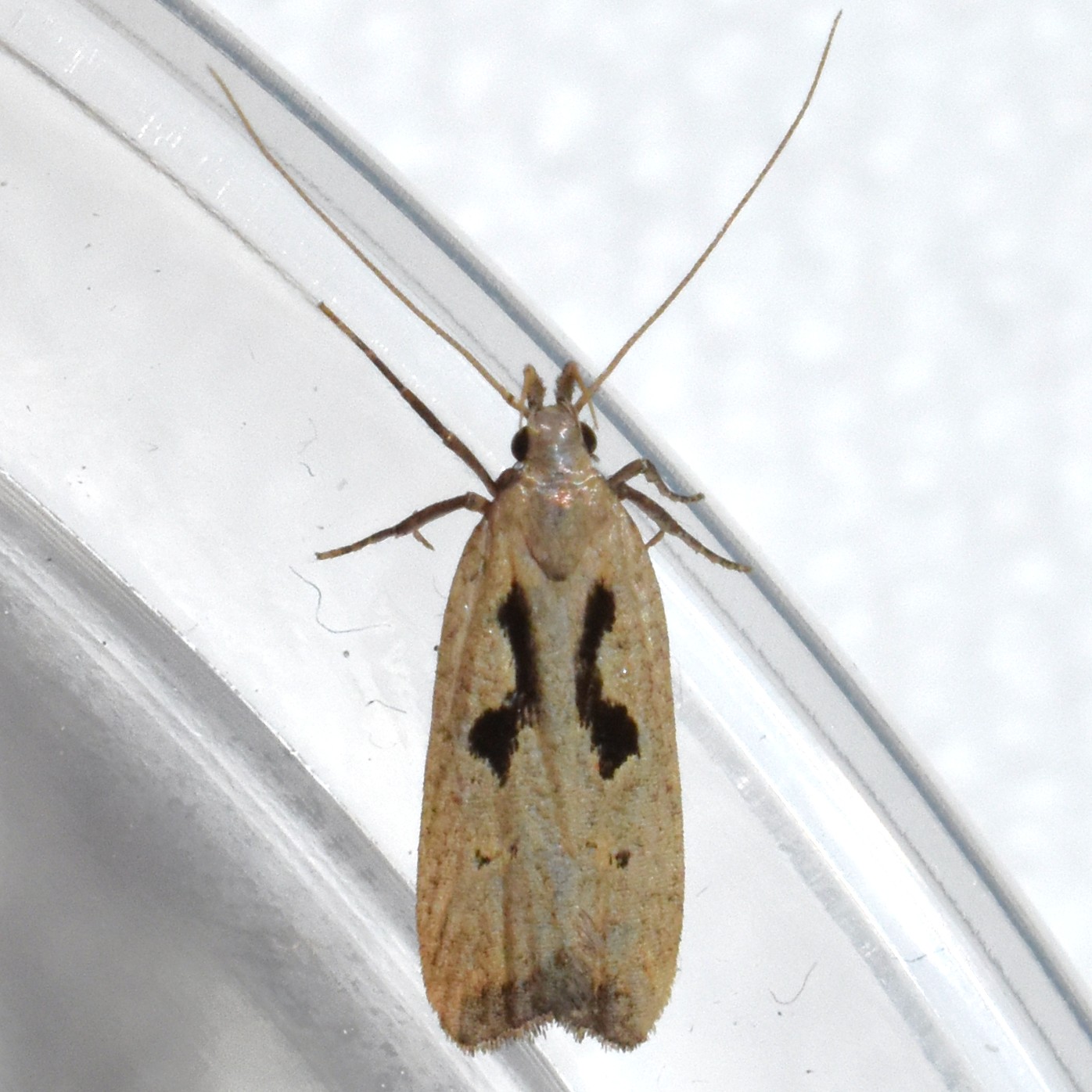
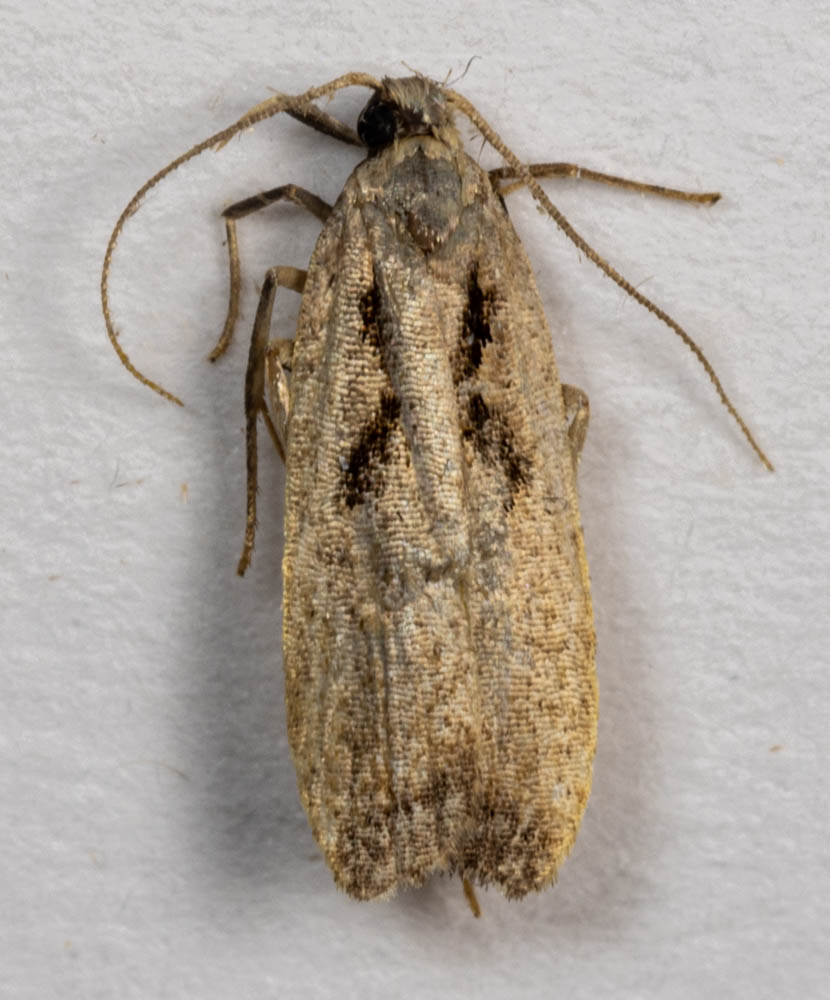
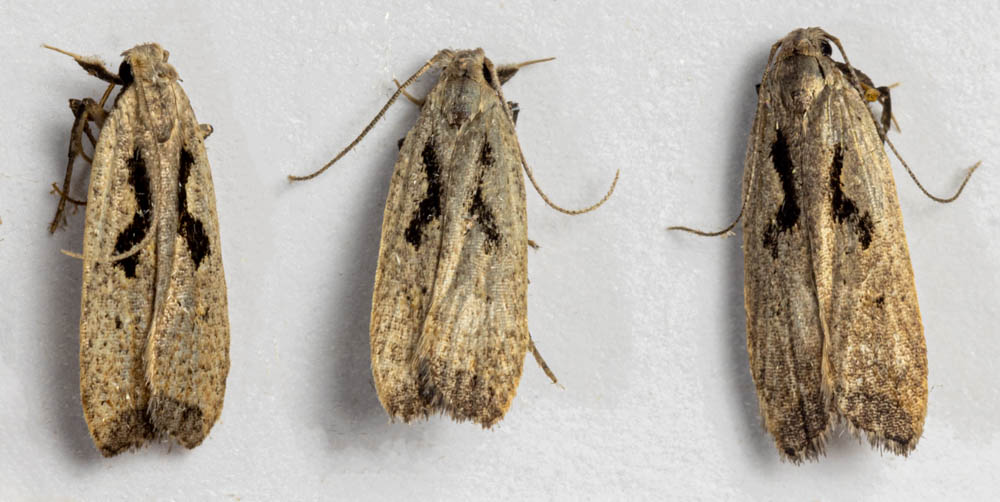
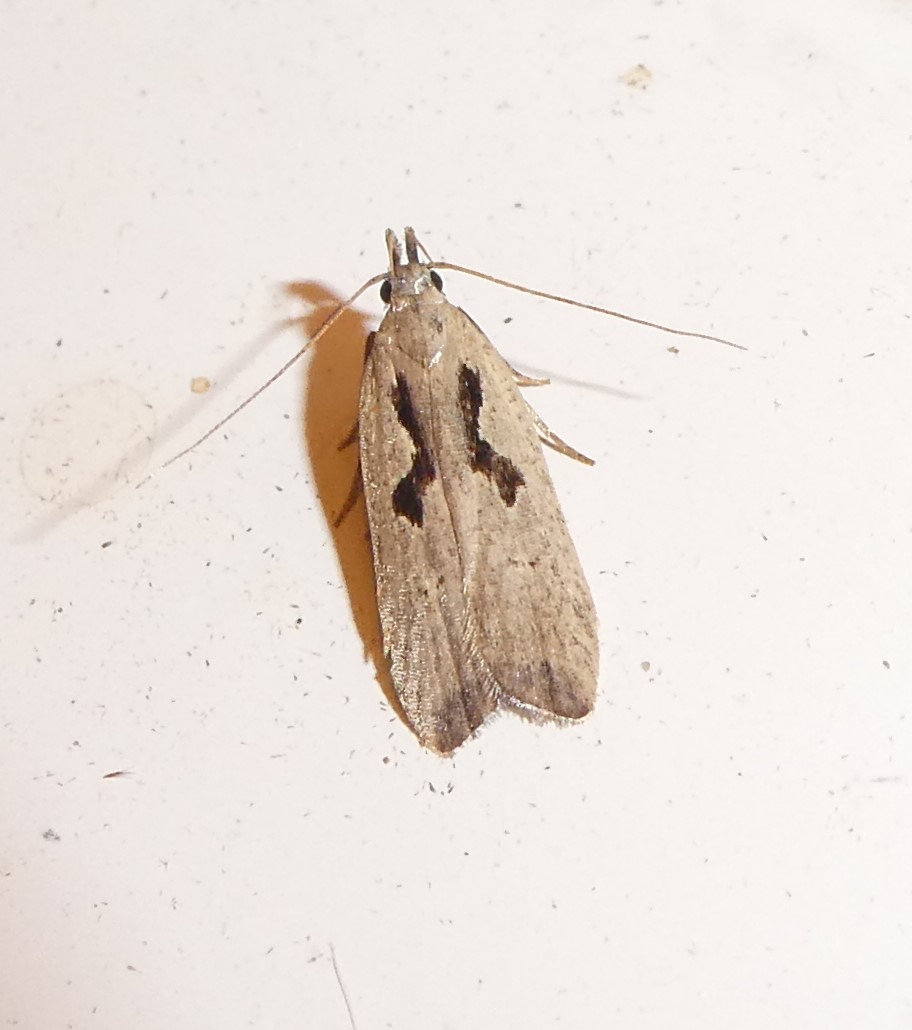
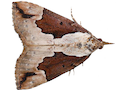
Adult Markings: Dichomeris laetitia is best identified by the forewing patterning that consists of a brownish-yellow ground color that is overlain by two conspicuous marks. The first is a broad, dark-brown to blackish-brown, angulated blotch that extends from just before the wing base along the inner margin, then turns inward at about one-third the wing length and terminating near the center. The blotch approaches, but does not touch, the inner margin. The second is a less well-defined, grayish band that fills the subterminal region of the wing. A small, faint, dark-brown spot is also often evident between these two marks at the end of the cell, but is often entirely missing (Hodges, 1986). The hindwing tends to be uniformly light brown with a slightly lighter-colored fringe.

The labial palp is mainly dark-brown with a well-developed, dark-brown, dorsal scale tuft of similar color that becomes narrowly off-white apically. The frons is dark-brown in front of the eyes, while the vertex and occiput are pale gray (Hodges, 1986). The antenna and thorax are predominantly pale yellowish-gray, while the legs are mostly dark grayish-brown.

D. laetitia can be confused with D. furia, but the latter has a somewhat different-shaped dark mark on the wing base that touches the inner margin, a yellowish-orange scale tuft on the labial palp (versus brown), and a more conspicuous subterminal band that is dark brown to nearly black rather than light gray. It also resembles D. bilobella and D. setosella, but these two have a triangular-shaped bulge on the basal blotch that reaches the inner margin, along with heavy dark dusting on the distal half of the forewing.
Forewing Length: 5.8-7.2 mm (Hodges, 1986).
Adult Structural Features: Hodges (1986) has illustrations of the male and female genitalia.
Adult ID Requirements: Identifiable from good quality photos of unworn specimens.
Immatures and Development: We are not aware on any records of the larvae or their life history.
Distribution in North Carolina
Distribution: Dichomeris laetitia is found throughout much of the eastern US from southern Pennsylvania and Maryland westward to Illinois and Missouri, and southward to eastern Texas, Louisiana, Mississippi, Alabama, and central Georgia. As of 2025, we have records from all three physiographic provinces, with most from the Piedmont and only one from the western Coastal Plain.
County Map: Clicking on a county returns the records for the species in that county.
Dichomeris laetitiaAlamance Alexander Alleghany Anson Ashe Avery Beaufort Bertie Bladen Brunswick Buncombe Burke Cabarrus Caldwell Camden Carteret Caswell Catawba Chatham Cherokee Chowan Clay Cleveland Columbus Craven Cumberland Currituck Dare Davidson Davie Duplin Durham Edgecombe Forsyth Franklin Gaston Gates Graham Granville Greene Guilford Halifax Harnett Haywood Henderson Hertford Hoke Hyde Iredell Jackson Johnston Jones Lee Lenoir Lincoln Macon Madison Martin McDowell Mecklenburg Mitchell Montgomery Moore Nash New Hanover Northampton Onslow Orange Pamlico Pasquotank Pender Perquimans Person Pitt Polk Randolph Richmond Robeson Rockingham Rowan Rutherford Sampson Scotland Stanly Stokes Surry Swain Transylvania Tyrrell Union Vance Wake Warren Washington Watauga Wayne Wilkes Wilson Yadkin Yancey
Flight Dates:
 High Mountains (HM) ≥ 4,000 ft.
 Low Mountains (LM) < 4,000 ft.
 Piedmont (Pd)
 Coastal Plain (CP)

Click on graph to enlarge
Image showing flight dates by month for High Mountains greater than 4,000 feet, Low Mountains, Piedmont, and Coastal Plain: adults.