Moths of North Carolina
Scientific Name:
Common Name:
Family (Alpha):
« Home »
View PDFGelechiidae Members: Dichomeris Members: 21 NC Records

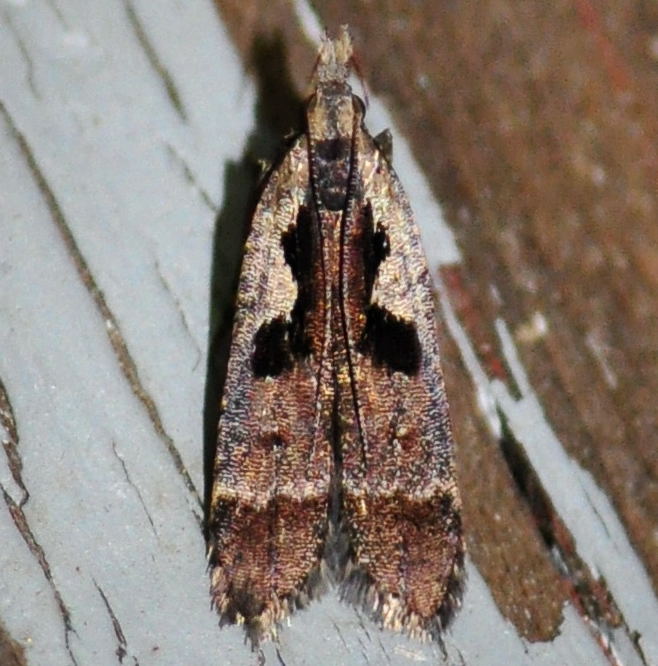
Dichomeris setosella (Clemens, 1860) - Hairy Dichomeris


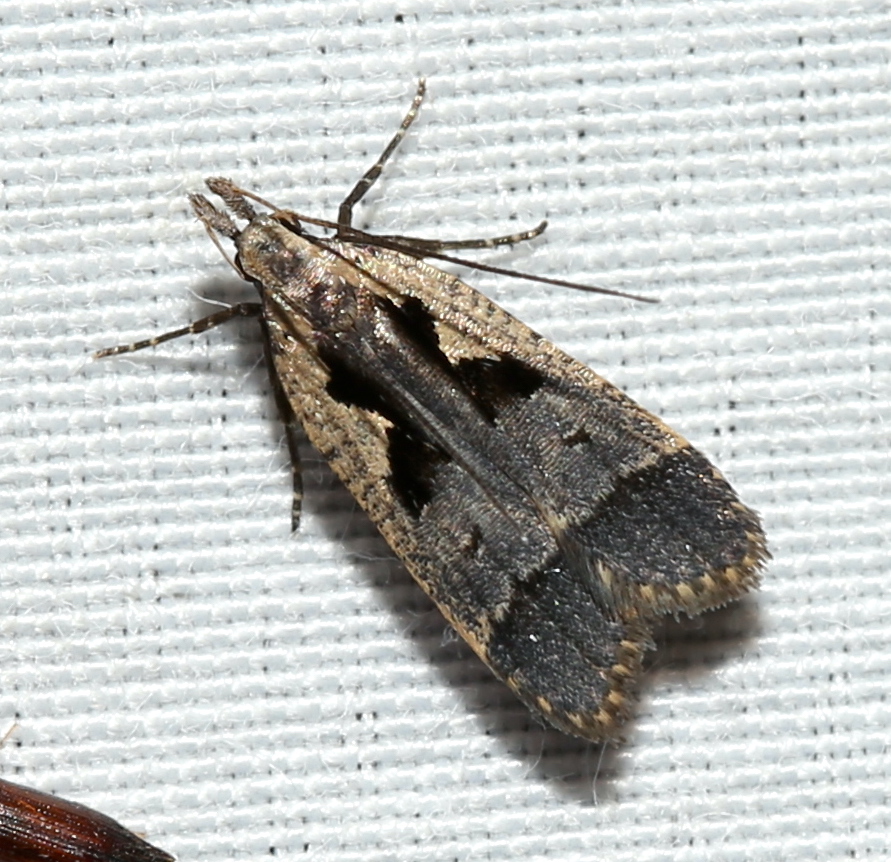
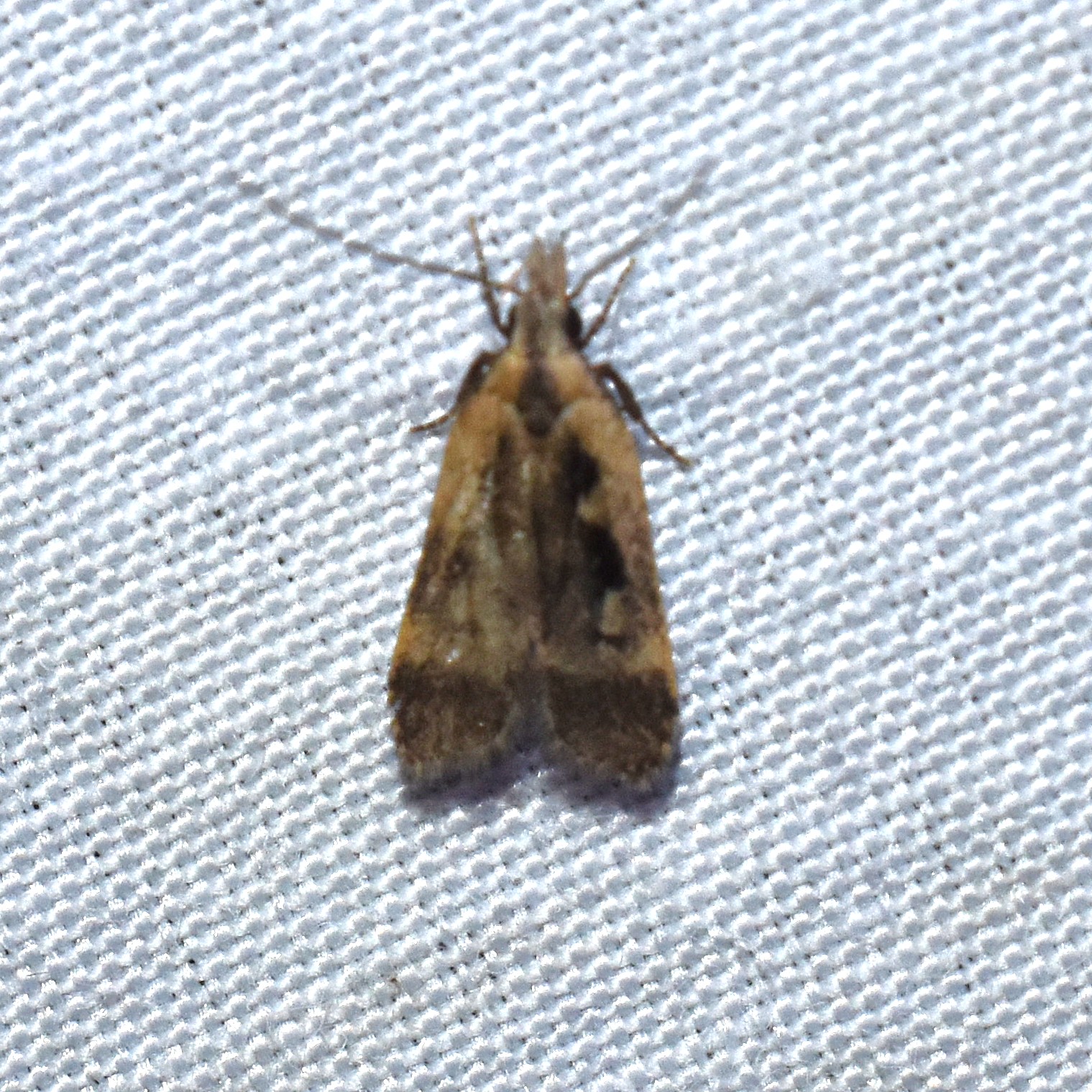
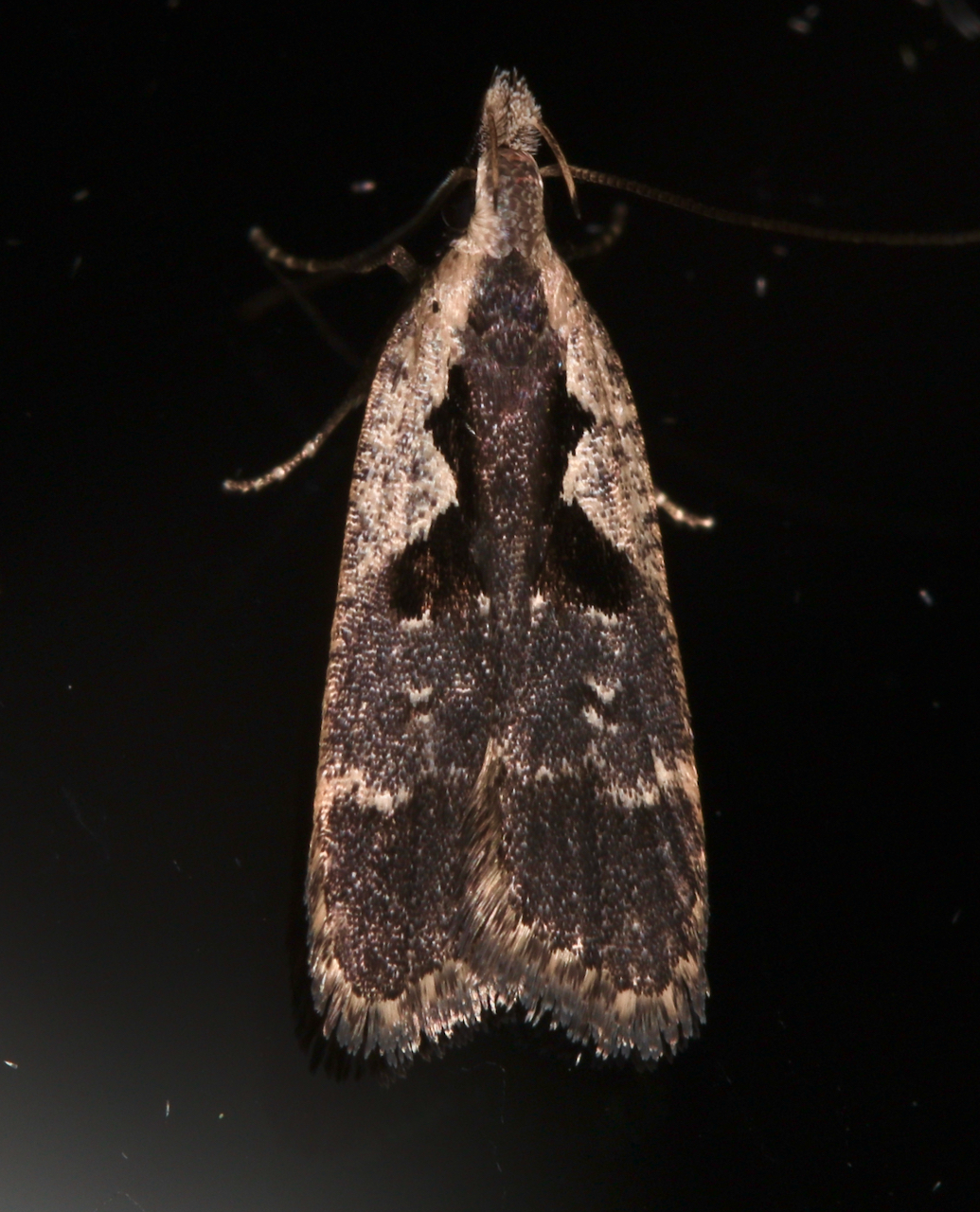
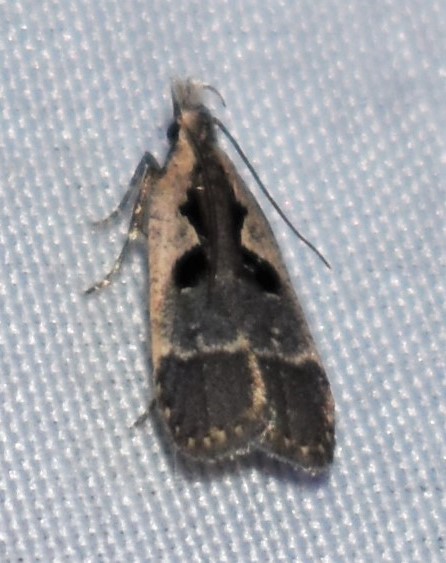
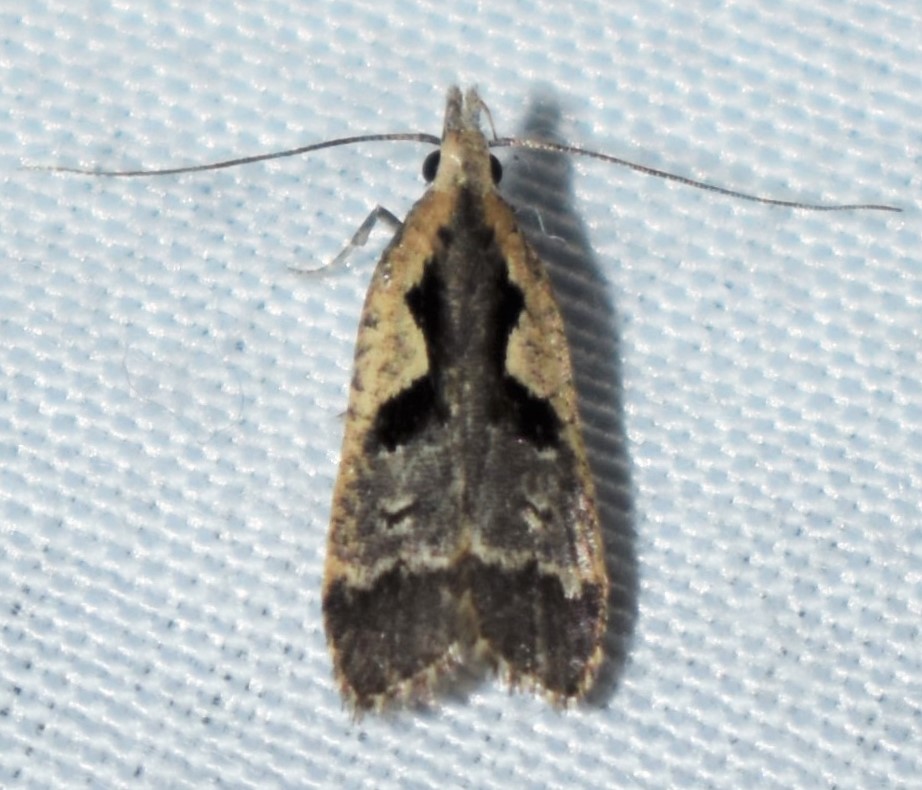
Dichomeris setosellaDichomeris setosellaDichomeris setosella
view caption
Dichomeris setosella
view caption
Taxonomy
Superfamily:
Gelechioidea
Family:
Gelechiidae
Subfamily:
Dichomeridinae
P3 Number:
59a0537
MONA Number:
2302.00
Identification
Field Guide Descriptions: Online Resources: MPG, BugGuide, iNaturalist, Google, BAMONA, GBIF, BOLDTechnical Description, Adults: Hodges (1986)                                                                                 
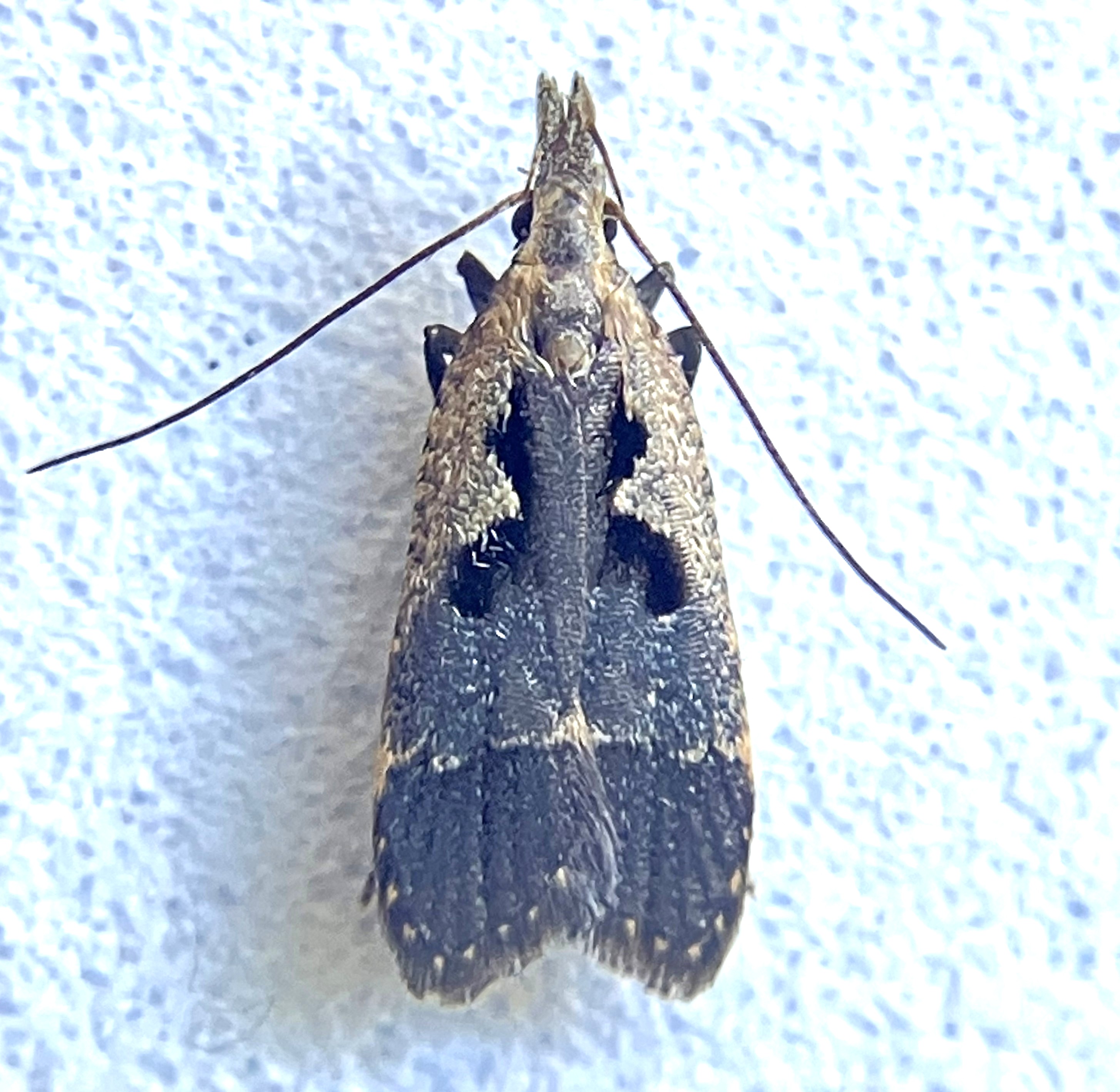
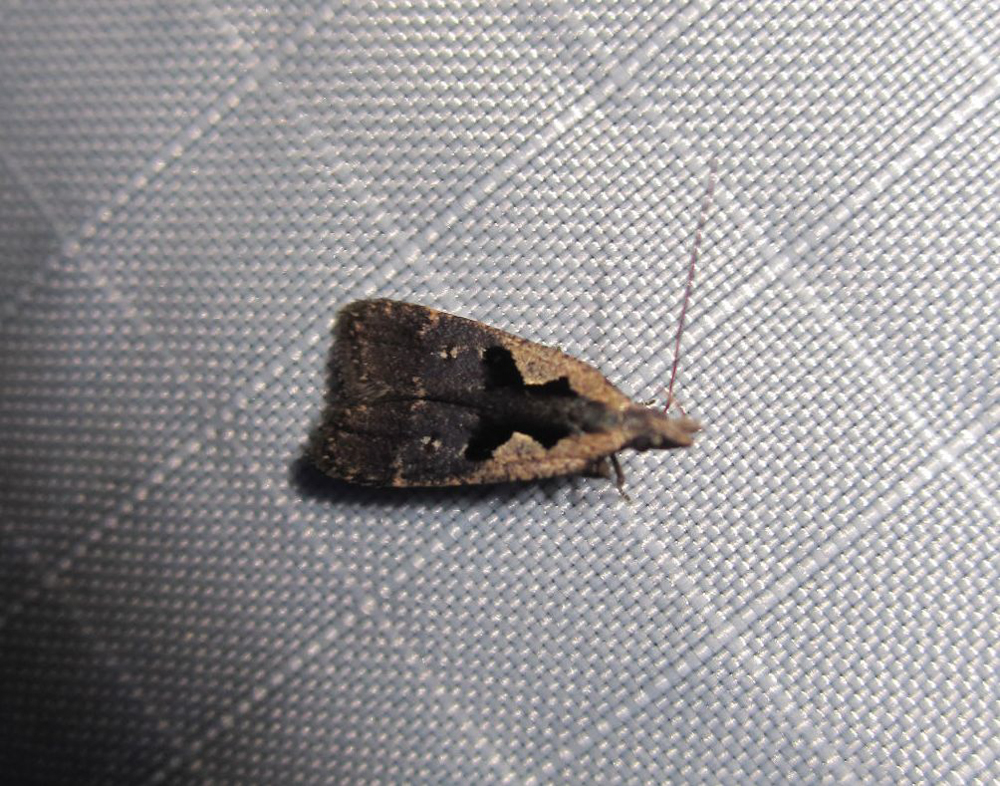
Adult Markings: Dichomeris setosella and D. bilobella are two closely related species that have very similar patterning and coloration on the forewing. The following is a general description that applies to both. The basal half has a dull, pale-yellow wash except for a conspicuous dark mark along the inner margin. The mark begins basally as a roughly triangular-shaped feature that contracts posteriorly to a narrow neck before expanding again into a broad, weakly curved, diagonal bar that projects towards the costa. The bar terminates before reaching the costa and is followed posteriorly by a wide zone of grayish to grayish-black wash in the post-medial area. Within this is a small black spot at the end of the cell that is bordered basally and distally to varying degrees with pale-yellow scales. The grayish zone is followed by a narrow, pale-yellow, transverse line that can vary from straight to wavy, particularly in the medial area. The subterminal portion of the forewing has a similar grayish to grayish-black wash, but is often a shade darker than that in the postmedial region. A line of dark dots is present at the base of the termen, with the dots having varying degrees of yellow scaling posteriorly. The prominent dark mark on the basal half of the wing extends to the inner margin.

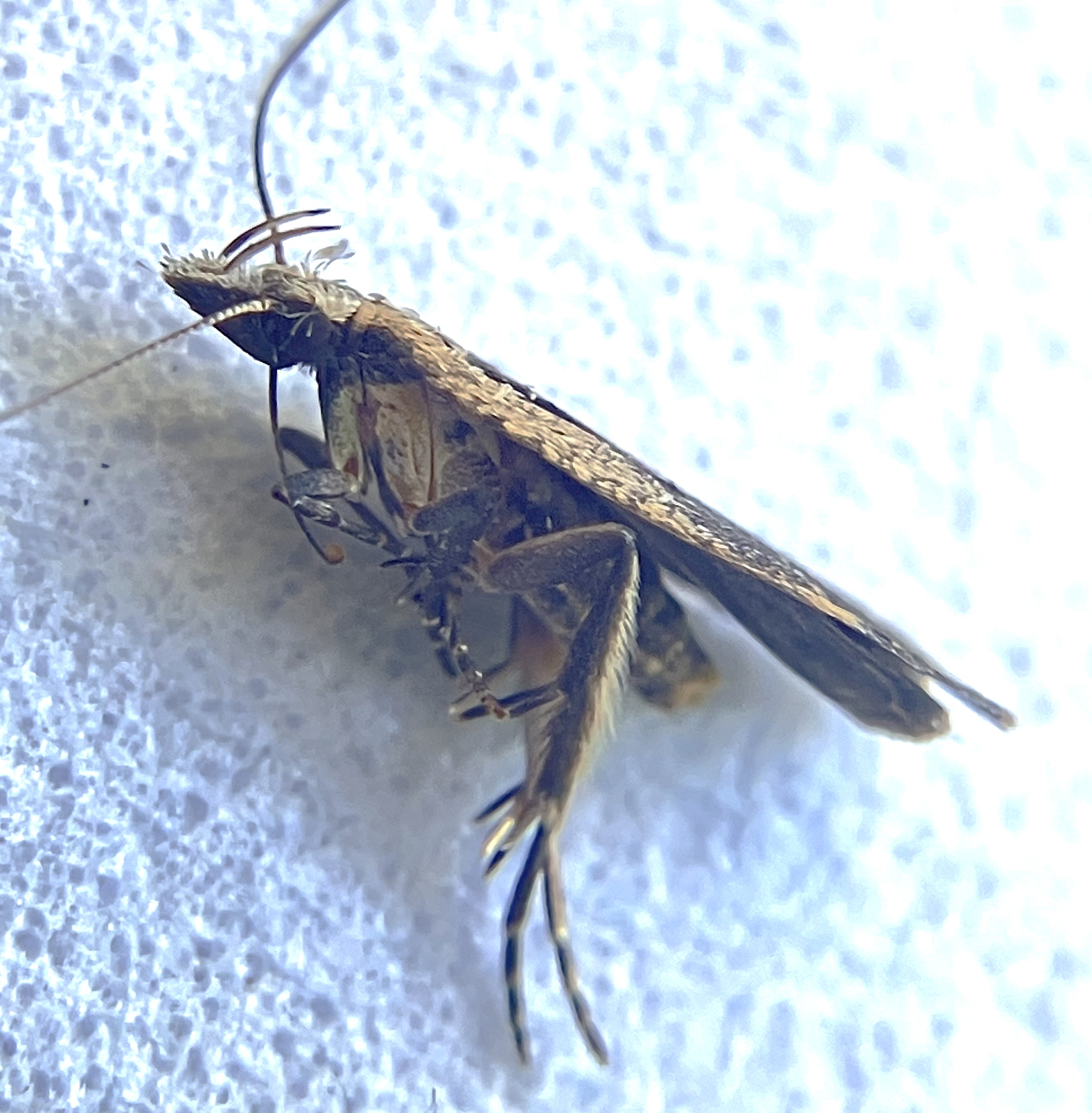
North Carolina specimens are best identified using either genitalia, size, or the morphology of the labial palps. For a large series of North Carolina specimens that have been identified using genitalia (J.B. Sullivan, pers. comm.), the wing length of D. bilobella typically varies from 8-9 mm versus 6-7 mm for D. setosella. The scaling on the second segment of the labial palps is also diagnostic (Hodges, 1986), with D. setosella having a strong ventral tuft at the apex that projects forward. In contrast, D. bilobella lacks a prominent tuft and has scales on the ventral side that are more or less appressed to the second segment. The most conspicuous scaling is on the dorsal surface. Worn specimens of D. setosella may not have an obvious projecting tuft and can cause confusion. Another feature is that helpful is that the third palp segment is much wider in D. bilobella, about twice the width of that in D. setosella (J.B. Sullivan, pers. comm.).

Dichomeris vindex is a second species that is very similar to D. setosella and is best identified by using either the genitalia, or by examining technical features such as the color of the scale tuft arising from the mesothoracic anepistemum in the male. Hodges (1986) noted that in D. setosella, the pale-yellow transverse line at two-thirds the wing length usually is slightly waved medially and angled slightly toward the base on the costal margin. In D. vindex this line is straight medially and angled slightly toward the apex on the costal margin. In D. bilobella the line is waved medially and more broadly angled toward the apex on the costal margin. However, exceptions to these general patterns exist. As of 2025, D. vindex has only been found at a single site in Madison County and probably does not occur east of the Appalachians (Hodges, 1986).

Because external patterning on the forewing widely overlaps between all three of these species, specimens should be submitted with either a wing length measurement or a lateral view of the labial palps whenever feasible.
Forewing Length: 4.9- 7.5 mm (Hodges, 1986); typically 6-7 mm for North Carolina specimens (J.B. Sullivan, pers. comm.).
Adult Structural Features: Hodges (1968) has illustrations of the male and female genitalia and wing venation. Also, see images below for North Carolina specimens.
Genitalia and other structural photos
Adult ID Requirements: Identifiable from photos showing hindwings, abdomen, or other specialized views [e.g., frons, palps, antennae, undersides].
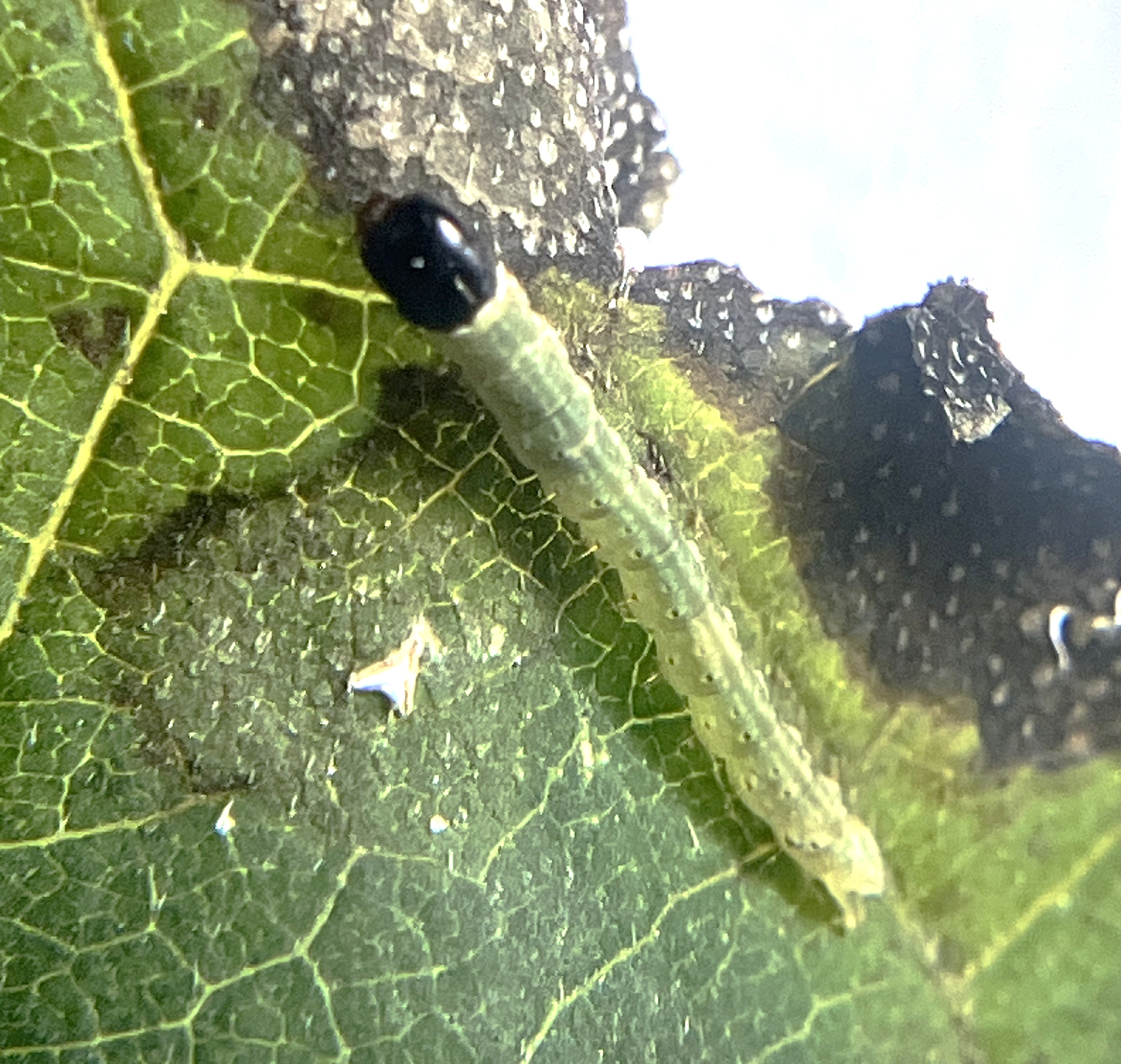
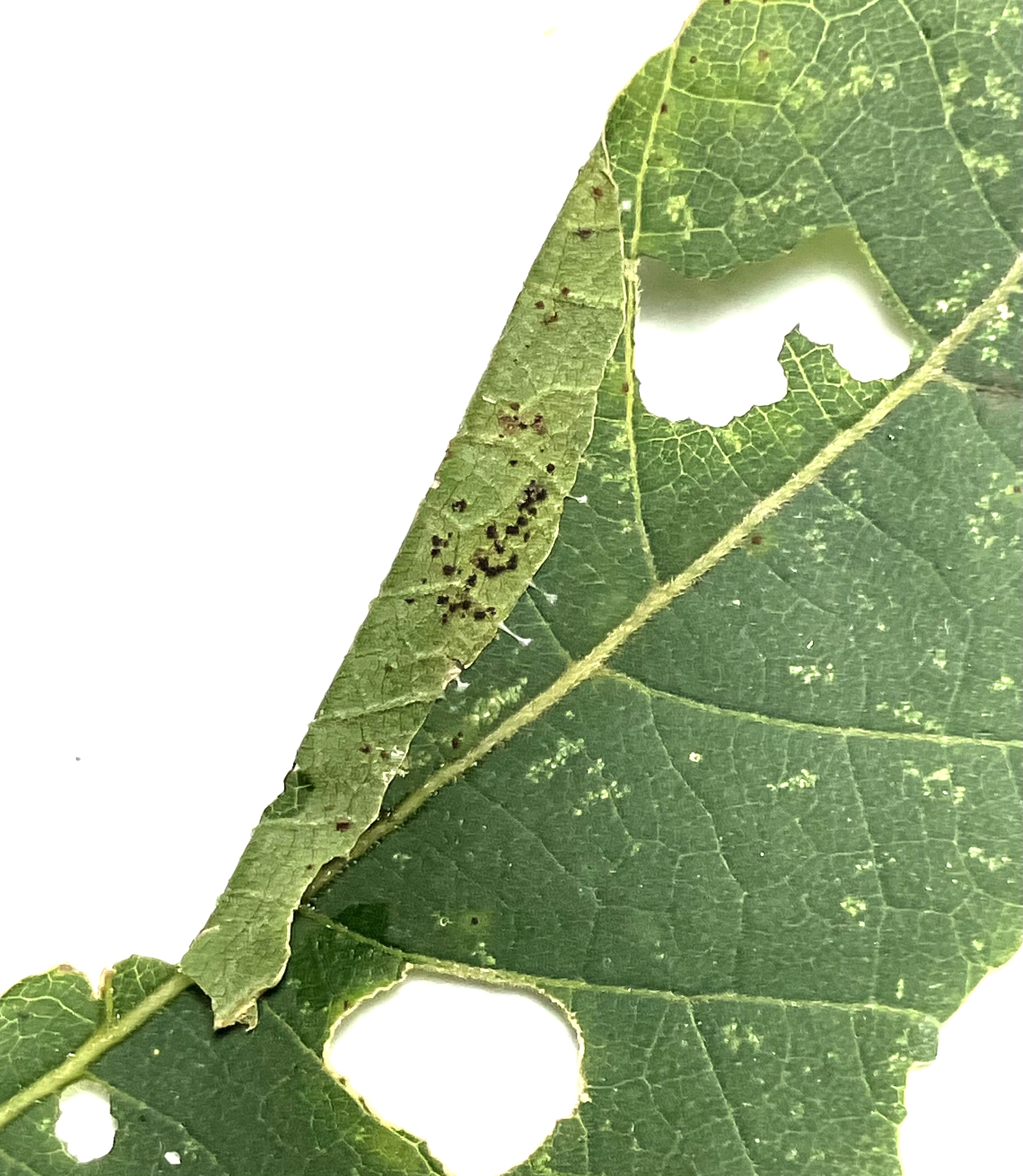
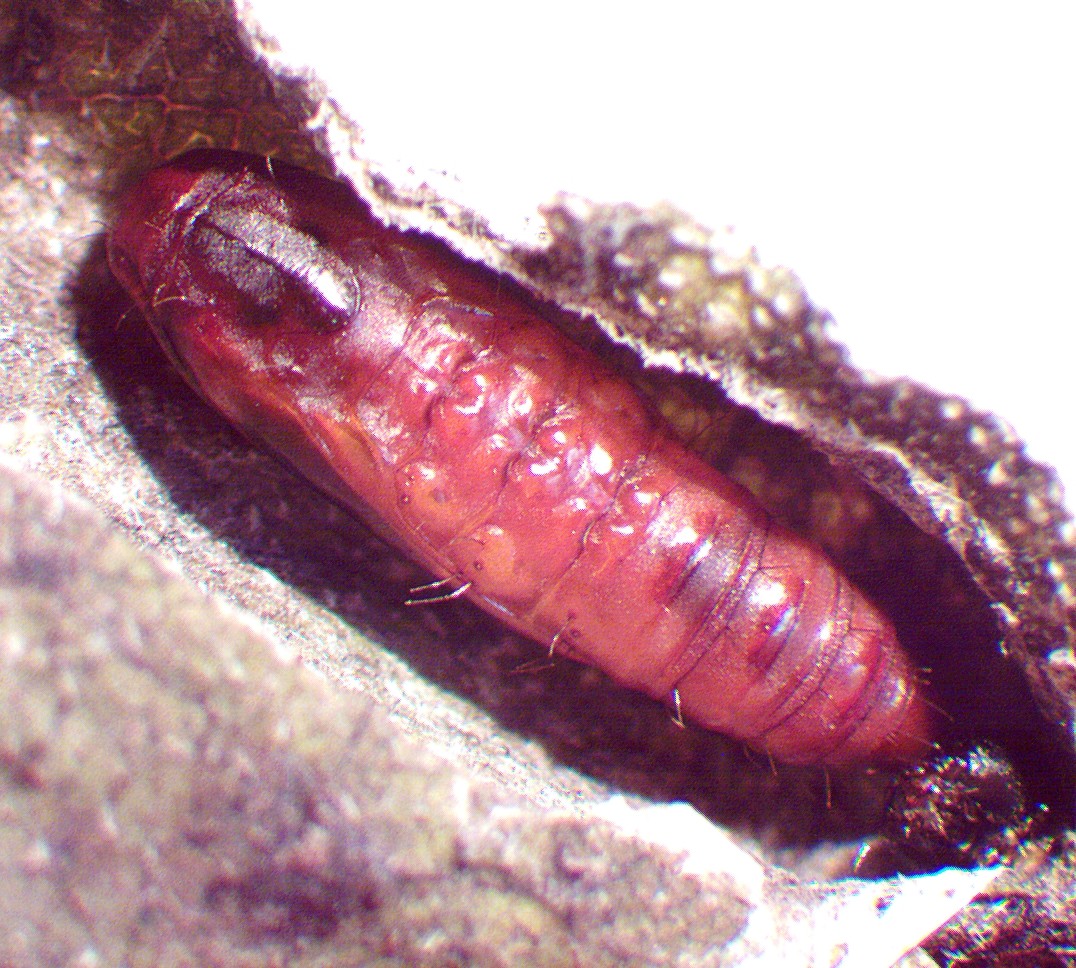
Immatures and Development: The larvae are leaf folders that feed on several genera of composites. Ken Kneidel reared an adult from a larva that was feeding on Yellow Crownbeard. The larva was collected on 5 October and maintained indoors, with the adult emerging on 31 October. The larva was light green with a strongly contrasting black head and prothoracic shield.
Distribution in North Carolina
Distribution: Hodges (1986) noted that D. setosella, D. bilobella, and D. vindex (a more northern species) have commonly been misidentified or confused and many records are unreliable. They reported this species to occur from northwestern New York southward to southern Florida, and westward to Manitoba, eastern Kansas, central Oklahoma, and Brownsville, Texas. This species probably occurs statewide in North Carolina, although as of 2025 we have no records from the northern Coastal Plain.
County Map: Clicking on a county returns the records for the species in that county.
Dichomeris setosellaAlamance Alexander Alleghany Anson Ashe Avery Beaufort Bertie Bladen Brunswick Buncombe Burke Cabarrus Caldwell Camden Carteret Caswell Catawba Chatham Cherokee Chowan Clay Cleveland Columbus Craven Cumberland Currituck Dare Davidson Davie Duplin Durham Edgecombe Forsyth Franklin Gaston Gates Graham Granville Greene Guilford Halifax Harnett Haywood Henderson Hertford Hoke Hyde Iredell Jackson Johnston Jones Lee Lenoir Lincoln Macon Madison Martin McDowell Mecklenburg Mitchell Montgomery Moore Nash New Hanover Northampton Onslow Orange Pamlico Pasquotank Pender Perquimans Person Pitt Polk Randolph Richmond Robeson Rockingham Rowan Rutherford Sampson Scotland Stanly Stokes Surry Swain Transylvania Tyrrell Union Vance Wake Warren Washington Watauga Wayne Wilkes Wilson Yadkin Yancey
Flight Dates:
 High Mountains (HM) ≥ 4,000 ft.
 Low Mountains (LM) < 4,000 ft.
 Piedmont (Pd)
 Coastal Plain (CP)

Click on graph to enlarge
Image showing flight dates by month for High Mountains greater than 4,000 feet, Low Mountains, Piedmont, and Coastal Plain: adults.
Immature Dates:
 High Mountains (HM) ≥ 4,000 ft.
 Low Mountains (LM) < 4,000 ft.
 Piedmont (Pd)
 Coastal Plain (CP)

Click on graph to enlarge
Image showing flight dates by month for High Mountains greater than 4,000 feet, Low Mountains, Piedmont, and Coastal Plain: immatures.
Flight Comments: Hodges (1986) reported that the adults are present from May to September or October in the northern US and from March to November in Florida. As of 2025, our records for North Carolina are from early-April through mid-August, with most from April. .
Habitats and Life History
Habitats: Local populations are generally associated with open woods, woodland edges or fields where the host plants occur.
Larval Host Plants: The larvae are leaf folders that feed mostly on members of the Asteraceae, including species of Ageratina, Eupatorium, Pluchea, Solidago, Verbesina and Vernonia (Hodges, 1986; Heppner, 2007; Robinson et al., 2010). Specific hosts that have been reported include White Snakeroot (Ageratina altissima), Saltmarsh Fleabane (Pluchea odorata) and White Crownbeard (Verbesina virginica). As of 2025, we also have a rearing record for Verbesina occidentalis. Prentice (1966) reported two isolated cases of this species using Northern White Cedar (Thuja occidentalis) and Eastern White Pine (Pinus strobus) in Canada that seem unlikely (Hodges, 1986) and need additional verification. - View
Observation Methods: The adults occasionally visit lights. More information is needed on host use and the larval life history, particularly in North Carolina.
Wikipedia
Status in North Carolina
Natural Heritage Program Status:
Natural Heritage Program Ranks:
State Protection: Has no legal protection, although permits are required to collect it on state parks and other public lands.
Comments:

 Photo Gallery for Dichomeris setosella - Hairy Dichomeris

Photos: 16
Dichomeris setosella
Recorded by: Ken Kneidel on 2025-10-31
Mecklenburg Co.
Comment:
Dichomeris setosella
Recorded by: Ken Kneidel on 2025-10-31
Mecklenburg Co.
Comment:
Dichomeris setosella
Recorded by: Ken Kneidel on 2025-10-31
Mecklenburg Co.
Comment: A view of the palps with a prominent patch of scales that projects forward.
Dichomeris setosella
Recorded by: Ken Kneidel on 2025-10-05
Mecklenburg Co.
Comment:
Dichomeris setosella
Recorded by: Ken Kneidel on 2025-10-05
Mecklenburg Co.
Comment:
Dichomeris setosella
Recorded by: Ken Kneidel on 2025-10-05
Mecklenburg Co.
Comment: Larva was feeding on Verbesina occidentalis on October 5; pupa (6.9 mm) observed on October 30 and adult on October 31 after being kept indoors.
Dichomeris setosella
Recorded by: David George, Bonnie Eamick on 2025-04-25
Wake Co.
Comment:
Dichomeris setosella
Recorded by: Jeff Niznik on 2025-04-19
Orange Co.
Comment:
Dichomeris setosella
Recorded by: David George, Jeff Niznik on 2025-04-05
Chatham Co.
Comment:
Dichomeris setosella
Recorded by: David George, Stephen Dunn, Jeff Niznik, Patrick Coin on 2024-06-22
Chatham Co.
Comment:
Dichomeris setosella
Recorded by: Jim Petranka on 2023-04-13
Madison Co.
Comment:
Dichomeris setosella
Recorded by: Jeff Niznik on 2022-05-02
Wake Co.
Comment:
Dichomeris setosella
Recorded by: Jeff Niznik on 2022-04-25
Wake Co.
Comment:
Dichomeris setosella
Recorded by: J. A. Anderson on 2018-04-14
Surry Co.
Comment:
Dichomeris setosella
Recorded by: Kyle Kittelberger, Brian Bockhahn on 2014-06-07
Avery Co.
Comment:
Dichomeris setosella
Recorded by: Tom Sanders on 2012-04-19
Mecklenburg Co.
Comment: