Moths of North Carolina
Home Page
Recent Entries
Recent Account Updates
County Searches
General Search
Submit a Public Record
Larval Hosts
References
Maps
Draft Checklists
Family Photo Gallery
Family PDFs
NC Biodiversity Project
Comments
Significant Contributors
Scientific Name:
Common Name:
Family (Alpha):
Choose a Family
ACROLEPIIDAE-False Diamondback Moths
ADELIDAE-Fairy moths
ALUCITIDAE-Many-plumed Moths
AMPHISBATIDAE-
ARGYRESTHIIDAE-Shiny Head-standing Moths
AUTOSTICHIDAE-Autostichid Moths
BATRACHEDRIDAE-Batrachedrid Moths
BEDELLIIDAE-Bedelliid Moths
BLASTOBASIDAE-Blastobasid Moths
BOMBYCIDAE-Silkworm Moths
BUCCULATRICIDAE-Ribbed Cocoon-maker Moths
CARPOSINIDAE-Fruitworm Moths
CHOREUTIDAE-Metalmark Moths
COLEOPHORIDAE-Casebearer Moths and Relatives
COSMOPTERIGIDAE-Cosmopterigid Moths
COSSIDAE-Carpenter Moths, Goat Moths
CRAMBIDAE-Grass Moths, Snout Moths
DEPRESSARIIDAE-
DREPANIDAE-Hook-tips and Thyatirid Moths
DRYADAULIDAE-
ELACHISTIDAE-Grassminer Moths and Relatives
EPERMENIIDAE-Fringe-tufted Moths
EPIPYROPIDAE-Planthopper Parasite Moths
EREBIDAE-Erebid Moths
ERIOCRANIIDAE-Eriocraniid Moths
EUTELIIDAE-Euteliid Moths
GALACTICIDAE-Galacticid Moths
GELECHIIDAE-Gelechiid Moths; Twirler Moths
GEOMETRIDAE-Geometer Moths, Loopers
GLYPHIDOCERIDAE-Glyphidocerid Moths
GLYPHIPTERIGIDAE-Sedge Moths
GRACILLARIIDAE-Leafblotch miner moths
HELIOZELIDAE-Shield bearer moths
HEPIALIDAE-Ghost or Swift Moths
HYBLAEIDAE-
INCURVARIIDAE-Leafcutter Moths
LASIOCAMPIDAE-Tent Caterpillar Moths, Lappet Moths
LECITHOCERIDAE-Long-horned Moths
LIMACODIDAE-Slug Caterpillar Moths
LIMOCODIDAE-
LYONETIIDAE-Lyonetiid Moths
MEGALOPYGIDAE-Flannel Moths
MICROPTERIGIDAE-Mandibulate Moths
MIMALLONIDAE-
MOMPHIDAE-Mompha Moths
NEPTICULIDAE-Minute leaf miners
NOCTUIDAE-Owlet Moths
NOLIDAE-
NOTODONTIDAE-Prominents
OECOPHORIDAE-Oecophorid Moths
OPOSTEGIDAE-
PELEOPODIDAE-
PLUTELLIDAE-Diamondback Moths
PRODOXIDAE-Yucca Moths
PSYCHIDAE-Bagworm Moths
PTEROPHORIDAE-Plume Moths
PYRALIDAE-Pyralid Moths, Snout Moths
SATURNIIDAE-Giant Silkworm Moths
SCHRECKENSTEINIIDAE-Schreckensteiniid Moths
SCYTHRIDIDAE-
SESIIDAE-Clearwing Moths
SPHINGIDAE-Sphinx Moths
THYATIRIDAE-
THYRIDIDAE-Window-winged Moths
TINEIDAE-Clothes moths
TISCHERIIDAE-Tischerid Moths
TORTRICIDAE-Leafroller Moths
URANIIDAE-
URODIDAE-Urodid Moths
XYLORYCTIDAE-
YPONOMEUTIDAE-Ermine Moths
YPSOLOPHIDAE-Ypsolophid Moths
ZYGAENIDAE-
«
Home
»
View
PDF
Gelechiidae Members:
Agnippe prunifoliella
Anacampsini new genus new species
Anacampsis agrimoniella
Anacampsis conclusella
Anacampsis consonella
Anacampsis coverdalella
Anacampsis fragariella
Anacampsis levipedella
Anacampsis lupinella
Anacampsis New Species one
Anacampsis rhoifructella
Anacampsis tristrigella
Anacampsis unidentified species
Anarsia lineatella
Aproaerema unidentified species
Arcutelphusa talladega
Aristotelia callirrhoda
Aristotelia fungivorella
Aristotelia isopelta
Aristotelia ivae
Aristotelia lespedezae
Aristotelia monilella
Aristotelia pudibundella
Aristotelia roseosuffusella
Aristotelia rubidella
Aristotelia unidentified species
Aroga argutiola
Aroga compositella
Aroga epigaeella
Aroga trialbamaculella
Aroga trialbamaculella complex
Aroga unidentified species
Arogalea cristifasciella
Arogalea unidentified species
Battaristis concinnusella
Battaristis new species
Battaristis nigratomella
Battaristis unidentified species
Battaristis vittella
Besciva n. sp.
Bryotropha unidentified species
Caryocolum pullatella
Chionodes adamas
Chionodes baro
Chionodes bicostomaculella
Chionodes cacula
Chionodes continuella
Chionodes dentella
Chionodes discoocellella
Chionodes emptor
Chionodes fondella
Chionodes formosella
Chionodes fuscomaculella
Chionodes hibiscella
Chionodes imber
Chionodes lactans
Chionodes mediofuscella
Chionodes new species 2
Chionodes obscurusella
Chionodes pereyra
Chionodes pseudofondella
Chionodes rabula
Chionodes rectifex
Chionodes sevir
Chionodes soter
Chionodes suasor
Chionodes tarmes
Chionodes thoraceochrella
Chionodes unidentified species
Coleotechnites albicostata
Coleotechnites apicitripunctella
Coleotechnites atrupictella
Coleotechnites canusella
Coleotechnites carbonaria
Coleotechnites citriella
Coleotechnites coniferella
Coleotechnites florae
Coleotechnites macleodi
Coleotechnites new species
Coleotechnites nigra
Coleotechnites obliquistrigella
Coleotechnites piceaella
Coleotechnites quercivorella
Coleotechnites unidentified species
Coleotechnites variiella
Deltophora sella
Dichomeris aglaia
Dichomeris agonia
Dichomeris bilobella
Dichomeris bipunctellus
Dichomeris bolize
Dichomeris caia
Dichomeris citrifoliella
Dichomeris costarufoella
Dichomeris crepida
Dichomeris fistuca
Dichomeris flavocostella
Dichomeris furia
Dichomeris georgiella
Dichomeris glenni
Dichomeris heriguronis
Dichomeris inserrata
Dichomeris inversella
Dichomeris juncidella
Dichomeris kimballi
Dichomeris laetitia
Dichomeris ligulella
Dichomeris marginella
Dichomeris nenia
Dichomeris new species 2
Dichomeris new species 4
Dichomeris nonstrigella
Dichomeris ochripalpella
Dichomeris offula
Dichomeris pelta
Dichomeris punctidiscellus
Dichomeris punctipennella
Dichomeris purpureofusca
Dichomeris setosella
Dichomeris siren
Dichomeris unidentified species
Dichomeris vacciniella
Dichomeris ventrellus
Dichomeris vindex
Dichomeris washingtoniella
Dichomeris xanthoa
Enchrysa dissectella
Exoteleia anomala
Exoteleia pinifoliella complex
Fascista bimaculella
Fascista cercerisella
Fascista quinella
Filatima ornatifimbriella
Filatima persicaeella
Filatima pseudacaciella
Filatima serotinella
Filatima unidentified species
Filatima xanthuris
Frumenta nundinella
Gelechia albisparsella
Gelechiidae unidentified species
Glauce pectenalaeella
Gnorimoschema gallaeasterella
Gnorimoschema gallaesolidaginis
Gnorimoschema terracottella
Gnorimoschema unidentified species
Gnorimoschemini unidentified species
Helcystogramma hystricella
Helcystogramma melanocarpa
Helcystogramma melantherella
Holophysis emblemella
Isophrictis anteliella
Isophrictis new species 1
Isophrictis rudbeckiella
Isophrictis unidentified species
Keiferia inconspicuella
Keiferia lycopersicella
Keiferia unidentified species
Mesophleps adustipennis
Metzneria lappella
Monochroa disconotella
Monochroa gilvolinella
Monochroa monactis
Monochroa pullusella
Monochroa quinquepunctella
Monochroa unidentified species
Neotelphusa sequax
Phthorimaea operculella
Polyhymno luteostrigella
Prostomeus brunneus
Pseudochelaria pennsylvanica
Pseudochelaria walsinghami
Pseudotelphusa fuscopunctella
Pseudotelphusa palliderosacella
Pseudotelphusa quercinigracella
Pseudotelphusa unidentified species
Pubitelphusa latifasciella
Sinoe chambersi
Sinoe kwakae
Sinoe robiniella
Sinoe unidentified species
Sitotroga cerealella
Stegasta bosqueella
Stereomita andropogonis
Strobisia iridipennella
Symmetrischema capsica
Symmetrischema pallidochrella
Symmetrischema striatella
Symmetrischema unidentified species
Taygete attributella
Taygete gallaegenitella
Telphusa longifasciella
Telphusa perspicua
Theisoa constrictella
Trypanisma prudens
Untomia albistrigella
Xenolechia aethiops
Xenolechia ontariensis
Dichomeris
Members:
Dichomeris aglaia
Dichomeris agonia
Dichomeris bilobella
Dichomeris bipunctellus
Dichomeris bolize
Dichomeris caia
Dichomeris citrifoliella
Dichomeris costarufoella
Dichomeris crepida
Dichomeris fistuca
Dichomeris flavocostella
Dichomeris furia
Dichomeris georgiella
Dichomeris glenni
Dichomeris heriguronis
Dichomeris inserrata
Dichomeris inversella
Dichomeris juncidella
Dichomeris kimballi
Dichomeris laetitia
Dichomeris ligulella
Dichomeris marginella
Dichomeris nenia
Dichomeris new species 2
Dichomeris new species 4
Dichomeris nonstrigella
Dichomeris ochripalpella
Dichomeris offula
Dichomeris pelta
Dichomeris punctidiscellus
Dichomeris punctipennella
Dichomeris purpureofusca
Dichomeris setosella
Dichomeris siren
Dichomeris unidentified species
Dichomeris vacciniella
Dichomeris ventrellus
Dichomeris vindex
Dichomeris washingtoniella
Dichomeris xanthoa
10 NC Records
Dichomeris agonia
Hodges, 1986 - No Common Name
Taxonomy
Superfamily:
Gelechioidea
Family:
Gelechiidae
Subfamily:
Dichomeridinae
P3 Number:
59a0579
MONA Number:
2305.00
Identification
Field Guide Descriptions:
Online Resources:
MPG
,
BugGuide
,
iNaturalist
,
Google
,
BAMONA
,
GBIF
,
BOLD
Technical Description, Adults:
Hodges (1986)
Technical Description, Immature Stages:
Loeffler (1994)
Adult Markings:
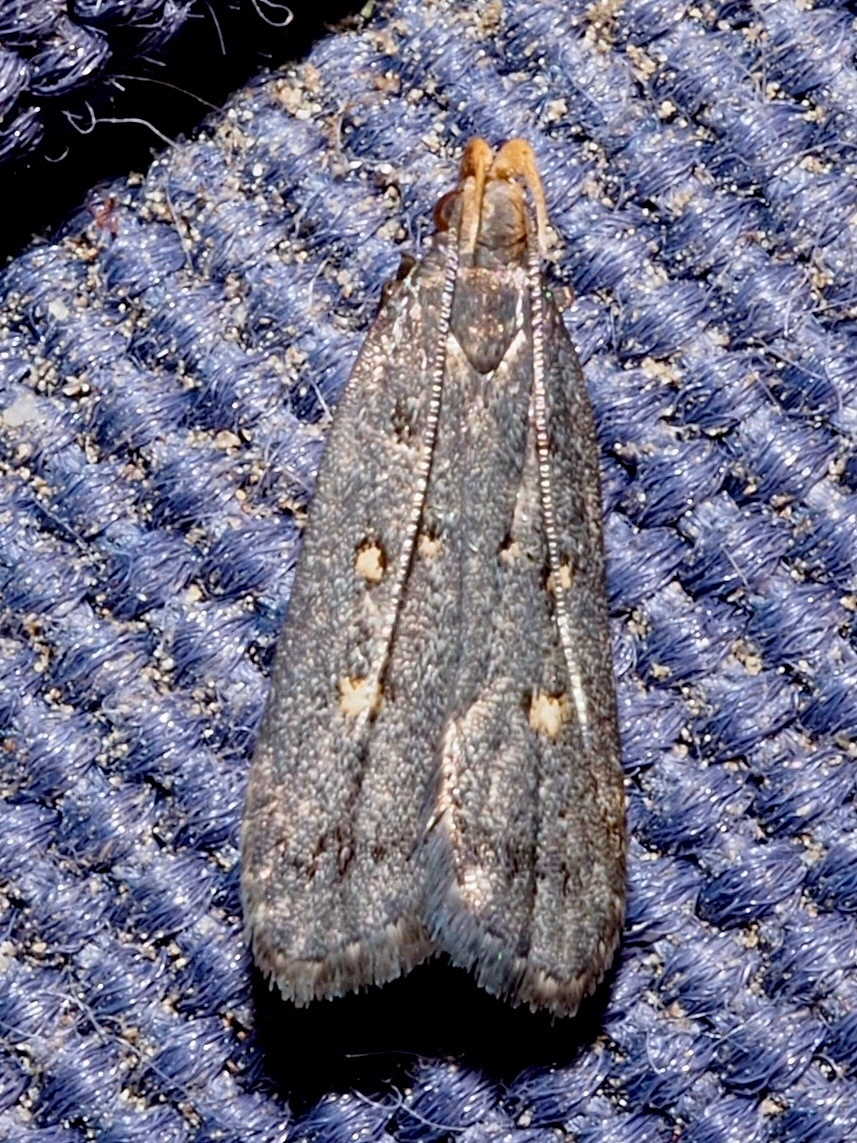
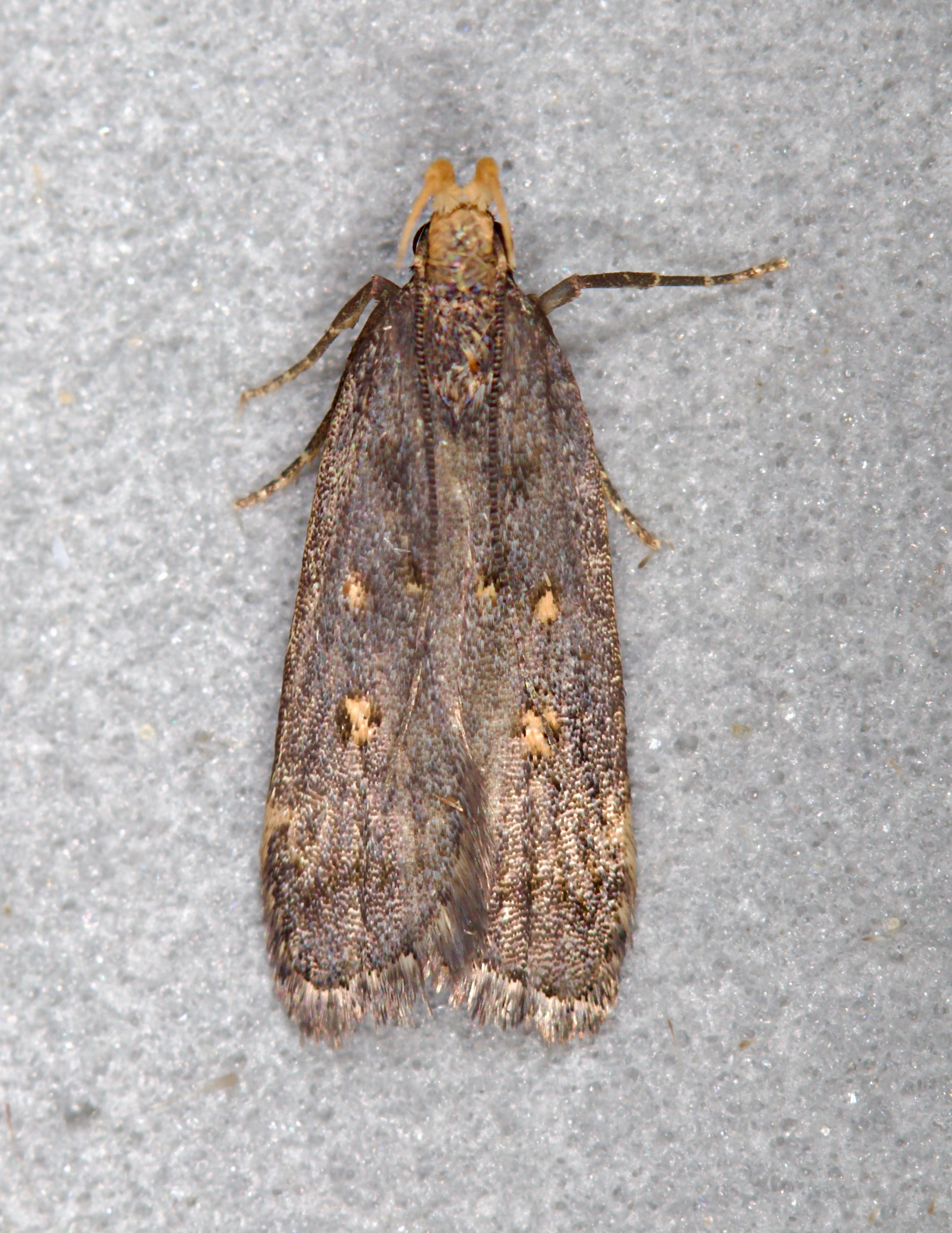
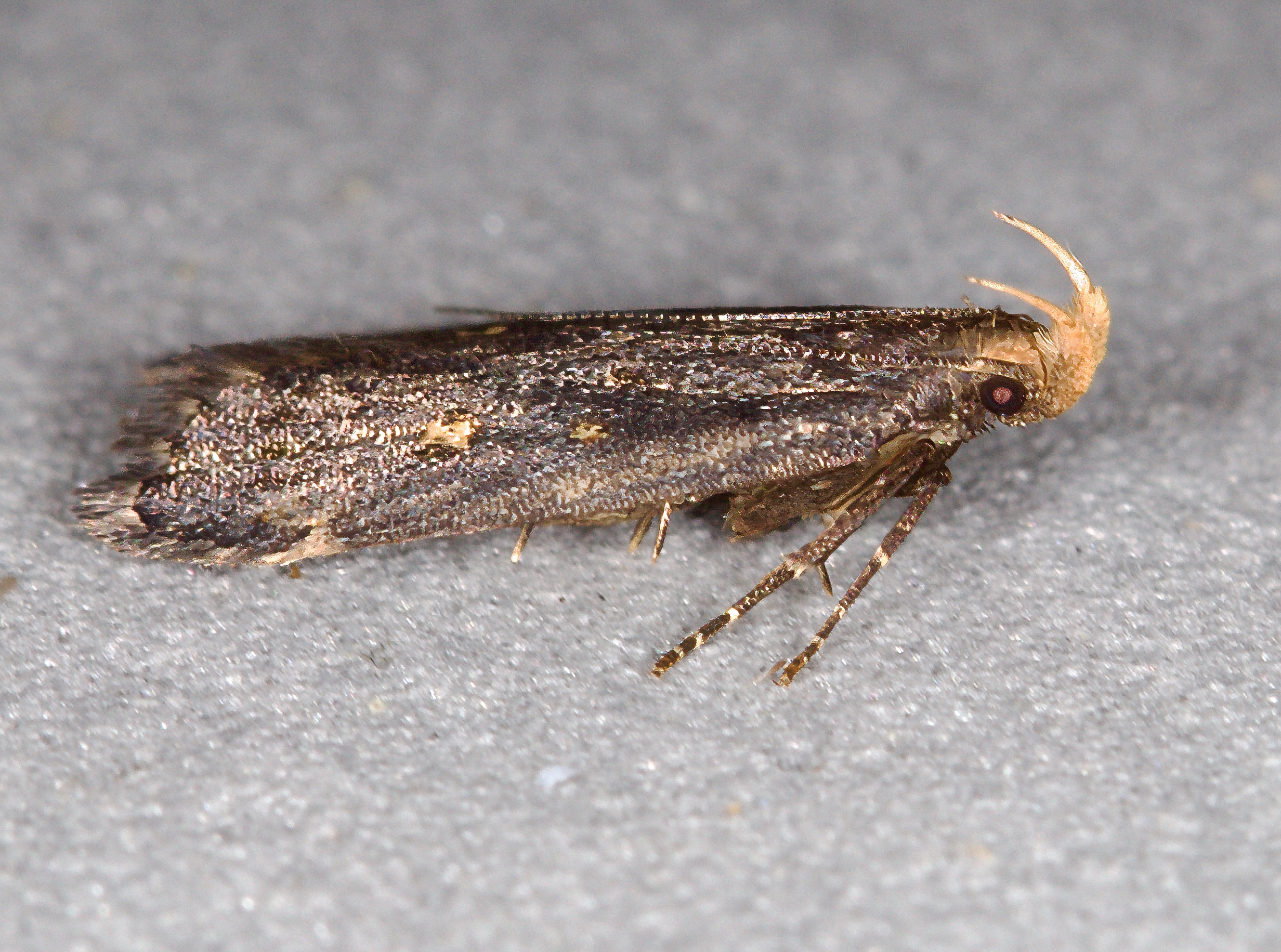
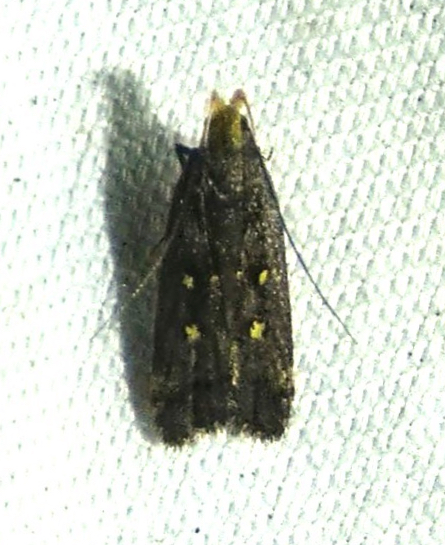
Dichomeris agonia
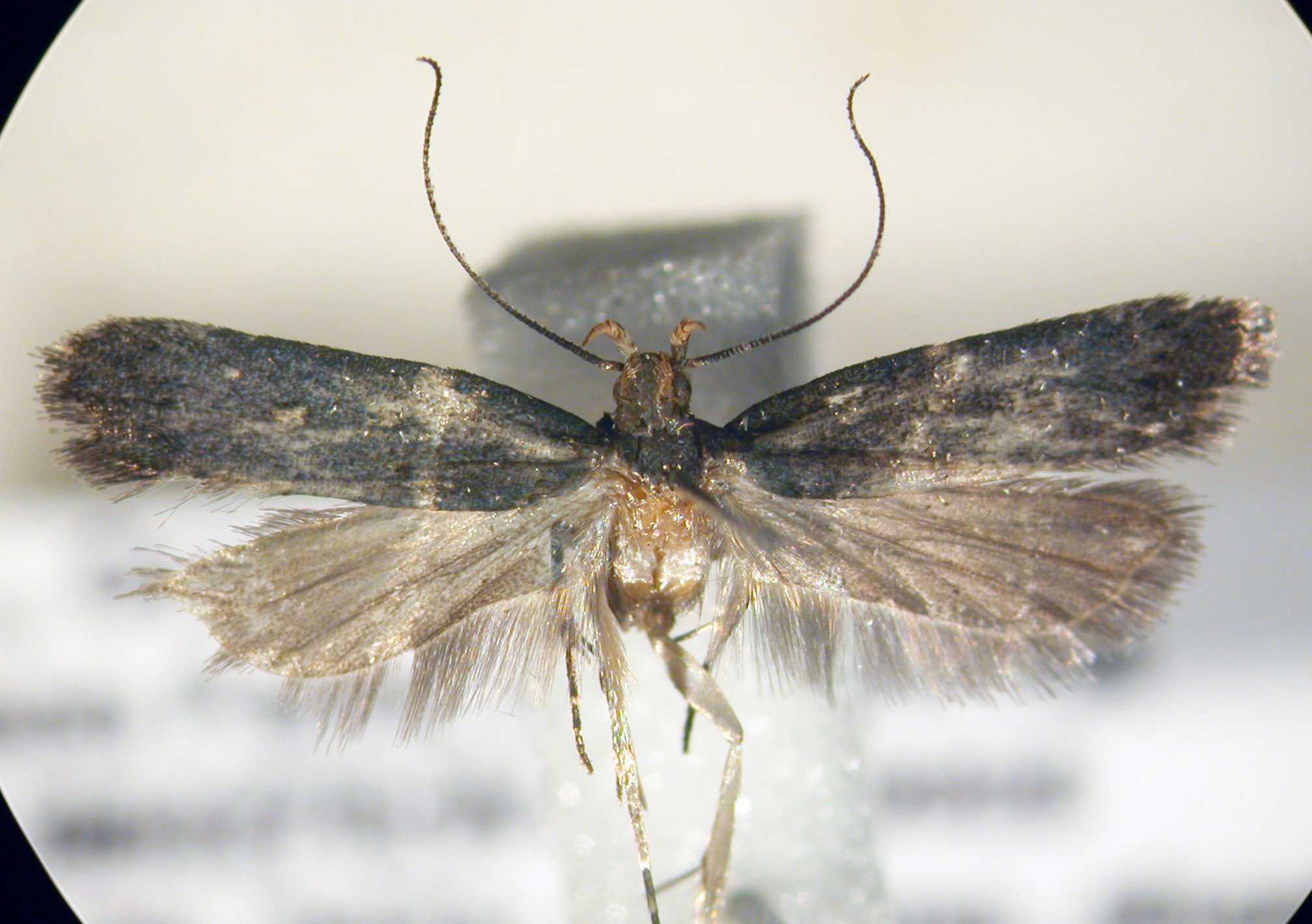
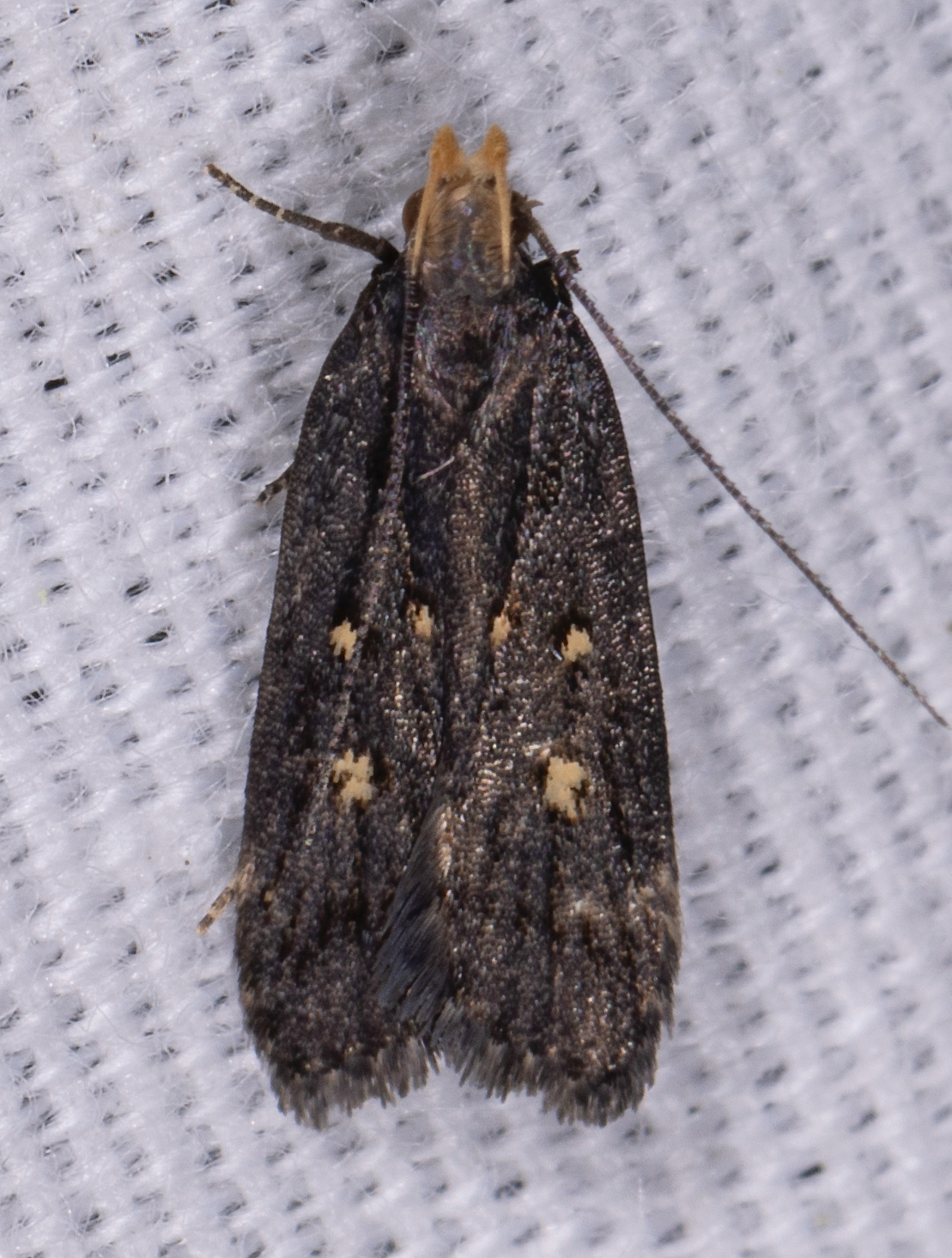
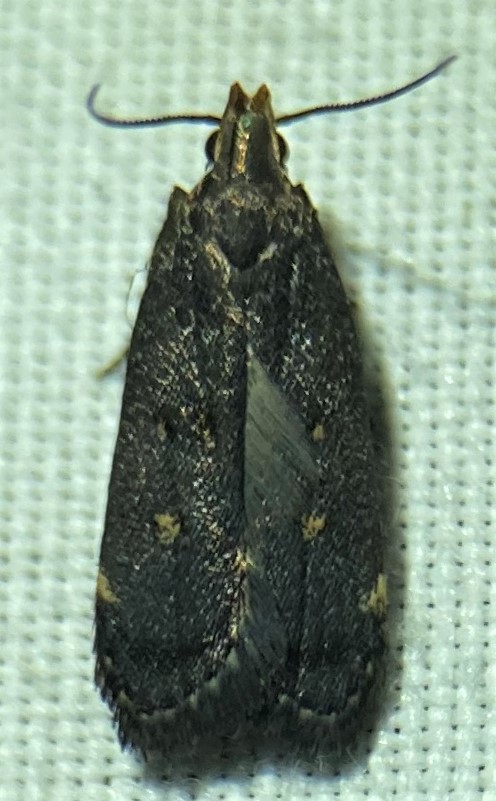
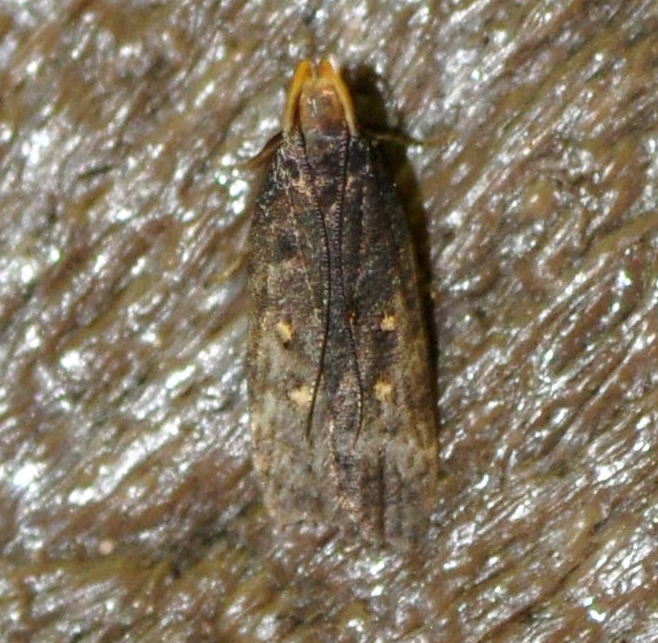
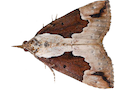
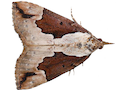
has an overall medium-brown color that is due to a mixture of dark-brown and slate-gray scales on the forewing and thorax. The antennae and terminal fringe are concolorous with the forewing ground color, and the frons and labial palps are orangish-white, with the latter having numerous grayish-brown scales on the second segment. The scales on the vertex are shining pale-yellowish gray above the eye, gray medially and with faint metallic-yellow reflections (Hodges, 1986). The forewing often has pale-orange spots that include one or a pair at one-half the wing length and a second, larger spot at around two-thirds the wing length. A faint, light mark is also usually evident on the costal margin at three-fourths the wing length, and there is a dark, transverse, subterminal band that is more-or-less straight, but often obscure.
Dichomeris juncidella
is sometimes confused with
D. agonia
, but the latter tends to be lighter-colored and has yellowish orange labial palps with the first and second segments dusted with grayish-brown scales (Hodges, 1986). The vertex and occiput are yellowish gray, and the spot at the end of the cell is usually pale yellow or yellowish gray and much more prominent than that of
D. juncidella
.
Dichomeris juncidella
also has an outwardly curved, transverse, dark subterminal band on the forewing versus a relatively straight, transverse band on
D. agonia
.
Forewing Length:
5.7-7.5 mm (Hodges, 1986).
Adult Structural Features:
Hodges (1986) has illustrations and descriptions of the male and female genitalia. Also, see images of North Carolina specimens below.
Genitalia and other structural photos
Aedeagus; Orange County; J.B. Sullivan.
Female genitalia; Madison County; Jim Petranka.
Male genitalia; North Carolina; J.B. Sullivan.
Male genitalia; Ashe County; J.B. Sullivan.
Aedeagus; North Carolina; J.B. Sullivan.
Aedeagus; Ashe County; J.B. Sullivan.
Male genitalia; Orange County; J.B. Sullivan.
Immatures and Development:
The larvae feed on the leaves of goldenrods and other hosts and live within loose leaf folds. Loeffler (1994) found relatively large larvae in early-May in Pennsylvania and believe that the life cycle was essentially the same as that of
D. nonstrigella
and
D. purpureofusca
that she studied in central New York. For the latter two species, the adults eclose in June and lay eggs shortly thereafter. Females lay eggs singly on the undersides of leaves, and the hatchings grow slowly over the summer and reach the penultimate instar when > 6 mm long by October. They then drop to the ground and overwinter in the litter. They emerge in late-April or early-May and climb onto fresh shoots where they resume feeding. The final instar is attained by early- to mid-May, and the pupal stage lasted about two weeks.
The final instar larvae have a pea-green abdomen that lacks stripes except for a dorsal, dark-green line that apparently is the digestive tract. The head, prothorax, and mesothorax are black except for except for a series of white patches on the posterior end of the mesothorax (Loeffler, 1994).
Distribution in North Carolina
Distribution:
Dichomeris agonia
is found in the eastern US and southern Ontario, with the range in the US extending from Maine southward to southern Florida, and westward to eastern Texas, central Oklahoma, Missouri, eastern Kansas, Illinois and southern Wisconsin. As of 2025, we have a few scattered records from all three physiographic provinces in the state, with most from the central and northern Blue Ridge.
County Map:
Clicking on a county returns the records for the species in that county.
Flight Dates:
High Mountains (HM) ≥ 4,000 ft.
Low Mountains (LM) < 4,000 ft.
Piedmont (Pd)
Coastal Plain (CP)
Click on graph to enlarge
Flight Comments:
The adults have been documented from January-through November in different areas of the range, with those outside of Florida typically flying from May through September. As of 2025, our records are from early-June to late-September.
Habitats and Life History
Habitats:
Local populations are found in or near open habitats where goldenrods, asters and other host plants grow. Our records include a lake shoreline, a mountain bog, and a residential neighborhood.
Larval Host Plants:
Larvae have been reared on evening-primrose (
Oenothera
), asters and goldenrod (
Solidago
) (Hodges, 1986). Loeffler (1994) found larvae using Early Goldenrod (
S. juncea
) and Gray Goldenrod (
S. nemoralis
) in Pennsylvania. As of 2025, we do not have any feeding records for North Carolina. -
View
Observation Methods:
The adults are attracted to lights and the larvae can be found in leaf folds on goldenrods and other hosts.
Wikipedia
Status in North Carolina
Natural Heritage Program Status:
Natural Heritage Program Ranks:
GNR SU
State Protection:
Comments:
Photo Gallery for
Dichomeris agonia
- None
Photos: 9
Recorded by: F. Williams, S. Williams on 2025-09-26
Gates Co.
Comment:
Recorded by: Jim Petranka on 2025-09-20
Madison Co.
Comment:
Recorded by: Jim Petranka on 2025-09-20
Madison Co.
Comment: Specimen was dissected (female).
Recorded by: Merrill Lynch on 2025-07-22
Watauga Co.
Comment: iNat record - iNat: https://www.inaturalist.org/observations/300104693
Recorded by: David George, Jeff Niznik on 2023-04-29
Orange Co.
Comment: Specimen determined by dissection by J.B. Sullivan
Recorded by: Ed Coney on 2022-08-27
Alleghany Co.
Comment: iNat record - iNat: https://www.inaturalist.org/observations/132736136
Recorded by: Dean Furbish and Joy Wiggins on 2022-06-06
Wake Co.
Comment:
Recorded by: Kyle Kittelberger on 2013-07-17
Wake Co.
Comment:
Recorded by: Harry Wilson on 2013-06-08
Wake Co.
Comment:
 »
»