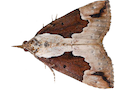
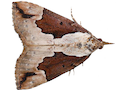
Moths of North Carolina
Scientific Name:
Common Name:
Family (Alpha):
« Home »
View PDFArgyresthiidae Members: Argyresthia Members: 12 NC Records

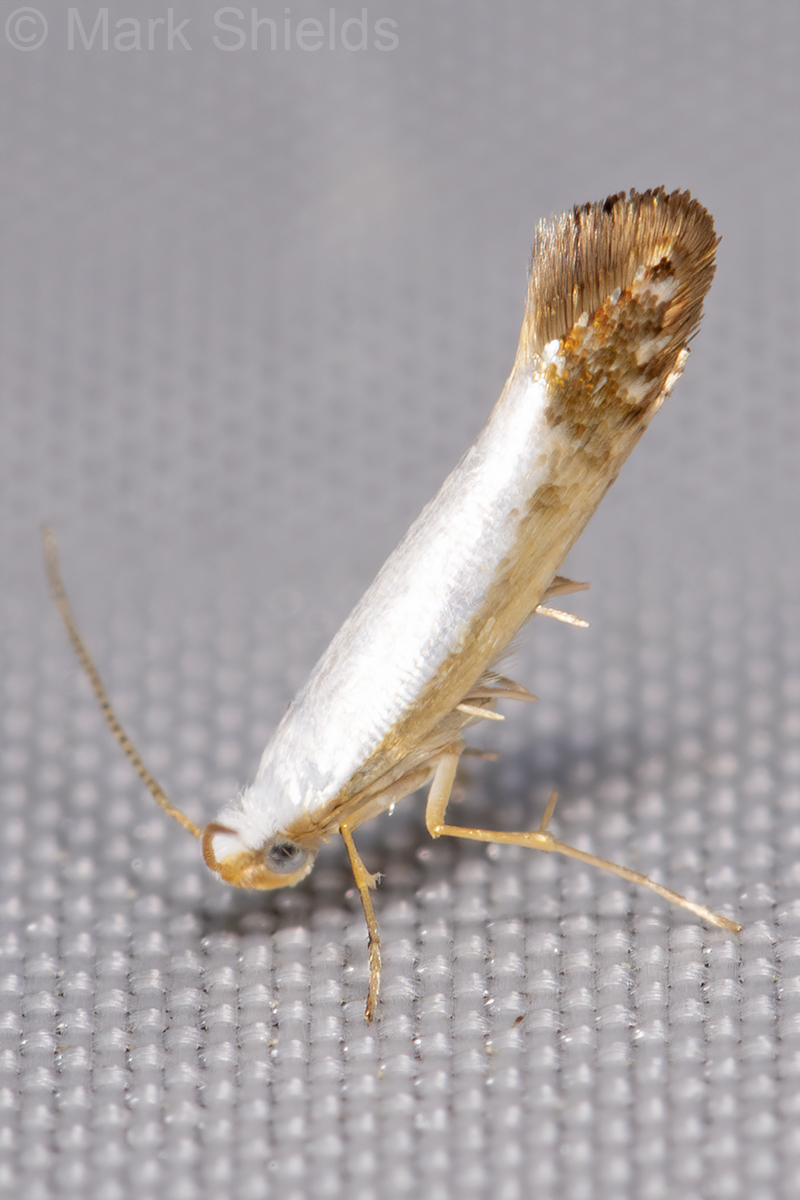
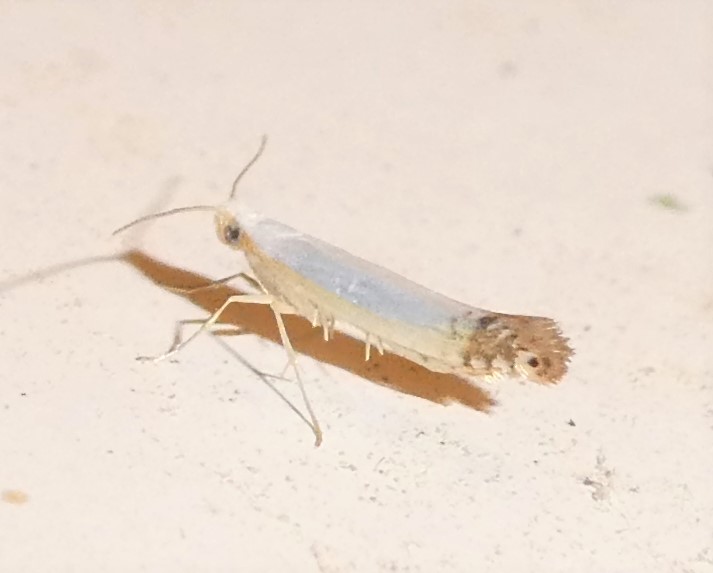
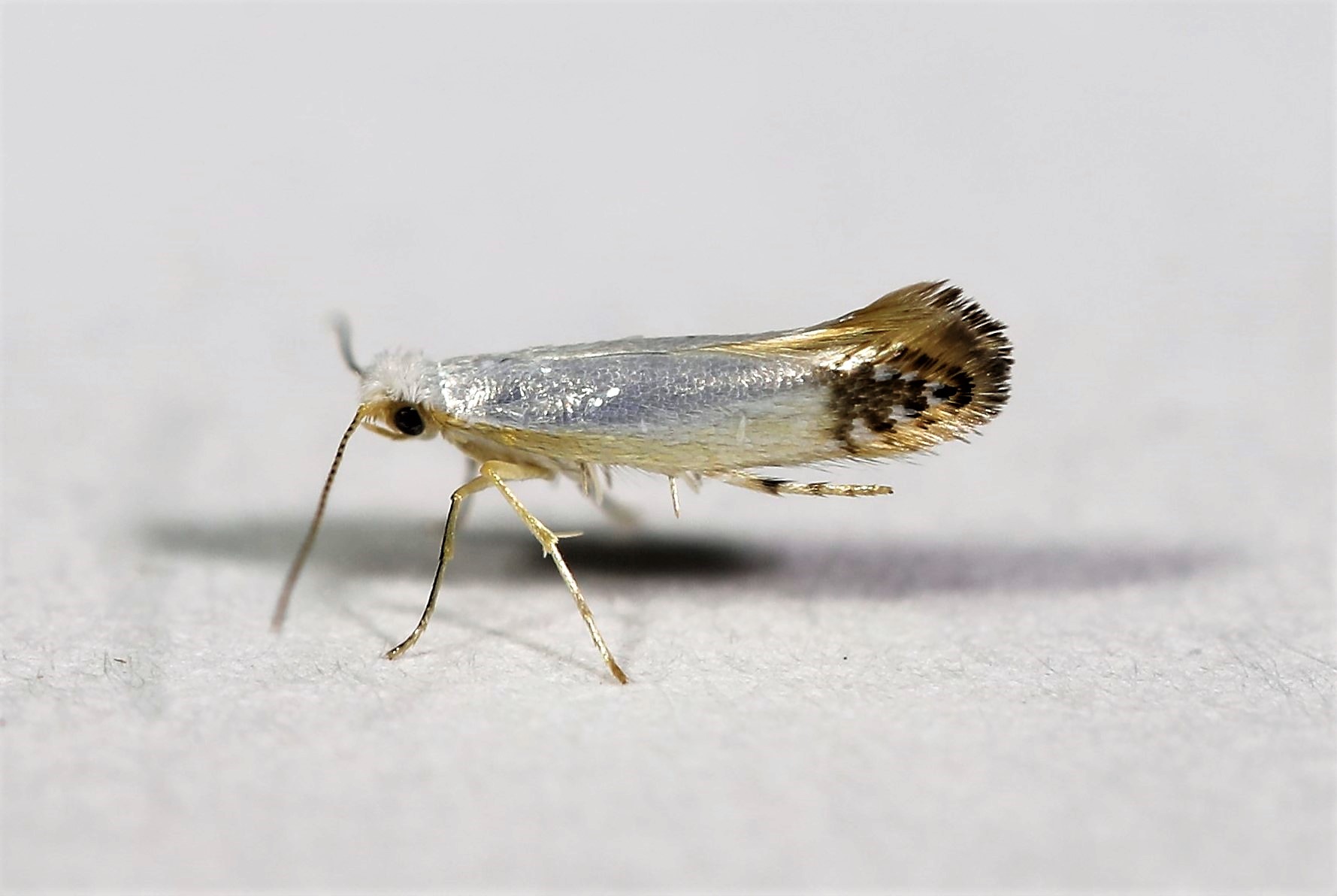
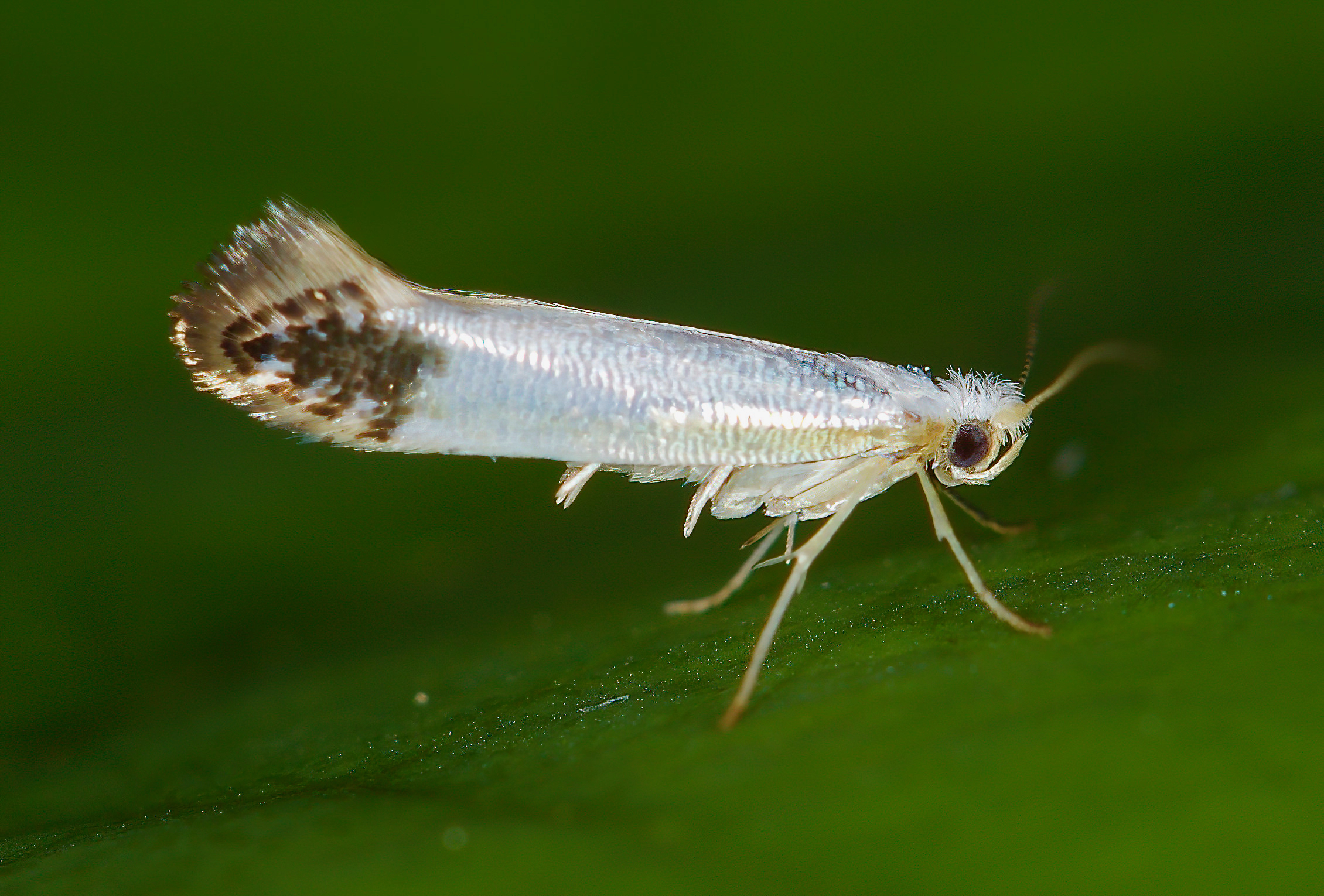
Argyresthia apicimaculella Chambers, 1874 - No Common Name


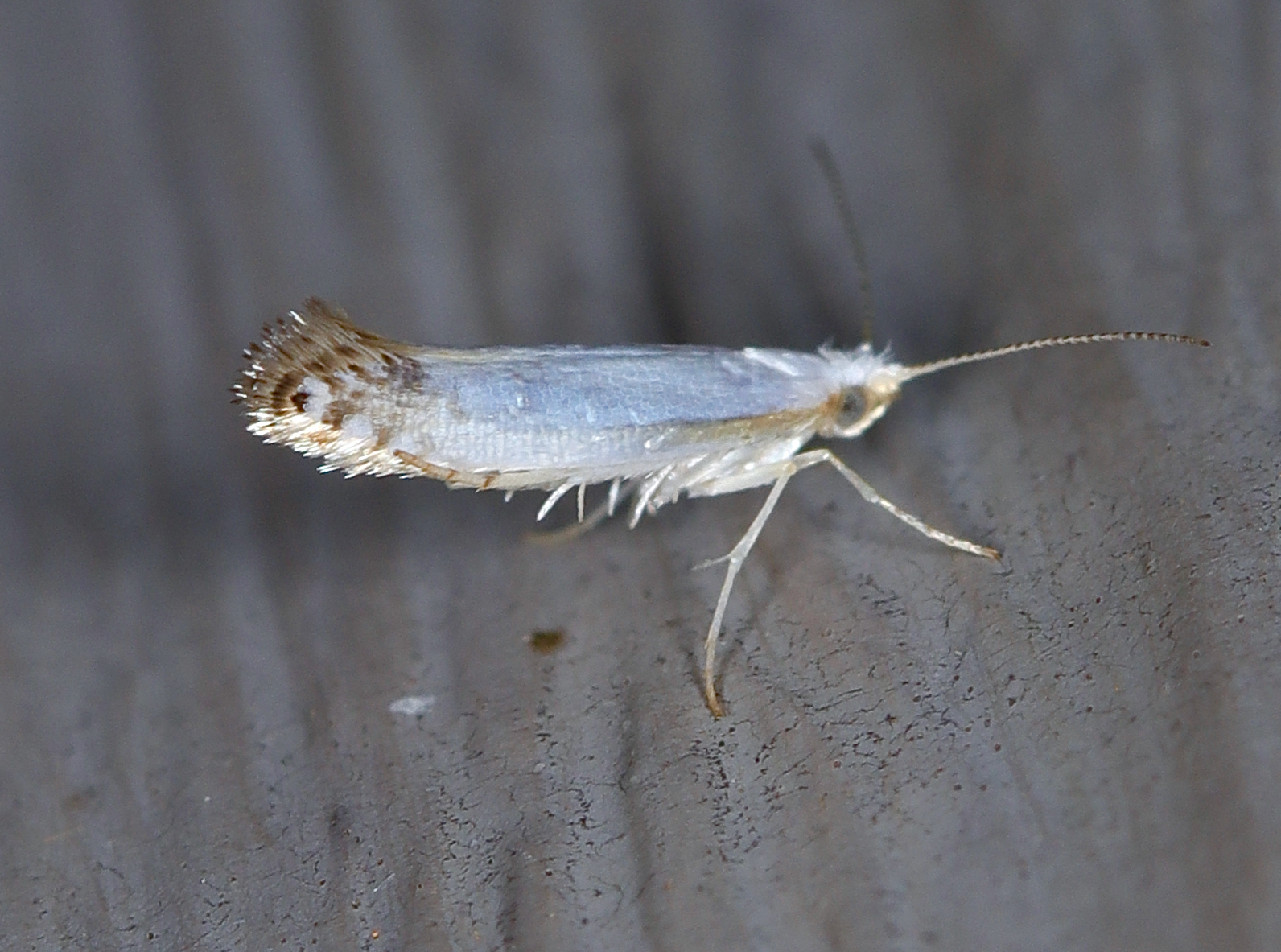
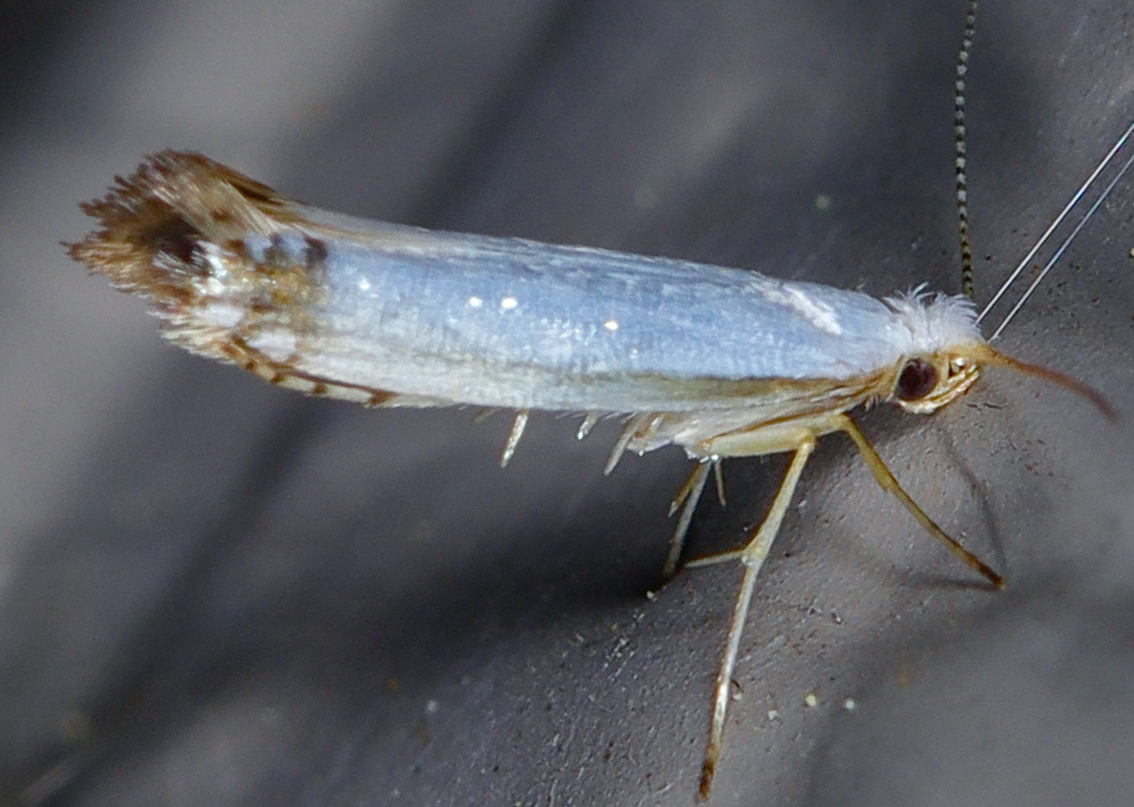
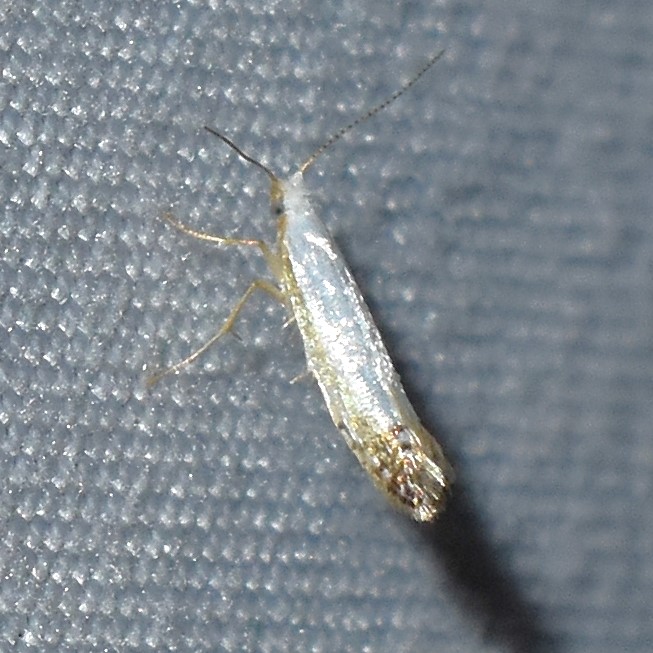
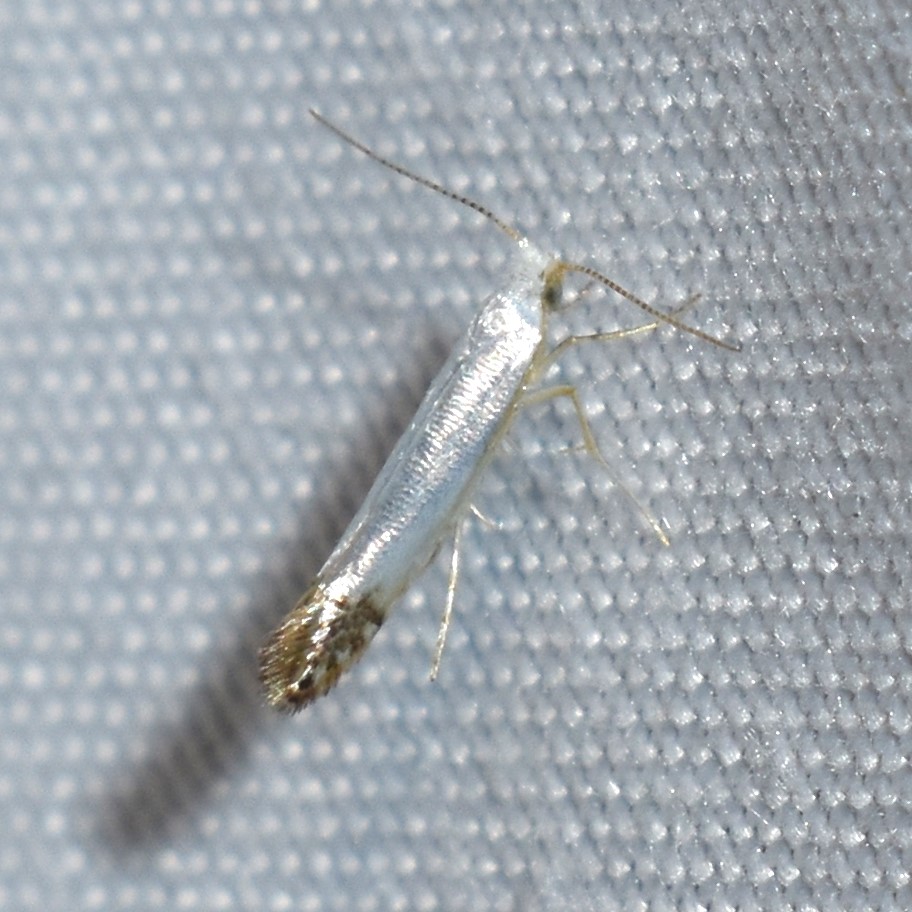
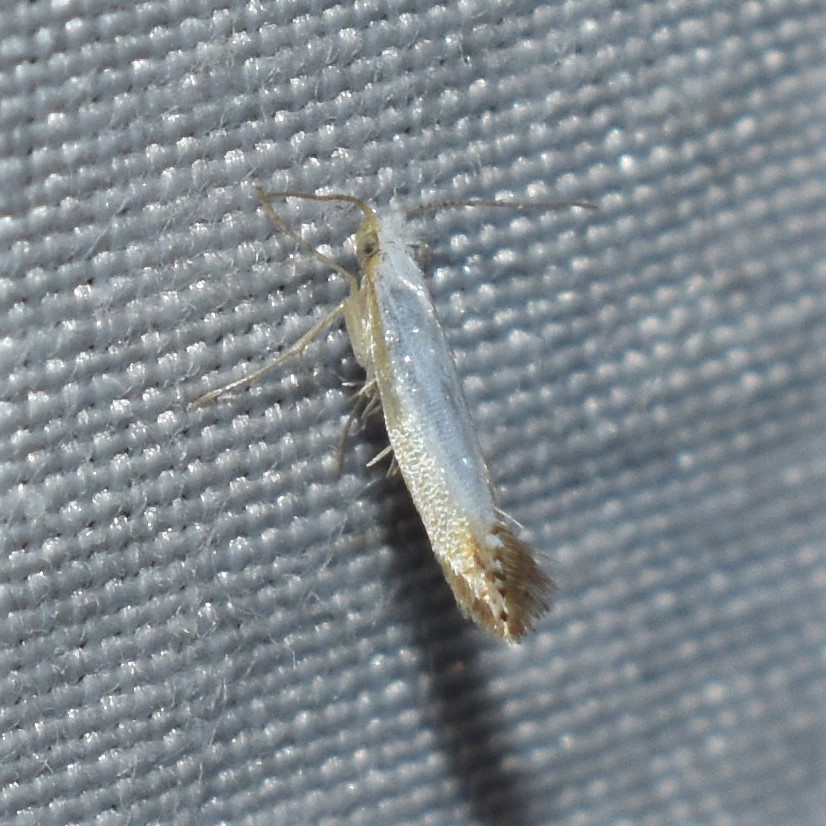
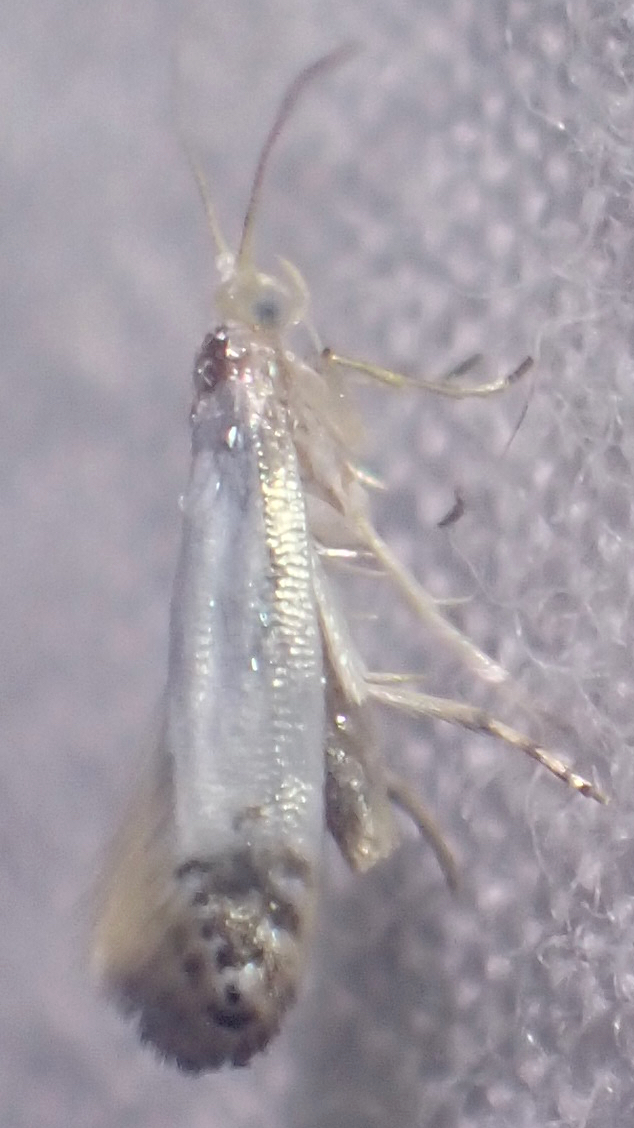
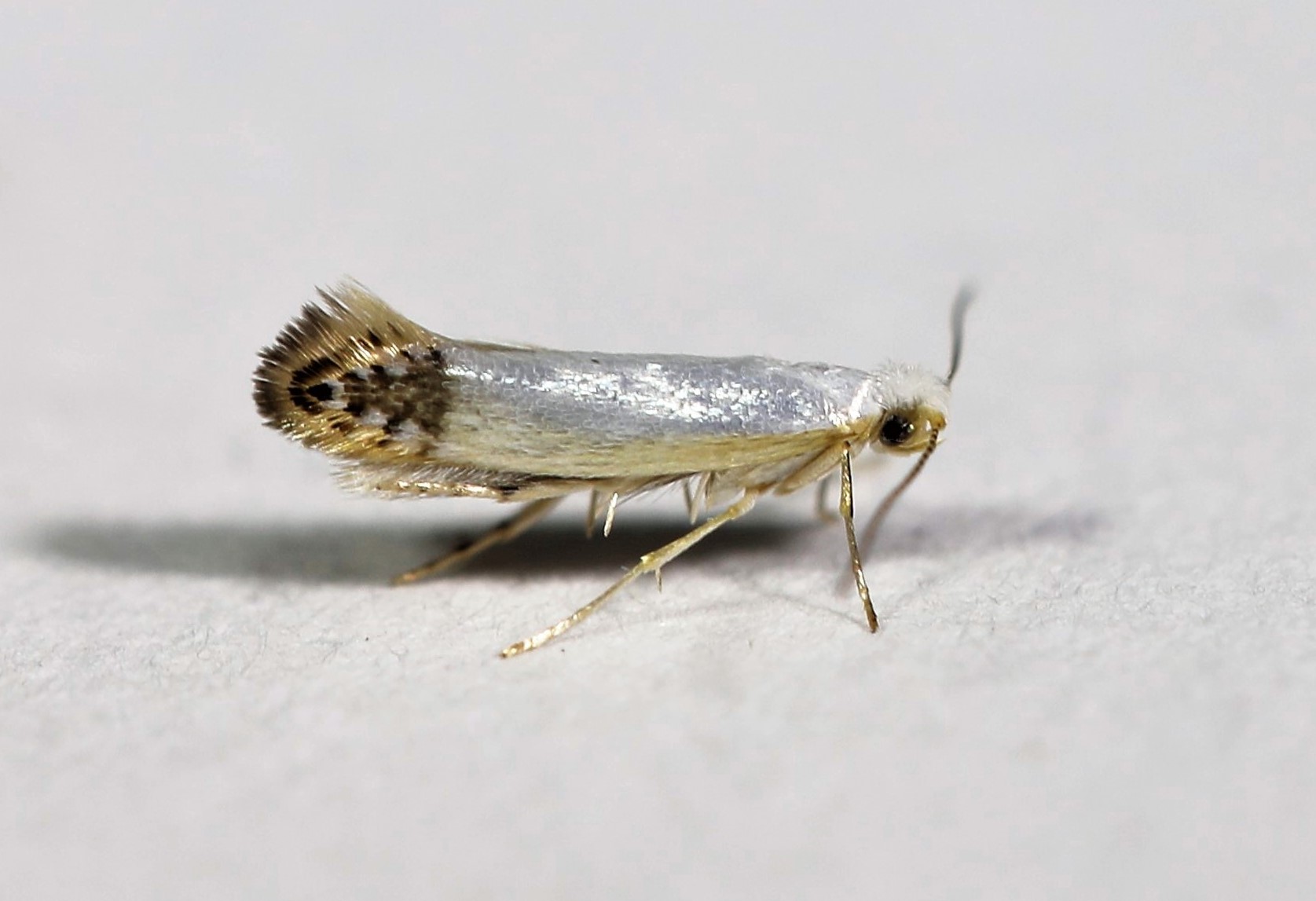
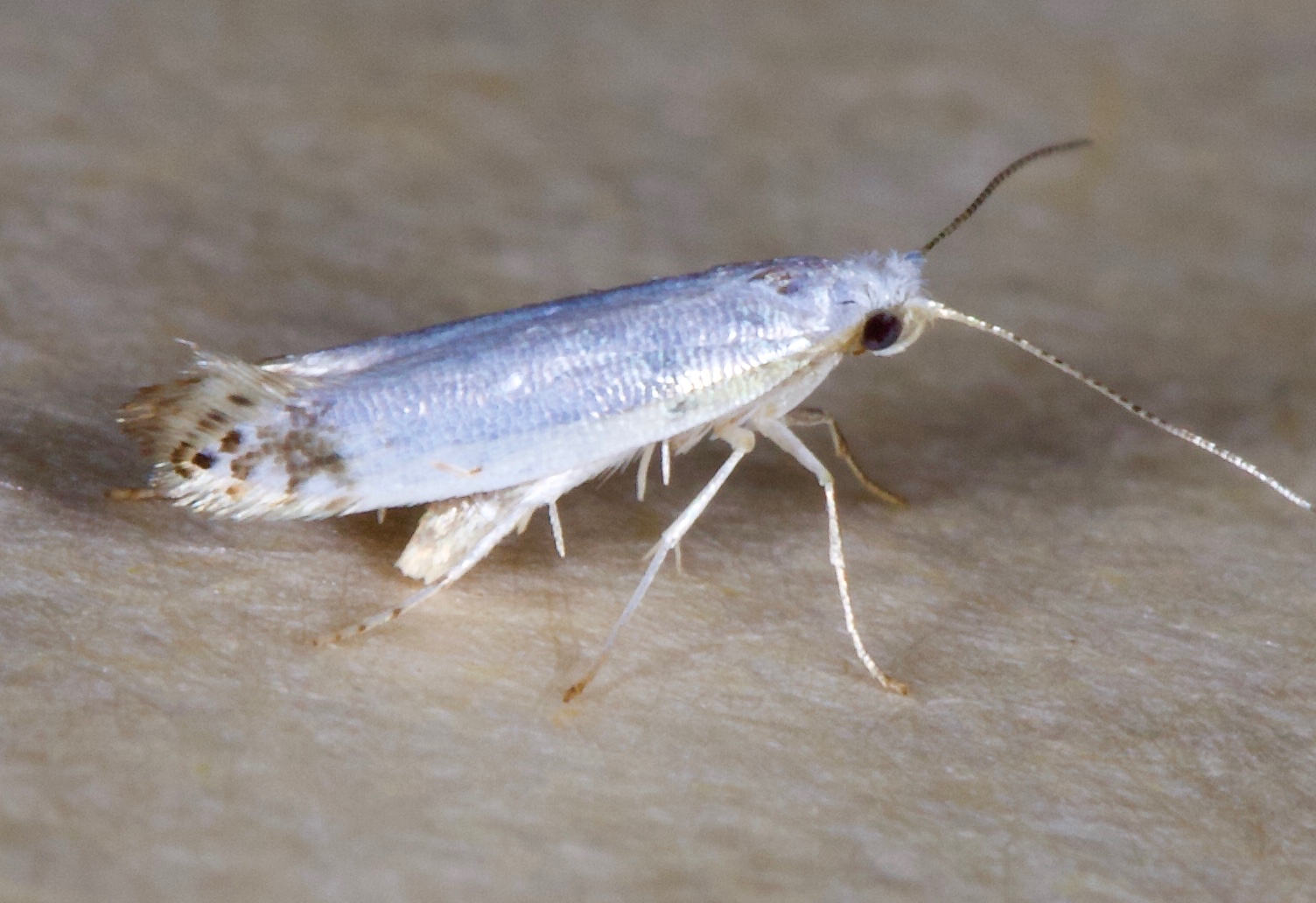
Argyresthia apicimaculellaArgyresthia apicimaculellaArgyresthia apicimaculellaArgyresthia apicimaculella
Taxonomy
Family:
Argyresthiidae
P3 Number:
36a0064
MONA Number:
2438.00
Identification
Field Guide Descriptions: Online Resources: MPG, BugGuide, iNaturalist, Google, BAMONA, GBIF, BOLD                                                                                 
Adult Markings: Argyresthia apicimaculella is an easily recognizable species that has a silvery-white forewing except for darker markings near the outer one-fifth. The head, thorax and labial palp are silvery-white, with the latter sometimes having a dusting of tan scales. The antennae is also silvery-white with dark-brown dots on the dorsum of each segment except the basal one. The forewing is silvery-white except for a dark-brown to blackish apical spot, and a large aggregate of fused dark-brown to blackish spots and blotches that precede it. The outer fringe varies from tan to darker-brown and has a well-defined dark basal line that curves around the apical spot and apex. The abdomen, hindwing and fringe are all light-brown to brownish-tan, while the legs are silvery-white with varying amounts of light-brown dusting.
Wingspan: 10 mm (Forbes, 1923).
Adult ID Requirements: Identifiable from good quality photos of unworn specimens.
Larvae ID Requirements: Identifiable only through rearing to adulthood.
Distribution in North Carolina
Distribution: Argyresthia apicimaculella in found in eastern North America, including southern Ontario and Quebec, and the northeastern and central US. In the US, the range extends from the New England states and New York southwestward to North Carolina and northern Alabama, and westward to eastern Kentucky, Indiana, Illinois, Iowa and Wisconsin. This species is spottily distributed west of the Appalachians, and appears to be rare or absent from most of the southeastern Coastal Plain. As of 2025, we have scattered records from the Piedmont and lower-elevations in the Blue Ridge, with one record from the Coastal Plain.
County Map: Clicking on a county returns the records for the species in that county.
Argyresthia apicimaculellaAlamance Alexander Alleghany Anson Ashe Avery Beaufort Bertie Bladen Brunswick Buncombe Burke Cabarrus Caldwell Camden Carteret Caswell Catawba Chatham Cherokee Chowan Clay Cleveland Columbus Craven Cumberland Currituck Dare Davidson Davie Duplin Durham Edgecombe Forsyth Franklin Gaston Gates Graham Granville Greene Guilford Halifax Harnett Haywood Henderson Hertford Hoke Hyde Iredell Jackson Johnston Jones Lee Lenoir Lincoln Macon Madison Martin McDowell Mecklenburg Mitchell Montgomery Moore Nash New Hanover Northampton Onslow Orange Pamlico Pasquotank Pender Perquimans Person Pitt Polk Randolph Richmond Robeson Rockingham Rowan Rutherford Sampson Scotland Stanly Stokes Surry Swain Transylvania Tyrrell Union Vance Wake Warren Washington Watauga Wayne Wilkes Wilson Yadkin Yancey
Flight Dates:
High Mountains (HM) ≥ 4,000 ft.
Low Mountains (LM) < 4,000 ft.
Piedmont (Pd)
Coastal Plain (CP)

Click on graph to enlarge
Image showing flight dates by month for High Mountains greater than 4,000 feet, Low Mountains, Piedmont, and Coastal Plain: adults.
Flight Comments: Adults have been documented from May through August in areas outside of Florida, with a seasonal peak in June and July. Populations in Florida have been found in January and February, which suggests that they might be a cryptic species. As of 2025, our records are from early-May to early-July, with adults in the Blue Ridge flying a few weeks later than those in the Piedmont. Local populations are univoltine in North Carolina, and likely throughout the range of the species.
Habitats and Life History
Habitats: As of 2025, our records are mostly from hardwood or mixed hardwood-pine forests, and commonly in semi-wooded residential areas.
Larval Host Plants: Forbes (1923) noted that the larvae possibly feed on oaks, but this has not been substantiated. As of 2025, the hosts are undocumented. - View
Observation Methods: The adults are attracted to lights.
Wikipedia
Status in North Carolina
Natural Heritage Program Status:
Natural Heritage Program Ranks: GNR SNR [S3]
State Protection:
Comments: Argyresthia apicimaculella appears to be uncommon in North Carolina and in many other areas of its range.

 Photo Gallery for Argyresthia apicimaculella - None

Photos: 12
Argyresthia apicimaculella
Recorded by: Jim Petranka on 2024-06-28
Madison Co.
Comment:
Argyresthia apicimaculella
Recorded by: Jim Petranka on 2024-06-13
Madison Co.
Comment:
Argyresthia apicimaculella
Recorded by: Jeff Niznik on 2024-05-09
Orange Co.
Comment:
Argyresthia apicimaculella
Recorded by: David George, Jeff Niznik on 2023-06-10
Durham Co.
Comment:
Argyresthia apicimaculella
Recorded by: David George, Jeff Niznik on 2023-06-06
Durham Co.
Comment:
Argyresthia apicimaculella
Recorded by: tom ward on 2022-06-11
Buncombe Co.
Comment:
Argyresthia apicimaculella
Recorded by: Jim Petranka on 2022-06-04
Madison Co.
Comment:
Argyresthia apicimaculella
Recorded by: Rob Van Epps on 2021-05-27
Mecklenburg Co.
Comment:
Argyresthia apicimaculella
Recorded by: Rob Van Epps on 2021-05-27
Mecklenburg Co.
Comment:
Argyresthia apicimaculella
Recorded by: Simpson Eason on 2021-05-27
Durham Co.
Comment:
Argyresthia apicimaculella
Recorded by: Jim Petranka and Becky Elkin on 2020-06-28
Madison Co.
Comment: A worn specimen.
Argyresthia apicimaculella
Recorded by: Mark Shields on 2020-05-10
Onslow Co.
Comment: