Moths of North Carolina
Scientific Name:
Common Name:
Family (Alpha):
« Home »
View PDFArgyresthiidae Members: Argyresthia Members: 10 NC Records

Argyresthia thuiella (Packard, 1871) - Arborvitae Leafminer Moth


Argyresthia thuiella
view caption
Argyresthia thuiellaArgyresthia thuiella
view caption
Argyresthia thuiella
view caption
Taxonomy
Superfamily:
Yponomeutoidea
Family:
Argyresthiidae
P3 Number:
36a0109
MONA Number:
2481.00
Identification
Field Guide Descriptions: Online Resources: MPG, BugGuide, iNaturalist, Google, BAMONA, GBIF, BOLDTechnical Description, Adults: Busck (1907a)Technical Description, Immature Stages: Eiseman (2022)                                                                                 
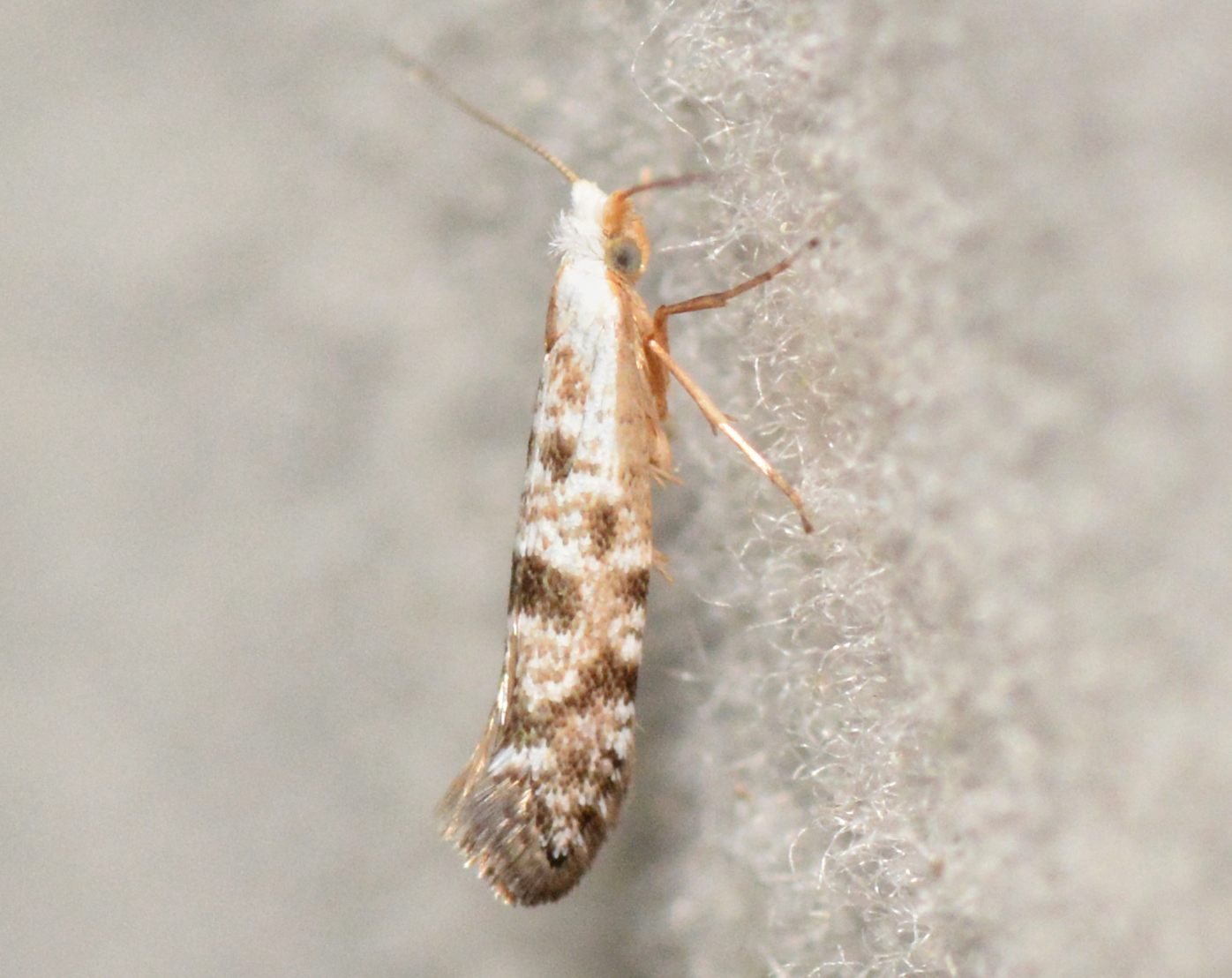
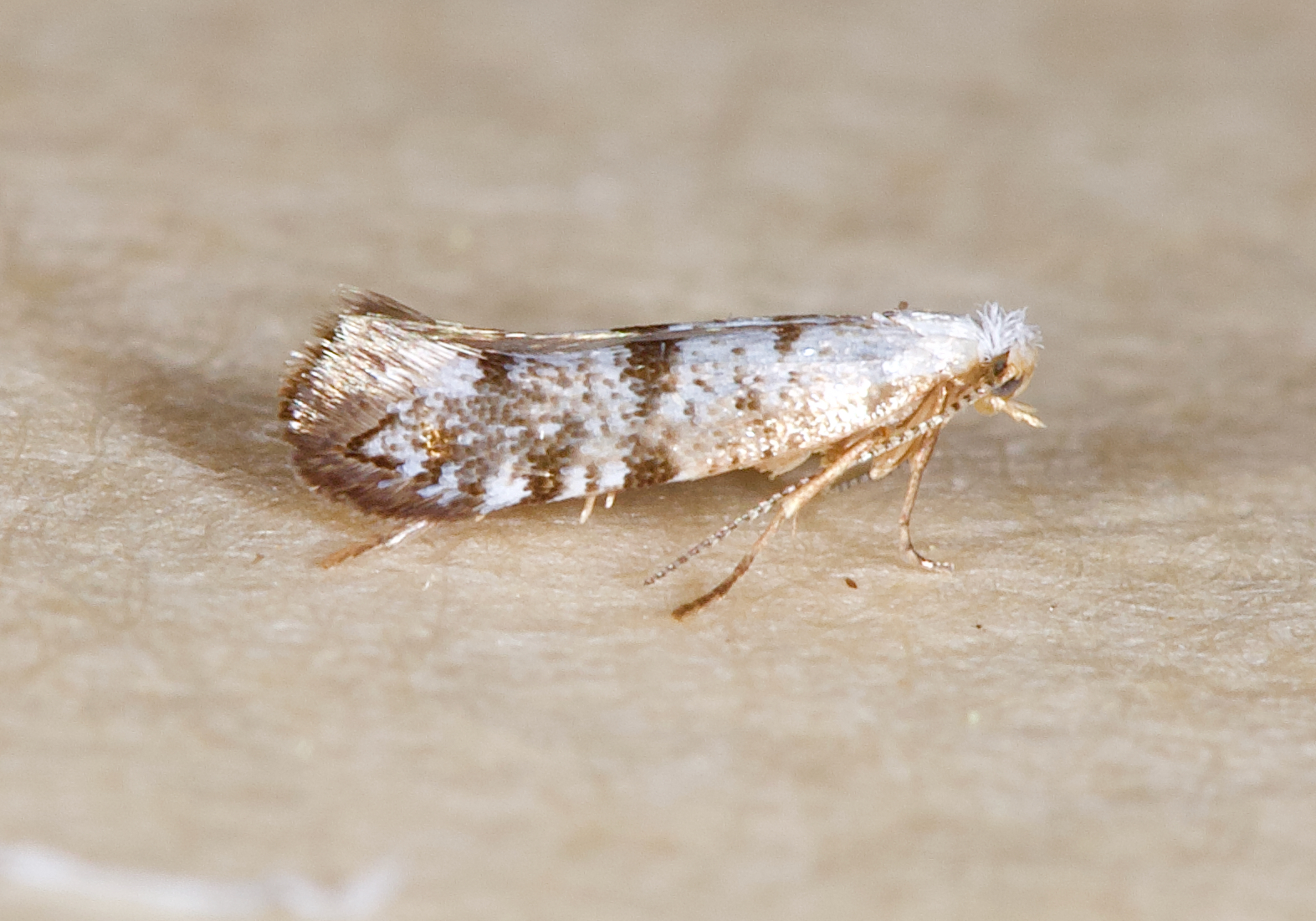
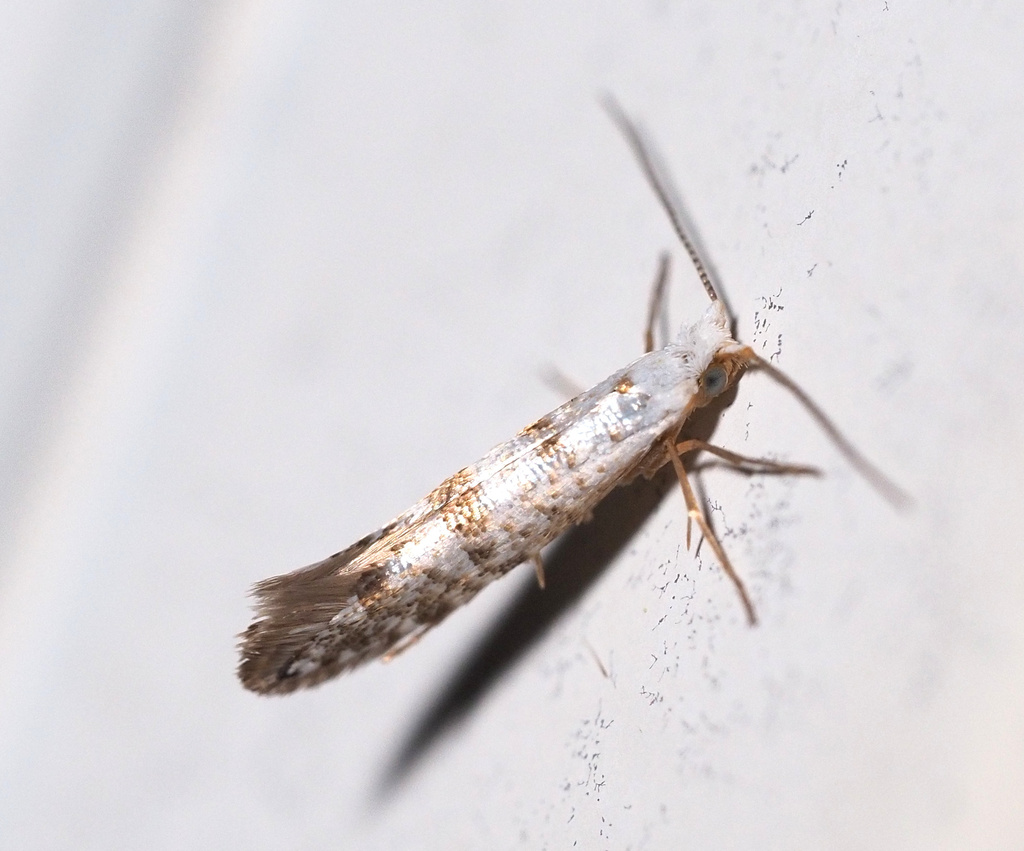
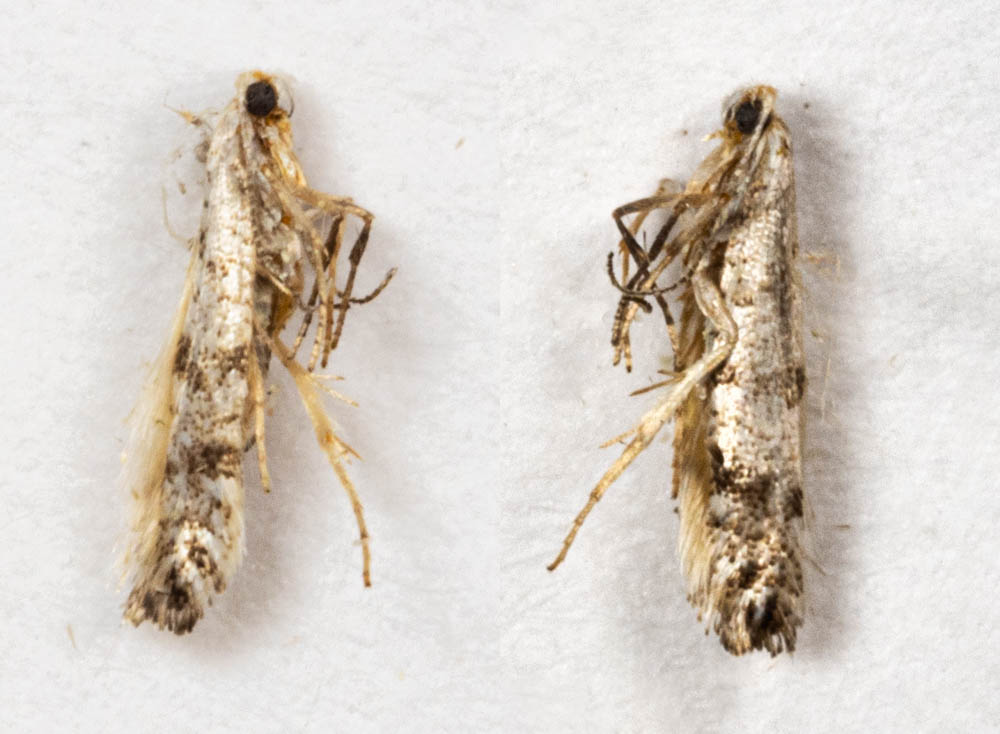
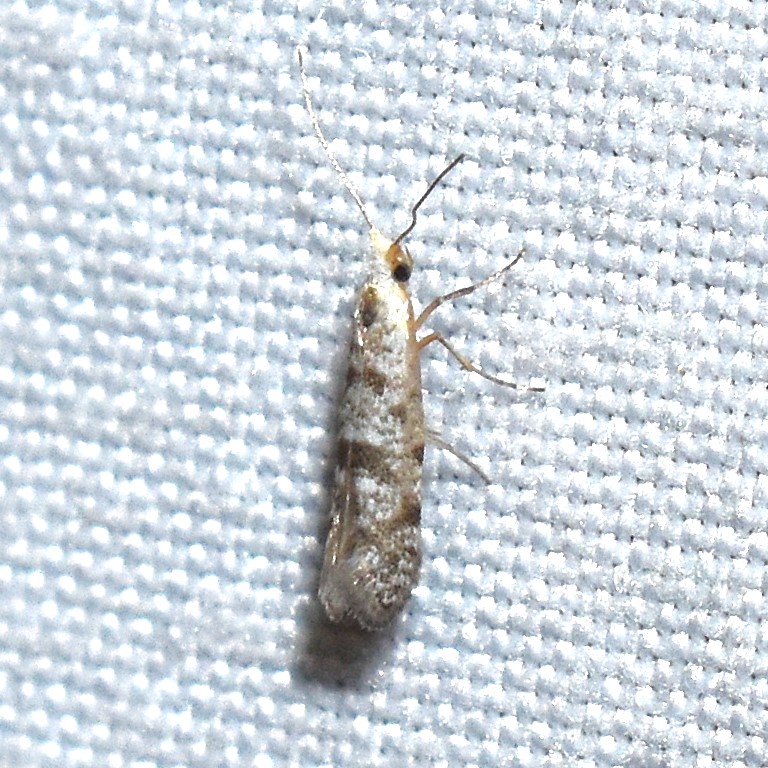
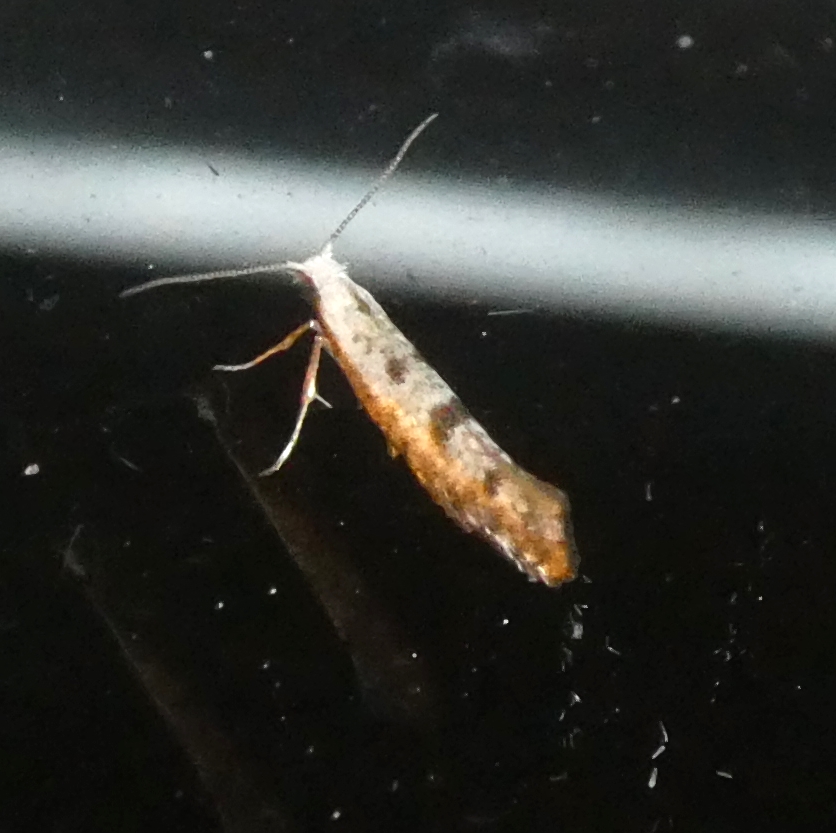
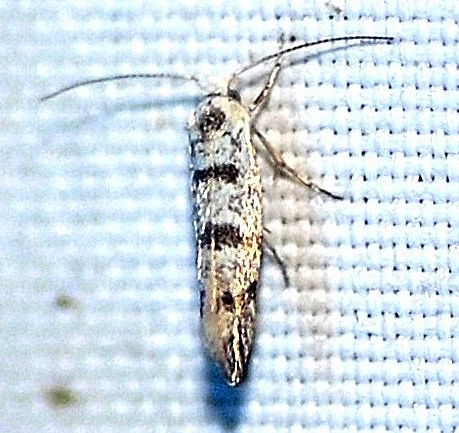
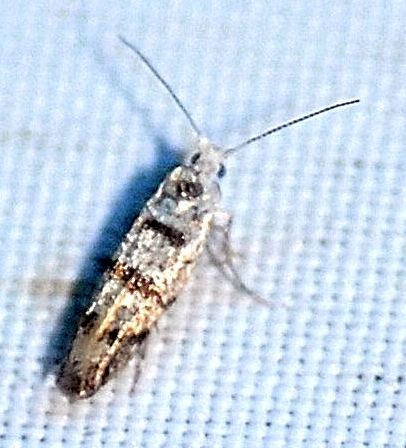
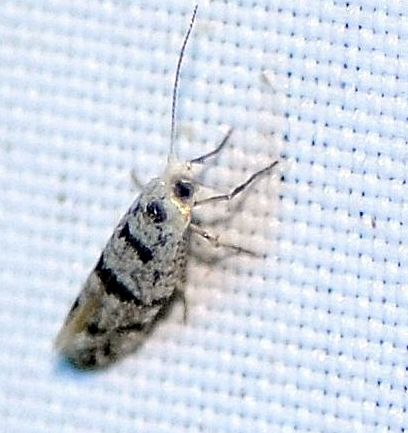
Adult Markings: Argyresthia thuiella is a small moth that has white forewings with varying amounts of brown speckling, along with larger brown marks on the costa and inner margin. The following description is based in part on that of Busck (1907a). The labial palp, face, head and thorax are all white, while the antenna is white with brown annulations. The forewing is white with brown markings, except for the base of the costal edge that has a light golden-brown wash. The inner (dorsal) margin has three large marks that are evenly spaced. These are 1) a very short dorsal streak on the basal third, 2) a relatively large transverse band at one-half the wing length that sometimes reaching nearly to an opposite, small, brown costal spot, but generally is diffused and interrupted before then, and 3) a smaller transverse streak at the tornus, along with an opposing costal spot that is slightly more basal, with the area between the two heavily peppered with dark-brown scales. In addition to the larger marks, the apical half of the wing is peppered to varying degrees with dark-brown scales, with far fewer on the basal half. The outer margin often has a row of three or four dark spots on the costal half, along with a dark <-shaped mark or spot below the apex. The terminal fringe is golden-brown to light-brown, and often with a rather faint darker band near the base and on the outer margin. The lanceolate hindwing and fringe vary from light smoky-brown to grayish-brown, and the outer portions of the legs are whitish with varying amounts of yellowish-golden dusting. Individuals vary substantially, so expect deviations from the general description above.
Wingspan: 8-9 mm (Busck, 1907a).
Adult ID Requirements: Identifiable from good quality photos of unworn specimens.
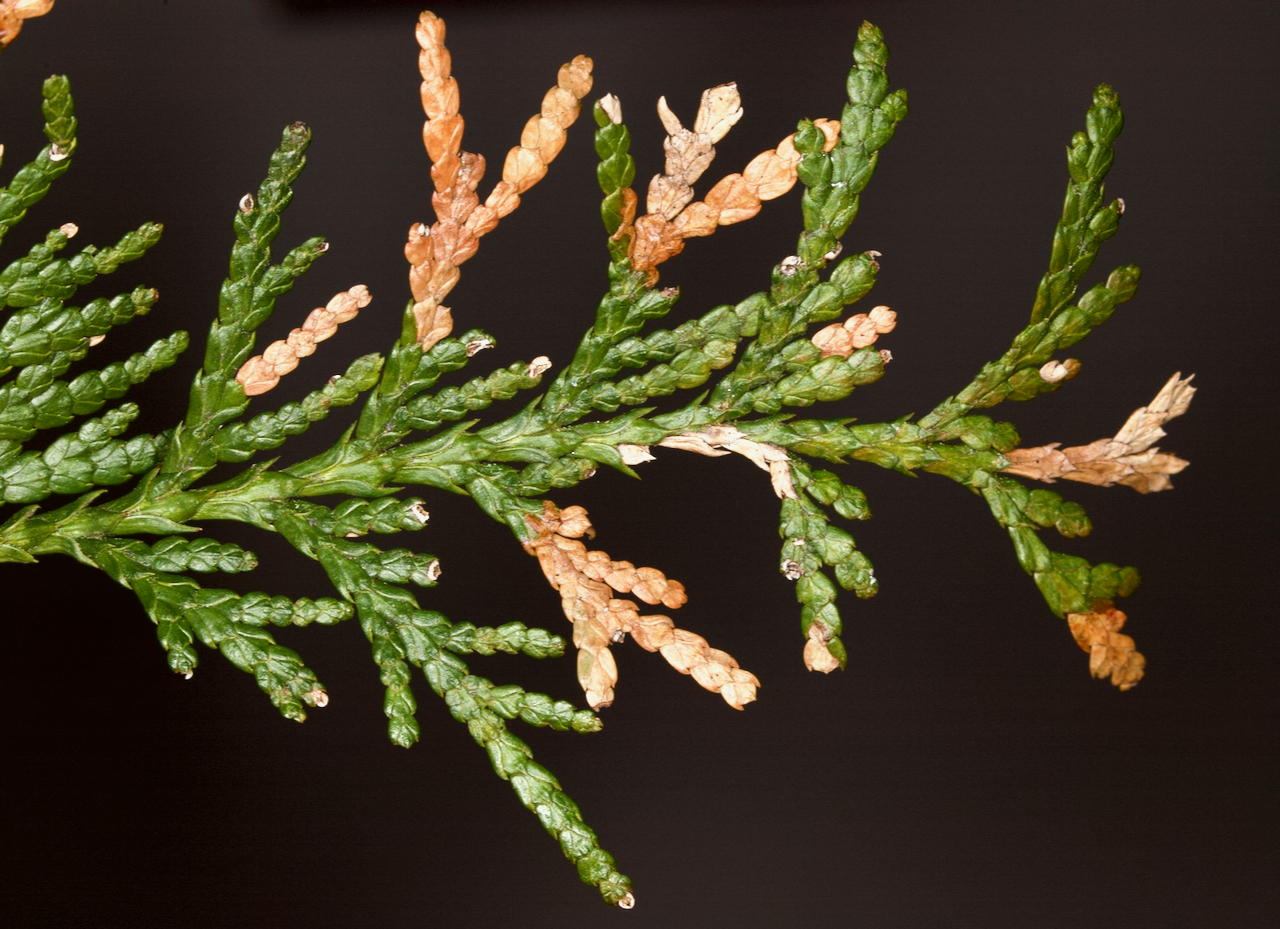
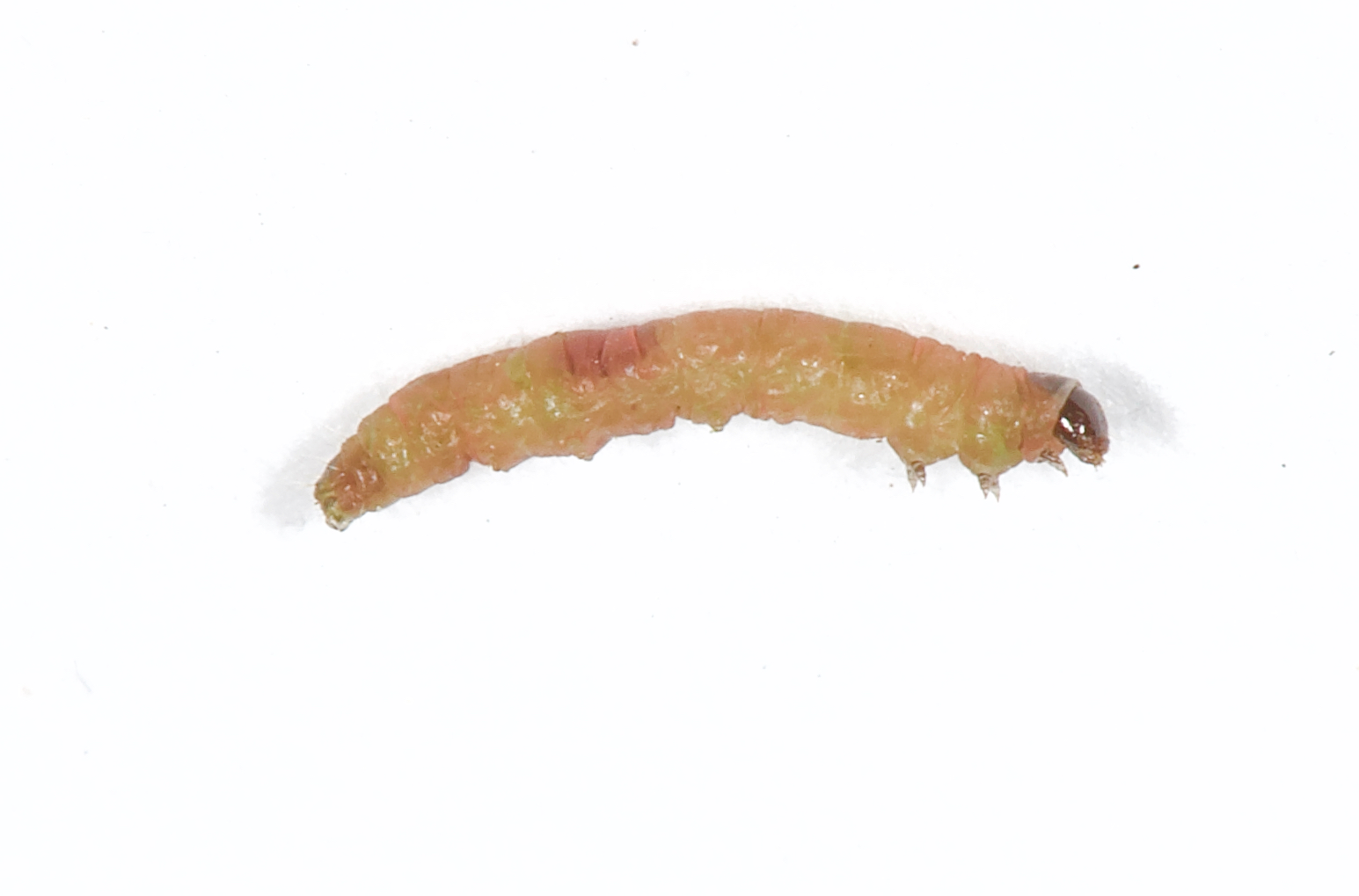
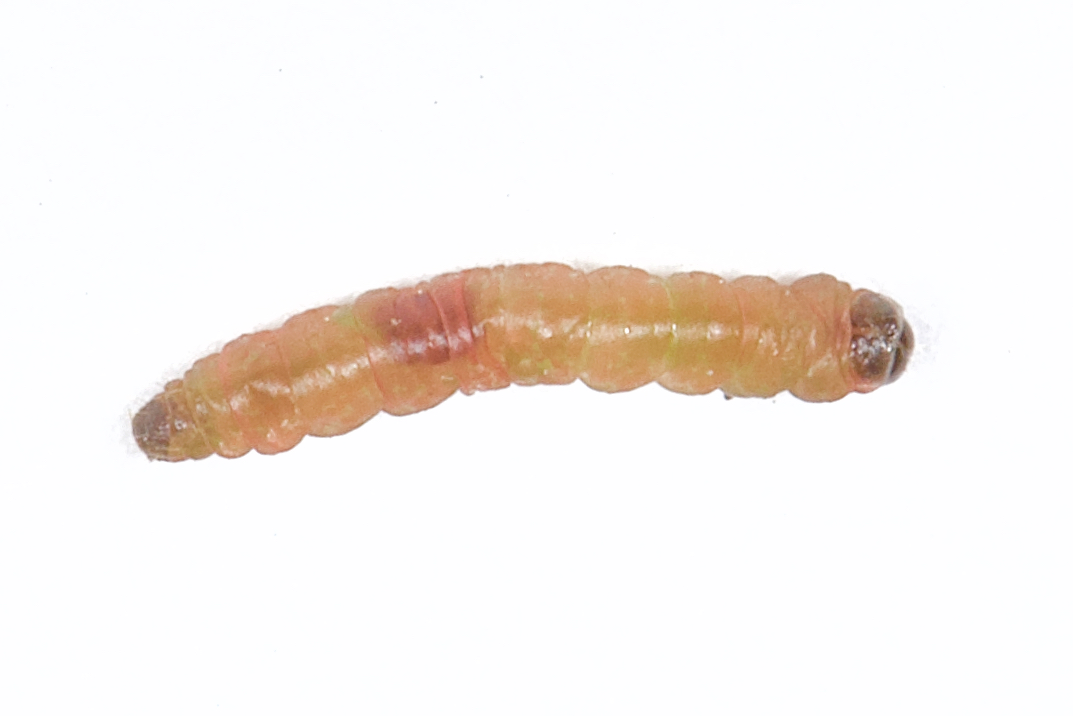
Immatures and Development: The larvae primarily use Northern White Cedar as a host and mine the branchlets. The following summary is mostly based on that of Silver (1957), Freeman (1967) and Eiseman (2022). Females lay an average of around 20 eggs singly just below the tips of the branchlets, and the young instars mine from near the tip of a branchlet toward the base. They typically mine all three leaf scales in a row before moving down to the next triplet of scales. Mining continues through the fall, then the larva overwinters in the mine in a silk chamber or web that is spun before hibernation (Silver, 1957). The larva hibernates close to the green foliage, and feeding resumes with the spring warm-up. Mining in the spring usually involves extending the original mine. Frass during the first summer and fall is deposited in the mine, then outside of the mine with the resumption of feeding in the spring. Frass is eliminated through one or more holes in the epidermis of the leaves. When fully fed, the larva migrates back to the branch tip and pupates, typically between April and June at northern latitudes. The larvae reach around 7 mm in length, and vary from yellowish-brown to greenish, with a dark-brown head and prothoracic shield. Mining causes the branchlet to turn brown, which is a useful indicator that a local population is present at a site.
Larvae ID Requirements: Identifiable from good quality photos, especially where associated with known host plants.
Distribution in North Carolina
Distribution: Argyresthia thuiella is primarily found in eastern North America and appears to have expanded its range with the widespread planting of ornamental arborvitae. Its original range most likely corresponded to that of the native range of Thuja occidentalis, which is the primary host. The current range includes portions of southern Canada from Ontario eastward to Nova Scotia and Prince Edward Island. The range in the US extends from Maine and other New England states southwestward to Virginia, North Carolina, and Tennessee, and westward to western Kentucky, Missouri, Illinois, Wisconsin and Minnesota. Scattered records are also known from northwestern South Carolina, north-central Georgia, and northwestern Arkansas. This species also occurs in the Pacific Northwest, California and the central and southern Rockies where is presumably has been introduced. As of 2025, we have several records from both the Blue Ridge and Piedmont that most likely reflect introductions from the planting of ornamental Thuja.
County Map: Clicking on a county returns the records for the species in that county.
Argyresthia thuiellaAlamance Alexander Alleghany Anson Ashe Avery Beaufort Bertie Bladen Brunswick Buncombe Burke Cabarrus Caldwell Camden Carteret Caswell Catawba Chatham Cherokee Chowan Clay Cleveland Columbus Craven Cumberland Currituck Dare Davidson Davie Duplin Durham Edgecombe Forsyth Franklin Gaston Gates Graham Granville Greene Guilford Halifax Harnett Haywood Henderson Hertford Hoke Hyde Iredell Jackson Johnston Jones Lee Lenoir Lincoln Macon Madison Martin McDowell Mecklenburg Mitchell Montgomery Moore Nash New Hanover Northampton Onslow Orange Pamlico Pasquotank Pender Perquimans Person Pitt Polk Randolph Richmond Robeson Rockingham Rowan Rutherford Sampson Scotland Stanly Stokes Surry Swain Transylvania Tyrrell Union Vance Wake Warren Washington Watauga Wayne Wilkes Wilson Yadkin Yancey
Flight Dates:
High Mountains (HM) ≥ 4,000 ft.
Low Mountains (LM) < 4,000 ft.
Piedmont (Pd)
Coastal Plain (CP)

Click on graph to enlarge
Image showing flight dates by month for High Mountains greater than 4,000 feet, Low Mountains, Piedmont, and Coastal Plain: adults.
Immature Dates:
 High Mountains (HM) ≥ 4,000 ft.
 Low Mountains (LM) < 4,000 ft.
 Piedmont (Pd)
 Coastal Plain (CP)

Click on graph to enlarge
Image showing flight dates by month for High Mountains greater than 4,000 feet, Low Mountains, Piedmont, and Coastal Plain: immatures.
Flight Comments: The adults have been observed from April through August in different areas of the range, with a seasonal peak typically in May and June. As of 2025, our records are from early-April to early-May. Local populations in North Carolina are univoltine.
Habitats and Life History
Habitats: Local populations in North Carolina are most often found in residential areas where ornamental arborvitae are present.
Larval Host Plants: Larvae feed on Northern White Cedar (Thuja occidentalis) (Eiseman, 2022). This species probably never occurred in North Carolina as a native species. If so, it would have been restricted to the Blue Ridge. At least some of our records come from cultivated Thuja or their hybrids. Robinson et al. (2023) also list Chamaecyparis, which likely refers to ornamental forms. - View
Observation Methods: The adults are attracted to lights and the larvae can be found in the branchlets of arborvitae.
Wikipedia
Status in North Carolina
Natural Heritage Program Status:
Natural Heritage Program Ranks: GNR SNR [SNA?]
State Protection: Has no legal protection, although permits are required to collect it on state parks and other public lands.
Comments: This species may not be native to North Carolina and may be present here solely in association with cultivated specimens of Northern White Cedar to its hybrids.

 Photo Gallery for Argyresthia thuiella - Arborvitae Leafminer Moth

Photos: 12
Argyresthia thuiella
iNaturalist
Recorded by: denisewill - Denise Williams on 2024-04-25
Caldwell Co.
Comment: iNat record - https://www.inaturalist.org/observations/212451013***(c) Denise Williams, some rights reserved (CC BY-NC)| Public Positional Accuracy=2 m Elevation=1309.8 feet
Argyresthia thuiella
Recorded by: Stephen Hall on 2024-04-14
Orange Co.
Comment:
Argyresthia thuiella
Recorded by: Jeff Niznik, David George on 2024-04-10
Durham Co.
Comment:
Argyresthia thuiella
Recorded by: Simpson Eason on 2022-04-11
Durham Co.
Comment:
Argyresthia thuiella
Recorded by: Jim Petranka on 2021-04-17
Madison Co.
Comment: An adult that emerged from mines that were on ornamental arborvitae; occupied mines were collected on 23 March and adults began emerging on 17 April, 2021 (see companion photos of mines and larva).
Argyresthia thuiella
Recorded by: Jim Petranka on 2021-03-23
Madison Co.
Comment: Dead branchlets that were mined from the tip downward were on ornamental arborvitae. Dissected mines had larvae where dead needles met the green growth. One naked pupa was found inside, along with several reddish-green larvae (see companion photos of a larva).
Argyresthia thuiella
Recorded by: Jim Petranka on 2021-03-23
Madison Co.
Comment: A larva that was dissected from where the dead branchlet met live green tissue below (see companion photo of the branch).
Argyresthia thuiella
Recorded by: Jim Petranka on 2021-03-23
Madison Co.
Comment: A larva that was dissected from where the dead branchlet met live green tissue below (see companion photo of the branch).
Argyresthia thuiella
Recorded by: Kyle Kittelberger on 2020-04-13
Wake Co.
Comment:
Argyresthia thuiella
Recorded by: Paul Scharf on 2015-05-01
Warren Co.
Comment:
Argyresthia thuiella
Recorded by: Paul Scharf on 2015-05-01
Warren Co.
Comment:
Argyresthia thuiella
Recorded by: Paul Scharf on 2015-05-01
Warren Co.
Comment:

Photos of Argyresthia thuiella from iNaturalist

Argyresthia thuiella
© denisewill - Denise Williams - 2024-04-25 - Caldwell Co.
iNat record