Identification
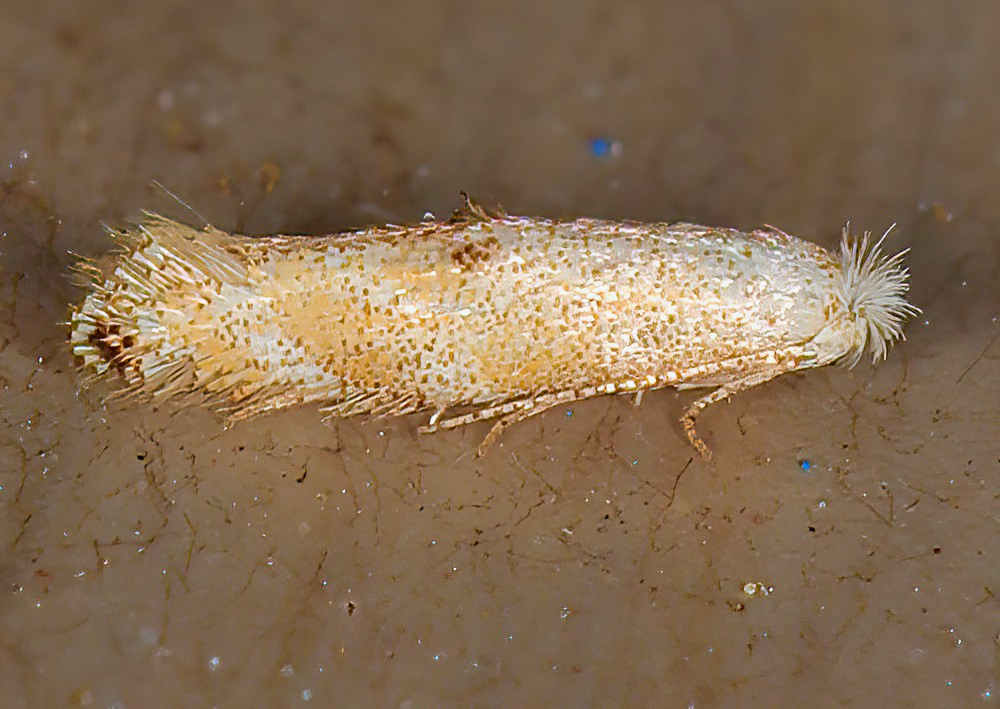
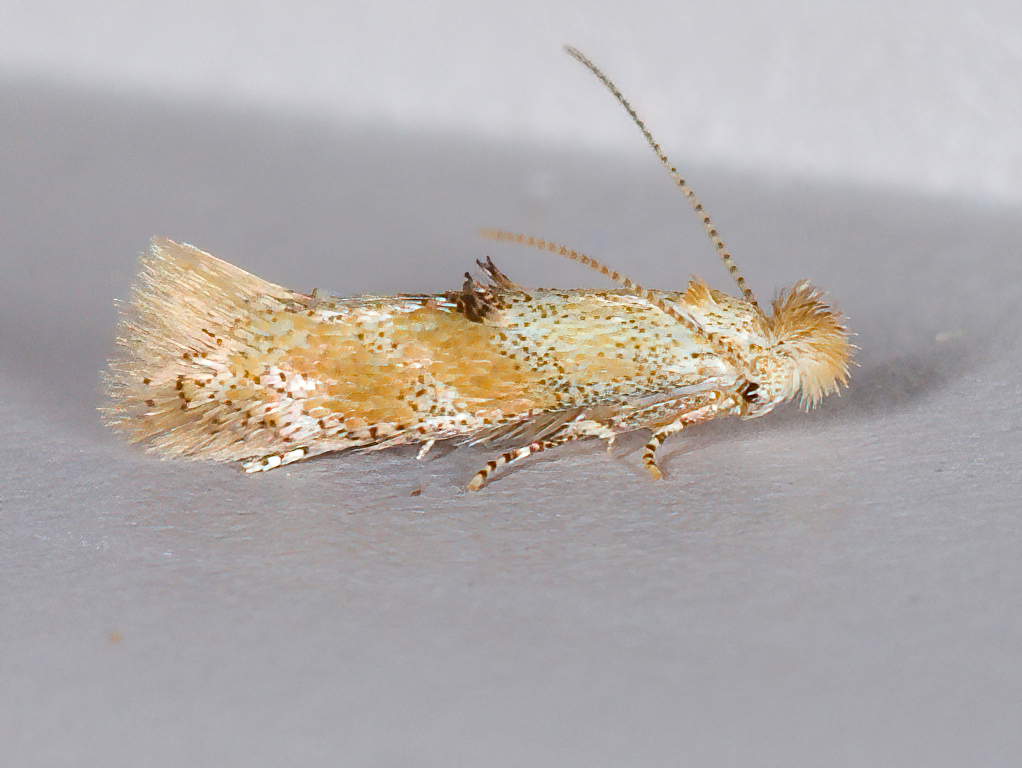
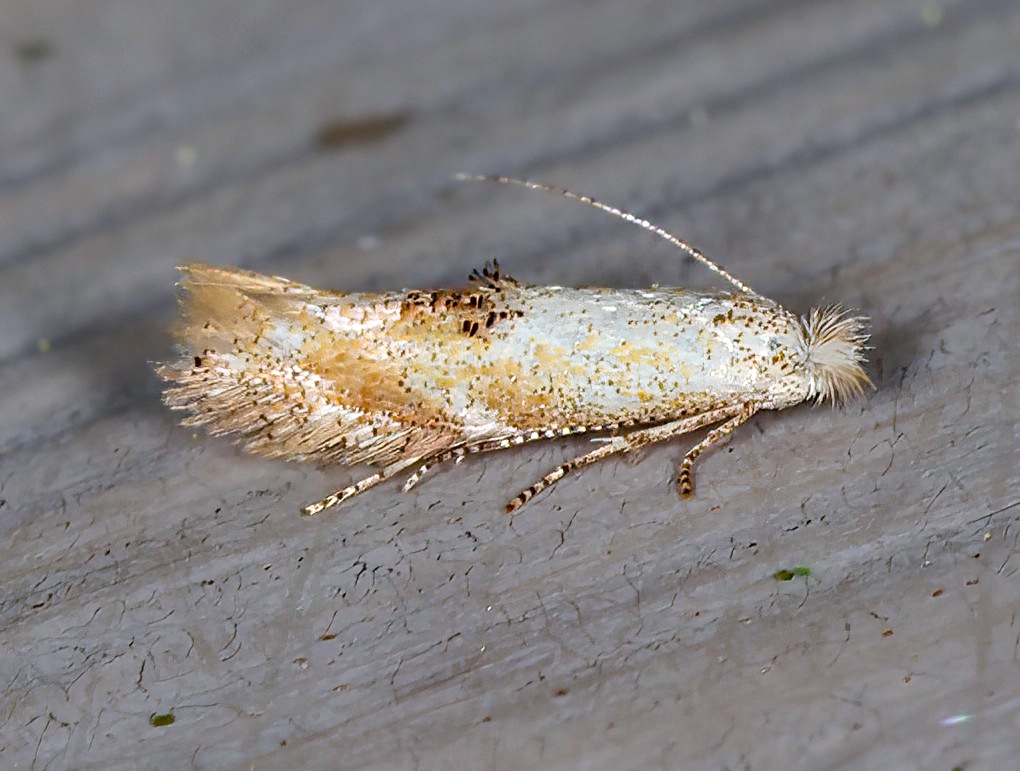
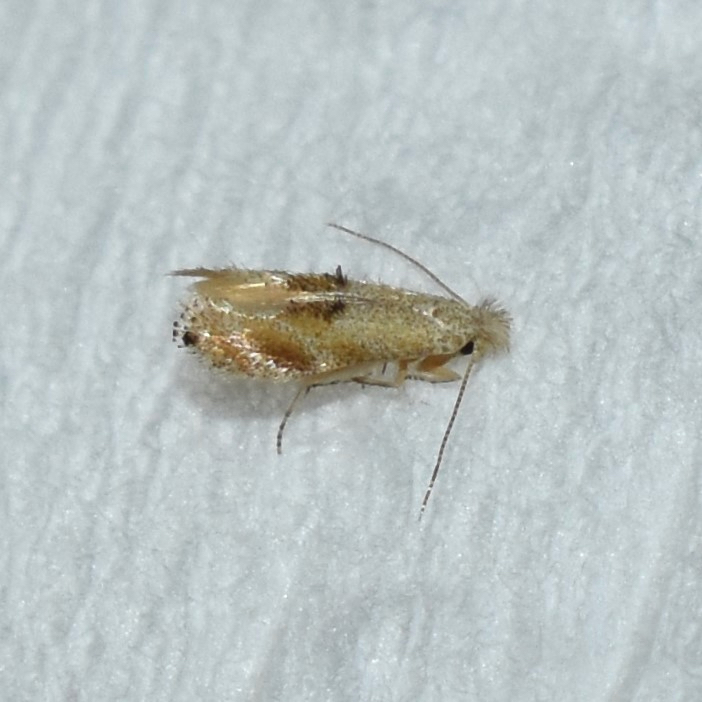
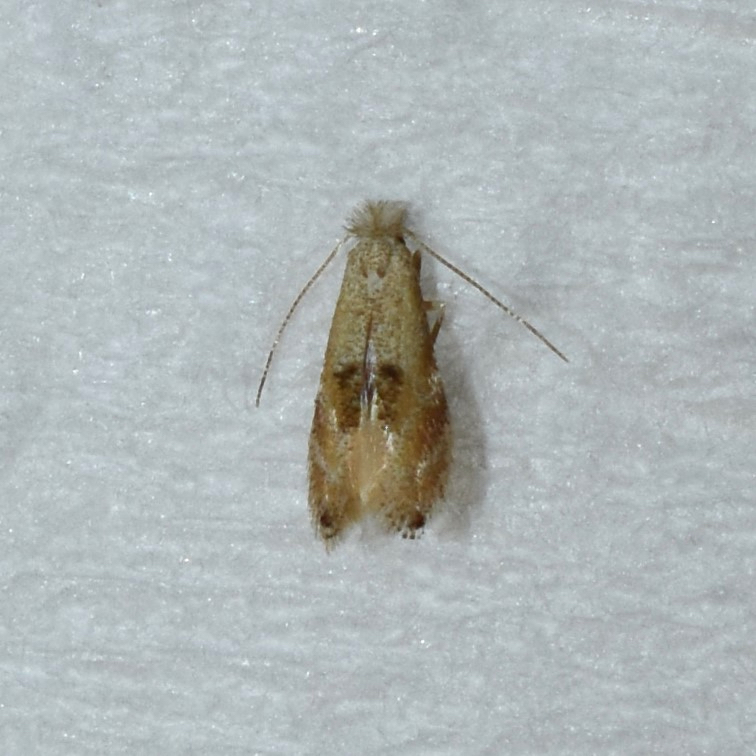
Adult Markings: This is a tiny moth with an orangish forewing that has diffuse, white bands, heavy dark speckling and a dark apical spot. It resembles some of our other Bucculatrix , but can be distinguished by having the face and antennal eye-caps speckled with darker marks. The following detailed description is mostly based on that of Braun (1963) from the type series from Ohio. Bucculatrix packardella generally resembles B. luteella and B. recognita . It can be distinguished from the former by the dark apical spot and dark ciliary line, and from the latter by the absence of a well-defined, oblique whitish streak (fascia) at the basal third of the forewing. In addition, neither species has dark speckling on the face and antennal eye-caps, which is diagnostic for B. packardella . Braun (1963) also noted that B. packardella has a pure white, finely ridged cocoon, with 10-12 ridges, while the other two species have similar cocoons, but with fewer ridges. All three species have distinctive genitalia.
Wingspan: 6-6.5 mm (Braun (1963).
Adult Structural Features: Braun (1963) has illustrations and descriptions of the male and female genitalia.
Adult ID Requirements: Identifiable from photos showing hindwings, abdomen, or other specialized views [e.g., frons, palps, antennae, undersides].
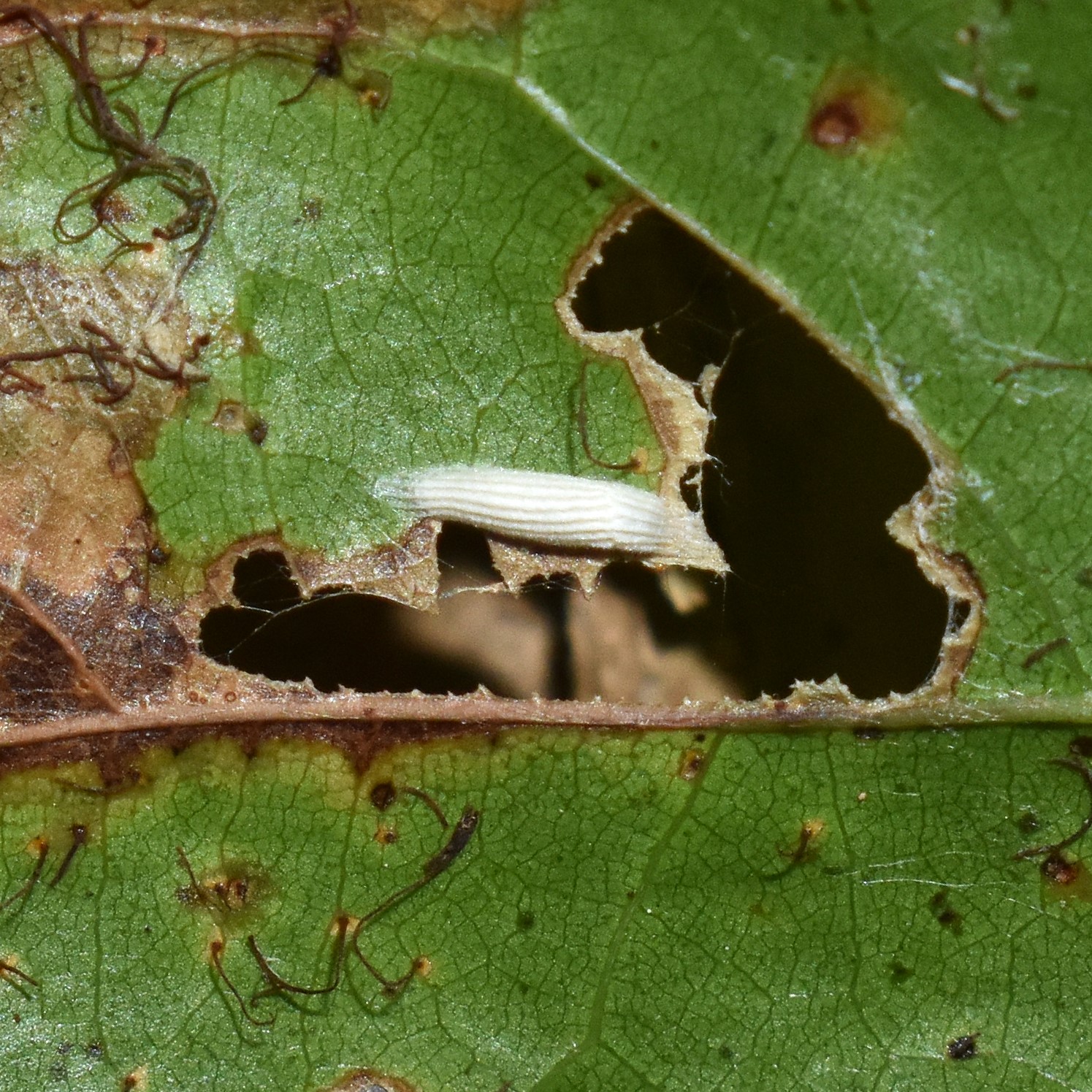
Immatures and Development: The following life history account is based on Braun’s (1963) observations in Ohio, where the larvae feed mostly on oaks, but occasionally on American Beech. Females deposit their eggs singly on the upper side of leaves. The larvae mine the leaves during the first three instars, then abandon the mines and feed on the exposed undersides of the leaves. The short thread-like mine at first follows a lateral vein or the midrib, then sharply diverging from it. After leaving the mine, the third-instar larva moults in a small open-mesh molting cocoon on the underside of the leaf. The fourth-instar consumes small, irregular patches of leaf tissue on the undersides of the leaf, then constructs a second moulting cocoon that is slightly larger than the first. The final instar is dull green, with pale tubercles and long setae. Pupation occurs in a white cocoon that has 10-12 fine ridges that are closely placed. The larvae often disperse from their natal leaves using silk threads and spin pupation cocoons on other leaves, tree bark, or in vegetation beneath the tree. Braun (1963) noted that a single oak leaf may have a dozen or more mines, and that both shaded leaves and leaves in the upper canopy are mined.
Larvae ID Requirements: Identifiable from good quality photos, especially where associated with known host plants.
 »
»