Moths of North Carolina
Scientific Name:
Common Name:
Family (Alpha):
« Home »
View PDFGracillariidae Members: Parornix Members: 3 NC Records

Parornix obliterella (Dietz, 1907) - No Common Name


Parornix obliterella
view caption
Parornix obliterella
view caption
Parornix obliterella
Taxonomy
Family:
Gracillariidae
Subfamily:
Parornichinae
P3 Number:
33a0138
MONA Number:
678.00
Identification
Field Guide Descriptions: Online Resources: MPG, BugGuide, iNaturalist, Google, BAMONA, GBIF, BOLD, iNat SearchTechnical Description, Adults: Dietz (1907)Technical Description, Immature Stages: Eiseman (2022)                                                                                 
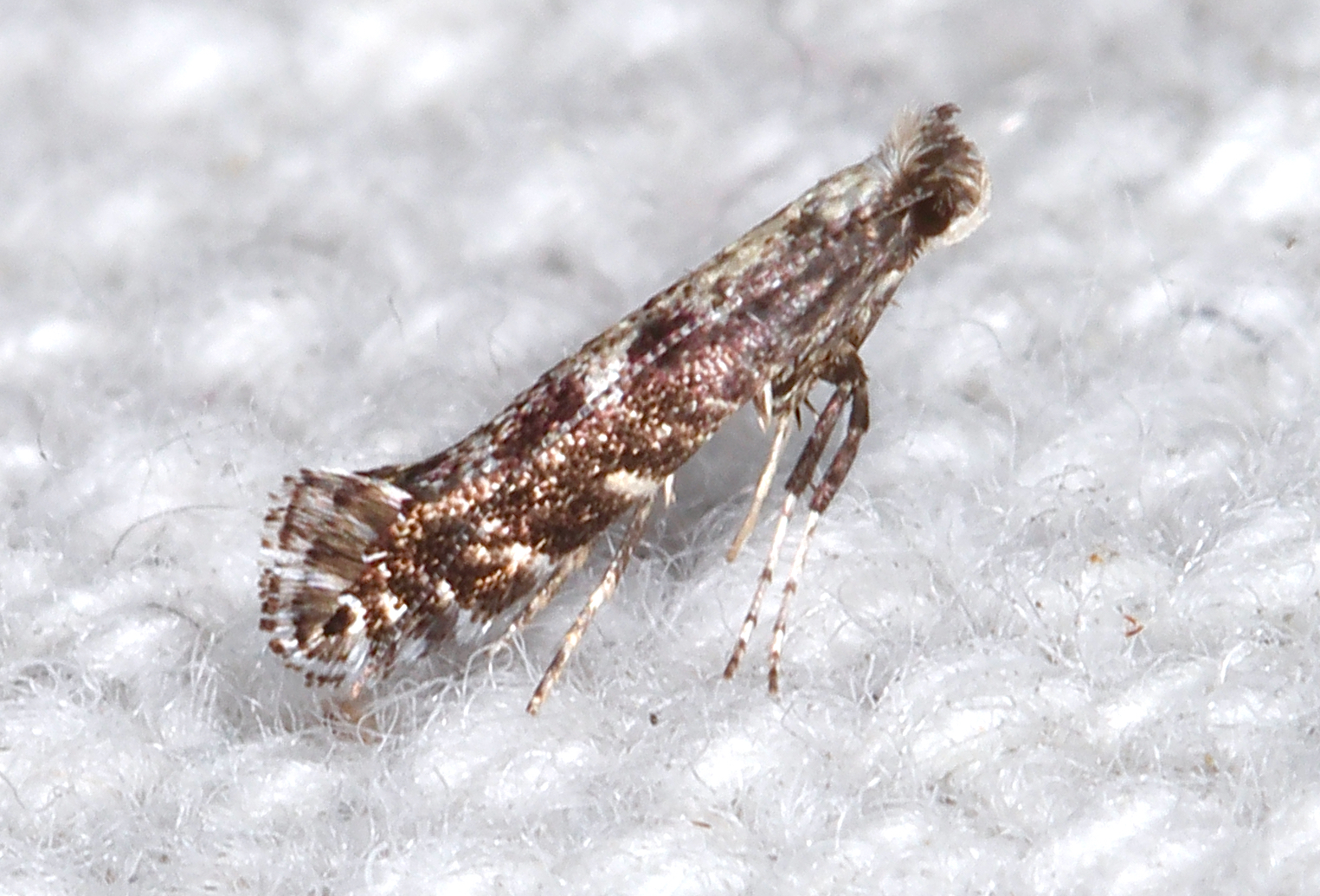
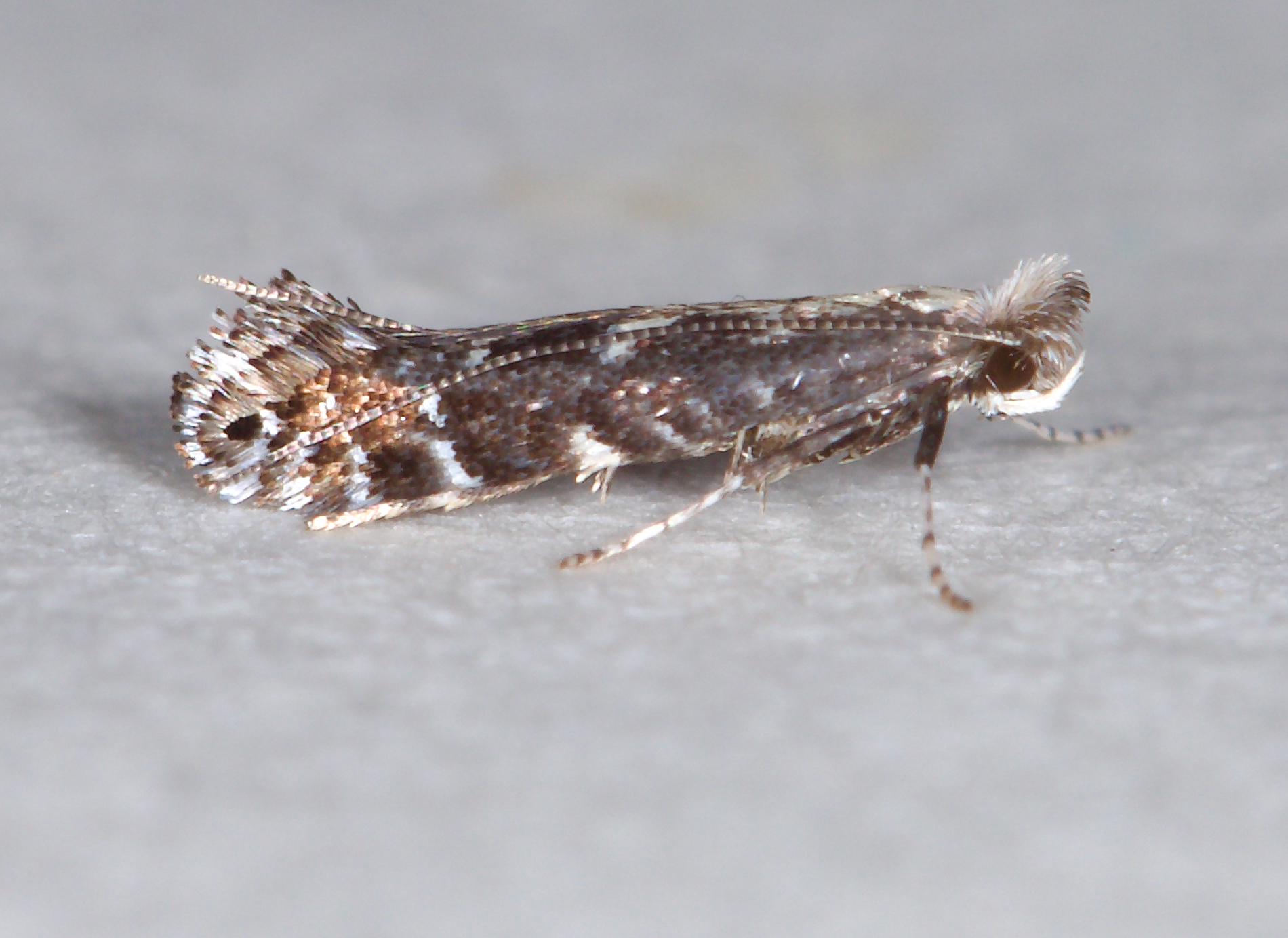
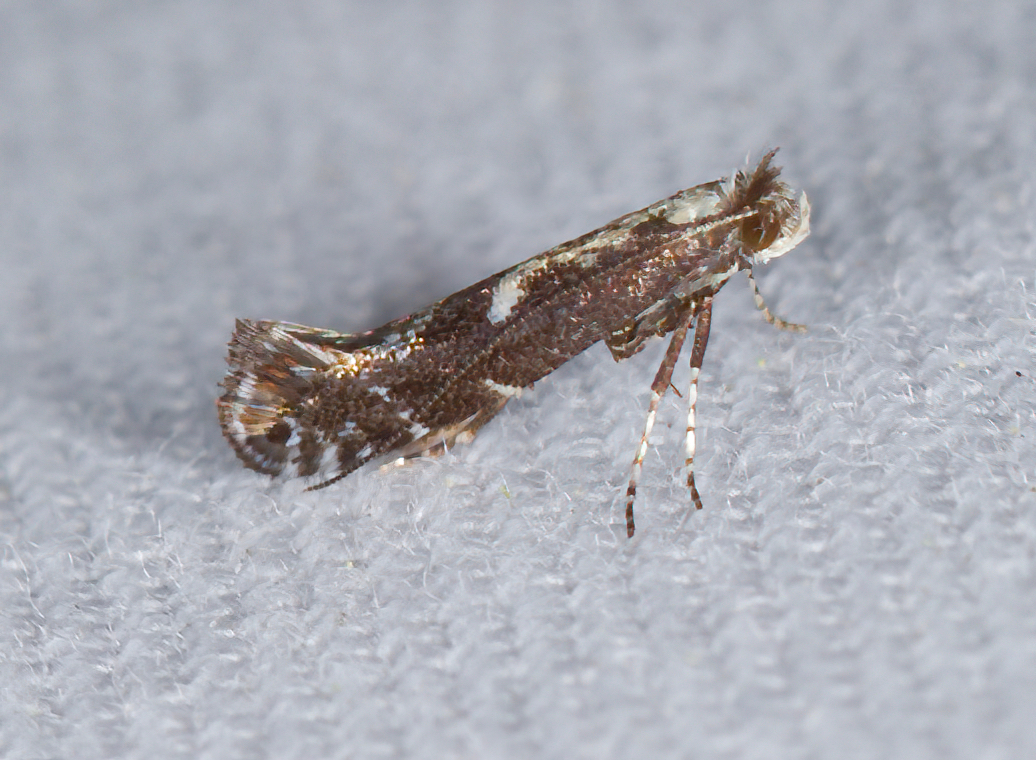
Adult Markings: Like our other Parornix species, P. obliterella has a rough-haired head with two large tufts on the vertex that project forward. The antennae are as long as the forewing, and the labial palps are smooth-scaled, curved and more-or-less ascending. In P. obliterella the entire palp is mostly or entirely white, including the third segment that is white or sometimes inconspicuously spotted with fuscous. The thorax is mostly white, but edged with fuscous anteriorly. The head is yellowish-white, with the tufts having brownish scales intermixed with the lighter scales. The forewing has a purplish-brown ground color with 5-6 white costal striae, with the 4th and 5th from the apex more widely spaced than the others (Dietz, 1907; Eiseman, 2022). The inner margin has three white spots on the basal two-thirds of the wing, with the middle spot substantially larger than the other two and interconnected to the first by a narrow neck. The region between the spots has darker scales than those of the general ground color on the forewing. The fringe is white with two dark lines, with the outermost one at the tip of the fringe.

Parornix obliterella can be separated from our other Parornix species by the white labial palps, the widely spaced 4th and 5th costal striae, and the second dark ciliary line that extends to the outer margin of the fringe.
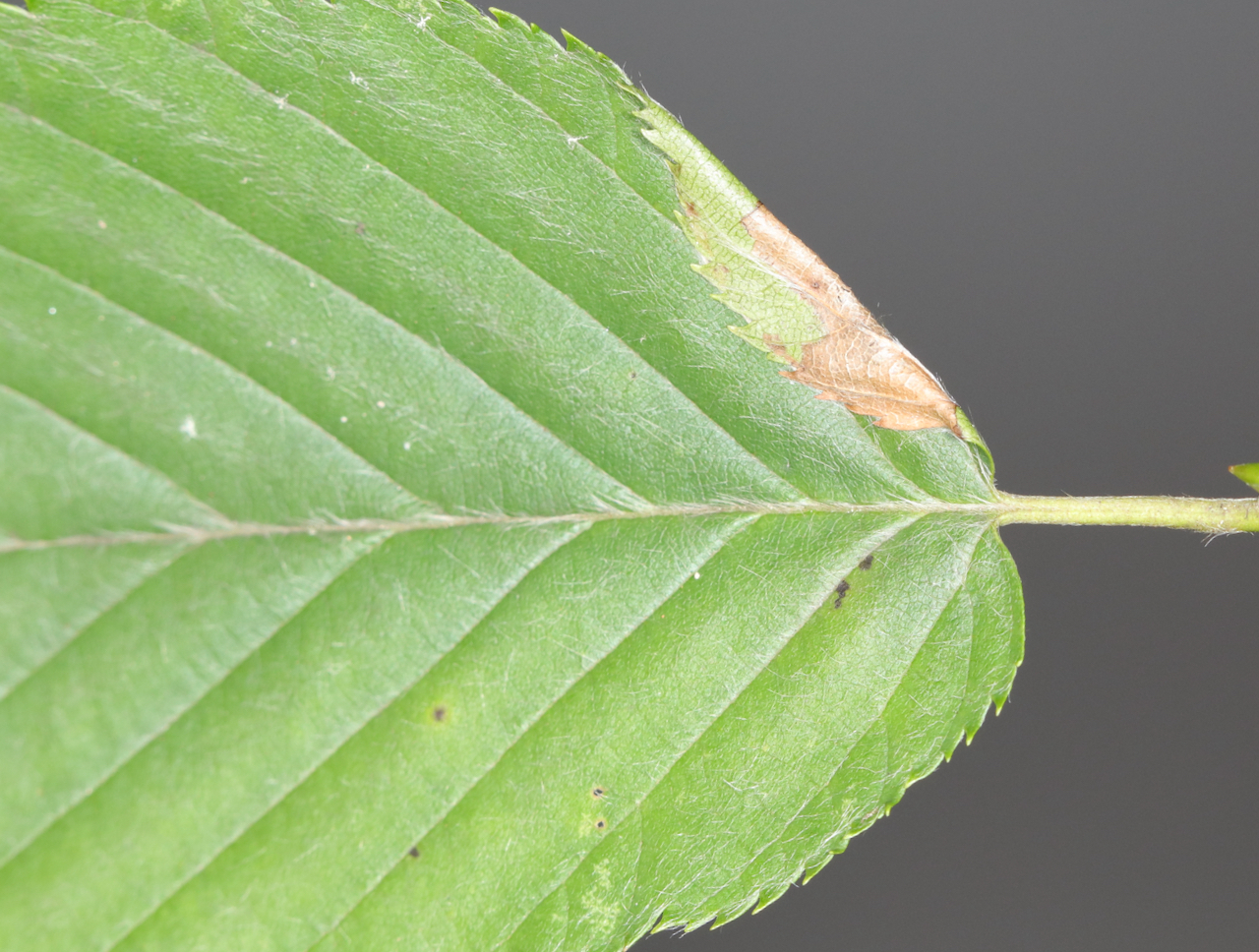
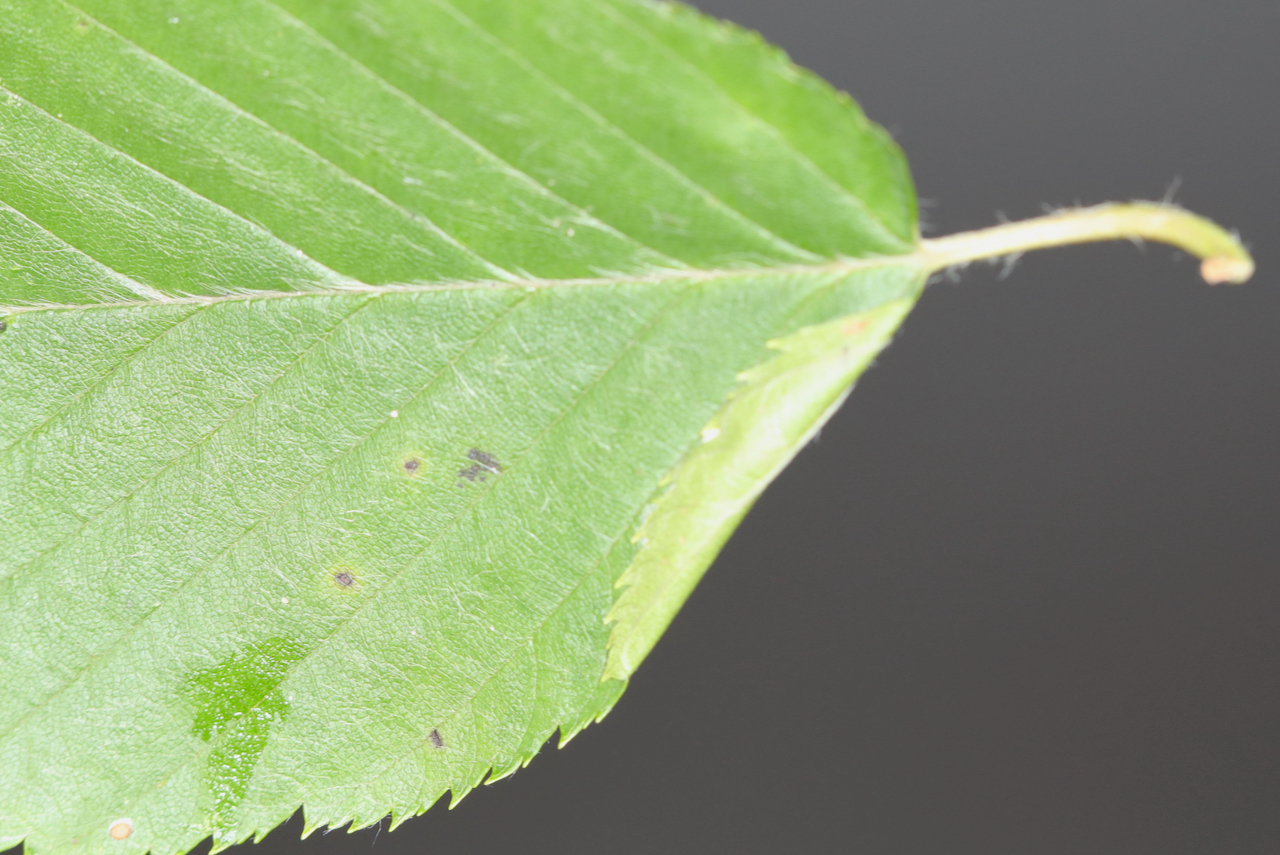
Immatures and Development: The larvae feed on birch leaves and initially produce a tentiform leaf-mine on the underside of a leaf that is 6–16 mm long (Eiseman, 2022). The larva eventually exits the mine and continues feeding underneath a leaf fold that is folded upwards rather than downward, which is the case for other Parornix that feed on birches. Pupation is thought to occur outside of the leaf shelter.


Distribution in North Carolina
Distribution: Parornix obliterella is found in eastern North America and mostly at northern latitudes. Specimens have been documented in southern Canada (Ontario; Quebec) and in the US from Maine, New Hampshire, Vermont, Massachusetts and Rhode Island westward through New York and Pennsylvania to southern Ontario. Specimens have also been documented in eastern Kentucky and in western North Carolina that may be geographic isolates from the main range farther north. As of 2025, our only records are from a single lower-elevation site in Madison County.
County Map: Clicking on a county returns the records for the species in that county.
Parornix obliterellaAlamance Alexander Alleghany Anson Ashe Avery Beaufort Bertie Bladen Brunswick Buncombe Burke Cabarrus Caldwell Camden Carteret Caswell Catawba Chatham Cherokee Chowan Clay Cleveland Columbus Craven Cumberland Currituck Dare Davidson Davie Duplin Durham Edgecombe Forsyth Franklin Gaston Gates Graham Granville Greene Guilford Halifax Harnett Haywood Henderson Hertford Hoke Hyde Iredell Jackson Johnston Jones Lee Lenoir Lincoln Macon Madison Martin McDowell Mecklenburg Mitchell Montgomery Moore Nash New Hanover Northampton Onslow Orange Pamlico Pasquotank Pender Perquimans Person Pitt Polk Randolph Richmond Robeson Rockingham Rowan Rutherford Sampson Scotland Stanly Stokes Surry Swain Transylvania Tyrrell Union Vance Wake Warren Washington Watauga Wayne Wilkes Wilson Yadkin Yancey
Flight Dates:
 High Mountains (HM) ≥ 4,000 ft.
 Low Mountains (LM) < 4,000 ft.
 Piedmont (Pd)
 Coastal Plain (CP)

Click on graph to enlarge
Image showing flight dates by month for High Mountains greater than 4,000 feet, Low Mountains, Piedmont, and Coastal Plain: adults.
Flight Comments: The adults have been found from May through September in different ares of the range, with a seasonal peak in June through August. As of 2025, our records
Habitats and Life History
Habitats:
Larval Host Plants: The larvae feed on birches, with Yellow Birch (Betula alleghaniensis) and Sweet Birch (B. lenta) being known host (Eiseman, 2022). Our only host record for North Carolina as of 2025 is for Sweet Birch (B. lenta). - View
Observation Methods: The adults are attracted to lights and the larvae can be found in tentiform mines and leaf folds on native birches.
Wikipedia
Status in North Carolina
Natural Heritage Program Status:
Natural Heritage Program Ranks: GNR [S1]
State Protection:
Comments: This species is mostly found at northern latitudes and the one known site record for North Carolina may be part of a disjunct isolate in the southern Appalachians.

 Photo Gallery for Parornix obliterella - None

Photos: 5
Parornix obliterella
Recorded by: Jim Petranka on 2023-07-05
Madison Co.
Comment: Parornix mines and associated, abandoned leaf folds were on Betula lenta. The leaf folds were consistently made on the upper sides of the leaves.
Parornix obliterella
Recorded by: Jim Petranka on 2023-07-05
Madison Co.
Comment: Parornix mines and associated, abandoned leaf folds were on Betula lenta. The leaf folds were consistently made on the upper sides of the leaves.
Parornix obliterella
Recorded by: Jim Petranka on 2023-07-04
Madison Co.
Comment:
Parornix obliterella
Recorded by: Jim Petranka on 2023-07-04
Madison Co.
Comment:
Parornix obliterella
Recorded by: Jim Petranka on 2022-04-21
Madison Co.
Comment: