Moths of North Carolina
Home Page
Recent Entries
Recent Account Updates
County Searches
General Search
Submit a Public Record
Larval Hosts
References
Maps
Draft Checklists
Family Photo Gallery
Family PDFs
NC Biodiversity Project
Comments
Significant Contributors
Scientific Name:
Common Name:
Family (Alpha):
Choose a Family
ACROLEPIIDAE-False Diamondback Moths
ADELIDAE-Fairy moths
ALUCITIDAE-Many-plumed Moths
AMPHISBATIDAE-
ARGYRESTHIIDAE-Shiny Head-standing Moths
AUTOSTICHIDAE-Autostichid Moths
BATRACHEDRIDAE-Batrachedrid Moths
BEDELLIIDAE-Bedelliid Moths
BLASTOBASIDAE-Blastobasid Moths
BOMBYCIDAE-Silkworm Moths
BUCCULATRICIDAE-Ribbed Cocoon-maker Moths
CARPOSINIDAE-Fruitworm Moths
CHOREUTIDAE-Metalmark Moths
COLEOPHORIDAE-Casebearer Moths and Relatives
COSMOPTERIGIDAE-Cosmopterigid Moths
COSSIDAE-Carpenter Moths, Goat Moths
CRAMBIDAE-Grass Moths, Snout Moths
DEPRESSARIIDAE-
DREPANIDAE-Hook-tips and Thyatirid Moths
DRYADAULIDAE-
ELACHISTIDAE-Grassminer Moths and Relatives
EPERMENIIDAE-Fringe-tufted Moths
EPIPYROPIDAE-Planthopper Parasite Moths
EREBIDAE-Erebid Moths
ERIOCRANIIDAE-Eriocraniid Moths
EUTELIIDAE-Euteliid Moths
GALACTICIDAE-Galacticid Moths
GELECHIIDAE-Gelechiid Moths; Twirler Moths
GEOMETRIDAE-Geometer Moths, Loopers
GLYPHIDOCERIDAE-Glyphidocerid Moths
GLYPHIPTERIGIDAE-Sedge Moths
GRACILLARIIDAE-Leafblotch miner moths
HELIOZELIDAE-Shield bearer moths
HEPIALIDAE-Ghost or Swift Moths
HYBLAEIDAE-
INCURVARIIDAE-Leafcutter Moths
LASIOCAMPIDAE-Tent Caterpillar Moths, Lappet Moths
LECITHOCERIDAE-Long-horned Moths
LIMACODIDAE-Slug Caterpillar Moths
LIMOCODIDAE-
LYONETIIDAE-Lyonetiid Moths
MEGALOPYGIDAE-Flannel Moths
MICROPTERIGIDAE-Mandibulate Moths
MIMALLONIDAE-
MOMPHIDAE-Mompha Moths
NEPTICULIDAE-Minute leaf miners
NOCTUIDAE-Owlet Moths
NOLIDAE-
NOTODONTIDAE-Prominents
OECOPHORIDAE-Oecophorid Moths
OPOSTEGIDAE-
PELEOPODIDAE-
PLUTELLIDAE-Diamondback Moths
PRODOXIDAE-Yucca Moths
PSYCHIDAE-Bagworm Moths
PTEROPHORIDAE-Plume Moths
PYRALIDAE-Pyralid Moths, Snout Moths
SATURNIIDAE-Giant Silkworm Moths
SCHRECKENSTEINIIDAE-Schreckensteiniid Moths
SCYTHRIDIDAE-
SESIIDAE-Clearwing Moths
SPHINGIDAE-Sphinx Moths
THYATIRIDAE-
THYRIDIDAE-Window-winged Moths
TINEIDAE-Clothes moths
TISCHERIIDAE-Tischerid Moths
TORTRICIDAE-Leafroller Moths
URANIIDAE-
URODIDAE-Urodid Moths
XYLORYCTIDAE-
YPONOMEUTIDAE-Ermine Moths
YPSOLOPHIDAE-Ypsolophid Moths
ZYGAENIDAE-
«
Home
»
View
PDF
Sphingidae Members:
Aellopos titan
Agrius cingulata
Amorpha juglandis
Amphion floridensis
Ceratomia amyntor
Ceratomia catalpae
Ceratomia undulosa
Darapsa choerilus
Darapsa myron
Darapsa versicolor
Deidamia inscriptum
Dolba hyloeus
Enyo lugubris
Erinnyis obscura
Eumorpha achemon
Eumorpha fasciatus
Eumorpha intermedia
Eumorpha pandorus
Hemaris aethra
Hemaris diffinis
Hemaris gracilis
Hemaris thysbe
Hemaris unidentified species
Hyles lineata
Isoparce cupressi
Lapara bombycoides
Lapara coniferarum
Lintneria eremitus
Manduca jasminearum
Manduca quinquemaculatus
Manduca rustica
Manduca sexta
Pachysphinx modesta
Paonias astylus
Paonias excaecata
Paonias myops
Paratrea plebeja
Smerinthus jamaicensis
Sphecodina abbottii
Sphinx chersis
Sphinx drupiferarum
Sphinx franckii
Sphinx gordius
Sphinx kalmiae
Sphinx unidentified species
Xylophanes tersa
Sphinx
Members:
Sphinx chersis
Sphinx drupiferarum
Sphinx franckii
Sphinx gordius
Sphinx kalmiae
Sphinx unidentified species
45 NC Records
Sphinx kalmiae
J.E. Smith, 1797 - Laurel Sphinx
Taxonomy
Superfamily:
Bombycoidea
Family:
Sphingidae
Subfamily:
Sphinginae
Tribe:
Sphingini
P3 Number:
890118
MONA Number:
7809.00
Other Common Name:
Fawn Sphinx
Comments:
This large genus of some 27 species ranges from England to Japan and down through the Americas. There are approximately 14 resident species in North America and at least 5 in North Carolina. Two very different larval types occur in the genus and it is likely that Sphinx is composed of more than one genus.
Species Status:
Barcodes indicate that Sphinx kalmiae is a single, well-defined species in our area.
Identification
Field Guide Descriptions:
Covell (1984); Beadle and Leckie (2012)
Online Resources:
MPG
,
BugGuide
,
iNaturalist
,
Google
,
BAMONA
,
GBIF
,
BOLD
,
iNat Search
Technical Description, Adults:
Forbes (1948); Hodges (1971); Tuttle (2007)
Technical Description, Immature Stages:
Forbes (1948); Wagner (2005); Tuttle (2007)
Adult Markings:
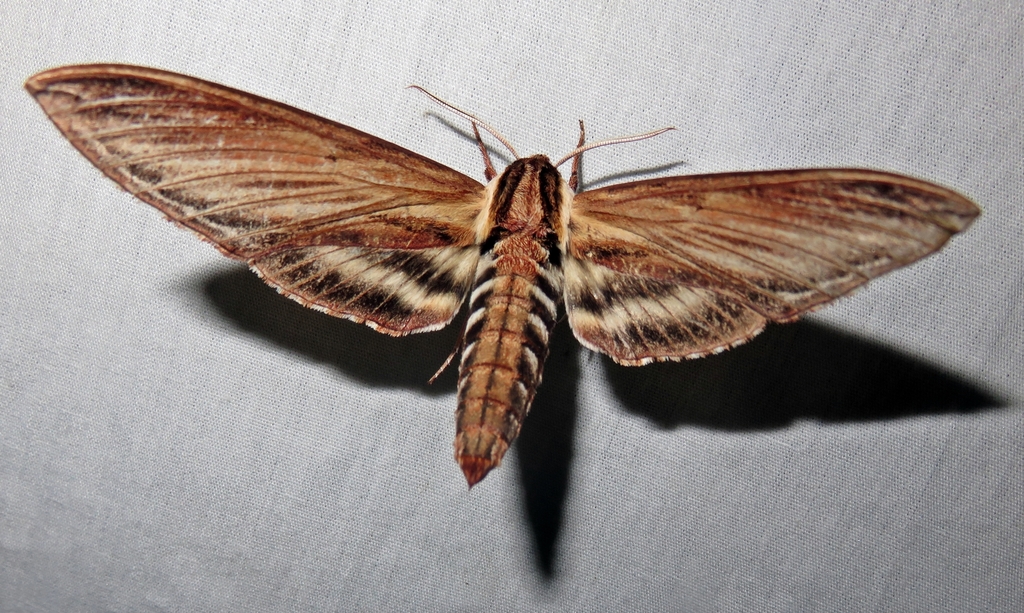
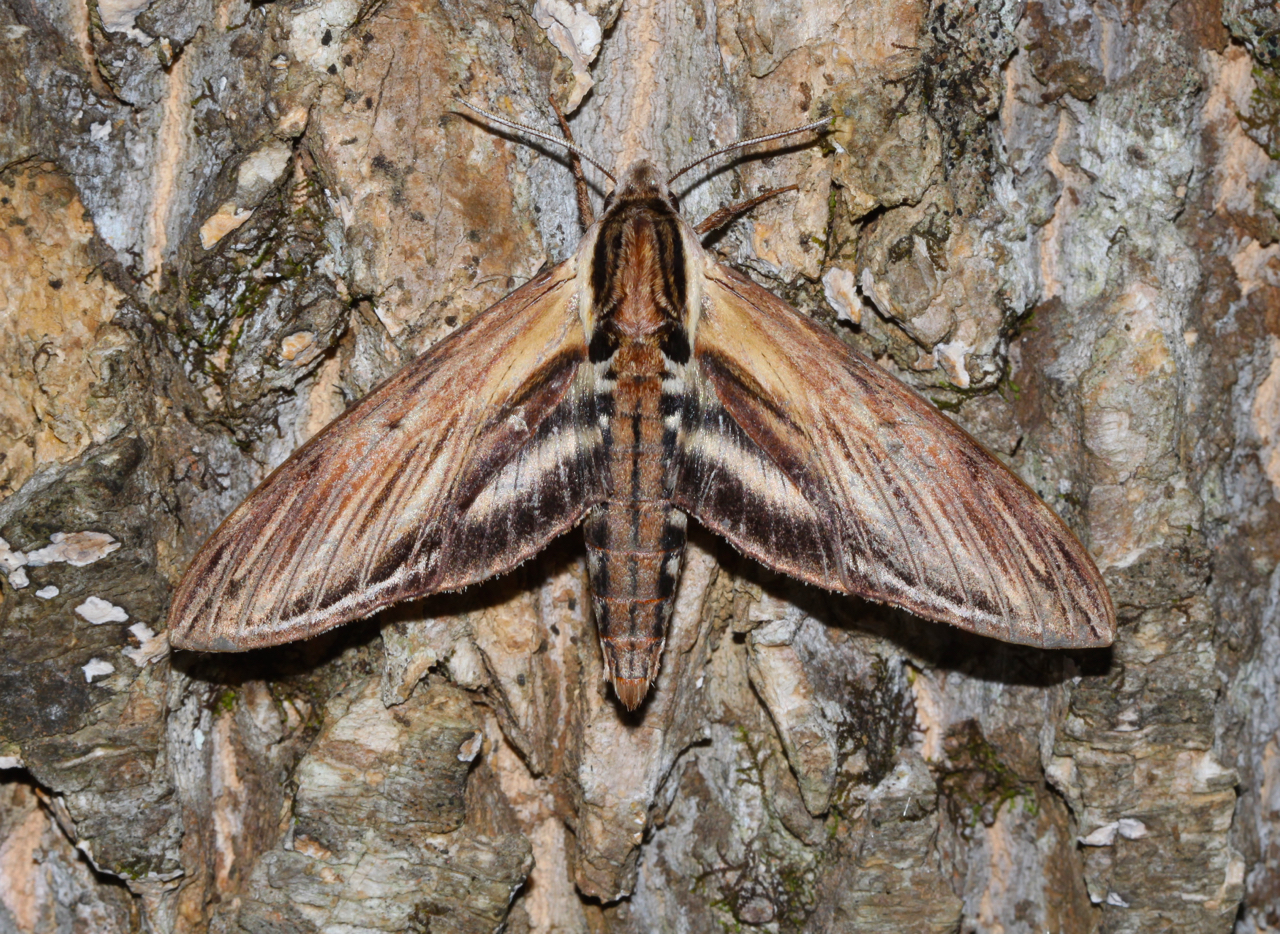
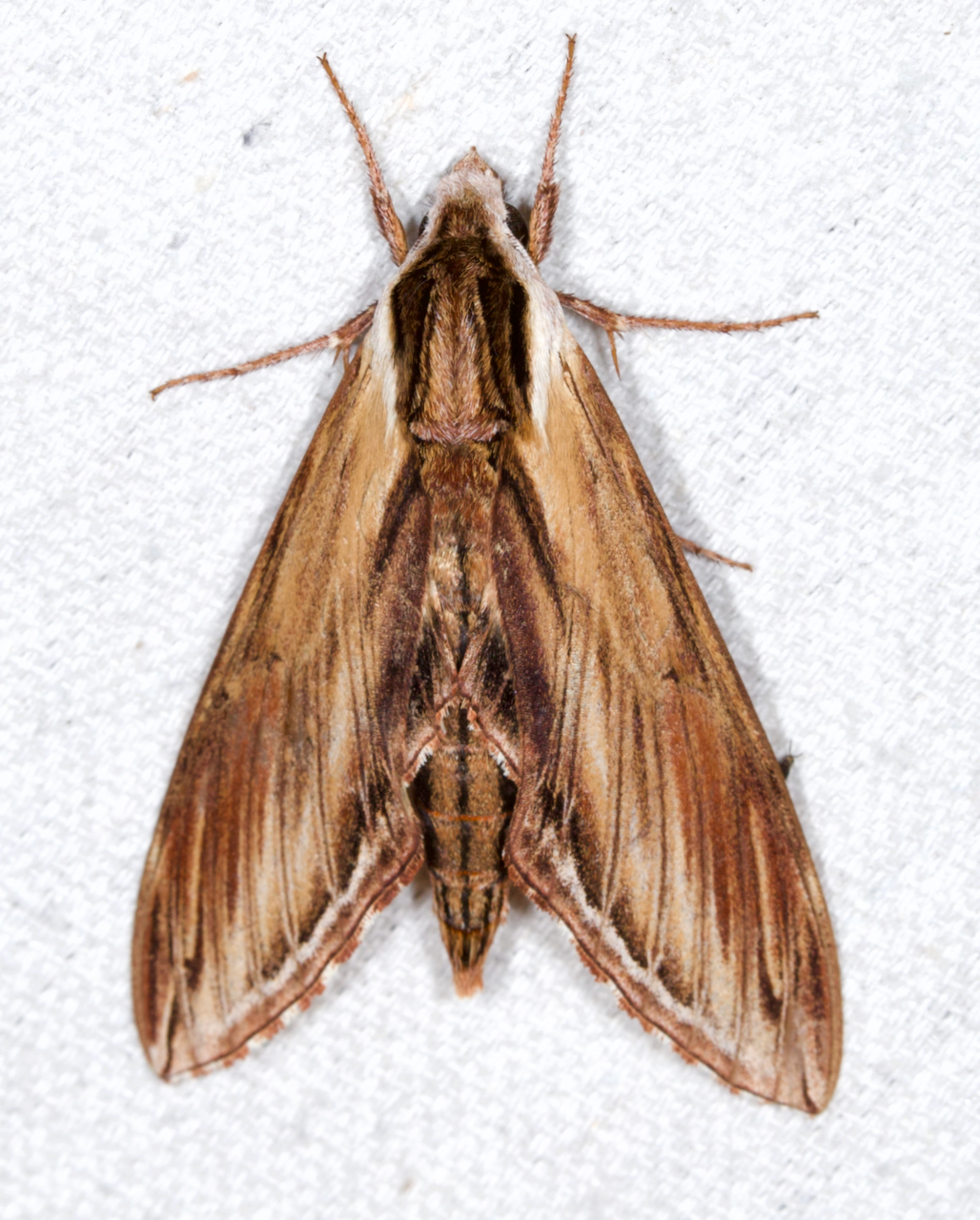
This beautiful yellow-brown sphinx is easy to identify and one of our more common species in this genus. This looks like a smaller version of S. frankii but the abdominal spots are white and the moth is more tailored in appearance. Similar to Xylophanes tersa in size and wing color but has a darker brown marks on the thorax and abdomen. Other brown-colored sphingids are duller brown or have a heavier pattern of streaks. Sexes are similar.
Wingspan:
7.5 - 10.3 cm (Covell, 1984)
Adult ID Requirements:
Identifiable from good quality photos of unworn specimens.
Immatures and Development:
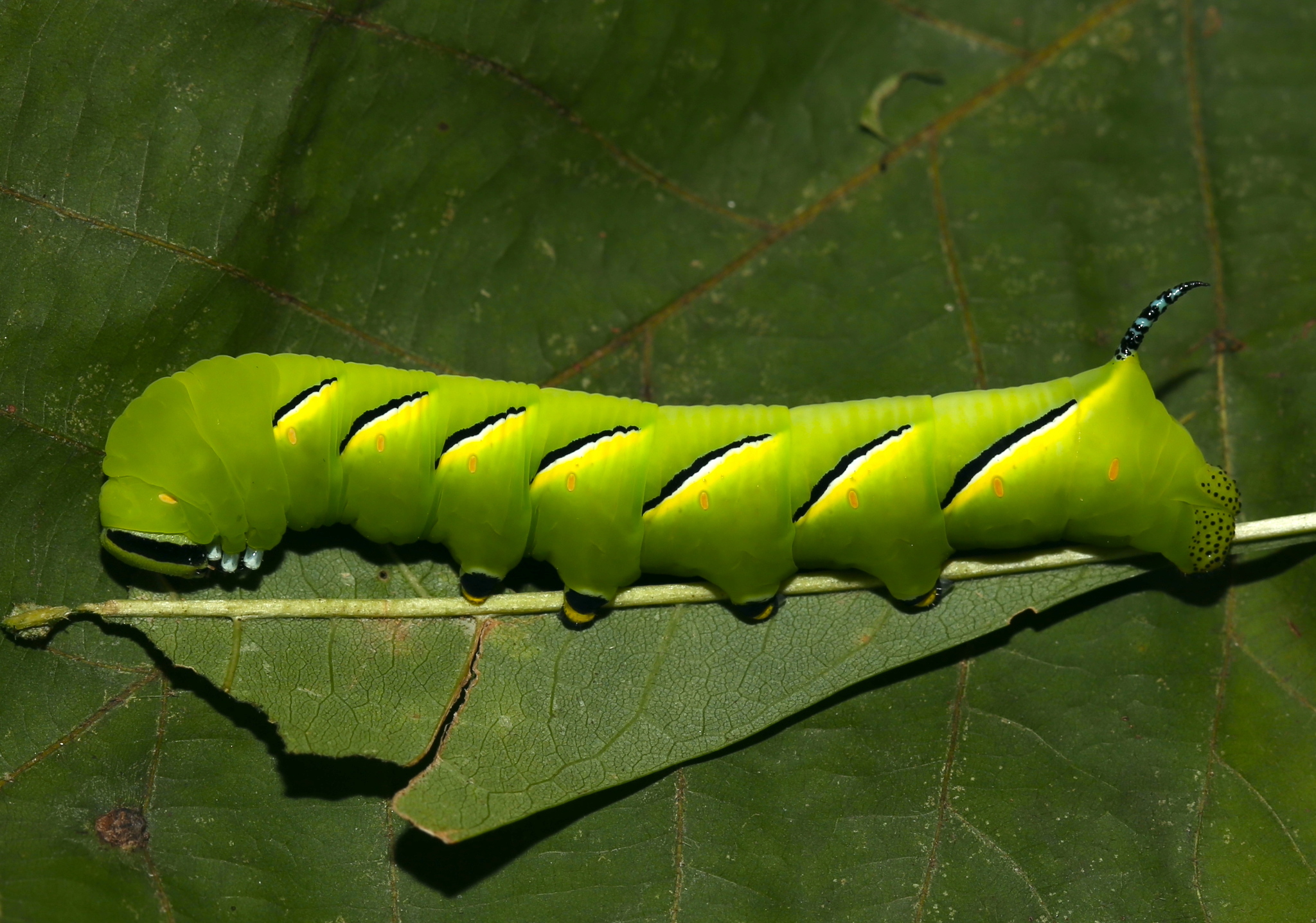
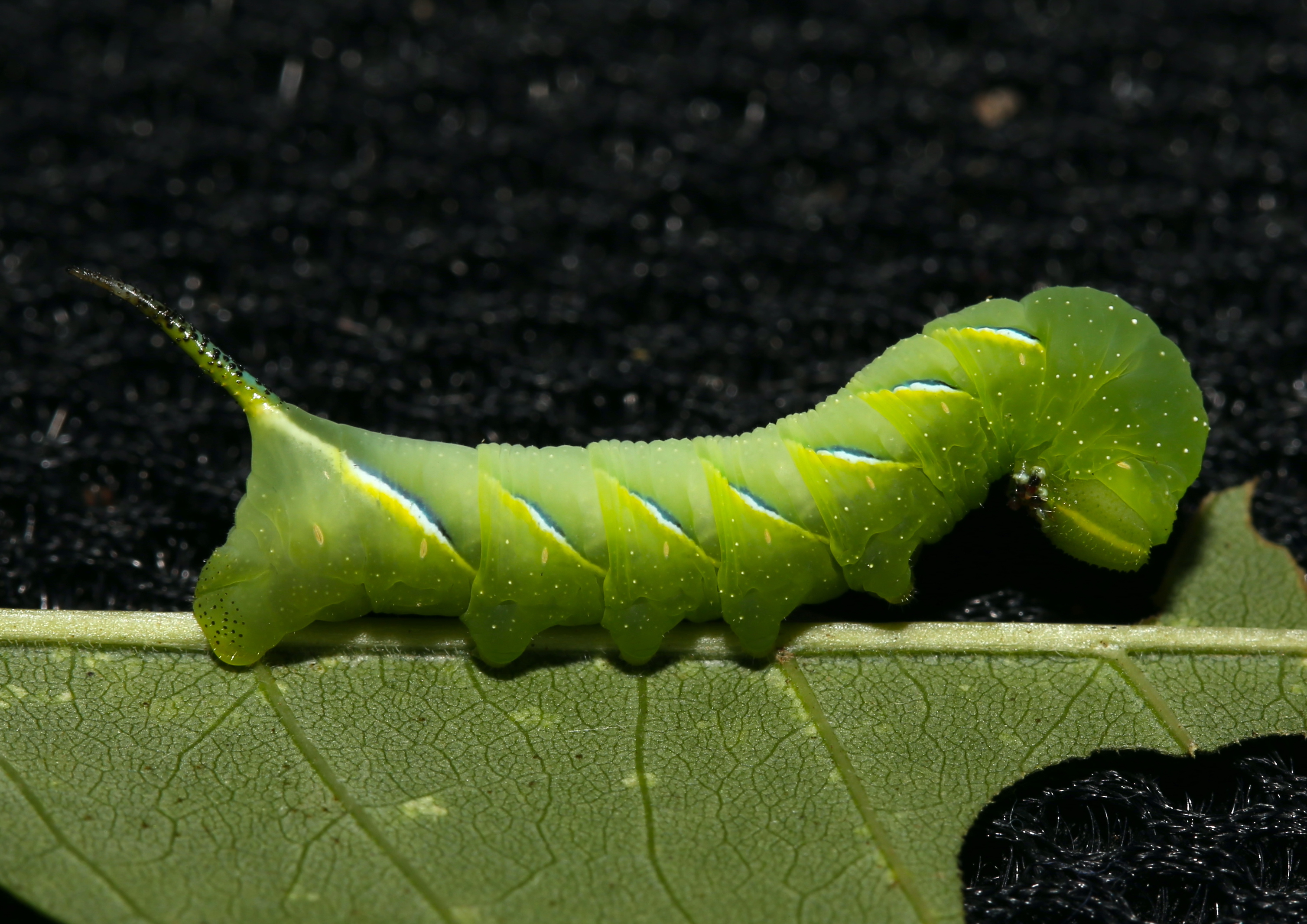
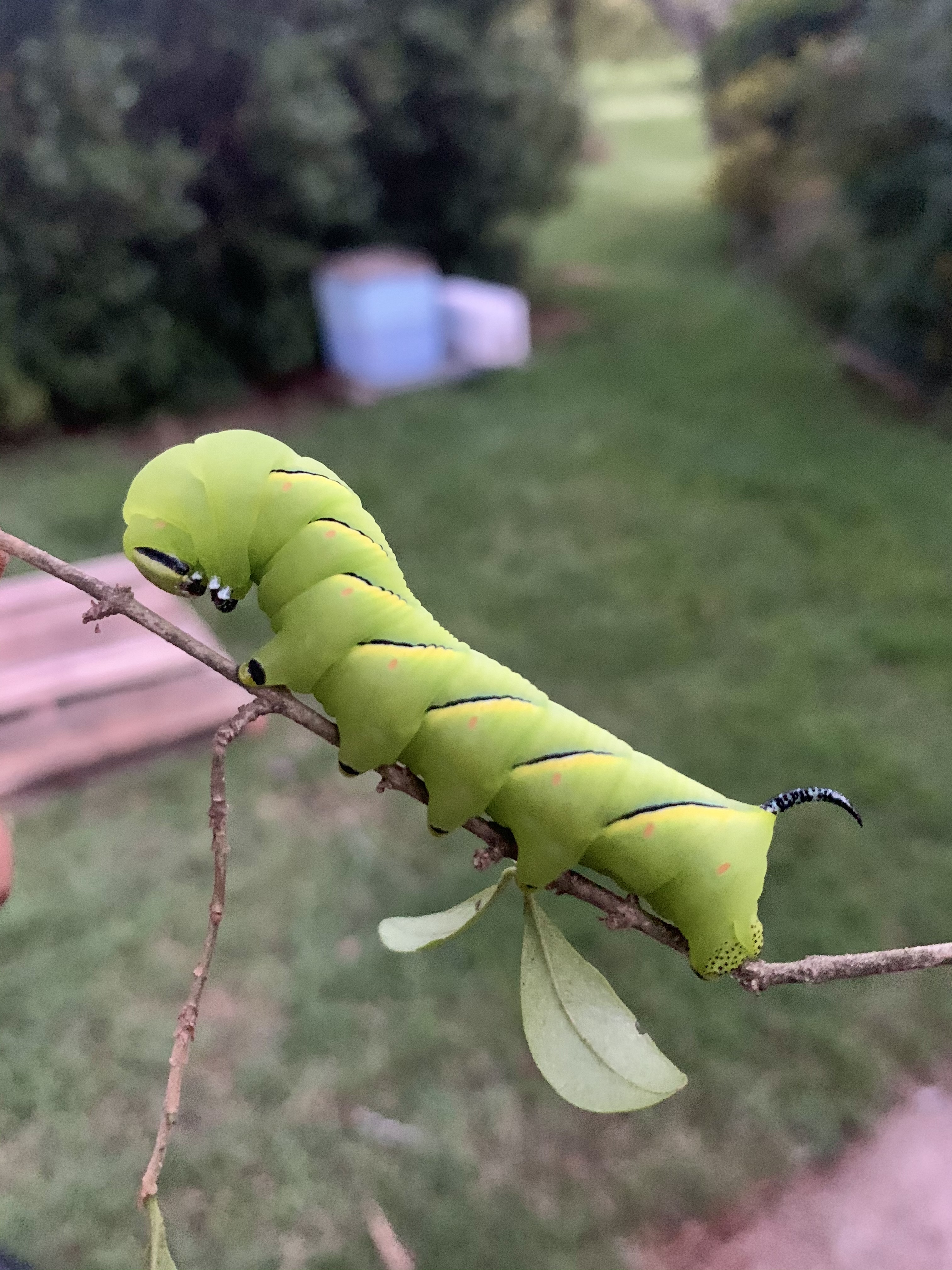
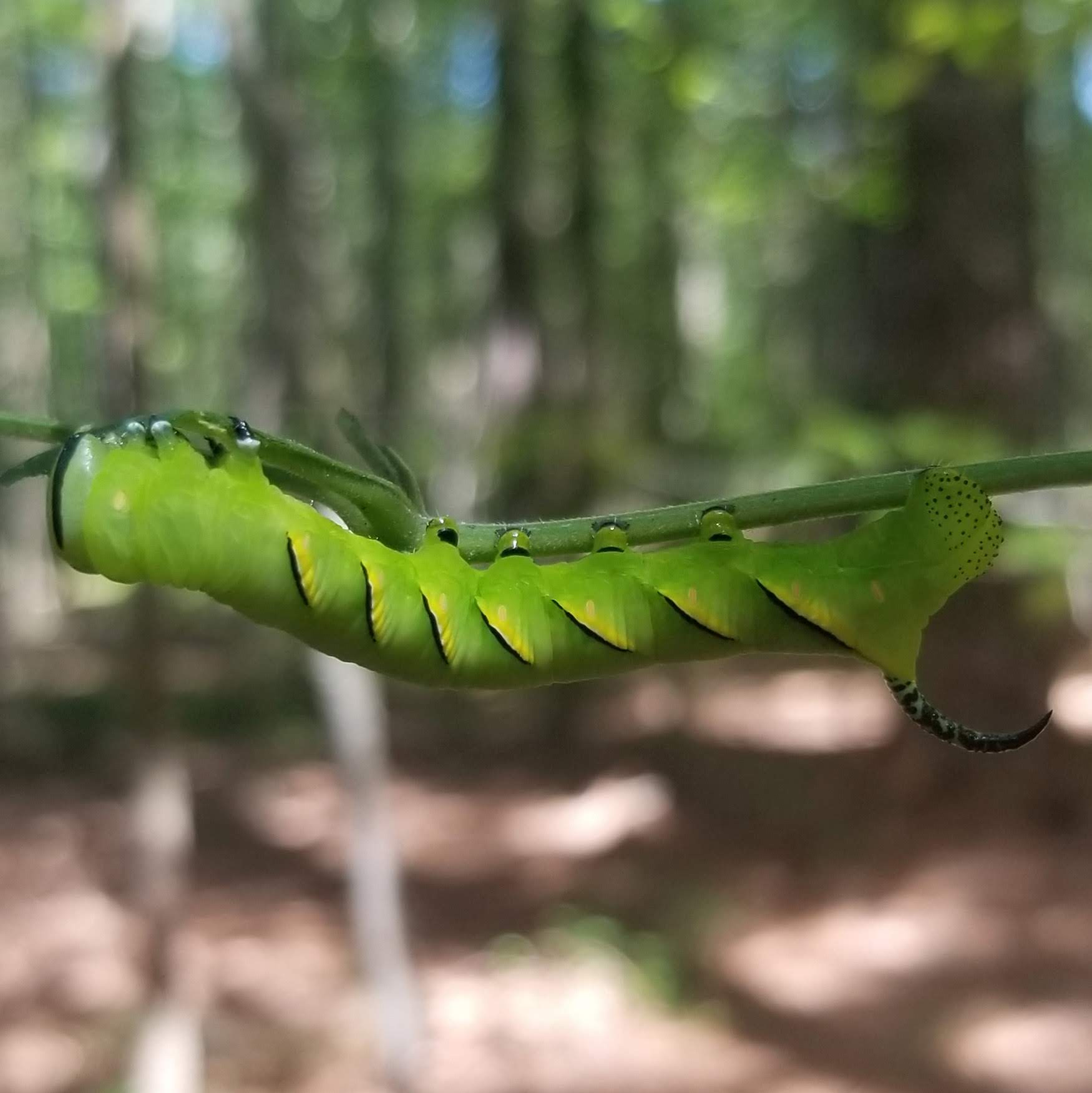
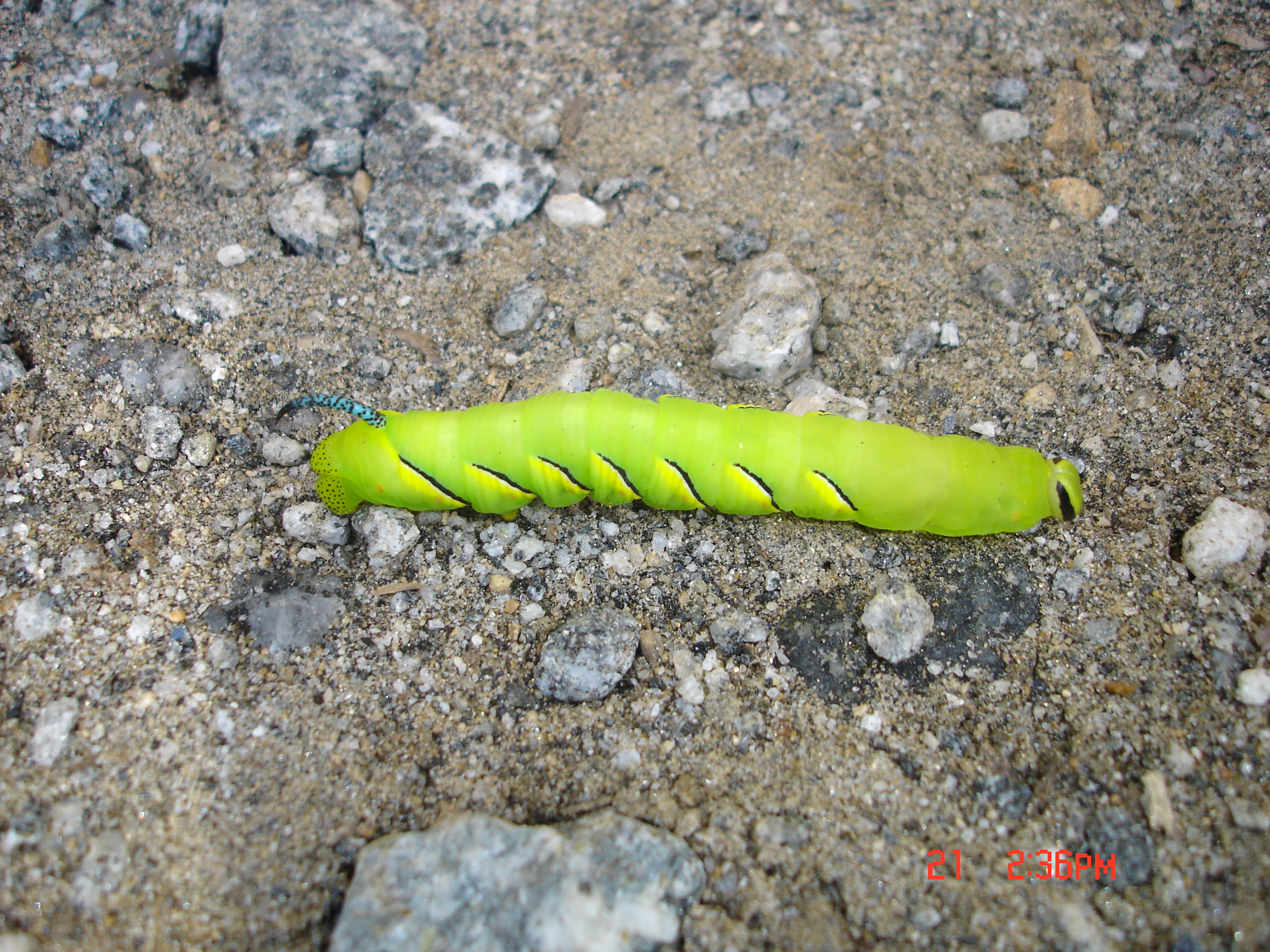
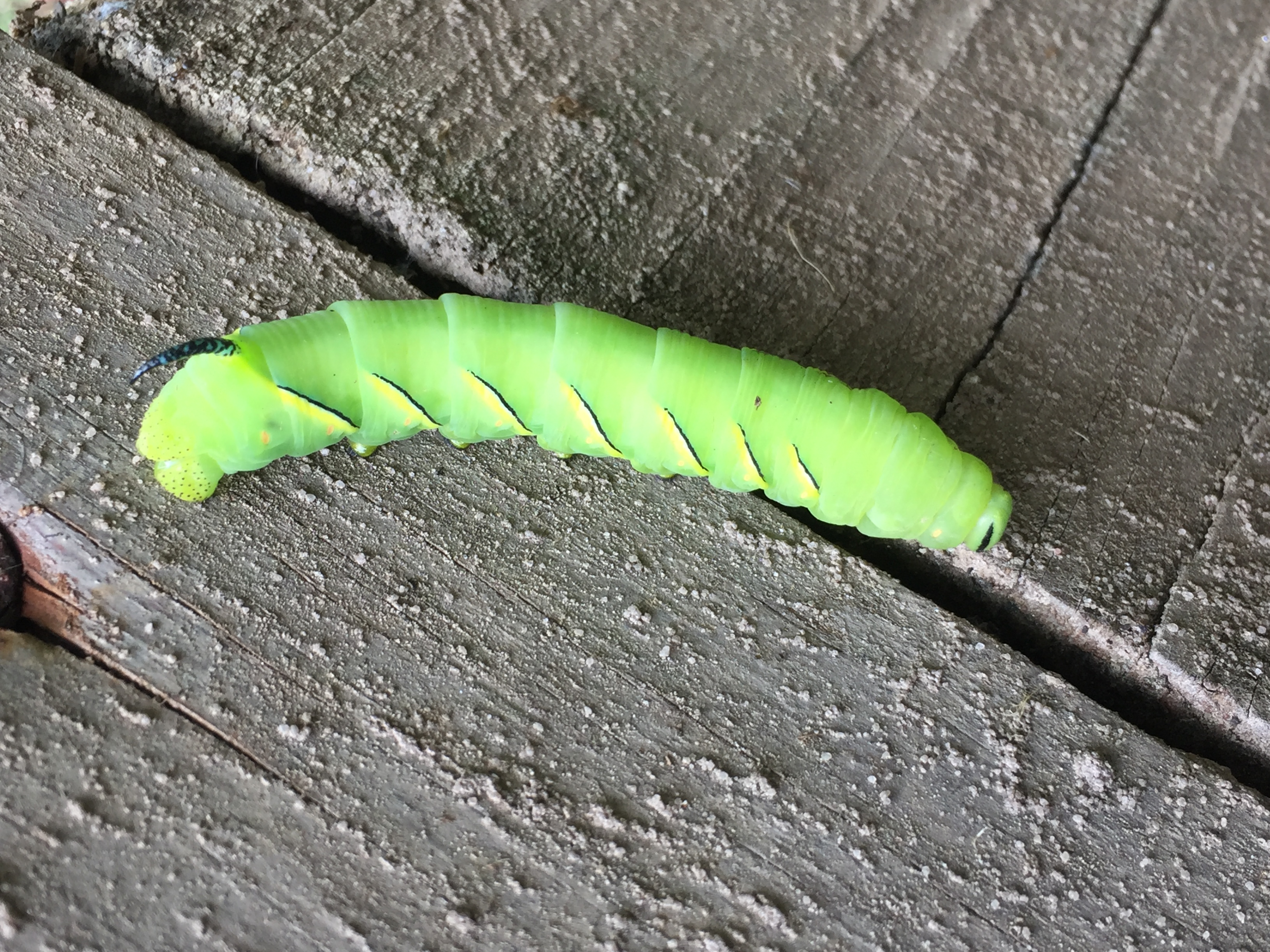
Larvae have the usual pattern of seven oblique lateral stripes on a green background, but are distinctive in their yellowish lateral stripes, edged with black; strong stripes on the sides of the head; and blue caudal horn covered with black spines (Wagner, 2005). Pupation occurs underground.
Larvae ID Requirements:
Identifiable from good quality photos, especially where associated with known host plants.
Distribution in North Carolina
Distribution:
Relatively common in the Mountains but rare in the Coastal Plain; we have only a couple of recent records from the Piedmont.
County Map:
Clicking on a county returns the records for the species in that county.
Flight Dates:
High Mountains (HM) ≥ 4,000 ft.
Low Mountains (LM) < 4,000 ft.
Piedmont (Pd)
Coastal Plain (CP)
Click on graph to enlarge
Immature Dates:
High Mountains (HM) ≥ 4,000 ft.
Low Mountains (LM) < 4,000 ft.
Piedmont (Pd)
Coastal Plain (CP)
Click on graph to enlarge
Flight Comments:
Seems to have an early summer flight in the mountains but coastal plain records are later in the season, perhaps indicating two broods there.
Habitats and Life History
Habitats:
Records from the Coastal Plain come from a rich, brownwater floodplain along the Roanoke River but also from a blackwater area at the Great Dismal Swamp State Park; several species of Ash are common at the first but the second site probably contains only the swamp species of Ash, i.e., Carolina and Pumpkin Ash, along with privet. Records in the Mountains come from riparan habitats, rich cove forests and other sites with rich soils (e.g., Mount Jefferson State Park). Habitats at some of the mountain sites are unknown, however, as are the habitats where kalmiae was historically collected in the Piedmont.
Larval Host Plants:
Larvae are stenophagous. Originally thought to be associated with laurel (
Kalmia
) - hence the misleading scientific and common names. However, this was discounted by Forbes (1948); instead it appears to feed on various members of the Oleaceae, including ash (
Fraxinus
), Fringetree (
Chionanthus virginicus
), lilac (
Syringa
), and privet (
Ligustrum
) (Forbes, 1948; Wagner, 2005). In North Carolina, all of our feeding records are from ash. -
View
Observation Methods:
Adults visit flowers at night and also are attracted to lights. Most of our records come from 15 watt UV blacklights, but only as single individuals; use of mercury-vapor or other high intensity UV lights is likely to be more effective, as it is for other members of this genus. Searching for larvae on small ash saplings may be profitable.
Wikipedia
See also Habitat Account for
General Ash Forests
Status in North Carolina
Natural Heritage Program Status:
Natural Heritage Program Ranks:
G5 SNR [S2S3]
State Protection:
Not currently listed by the Natural Heritage Program but probably should be considered for addition to the Watch List, based mainly on degree of threat due to the Emerald Ash Borer.
Comments:
This handsome species is always a treat to see. As with many
Sphinx
species, records are few and one can question whether or not we know how to locate the species outside the mountains. This species, along with other Ash-feeding Sphingids, is threatened to some extent by the spread of the Emerald Ash Borer (Wagner, 2007). However, its use of alternative host plants, including the highly invasive privets, may allow it to survive, although we have seen no increase in numbers of this species where privet has become one of the dominant plants of bottomland forests.
Photo Gallery for
Sphinx kalmiae
- Laurel Sphinx
Only immatures are shown.
Recorded by: David George, Jeff Niznik on 2024-09-05
Orange Co.
Comment: feeding on ash
Recorded by: David George, Jeff Niznik on 2024-07-06
Orange Co.
Comment: Feeding on ash
Recorded by: Alicia Ballard on 2021-09-02
Alamance Co.
Comment:
Recorded by: Jeff Niznik on 2021-08-28
Orange Co.
Comment:
Recorded by: A. Lasley, J. Costner on 2013-10-21
Burke Co.
Comment:
Recorded by: Nathan West on 0000-00-00
Cherokee Co.
Comment:
Recorded by: Nathan West on 0000-00-00
Cherokee Co.
Comment:
 »
»