Moths of North Carolina
Scientific Name:
Common Name:
Family (Alpha):
« Home »
View PDFAdelidae Members: Adela Members: 16 NC Records

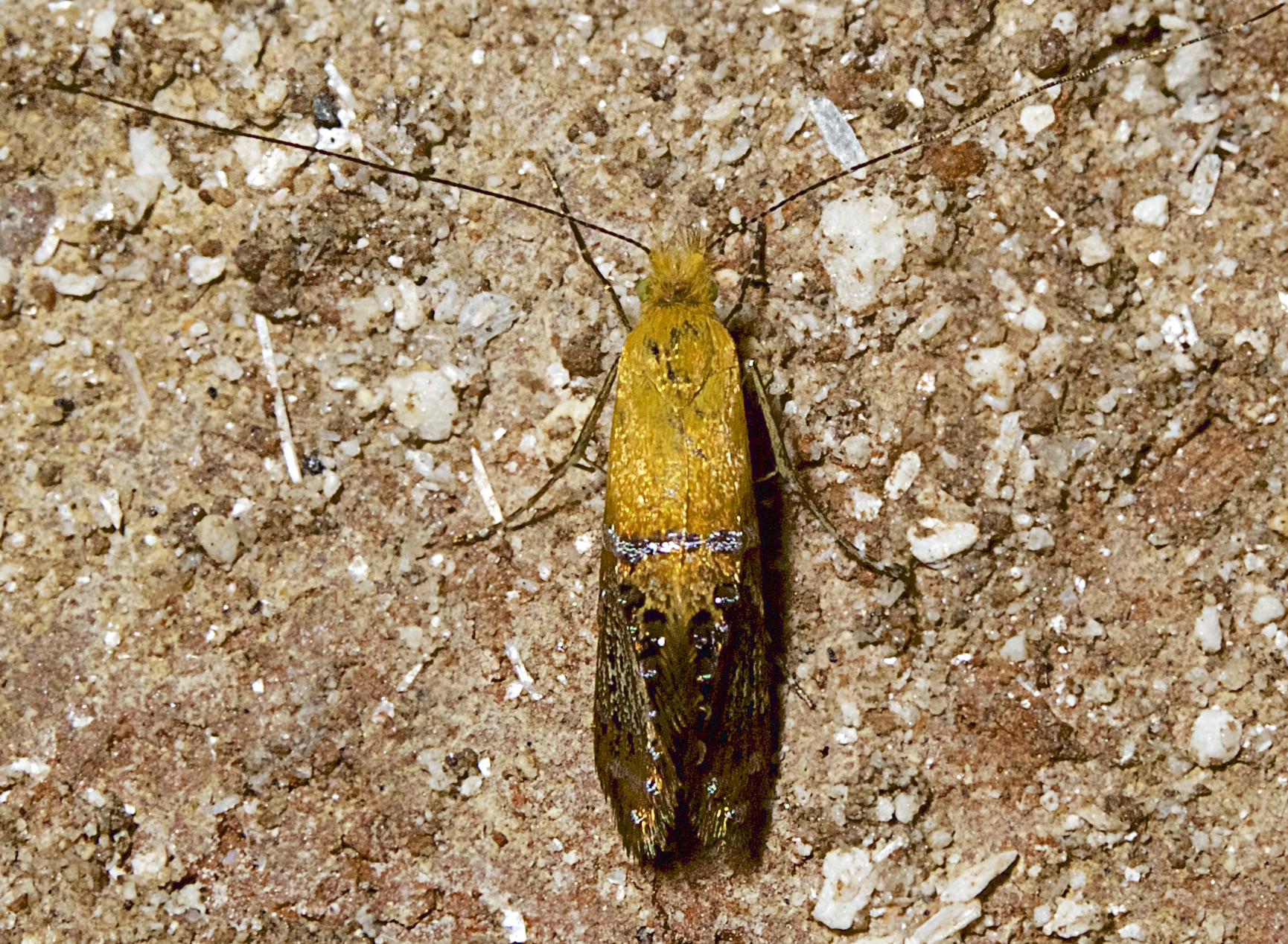
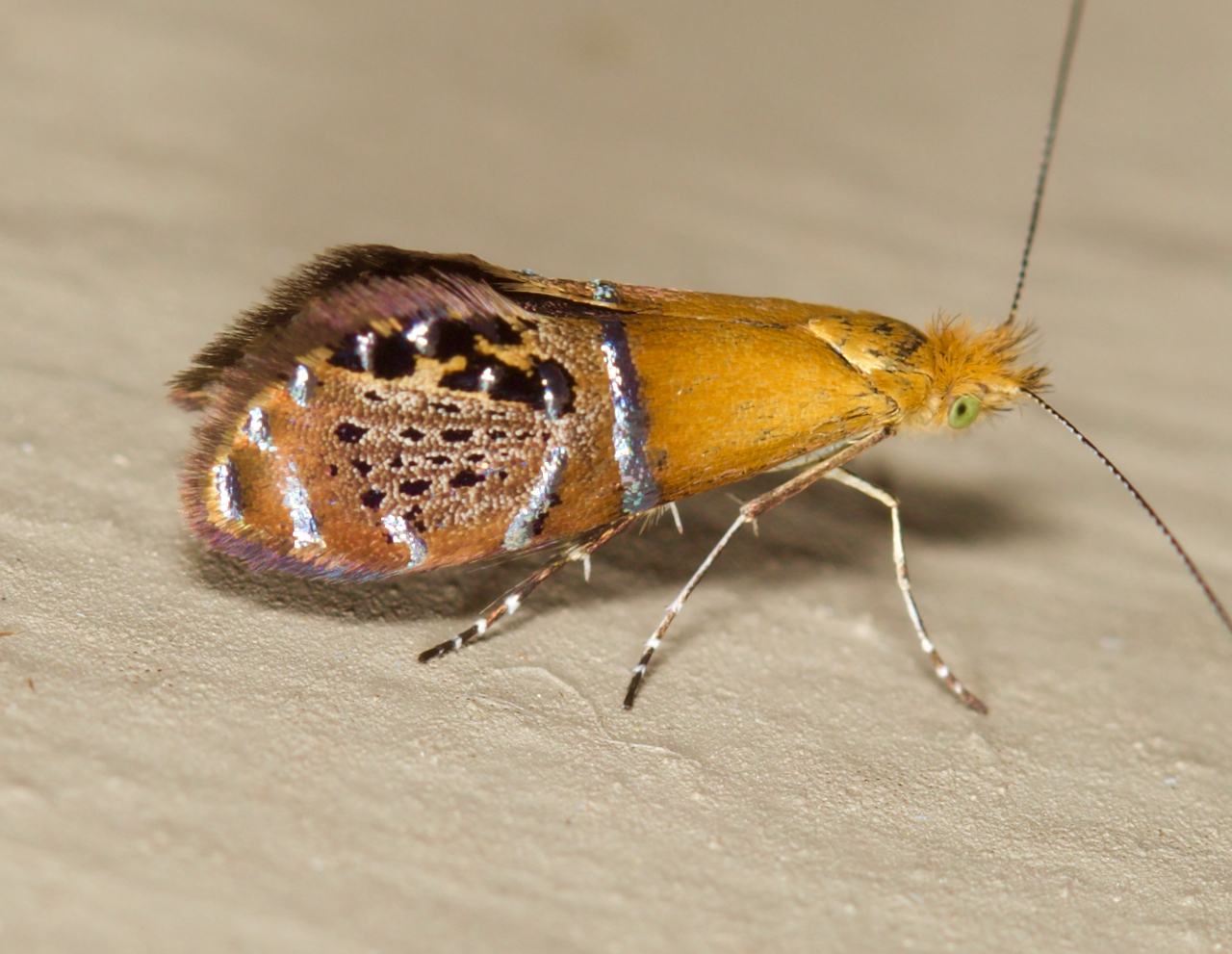
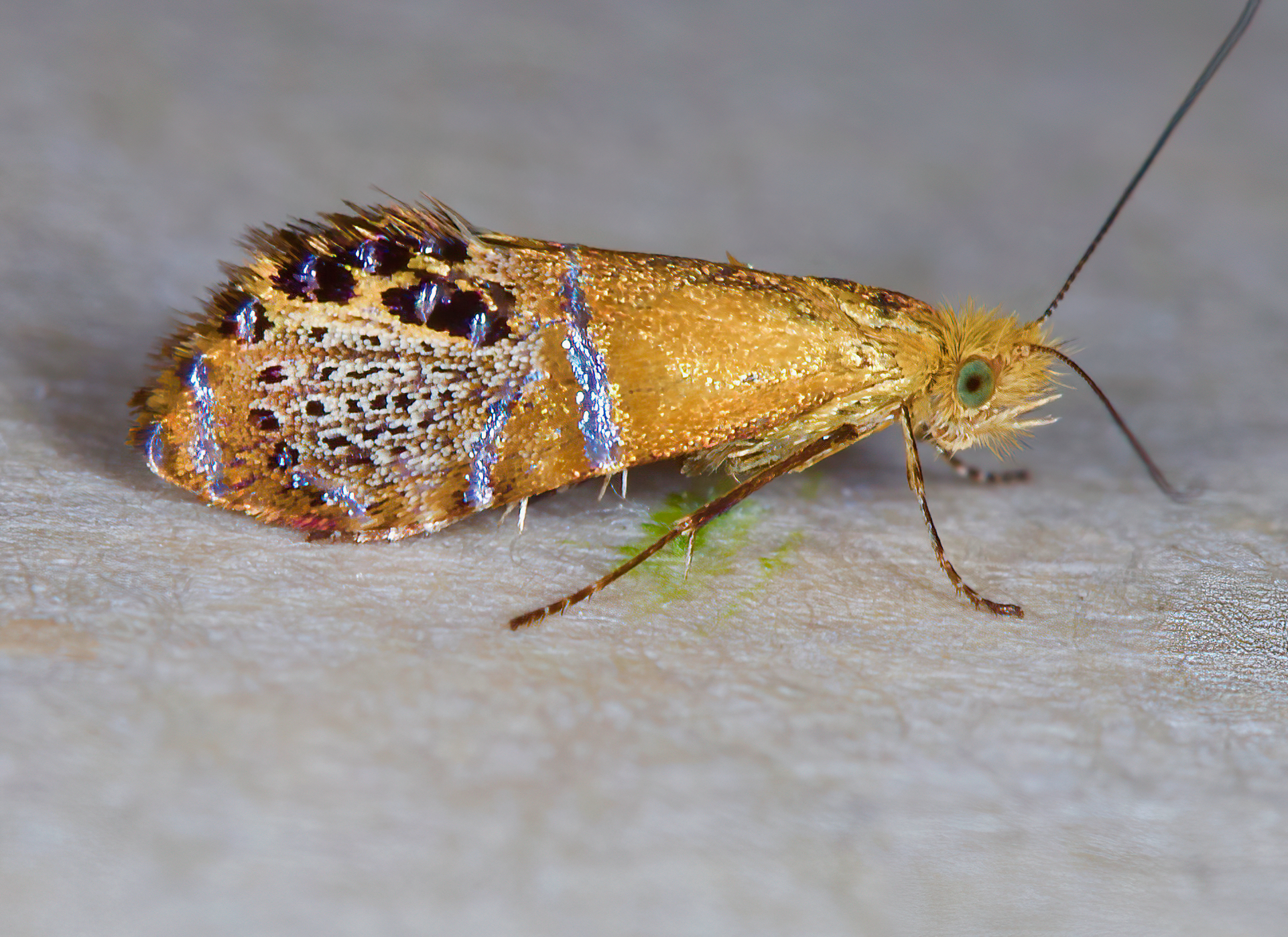
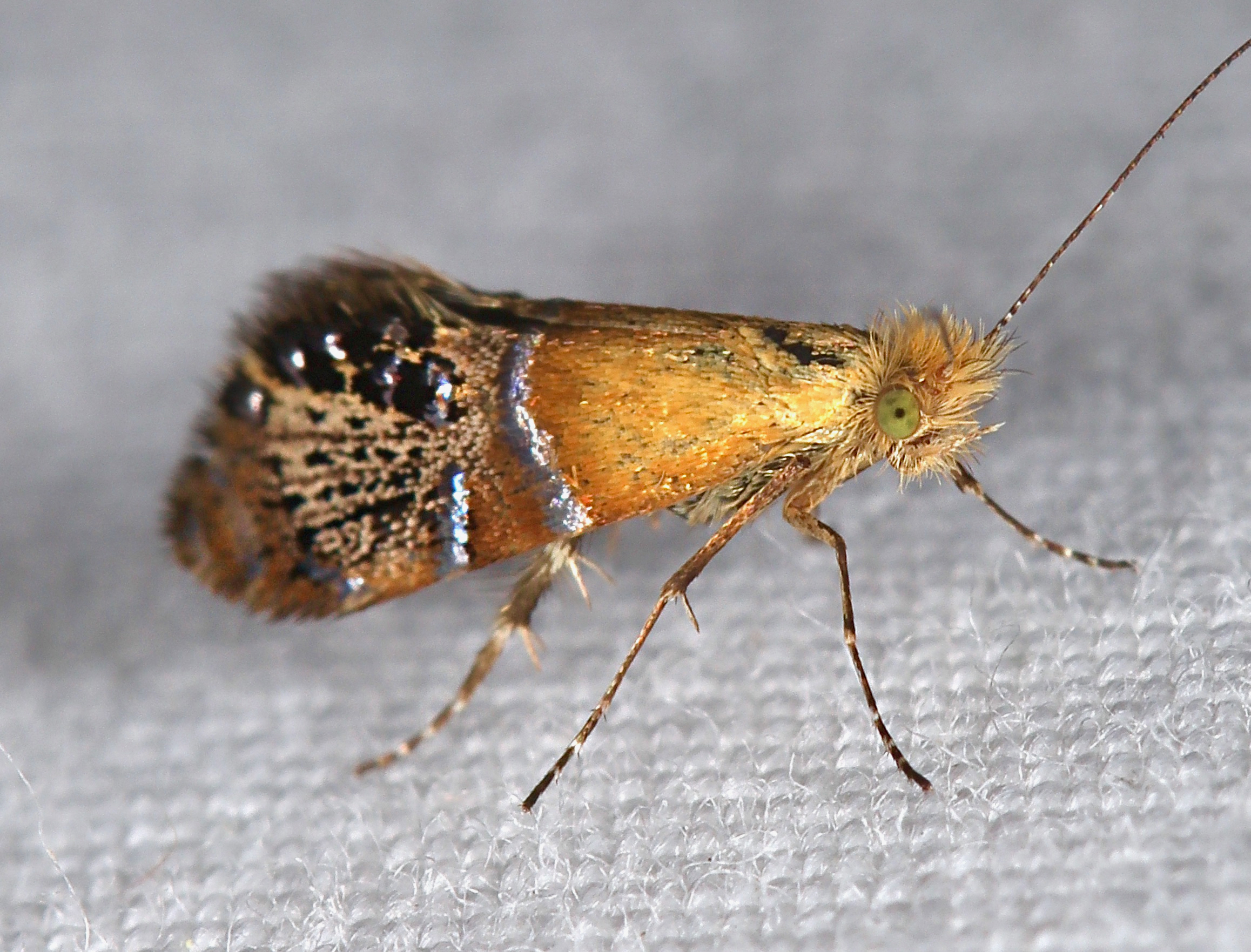
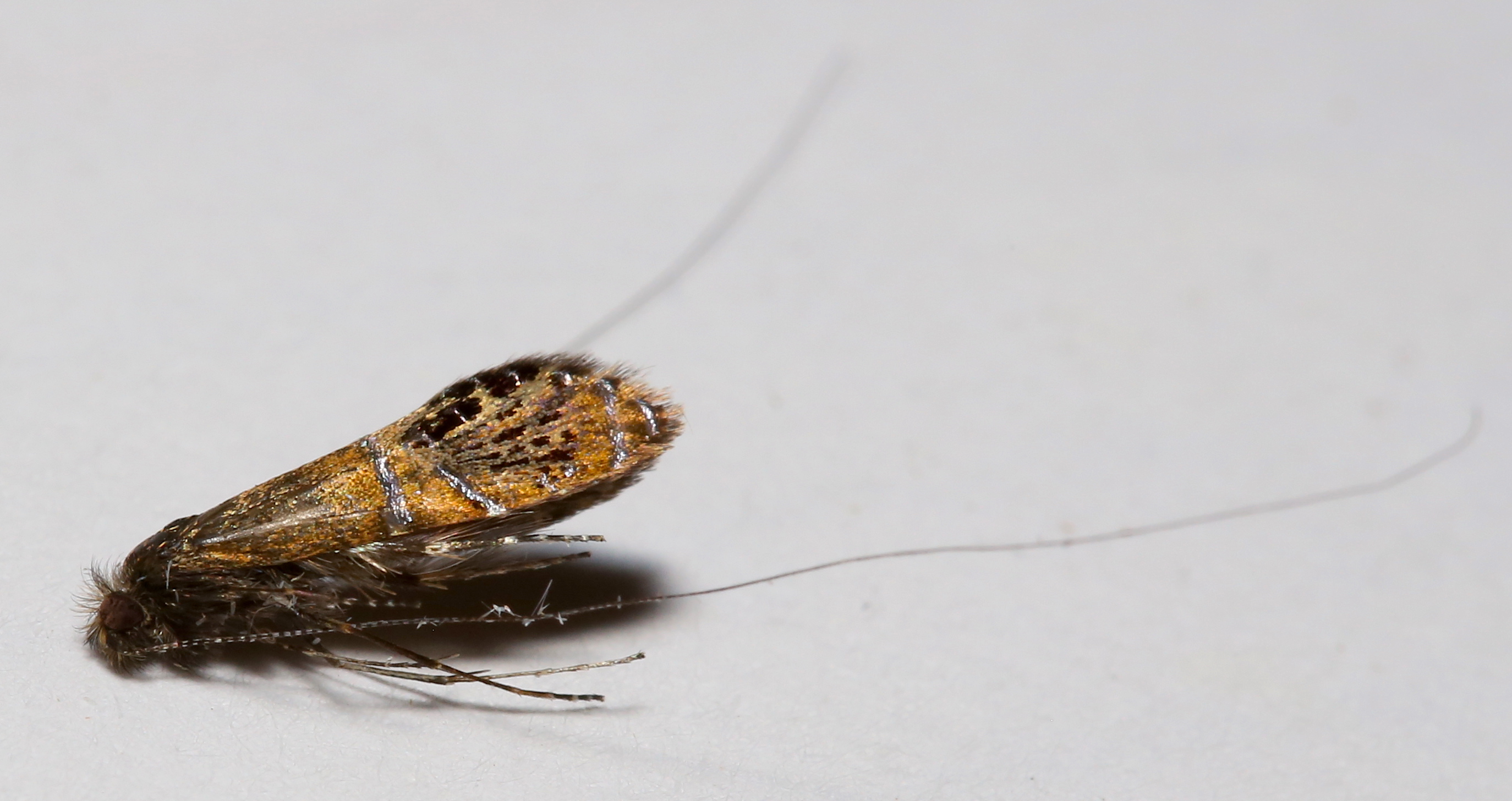
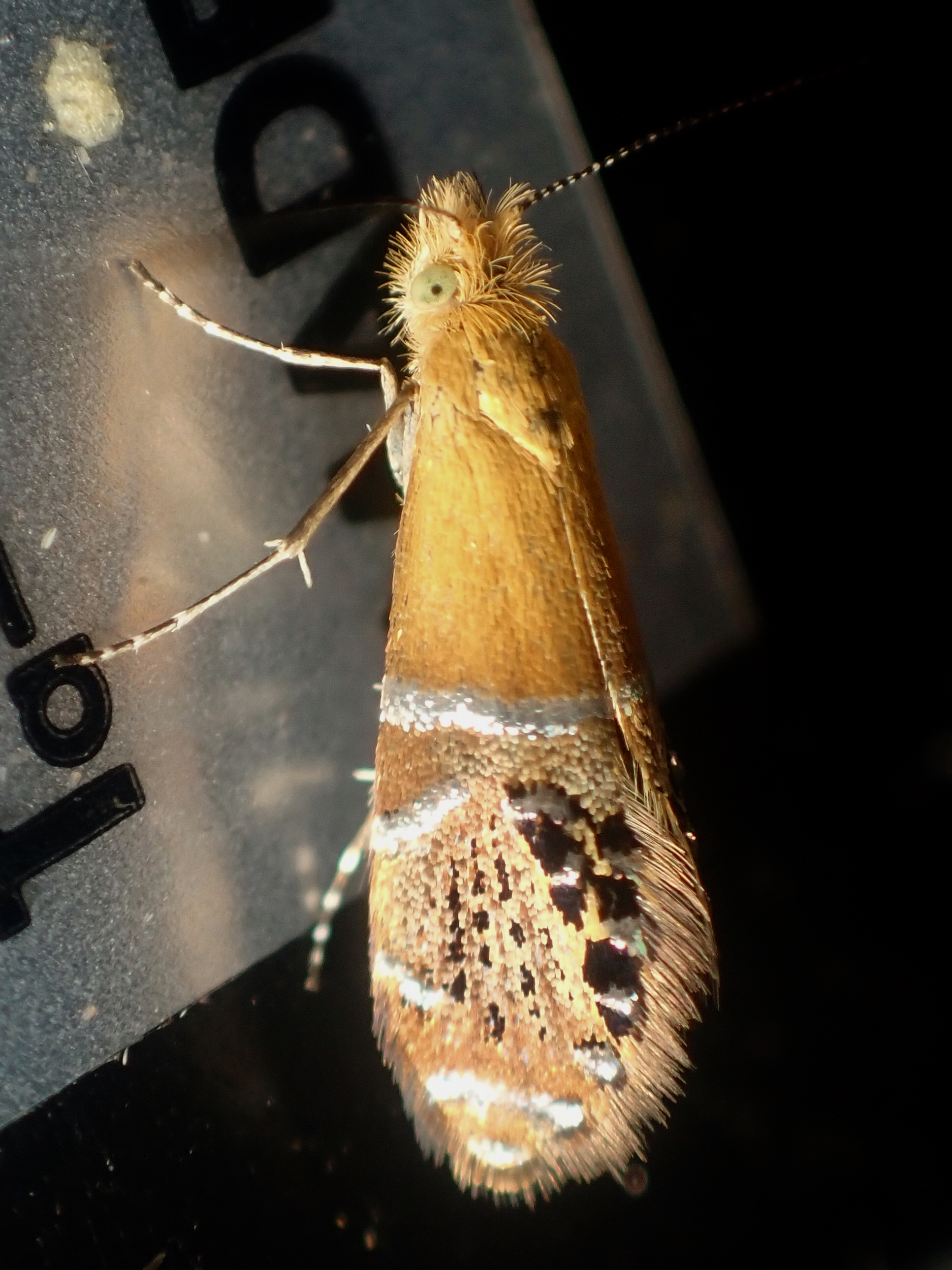
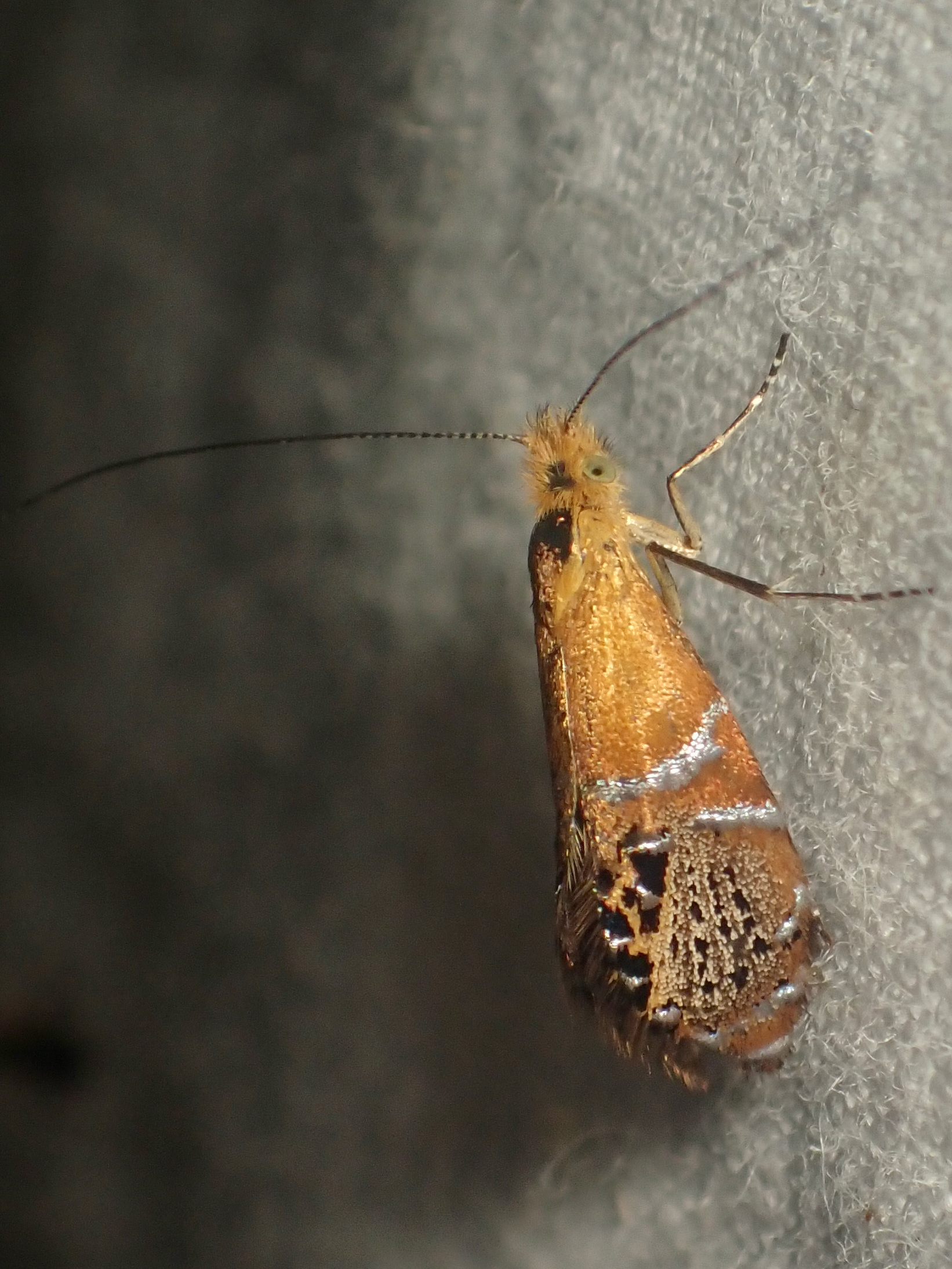
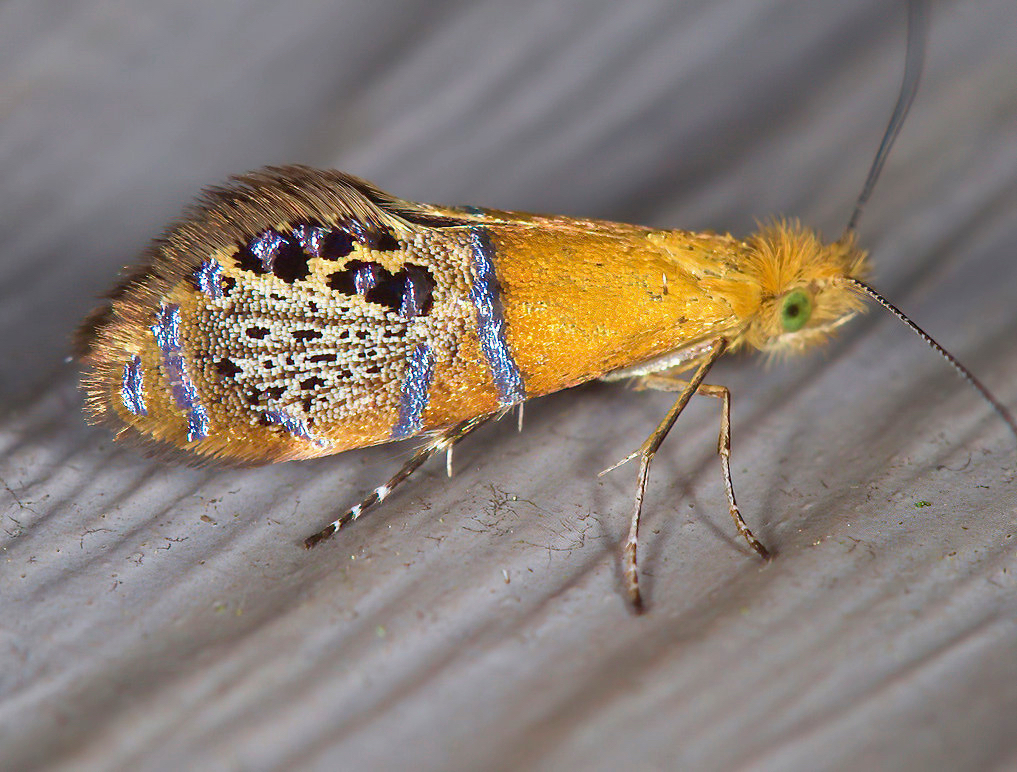
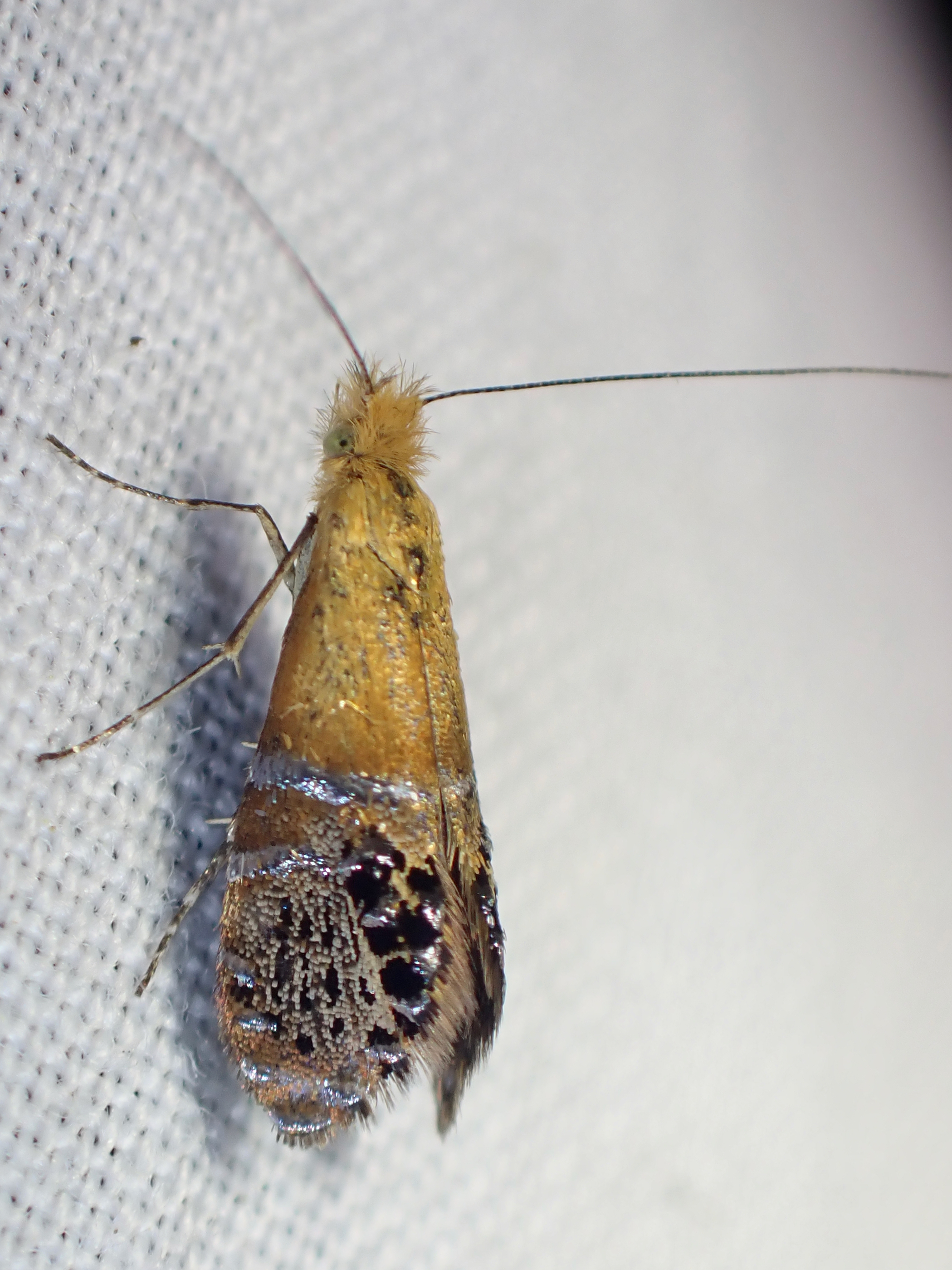
Adela ridingsella Clemens, 1864 - Ridings' Fairy Moth


Adela ridingsellaAdela ridingsellaAdela ridingsella
Taxonomy
Superfamily:
Incurvarioidea
Family:
Adelidae
Subfamily:
Adelinae
Tribe:
[Adelini]
P3 Number:
21a0115
MONA Number:
228.00
Comments: Adela is a small genus of moths, and most are noteworthy for having exceptionally long antennae. There are 11 described species in North America.
Species Status: Although this attractive micromoth regularly appears at blacklights, remarkably little is known about its life history.
Identification
Field Guide Descriptions: Beadle and Leckie (2012)Online Resources: MPG, BugGuide, iNaturalist, Google, BAMONA, GBIF, BOLDTechnical Description, Adults: Clemens (1864), Powell (1969)                                                                                 
Adult Markings: This is a very distinctively patterned Adela that is difficult to confuse with other species. The forewing has a coppery brown ground color that is lighter on the apical half. At the anal angle there is a cluster of four or five relatively large black spots, each with an embossed silvery violet spot. A series of smaller spots occur along the apical margin. A silvery fascia is present at the middle of the wing. Just beyond this is an oblique, silvery costal streak that extends almost to the most interior and basal of the black spots. Beyond this streak is a second and much smaller streak that extends from the costa towards the outer margin. Between the two silvery streaks there are typically three or four rows of fine black patches or spots that radiate from near the tip of the first streak towards the outer margin. The hindwing is brownish-orange with a wide fringe. The males have extremely elongated antennae that are three times or more as long as the forewings, while females have antennae that are about one-half as long as those of the males (Powell, 1969).
Wingspan: 13-14 mm
Adult Structural Features: Powell (1969) found that the 11 North American species of Adela have nearly identical male and female genitalia that have little value as taxonomic characters. Fortunately, all of the eastern species can be readily identified using color patterning.
Genitalia and other structural photos
Adult ID Requirements: Identifiable from good quality photos of unworn specimens.
Immatures and Development: The larval life history is unknown, as is the case for many Adela species. Powell (1969) noted that the females of some species deposit their eggs into young seeds and the larvae eat the developing seed tissue. After a period of growth, the larvae then descend to the ground where they construct cases and feed on either the lower parts of plants or their fallen leaves. They then overwinter as larvae or pupae within their cases. The extent to which A. ridingsella conforms to this general life history pattern is unknown.
Distribution in North Carolina
Distribution: Adela ridingsella is widespread in eastern North America. Populations have been documented from southern Canada (Nova Scotia; Ontario; Quebec) and the New England states westward to Illinois and Iowa, and southwestward to western North Carolina, northern Georgia, and Mississippi. This species appears to be rare or missing in most of the southeastern Piedmont and Coastal Plain. As of 2019, all of our records are from the low mountains.
County Map: Clicking on a county returns the records for the species in that county.
Adela ridingsellaAlamance Alexander Alleghany Anson Ashe Avery Beaufort Bertie Bladen Brunswick Buncombe Burke Cabarrus Caldwell Camden Carteret Caswell Catawba Chatham Cherokee Chowan Clay Cleveland Columbus Craven Cumberland Currituck Dare Davidson Davie Duplin Durham Edgecombe Forsyth Franklin Gaston Gates Graham Granville Greene Guilford Halifax Harnett Haywood Henderson Hertford Hoke Hyde Iredell Jackson Johnston Jones Lee Lenoir Lincoln Macon Madison Martin McDowell Mecklenburg Mitchell Montgomery Moore Nash New Hanover Northampton Onslow Orange Pamlico Pasquotank Pender Perquimans Person Pitt Polk Randolph Richmond Robeson Rockingham Rowan Rutherford Sampson Scotland Stanly Stokes Surry Swain Transylvania Tyrrell Union Vance Wake Warren Washington Watauga Wayne Wilkes Wilson Yadkin Yancey
Flight Dates:
 High Mountains (HM) ≥ 4,000 ft.
 Low Mountains (LM) < 4,000 ft.
 Piedmont (Pd)
 Coastal Plain (CP)

Click on graph to enlarge
Image showing flight dates by month for High Mountains greater than 4,000 feet, Low Mountains, Piedmont, and Coastal Plain: adults.