Moths of North Carolina
Scientific Name:
Common Name:
Family (Alpha):
« Home »
View PDFTortricidae Members: Bactra Members: 118 NC Records

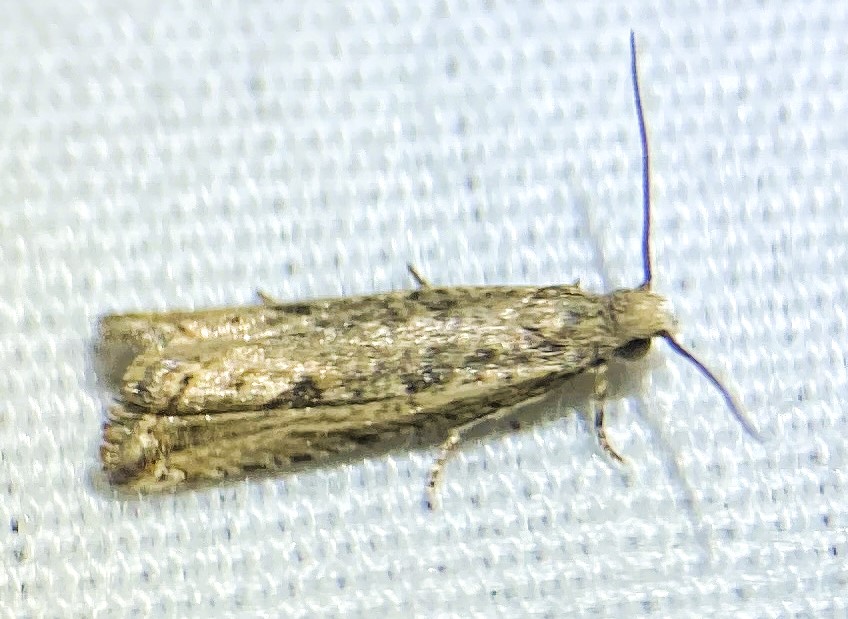
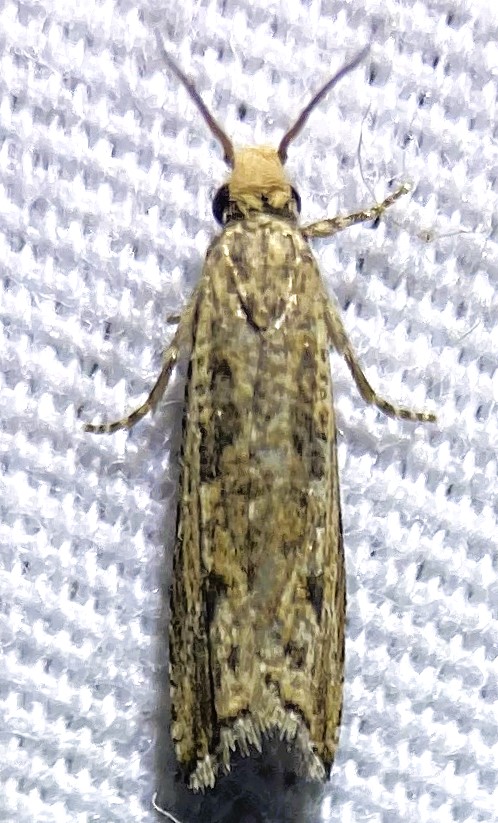
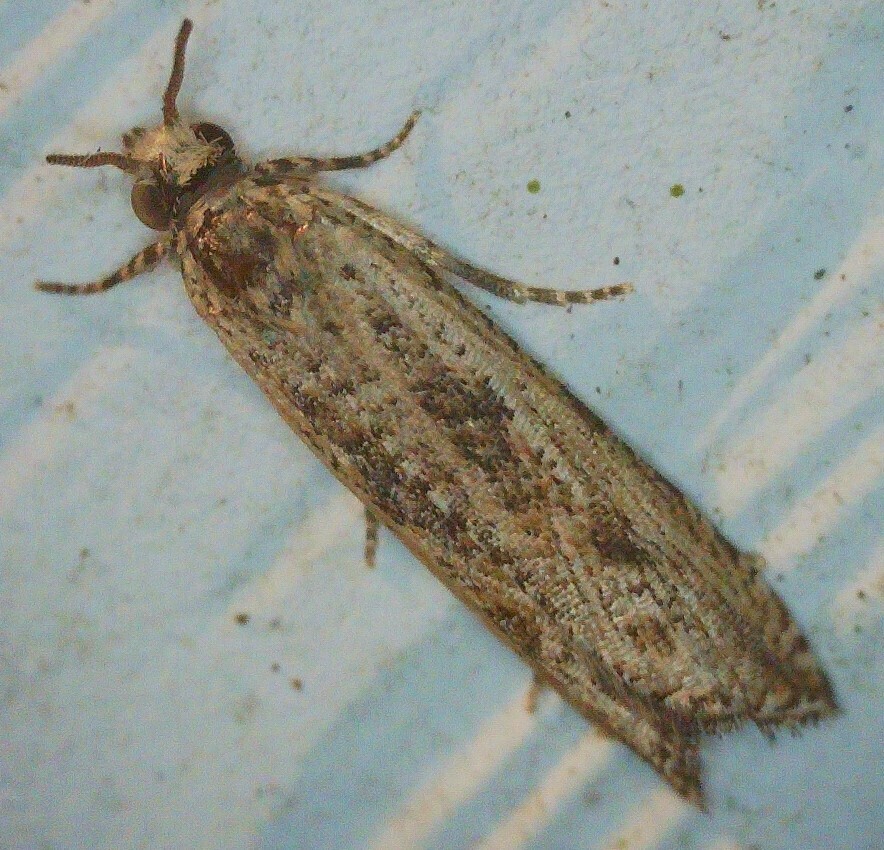
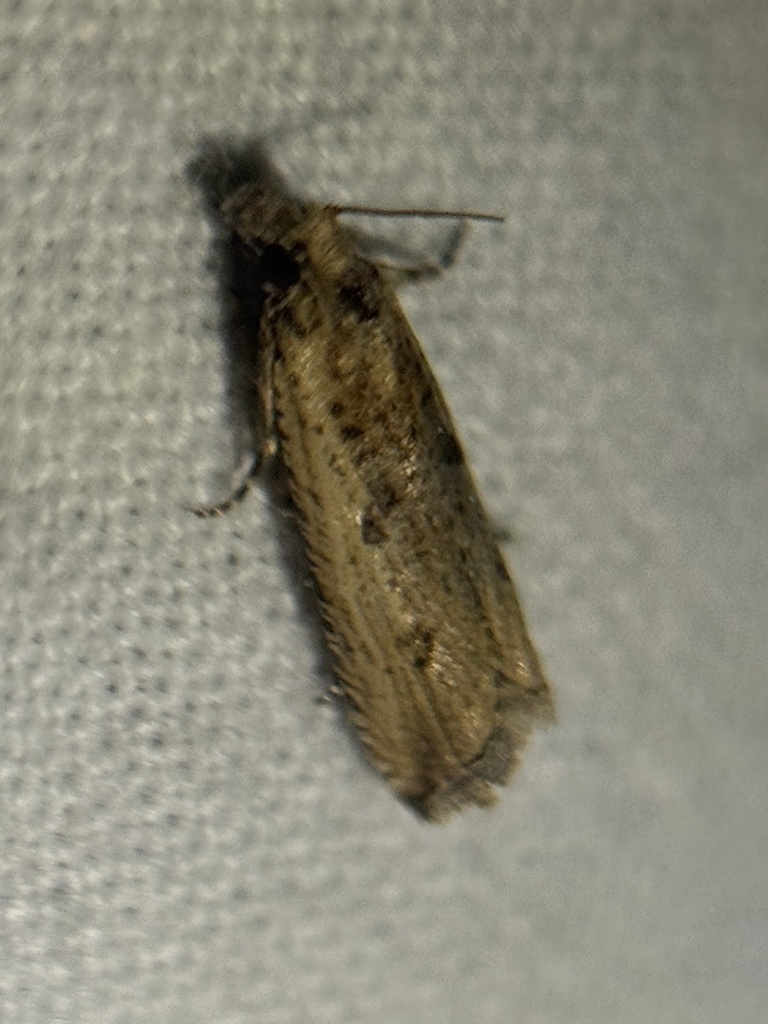
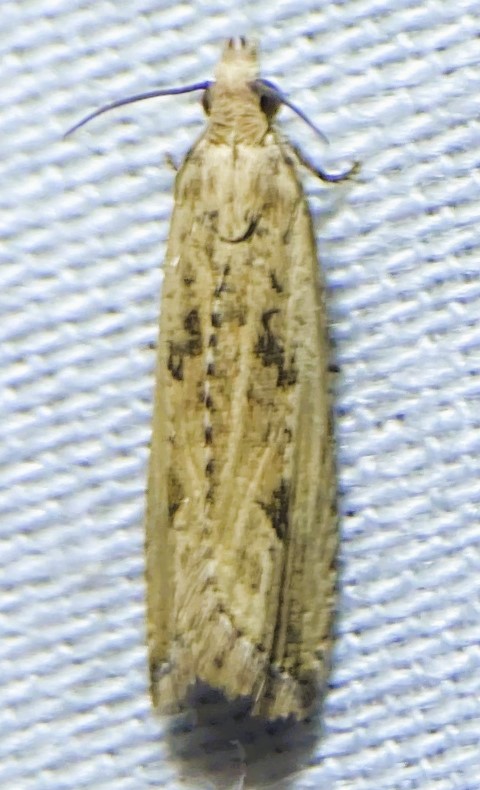
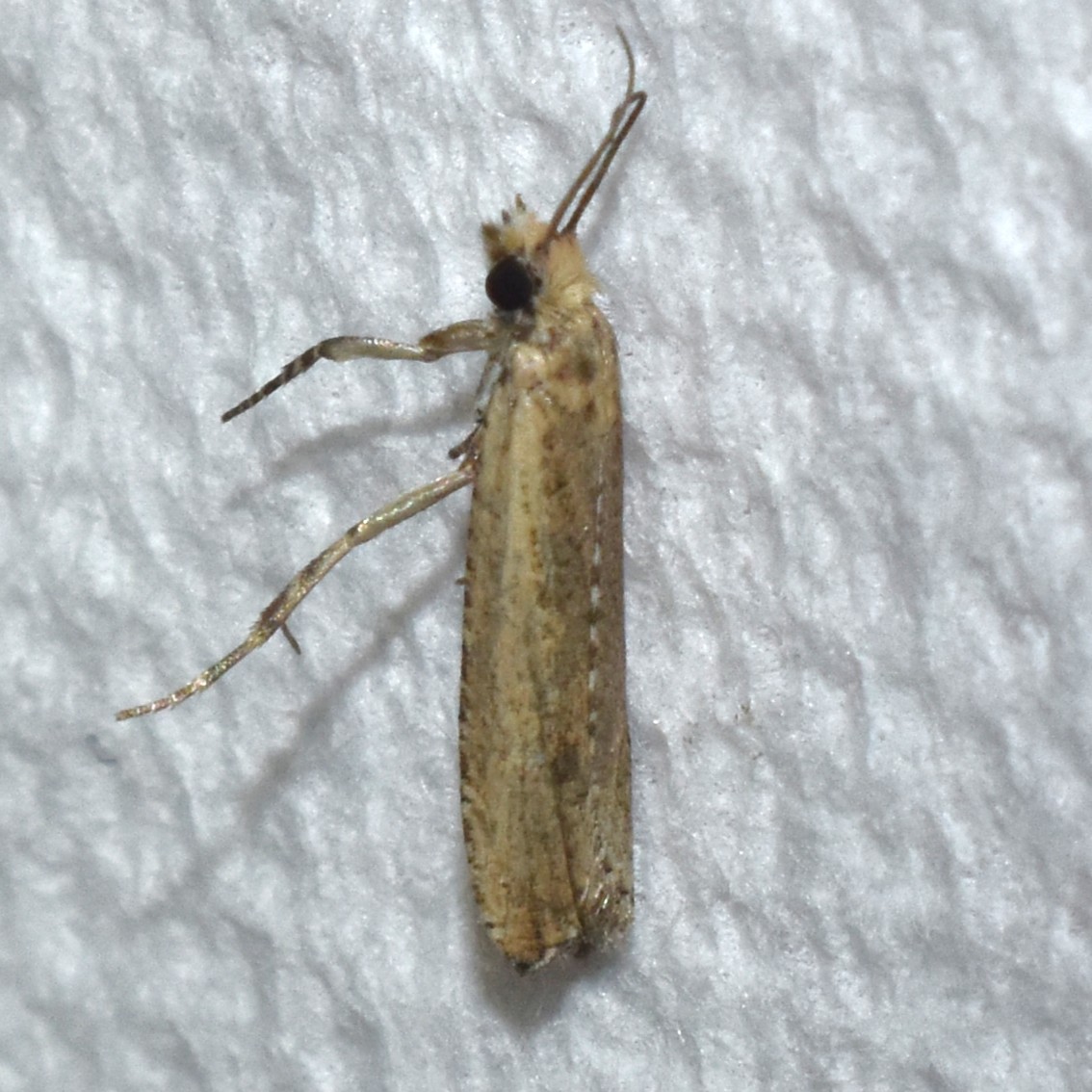
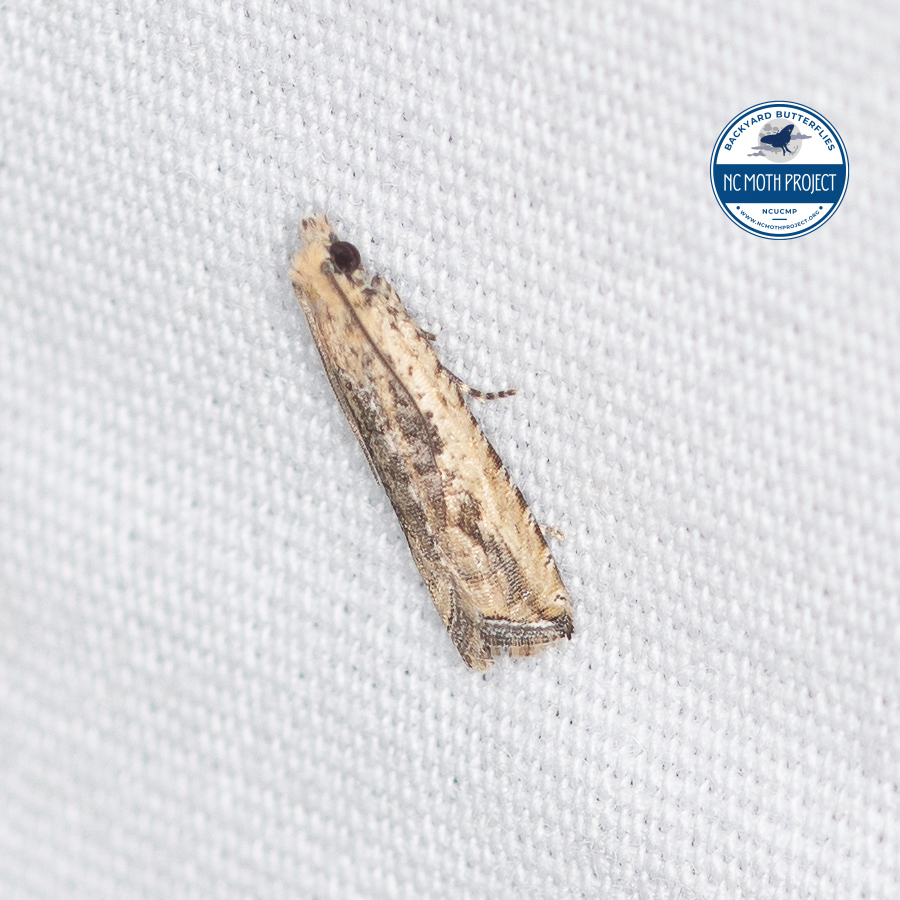
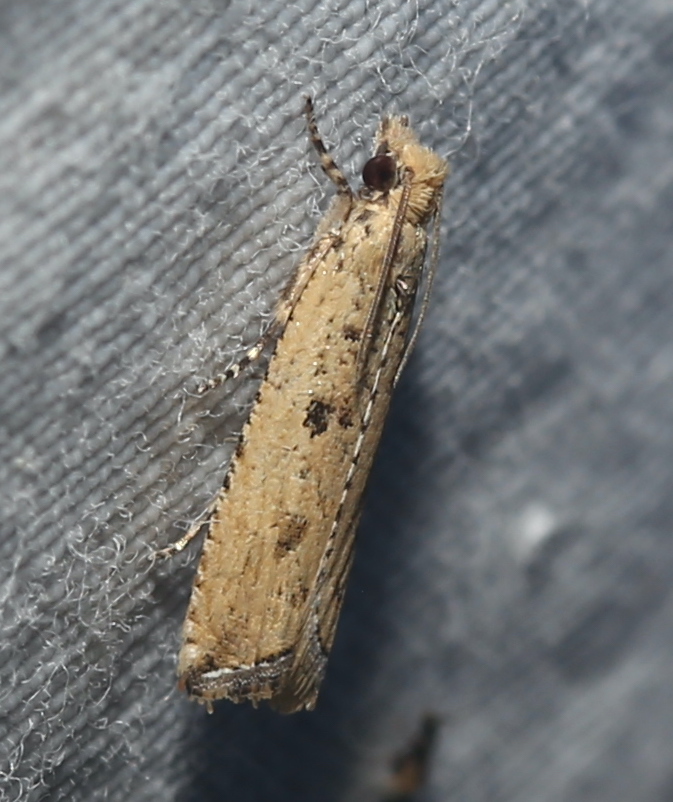
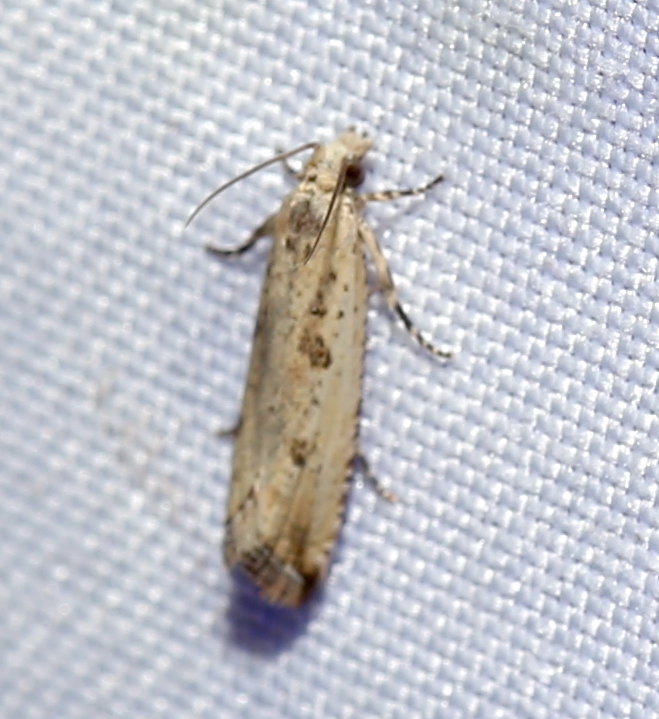
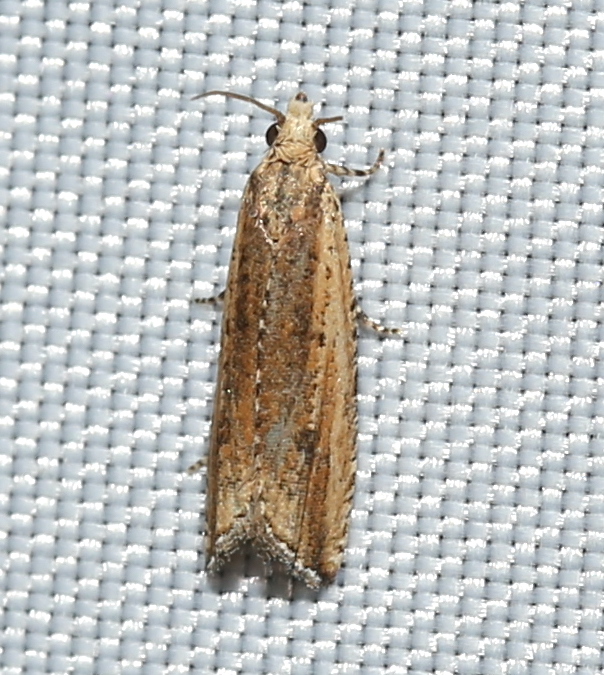
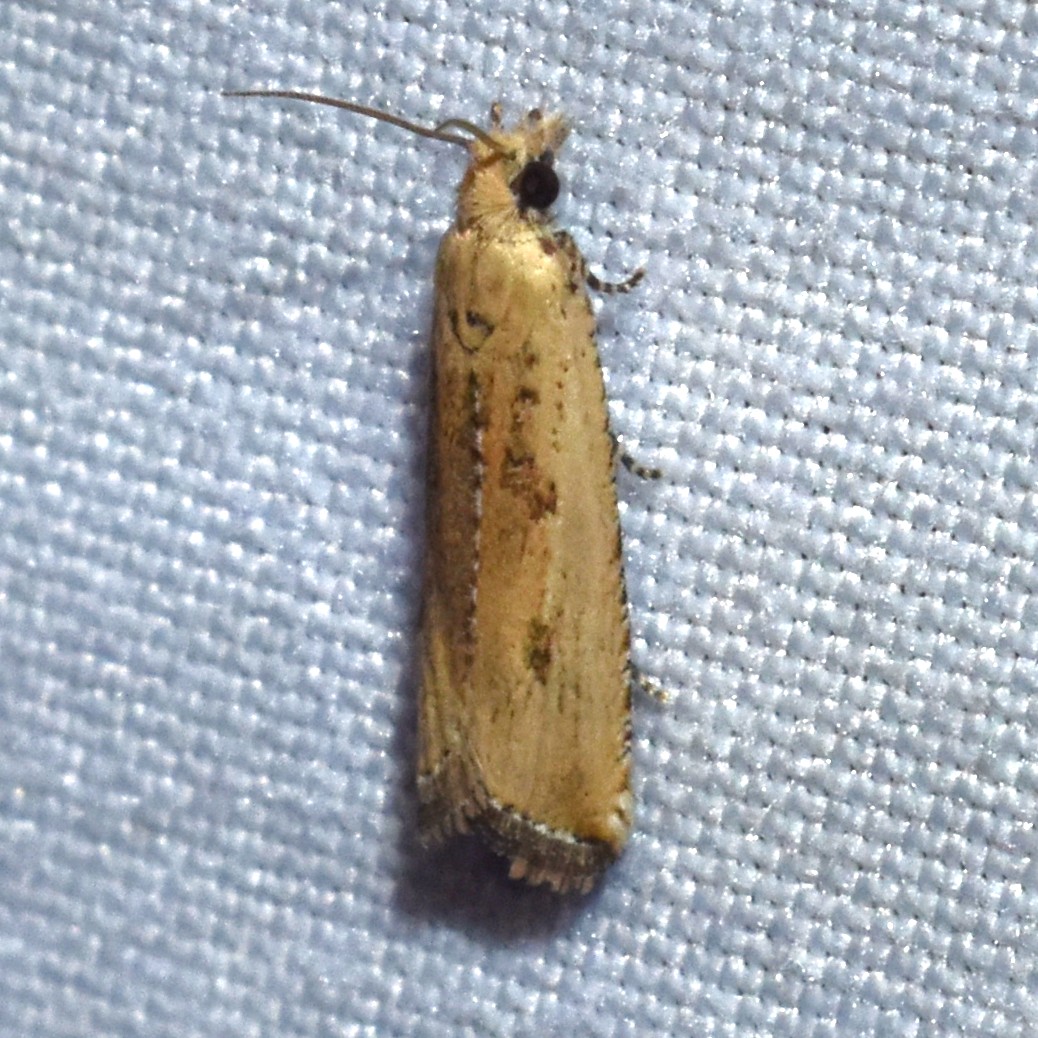
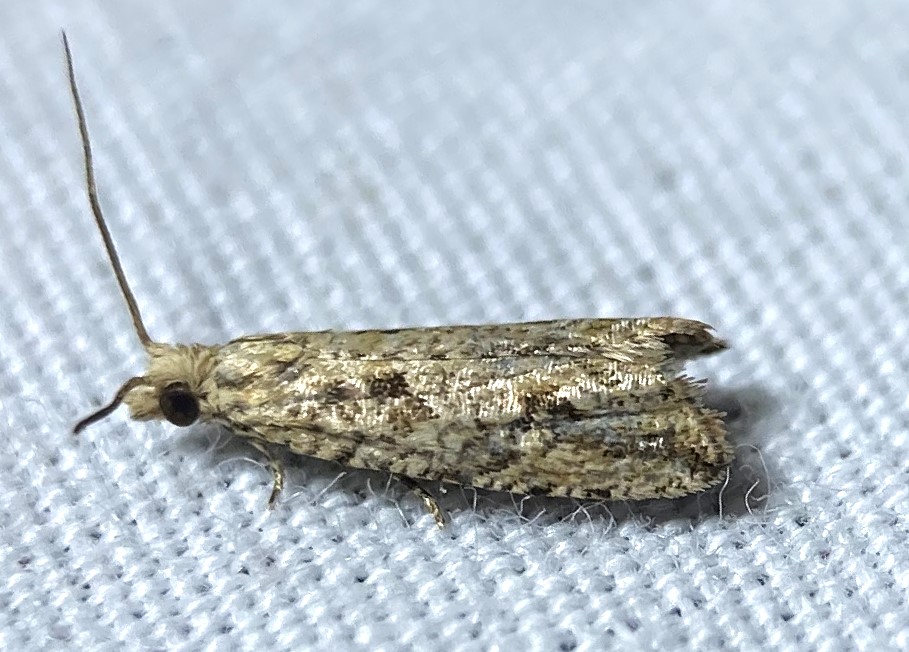
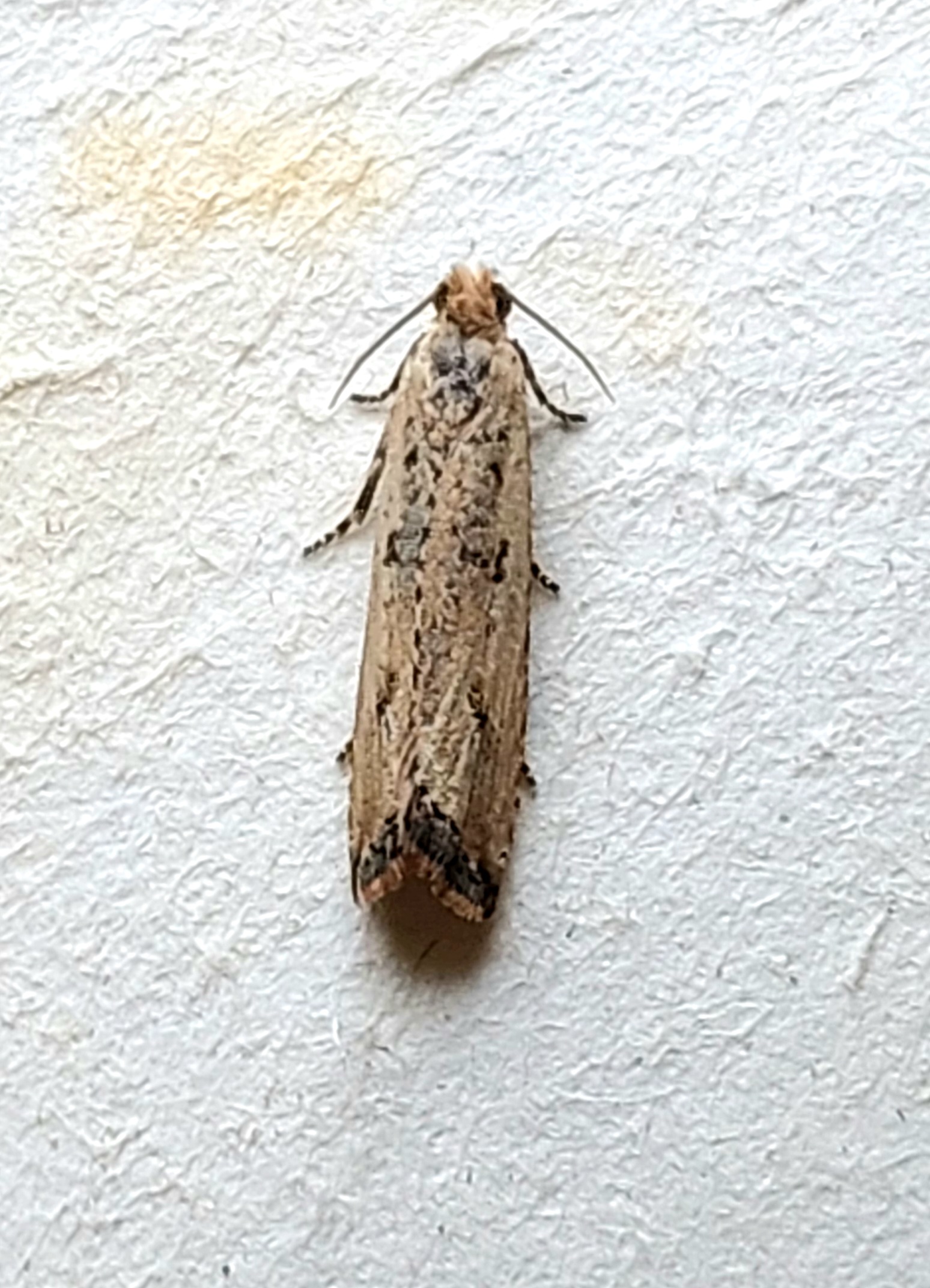
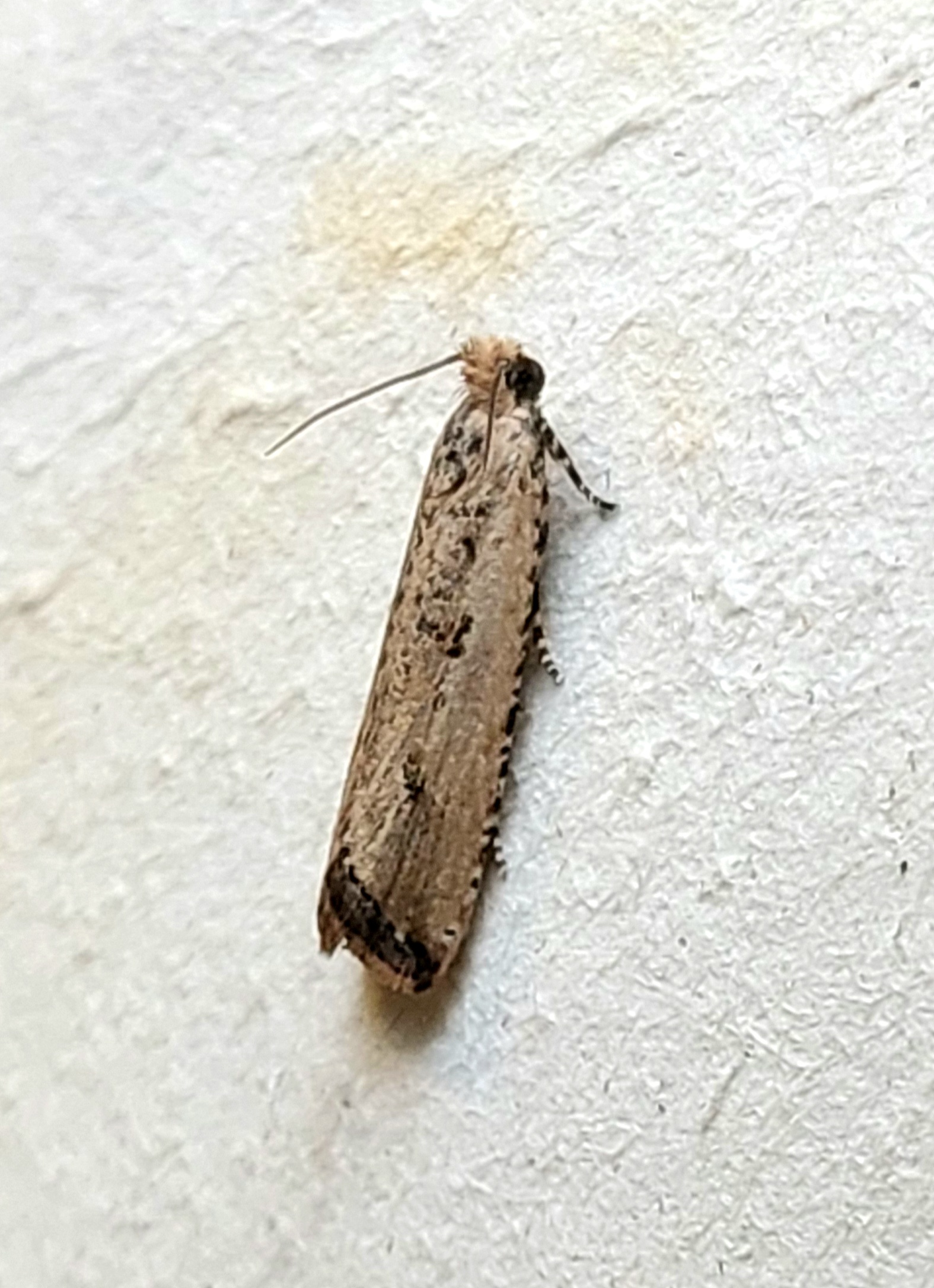
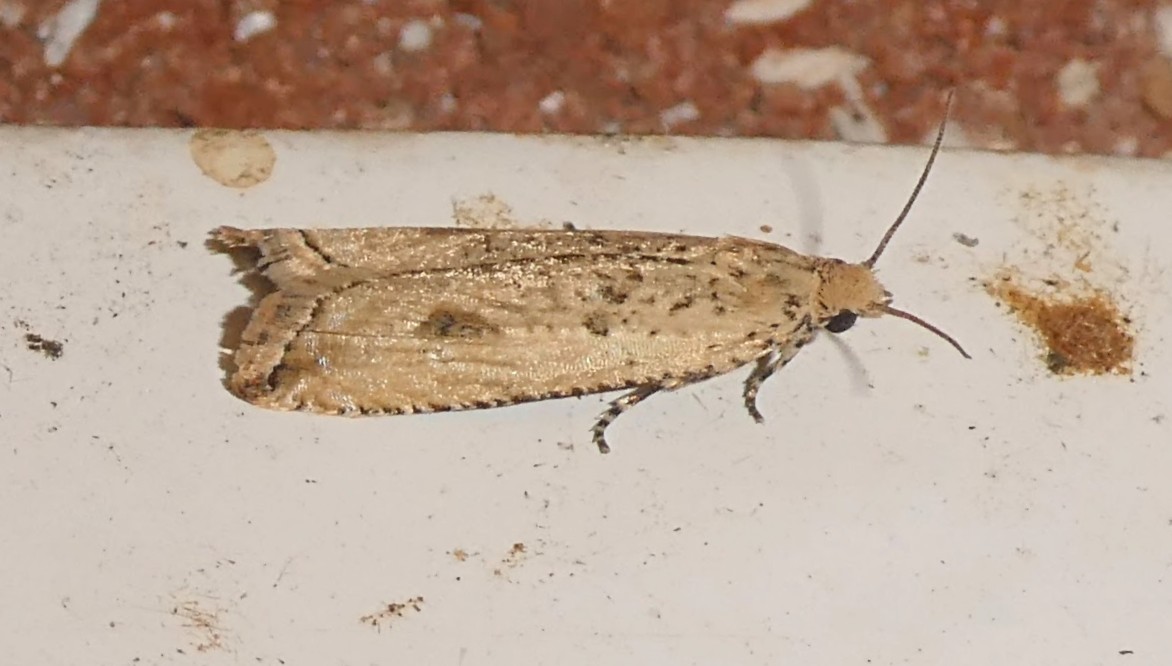
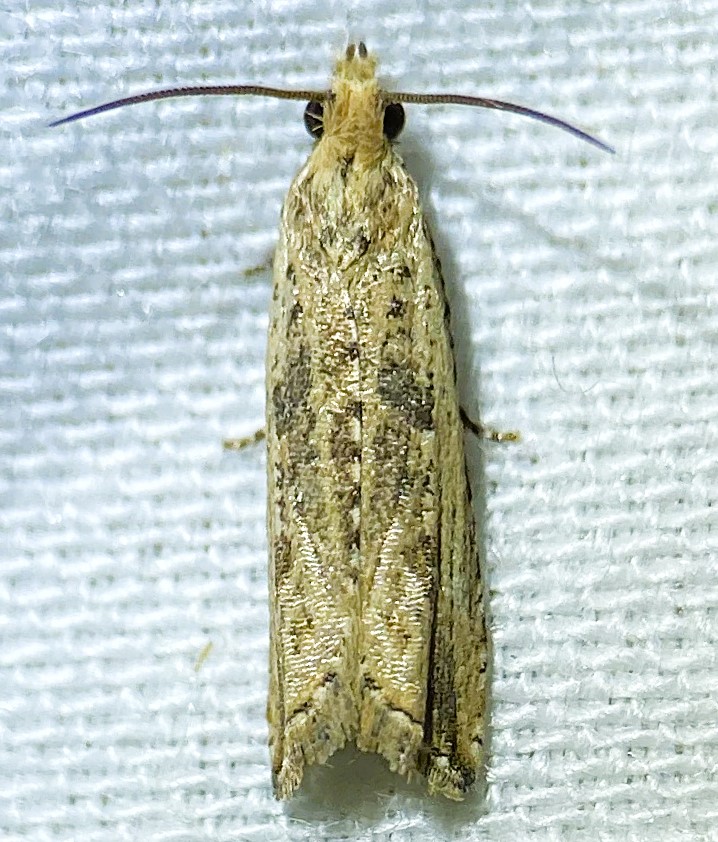
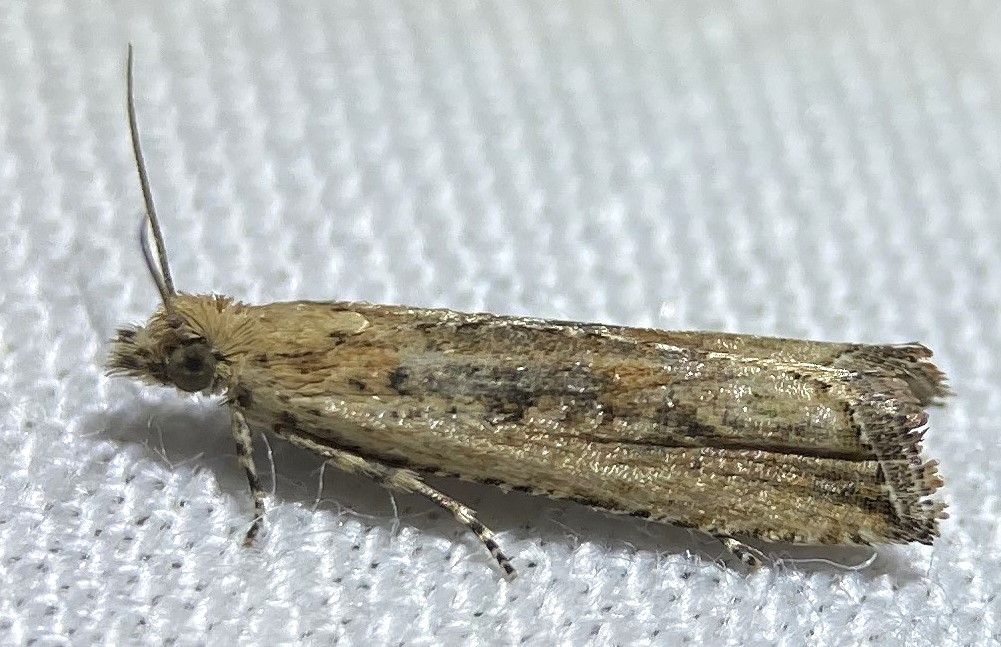
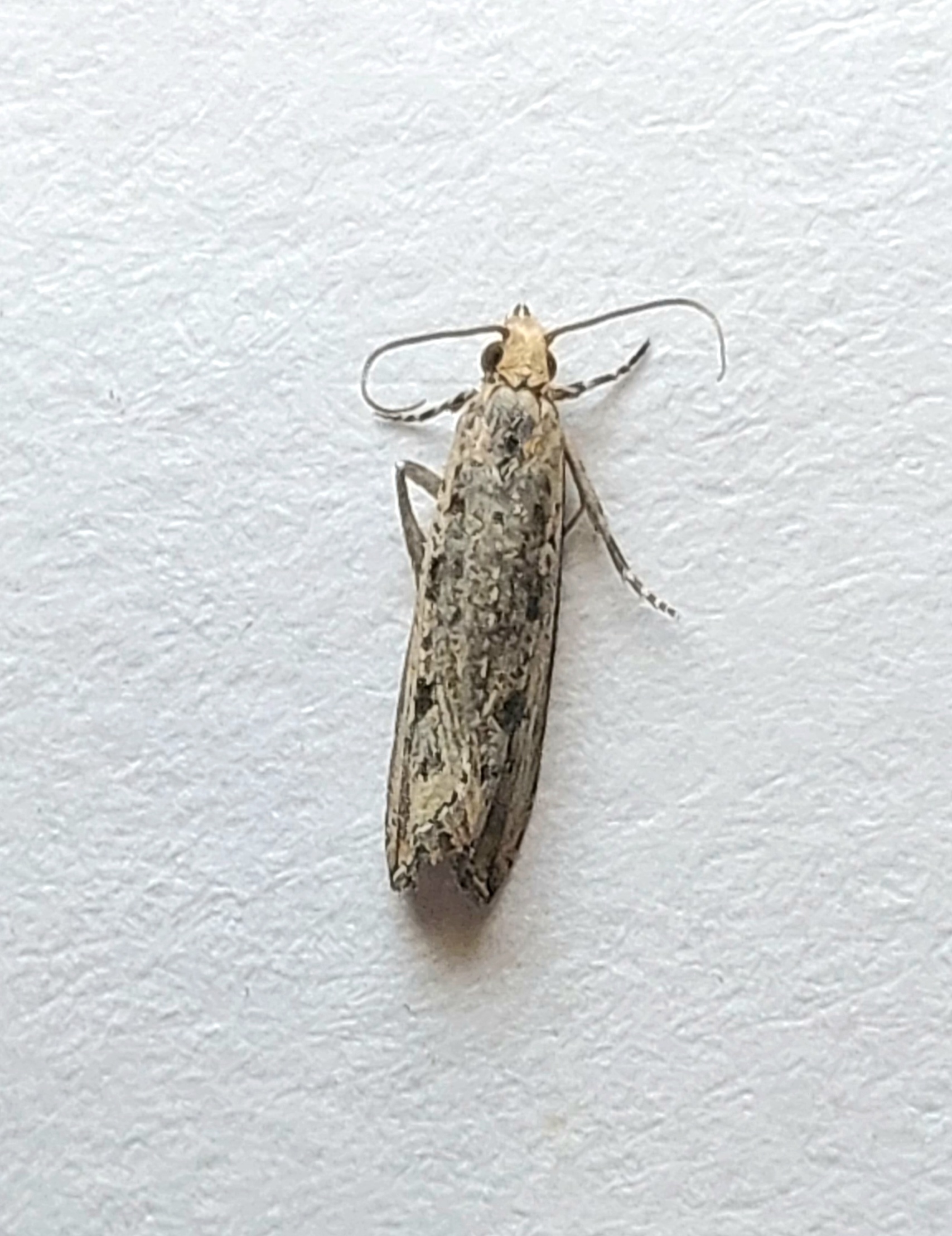
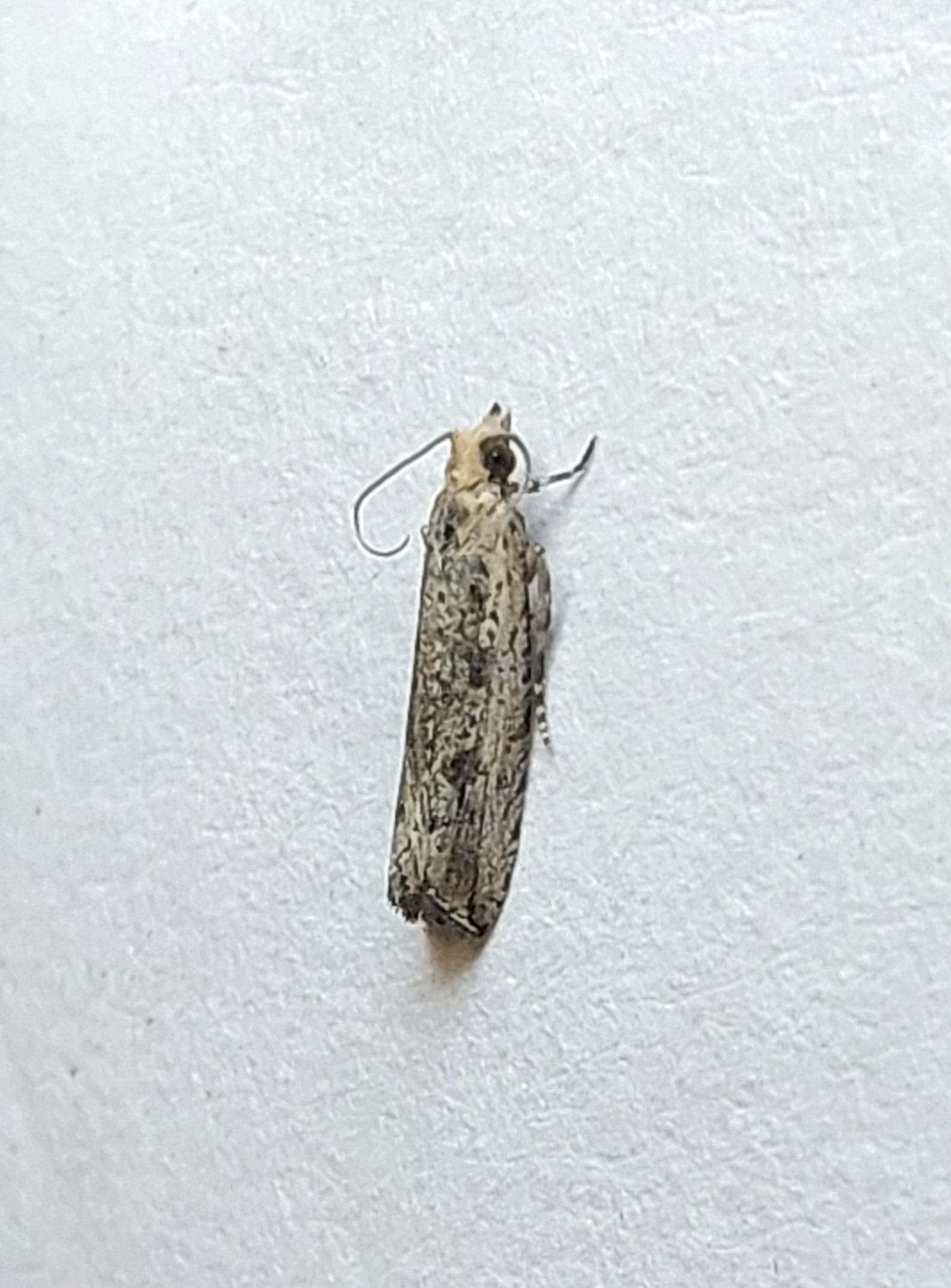
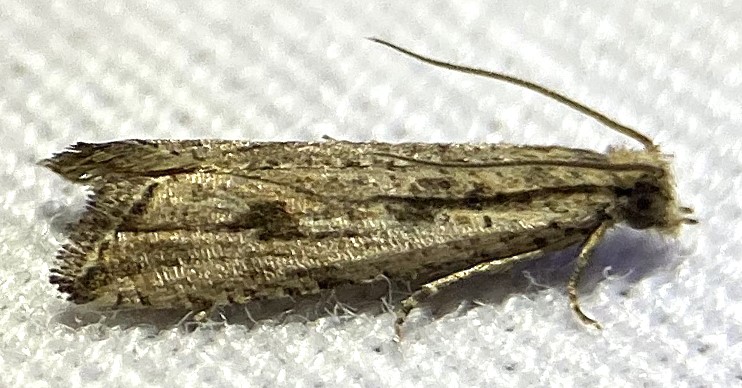
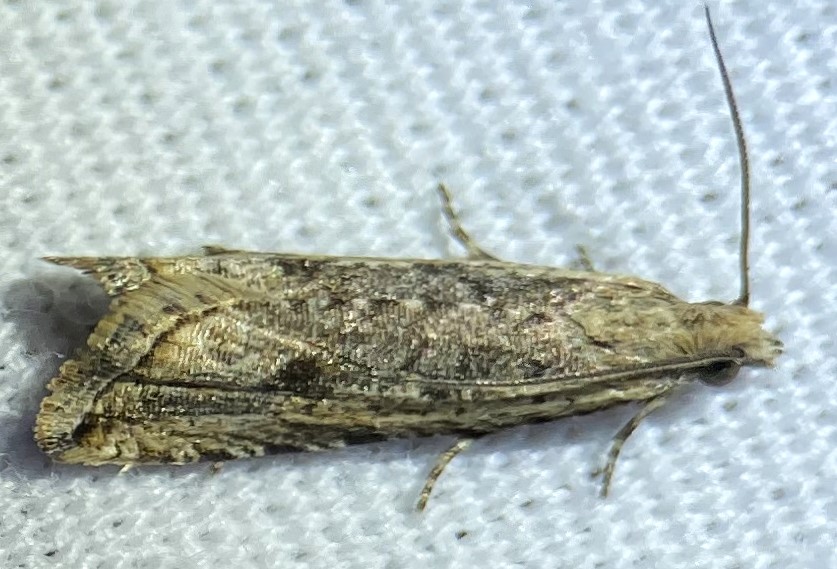
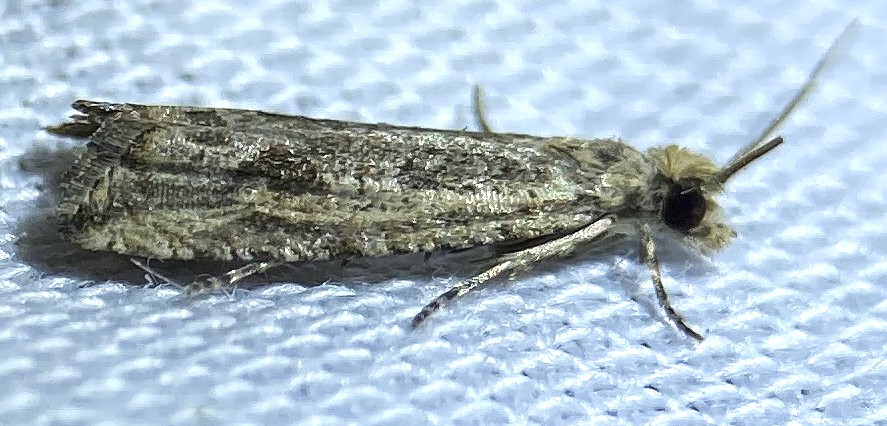
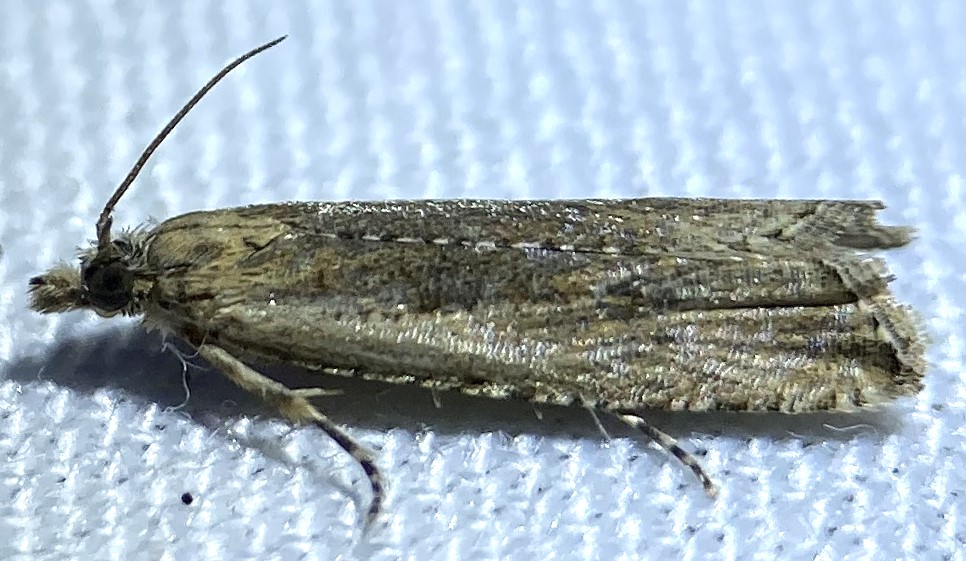
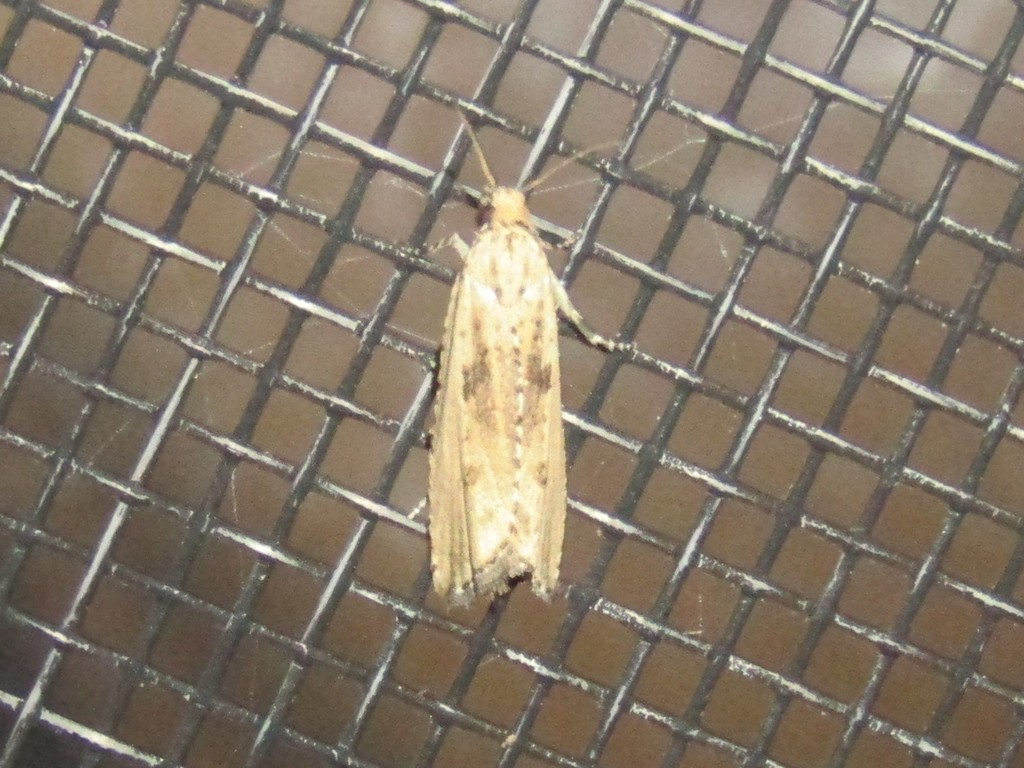
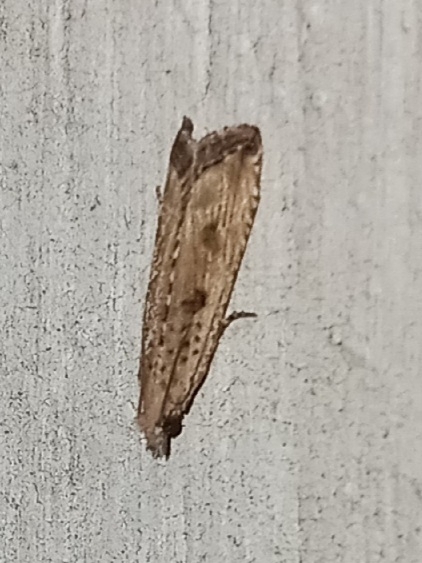
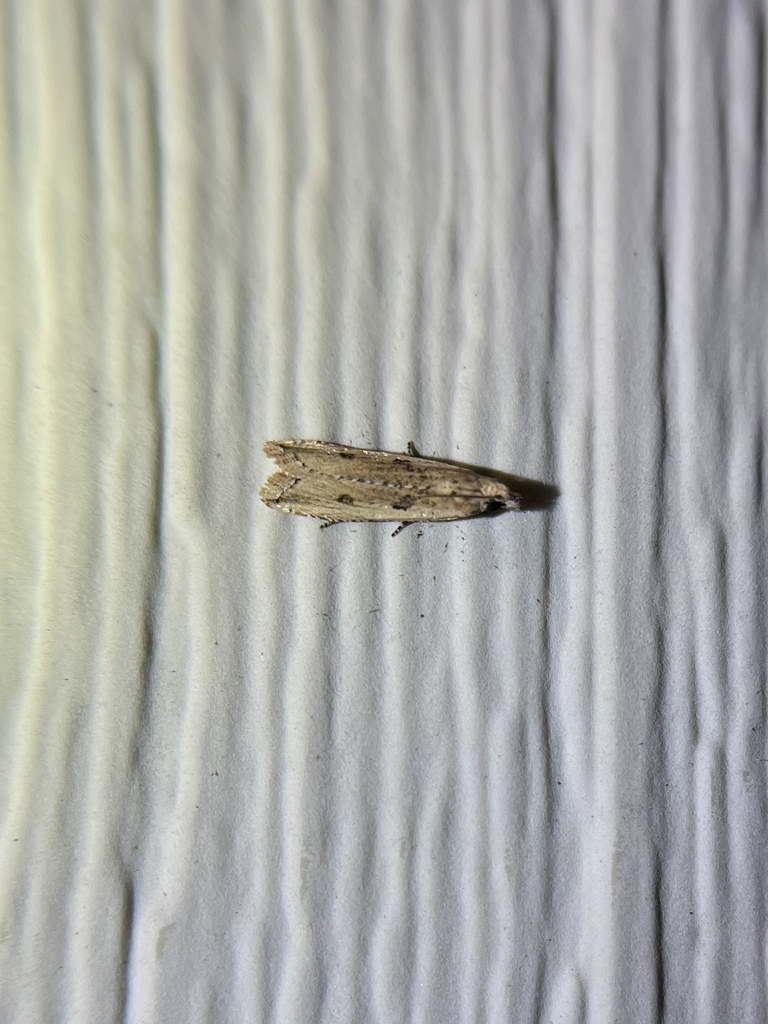
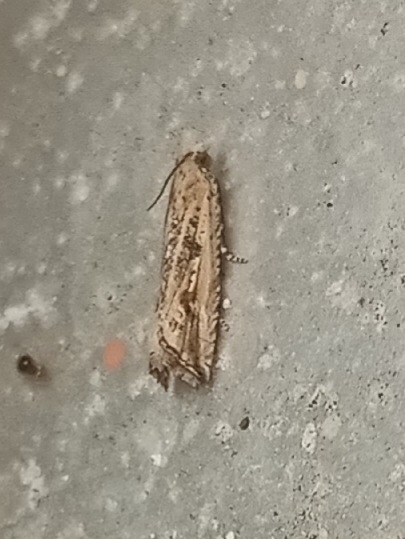
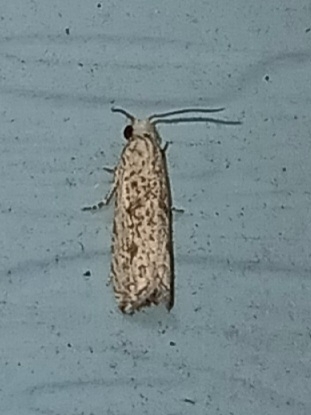
Bactra verutana Zeller, 1875 - Javelin Moth


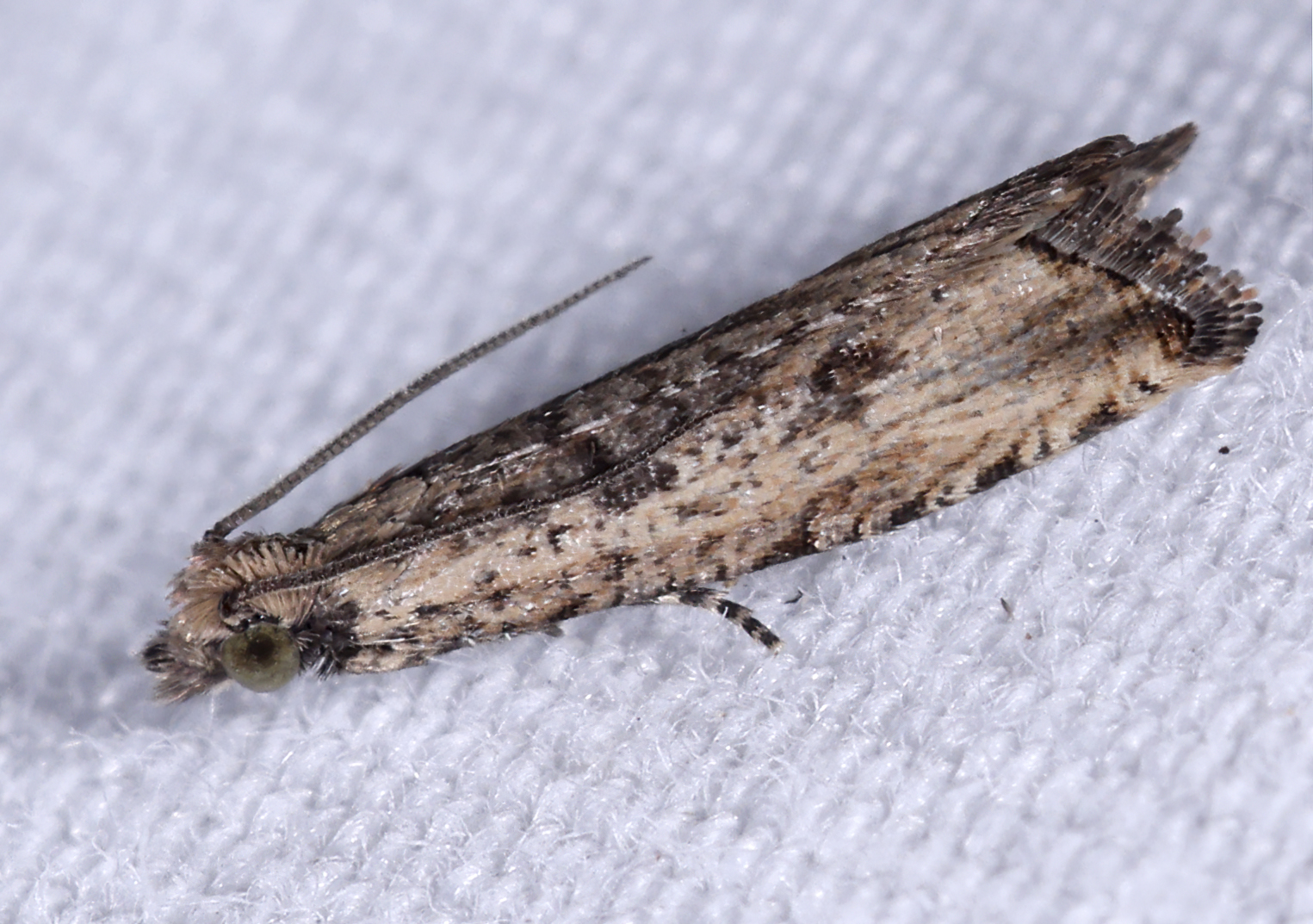
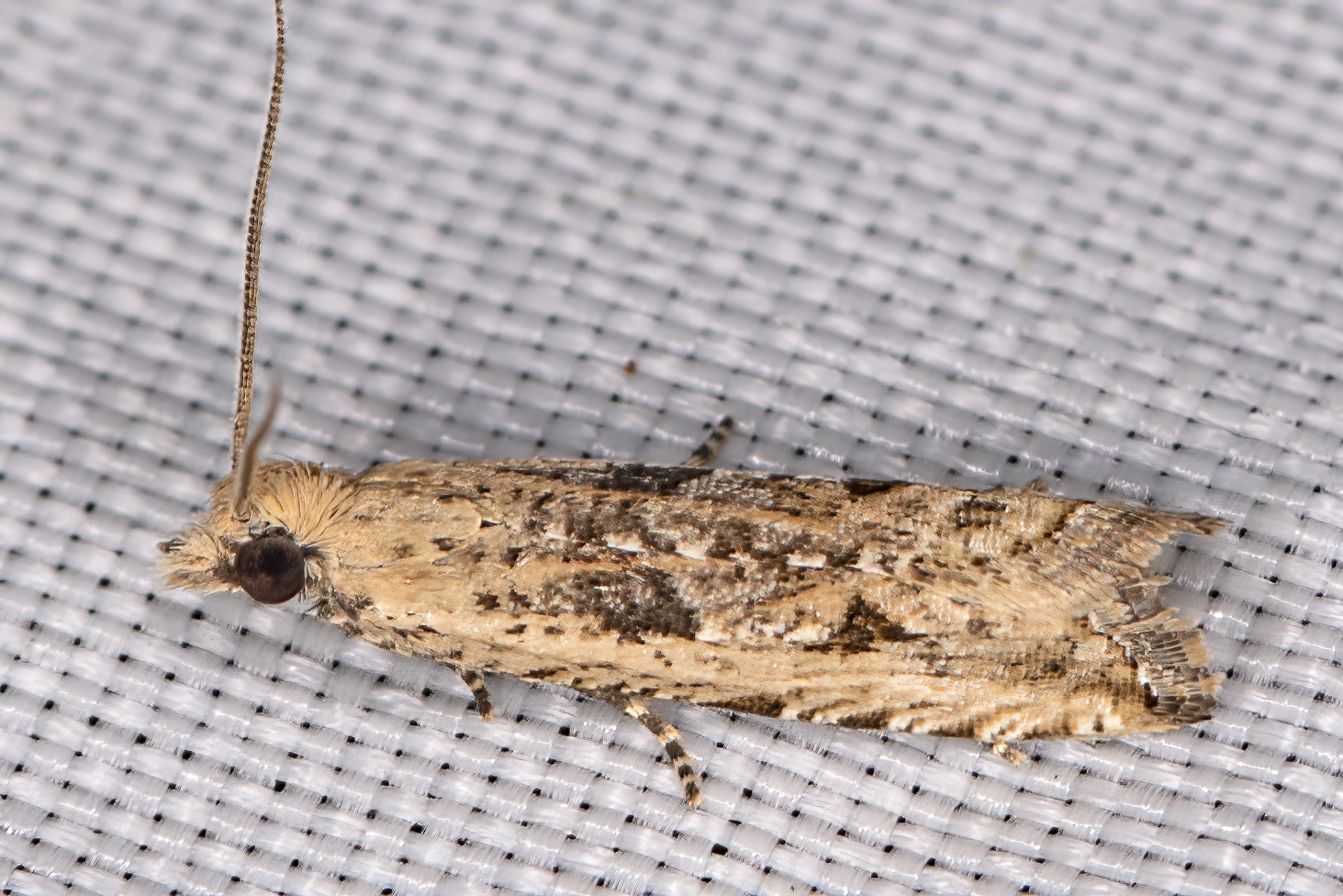
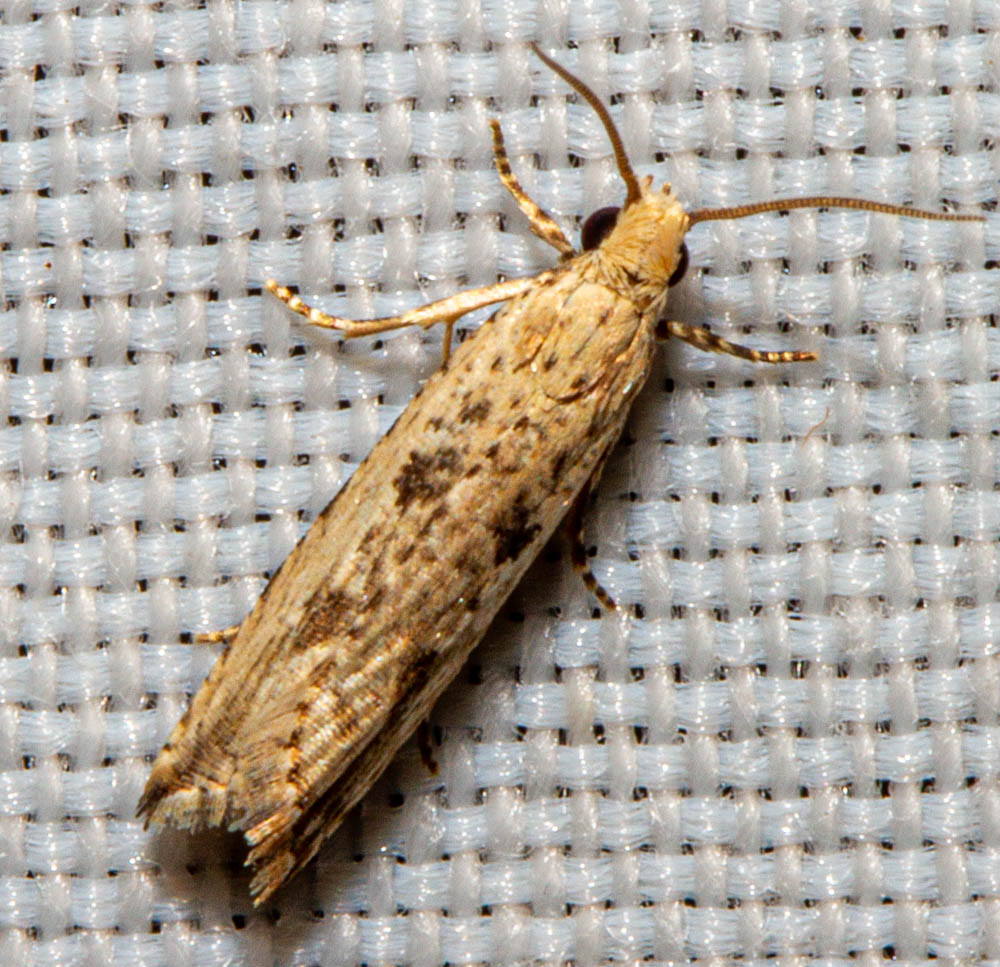
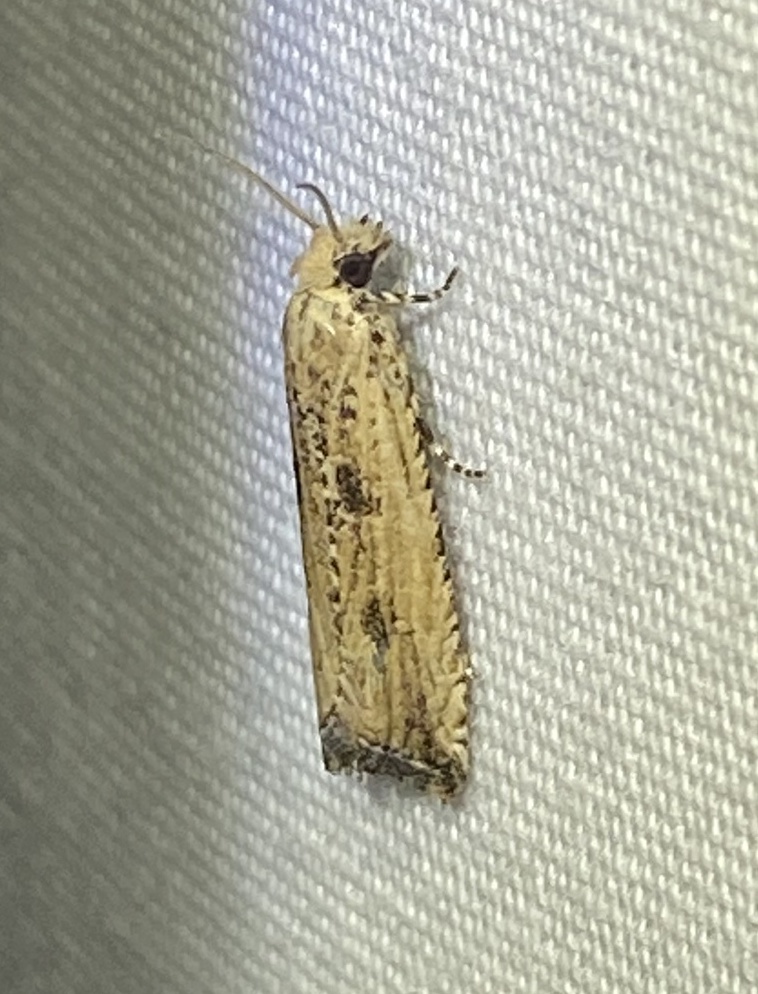
Bactra verutanaBactra verutanaBactra verutanaBactra verutana
Taxonomy
Superfamily:
Tortricoidea
Family:
Tortricidae
Subfamily:
Olethreutinae
Tribe:
Bactrini
P3 Number:
51a0478
MONA Number:
2707.00
Identification
Field Guide Descriptions: Beadle and Leckie (2012)Online Resources: MPG, BugGuide, iNaturalist, Google, BAMONA, GBIF, BOLDTechnical Description, Immature Stages: Frick (1994)                                                                                 
Adult Markings: Bactra verutana is a small grayish to clay-colored moth that has two diffuse blotches near the middle of the wing, and a series of alternating white and blackish marks along the inner margin that extend from the near the basal one-fourth of the wing distally to the tornus, then across the outer margin to the apex. The face, vertex, and thorax are more-or-less concolorous with the ground color of the forewing, which can vary from light clay to gray. The forewing ground is scattered with dark-brown to blackish specks, and often has two much larger, diffuse, blackish blotches near the center of the wing, with one just before one-half the length of the wing from the base, and the second at around three-fourths. These are variably expressed and can be reduced in size or missing. The costa has a series of blackish, triangular marks along its length. The spaces between these are usually filled with the ground color on the basal half of the wing and with pairs of short, pale to whitish lines on the apical half of the wing that become more elongated towards the apex. The inner margin has alternating white and blackish marks that extend from the near the basal one-fourth of the wing across the outer margin to the apex.

Bactra furfurana is the only other member of this genus in North Carolina and can be distinguished by possessing a median dark patch that is better defined and extends all the way to the costa.
Wingspan: 11-17 mm (Heinrich, 1926)
Forewing Length: 5.6-8.4 mm for males and 6.8-9.5 mm for females (Powell, 1997); 4.8-6.9 mm for males from Mississippi and 5.6-8.5 mm for females
Adult Structural Features: Powell (1997) has illustrations of the male and female genitalia. Also, see images of specimens from North Carolina below.
Genitalia and other structural photos
Adult ID Requirements: Identifiable from photos showing hindwings, abdomen, or other specialized views [e.g., frons, palps, antennae, undersides].
Immatures and Development: The larvae primarily feed on species of Cyperus. The following life history account is based on studies by Frick and Garcia (1975), Frick and Wilson (1978), Frick (1994) in Mississippi who studied populations that fed on Purple Nutsedge (Cyperus rotundus), an invasive Eurasian weed and competitor that significantly impacts agricultural plantings. The adults, eggs, and smaller larvae at this site generally disappeared with the first killing freeze in the fall, but at least some of the larvae and pupae overwinter if below ground and produce adults the following spring.

After mating, females lay around 150-250 white eggs on the leaves of the host plant, typically over a 5-7 day period. Rows of overlapping eggs are laid on the upper surface of the leaves and generally in the midrib. The larvae hatch after a few days of development, then migrate to the central, most immature leaves of the whorl at the upper end of the stemlike fascicle. The larvae generally feed between these young, appressed leaves, and either skeletonize these or make short mines in the tissue that average around 8 mm in length. As they grow, the young larvae congregate in the whorl, where they feed on the youngest foliage. When about half grown, they feed by boring down into the fascicle. The larvae eventually make their way to the base of the fascicle, either by boring down through the fascicle, or boring out of the fascicle and reentered farther down. Most larvae reached the basal tuber on the eighth day after hatching, with nearly half then leaving and boring into a nearby shoot about 1-2 cm above the ground. The new entry hole is also used to eliminate frass, and in some cases, as an exit hole for the pupa at eclosion.

Larvae continue feeding in the fascicle near the base of the tuber and create a tunnel. Shortly before pupating, they line the tunnel with a silken tube, and chew an exit hole through which the pupa partially exits just before the moth emerges. The exit hole is constructed an average of 10 mm above the soil line (range = 0-32 mm), and the pupal stage last around one week. The entire life cycle requires about 30 days. Local populations in Mississippi are multivoltine, with the adult population increasing over the summer months and reaching a peak in October. Frick and Wilson (1978) found that the larvae mostly feed on young shoots that were 2-3 weeks old, and avoid older plants.
Larvae ID Requirements: Identifiable only through rearing to adulthood.
Distribution in North Carolina
Distribution: Bactra verutana is broadly distributed across eastern North America, and in the West in British Columbia, Alberta, Saskatchewan, California, southeastern Arizona and Colorado. In the East, it occurs in southern Canada (Ontario; Quebec; Nova Scotia) and in the US in every state east of the Mississippi River. Beyond the Mississippi River, the range extends westward as western Texas, Oklahoma, Kansas, southeastern Nebraska, Iowa and Wisconsin. This species has also been reported from Chile, Cuba, Mexico, Panama, Paraguay, Puerto Rico, and in Mozambique and South Africa where is presumably has been introduced. It is found statewide in North Carolina, but as of 2025 appears to be restricted to a few lower-elevation sites in the Blue Ridge.
County Map: Clicking on a county returns the records for the species in that county.
Bactra verutanaAlamance Alexander Alleghany Anson Ashe Avery Beaufort Bertie Bladen Brunswick Buncombe Burke Cabarrus Caldwell Camden Carteret Caswell Catawba Chatham Cherokee Chowan Clay Cleveland Columbus Craven Cumberland Currituck Dare Davidson Davie Duplin Durham Edgecombe Forsyth Franklin Gaston Gates Graham Granville Greene Guilford Halifax Harnett Haywood Henderson Hertford Hoke Hyde Iredell Jackson Johnston Jones Lee Lenoir Lincoln Macon Madison Martin McDowell Mecklenburg Mitchell Montgomery Moore Nash New Hanover Northampton Onslow Orange Pamlico Pasquotank Pender Perquimans Person Pitt Polk Randolph Richmond Robeson Rockingham Rowan Rutherford Sampson Scotland Stanly Stokes Surry Swain Transylvania Tyrrell Union Vance Wake Warren Washington Watauga Wayne Wilkes Wilson Yadkin Yancey
Flight Dates:
High Mountains (HM) ≥ 4,000 ft.
Low Mountains (LM) < 4,000 ft.
Piedmont (Pd)
Coastal Plain (CP)

Click on graph to enlarge
Image showing flight dates by month for High Mountains greater than 4,000 feet, Low Mountains, Piedmont, and Coastal Plain: adults.
Flight Comments: Southern populations are multivoltine and can be found throughout the year in Florida, Louisiana,Texas and other southern localities. Populations in Canada and other northern locality have a much more abbreviated flight season and probably produce only one or two broods per year. As of 2025, our records extend from mid-March to early-December, with local populations in the Piedmont and Coastal Plain producing several broods per year.
Habitats and Life History
Habitats: This species is commonly found in agricultural settings and disturbed areas where it feeds on weedy Cyperus species. We also have several records from natural communities such as the Sandhills and coastal dune and scrub communities where it probably feeds on native sedges.
Larval Host Plants: Larvae feed on members of the Cyperaceae and Juncaceae, with species of Cyperus being the primary hosts (Forbes, 1923; Frick, 1985; Brown et al., 2010; Shropshire and Tallamy, 2025). Specific host genera include sawgrasses (Cladium), flatsedges (Cyperus), rushes (Juncus), and bulrushes (Scirpus). In feeding trials, Frick (1985) and his colleagues found that the larvae heavily attacked six species of Cyperus, as well as Purple Nutsedge (Cyperus rotundus) and Yellow Nutsedge C. esculentus, which are well-known agricultural weeds and hosts. The larvae also readily fed on several native species such as Redroot Flatsedge (C. erythrorhizos), Ricefield Flatsedge (C. iria) and Variable Flatsedge (C. difformis). - View
Observation Methods: The adults are attracted to lights. More information is needed on the use of native species of sedges and rushes in North Carolina and elsewhere.
Wikipedia
See also Habitat Account for General Sedge, Grass, and Rush Mires
Status in North Carolina
Natural Heritage Program Status:
Natural Heritage Program Ranks: GNR S3S4
State Protection: Has no legal protection, although permits are required to collect it on state parks and other public lands.
Comments:

 Photo Gallery for Bactra verutana - Javelin Moth

112 photos are available. Only the most recent 30 are shown.
Bactra verutana
Recorded by: Dean Furbish on 2025-11-07
Wake Co.
Comment:
Bactra verutana
Recorded by: Dean Furbish, Lior S. Carlson, John F. Jarvis, S. L. Reeves on 2025-10-15
Orange Co.
Comment:
Bactra verutana
iNaturalist
Recorded by: bullhillnaturalist on 2025-09-24
Stanly Co.
Comment: iNat record - https://www.inaturalist.org/observations/332542218***(c) bullhillnaturalist, some rights reserved (CC BY-NC)| Public Positional Accuracy=4 m Elevation=0 feet
Bactra verutana
Recorded by: Larry Chen, Sarah Toner on 2025-09-06
Beaufort Co.
Comment:
Bactra verutana
Recorded by: Dean Furbish on 2025-08-25
Wake Co.
Comment:
Bactra verutana
Recorded by: Simpson Eason on 2025-08-20
Durham Co.
Comment:
Bactra verutana
Recorded by: Jeff Niznik, Larry Chen, Sarah Toner, Kaitlyn Elliott on 2025-08-16
Richmond Co.
Comment:
Bactra verutana
Recorded by: Jim Petranka, Mark Basinger and Becky Elkin on 2025-08-03
Moore Co.
Comment:
Bactra verutana
Recorded by: Jim Petranka, Mark Basinger and Becky Elkin on 2025-08-03
Moore Co.
Comment:
Bactra verutana
iNaturalist
Recorded by: ncmothproject - NC Moth Project on 2025-07-28
Cleveland Co.
Comment: iNat record - https://www.inaturalist.org/observations/302151106***(c) NC Moth Project, some rights reserved (CC BY-SA)| Public Positional Accuracy=200 m Elevation=0 feet
Bactra verutana
Recorded by: David George, Jeff Niznik, Rob Van Epps, Kevin Metcalf on 2025-07-20
Richmond Co.
Comment:
Bactra verutana
Recorded by: Mark Basinger on 2025-07-08
Brunswick Co.
Comment:
Bactra verutana
Recorded by: Dean Furbish on 2025-07-04
Wake Co.
Comment:
Bactra verutana
Recorded by: Dean Furbish on 2025-07-03
Wake Co.
Comment:
Bactra verutana
Recorded by: David George on 2025-06-29
Richmond Co.
Comment:
Bactra verutana
Recorded by: Jim Petranka, Mark Basinger and Becky Elkin on 2025-06-28
Moore Co.
Comment:
Bactra verutana
Recorded by: Jeff Niznik, David George, Larry Chen, Sarah Toner, Joye Zhou on 2025-06-20
Richmond Co.
Comment:
Bactra verutana
Recorded by: Jeff Niznik, David George, Larry Chen, Sarah Toner, Joye Zhou on 2025-06-20
Richmond Co.
Comment:
Bactra verutana
Recorded by: Dean Furbish, Lior S. Carlson on 2025-06-18
Alamance Co.
Comment:
Bactra verutana
Recorded by: Mark Basinger on 2025-05-24
Wilson Co.
Comment:
Bactra verutana
Recorded by: Mark Basinger on 2025-05-24
Wilson Co.
Comment:
Bactra verutana
Recorded by: Simpson Eason on 2025-05-22
Durham Co.
Comment:
Bactra verutana
Recorded by: Dean Furbish on 2025-04-29
Pender Co.
Comment:
Bactra verutana
Recorded by: Dean Furbish and Joy Wiggins on 2025-04-27
Pender Co.
Comment:
Bactra verutana
Recorded by: Mark Basinger on 2025-04-18
Brunswick Co.
Comment:
Bactra verutana
Recorded by: Mark Basinger on 2025-04-18
Brunswick Co.
Comment:
Bactra verutana
Recorded by: Dean Furbish on 2024-12-17
Wake Co.
Comment:
Bactra verutana
Recorded by: Dean Furbish on 2024-11-18
Wake Co.
Comment:
Bactra verutana
Recorded by: Dean Furbish on 2024-11-11
Wake Co.
Comment:
Bactra verutana
Recorded by: Dean Furbish and Joy Wiggins on 2024-10-31
Pender Co.
Comment:

Photos of Bactra verutana from iNaturalist

Bactra verutana
© jfox16 - 2020-08-05 - Davidson Co.
iNat record
Bactra verutana
© steven307 - Steven Joyner - 2022-07-22 - Robeson Co.
iNat record
Bactra verutana
© harrier - 2023-08-11 - Dare Co.
iNat record
Bactra verutana
© steven307 - Steven Joyner - 2023-08-17 - Robeson Co.
iNat record
Bactra verutana
© steven307 - Steven Joyner - 2023-09-15 - Robeson Co.
iNat record
Bactra verutana
© ncmothproject - NC Moth Project - 2025-07-28 - Cleveland Co.
iNat record
Bactra verutana
© bullhillnaturalist - 2025-09-24 - Stanly Co.
iNat record