Moths of North Carolina
Home Page
Recent Entries
Recent Account Updates
County Searches
General Search
Submit a Public Record
Larval Hosts
References
Maps
Draft Checklists
Family Photo Gallery
Family PDFs
NC Biodiversity Project
Comments
Significant Contributors
Scientific Name:
Common Name:
Family (Alpha):
Choose a Family
ACROLEPIIDAE-False Diamondback Moths
ADELIDAE-Fairy moths
ALUCITIDAE-Many-plumed Moths
AMPHISBATIDAE-
ARGYRESTHIIDAE-Shiny Head-standing Moths
AUTOSTICHIDAE-Autostichid Moths
BATRACHEDRIDAE-Batrachedrid Moths
BEDELLIIDAE-Bedelliid Moths
BLASTOBASIDAE-Blastobasid Moths
BOMBYCIDAE-Silkworm Moths
BUCCULATRICIDAE-Ribbed Cocoon-maker Moths
CARPOSINIDAE-Fruitworm Moths
CHOREUTIDAE-Metalmark Moths
COLEOPHORIDAE-Casebearer Moths and Relatives
COSMOPTERIGIDAE-Cosmopterigid Moths
COSSIDAE-Carpenter Moths, Goat Moths
CRAMBIDAE-Grass Moths, Snout Moths
DEPRESSARIIDAE-
DREPANIDAE-Hook-tips and Thyatirid Moths
DRYADAULIDAE-
ELACHISTIDAE-Grassminer Moths and Relatives
EPERMENIIDAE-Fringe-tufted Moths
EPIPYROPIDAE-Planthopper Parasite Moths
EREBIDAE-Erebid Moths
ERIOCRANIIDAE-Eriocraniid Moths
EUTELIIDAE-Euteliid Moths
GALACTICIDAE-Galacticid Moths
GELECHIIDAE-Gelechiid Moths; Twirler Moths
GEOMETRIDAE-Geometer Moths, Loopers
GLYPHIDOCERIDAE-Glyphidocerid Moths
GLYPHIPTERIGIDAE-Sedge Moths
GRACILLARIIDAE-Leafblotch miner moths
HELIOZELIDAE-Shield bearer moths
HEPIALIDAE-Ghost or Swift Moths
HYBLAEIDAE-
INCURVARIIDAE-Leafcutter Moths
LASIOCAMPIDAE-Tent Caterpillar Moths, Lappet Moths
LECITHOCERIDAE-Long-horned Moths
LIMACODIDAE-Slug Caterpillar Moths
LIMOCODIDAE-
LYONETIIDAE-Lyonetiid Moths
MEGALOPYGIDAE-Flannel Moths
MICROPTERIGIDAE-Mandibulate Moths
MIMALLONIDAE-
MOMPHIDAE-Mompha Moths
NEPTICULIDAE-Minute leaf miners
NOCTUIDAE-Owlet Moths
NOLIDAE-
NOTODONTIDAE-Prominents
OECOPHORIDAE-Oecophorid Moths
OPOSTEGIDAE-
PELEOPODIDAE-
PLUTELLIDAE-Diamondback Moths
PRODOXIDAE-Yucca Moths
PSYCHIDAE-Bagworm Moths
PTEROPHORIDAE-Plume Moths
PYRALIDAE-Pyralid Moths, Snout Moths
SATURNIIDAE-Giant Silkworm Moths
SCHRECKENSTEINIIDAE-Schreckensteiniid Moths
SCYTHRIDIDAE-
SESIIDAE-Clearwing Moths
SPHINGIDAE-Sphinx Moths
THYATIRIDAE-
THYRIDIDAE-Window-winged Moths
TINEIDAE-Clothes moths
TISCHERIIDAE-Tischerid Moths
TORTRICIDAE-Leafroller Moths
URANIIDAE-
URODIDAE-Urodid Moths
XYLORYCTIDAE-
YPONOMEUTIDAE-Ermine Moths
YPSOLOPHIDAE-Ypsolophid Moths
ZYGAENIDAE-
«
Home
»
View
PDF
Tischeriidae Members:
Astrotischeria ambrosiaeella
Astrotischeria astericola
Astrotischeria heliopsisella
Astrotischeria solidagonifoliella
Astrotischeria unidentified species
Coptotriche aenea
Coptotriche agrimoniella
Coptotriche badiiella
Coptotriche castaneaeella
Coptotriche citrinipennella
Coptotriche crataegifoliae
Coptotriche fuscomarginella
Coptotriche purinosella
Coptotriche unidentified species
Coptotriche zelleriella
Tischeria quercitella
Coptotriche
Members:
Coptotriche aenea
Coptotriche agrimoniella
Coptotriche badiiella
Coptotriche castaneaeella
Coptotriche citrinipennella
Coptotriche crataegifoliae
Coptotriche fuscomarginella
Coptotriche purinosella
Coptotriche unidentified species
Coptotriche zelleriella
35 NC Records
Coptotriche citrinipennella
Clemens, 1859 - No Common Name
view caption
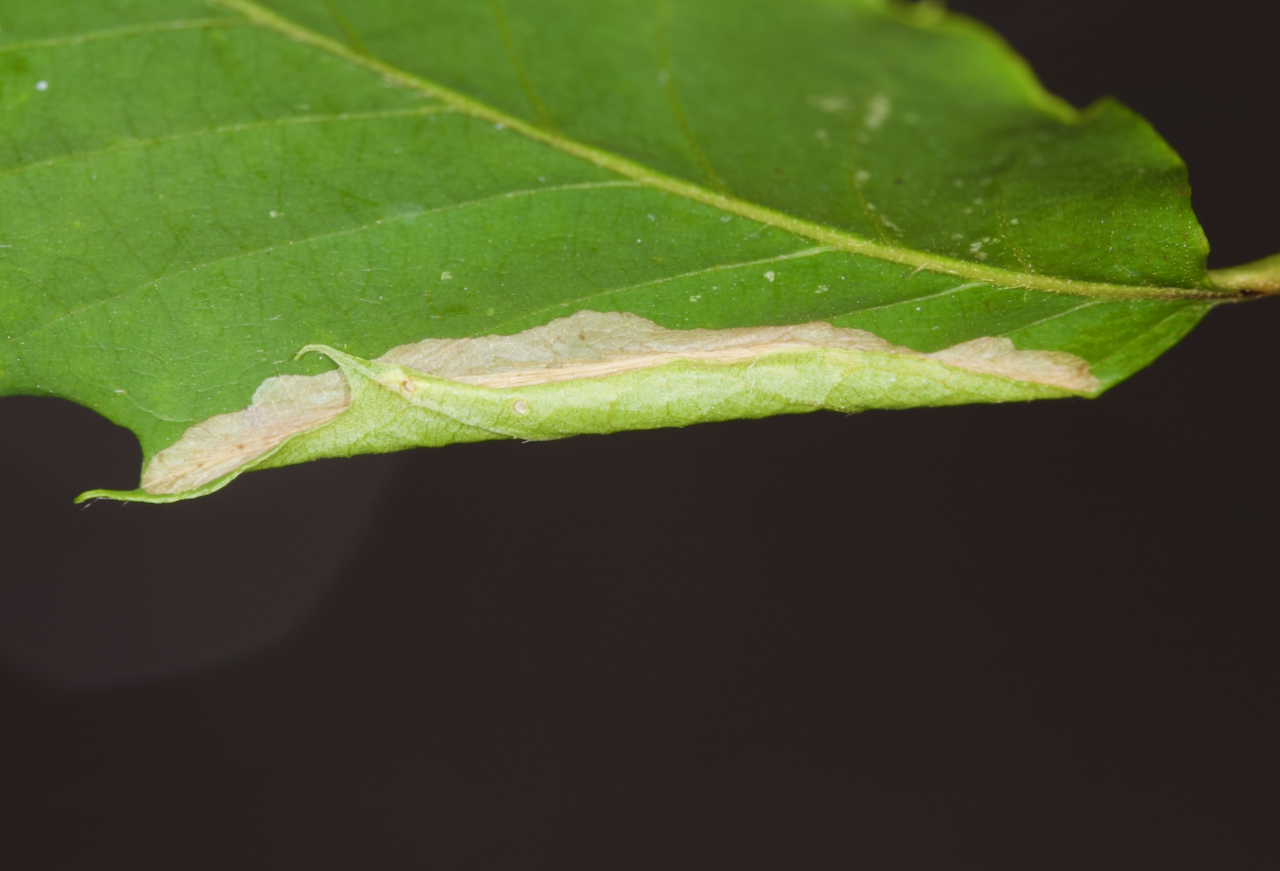
An upper-surface, occupied mine on American Chestnut. Note how the leaf margin is folded upward.
view caption
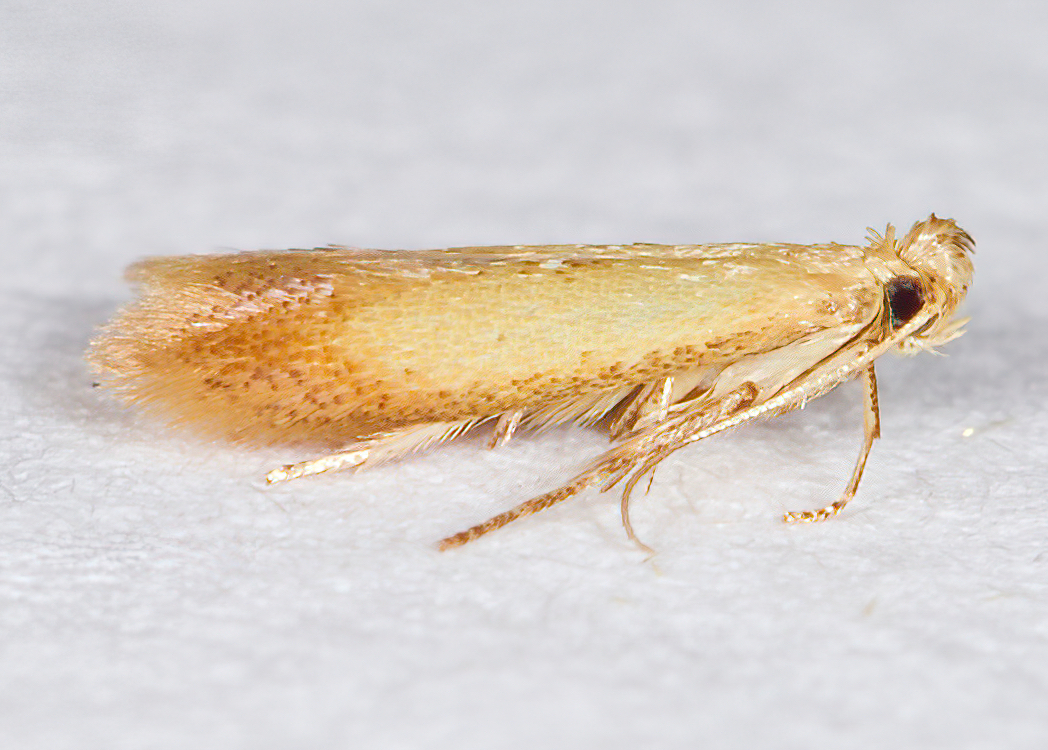
A reared adult from Black Oak.
view caption
A reared adult from Northern Red Oak.
view caption
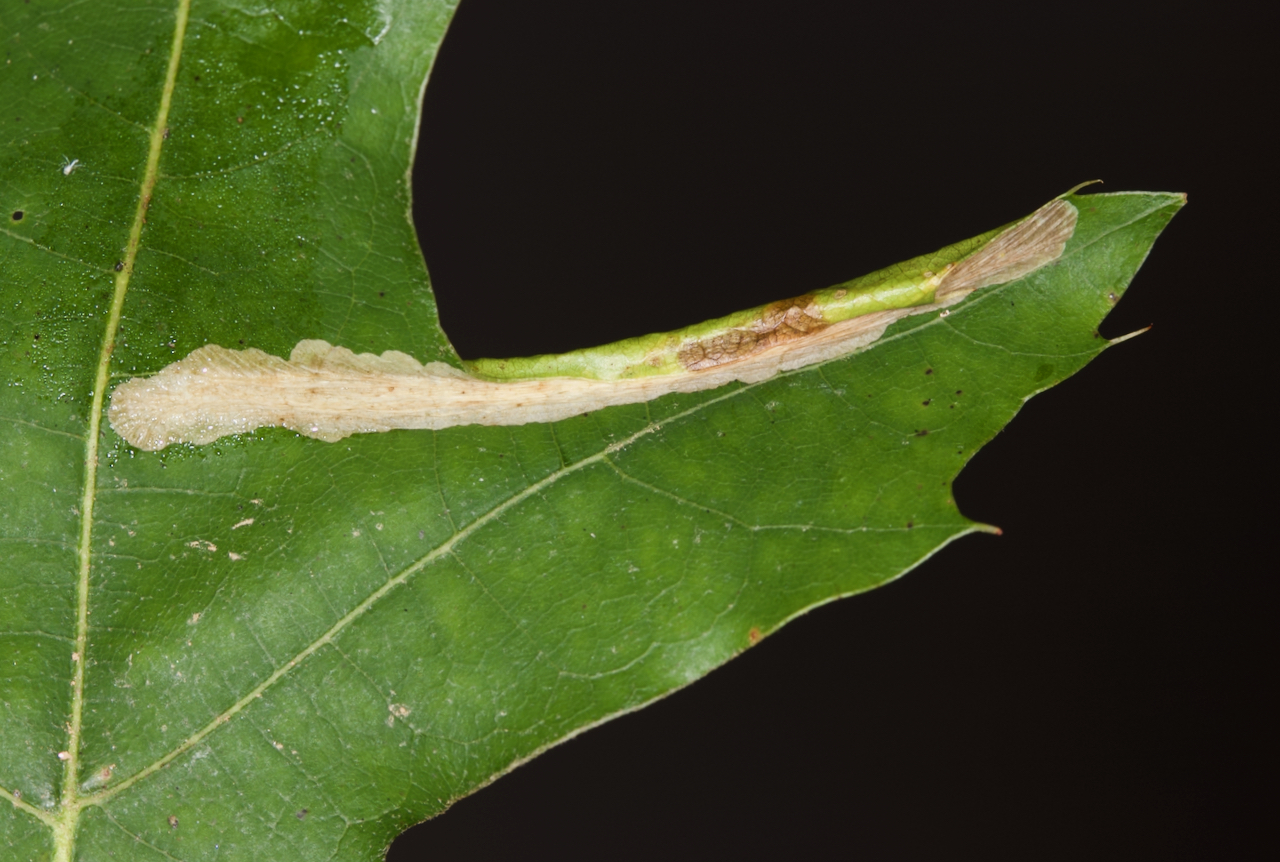
An upper-surface, occupied mine on Southern Red Oak.
Taxonomy
Superfamily:
Tischerioidea
Family:
Tischeriidae
Subfamily:
[Tischeriinae]
Tribe:
[Tischeriini]
P3 Number:
23a0026
MONA Number:
126.00
Comments:
Coptotriche
is a genus of specialized leafminers that currently consists of 27 recognized Nearctic species. Most species fall within one of two major groups. Members of the first group typically have orangish to yellowish fore wings (rarely white) and specialize on oaks and chestnuts. Members of a second group have dark gray, brown, or blackish fore wings and mostly feed on members of the Rosaceae (Braun, 1972; Eiseman, 2019).
Identification
Field Guide Descriptions:
Online Resources:
MPG
,
BugGuide
,
iNaturalist
,
Google
,
BAMONA
,
GBIF
,
BOLD
Technical Description, Adults:
Braun (1972)
Technical Description, Immature Stages:
Braun (1972), Eiseman (2019).
Adult Markings:
The following is from Braun's (1972) description based on observations of 160 specimens from throughout the range of the species. The face is yellow and the scales of the tuft darken towards the tips. The thorax and forewing are pale yellow, and the wing shades to brownish orange in the apical fourth. Brownish color extends to the wing base along the extreme costal margin, and to the tornus, but varies among individuals in the extent of development. Some specimens may have a few darker scales at the apex, and the cilia are concolorous. The underside of the forewing of the male has a discal, elongated, dark brownish fuscous patch at the base. The hindwing is yellowish white in the female and grayish tinged in the male, with a brownish fuscous basal patch on the upper side that sometimes is produced as a point. The cilia are concolorous. The costal margin of the hindwing of the female is slightly convex, especially towards the base. The legs are pale yellowish, with a faint fuscous dusting outwardly. The underside of the abdomen has fuscous dusting on the basal two-thirds. Key characteristics that help distinguish this species from closely related forms include the lighter median area of the forewing (pale yellow or pale ocherous) that contrast with the darker costal and dorsal margins, the dark dusting on the apical fourth of the forewing, and the presence of a brownish fuscous basal patch on the upper surface of the hindwing of the male.
Wingspan:
8-9 mm (Braun, 1972).
Adult Structural Features:
Braun (1972) provides keys for identifying both males and females based on genitalia. Her verbatim description of the genitalia follows: vinculum produced as a short point; harpes with short setae; surface of anellus clothed with microscopic spinules with two clusters of larger spinules; forks of aedeagus flat, expanding apically, vesica densely clothed with microscopic broad spinules; forks of uncus widely separated, membrane between not notched. Female genitalia: ovipositor lobes larger than lateral lobes, lateral lobes with stout setae; sex opening rounded, margins sclerotized; posterior apophyses greatly expanded at tips; arms of patibulum broad posteriorly; prela large, broad in basal two-thirds, more than half the length of the anterior apophyses.
Adult ID Requirements:
Identifiable from good quality photos of unworn specimens.
Immatures and Development:
The larvae mine the upper side of leaves and produce a very elongated mine along the margin of the leaf. This begins as a narrow blotch with longitudinally wrinkles. The leaf margin eventually curled over most of the mine and hides the loosened epidermis (Braun, 1972; Eiseman, 2019).
Larvae ID Requirements:
Identifiable only through rearing to adulthood.
Distribution in North Carolina
Distribution:
Braun (1972) considered
Coptotriche citrinipennella
to be the most widespread of the oak-feeding species. It occurs from southern Ontario and the northeastern US to as far south as eastern Texas and southern Alabama. This species is widespread in North Carolina and likely occurs statewide where suitable hosts occur.
County Map:
Clicking on a county returns the records for the species in that county.
Flight Dates:
High Mountains (HM) ≥ 4,000 ft.
Low Mountains (LM) < 4,000 ft.
Piedmont (Pd)
Coastal Plain (CP)
Click on graph to enlarge
 »
»