Orthoptera of North Carolina
Scientific Name: Common Name:
Family (Alpha):
« »
View Gryllidae Members: NC Records

Neonemobius variegatus (Bruner, 1893) - Variegated Ground Cricket


No image for this species.
Taxonomy
Family: Gryllidae Subfamily: Nemobiinae Tribe: PteronemobiiniSynonym: Nemobius bruneri
Comments: One of six species in this genus that occur in North America north of Mexico (Cigliano et al., 2017), three of which have been recorded in North Carolina
Identification
Field Guide Descriptions: Online Photographs: SINA, Google Images,  iNaturalist, GBIFTechnical Description, Adults/Nymphs: Hebard (1913); Blatchley (1920)SINA 546a.htm                                                                                  
Comments: Hebard (1913) describes the general color as clay yellow mottled or flecked with mummy brown. The head below the antennae is distinctively shining dark brown, but the occiput is cinnamon, mottled with brown. In the male, the dorsal surface of the abdomen is dark brown, but in the female it is clay color spotted with dark brown.
Total Length [body plus wings; excludes ovipositor]: 7 mm, males (Washington DC); 9.1 mm (Maryland) (Hebard, 1913)
Structural Features: Members of Neonemobius are distinguished by their small size -- males are less than 9 mm in body length. Females also possess short, upwardly curved ovipositors, less than or equal to 2/3 the length of the hind femur, and that have fine teeth only on the dorsal side of the tip (SINA, 2017)
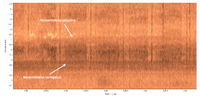
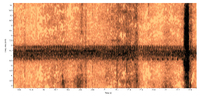
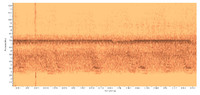
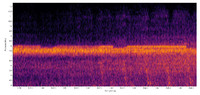
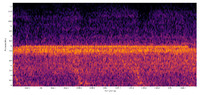
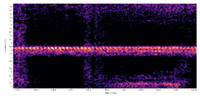
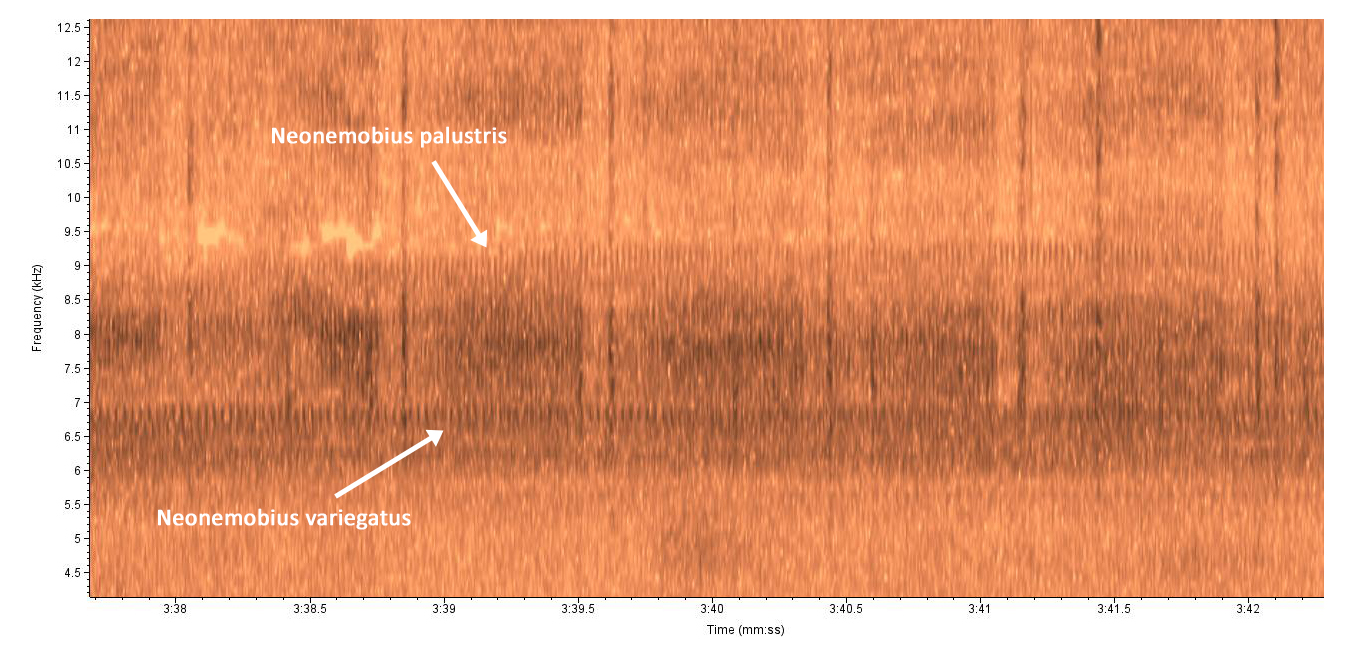
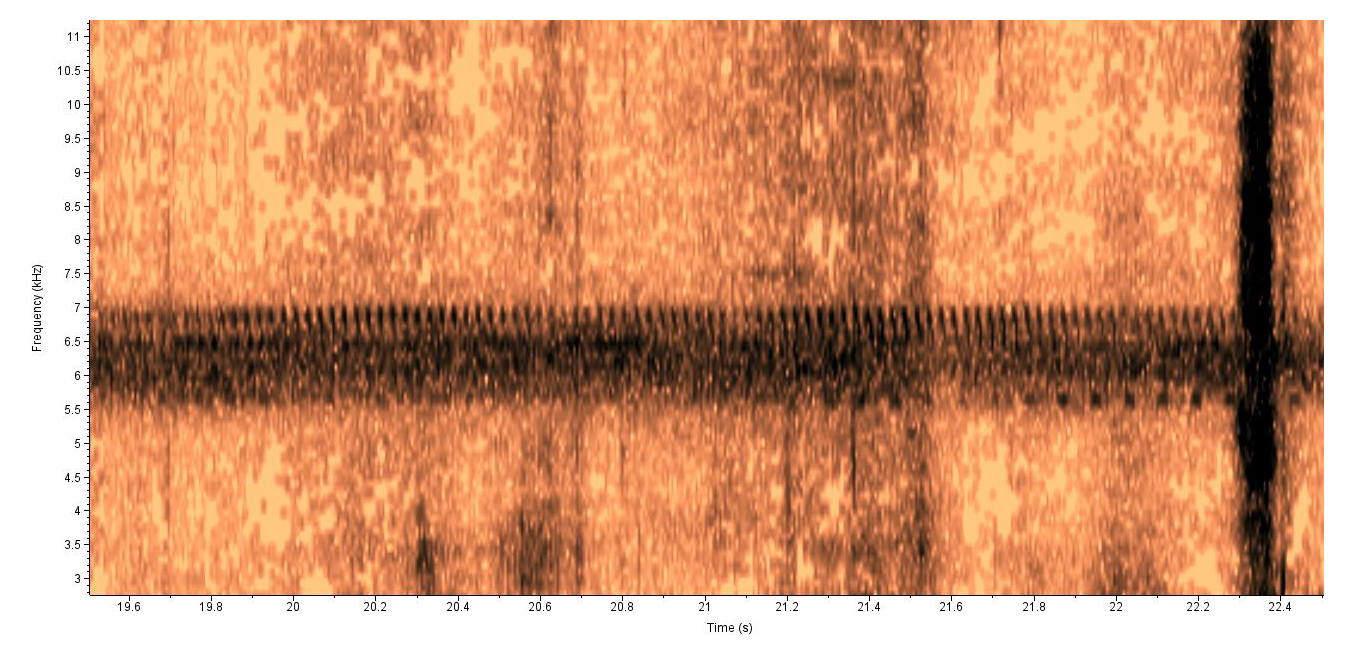
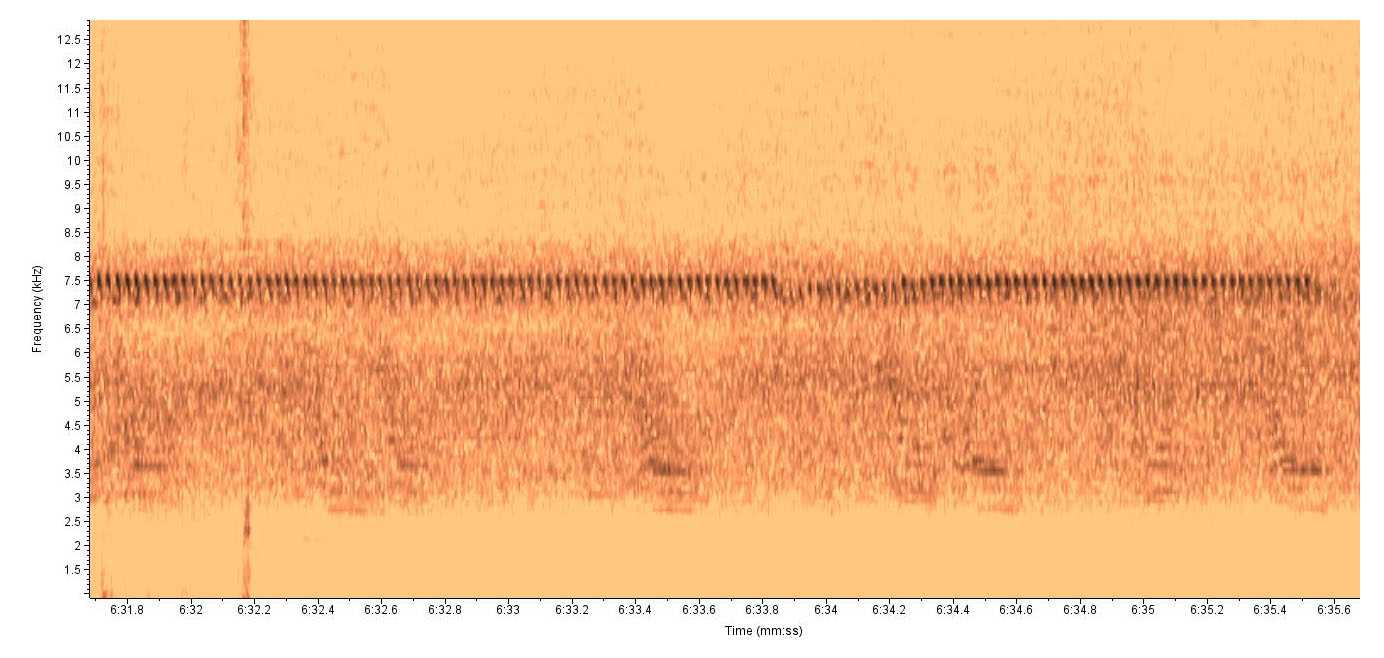
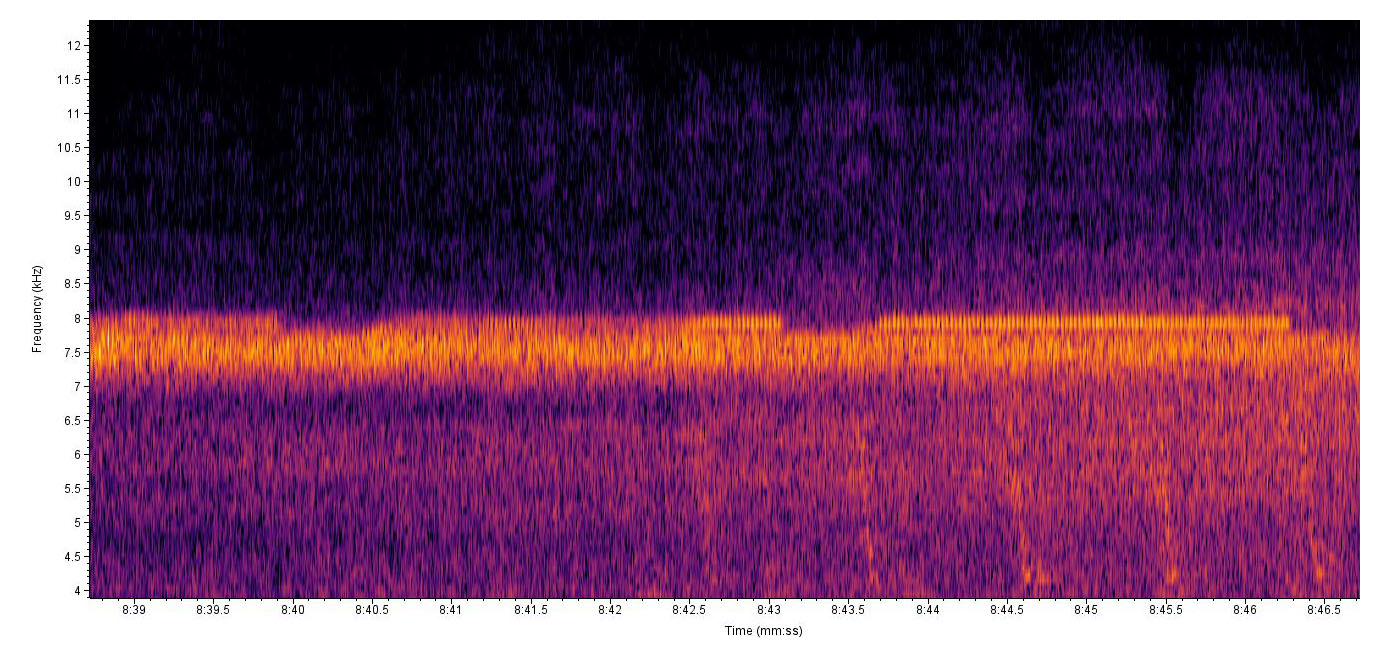
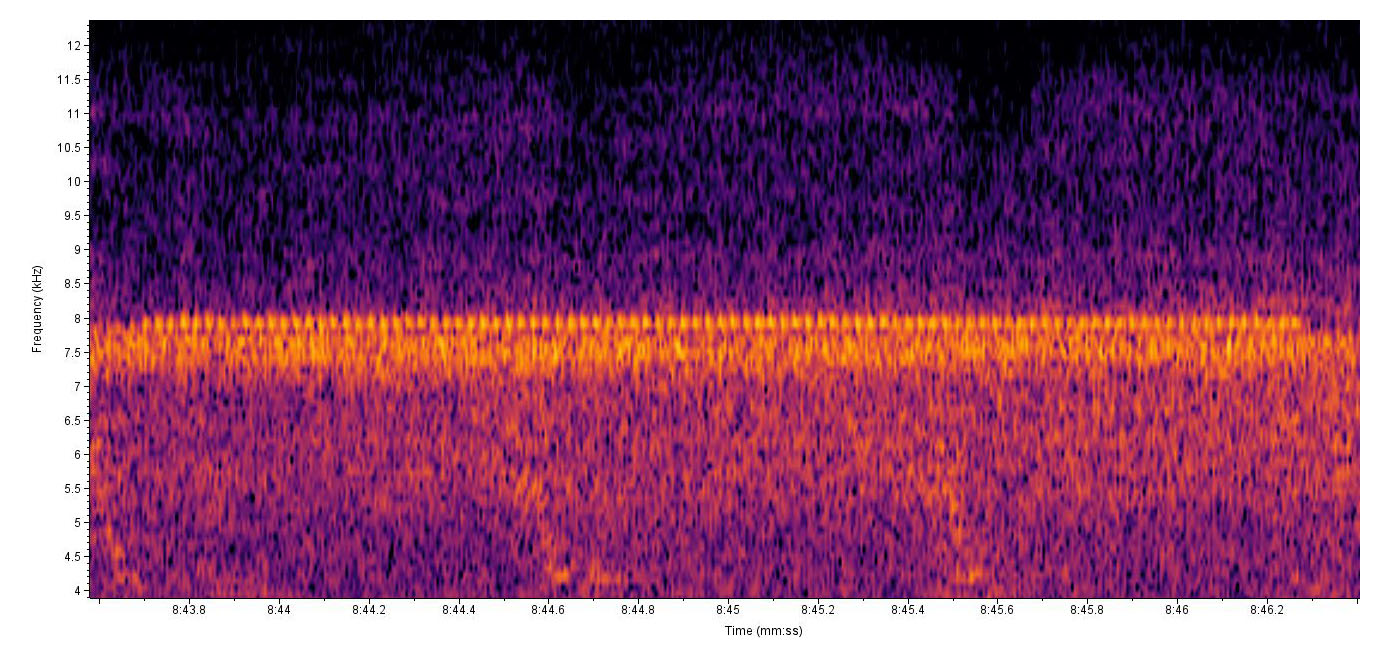
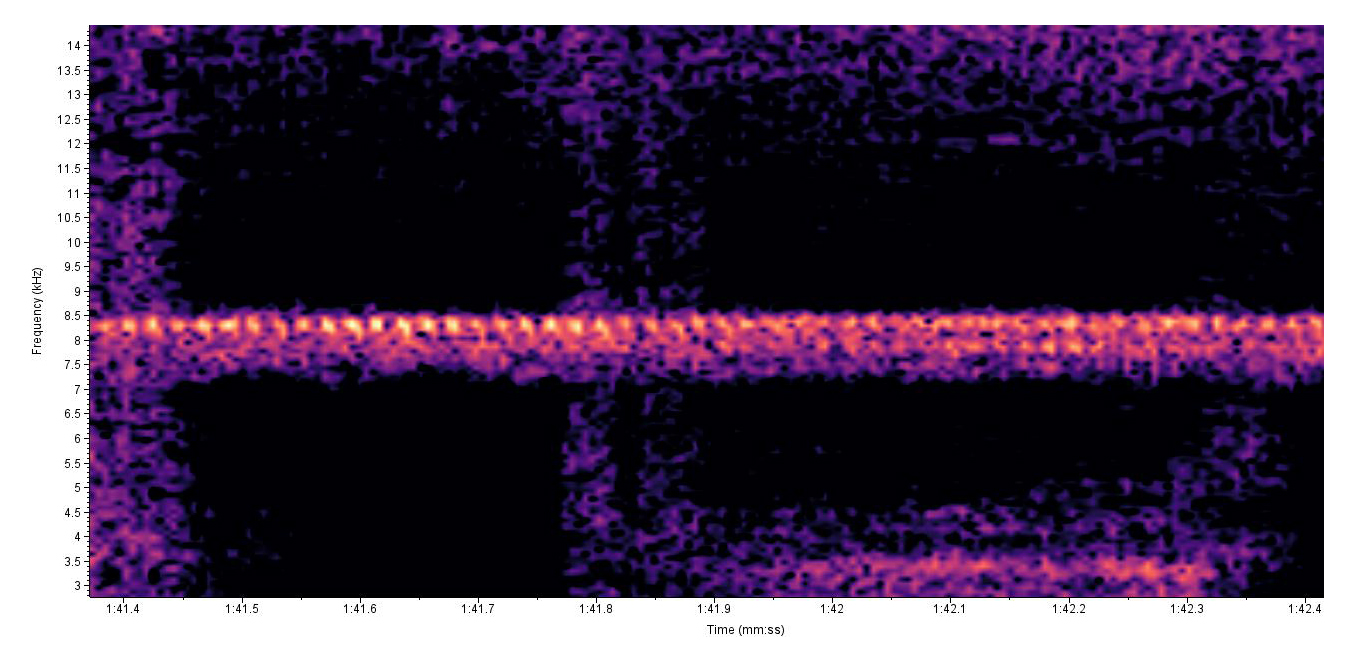
Singing Behavior: Fulton (1931) described the song of variegatus (= bruneri) as similar to that of Allonemobius allardi (which he identified as A. f. fasciatus). However, rather than the separate "sharp chirps" of allardi, the song of variegatus is "higher pitched, weaker", and with a vibrato that is "more rapid, and not perceptible at high temperatures". Recordings provided by by David H. Funk to SINA (accessed 2021) have pulse rates of 34 to 35 pps and a dominant frequency ranging from 6.7 to 6.9 kHz at around 20 C. Recordings by Carl Strang made in the Chicago area (https://natureinquiries.wordpress.com/tag/neonemobius-variegatus/) show a similar pattern with respect to pulse rate, varying from around 28 to 42 syllables per second, but with dominant frequencies ranging from around 6.5 to 9.3 kHz. An example shown by Lang and Hershberger (https://songsofinsects.com/crickets/variegated-ground-cricket) has a dominant frequency of around 8 and pulse rate of 35 kHz. This recording shows significant pauses between trill segments, which is also true for a recording made in Chatham County. Spectrographs show some degree of wavring in pitch and amplitude, likely the cause of the vibrato mentioned by Fulton. The syllables are typically thick in appearance and crowded together. Pulse rate is high, ranging from 30 to 50 pps. Pitch is also relatively high, from 6.3 to 8.4 kHz. Songs are similar to those of Anaxipha exigua and Eunenobius melodius but are higher at any given pulse rate (see song graph).
Diagnostic Song Parameters:

Distribution in North Carolina
County Map: Clicking on a county returns the records for the species in that county.
Neonemobius variegatus
Adult Dates:
 High Mountains (HM) ≥ 4,000 ft.
 Low Mountains (LM) < 4,000 ft.
 Piedmont (Pd)
 Coastal Plain (CP)

Click on graph to enlarge
Habitats and Life History
Habitats: Fulton (1931) describes the habitat as consisting of stream borders, particularly somewhat open gravel bars. Our recent records all come from wet sites under a hardwood canopy. In the Piedmont, these sites include both shoreline edges and swamp forests with only intermittant channels or pools. In the Sandhills, records come from streamhead seeps.
Diet: Probably omnivorous
Observation Methods: Most easily detected by the male songs
Abundance/Frequency: Mostly heard singly but choruses were frequent at one site in the Piedmont in a Triassic Basin floodplain with a mature stand of wet hardwood forest. This species was very abundant at this site.
Adult Phenology: Fulton (1951) reported that adults of variegatus are the latest of the ground crickets to emerge as adults in the Raleigh are, appearing in the first half of September and persisting until the first week of November. We have recent records from August, however, and Rehn and Hebard (1916) had at least a couple of records in North Carolina (as bruneri) from July.
See also Habitat Account for General River Bars and Sparsely Vegetated Shorelines
Status in North Carolina
Natural Heritage Program Status: This is an uncom
Natural Heritage Program Ranks: GNR S3S4
State Protection: Has no legal protection, although permits are required to collect it on state parks and other public lands
Comments: We have very few records for this species and there is comparatively little information in the literature. The habitat described for this species, however, is widespread and variegatus has probably been generally overlooked. More information is needed of its distribution and exact habitat associations in the state before its conservation status can be accurately determined.

Image Gallery for Neonemobius variegatus - Variegated Ground Cricket

Neonemobius variegatus Recorded by: Steve Hall and Bruce Sorrie
Richmond Co.
Comment: 44 syllables per sec @ 7.9 kHz
Neonemobius variegatus Recorded by: Steve Hall
Richmond Co.
Comment: 33.2 pps at 6.8 kHz
Neonemobius variegatus Recorded by: Steve Hall
Chatham Co.
Comment: 35 syllables per second @ 7.4 kHz; river shoreline
Neonemobius variegatus Recorded by: Steve Hall
Chatham Co.
Comment: Broken series of trills. Recorded along a rocky river shoreline
Neonemobius variegatus Recorded by: Steve Hall
Chatham Co.
Comment: 37 syllables per second @ 7.8 kHz; syllable shape unclear (recorded using an mp3 voice recorder)
Neonemobius variegatus Recorded by: Steve Hall
Durham Co.
Comment: 47.2 pps @ 8.2 kHz; forested bottomland close to a creek

MP3 Gallery for Neonemobius variegatus - Variegated Ground Cricket

1 Recorded by: Steve Hall
Chatham Co.
2024-07-21
37 syllables per second @ 7.8 kHz; syllable shape unclear (mp3 recording)