|
|
|
| synonym |
|
| description |
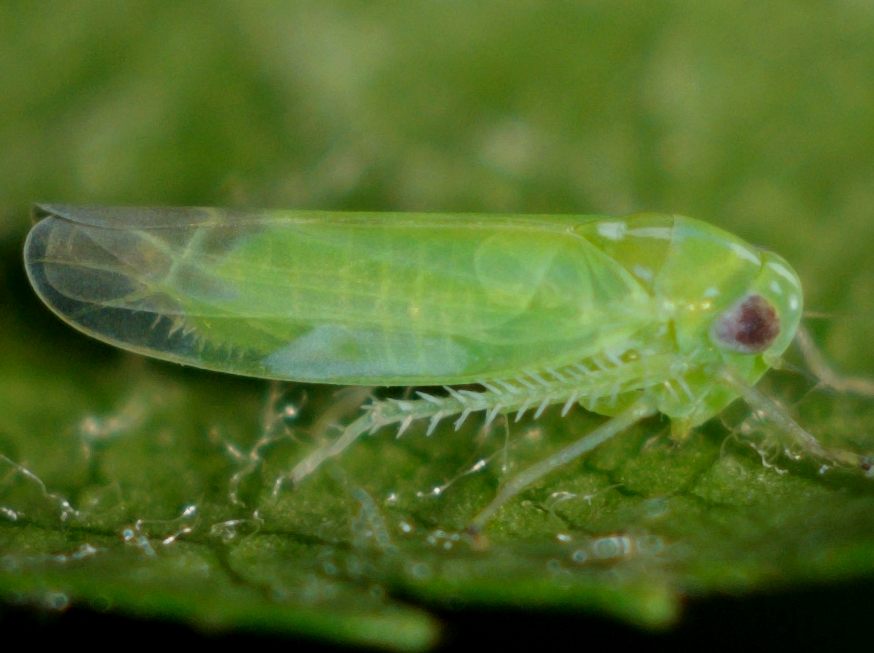
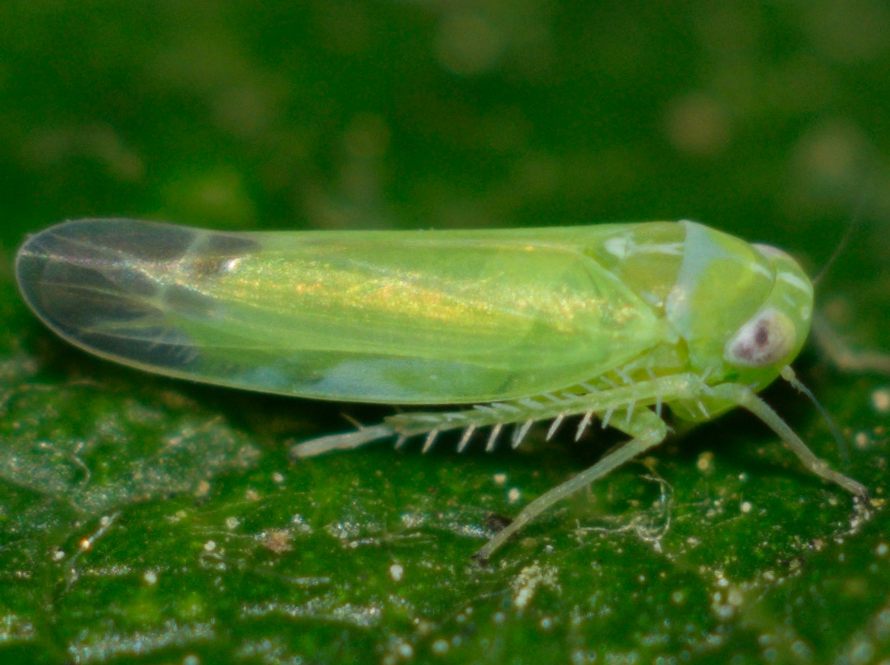
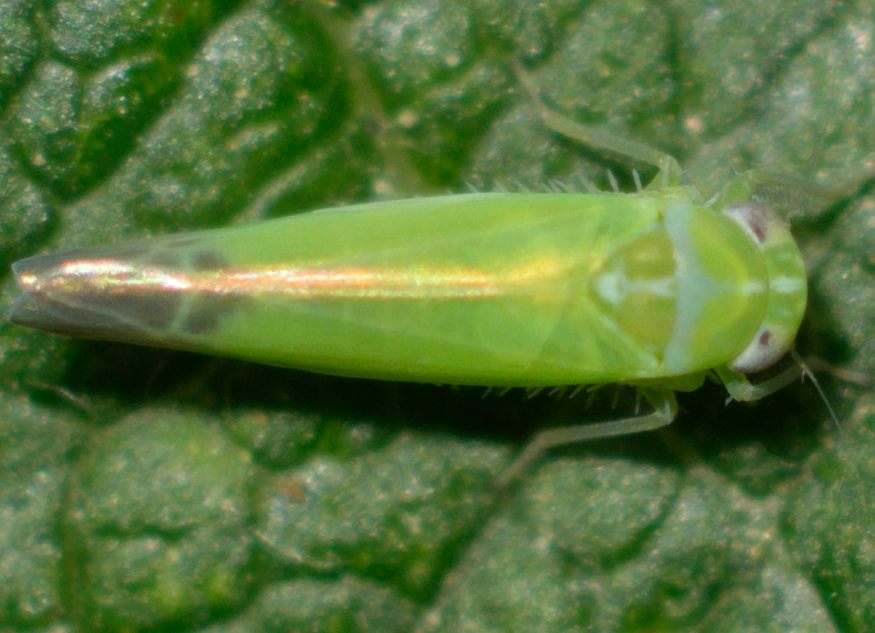
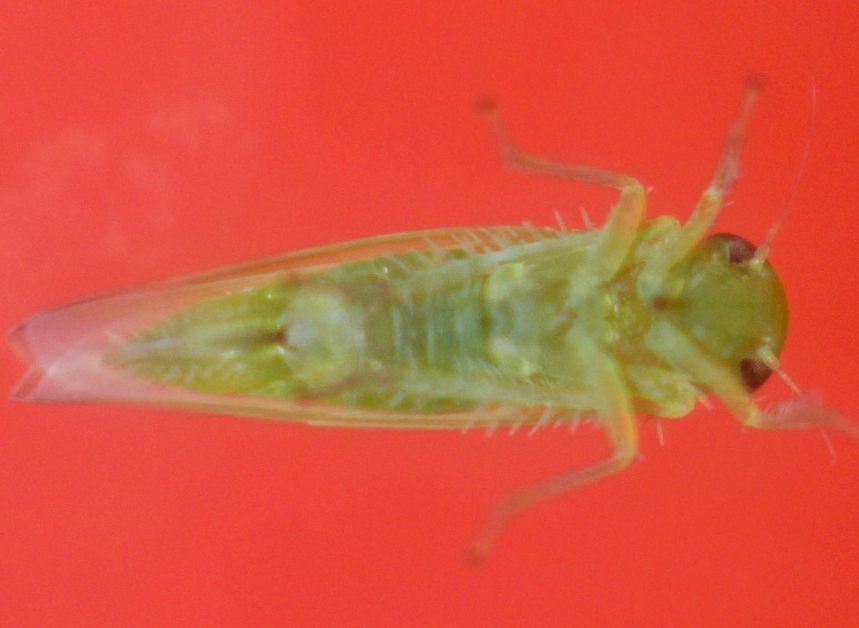
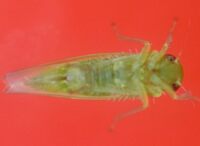
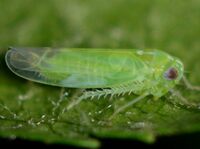
A bright green species without any black spots in the wing cells, a key characteristic. The head is blunt, with the vertex parallel margined and broadly rounded anteriorly, only slightly produced beyond the anterior margins of the eyes. The width between the eyes is a little more than twice the length at the middle. The pronotum has prominent lateral angles and appears wider than the head. There is usually a pale median longitudinal stripe on the vertex that extends on to the anterior portion of the pronotum, and a round pale spot on either side of this stripe on the vertex; the posterior margin of the pronotum is pale. The scutellum is a greenish yellow-orange with a bold pale median stripe, widening near the apex. The face, vertex, and pronotum are frequently tinted with orange. The apical fourth of the wings are smoky, contrasting with the bright green coloration of the rest of each wing. The female pregenital sternite has the posterior margin roundedly produced to a central broad, blunt, sunken tooth that is formed by an oblique notch on either side; the shape of the posterior margin may vary slightly among individuals. The male subgenital plates are long and narrow with almost parallel margins to near the base. Adults are 3.5 mm long. (DeLong, 1931)
Nymphs are green overall, with a dark patch on the dorsal surface of the tip of the abdomen and small indistinct dark smudges on the wing pads. |
| distribution |
Native to Europe, introduced a while back into North America where it is now transcontinental across much of the United States and Canada. Also introduced in New Zealand. (3I) |
| abundance |
Previously noted to occur in the state, with a map in DeLong (1931) showing a distribution throughout the mountains and Piedmont, but there is a lack of collection records. Recorded recently from a couple counties in the Piedmont. |
| seasonal_occurrence | |
| habitat |
|
| plant associates |
Malus domestica, Malus sp. (3I) |
| behavior |
Can be attracted at night with a light. |
| comments |
|
status |
[Native:]
[Introduced:]
[Extirpated:] | | list_type |
[Official:]
[Provisional:] |
| adult_id | Unmistakable and widely known Identifiable from good quality photos of unworn specimens
Identifiable from photos showing undersides, or other specialized views [e.g., legs, face]
Identifiable only by close inspection of structural features or by DNA analysis NULL |
| nymph_id | Unmistakable and widely known Identifiable from good quality photos, especially where associated with known host plants
Identifiable from close inspection of specimens or by DNA analysis
Identifiable only through rearing to adulthood NULL |
| G_rank |
|
| S_rank |
|
| rank_comments |
|
| tribe |
Empoascini |
| subgenus |
|
Species Photo Gallery for Kyboasca maligna Apple Leafhopper |
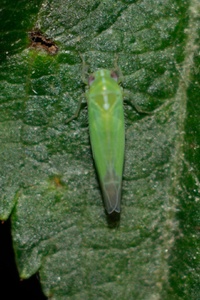 | Photo by: Scott Bolick
Forsyth Co.
Comment: | 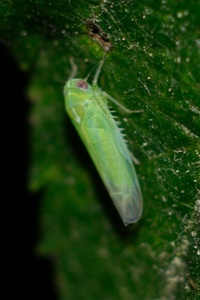 | Photo by: Scott Bolick
Forsyth Co.
Comment: |
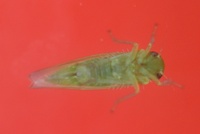 | Photo by: Scott Bolick
Forsyth Co.
Comment: | 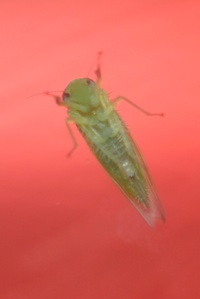 | Photo by: Scott Bolick
Forsyth Co.
Comment: |
 | Photo by: Scott Bolick
Forsyth Co.
Comment: | 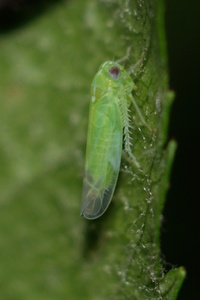 | Photo by: Scott Bolick
Forsyth Co.
Comment: |
 | Photo by: Scott Bolick
Forsyth Co.
Comment: | 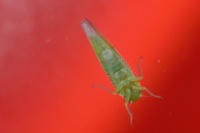 | Photo by: Scott Bolick
Forsyth Co.
Comment: |
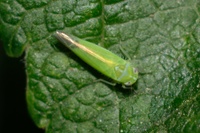 | Photo by: Scott Bolick
Forsyth Co.
Comment: | 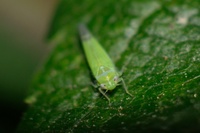 | Photo by: Scott Bolick
Forsyth Co.
Comment: |
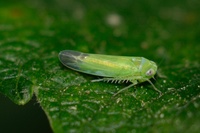 | Photo by: Scott Bolick
Forsyth Co.
Comment: | 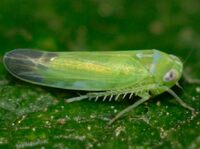 | Photo by: Scott Bolick
Forsyth Co.
Comment: |
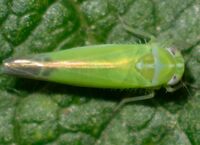 | Photo by: Scott Bolick
Forsyth Co.
Comment: | 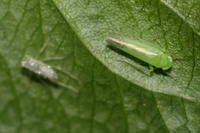 | Photo by: Scott Bolick
Forsyth Co.
Comment: |
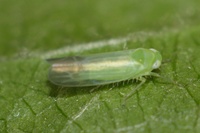 | Photo by: Scott Bolick
Forsyth Co.
Comment: | 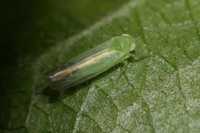 | Photo by: Scott Bolick
Forsyth Co.
Comment: |
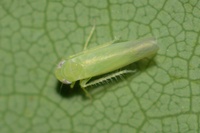 | Photo by: Scott Bolick
Forsyth Co.
Comment: | 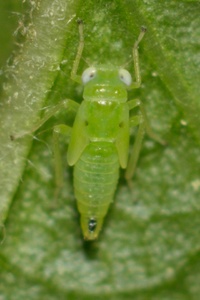 | Photo by: Scott Bolick
Forsyth Co.
Comment: |
|

 »
»