Moths of North Carolina
Home Page
Recent Entries
Recent Account Updates
County Searches
General Search
Submit a Public Record
Larval Hosts
References
Maps
Draft Checklists
Family Photo Gallery
Family PDFs
NC Biodiversity Project
Comments
Significant Contributors
Scientific Name:
Common Name:
Family (Alpha):
Choose a Family
ACROLEPIIDAE-False Diamondback Moths
ADELIDAE-Fairy moths
ALUCITIDAE-Many-plumed Moths
AMPHISBATIDAE-
ARGYRESTHIIDAE-Shiny Head-standing Moths
AUTOSTICHIDAE-Autostichid Moths
BATRACHEDRIDAE-Batrachedrid Moths
BEDELLIIDAE-Bedelliid Moths
BLASTOBASIDAE-Blastobasid Moths
BOMBYCIDAE-Silkworm Moths
BUCCULATRICIDAE-Ribbed Cocoon-maker Moths
CARPOSINIDAE-Fruitworm Moths
CHOREUTIDAE-Metalmark Moths
COLEOPHORIDAE-Casebearer Moths and Relatives
COSMOPTERIGIDAE-Cosmopterigid Moths
COSSIDAE-Carpenter Moths, Goat Moths
CRAMBIDAE-Grass Moths, Snout Moths
DEPRESSARIIDAE-
DREPANIDAE-Hook-tips and Thyatirid Moths
DRYADAULIDAE-
ELACHISTIDAE-Grassminer Moths and Relatives
EPERMENIIDAE-Fringe-tufted Moths
EPIPYROPIDAE-Planthopper Parasite Moths
EREBIDAE-Erebid Moths
ERIOCRANIIDAE-Eriocraniid Moths
EUTELIIDAE-Euteliid Moths
GALACTICIDAE-Galacticid Moths
GELECHIIDAE-Gelechiid Moths; Twirler Moths
GEOMETRIDAE-Geometer Moths, Loopers
GLYPHIDOCERIDAE-Glyphidocerid Moths
GLYPHIPTERIGIDAE-Sedge Moths
GRACILLARIIDAE-Leafblotch miner moths
HELIOZELIDAE-Shield bearer moths
HEPIALIDAE-Ghost or Swift Moths
HYBLAEIDAE-
INCURVARIIDAE-Leafcutter Moths
LASIOCAMPIDAE-Tent Caterpillar Moths, Lappet Moths
LECITHOCERIDAE-Long-horned Moths
LIMACODIDAE-Slug Caterpillar Moths
LIMOCODIDAE-
LYONETIIDAE-Lyonetiid Moths
MEGALOPYGIDAE-Flannel Moths
MICROPTERIGIDAE-Mandibulate Moths
MIMALLONIDAE-
MOMPHIDAE-Mompha Moths
NEPTICULIDAE-Minute leaf miners
NOCTUIDAE-Owlet Moths
NOLIDAE-
NOTODONTIDAE-Prominents
OECOPHORIDAE-Oecophorid Moths
OPOSTEGIDAE-
PELEOPODIDAE-
PLUTELLIDAE-Diamondback Moths
PRODOXIDAE-Yucca Moths
PSYCHIDAE-Bagworm Moths
PTEROPHORIDAE-Plume Moths
PYRALIDAE-Pyralid Moths, Snout Moths
SATURNIIDAE-Giant Silkworm Moths
SCHRECKENSTEINIIDAE-Schreckensteiniid Moths
SCYTHRIDIDAE-
SESIIDAE-Clearwing Moths
SPHINGIDAE-Sphinx Moths
THYATIRIDAE-
THYRIDIDAE-Window-winged Moths
TINEIDAE-Clothes moths
TISCHERIIDAE-Tischerid Moths
TORTRICIDAE-Leafroller Moths
URANIIDAE-
URODIDAE-Urodid Moths
XYLORYCTIDAE-
YPONOMEUTIDAE-Ermine Moths
YPSOLOPHIDAE-Ypsolophid Moths
ZYGAENIDAE-
«
Home
»
View
PDF
Blastobasidae Members:
Asaphocrita aphidiella
Asaphocrita busckiella
Asaphocrita plummerella
Asaphocrita unidentified species
Blastobasidae unidentified species
Blastobasis floridella
Blastobasis glandulella
Blastobasis pulchella
Blastobasis unidentified species
Calosima albapenella
Calosima argyrosplendella
Calosima dianella
Holcocera chalcofrontella
Holcocera immaculella
Holcocera new species 2
Holcocera unidentified species
Hypatopa new species 1
Hypatopa punctiferella
Hypatopa unidentified species
Hypatopa vestaliella
Pigritia murtfeldtella
Pigritia unidentified species
Calosima
Members:
Calosima albapenella
Calosima argyrosplendella
Calosima dianella
1 NC Records
Calosima argyrosplendella
Dietz, 1910 - No Common Name
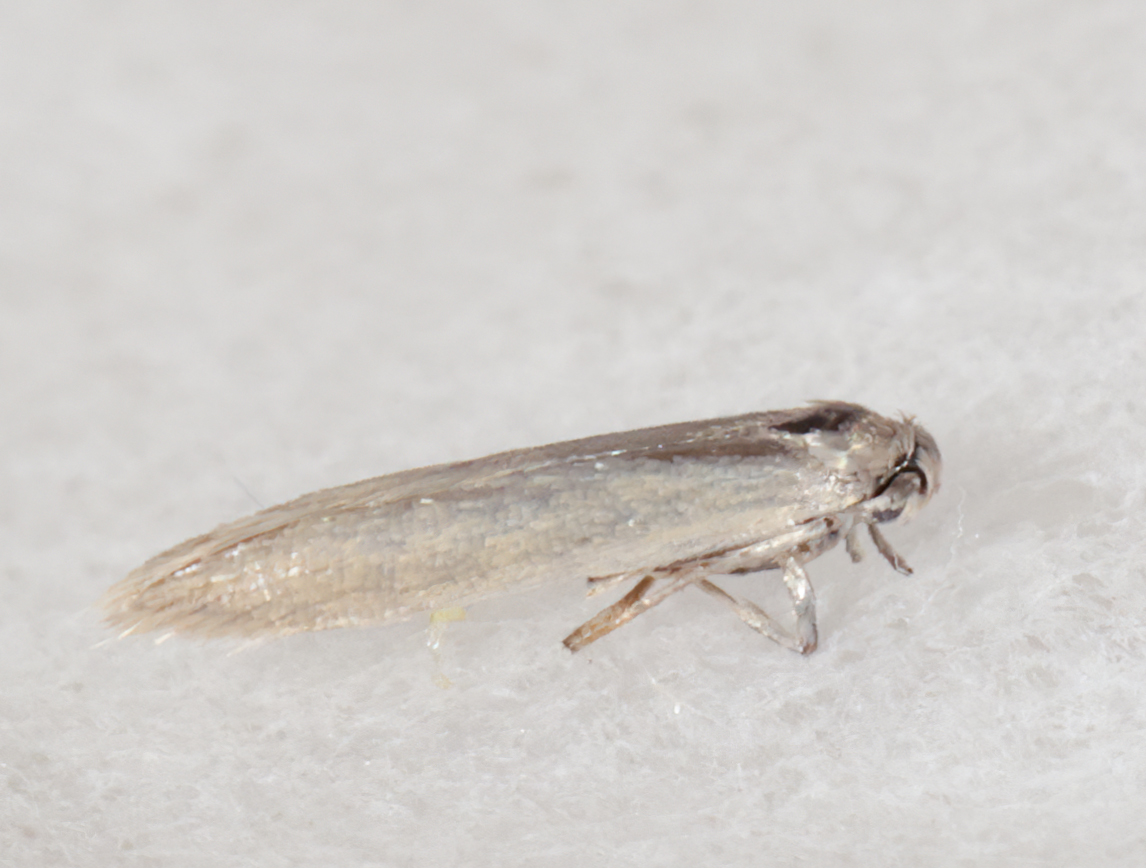
view caption
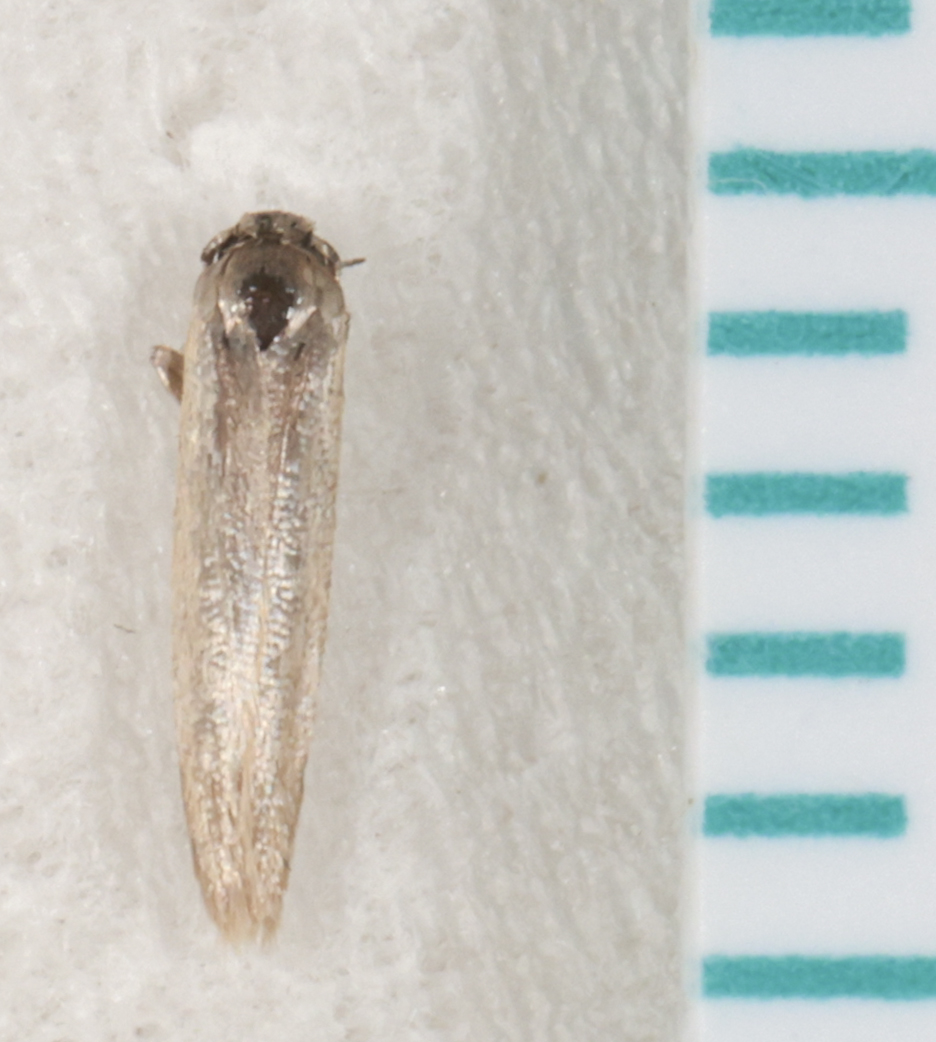
Specimen was dissected; FWL ca. 4 mm.
Taxonomy
Family:
Blastobasidae
Subfamily:
Blastobasinae
Tribe:
Holcocerini
P3 Number:
59a1757
MONA Number:
1168.00
Identification
Field Guide Descriptions:
Online Resources:
MPG
,
BugGuide
,
iNaturalist
,
Google
,
BAMONA
,
GBIF
,
BOLD
Technical Description, Adults:
Dietz (1910)
Adult Markings:
Calosima argyrosplendella
is a tiny whitish to tannish-white moth with narrow wings and recurved labial palps that are slender and extend above the head. The palps are white and dusted externally with brown scales, with the third joint nearly as long as the second one. The head and thorax vary from pearly-white to tannish-white, while the antenna is pale grayish-brown, with the basal joint white. The forewings and fringe vary from white to tannish-white. The hindwings and fringe are more or less concolorous with the forewings, while the legs are lustrous white and somewhat suffused with fuscous.
This species is easily confused with
C. dianella
, but is noticeably smaller and has somewhat narrower wings. It also usually lacks the faint clay-colored wash on the terminal third of the forewings as seen in
C. dianella
. Genitalia provide the best way to identify both species, but accurate measurements of forewing length is usually sufficient to identify these species, with
C. argyrosplendella
having a forewing length < 4.5 mm versus > 5.0 mm for
C. dianella
.
Wingspan:
10.5-12 mm (Dietz, 1910).
Genitalia and other structural photos
Male genitalia (in situ); Orange County; Jim Petranka.
Male genitalia; Orange County; Jim Petranka.
Male genitalia; Orange County; Jim Petranka.
Adult ID Requirements:
Identifiable only by close inspection of structural features or by DNA analysis.
Immatures and Development:
As of 2025, the larval life history is undocumented.
Distribution in North Carolina
Distribution:
Calosima argyrosplendella
is found in the eastern US, with the range extending along the Atlantic Seaboard from Maine southward to North Carolina, then as a southern distinct population in Florida. As of 2025, we have a single specimen that was found by John Petranka in Orange County in 2025.
County Map:
Clicking on a county returns the records for the species in that county.
Flight Dates:
High Mountains (HM) ≥ 4,000 ft.
Low Mountains (LM) < 4,000 ft.
Piedmont (Pd)
Coastal Plain (CP)
Click on graph to enlarge
Flight Comments:
The flight season is poorly documented due to the scarcity of records. Specimens have been taken from March through August in Florida, and from June through August elsewhere. Our one record as of 2025 was from 11 November.
Habitats and Life History
Habitats:
Our one record as of 2025 was from a semi-wooded residential neighborhood in the Piedmont.
Larval Host Plants:
The larval hosts are undocumented.
Observation Methods:
The adults are attracted to lights.
Wikipedia
Status in North Carolina
Natural Heritage Program Status:
Natural Heritage Program Ranks:
State Protection:
Comments:
Photo Gallery for
Calosima argyrosplendella
- No common name
Photos: 2
Recorded by: John Petranka on 2025-11-05
Orange Co.
Comment: Specimen was dissected (male); FWL ca. 4 mm.
Recorded by: John Petranka on 2025-11-05
Orange Co.
Comment: Specimen was dissected (male); FWL ca. 4 mm.
 »
»