Moths of North Carolina
Home Page
Recent Entries
Recent Account Updates
County Searches
General Search
Submit a Public Record
Larval Hosts
References
Maps
Draft Checklists
Family Photo Gallery
Family PDFs
NC Biodiversity Project
Comments
Significant Contributors
Scientific Name:
Common Name:
Family (Alpha):
Choose a Family
ACROLEPIIDAE-False Diamondback Moths
ADELIDAE-Fairy moths
ALUCITIDAE-Many-plumed Moths
AMPHISBATIDAE-
ARGYRESTHIIDAE-Shiny Head-standing Moths
AUTOSTICHIDAE-Autostichid Moths
BATRACHEDRIDAE-Batrachedrid Moths
BEDELLIIDAE-Bedelliid Moths
BLASTOBASIDAE-Blastobasid Moths
BOMBYCIDAE-Silkworm Moths
BUCCULATRICIDAE-Ribbed Cocoon-maker Moths
CARPOSINIDAE-Fruitworm Moths
CHOREUTIDAE-Metalmark Moths
COLEOPHORIDAE-Casebearer Moths and Relatives
COSMOPTERIGIDAE-Cosmopterigid Moths
COSSIDAE-Carpenter Moths, Goat Moths
CRAMBIDAE-Grass Moths, Snout Moths
DEPRESSARIIDAE-
DREPANIDAE-Hook-tips and Thyatirid Moths
DRYADAULIDAE-
ELACHISTIDAE-Grassminer Moths and Relatives
EPERMENIIDAE-Fringe-tufted Moths
EPIPYROPIDAE-Planthopper Parasite Moths
EREBIDAE-Erebid Moths
ERIOCRANIIDAE-Eriocraniid Moths
EUTELIIDAE-Euteliid Moths
GALACTICIDAE-Galacticid Moths
GELECHIIDAE-Gelechiid Moths; Twirler Moths
GEOMETRIDAE-Geometer Moths, Loopers
GLYPHIDOCERIDAE-Glyphidocerid Moths
GLYPHIPTERIGIDAE-Sedge Moths
GRACILLARIIDAE-Leafblotch miner moths
HELIOZELIDAE-Shield bearer moths
HEPIALIDAE-Ghost or Swift Moths
HYBLAEIDAE-
INCURVARIIDAE-Leafcutter Moths
LASIOCAMPIDAE-Tent Caterpillar Moths, Lappet Moths
LECITHOCERIDAE-Long-horned Moths
LIMACODIDAE-Slug Caterpillar Moths
LIMOCODIDAE-
LYONETIIDAE-Lyonetiid Moths
MEGALOPYGIDAE-Flannel Moths
MICROPTERIGIDAE-Mandibulate Moths
MIMALLONIDAE-
MOMPHIDAE-Mompha Moths
NEPTICULIDAE-Minute leaf miners
NOCTUIDAE-Owlet Moths
NOLIDAE-
NOTODONTIDAE-Prominents
OECOPHORIDAE-Oecophorid Moths
OPOSTEGIDAE-
PELEOPODIDAE-
PLUTELLIDAE-Diamondback Moths
PRODOXIDAE-Yucca Moths
PSYCHIDAE-Bagworm Moths
PTEROPHORIDAE-Plume Moths
PYRALIDAE-Pyralid Moths, Snout Moths
SATURNIIDAE-Giant Silkworm Moths
SCHRECKENSTEINIIDAE-Schreckensteiniid Moths
SCYTHRIDIDAE-
SESIIDAE-Clearwing Moths
SPHINGIDAE-Sphinx Moths
THYATIRIDAE-
THYRIDIDAE-Window-winged Moths
TINEIDAE-Clothes moths
TISCHERIIDAE-Tischerid Moths
TORTRICIDAE-Leafroller Moths
URANIIDAE-
URODIDAE-Urodid Moths
XYLORYCTIDAE-
YPONOMEUTIDAE-Ermine Moths
YPSOLOPHIDAE-Ypsolophid Moths
ZYGAENIDAE-
«
Home
»
View
PDF
Cosmopterigidae Members:
Anatrachyntis badia
Anatrachyntis rileyi
Anatrachyntis unidentified species
Cosmopterix astrapias
Cosmopterix clandestinella
Cosmopterix clemensella
Cosmopterix dapifera
Cosmopterix delicatella
Cosmopterix floridanella
Cosmopterix gemmiferella
Cosmopterix lespedezae
Cosmopterix magophila
Cosmopterix nitens
Cosmopterix pulchrimella
Cosmopterix scirpicola
Cosmopterix teligera
Cosmopterix thelxinoe
Cosmopterix unidentified species
Eralea albalineella
Eteobalea sexnotella
Eteobalea wyattella
Euclemensia bassettella
Limnaecia phragmitella
Melanocinclis lineigera
Melanocinclis sparsa
Melanocinclis unidentified species
Nepotula secura
Perimede erransella
Perimede ricina
Perimede unidentified species
Periploca unidentified species
Pyroderces albistrigella
Stilbosis quadricustatella
Stilbosis tesquella
Stilbosis unidentified species
Stilbosis venifica
Tanygona lignicolorella
Triclonella pergandeella
Walshia elegans
Walshia floridensis
Walshia miscecolorella
Walshia new species nr. elegans
Walshia particornella
Walshia similis
Walshia unidentified species
Walshia [asymmetrica]
Anatrachyntis
Members:
Anatrachyntis badia
Anatrachyntis rileyi
Anatrachyntis unidentified species
7 NC Records
Anatrachyntis badia
(Hodges, 1962) - Florida Pink Scavenger Moth
Taxonomy
Superfamily:
Gelechioidea
Family:
Cosmopterigidae
Subfamily:
Cosmopteriginae
P3 Number:
59a0399
MONA Number:
1513.00
Comments:
Pyroderces
is a genus of small comet moths that are primarily found in tropical, subtropical and warm temperate parts of the world. They are well represented in Australia and the Old World tropics, and there are three species that have been traditionally recognized in North America. Hodges (1978) placed our three species in the genus
Pyroderces
, but later changed these to
Sathrobrota
(Hodges, 1962). Europeans usually place these in the genus
Anatrachyntis
, and current taxonomy also treats the North American species as being in this genus.
Identification
Field Guide Descriptions:
Online Resources:
MPG
,
BugGuide
,
iNaturalist
,
Google
,
BAMONA
,
GBIF
,
BOLD
Technical Description, Adults:
Hodges (1982)
Technical Description, Immature Stages:
Adamski et al. (2006)
Adult Markings:
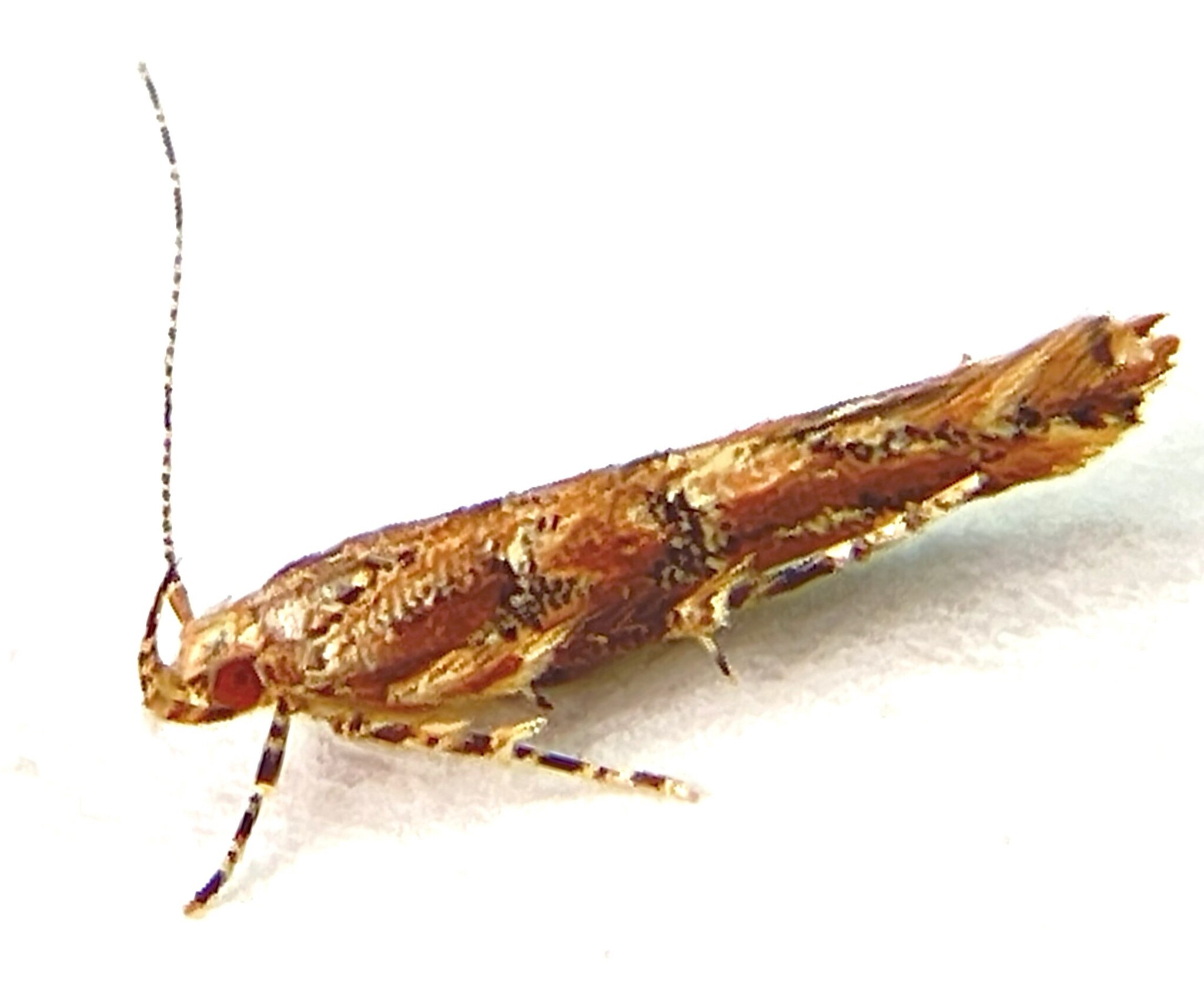
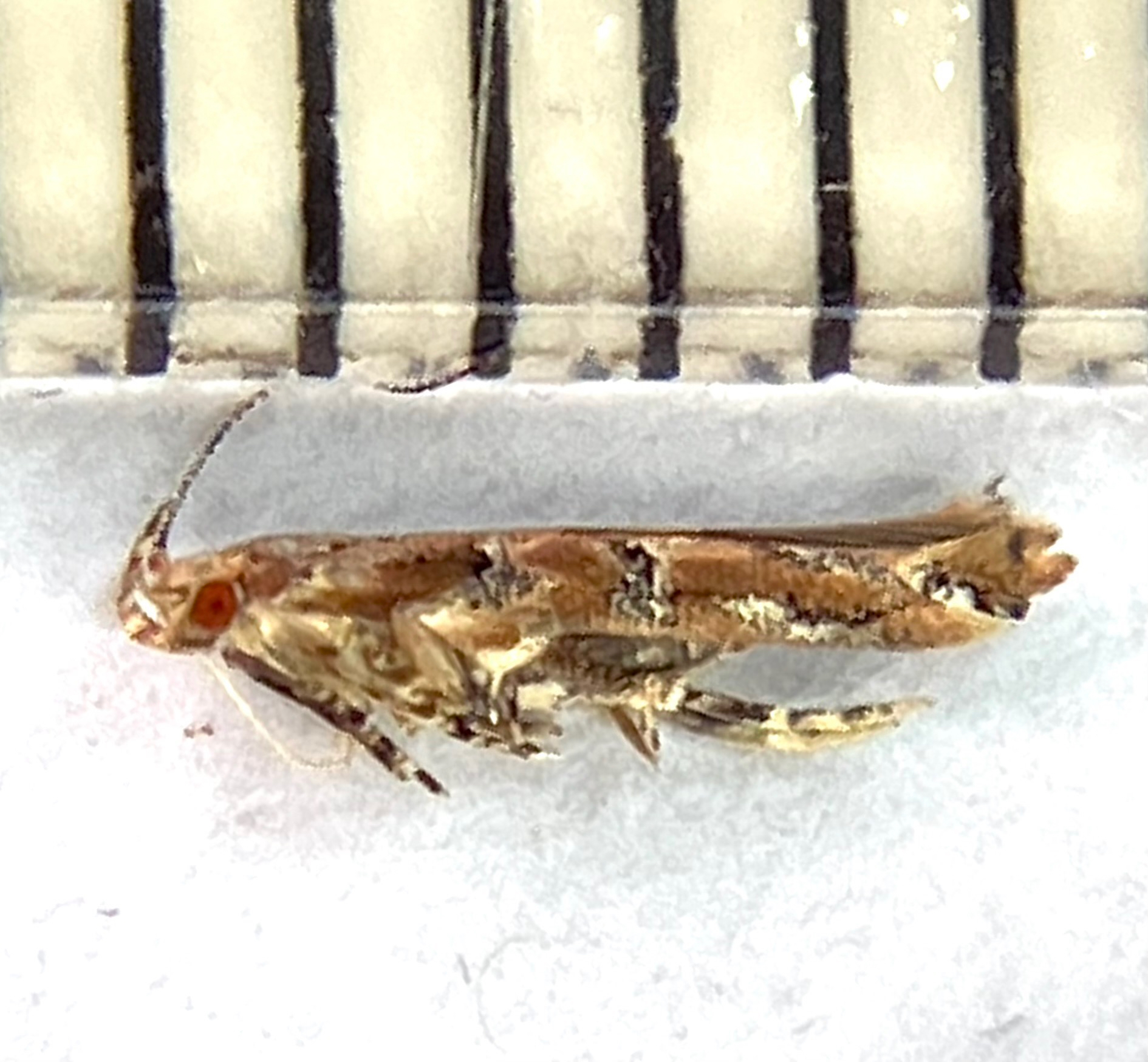
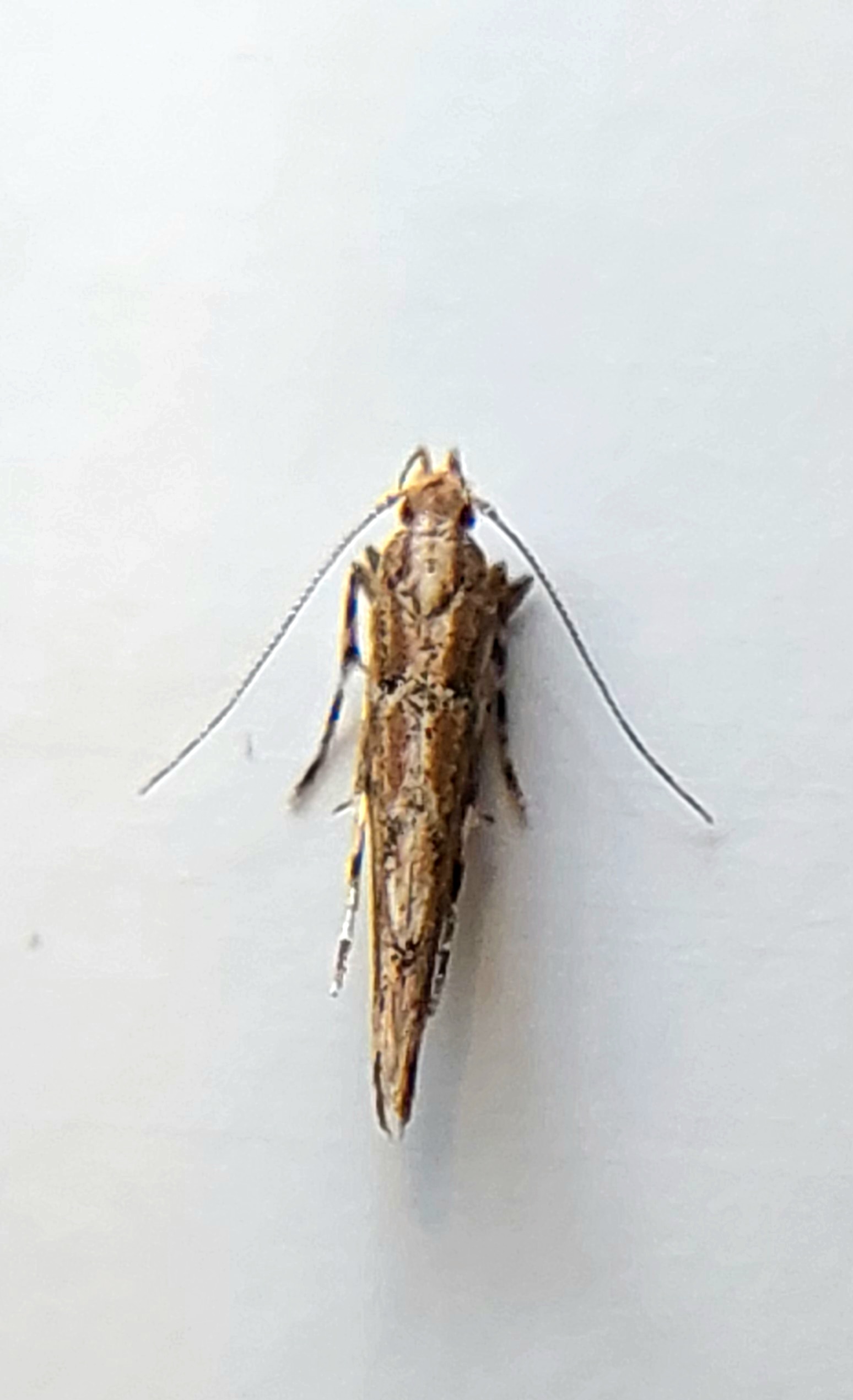
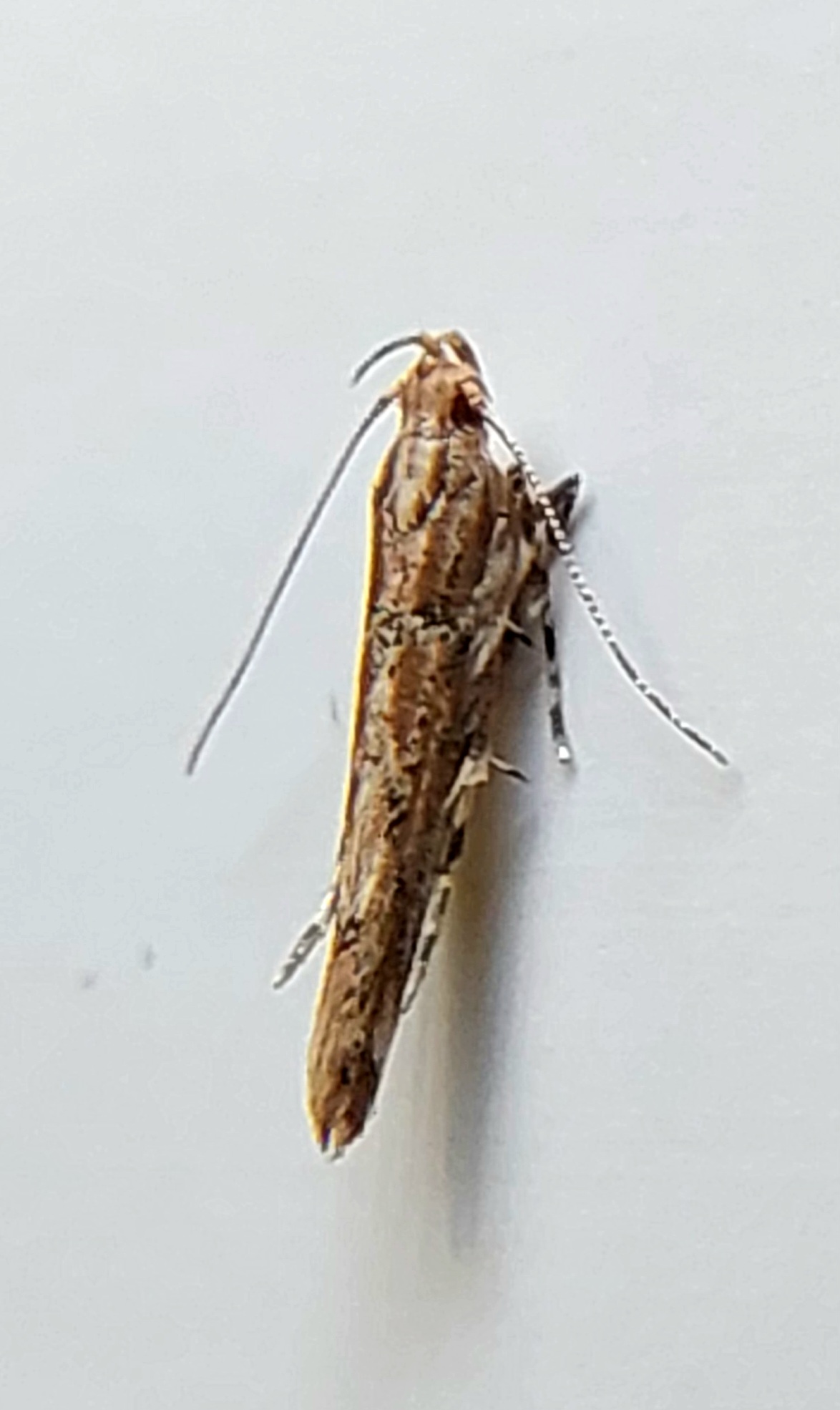
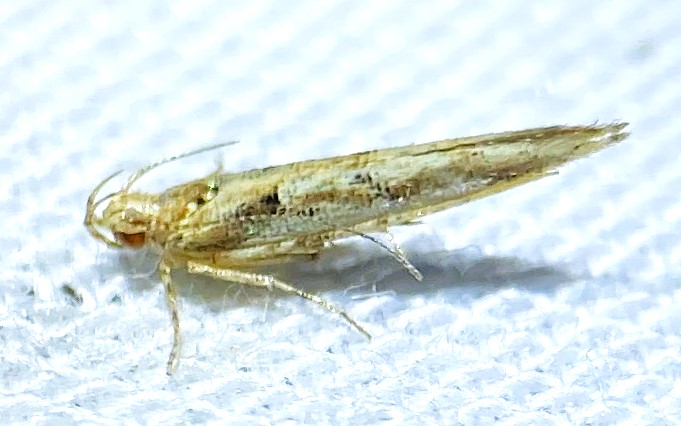
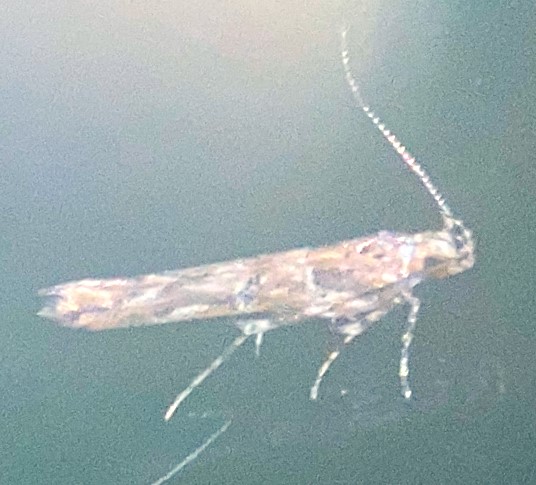
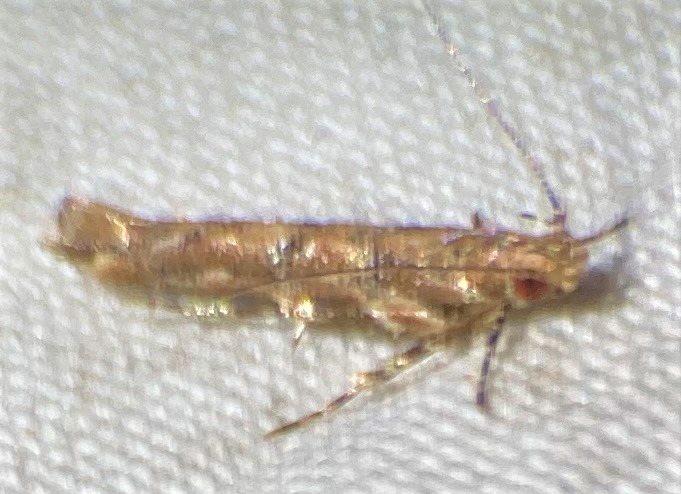
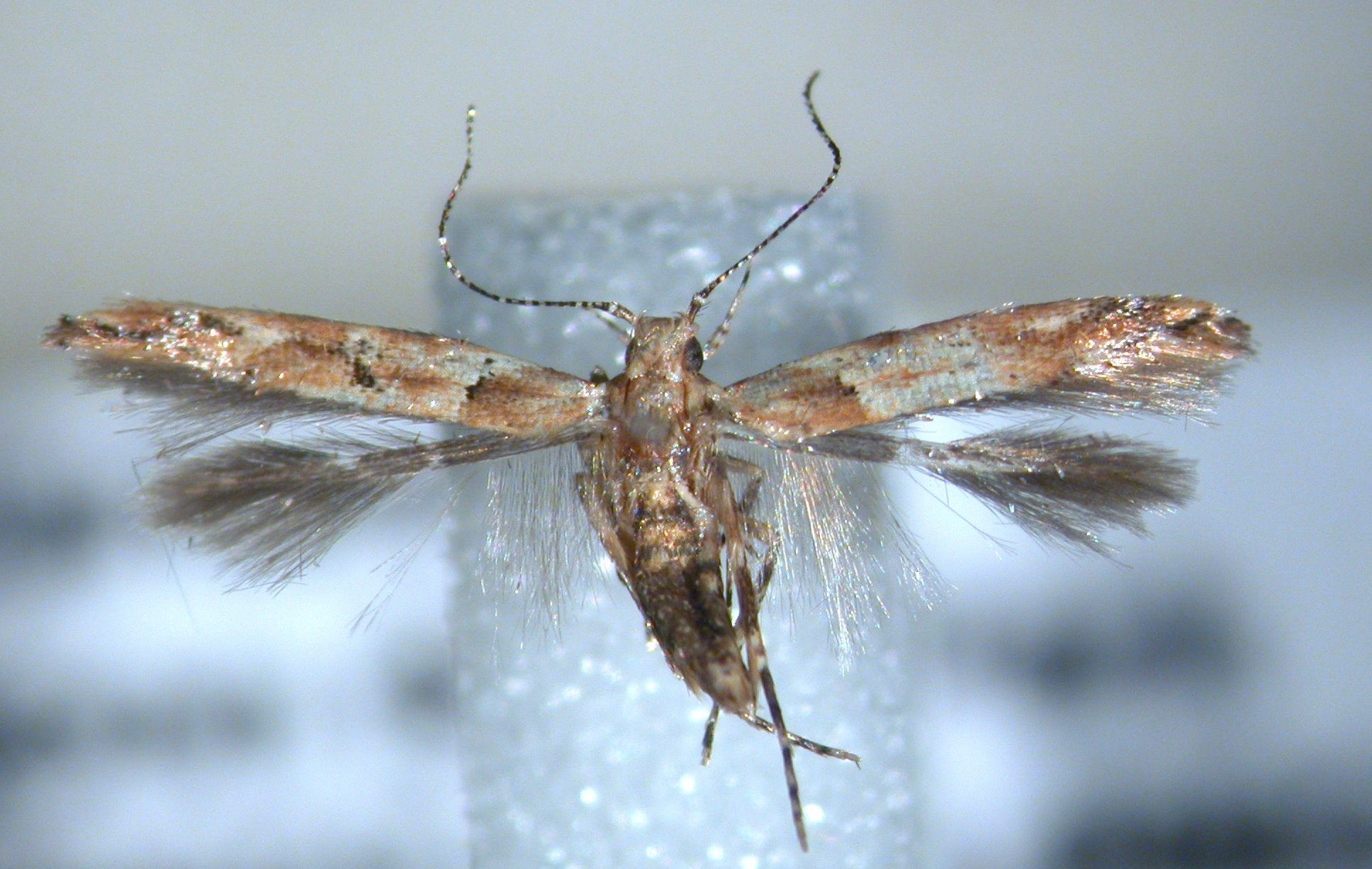
The following description is based mostly on that of Hodges (1962). The labial palp is white with a tinge of buff, with the second segment with a tawny band on outer surface at one-fifth and three-fifths, along with a tawny apex. The third segment has three brown annulations, with one post-basal, one medial, and one pre-apical. The antenna has a buff-white scape with tawny dusting on the dorsal surface, and a white shaft with dark-brown annulations. The apical fourth has three longer, dark segments with white and dark-brown annulations in between. The vertex, thorax and forewing have an overall pale-tawny coloration, with the latter having rather complex and variable patterning. Specimens typically have salt-and-peppery striae due to black tipped scales preceded or followed by buff-white scales. These include 1) a sub-basal transverse band or patch at around one-fourth that does not reach the costa or inner margin, 2) a similar transverse band or patch in the center of the wing at one-half, 3) a subcostal line from three-fifths to four-fifths, and 4) a posteriorly-oblique ciliary line that extends from the tornus to the apex. The cilia are gray-brown and the hindwings fuscous.
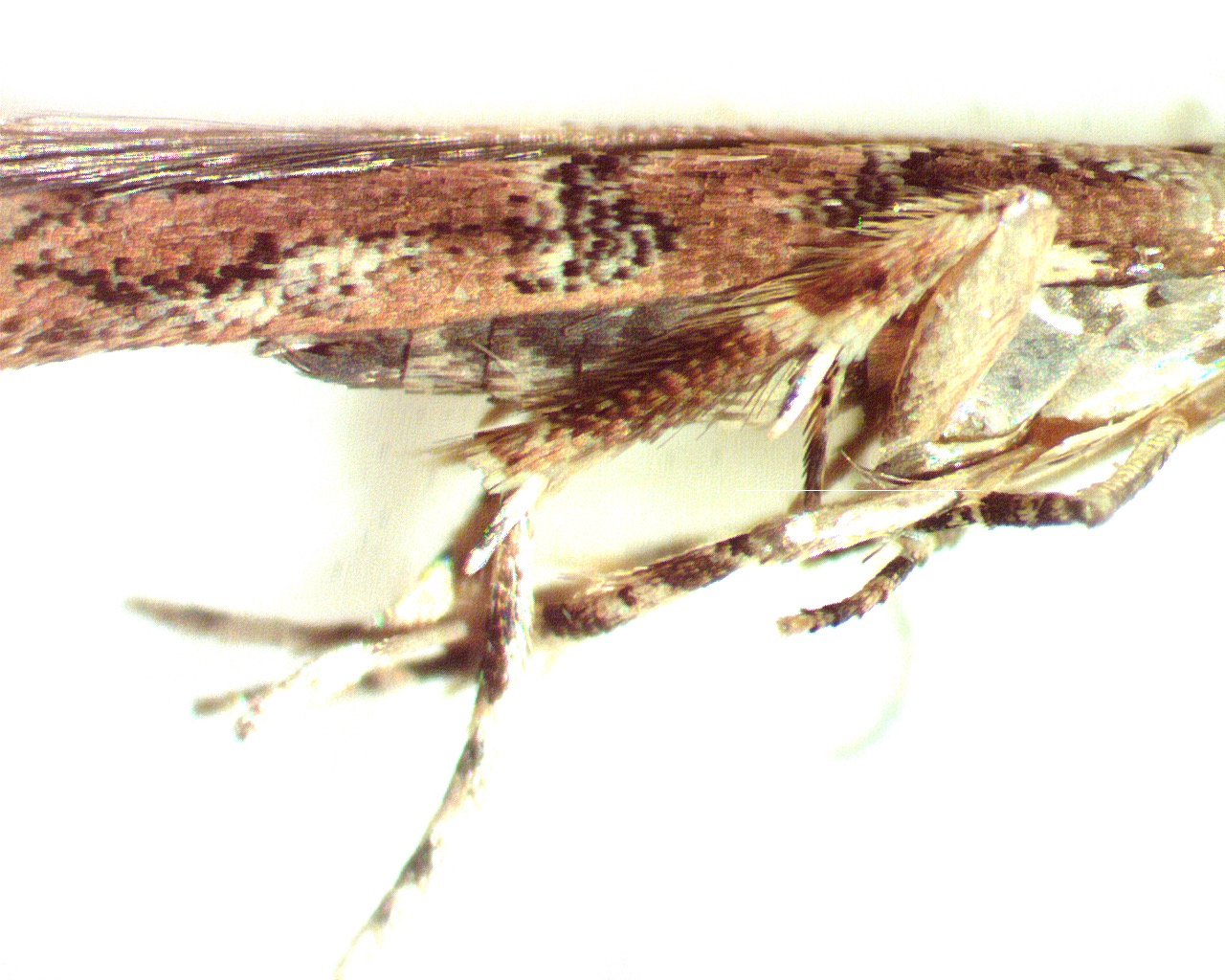
The hind tibia is tawny on the basal two-fifths of the outer surface and has an oblique white streak from the middle tibial spur. The distal half of the hind tibia is dark-brown, with the apex pale buff-white and the tibial spurs white or with black at the middle (see structural images below). The tarsal segments are dark-brown basally and pale apically. This species is very similar to
P. rileyi
, and is most reliably identified using genitalia.
Wingspan:
7.5-11.5 (Hodges, 1962).
Adult Structural Features:
Hodges (1962) has detailed descriptions and illustrations of the male genitalia. Also, see images below for North Carolina specimens.
Genitalia and other structural photos
Female genitalia; Mecklenburg County; Jim Petranka.
Female genitalia; Mecklenburg County; Jim Petranka.
Male genitalia; Mecklenburg County; Jim Petranka.
Male genitalia; Mecklenburg County; Jim Petranka.
Male genitalia; Mecklenburg County; Jim Petranka.
Female genitalia; Mecklenburg County; Jim Petranka.
Female genitalia; Mecklenburg County; Jim Petranka.
Color pattern of the hind tibia; Mecklenburg County; Jim Petranka.
Adult ID Requirements:
Identifiable from photos showing hindwings, abdomen, or other specialized views [e.g., frons, palps, antennae, undersides].
Immatures and Development:
The larvae are primarily scavengers or detritivores that feed on a variety of organic material. Adamski et al. (2006) observed them feeding on the live flower heads of
Sorgum bicolor
in Louisiana and provided detailed descriptions of the larvae and pupae. The last instar larvae were 6.0-8.5 mm in length (mean = 7.4 mm) and had pale brownish-gray bodies with a trace of pink in some individuals. The L-group pinaculum was slightly darker than the anal plate, and the pinacula slightly darker than the body, while the thoracic legs were concolorous with the body. The authors were unable to find any diagnostic characters that would separate these from
A. rileyi
.
Larvae ID Requirements:
Identifiable only through rearing to adulthood.
Distribution in North Carolina
Distribution:
Anatrachyntis badia
is found in relatively warm climates and occurs in the US as two groups: one in central and southern California that may have been introduced, and the second in the southeastern US from eastern Texas eastward through the Gulf Coast states to southern Florida, and northward to the Carolinas. As of 2025, our records are all from the southern part of the state, including the Charlotte area and in coastal communities.
County Map:
Clicking on a county returns the records for the species in that county.
Flight Dates:
High Mountains (HM) ≥ 4,000 ft.
Low Mountains (LM) < 4,000 ft.
Piedmont (Pd)
Coastal Plain (CP)
Click on graph to enlarge
Flight Comments:
Local populations are multivoltine and can be found year-round in Florida and Alabama. As of 2025, our records extend from early-May through mid-November.
Habitats and Life History
Habitats:
Local populations are generally associated with areas where sources of food such as decaying vegetation, citrus fruits or flower heads are available (see below).
Larval Host Plants:
The larvae are mostly scavengers and feed on a variety of dried fruits and plant material. They also are known to feed on the live seed heads of Sorgum (Adamski et al., 2006). Hodges (1962) noted that many of the literature records for
A. rileyi
and
A. badia
are confounded due to misidentification. He reported them to use pine cones infested by
Dioryctria
moth larvae, rust-infected cones of
Pinus elliottii
, the cones of
P. palustris
, the pods of
Cassia occidentalis
, the dried fruits of peaches and loquat, limes, grapefruit, bananas, cabbage, the blossoms of coconut, and elm leaves. Heppner (2007) reports that larvae feed on scale insects, but also lists elm, pine, and peach. Ken Kneidel has recent reared several adults from dried, ornamental Zinnia seed heads. The larvae were presumably feeding on developing or mature seeds. -
View
Observation Methods:
The adults are attracted to lights and can be reared from dried seed heads, pine cones and other sources of concentrated organic matter.
Wikipedia
Status in North Carolina
Natural Heritage Program Status:
Natural Heritage Program Ranks:
GNR [S2S4]
State Protection:
Comments:
Photo Gallery for
Anatrachyntis badia
- Florida Pink Scavenger Moth
Photos: 11
Recorded by: Ken Kneidel on 2025-11-20
Mecklenburg Co.
Comment: Emerged from a collection of Zinnia flower heads (see genitalia images).
Recorded by: Ken Kneidel on 2025-11-20
Mecklenburg Co.
Comment:
Recorded by: Ken Kneidel on 2025-11-20
Mecklenburg Co.
Comment:
Recorded by: Ken Kneidel on 2025-11-20
Mecklenburg Co.
Comment:
Recorded by: Mark Basinger on 2025-07-08
Brunswick Co.
Comment:
Recorded by: Mark Basinger on 2025-07-08
Brunswick Co.
Comment:
Recorded by: Dean Furbish and Joy Wiggins on 2025-05-02
Pender Co.
Comment:
Recorded by: R. Newman on 2023-11-18
Carteret Co.
Comment:
Recorded by: Dean Furbish and Joy Wiggins on 2023-10-27
Pender Co.
Comment:
Recorded by: Dean Furbish on 2023-05-04
Pender Co.
Comment:
Recorded by: J.B. Sullivan on 2020-08-16
Carteret Co.
Comment:
 »
»