Moths of North Carolina
Scientific Name:
Common Name:
Family (Alpha):
« Home »
View PDFGelechiidae Members: Exoteleia Members: 25 NC Records

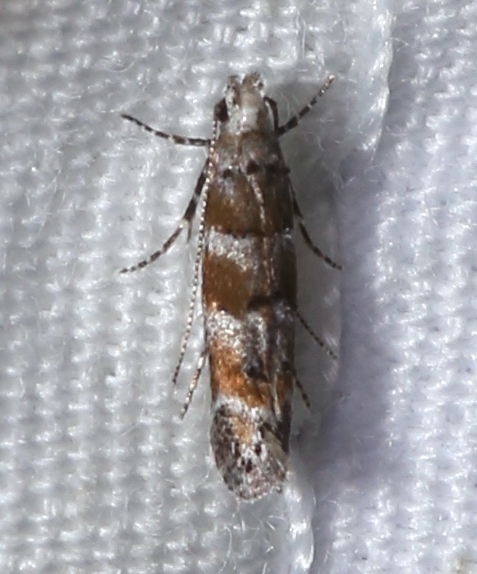
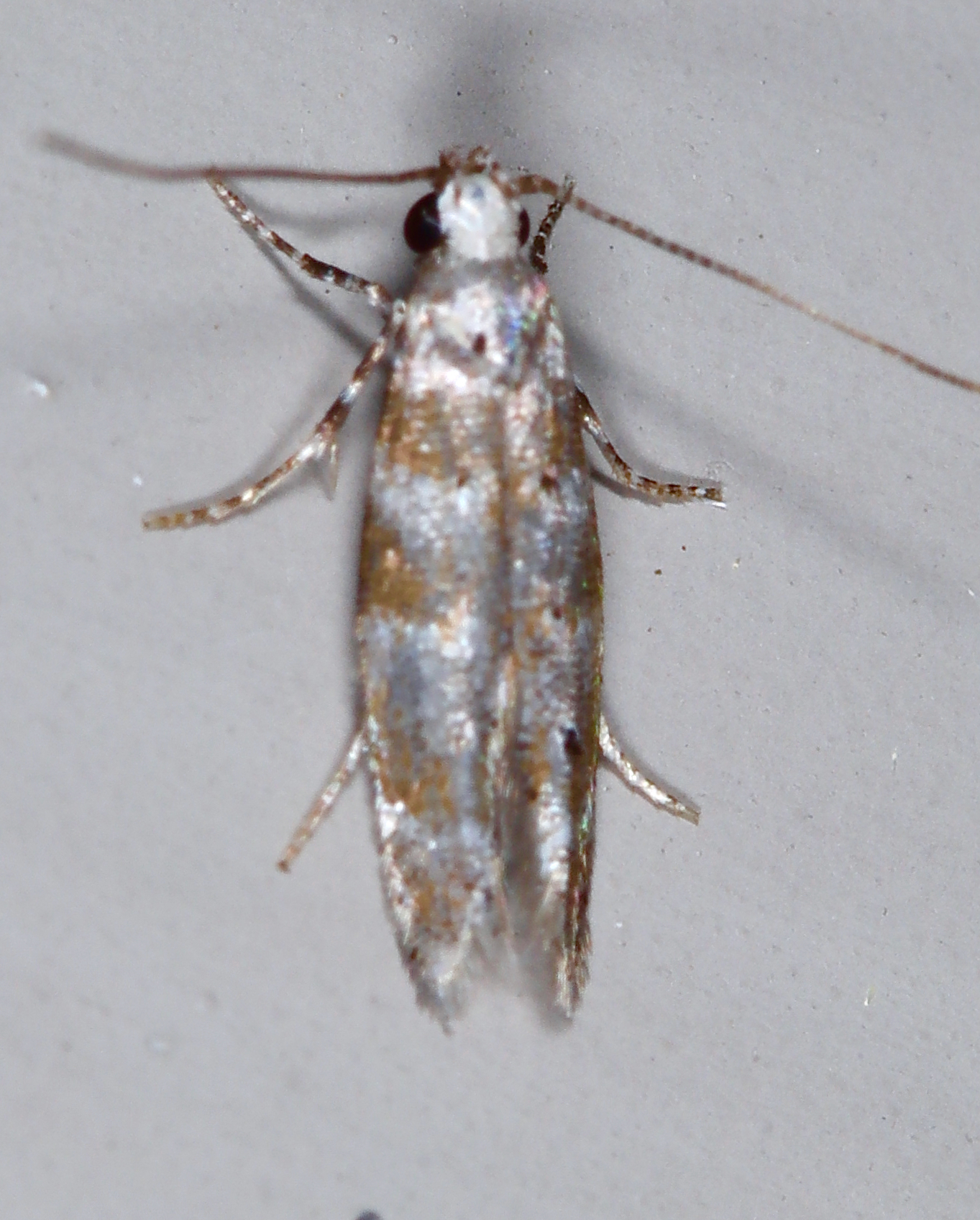
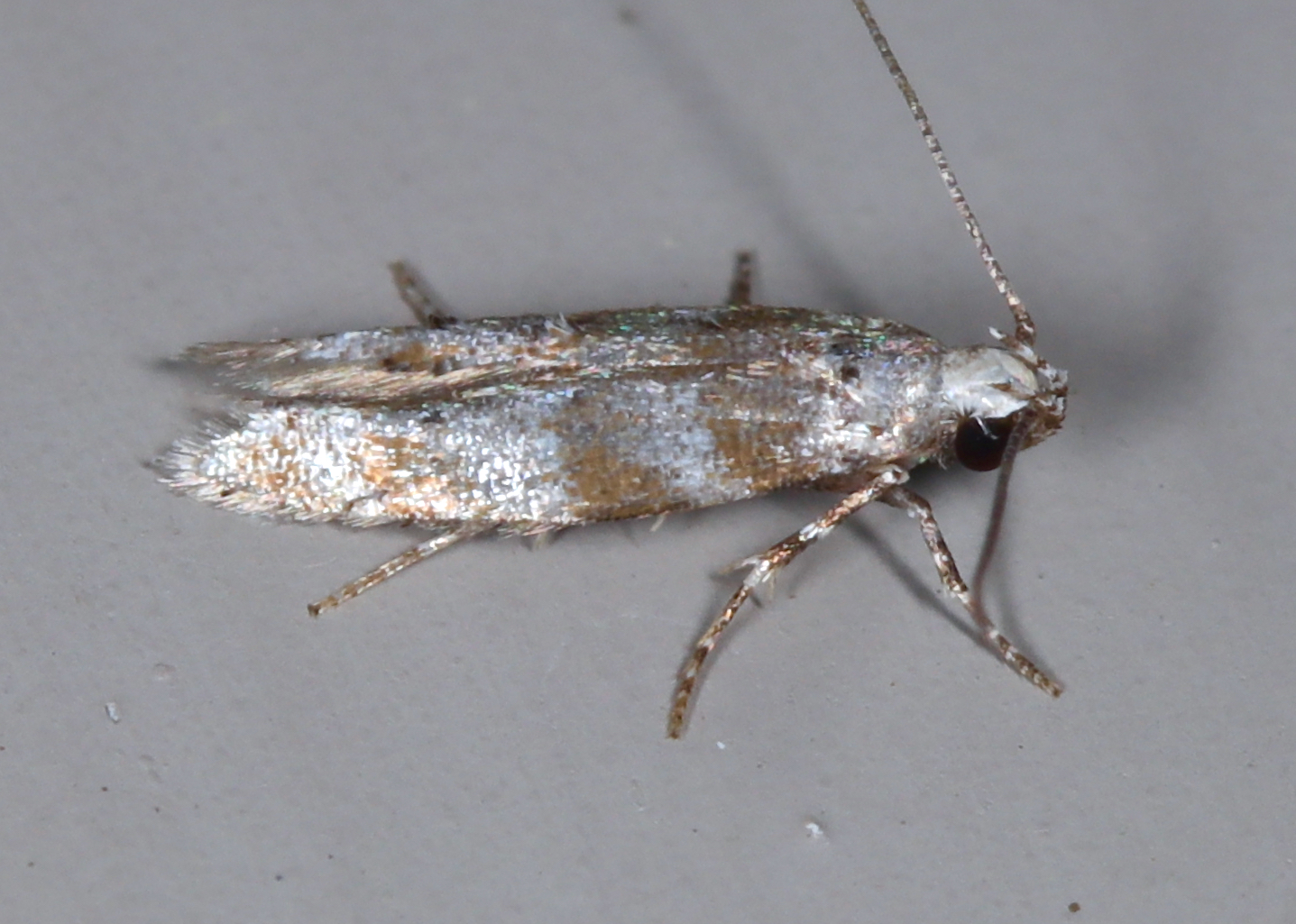
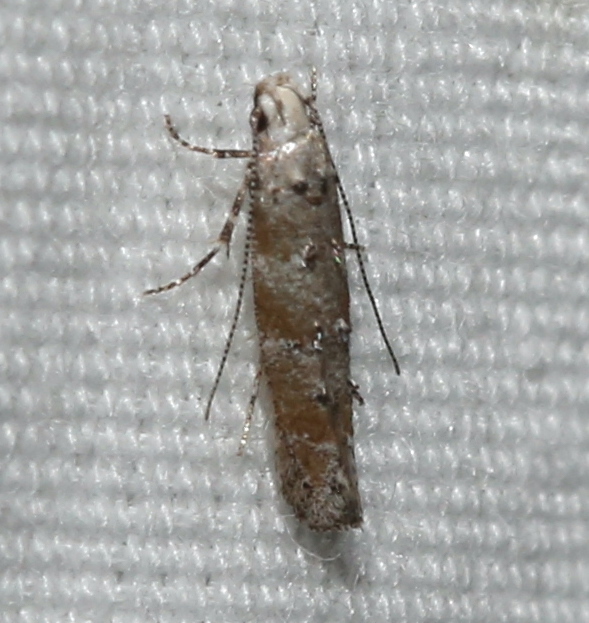
Exoteleia chillcotti Freeman, 1963 - Chilcott's Coleotechnites Moth


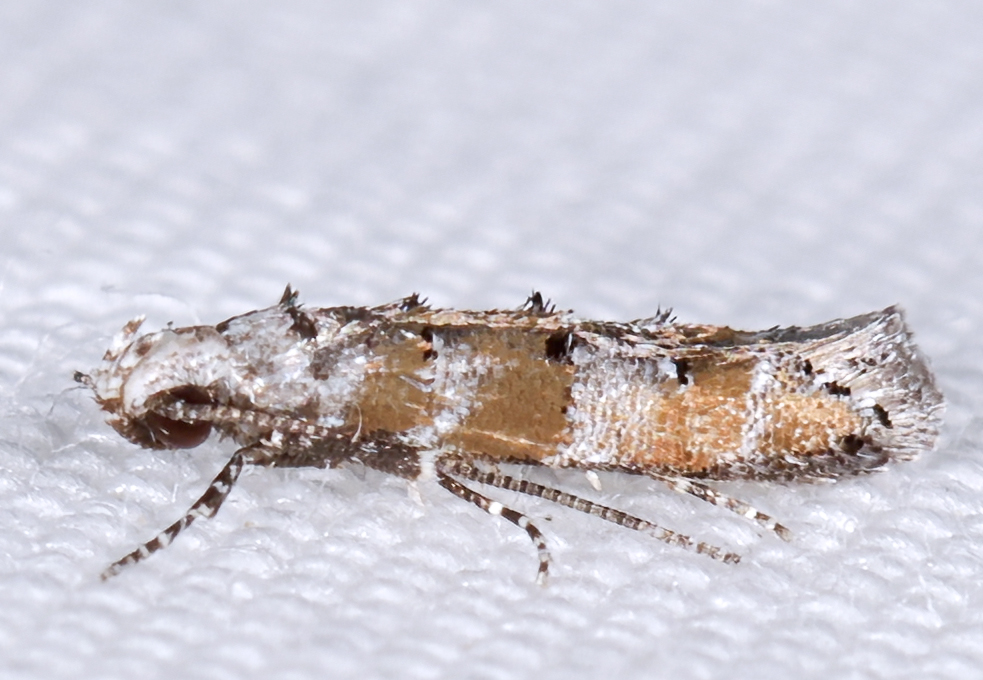
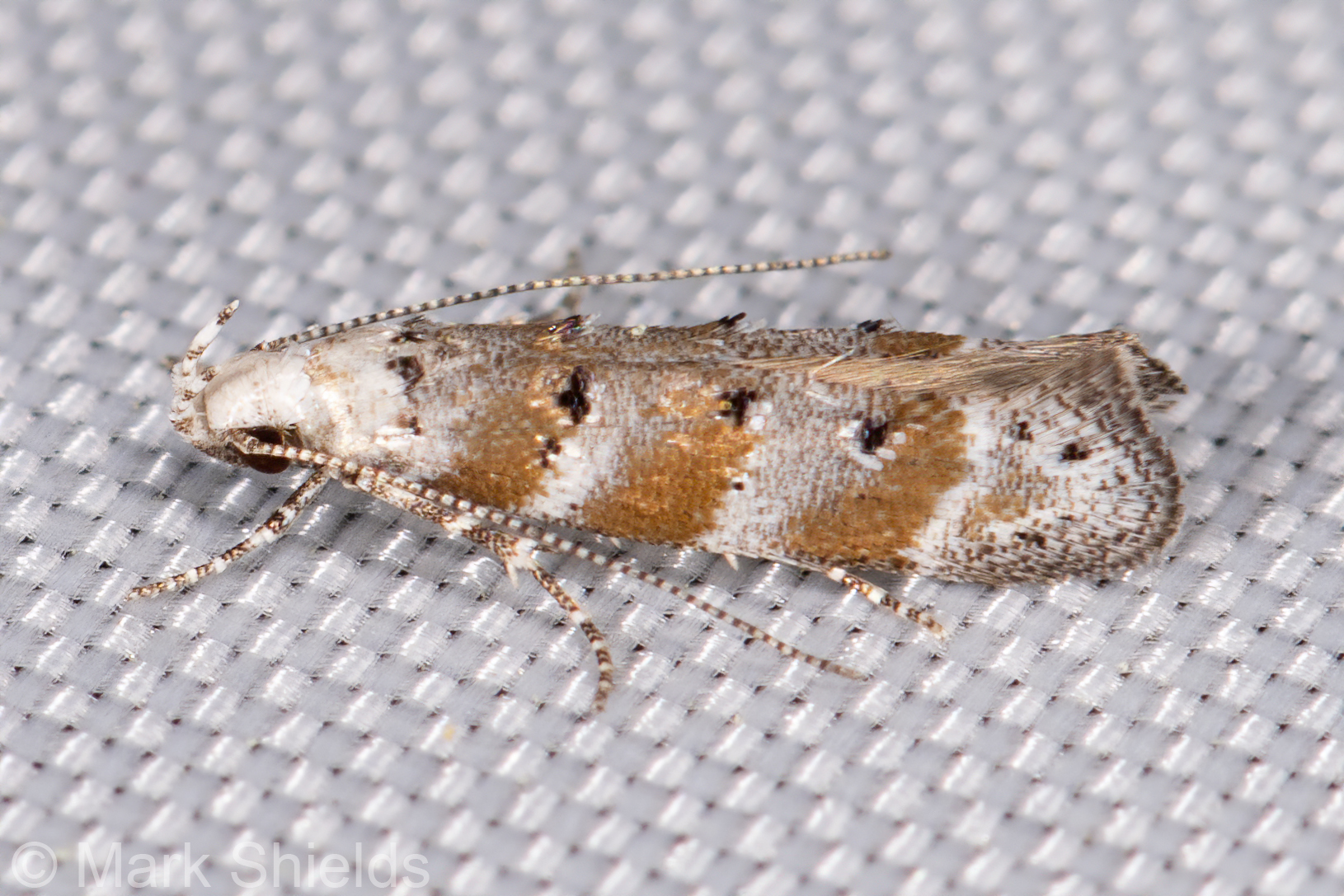
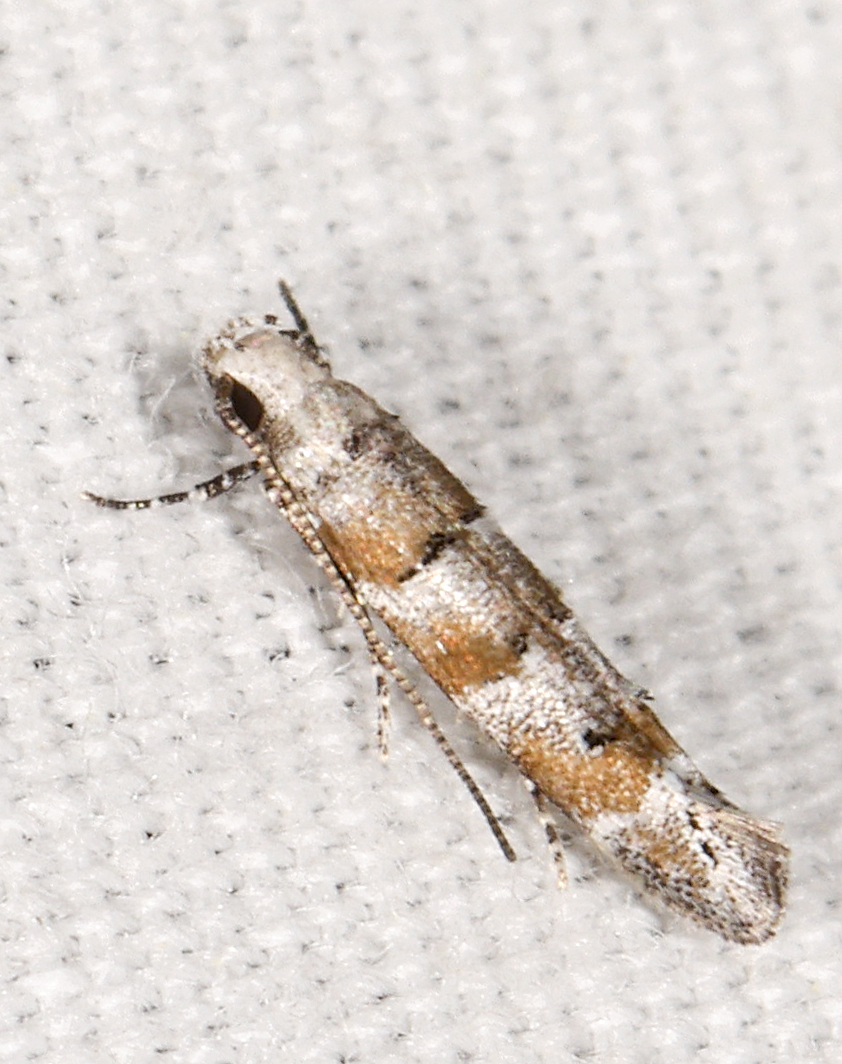
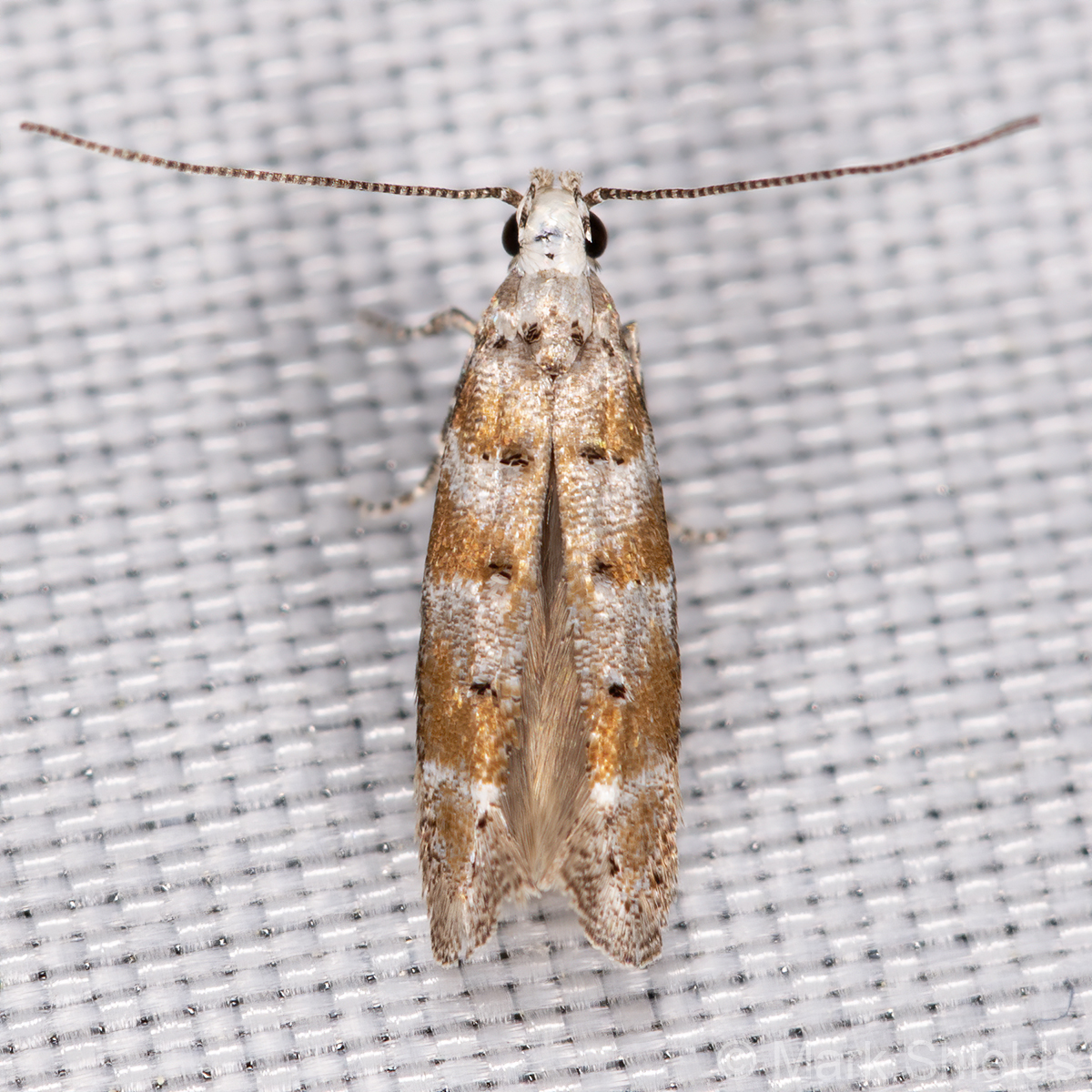
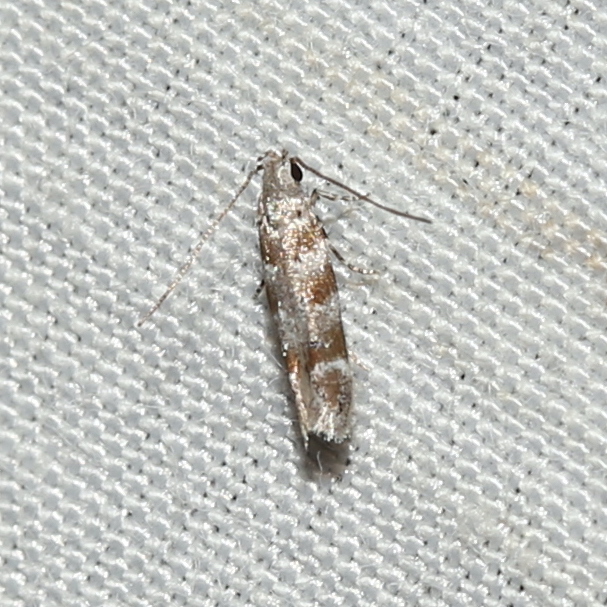
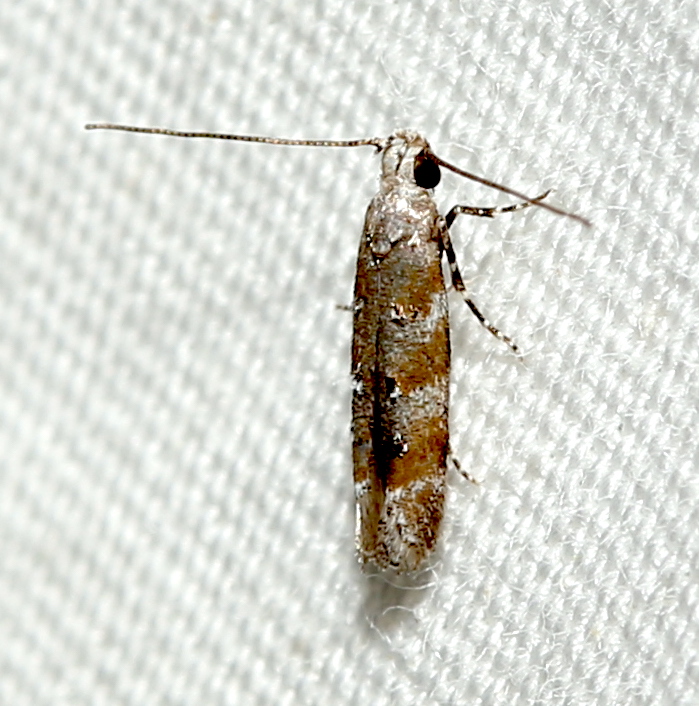
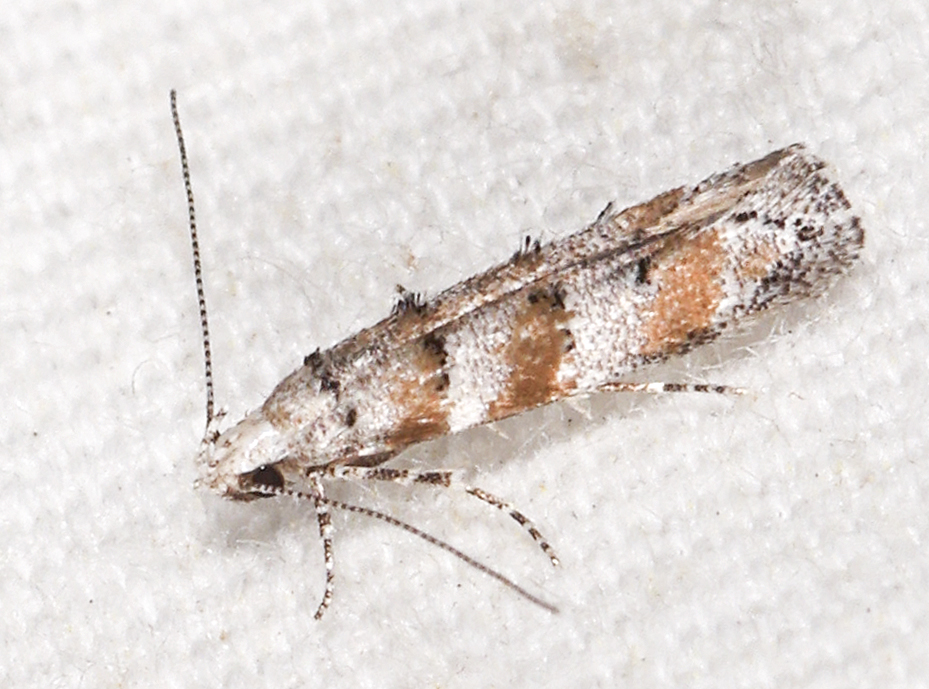
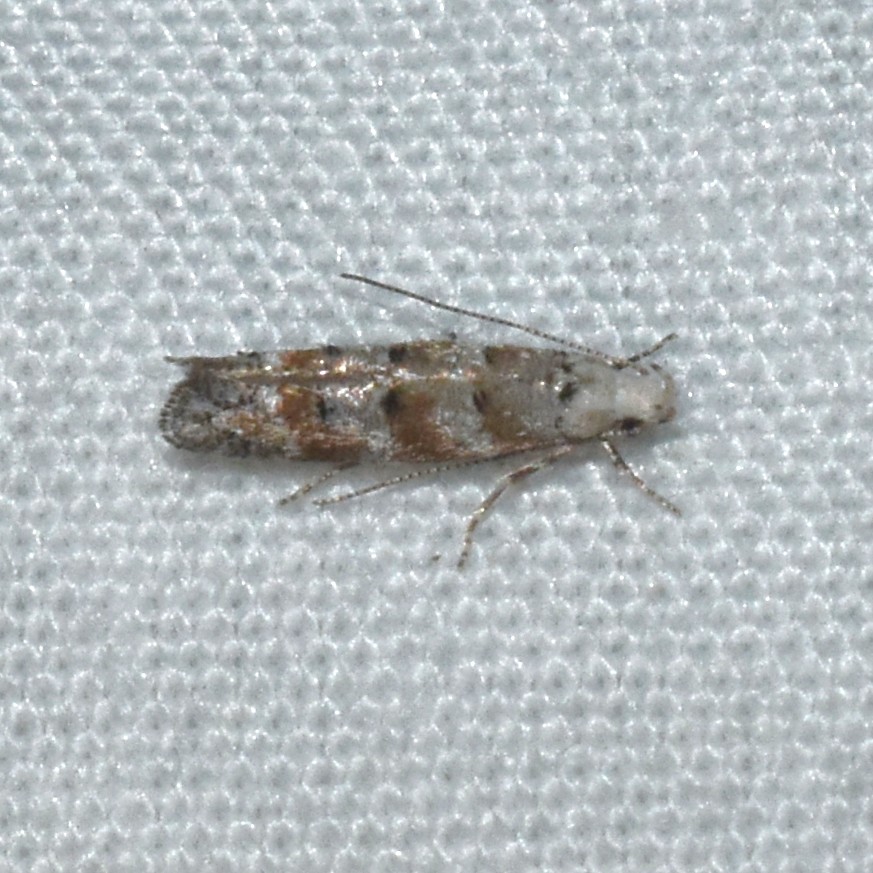
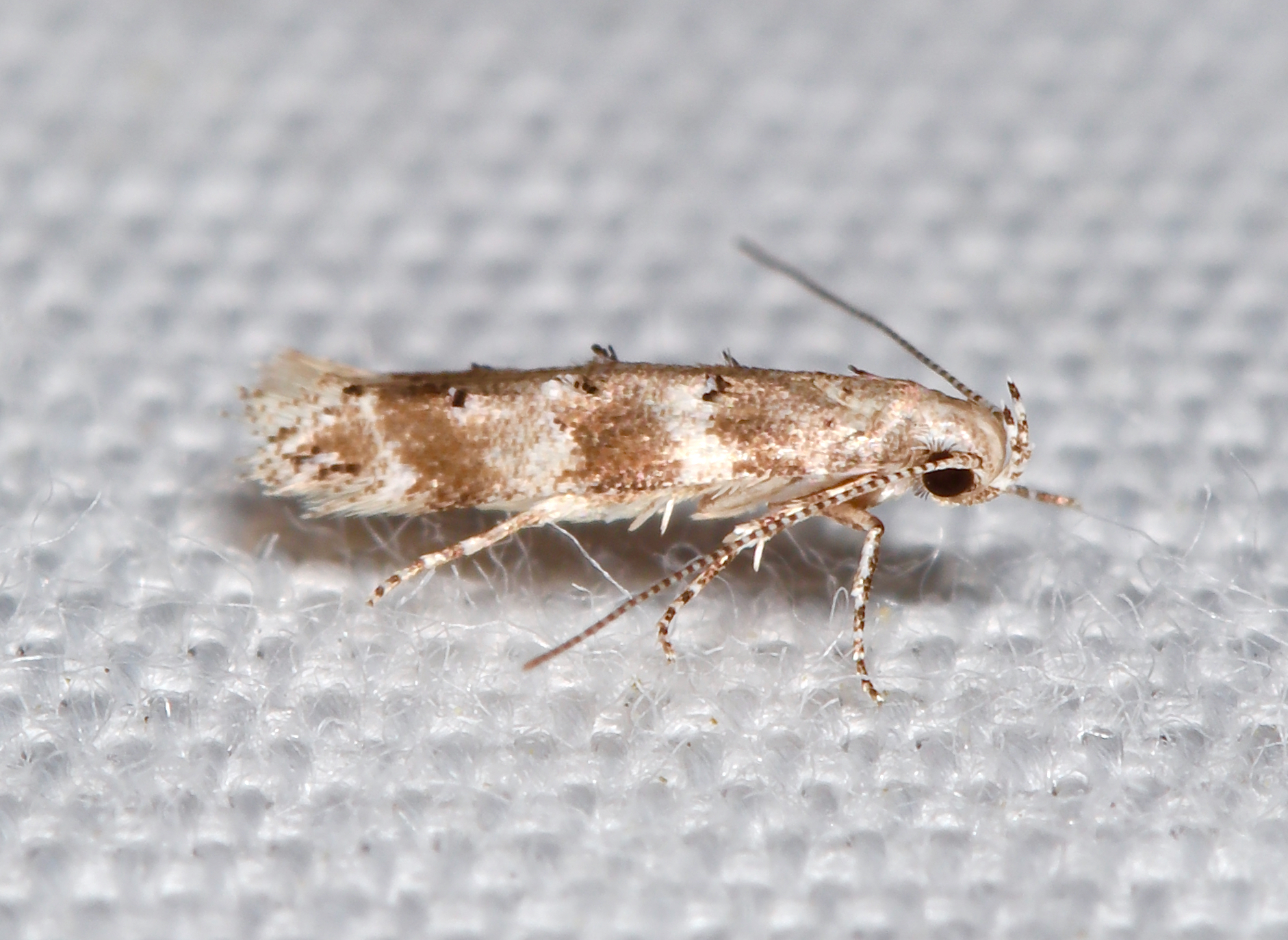
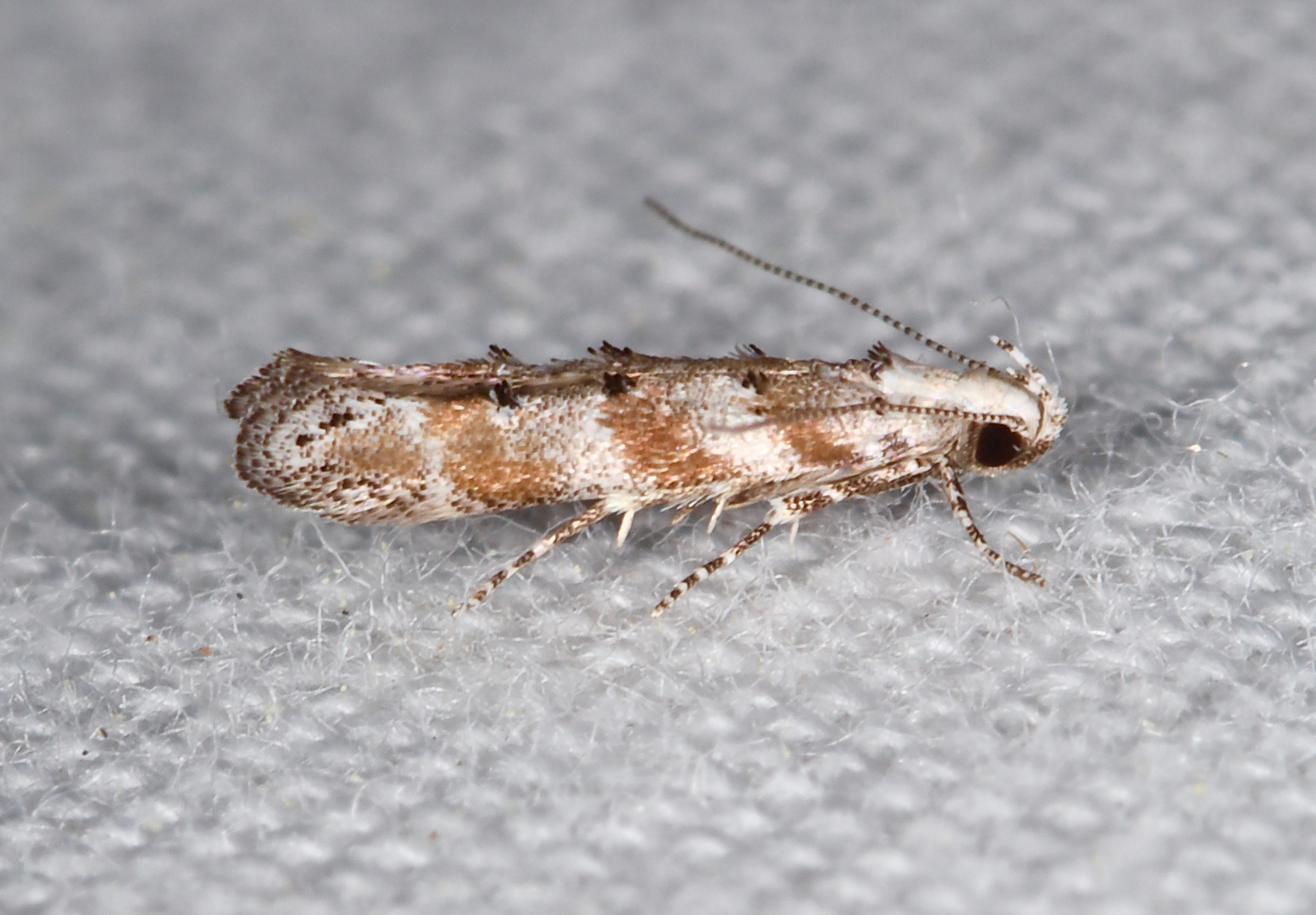
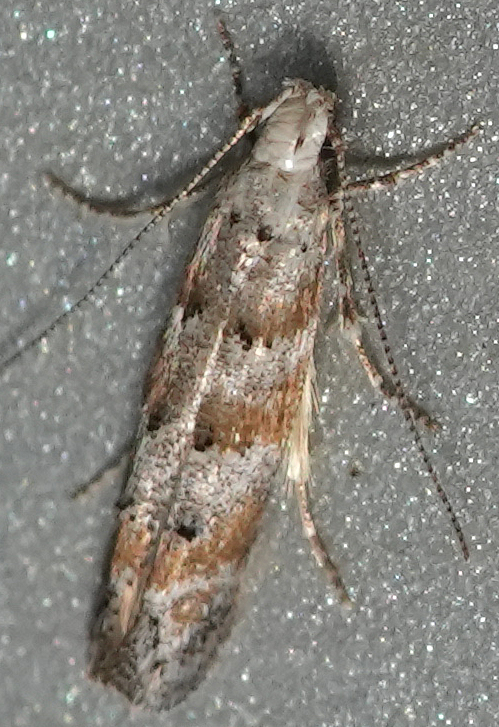
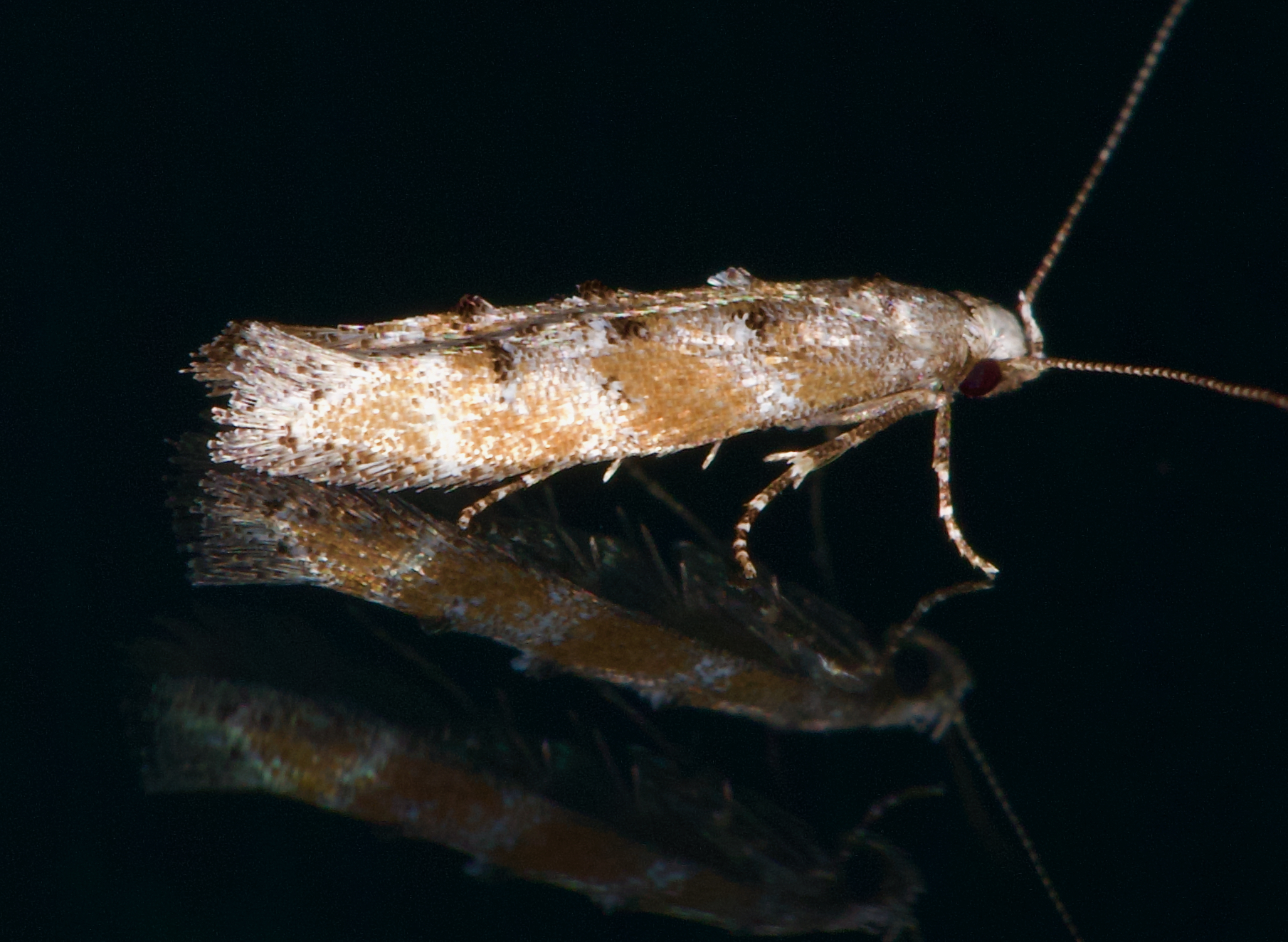
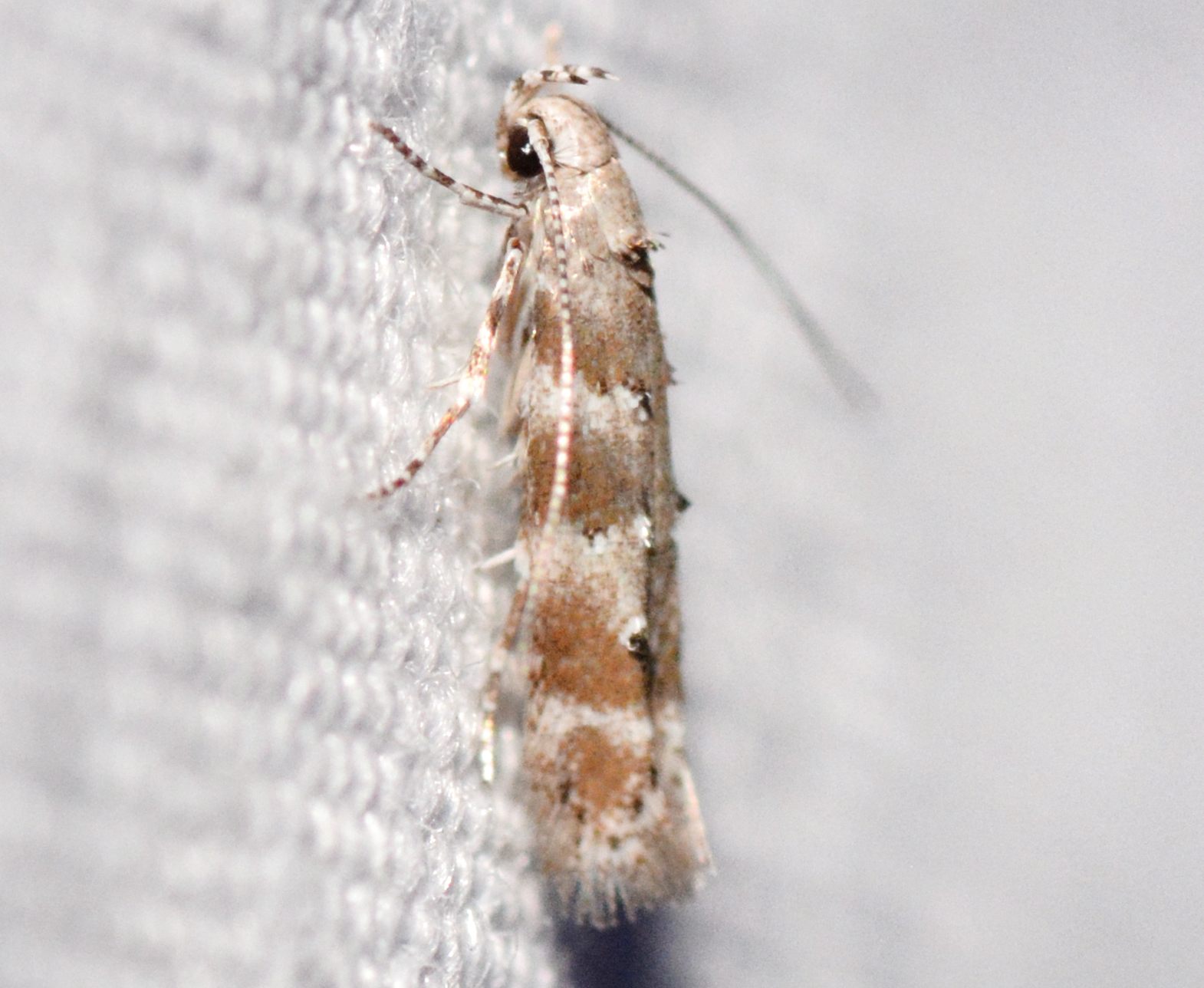
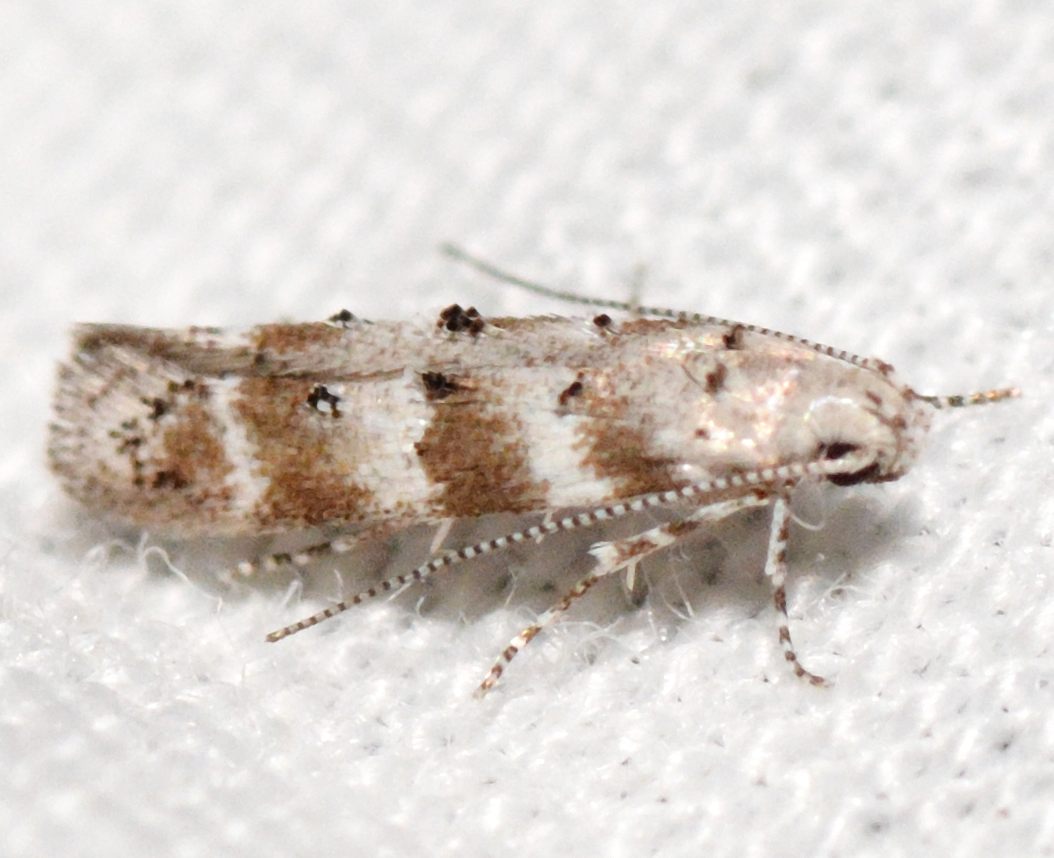
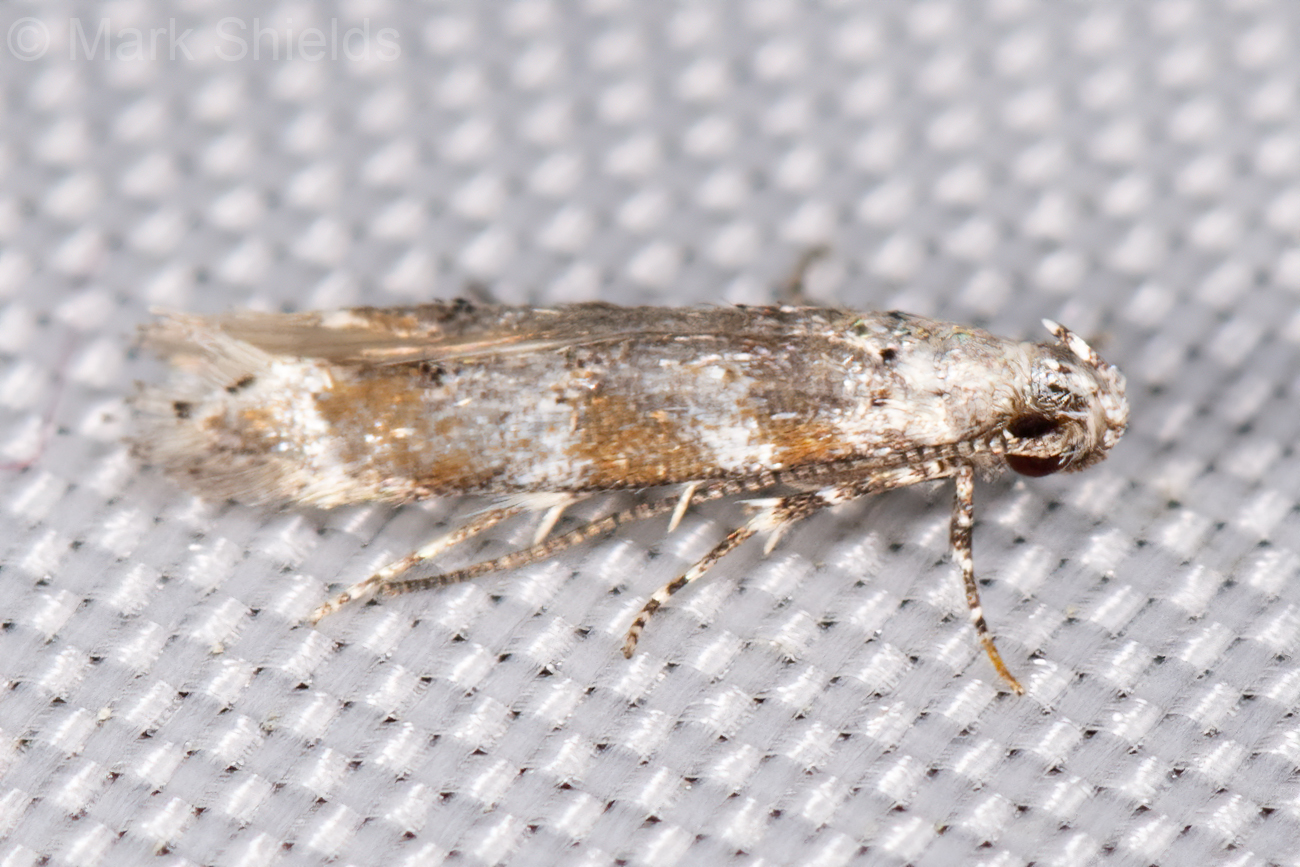
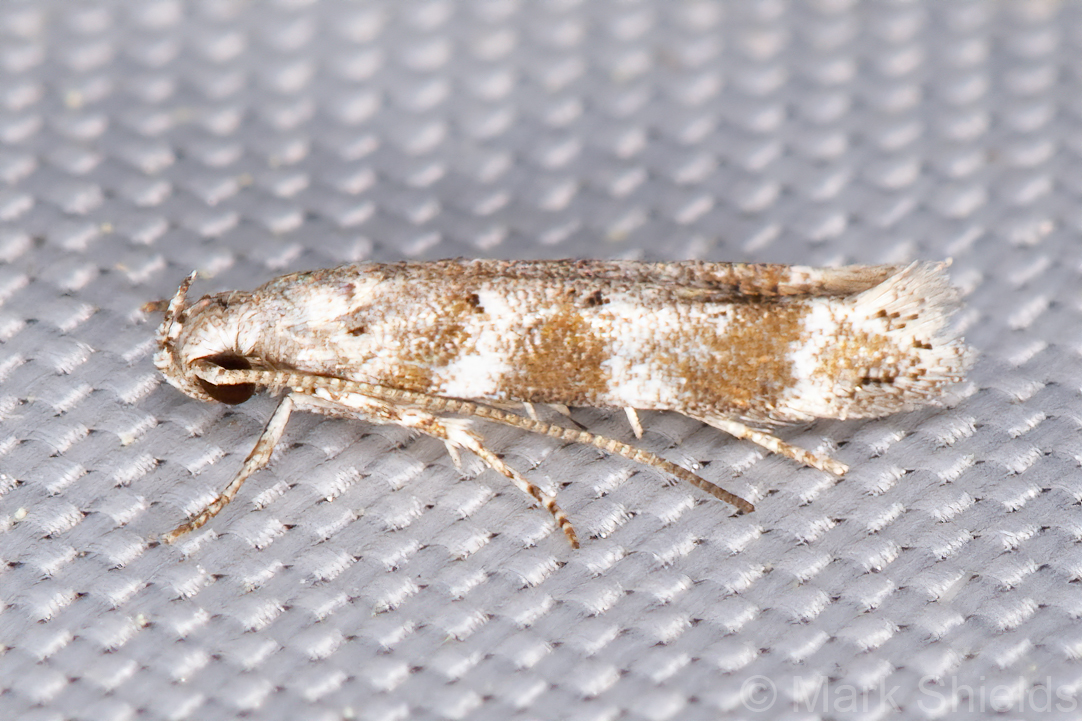
Exoteleia chillcottiExoteleia chillcottiExoteleia chillcottiExoteleia chillcotti
Taxonomy
Superfamily:
Gelechioidea
Family:
Gelechiidae
Subfamily:
Gelechiinae
Tribe:
Gelechiini
P3 Number:
59a0705.6
MONA Number:
1799.00
MONA Synonym:
Coleotechnites chilcotti
Identification
Field Guide Descriptions: Online Resources: MPG, BugGuide, iNaturalist, Google, BAMONA, GBIF, BOLDTechnical Description, Adults: Freeman (1963)Technical Description, Immature Stages: Freeman (1963)                                                                                 
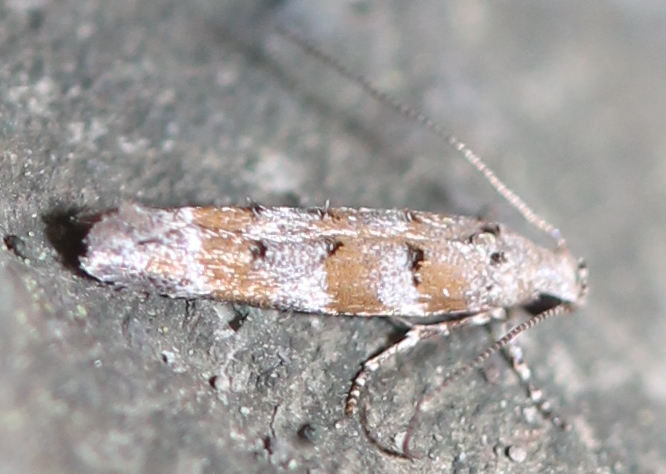
Adult Markings: Exoteleia chillcotti is best identified by its white head, white thorax, and three wide, golden-brown bands on the forewing with broad regions of whitish scales in-between. The following detailed description is mostly from that of Freeman (1963), based on the rearing of a large series of adults from Longleaf Pine in central Louisiana.

The antenna is sordid white with dark brown bands. The labial palp is white, with the second segment having brown scales outwardly, and the terminal segment having a sub-median and sub-apical dark-brown band. The head is shining white, and the thorax white with a few light-brown scales. The forewing has four golden-brown marks that include a broad basal, sub-median and post-median band, and a subapical patch. The apical region and the areas between the bands contain white scales with blackish or brownish tips that produce a finely striated appearance. In the region of the fold there are three, black-tipped, raised scale patches (dots), with one at the outer edge of the basal band, one at the outer edge of the sub-median band, and one on the inner edge of the post-median band. Three or four black dots are often present around the apex, and the fringe is whitish, with a double band of dark lines below the outer margin on unworn specimens. The hindwing is whitish and the fringe pale-fawn. The tibiae and tarsi are black with white bands.

This species resembles members of the E. pinifoliella complex, but differs in having broader, more striated, whitish regions between the darker bands; reduced golden-brown bands,; and a white head and thorax. Freeman (1963) noted that the frons of the pupa of E. chillcotti is smooth, while that of members of the E. pinifoliella complex have a small, sharply pointed tubercle. The male genitalia are also distinctive, with the gnathos having a considerably developed median hook (Bennett, 1954).
Wingspan: 8.5-10.5 mm (Freeman, 1963).
Adult Structural Features: Freeman (1963) has a description and illustration of the male genitalia as follows: The uncus is subconical and perforated near the apex, while the gnathos has a well developed, median, hook-like process and two lateral lobes. The clasper has a bulbous base, and a narrow, tapered apex. The aedeagus is tubular and the vinculum has two lateral, membranous, digitate processes, a pair of curved sicae, and two sub-triangular plates with knobbed apices.
Genitalia and other structural photos
Adult ID Requirements: Identifiable from good quality photos of unworn specimens.
Immatures and Development: The larvae mine the needles of Longleaf Pine and probably other species of southeastern pines. The following account is based on that of Freeman (1963) who studied this species in central Louisiana where it fed on Longleaf Pine. The larva usually mines the needle towards the apex, but sometimes towards the base, and leaves some frass in the mine -- particularly when an early-instar. At the end of each instar, it leaves the mine through an exit hole and creates a new mine. The new mine is made either on the same needle, or on a nearby needle, and the exit holes increase in size with each larval moult. The last mine is relatively free of frass and the larva pupates in this mine, with the pupa facing towards a ramp-like exit that the larva constructs prior to pupating. Partly-grown larvae hibernate in the mine during the winter months, with pupation and adult emergence occurring the following spring.
Distribution in North Carolina
Distribution:
County Map: Clicking on a county returns the records for the species in that county.
Exoteleia chillcottiAlamance Alexander Alleghany Anson Ashe Avery Beaufort Bertie Bladen Brunswick Buncombe Burke Cabarrus Caldwell Camden Carteret Caswell Catawba Chatham Cherokee Chowan Clay Cleveland Columbus Craven Cumberland Currituck Dare Davidson Davie Duplin Durham Edgecombe Forsyth Franklin Gaston Gates Graham Granville Greene Guilford Halifax Harnett Haywood Henderson Hertford Hoke Hyde Iredell Jackson Johnston Jones Lee Lenoir Lincoln Macon Madison Martin McDowell Mecklenburg Mitchell Montgomery Moore Nash New Hanover Northampton Onslow Orange Pamlico Pasquotank Pender Perquimans Person Pitt Polk Randolph Richmond Robeson Rockingham Rowan Rutherford Sampson Scotland Stanly Stokes Surry Swain Transylvania Tyrrell Union Vance Wake Warren Washington Watauga Wayne Wilkes Wilson Yadkin Yancey
Flight Dates:
High Mountains (HM) ≥ 4,000 ft.
Low Mountains (LM) < 4,000 ft.
Piedmont (Pd)
Coastal Plain (CP)

Click on graph to enlarge
Image showing flight dates by month for High Mountains greater than 4,000 feet, Low Mountains, Piedmont, and Coastal Plain: adults.
Flight Comments: Freeman (1963) reported that the adults fly from late-April to early-May at his study site in central Louisiana. As of 2025, our records extend from mid-April through early-July.
Habitats and Life History
Habitats: The larvae feed on pine needles and are generally associated with pine or mixed hardwood-pine forests.
Larval Host Plants: Longleaf Pine (Pinus palustris) appears to be the primary host, but the presence of E. chillcotti in areas of the state that lack Longleaf Pine suggests that other long-needled pines are use. Pitch Pine (P. rigida) is the likely host at a site in Madison County where this species has been taken.
Observation Methods: The adults are attracted to lights and the larvae can be found mining the needles of pines.
Wikipedia
Status in North Carolina
Natural Heritage Program Status:
Natural Heritage Program Ranks:
State Protection: Has no legal protection, although permits are required to collect it on state parks and other public lands.
Comments:

 Photo Gallery for Exoteleia chillcotti - Chilcott's Coleotechnites Moth

Photos: 26
Exoteleia chillcotti
Recorded by: Jeff Niznik, David George, Larry Chen, Sarah Toner, Joye Zhou on 2025-06-20
Richmond Co.
Comment:
Exoteleia chillcotti
Recorded by: Jim Petranka on 2025-05-24
Richmond Co.
Comment:
Exoteleia chillcotti
Recorded by: David George on 2025-05-17
Durham Co.
Comment:
Exoteleia chillcotti
Recorded by: David George on 2025-05-16
Durham Co.
Comment:
Exoteleia chillcotti
Recorded by: John Petranka, Jim Petranka and Becky Elkin, David George, Jeff Niznik on 2025-05-09
Cumberland Co.
Comment:
Exoteleia chillcotti
Recorded by: John Petranka, Jim Petranka and Becky Elkin, David George, Jeff Niznik on 2025-05-09
Cumberland Co.
Comment:
Exoteleia chillcotti
Recorded by: David George, Jeff Niznik, Brian Bockhahn, Jim Petranka, John Petranka, Becky Elkin on 2025-05-09
Cumberland Co.
Comment:
Exoteleia chillcotti
Recorded by: John Petranka, Jim Petranka and Becky Elkin on 2025-04-14
Bladen Co.
Comment:
Exoteleia chillcotti
Recorded by: David George on 2024-06-13
Durham Co.
Comment:
Exoteleia chillcotti
Recorded by: Jim Petranka on 2024-06-07
Madison Co.
Comment:
Exoteleia chillcotti
Recorded by: Jim Petranka on 2024-06-07
Madison Co.
Comment:
Exoteleia chillcotti
Recorded by: David George on 2024-05-24
Durham Co.
Comment:
Exoteleia chillcotti
Recorded by: Jim Petranka, John Petranka and Bo Sullivan on 2023-06-14
Moore Co.
Comment:
Exoteleia chillcotti
Recorded by: Jim Petranka and Bo Sullivan on 2023-05-17
Moore Co.
Comment:
Exoteleia chillcotti
Recorded by: John Petranka, Chuck Smith on 2023-05-12
Bladen Co.
Comment:
Exoteleia chillcotti
Recorded by: John Petranka on 2022-06-04
Orange Co.
Comment:
Exoteleia chillcotti
Recorded by: Jim Petranka on 2021-06-04
Madison Co.
Comment:
Exoteleia chillcotti
Recorded by: Simpson Eason on 2020-05-31
Durham Co.
Comment:
Exoteleia chillcotti
Recorded by: Mark Shields on 2020-05-16
Onslow Co.
Comment:
Exoteleia chillcotti
Recorded by: Kyle Kittelberger, Brian Bockhahn on 2020-05-13
Moore Co.
Comment:
Exoteleia chillcotti
Recorded by: Kyle Kittelberger, Brian Bockhahn on 2020-05-13
Moore Co.
Comment:
Exoteleia chillcotti
Recorded by: Mark Shields on 2020-05-10
Onslow Co.
Comment:
Exoteleia chillcotti
Recorded by: Mark Shields on 2020-05-02
Onslow Co.
Comment:
Exoteleia chillcotti
Recorded by: Mark Shields on 2020-04-25
Onslow Co.
Comment:
Exoteleia chillcotti
Recorded by: B. Bockhahn, P. Scharf, L. Amos on 2015-05-12
Warren Co.
Comment:
Exoteleia chillcotti
Recorded by: Harry Wilson on 2012-05-08
Wake Co.
Comment: