Moths of North Carolina
Home Page
Recent Entries
Recent Account Updates
County Searches
General Search
Submit a Public Record
Larval Hosts
References
Maps
Draft Checklists
Family Photo Gallery
Family PDFs
NC Biodiversity Project
Comments
Significant Contributors
Scientific Name:
Common Name:
Family (Alpha):
Choose a Family
ACROLEPIIDAE-False Diamondback Moths
ADELIDAE-Fairy moths
ALUCITIDAE-Many-plumed Moths
AMPHISBATIDAE-
ARGYRESTHIIDAE-Shiny Head-standing Moths
AUTOSTICHIDAE-Autostichid Moths
BATRACHEDRIDAE-Batrachedrid Moths
BEDELLIIDAE-Bedelliid Moths
BLASTOBASIDAE-Blastobasid Moths
BOMBYCIDAE-Silkworm Moths
BUCCULATRICIDAE-Ribbed Cocoon-maker Moths
CARPOSINIDAE-Fruitworm Moths
CHOREUTIDAE-Metalmark Moths
COLEOPHORIDAE-Casebearer Moths and Relatives
COSMOPTERIGIDAE-Cosmopterigid Moths
COSSIDAE-Carpenter Moths, Goat Moths
CRAMBIDAE-Grass Moths, Snout Moths
DEPRESSARIIDAE-
DREPANIDAE-Hook-tips and Thyatirid Moths
DRYADAULIDAE-
ELACHISTIDAE-Grassminer Moths and Relatives
EPERMENIIDAE-Fringe-tufted Moths
EPIPYROPIDAE-Planthopper Parasite Moths
EREBIDAE-Erebid Moths
ERIOCRANIIDAE-Eriocraniid Moths
EUTELIIDAE-Euteliid Moths
GALACTICIDAE-Galacticid Moths
GELECHIIDAE-Gelechiid Moths; Twirler Moths
GEOMETRIDAE-Geometer Moths, Loopers
GLYPHIDOCERIDAE-Glyphidocerid Moths
GLYPHIPTERIGIDAE-Sedge Moths
GRACILLARIIDAE-Leafblotch miner moths
HELIOZELIDAE-Shield bearer moths
HEPIALIDAE-Ghost or Swift Moths
HYBLAEIDAE-
INCURVARIIDAE-Leafcutter Moths
LASIOCAMPIDAE-Tent Caterpillar Moths, Lappet Moths
LECITHOCERIDAE-Long-horned Moths
LIMACODIDAE-Slug Caterpillar Moths
LIMOCODIDAE-
LYONETIIDAE-Lyonetiid Moths
MEGALOPYGIDAE-Flannel Moths
MICROPTERIGIDAE-Mandibulate Moths
MIMALLONIDAE-
MOMPHIDAE-Mompha Moths
NEPTICULIDAE-Minute leaf miners
NOCTUIDAE-Owlet Moths
NOLIDAE-
NOTODONTIDAE-Prominents
OECOPHORIDAE-Oecophorid Moths
OPOSTEGIDAE-
PELEOPODIDAE-
PLUTELLIDAE-Diamondback Moths
PRODOXIDAE-Yucca Moths
PSYCHIDAE-Bagworm Moths
PTEROPHORIDAE-Plume Moths
PYRALIDAE-Pyralid Moths, Snout Moths
SATURNIIDAE-Giant Silkworm Moths
SCHRECKENSTEINIIDAE-Schreckensteiniid Moths
SCYTHRIDIDAE-
SESIIDAE-Clearwing Moths
SPHINGIDAE-Sphinx Moths
THYATIRIDAE-
THYRIDIDAE-Window-winged Moths
TINEIDAE-Clothes moths
TISCHERIIDAE-Tischerid Moths
TORTRICIDAE-Leafroller Moths
URANIIDAE-
URODIDAE-Urodid Moths
XYLORYCTIDAE-
YPONOMEUTIDAE-Ermine Moths
YPSOLOPHIDAE-Ypsolophid Moths
ZYGAENIDAE-
«
Home
»
View
PDF
Gelechiidae Members:
Agnippe prunifoliella
Anacampsini new genus new species
Anacampsis agrimoniella
Anacampsis conclusella
Anacampsis consonella
Anacampsis coverdalella
Anacampsis fragariella
Anacampsis levipedella
Anacampsis lupinella
Anacampsis New Species 2
Anacampsis New Species one
Anacampsis rhoifructella
Anacampsis tristrigella
Anacampsis unidentified species
Anarsia lineatella
Aproaerema unidentified species
Arcutelphusa talladega
Aristotelia callirrhoda
Aristotelia fungivorella
Aristotelia isopelta
Aristotelia ivae
Aristotelia lespedezae
Aristotelia monilella
Aristotelia pudibundella
Aristotelia roseosuffusella
Aristotelia rubidella
Aristotelia unidentified species
Aroga argutiola
Aroga compositella
Aroga epigaeella
Aroga trialbamaculella
Aroga trialbamaculella complex
Aroga unidentified species
Arogalea cristifasciella
Arogalea unidentified species
Battaristis concinnusella
Battaristis new species
Battaristis nigratomella
Battaristis unidentified species
Battaristis vittella
Besciva n. sp.
Bryotropha unidentified species
Caryocolum pullatella
Chionodes adamas
Chionodes baro
Chionodes bicostomaculella
Chionodes cacula
Chionodes continuella
Chionodes dentella
Chionodes discoocellella
Chionodes emptor
Chionodes fondella
Chionodes formosella
Chionodes fuscomaculella
Chionodes hibiscella
Chionodes imber
Chionodes lactans
Chionodes mediofuscella
Chionodes obscurusella
Chionodes pereyra
Chionodes pseudofondella
Chionodes rabula
Chionodes rectifex
Chionodes sevir
Chionodes soter
Chionodes suasor
Chionodes tarmes
Chionodes thoraceochrella
Chionodes unidentified species
Coleotechnites albicostata
Coleotechnites apicitripunctella
Coleotechnites atrupictella
Coleotechnites canusella
Coleotechnites carbonaria
Coleotechnites coniferella
Coleotechnites florae
Coleotechnites juniperella
Coleotechnites macleodi
Coleotechnites new species 1
Coleotechnites nigra
Coleotechnites piceaella
Coleotechnites quercivorella
Coleotechnites unidentified species
Coleotechnites variiella
Deltophora sella
Dichomeris aglaia
Dichomeris agonia
Dichomeris bilobella
Dichomeris bipunctellus
Dichomeris bolize
Dichomeris caia
Dichomeris citrifoliella
Dichomeris costarufoella
Dichomeris crepida
Dichomeris fistuca
Dichomeris flavocostella
Dichomeris furia
Dichomeris georgiella
Dichomeris heriguronis
Dichomeris inserrata
Dichomeris inversella
Dichomeris juncidella
Dichomeris kimballi
Dichomeris laetitia
Dichomeris ligulella
Dichomeris marginella
Dichomeris nenia
Dichomeris new species 1
Dichomeris nonstrigella
Dichomeris ochripalpella
Dichomeris offula
Dichomeris pelta
Dichomeris punctidiscellus
Dichomeris punctipennella
Dichomeris purpureofusca
Dichomeris setosella
Dichomeris siren
Dichomeris unidentified species
Dichomeris vacciniella
Dichomeris ventrellus
Dichomeris vindex
Dichomeris washingtoniella
Dichomeris xanthoa
Enchrysa dissectella
Exoteleia chillcotti
Exoteleia new species 1
Exoteleia pinifoliella complex
Exoteleia unidentified species
Fascista bimaculella
Fascista cercerisella
Fascista quinella
Filatima persicaeella
Filatima pseudacaciella
Filatima serotinella
Filatima unidentified species
Filatima xanthuris
Frumenta nundinella
Gelechia albisparsella
Gelechiidae unidentified species
Glauce pectenalaeella
Gnorimoschema gallaeasterella
Gnorimoschema gallaesolidaginis
Gnorimoschema terracottella
Gnorimoschema unidentified species
Gnorimoschemini unidentified species
Helcystogramma hystricella
Helcystogramma melanocarpa
Helcystogramma melantherella
Holophysis emblemella
Isophrictis anteliella
Isophrictis new species 1
Isophrictis rudbeckiella
Isophrictis unidentified species
Keiferia inconspicuella
Keiferia lycopersicella
Keiferia unidentified species
Mesophleps adustipennis
Metzneria lappella
Monochroa disconotella
Monochroa gilvolinella
Monochroa monactis
Monochroa pullusella
Monochroa quinquepunctella
Monochroa unidentified species
Neotelphusa sequax
Phthorimaea operculella
Polyhymno luteostrigella
Prostomeus brunneus
Pseudochelaria pennsylvanica
Pseudochelaria walsinghami
Pseudotelphusa basifasciella
Pseudotelphusa fuscopunctella
Pseudotelphusa new species 1
Pseudotelphusa palliderosacella
Pseudotelphusa quercinigracella
Pseudotelphusa unidentified species
Pubitelphusa latifasciella
Sinoe chambersi
Sinoe kwakae
Sinoe robiniella
Sinoe unidentified species
Sitotroga cerealella
Stegasta bosqueella
Stereomita andropogonis
Strobisia iridipennella
Strobisia proserpinella
Symmetrischema capsica
Symmetrischema pallidochrella
Symmetrischema striatella
Symmetrischema unidentified species
Taygete attributella
Taygete gallaegenitella
Telphusa longifasciella
Telphusa perspicua
Theisoa constrictella
Trypanisma prudens
Untomia albistrigella
Xenolechia aethiops
Xenolechia ontariensis
Coleotechnites
Members:
Coleotechnites albicostata
Coleotechnites apicitripunctella
Coleotechnites atrupictella
Coleotechnites canusella
Coleotechnites carbonaria
Coleotechnites coniferella
Coleotechnites florae
Coleotechnites juniperella
Coleotechnites macleodi
Coleotechnites new species 1
Coleotechnites nigra
Coleotechnites piceaella
Coleotechnites quercivorella
Coleotechnites unidentified species
Coleotechnites variiella
3 NC Records
Coleotechnites piceaella
(Kearfott, 1903) - Orange Spruce Needleminer Moth
view caption
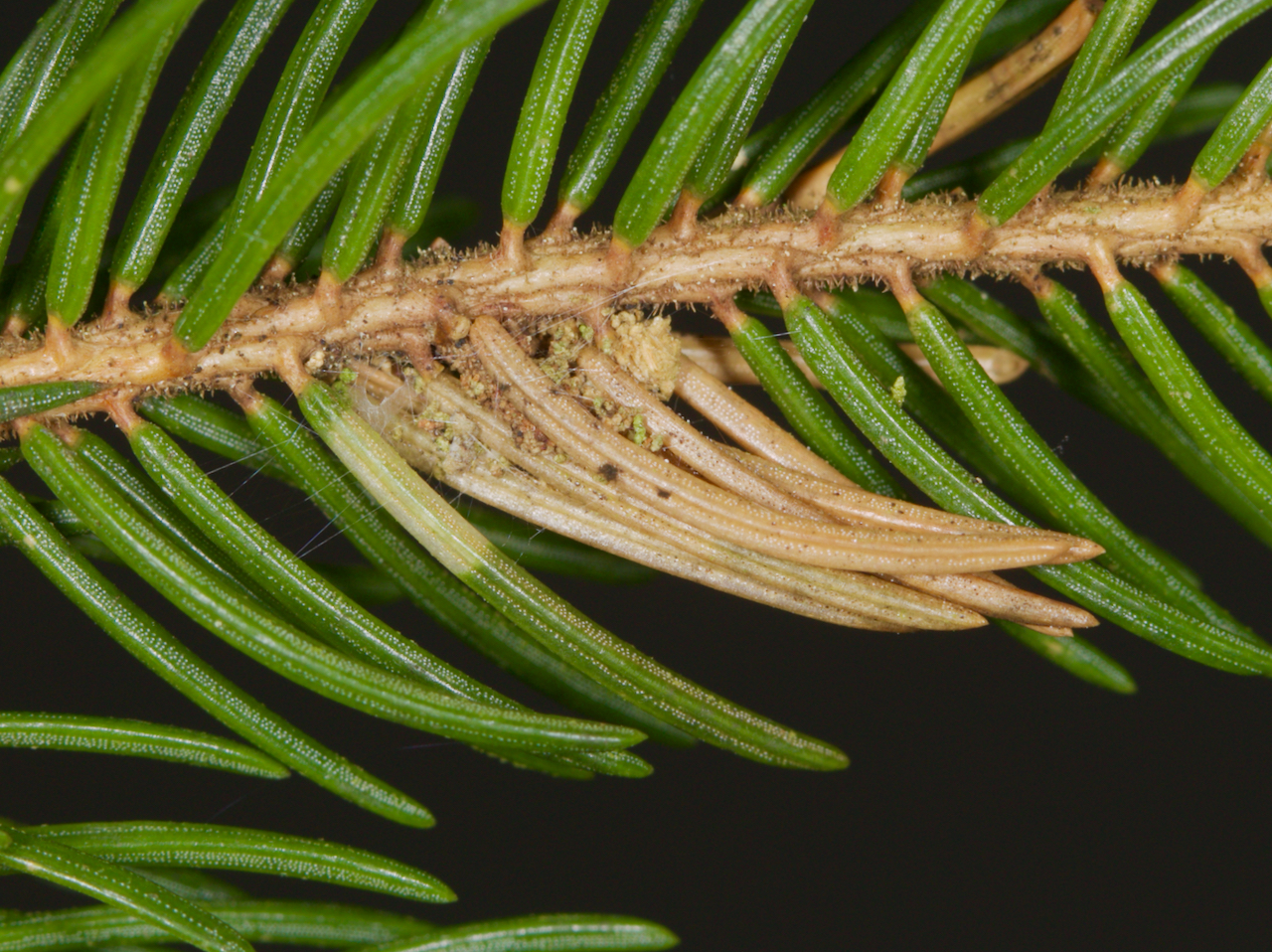
A view of dead needles due to mining activity on Red Spruce. Note the small amount of frass that is lightly bound with silk webbing.
Taxonomy
Family:
Gelechiidae
Subfamily:
Gelechiinae
P3 Number:
59a0744
MONA Number:
1826.00
Comments:
The genus
Coleotechnites
includes 49 very small species that occur in North America. Most species are specialists on conifers and tend to feed on a single genus of host plant. Many of the
Coleotechnites
species have almost identical genitalia that are not very useful in delineating closely related forms (Freeman, 1960; 1965). Freeman (1960) noted that host plants and the mining characteristics often provide the most reliable way to identify closely related species.
Identification
Field Guide Descriptions:
Online Resources:
MPG
,
BugGuide
,
iNaturalist
,
Google
,
BAMONA
,
GBIF
,
BOLD
Technical Description, Adults:
Forbes (1923)
Technical Description, Immature Stages:
McLeod (1966)
Adult Markings:
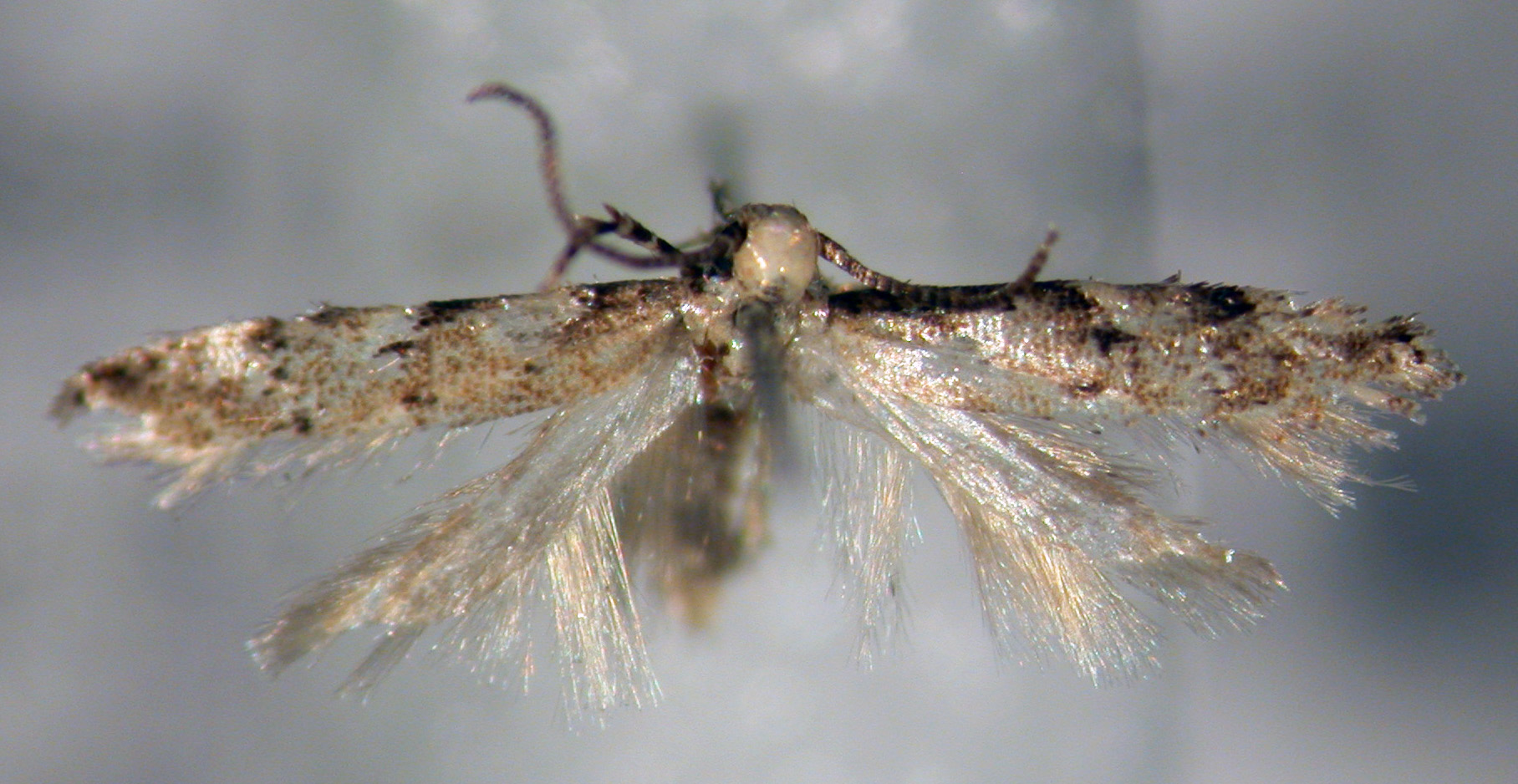
This species has both light and dark forms. The following description of the light morph is mostly based on that of Forbes (1923). The head, thorax and ground color of the forewing are all straw-yellow, and the thorax has three black dots near the posterior tip. The second segment of the labial palp is straw-colored with a black streak or black dusting below, while the third segment is more whitish with two black bars on the apical half. The forewing has three dark fasciae or bands that are margined with pale white scales apically. The first is at around one-fifth the wing length from the base and extends about two-thirds inward from the costa to the fold. The second begins on the costa at around one-half and progressively tapers and curves apically before ending near the middle of the wing. The third is at around three-fourths, is outwardly angled at around 90 degrees, and is sharply margined with whitish scales that extend to the inner margin. A black dash is often present in the terminal area that extends to the apex, along with a series of five or six dark terminal spots below the fringe. Other marks include a series of equally-spaced, black dots of raised scales below the inner margin at around one-fourth, one-half and three-fourths. Matching dots are present inward from these and towards the middle of the wing. The hindwing varies from light straw-yellow to dark-brown. The dark morph is similar, but is heavily dusted with dark-brown to blackish scales that tend to obscure the overall patterning.
The description above is based on northern populations and may not be fully applicable to those in the southern Appalachians. Populations in North Carolina appear to be restricted to the highest elevations in the Blue Ridge where they feed on Red Spruce and Fraser Fir.
Adult Structural Features:
The genitalia of this and other closely-related congeners are indistinguishable and of little use in sorting out species.
Adult ID Requirements:
Identifiable from photos showing hindwings, abdomen, or other specialized views [e.g., frons, palps, antennae, undersides].
Immatures and Development:
The larvae mostly mine the leaves of spruce trees, but occasionally use firs. The following life history account is based on that of Eiseman (2024) and mostly on observations made in Canada by McLeod (1966), who conducted a detailed life history study. The eggs hatch during the summer months and the larvae mine needles during the summer and fall that are loosely tied with silk. The first-instar larva enters a needle near the base, produces an irregular mine, then spins a silken gallery from the round entrance hole of the mine to either the stem or an adjacent needle. After mining out one needle, the larva moved to and mines an adjacent needle. This continues until 4-8 needles are mined. All frass is expelled from the mines, and some pellets may adhere to the webbing that binds the needles together. The larva enters hibernation in a silken gallery with the onset of shortening days and cold weather. In spring, it resumes feeding for about a week in its overwintering site, then moves to a new site on the foliage where it continue to mine needles as described above. Pupation takes place either in a silken cell, usually under a web at the base of the mined needles, or on the ground in leaf litter.
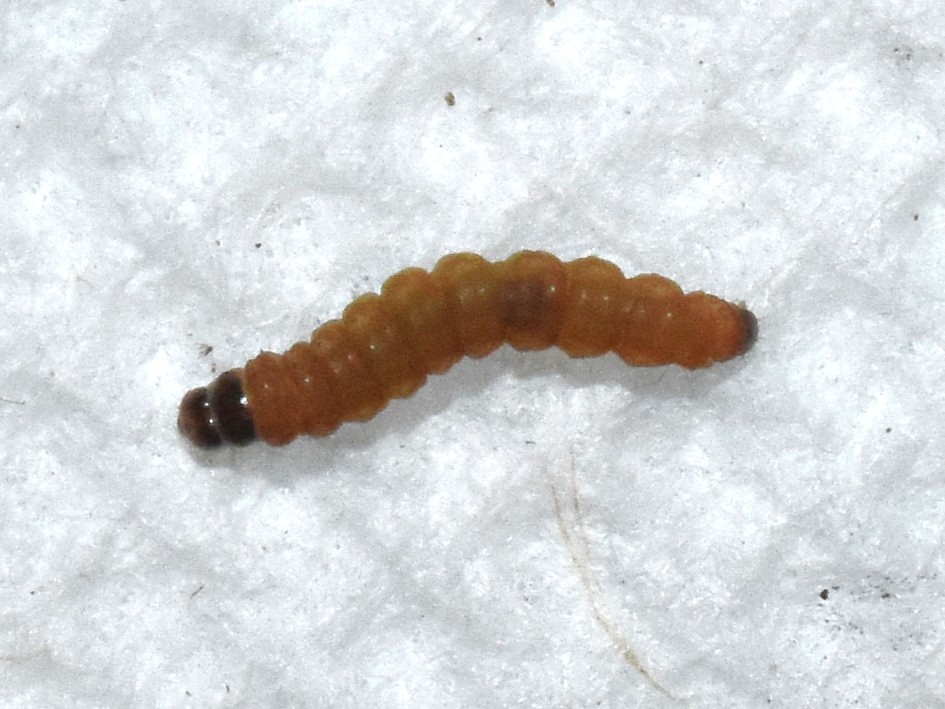
Eiseman (2024) noted that the feeding pattern often is more complex than the one described above (see McLeod, 1966). The young larvae are attracted to foliage, buds, and cones that have been damaged or killed by other feeding insects. Sometimes an egg is laid on a dead bud and the larva bores in this for at least part of its life. They may also feed in part on the damaged material while also mining healthy, nearby needles. In coastal Maine and Nova Scotia, the overwintering larva become active just after the new buds have opened. It mines the leaves in the new terminal growth and ties these into a loose bundle. The fully-grown larvae can reach 8 mm in length, and are light orange-brown with a dark brown head and prothoracic shield. Populations in North Carolina have been found at Mt. Mitchell and vicinity and appear to follow the life cycle described above, but more detailed observations are needed. Local populations appear to be univoltine throughout the range of this species.
Larvae ID Requirements:
Identifiable from good quality photos, especially where associated with known host plants.
Distribution in North Carolina
Distribution:
Coleotechnites piceaella
is mostly found in northern latitudes where it feeds of spruce and fir trees. It occurs across most of southern Canada from Nova Scotia and Prince Edward Island westward to British Columbia and the Northwest Territories, and southward in the West to Oregon and Northern California. There are also records from Colorado. In the eastern US the range spans from Maine and other New England states westward to Ontario and Ohio, and southwestward to the higher peaks of the southern Appalachians. As of 2025, all of our records are from Mt. Mitchell and vicinity. This species is native to North America, but has been introduced to Europe where it is now widespread.
County Map:
Clicking on a county returns the records for the species in that county.
Flight Dates:
High Mountains (HM) ≥ 4,000 ft.
Low Mountains (LM) < 4,000 ft.
Piedmont (Pd)
Coastal Plain (CP)
Click on graph to enlarge
Immature Dates:
High Mountains (HM) ≥ 4,000 ft.
Low Mountains (LM) < 4,000 ft.
Piedmont (Pd)
Coastal Plain (CP)
Click on graph to enlarge
Flight Comments:
The adults have been documented from April through August, with a seasonal peak from June through August. As of 2025, our very limited records are from July.
Habitats and Life History
Habitats:
Our records come from stands of Spruce-fir Forests on Mt. Mitchell and adjoining areas of the Black Mountains.
Larval Host Plants:
The larvae are needle-miners on both fir and spruce trees (Prentice, 1966; Rose and Lindquist, 1994). The reported hosts include Norway Spruce (
Picea abies
), White Spruce (
P. glauca
), Black Spruce (
P. mariana
), Colorado Spruce (
P. pungens
) and Red Spruce (
P. rubens
). In North Carolina, the mines and larvae have been found on Red Spruce and Fraser Fir (
Abies fraseri
). -
View
Observation Methods:
The adults are attracted to lights; we recommend searching the foliage of Red Spruce and Fraser Fir for the larvae and mines.
Wikipedia
See also Habitat Account for
Spruce-Fir Forests
Status in North Carolina
Natural Heritage Program Status:
[W-TH]
Natural Heritage Program Ranks:
GNR SNR [S1S2]
State Protection:
Comments:
This species appears to be restricted to Mt. Mitchell and vicinity, where the population there is disjunct from the main range farther north. It primarily relies of Red Spruce as a host plant and may undergo long-term declines as the host plant declines in association with climate change.
Photo Gallery for
Coleotechnites piceaella
- Orange Spruce Needleminer Moth
Photos: 5
Recorded by: Jeff Niznik, Kaitlyn Elliott on 2025-10-11
Yancey Co.
Comment: A larva from a web on Fraser Fir.
Recorded by: Jeff Niznik, Kaitlyn Elliott on 2025-10-11
Yancey Co.
Comment:
Recorded by: Jeff Niznik, Kaitlyn Elliott on 2025-10-11
Yancey Co.
Comment:
Recorded by: Jim Petranka on 2022-09-08
Yancey Co.
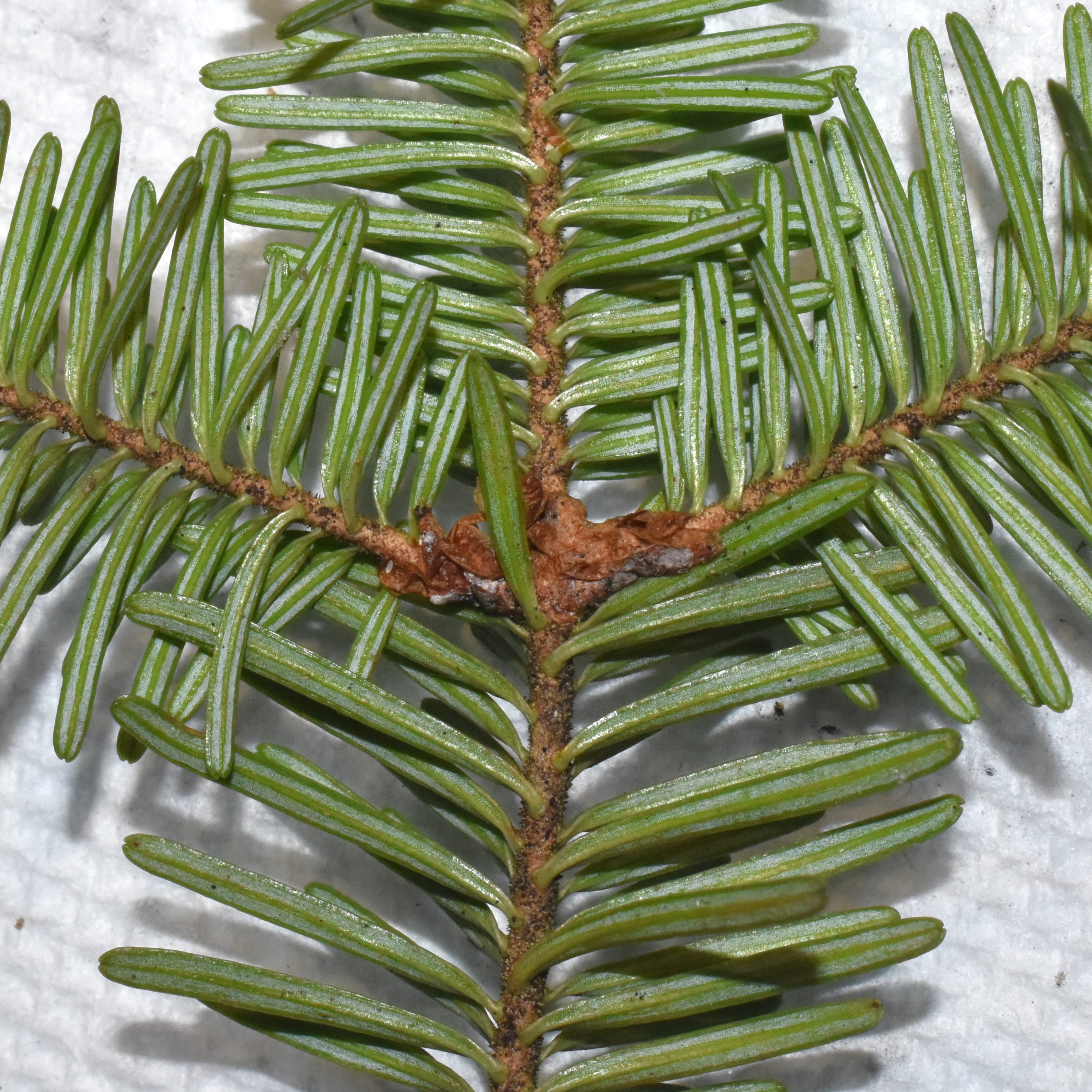
Comment: Unoccupied mine was on Red Spruce.
Recorded by: J.B. Sullivan on 2019-07-30
Yancey Co.
Comment:
 »
»