Moths of North Carolina
Scientific Name:
Common Name:
Family (Alpha):
« Home »
View PDFGelechiidae Members: Dichomeris Members: 11 NC Records

Dichomeris siren Hodges, 1986 - Least Dichomeris


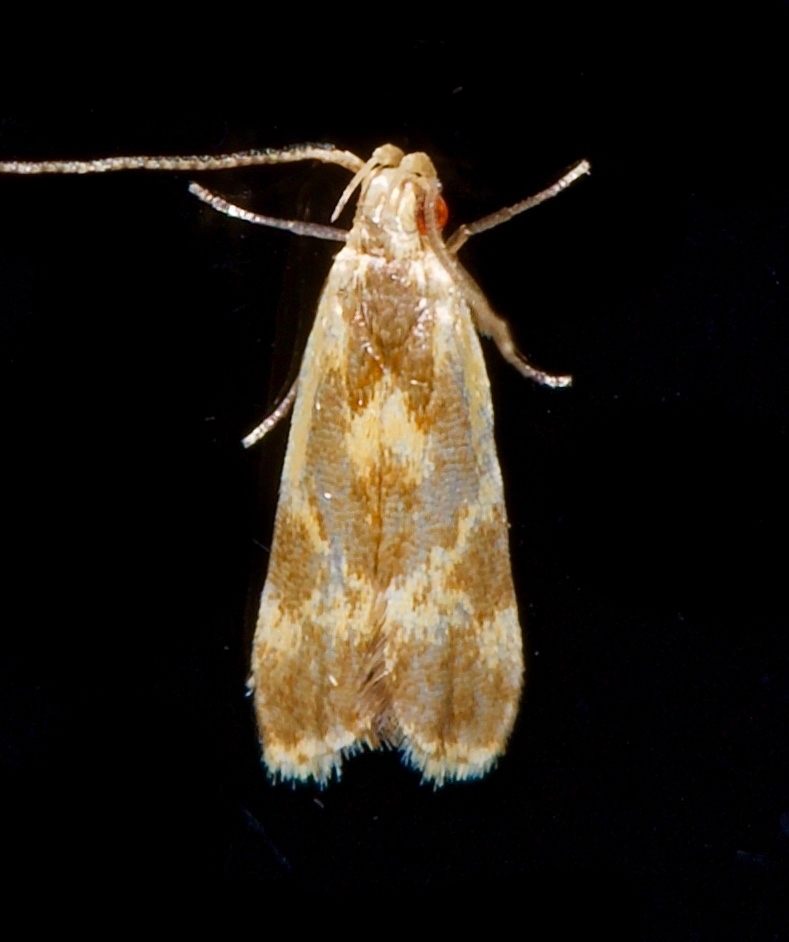
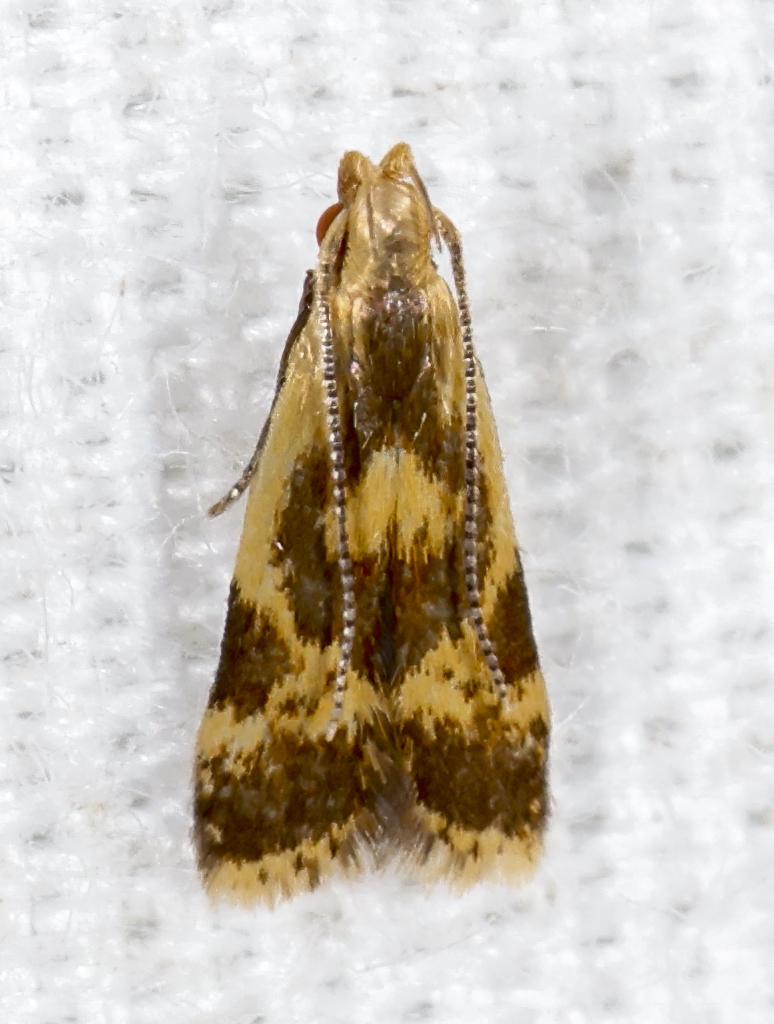
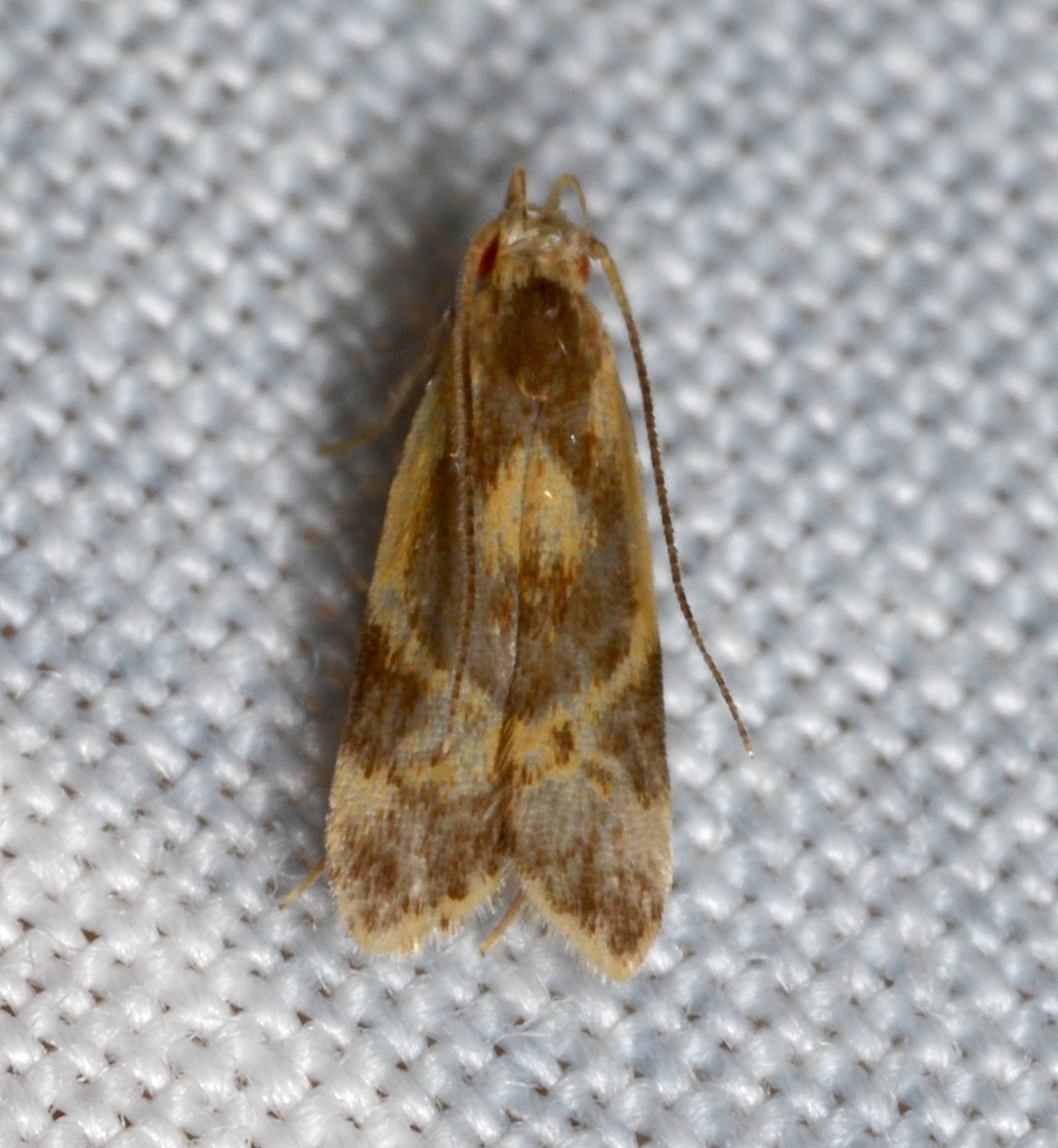
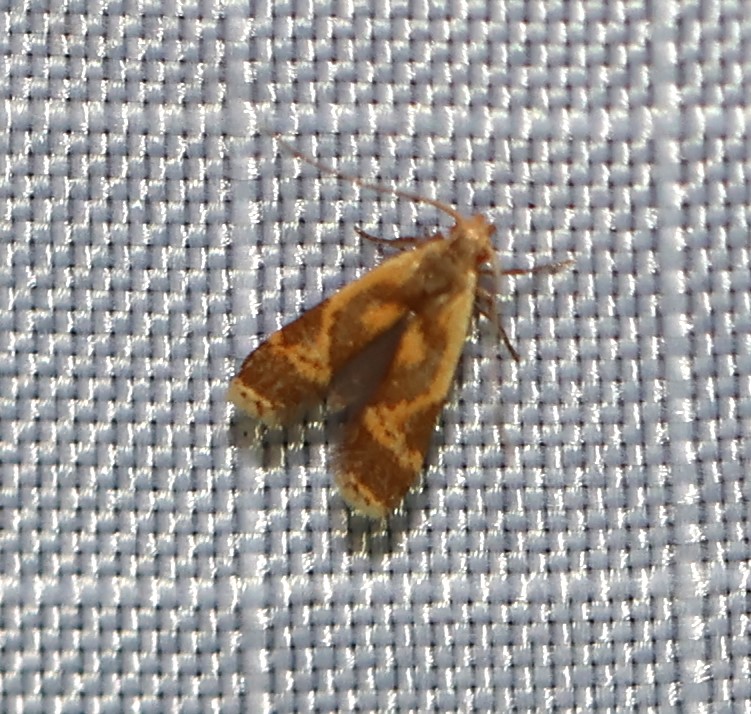
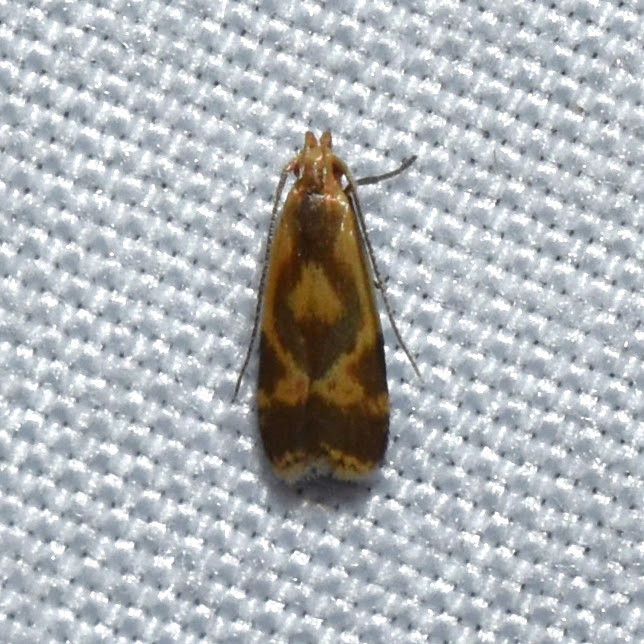
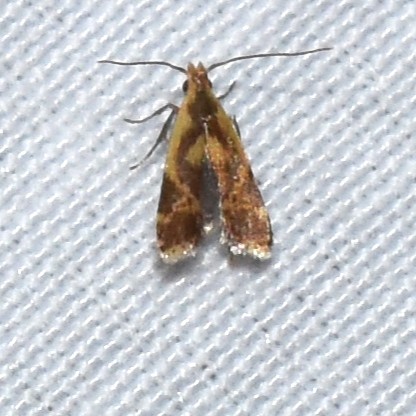
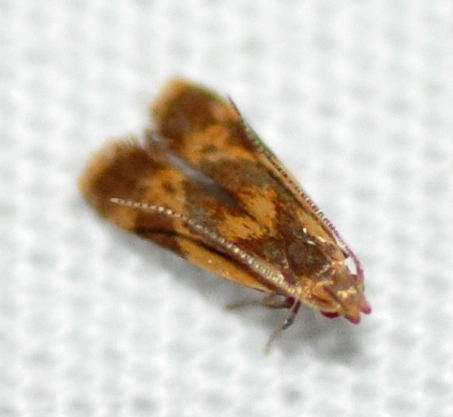
Dichomeris sirenDichomeris sirenDichomeris sirenDichomeris siren
Taxonomy
Superfamily:
Gelechioidea
Family:
Gelechiidae
Subfamily:
Dichomeridinae
P3 Number:
59a0528
MONA Number:
2279.30
Comments: Dichomeris is a large genus with several hundred species that occur throughout the world. Hodges (1986) recognized 74 species in North America north of Mexico, with 19 species groups. Most are leaftiers and they use a taxonomically diverse array of plant hosts, including members of 18 families of plants in North America. As of 2025, North Carolina has 35 documented species, and at least one undescribed species from the Sandhills.
Identification
Field Guide Descriptions: Online Resources: MPG, BugGuide, iNaturalist, Google, BAMONA, GBIF, BOLDTechnical Description, Adults: Hodges (1986)                                                                                 
Adult Markings: Dichomeris siren is the smallest of our Dichomeris species and can be identified by its size (front wing length typically < 3.6 mm) and a shiny forewing that is boldly marked with orangish-yellow and dark brown patterning. The dark marks includes a broad, subterminal band, a large costal spot at two-thirds the wing length, and a semicircular arc on the basal half of the wing, with both ends terminating at the inner margin. The thorax is dark brown and the head is concolorous with the yellow color of the forewing. The terminal fringe is orangish-yellow and the hindwing is brown with a well-developed fringe. The labial palp is mostly pale yellow and the dorsal surface of the second segment lacks a scale tuft.
Forewing Length: 3.1-3.8 mm (Hodges, 1986).
Adult Structural Features: Hodges (1986) has descriptions and illustrations of the male and female genitalia.
Adult ID Requirements: Identifiable from good quality photos of unworn specimens.
Immatures and Development: As of 2025, we are unaware of any descriptions of the host plants or the larval life history of this species.
Distribution in North Carolina
Distribution: Dichomeris siren is found in the eastern US from New Hampshire and Massachusetts southward to Georgia, and westward to Louisiana, Arkansas, western Tennessee, and northern Indiana. This species is generally absent from the southeastern Coastal Plain, and spottily distributed west of the Appalachian Mountains. As of 2025, our records are all from the Piedmont and lower-elevation sites in the Blue Ridge.
County Map: Clicking on a county returns the records for the species in that county.
Dichomeris sirenAlamance Alexander Alleghany Anson Ashe Avery Beaufort Bertie Bladen Brunswick Buncombe Burke Cabarrus Caldwell Camden Carteret Caswell Catawba Chatham Cherokee Chowan Clay Cleveland Columbus Craven Cumberland Currituck Dare Davidson Davie Duplin Durham Edgecombe Forsyth Franklin Gaston Gates Graham Granville Greene Guilford Halifax Harnett Haywood Henderson Hertford Hoke Hyde Iredell Jackson Johnston Jones Lee Lenoir Lincoln Macon Madison Martin McDowell Mecklenburg Mitchell Montgomery Moore Nash New Hanover Northampton Onslow Orange Pamlico Pasquotank Pender Perquimans Person Pitt Polk Randolph Richmond Robeson Rockingham Rowan Rutherford Sampson Scotland Stanly Stokes Surry Swain Transylvania Tyrrell Union Vance Wake Warren Washington Watauga Wayne Wilkes Wilson Yadkin Yancey
Flight Dates:
 High Mountains (HM) ≥ 4,000 ft.
 Low Mountains (LM) < 4,000 ft.
 Piedmont (Pd)
 Coastal Plain (CP)

Click on graph to enlarge
Image showing flight dates by month for High Mountains greater than 4,000 feet, Low Mountains, Piedmont, and Coastal Plain: adults.
Flight Comments: The adults have been found from May through October in different areas of the range, with a seasonal peak typically in July and August. As of 2025, our records are from late-June through late-September, with all but one from late-June through late-August.
Habitats and Life History
Habitats: Our records are mostly from fragmented, forested habitats such as semi-wooded residential neighborhoods and greenways, with hardwood trees as part of the landscape.
Larval Host Plants: As of 2025, the host plants of this species are undocumented. - View
Observation Methods: The adults are attracted to lights.
Wikipedia
Status in North Carolina
Natural Heritage Program Status:
Natural Heritage Program Ranks:
State Protection:
Comments:

 Photo Gallery for Dichomeris siren - Least Dichomeris

Photos: 8
Dichomeris siren
Recorded by: Rob Van Epps on 2024-07-26
Mecklenburg Co.
Comment:
Dichomeris siren
Recorded by: David George, Jeff Niznik, Stephen Dunn on 2024-06-29
Chatham Co.
Comment:
Dichomeris siren
Recorded by: Jeff Niznik, Stephen Dunn on 2023-07-26
Chatham Co.
Comment:
Dichomeris siren
Recorded by: David George, Stephen Dunn, Jeff Niznik on 2023-07-06
Orange Co.
Comment:
Dichomeris siren
Recorded by: David George, Stephen Dunn, Jeff Niznik on 2023-06-25
Orange Co.
Comment:
Dichomeris siren
Recorded by: John Petranka on 2022-08-21
Orange Co.
Comment:
Dichomeris siren
Recorded by: Jim Petranka and Becky Elkin on 2019-09-27
Madison Co.
Comment:
Dichomeris siren
Recorded by: Kyle Kittelberger on 2013-08-29
Wake Co.
Comment: