Moths of North Carolina
Scientific Name:
Common Name:
Family (Alpha):
« Home »
View PDFGelechiidae Members: Dichomeris Members: 210 NC Records

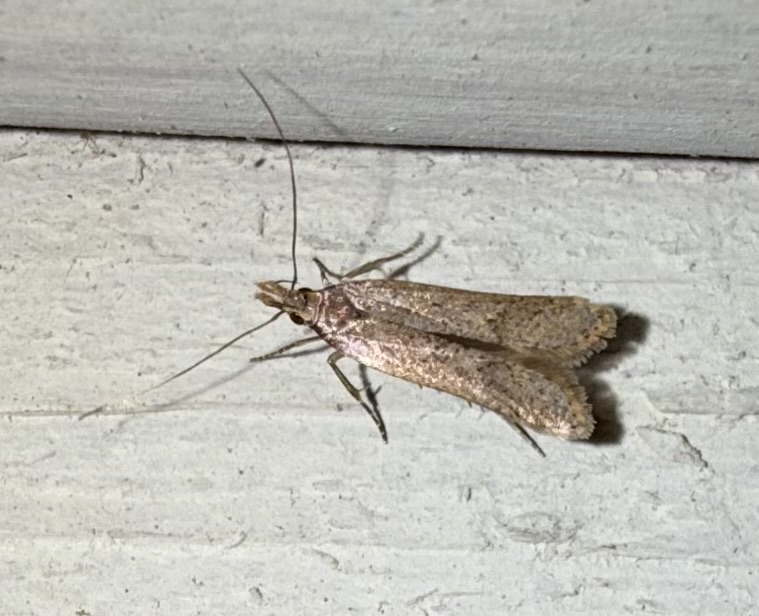
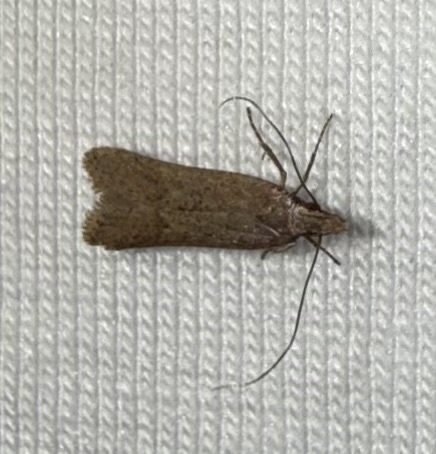
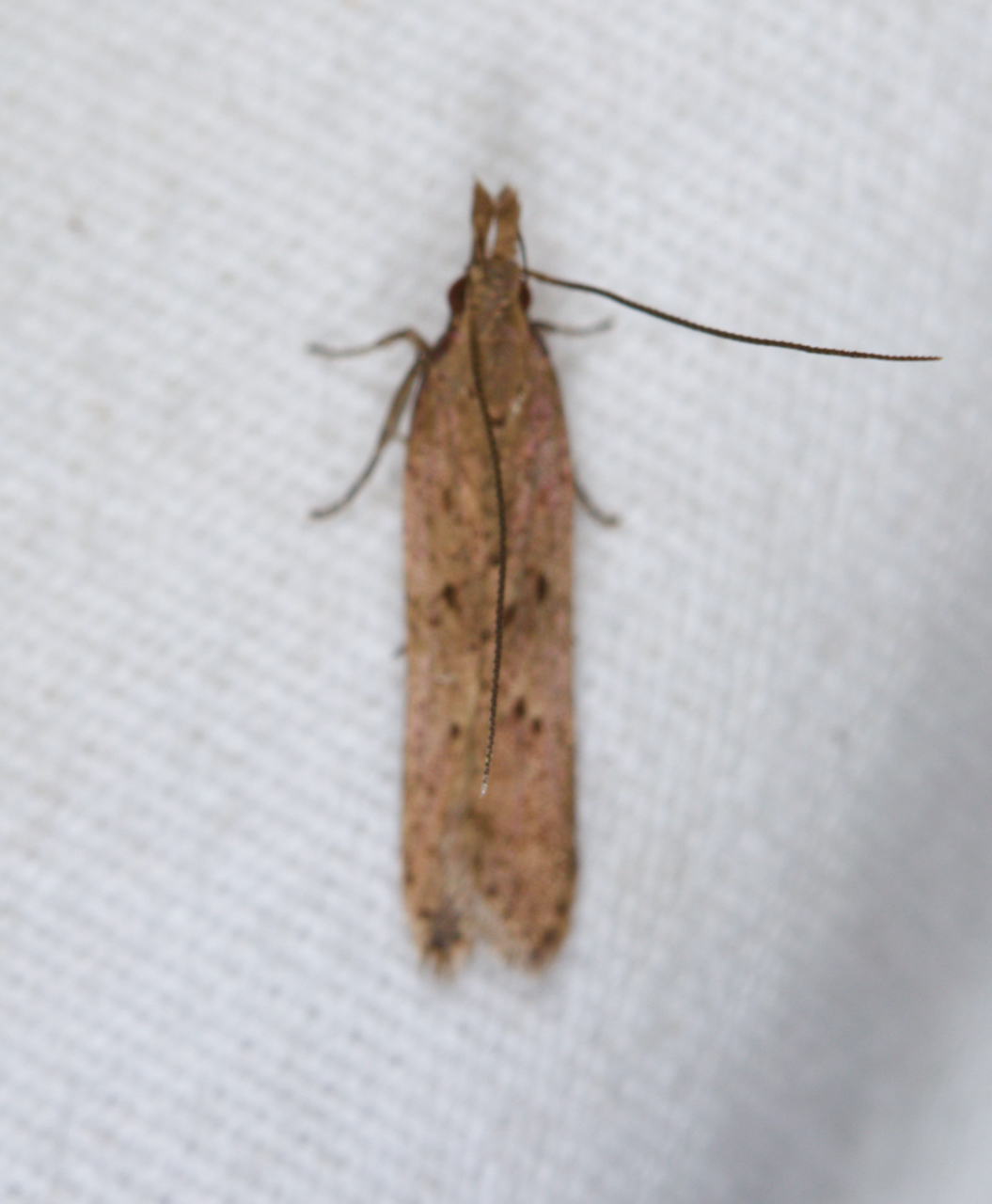
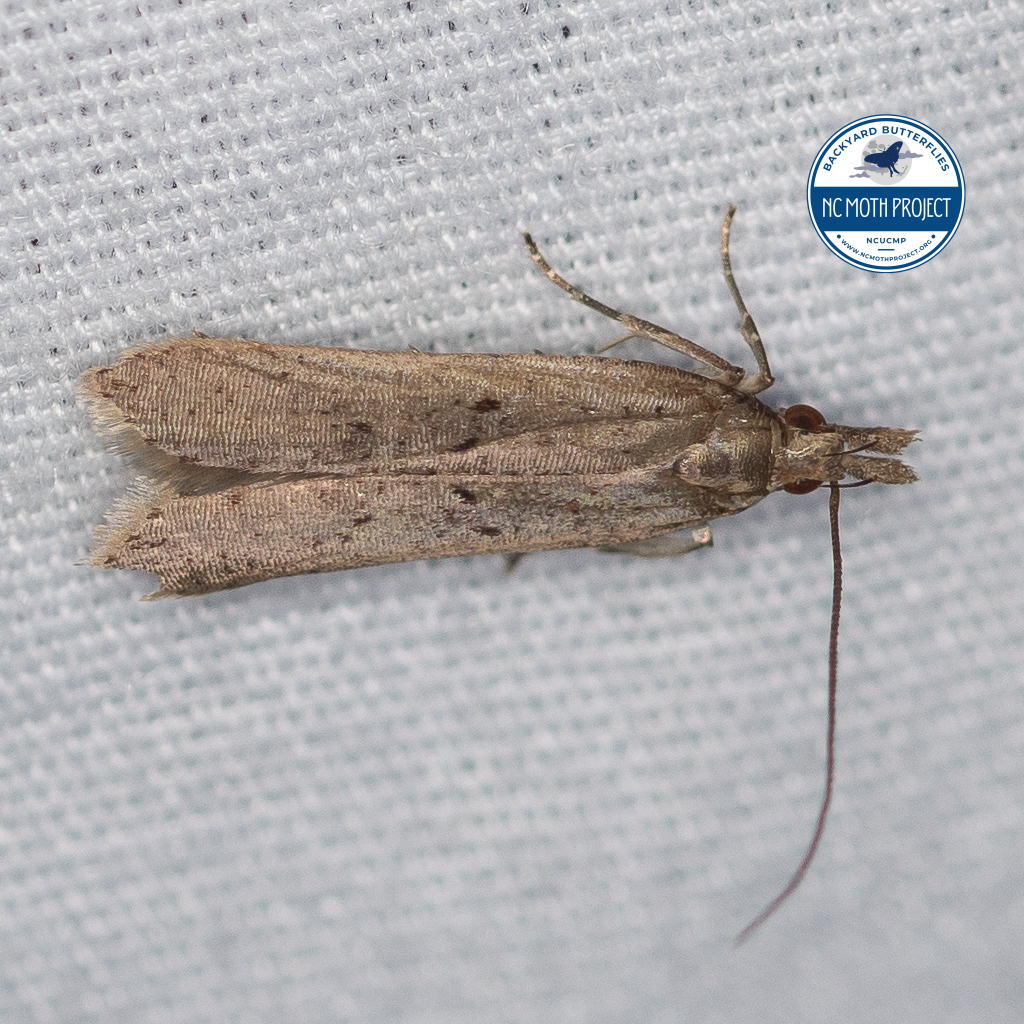
Dichomeris ligulella Hübner, 1818 - Palmerworm Moth


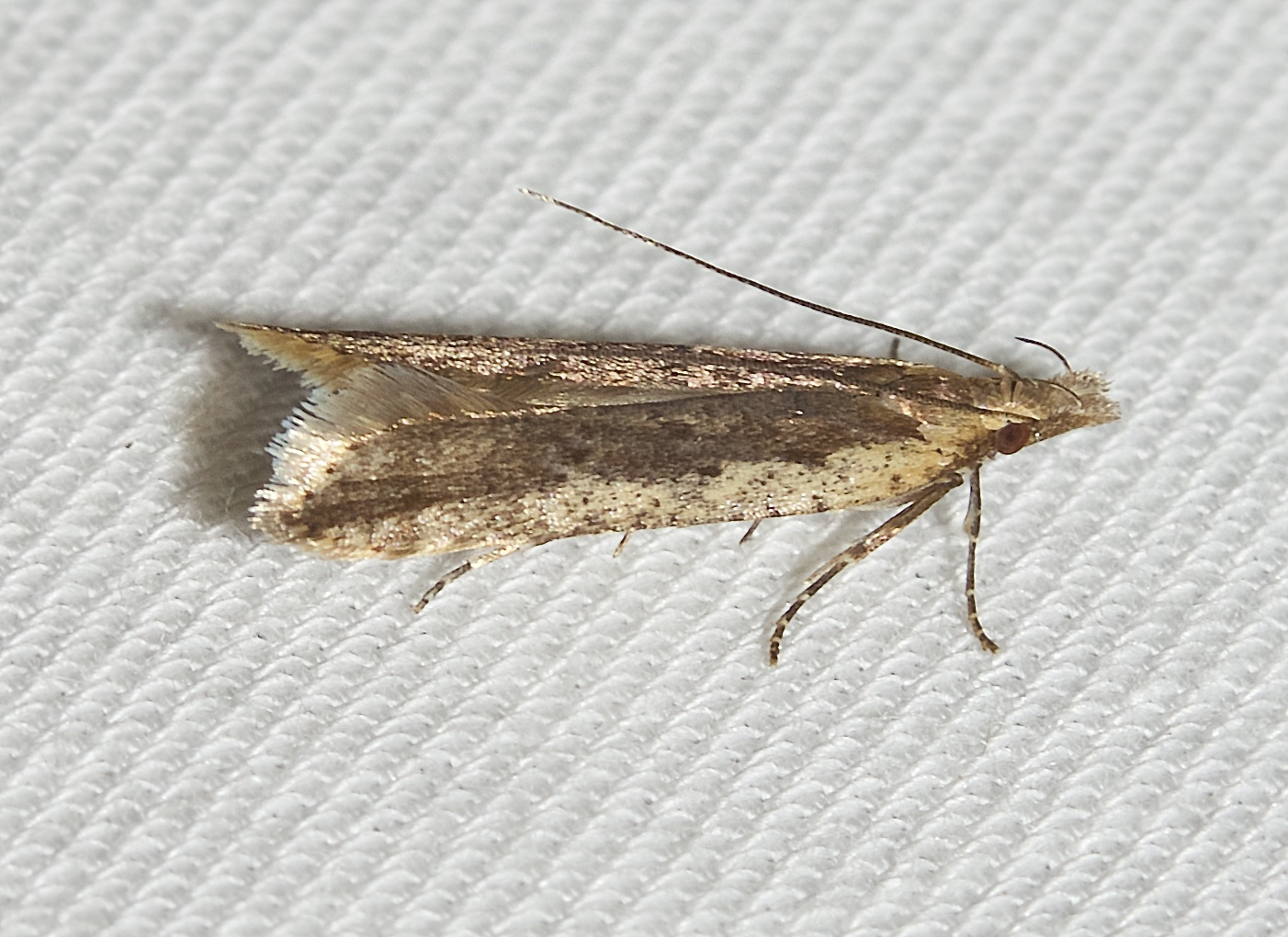
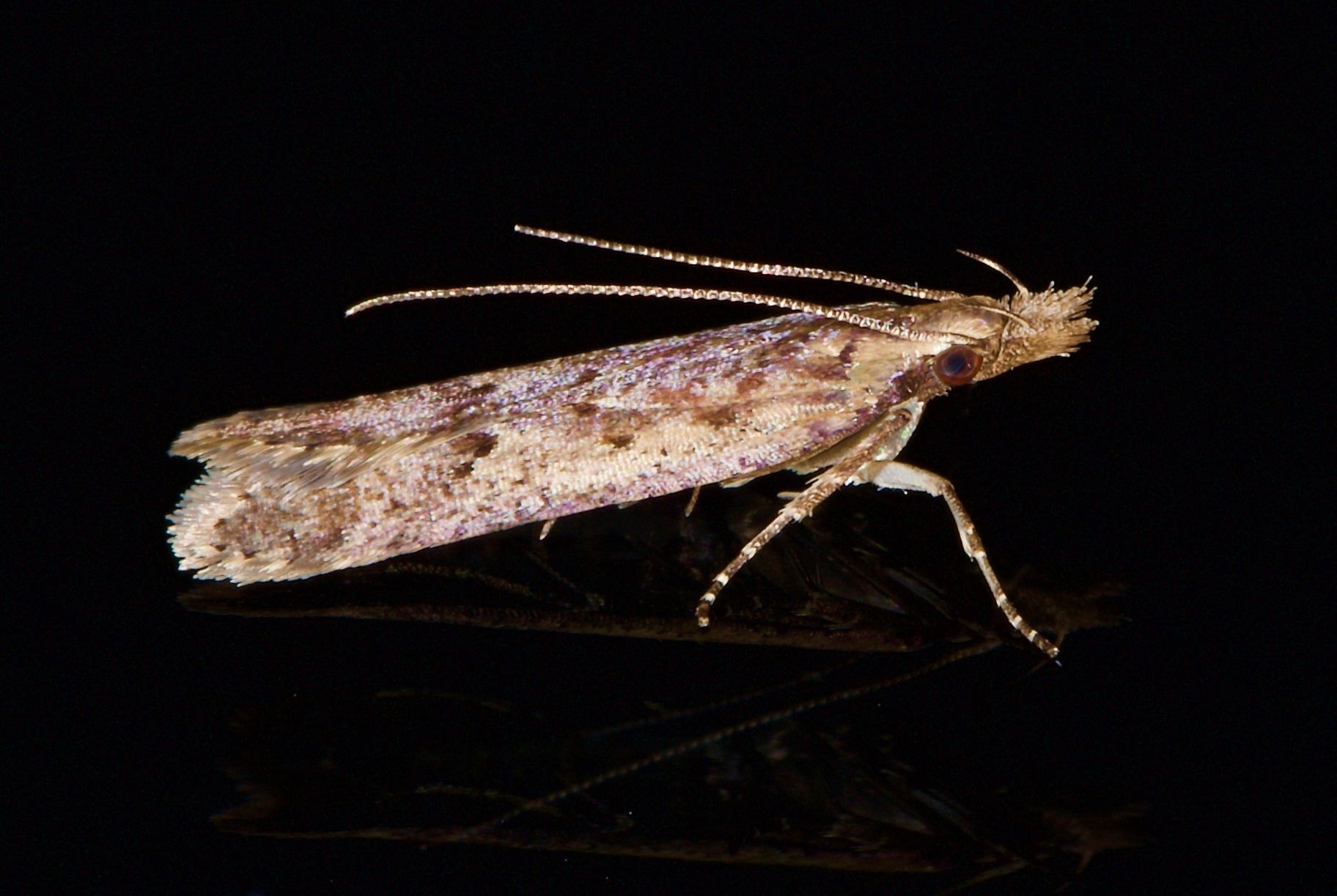
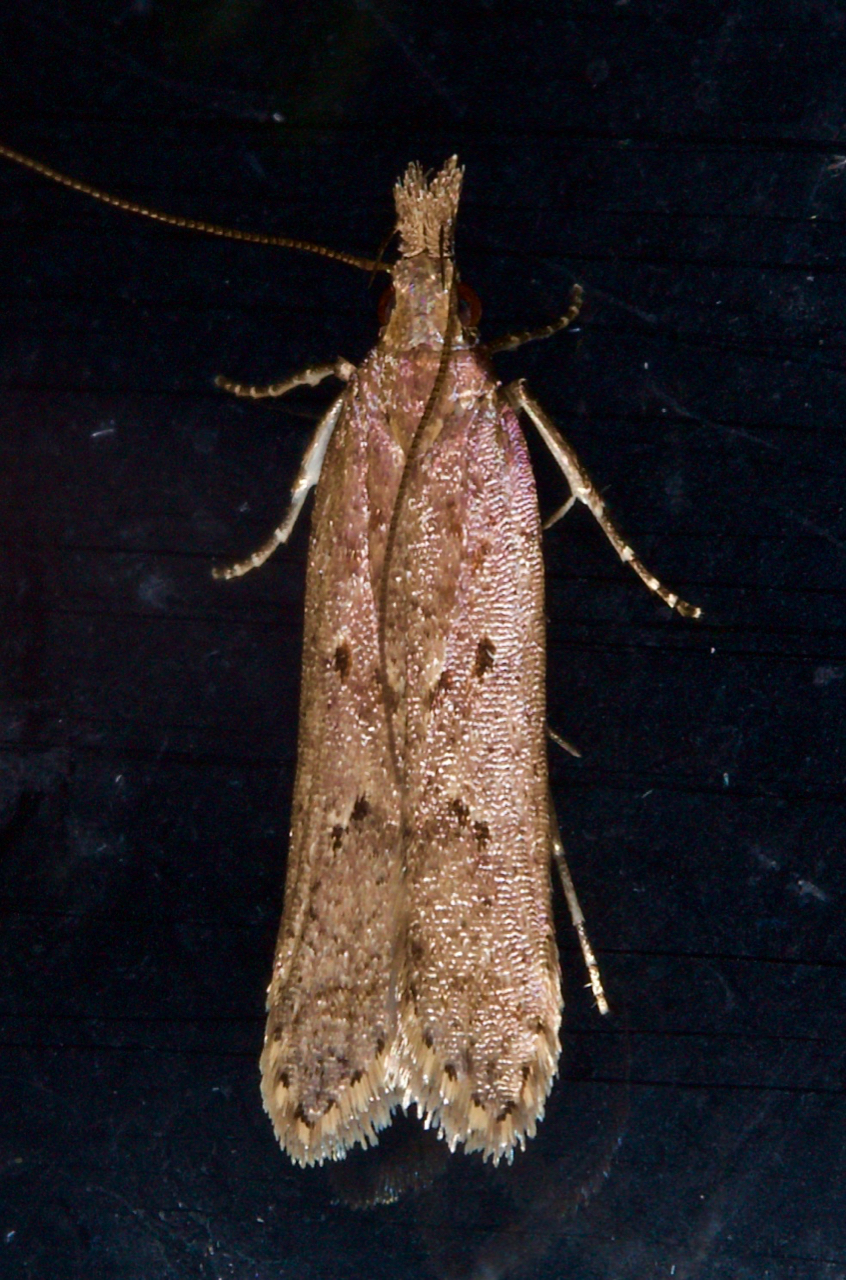
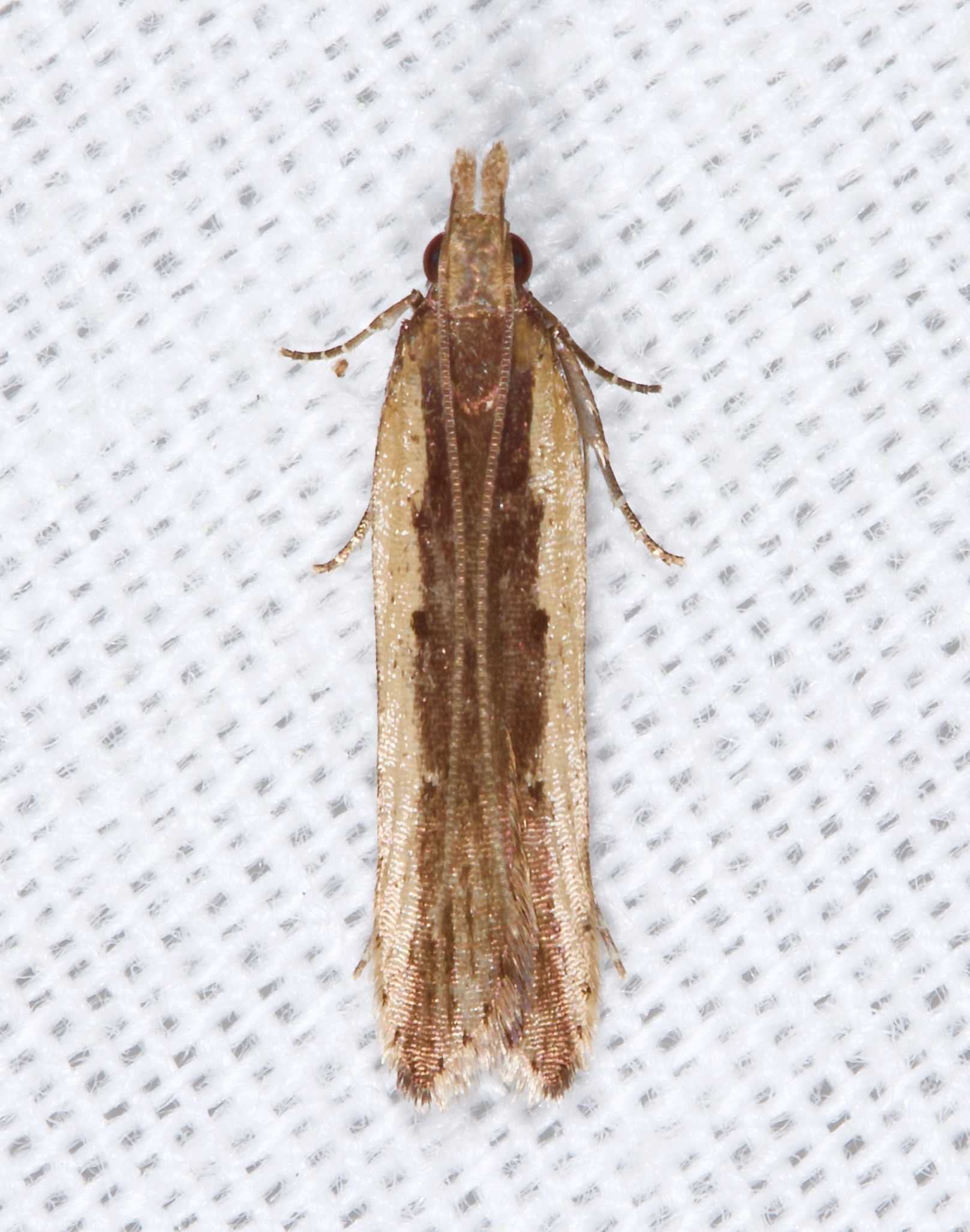
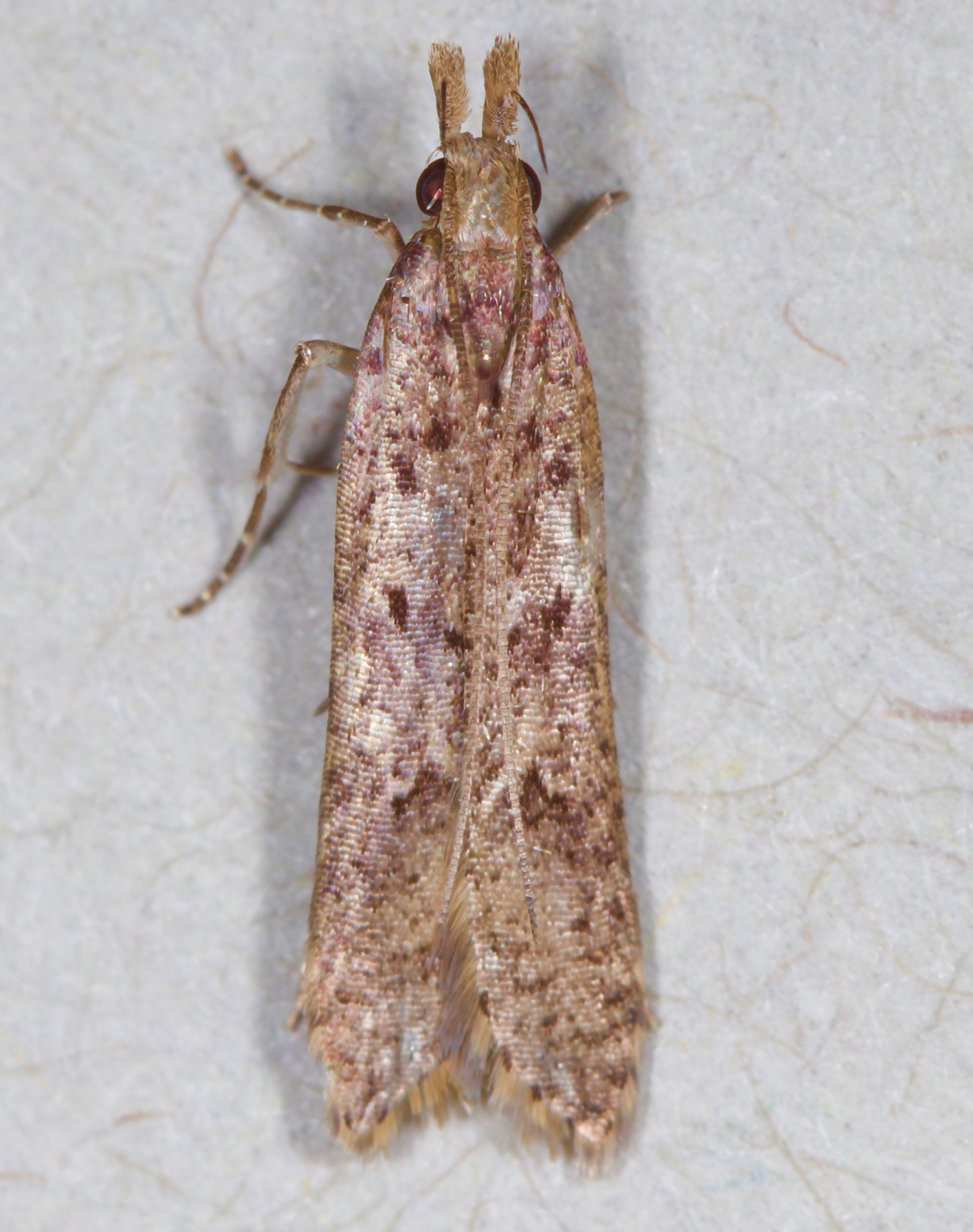
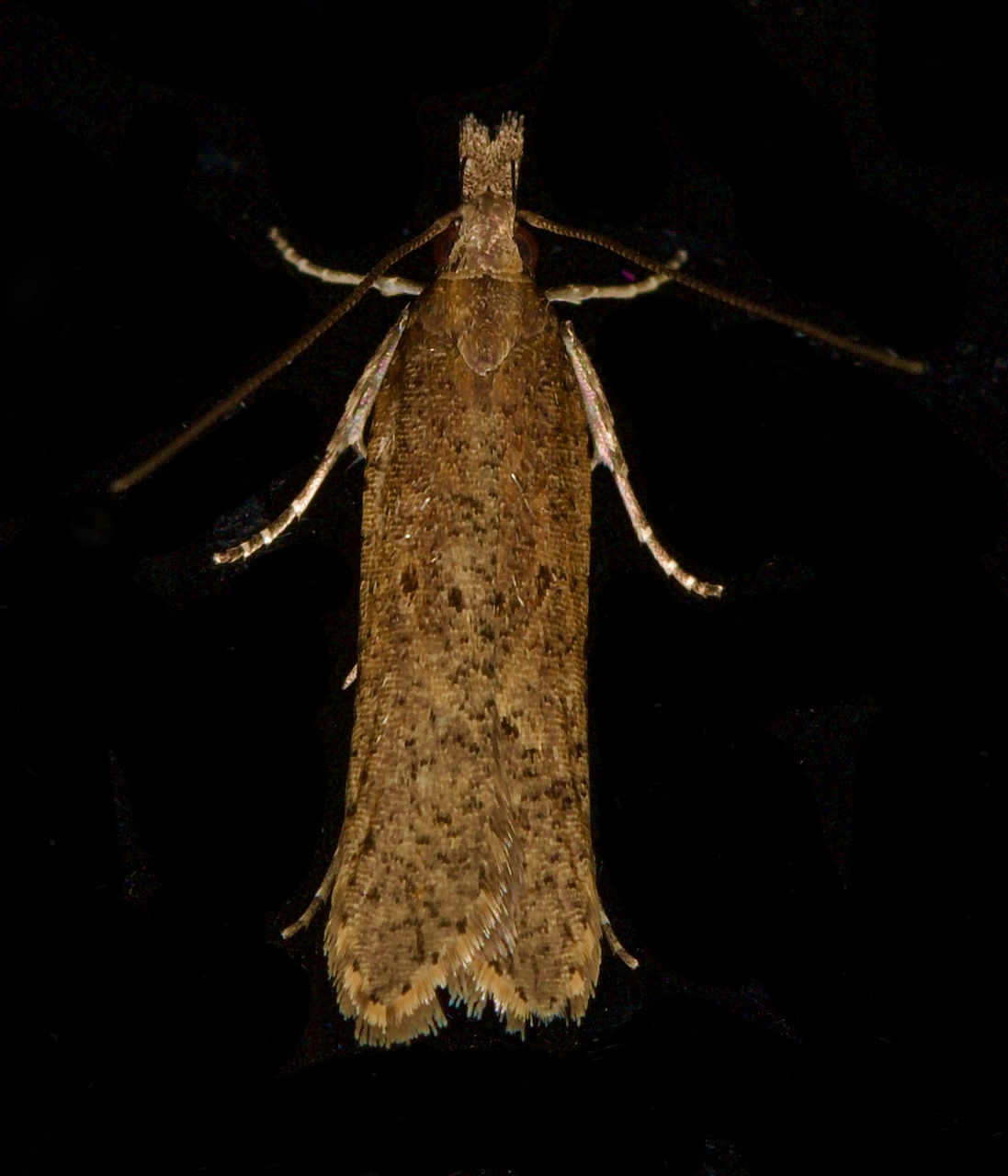
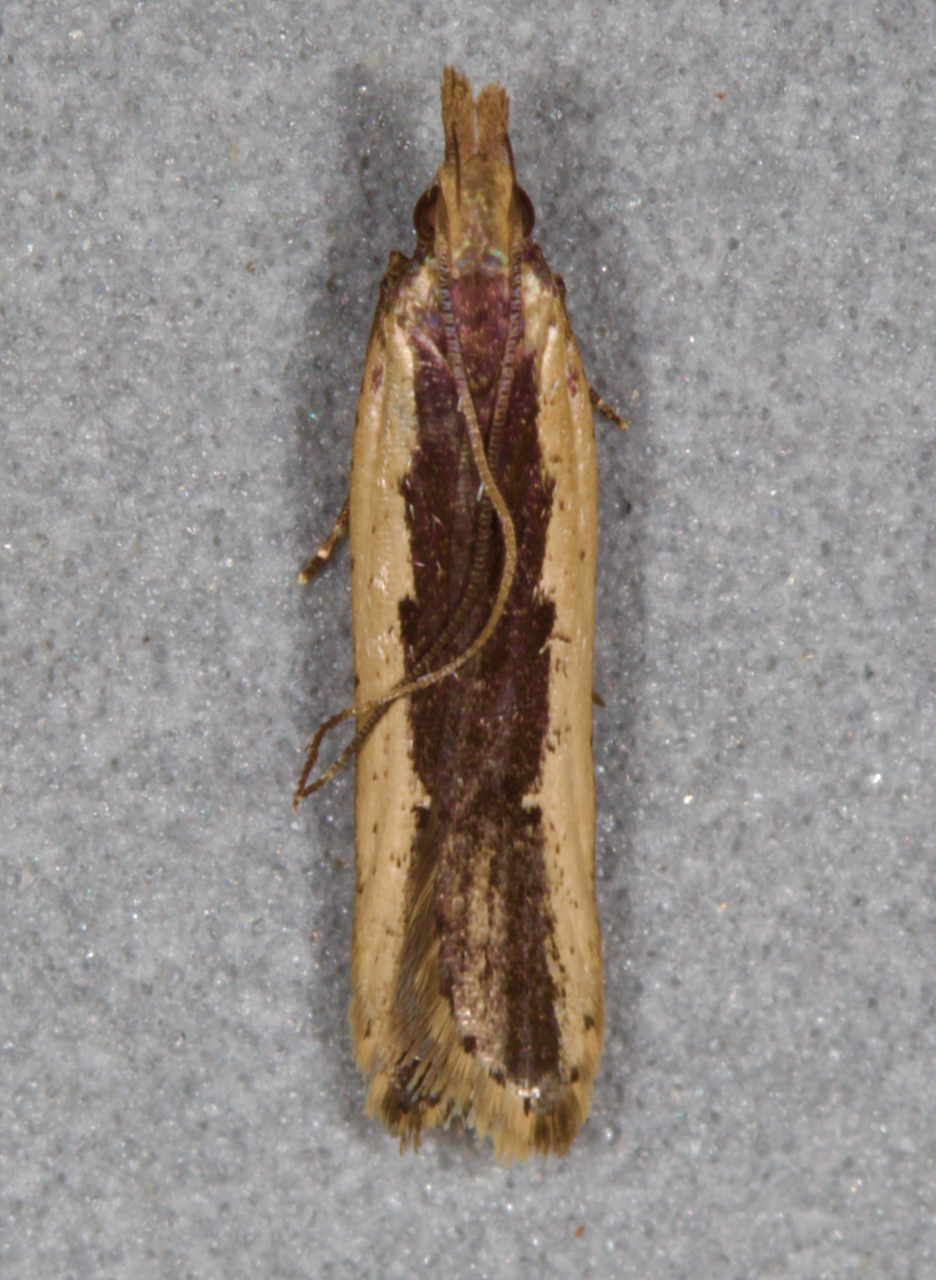
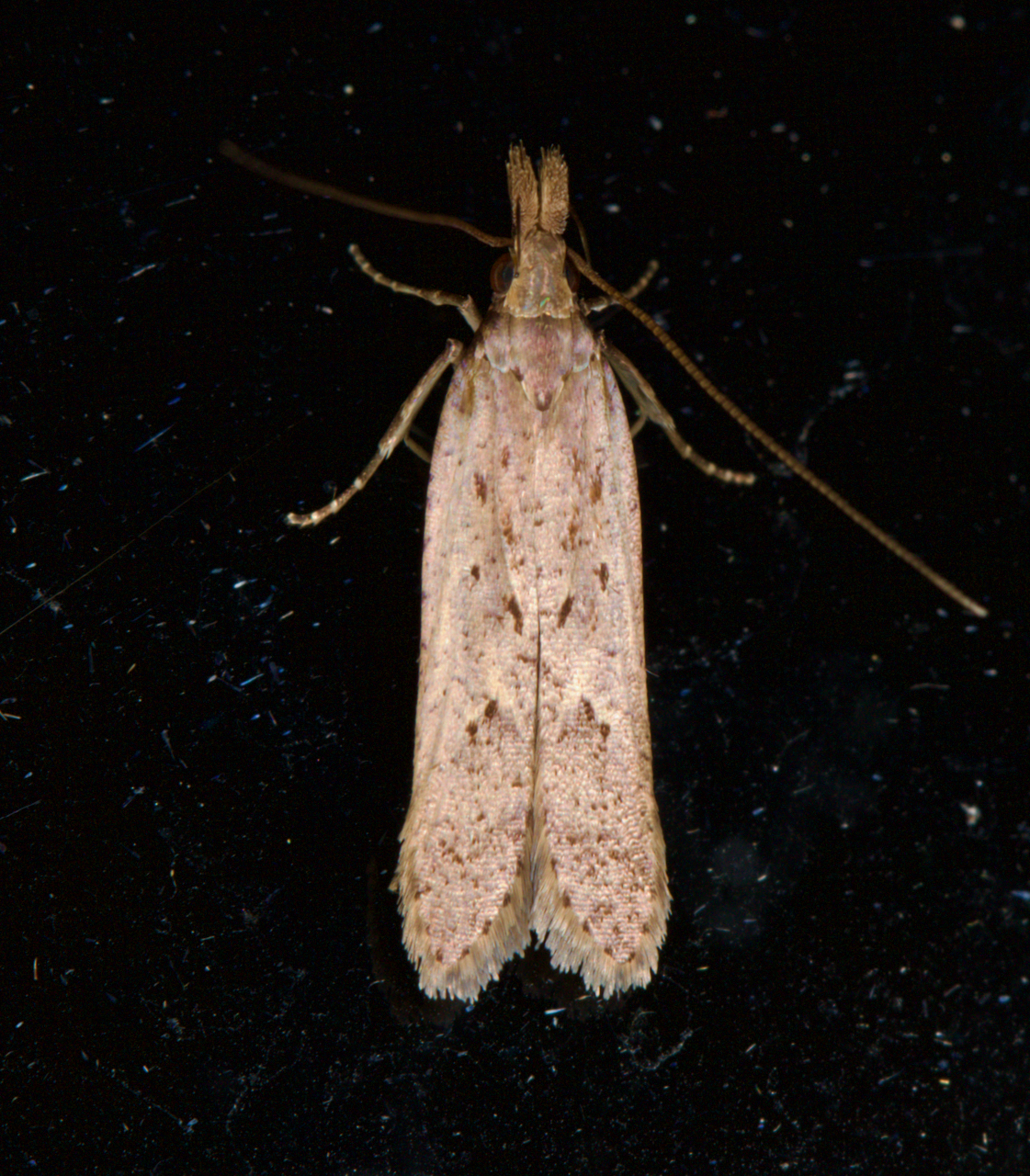
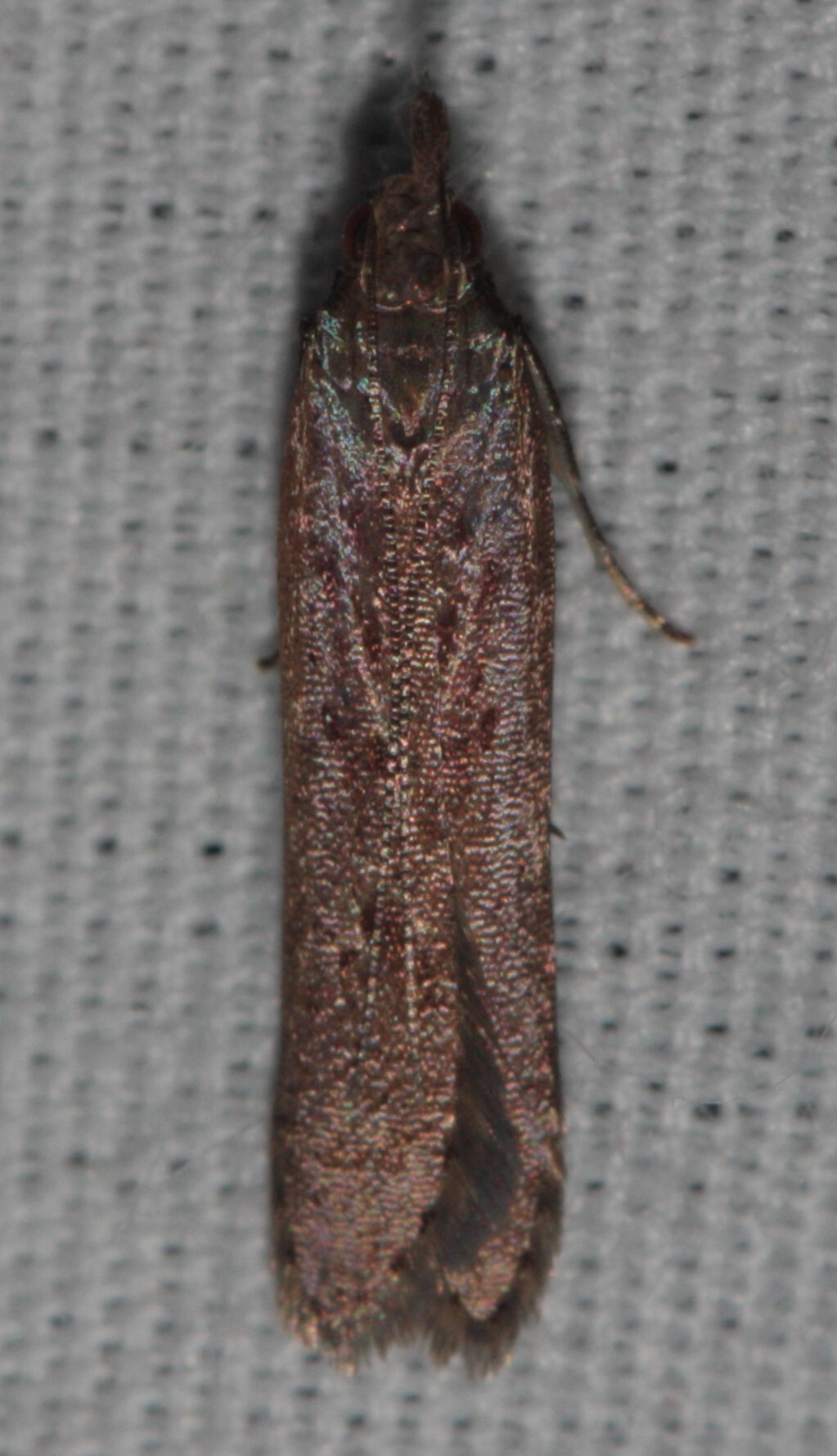
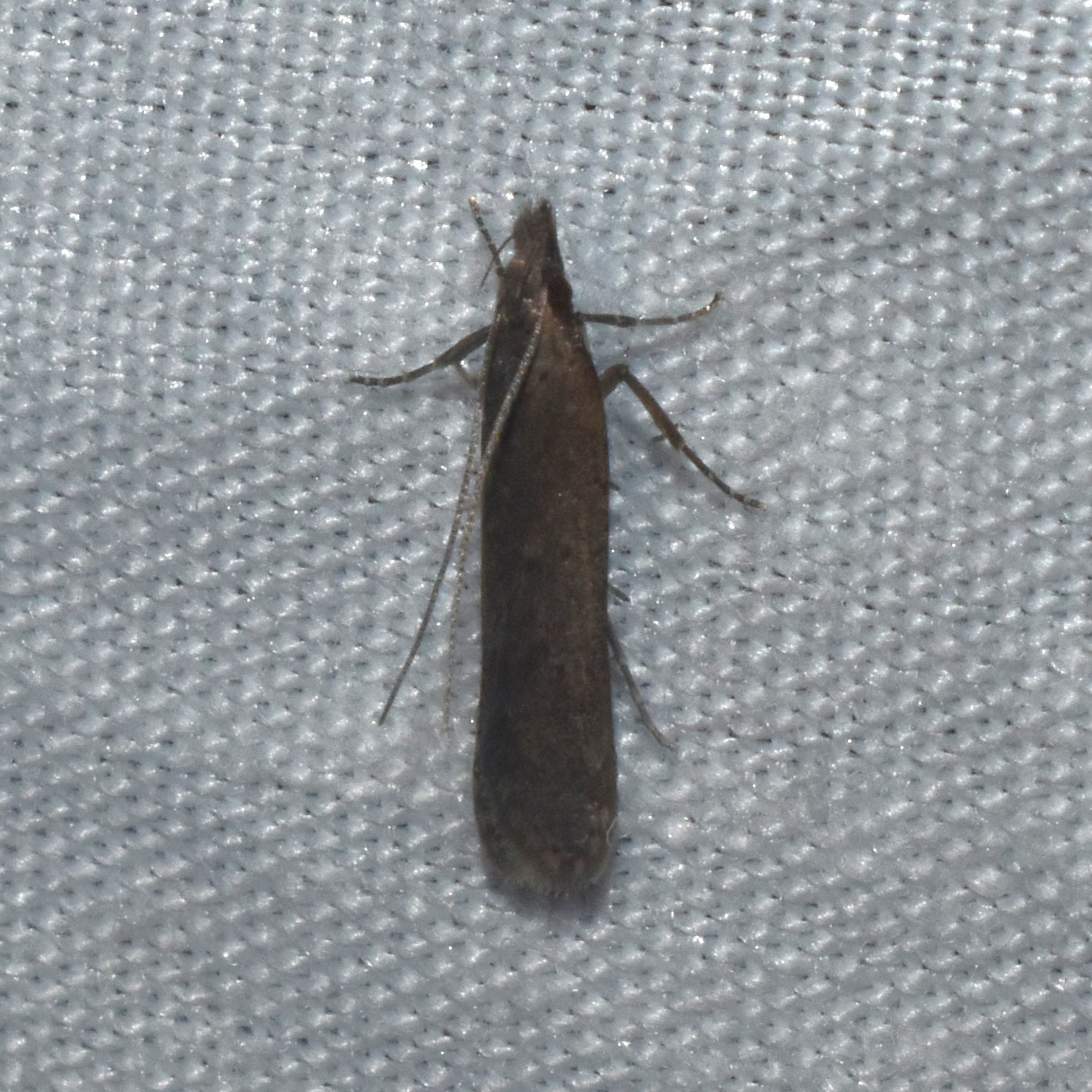
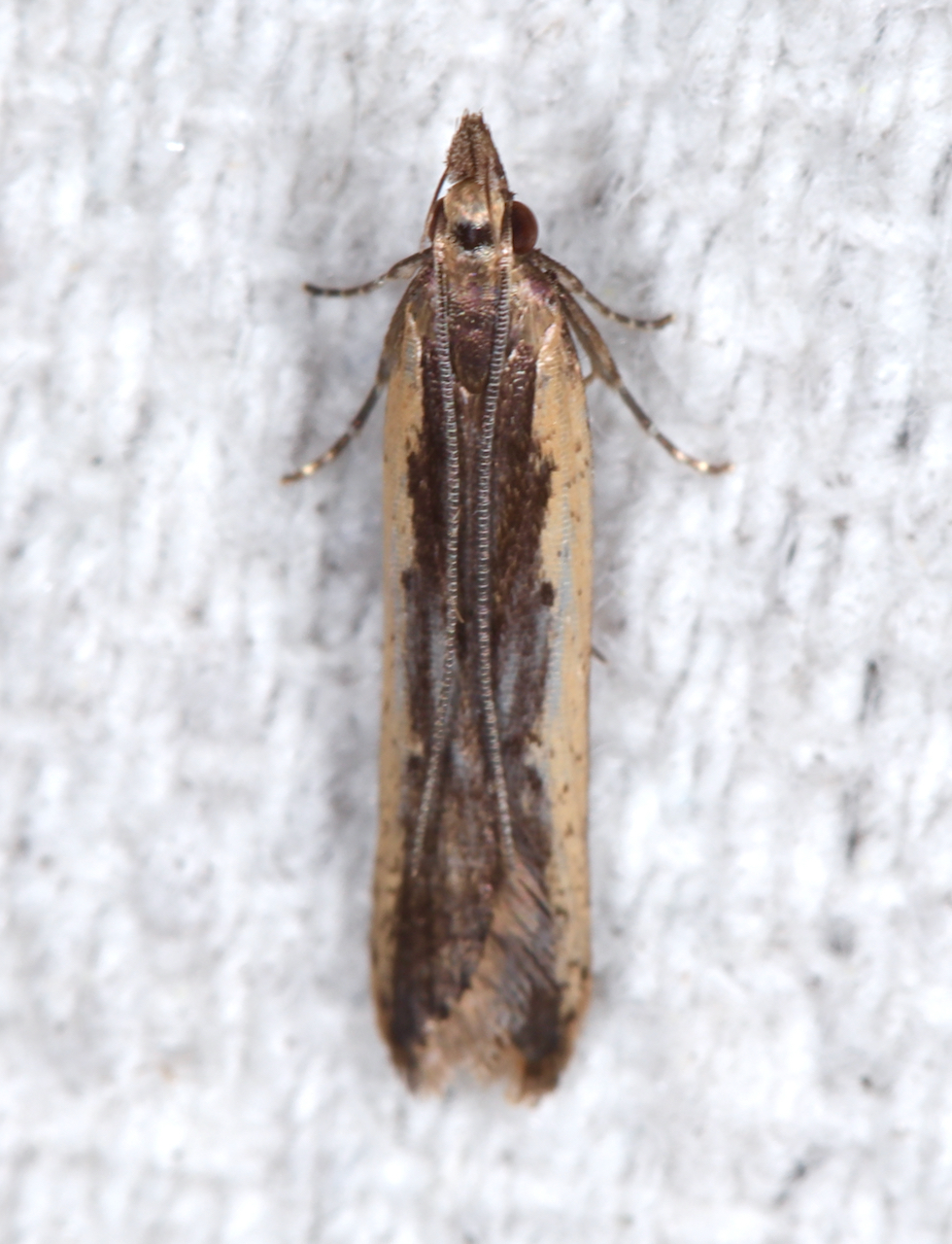
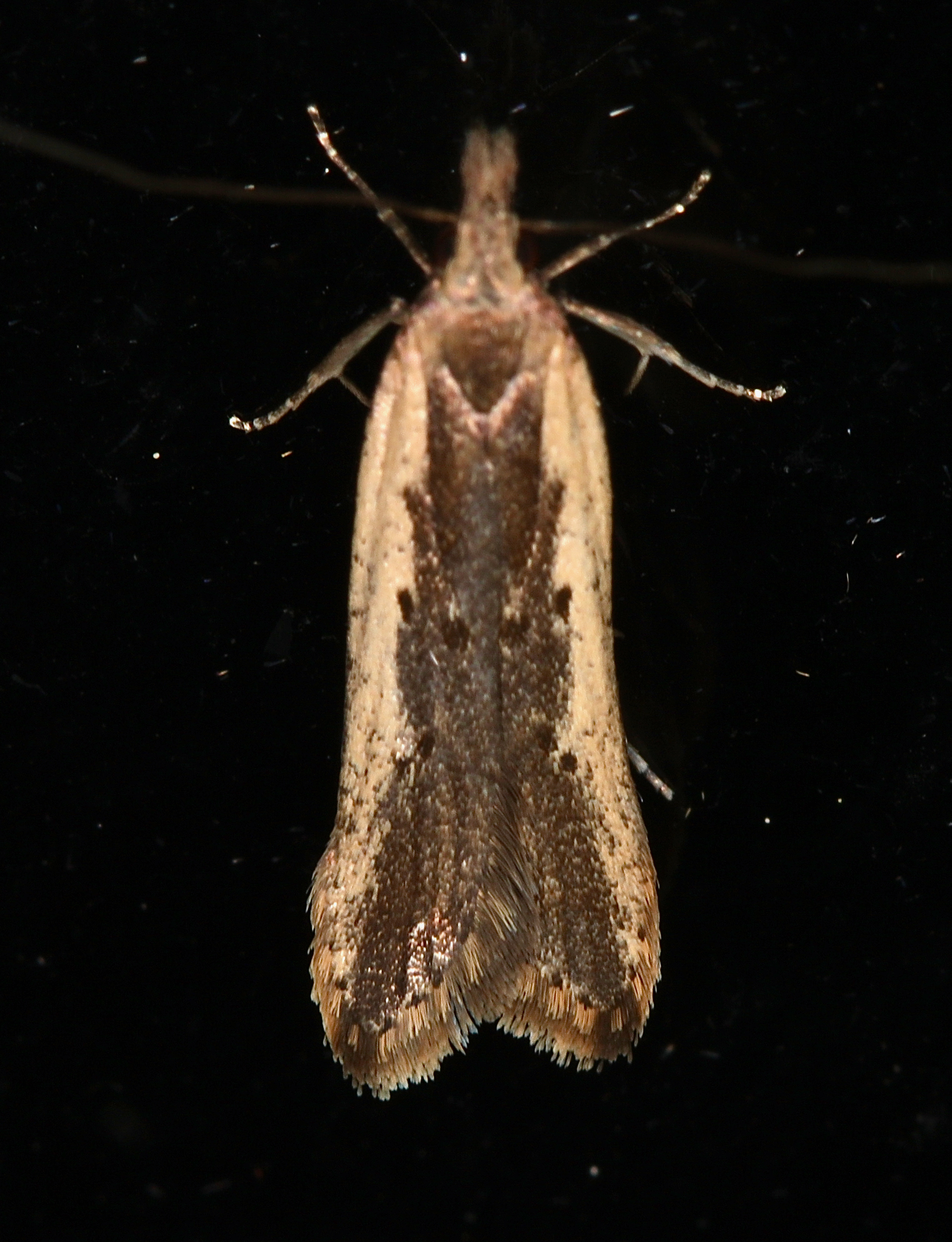
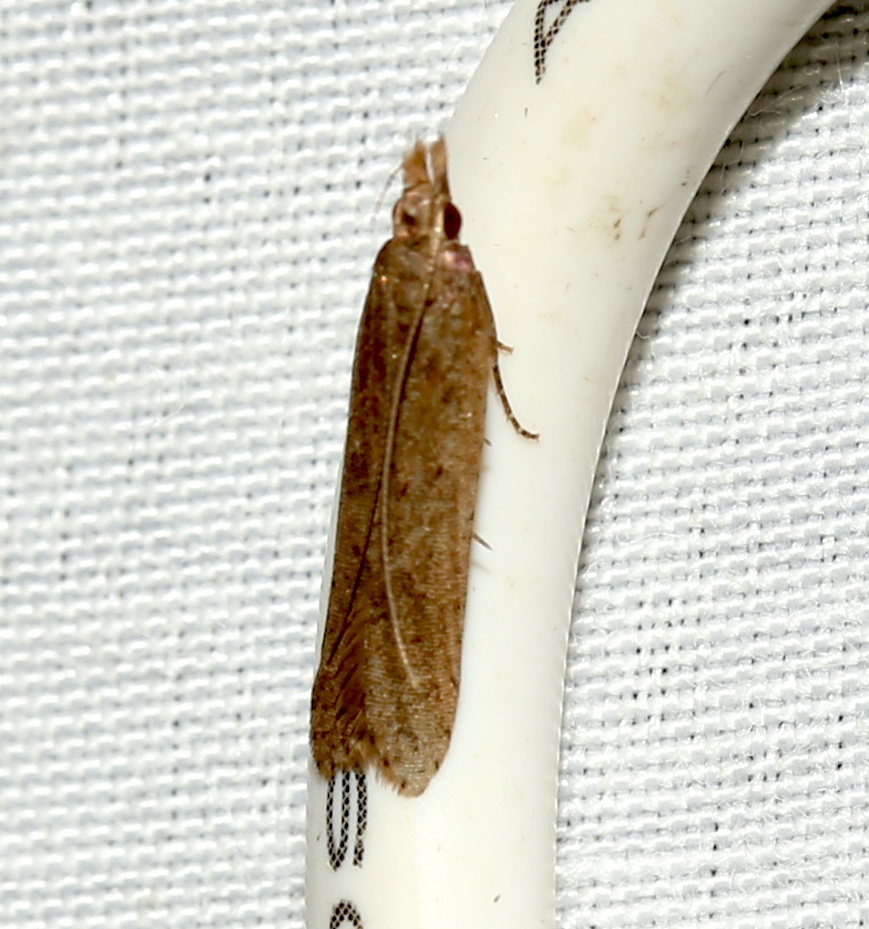
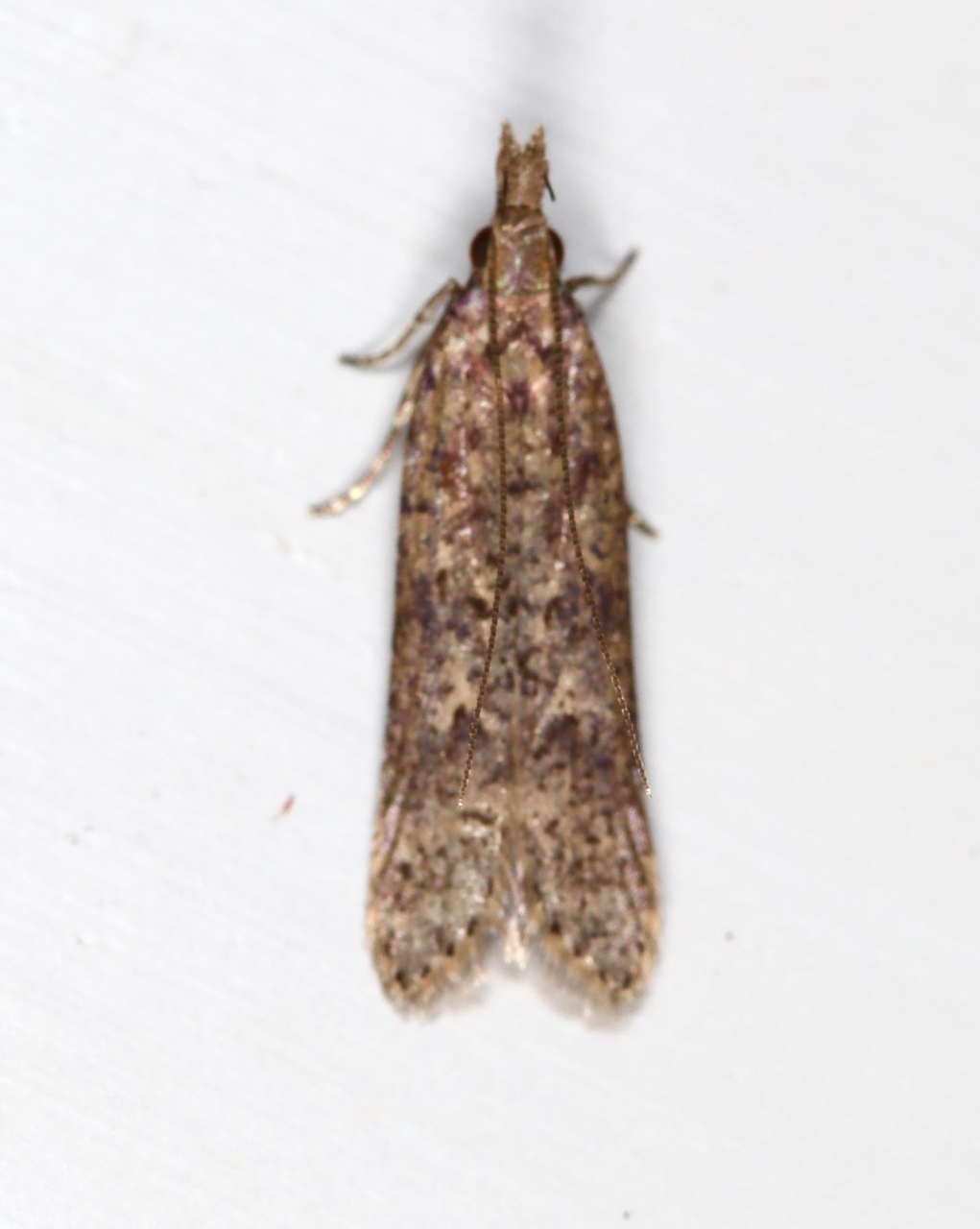
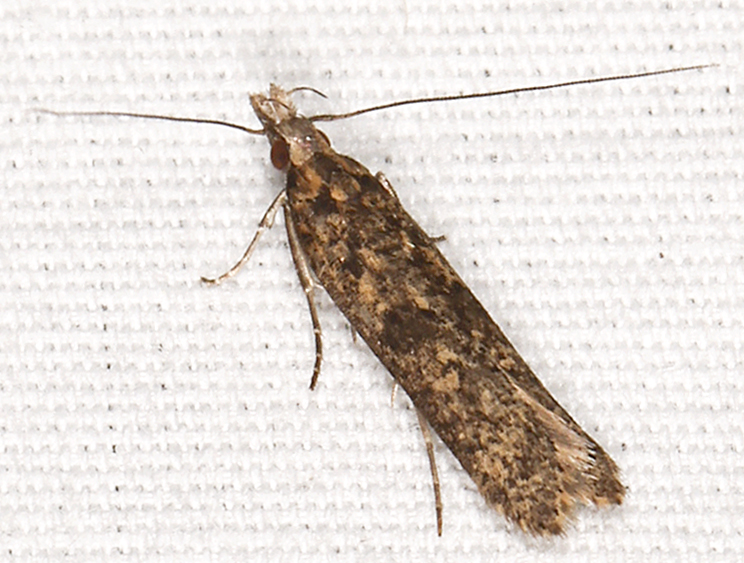
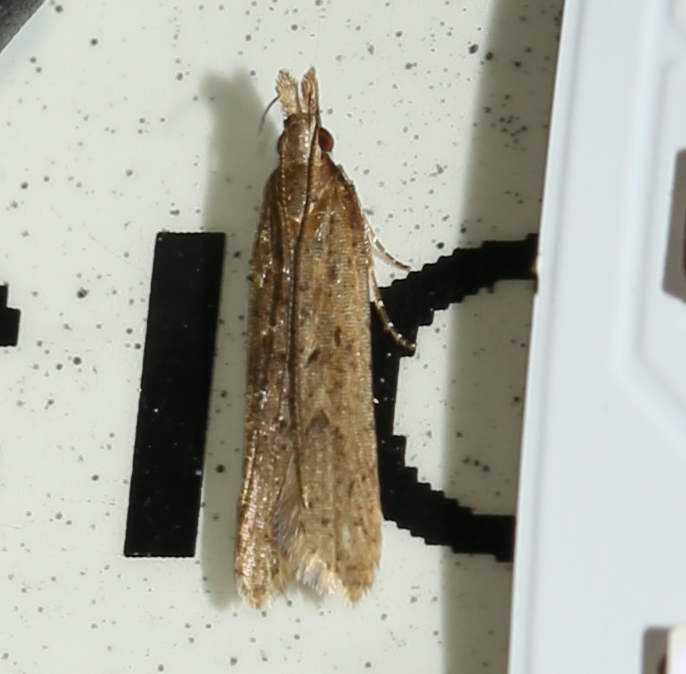
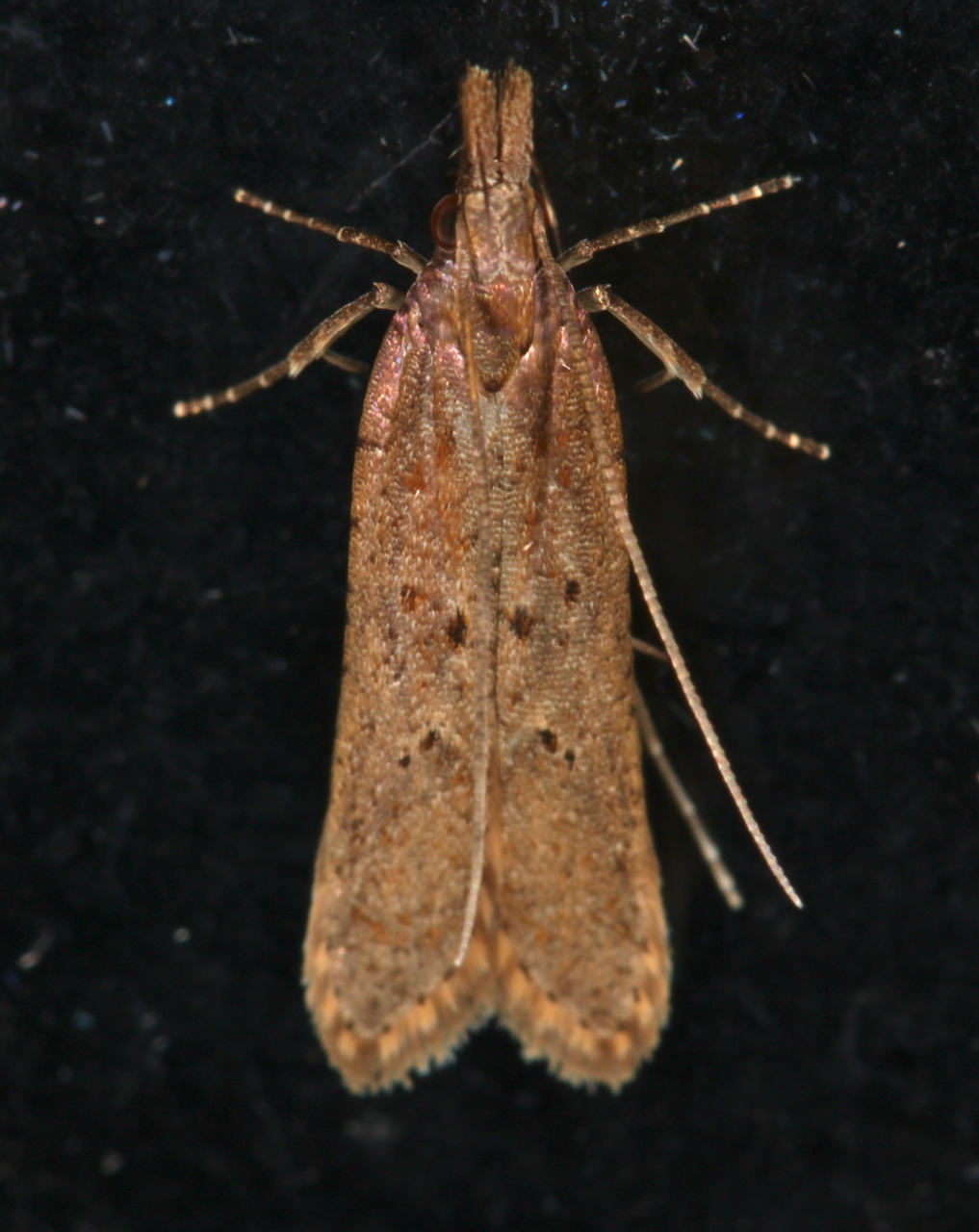
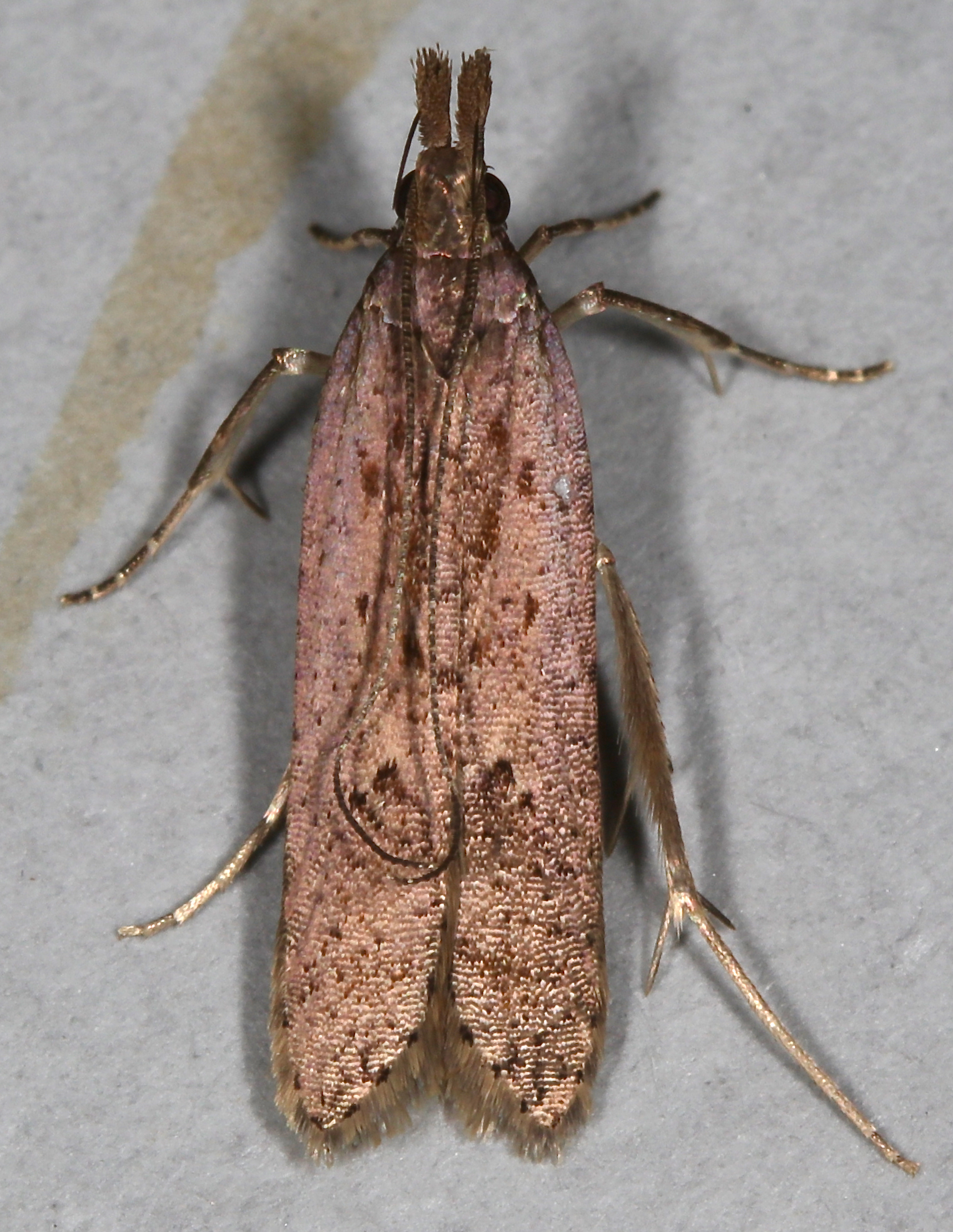
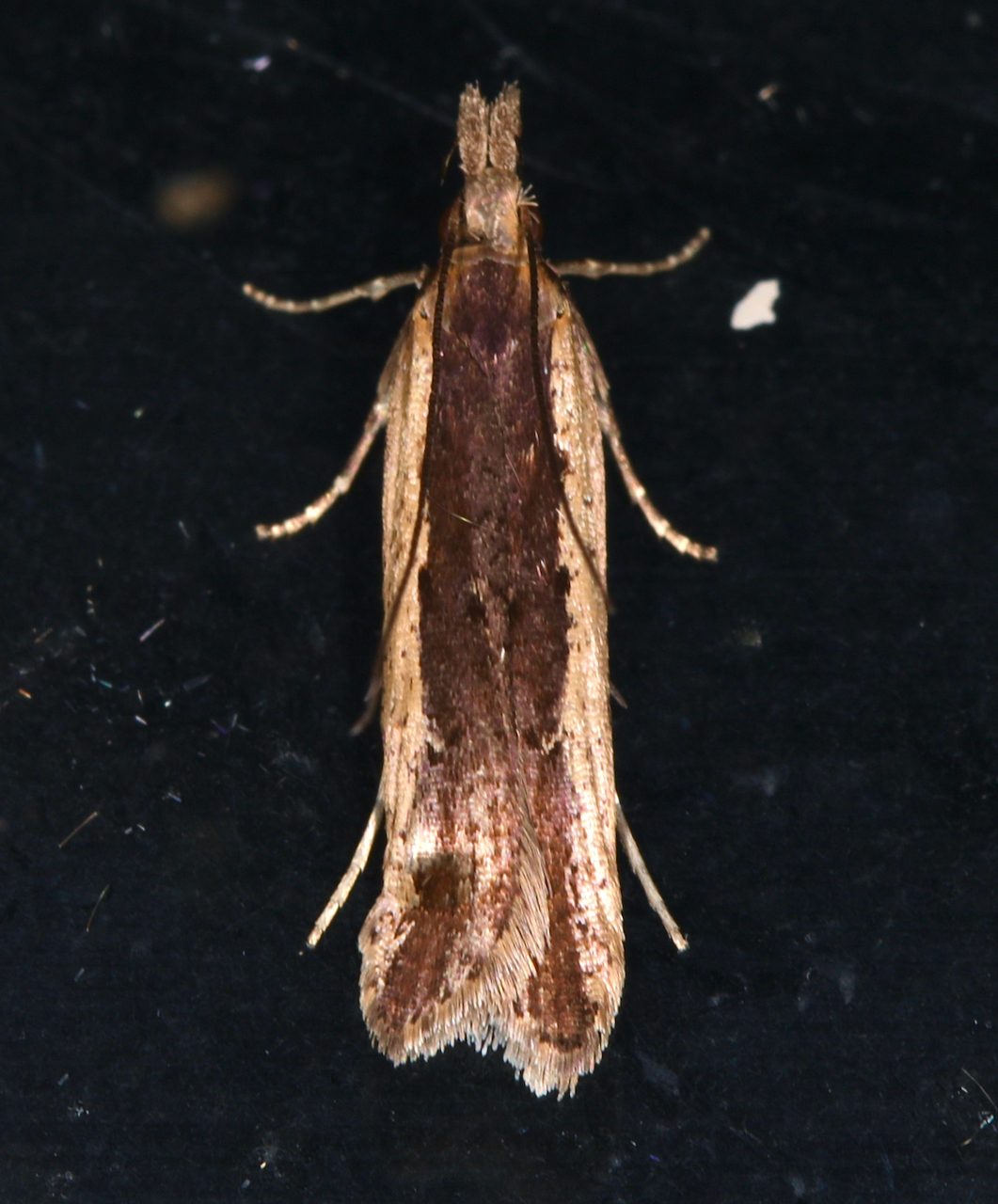
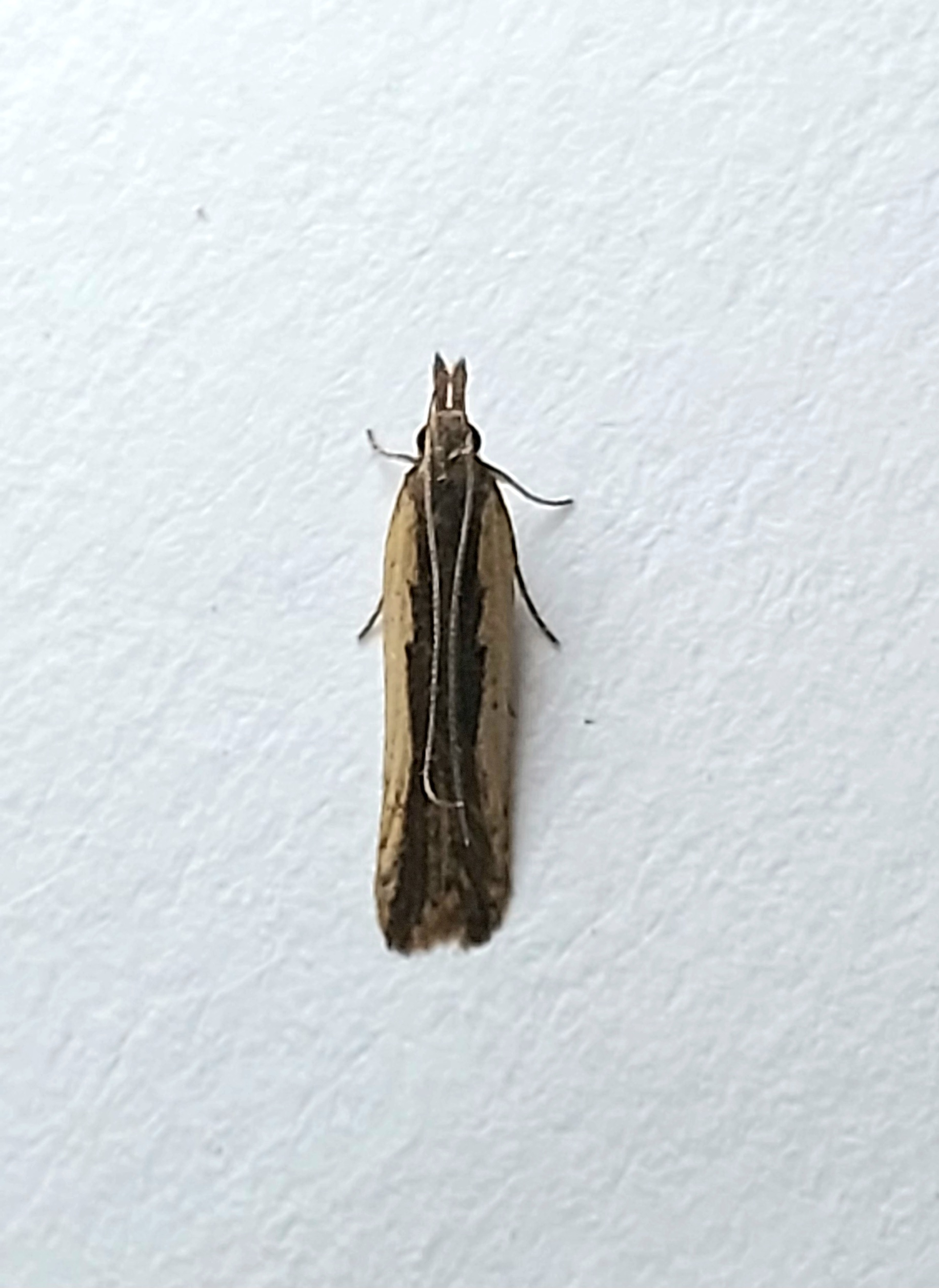
Dichomeris ligulellaDichomeris ligulellaDichomeris ligulellaDichomeris ligulella
Taxonomy
Superfamily:
Gelechioidea
Family:
Gelechiidae
Subfamily:
Dichomeridinae
P3 Number:
59a0510
MONA Number:
2281.00
Species Status: This is a common species throughout most of its range. Relatively rare regional outbreaks have occurred historically in New England and other northern localities that resulted in major defoliation events, particularly of oaks and apples. Populations typically drop back to baseline levels within a year or two and may remain there for decades before another major outbreak occurs (Slingerland, 1901; Chapman and Lienk, 1971; Hodges, 1986). The common name 'palmerworm' apparently originated after a massive outbreak of this species in 1791 in New England (Slingerland, 1901; Chapman and Lienk, 1971). Palmer mean 'wanderer' and referred to pilgrims who visited the Holy Land and brought back a palm frond as proof of their journey.
Identification
Field Guide Descriptions: Covell (1984); Beadle and Leckie (2012)Online Resources: MPG, BugGuide, iNaturalist, Google, BAMONA, GBIF, BOLDTechnical Description, Adults: Hodges (1986)Technical Description, Immature Stages: Chapman and Lienk (1971)                                                                                 
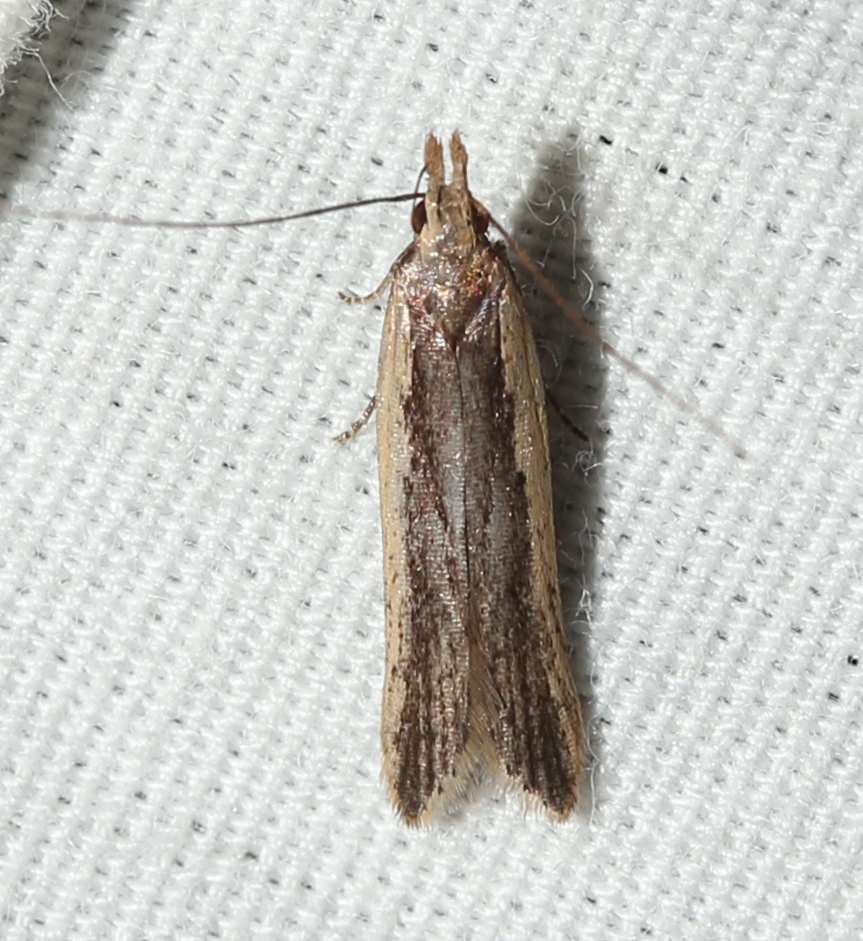
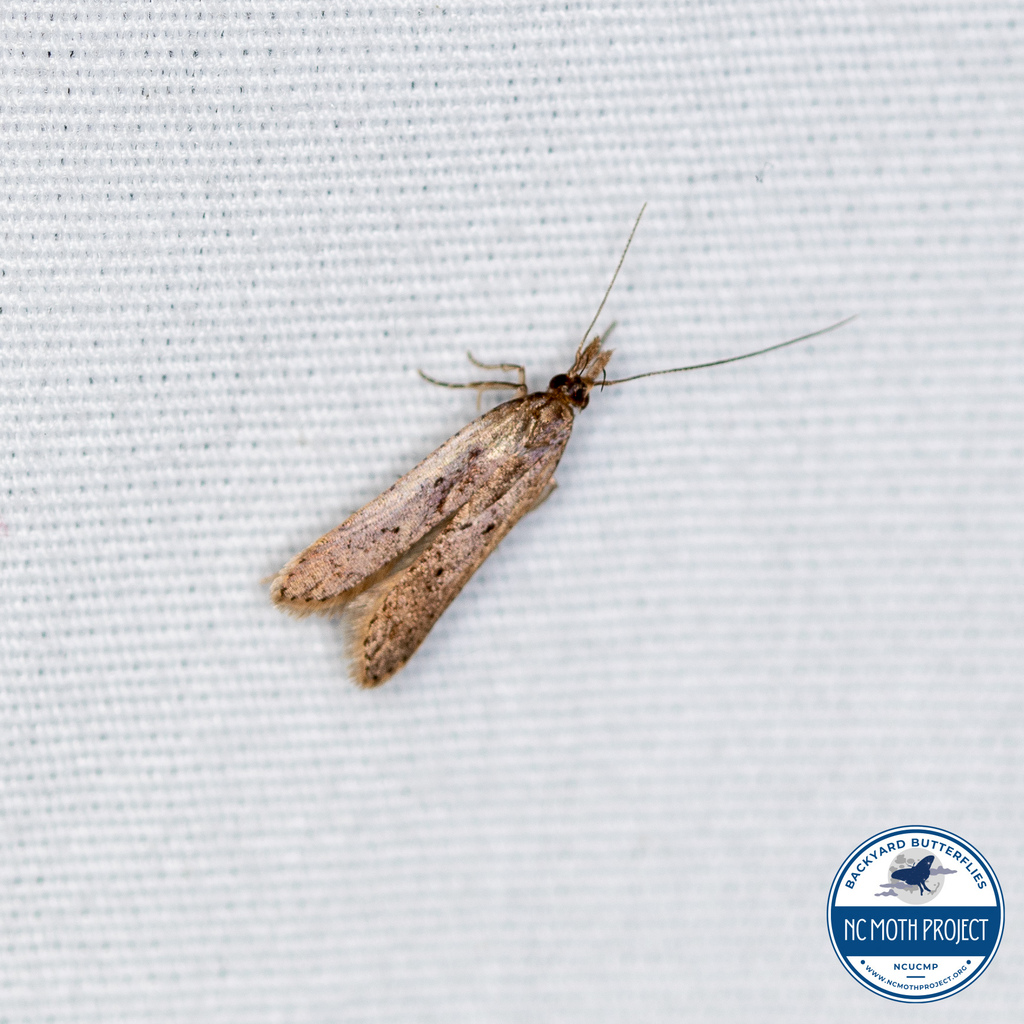
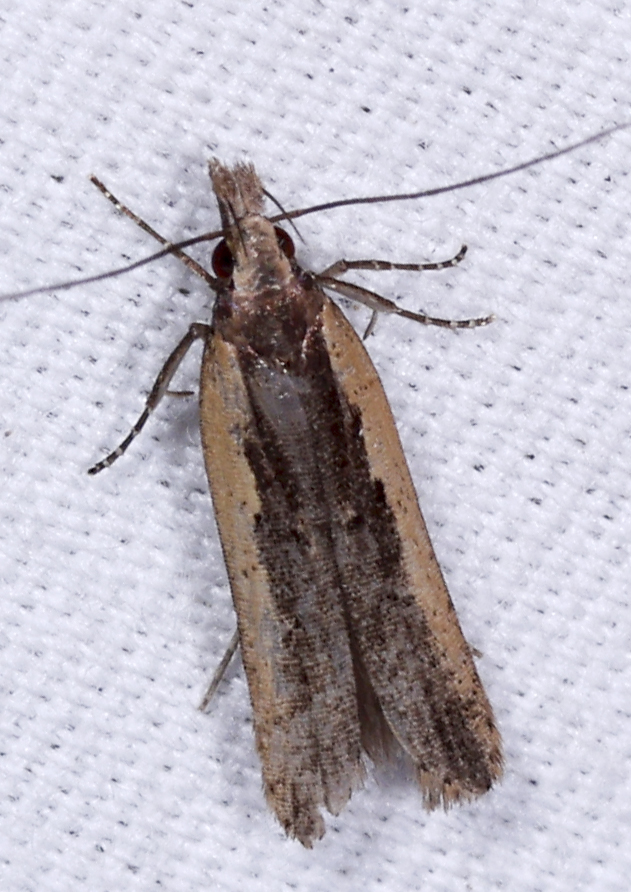
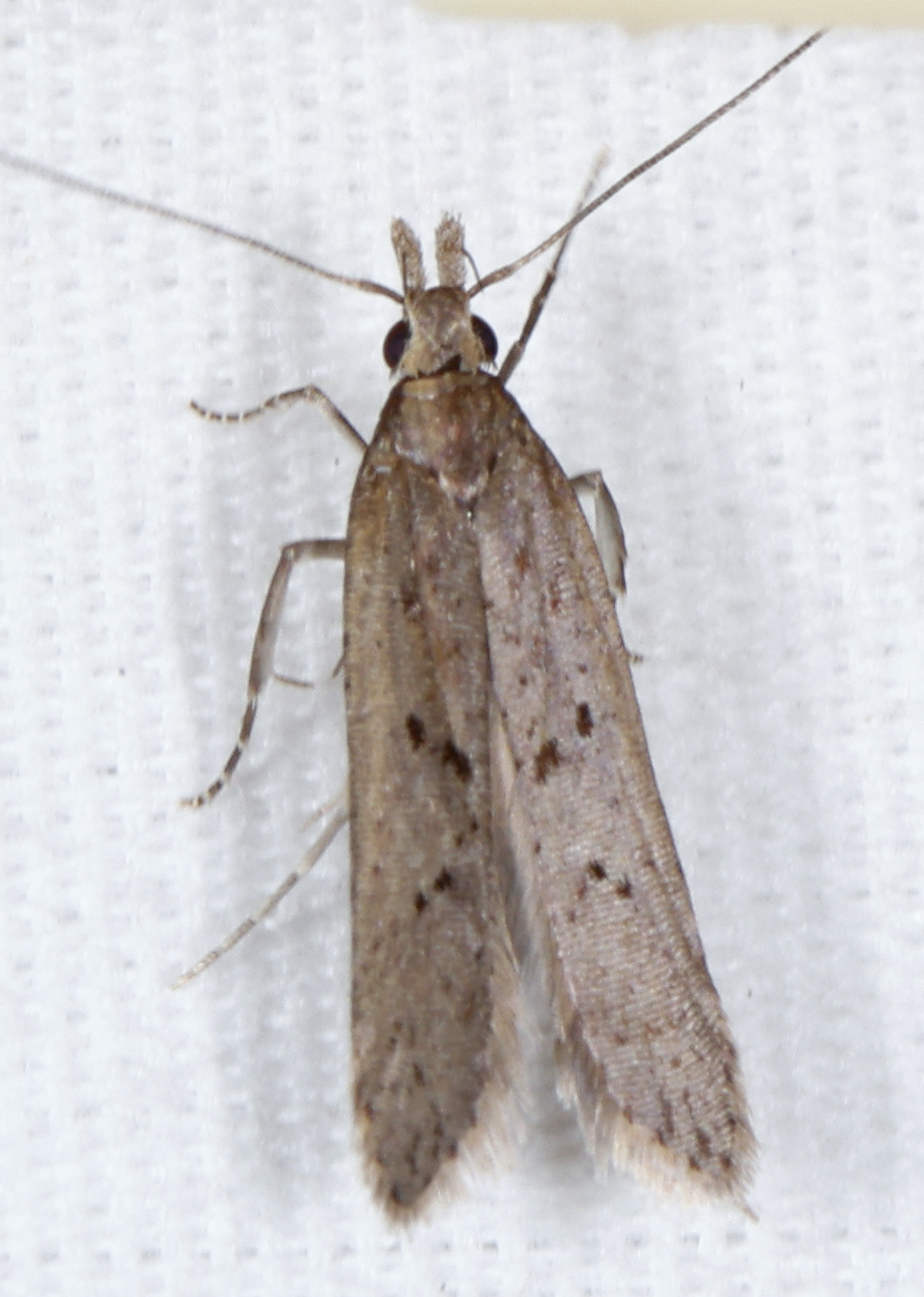
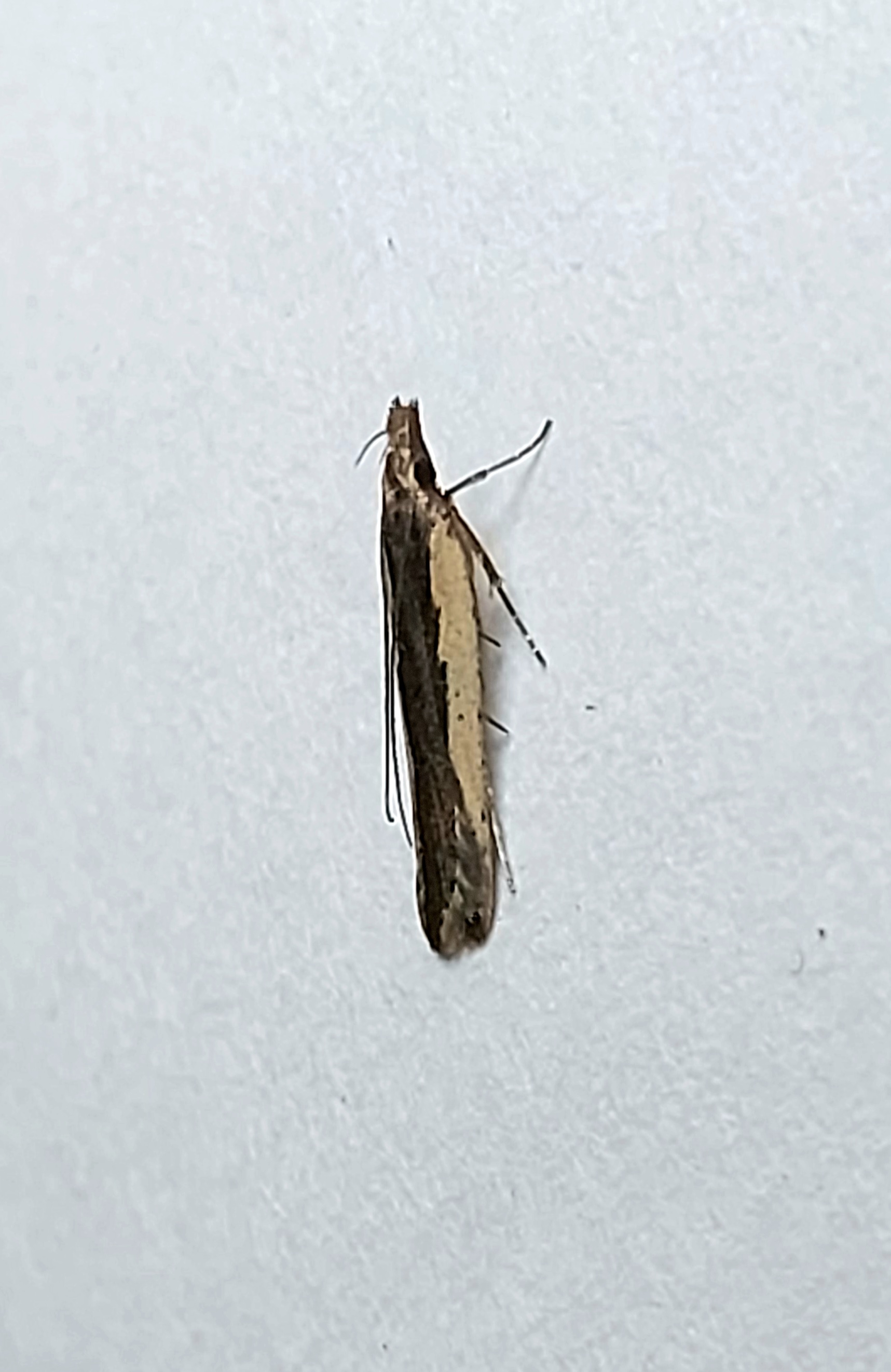
Adult Markings: Dichomeris ligulella is rather easily recognized by its color patterning, elongated and narrow wings, a labial palp with a prominent scale tuft that projects forward, and a slender, upright third segment that curves rearward and tapers to an acute apex. The adults have two color morphs that occur in both sexes. The first, and here referred to as the 'light morph', varies from rather uniformly light brown to light grayish, and has varying degrees of scattered darker flecking. The forewing of fresh specimens has four dark spots that include a pair just before and beyond the middle. In the proximal pair the spot closest to the inner margin is slightly posterior to the other spot, while the reverse occurs for the distal pair beyond the middle. A row of dark spots is also present at the wing tip that begins in the subapical area and continues along the termen. The second color morph, here referred to as the 'dark morph', has a conspicuous dark brown to brownish-black longitudinal band that extends along the dorsal half from the wing base to the wing tip. The band tends to be somewhat jagged on the proximal half, with two small teeth on the outer edge of the band.

The dark morph can be confused with two other Dichomeris that are found in coastal areas (D. bolize and D. pelta). These species have a yellowish to cream-colored, longitudinal band along the costa that lacks the scattered dark flecking that is typically present in D. ligulella. In D. bolize, the light costal band terminates just before reaching the apex, while in D. pelta the band terminates at the apex, as is the case with D. ligulella. Dichomeris pelta also has a small black spot in the yellow band near the base of the forewing that the other two species lack. Both of these species lack the prominent, forward-projecting, scale tufts on the labial palps that are typical of D. ligulella. Worn specimens of all three can be distinguished using genitalia.
Genitalia and other structural photos
Adult ID Requirements: Identifiable from good quality photos of unworn specimens.
Immatures and Development: The larvae feed on a variety of hardwoods. The following life history account is mostly based on studies by Slingerland (1901) and Chapman and Lienk (1971) in New York apple orchards where populations are univoltine. The adults overwinter and the females lay eggs singly on the host plants after the spring leaf-out. The larvae skeletonize leaf tissues and feed on developing fruits. They sometimes feed openly on leaves, but commonly form feeding shelters by either binding young leaves together at shoot tips, or rolling or folding portions of individual leaves. They will also occasionally feed on apple fruits and the galls of oaks (Chapman and Lienk, 1971). If disturbed, they often will drop from the leaves on silken threads where they remain suspended in the air, then return to feeding sites after a few hours. The larvae take around 4-8 weeks to reach the final instar, then pupate within folded leaves or other feeding sites. The adults emerge after about 10 days and remain in hiding places through the fall and winter months. Populations in most areas of the range appear to be univoltine.

The mature larvae are 10-15 mm long and have a pale yellowish-green abdomen with three darker olivaceous longitudinal stripes. One is mid-dorsal and relatively narrow, and the others wider and dorsolateral (Chapman and Lienk, 1971). The mid-dorsal stripe is sometimes fragmented, and all three stripes may fade posteriorly. The head is amber-colored and the prothoracic shield is dull green with darker coloration along the lateral and posterior margins that often produce two black U-shaped marks.
Larvae ID Requirements: Identifiable from good quality photos, especially where associated with known host plants.
Distribution in North Carolina
Distribution: Dichomeris ligulella is a common species that is found throughout most of the eastern US and adjoining areas on southern Canada (Saskatchewan eastward to Nova Scotia). Isolated records are also known from British Columbia and Wyoming. In the eastern US the range extends from Maine to southern Florida, and westward to central Texas, central Oklahoma, eastern Kansas, eastern Nebraska, Minnesota, and northeastern North Dakota. This species occurs statewide in North Carolina, from barrier islands to higher elevation slopes in the Blue Ridge.
County Map: Clicking on a county returns the records for the species in that county.
Dichomeris ligulellaAlamance Alexander Alleghany Anson Ashe Avery Beaufort Bertie Bladen Brunswick Buncombe Burke Cabarrus Caldwell Camden Carteret Caswell Catawba Chatham Cherokee Chowan Clay Cleveland Columbus Craven Cumberland Currituck Dare Davidson Davie Duplin Durham Edgecombe Forsyth Franklin Gaston Gates Graham Granville Greene Guilford Halifax Harnett Haywood Henderson Hertford Hoke Hyde Iredell Jackson Johnston Jones Lee Lenoir Lincoln Macon Madison Martin McDowell Mecklenburg Mitchell Montgomery Moore Nash New Hanover Northampton Onslow Orange Pamlico Pasquotank Pender Perquimans Person Pitt Polk Randolph Richmond Robeson Rockingham Rowan Rutherford Sampson Scotland Stanly Stokes Surry Swain Transylvania Tyrrell Union Vance Wake Warren Washington Watauga Wayne Wilkes Wilson Yadkin Yancey
Flight Dates:
 High Mountains (HM) ≥ 4,000 ft.
 Low Mountains (LM) < 4,000 ft.
 Piedmont (Pd)
 Coastal Plain (CP)

Click on graph to enlarge
Image showing flight dates by month for High Mountains greater than 4,000 feet, Low Mountains, Piedmont, and Coastal Plain: adults.
Flight Comments: The adults have been found in every month of the year in different areas of the range. Populations in most areas appear to be univoltine, with the adults surviving in some cases for 9-10 months before breeding and laying eggs in the spring and early summer. As of 2025 we have records for all but the coldest months of the year, with the overwintering adults sometimes appearing at lights on warm fall and winter nights. Our phenology graphs suggest that many local populations in North Carolina produce two broods per year.
Habitats and Life History
Habitats: Our records come from a wide range of hardwood-containing habitats, including maritime forests, bottomland forests, and mesic slopes. The majority come from semi-wooded residential neighborhoods.
Larval Host Plants: The larvae feed on a wide range of hardwood species, with oaks appearing to be the primary hosts (Chapman and Lienk, 1971; Craighead et al., 1950; Prentice, 1966; Covell, 1984; Hodges, 1986; Linit et al., 1986; Godfrey et al., 1987; Heppner, 2007; Robinson et al., 2010; Marquis et al., 2019). The reported hosts include Silver Maple (Acer saccharinum), Sugar Maple (A. saccharum), Paper Birch (Betula papyrifera), Shagbark Hickory (Carya ovata), American Chestnut (Castanea dentata), hackberries (Celtis), hazelnuts (Corylus), Quince (Cydonia oblonga), American Witch-hazel (Hamamelis virginiana), Black Walnut (Juglans nigra), Sweet Crabapple (Malus coronaria), Common Apple (M. domestica), Sourwood (Oxydendrum arboreum), Bigtooth Aspen (Populus grandidentata), Quaking Aspen (P. tremuloides), American Plum (Prunus americana), pears (Pyrus), White Oak (Quercus alba), Scarlet Oak (Q. coccinea), Shingle Oak (Q. imbricaria), Bur Oak (Q. macrocarpa), Chinquapin Oak (Q. muehlenbergii), Northern Red Oak (Q. rubra), Post Oak (Q. stellata), Black Oak (Q. velutina), Rhododendron, goldenrods (Solidago spp.), American Basswood (Tilia americana), and Northern Highbush Blueberry (Vaccinium corymbosum). As of 2025, we do not have any feeding records for North Carolina. - View
Observation Methods: The adults are attracted to lights. More information is needed on host use in North Carolina.
Wikipedia
See also Habitat Account for General Hardwood Forests
Status in North Carolina
Natural Heritage Program Status:
Natural Heritage Program Ranks: GNR S5
State Protection: Has no legal protection, although permits are required to collect it on state parks and other public lands.
Comments: This is a very common and widespread polyphagous species that appears to be secure within the state.

 Photo Gallery for Dichomeris ligulella - Palmerworm Moth

185 photos are available. Only the most recent 30 are shown.
Dichomeris ligulella
Recorded by: Mark Basinger on 2025-11-23
Rowan Co.
Comment:
Dichomeris ligulella
Recorded by: Jim Petranka on 2025-11-20
Madison Co.
Comment:
Dichomeris ligulella
Recorded by: Jim Petranka on 2025-11-15
Madison Co.
Comment: Specimen was dissected (male).
Dichomeris ligulella
Recorded by: Jim Petranka on 2025-11-08
Madison Co.
Comment:
Dichomeris ligulella
Recorded by: Nora Murdock on 2025-11-05
Henderson Co.
Comment:
Dichomeris ligulella
Recorded by: Nora Murdock on 2025-11-05
Henderson Co.
Comment:
Dichomeris ligulella
Recorded by: Jim Petranka on 2025-11-05
Madison Co.
Comment:
Dichomeris ligulella
Recorded by: Lior S. Carlson, Dean Furbish, John F. Jarvis, S. L. Reeves on 2025-11-05
Orange Co.
Comment:
Dichomeris ligulella
Recorded by: Jim Petranka, Becky Elkin, Marilyn Westphal, Nora Murdock on 2025-08-25
Henderson Co.
Comment:
Dichomeris ligulella
Recorded by: David George, Dale Morgan, Patrick Coin, Julie Tuttle, Becky Watkins, et al. on 2025-07-26
Orange Co.
Comment:
Dichomeris ligulella
Recorded by: David George, Jeff Niznik, Brian Bockhahn, Jim Petranka, John Petranka, Becky Elkin on 2025-05-09
Cumberland Co.
Comment:
Dichomeris ligulella
Recorded by: Jim Petranka on 2025-05-01
Madison Co.
Comment:
Dichomeris ligulella
Recorded by: Dean Furbish and Joy Wiggins on 2025-04-27
Pender Co.
Comment:
Dichomeris ligulella
Recorded by: Jim Petranka on 2025-04-19
Madison Co.
Comment:
Dichomeris ligulella
Recorded by: David George, Jeff Niznik on 2025-04-05
Chatham Co.
Comment:
Dichomeris ligulella
Recorded by: Jim Petranka on 2025-04-04
Madison Co.
Comment:
Dichomeris ligulella
Recorded by: John Petranka on 2025-03-29
Orange Co.
Comment:
Dichomeris ligulella
Recorded by: David George, Jeff Niznik, Rich Teper on 2025-03-28
Chatham Co.
Comment:
Dichomeris ligulella
Recorded by: David George, Steve Hall on 2025-03-15
Chatham Co.
Comment:
Dichomeris ligulella
Recorded by: Lior S. Carlson, Dean Furbish on 2025-02-25
Orange Co.
Comment:
Dichomeris ligulella
Recorded by: Lior S. Carlson, Dean Furbish on 2025-02-25
Orange Co.
Comment:
Dichomeris ligulella
Recorded by: John Petranka on 2024-12-18
Orange Co.
Comment:
Dichomeris ligulella
Recorded by: John Petranka on 2024-12-17
Orange Co.
Comment:
Dichomeris ligulella
Recorded by: Jim Petranka on 2024-11-25
Madison Co.
Comment:
Dichomeris ligulella
Recorded by: Jim Petranka on 2024-11-18
Madison Co.
Comment:
Dichomeris ligulella
Recorded by: Jim Petranka on 2024-11-07
Madison Co.
Comment:
Dichomeris ligulella
Recorded by: Mark Basinger on 2024-11-01
Brunswick Co.
Comment:
Dichomeris ligulella
Recorded by: Mark Basinger on 2024-11-01
Brunswick Co.
Comment:
Dichomeris ligulella
Recorded by: David George on 2024-11-01
Durham Co.
Comment:
Dichomeris ligulella
Recorded by: John Petranka on 2024-10-31
Orange Co.
Comment: