Moths of North Carolina
Scientific Name:
Common Name:
Family (Alpha):
« Home »
View PDFGelechiidae Members: Dichomeris Members: 7 NC Records

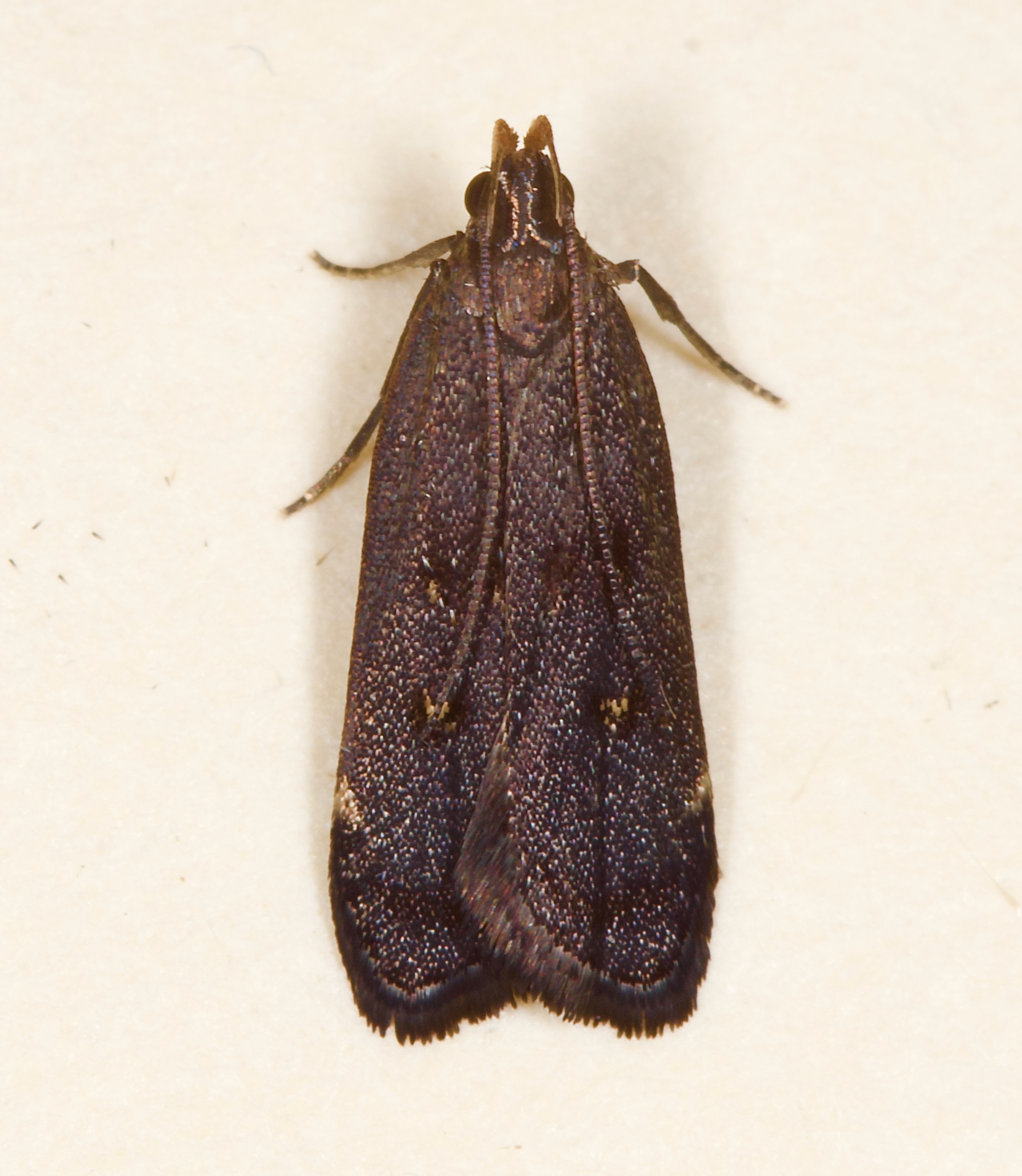
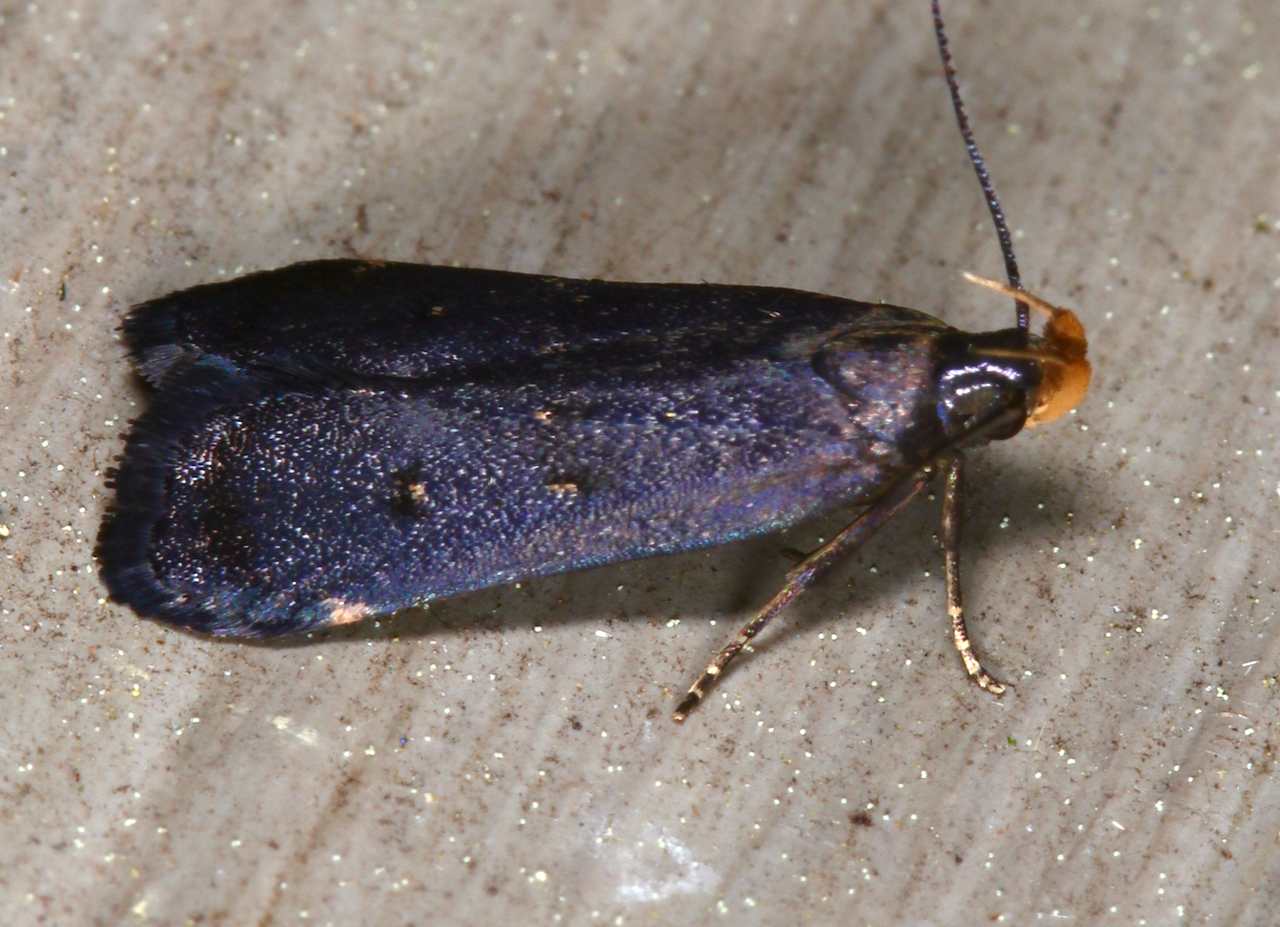
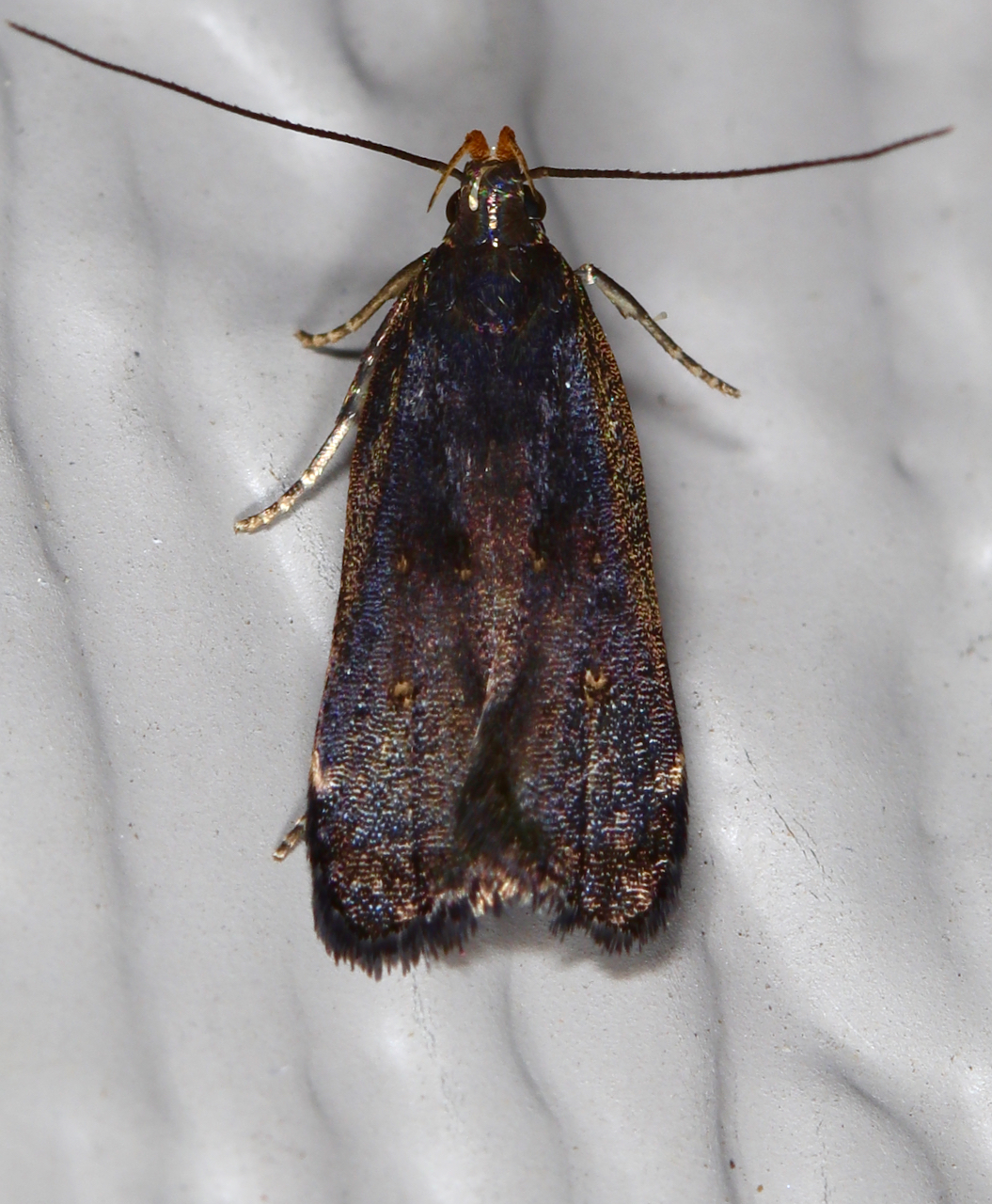
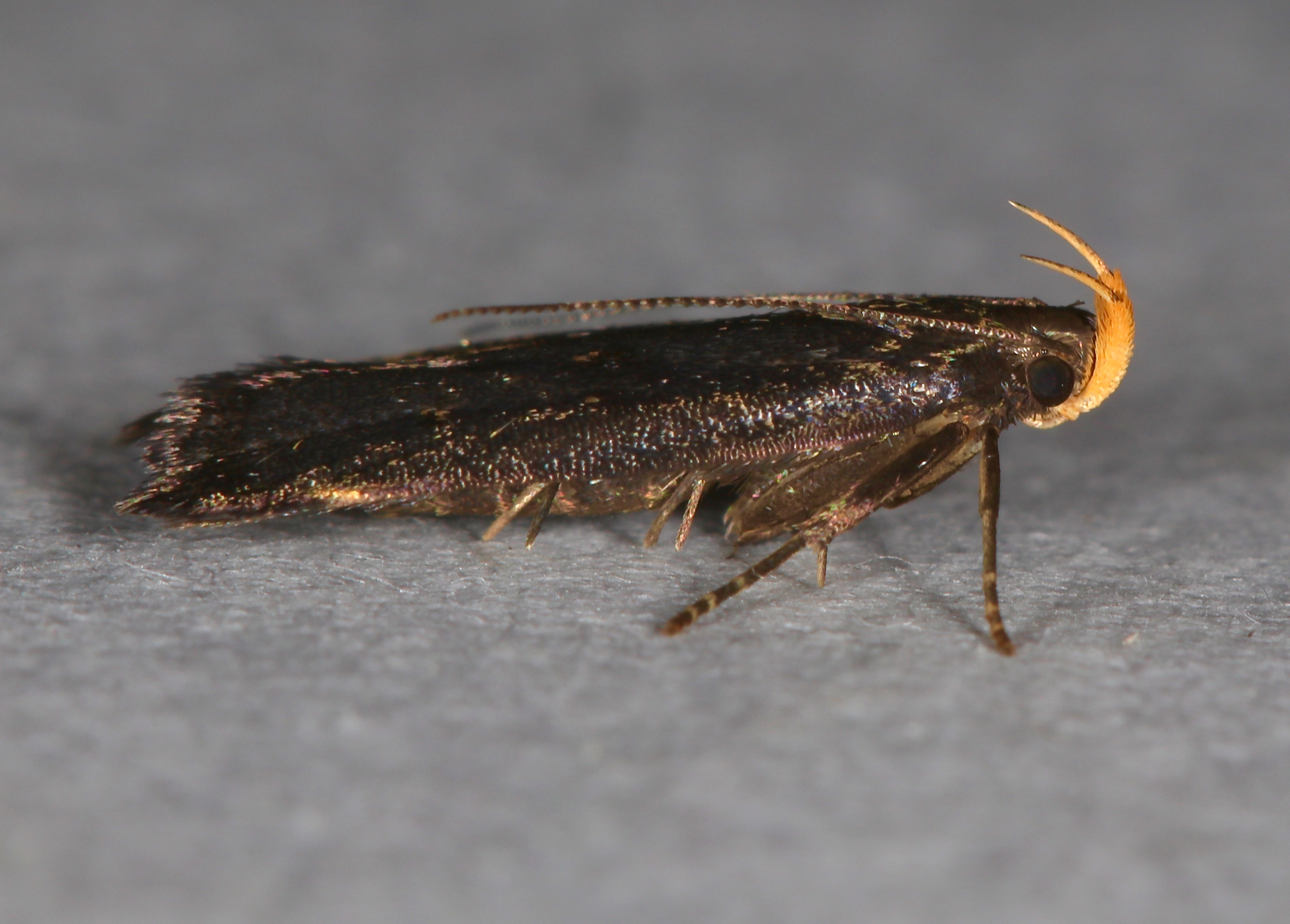
Dichomeris juncidella (Clemens, 1860) - Orange-spotted Dichomeris


Dichomeris juncidella
view caption
Dichomeris juncidellaDichomeris juncidellaDichomeris juncidella
Taxonomy
Superfamily:
Gelechioidea
Family:
Gelechiidae
Subfamily:
Dichomeridinae
P3 Number:
59a0576
MONA Number:
2298.00
Identification
Field Guide Descriptions: Online Resources: MPG, BugGuide, iNaturalist, Google, BAMONA, GBIF, BOLDTechnical Description, Adults: Hodges (1986).Technical Description, Immature Stages: Murtfeldt (1874).                                                                                 
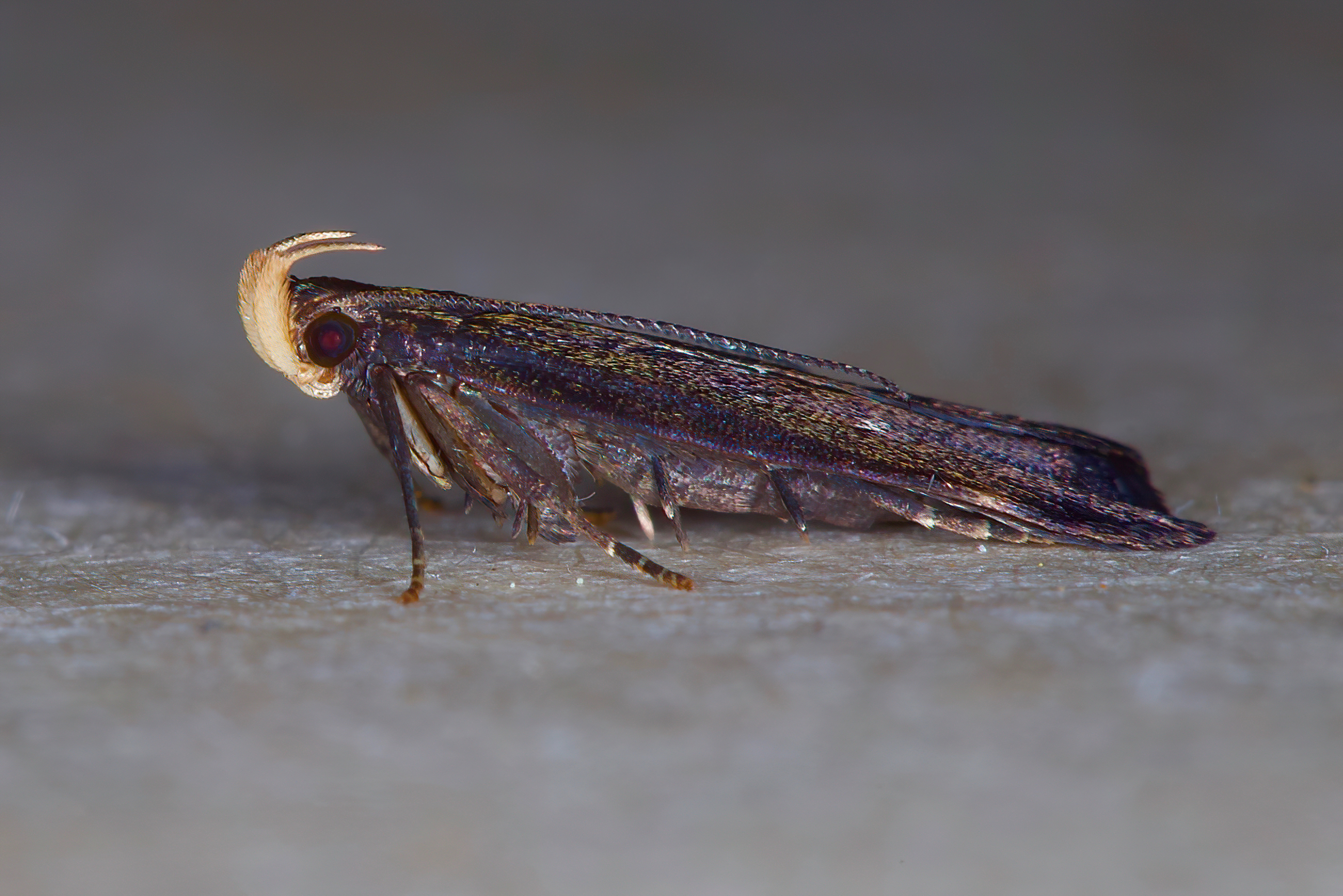
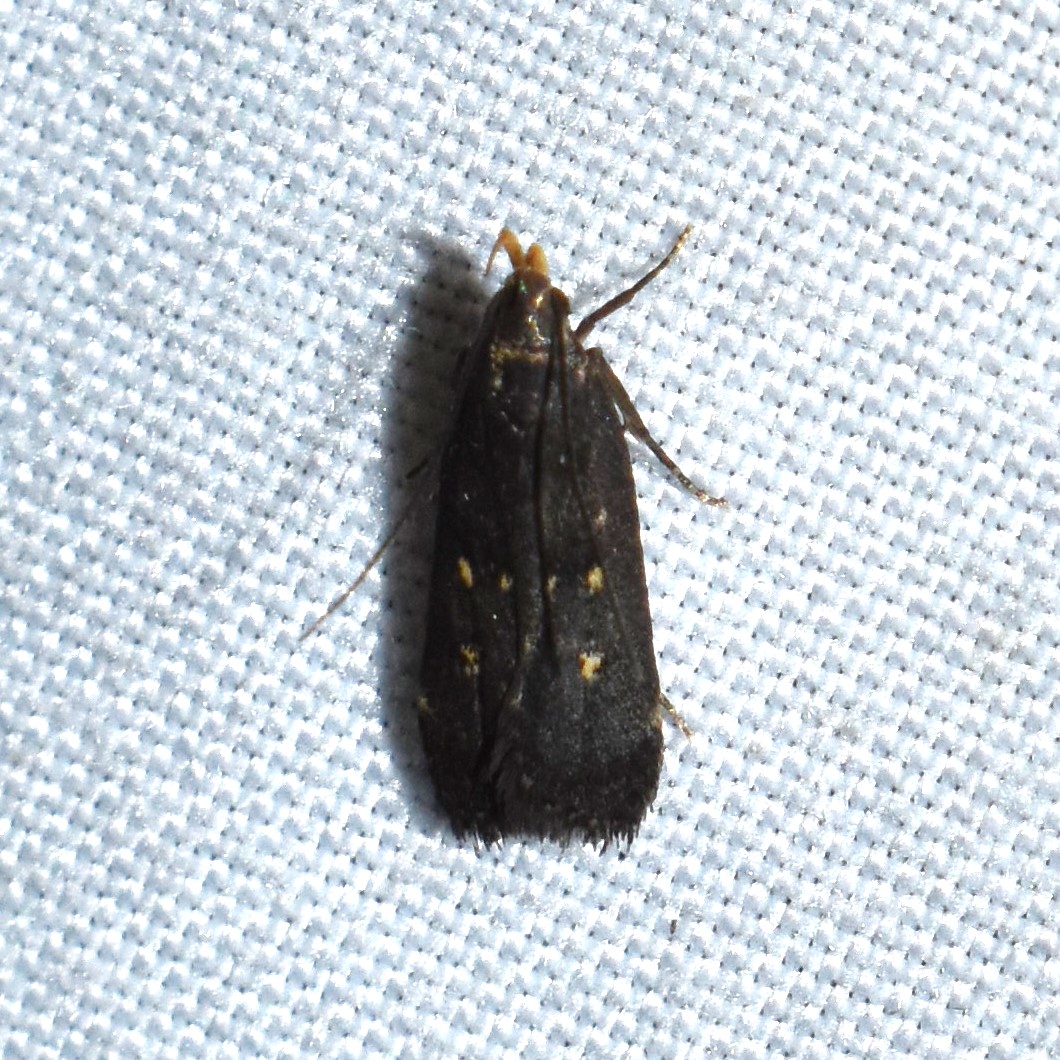
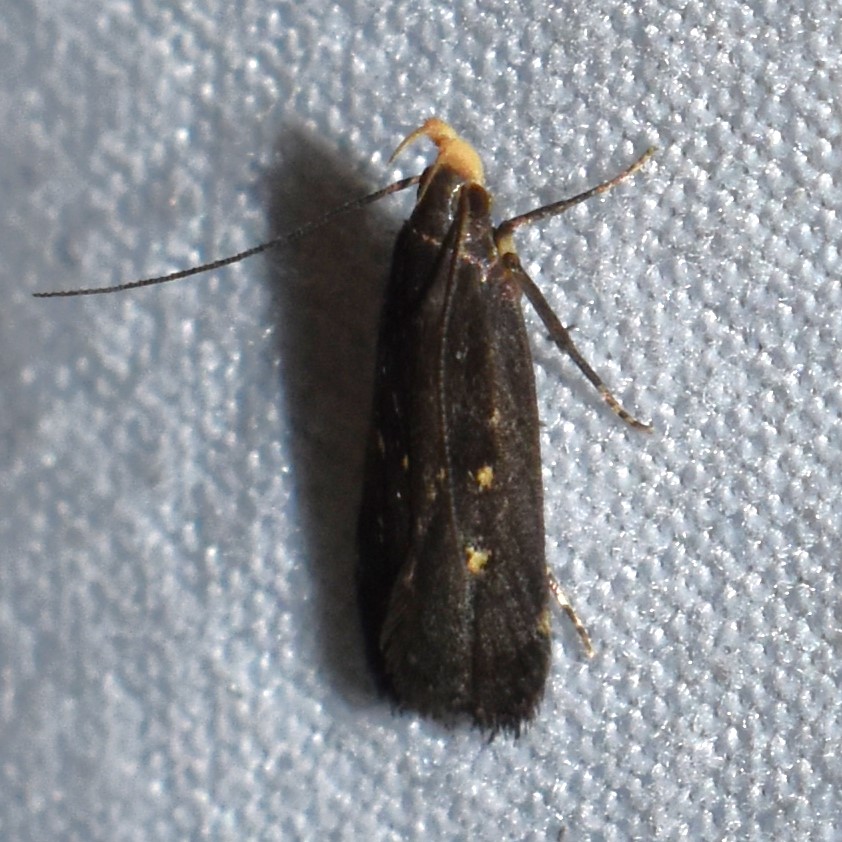
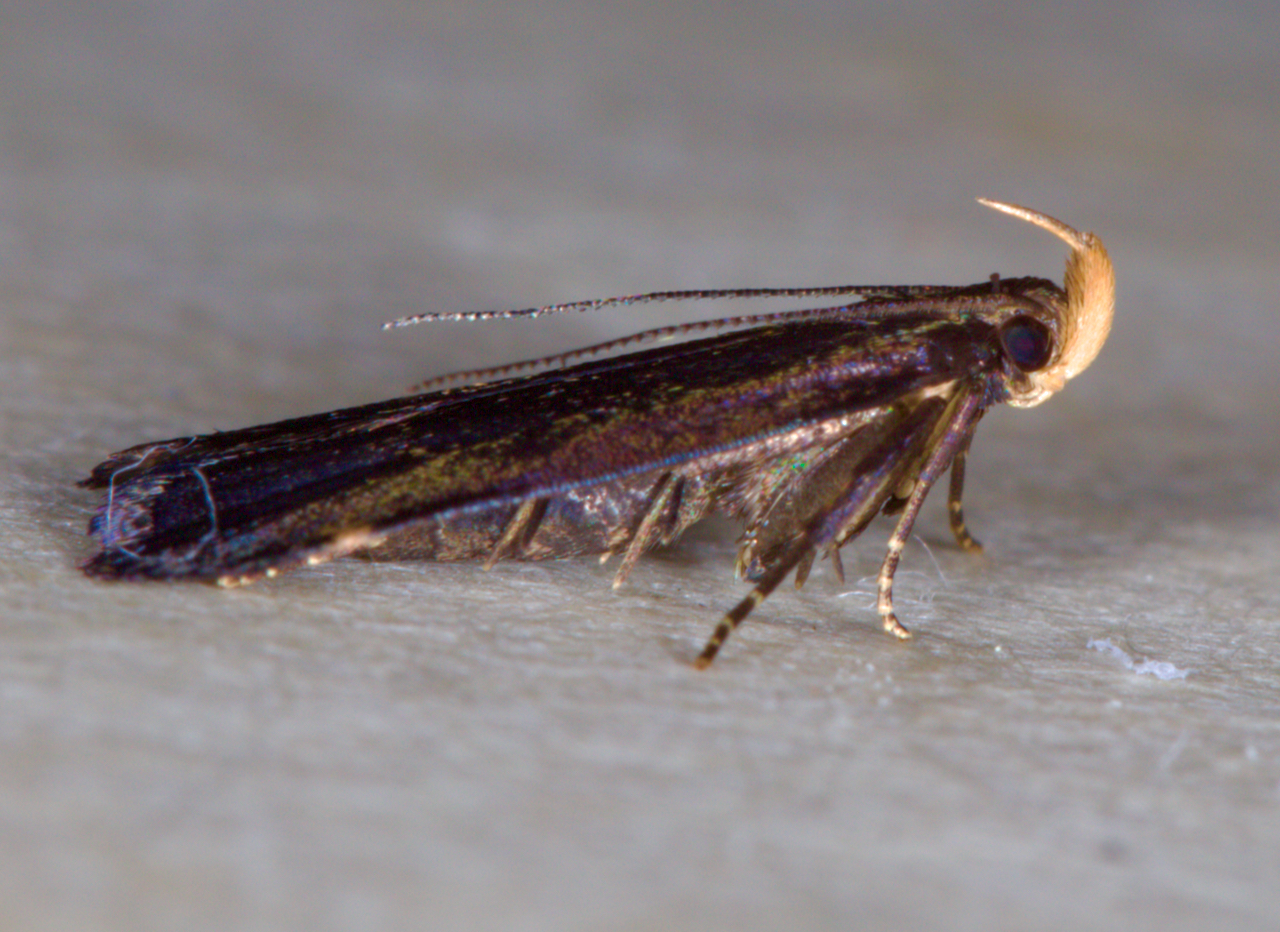
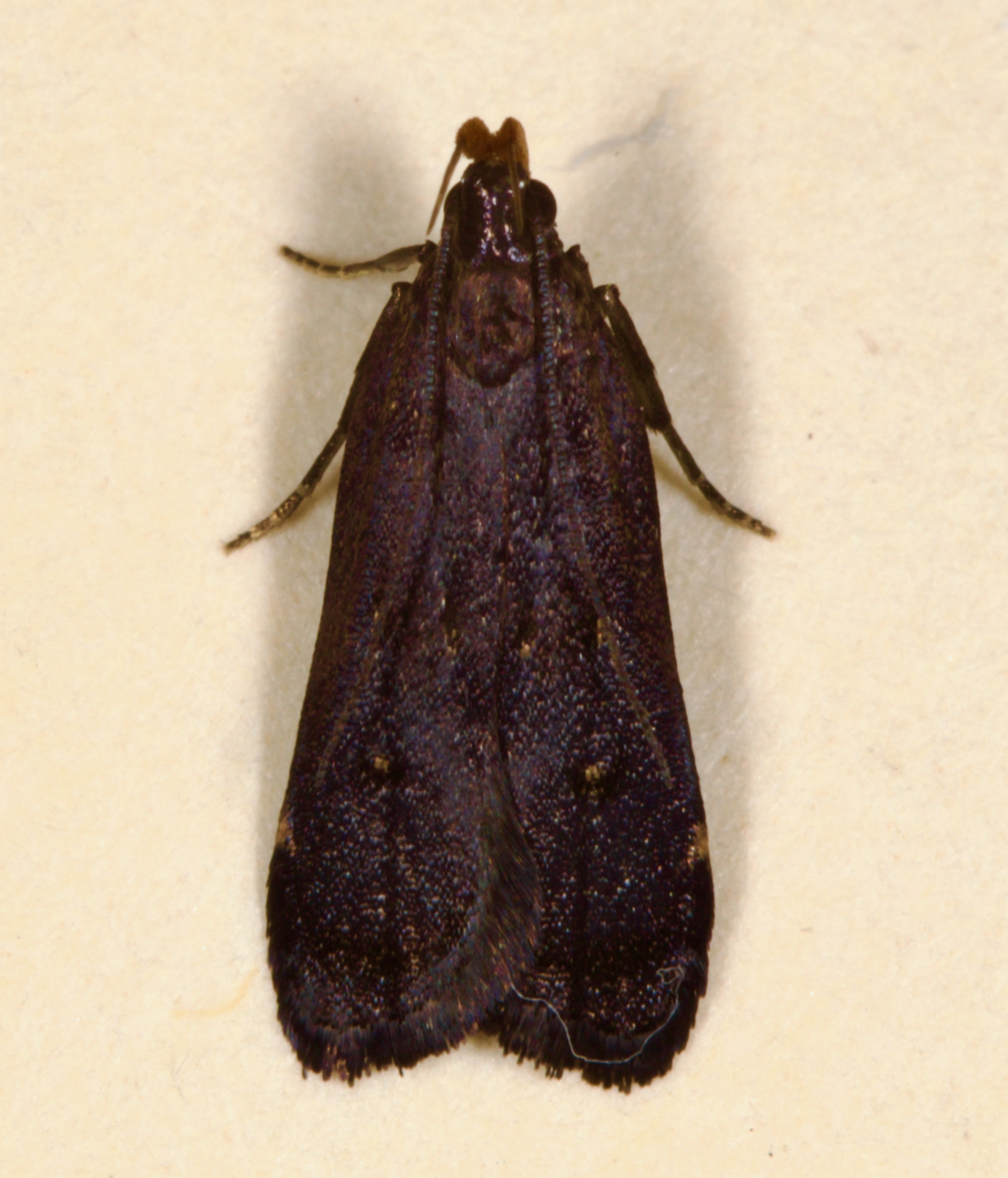
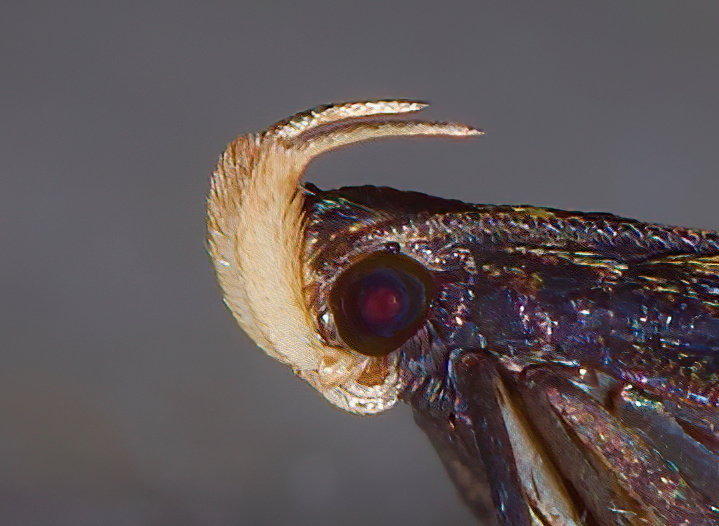
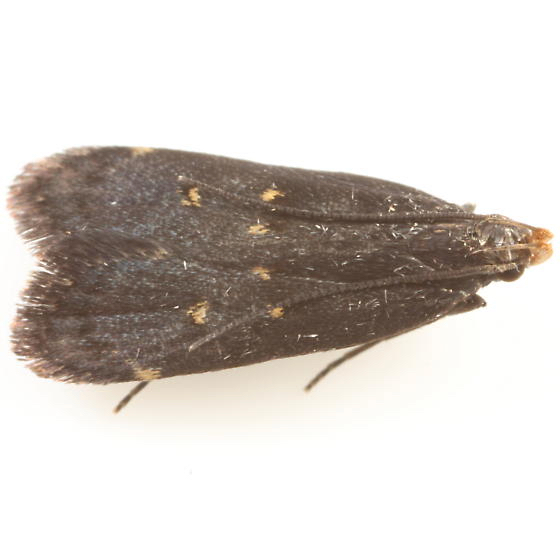
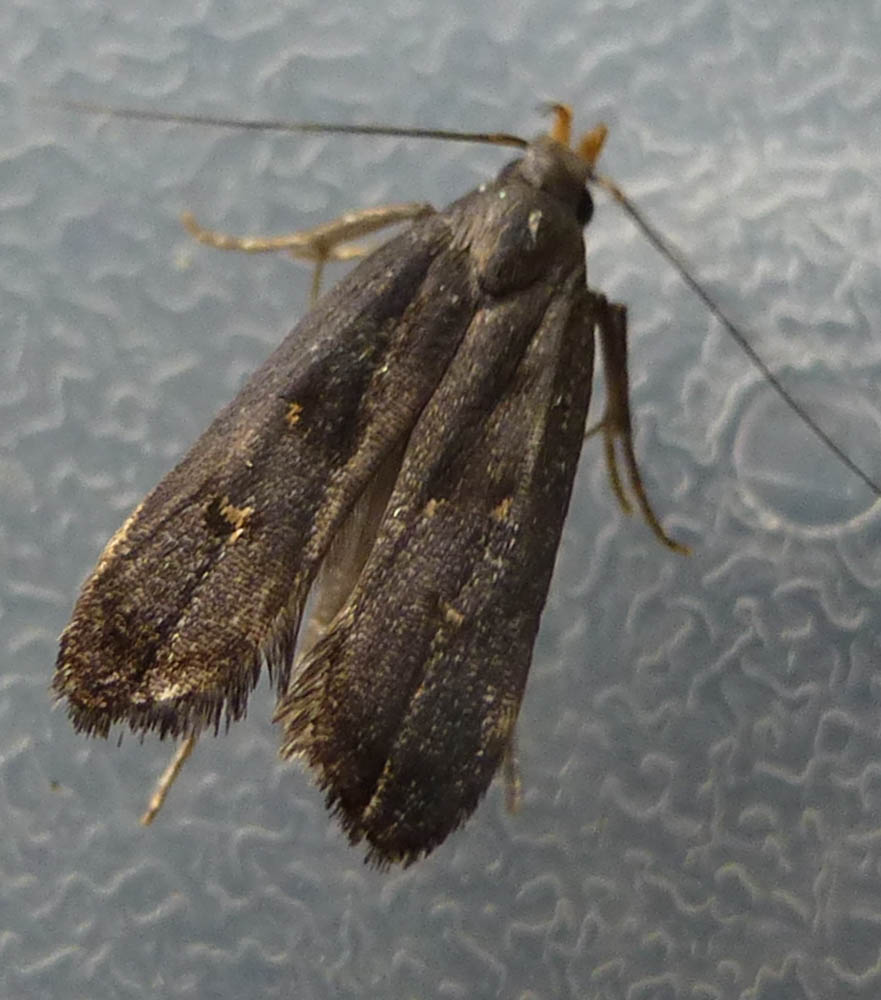
Adult Markings: Dichomeris juncidella has an overall dark-brown to blackish-brown color that contrasts sharply with its yellowish-white or orangish-white labial palps. A prominent scale tuft is present on the lower half of the palp, while the top of the head is shining dark gray to nearly black, with intense metallic-yellow reflections (Hodges, 1986). The vertex and occiput are shining dark-gray with yellow and lavender reflections, while the antenna, thorax, forewing and terminal fringe are unicolorous and typically dark-brown to blackish-brown (lighter in worn specimens). The forewing often has a few pale-orange spots that include a light mark on the costal margin at three-fourths the wing length, a few pale scales on the fold at two-thirds the length of the fold, a spot at the end of the cell, and another at two-thirds the length of the cell. Individuals vary in the expression of the spots and some individuals may lack them altogether.

Dichomeris juncidella is sometimes confused with D. agonia, but the latter tends to be lighter-colored and has yellowish orange labial palps with the first and second segments heavily dusted with grayish-brown scales (Hodges, 1986). The vertex and occiput are yellowish gray, and the spot at the end of the cell is usually pale yellow or yellowish gray and much more prominent than that of D. juncidella. Dichomeris juncidella also has an outwardly curved, transverse, dark subterminal band on the forewing (often obscure) versus a relatively straight, transverse band on D. agonia.
Forewing Length: 5.6-7.2 mm.
Adult Structural Features: Hodges (1986) has illustrations of the male and female genitalia.
Genitalia and other structural photos
Adult ID Requirements: Identifiable from photos showing hindwings, abdomen, or other specialized views [e.g., frons, palps, antennae, undersides].
Immatures and Development: The larvae feed on a variety of mostly herbaceous plants, particularly Annual Ragweed. Murtfeldt (1874) noted that the larvae are leaf folders, and when feeding on Annual Ragweed first bind together two of the pinnatifid divisions of the leaf. As they grow they incorporate additional lobes of the leaf. The larvae remain in their cases during the day and presumably emerge at night to feed. Pupation typically occurs within the leaf fold.

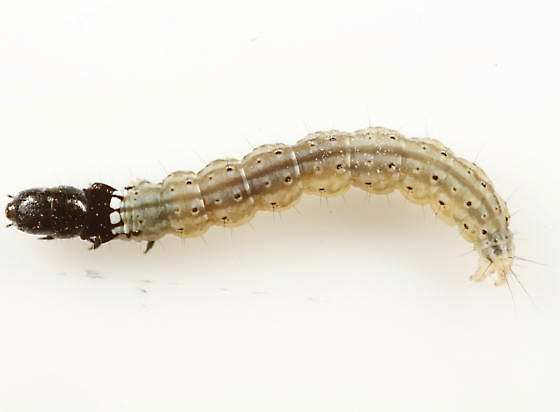
The legs, head, prothorax and mesothorax of the late-instar larvae are all black, and there is a line of five white spots on the posterior edge of the metathorax. The abdomen is dull-white to greenish-white with three longitudinal greenish-brown stripes. The stripes do not darken on the metathorax as seen in some Dichomeris species, and terminate in the middle of the terminal abdominal segment. The tubercles along the abdomen are also easily seen.
Larvae ID Requirements: Identifiable from good quality photos, especially where associated with known host plants.
Distribution in North Carolina
Distribution: Dichomeris juncidella is found throughout most of the eastern US and in southern Canada (Ontario; Quebec; Nova Scotia). In the US the range extends from Maine southward to central Florida, and westward to eastern Texas, eastern Oklahoma, Iowa, eastern Nebraska, southern Wisconsin and eastern Minnesota. As of 2025, we have a few scattered records from all three physiographic provinces.
County Map: Clicking on a county returns the records for the species in that county.
Dichomeris juncidellaAlamance Alexander Alleghany Anson Ashe Avery Beaufort Bertie Bladen Brunswick Buncombe Burke Cabarrus Caldwell Camden Carteret Caswell Catawba Chatham Cherokee Chowan Clay Cleveland Columbus Craven Cumberland Currituck Dare Davidson Davie Duplin Durham Edgecombe Forsyth Franklin Gaston Gates Graham Granville Greene Guilford Halifax Harnett Haywood Henderson Hertford Hoke Hyde Iredell Jackson Johnston Jones Lee Lenoir Lincoln Macon Madison Martin McDowell Mecklenburg Mitchell Montgomery Moore Nash New Hanover Northampton Onslow Orange Pamlico Pasquotank Pender Perquimans Person Pitt Polk Randolph Richmond Robeson Rockingham Rowan Rutherford Sampson Scotland Stanly Stokes Surry Swain Transylvania Tyrrell Union Vance Wake Warren Washington Watauga Wayne Wilkes Wilson Yadkin Yancey
Flight Dates:
 High Mountains (HM) ≥ 4,000 ft.
 Low Mountains (LM) < 4,000 ft.
 Piedmont (Pd)
 Coastal Plain (CP)

Click on graph to enlarge
Image showing flight dates by month for High Mountains greater than 4,000 feet, Low Mountains, Piedmont, and Coastal Plain: adults.
Immature Dates:
 High Mountains (HM) ≥ 4,000 ft.
 Low Mountains (LM) < 4,000 ft.
 Piedmont (Pd)
 Coastal Plain (CP)

Click on graph to enlarge
Image showing flight dates by month for High Mountains greater than 4,000 feet, Low Mountains, Piedmont, and Coastal Plain: immatures.
Flight Comments: The adults have been found during almost every month of the year in different areas of the range, with most from May through September. As of 2025, our very limited records suggest that there could be two broods per year, with the adults first appearing in late-April through early-June, followed by a second emergence in August and September.
Habitats and Life History
Habitats: Local populations are typically found in old fields, along road corridors, in farmland, and in other open, disturbed habitats that support the host plants.
Larval Host Plants: The larvae are generalists and use a taxonomically diverse group of host plants (Hodges, 1986; Loeffler, 1994; Eiseman, 2024; BugGuide). As of 2025, the reported hosts include Common Ragweed (Ambrosia artemisiifolia), Giant Ragweed (A. trifida), Wild Sarsaparilla (Aralia nudicaulis), Devil's-walkingstick (A. spinosa), strawberry (Fragaria), Jerusalem Artichoke (Helianthus tuberosus), goldenrods (Solidago spp.), including Giant Goldenrod (S. gigantea), and asters (Symphyotrichum spp.). Charley Eiseman and Tracy Feldman also reared this species in North Carolina from a larva on Spanish-needles (Bidens bipinnata). - View
Observation Methods: The adults are attracted to lights and the larvae can be found in leaf folds on the host plants.
Wikipedia
Status in North Carolina
Natural Heritage Program Status:
Natural Heritage Program Ranks:
State Protection: Has no legal protection, although permits are required to collect it on state parks and other public lands.
Comments:

 Photo Gallery for Dichomeris juncidella - Orange-spotted Dichomeris

Photos: 13
Dichomeris juncidella
Recorded by: Jim Petranka on 2024-08-26
Madison Co.
Comment:
Dichomeris juncidella
Recorded by: Jim Petranka on 2024-08-26
Madison Co.
Comment:
Dichomeris juncidella
Recorded by: David George, Stephen Dunn, Jeff Niznik on 2024-04-29
Chatham Co.
Comment:
Dichomeris juncidella
Recorded by: David George, Stephen Dunn, Jeff Niznik on 2024-04-29
Chatham Co.
Comment:
Dichomeris juncidella
Recorded by: Jim Petranka on 2023-06-04
Madison Co.
Comment:
Dichomeris juncidella
Recorded by: Jim Petranka on 2023-06-04
Madison Co.
Comment:
Dichomeris juncidella
Recorded by: Jim Petranka on 2023-06-04
Madison Co.
Comment:
Dichomeris juncidella
Recorded by: Jim Petranka on 2021-05-21
Madison Co.
Comment:
Dichomeris juncidella
Recorded by: Jim Petranka on 2021-05-21
Madison Co.
Comment:
Dichomeris juncidella
Recorded by: Jim Petranka on 2021-05-21
Madison Co.
Comment:
Dichomeris juncidella
Recorded by: Charley Eiseman and Tracy Feldman on 2017-09-09
Scotland Co.
Comment: A reared adult (see companion photo of the larva).
Dichomeris juncidella
Recorded by: Charley Eiseman and Tracy Feldman on 2017-09-09
Scotland Co.
Comment: A larva from Bidens bipinnata; the adult was reared and emerged on Sept. 26 (see companion photo).
Dichomeris juncidella
Recorded by: F. Williams, S. Williams on 2013-09-13
Gates Co.
Comment: