Moths of North Carolina
Home Page
Recent Entries
Recent Account Updates
County Searches
General Search
Submit a Public Record
Larval Hosts
References
Maps
Draft Checklists
Family Photo Gallery
Family PDFs
NC Biodiversity Project
Comments
Significant Contributors
Scientific Name:
Common Name:
Family (Alpha):
Choose a Family
ACROLEPIIDAE-False Diamondback Moths
ADELIDAE-Fairy moths
ALUCITIDAE-Many-plumed Moths
AMPHISBATIDAE-
ARGYRESTHIIDAE-Shiny Head-standing Moths
AUTOSTICHIDAE-Autostichid Moths
BATRACHEDRIDAE-Batrachedrid Moths
BEDELLIIDAE-Bedelliid Moths
BLASTOBASIDAE-Blastobasid Moths
BOMBYCIDAE-Silkworm Moths
BUCCULATRICIDAE-Ribbed Cocoon-maker Moths
CARPOSINIDAE-Fruitworm Moths
CHOREUTIDAE-Metalmark Moths
COLEOPHORIDAE-Casebearer Moths and Relatives
COSMOPTERIGIDAE-Cosmopterigid Moths
COSSIDAE-Carpenter Moths, Goat Moths
CRAMBIDAE-Grass Moths, Snout Moths
DEPRESSARIIDAE-
DREPANIDAE-Hook-tips and Thyatirid Moths
DRYADAULIDAE-
ELACHISTIDAE-Grassminer Moths and Relatives
EPERMENIIDAE-Fringe-tufted Moths
EPIPYROPIDAE-Planthopper Parasite Moths
EREBIDAE-Erebid Moths
ERIOCRANIIDAE-Eriocraniid Moths
EUTELIIDAE-Euteliid Moths
GALACTICIDAE-Galacticid Moths
GELECHIIDAE-Gelechiid Moths; Twirler Moths
GEOMETRIDAE-Geometer Moths, Loopers
GLYPHIDOCERIDAE-Glyphidocerid Moths
GLYPHIPTERIGIDAE-Sedge Moths
GRACILLARIIDAE-Leafblotch miner moths
HELIOZELIDAE-Shield bearer moths
HEPIALIDAE-Ghost or Swift Moths
HYBLAEIDAE-
INCURVARIIDAE-Leafcutter Moths
LASIOCAMPIDAE-Tent Caterpillar Moths, Lappet Moths
LECITHOCERIDAE-Long-horned Moths
LIMACODIDAE-Slug Caterpillar Moths
LIMOCODIDAE-
LYONETIIDAE-Lyonetiid Moths
MEGALOPYGIDAE-Flannel Moths
MICROPTERIGIDAE-Mandibulate Moths
MIMALLONIDAE-
MOMPHIDAE-Mompha Moths
NEPTICULIDAE-Minute leaf miners
NOCTUIDAE-Owlet Moths
NOLIDAE-
NOTODONTIDAE-Prominents
OECOPHORIDAE-Oecophorid Moths
OPOSTEGIDAE-
PELEOPODIDAE-
PLUTELLIDAE-Diamondback Moths
PRODOXIDAE-Yucca Moths
PSYCHIDAE-Bagworm Moths
PTEROPHORIDAE-Plume Moths
PYRALIDAE-Pyralid Moths, Snout Moths
SATURNIIDAE-Giant Silkworm Moths
SCHRECKENSTEINIIDAE-Schreckensteiniid Moths
SCYTHRIDIDAE-
SESIIDAE-Clearwing Moths
SPHINGIDAE-Sphinx Moths
THYATIRIDAE-
THYRIDIDAE-Window-winged Moths
TINEIDAE-Clothes moths
TISCHERIIDAE-Tischerid Moths
TORTRICIDAE-Leafroller Moths
URANIIDAE-
URODIDAE-Urodid Moths
XYLORYCTIDAE-
YPONOMEUTIDAE-Ermine Moths
YPSOLOPHIDAE-Ypsolophid Moths
ZYGAENIDAE-
«
Home
»
View
PDF
Epermeniidae Members:
Epermenia albapunctella
Epermenia pimpinella
Epermenia
Members:
Epermenia albapunctella
Epermenia pimpinella
6 NC Records
Epermenia pimpinella
Murtfeldt, 1900 - No Common Name
view caption
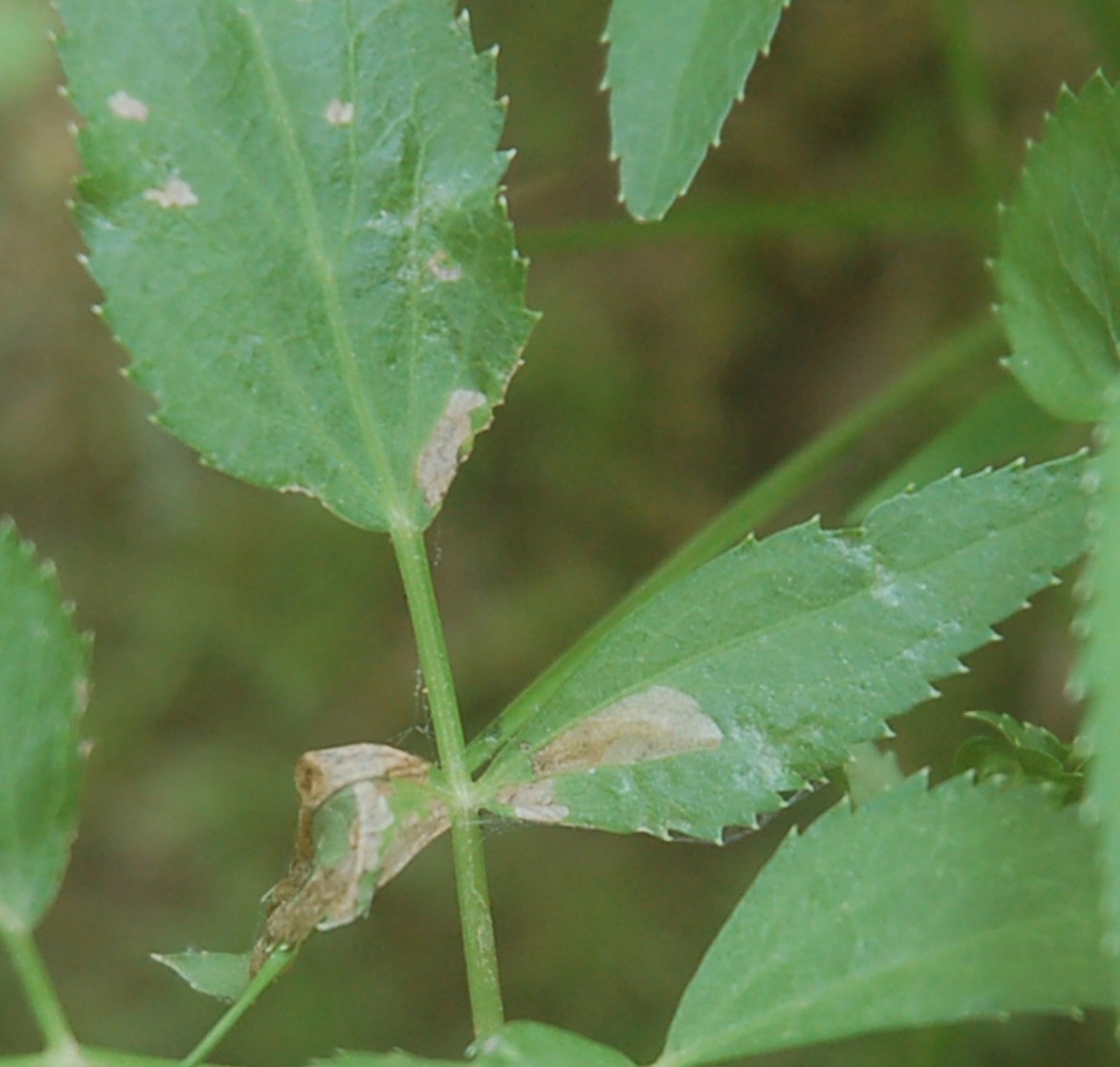
A view of several mines.
view caption
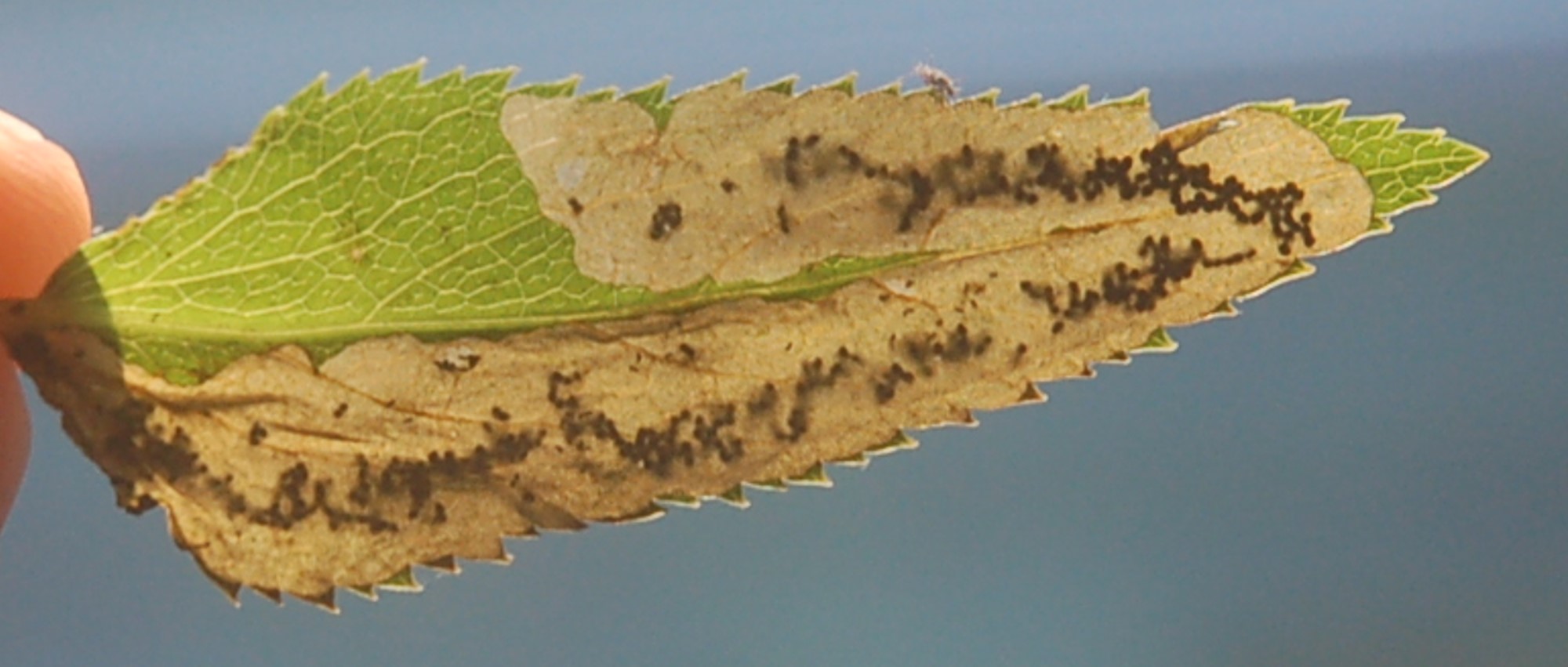
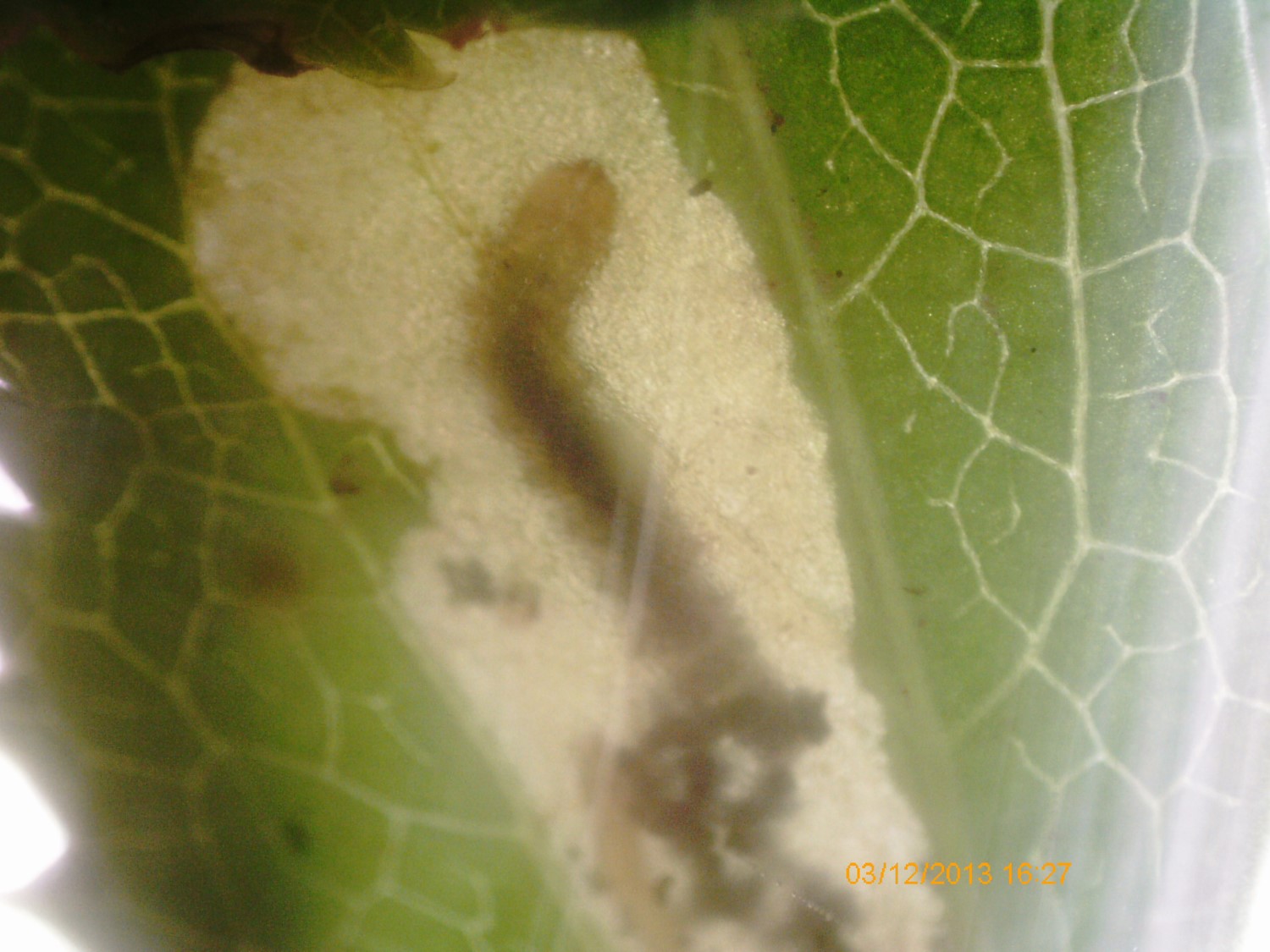
A view of a brownish blotch mine with scattered, black, granular frass that is typical of this species.
Taxonomy
Superfamily:
Epermenioidea
Family:
Epermeniidae
Subfamily:
[Epermeniinae]
Tribe:
[Epermeniini]
P3 Number:
67a0008
MONA Number:
2330.00
Identification
Field Guide Descriptions:
Covell (1984)
Online Resources:
MPG
,
BugGuide
,
iNaturalist
,
Google
,
BAMONA
,
GBIF
,
BOLD
Technical Description, Adults:
Murtfeldt (1900)
Technical Description, Immature Stages:
Eiseman (2019a)
Adult Markings:
Epermenia pimpinella
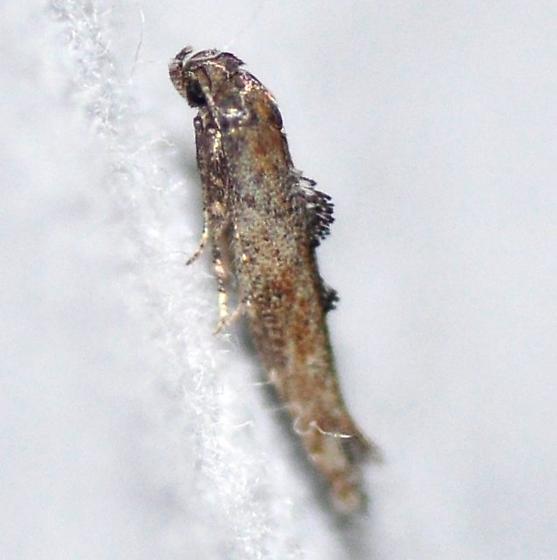
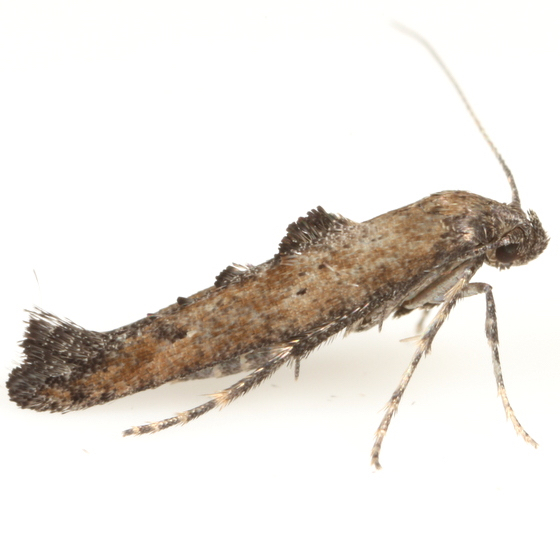
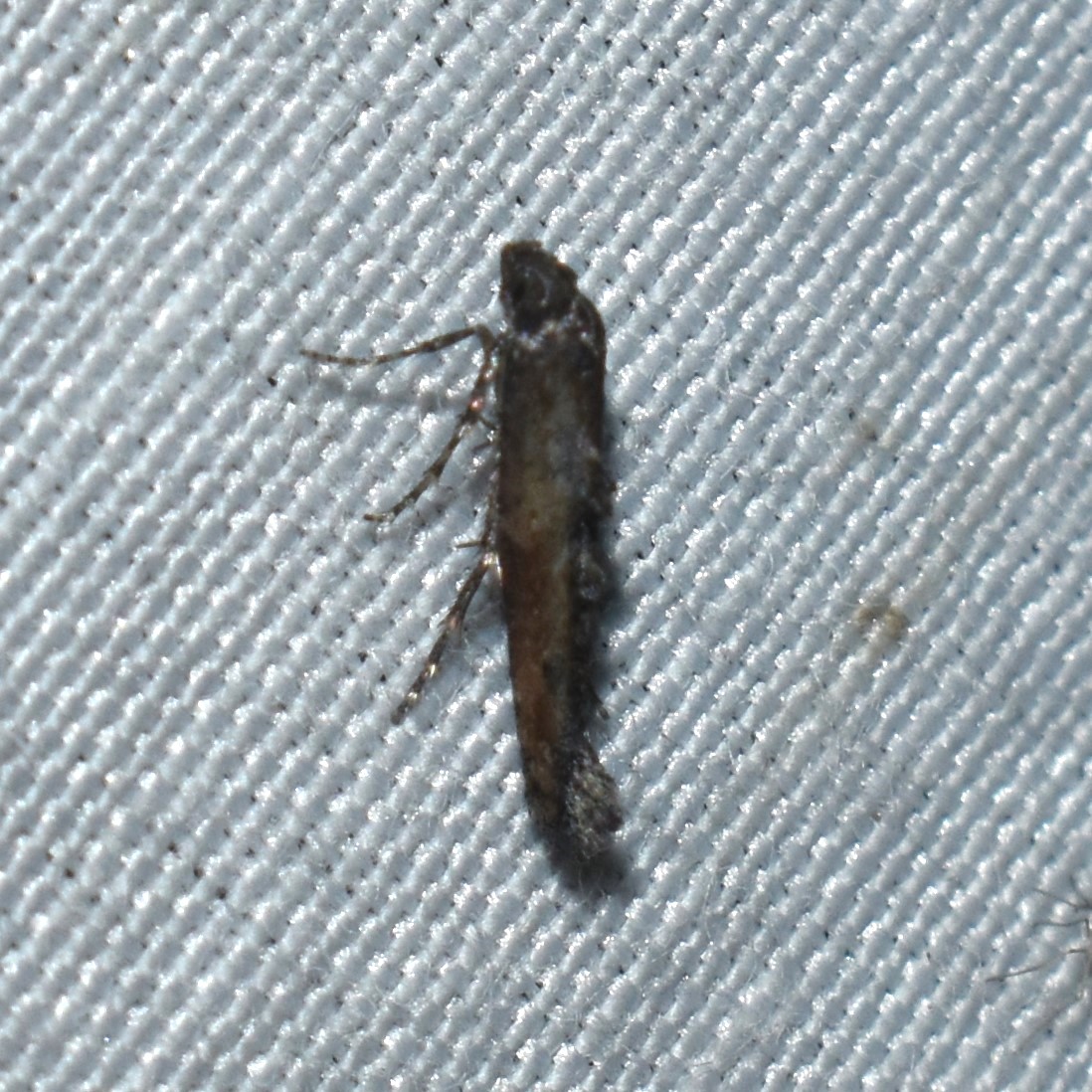
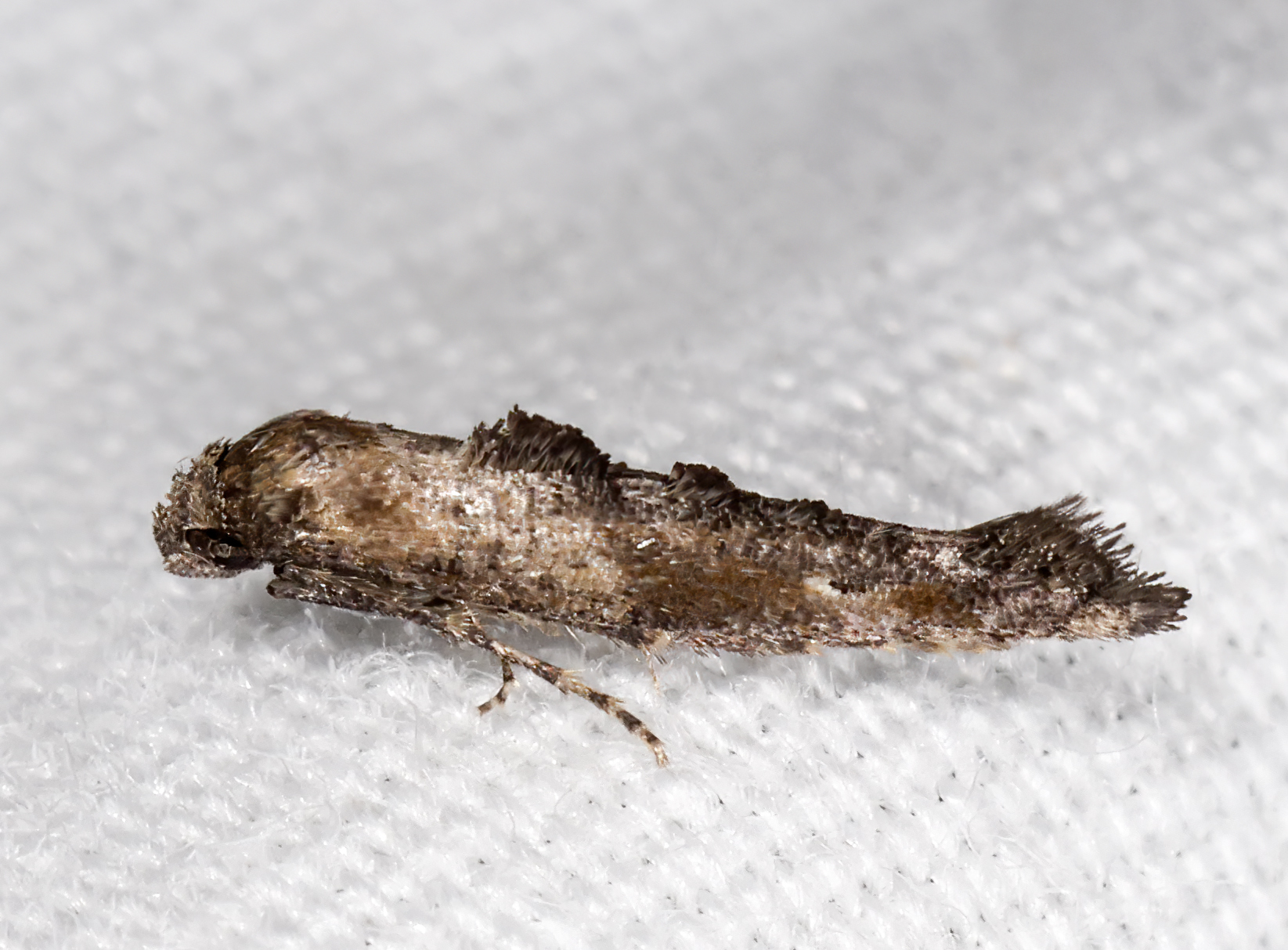
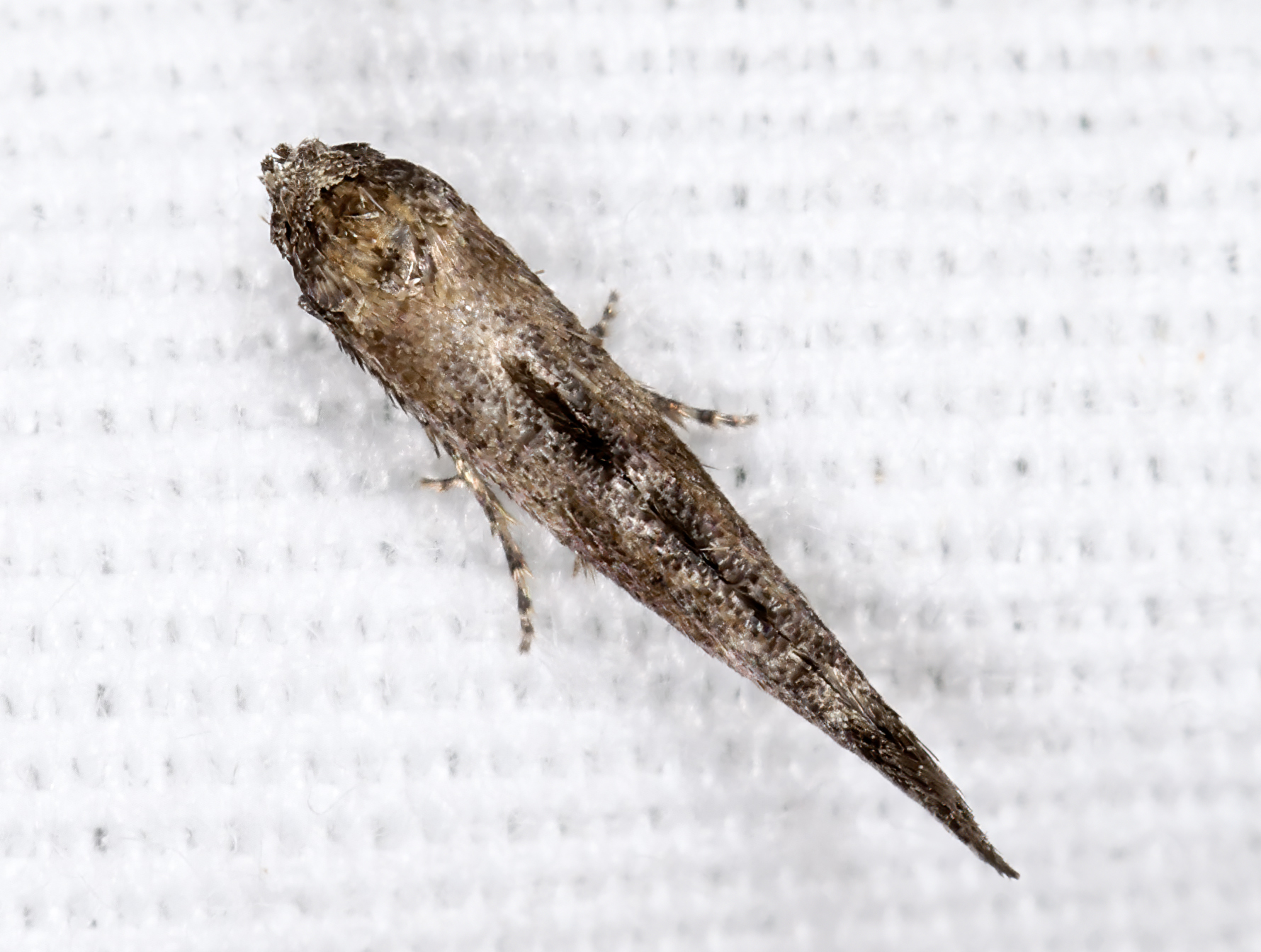
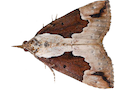
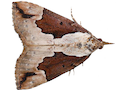
is a small moth that is more-or-less uniformly medium-brown to grayish-brown. The forewing of fresh specimens has three or four patches of erect scales that resemble fish fins when a specimen is viewed from the side. This species closely resembles
E. albapunctella
, but lacks the black longitudinal streak at around three-fifths the wing length that has a white dot at each end.
The following description is based in part on that of Murtfeldt (1900). The labial palp is dark brownish-gray and sparsely sprinkled with buff, with the second segment twice the length of the apical segment. The slender antenna has a strong pecten, slightly more than one-half the length of the forewing, and is dark cinereous, with short, dense, whitish pubescence. The head and thorax are grayish-brown, and the forewing dark slate-gray to brownish, with an intermingling of dingy white scales and having a generally ‘‘smudged” appearance. Specimens often have an ill-defined transverse band of dark-brown to blackish-brown dusting just beyond the middle of the wing, with the areas anterior and posterior to this a shade or two lighter and often more grayish-brown. A large, erect, scale patch with spatulate, stalked scales is present just before the middle of the inner margin; it is followed by a smaller one beyond the middle, and then a third even smaller one beyond the second patch. The grayish hindwing is narrowly lanceolate, and has a long, fine, silky fringe. The legs are mostly dark-brown, with blackish tarsi that have ochreous annulations.
Wingspan:
12-14 mm (Murfeldt, 1900).
Adult ID Requirements:
Identifiable from good quality photos of unworn specimens.
Immatures and Development:
The larvae mine the leaves of several genera in the Apiaceae during the warmer months of the year. Females lay greenish-white eggs along leaf margins, and the hatchlings burrow into the leaf shortly after emerging (Murtfeldt, 1900). They form puffy, full-depth mines with black, granular frass scattered loosely throughout. More than one larva may occupy a single mine, and a larva will sometimes leave a mine a create a new one. The pupae have been found in open mesh cocoons on the undersides of leaves or in the angles of leaf stalks. The adults emerged in 8–10 days, and there are at least two successive generations per year (Murtfeldt, 1900; Eiseman 2019a). The larvae reach around 8 mm in length and have pale-brown to brownish-orange heads and deep brownish-yellow abdomens, with a brown pinaculum at the base of each primary seta (Murtfeldt, 1900; Microleps.org).
Larvae ID Requirements:
Identifiable from good quality photos, especially where associated with known host plants.
Distribution in North Carolina
Distribution:
Epermenia pimpinella
is found in the eastern US with the main range extending from Illinois, southern Wisconsin and northeastern Iowa, southeastward through Indiana, southern Ohio, eastern Kentucky and West Virginia to North Carolina. Isolated records are also known from Massachusetts, central Alabama, southern Louisiana, northeastern Texas and central Oklahoma. As of 2025, we have only five site records, with one from a higher-elevation site in the Blue Ridge and the others from the northeastern Piedmont.
County Map:
Clicking on a county returns the records for the species in that county.
Flight Dates:
High Mountains (HM) ≥ 4,000 ft.
Low Mountains (LM) < 4,000 ft.
Piedmont (Pd)
Coastal Plain (CP)
Click on graph to enlarge
Immature Dates:
High Mountains (HM) ≥ 4,000 ft.
Low Mountains (LM) < 4,000 ft.
Piedmont (Pd)
Coastal Plain (CP)
Click on graph to enlarge
Flight Comments:
The adults have been found from April through September in different areas of the range. As of 2025, our records are from early-June through mid-September. Local populations appear to produce two broods per year (Murtfeldt, 1900).
Habitats and Life History
Habitats:
Local populations are often associated with hardwood forests and forest edges that support the host plants.
Larval Host Plants:
The larvae feed on several members of the Apiaceae, including Hairy-fruit Chervil (
Chaerophyllum tainturieri
), Canadian Honewort (
Cryptotaenia canadensis
), Yellow Pimpernel (
Taenidia integerrima
), Heartleaf Golden-Alexanders (
Zizia aptera
), and Common Golden-Alexanders (
Z. aurea
; Eiseman 2019a). In North Carolina, mines have been recorded on Common Golden-Alexanders. -
View
Observation Methods:
The adults are attracted to lights and the larval mines can be found on members of the Apiaceae.
Wikipedia
Status in North Carolina
Natural Heritage Program Status:
Natural Heritage Program Ranks:
GNR [S3]
State Protection:
Has no legal protection, although permits are required to collect it on state parks and other public lands.
Comments:
Epermenia pimpinella
is uncommon in North Carolina, where it appears to be at the southern limit of the main range.
Photo Gallery for
Epermenia pimpinella
- None
Photos: 9
Recorded by: Jeff Niznik on 2024-07-14
Watauga Co.
Comment:
Recorded by: John Petranka on 2022-09-11
Orange Co.
Comment:
Recorded by: John Petranka on 2022-09-11
Orange Co.
Comment:
Recorded by: Tracy S. Feldman and Charley Eiseman on 2019-06-01
Durham Co.
Comment:
Recorded by: Tracy S. Feldman on 2019-05-14
Durham Co.
Comment:
Recorded by: Tracy S. Feldman on 2019-05-14
Durham Co.
Comment:
Recorded by: Tracy S. Feldman on 2019-05-14
Durham Co.
Comment: Note the black, granular frass that is scattered throughout this mine.
Recorded by: B. Bockhahn, K. Kittelberger on 2014-09-12
Rockingham Co.
Comment:
Recorded by: Kyle Kittelberger on 2011-07-03
Wake Co.
Comment:
 »
»