Moths of North Carolina
Home Page
Recent Entries
Recent Account Updates
County Searches
General Search
Submit a Public Record
Larval Hosts
References
Maps
Draft Checklists
Family Photo Gallery
Family PDFs
NC Biodiversity Project
Comments
Significant Contributors
Scientific Name:
Common Name:
Family (Alpha):
Choose a Family
ACROLEPIIDAE-False Diamondback Moths
ADELIDAE-Fairy moths
ALUCITIDAE-Many-plumed Moths
AMPHISBATIDAE-
ARGYRESTHIIDAE-Shiny Head-standing Moths
AUTOSTICHIDAE-Autostichid Moths
BATRACHEDRIDAE-Batrachedrid Moths
BEDELLIIDAE-Bedelliid Moths
BLASTOBASIDAE-Blastobasid Moths
BOMBYCIDAE-Silkworm Moths
BUCCULATRICIDAE-Ribbed Cocoon-maker Moths
CARPOSINIDAE-Fruitworm Moths
CHOREUTIDAE-Metalmark Moths
COLEOPHORIDAE-Casebearer Moths and Relatives
COSMOPTERIGIDAE-Cosmopterigid Moths
COSSIDAE-Carpenter Moths, Goat Moths
CRAMBIDAE-Grass Moths, Snout Moths
DEPRESSARIIDAE-
DREPANIDAE-Hook-tips and Thyatirid Moths
DRYADAULIDAE-
ELACHISTIDAE-Grassminer Moths and Relatives
EPERMENIIDAE-Fringe-tufted Moths
EPIPYROPIDAE-Planthopper Parasite Moths
EREBIDAE-Erebid Moths
ERIOCRANIIDAE-Eriocraniid Moths
EUTELIIDAE-Euteliid Moths
GALACTICIDAE-Galacticid Moths
GELECHIIDAE-Gelechiid Moths; Twirler Moths
GEOMETRIDAE-Geometer Moths, Loopers
GLYPHIDOCERIDAE-Glyphidocerid Moths
GLYPHIPTERIGIDAE-Sedge Moths
GRACILLARIIDAE-Leafblotch miner moths
HELIOZELIDAE-Shield bearer moths
HEPIALIDAE-Ghost or Swift Moths
HYBLAEIDAE-
INCURVARIIDAE-Leafcutter Moths
LASIOCAMPIDAE-Tent Caterpillar Moths, Lappet Moths
LECITHOCERIDAE-Long-horned Moths
LIMACODIDAE-Slug Caterpillar Moths
LIMOCODIDAE-
LYONETIIDAE-Lyonetiid Moths
MEGALOPYGIDAE-Flannel Moths
MICROPTERIGIDAE-Mandibulate Moths
MIMALLONIDAE-
MOMPHIDAE-Mompha Moths
NEPTICULIDAE-Minute leaf miners
NOCTUIDAE-Owlet Moths
NOLIDAE-
NOTODONTIDAE-Prominents
OECOPHORIDAE-Oecophorid Moths
OPOSTEGIDAE-
PELEOPODIDAE-
PLUTELLIDAE-Diamondback Moths
PRODOXIDAE-Yucca Moths
PSYCHIDAE-Bagworm Moths
PTEROPHORIDAE-Plume Moths
PYRALIDAE-Pyralid Moths, Snout Moths
SATURNIIDAE-Giant Silkworm Moths
SCHRECKENSTEINIIDAE-Schreckensteiniid Moths
SCYTHRIDIDAE-
SESIIDAE-Clearwing Moths
SPHINGIDAE-Sphinx Moths
THYATIRIDAE-
THYRIDIDAE-Window-winged Moths
TINEIDAE-Clothes moths
TISCHERIIDAE-Tischerid Moths
TORTRICIDAE-Leafroller Moths
URANIIDAE-
URODIDAE-Urodid Moths
XYLORYCTIDAE-
YPONOMEUTIDAE-Ermine Moths
YPSOLOPHIDAE-Ypsolophid Moths
ZYGAENIDAE-
«
Home
»
View
PDF
Epermeniidae Members:
Epermenia albapunctella
Epermenia pimpinella
Epermenia
Members:
Epermenia albapunctella
Epermenia pimpinella
9 NC Records
Epermenia albapunctella
Busck, 1908 - No Common Name
Taxonomy
Superfamily:
Epermenioidea
Family:
Epermeniidae
Subfamily:
[Epermeniinae]
Tribe:
[Epermeniini]
P3 Number:
67a0006
MONA Number:
2328.00
Identification
Field Guide Descriptions:
Online Resources:
MPG
,
BugGuide
,
iNaturalist
,
Google
,
BAMONA
,
GBIF
,
BOLD
Technical Description, Adults:
Busck (1908)
Technical Description, Immature Stages:
Eiseman (2019, 2019a)
Adult Markings:
Epermenia albapunctella
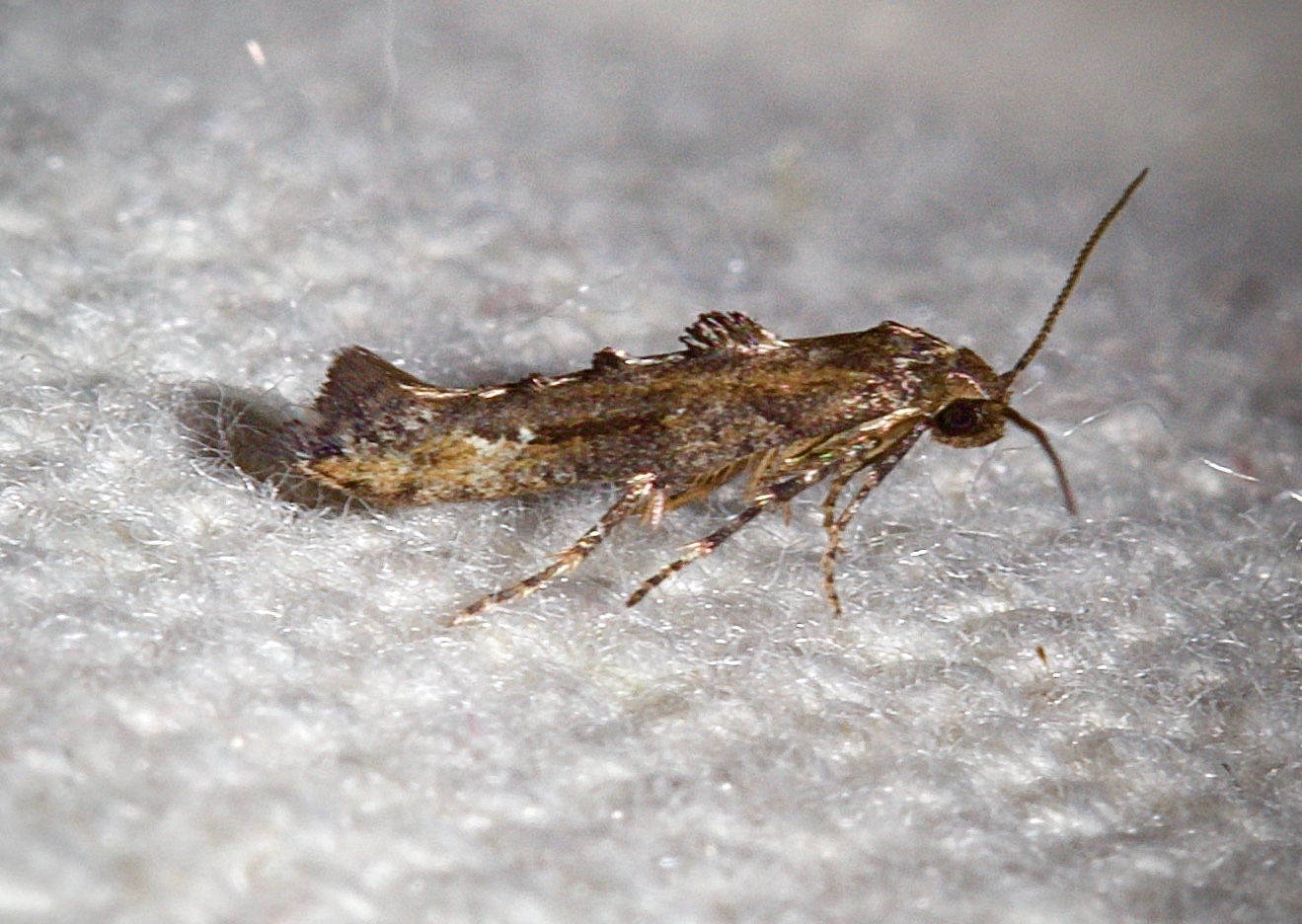
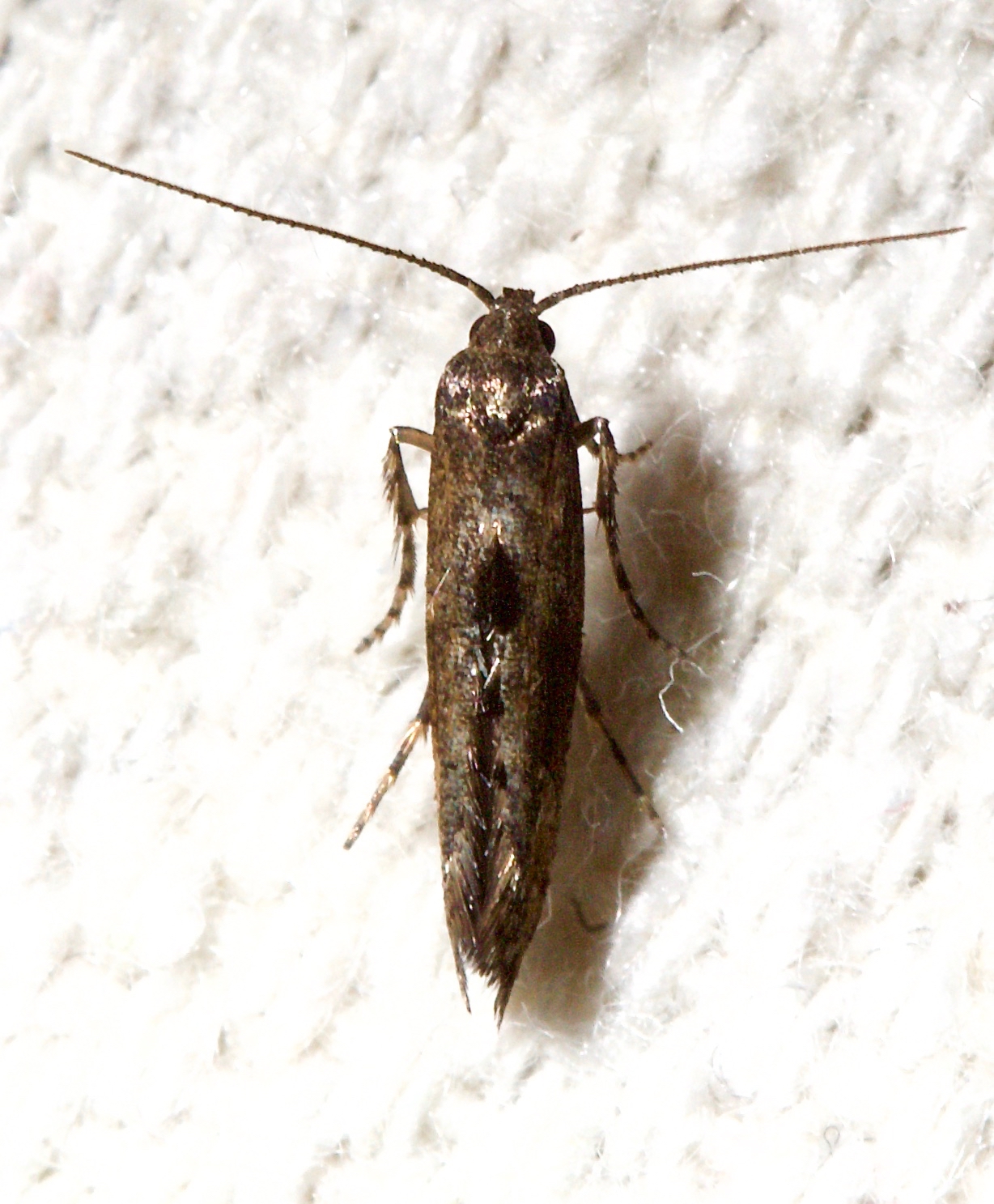
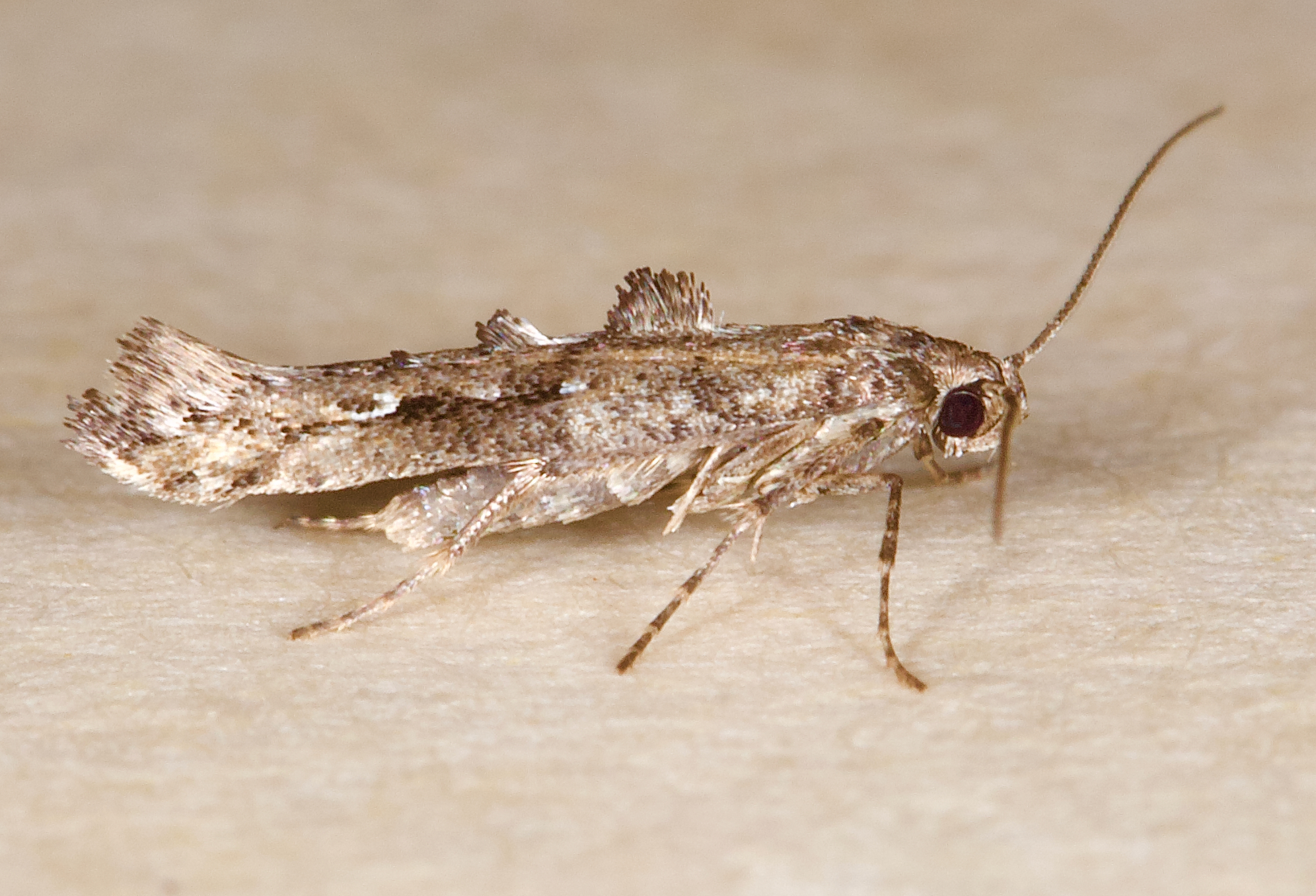
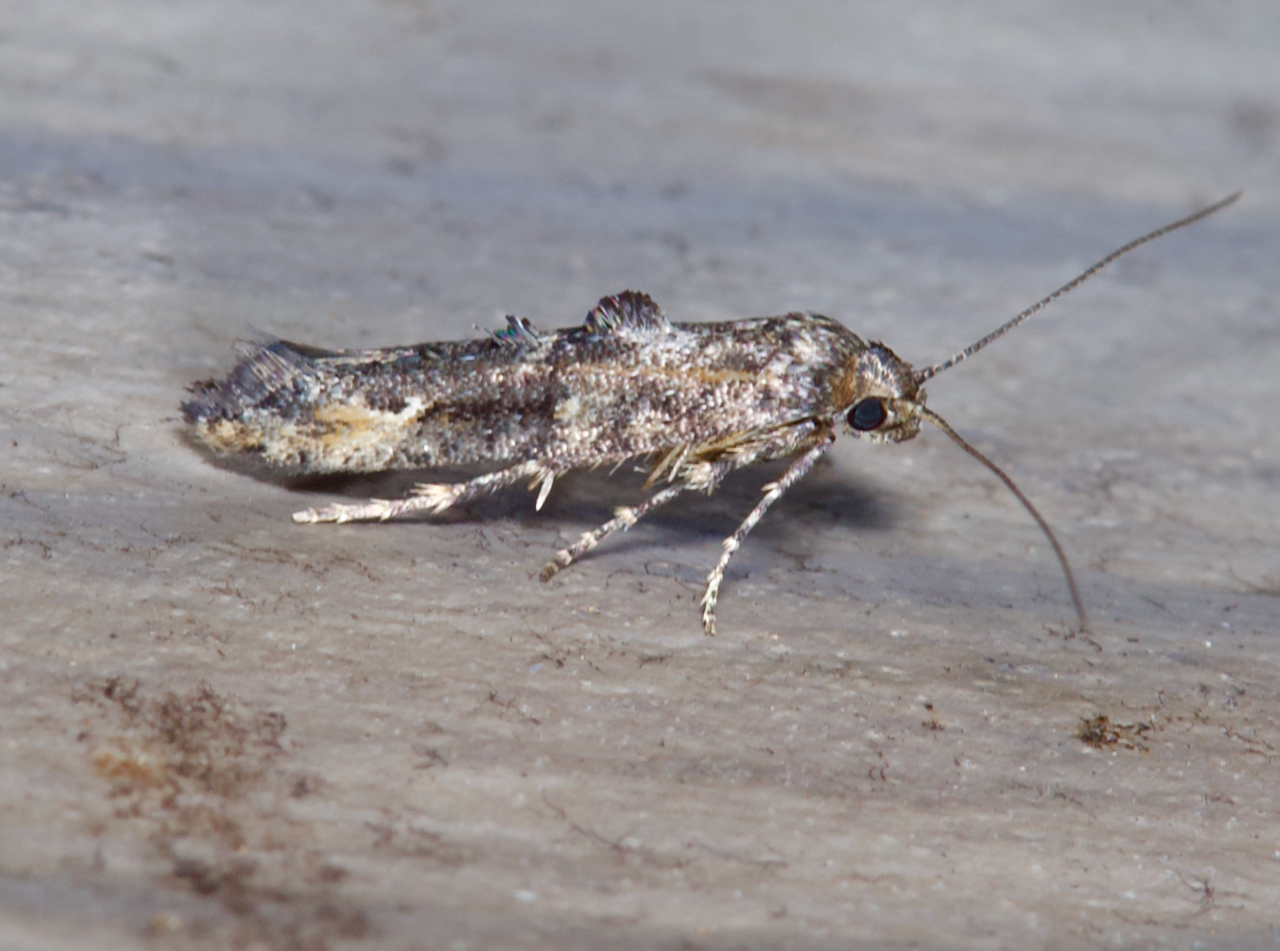
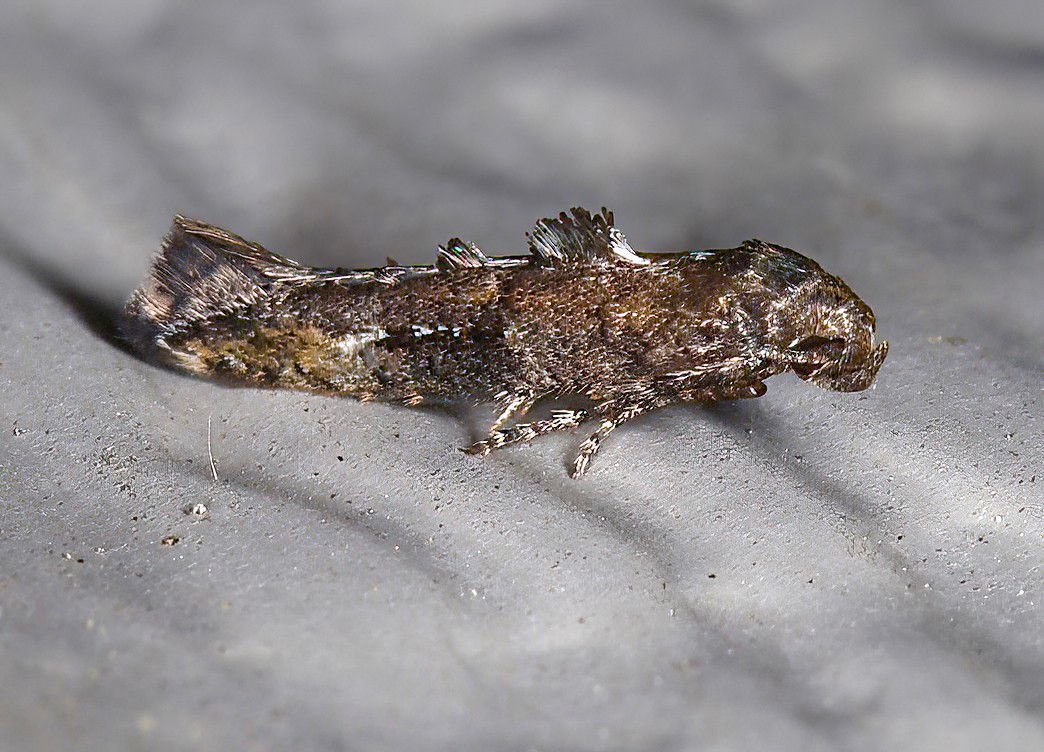
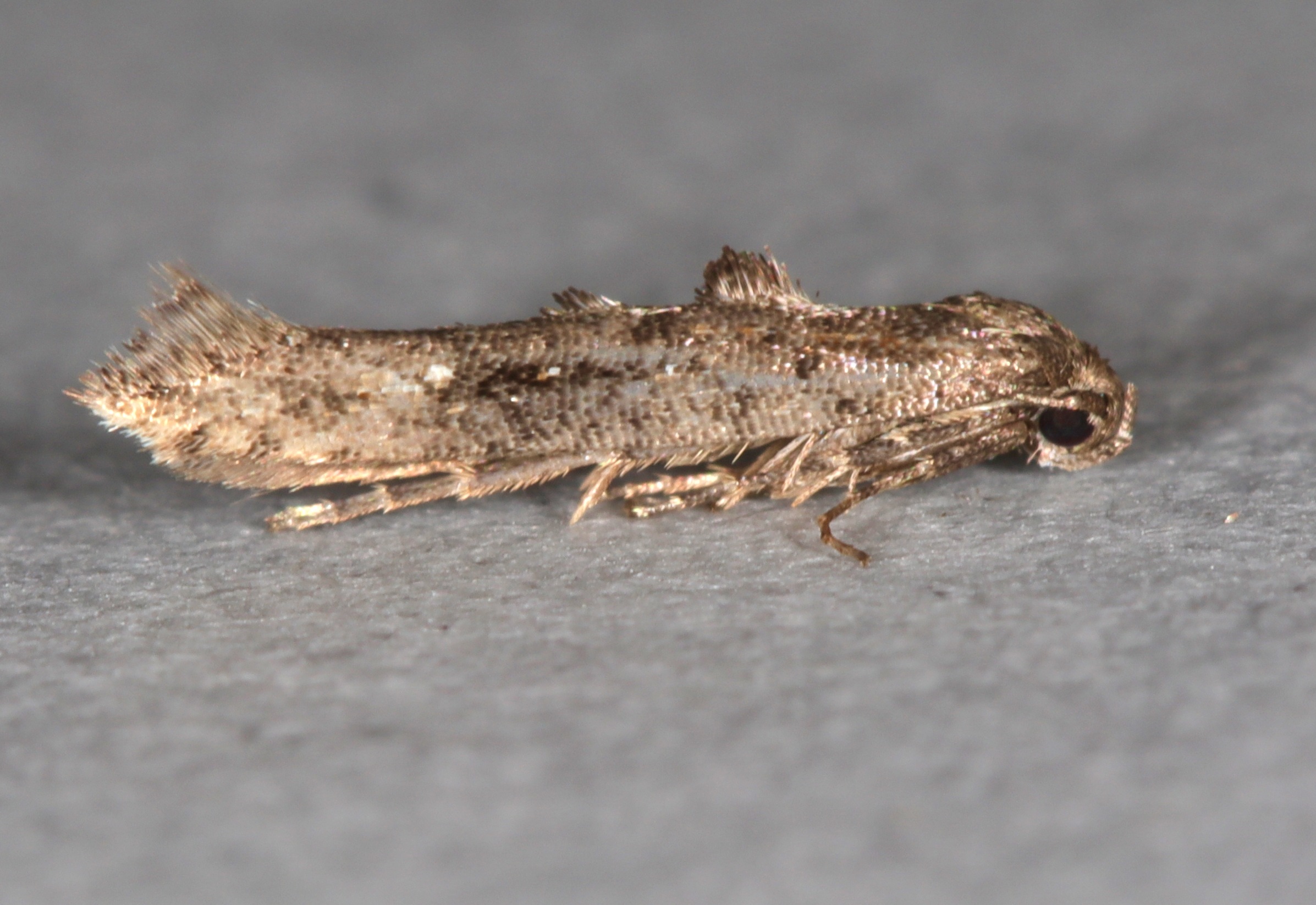
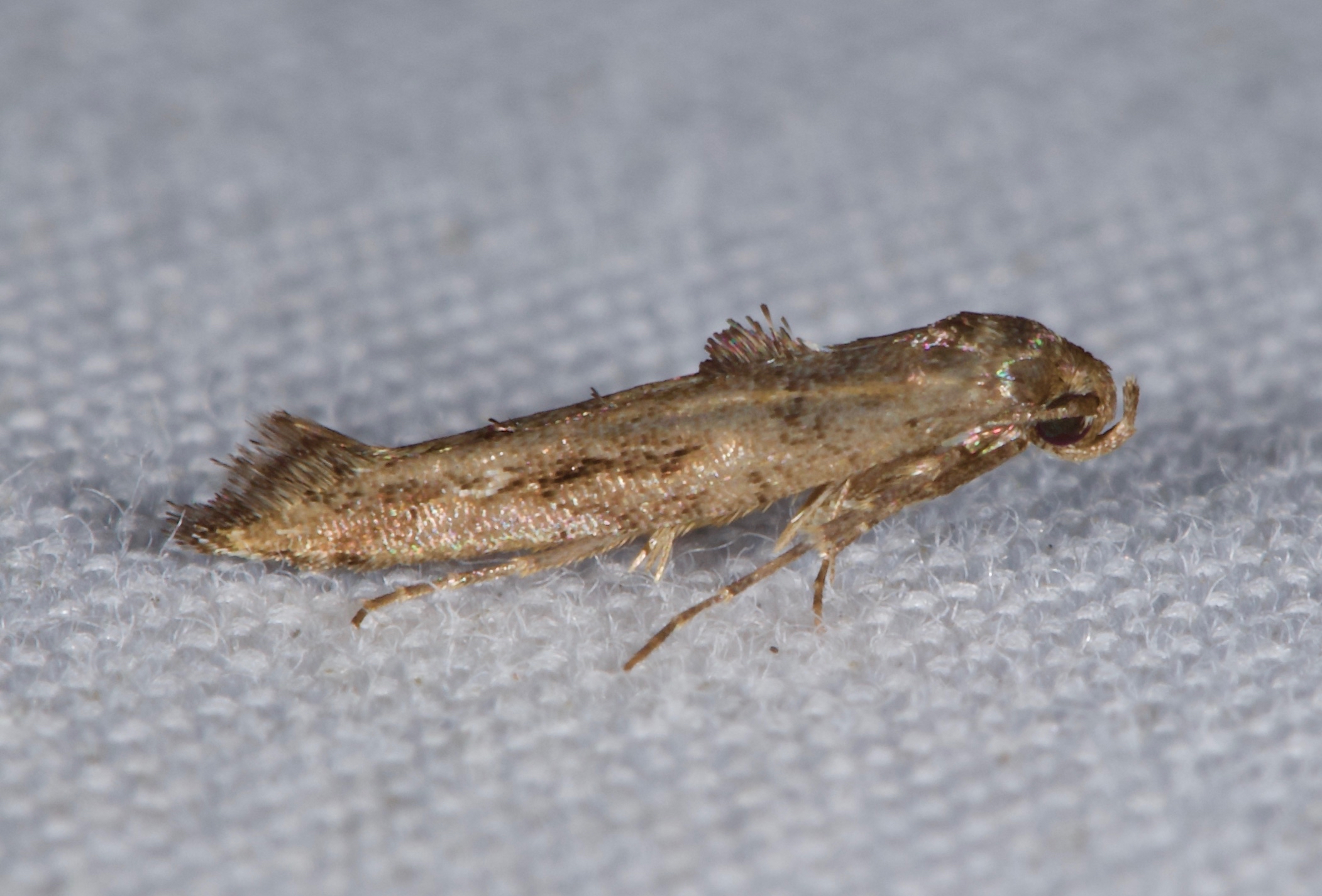
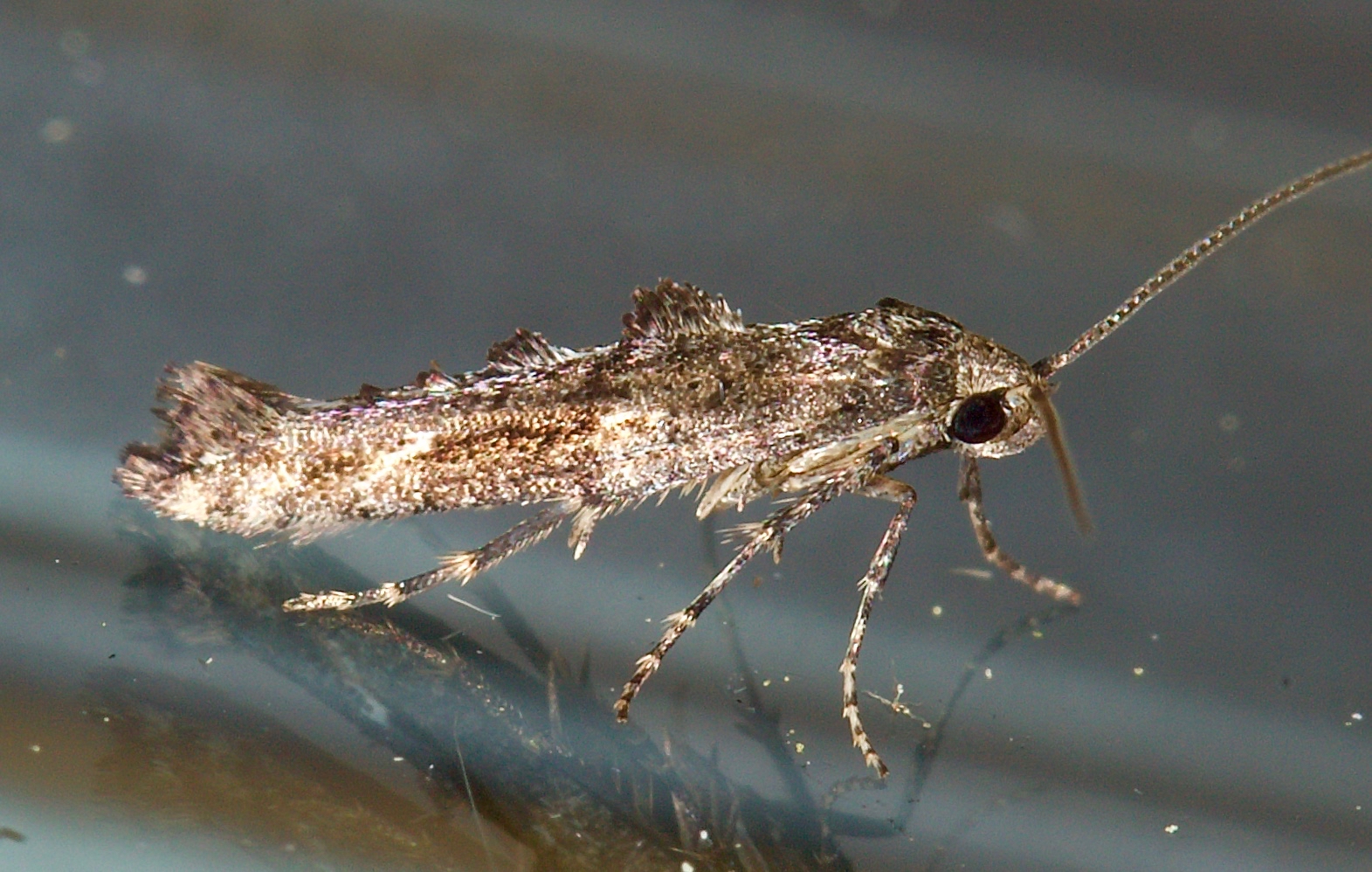
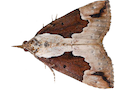
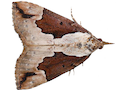
is a small moth that is more-or-less uniformly medium-brown to blackish-brown. The most prominent mark is a short, black, longitudinal streak at around three-fifths the wing length with a white dot near its posterior end. The forewings of fresh specimens has two or three patches of erect scales that resemble fish fins when a specimen is viewed from the side.
The following description is based in part on that of Busck (1908). The labial palp is blackish-brown, with the inner side of the second joint ocherous. The face, head, thorax and antenna vary from blackish-brown to medium-brown, with the basal joint of the latter having a strong pecten. The forewing is commonly dark-brown to medium-brown and finely mottled with lighter fuscous, black and brown scales. An ill-defined transverse band of heavy dark dusting is often evident just beyond the middle of the wing. Within this there is a short, black, longitudinal streak at around three-fifths the wing length with a white dot near its posterior end, and an even smaller white dot on the anterior end. A large, erect, scale patch is present just before the middle of the inner margin that is followed by a smaller one beyond the middle, and then by two even smaller ones beyond the second patch. The apical fringe is irregularly mottled and usually has aggegates of black scales. The hindwing is narrow and dark-brown with gray cilia, while the legs are mostly dark-brown, with blackish tarsi that have ocherous annulations.
Wingspan:
12-13 mm (Busck, 1908; Forbes, 1923).
Adult ID Requirements:
Identifiable from good quality photos of unworn specimens.
Immatures and Development:
The larvae feed on several members of the Apiaceae. Eiseman (2019, 2019a) noted that when feeding on Queen-Anne's-Lace (
Daucus carota
) the larva first forms a short, contorted, linear leaf mine with frass inside, then makes a separate, full-depth blotch mine. The fecal pellets are expelled from the blotch and accumulate on the lower leaf surface due in part to light webbing that is spun among the leaflets. Within a few days, the larvae transition to window feeding on the leaves, then later consume most of the leaves, leaving them tattered. The mature larvae spin white, open-mesh cocoons among the leaves, and the brown pupae are plainly visible through the mesh. When feeding on Hairy Sweet-cicely (
Osmorhiza claytonii
), the nearly mature larvae have been found boring holes in fruits among webbed pedicels. The cocoons were spun within this looser webbing (Eiseman 2019, 2019a).
Larvae ID Requirements:
Identifiable only through rearing to adulthood.
Distribution in North Carolina
Distribution:
Epermenia albapunctella
is found in North America in areas with cool climates. It has been documented in Alaska, and in Canada in the the Northwest Territories, and from British Columbia eastward to New Brunswick and Nova Scotia. In the US the range extends from the New England states westward across the Great Lakes region to Illinois, Wisconsin and Minnesota, and southward to southern Ohio, eastern Kentucky, West Virginia, Virginia and western North Carolina. As of 2025, we have two records from the Blue Ridge that appears to be the southernmost records for this species.
County Map:
Clicking on a county returns the records for the species in that county.
Flight Dates:
High Mountains (HM) ≥ 4,000 ft.
Low Mountains (LM) < 4,000 ft.
Piedmont (Pd)
Coastal Plain (CP)
Click on graph to enlarge
Flight Comments:
The adults have been observed from April through November in different areas of the range. In the Northeast, larvae and pupae have been found beginning in early July, with adults emerging from early July to early August (Eiseman 2019). As of 2025, this species has only been found at two sites in North Carolina. At one lower-elevation site in the Blue Ridge where there has been extensive collecting, the population appears to have two or three broods annually, with the adults flying from late-February through late-August.
Habitats and Life History
Habitats:
The preferred habitats are poorly documented, but local populations are generally associated with rich woods with openings.
Larval Host Plants:
This species has been reported to use several taxa in the Apiaceae (
Daucus
,
Heracleum
,
Ligusticum
,
Osmorhiza
), as well as
Aralia
in the Araliaceae (Eiseman 2019, 2019a, 2024). Prentice (1966) also reported it to use conifers in Canada, but that seems unlikely based on other rearing records (Eiseman 2019a). The reported hosts include Bristly Sarsaparilla (
Aralia hispida
), Wild Sarsaparilla (
A. nudicaulis
), Queen-Anne's-Lace (
Daucus carota
), Scotch Lovage (
Ligusticum scoticum
), Sweet-cicely (
Osmorhiza claytonii
) and Western Sweet-cicely (
O. occidentalis
). -
View
Observation Methods:
The adults are attracted to lights and the larvae can be found feeding on and mining the leaves of members of the Apiaceae.
Wikipedia
Status in North Carolina
Natural Heritage Program Status:
Natural Heritage Program Ranks:
GNR [S1S2]
State Protection:
Has no legal protection, although permits are required to collect it on state parks and other public lands.
Comments:
This species is rare in North Carolina, with only two records as of 2025. It reaches the southern limit of its range in western North Carolina.
Photo Gallery for
Epermenia albapunctella
- None
Photos: 9
Recorded by: Jim Petranka on 2025-02-26
Madison Co.
Comment:
Recorded by: Jim Petranka on 2024-08-30
Madison Co.
Comment:
Recorded by: Jim Petranka on 2024-03-03
Madison Co.
Comment:
Recorded by: Jim Petranka on 2021-08-06
Madison Co.
Comment:
Recorded by: Jim Petranka on 2021-02-28
Madison Co.
Comment:
Recorded by: Jim Petranka and Becky Elkin on 2020-03-13
Madison Co.
Comment:
Recorded by: Jim Petranka and Becky Elkin on 2019-05-19
Madison Co.
Comment:
Recorded by: Jim Petranka and Becky Elkin on 2019-05-05
Madison Co.
Comment:
Recorded by: Jim Petranka and Becky Elkin on 2019-05-05
Madison Co.
Comment:
 »
»