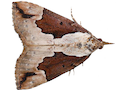
Moths of North Carolina
Scientific Name:
Common Name:
Family (Alpha):
« Home »
Sole representative of Urodidae in NC
145 NC Records

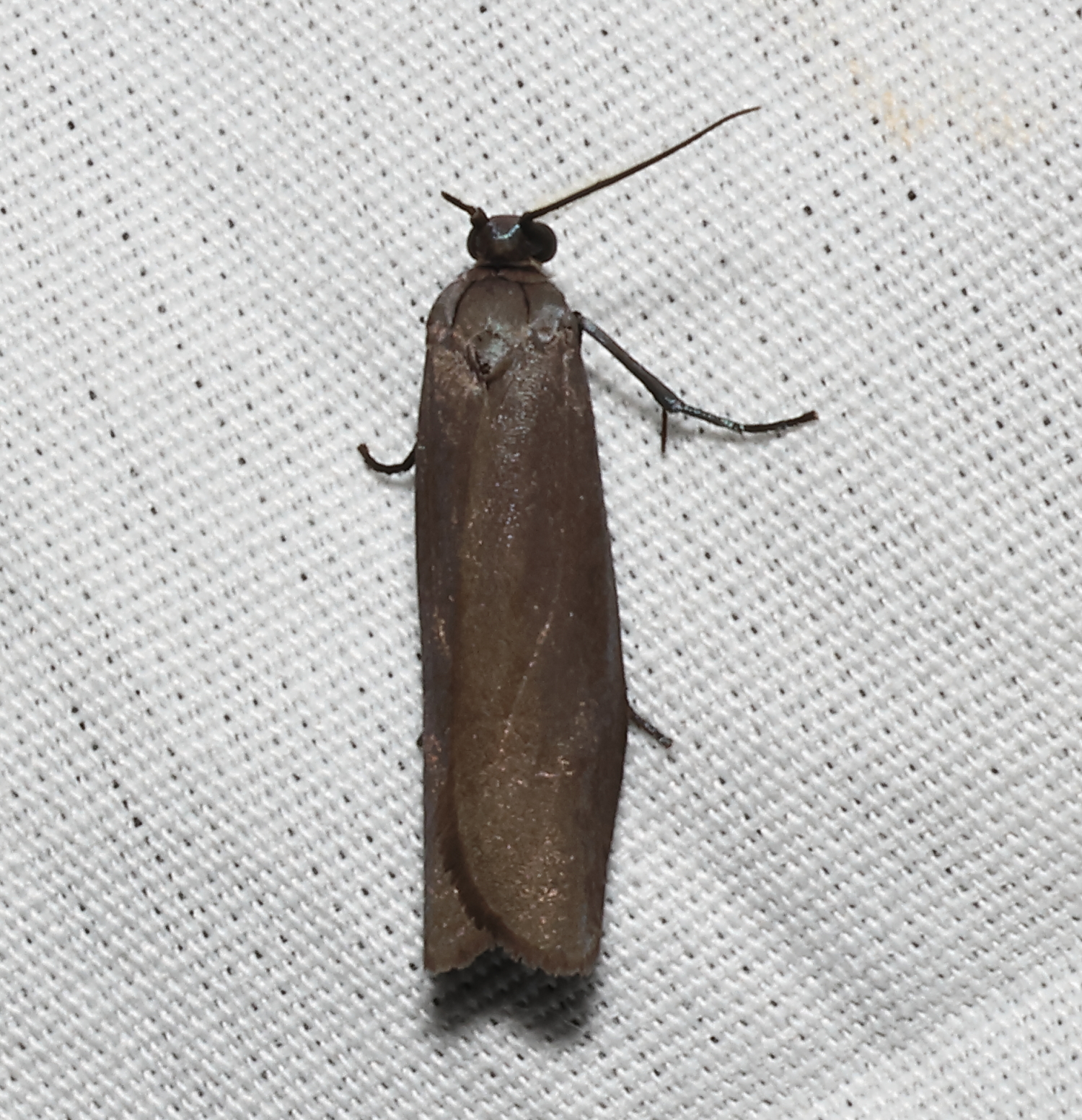
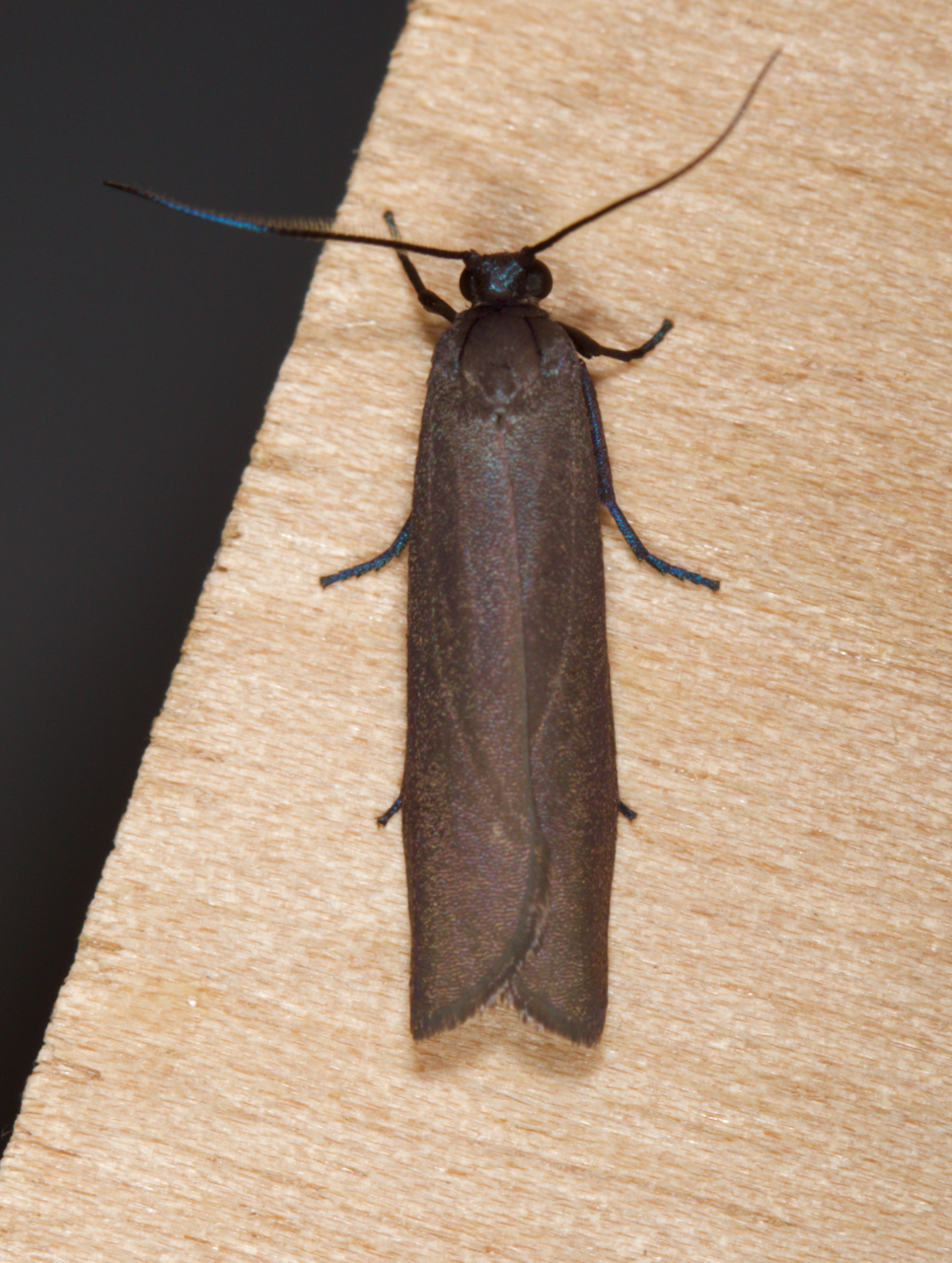
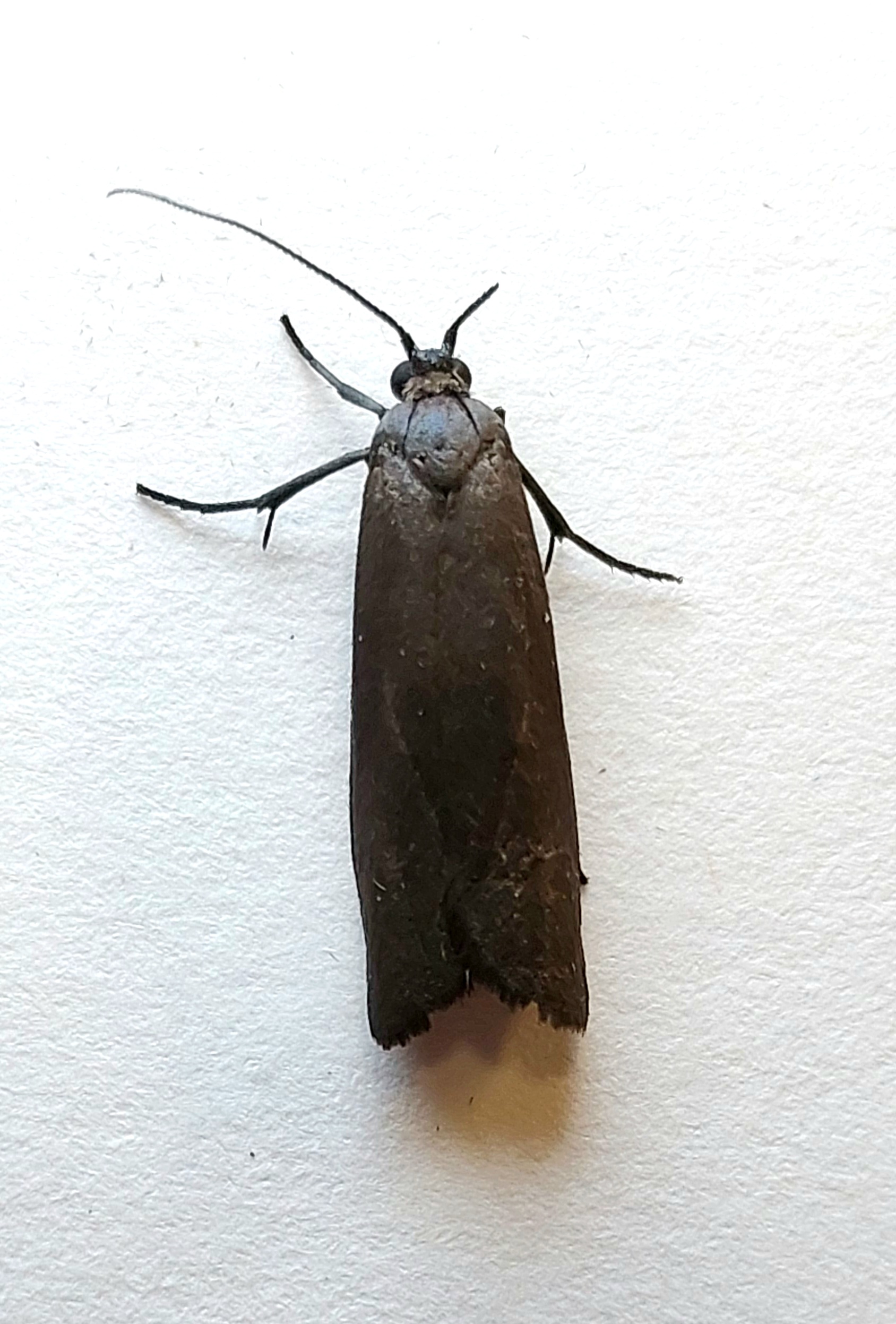
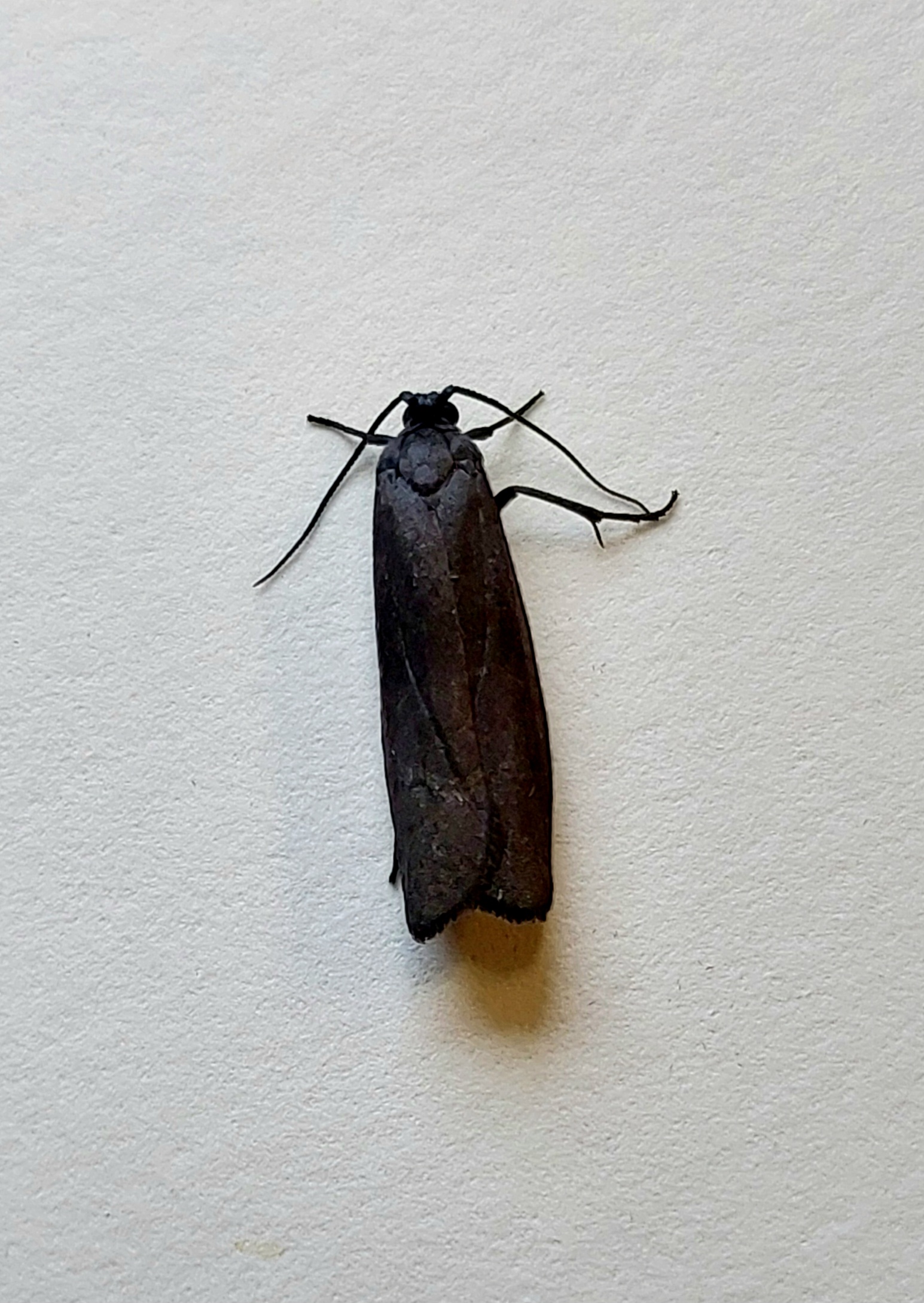
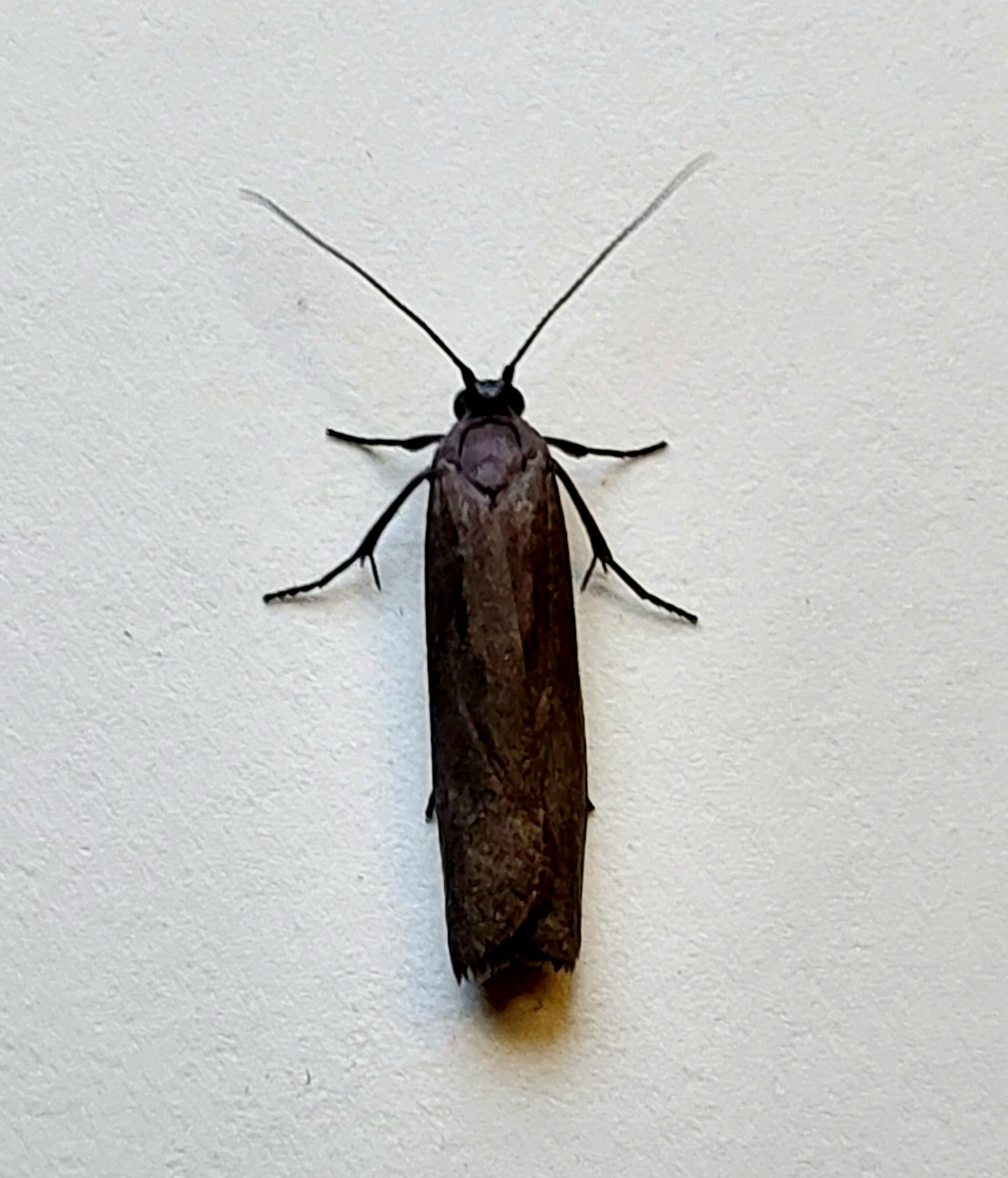
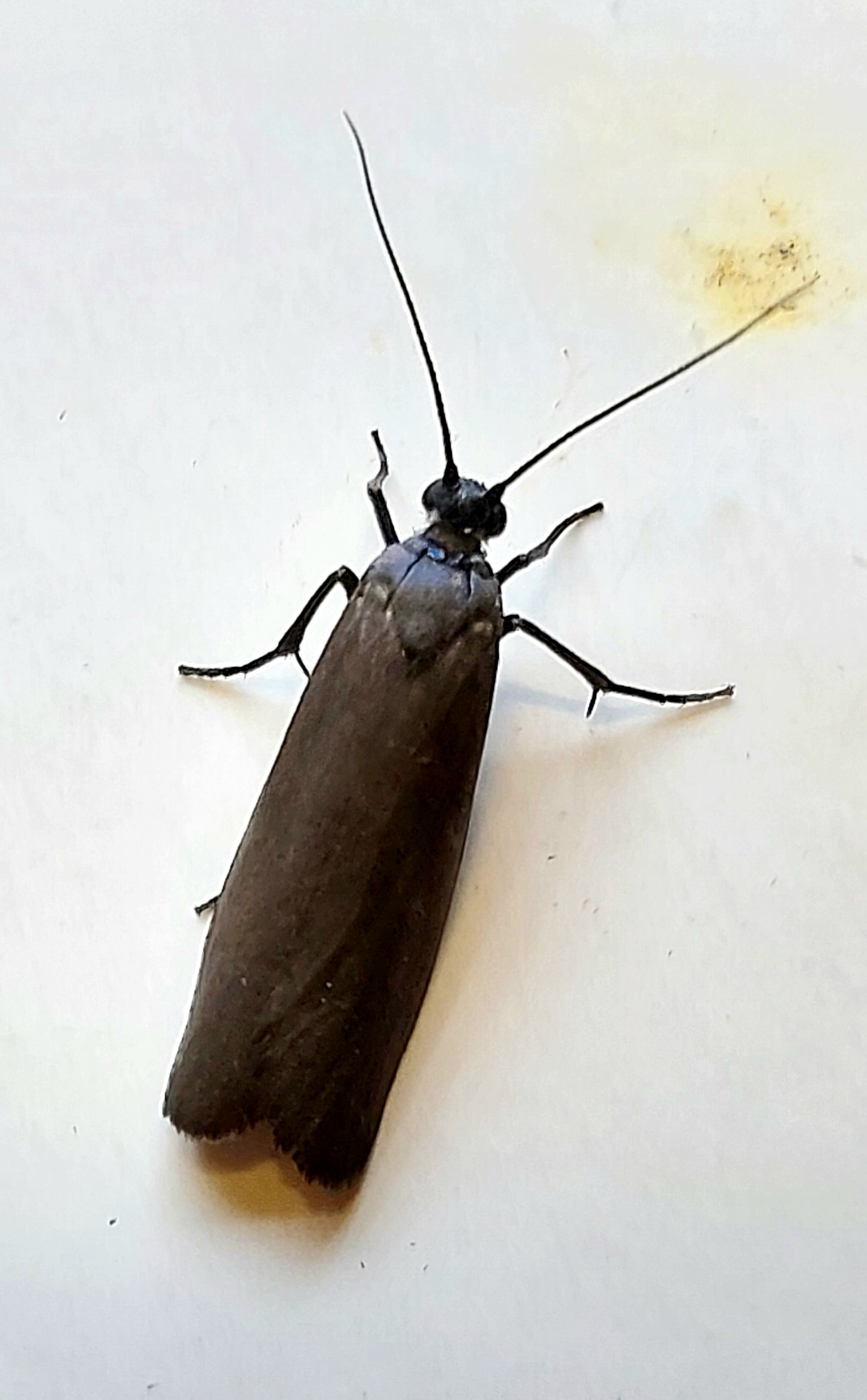
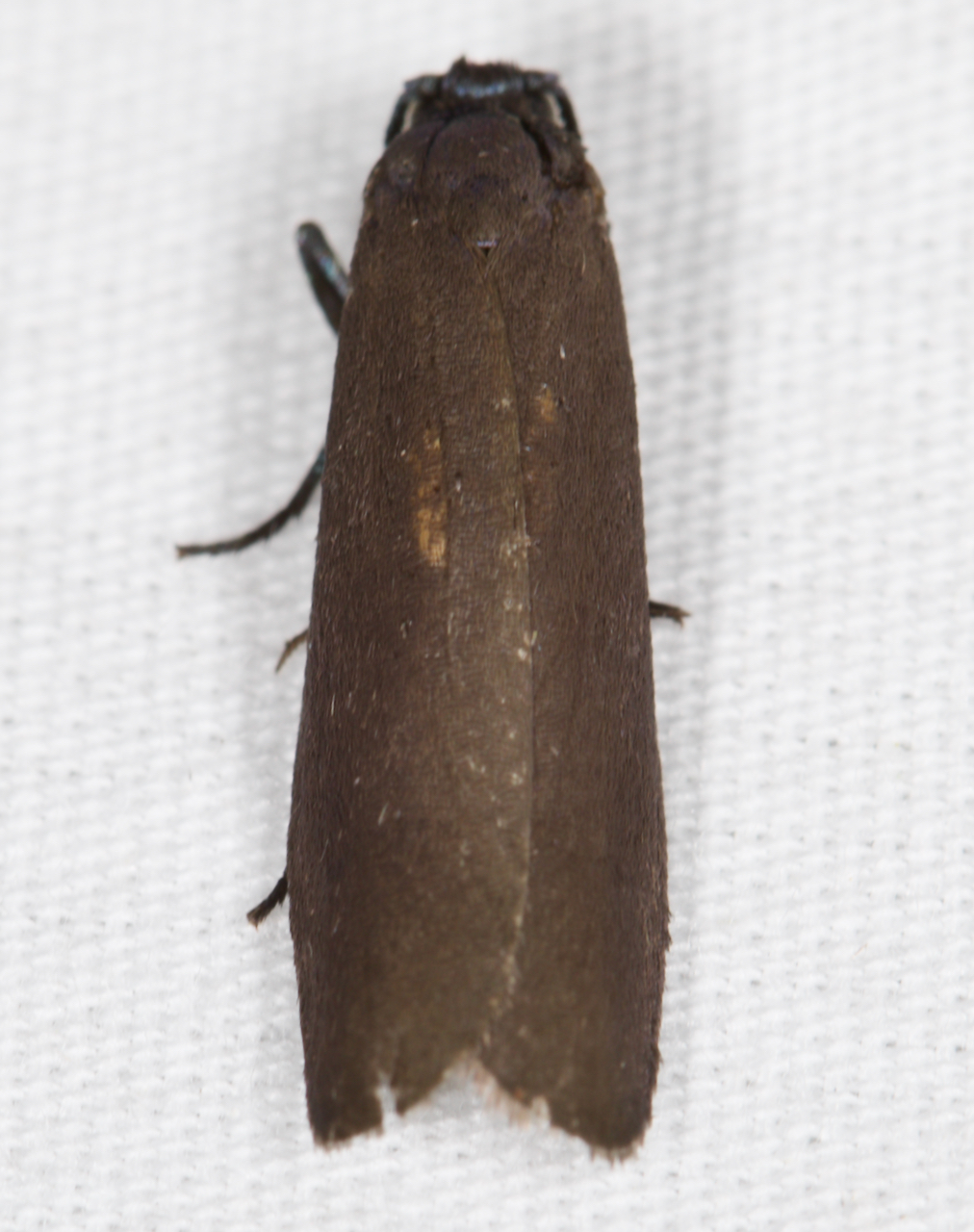
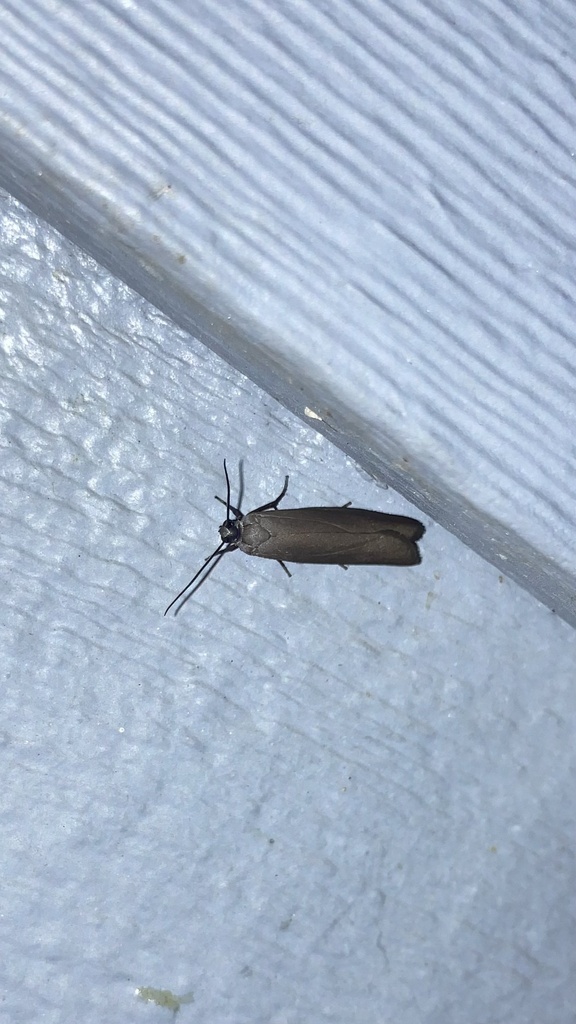
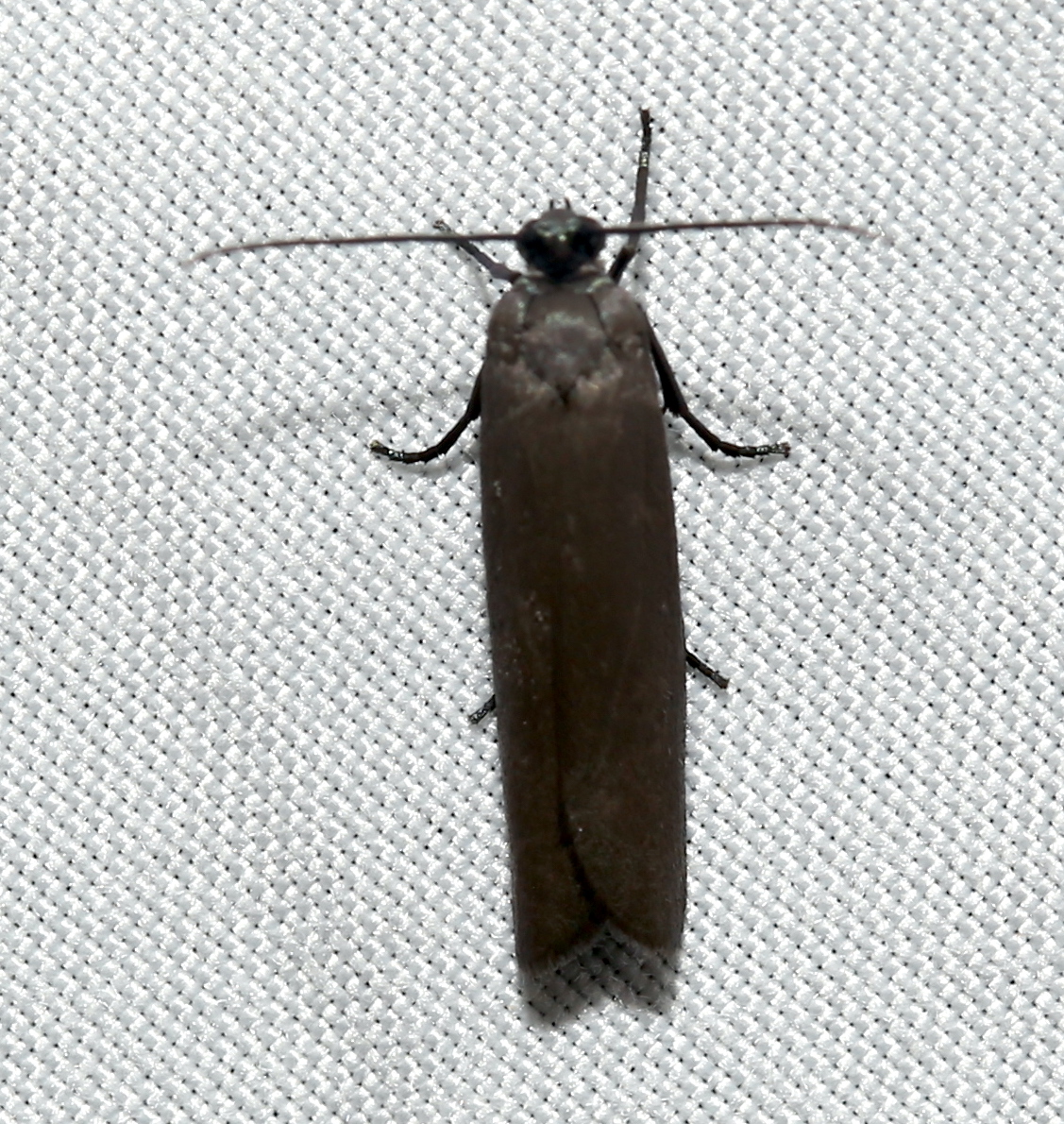
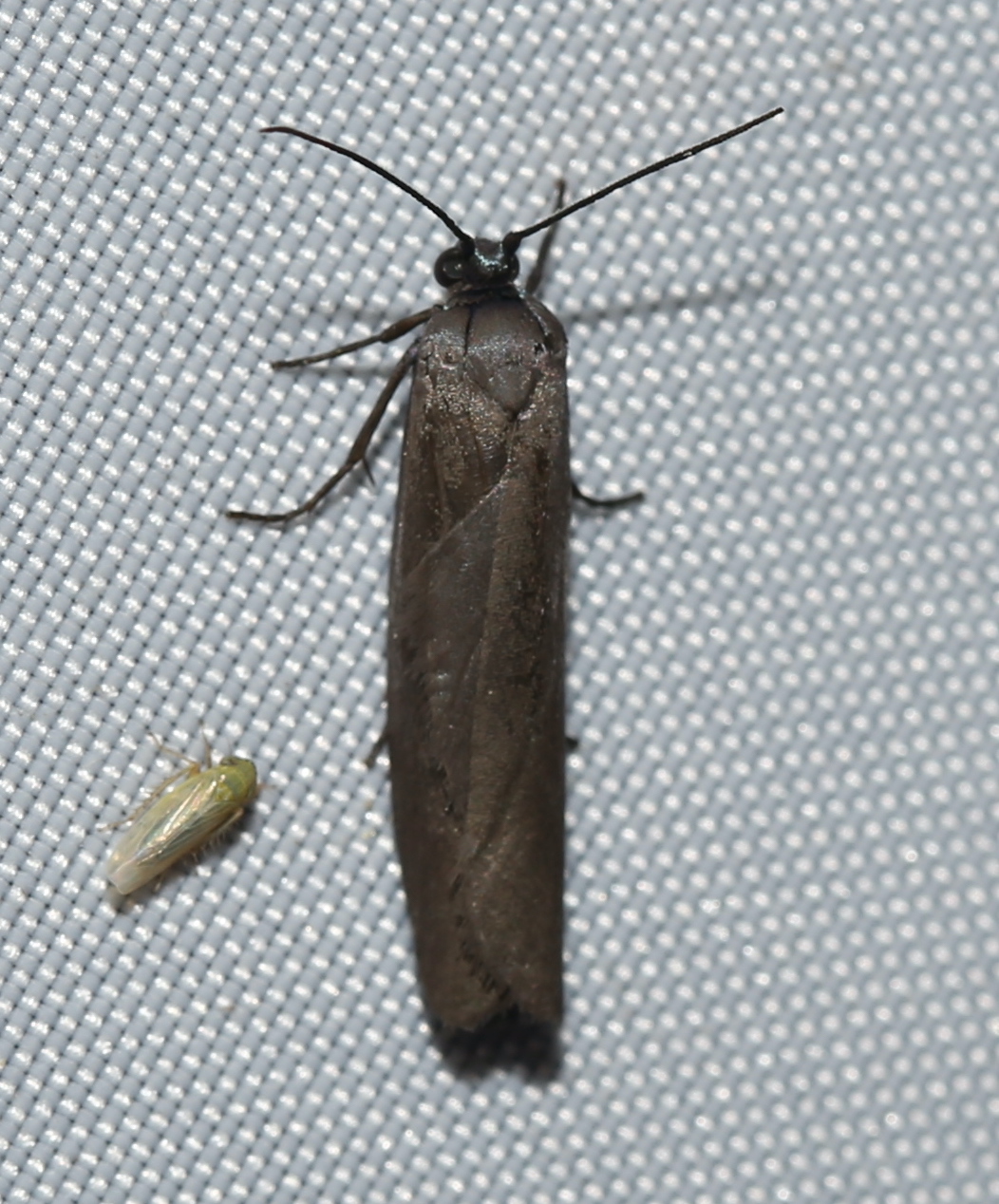
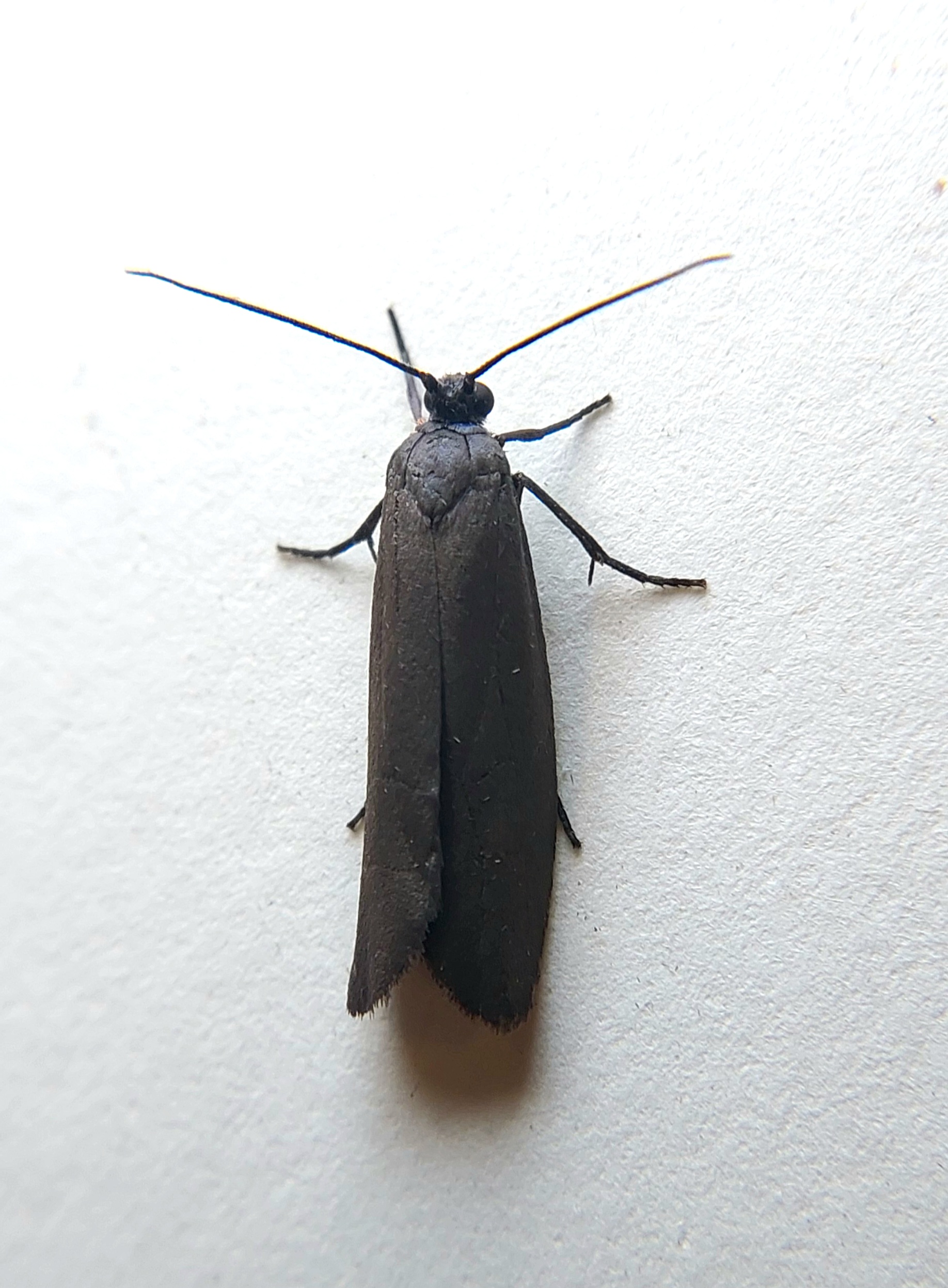
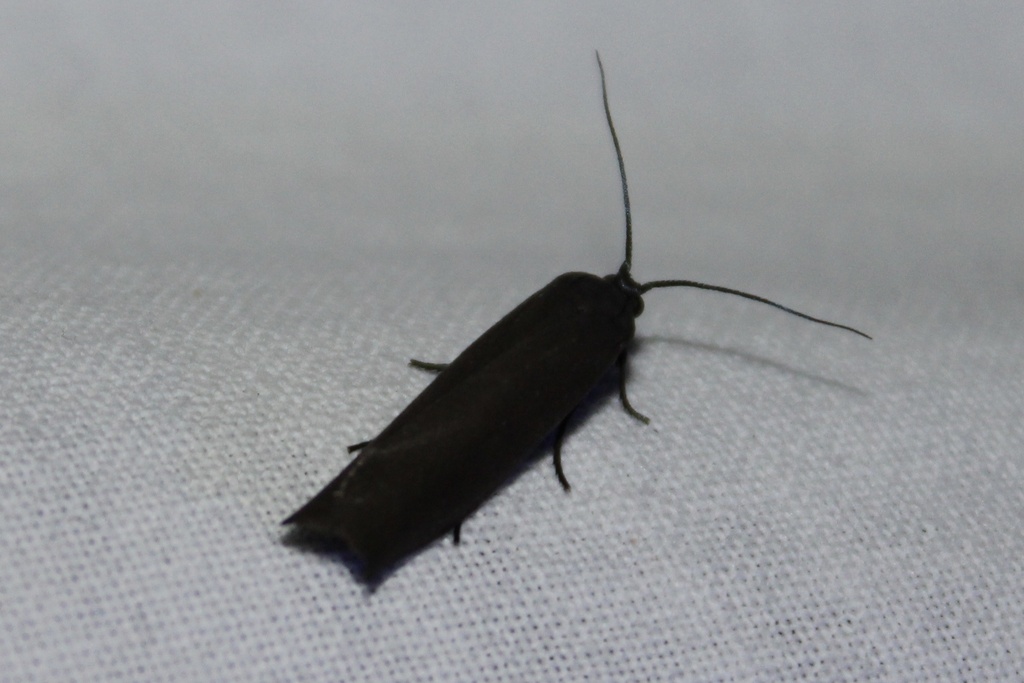
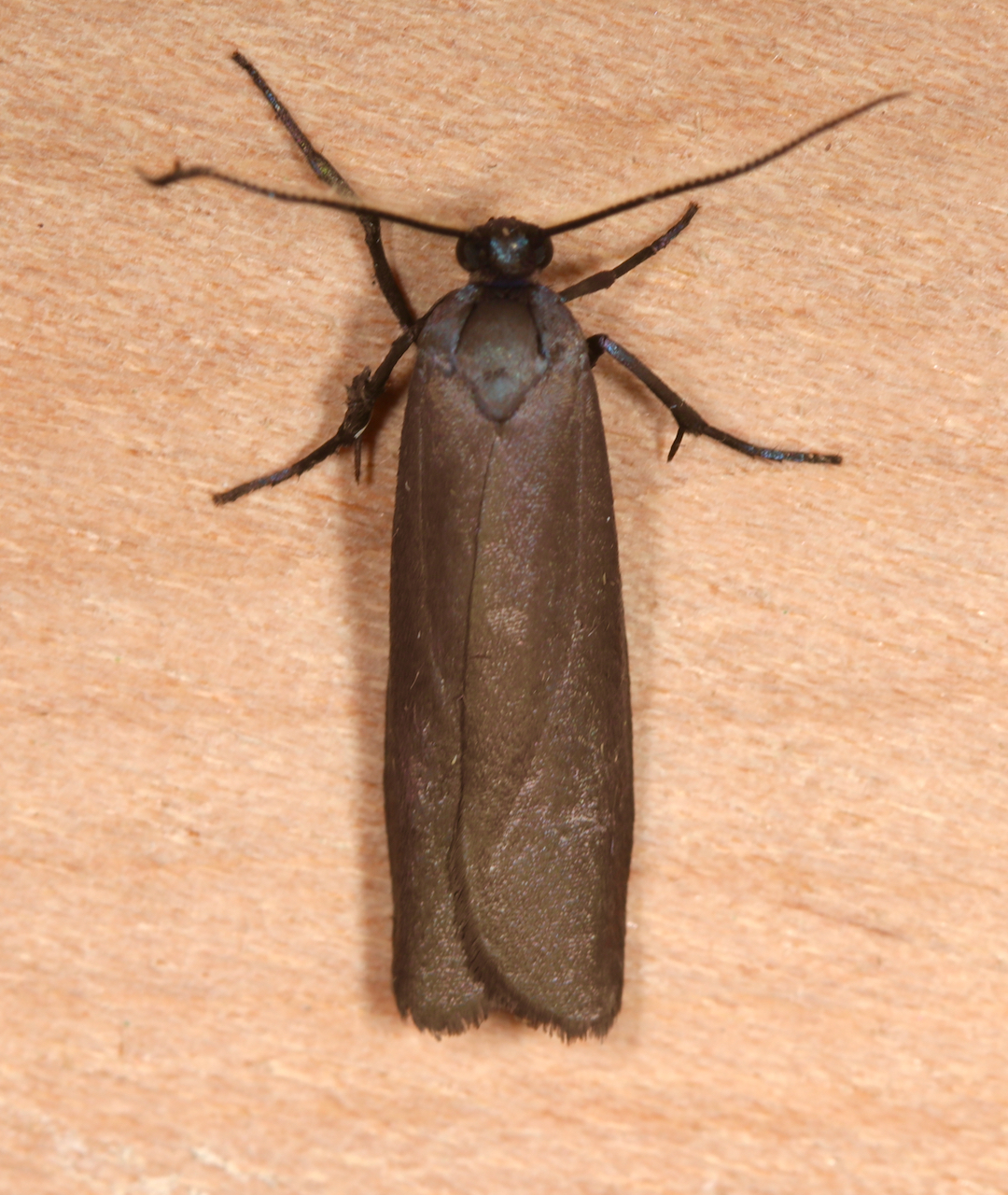
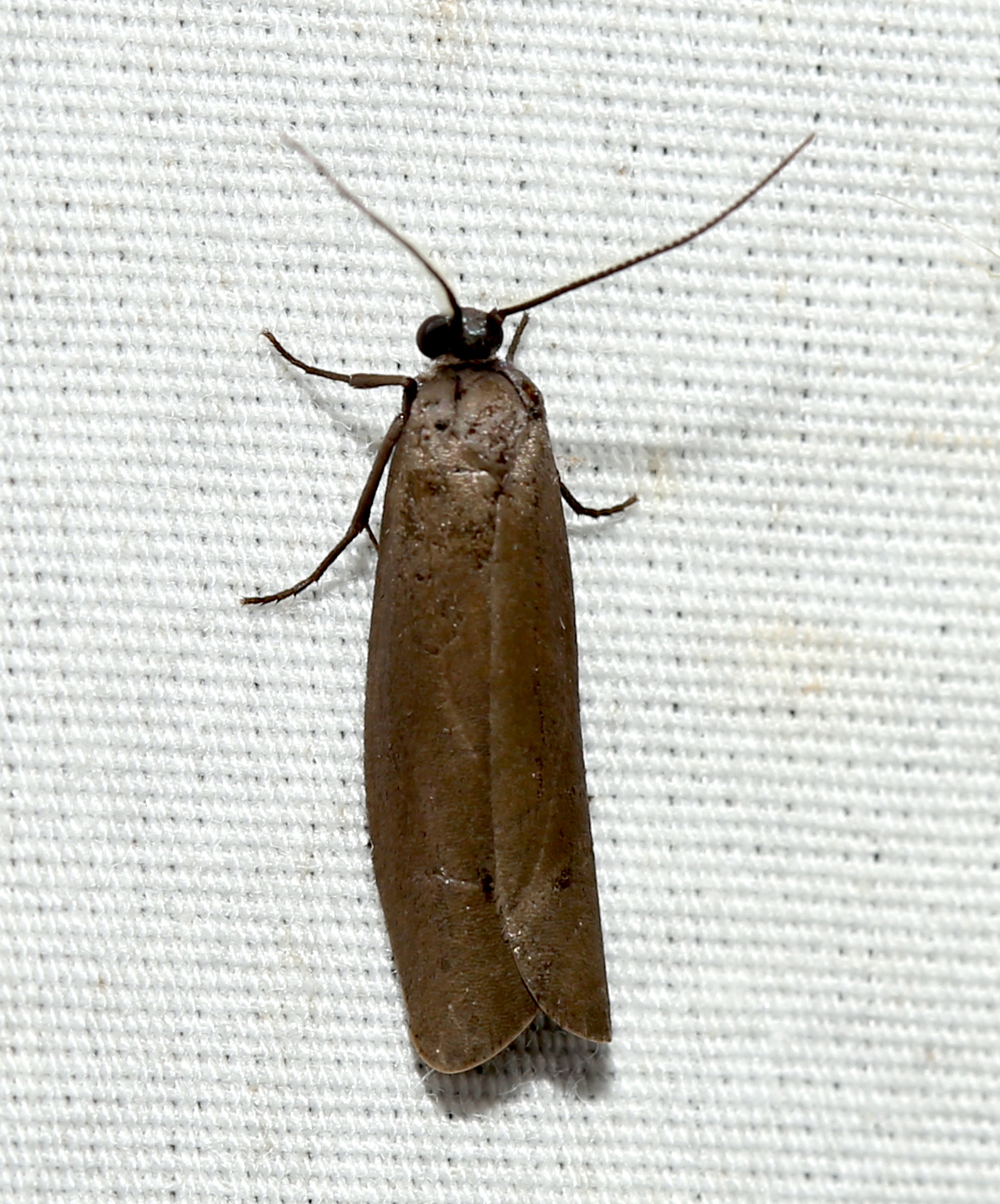
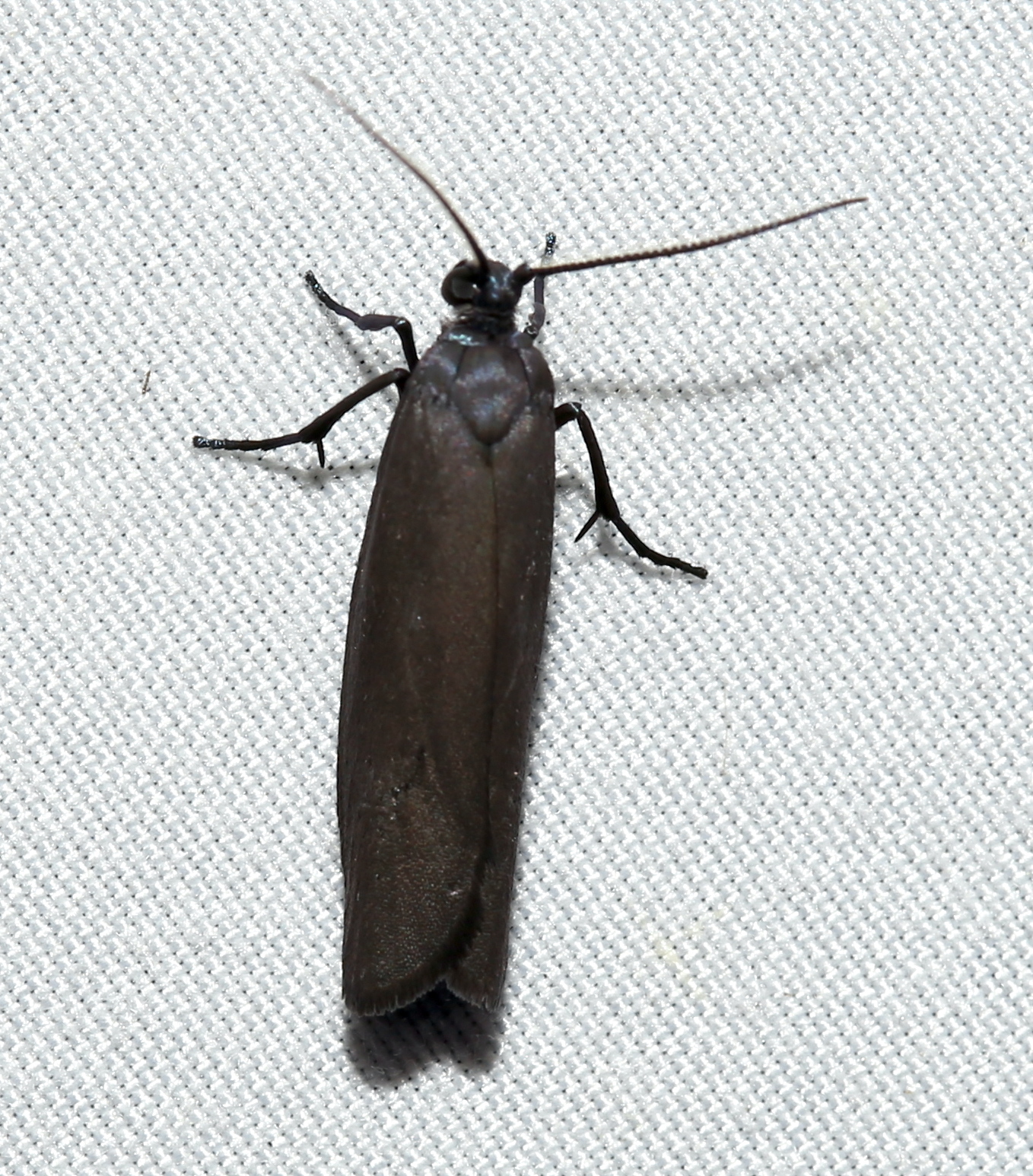
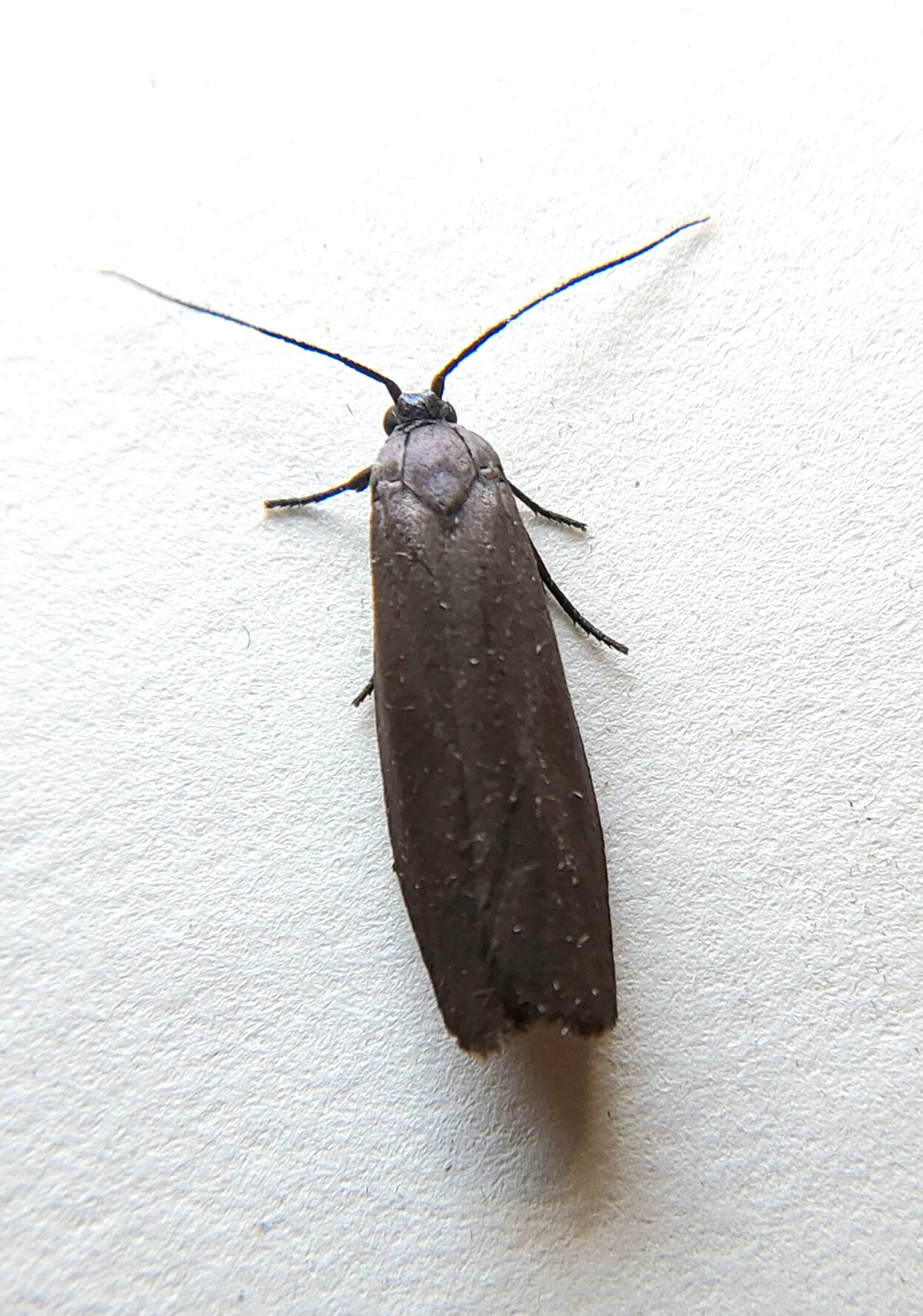
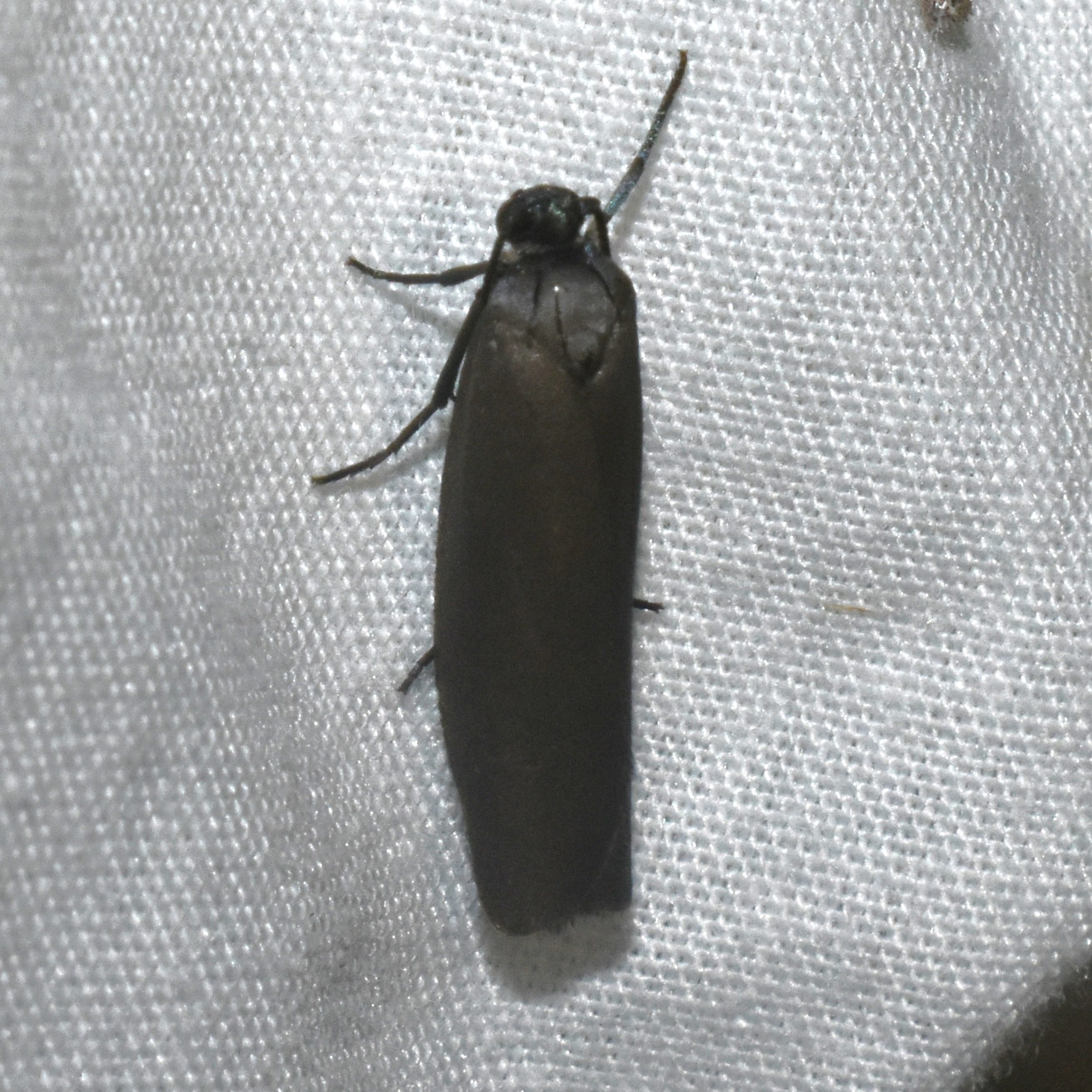
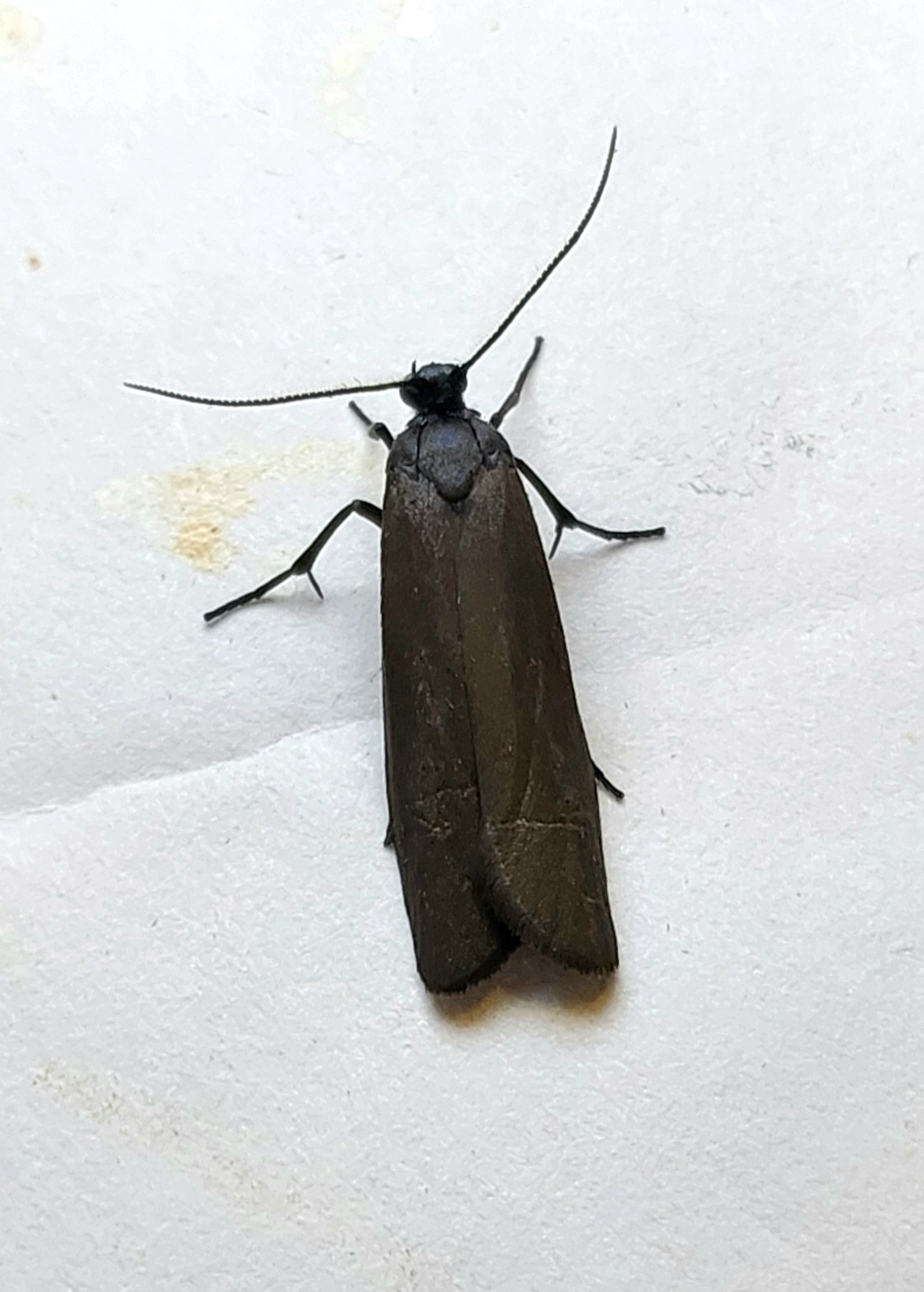
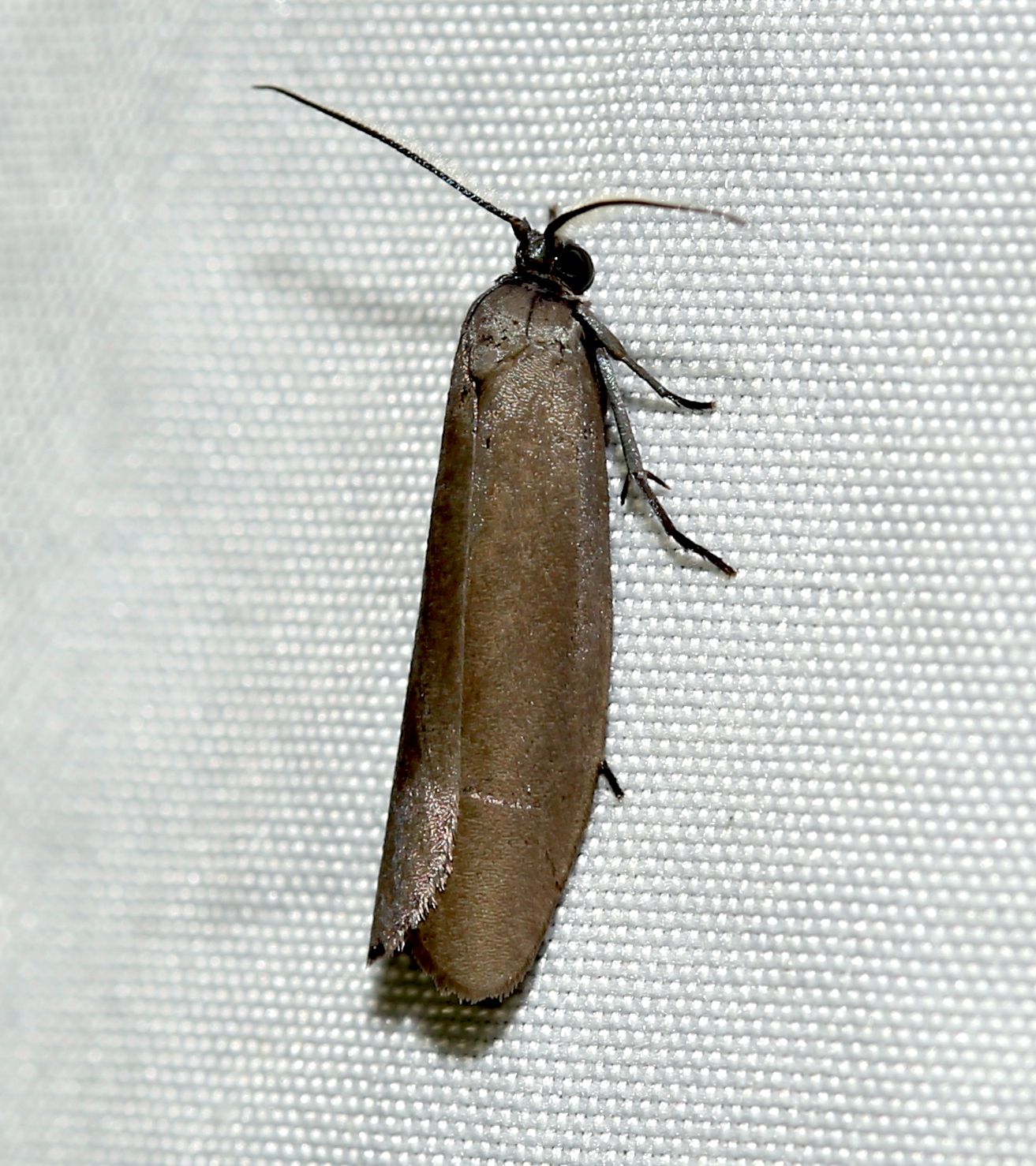
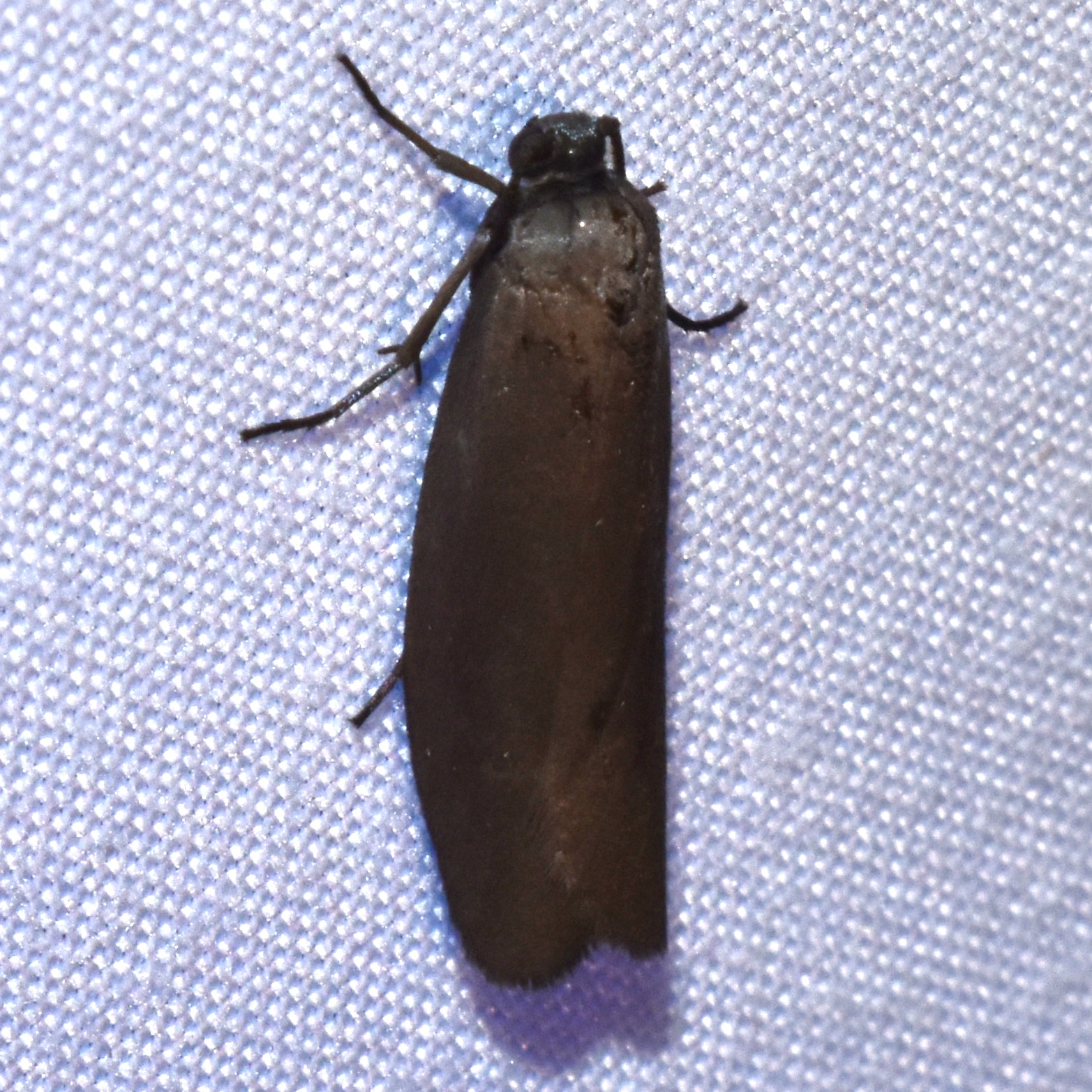
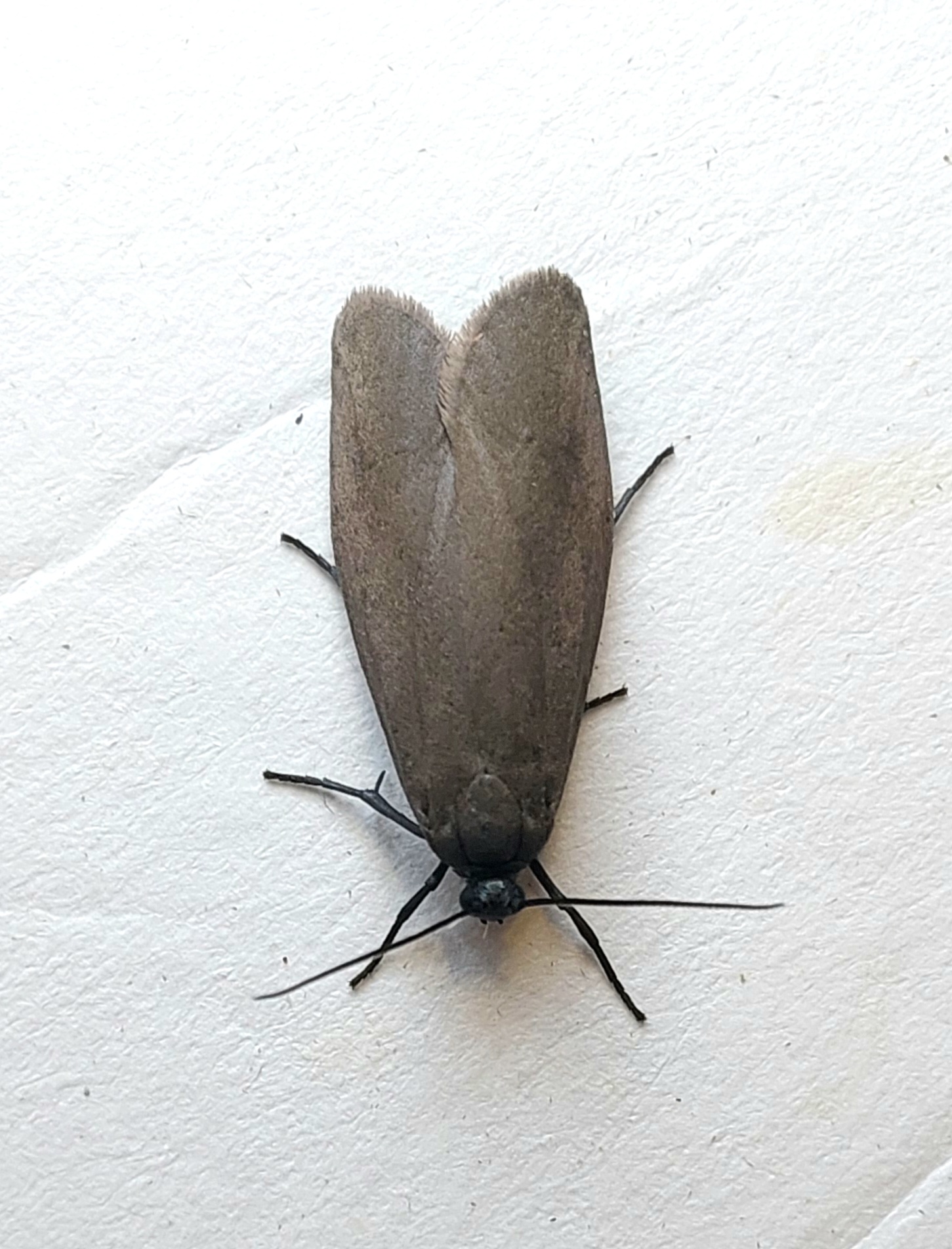
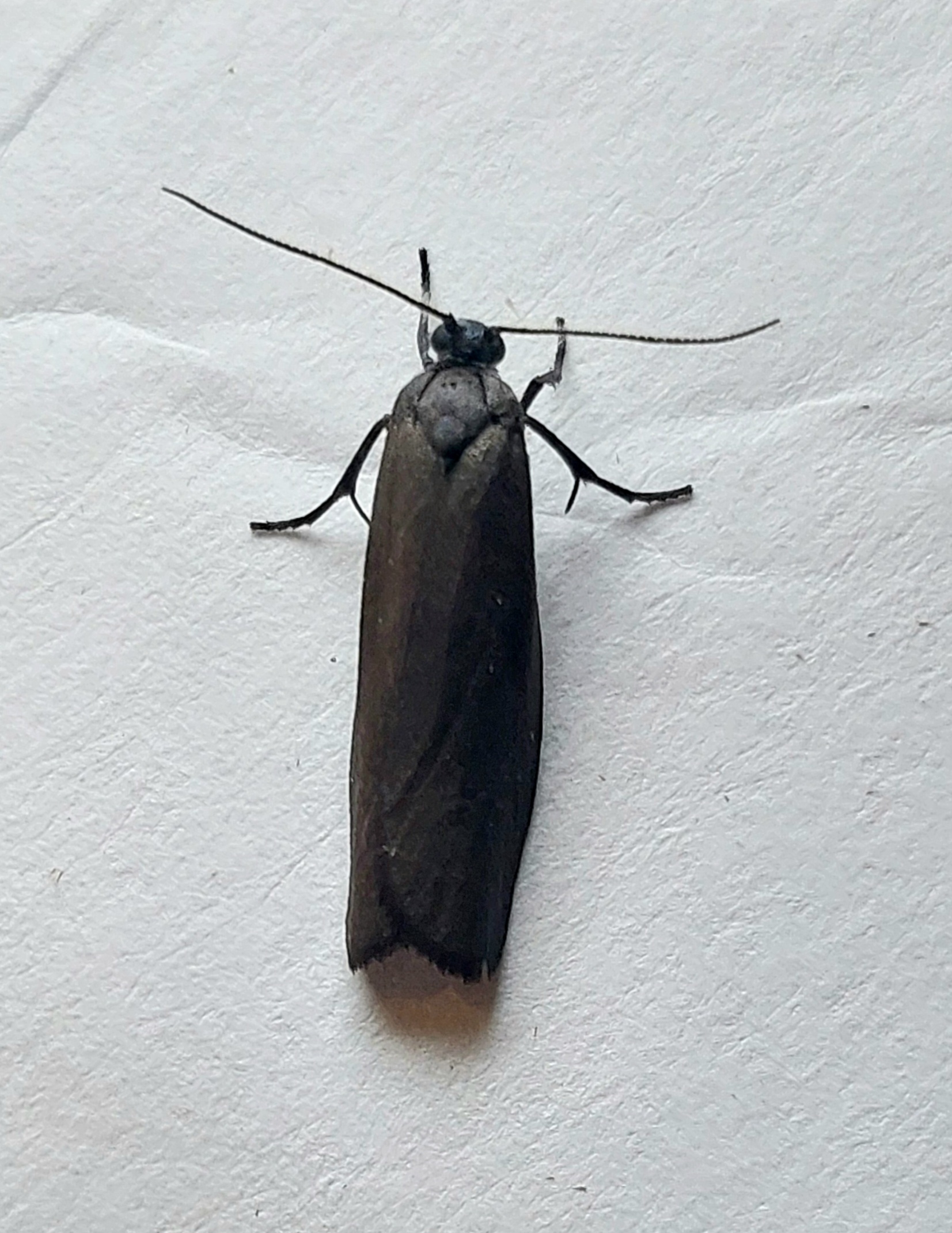
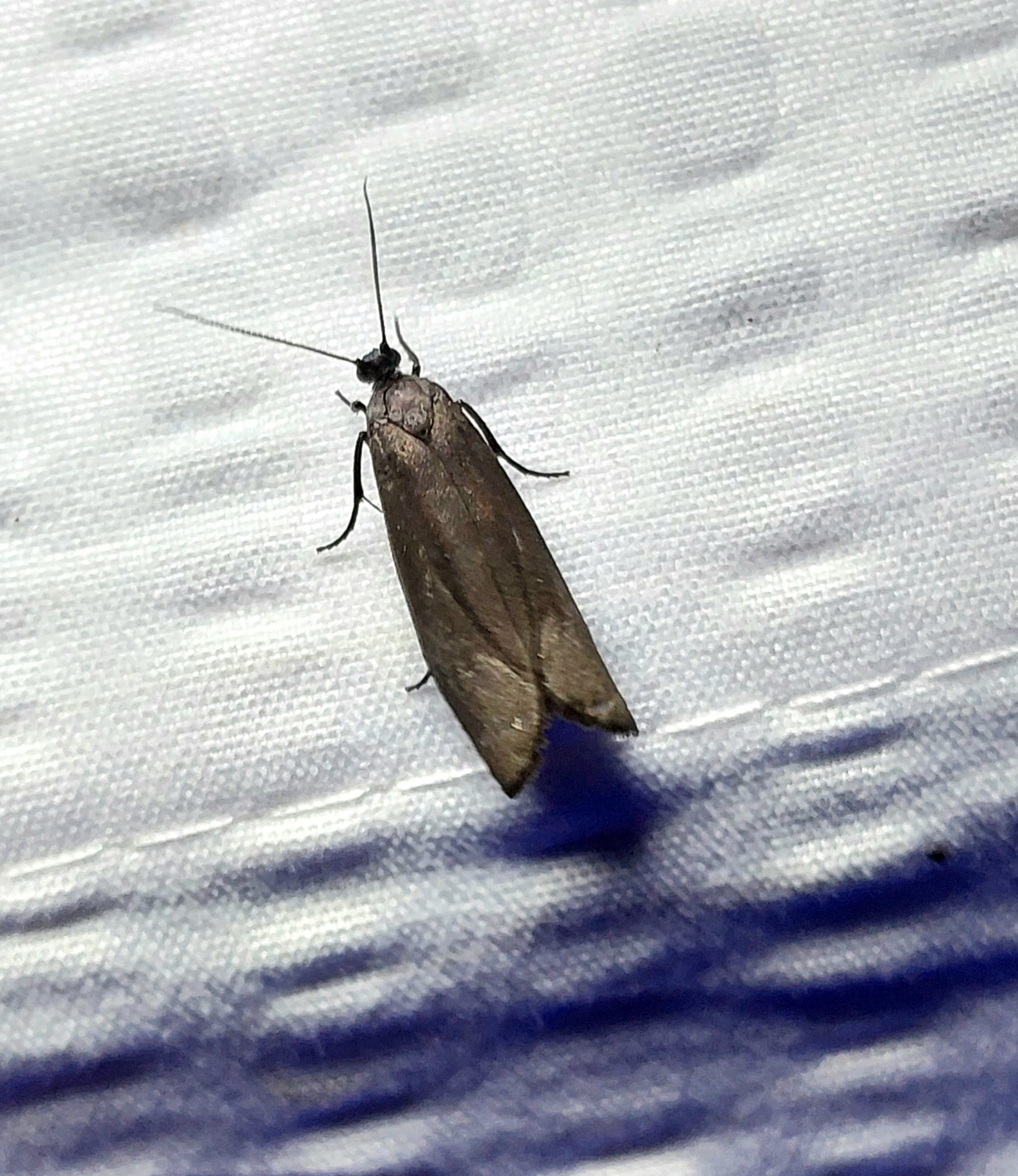
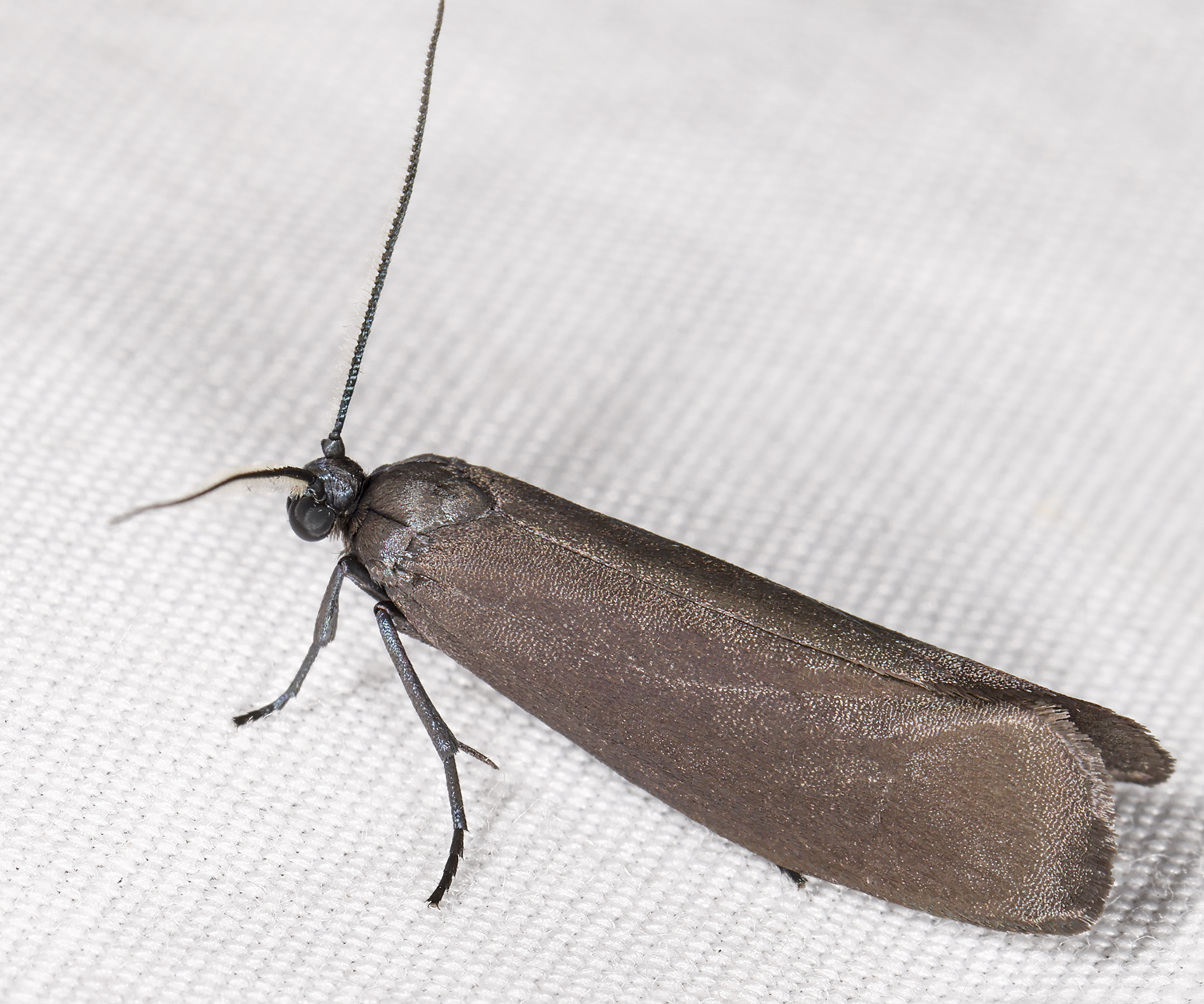
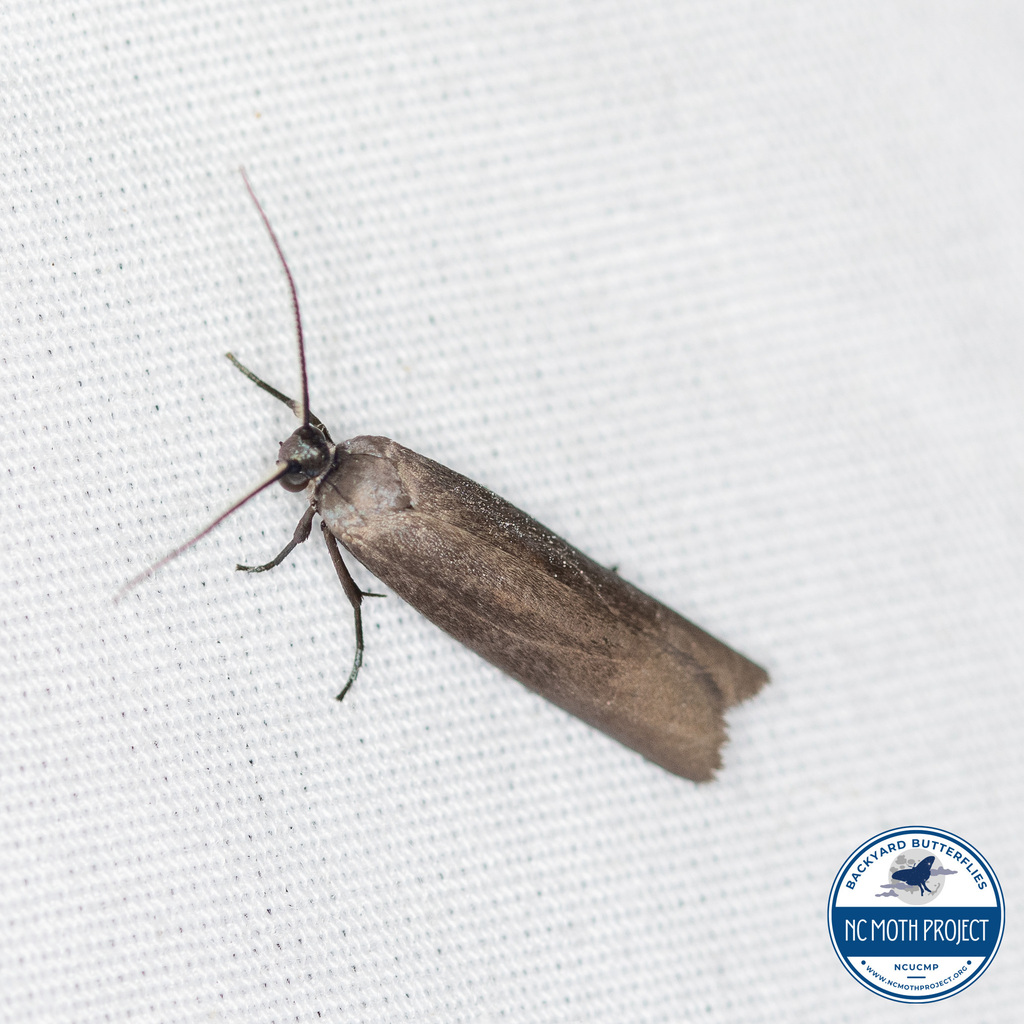
Urodus parvula (Edwards, 1881) - Bumelia Webworm Moth


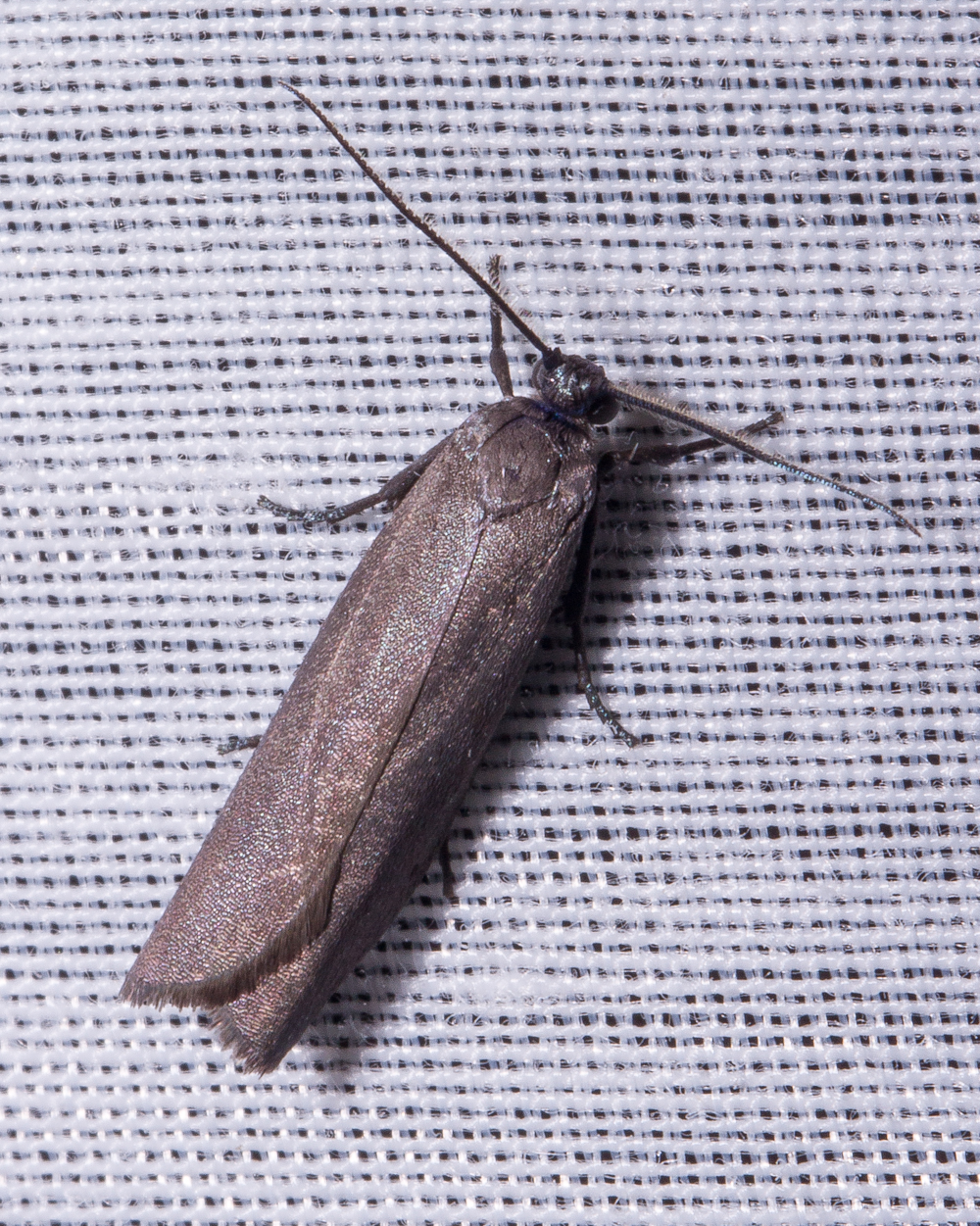
Urodus parvulaUrodus parvula
view caption
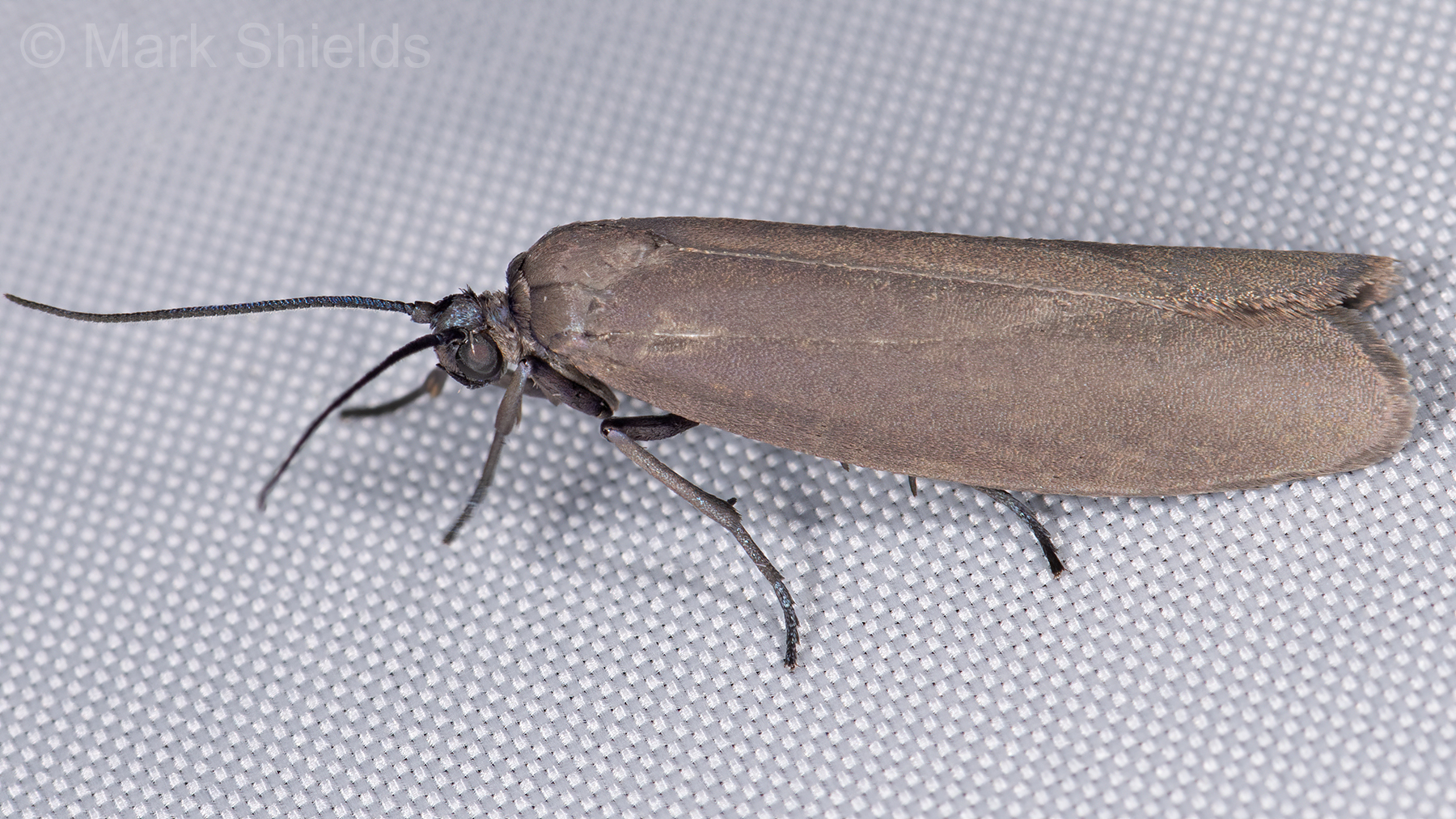
Urodus parvulaUrodus parvula
Taxonomy
Superfamily:
Urodoidea
Family:
Urodidae
Subfamily:
[Urodinae]
Tribe:
[Urodini]
P3 Number:
45a0001
MONA Number:
2415.00
Identification
Field Guide Descriptions: Covell (1984)Online Resources: MPG, BugGuide, iNaturalist, Google, BAMONA, GBIF, BOLDTechnical Description, Adults: Hall (2018)Technical Description, Immature Stages: Hall (2018); Frost (1972)                                                                                 
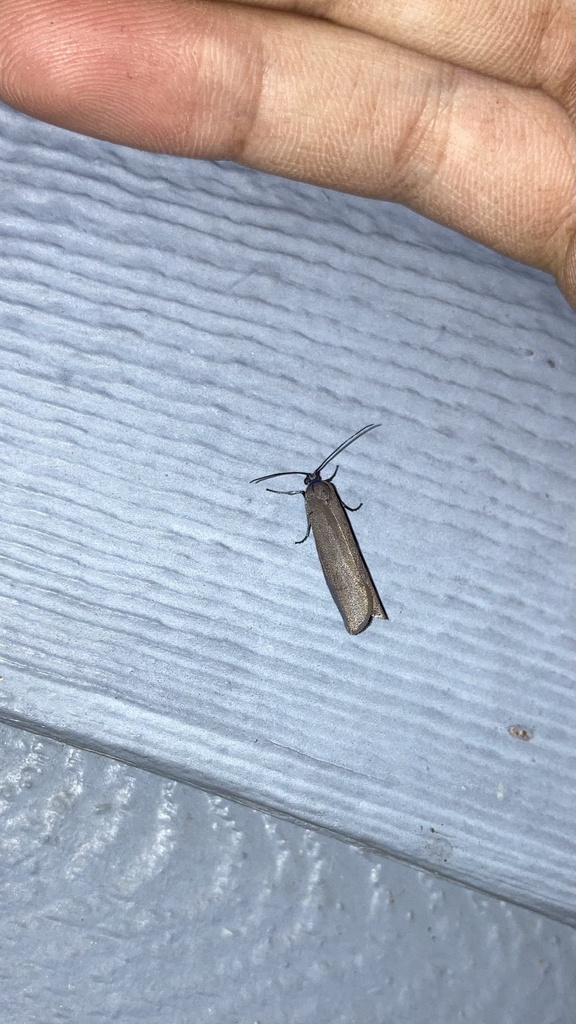
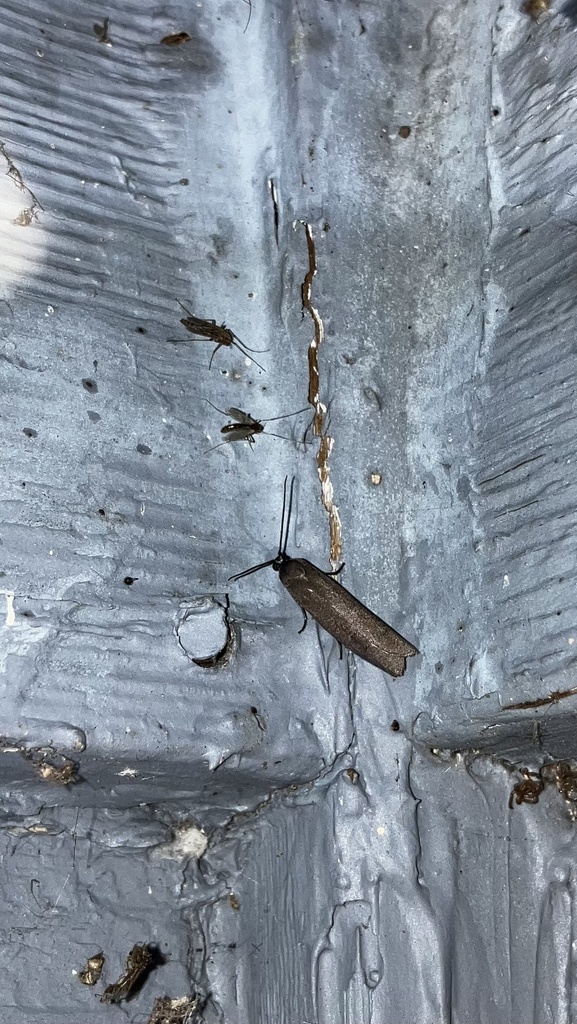
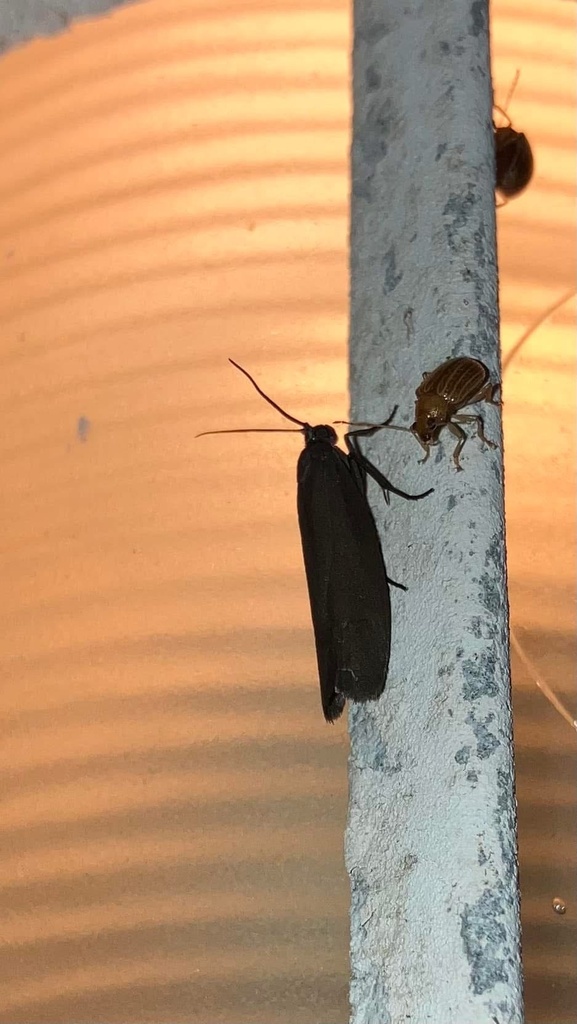
Adult Markings: Urodus parvula is distinctive in having all body parts a uniformly smoky-black to reddish-brown color, and often with a faint iridescent blue or purplish reflection. The hindwings are similar in color, but transparent. This species might be confused with Scythris fuscicomella, but the latter is about half as long (FWL 5.5-6.1 mm), and has an antenna that is noticeably thickened on the basal two-thirds. Neoprocris floridana is also very similar, but it has a bipectinate antenna versus a filiform antenna in U. parvula. Also, the labial palps of U. parvula are up-curved versus being straight on N. floridana (Hall, 2018).
Wingspan: 20-29 mm (Covell, 1984).
Genitalia and other structural photos
Adult ID Requirements: Identifiable from good quality photos of unworn specimens.
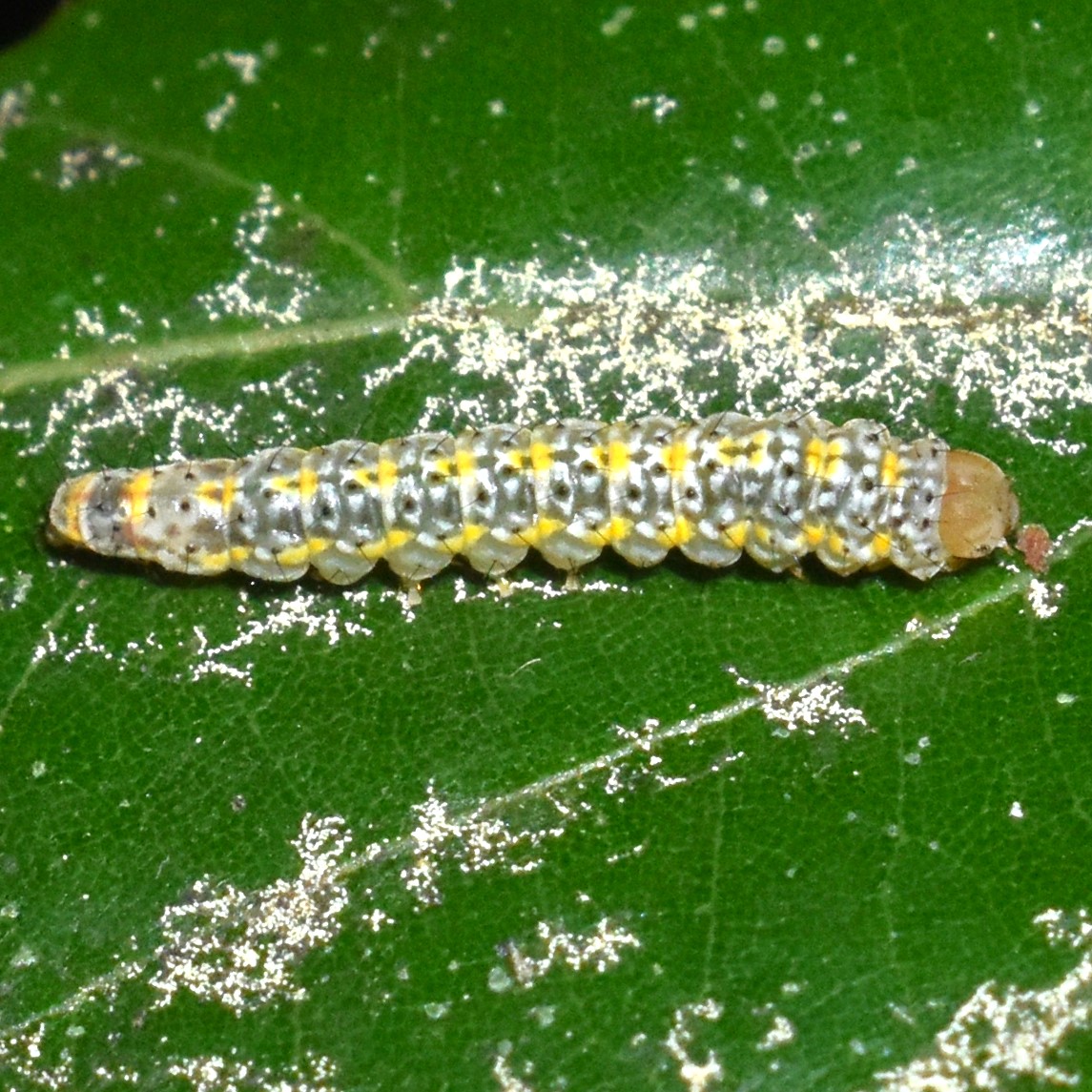
Immatures and Development: The larvae most commonly feed on the leaves of Red Bay. The following larval life history is based on that of Frost (1972) and Hall (2018). After mating a female lays smooth, yellowish eggs individually on the foliage of the host plant. The larvae often feed in small groups on the foliage, and characteristically feed along the leaf edges to form a series of deep notches along the margins. If a plant is completely defoliated, a larva will drop to the ground on a silk thread and search for a new host plant. When finished feeding, the larva descends to the ground, then wanders in search of a pupation site, which is often on a house, fence, or tree trunk. The larva then spins an elegant mesh cocoon that is suspended from the substrate by a silk stalk (Hall, 2018). The cocoon has an opening at the rear that allows the exuviae to be expelled, and another at the opposite end that allows the pupa to protrude just before the adult emerges.

The mature larvae are around 12 mm long and have short, stout setae along the dorsum and lower sides. The head is orangish-yellow, and the thorax and abdomen have an irregular, broken, yellow line on each side and down the dorsal midline that are formed by a series of yellow spots on the anterior and posterior margins of each segment. The dorsal and lateral setae arise from conspicuous black pinacula that are mostly embedded in a dull, silvery-white ground color. The prolegs are brown, with each having a lateral yellow spot.
Larvae ID Requirements: Identifiable from good quality photos, especially where associated with known host plants.
Distribution in North Carolina
Distribution: Urodus parvula is primarily found in the southeastern Coastal Plain and adjoining uplands, including the Piedmont. The range extends from eastern Texas and Louisiana eastward to all of Florida, then northward through Georgia and the Carolinas to Maryland, Delaware, New Jersey and Washington, D.C. This species is common in the Coastal Plain and eastern Piedmont of North Carolina, and uncommon in the Blue Ridge. As of 2025, we do not have any records from the western Piedmont.
County Map: Clicking on a county returns the records for the species in that county.
Urodus parvulaAlamance Alexander Alleghany Anson Ashe Avery Beaufort Bertie Bladen Brunswick Buncombe Burke Cabarrus Caldwell Camden Carteret Caswell Catawba Chatham Cherokee Chowan Clay Cleveland Columbus Craven Cumberland Currituck Dare Davidson Davie Duplin Durham Edgecombe Forsyth Franklin Gaston Gates Graham Granville Greene Guilford Halifax Harnett Haywood Henderson Hertford Hoke Hyde Iredell Jackson Johnston Jones Lee Lenoir Lincoln Macon Madison Martin McDowell Mecklenburg Mitchell Montgomery Moore Nash New Hanover Northampton Onslow Orange Pamlico Pasquotank Pender Perquimans Person Pitt Polk Randolph Richmond Robeson Rockingham Rowan Rutherford Sampson Scotland Stanly Stokes Surry Swain Transylvania Tyrrell Union Vance Wake Warren Washington Watauga Wayne Wilkes Wilson Yadkin Yancey
Flight Dates:
High Mountains (HM) ≥ 4,000 ft.
Low Mountains (LM) < 4,000 ft.
Piedmont (Pd)
Coastal Plain (CP)

Click on graph to enlarge
Image showing flight dates by month for High Mountains greater than 4,000 feet, Low Mountains, Piedmont, and Coastal Plain: adults.
Immature Dates:
 High Mountains (HM) ≥ 4,000 ft.
 Low Mountains (LM) < 4,000 ft.
 Piedmont (Pd)
 Coastal Plain (CP)

Click on graph to enlarge
Image showing flight dates by month for High Mountains greater than 4,000 feet, Low Mountains, Piedmont, and Coastal Plain: immatures.
Flight Comments: The adults have been documented in every month of the year in the southern states such as Florida, Mississippi and Louisiana. A relatively brief flight period occurs in northern states such as Maryland. In North Carolina, the adults have been found nearly year-round in the Coastal Plain, and from early-April through early-July in the Piedmont. Records from the Blue Ridge are presumably vagrants.
Habitats and Life History
Habitats: Many of our records are from wetlands, but others are from xeric communities or residential areas, which suggest that the adults may be dispersing substantial distances away from wetlands.
Larval Host Plants: The larvae have been observed feeding on several woody species (Watson, 1914; Heppner 2007; Frost, 1972), with Upland Redbay (Persea (=Tamala) borbonia) and Swamp Redbay (Persea (=Tamala) palustris) being the two most important native hosts. There are also good feeding records for Florida Bully (Sideroxylon reclinatum). Hall (2018) questioned whether some or all of the records for oak (Quercus), Hibiscus, oranges, Camellia japonica and avocado (Persea americana) are valid since the larvae wander when redly plants are defoliated and may inadvertently crawl onto non-host species while either seeking out a new plant to feed on, or finding pupation sites. - View
Observation Methods: The adults are attracted to lights and the larvae can be found feeding on redbays.
Wikipedia
Status in North Carolina
Natural Heritage Program Status:
Natural Heritage Program Ranks: GNR SNR [S4S5]
State Protection: Has no legal protection, although permits are required to collect it on state parks and other public lands.
Comments:

 Photo Gallery for Urodus parvula - Bumelia Webworm Moth

110 photos are available. Only the most recent 30 are shown.
Urodus parvula
iNaturalist
Recorded by: elijahfreeman19 on 2025-11-30
Currituck Co.
Comment: iNat record - https://www.inaturalist.org/observations/329023932***(c) elijahfreeman19, some rights reserved (CC BY-NC)| Public Positional Accuracy=16 m Elevation=10.2 feet
Urodus parvula
Recorded by: Jeff Niznik, David George on 2025-11-09
Richmond Co.
Comment:
Urodus parvula
Recorded by: Tony McBride, Jim Petranka and Becky Elkin on 2025-10-28
Carteret Co.
Comment:
Urodus parvula
Recorded by: Mark Basinger on 2025-10-22
Wilson Co.
Comment:
Urodus parvula
Recorded by: Mark Basinger on 2025-09-10
Wilson Co.
Comment:
Urodus parvula
Recorded by: Mark Basinger on 2025-08-27
Wilson Co.
Comment:
Urodus parvula
Recorded by: Mark Basinger on 2025-08-04
Wilson Co.
Comment:
Urodus parvula
Recorded by: Jim Petranka, Mark Basinger and Becky Elkin on 2025-08-03
Moore Co.
Comment:
Urodus parvula
iNaturalist
Recorded by: elijahfreeman19 on 2025-06-29
Currituck Co.
Comment: iNat record - https://www.inaturalist.org/observations/293675413***(c) elijahfreeman19, some rights reserved (CC BY-NC)| Public Positional Accuracy=14 m Elevation=9.5 feet
Urodus parvula
Recorded by: David George, David Cheng, Patrick Coin on 2025-06-29
Richmond Co.
Comment:
Urodus parvula
Recorded by: Jim Petranka, Mark Basinger and Becky Elkin on 2025-06-29
Richmond Co.
Comment:
Urodus parvula
Recorded by: Jeff Niznik, David George, Larry Chen, Sarah Toner, Joye Zhou on 2025-06-20
Richmond Co.
Comment:
Urodus parvula
Recorded by: Jeff Niznik, David George, Larry Chen, Sarah Toner, Joye Zhou on 2025-06-20
Richmond Co.
Comment:
Urodus parvula
Recorded by: Mark Basinger on 2025-06-12
Wilson Co.
Comment:
Urodus parvula
Recorded by: Mark Basinger on 2025-06-05
Wilson Co.
Comment:
Urodus parvula
Recorded by: Mark Basinger on 2025-05-31
Brunswick Co.
Comment:
Urodus parvula
iNaturalist
Recorded by: ryusykes on 2025-05-25
Currituck Co.
Comment: iNat record - https://www.inaturalist.org/observations/284186402***(c) ryusykes, some rights reserved (CC BY-NC)| Public Positional Accuracy=37 m Elevation=9.1 feet
Urodus parvula
Recorded by: Jim Petranka, David George, Jeff Niznik on 2025-05-24
Richmond Co.
Comment:
Urodus parvula
Recorded by: David George, Jeff Niznik on 2025-05-24
Richmond Co.
Comment:
Urodus parvula
Recorded by: David George, Jeff Niznik on 2025-05-24
Richmond Co.
Comment:
Urodus parvula
Recorded by: Mark Basinger on 2025-05-21
Wilson Co.
Comment:
Urodus parvula
Recorded by: David George, Jeff Niznik, Brian Bockhahn on 2025-05-09
Cumberland Co.
Comment:
Urodus parvula
Recorded by: Mark Basinger on 2025-05-03
Brunswick Co.
Comment:
Urodus parvula
Recorded by: David George, Bonnie Eamick on 2025-04-25
Wake Co.
Comment:
Urodus parvula
Recorded by: Jeff Niznik on 2025-04-23
Orange Co.
Comment:
Urodus parvula
Recorded by: Mark Basinger on 2025-04-19
Brunswick Co.
Comment:
Urodus parvula
Recorded by: K. Bischof on 2025-04-14
Chatham Co.
Comment:
Urodus parvula
Recorded by: Mark Basinger on 2025-03-28
Brunswick Co.
Comment:
Urodus parvula
Recorded by: Mark Basinger on 2025-03-13
Wilson Co.
Comment:
Urodus parvula
Recorded by: John Petranka on 2025-02-06
Beaufort Co.
Comment:

Photos of Urodus parvula from iNaturalist

Urodus parvula
© liorcarlson - Lior Carlson - 2024-08-12 - Pamlico Co.
iNat record
Urodus parvula
© elijahfreeman19 - 2024-11-06 - Currituck Co.
iNat record
Urodus parvula
© elijahfreeman19 - 2024-12-09 - Currituck Co.
iNat record
Urodus parvula
© ryusykes - 2025-05-25 - Currituck Co.
iNat record
Urodus parvula
© elijahfreeman19 - 2025-06-29 - Currituck Co.
iNat record
Urodus parvula
© elijahfreeman19 - 2025-11-30 - Currituck Co.
iNat record