Moths of North Carolina
Home Page
Recent Entries
Recent Account Updates
County Searches
General Search
Submit a Public Record
Larval Hosts
References
Maps
Draft Checklists
Family Photo Gallery
Family PDFs
NC Biodiversity Project
Comments
Significant Contributors
Scientific Name:
Common Name:
Family (Alpha):
Choose a Family
ACROLEPIIDAE-False Diamondback Moths
ADELIDAE-Fairy moths
ALUCITIDAE-Many-plumed Moths
AMPHISBATIDAE-
ARGYRESTHIIDAE-Shiny Head-standing Moths
AUTOSTICHIDAE-Autostichid Moths
BATRACHEDRIDAE-Batrachedrid Moths
BEDELLIIDAE-Bedelliid Moths
BLASTOBASIDAE-Blastobasid Moths
BOMBYCIDAE-Silkworm Moths
BUCCULATRICIDAE-Ribbed Cocoon-maker Moths
CARPOSINIDAE-Fruitworm Moths
CHOREUTIDAE-Metalmark Moths
COLEOPHORIDAE-Casebearer Moths and Relatives
COSMOPTERIGIDAE-Cosmopterigid Moths
COSSIDAE-Carpenter Moths, Goat Moths
CRAMBIDAE-Grass Moths, Snout Moths
DEPRESSARIIDAE-
DREPANIDAE-Hook-tips and Thyatirid Moths
DRYADAULIDAE-
ELACHISTIDAE-Grassminer Moths and Relatives
EPERMENIIDAE-Fringe-tufted Moths
EPIPYROPIDAE-Planthopper Parasite Moths
EREBIDAE-Erebid Moths
ERIOCRANIIDAE-Eriocraniid Moths
EUTELIIDAE-Euteliid Moths
GALACTICIDAE-Galacticid Moths
GELECHIIDAE-Gelechiid Moths; Twirler Moths
GEOMETRIDAE-Geometer Moths, Loopers
GLYPHIDOCERIDAE-Glyphidocerid Moths
GLYPHIPTERIGIDAE-Sedge Moths
GRACILLARIIDAE-Leafblotch miner moths
HELIOZELIDAE-Shield bearer moths
HEPIALIDAE-Ghost or Swift Moths
HYBLAEIDAE-
INCURVARIIDAE-Leafcutter Moths
LASIOCAMPIDAE-Tent Caterpillar Moths, Lappet Moths
LECITHOCERIDAE-Long-horned Moths
LIMACODIDAE-Slug Caterpillar Moths
LIMOCODIDAE-
LYONETIIDAE-Lyonetiid Moths
MEGALOPYGIDAE-Flannel Moths
MICROPTERIGIDAE-Mandibulate Moths
MIMALLONIDAE-
MOMPHIDAE-Mompha Moths
NEPTICULIDAE-Minute leaf miners
NOCTUIDAE-Owlet Moths
NOLIDAE-
NOTODONTIDAE-Prominents
OECOPHORIDAE-Oecophorid Moths
OPOSTEGIDAE-
PELEOPODIDAE-
PLUTELLIDAE-Diamondback Moths
PRODOXIDAE-Yucca Moths
PSYCHIDAE-Bagworm Moths
PTEROPHORIDAE-Plume Moths
PYRALIDAE-Pyralid Moths, Snout Moths
SATURNIIDAE-Giant Silkworm Moths
SCHRECKENSTEINIIDAE-Schreckensteiniid Moths
SCYTHRIDIDAE-
SESIIDAE-Clearwing Moths
SPHINGIDAE-Sphinx Moths
THYATIRIDAE-
THYRIDIDAE-Window-winged Moths
TINEIDAE-Clothes moths
TISCHERIIDAE-Tischerid Moths
TORTRICIDAE-Leafroller Moths
URANIIDAE-
URODIDAE-Urodid Moths
XYLORYCTIDAE-
YPONOMEUTIDAE-Ermine Moths
YPSOLOPHIDAE-Ypsolophid Moths
ZYGAENIDAE-
«
Home
»
View
PDF
Argyresthiidae Members:
Argyresthia affinis
Argyresthia alternatella
Argyresthia annettella
Argyresthia apicimaculella
Argyresthia austerella
Argyresthia calliphanes
Argyresthia conjugella
Argyresthia freyella
Argyresthia oreasella
Argyresthia subreticulata
Argyresthia thuiella
Argyresthia unidentified species
Argyresthia
Members:
Argyresthia affinis
Argyresthia alternatella
Argyresthia annettella
Argyresthia apicimaculella
Argyresthia austerella
Argyresthia calliphanes
Argyresthia conjugella
Argyresthia freyella
Argyresthia oreasella
Argyresthia subreticulata
Argyresthia thuiella
Argyresthia unidentified species
2 NC Records
Argyresthia affinis
Braun, 1940 - No Common Name
view caption
A mine on Eastern Red Cedar.
view caption
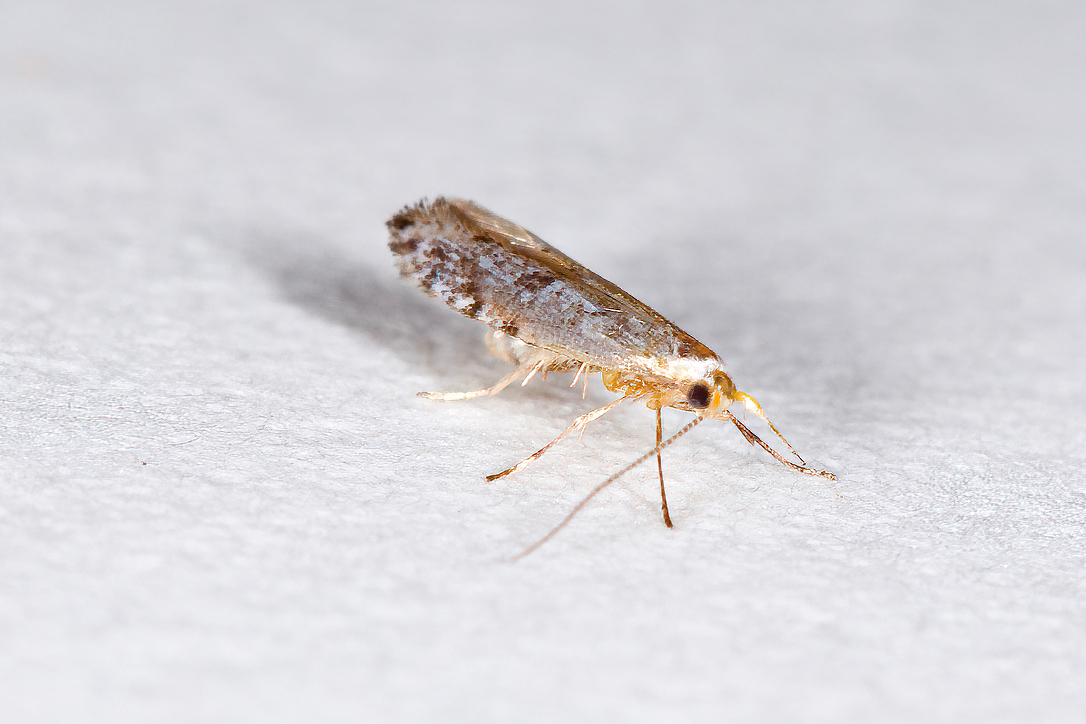
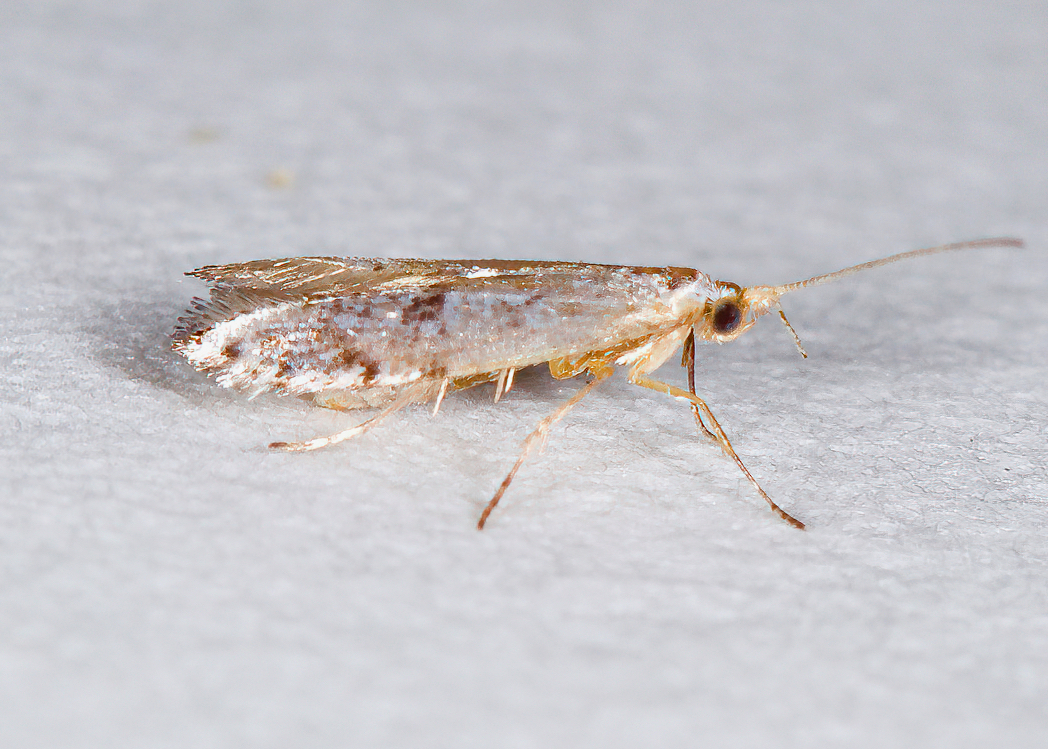
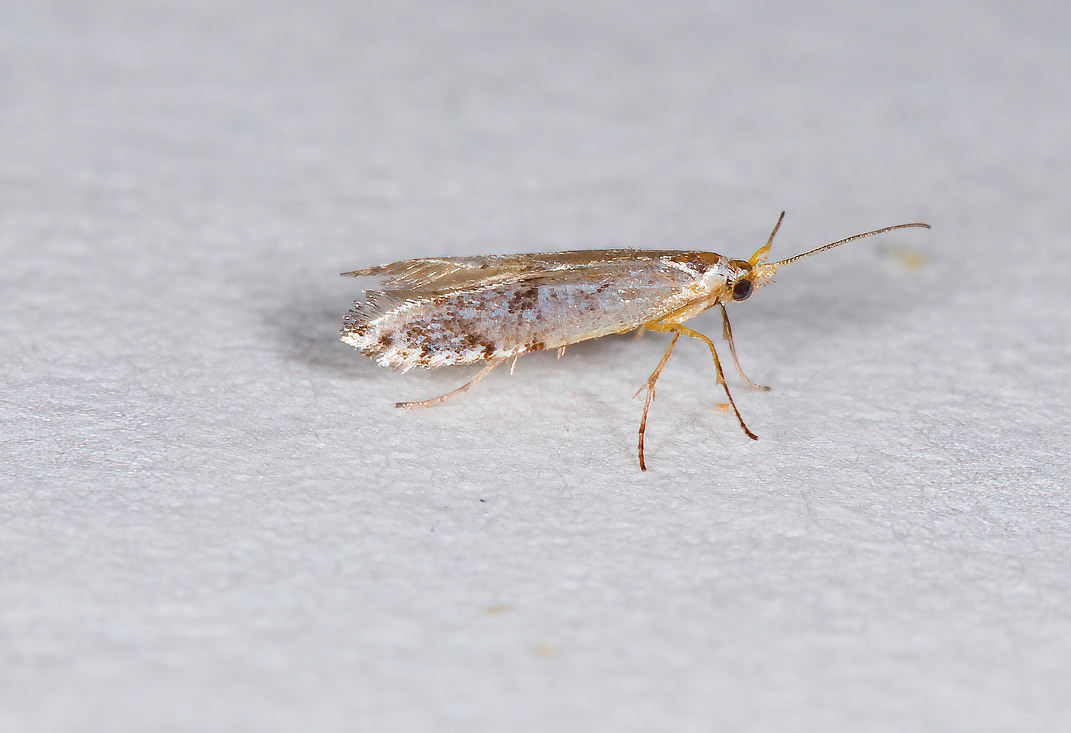
A reared adult from Eastern Red Cedar.
view caption
A reared adult from Eastern Red Cedar.
Taxonomy
Family:
Argyresthiidae
P3 Number:
36a0060
MONA Number:
2434.00
Identification
Field Guide Descriptions:
Online Resources:
MPG
,
BugGuide
,
iNaturalist
,
Google
,
BAMONA
,
GBIF
,
BOLD
Technical Description, Adults:
Braun (1940)
Adult Markings:
The following description is from that of Braun (1940) and based on specimens from southwestern Ohio and central Kentucky. The labial palp, head and head tuft are white. The antenna is whitish near the base, but otherwise dark fuscous with whitish annulations. The forewing is white, with a sparse sprinkling of brown scales arranged in transverse strigae, and marked with dark brown spots and fasciae. At the basal fourth of the inner margin there is a brown spot that reaches to the fold. A little farther out there is a slightly oblique costal patch, with its inner edge only slightly separated from the dorsal spot, and often obsolete on the costa. At the middle of the wing there is an irregular transverse band that is often constricted below the costa and at the fold, with its median part sometimes replaced by a mere sprinkling of brown scales. At two-thirds the wing length, the costal and dorsal streaks unite to form an interrupted and slightly oblique fascia, with its dorsal arm farther removed from the median fascia than its costal arm. Along the costa beyond this, there are two more brown spots, with the second the larger, and the first often obsolete. At the apex there are a few dark-brown scales arranged around the tip in a broad curve. The cilia are pure white along the inner margin and faintly grayish on the termen, with two brown lines around the apex and in the upper half of the termen. The hindwings and cilia are white, with a very faint ocherous tinge towards the apex. The legs are white, with the front and middle pair more or less shaded with fuscous, and having the tips of the segments darker. The hind pair has only the tips of the tarsi fuscous.
Braun (1940) noted that this species most closely resembles
A. thuiella
, but has a white hindwing and a broader forewing. It also has a broad curve of brown scales around the apex, in contrast to the sharp angle of
A. thuiella
. The one specimen that we have as of 2025 was reared from Eastern Redcedar Cedar and is worn. It clearly does not resemble any of the other three species of
Argyresthia
that feed on Eastern Red Cedar, which all have bold patterning on the forewing. We are provisionally assigning this specimen to
A. affinis
, with the hope of getting more specimens in the future so that the genitalia can be examined. The larval life history is also consistent with that of
A. thuiella
(Freeman, 1972).
Wingspan:
6.0-6.5 mm
Adult Structural Features:
Braun (1940) has illustrations and descriptions of the male and female genitalia, and Freeman (1972) has an illustration of the male genitalia.
Adult ID Requirements:
Identifiable only by close inspection of structural features or by DNA analysis.
Immatures and Development:
Freeman (1972) reported that the larvae in Ontario mine the leaves of Eastern Red Cedar. Overwintering occurs as a partially grown larva, and feeding resumes in the spring. The larva pupates in the mined needle, and there is no external cocoon produced as is the case with other species that feed on Eastern Red Cedar. In Ontario the adults fly from late-May to early-June. An adult that Jim Petranka reared on Eastern Red Cedar in Madison County exhibited a similar life cycle, with an overwintering larva that was collected on 15 Feb, 2022 producing an adult on 13 April. The mine had an escape hole at the end of the branchlet. There was granular frass within the mine, and no evidence of a cocoon or pupal skin on the outside.
Larvae ID Requirements:
Identifiable only through rearing to adulthood.
Distribution in North Carolina
Distribution:
Argyresthia affinis
appears to be a rare species that was previously described in 1940 from specimens taken in southwestern Ohio and central Kentucky. Freeman (1972) also reported it from extreme southern Ontario. As of 2025, we have a single rearing record from Madison County that may be the only specimen that has been taken in the US since around 1940.
County Map:
Clicking on a county returns the records for the species in that county.
Flight Dates:
High Mountains (HM) ≥ 4,000 ft.
Low Mountains (LM) < 4,000 ft.
Piedmont (Pd)
Coastal Plain (CP)
Click on graph to enlarge
Immature Dates:
High Mountains (HM) ≥ 4,000 ft.
Low Mountains (LM) < 4,000 ft.
Piedmont (Pd)
Coastal Plain (CP)
Click on graph to enlarge
Flight Comments:
The adults fly after the spring warm-up. Freeman (1972) found them in late-May and early-June in Ontario, and Braun (1940) from May 12-20 at her sites in southwestern Ohio and central Kentucky.
Habitats and Life History
Habitats:
Local populations are found in the vicinity of stands of Eastern Red Cedar.
Larval Host Plants:
The larvae appear to feed only on Eastern Red Cedar (
Juniperus virginiana
) (Braun, 1940; Freeman, 1972), which has been confirmed as the host in North Carolina. -
View
Observation Methods:
We recommending making attempts to rear the adults from Eastern Red Cedar.
Wikipedia
Status in North Carolina
Natural Heritage Program Status:
Natural Heritage Program Ranks:
GNR SNR [S1S2]
State Protection:
Comments:
This species appears to be rare, with the only known populations from extreme southern Ontario, southwestern Ohio, central Kentucky, and western North Carolina. As of 2025, we have a single record from Madison County where a small breeding population occurs.
Photo Gallery for
Argyresthia affinis
- None
Photos: 6
Recorded by: Jim Petranka on 2022-04-13
Madison Co.
Comment: A reared adult from a mine on Eastern Red Cedar.
Recorded by: Jim Petranka on 2022-04-13
Madison Co.
Comment: A reared adult from a mine on Eastern Red Cedar.
Recorded by: Jim Petranka on 2022-04-13
Madison Co.
Comment: A reared adult from a mine on Eastern Red Cedar.
Recorded by: Jim Petranka on 2022-01-09
Madison Co.
Comment: A mine with bore hole on Eastern Red Cedar.
Recorded by: Jim Petranka on 2022-01-09
Madison Co.
Comment: A larva that was removed from a mine on Eastern Red Cedar.
Recorded by: Jim Petranka on 2022-01-09
Madison Co.
Comment: A larva that was removed from a mine on Eastern Red Cedar.
 »
»