Moths of North Carolina
Scientific Name:
Common Name:
Family (Alpha):
« Home »
View PDFArgyresthiidae Members: Argyresthia Members: 21 NC Records

Argyresthia alternatella Kearfott, 1908 - Juniper Seed Moth


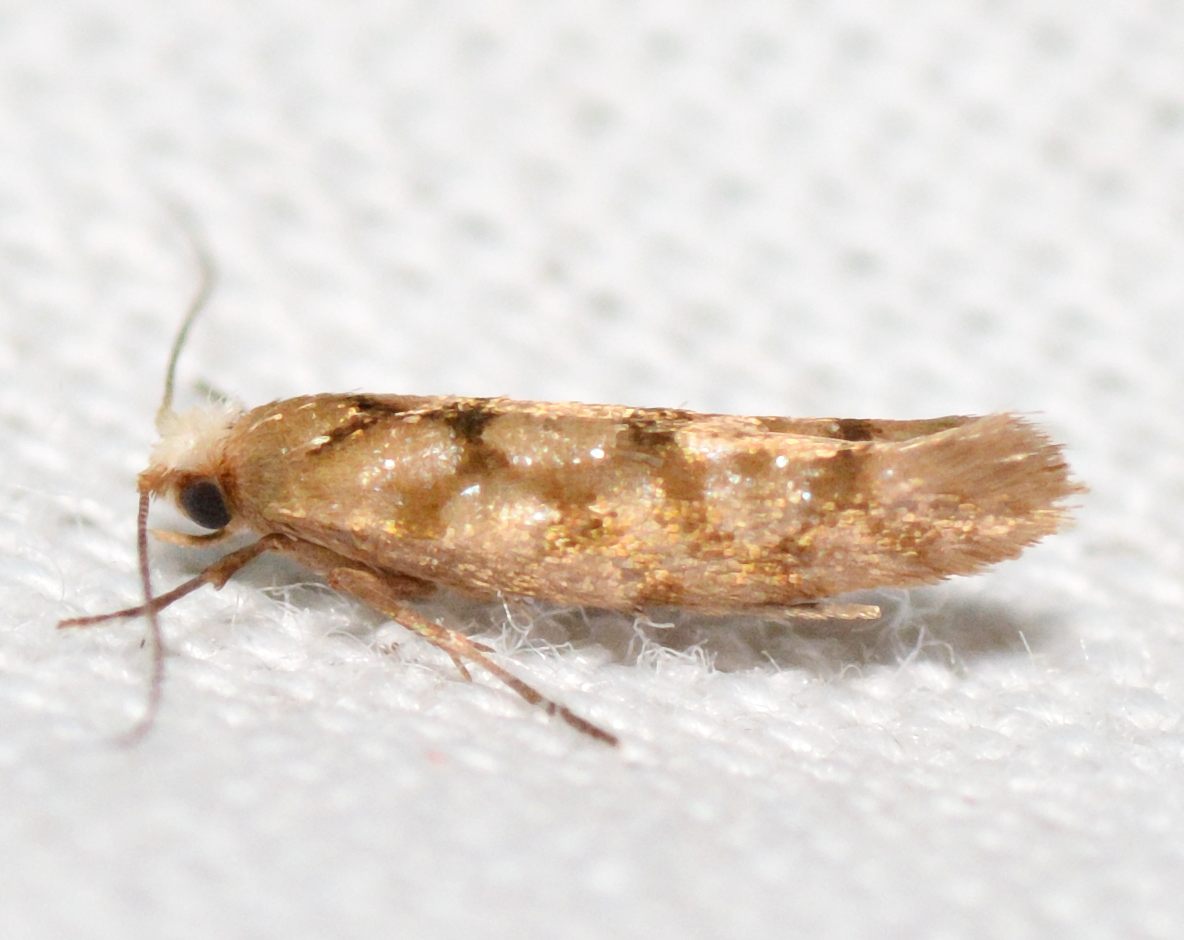
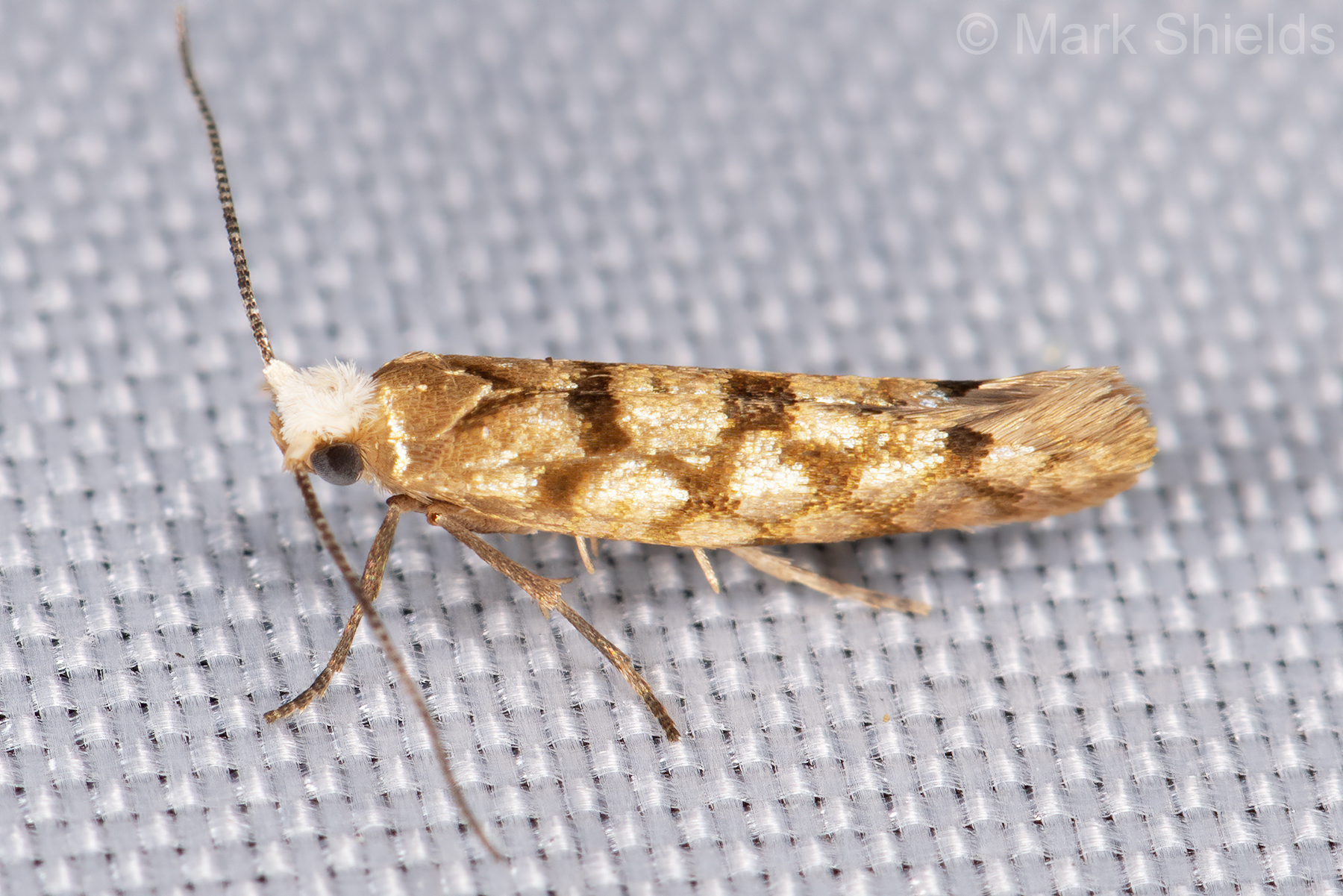
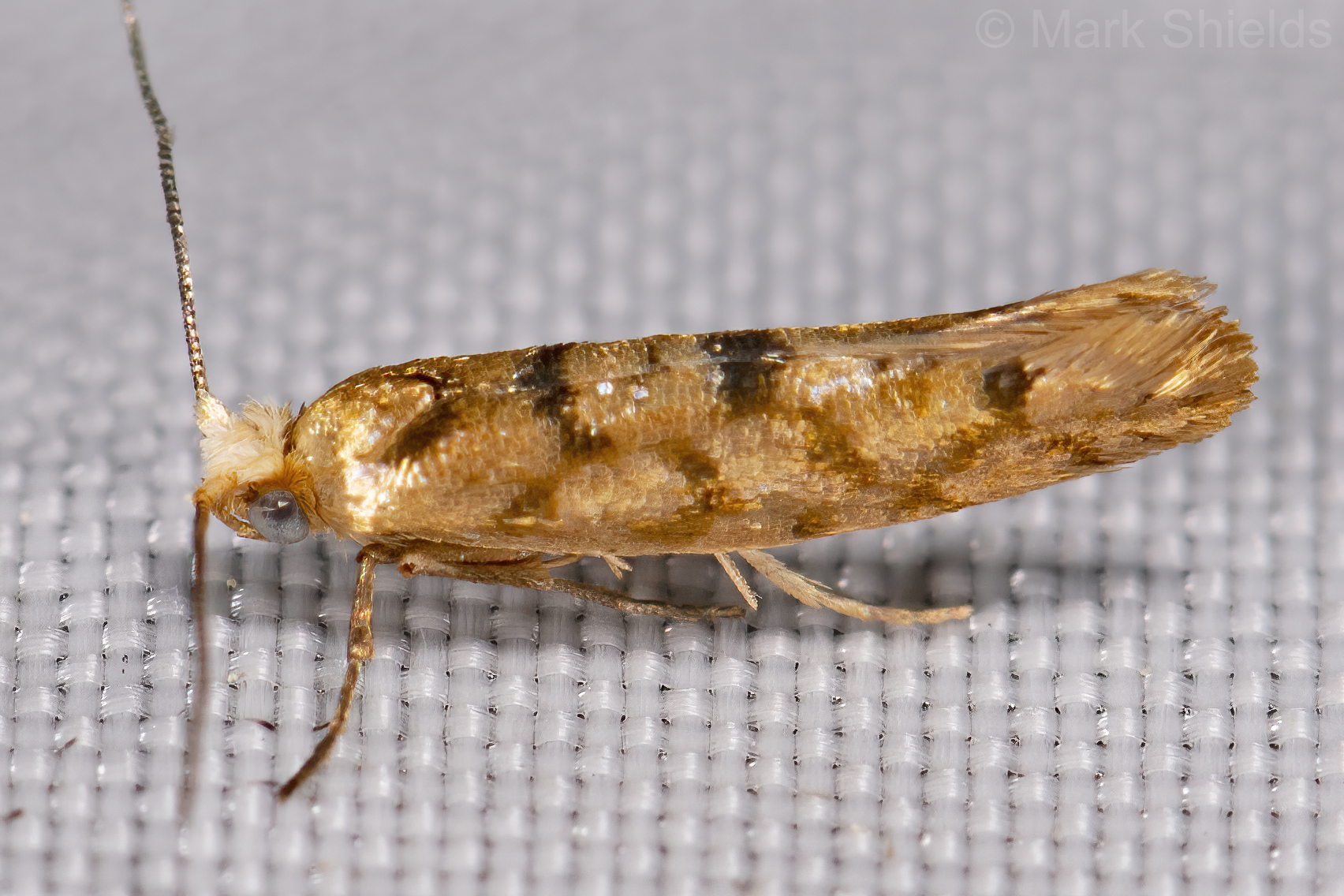
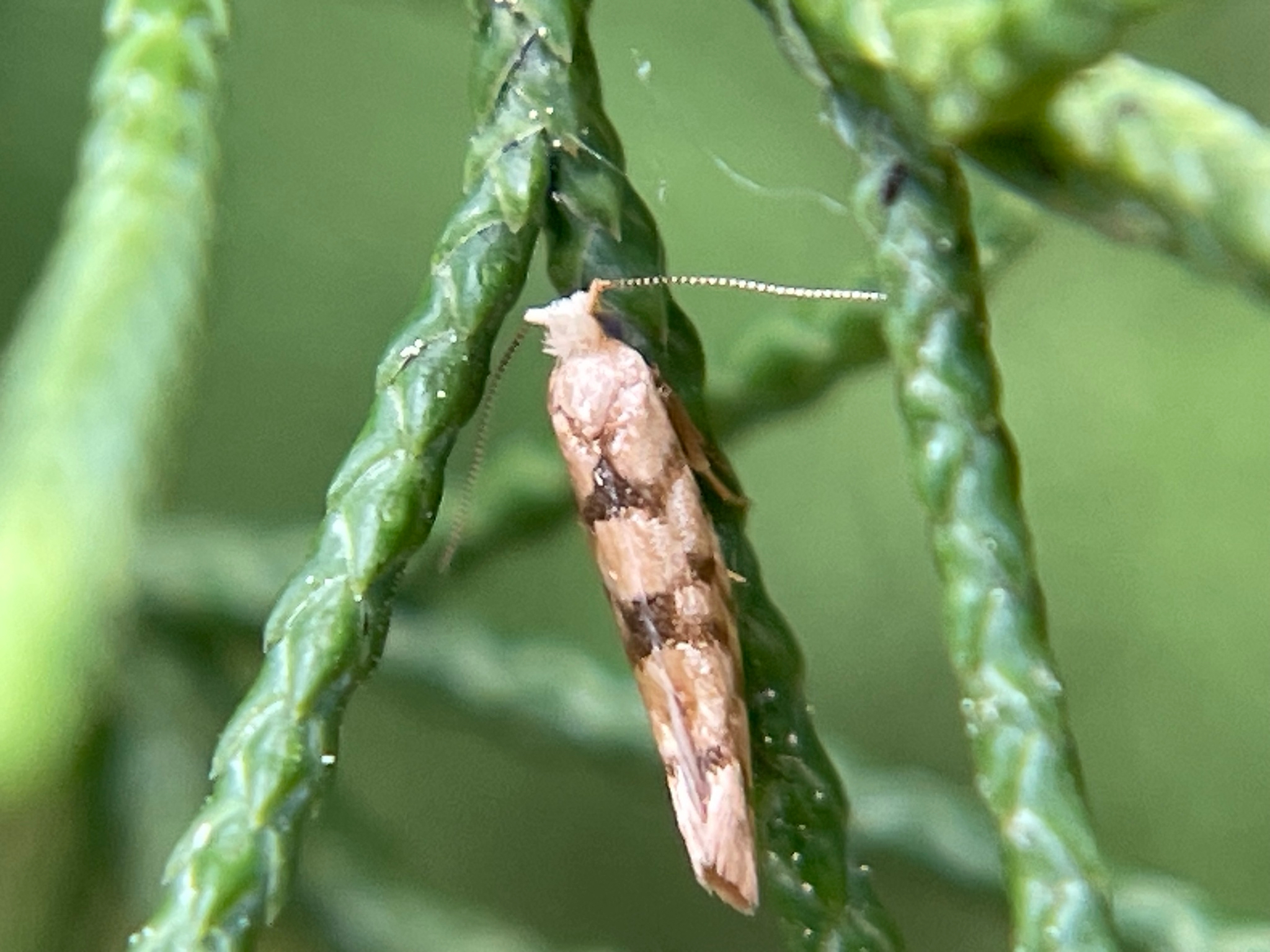
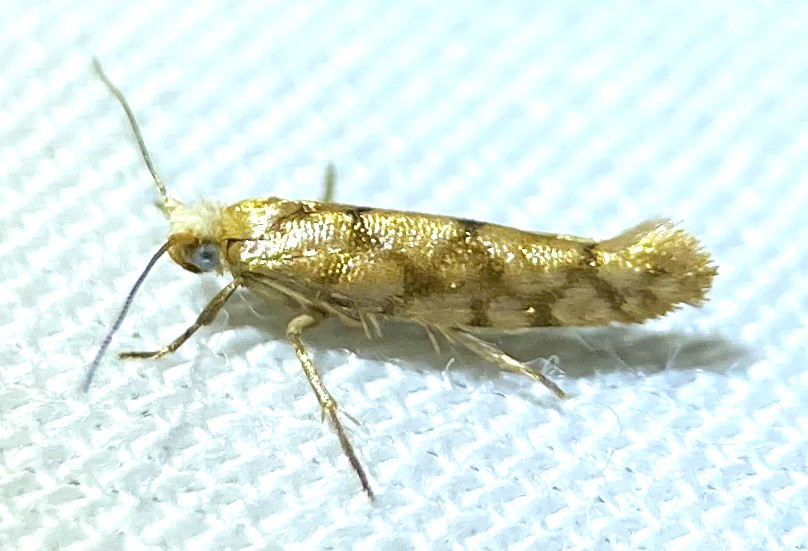
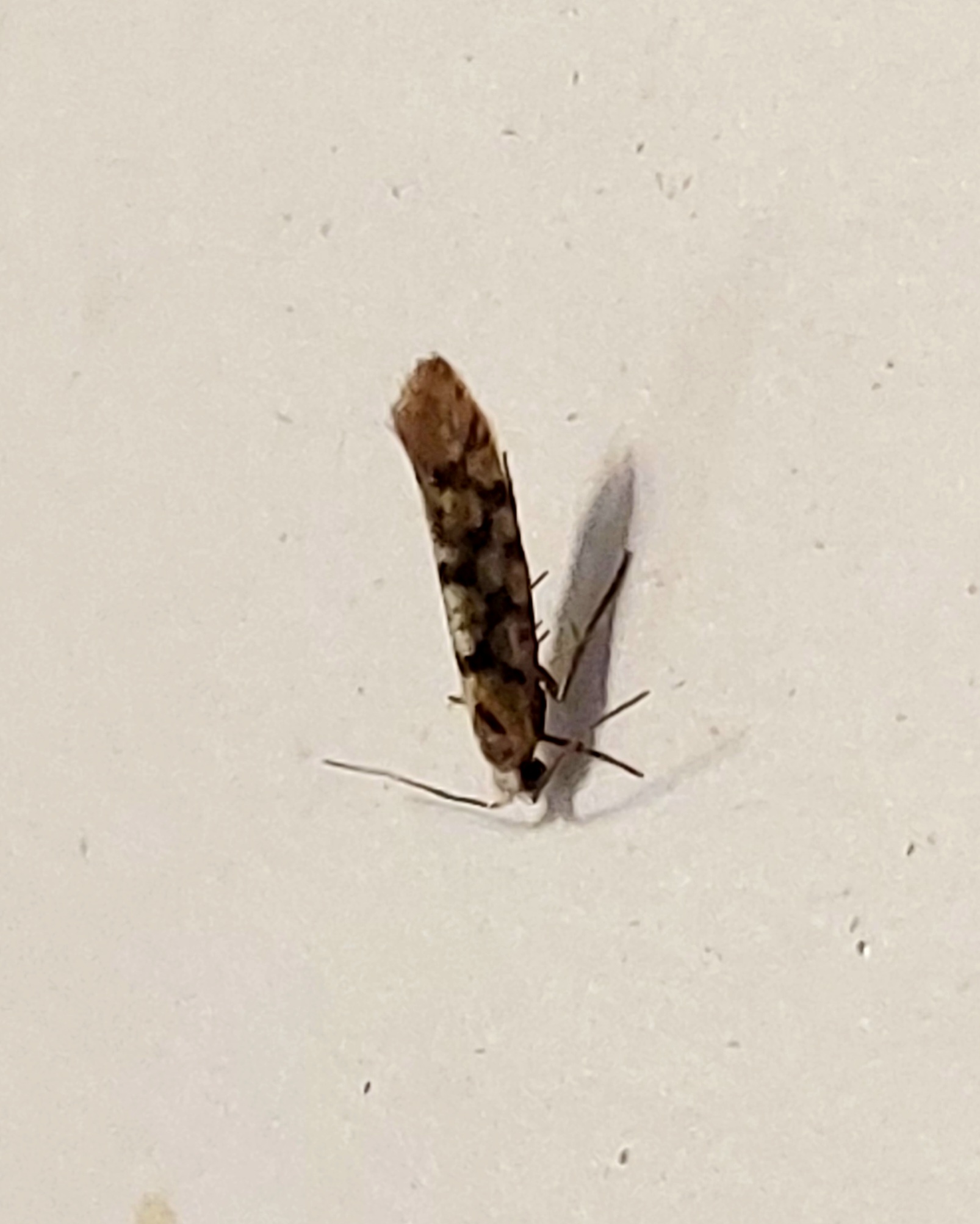
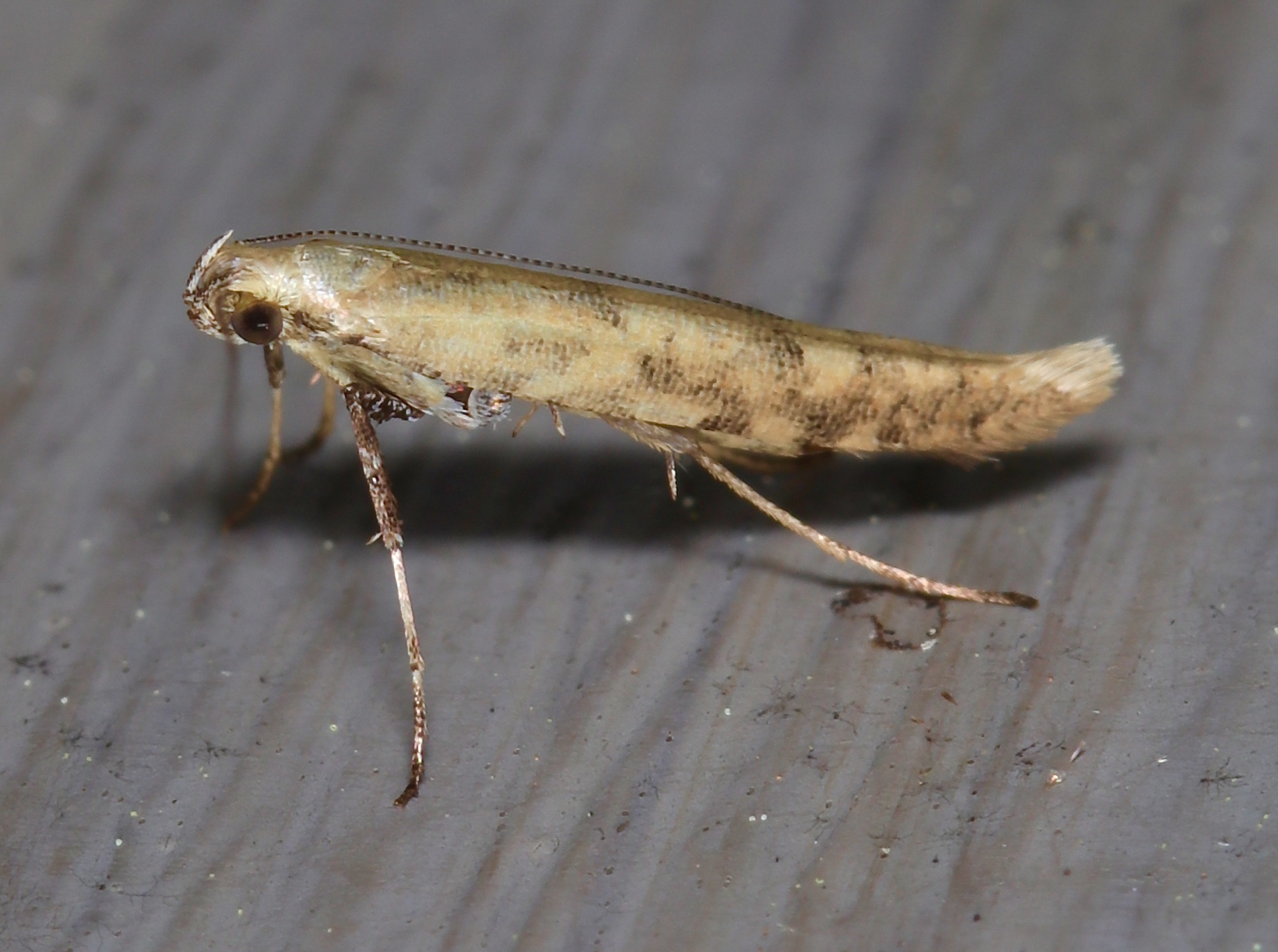
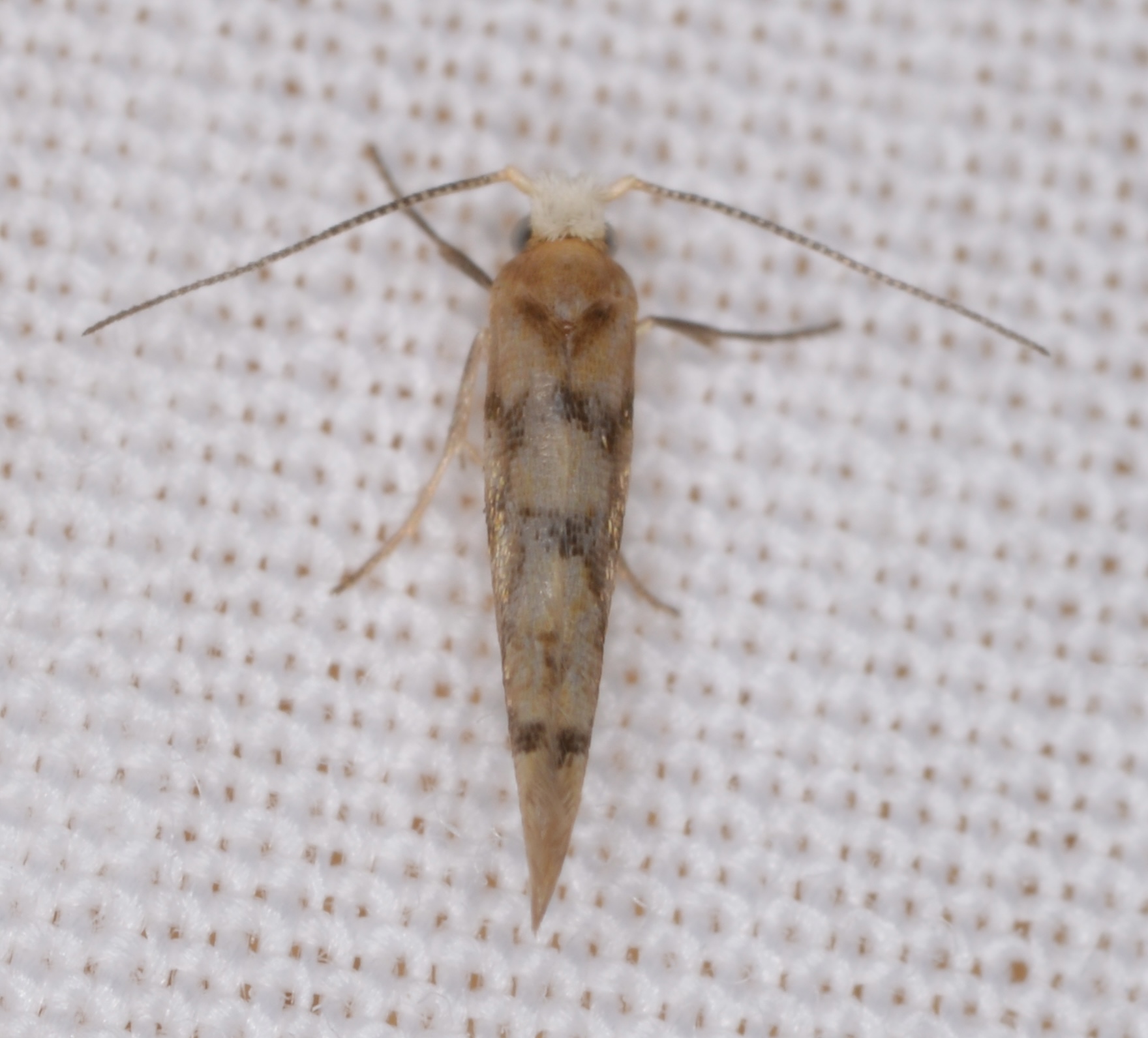
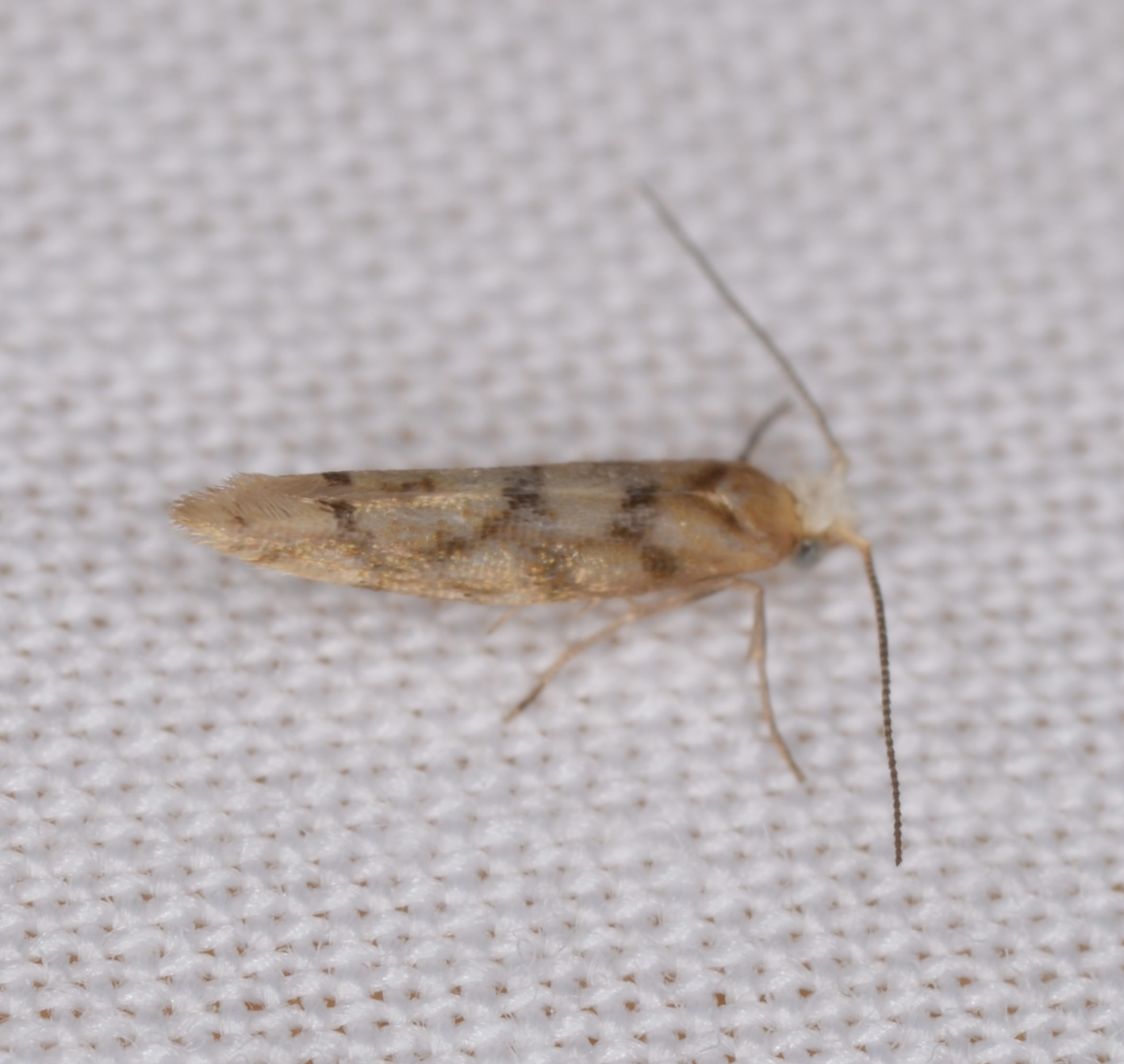
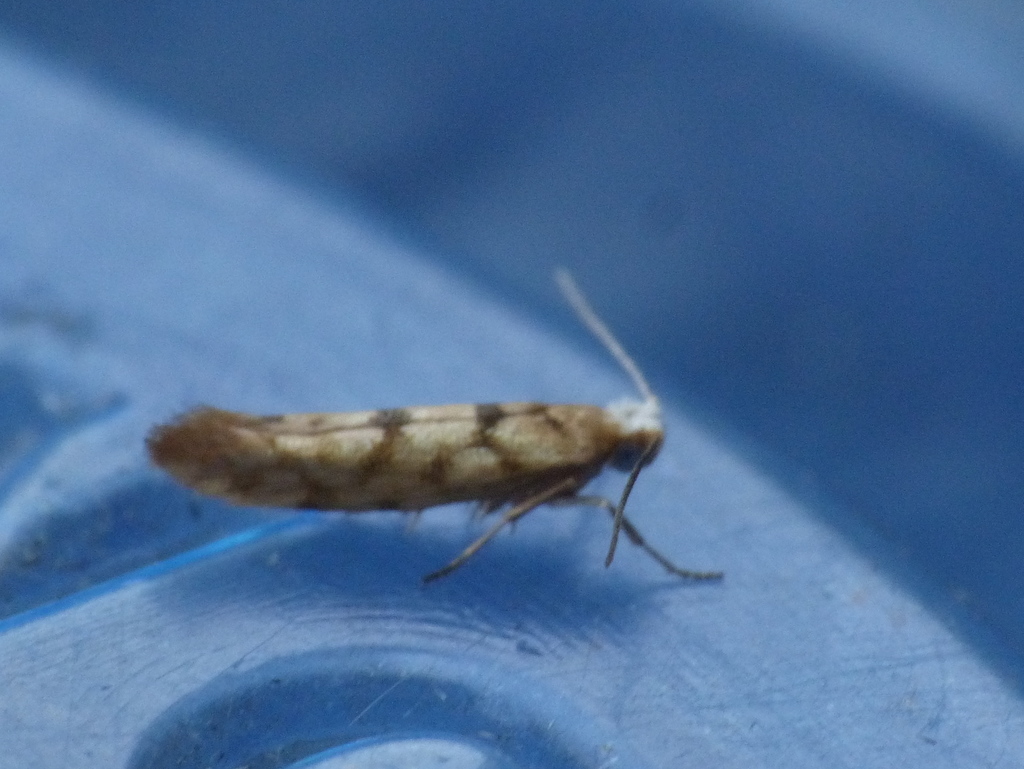
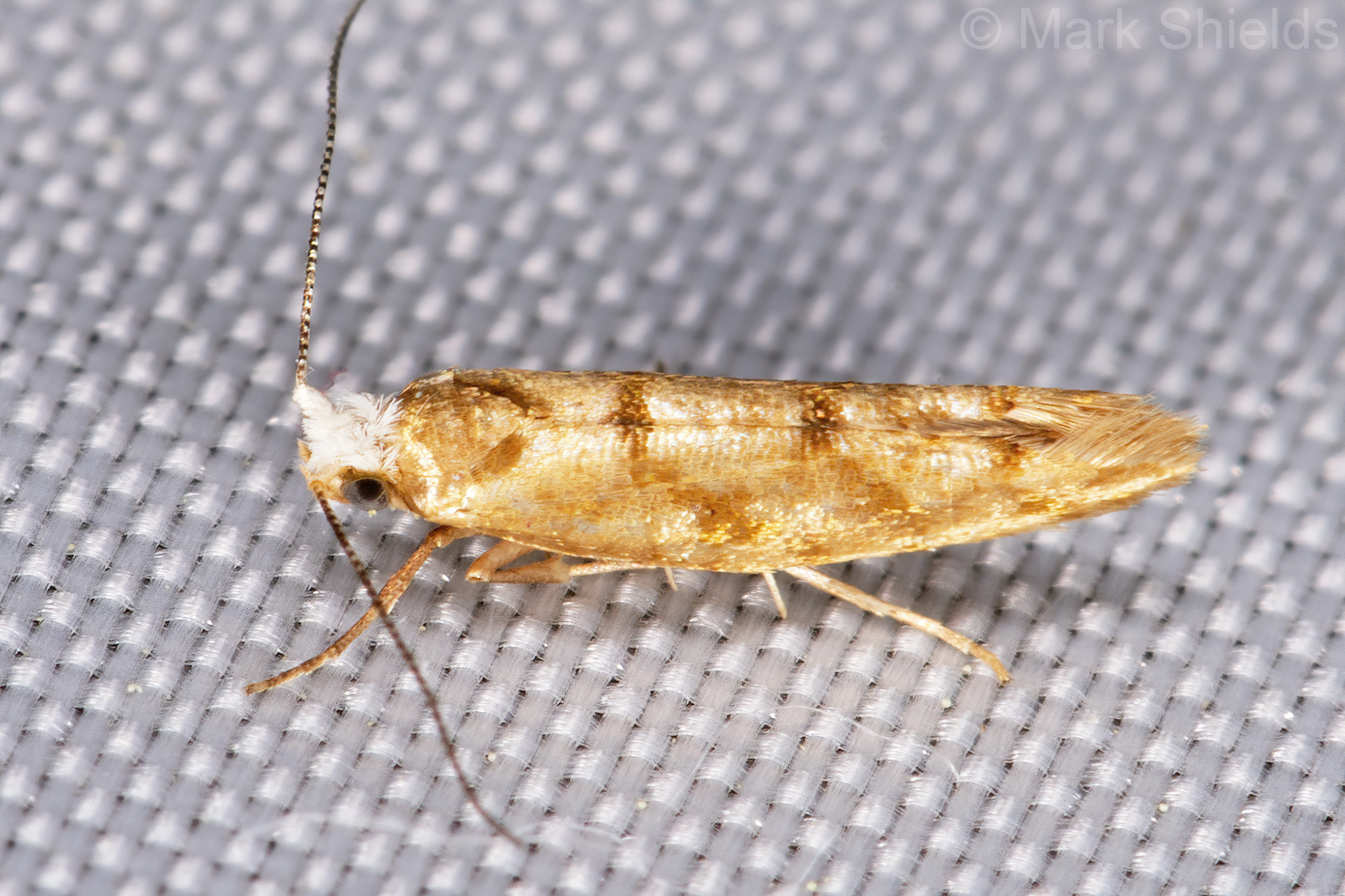
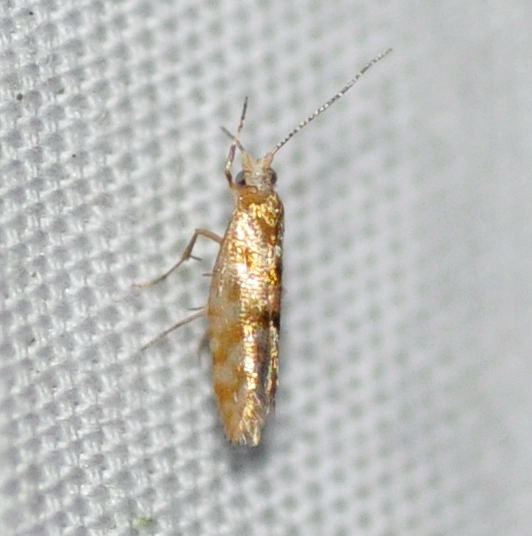
Argyresthia alternatellaArgyresthia alternatellaArgyresthia alternatellaArgyresthia alternatella
Taxonomy
Superfamily:
Yponomeutoidea
Family:
Argyresthiidae
P3 Number:
36a0061
MONA Number:
2435.00
Other Common Name:
Honey-comb Micro
Identification
Field Guide Descriptions: Online Resources: MPG, BugGuide, iNaturalist, Google, BAMONA, GBIF, BOLDTechnical Description, Adults: Kearfott (1908a)Technical Description, Immature Stages: Marcovitch (1915)                                                                                 
Adult Markings: Argyresthia alternatella is a small, golden-brown moth with a distinctive reticulated pattern on the forewing. The following is based mostly on that of Kearfott (1908a), who described the species using specimens from two sites in New Jersey. The head and vertex are white above, while the labial palps are golden-colored. The antenna is dark golden-fuscous with lighter annulations. The thorax and forewing ground color are concolorous and typically a medium to light golden-brown. The forewing ground in overlain with a reticulated pattern of dark-brown bands on the costal two-thirds of the wing. Some specimens have five or fewer rather faint dark-brown spots where the bands strike the costa, while the inner margin has three more prominent dark spots. These include an elongated mark at the base, and two triangular-shaped or squarish marks at around one-fifth and two-fifths the wing length. A less-prominent fourth spot is sometimes present at around four-fifths. The terminal fringe is concolorous with the forewing ground, and the hindwing is light smoky-brown with a prominent brownish fringe. The legs can be various shades of ocherous-brown and lack lighter annulations.
Wingspan: Wingspan 10-12 mm (Kearfott, 1908a; Marcovitch, 1915).
Adult Structural Features: See genitalia below.
Genitalia and other structural photos
Adult ID Requirements: Identifiable from good quality photos of unworn specimens.
Immatures and Development: The larvae specialize on junipers and appear to only use Eastern Red Cedar in the eastern US. The following life history account is based on observations by Marcovitch (1915) near Ithaca, New York. After mating, the females laid eggs in early June on the stems just below the berries, while a few were also found lodged on the tips of the scales. The hatchlings bored into the fleshy fruits, and the early-instars bored through the soft seed coat and fed on the seeds. Older instars shifted to feeding on the fleshy portion of berries that were often infected with mites. The larvæ were full-grown by late-September, and soon emerged from the berries. Pupation occurred on the ground within white, silken cocoons that were spun either just beneath the grass or attached to small sticks. Overwintering occurred in the pupal stage and the adults emerged the following May. Dimitri et al. (2018) reported that larvae in northern California fed on the seeds and fleshy husks of Western Juniper (J. occidentalis), with pupation occurring in the soil. Their study populations were identified as A. alternatella with a 98% certainty based on a DNA match.

The fully-grown larvae that were examined by Marcovitch (1915) were around 7 mm in length. The head was brownish with a few dark-brown lines, and the anterior half of the thorax and first 8 segments of the abdomen had an orange band that was more prominent on the dorsal half. The last two abdominal segments were suffused with red all over. Earlier instars lacked the red coloration. The pupae were around 4 mm in length and were greenish initially, but browned with age.
Larvae ID Requirements: Identifiable only through rearing to adulthood.
Distribution in North Carolina
Distribution: Argyresthia alternatella is found primarily in the eastern two-thirds of the US and in southern Ontario and Quebec. The range in the US extends from the New England states southwestward to North Carolina, Tennessee, Alabama and Mississippi, and westward to Arizona, Colorado, Wyoming, Nebraska, Iowa, Minnesota and North Dakota. Specimens have also been observed farther west in California and British Columbia. As of 2025, we have records from all three physiographic regions, with the great majority from areas along the coast where junipers are present.
County Map: Clicking on a county returns the records for the species in that county.
Argyresthia alternatellaAlamance Alexander Alleghany Anson Ashe Avery Beaufort Bertie Bladen Brunswick Buncombe Burke Cabarrus Caldwell Camden Carteret Caswell Catawba Chatham Cherokee Chowan Clay Cleveland Columbus Craven Cumberland Currituck Dare Davidson Davie Duplin Durham Edgecombe Forsyth Franklin Gaston Gates Graham Granville Greene Guilford Halifax Harnett Haywood Henderson Hertford Hoke Hyde Iredell Jackson Johnston Jones Lee Lenoir Lincoln Macon Madison Martin McDowell Mecklenburg Mitchell Montgomery Moore Nash New Hanover Northampton Onslow Orange Pamlico Pasquotank Pender Perquimans Person Pitt Polk Randolph Richmond Robeson Rockingham Rowan Rutherford Sampson Scotland Stanly Stokes Surry Swain Transylvania Tyrrell Union Vance Wake Warren Washington Watauga Wayne Wilkes Wilson Yadkin Yancey
Flight Dates:
High Mountains (HM) ≥ 4,000 ft.
Low Mountains (LM) < 4,000 ft.
Piedmont (Pd)
Coastal Plain (CP)

Click on graph to enlarge
Image showing flight dates by month for High Mountains greater than 4,000 feet, Low Mountains, Piedmont, and Coastal Plain: adults.
Flight Comments: The adults have been documented from January through August in different areas of the range, with a seasonal peak typically in April through June. This species is an early-season flier in North Carolina. As of 2025, our records range from mid-February to early-May.
Habitats and Life History
Habitats: Our records come from both barrier islands and other tidewater areas where Southern Red Cedar is common, as well as inland sites where Eastern Red Cedar is the presumed host plant.
Larval Host Plants: Larvae feed on Eastern Red Cedar (Juniperus virginiana) in the eastern US (Forbes, 1923; Beadle and Leckie, 2018). They also feed on Western Juniper (J. occidentalis) in northern California (Dimitri et al., 2018). Populations along the coast likely use Southern Red Cedar (J. silicicola), which is often treated by authorities as a subspecies of J. virginiana. As of 2025, we do not have any feeding records in North Carolina. - View
Observation Methods: The adults are attracted to lights, and the larvae can be found feeding on the fruits of Eastern Red Cedar.
Wikipedia
See also Habitat Account for General Cedar Woodlands
Status in North Carolina
Natural Heritage Program Status:
Natural Heritage Program Ranks: GNR SNR [S2S4]
State Protection:
Comments: Populations in North Carolina are spottily distributed due to the sole reliance of larvae on Juniperus as the host plant.

 Photo Gallery for Argyresthia alternatella - Juniper Seed Moth

Photos: 21
Argyresthia alternatella
Recorded by: Dean Furbish and Joy Wiggins on 2025-04-27
Pender Co.
Comment:
Argyresthia alternatella
Recorded by: R. Newman on 2025-03-29
Carteret Co.
Comment:
Argyresthia alternatella
Recorded by: Mark Basinger on 2025-03-26
Brunswick Co.
Comment:
Argyresthia alternatella
Recorded by: Mark Basinger on 2025-03-08
Brunswick Co.
Comment:
Argyresthia alternatella
Recorded by: Mark Basinger on 2025-03-08
Brunswick Co.
Comment:
Argyresthia alternatella
Recorded by: iheartmollusks on 2024-04-27
Dare Co.
Comment: iNat record - iNat: https://www.inaturalist.org/observations/210445590
Argyresthia alternatella
Recorded by: Jim Petranka on 2024-04-18
Madison Co.
Comment:
Argyresthia alternatella
Recorded by: R. Newman on 2024-04-10
Carteret Co.
Comment:
Argyresthia alternatella
Recorded by: R. Newman on 2024-03-05
Carteret Co.
Comment:
Argyresthia alternatella
Recorded by: R. Newman on 2023-04-12
Carteret Co.
Comment:
Argyresthia alternatella
Recorded by: David George, Stephen Dunn on 2023-03-27
New Hanover Co.
Comment:
Argyresthia alternatella
Recorded by: David George, Stephen Dunn on 2023-03-27
New Hanover Co.
Comment:
Argyresthia alternatella
Recorded by: R. Newman on 2022-04-01
Carteret Co.
Comment:
Argyresthia alternatella
Recorded by: R. Newman on 2022-03-18
Carteret Co.
Comment:
Argyresthia alternatella
iNaturalist
Recorded by: benjesup - Ben Jesup on 2021-04-15
Dare Co.
Comment: iNat record - https://www.inaturalist.org/observations/107449358***(c) Ben Jesup, some rights reserved (CC BY-NC)| Public Positional Accuracy=61 m Elevation=6.3 feet
Argyresthia alternatella
Recorded by: Mark Shields on 2021-04-09
Onslow Co.
Comment:
Argyresthia alternatella
Recorded by: Mark Shields on 2020-04-18
Onslow Co.
Comment:
Argyresthia alternatella
Recorded by: Mark Shields on 2020-02-17
Onslow Co.
Comment:
Argyresthia alternatella
Recorded by: Kyle Kittelberger, Brian Bockhahn on 2017-04-17
Carteret Co.
Comment:
Argyresthia alternatella
Recorded by: T. DeSantis on 2014-05-08
Durham Co.
Comment:
Argyresthia alternatella
Recorded by: K. Kittelberger on 2012-05-01
Wake Co.
Comment:

Photos of Argyresthia alternatella from iNaturalist

Argyresthia alternatella
© benjesup - Ben Jesup - 2021-04-15 - Dare Co.
iNat record