Moths of North Carolina
Home Page
Recent Entries
Recent Account Updates
County Searches
General Search
Submit a Public Record
Larval Hosts
References
Maps
Draft Checklists
Family Photo Gallery
Family PDFs
NC Biodiversity Project
Comments
Significant Contributors
Scientific Name:
Common Name:
Family (Alpha):
Choose a Family
ACROLEPIIDAE-False Diamondback Moths
ADELIDAE-Fairy moths
ALUCITIDAE-Many-plumed Moths
AMPHISBATIDAE-
ARGYRESTHIIDAE-Shiny Head-standing Moths
AUTOSTICHIDAE-Autostichid Moths
BATRACHEDRIDAE-Batrachedrid Moths
BEDELLIIDAE-Bedelliid Moths
BLASTOBASIDAE-Blastobasid Moths
BOMBYCIDAE-Silkworm Moths
BUCCULATRICIDAE-Ribbed Cocoon-maker Moths
CARPOSINIDAE-Fruitworm Moths
CHOREUTIDAE-Metalmark Moths
COLEOPHORIDAE-Casebearer Moths and Relatives
COSMOPTERIGIDAE-Cosmopterigid Moths
COSSIDAE-Carpenter Moths, Goat Moths
CRAMBIDAE-Grass Moths, Snout Moths
DEPRESSARIIDAE-
DREPANIDAE-Hook-tips and Thyatirid Moths
DRYADAULIDAE-
ELACHISTIDAE-Grassminer Moths and Relatives
EPERMENIIDAE-Fringe-tufted Moths
EPIPYROPIDAE-Planthopper Parasite Moths
EREBIDAE-Erebid Moths
ERIOCRANIIDAE-Eriocraniid Moths
EUTELIIDAE-Euteliid Moths
GALACTICIDAE-Galacticid Moths
GELECHIIDAE-Gelechiid Moths; Twirler Moths
GEOMETRIDAE-Geometer Moths, Loopers
GLYPHIDOCERIDAE-Glyphidocerid Moths
GLYPHIPTERIGIDAE-Sedge Moths
GRACILLARIIDAE-Leafblotch miner moths
HELIOZELIDAE-Shield bearer moths
HEPIALIDAE-Ghost or Swift Moths
HYBLAEIDAE-
INCURVARIIDAE-Leafcutter Moths
LASIOCAMPIDAE-Tent Caterpillar Moths, Lappet Moths
LECITHOCERIDAE-Long-horned Moths
LIMACODIDAE-Slug Caterpillar Moths
LIMOCODIDAE-
LYONETIIDAE-Lyonetiid Moths
MEGALOPYGIDAE-Flannel Moths
MICROPTERIGIDAE-Mandibulate Moths
MIMALLONIDAE-
MOMPHIDAE-Mompha Moths
NEPTICULIDAE-Minute leaf miners
NOCTUIDAE-Owlet Moths
NOLIDAE-
NOTODONTIDAE-Prominents
OECOPHORIDAE-Oecophorid Moths
OPOSTEGIDAE-
PELEOPODIDAE-
PLUTELLIDAE-Diamondback Moths
PRODOXIDAE-Yucca Moths
PSYCHIDAE-Bagworm Moths
PTEROPHORIDAE-Plume Moths
PYRALIDAE-Pyralid Moths, Snout Moths
SATURNIIDAE-Giant Silkworm Moths
SCHRECKENSTEINIIDAE-Schreckensteiniid Moths
SCYTHRIDIDAE-
SESIIDAE-Clearwing Moths
SPHINGIDAE-Sphinx Moths
THYATIRIDAE-
THYRIDIDAE-Window-winged Moths
TINEIDAE-Clothes moths
TISCHERIIDAE-Tischerid Moths
TORTRICIDAE-Leafroller Moths
URANIIDAE-
URODIDAE-Urodid Moths
XYLORYCTIDAE-
YPONOMEUTIDAE-Ermine Moths
YPSOLOPHIDAE-Ypsolophid Moths
ZYGAENIDAE-
«
Home
»
View
PDF
Meessiidae Members:
Eudarcia eunitariaeella
Eudarcia undescribed-meessiidae-one
Eudarcia
Members:
Eudarcia eunitariaeella
Eudarcia undescribed-meessiidae-one
6 NC Records
Eudarcia eunitariaeella
(Chambers, 1873) - No Common Name
Taxonomy
Superfamily:
Tineoidea
Family:
Meessiidae
Subfamily:
Meessiinae
Tribe:
[Meessiini]
P3 Number:
300001
MONA Number:
277.00
Comments:
The genus
Eudarcia
contains 70 or more species of small moths that occur in both the Old and New World.
Eudarcia eunitariaeella
is one of only two species in this genus that occur in North America north of Mexico (Pohl et al., 2016).
Identification
Field Guide Descriptions:
Online Resources:
MPG
,
BugGuide
,
iNaturalist
,
Google
,
BAMONA
,
GBIF
,
BOLD
Technical Description, Adults:
Dietz (1905, as
Eudarcia caemitariella
, p. 75); Forbes (1923, as
Eudarcia caemitariella
, p. 77)
Technical Description, Immature Stages:
Forbes (1923)
Adult Markings:
Eudarcia eunitariaeella
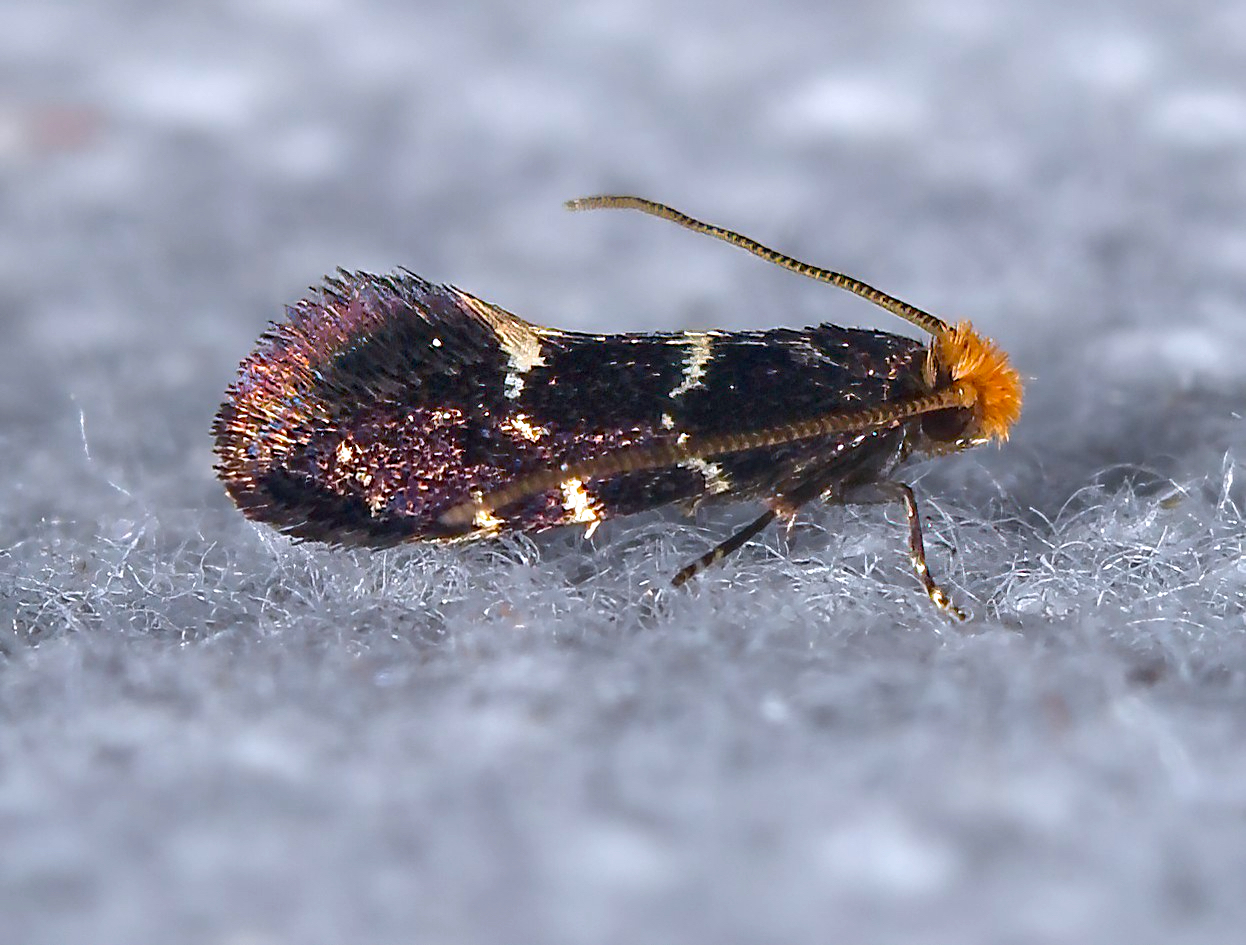
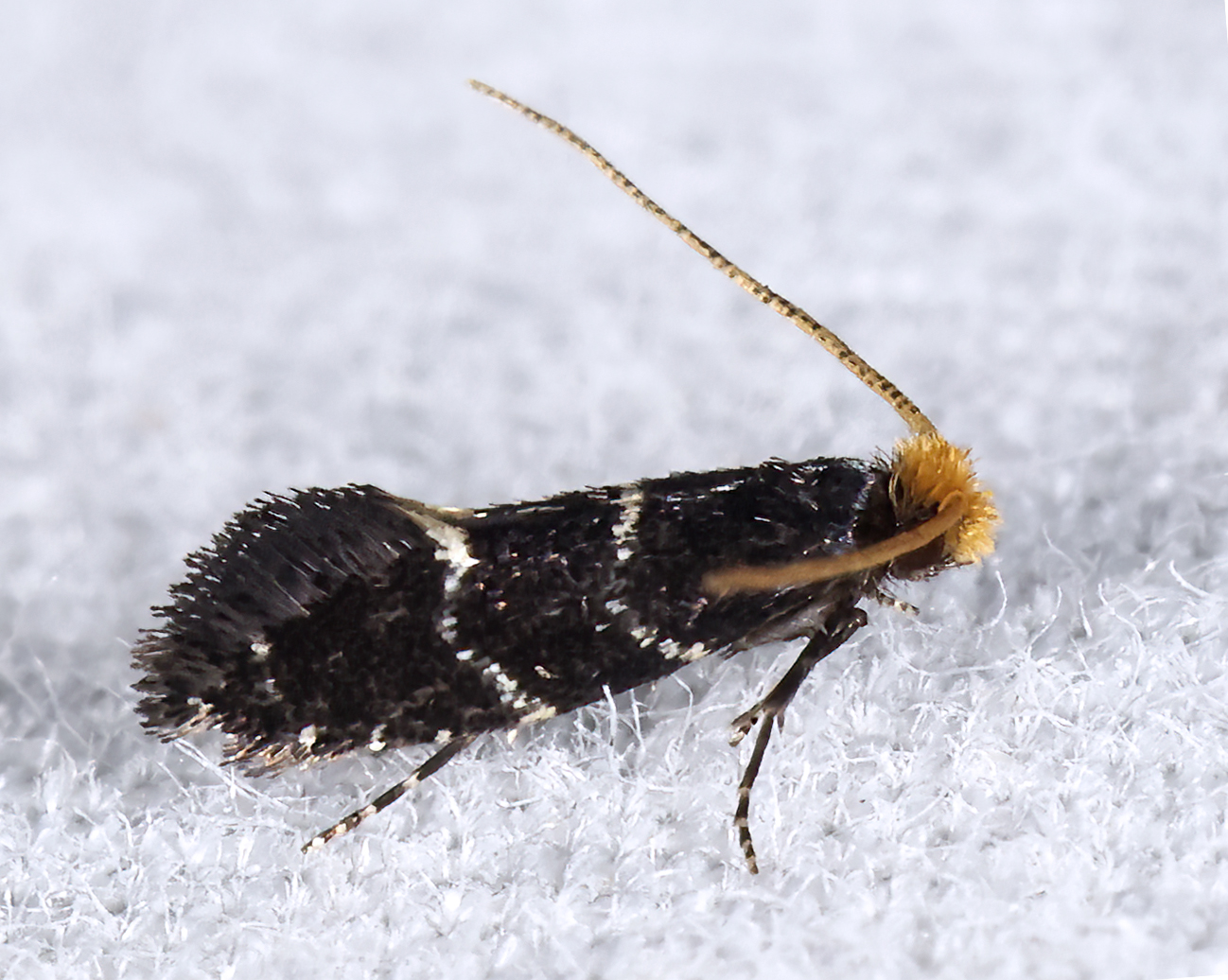
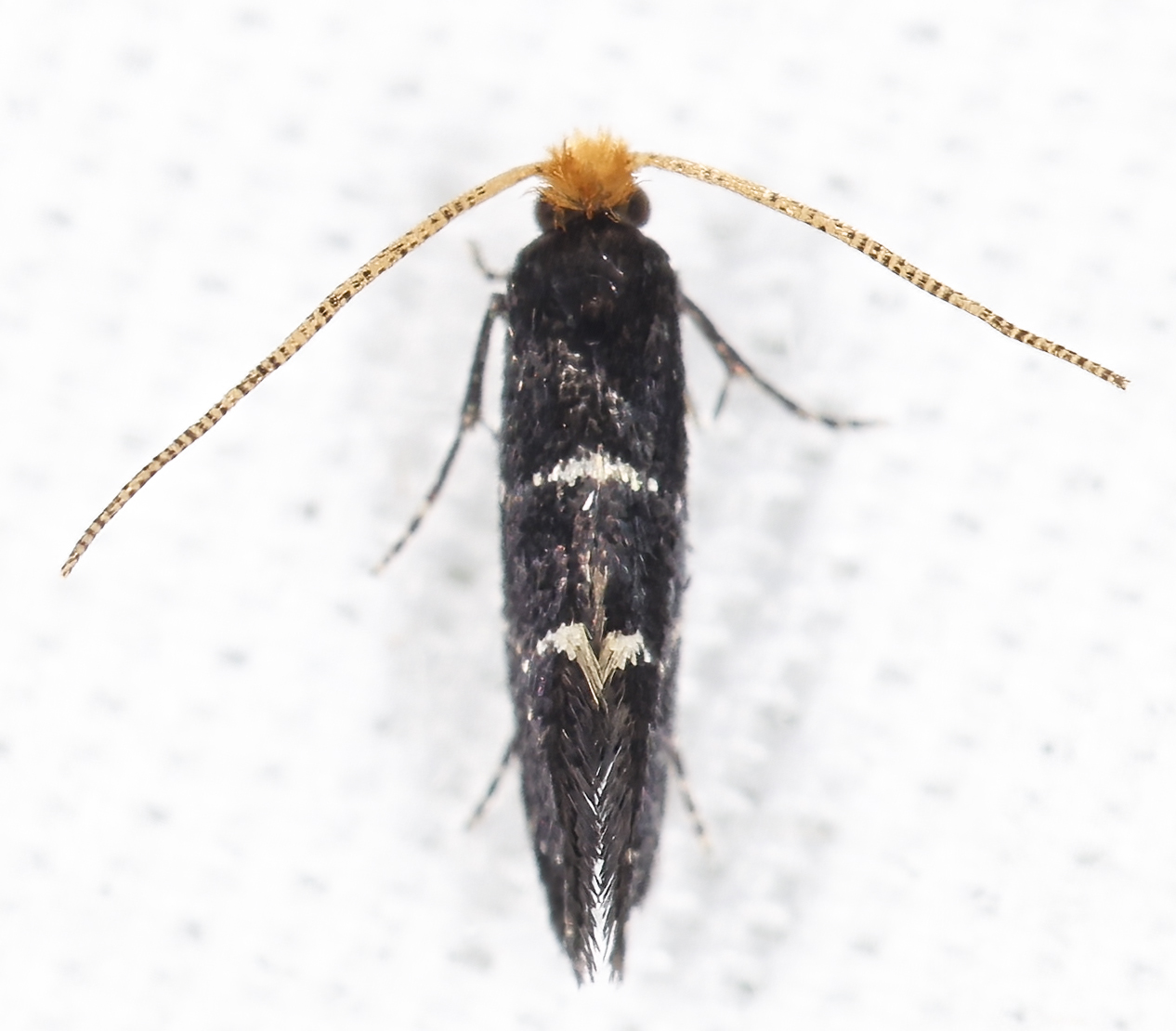
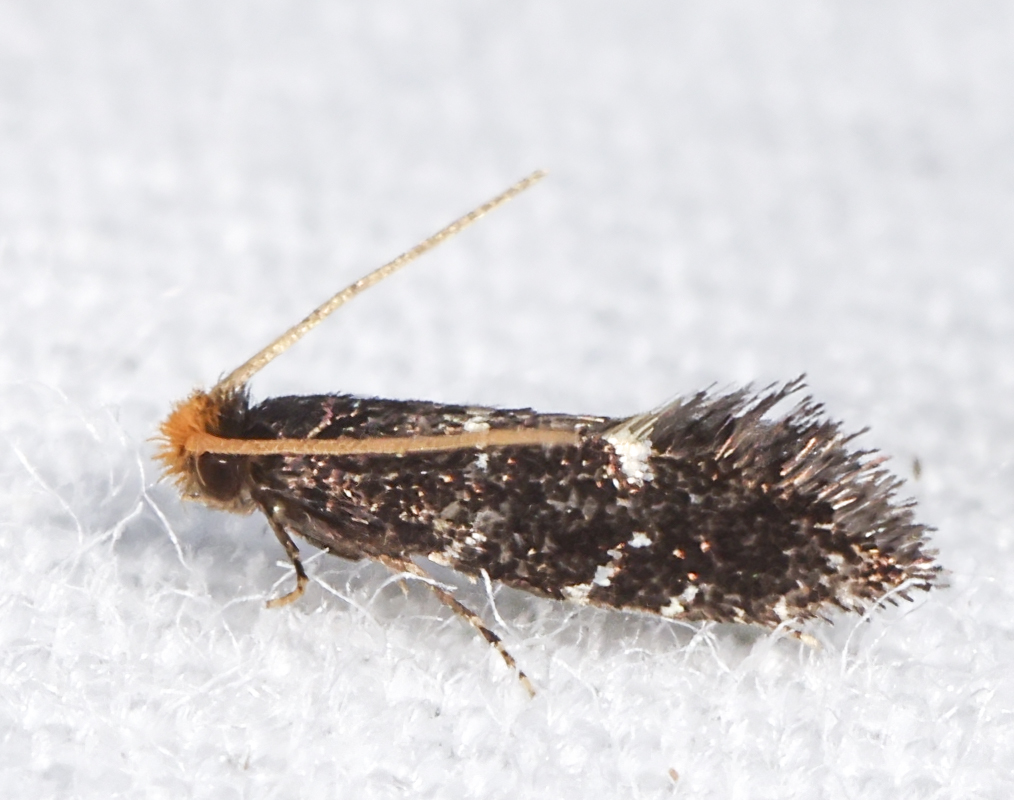
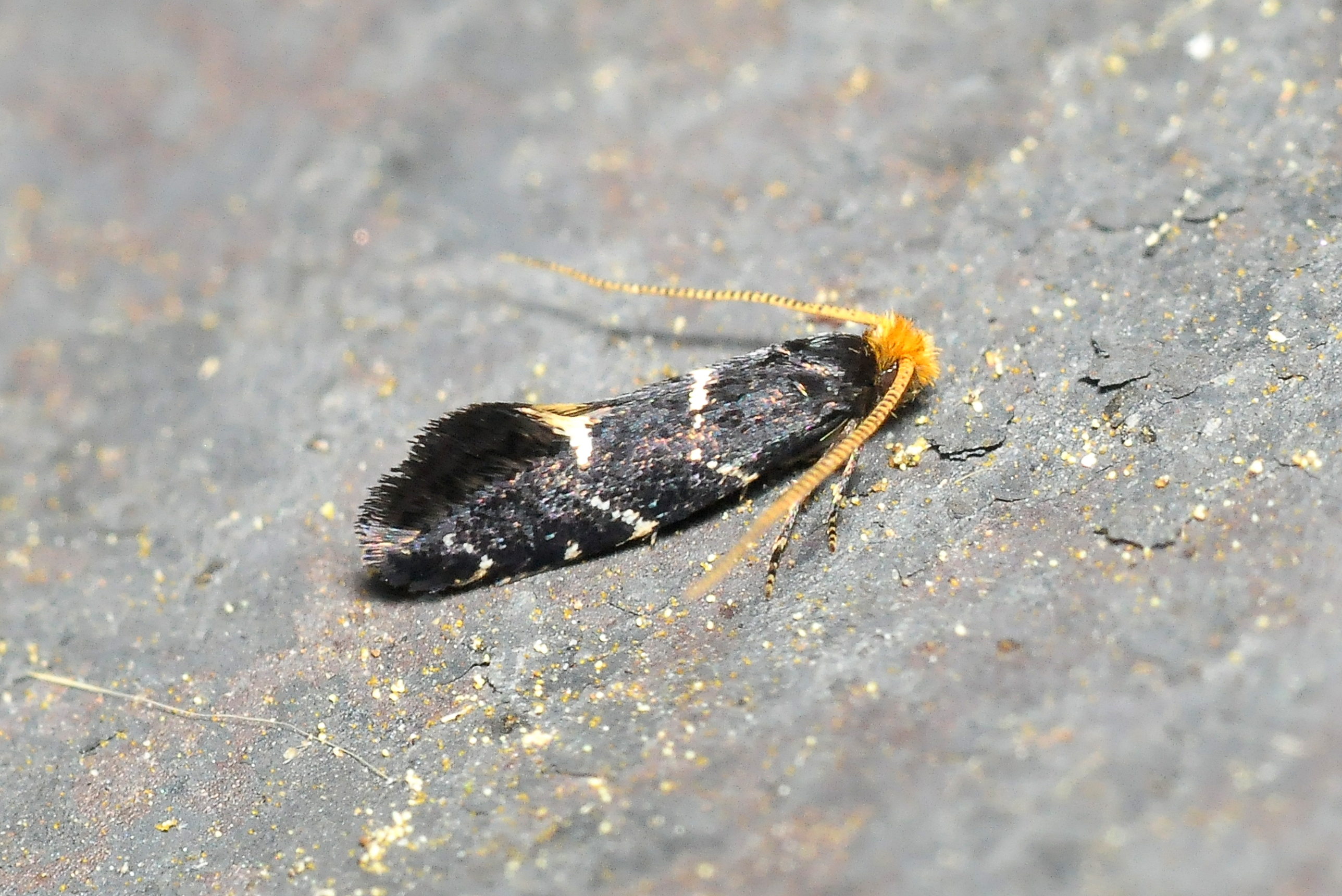
is a minute black-and-white moth with an orange head. The face and top of the head are ochraceous and roughened. The antenna is yellowish with dark annulations, somewhat thickened, and about as long as the body. Both the head and antennae strongly contrast with the forewings, which are dark, purplish brown to black, with a series of narrow, transverse white streaks or spots. A broken white band occurs about 1/3 from the base of the forewing. It is composed of an oblique streak extending down and back from the costa and a similar streak extending inward from the inner margin. A second pair of white streaks is located just beyond midway. The paired streaks sometimes weakly unite to form an angulated or concave fascia. The last pair of streaks is followed by two or more shorter white streaks or spots along the costa, the outermost of which may run obliquely inward or form a curved subapical spot. The hindwing is fuscous (Chambers, 1873; Dietz, 1905; Forbes, 1923).
Eudarcia simulatricella
is similar but the white streaks are broader and less oblique, and the apical cilia are tipped with white rather than being all brown.
Wingspan:
8-9 mm (Dietz, 1905; Forbes, 1924)
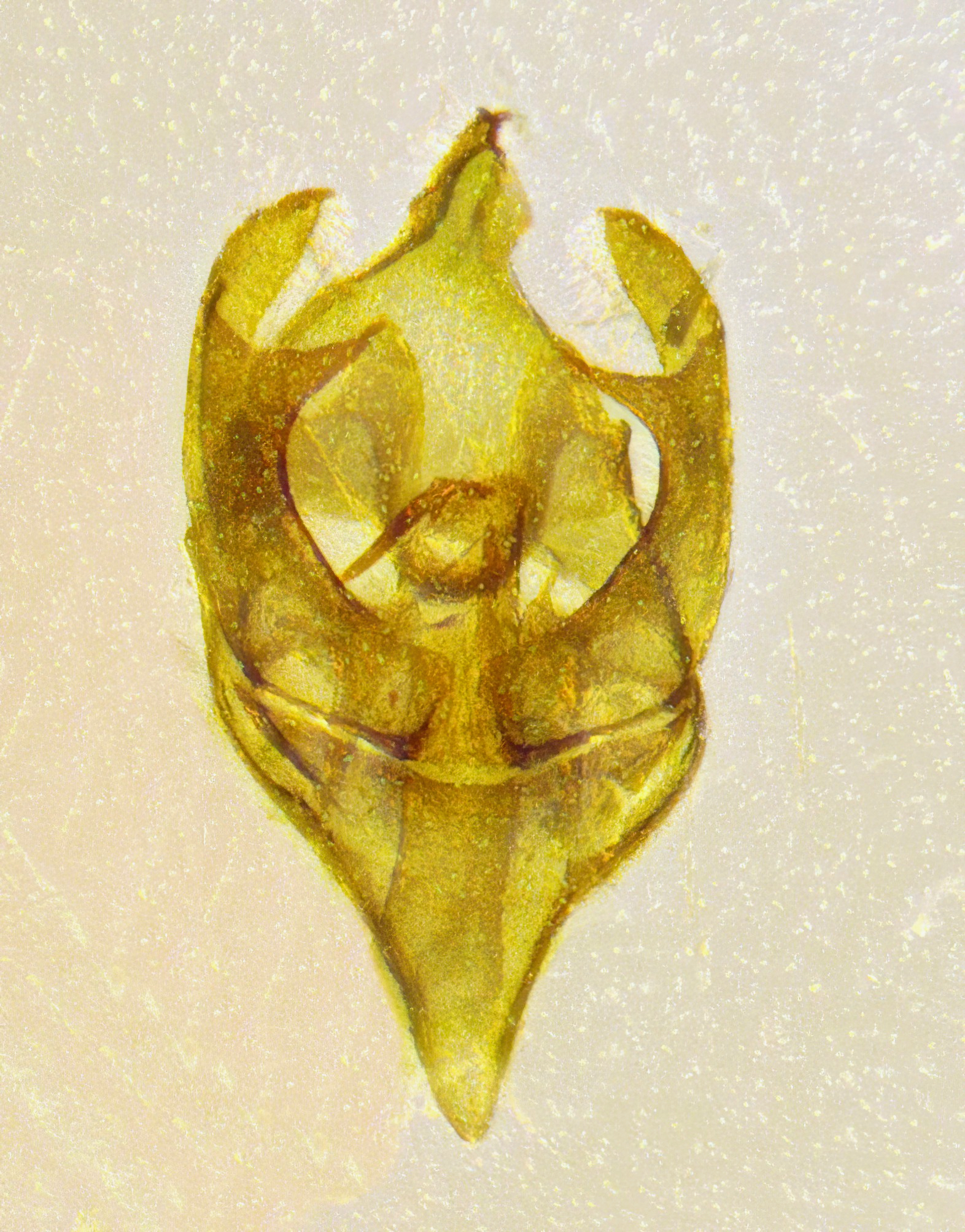
Genitalia and other structural photos
Male genitalia; Madison Co.; Jim Petranka
Male genitalia; Chatham County; Jim Petranka.
Adult ID Requirements:
Identifiable from good quality photos of unworn specimens.
Immatures and Development:
Chambers (1873) found larvae on old stone walls and monuments in cemeteries. He described the cases as being constructed from silk and lime, flattened, and somewhat truncate or emarginate on both ends. While Chambers noted that the cases were abundant on surfaces lacking any lichens, Forbes (1923) describes them as occurring on lichens.
Larvae ID Requirements:
Identifiable from good quality photos, especially where associated with known host plants.
Distribution in North Carolina
Distribution:
Eudarcia eunitariaeella
is found in eastern North America. It occurs in southern Canada (Ontario; Quebec), and throughout much of the eastern US, although it is seemingly absent from most of the southeastern Coastal Plain. As of 2022, we have only three site records and all are from the Piedmont.
County Map:
Clicking on a county returns the records for the species in that county.
Flight Dates:
High Mountains (HM) ≥ 4,000 ft.
Low Mountains (LM) < 4,000 ft.
Piedmont (Pd)
Coastal Plain (CP)
Click on graph to enlarge
Flight Comments:
Adults are active from May-August. As of 2022, our four records are from mid-July through early August.
Habitats and Life History
Habitats:
The habitat requirements are poorly documented. As of 2022, one of our two site records is from a rocky area of a monadnock, while the other is from an urban neighborhood where there are lichen and moss-covered rocks.
Larval Host Plants:
The larvae feed on lichens (Forbes, 1923), but also possibly algae, given Chambers' observation of larval cases on rocks that were devoid of lichens. -
View
Observation Methods:
The adults come to lights to some extent. We encourage field biologists to search for larvae on lichen-covered rocks to better document the larval life history and ecology.
Wikipedia
Status in North Carolina
Natural Heritage Program Status:
Natural Heritage Program Ranks:
[GNR SU]
State Protection:
Has no legal protection, although permits are required to collect it on state parks and other public lands.
Comments:
While this species may be somewhat specialized in terms of its habitats, we have too few records to assess its distribution or exact habitat requirements, precluding any determination of its conservation status in North Carolina.
Photo Gallery for
Eudarcia eunitariaeella
- None
Photos: 10
Recorded by: David George, Jeff Niznik on 2025-07-12
Chatham Co.
Comment:
Recorded by: David George, Jeff Niznik on 2025-07-12
Chatham Co.
Comment:
Recorded by: David George, Jeff Niznik on 2025-07-12
Chatham Co.
Comment:
Recorded by: Jim Petranka on 2024-06-15
Madison Co.
Comment:
Recorded by: Jim Petranka on 2024-06-15
Madison Co.
Comment:
Recorded by: John Petranka on 2022-08-01
Orange Co.
Comment:
Recorded by: John Petranka on 2022-07-23
Orange Co.
Comment:
Recorded by: John Petranka on 2022-07-23
Orange Co.
Comment:
Recorded by: John Petranka on 2022-07-23
Orange Co.
Comment:
Recorded by: J. A. Anderson on 2016-07-15
Surry Co.
Comment:
 »
»