Moths of North Carolina
Home Page
Recent Entries
Recent Account Updates
County Searches
General Search
Submit a Public Record
Larval Hosts
References
Maps
Draft Checklists
Family Photo Gallery
Family PDFs
NC Biodiversity Project
Comments
Significant Contributors
Scientific Name:
Common Name:
Family (Alpha):
Choose a Family
ACROLEPIIDAE-False Diamondback Moths
ADELIDAE-Fairy moths
ALUCITIDAE-Many-plumed Moths
AMPHISBATIDAE-
ARGYRESTHIIDAE-Shiny Head-standing Moths
AUTOSTICHIDAE-Autostichid Moths
BATRACHEDRIDAE-Batrachedrid Moths
BEDELLIIDAE-Bedelliid Moths
BLASTOBASIDAE-Blastobasid Moths
BOMBYCIDAE-Silkworm Moths
BUCCULATRICIDAE-Ribbed Cocoon-maker Moths
CARPOSINIDAE-Fruitworm Moths
CHOREUTIDAE-Metalmark Moths
COLEOPHORIDAE-Casebearer Moths and Relatives
COSMOPTERIGIDAE-Cosmopterigid Moths
COSSIDAE-Carpenter Moths, Goat Moths
CRAMBIDAE-Grass Moths, Snout Moths
DEPRESSARIIDAE-
DREPANIDAE-Hook-tips and Thyatirid Moths
DRYADAULIDAE-
ELACHISTIDAE-Grassminer Moths and Relatives
EPERMENIIDAE-Fringe-tufted Moths
EPIPYROPIDAE-Planthopper Parasite Moths
EREBIDAE-Erebid Moths
ERIOCRANIIDAE-Eriocraniid Moths
EUTELIIDAE-Euteliid Moths
GALACTICIDAE-Galacticid Moths
GELECHIIDAE-Gelechiid Moths; Twirler Moths
GEOMETRIDAE-Geometer Moths, Loopers
GLYPHIDOCERIDAE-Glyphidocerid Moths
GLYPHIPTERIGIDAE-Sedge Moths
GRACILLARIIDAE-Leafblotch miner moths
HELIOZELIDAE-Shield bearer moths
HEPIALIDAE-Ghost or Swift Moths
HYBLAEIDAE-
INCURVARIIDAE-Leafcutter Moths
LASIOCAMPIDAE-Tent Caterpillar Moths, Lappet Moths
LECITHOCERIDAE-Long-horned Moths
LIMACODIDAE-Slug Caterpillar Moths
LIMOCODIDAE-
LYONETIIDAE-Lyonetiid Moths
MEGALOPYGIDAE-Flannel Moths
MICROPTERIGIDAE-Mandibulate Moths
MIMALLONIDAE-
MOMPHIDAE-Mompha Moths
NEPTICULIDAE-Minute leaf miners
NOCTUIDAE-Owlet Moths
NOLIDAE-
NOTODONTIDAE-Prominents
OECOPHORIDAE-Oecophorid Moths
OPOSTEGIDAE-
PELEOPODIDAE-
PLUTELLIDAE-Diamondback Moths
PRODOXIDAE-Yucca Moths
PSYCHIDAE-Bagworm Moths
PTEROPHORIDAE-Plume Moths
PYRALIDAE-Pyralid Moths, Snout Moths
SATURNIIDAE-Giant Silkworm Moths
SCHRECKENSTEINIIDAE-Schreckensteiniid Moths
SCYTHRIDIDAE-
SESIIDAE-Clearwing Moths
SPHINGIDAE-Sphinx Moths
THYATIRIDAE-
THYRIDIDAE-Window-winged Moths
TINEIDAE-Clothes moths
TISCHERIIDAE-Tischerid Moths
TORTRICIDAE-Leafroller Moths
URANIIDAE-
URODIDAE-Urodid Moths
XYLORYCTIDAE-
YPONOMEUTIDAE-Ermine Moths
YPSOLOPHIDAE-Ypsolophid Moths
ZYGAENIDAE-
«
Home
»
View
PDF
Crambidae Members:
Achyra rantalis
Aethiophysa consimilis
Aethiophysa invisalis
Aethiophysa unidentified species
Agriphila ruricolellus
Agriphila vulgivagellus
Anageshna primordialis
Anania coronata complex
Anania extricalis
Anania funebris
Anania leuschneri
Anania mysippusalis
Anania plectilis
Anania tennesseensis
Anania tertialis
Anania unidentified species
Apogeshna stenialis
Arequipa turbatella
Argyria gonogramma
Argyria lacteella
Argyria nummulalis
Argyria rufisignella
Ategumia ebulealis
Blepharomastix ranalis
Carectocultus dominicki
Carectocultus perstrialis
Catoptria latiradiellus
Chalcoela iphitalis
Chalcoela pegasalis
Chilo demotella
Chilo plejadellus
Choristostigma roseopennalis
Chrysendeton imitabilis
Chrysendeton medicinalis
Chrysoteuchia topiarius
Chrysoteuchia unidentified species
Colomychus talis
Conchylodes ovulalis
Condylorrhiza vestigialis
Crambini unidentified species
Crambus agitatellus
Crambus ainslieellus
Crambus albellus
Crambus braunellus
Crambus girardellus
Crambus laqueatellus
Crambus leachellus
Crambus multilinellus
Crambus pascuella
Crambus praefectellus
Crambus quinquareatus
Crambus saltuellus
Crambus sanfordellus
Crambus satrapellus
Crambus unidentified species
Crambus youngellus
Crocidophora pustuliferalis
Crocidophora serratissimalis
Crocidophora tuberculalis
Daulia magdalena
Desmia funeralis
Desmia maculalis
Desmia subdivisalis
Desmia unidentified species
Diacme adipaloides
Diacme elealis
Diacme unidentified species
Diaphania costata
Diaphania hyalinata
Diaphania nitidalis
Diasemiodes janassialis
Diasemiodes nigralis
Diasemiopsis leodocusalis
Diastictis argyralis
Diastictis baccatalis
Diastictis pseudargyralis
Diastictis unidentified species
Diastictis ventralis
Diathrausta harlequinalis
Diathrausta reconditalis
Diatraea crambidoides
Diatraea evanescens
Diatraea lisetta
Diatraea unidentified species
Dicymolomia julianalis
Donacaula (linealis) new species 2
Donacaula (parealis) new species 3
Donacaula (tannisella) new species 1
Donacaula aquilellus
Donacaula dispersellus
Donacaula longirostrallus
Donacaula maximellus
Donacaula melinellus
Donacaula nitidellus
Donacaula roscidellus
Donacaula sordidellus
Donacaula tripunctellus
Donacaula unidentified species
Donacaula unipunctellus
Duponchelia fovealis
Ecpyrrhorrhoe puralis
Elophila atlantica
Elophila faulalis
Elophila gyralis
Elophila icciusalis
Elophila nebulosalis
Elophila obliteralis
Elophila tinealis
Eoparargyractis irroratalis
Eoparargyractis plevie
Eoparargyractis unidentified species
Eoreuma densellus
Epina alleni
Epina dichromella
Epipagis fenestralis
Euchromius ocellea
Eudonia alpina
Eudonia heterosalis
Eudonia strigalis
Eudonia unidentified species
Eulepte anticostalis
Eustixia pupula
Evergestis pallidata
Evergestis rimosalis
Evergestis unimacula
Fissicrambus mutabilis
Fissicrambus profanellus
Fissicrambus unidentified species
Framinghamia helvalis
Fumibotys fumalis
Geshna cannalis
Glaphyria basiflavalis
Glaphyria cappsi
Glaphyria fulminalis
Glaphyria glaphyralis
Glaphyria peremptalis
Glaphyria sesquistrialis
Glyphodes pyloalis
Glyphodes sibillalis
Hahncappsia mancalis
Hahncappsia marculenta
Hahncappsia neobliteralis
Hahncappsia neomarculenta
Hahncappsia unidentified species
Haimbachia albescens
Haimbachia placidellus
Haimbachia squamulellus
Haimbachia unidentified species
Hellula phidilealis
Hellula rogatalis
Helvibotys helvialis
Helvibotys pucilla
Herpetogramma aeglealis
Herpetogramma bipunctalis
Herpetogramma centrostrigalis
Herpetogramma fluctuosalis
Herpetogramma pertextalis
Herpetogramma phaeopteralis
Herpetogramma sphingealis
Herpetogramma theseusalis
Herpetogramma thestealis
Herpetogramma unidentified species
Hymenia perspectalis
Leptosteges flavifascialis
Leptosteges vestaliella
Leptosteges xantholeucalis
Lineodes fontella
Lipocosma adelalis
Lipocosma septa
Lipocosma sicalis
Lipocosma unidentified species
Lipocosmodes fuliginosalis
Loxostege cereralis
Loxostege commixtalis
Loxostegopsis merrickalis
Lygropia rivulalis
Lygropia tripunctata
Marasmia cochrusalis
Marasmia trapezalis
Mesolia incertellus
Microcrambus biguttellus
Microcrambus elegans
Microcrambus kimballi
Microcrambus minor
Microcrambus new species
Microcrambus unidentified species
Microtheoris ophionalis
Mimoschinia rufofascialis
Nacoleia charesalis
Nascia acutellus
Neargyractis slossonalis
Neocataclysta magnificalis
Neodactria caliginosellus
Neodactria luteolellus
Neodactria new species
Neodactria unidentified species
Neodactria zeellus
Neohelvibotys neohelvialis
Neohelvibotys polingi
Neohelvibotys unidentified species
Nephrogramma reniculalis
Nomophila nearctica
Nymphuliella daeckealis
Oenobotys vinotinctalis
Ostrinia multispinosa
Ostrinia nubilalis
Ostrinia obumbratalis
Ostrinia penitalis
Ostrinia unidentified species
Palpita aenescentalis
Palpita arsaltealis
Palpita freemanalis
Palpita illibalis
Palpita magniferalis
Palpita maritima
Palpita quadristigmalis
Palpita unidentified species
Pantographa limata
Parapediasia decorellus
Parapediasia teterrellus
Parapediasia unidentified species
Parapoynx allionealis
Parapoynx badiusalis
Parapoynx diminutalis
Parapoynx maculalis
Parapoynx obscuralis
Parapoynx seminealis
Patania silicalis
Pediasia trisecta
Perispasta caeculalis
Petrophila canadensis
Petrophila unidentified species
Phaedropsis stictigramma
Pilocrocis ramentalis
Polygrammodes flavidalis
Polygrammodes oxydalis
Prionapteryx achatina
Prionapteryx nebulifera
Prionapteryx serpentella
Psara obscuralis
Pyrausta acrionalis
Pyrausta bicoloralis
Pyrausta demantrialis
Pyrausta fodinalis
Pyrausta generosa
Pyrausta homonymalis
Pyrausta inornatalis
Pyrausta inveterascalis
Pyrausta laticlavia
Pyrausta new species near subsequalis
Pyrausta niveicilialis
Pyrausta orphisalis
Pyrausta phoenicealis
Pyrausta rubricalis
Pyrausta signatalis
Pyrausta subsequalis
Pyrausta tyralis
Pyraustinae unidentified species
Raphiptera argillaceellus
Rhectocraspeda periusalis
Rupela segrega
Rupela tinctella
Rupela unidentified species
Samea castellalis
Samea multiplicalis
Samea unidentified species
Saucrobotys futilalis
Sclerocona acutellus
Scoparia basalis
Scoparia biplagialis
Scoparia cinereomedia
Scoparia dominicki
Scoparia penumbralis
Scoparia unidentified species
Sericoplaga externalis
Sitochroa palealis
Spoladea recurvalis
Syngamia florella
Terastia meticulosalis
Thaumatopsis edonis
Thaumatopsis floridella
Thaumatopsis solutellus
Thopeutis forbesellus
Udea rubigalis
Undulambia striatalis
Uresiphita reversalis
Urola nivalis
Vaxi auratellus
Vaxi critica
Xanthophysa psychicalis
Xubida linearella
Xubida panalope
Xubida unidentified species
Herpetogramma
Members:
Herpetogramma aeglealis
Herpetogramma bipunctalis
Herpetogramma centrostrigalis
Herpetogramma fluctuosalis
Herpetogramma pertextalis
Herpetogramma phaeopteralis
Herpetogramma sphingealis
Herpetogramma theseusalis
Herpetogramma thestealis
Herpetogramma unidentified species
140 NC Records
Herpetogramma thestealis
(Walker, 1859) - Zigzag Herpetogramma
view caption
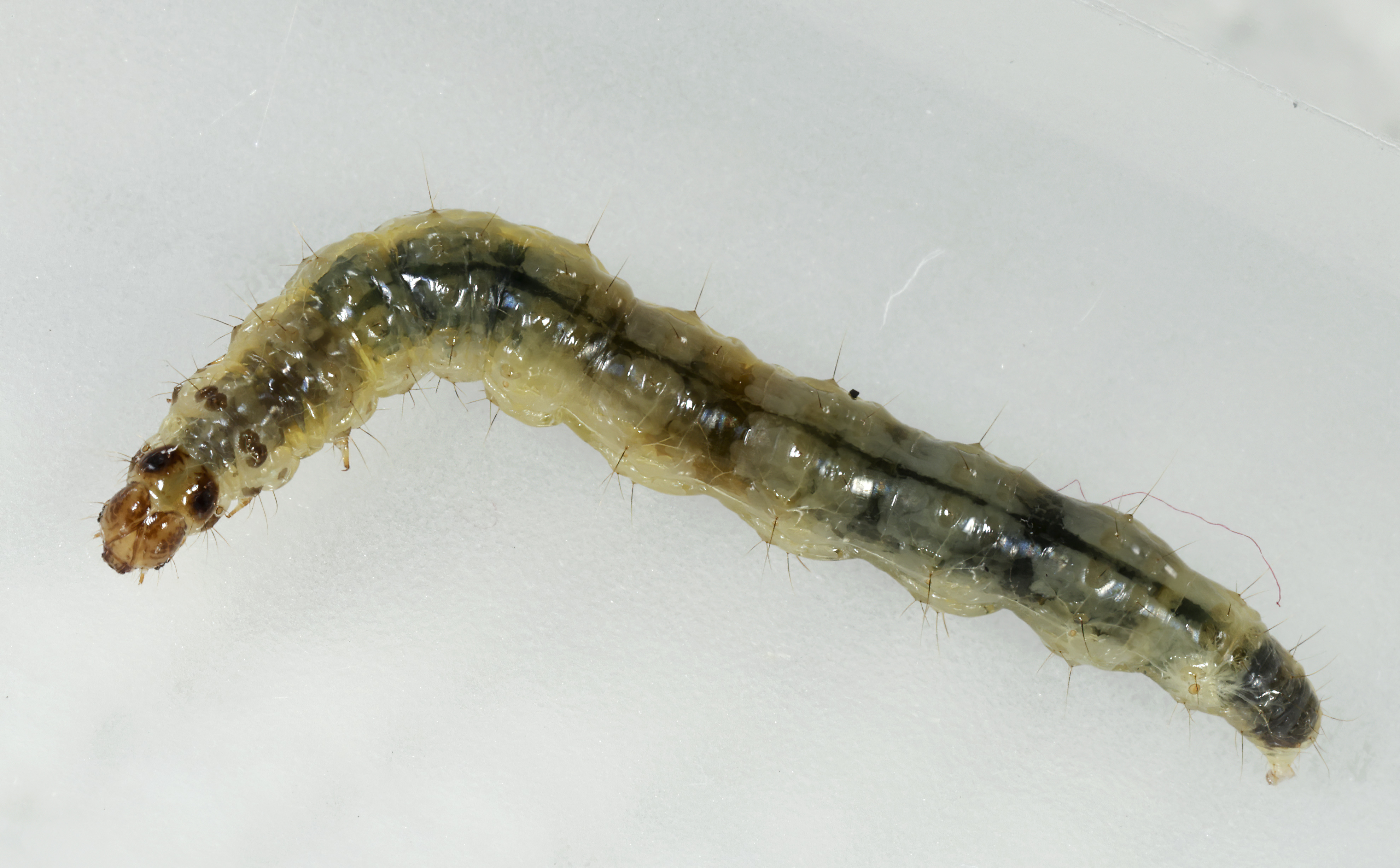
An older instar (adult reared).
view caption
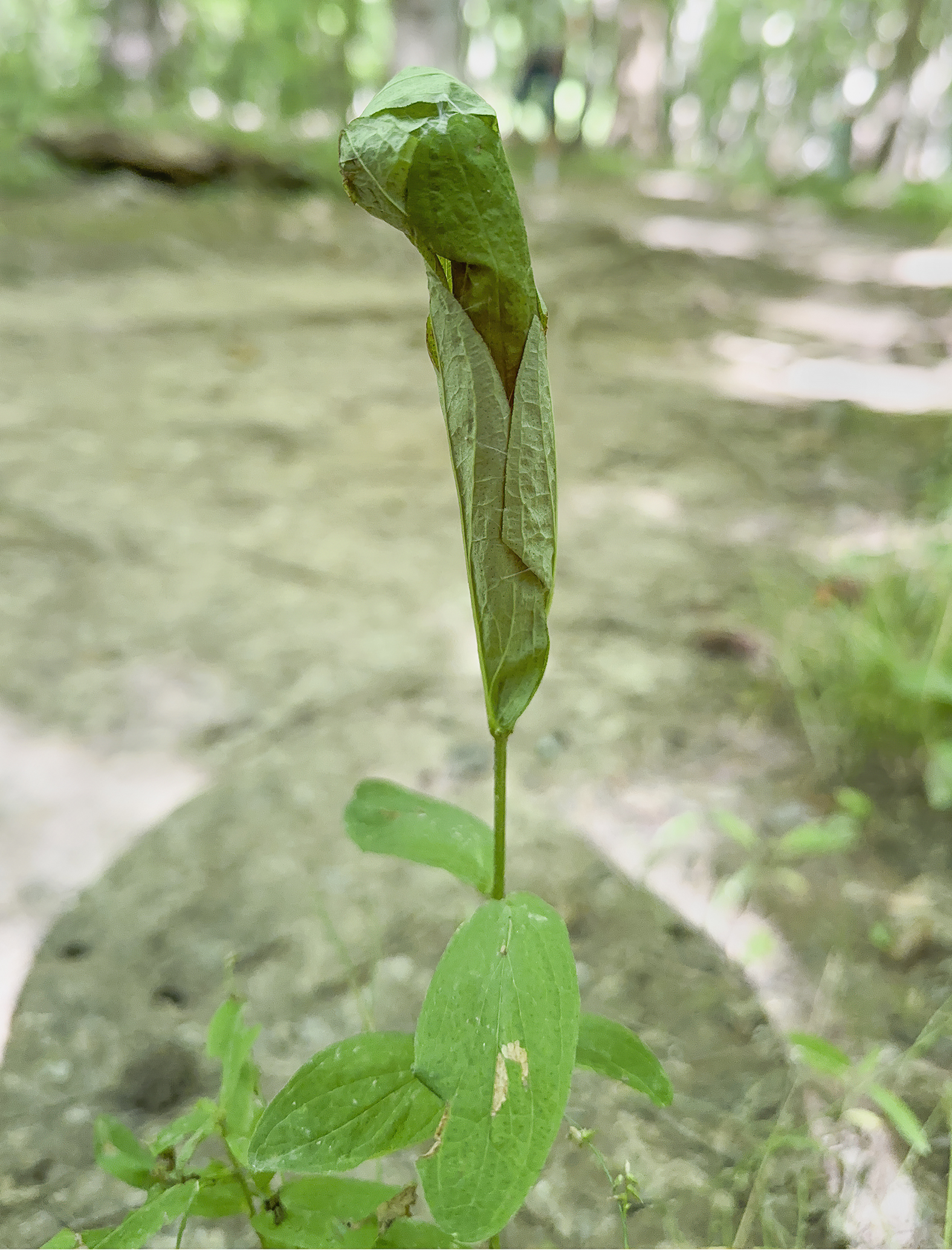
An occupied nest that the larva constructed from several leaves of Hypericum punctatum that were tied together.
view caption
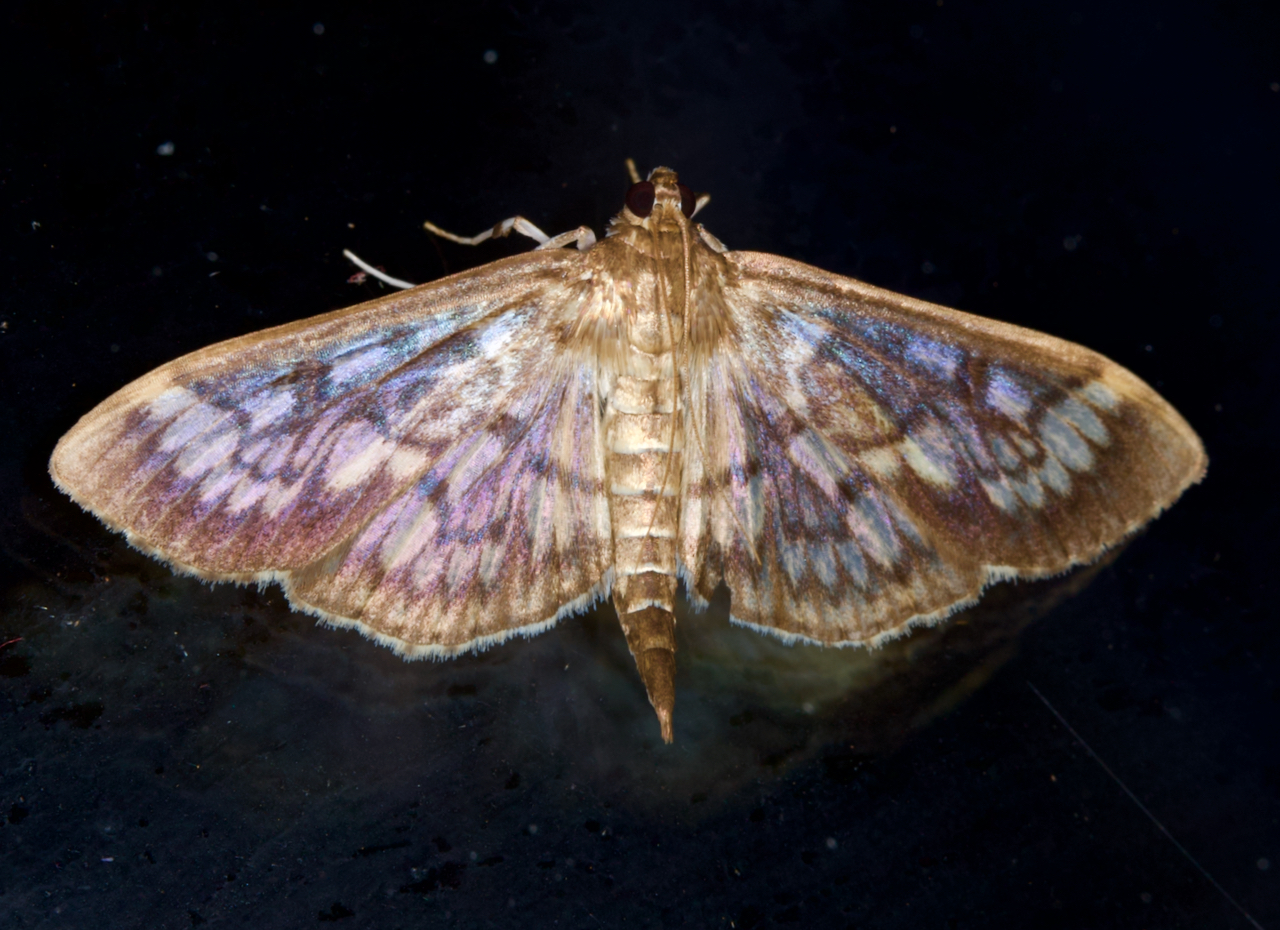
Note the light bluish iridescent sheen on this specimen which is often present on fresh specimens.
Taxonomy
Superfamily:
Pyraloidea
Family:
Crambidae
Subfamily:
Pyraustinae
Tribe:
Spilomelini
P3 Number:
80a1027
MONA Number:
5277.00
MONA Synonym:
Herpetogramma abdominalis
Comments:
Over 20 species of
Herpetogramma
have been described from North America that are based mostly on external morphology. The most recent treatment consolidates these into only nine species (Solis, 2010) and all nine occur in North Carolina. In particular,
H. abdominalis
is a previously recognized species that occurs in North Carolina, but is now treated as a junior synonym of
H. thestealis
.
Species Status:
"In all these, females are much more difficult" (Scholtens, 2017).
Identification
Field Guide Descriptions:
Beadle and Leckie (2012)
Online Resources:
MPG
,
BugGuide
,
iNaturalist
,
Google
,
BAMONA
,
GBIF
,
BOLD
Technical Description, Adults:
Solis (2010)
Adult Markings:
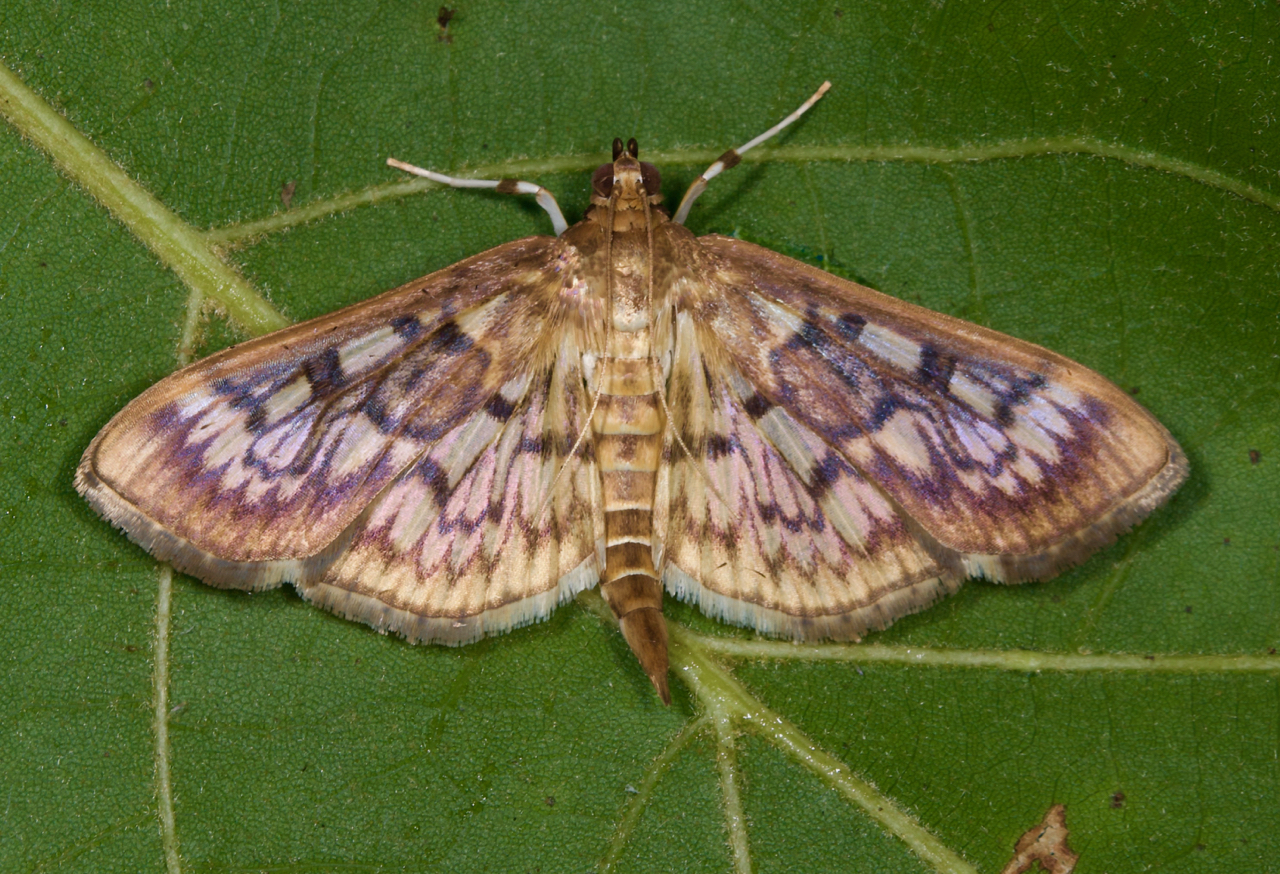
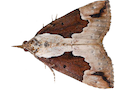
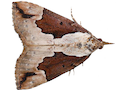
The following description is based in part on that of Handfield and Handfield (2021). The head, thorax, and abdomen are brown, with the abdomen having a narrow white crossband on the posterior margin of each segment. The ground color of the wings is white and is overlain with a complex pattern of dark-brown marks that are clean-cut. The costa of the forewing has a brown shading that extends from the base to the apex. The terminal line is dark brown, and the fringe varies from whitish to light brown with darker spotting near the base on each vein. A white patch is located between the dark-brown, round, orbicular spot and the dark-brown rectangular reniform spot, while a similar patch occurs between the reniform spot and the postmedial line. A short, brown, longitudinal dash is also usually evident between the orbicular and reniform, but displaced inward towards the middle of the wing.
The antemedial line is weakly sinuate and strikes the costa just anterior to the orbicular spot. The postmedial line projects inward from the costa at around three-fourths the wing length where it meets an outwardly bulged section with three blunt teeth. From there it projects basally towards the orbicular spot for a short distance, then sharply angles away after approaching the reniform spot and runs obliquely inwards to the inner margin where it sometimes joins the antemedial line. A prominent, toothed, dark-brown subterminal line follows the postmedial line and separates a whitish zone between the postmedial and subterminal lines from a zone of heavy brown dusting between the subterminal line and the outer margin. The hindwing has reduced brown dusting in the subterminal region, lacks the antemedial line, and has a discal spot. The postmedial line and subterminal lines are similar to the ones on the forewing. The fringe is white with brown spotting at the base, and there is a well-defined dark brown terminal line.
Handfield and Handfield (2021) reported that a light form exists that is similar to the dark form described above, except that the lines, markings, and wings are paler, especially in the subterminal area, which is yellowish-brown and contrasts with the gray-brown terminal line and deeply-scalloped subterminal line.
Herpetogramma pertextalis
is similar to
H. thestealis
in terms of overall patterning, but the latter is darker overall, with a sharp contrast between the dark brown subterminal shade on the forewing and the whitish area between it and the postmedial line. The subterminal shade also noticeably widens as it approaches the costa, with the dark, inward-projecting tooth next to the costa often touching or nearly touching the postmedial line.
Herpetogramma thestealis
also has a whitish ground color, versus a more light yellowish-tan ground in
H. pertextalis
, and often has a violet or bluish iridescent sheen that is lacking in
H. pertextalis
. Finally, the inwardly projecting teeth on the subterminal line are finally tapered and less blunt than those of
H. pertextalis
. Size differences are also helpful, with
H. thestealis
being significantly larger than
H. pertextalis
(wingspan 30-35 mm versus 21-23 mm).
Wingspan:
30–35 mm for males; 29–31 mm for females (Handfield and Handfield, 2021); 28-35 mm (Forbes, 1923).
Adult Structural Features:
Handfield and Handfield (2011) provide descriptions and illustrations of the male and female genitalia.
Genitalia and other structural photos
Male genitalia; North Carolina; J.B. Sullivan.
Male genitalia; North Carolina; J.B. Sullivan.
Aedeagus; North Carolina; J.B. Sullivan.
Aedeagus; North Carolina; J.B. Sullivan.
Male genitalia; North Carolina; J.B. Sullivan.
Male genitalia; Madison County; Jim Petranka.
Adult ID Requirements:
Identifiable from photos showing hindwings, abdomen, or other specialized views [e.g., frons, palps, antennae, undersides].
Immatures and Development:
Very little is known about the larval life history. The larvae are leaf tiers or leaf folders. Depending on the host plant, they may either fold a single leaf over to form a feeding shelter, or individually bundle together two or more leaves to form a shelter. The larva feeds in or or near the shelter and produces a messy mass of dark frass. John Petranka found a shelter in Orange County that was constructed of several leaves of
Hypericum punctatum
that were tied together. The larva fed within the shelter, with the pupal stage lasting about two weeks.
The late instar larvae have dirty, yellowish-green bodies and a pale, yellowish head capsule. The prothoracic shield has a pair of large dark-brown to blackish lateral spots that are followed by a two pairs of smaller dark-brown spots on the first body segment, with each pair often touching each other to resemble the figure '8'.
Larvae ID Requirements:
Identifiable from good quality photos, especially where associated with known host plants.
Distribution in North Carolina
Distribution:
Herpetogramma thestealis
is widely distributed across North America, including in California, the Pacific Northwest, the eastern U.S. and across most of southern Canada from British Columbia eastward to Prince Edward Island. In the eastern U.S., the range extends from Maine to southern Florida, and westward to Louisiana, eastern Oklahoma, eastern Kansas, eastern Nebraska, Iowa and Minnesota. This species occurs statewide in North Carolina, but is relatively uncommon in the Coastal Plain.
County Map:
Clicking on a county returns the records for the species in that county.
Flight Dates:
High Mountains (HM) ≥ 4,000 ft.
Low Mountains (LM) < 4,000 ft.
Piedmont (Pd)
Coastal Plain (CP)
Click on graph to enlarge
 »
»