Taxonomy
Superfamily:
Family: Subfamily: Tribe: P3 Number: MONA Number:
Comments: A large genus found worldwide (Europe, China, India, Japan, Argentina) usually at high altitudes. Three species reach North Carolina.
Species Status: Samples from North Carolina have been barcoded and appear to be conspecific with most samples from the eastern US. Out West, there may be additional sibling species.
Identification
Field Guide Descriptions: Covell (1984); Beadle and Leckie (2012) Online Resources: MPG , BugGuide , iNaturalist , Google , BAMONA , GBIF , BOLD Technical Description, Adults: Forbes (1948)Technical Description, Immature Stages: Forbes (1948); Wagner et al. (2001)
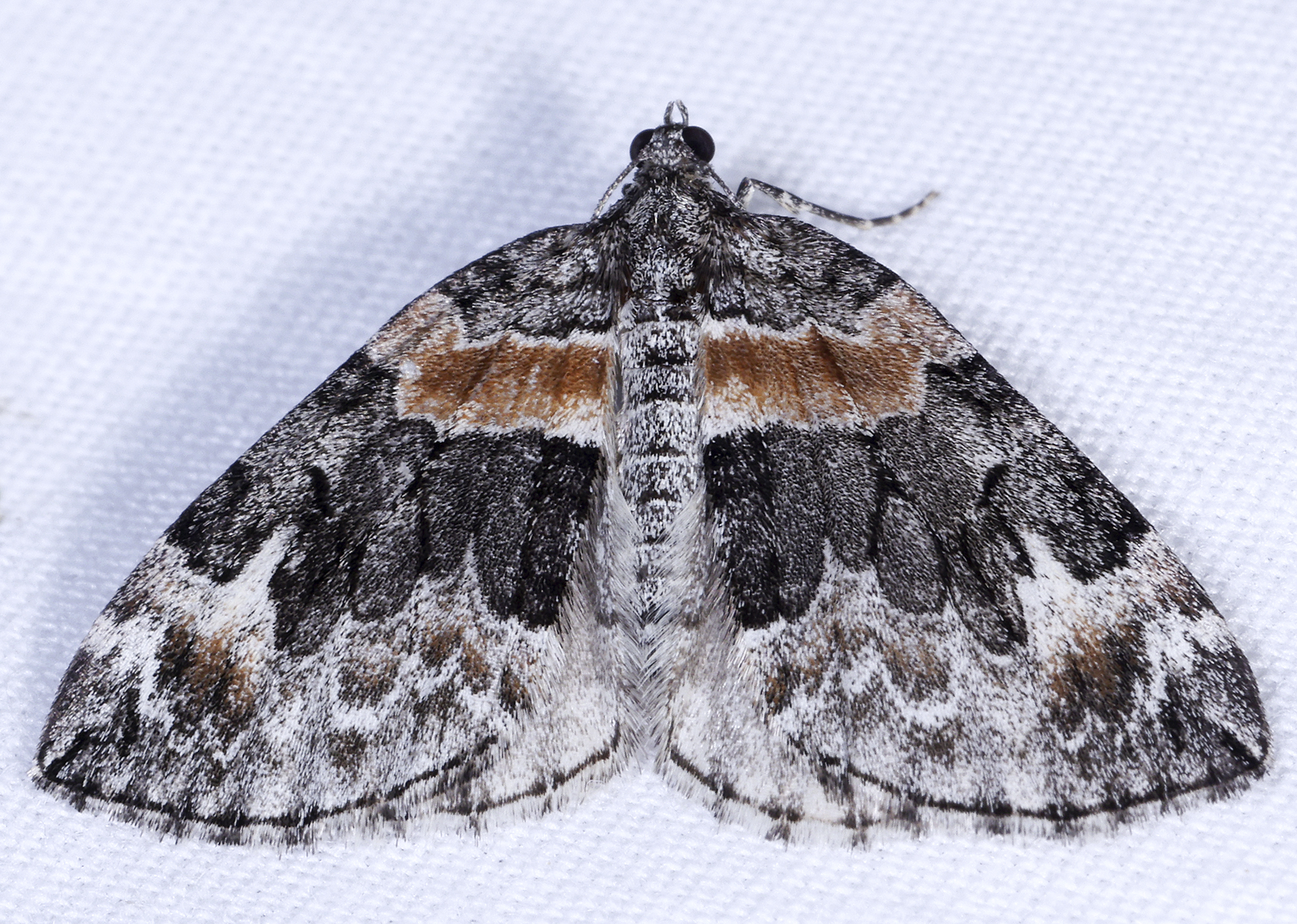
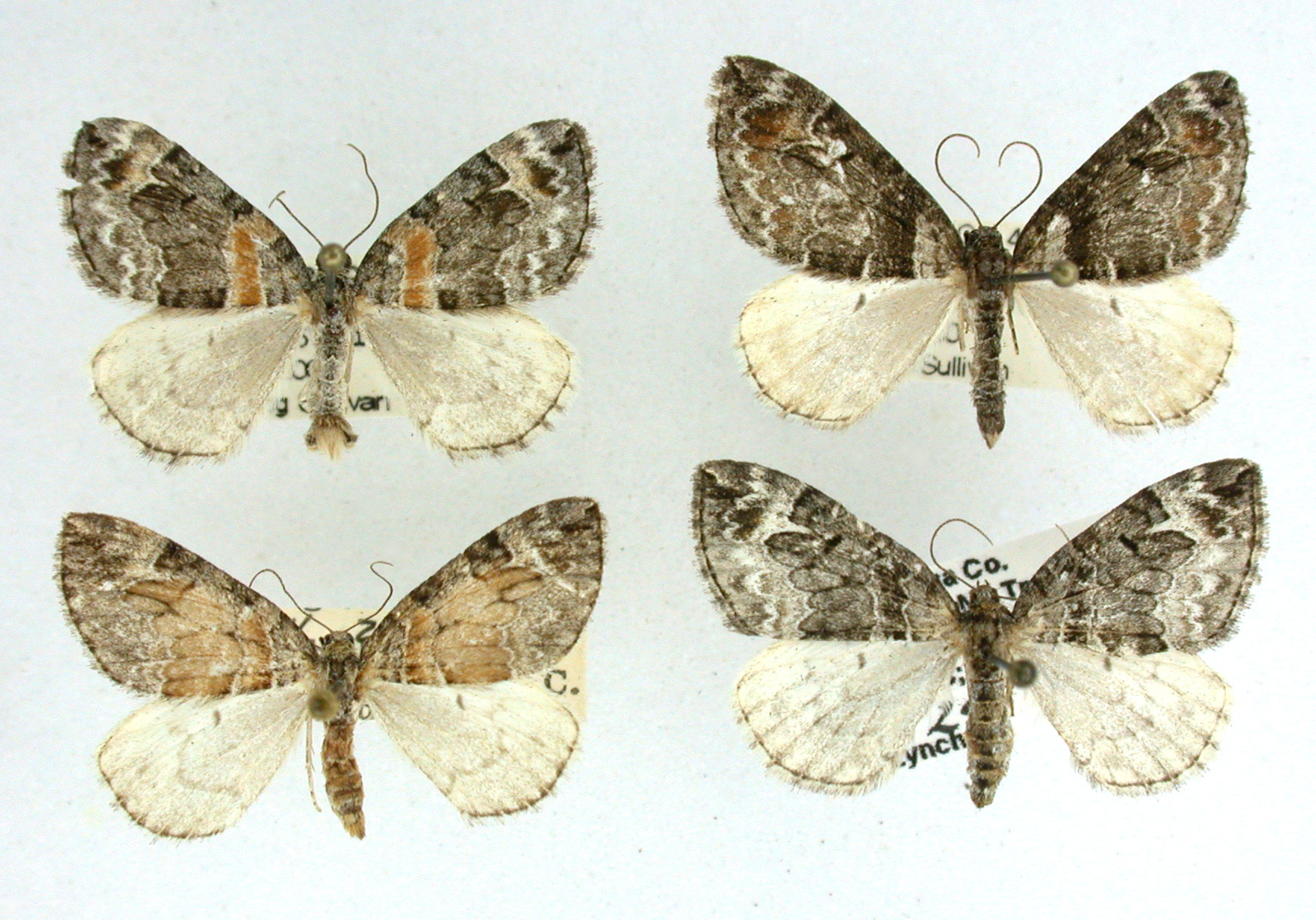
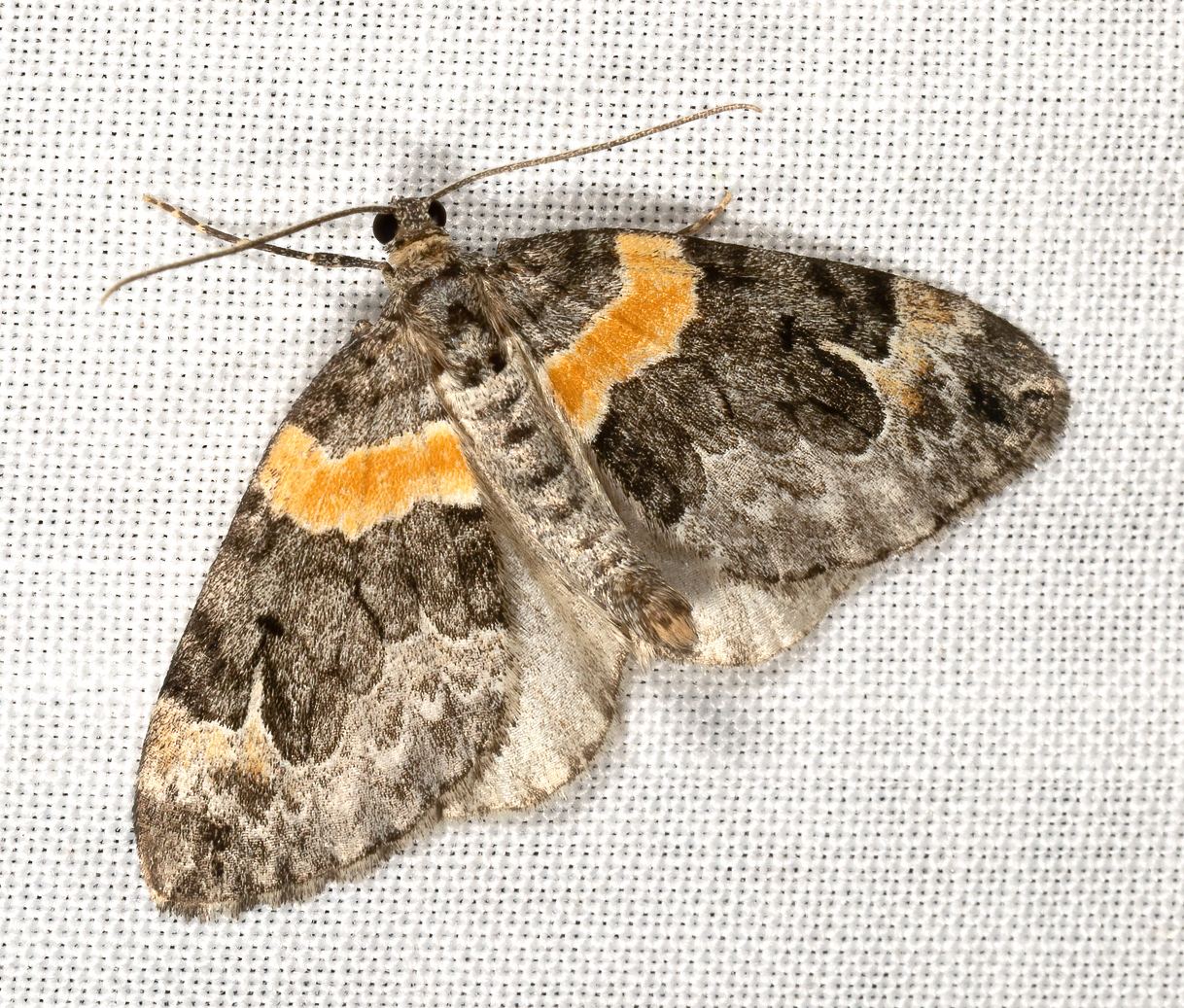
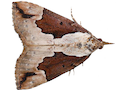
Adult Markings: Although highly variable in forewing pattern, this is the easy member of the genus to identify. It is smaller than the other two species, has very short palpi, and the subapical band has a very sharp, long indentation toward the thorax; in comparison, there is only a very short indentation in D. truncata and none in D. citrata. Sexes are similar. Perches with wings open or closed.
Wingspan: 25 mm (Forbs, 1948)
Adult Structural Features: Our three species have quite similar genitalia but those of D. hersiliata are the most distinct. The patch of cornuti in the aedeagus is much reduced, in females the sclerotized area of the anterior bursa is much more extensive and the accessory bursa is difficult to differentiate.
Genitalia and other structural photos
Adult ID Requirements: Identifiable from good quality photos of unworn specimens.
Immatures and Development: Larvae are lime green, with a pair of cream subdorsal stripes and a distinctive spinulose integument (Forbes, 1948; Wagner et al., 2001). Overwinters in the egg stage.
Larvae ID Requirements: Identifiable from good quality photos, especially where associated with known host plants.
 »
»