Moths of North Carolina
Home Page
Recent Entries
Recent Account Updates
County Searches
General Search
Submit a Public Record
Larval Hosts
References
Maps
Draft Checklists
Family Photo Gallery
Family PDFs
NC Biodiversity Project
Comments
Significant Contributors
Scientific Name:
Common Name:
Family (Alpha):
Choose a Family
ACROLEPIIDAE-False Diamondback Moths
ADELIDAE-Fairy moths
ALUCITIDAE-Many-plumed Moths
AMPHISBATIDAE-
ARGYRESTHIIDAE-Shiny Head-standing Moths
AUTOSTICHIDAE-Autostichid Moths
BATRACHEDRIDAE-Batrachedrid Moths
BEDELLIIDAE-Bedelliid Moths
BLASTOBASIDAE-Blastobasid Moths
BOMBYCIDAE-Silkworm Moths
BUCCULATRICIDAE-Ribbed Cocoon-maker Moths
CARPOSINIDAE-Fruitworm Moths
CHOREUTIDAE-Metalmark Moths
COLEOPHORIDAE-Casebearer Moths and Relatives
COSMOPTERIGIDAE-Cosmopterigid Moths
COSSIDAE-Carpenter Moths, Goat Moths
CRAMBIDAE-Grass Moths, Snout Moths
DEPRESSARIIDAE-
DREPANIDAE-Hook-tips and Thyatirid Moths
DRYADAULIDAE-
ELACHISTIDAE-Grassminer Moths and Relatives
EPERMENIIDAE-Fringe-tufted Moths
EPIPYROPIDAE-Planthopper Parasite Moths
EREBIDAE-Erebid Moths
ERIOCRANIIDAE-Eriocraniid Moths
EUTELIIDAE-Euteliid Moths
GALACTICIDAE-Galacticid Moths
GELECHIIDAE-Gelechiid Moths; Twirler Moths
GEOMETRIDAE-Geometer Moths, Loopers
GLYPHIDOCERIDAE-Glyphidocerid Moths
GLYPHIPTERIGIDAE-Sedge Moths
GRACILLARIIDAE-Leafblotch miner moths
HELIOZELIDAE-Shield bearer moths
HEPIALIDAE-Ghost or Swift Moths
HYBLAEIDAE-
INCURVARIIDAE-Leafcutter Moths
LASIOCAMPIDAE-Tent Caterpillar Moths, Lappet Moths
LECITHOCERIDAE-Long-horned Moths
LIMACODIDAE-Slug Caterpillar Moths
LIMOCODIDAE-
LYONETIIDAE-Lyonetiid Moths
MEGALOPYGIDAE-Flannel Moths
MICROPTERIGIDAE-Mandibulate Moths
MIMALLONIDAE-
MOMPHIDAE-Mompha Moths
NEPTICULIDAE-Minute leaf miners
NOCTUIDAE-Owlet Moths
NOLIDAE-
NOTODONTIDAE-Prominents
OECOPHORIDAE-Oecophorid Moths
OPOSTEGIDAE-
PELEOPODIDAE-
PLUTELLIDAE-Diamondback Moths
PRODOXIDAE-Yucca Moths
PSYCHIDAE-Bagworm Moths
PTEROPHORIDAE-Plume Moths
PYRALIDAE-Pyralid Moths, Snout Moths
SATURNIIDAE-Giant Silkworm Moths
SCHRECKENSTEINIIDAE-Schreckensteiniid Moths
SCYTHRIDIDAE-
SESIIDAE-Clearwing Moths
SPHINGIDAE-Sphinx Moths
THYATIRIDAE-
THYRIDIDAE-Window-winged Moths
TINEIDAE-Clothes moths
TISCHERIIDAE-Tischerid Moths
TORTRICIDAE-Leafroller Moths
URANIIDAE-
URODIDAE-Urodid Moths
XYLORYCTIDAE-
YPONOMEUTIDAE-Ermine Moths
YPSOLOPHIDAE-Ypsolophid Moths
ZYGAENIDAE-
«
Home
»
View
PDF
Sphingidae Members:
Aellopos titan
Agrius cingulata
Amorpha juglandis
Amphion floridensis
Ceratomia amyntor
Ceratomia catalpae
Ceratomia undulosa
Darapsa choerilus
Darapsa myron
Darapsa versicolor
Deidamia inscriptum
Dolba hyloeus
Enyo lugubris
Erinnyis obscura
Eumorpha achemon
Eumorpha fasciatus
Eumorpha intermedia
Eumorpha pandorus
Hemaris aethra
Hemaris diffinis
Hemaris gracilis
Hemaris thysbe
Hemaris unidentified species
Hyles lineata
Isoparce cupressi
Lapara bombycoides
Lapara coniferarum
Lintneria eremitus
Manduca jasminearum
Manduca quinquemaculatus
Manduca rustica
Manduca sexta
Pachysphinx modesta
Paonias astylus
Paonias excaecata
Paonias myops
Paratrea plebeja
Smerinthus jamaicensis
Sphecodina abbottii
Sphinx chersis
Sphinx drupiferarum
Sphinx franckii
Sphinx gordius
Sphinx kalmiae
Sphinx unidentified species
Xylophanes tersa
Enyo
Members:
Enyo lugubris
119 NC Records
Enyo lugubris
(Linnaeus, 1771) - Mournful Sphinx
Taxonomy
Superfamily:
Bombycoidea
Family:
Sphingidae
Subfamily:
Macroglossinae
Tribe:
Dilophonotini
P3 Number:
890172
MONA Number:
7851.00
Comments:
A genus of 8 species, perhaps associated incorrectly, but two species occur in the United States and only one in North Carolina.
Identification
Field Guide Descriptions:
Covell (1984)
Online Resources:
MPG
,
BugGuide
,
iNaturalist
,
Google
,
BAMONA
,
GBIF
,
BOLD
,
iNat Search
Technical Description, Adults:
Hodges (1971); Tuttle (2007)
Technical Description, Immature Stages:
Tuttle (2007). Not described by Forbes (1948) or Wagner (2005).
Adult Markings:
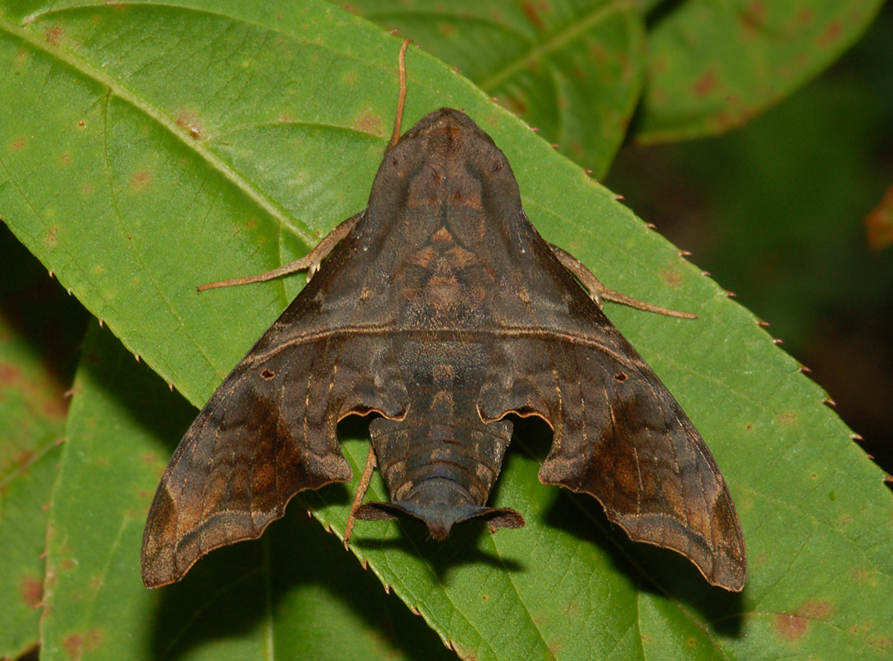
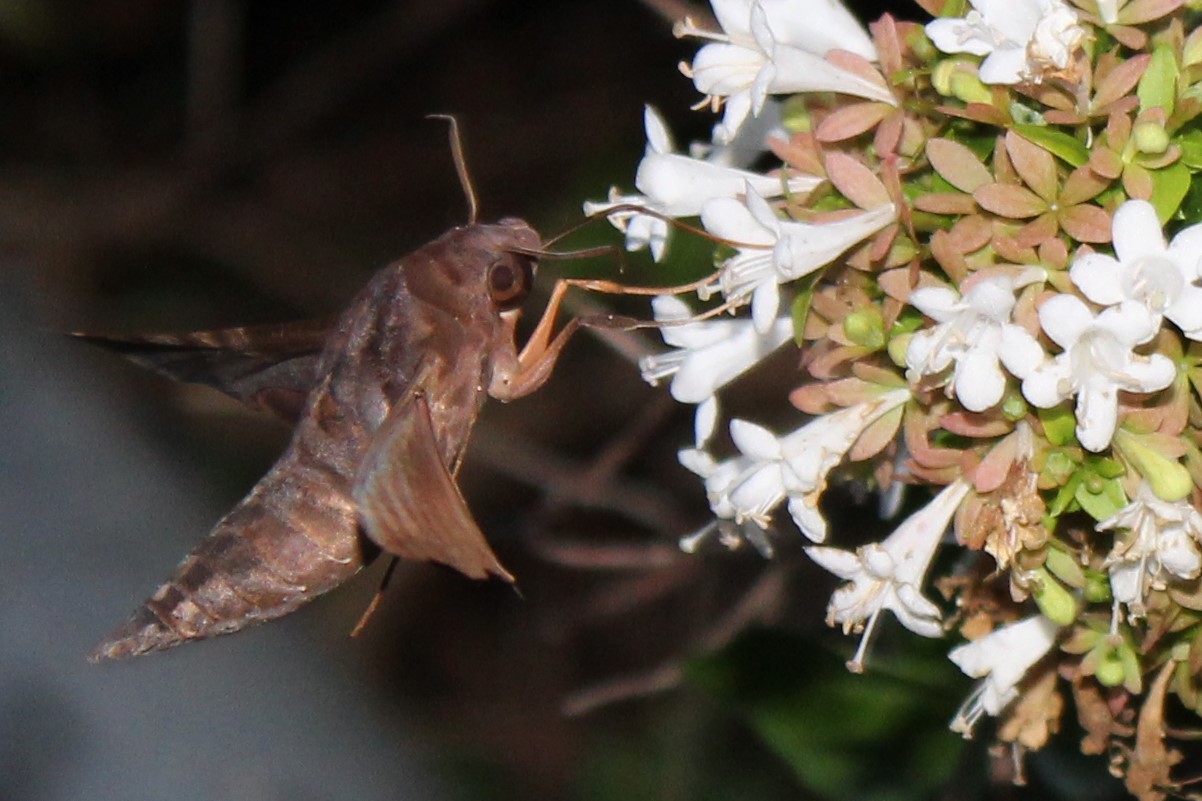
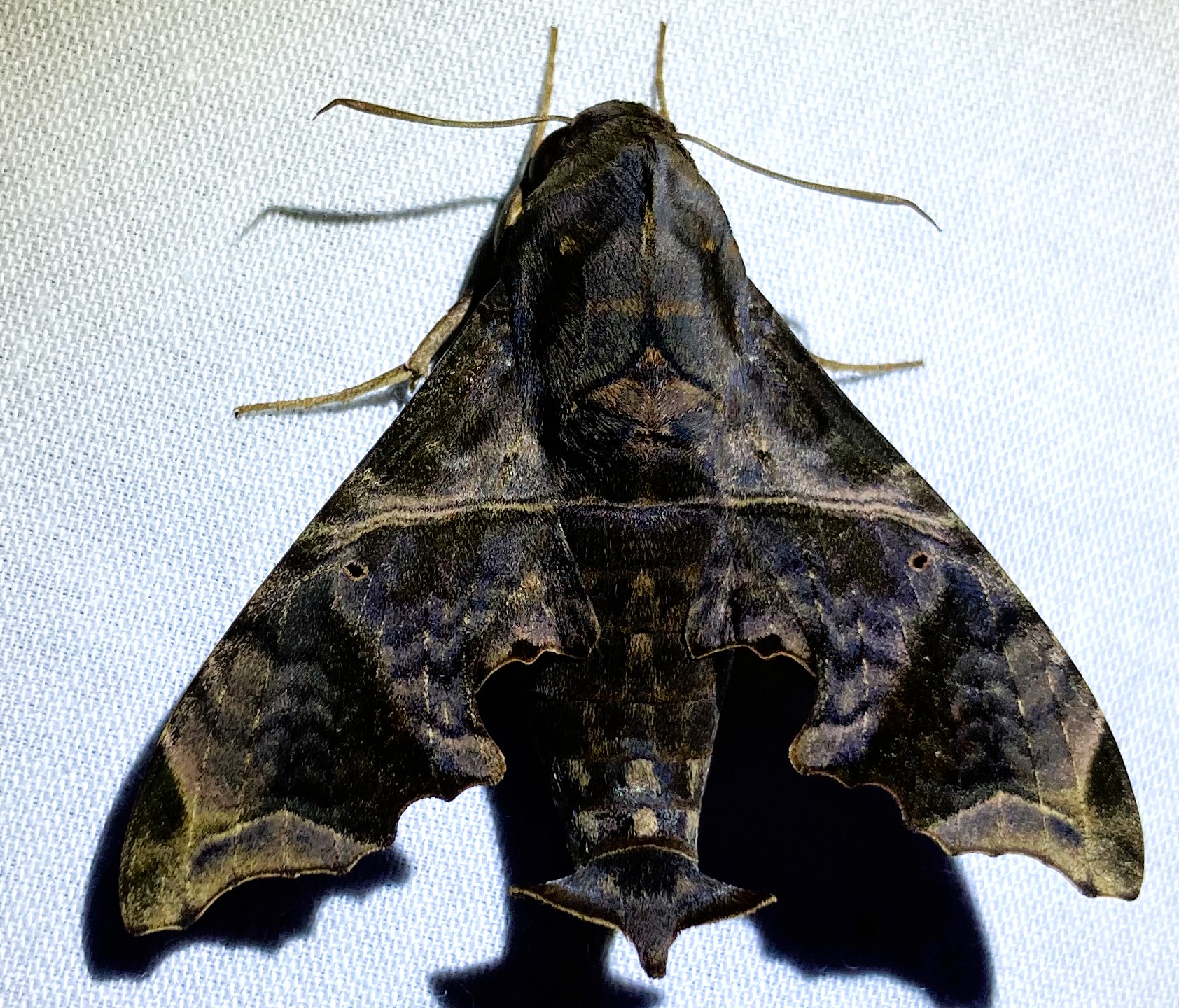
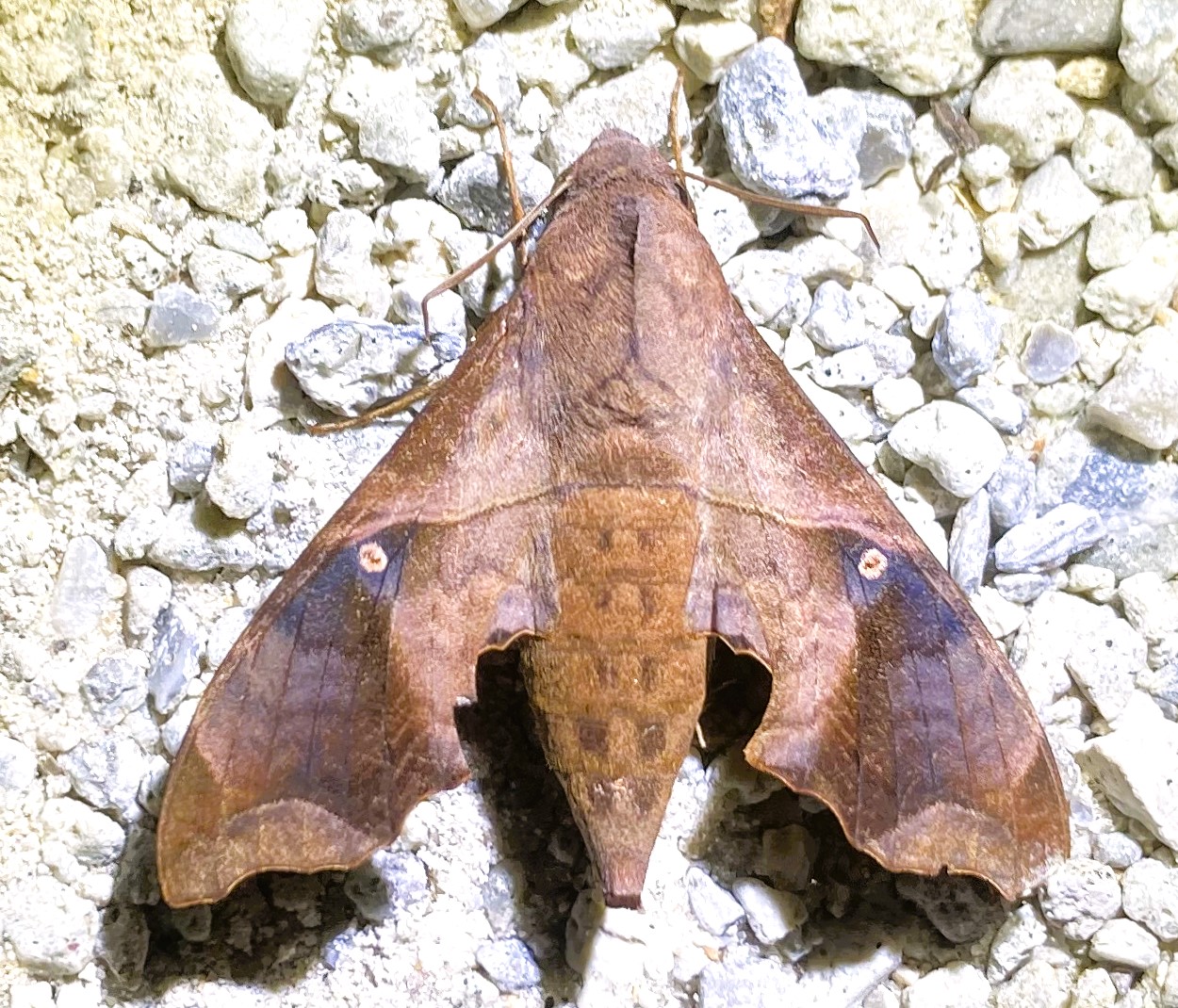
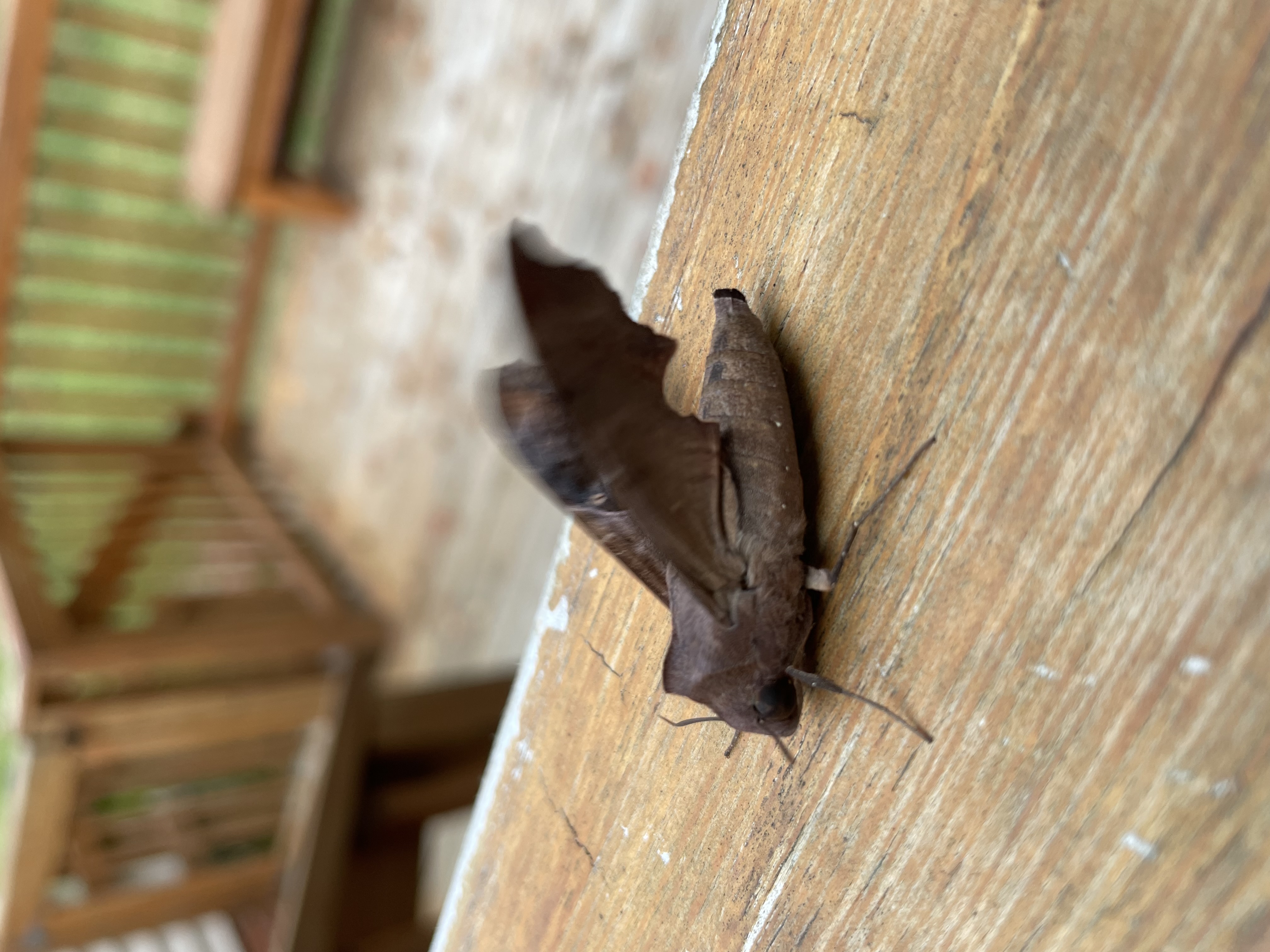
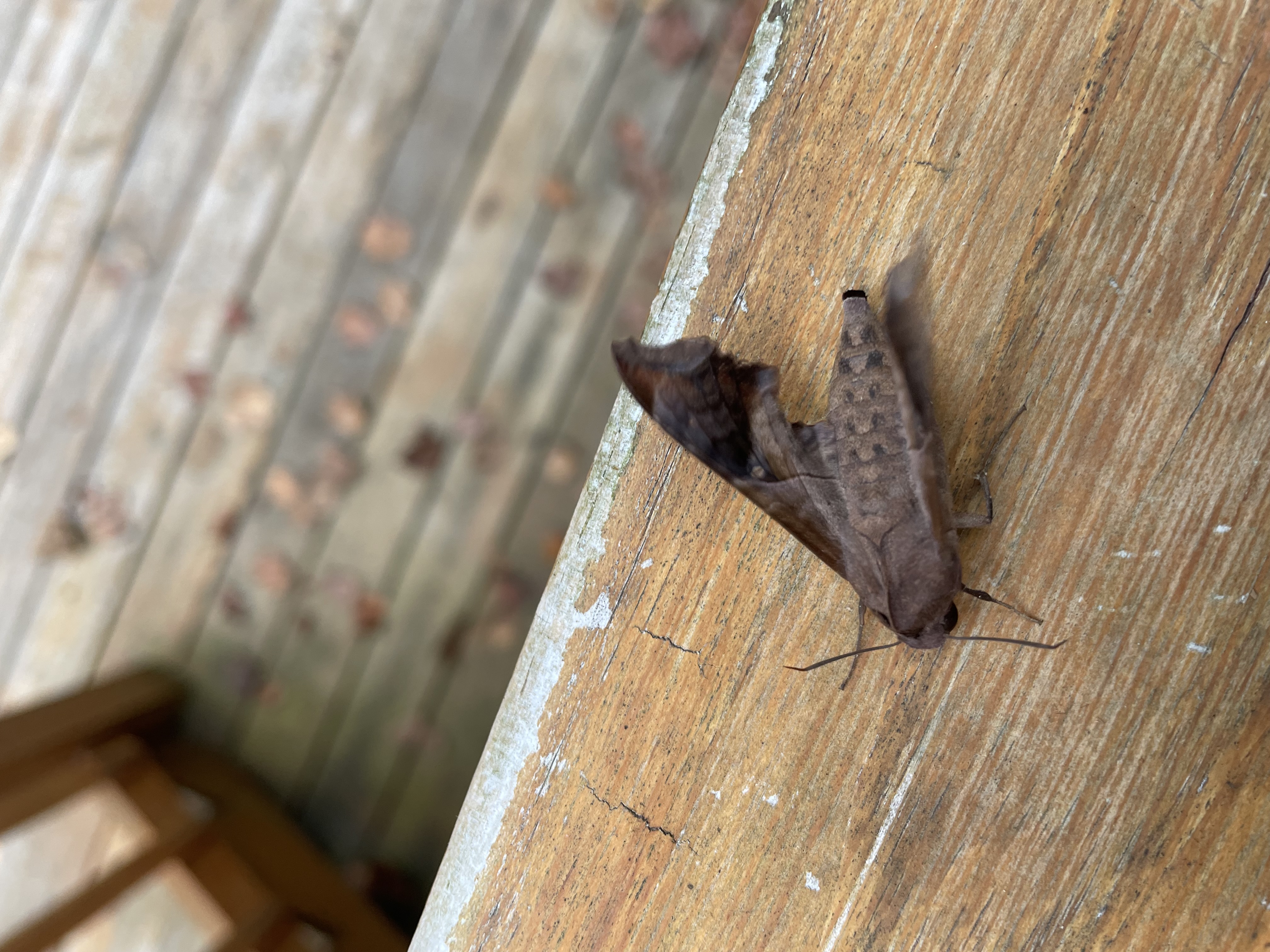
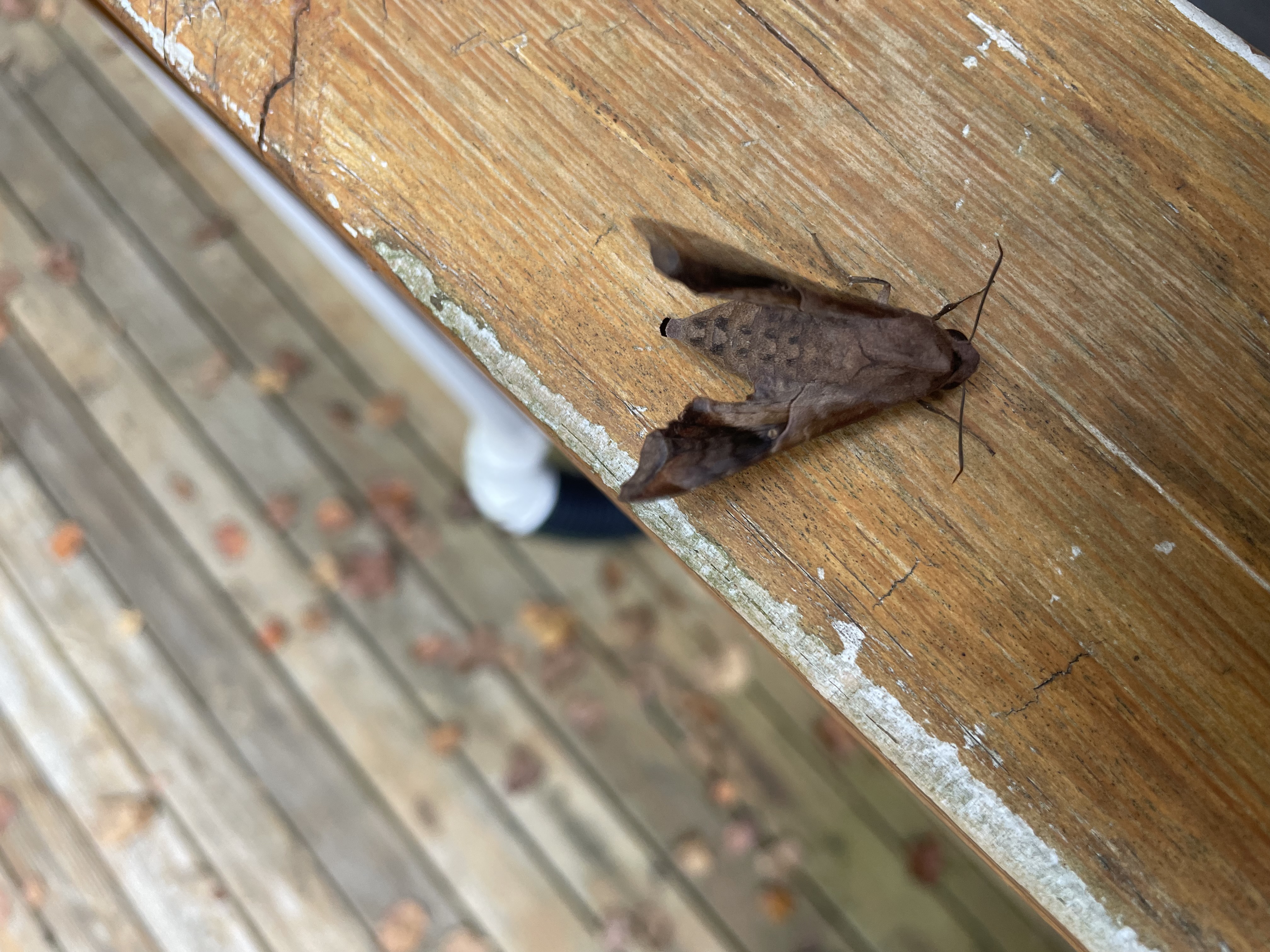
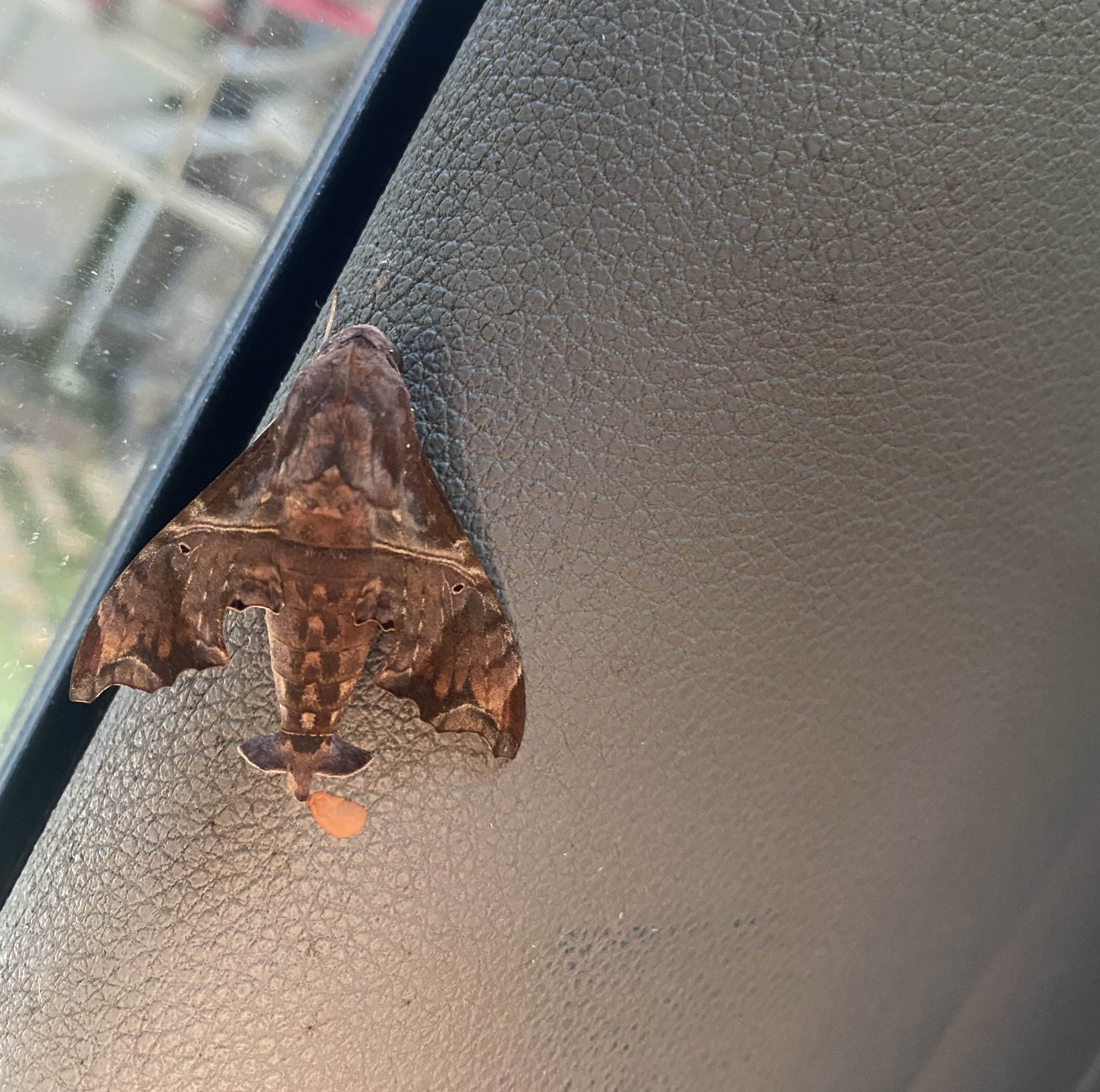
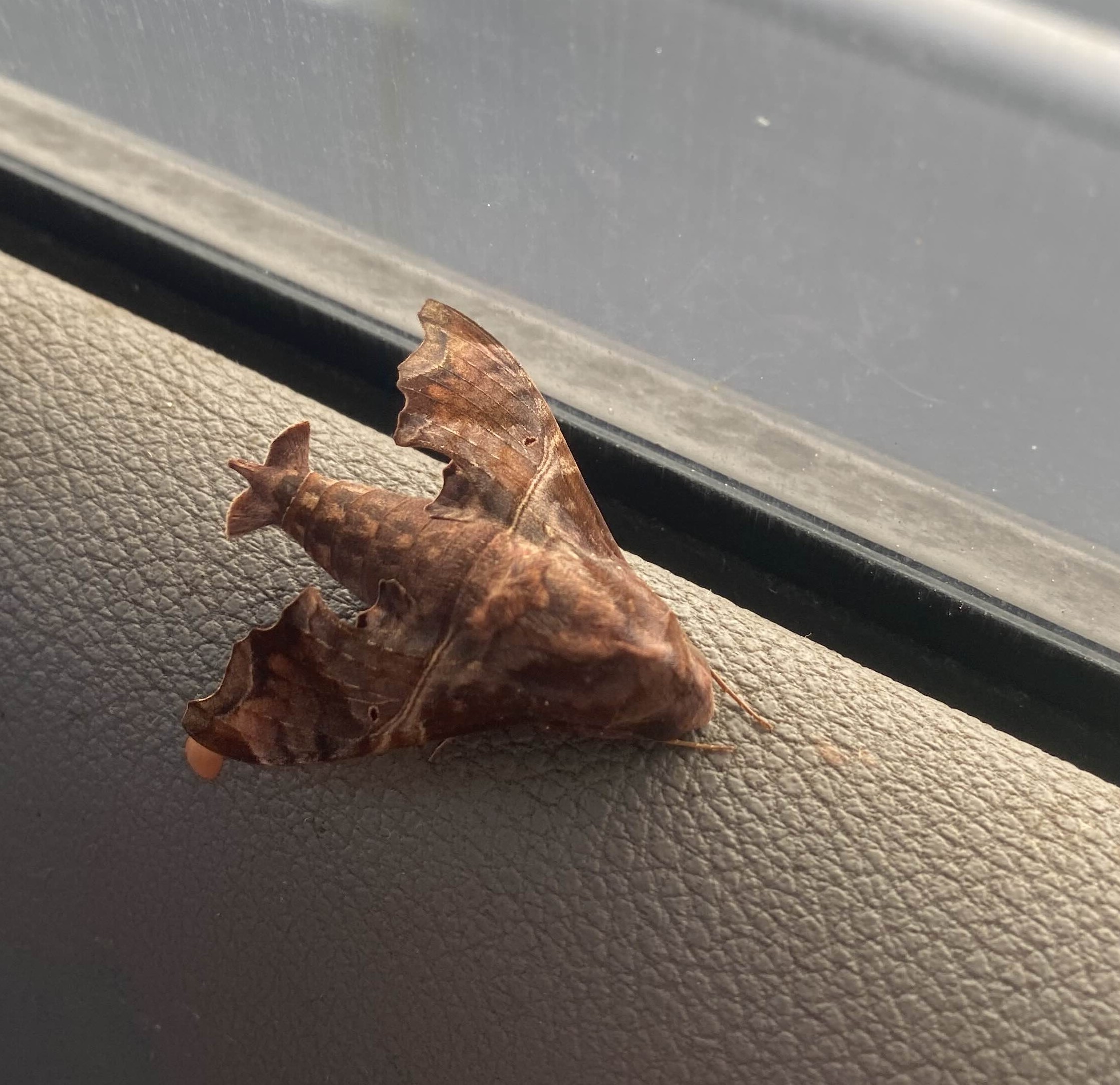
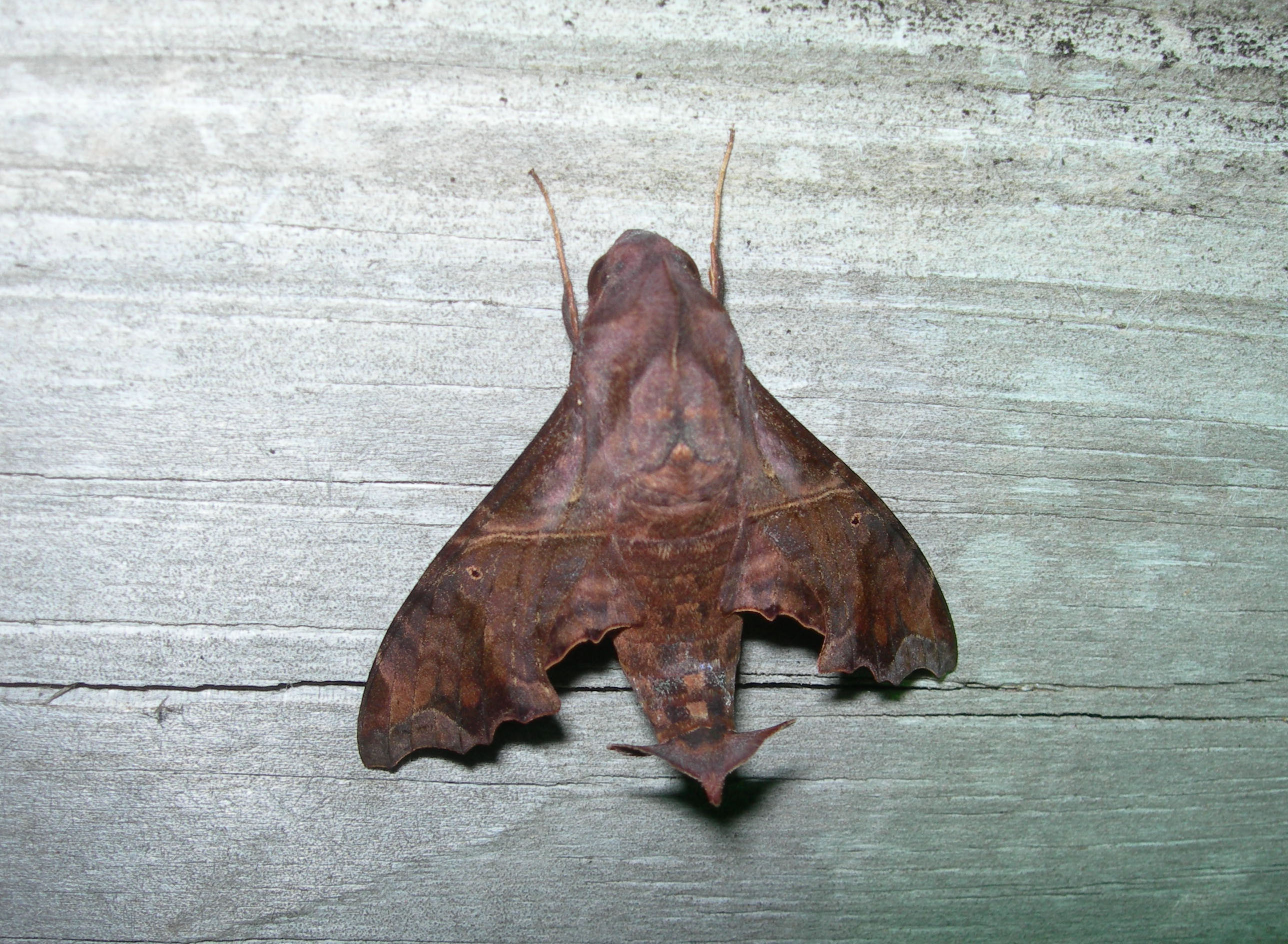
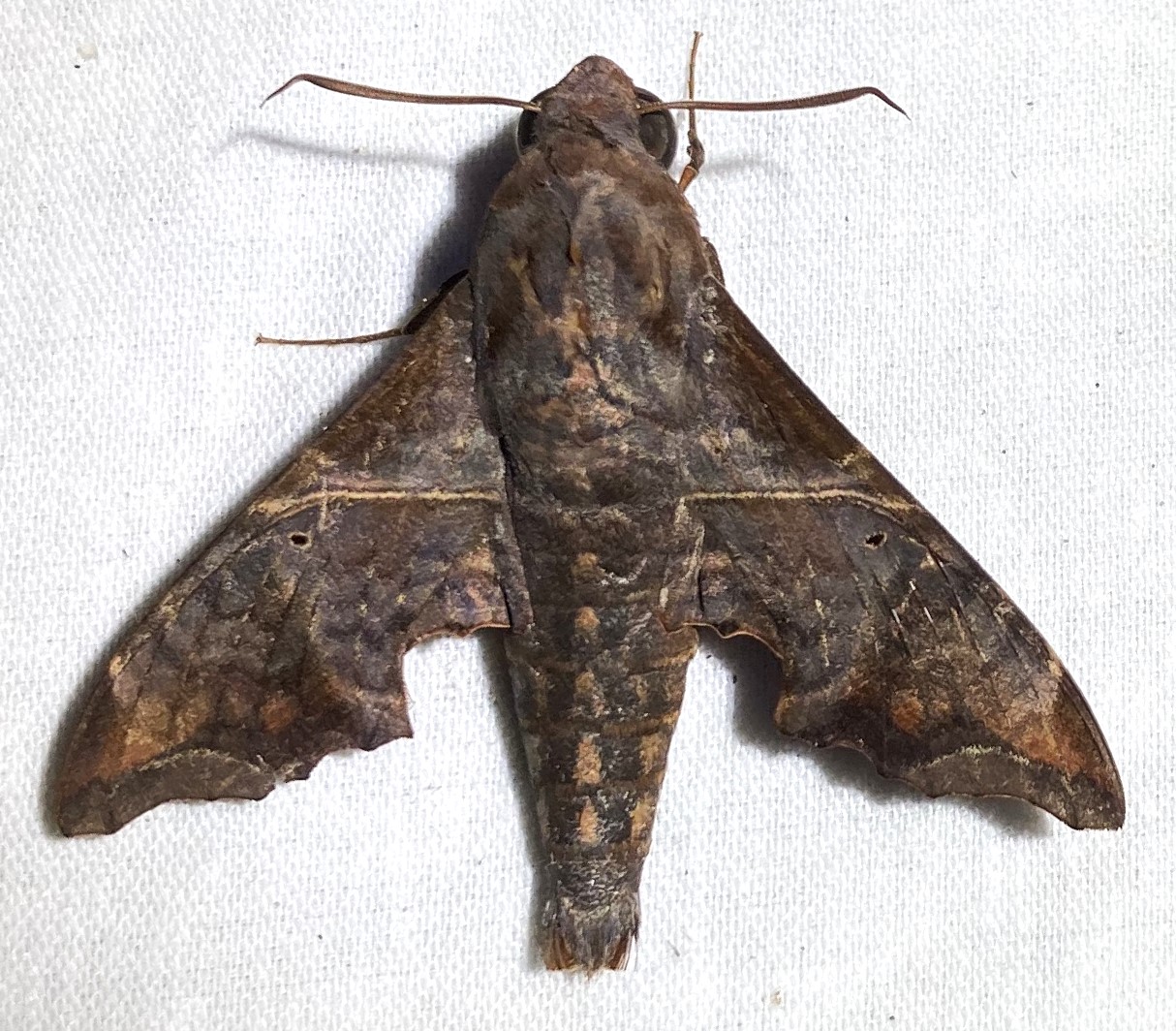
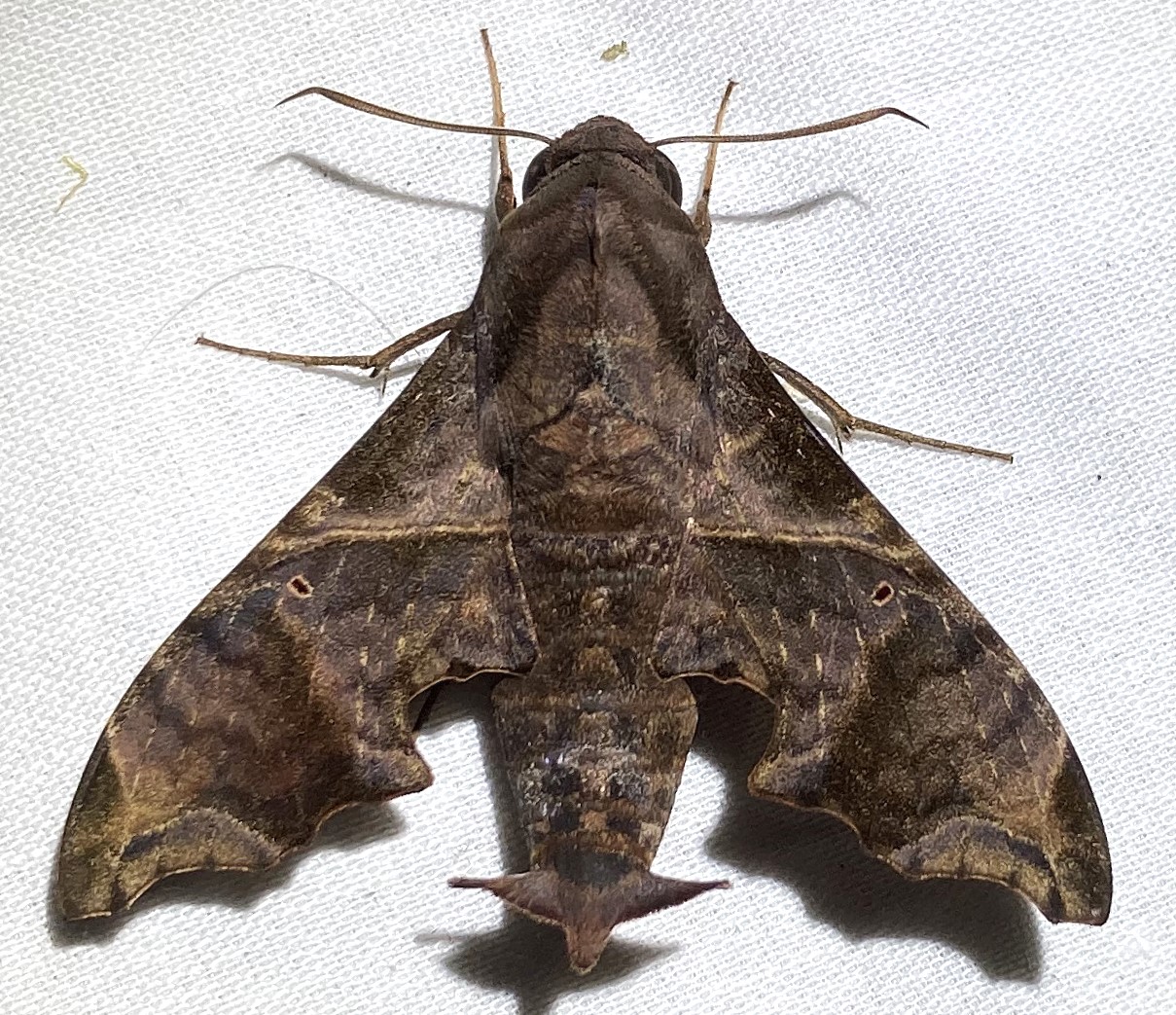
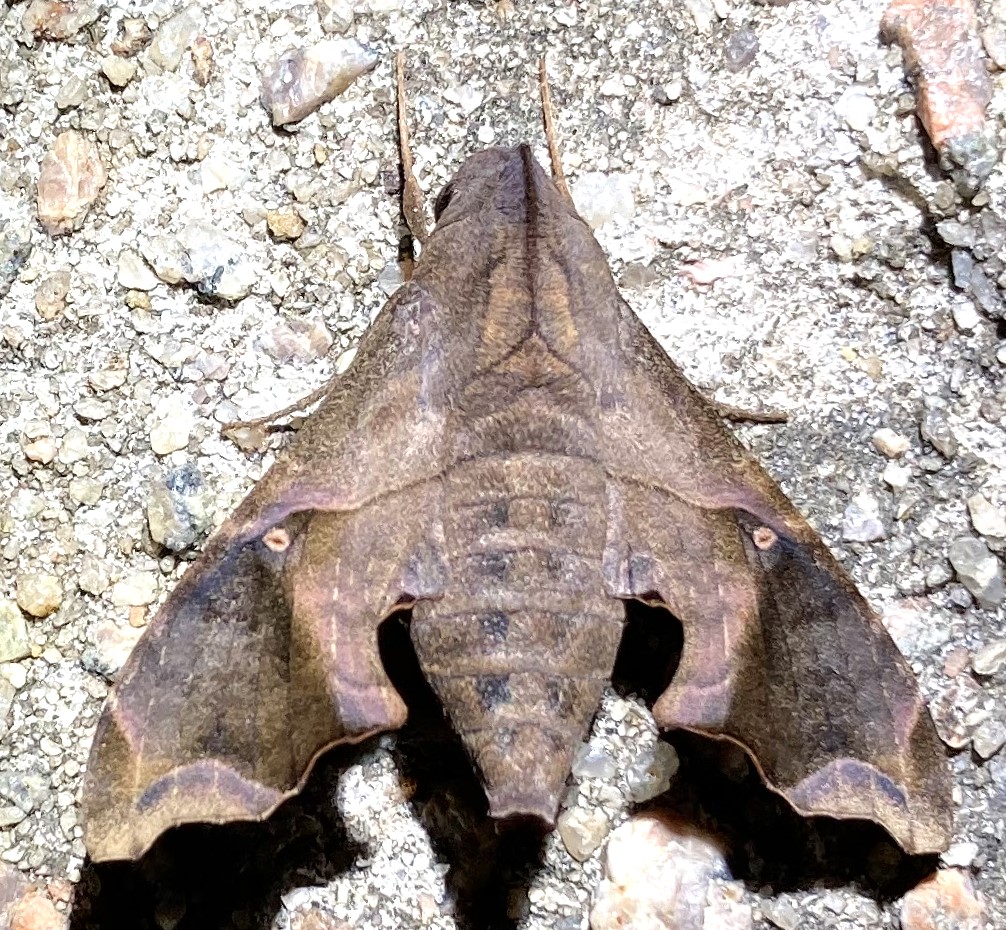
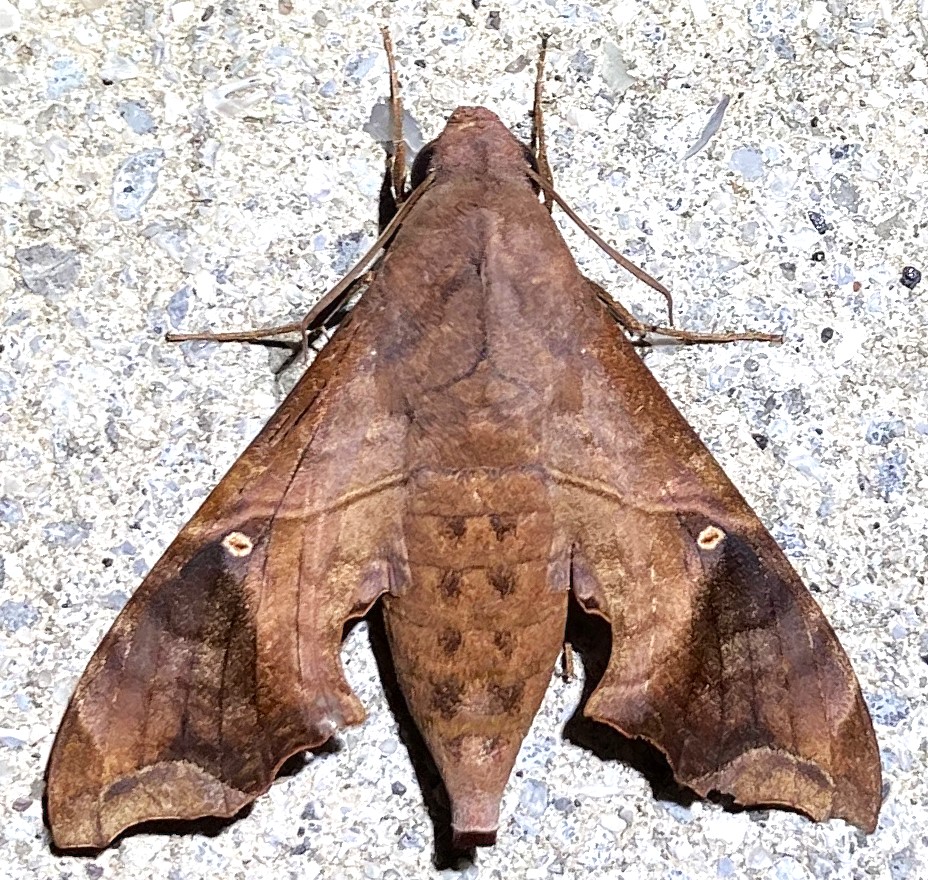
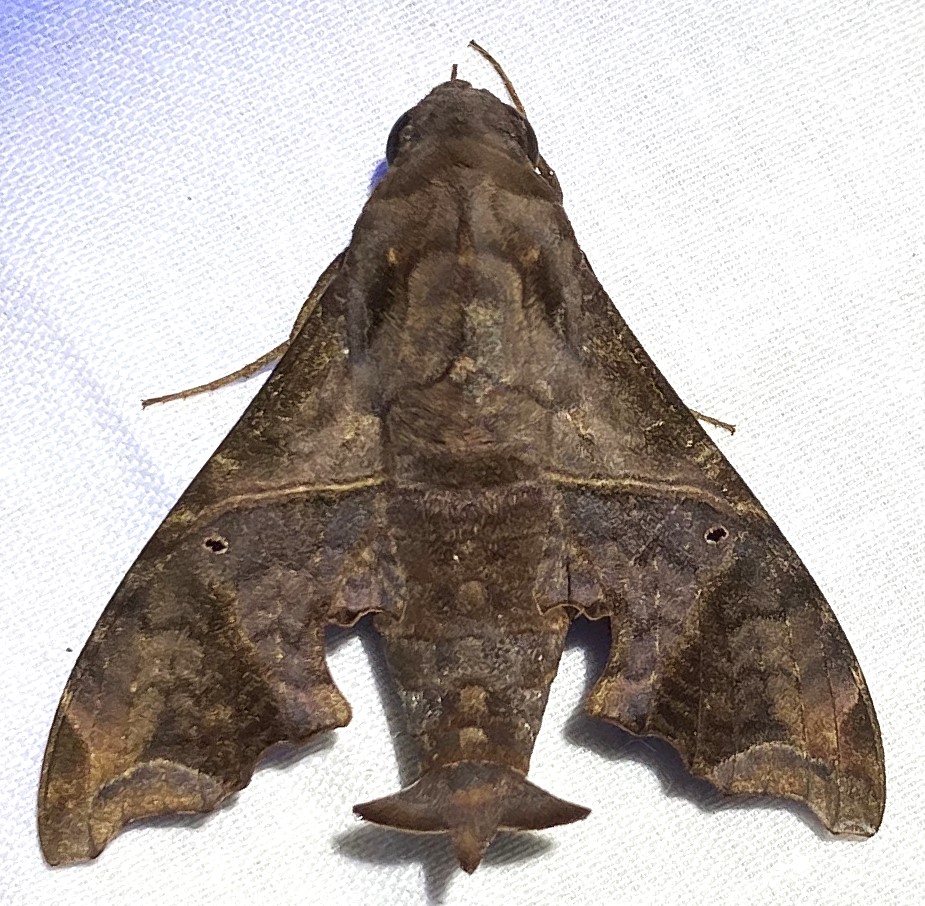
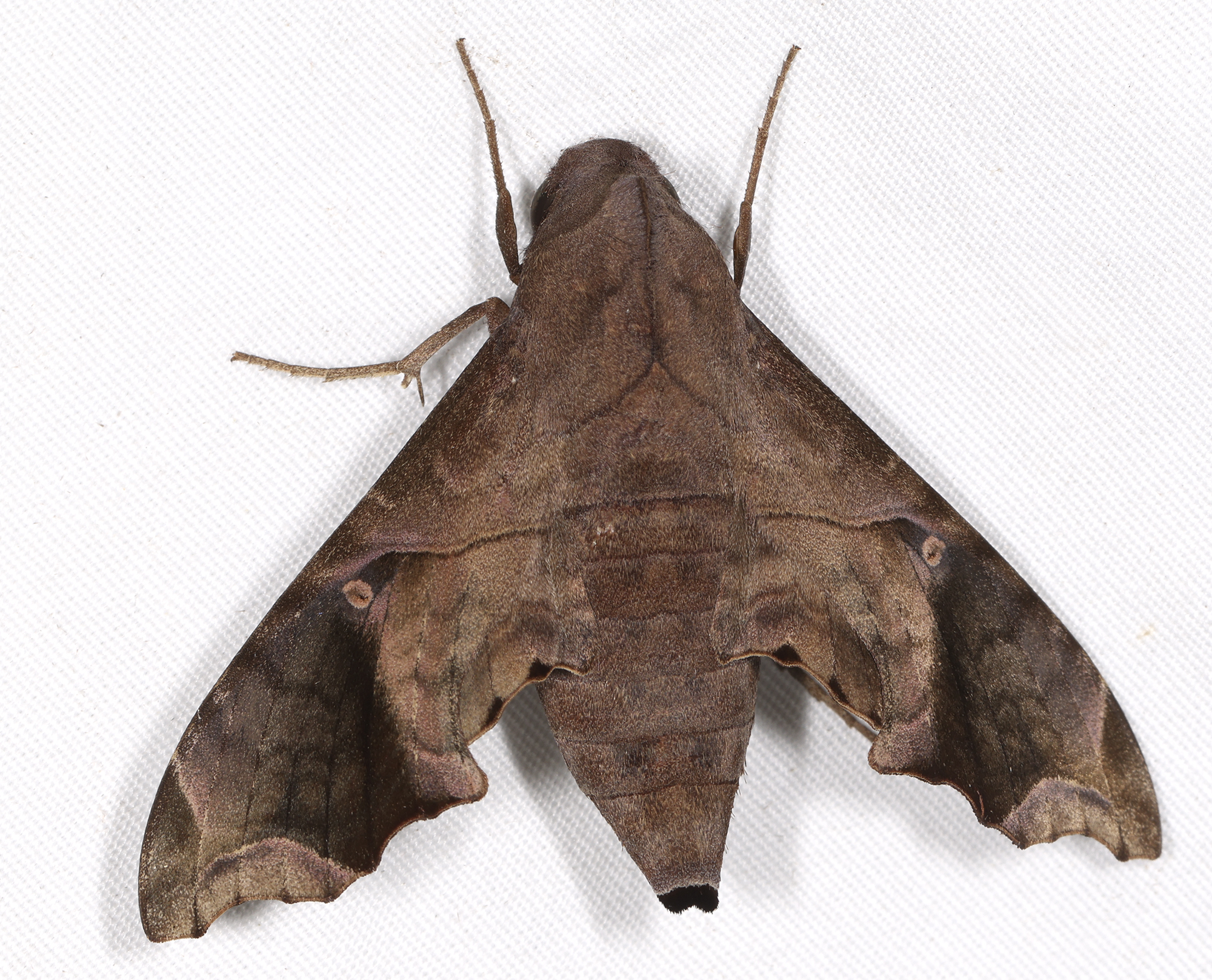
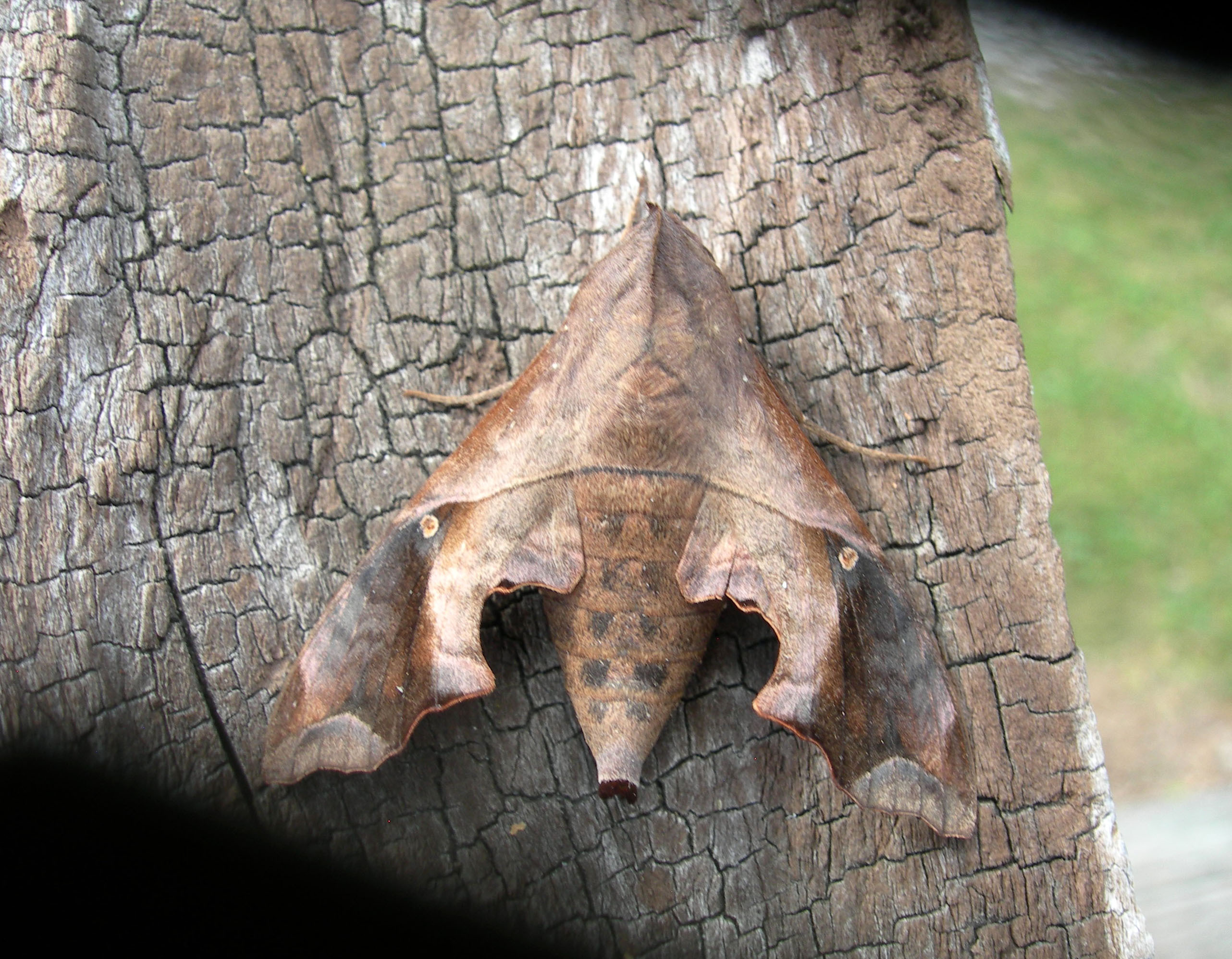
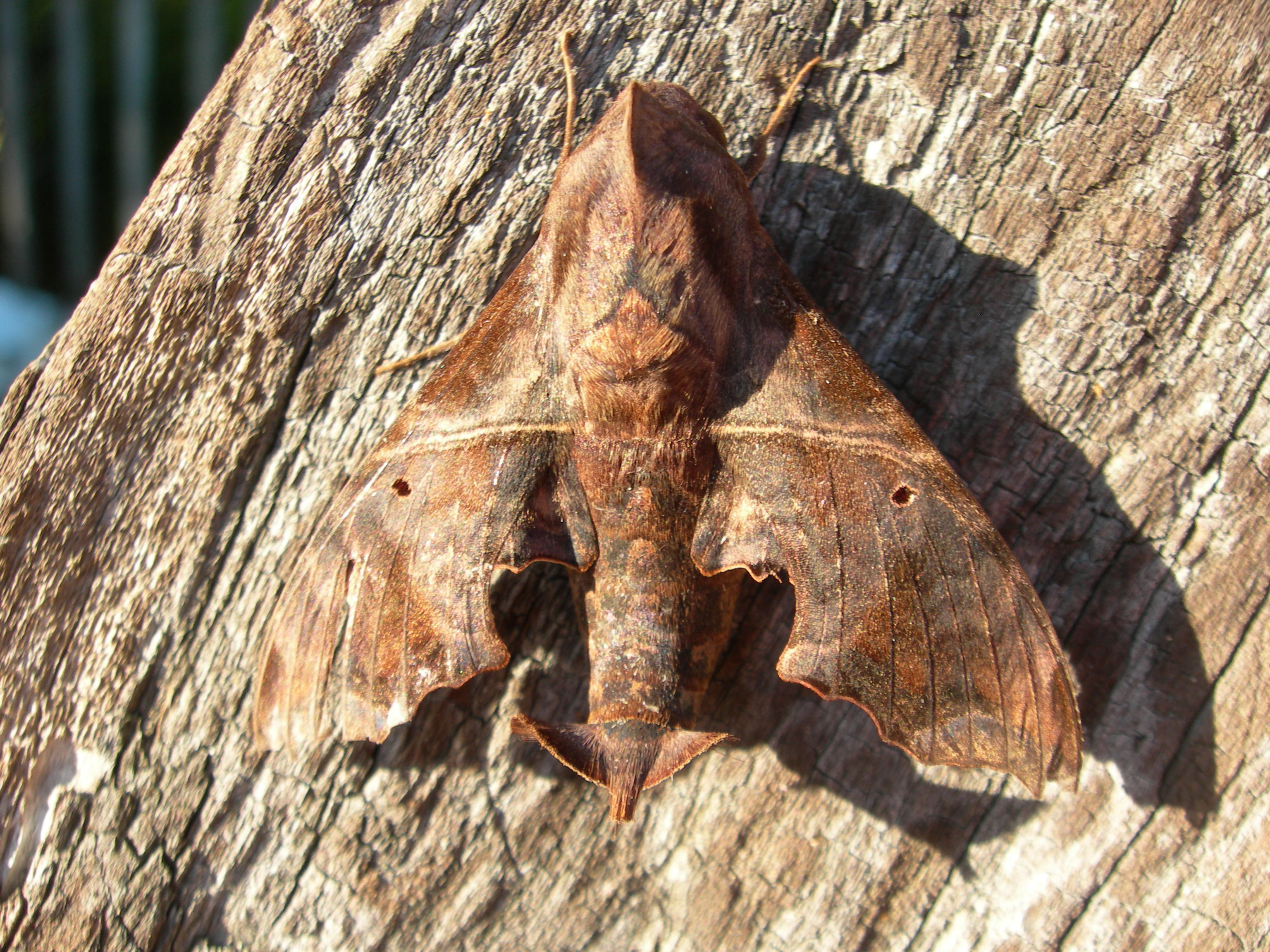
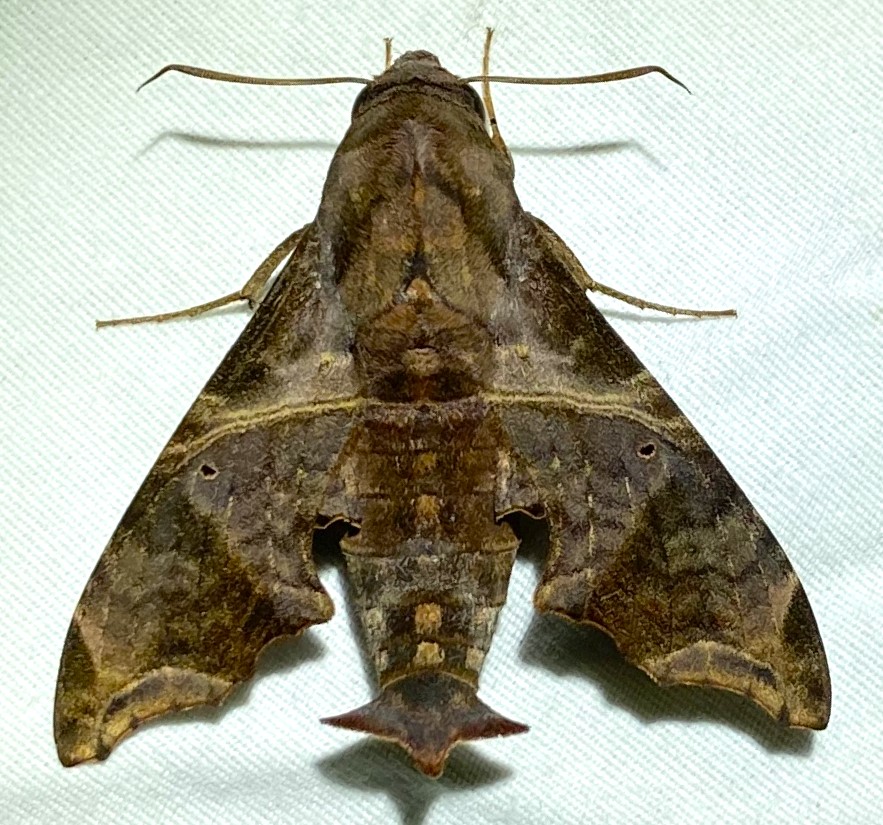
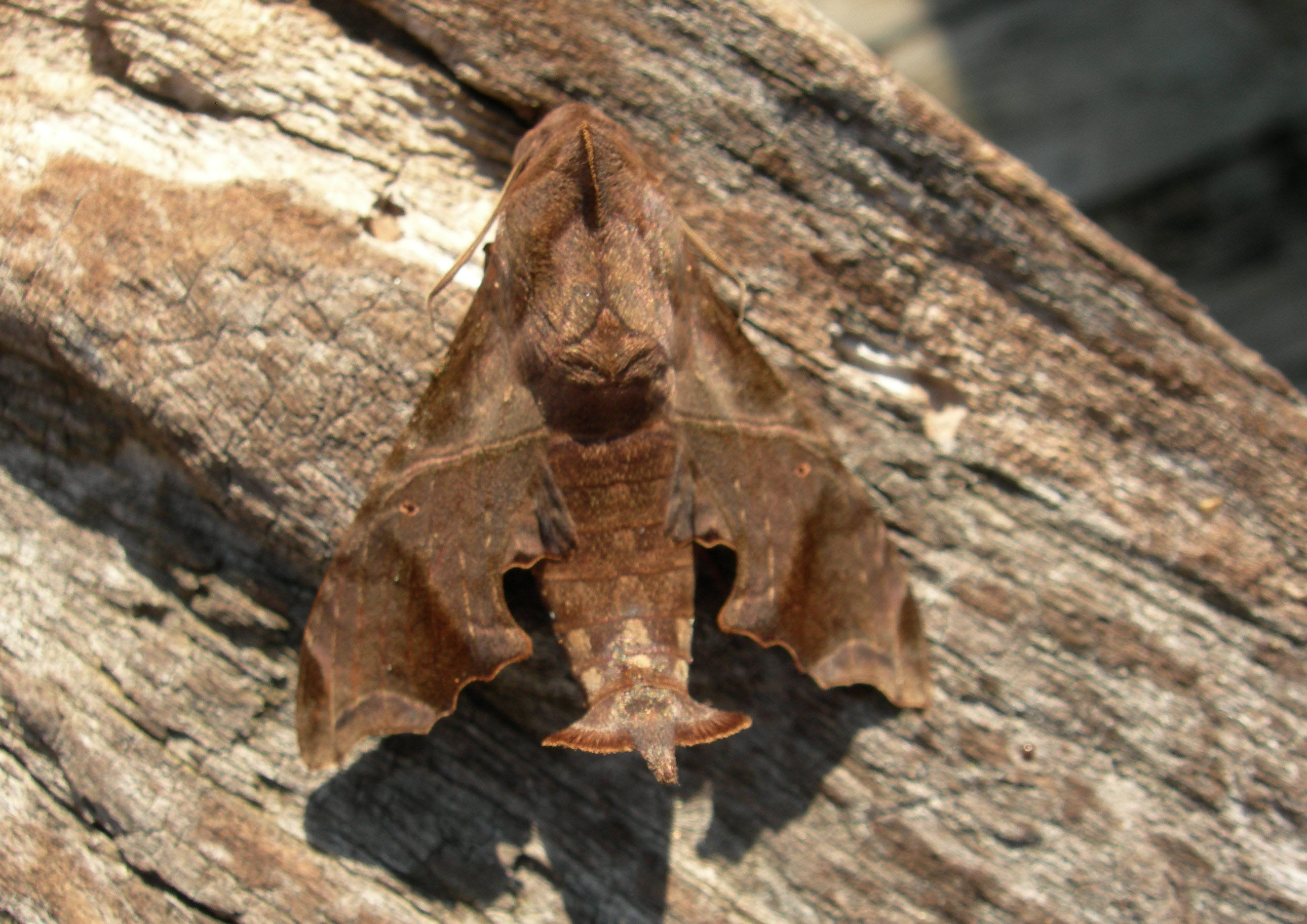
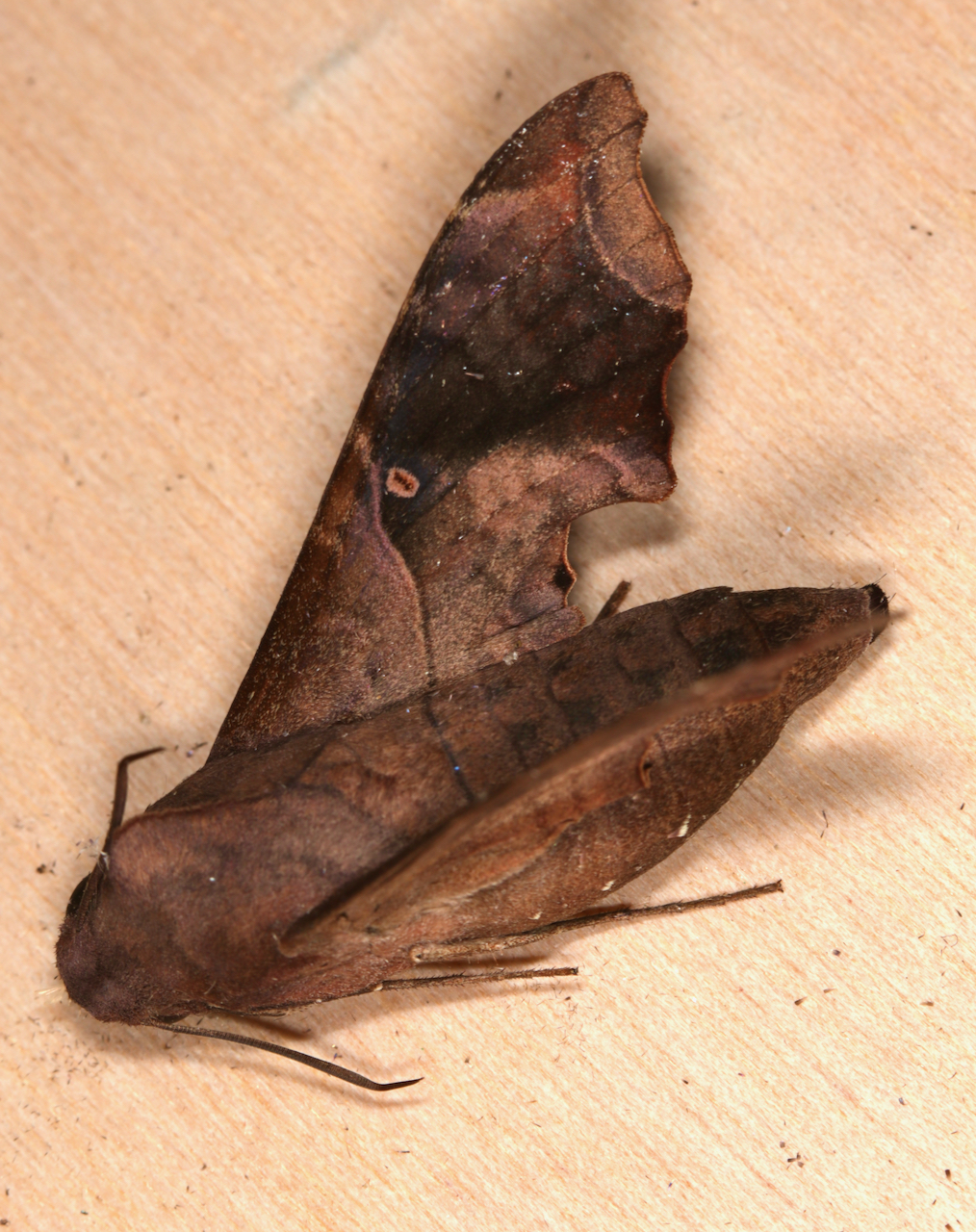
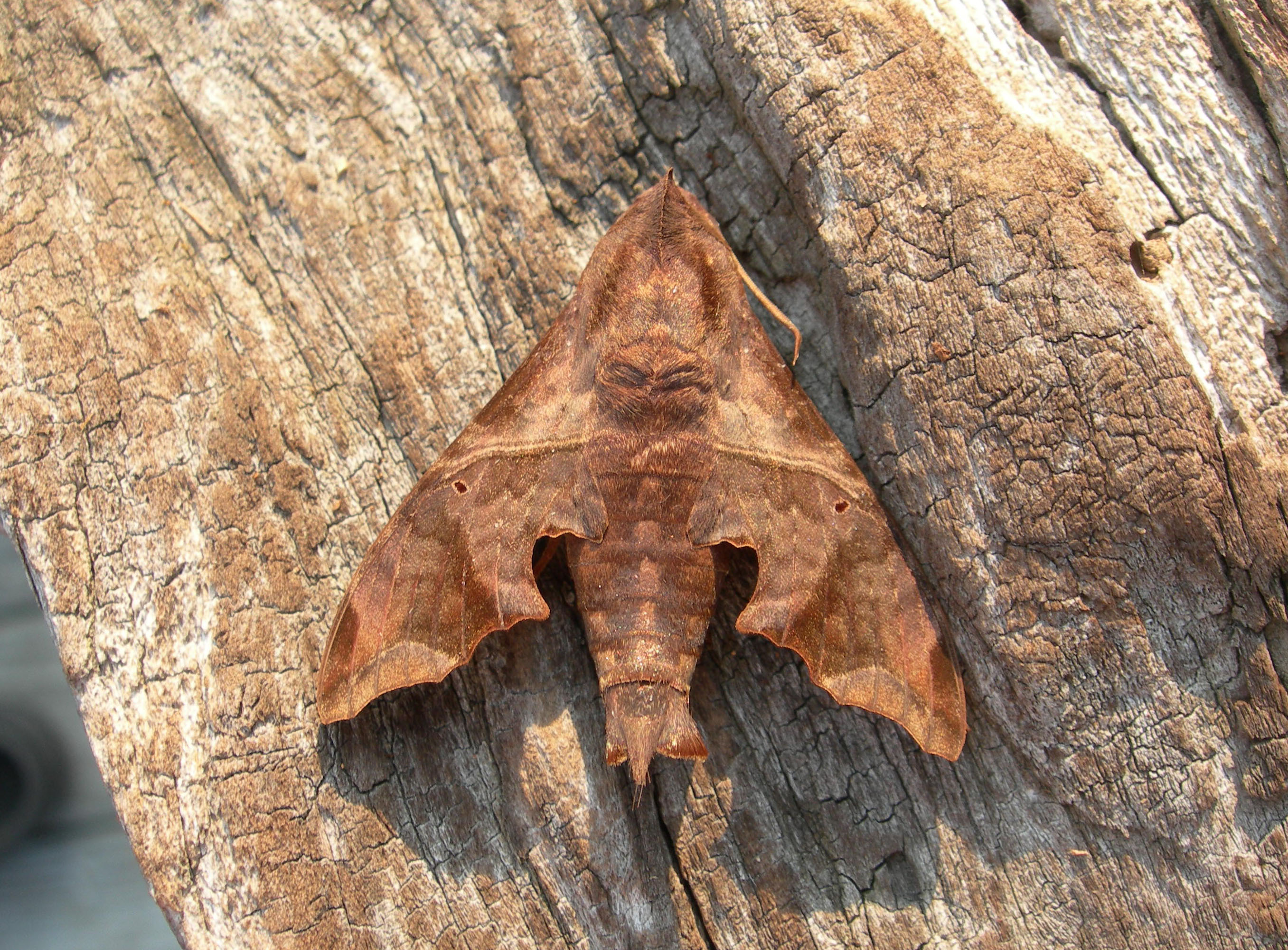
This small, heavy-bodied sphinx is smoky brown -- darker beyond the straight postmedian line -- and possess a white discal spot. Unlikely to be confused with any other species. Sexes are similar.
Wingspan:
5 - 6 cm (Covell, 1984)
Adult ID Requirements:
Identifiable from good quality photos of unworn specimens.
Immatures and Development:
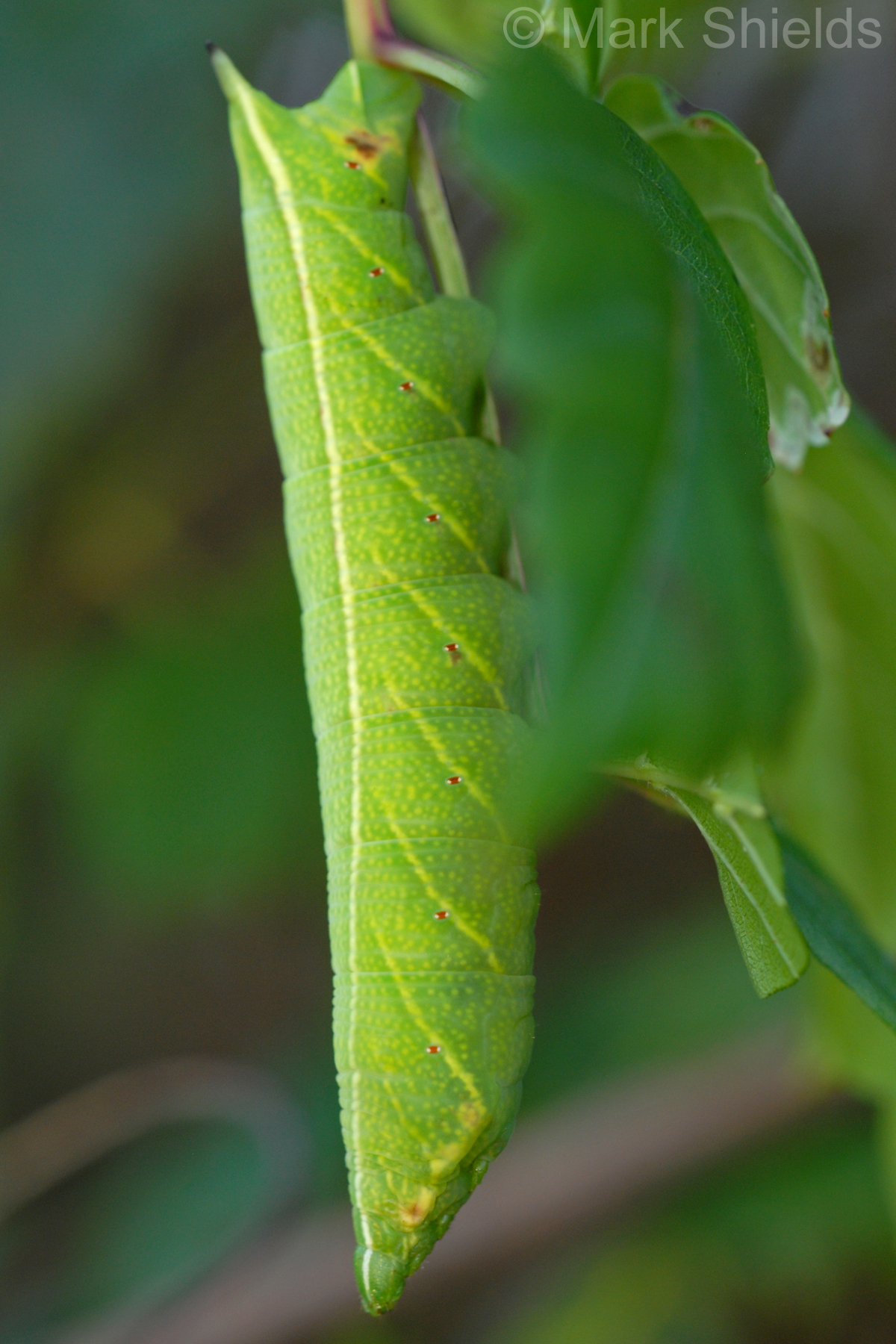
Larvae are various shades of green with a pale subdorsal stripe and the usual sphingid pattern of pale oblique lines along the sides of the body. The head is conspicuously small, with the body narrowing towards the head from the fourth abdominal segment (see Tuttle, 2007) for details. Pupation occurs underground.
Larvae ID Requirements:
Identifiable from good quality photos, especially where associated with known host plants.
Distribution in North Carolina
Distribution:
A migratory species that has been recorded primarily along the coast, especially the southern portion near the mouth of the Cape Fear River. The record from the northern Mountains, however, indicates that it could show up anywhere in the state.
County Map:
Clicking on a county returns the records for the species in that county.
Flight Dates:
High Mountains (HM) ≥ 4,000 ft.
Low Mountains (LM) < 4,000 ft.
Piedmont (Pd)
Coastal Plain (CP)
Click on graph to enlarge