Moths of North Carolina
Home Page
Recent Entries
Recent Account Updates
County Searches
General Search
Submit a Public Record
Larval Hosts
References
Maps
Draft Checklists
Family Photo Gallery
Family PDFs
NC Biodiversity Project
Comments
Significant Contributors
Scientific Name:
Common Name:
Family (Alpha):
Choose a Family
ACROLEPIIDAE-False Diamondback Moths
ADELIDAE-Fairy moths
ALUCITIDAE-Many-plumed Moths
AMPHISBATIDAE-
ARGYRESTHIIDAE-Shiny Head-standing Moths
AUTOSTICHIDAE-Autostichid Moths
BATRACHEDRIDAE-Batrachedrid Moths
BEDELLIIDAE-Bedelliid Moths
BLASTOBASIDAE-Blastobasid Moths
BOMBYCIDAE-Silkworm Moths
BUCCULATRICIDAE-Ribbed Cocoon-maker Moths
CARPOSINIDAE-Fruitworm Moths
CHOREUTIDAE-Metalmark Moths
COLEOPHORIDAE-Casebearer Moths and Relatives
COSMOPTERIGIDAE-Cosmopterigid Moths
COSSIDAE-Carpenter Moths, Goat Moths
CRAMBIDAE-Grass Moths, Snout Moths
DEPRESSARIIDAE-
DREPANIDAE-Hook-tips and Thyatirid Moths
DRYADAULIDAE-
ELACHISTIDAE-Grassminer Moths and Relatives
EPERMENIIDAE-Fringe-tufted Moths
EPIPYROPIDAE-Planthopper Parasite Moths
EREBIDAE-Erebid Moths
ERIOCRANIIDAE-Eriocraniid Moths
EUTELIIDAE-Euteliid Moths
GALACTICIDAE-Galacticid Moths
GELECHIIDAE-Gelechiid Moths; Twirler Moths
GEOMETRIDAE-Geometer Moths, Loopers
GLYPHIDOCERIDAE-Glyphidocerid Moths
GLYPHIPTERIGIDAE-Sedge Moths
GRACILLARIIDAE-Leafblotch miner moths
HELIOZELIDAE-Shield bearer moths
HEPIALIDAE-Ghost or Swift Moths
HYBLAEIDAE-
INCURVARIIDAE-Leafcutter Moths
LASIOCAMPIDAE-Tent Caterpillar Moths, Lappet Moths
LECITHOCERIDAE-Long-horned Moths
LIMACODIDAE-Slug Caterpillar Moths
LIMOCODIDAE-
LYONETIIDAE-Lyonetiid Moths
MEGALOPYGIDAE-Flannel Moths
MICROPTERIGIDAE-Mandibulate Moths
MIMALLONIDAE-
MOMPHIDAE-Mompha Moths
NEPTICULIDAE-Minute leaf miners
NOCTUIDAE-Owlet Moths
NOLIDAE-
NOTODONTIDAE-Prominents
OECOPHORIDAE-Oecophorid Moths
OPOSTEGIDAE-
PELEOPODIDAE-
PLUTELLIDAE-Diamondback Moths
PRODOXIDAE-Yucca Moths
PSYCHIDAE-Bagworm Moths
PTEROPHORIDAE-Plume Moths
PYRALIDAE-Pyralid Moths, Snout Moths
SATURNIIDAE-Giant Silkworm Moths
SCHRECKENSTEINIIDAE-Schreckensteiniid Moths
SCYTHRIDIDAE-
SESIIDAE-Clearwing Moths
SPHINGIDAE-Sphinx Moths
THYATIRIDAE-
THYRIDIDAE-Window-winged Moths
TINEIDAE-Clothes moths
TISCHERIIDAE-Tischerid Moths
TORTRICIDAE-Leafroller Moths
URANIIDAE-
URODIDAE-Urodid Moths
XYLORYCTIDAE-
YPONOMEUTIDAE-Ermine Moths
YPSOLOPHIDAE-Ypsolophid Moths
ZYGAENIDAE-
«
Home
»
View
PDF
Saturniidae Members:
Actias luna
Anisota peigleri
Anisota senatoria
Anisota stigma
Anisota unidentified species
Anisota virginiensis
Antheraea polyphemus
Automeris io
Callosamia angulifera
Callosamia promethea
Callosamia securifera
Callosamia unidentified species
Citheronia regalis
Citheronia sepulcralis
Dryocampa rubicunda
Eacles imperialis
Hemileuca maia
Hyalophora cecropia
Samia cynthia
Syssphinx bicolor
Syssphinx bisecta
Dryocampa
Members:
Dryocampa rubicunda
770 NC Records
Dryocampa rubicunda
(Fabricius, 1793) - Rosy Maple Moth
Taxonomy
Superfamily:
Bombycoidea
Family:
Saturniidae
Subfamily:
Caratocaminae
P3 Number:
890022
MONA Number:
7715.00
Other Common Name:
Green-striped Mapleworm
Comments:
The only member of its genus (see Ferguson, 1971, for its separation from Anisota). Several color forms have been described, one of which -- alba, a nearly all white form -- Ferguson recognized as a distinct subspecies. Only the typical bicolored form occurs in North Carolina, however.
Identification
Field Guide Descriptions:
Covell (1984); Beadle and Leckie (2012)
Online Resources:
MPG
,
BugGuide
,
iNaturalist
,
Google
,
BAMONA
,
GBIF
,
BOLD
Technical Description, Adults:
Forbes (1923), Ferguson (1971), Tuskes et al. (1996)
Technical Description, Immature Stages:
Forbes (1923), Ferguson (1971), Covell (1984), Tuskes et al. (1996), Wagner (2005)
Adult Markings:
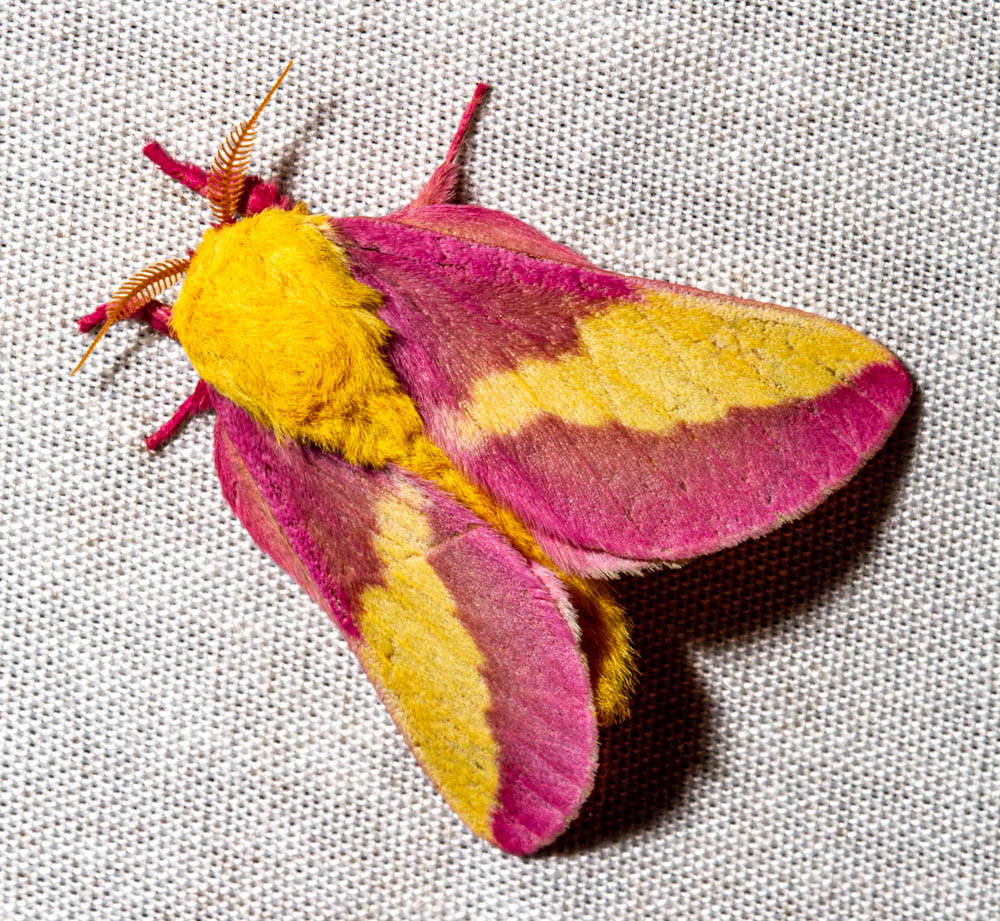
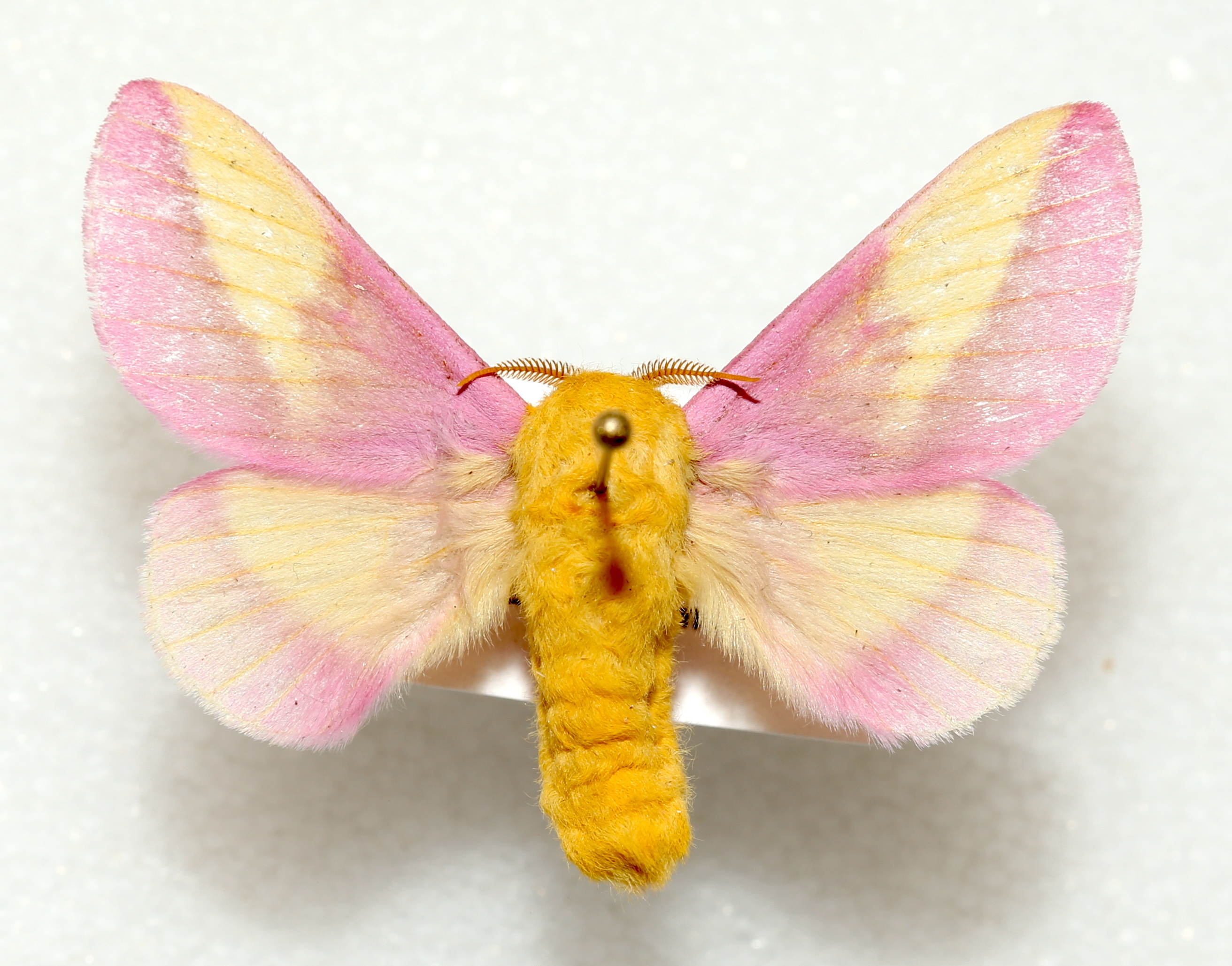
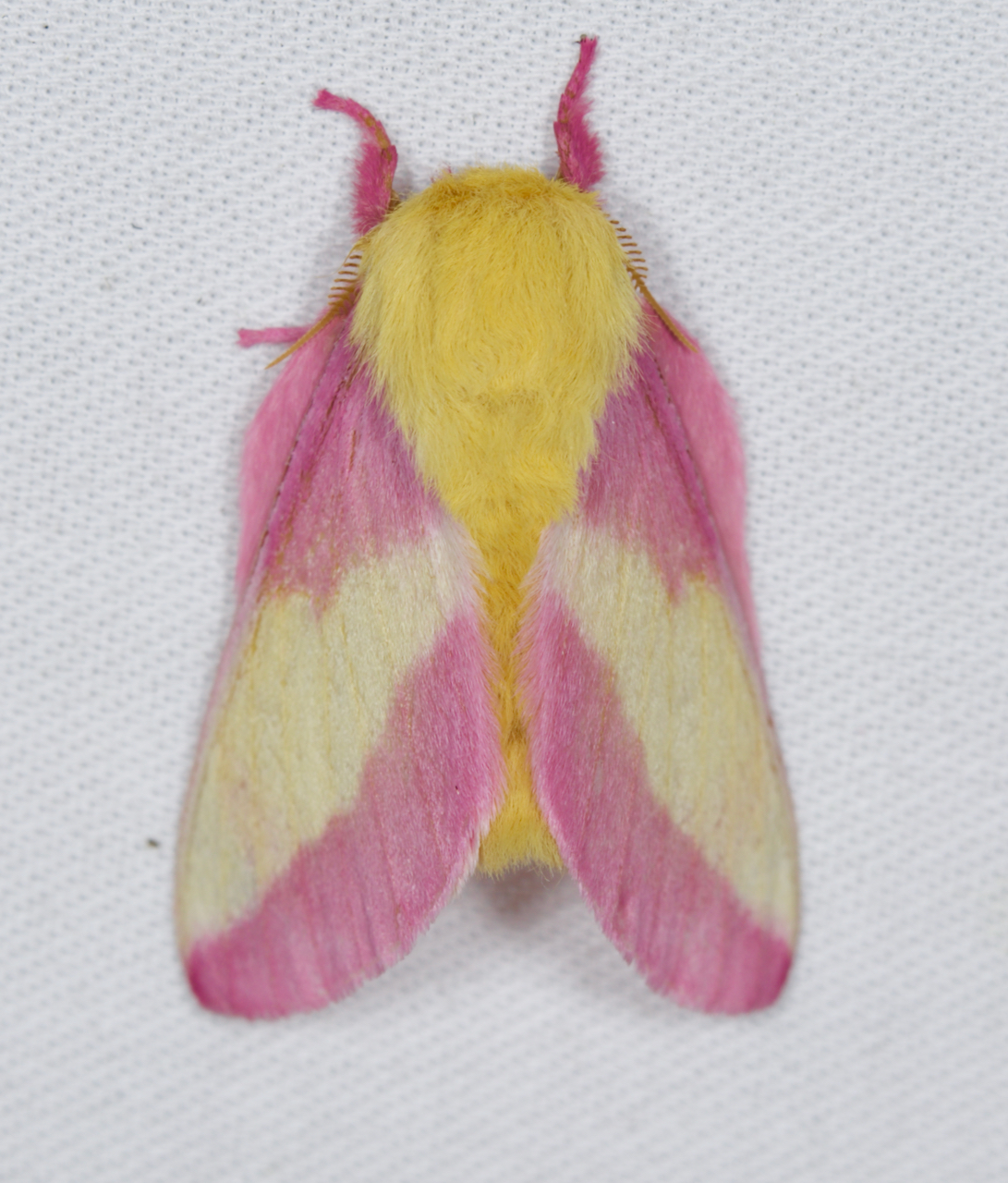
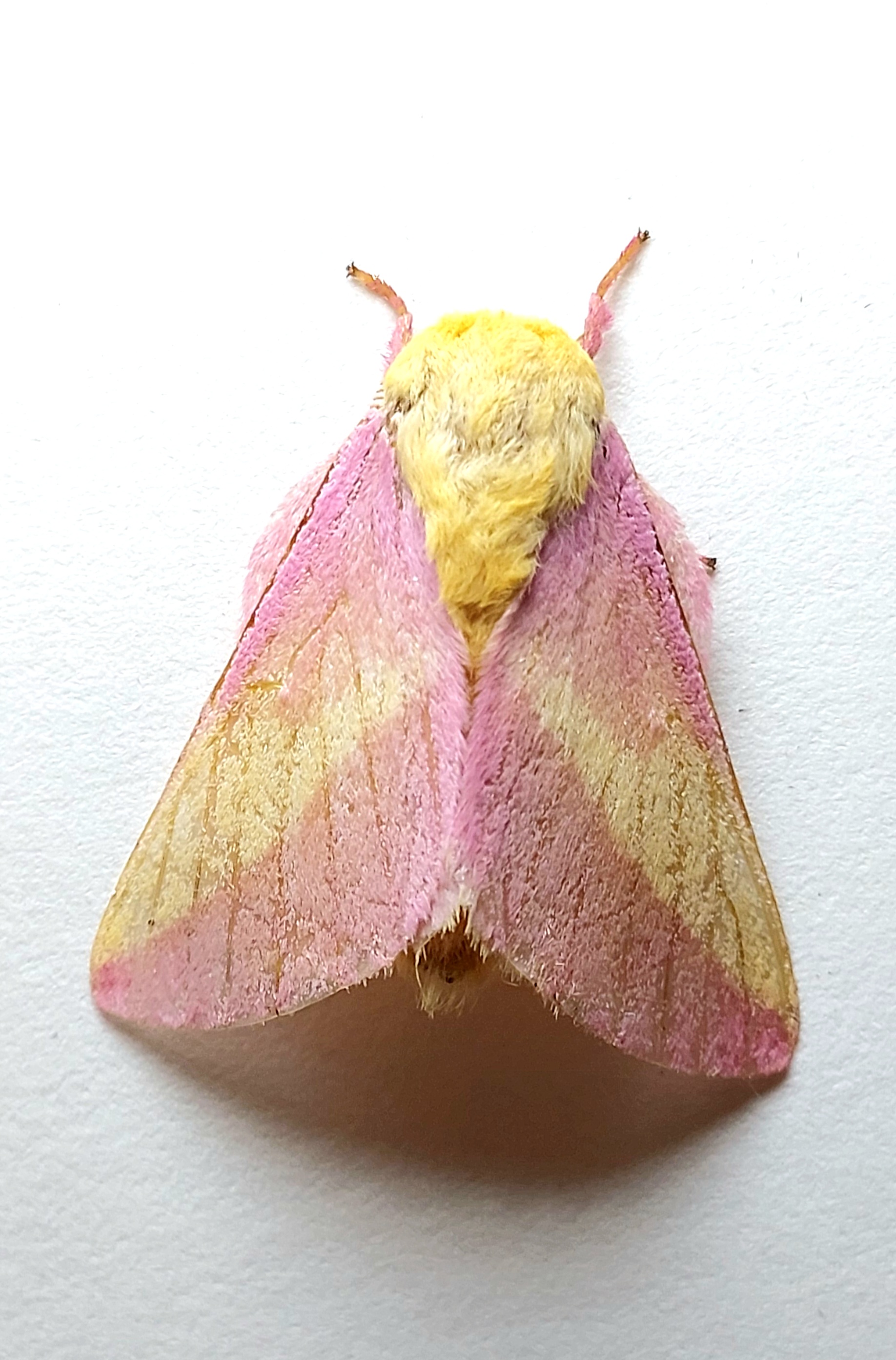
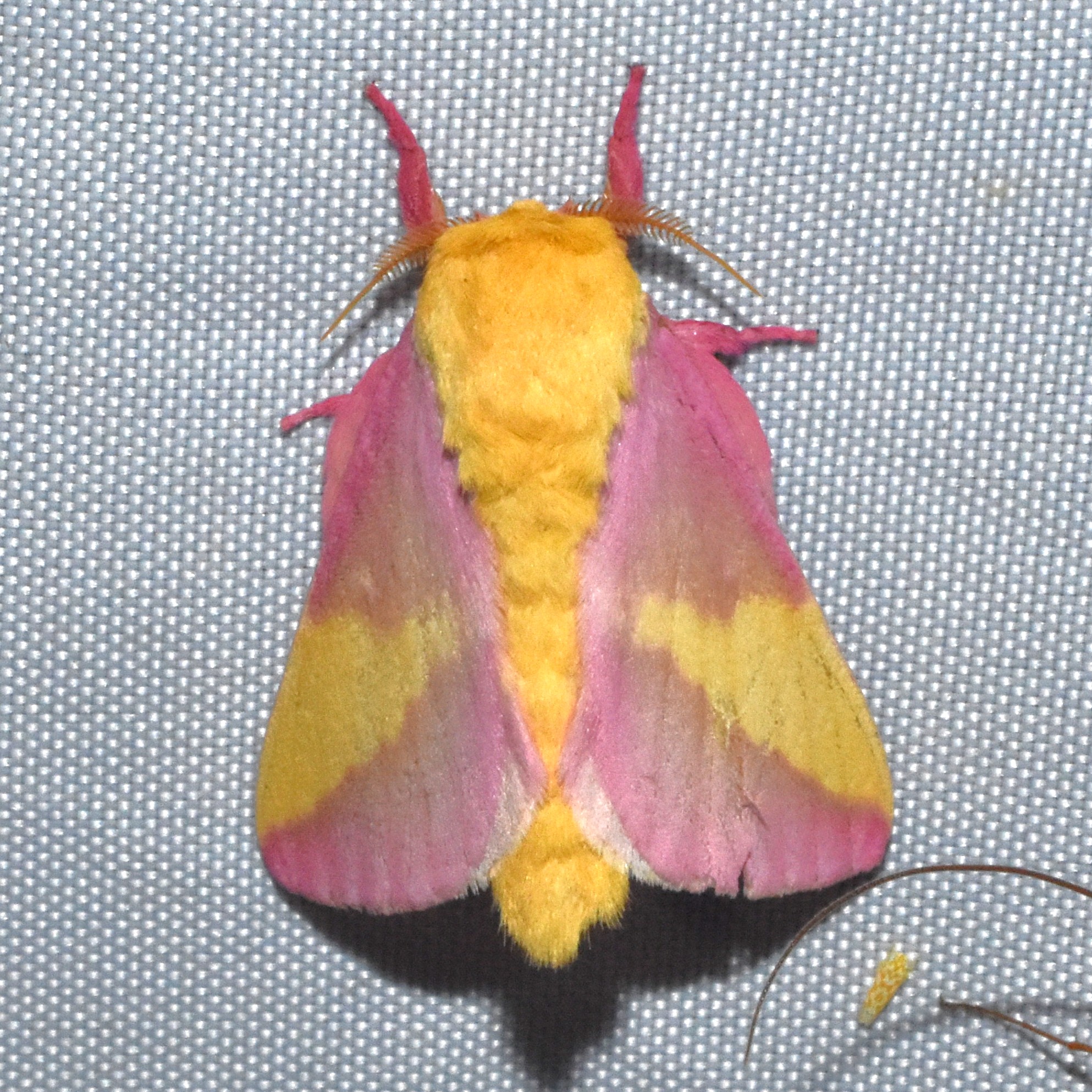
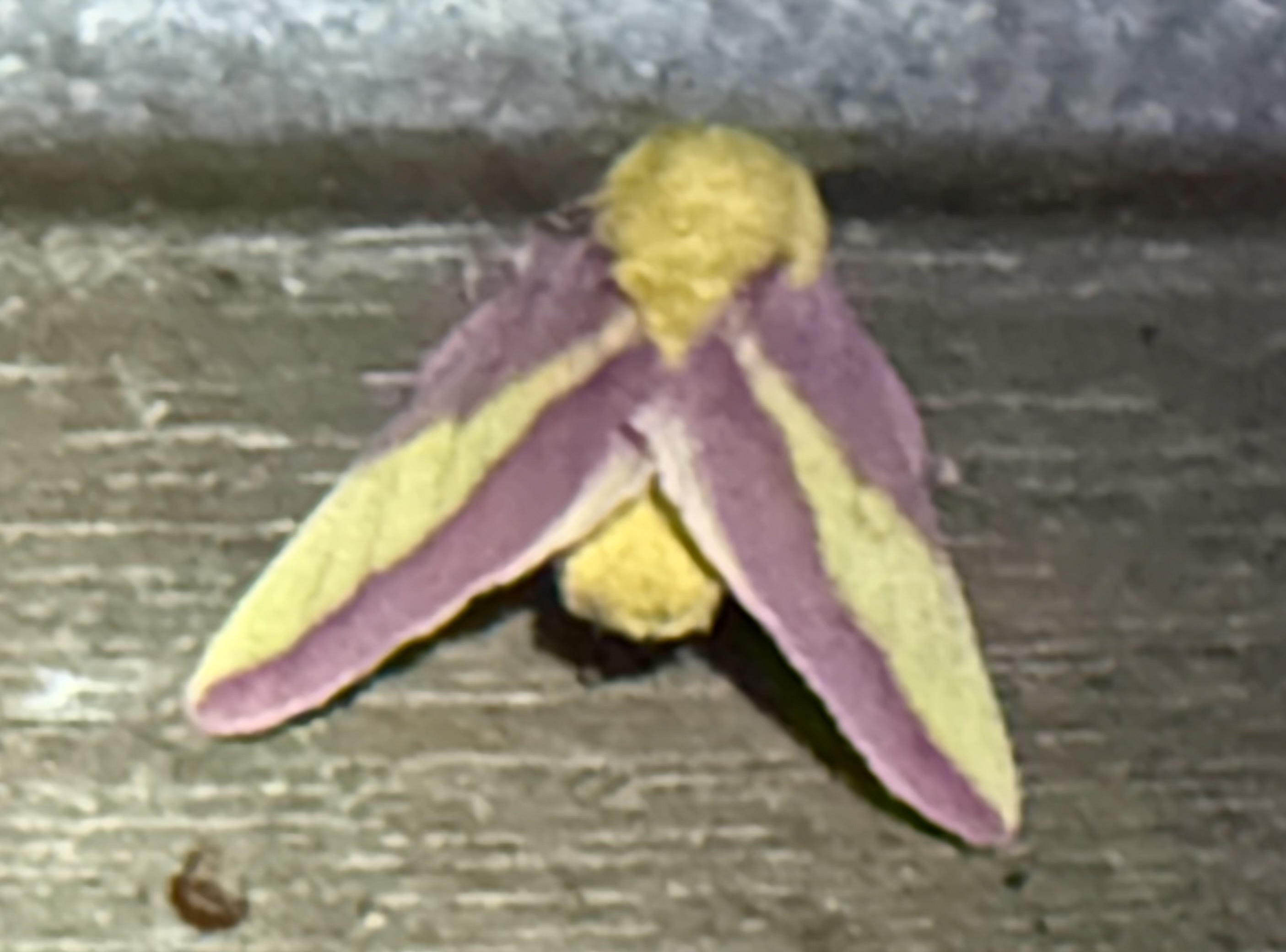
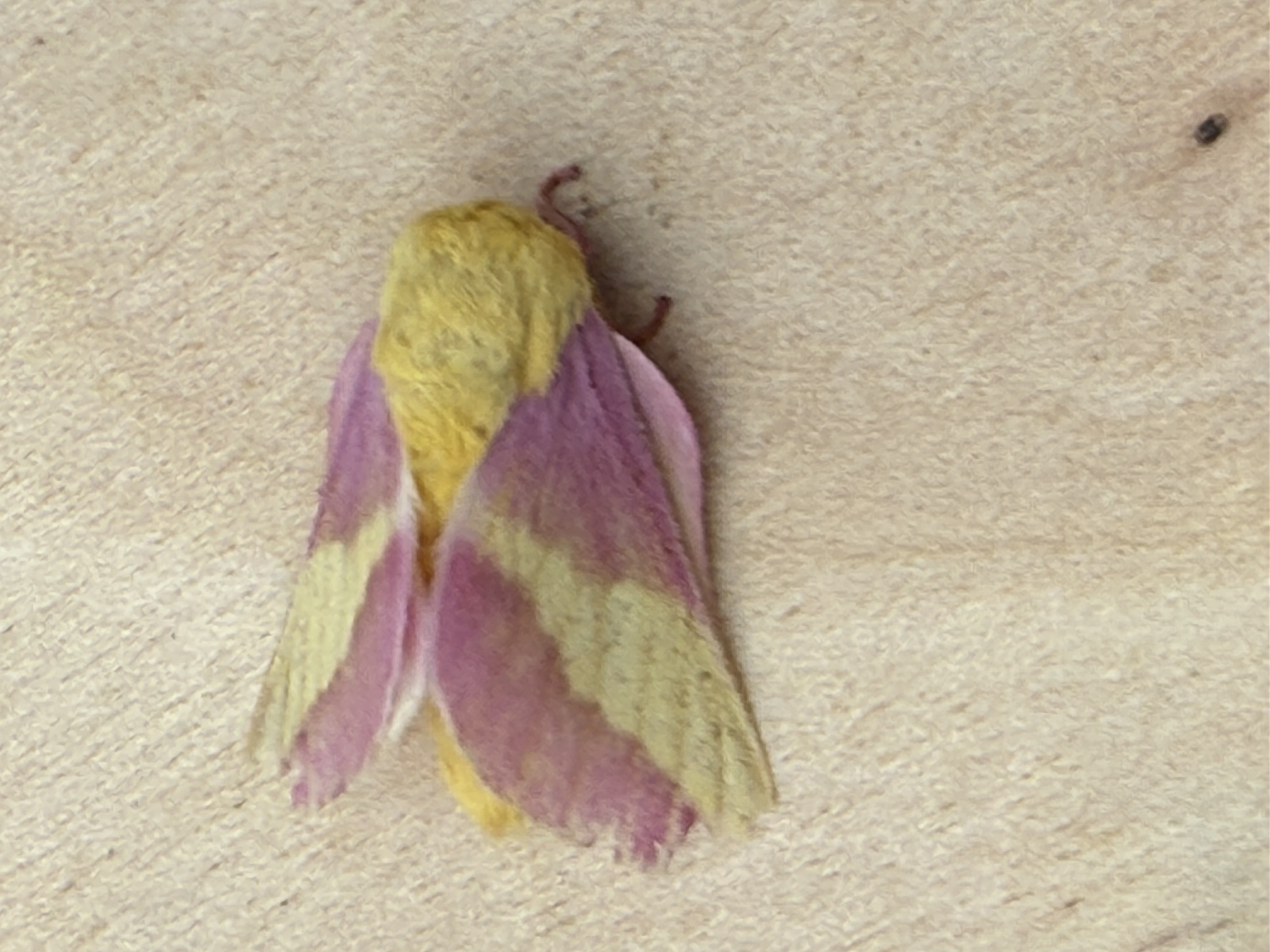
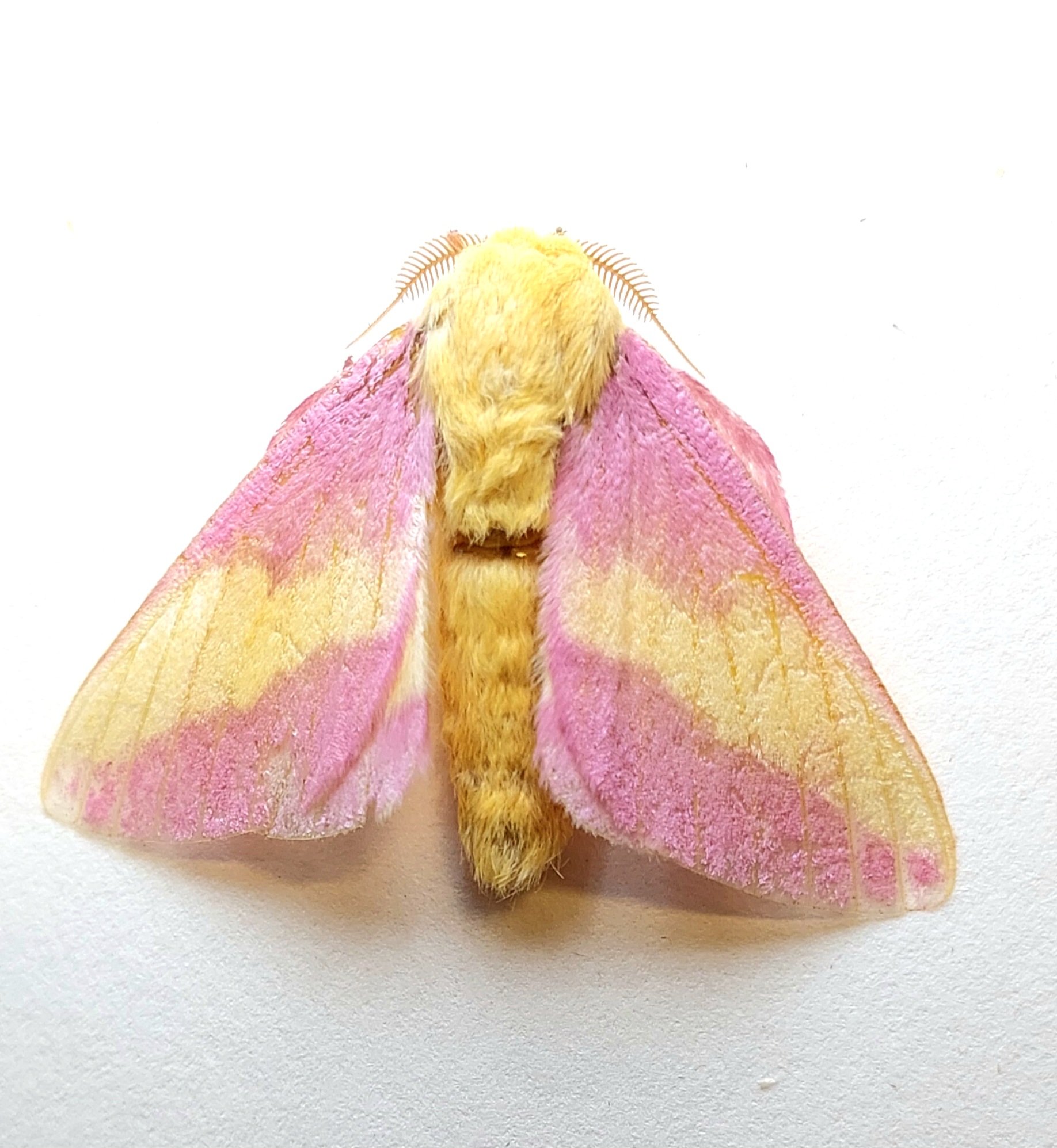
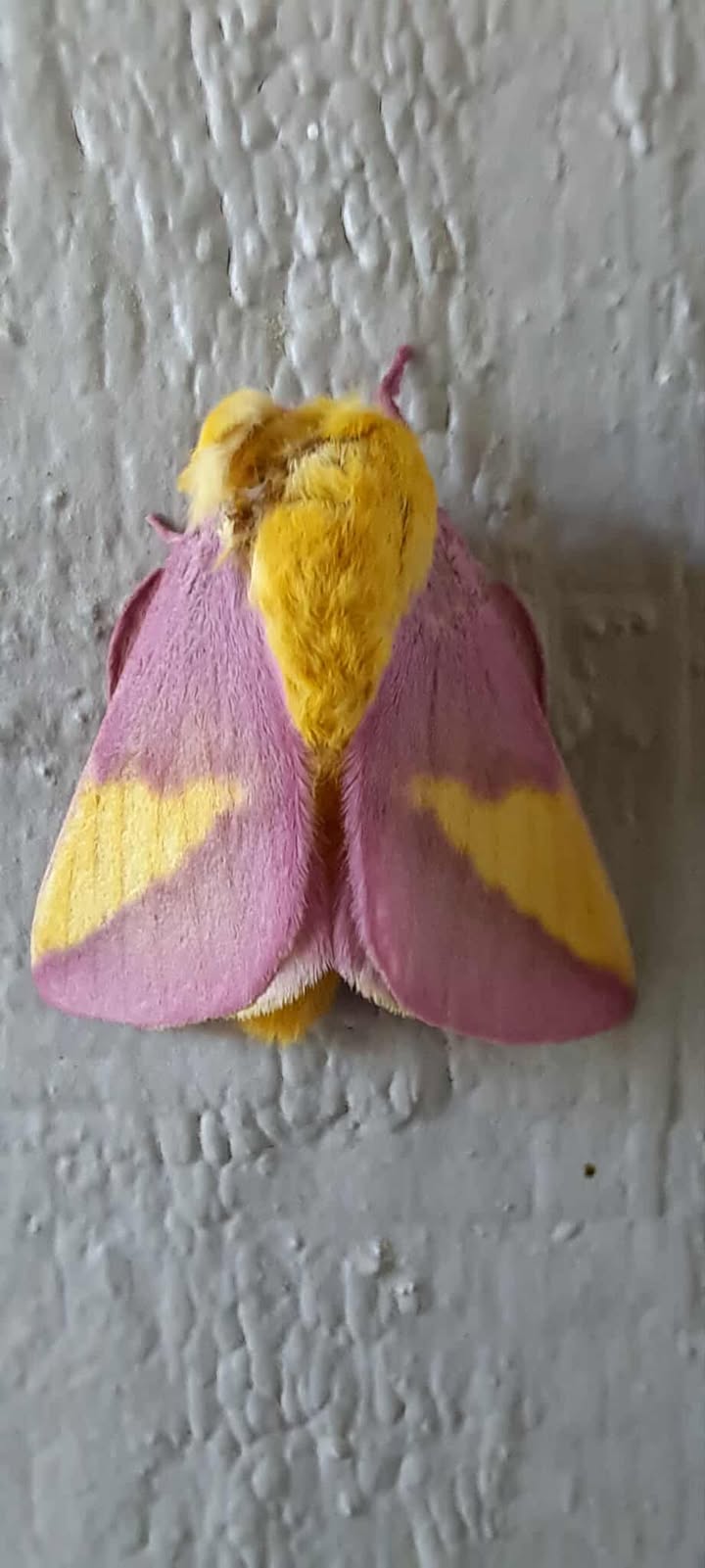
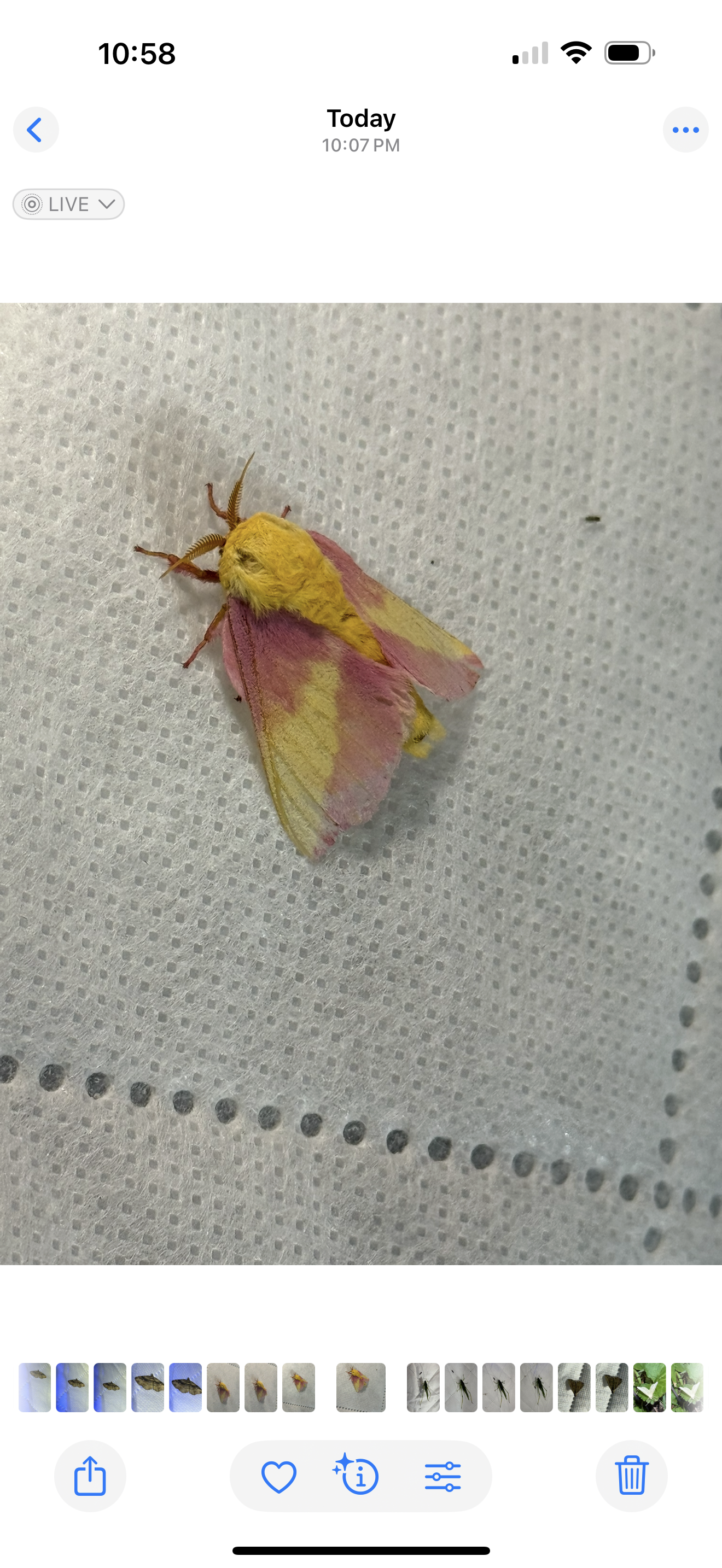
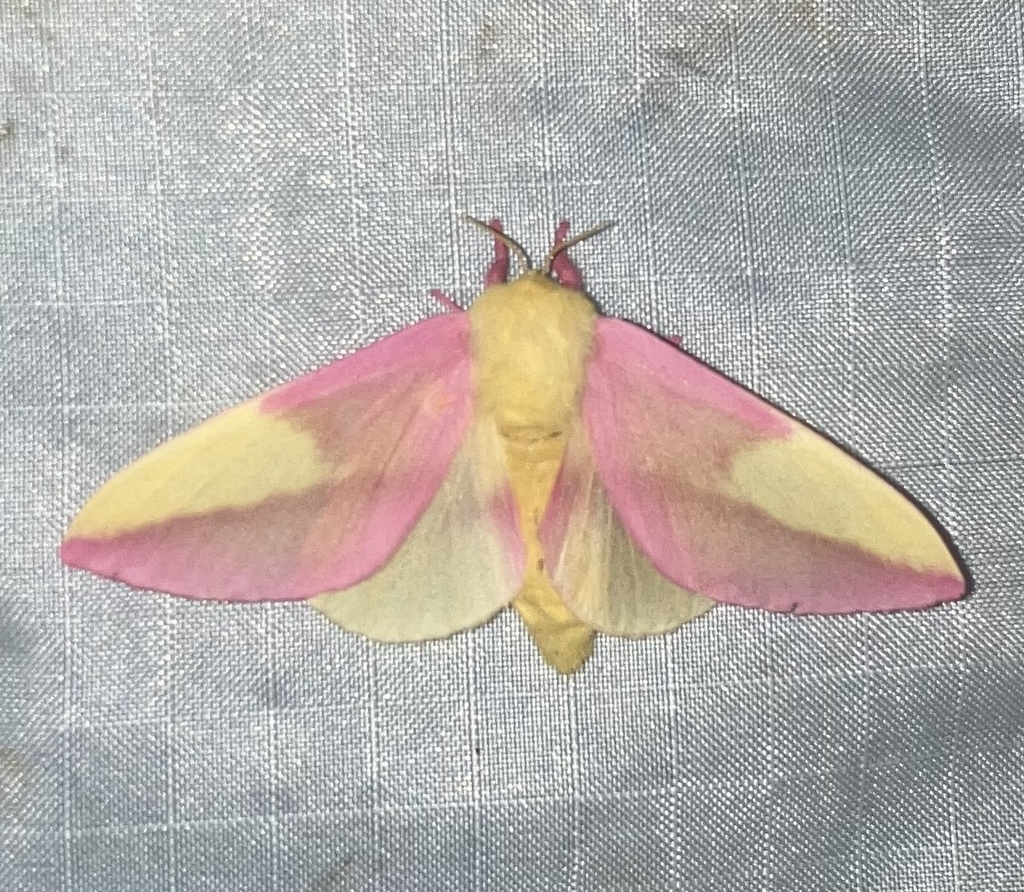
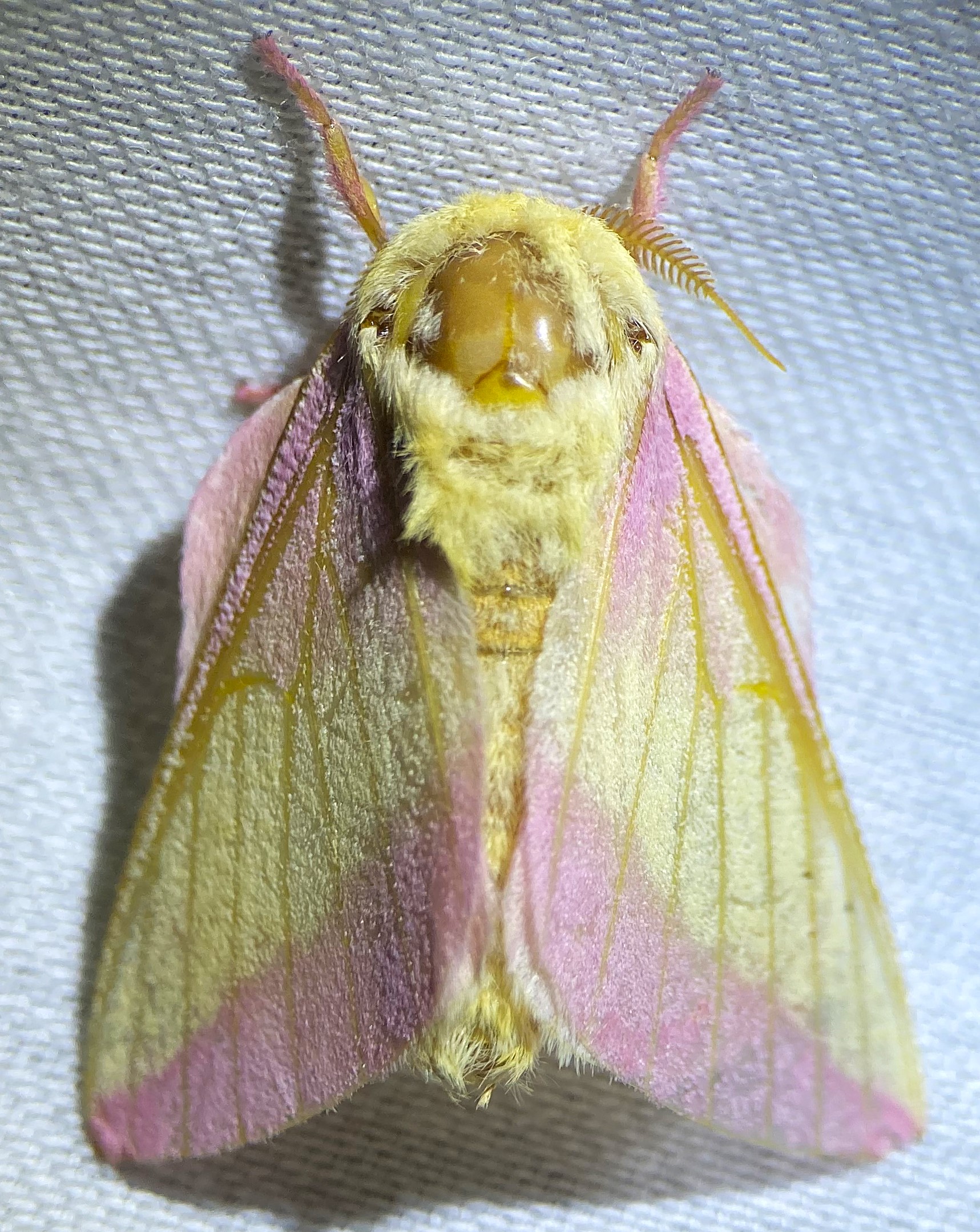
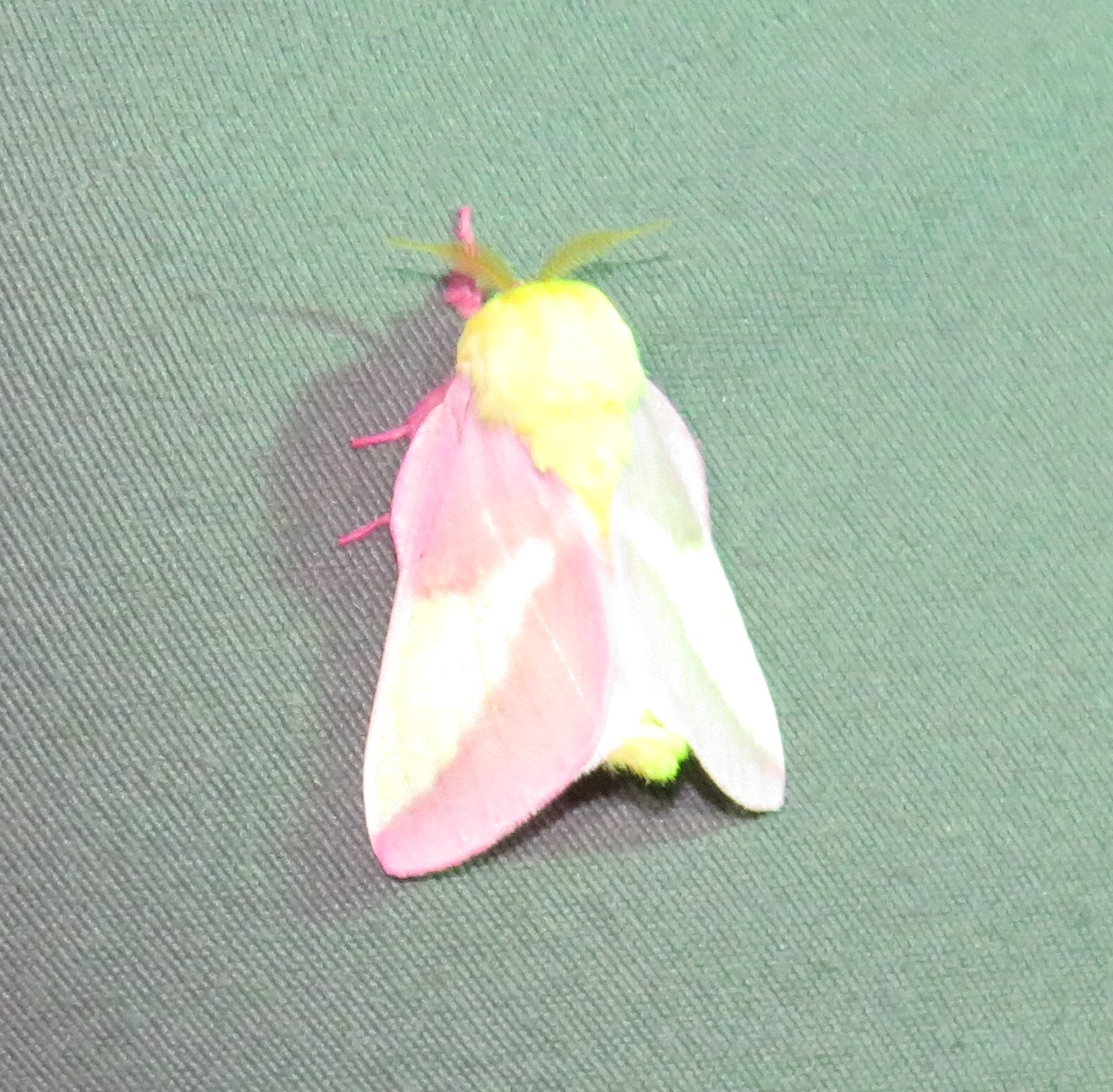
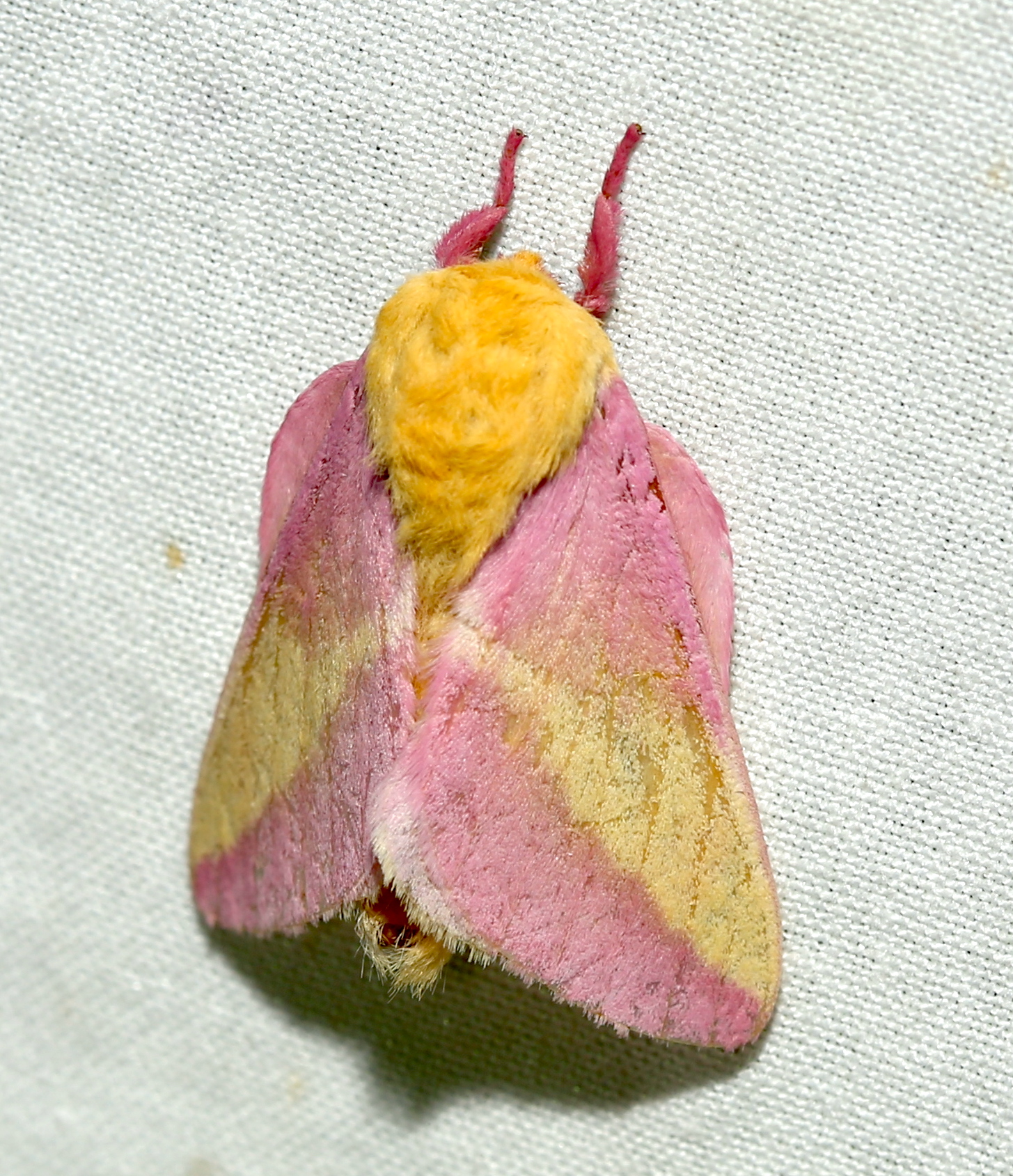
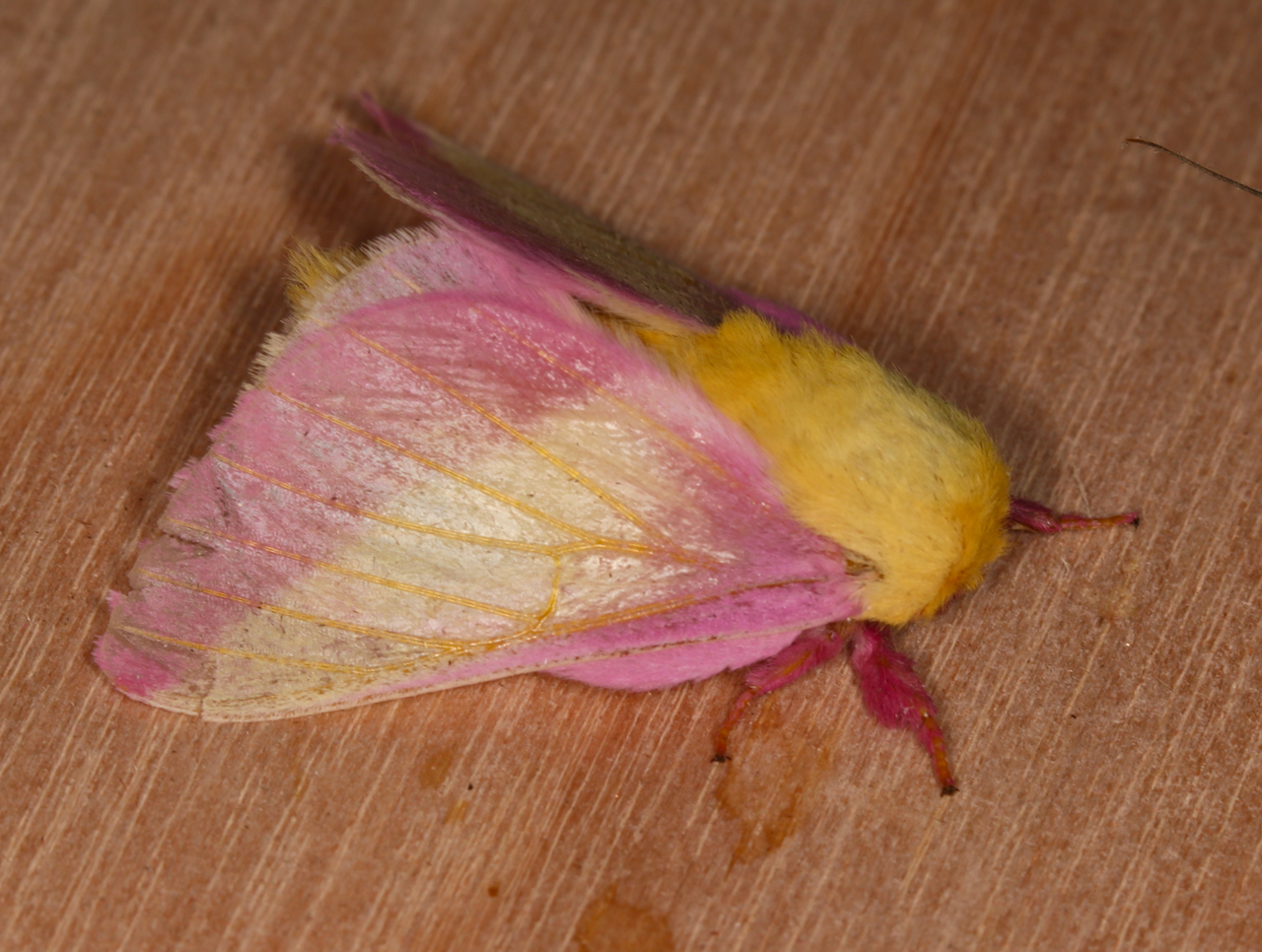
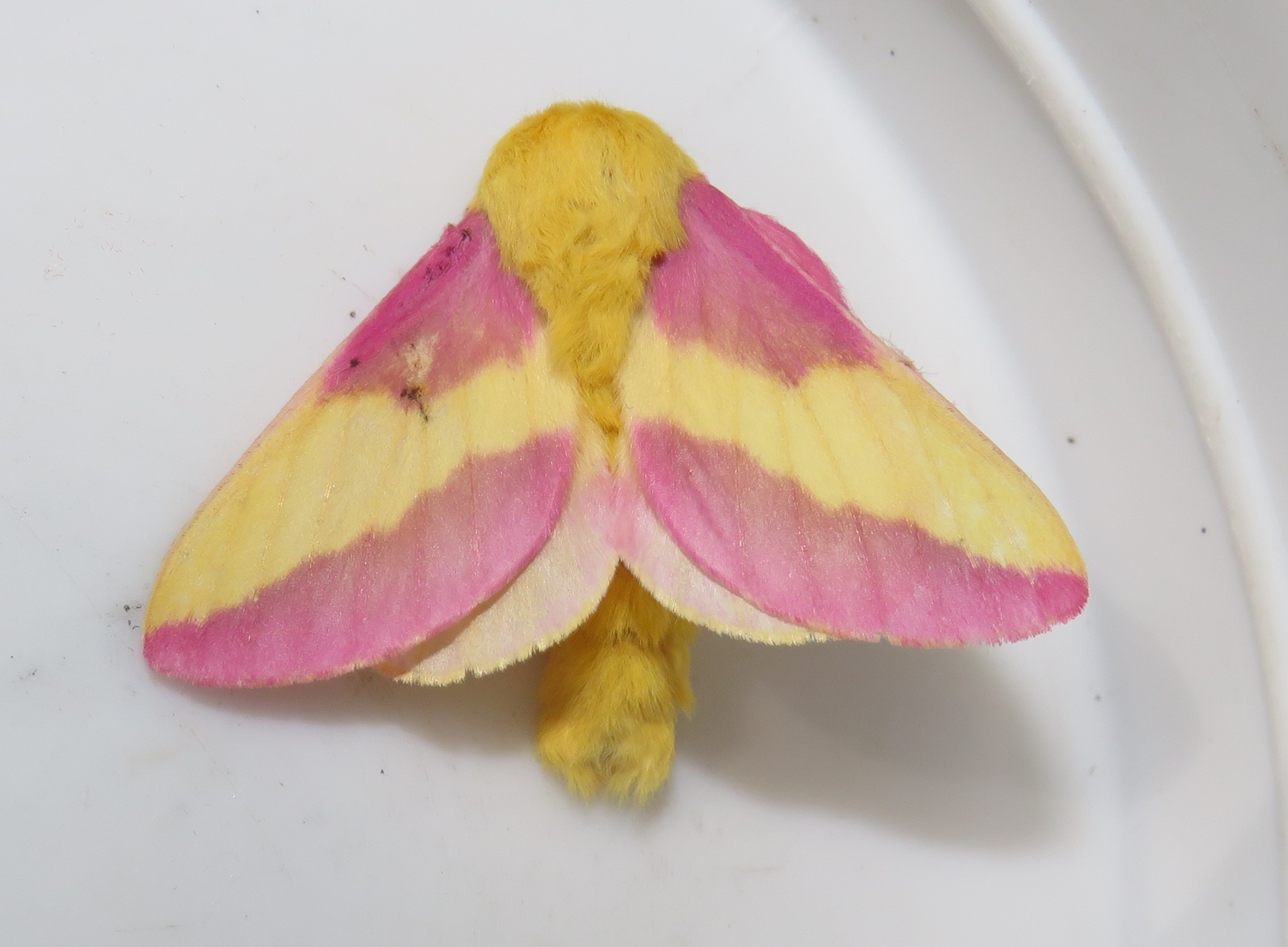
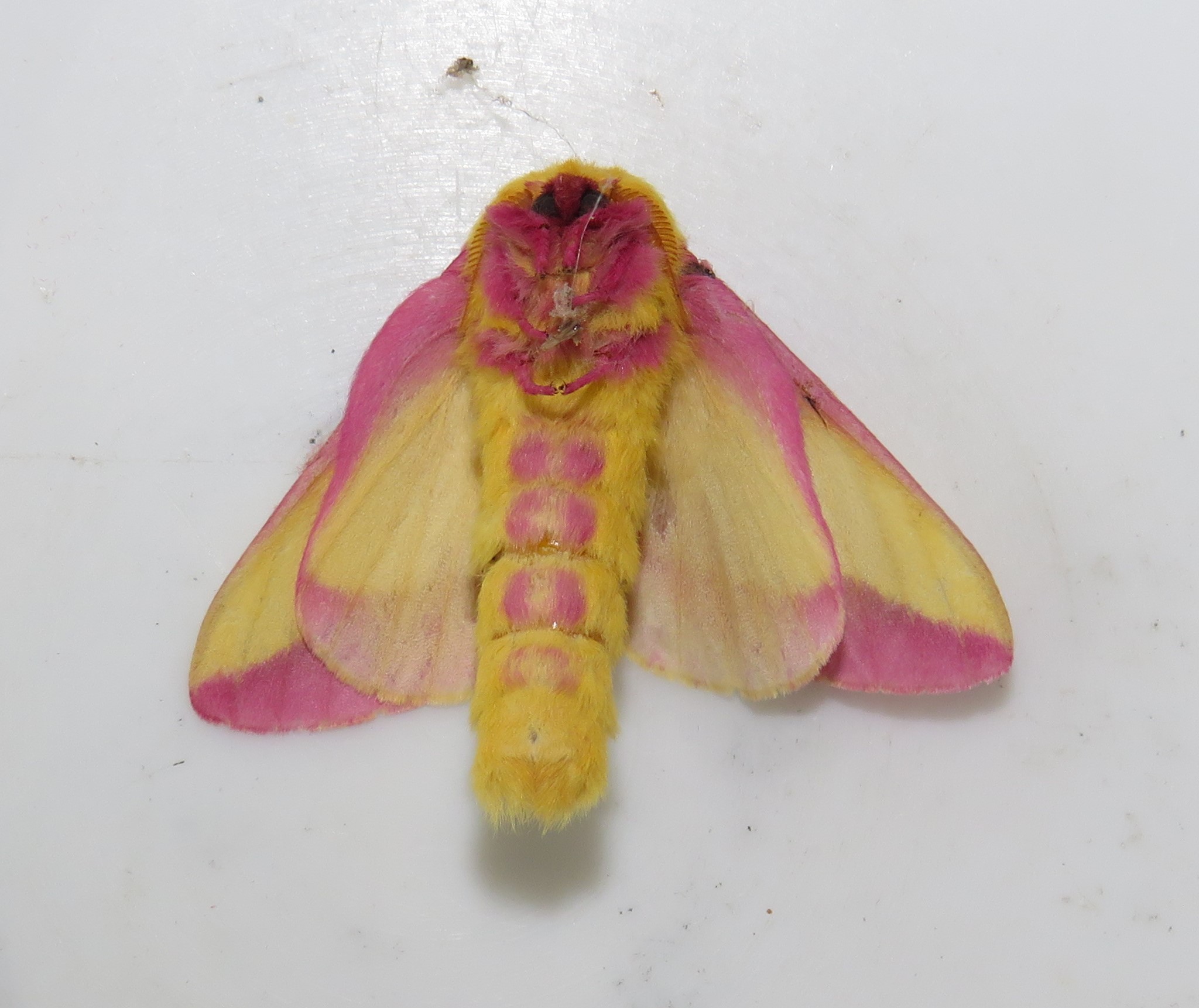
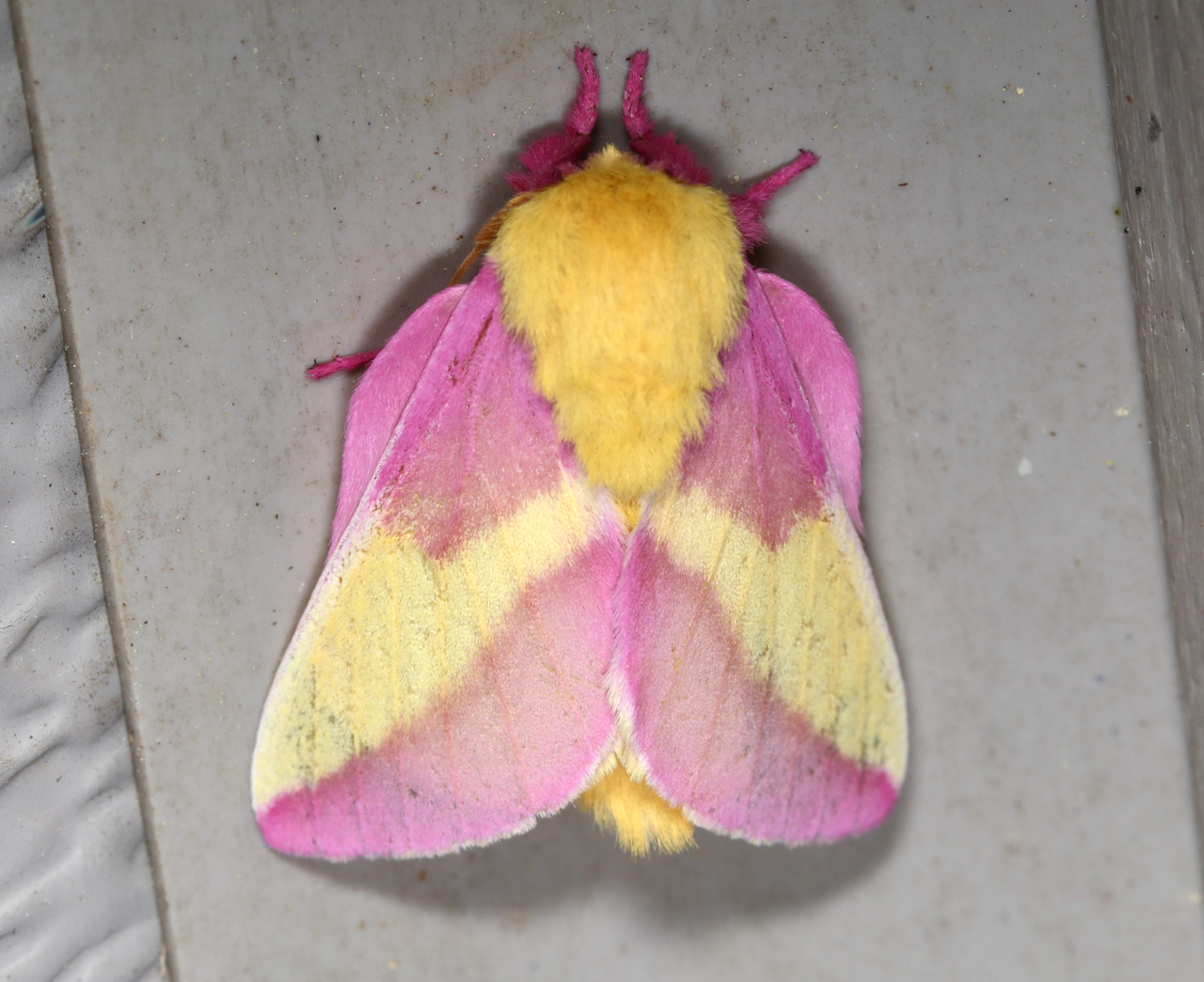
The bright yellow and pink adults are nearly unmistakeable. Only the Pink Prominent (Hyparpax aurora) and Primrose Moth (Schinia florida) are similar in color, although usually smaller. The subterminal area is yellow in S. florida, but red or pink in both Dryocampa and Hyparpax. The thorax of Dryocampa is completely yellow-orange, whereas in Hyparpax there is usually some pink color (Covell, 1984). The antemedian line is somewhat smoothly curved in Dryocampa but sharply angled in Hyparpax (Covell, 1984).
Wingspan:
40 mm, males; 50 mm, females (Forbes, 1923)
Adult ID Requirements:
Identifiable from good quality photos of unworn specimens.
Immatures and Development:
The larvae are very distinctive: they possess a pair of thoracic horns similar to those of Anisota larvae, but are striped with green and pale bluish-green stripes and often possess a pink or rosy patch below the spiracles at the rear end of the abdomen (Ferguson, 1971; Wagner, 2005).
Larvae ID Requirements:
Identifiable from good quality photos, especially where associated with known host plants.
Distribution in North Carolina
Distribution:
Occurs statewide (Brimley, 1938), except, perhaps on the Outer Banks and other barrier islands
County Map:
Clicking on a county returns the records for the species in that county.
Flight Dates:
High Mountains (HM) ≥ 4,000 ft.
Low Mountains (LM) < 4,000 ft.
Piedmont (Pd)
Coastal Plain (CP)
Click on graph to enlarge