Moths of North Carolina
Home Page
Recent Entries
Recent Account Updates
County Searches
General Search
Submit a Public Record
Larval Hosts
References
Maps
Draft Checklists
Family Photo Gallery
Family PDFs
NC Biodiversity Project
Comments
Significant Contributors
Scientific Name:
Common Name:
Family (Alpha):
Choose a Family
ACROLEPIIDAE-False Diamondback Moths
ADELIDAE-Fairy moths
ALUCITIDAE-Many-plumed Moths
AMPHISBATIDAE-
ARGYRESTHIIDAE-Shiny Head-standing Moths
AUTOSTICHIDAE-Autostichid Moths
BATRACHEDRIDAE-Batrachedrid Moths
BEDELLIIDAE-Bedelliid Moths
BLASTOBASIDAE-Blastobasid Moths
BOMBYCIDAE-Silkworm Moths
BUCCULATRICIDAE-Ribbed Cocoon-maker Moths
CARPOSINIDAE-Fruitworm Moths
CHOREUTIDAE-Metalmark Moths
COLEOPHORIDAE-Casebearer Moths and Relatives
COSMOPTERIGIDAE-Cosmopterigid Moths
COSSIDAE-Carpenter Moths, Goat Moths
CRAMBIDAE-Grass Moths, Snout Moths
DEPRESSARIIDAE-
DREPANIDAE-Hook-tips and Thyatirid Moths
DRYADAULIDAE-
ELACHISTIDAE-Grassminer Moths and Relatives
EPERMENIIDAE-Fringe-tufted Moths
EPIPYROPIDAE-Planthopper Parasite Moths
EREBIDAE-Erebid Moths
ERIOCRANIIDAE-Eriocraniid Moths
EUTELIIDAE-Euteliid Moths
GALACTICIDAE-Galacticid Moths
GELECHIIDAE-Gelechiid Moths; Twirler Moths
GEOMETRIDAE-Geometer Moths, Loopers
GLYPHIDOCERIDAE-Glyphidocerid Moths
GLYPHIPTERIGIDAE-Sedge Moths
GRACILLARIIDAE-Leafblotch miner moths
HELIOZELIDAE-Shield bearer moths
HEPIALIDAE-Ghost or Swift Moths
HYBLAEIDAE-
INCURVARIIDAE-Leafcutter Moths
LASIOCAMPIDAE-Tent Caterpillar Moths, Lappet Moths
LECITHOCERIDAE-Long-horned Moths
LIMACODIDAE-Slug Caterpillar Moths
LIMOCODIDAE-
LYONETIIDAE-Lyonetiid Moths
MEGALOPYGIDAE-Flannel Moths
MICROPTERIGIDAE-Mandibulate Moths
MIMALLONIDAE-
MOMPHIDAE-Mompha Moths
NEPTICULIDAE-Minute leaf miners
NOCTUIDAE-Owlet Moths
NOLIDAE-
NOTODONTIDAE-Prominents
OECOPHORIDAE-Oecophorid Moths
OPOSTEGIDAE-
PELEOPODIDAE-
PLUTELLIDAE-Diamondback Moths
PRODOXIDAE-Yucca Moths
PSYCHIDAE-Bagworm Moths
PTEROPHORIDAE-Plume Moths
PYRALIDAE-Pyralid Moths, Snout Moths
SATURNIIDAE-Giant Silkworm Moths
SCHRECKENSTEINIIDAE-Schreckensteiniid Moths
SCYTHRIDIDAE-
SESIIDAE-Clearwing Moths
SPHINGIDAE-Sphinx Moths
THYATIRIDAE-
THYRIDIDAE-Window-winged Moths
TINEIDAE-Clothes moths
TISCHERIIDAE-Tischerid Moths
TORTRICIDAE-Leafroller Moths
URANIIDAE-
URODIDAE-Urodid Moths
XYLORYCTIDAE-
YPONOMEUTIDAE-Ermine Moths
YPSOLOPHIDAE-Ypsolophid Moths
ZYGAENIDAE-
«
Home
»
View
PDF
Cossidae Members:
Cossula magnifica
Givira anna
Givira francesca
Inguromorpha basalis
Prionoxystus macmurtrei
Prionoxystus robiniae
Prionoxystus
Members:
Prionoxystus macmurtrei
Prionoxystus robiniae
122 NC Records
Prionoxystus robiniae
(Peck, 1818) - Carpenterworm Moth
view caption
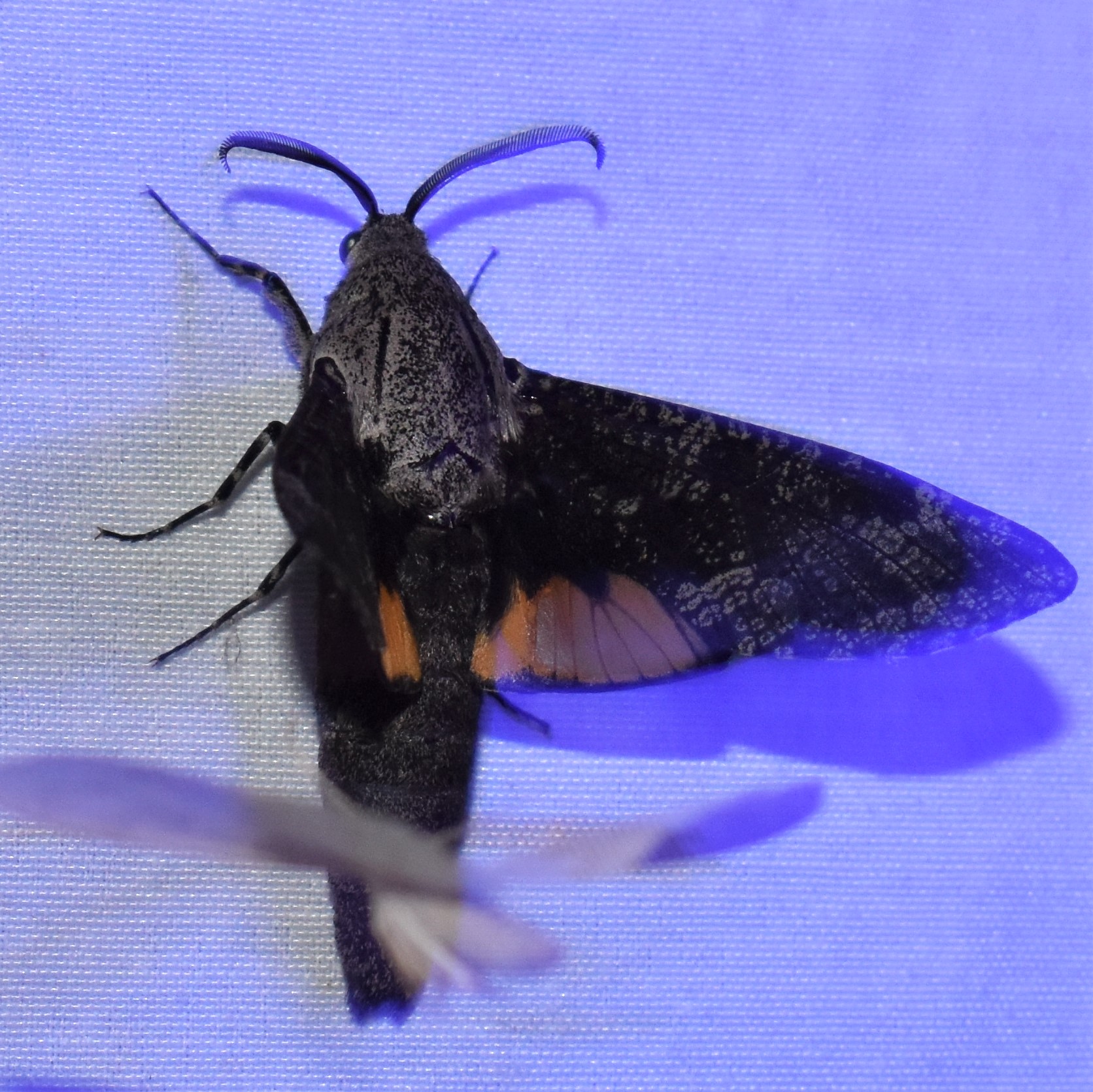
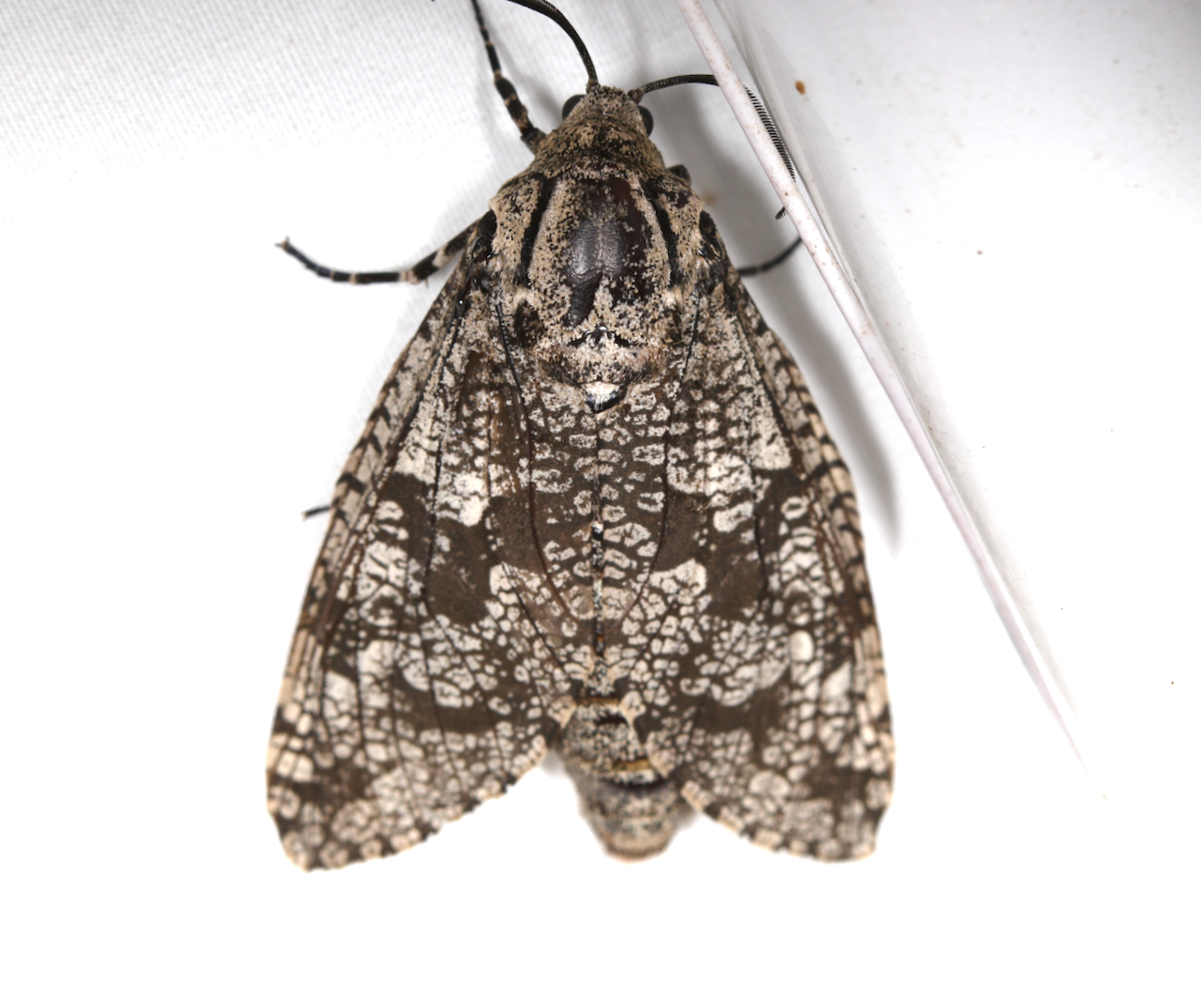
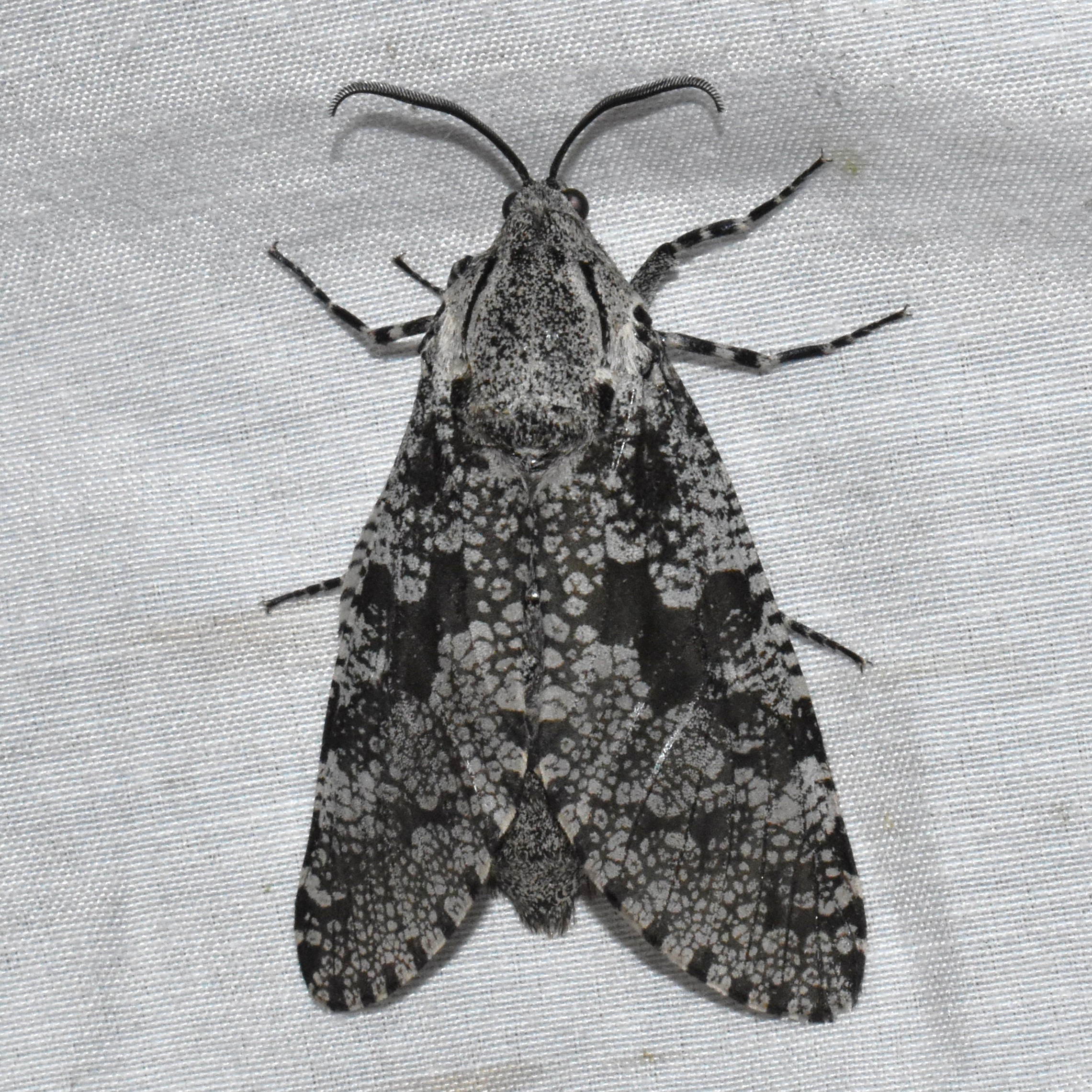
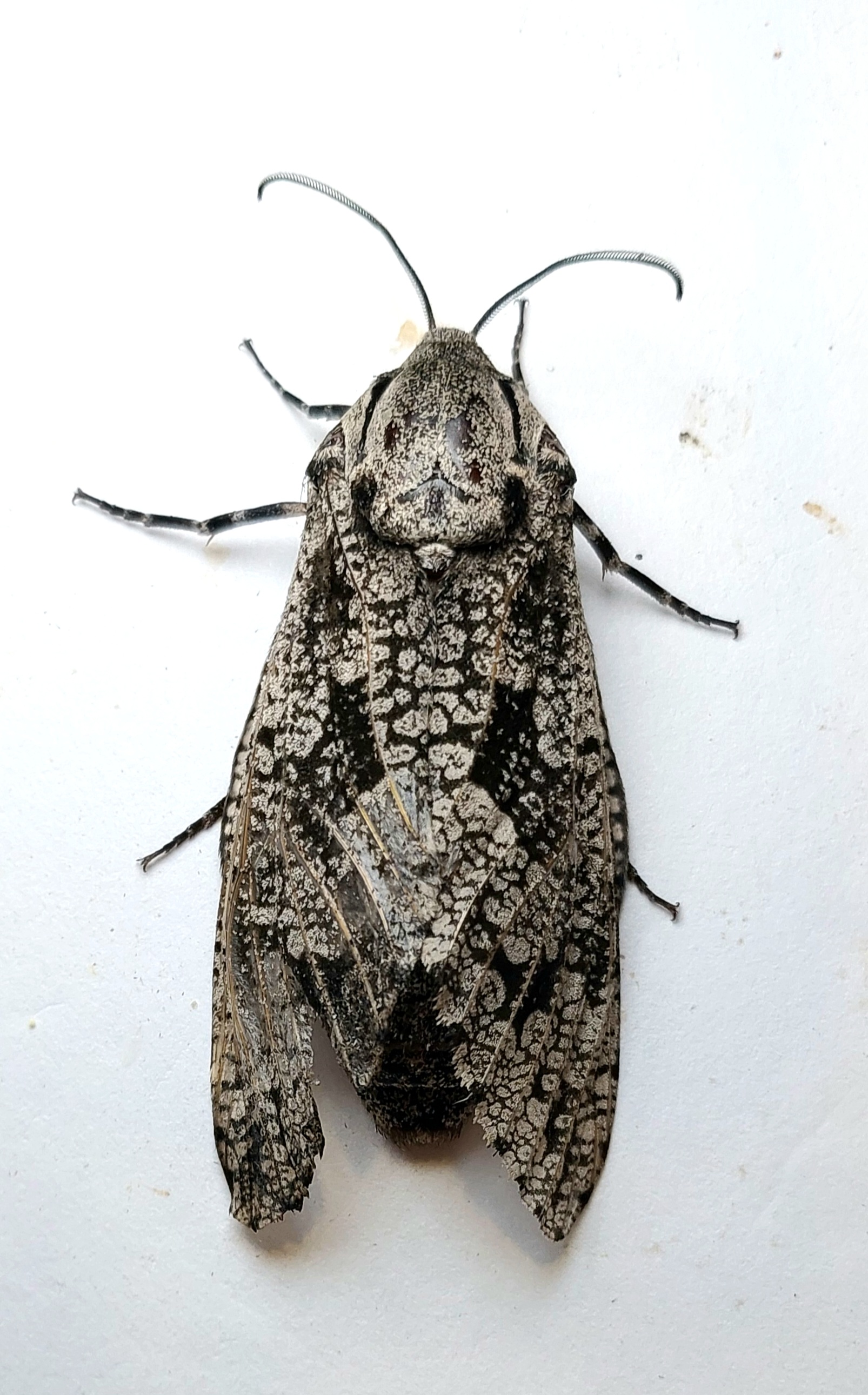
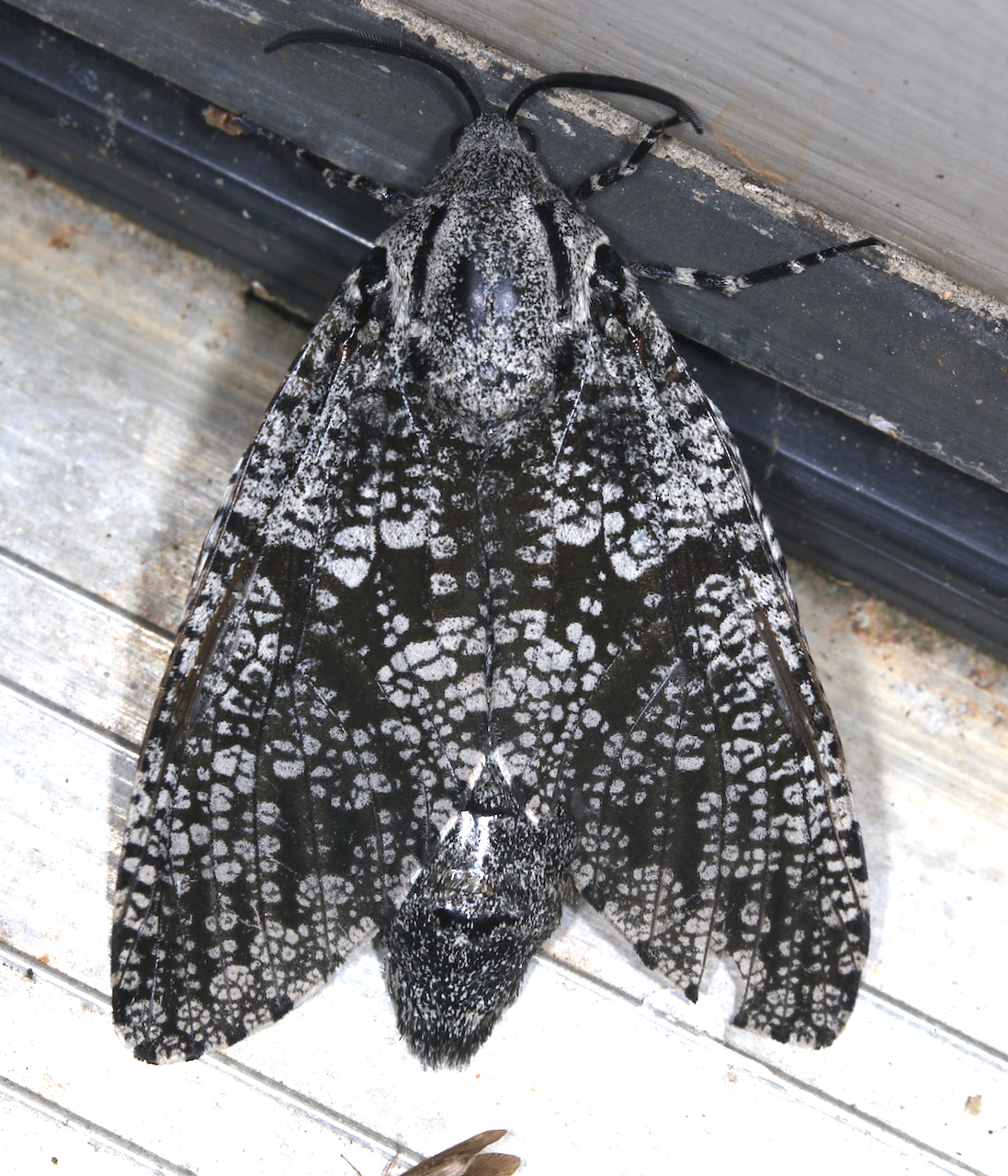
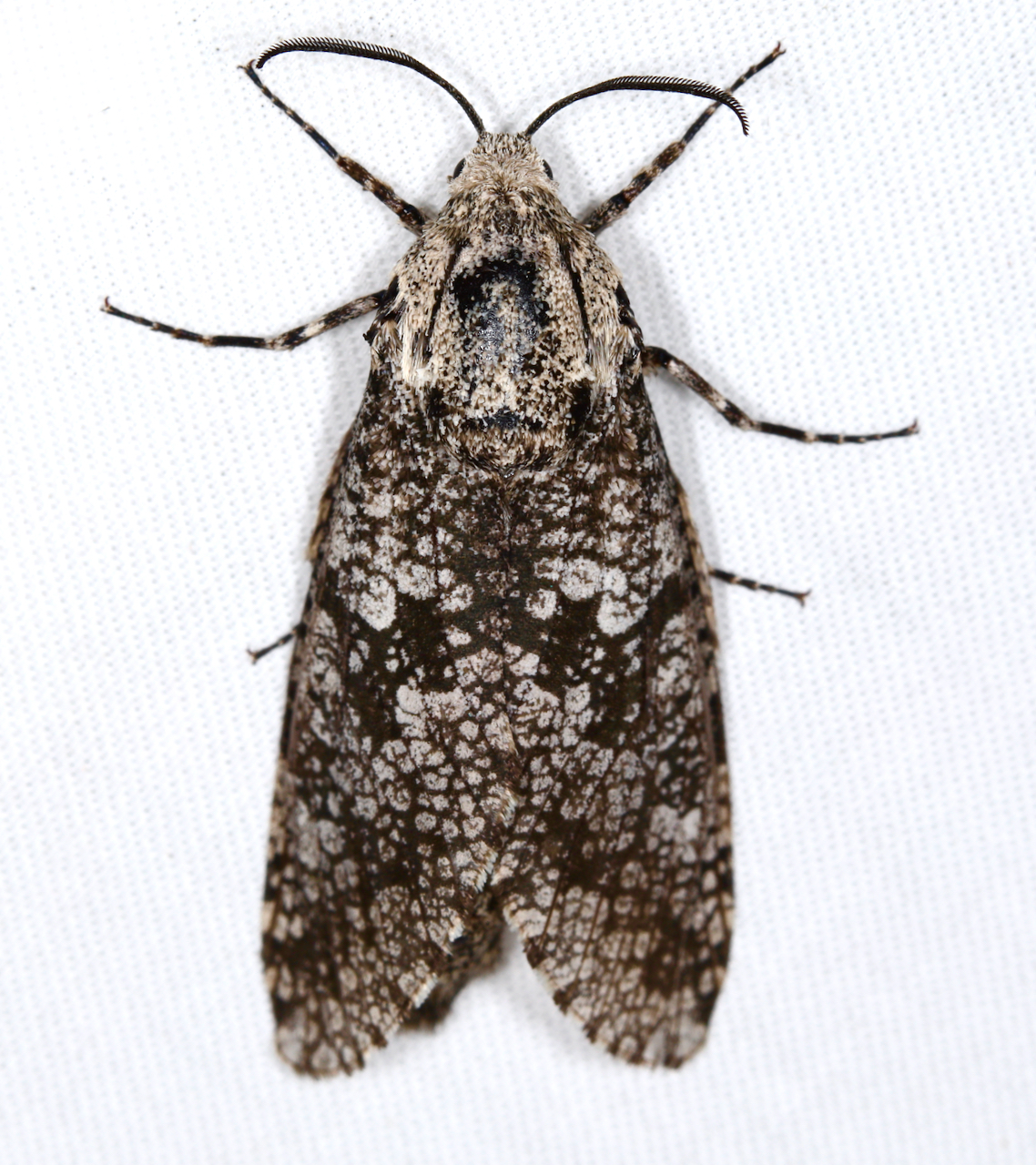
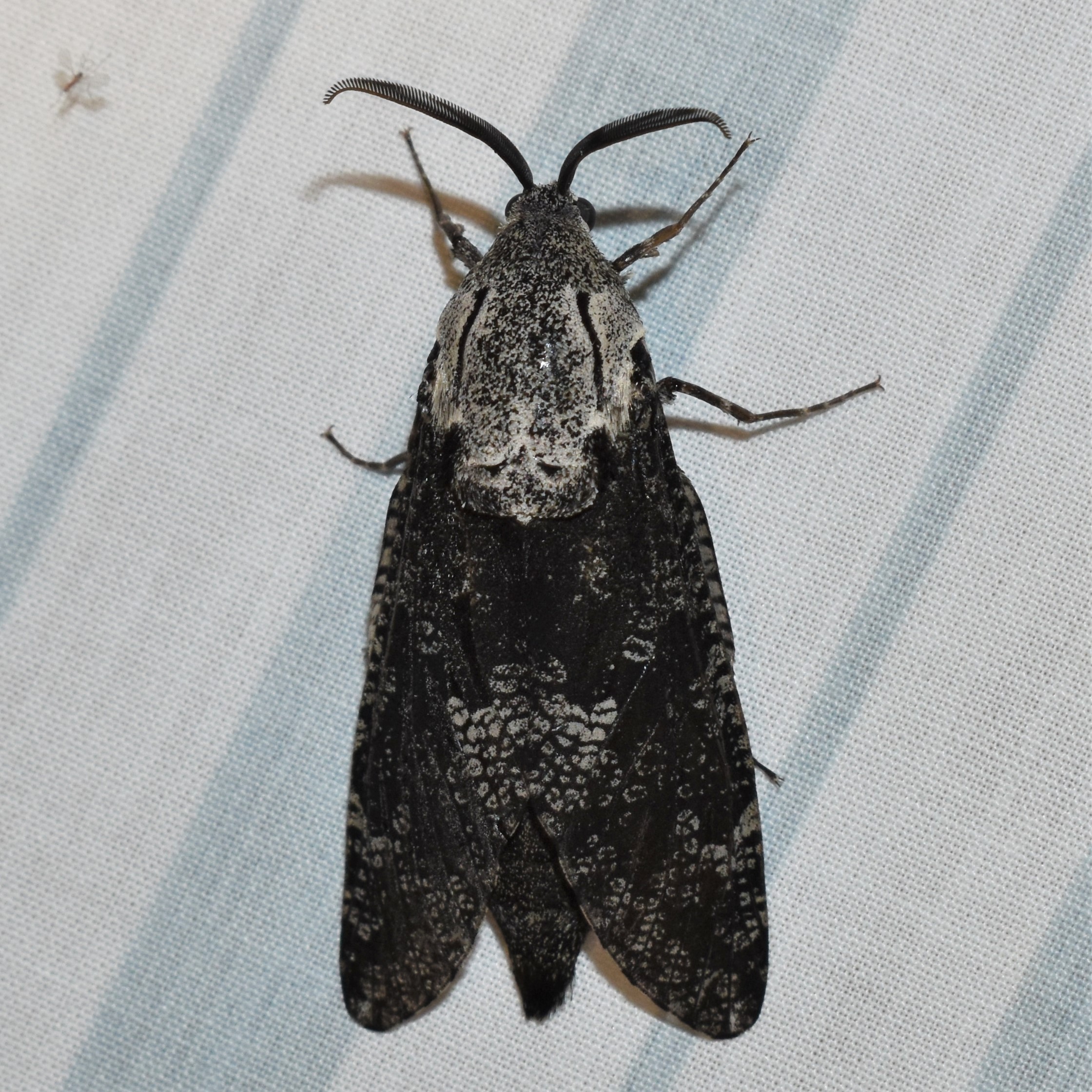
Male
view caption
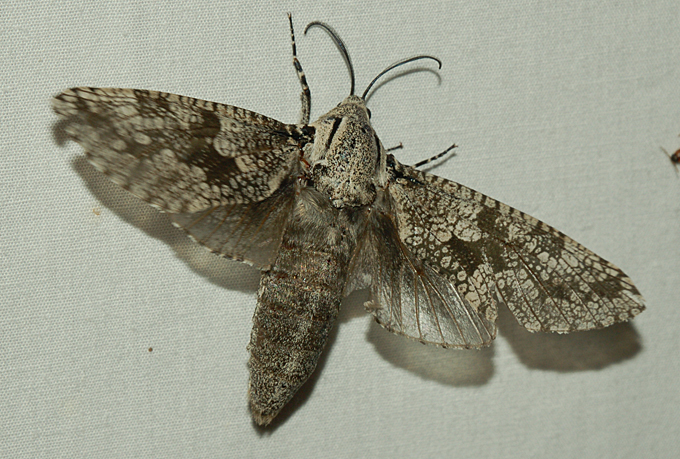
Female
Taxonomy
Superfamily:
Cossoidea
Family:
Cossidae
Subfamily:
Cossinae
Tribe:
[Cossini]
P3 Number:
53a0029
MONA Number:
2693.00
Other Common Name:
Robin's Carpenterworm
Comments:
This is one of three members of the genus in North America, two of which are found in North Carolina. It is among the largest of the "micro-moths."
Identification
Field Guide Descriptions:
Covell (2005); Beadle and Leckie (2012)
Online Resources:
MPG
,
BugGuide
,
iNaturalist
,
Google
,
BAMONA
,
GBIF
,
BOLD
Technical Description, Adults:
Forbes (1923)
Technical Description, Immature Stages:
Packard (1890)
Adult Markings:
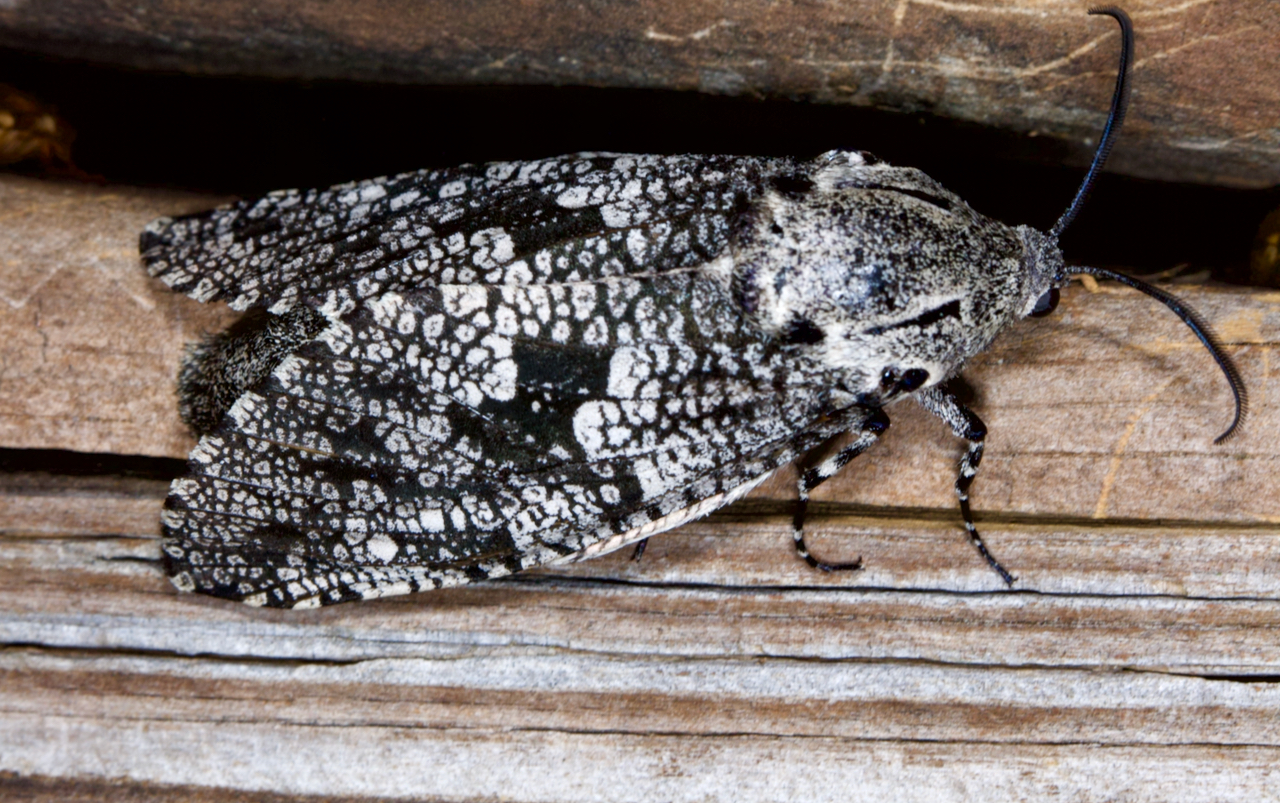
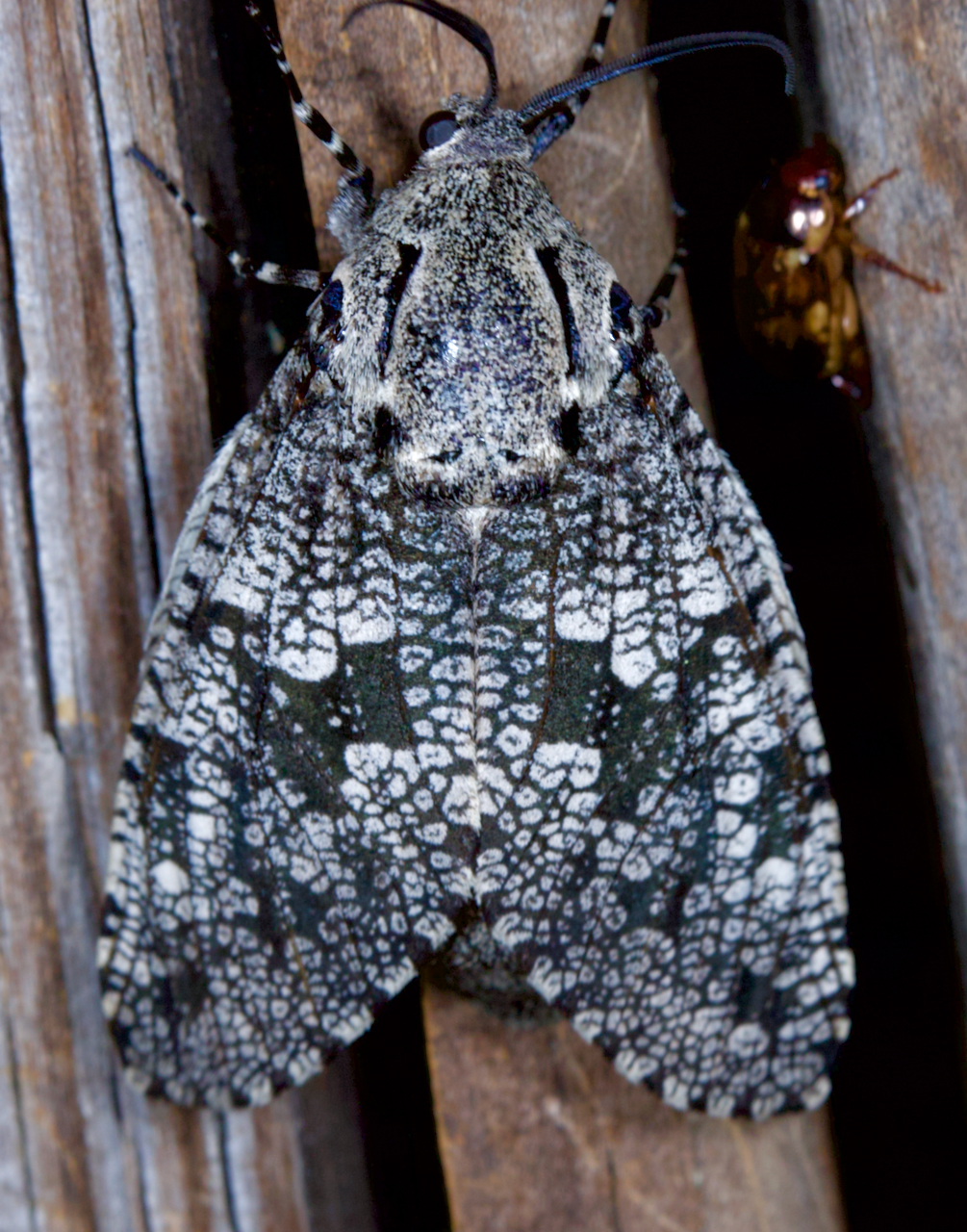
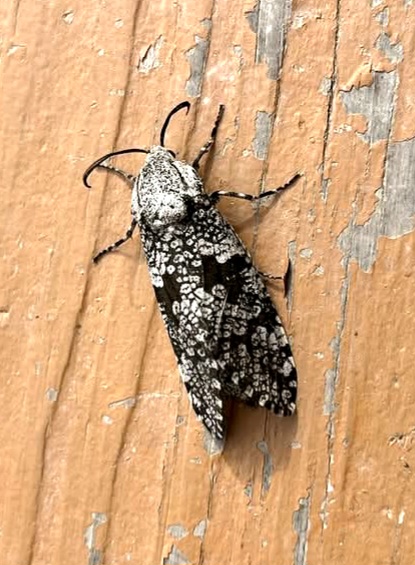
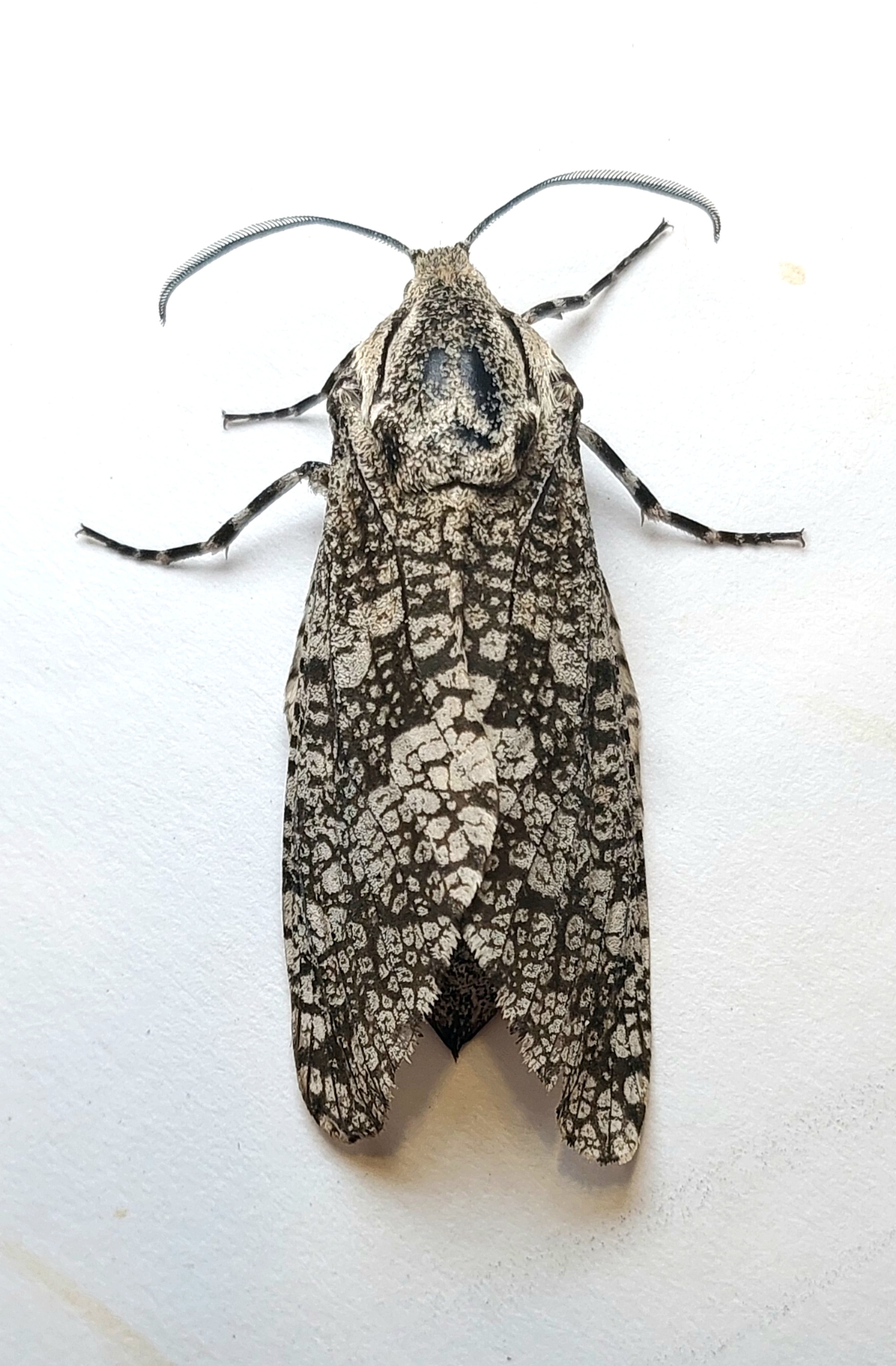
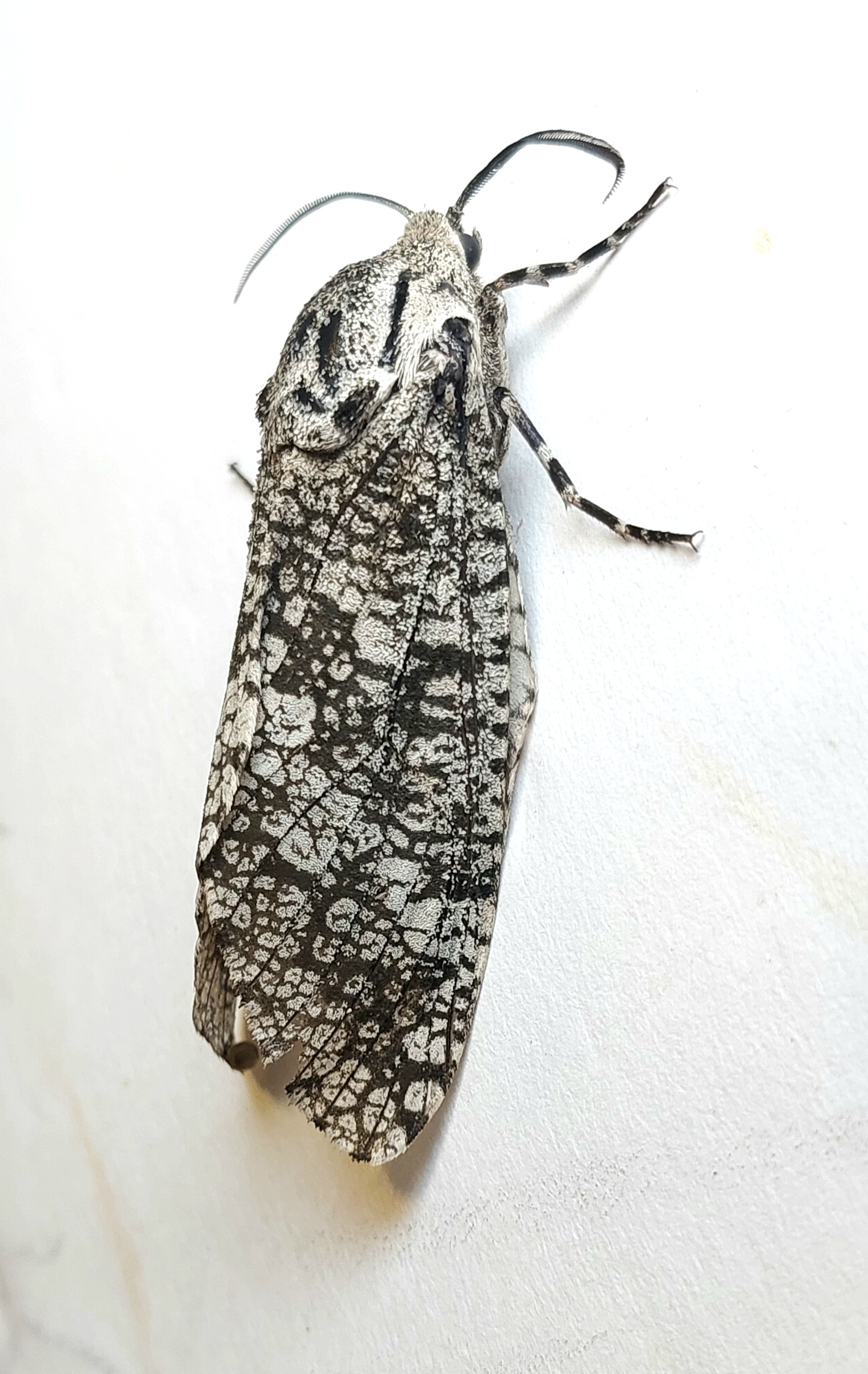
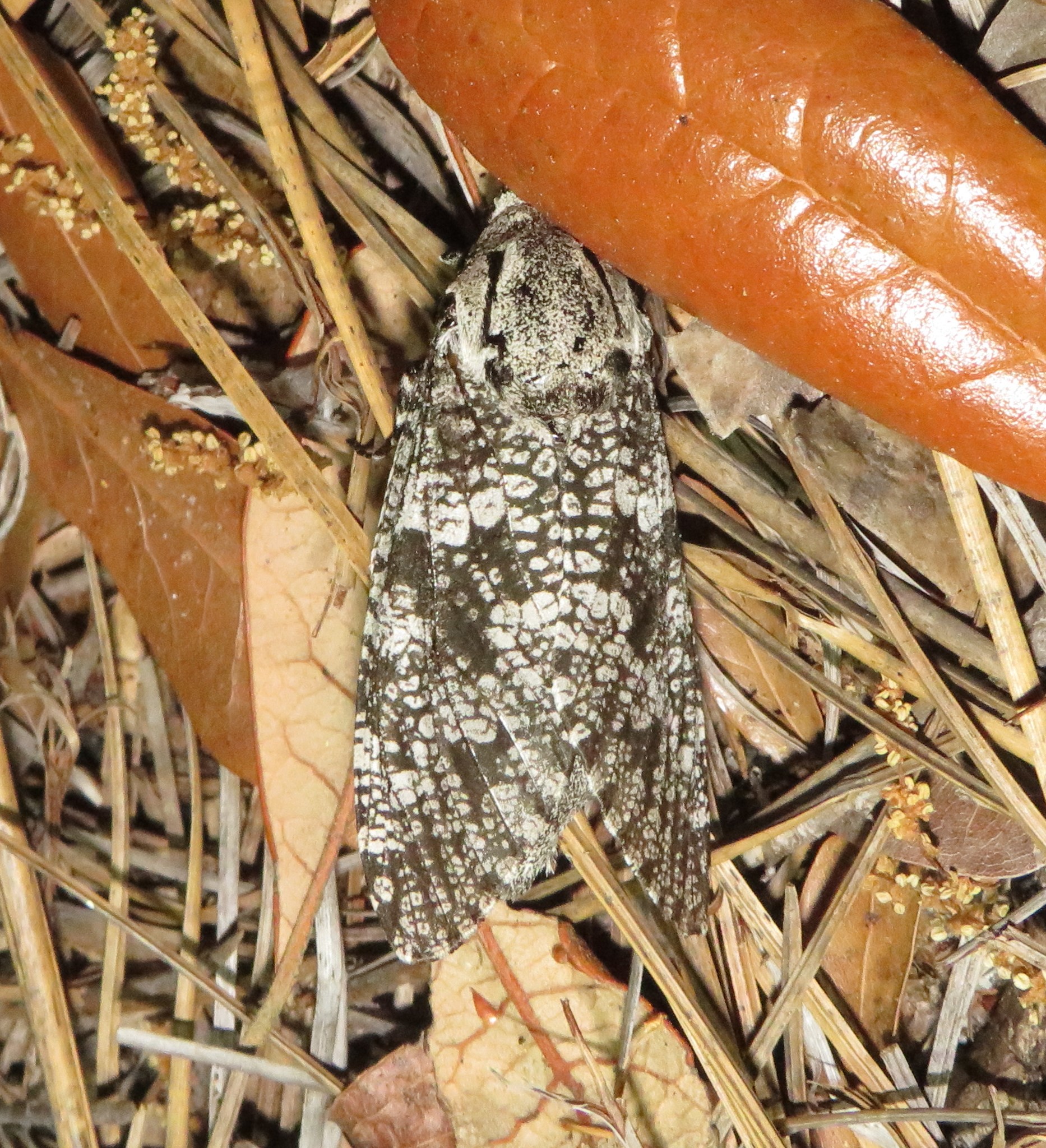
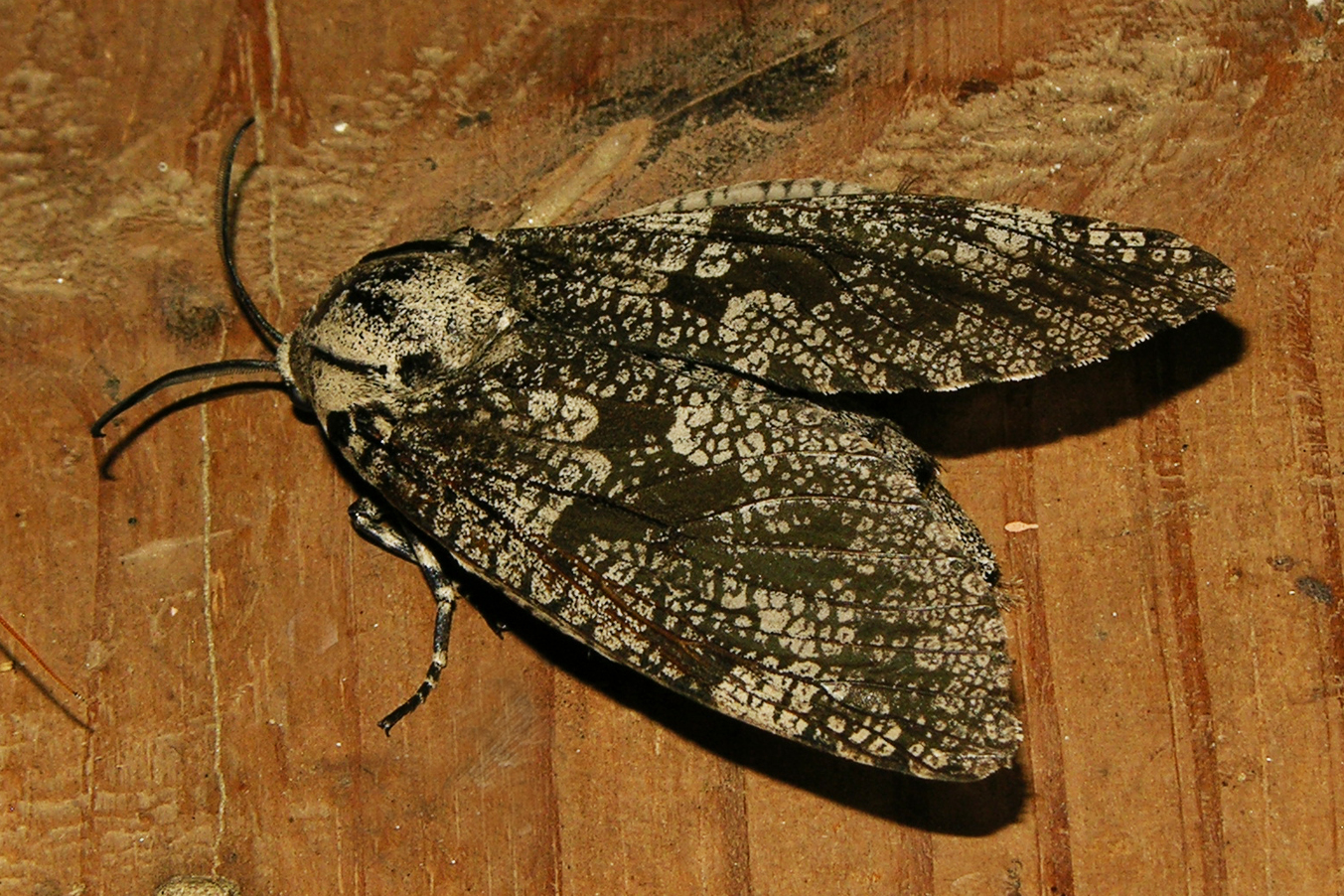
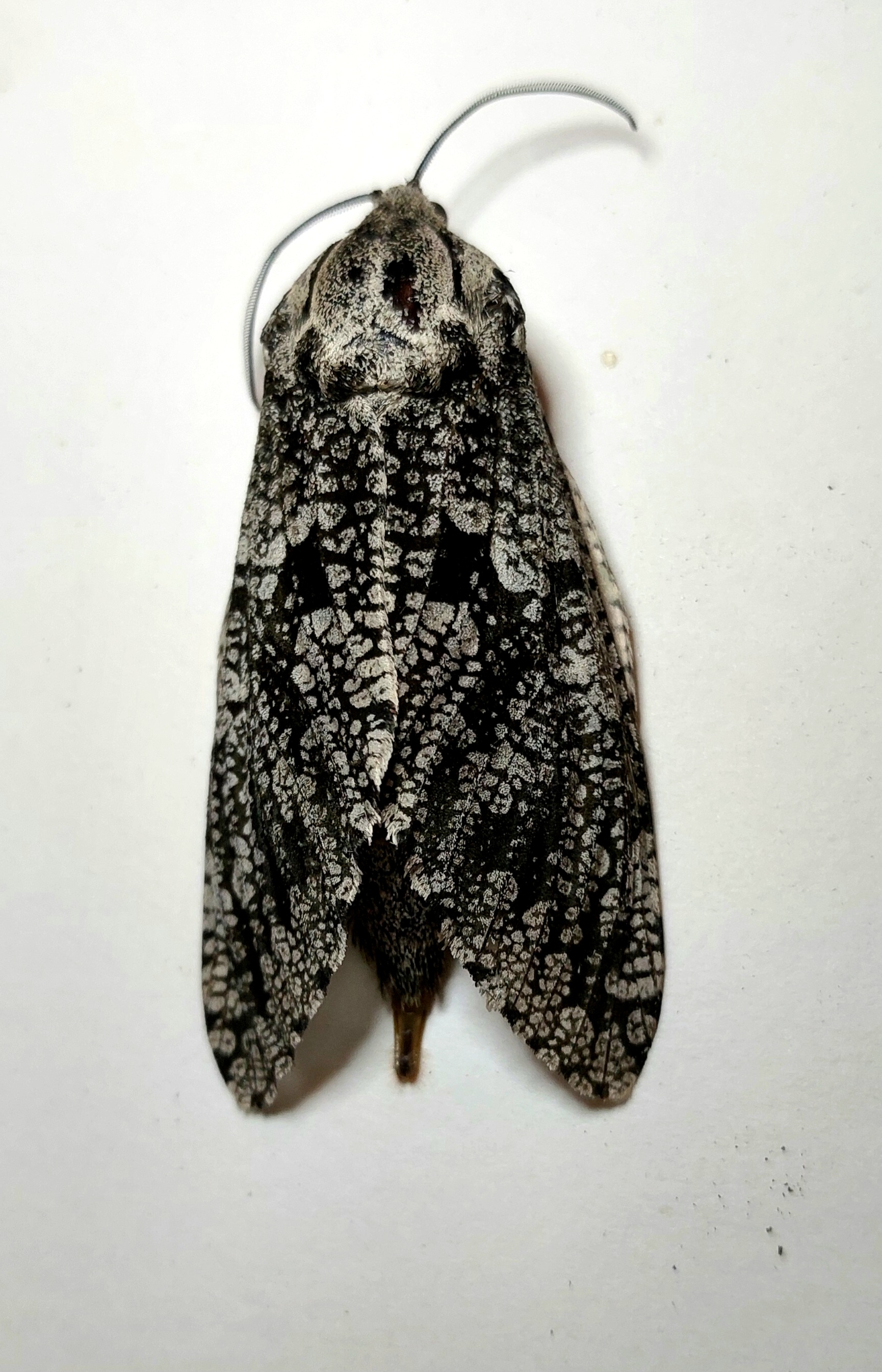
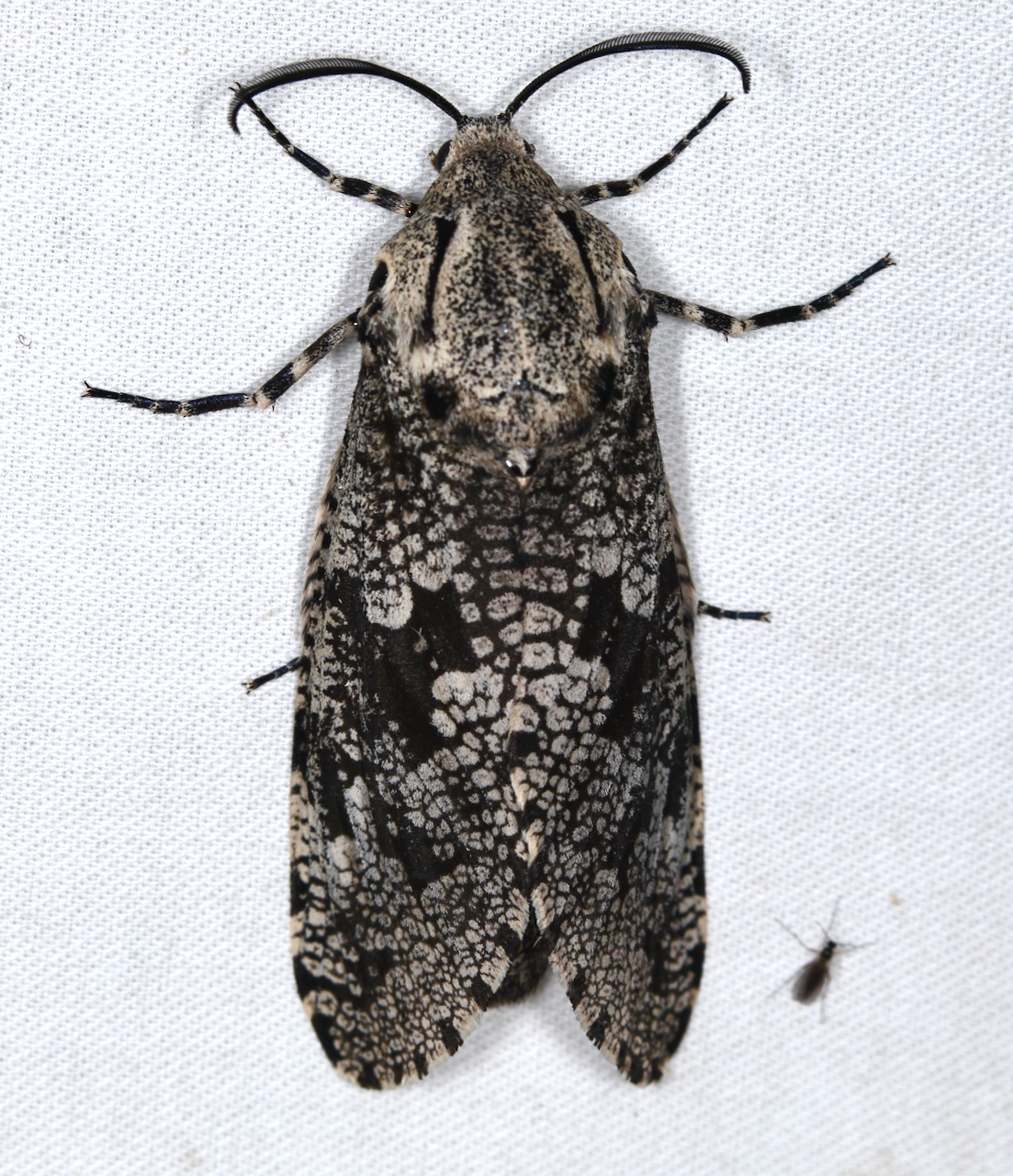
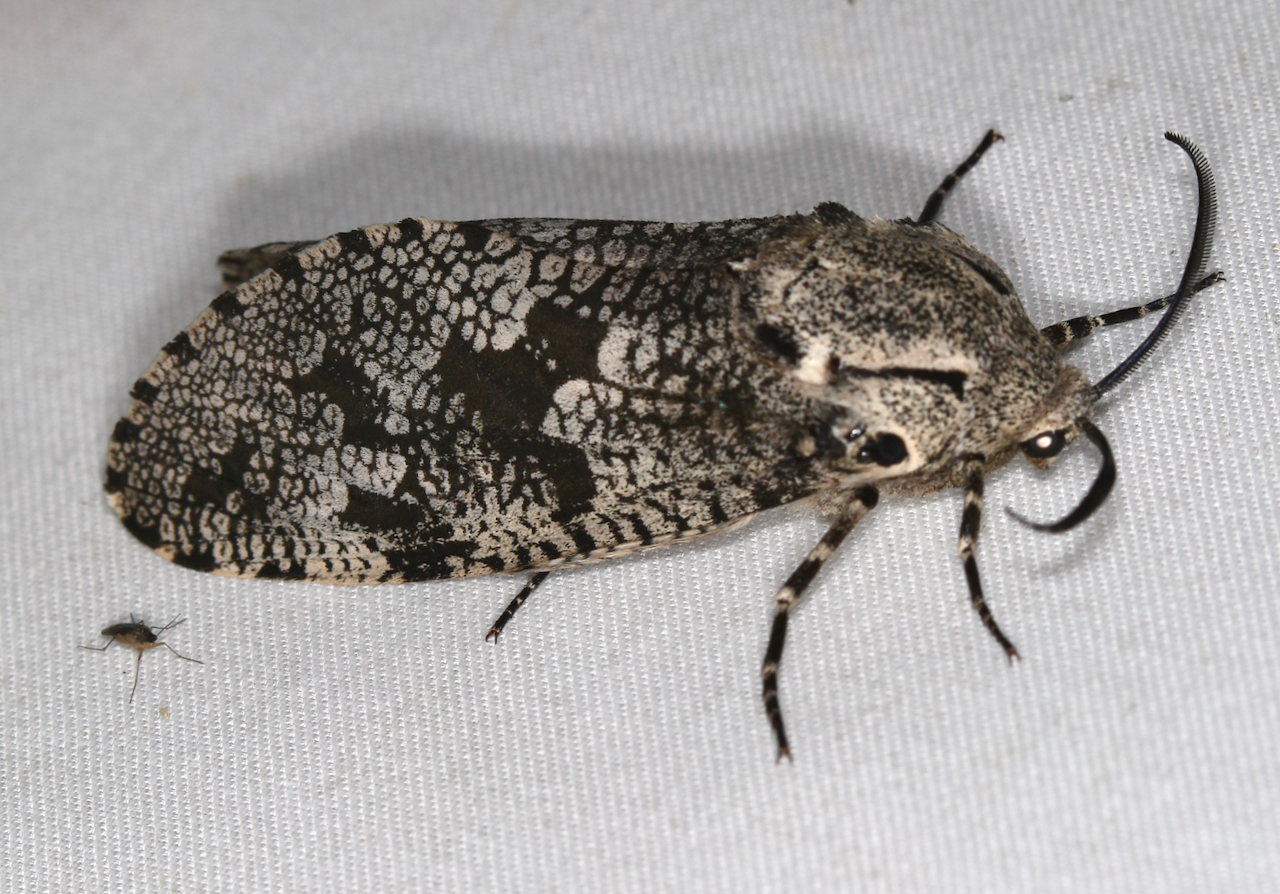
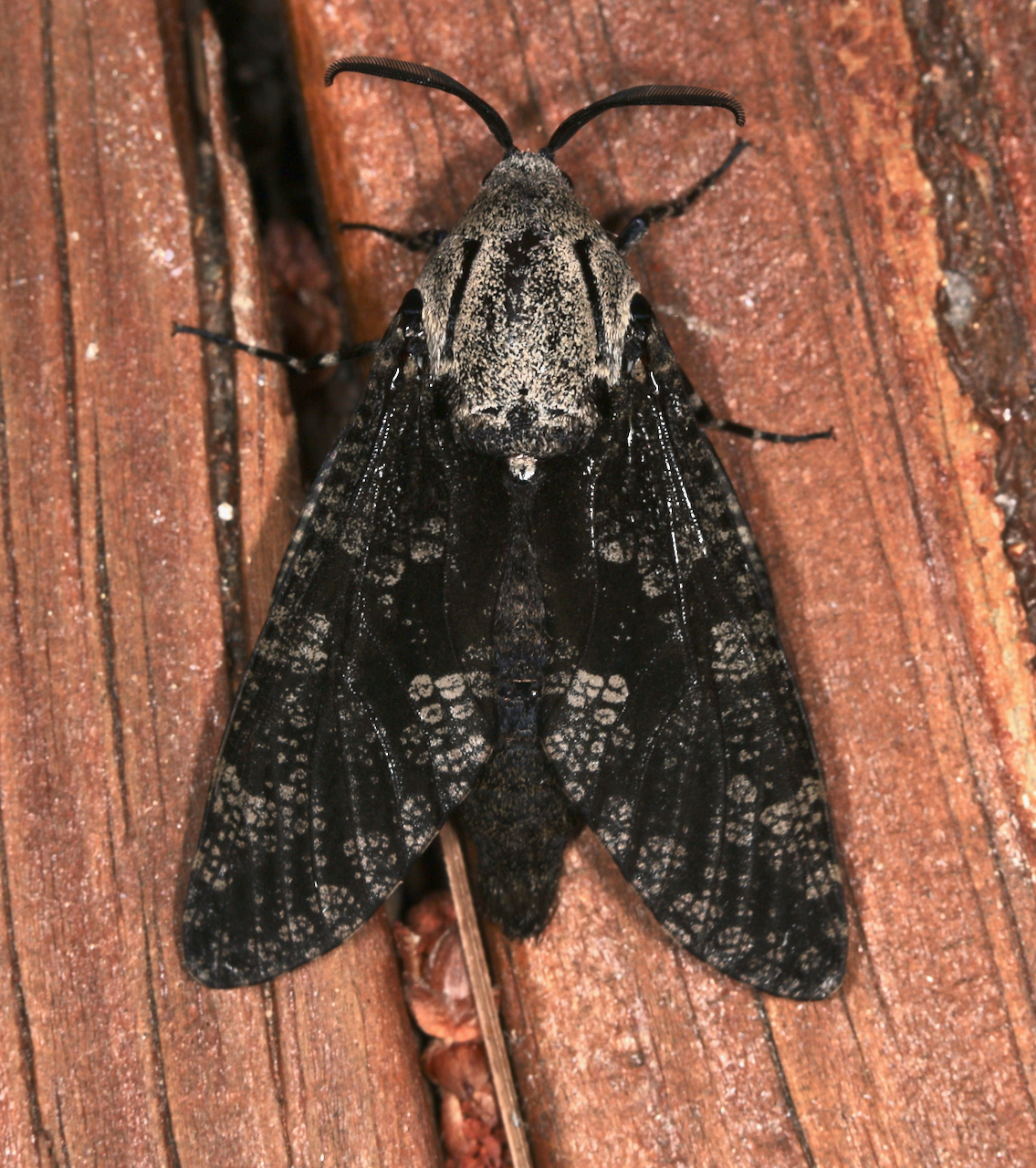
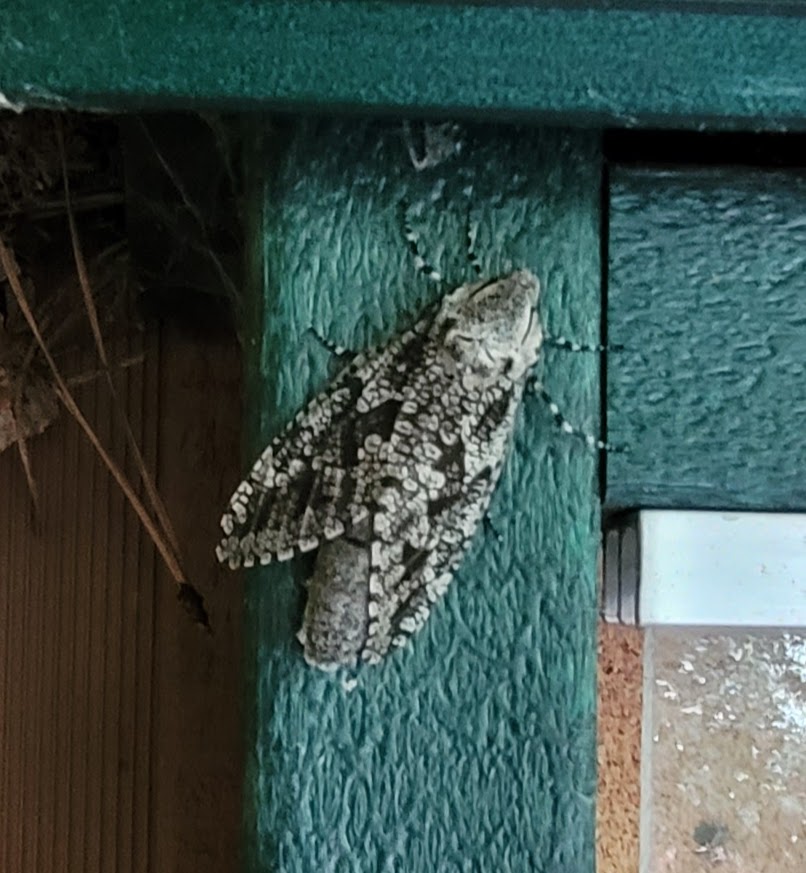
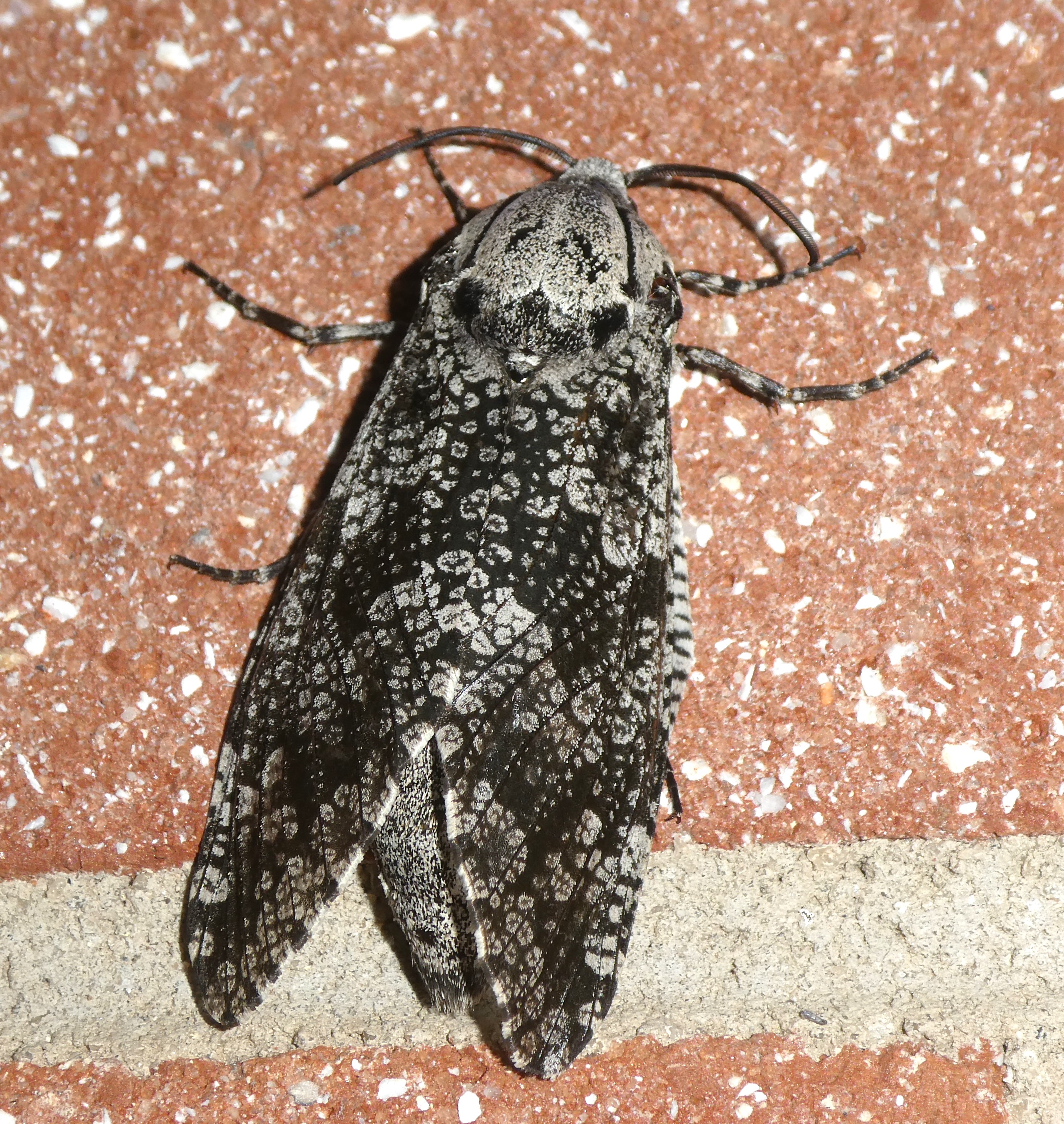
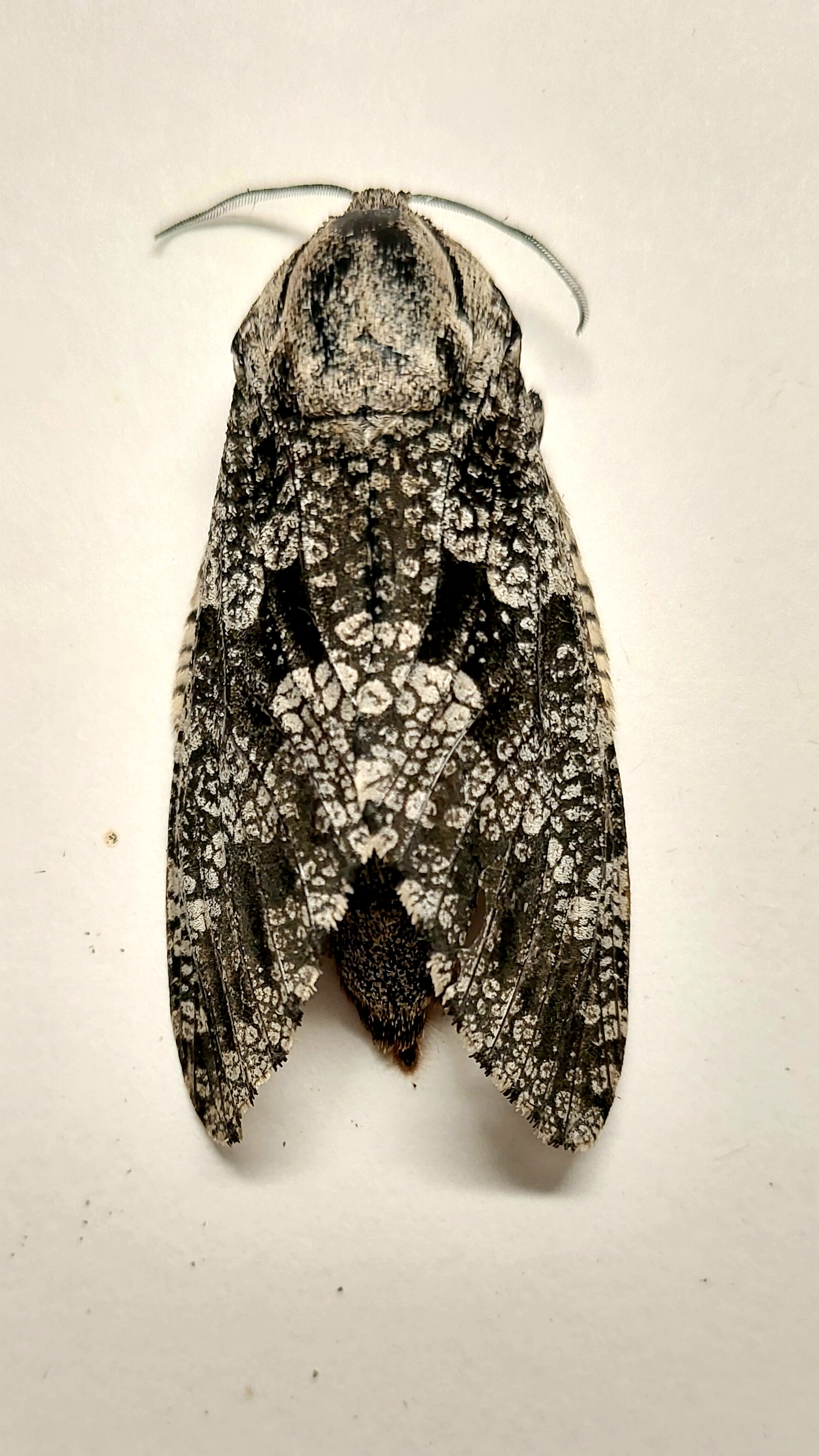
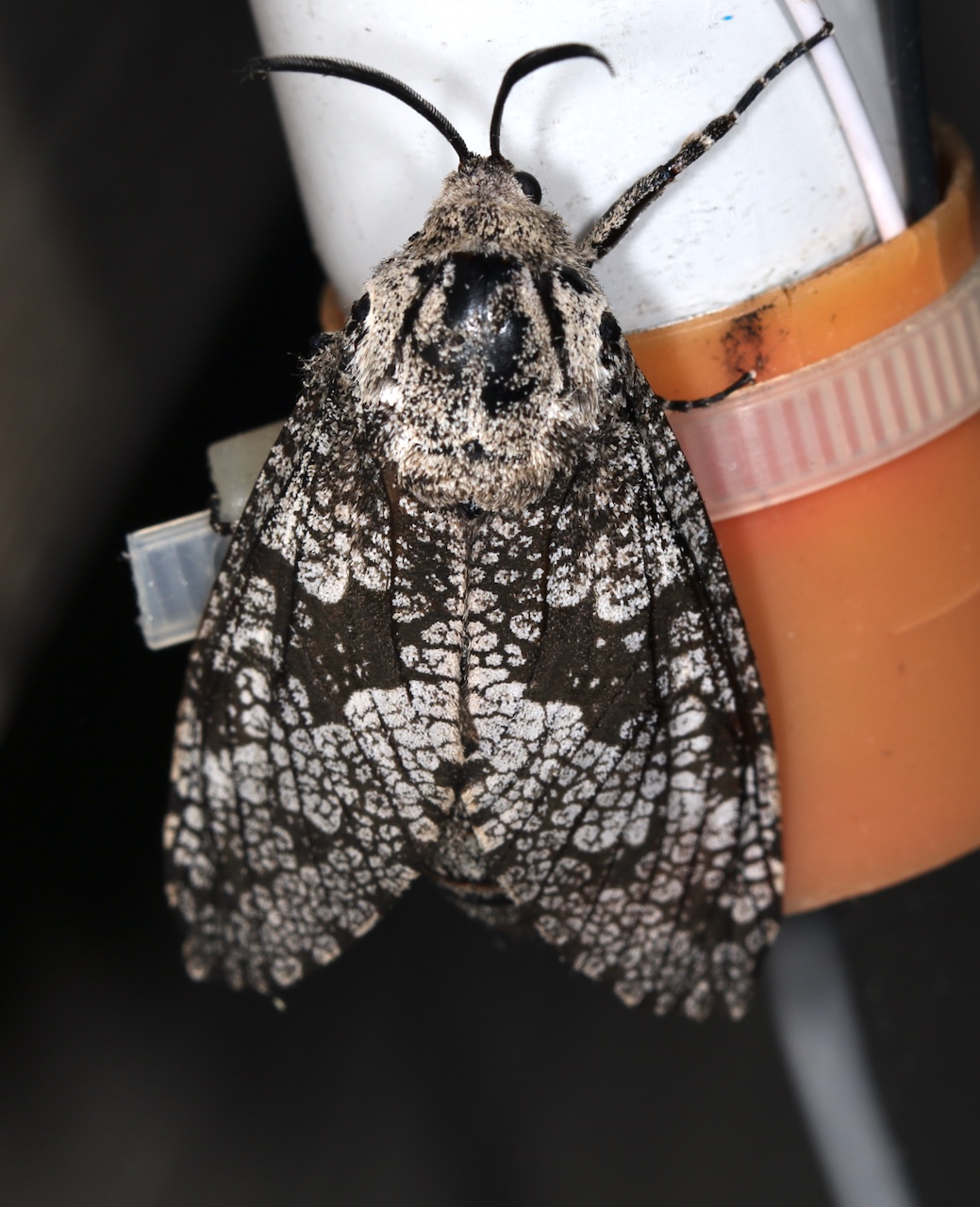
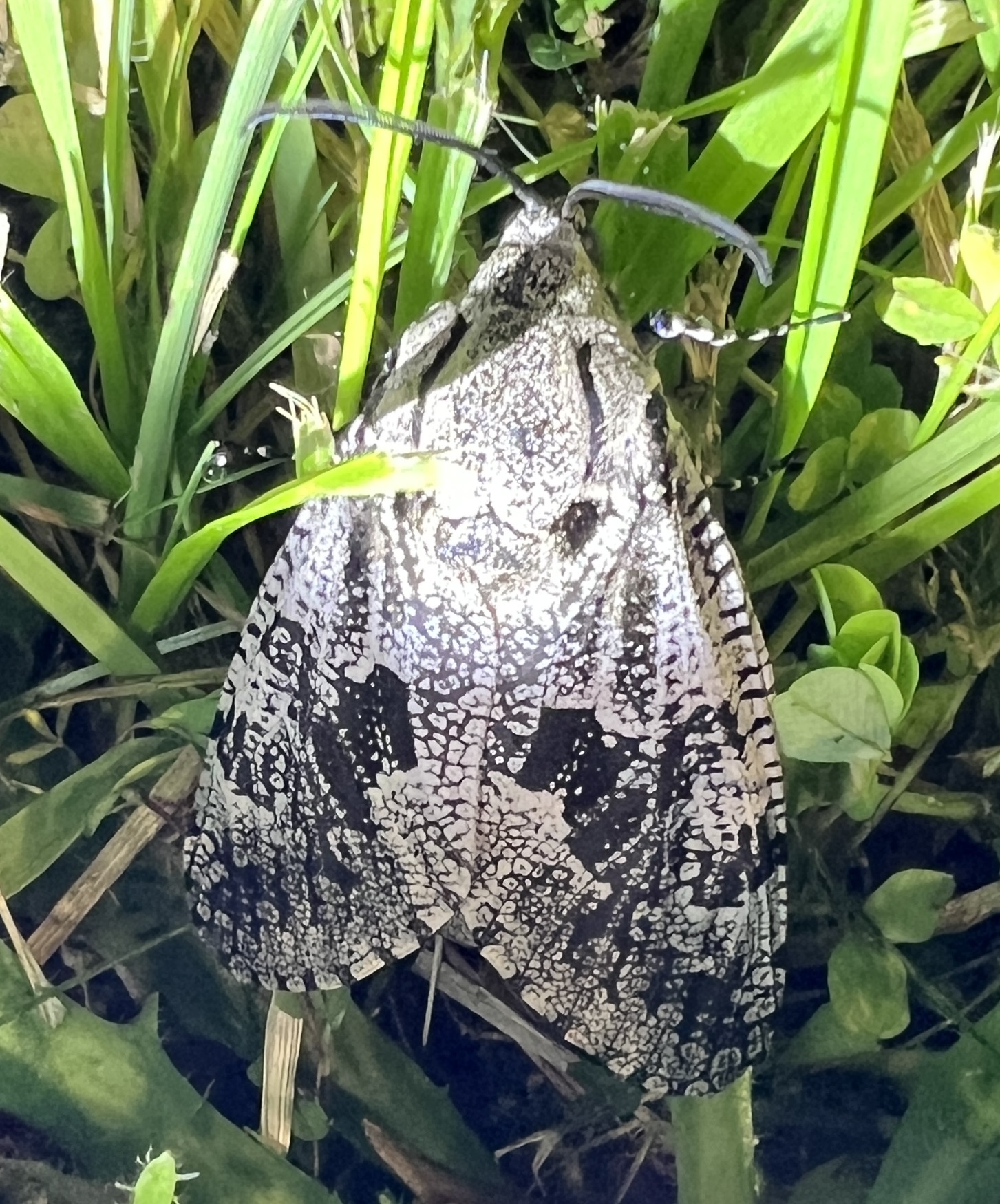
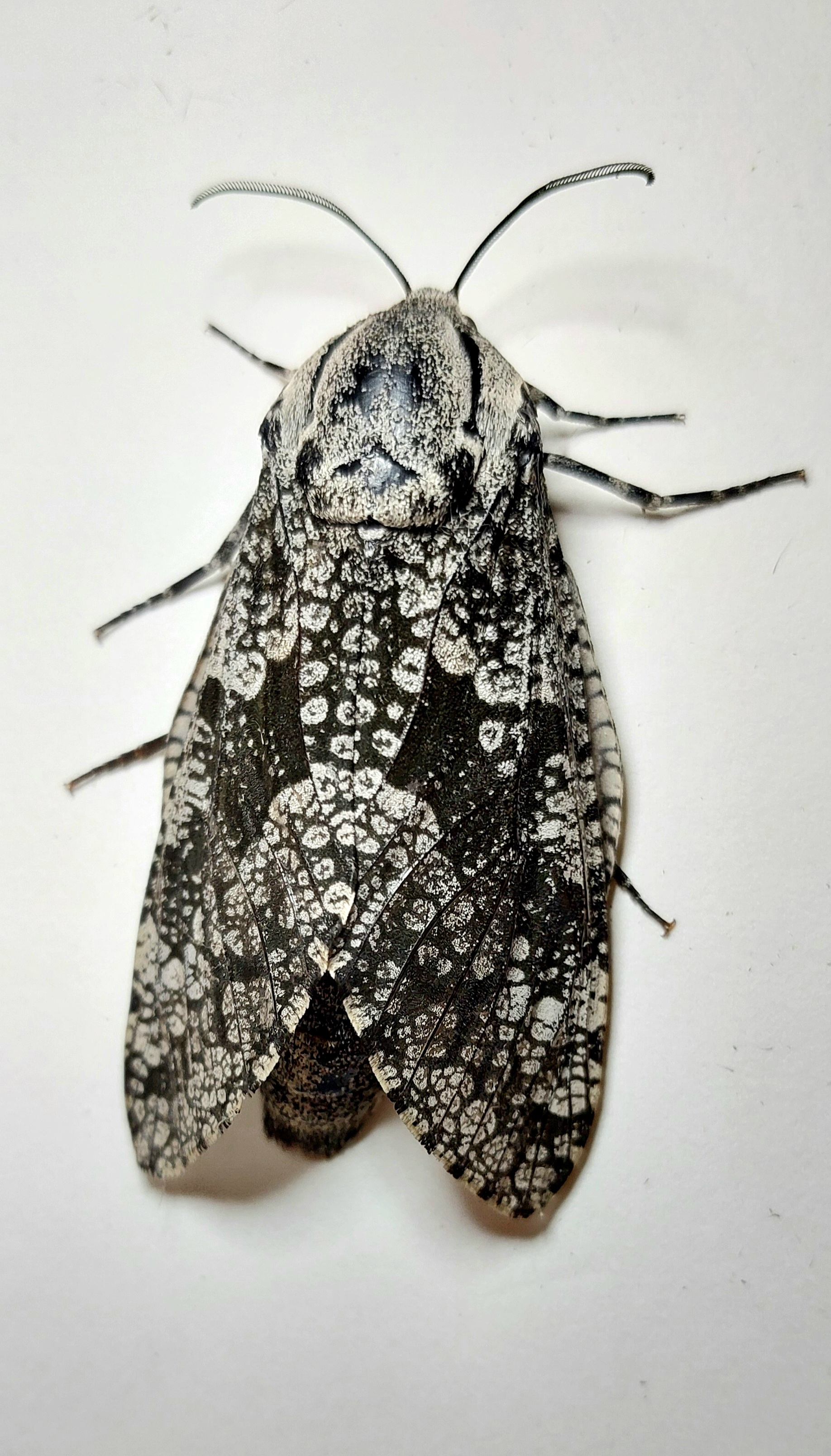
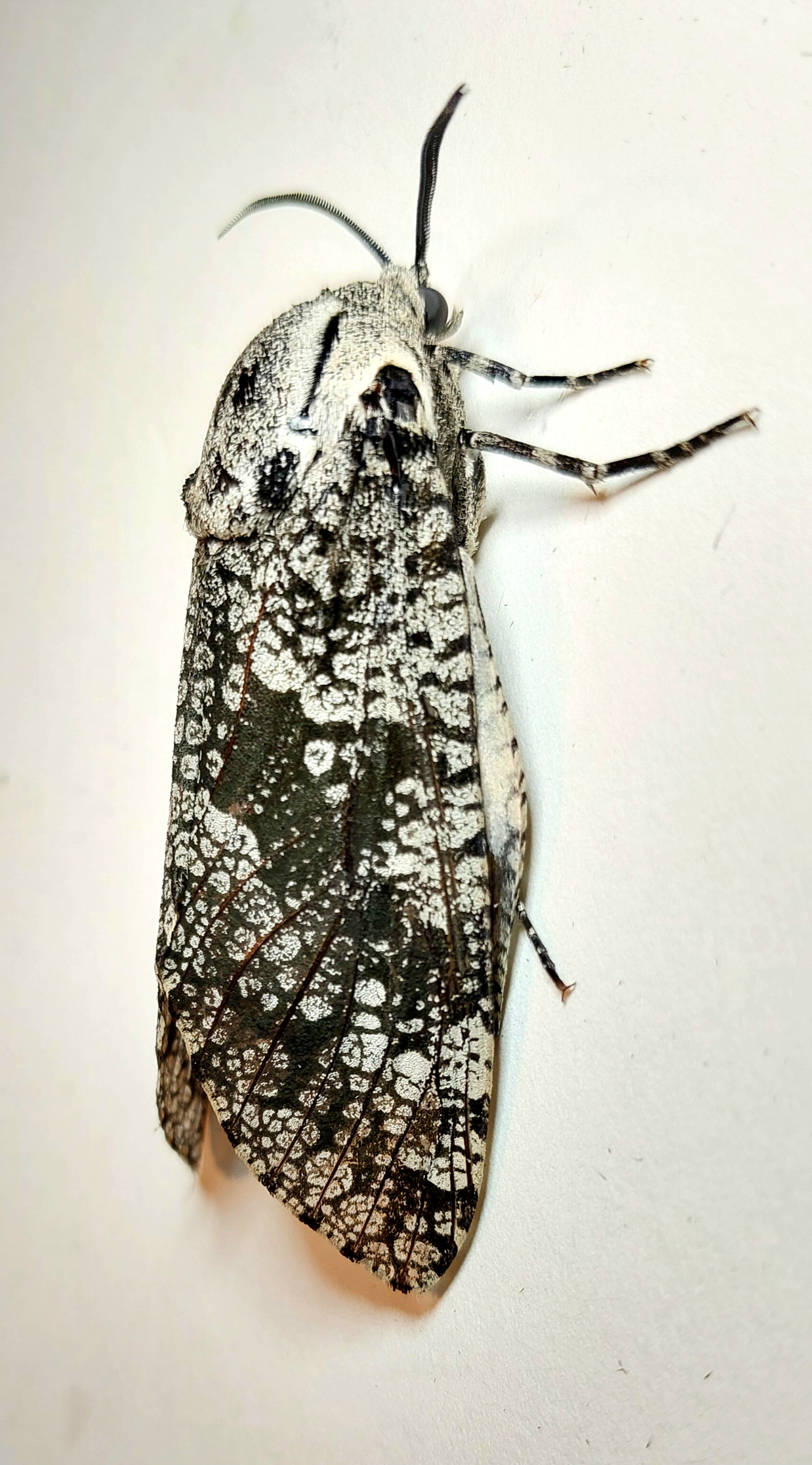
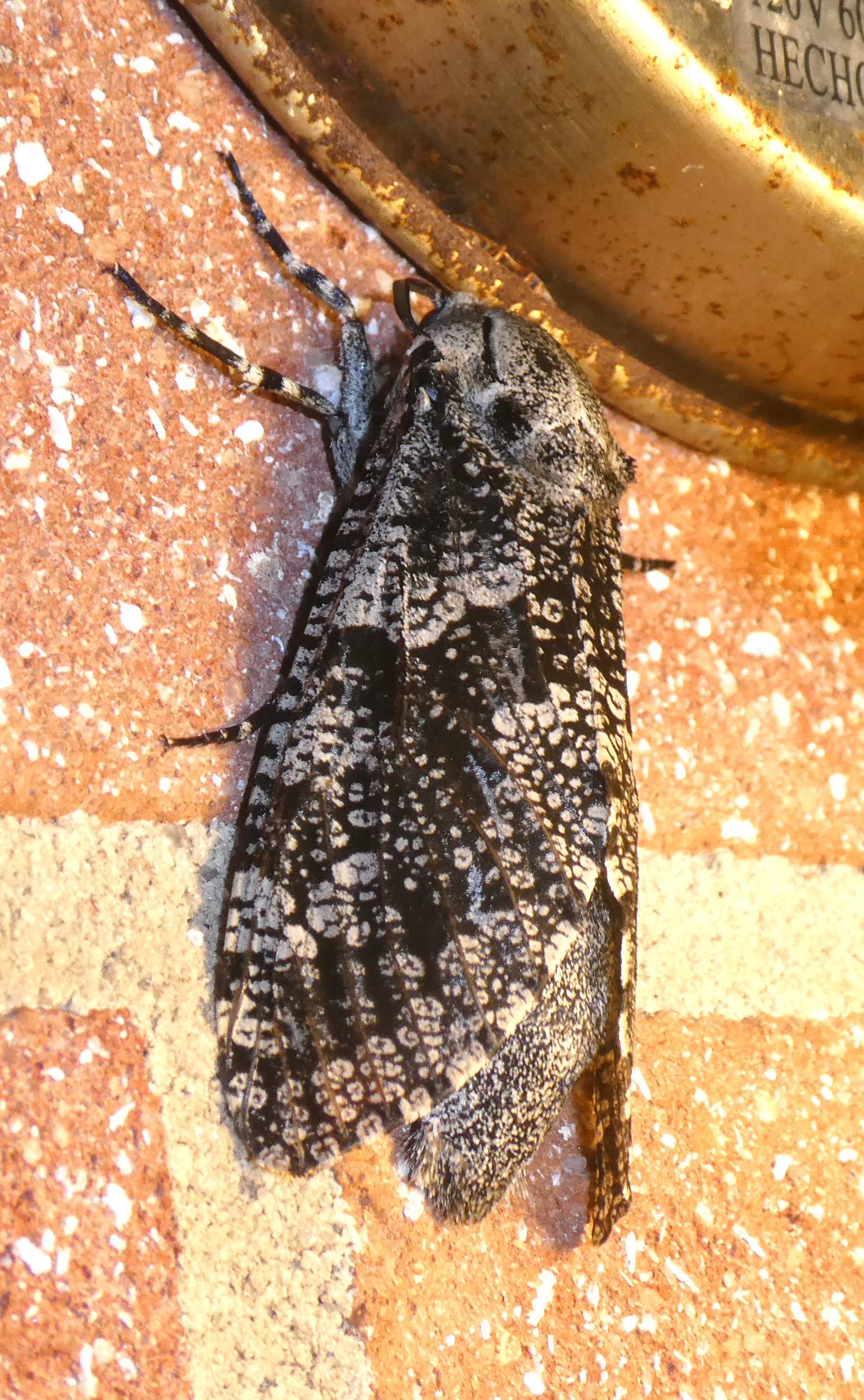
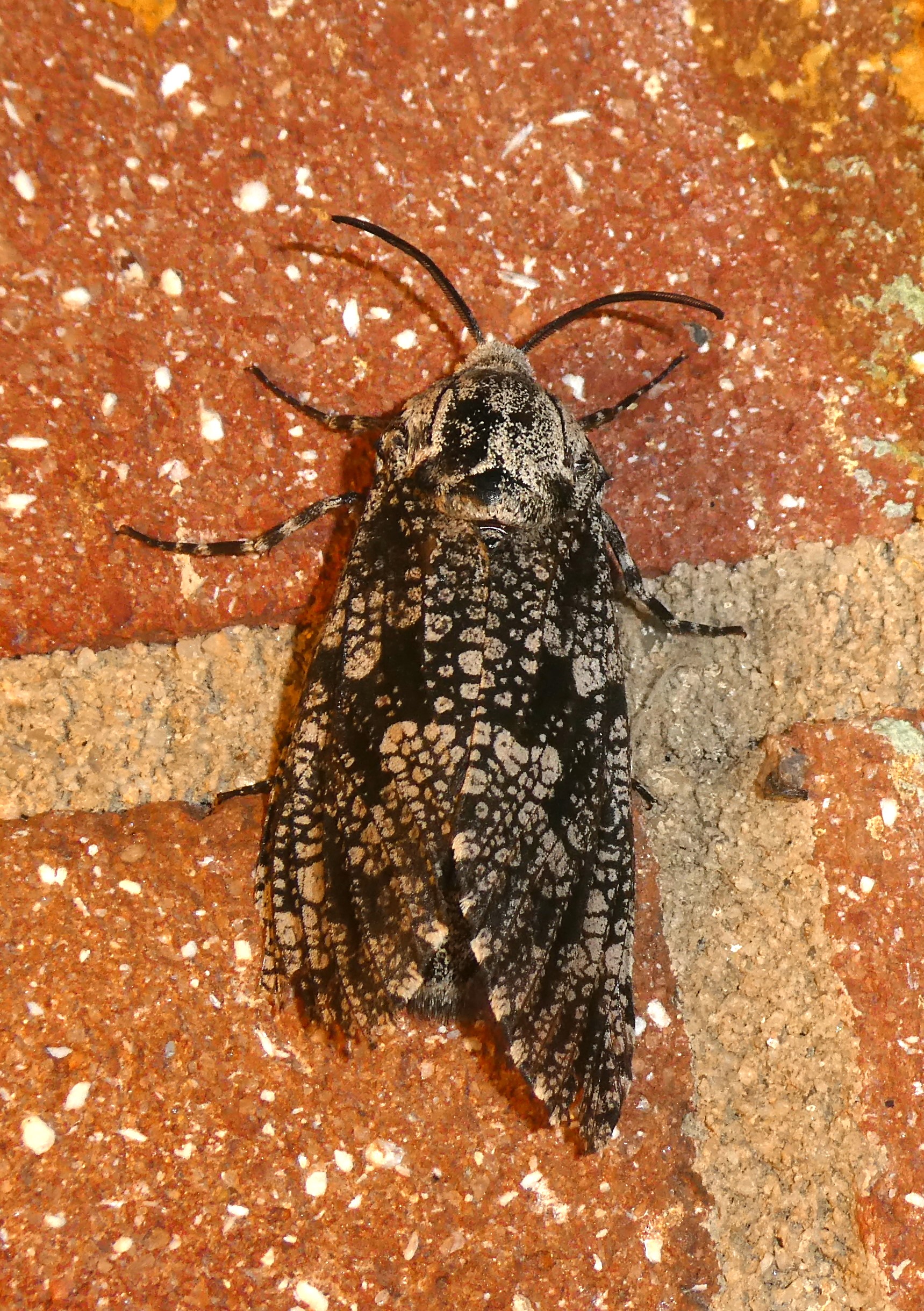
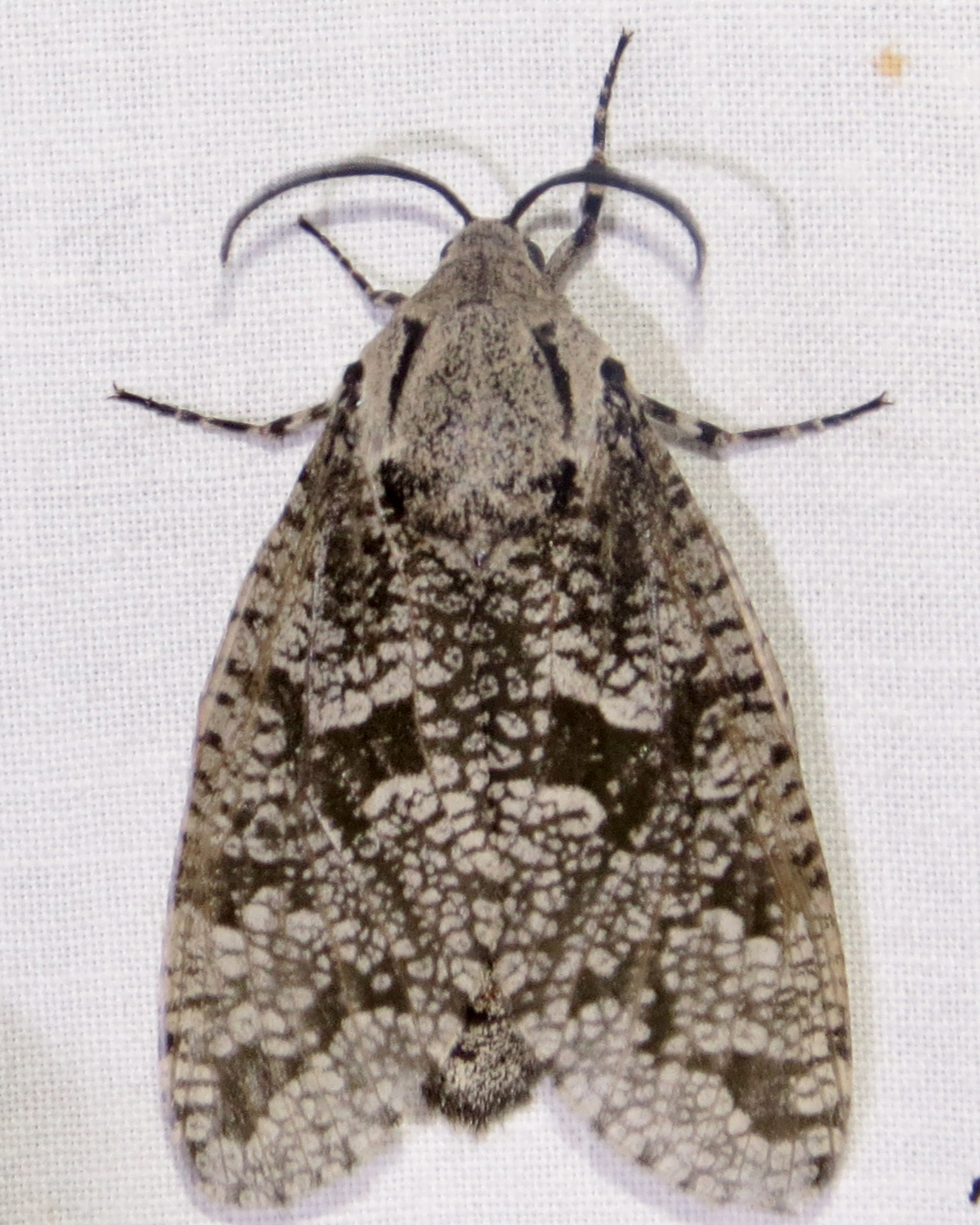
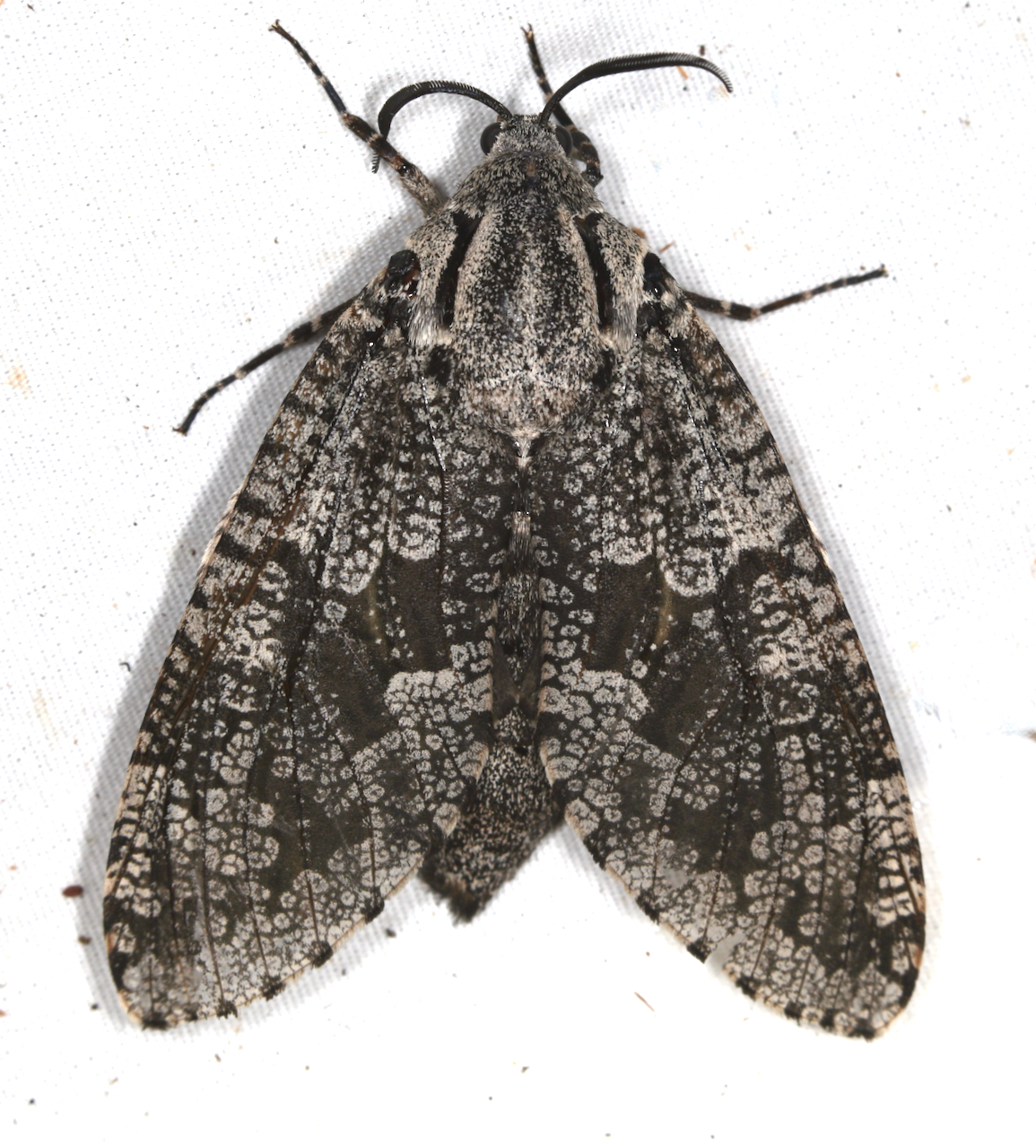
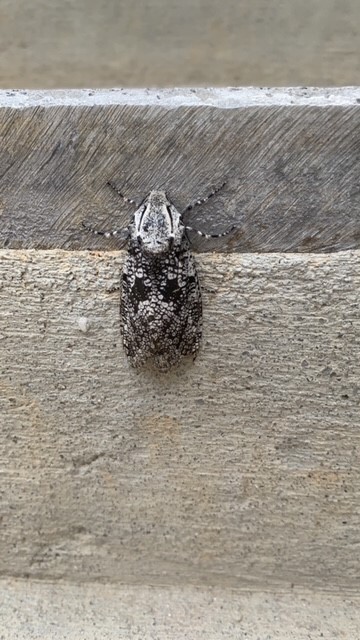
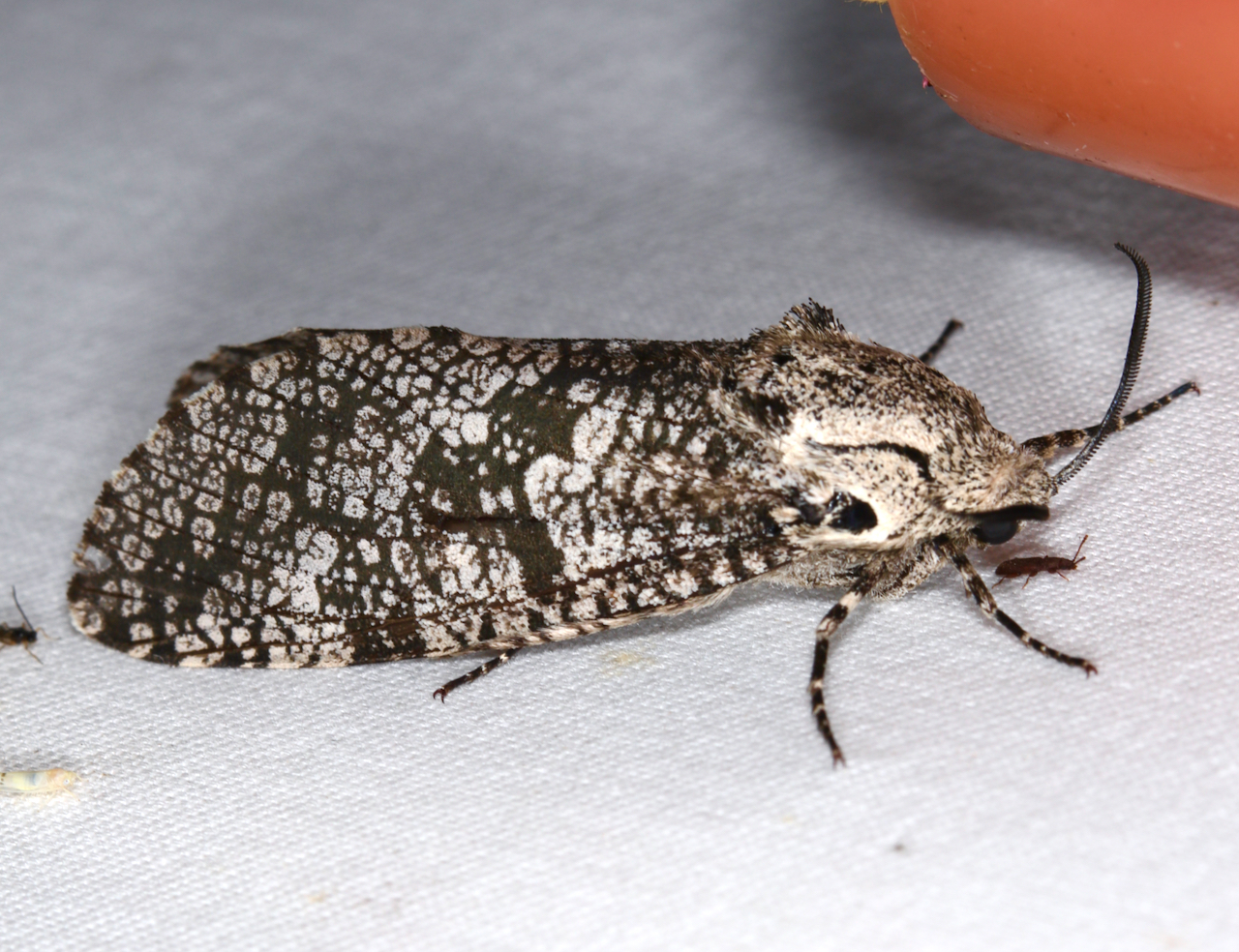
This is a large, chunky moth that has a thick abdomen, broad thorax, and a disproportionally small head with blackish, pectinate antennae. The head and thoracic region are heavily peppered with black and white scales, and there is a black longitudinal line along each side of the thorax. The forewing of the female has numerous thin black lines that form a finely reticulated pattern that is overlain by a large, angulated, median black blotch near the middle of the wing. The terminal fringe has an alternating series of black and white squarish marks, while the costa has a series of small blackish spots along its entire length. The hindwing is translucent gray, and the outer portions of the legs black with white spots. Males are similar to the females, but are much smaller, have narrower wings, and are darker overall. The hindwing is conspicuously different in being reddish-orange to yellow except for the blackish basal third and margins of the wing.
This species might be confused with
P. macmurtrei
, but the forewing of the latter lacks the reticulated pattern of
P. robiniae
, and has a series of irregular, transverse lines that cross the wing.
Wingspan:
50-75 mm (Forbes, 1923); 43-85mm (Covell, 1984).
Adult Structural Features:
Length from tip of head to apex of forewing at rest averages 44.5 mm (n = 2 female).
Adult ID Requirements:
Identifiable from good quality photos of unworn specimens.
Immatures and Development:
The larvae are borers on a variety of hardwood trees. The following is a summary of the life cycle as described by Solomon (1995). The adults emerge in late-April to early-July depending on the latitude, and mating occurs in the afternoon. Each female lays 200-1,000 dark, olive-brown eggs that are 2-3 mm long. The eggs are laid either singly or in small groups in bark crevices, under vines and in other hidden locations, and hatch after 10-13 days. The hatchlings either construct a shelter made of silk webbing and bark at the site of hatching, or wander off and do the same elsewhere. They then bore into the wood and initially feed in the cambium and phloem. Soon thereafter they create crooked galleries in the sapwood that are expanded with time. Frass is mostly deposited outside using the initial bore hole that is expanded with time. The galleries of older larvae are 12-16 mm wide and 12-22 cm long, and often extend obliquely upward initially, then turn straight up in the sapwood and heartwood.
The larval period can last 1-2 years in the South and 2-4 years in the North, depending on the length of the growing season. Just before pupating, each larva chews away a side of its gallery to provide an exit for the pupa. It then partially lines the galley with yellowish-brown silk threads and pupates in the innermost part of the gallery. After three to six weeks of development, the pupa wriggles to the exit hole and partially pushes through before the adult emerges. Solomon (1995) noted that the females are often so full of eggs that they cannot fly until they have deposited large numbers of eggs on the tree from which they emerged.
The hatchlings are 6 mm long and reddish-pink with dark heads. They gradually become greenish-white with age. The mature larvae are 50-75 mm long, with long, shiny dark-brown heads and powerful black mandibles. The abdomen is greenish-white with pink shading. Raised reddish bumps are present along the dorsum and sides that complement the reddish, oval spiracles. The pupae are dark, shiny brown, and 37-50 mm long, with a pair of toothed bands on the dorsal surface of the abdominal segments. Although large numbers of eggs and hatchlings are produced by the females, most are lost to predators such as spiders, carabid beetles and woodpeckers.
Larvae ID Requirements:
Identifiable from good quality photos, especially where associated with known host plants.
Distribution in North Carolina
Distribution:
Prionoxystus robiniae
is found throughout all of the US and all of southern Canada wherever hardwood or mixed hard-conifer forests are present. In the US the range extends from Maine to southern Florida, and westward to California, Oregon and Washington. In Canada, specimens have been recorded from British Columbia eastward to Nova Scotia and Prince Edward Island. This species occurs statewide in North Carolina, but is more common in the Piedmont and Blue Ridge where hardwoods abound. It appears to be absent or rare at higher elevations in the Blue Ridge.
County Map:
Clicking on a county returns the records for the species in that county.
Flight Dates:
High Mountains (HM) ≥ 4,000 ft.
Low Mountains (LM) < 4,000 ft.
Piedmont (Pd)
Coastal Plain (CP)
Click on graph to enlarge
Flight Comments:
The adults fly year-round in Florida and mostly from March through August elsewhere in the US. The flight season in Canada and other northern localities is typically limited to two or three months during the summer. As of 2025, our records extend from late-March to early-August, with the peak flight typically from April through June.
Habitats and Life History
Habitats:
Most of our records come from stands of hardwoods growing in bottomlands or mesic slopes. A few, however, come from xeric sites, including maritime forests, sandhills, and dry ridge tops.
Larval Host Plants:
The larvae bore into the wood of a wide variety of deciduous trees and a few shrubs, with over 125 species documented as hosts as of 2025 (Forbes, 1923; Craighead et al., 1950; English, 1958; Prentice, 1966; Baker, 1972; Solomon and Hay, 1974; Covell, 1984; Covell, 2005; Heppner, 2007; Robinson et al., 2010; Shropshire and Tallamy, 2025). Examples of the reported hosts include Box-elder (
Acer negundo
), Groundsel-tree (
Baccharis halimifolia
), American Chestnut (
Castanea dentata
), Sweet Chestnut (
C. sativa
), Sugarberry (
Celtis laevigata
), fig (
Ficus
), Green Ash (
Fraxinus pennsylvanica
), Overlap Oak (
Quercus lyrata
), members of the red oak group (
Quercus
spp.), American Sycamore (
Platanus occidentalis
), Balsam Poplar (
Populus balsamifera
), Eastern Cottonwood (
P. deltoides
), Quaking Aspen (
P. tremuloides
), White Oak (
Quercus alba
), Turkey Oak (
Q. laevis
), Live Oak (
Q. virginiana
), Black Locust (
Robinia pseudoacacia
), willows (
Salix
), American Elm (
Ulmus americana
), and English Elm (
U. procera
). -
View
Observation Methods:
Both sexes attracted to lights, though females are seen more commonly than males. Since the mouthparts of the adults are rudimentary, they do not feed and consequently do not come to bait or visit flowers
Wikipedia
Status in North Carolina
Natural Heritage Program Status:
Natural Heritage Program Ranks:
G5 [S5]
State Protection:
Has no legal protection, although permits are required to collect it in state parks and on other public lands.
Comments:
This species is widespread in North Carolina and uses a wide variety of habitats, some very common. Consequently, it appears to be secure within the state.
Photo Gallery for
Prionoxystus robiniae
- Carpenterworm Moth
94 photos are available. Only the most recent 30 are shown.
Recorded by: Jim Petranka on 2025-06-20
Madison Co.
Comment:
Recorded by: Jeff Niznik, David George, Larry Chen, Sarah Toner, Joye Zhou on 2025-06-20
Richmond Co.
Comment:
Recorded by: Mark Basinger on 2025-05-03
Brunswick Co.
Comment:
Recorded by: Giuseppi Betta on 2025-04-23
Anson Co.
Comment:
Recorded by: Mark Basinger on 2025-04-19
Brunswick Co.
Comment:
Recorded by: Mark Basinger on 2025-04-19
Brunswick Co.
Comment:
Recorded by: Jeff Niznik on 2025-04-19
Orange Co.
Comment:
Recorded by: Brian Bockhahn on 2025-04-18
New Hanover Co.
Comment:
Recorded by: Owen McConnell on 2024-06-28
Graham Co.
Comment:
Recorded by: Mark Basinger on 2024-06-24
Yancey Co.
Comment:
Recorded by: Jim Petranka on 2024-06-10
Madison Co.
Comment:
Recorded by: Jim Petranka on 2024-06-10
Madison Co.
Comment:
Recorded by: Jim Petranka on 2024-06-06
Madison Co.
Comment:
Recorded by: Michael P. Morales on 2024-05-31
Cumberland Co.
Comment:
Recorded by: Michael P. Morales on 2024-05-31
Cumberland Co.
Comment:
Recorded by: Simpson Eason on 2024-05-28
Durham Co.
Comment:
Recorded by: Mark Basinger on 2024-05-22
Wilson Co.
Comment:
Recorded by: Jim Petranka on 2024-05-20
Madison Co.
Comment:
Recorded by: Stephen Dunn on 2024-05-20
Orange Co.
Comment:
Recorded by: Mark Basinger on 2024-05-19
Rowan Co.
Comment:
Recorded by: Mark Basinger on 2024-05-19
Rowan Co.
Comment:
Recorded by: Simpson Eason on 2024-05-17
Durham Co.
Comment:
Recorded by: Simpson Eason on 2024-04-19
Durham Co.
Comment:
Recorded by: tom ward on 2023-07-11
Buncombe Co.
Comment:
Recorded by: Jim Petranka on 2023-07-03
Madison Co.
Comment:
Recorded by: Jim Petranka on 2023-06-28
Madison Co.
Comment:
Recorded by: L. Knepp on 2023-06-21
Surry Co.
Comment:
Recorded by: Jim Petranka on 2023-06-06
Madison Co.
Comment:
Recorded by: Jim Petranka on 2023-06-05
Madison Co.
Comment:
Recorded by: David George, Stephen Dunn, Jeff Niznik on 2023-06-03
Orange Co.
Comment: