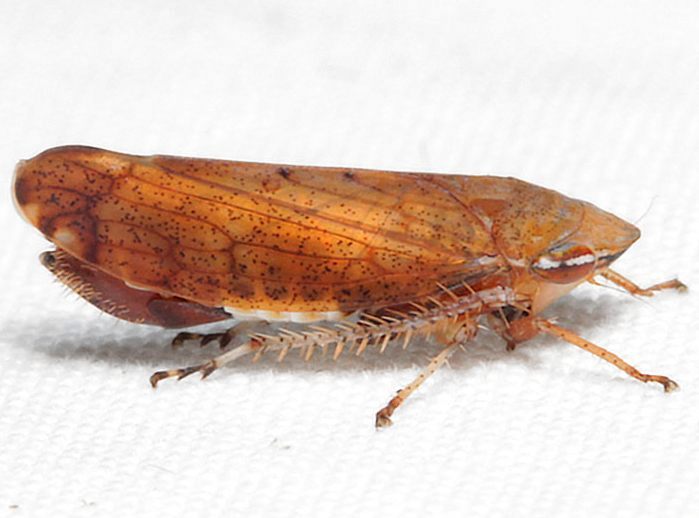
|
|
|
| synonym |
|
| description |
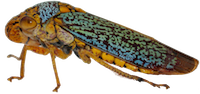
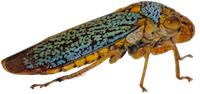
A distinctive looking species: its shape mimics the buds of its plant hosts (UC). It is rufous overall with fine black spots all over the wings and pronotum, characteristic of this species. There is a white band with thin white border going across the sides of the eyes and head. Females have a prominent white band across the middle of an otherwise rufous abdomen; the face is a yellowish color. Nymphs are green with a small blue line across the body lengthwise. There are small black freckles across the body, and the tip of the abdomen is a pink/red color. (BG)
For diagrams of this species, see: 3I. |
| distribution |
Native to Europe, this species was introduced into North America, where it is now widespread in both the United States and Canada (3I). |
| abundance |
Scattered records in the Piedmont and coastal plain; probably more abundant in the right habitat. |
| seasonal_occurrence | |
| habitat |
|
| plant associates |
This species feeds on a wide variety of broad-leafed, woody trees, shrubs and vines. Favorite host plants include privet, boxwood, myrtle, hawthorn, pyracantha, Ceanothus, Cotoneaster, fruit trees in the Rose family (such as cherries, plums, peaches, apricots, apples, and crabapples), and other woody plants in the rose family. (BG) (UC) |
| behavior |
Can be attracted at night with a light. |
| comments |
This is an important pest species that is a vector of plant diseases, including phytoplasmas and X-disease (such as cherry buckskin), some of which can cause serious damage in Rosaceae fruit trees (UC). |
status |
[Native:]
[Introduced:]
[Extirpated:] | | list_type |
[Official:]
[Provisional:] |
| adult_id | Unmistakable and widely known Identifiable from good quality photos of unworn specimens
Identifiable from photos showing undersides, or other specialized views [e.g., legs, face]
Identifiable only by close inspection of structural features or by DNA analysis NULL |
| nymph_id | Unmistakable and widely known Identifiable from good quality photos, especially where associated with known host plants
Identifiable from close inspection of specimens or by DNA analysis
Identifiable only through rearing to adulthood NULL |
| G_rank |
|
| S_rank |
|
| rank_comments |
|
| tribe |
Fieberiellini |
| subgenus |
|
Species Photo Gallery for Fieberiella florii Privet Leafhopper |
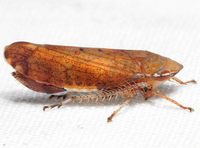 | Photo by: Ken Childs
Out Of State Co.
Comment: | 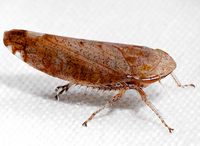 | Photo by: Ken Childs
Out Of State Co.
Comment: |
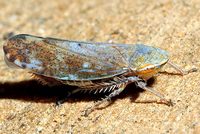 | Photo by: Ken Childs
Out Of State Co.
Comment: | 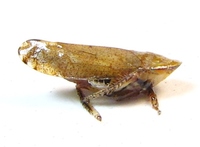 | Photo by: Ken Kneidel
Mecklenburg Co.
Comment: living 8 mm female caught in Tanglefoot on tree band |
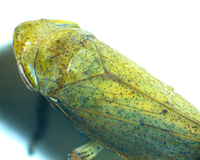 | Photo by: Ken Kneidel
Mecklenburg Co.
Comment: living 8 mm female caught in Tanglefoot on tree band | 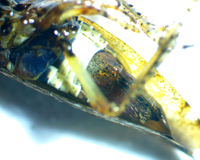 | Photo by: Ken Kneidel
Mecklenburg Co.
Comment: living 8 mm female caught in Tanglefoot on tree band |
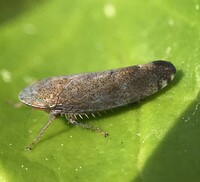 | Photo by: Ted Wilcox
Watauga Co.
Comment: | 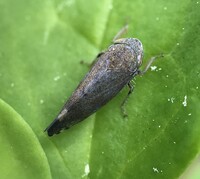 | Photo by: Ted Wilcox
Watauga Co.
Comment: |
|

 »
»