| description |
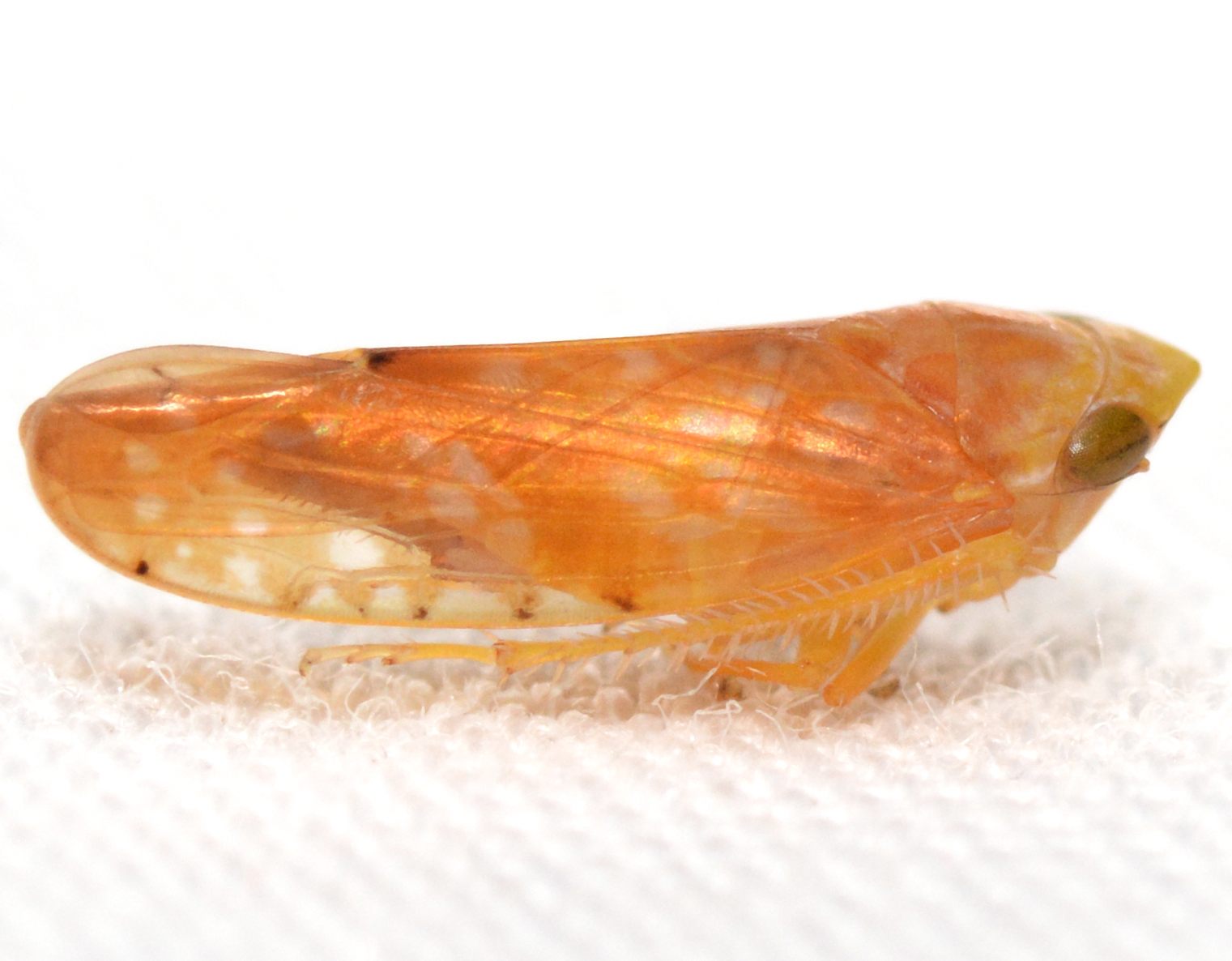
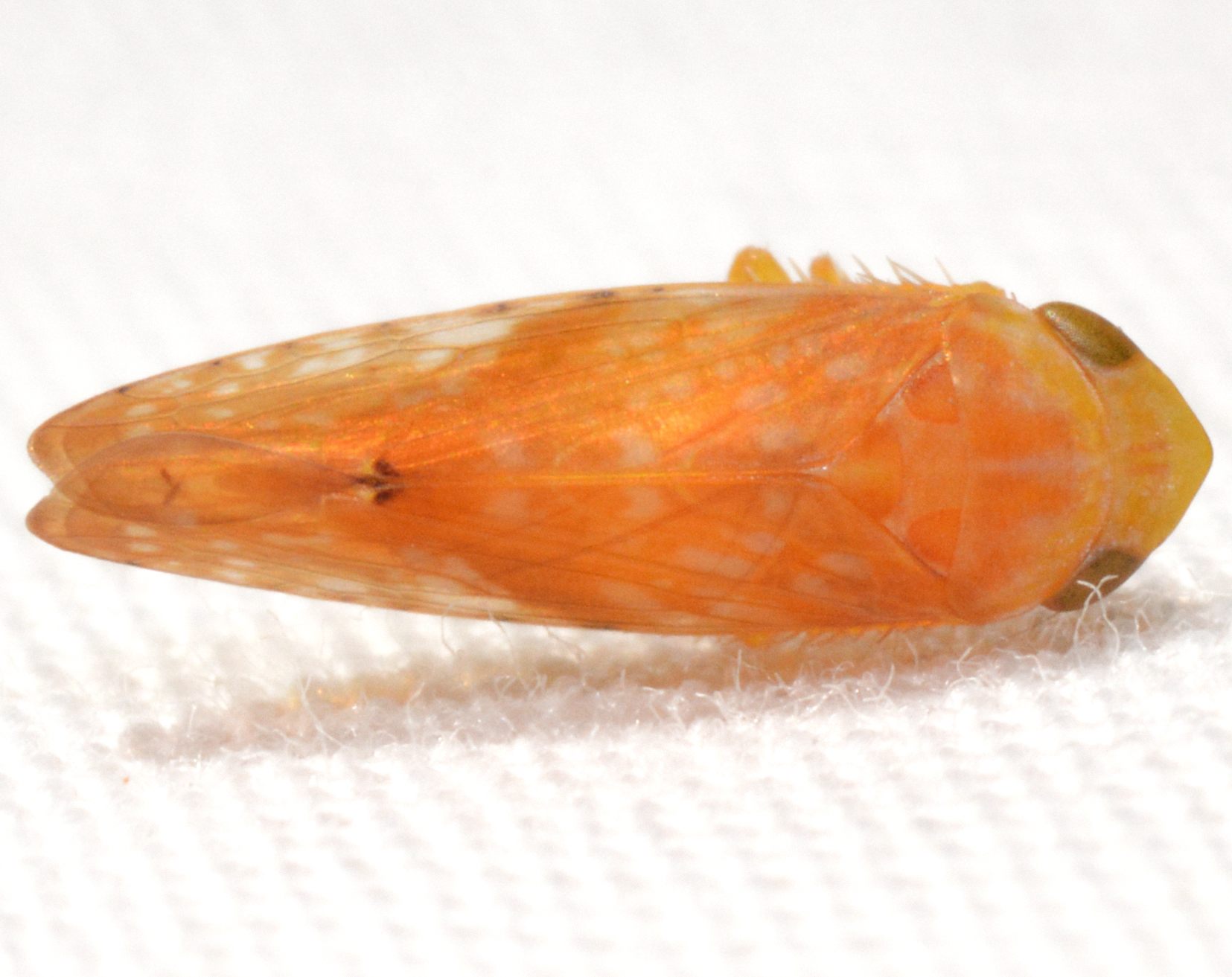
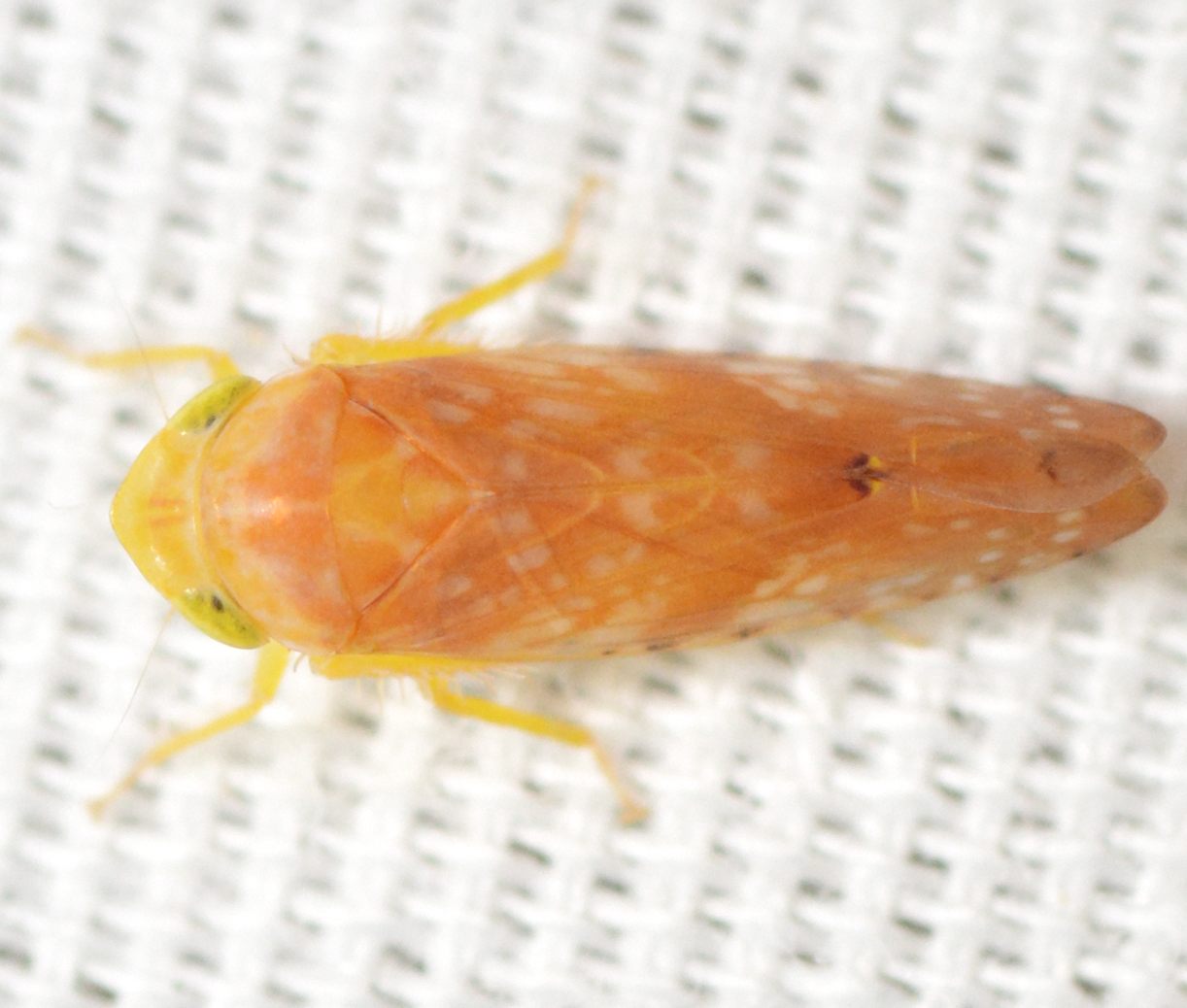
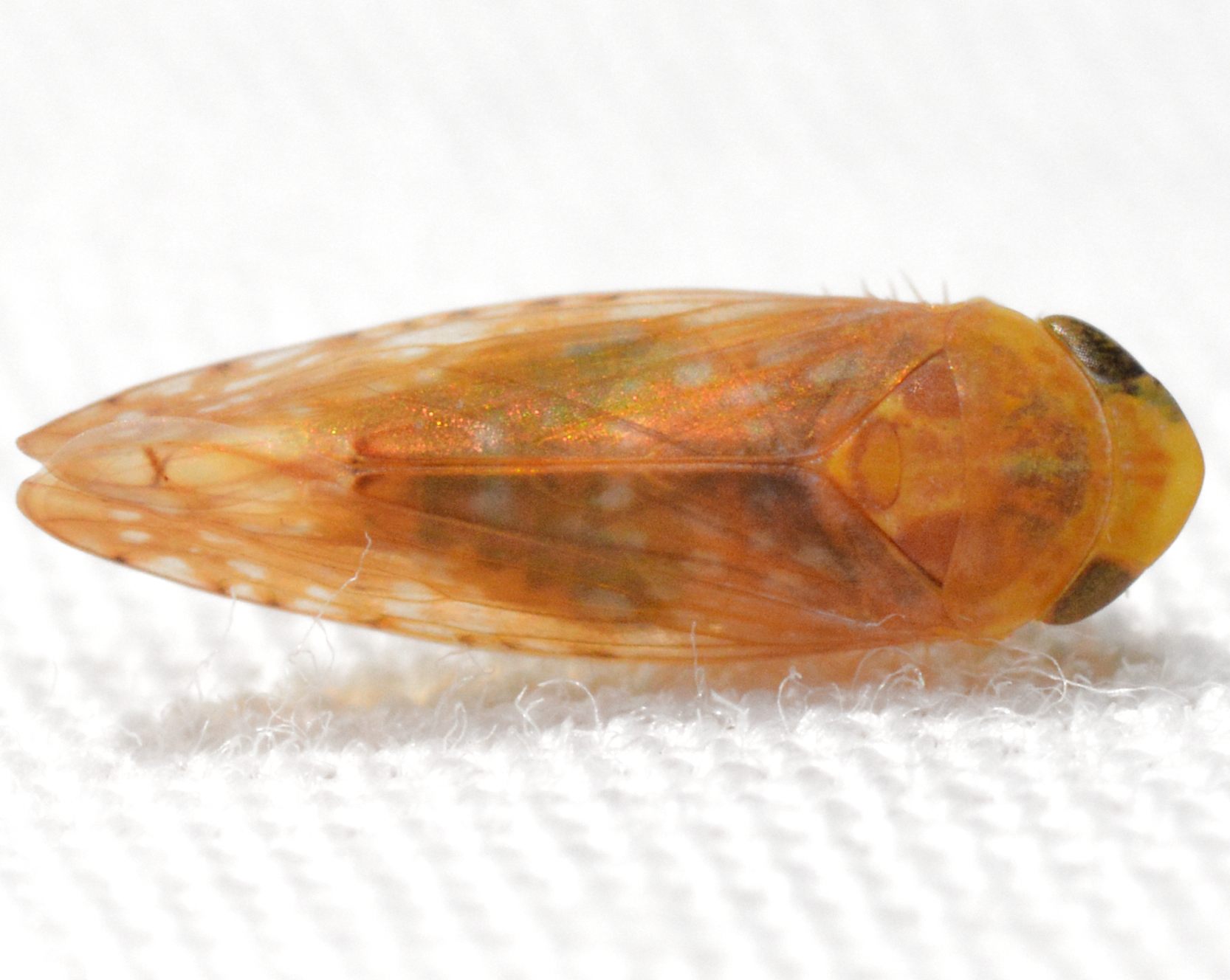
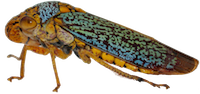
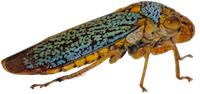
A fairly distinctively patterned orange species, with yellowish head, face, and anterior base of the pronotum; the head is moderately pointed. The eyes are greenish-yellow, and the legs are yellowish with darker coloration at the joints. The posterior half of the pronotum is orange-brown, sometimes with three pale longitudinal markings. The scutellum is yellowish with orange-brown basal corners. There is a thin black line on an otherwise yellow face, below the vertex margin. The forewings are orange-brown with pale speckling; the base of each clavus is a darker brown, and there is an oblique transverse brown band closer to the tips that forms a V. The male subgenital plates are short, triangular and pointed. The posterior margin of the female pregenital sternite has a large rounded lobe on either side of a short median projection. Adult males are 5.0 mm long, females are 6.0-6.5 mm [though based on records collected in NC below, males can range to around 6.0 mm and females to 6.8 mm]. (Hepner, 1947)
For more images of this species, see: BG. For images of a pinned specimen and drawings of various aspects of the species, see: 3I. |
| comments |
This species is part of a taxonomic conundrum. Most authors treat vitellina as belonging to the genus Fitchana, but it has also been placed within Platymetopius as P. vitellinus. While there is limited genetic evidence to suggest that Fitchana and Platymetopius are related, its premature as of right now to synonymize the two genera and we will treat our specimens in North Carolina as belonging to Fitchana.
Additionally, three species were at one point described for North America. However, the rationale for these separations seems unclear. Hepner (1947) noted that vitellina had a wide range across the continent and there was little variation outside of specimens from Tennessee that were slightly larger. C. Dietrich notes the following: "Various authors have treated those other two Fitchana species as synonyms of vitellina. In his catalogue, Metcalf lists them as valid but it’s not clear why. I don’t think anyone has described or illustrated the male genitalia of all 3 based on study of the type specimens, so their status remains unclear." |
Species Photo Gallery for Fitchana vitellina No Common Name |
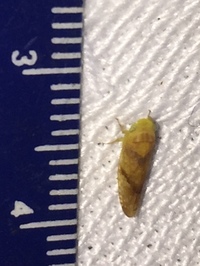 | Photo by: Ken Kneidel
Yancey Co.
Comment: forest edge with small lawn and meadow nearby - unid_leafhopper | 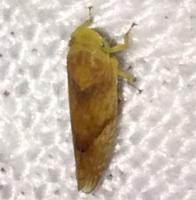 | Photo by: Ken Kneidel
Yancey Co.
Comment: forest edge with small lawn and meadow nearby |
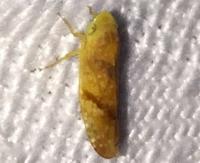 | Photo by: Ken Kneidel
Yancey Co.
Comment: forest edge with small lawn and meadow nearby | 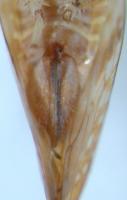 | Photo by: Bo Sullivan
Ashe Co.
Comment: male, 6.0 mm, and female, 7.0 mm |
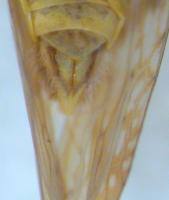 | Photo by: Bo Sullivan
Ashe Co.
Comment: male, 6.0 mm, and female, 7.0 mm | 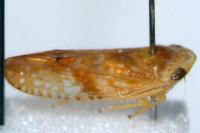 | Photo by: Bo Sullivan
Ashe Co.
Comment: male and female |
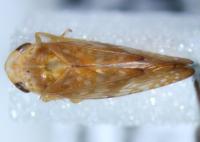 | Photo by: Bo Sullivan
Ashe Co.
Comment: male and female | 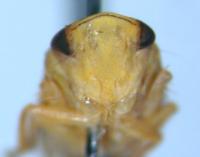 | Photo by: Bo Sullivan
Ashe Co.
Comment: male and female |
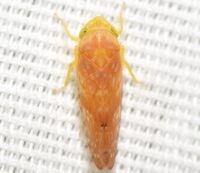 | Photo by: Kyle Kittelberger, Brian Bockhahn
Polk Co.
Comment: 2 male, 1 female | 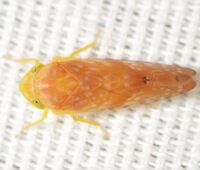 | Photo by: Kyle Kittelberger, Brian Bockhahn
Polk Co.
Comment: 2 male, 1 female |
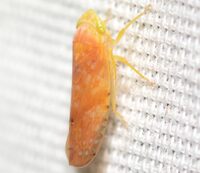 | Photo by: Kyle Kittelberger, Brian Bockhahn
Polk Co.
Comment: 2 male, 1 female | 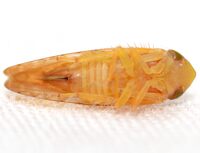 | Photo by: Kyle Kittelberger, Brian Bockhahn
Polk Co.
Comment: 2 male, 1 female |
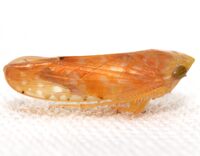 | Photo by: Kyle Kittelberger, Brian Bockhahn
Polk Co.
Comment: 1 female (6.8 mm), 2 male ( mm) | 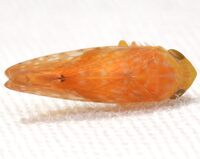 | Photo by: Kyle Kittelberger, Brian Bockhahn
Polk Co.
Comment: 1 female (6.8 mm), 2 male ( mm) |
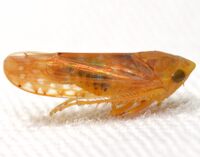 | Photo by: Kyle Kittelberger, Brian Bockhahn
Polk Co.
Comment: 1 female (6.8 mm), 2 male (6.1 mm) | 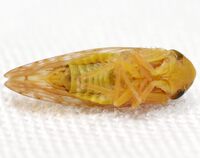 | Photo by: Kyle Kittelberger, Brian Bockhahn
Polk Co.
Comment: 1 female (6.8 mm), 2 male (6.1 mm) |
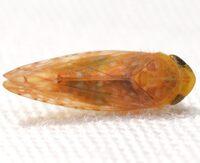 | Photo by: Kyle Kittelberger, Brian Bockhahn
Polk Co.
Comment: 1 female (6.8 mm), 2 male (6.1 mm) | 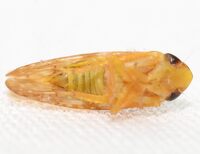 | Photo by: Kyle Kittelberger, Brian Bockhahn
Polk Co.
Comment: males |
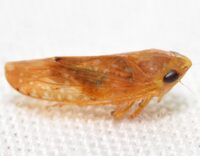 | Photo by: Kyle Kittelberger, Brian Bockhahn
Polk Co.
Comment: males | 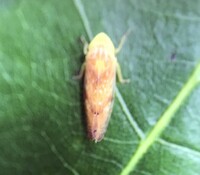 | Photo by: Ted Wilcox
Watauga Co.
Comment: unid_leafhopper |
|

 »
»