| description |
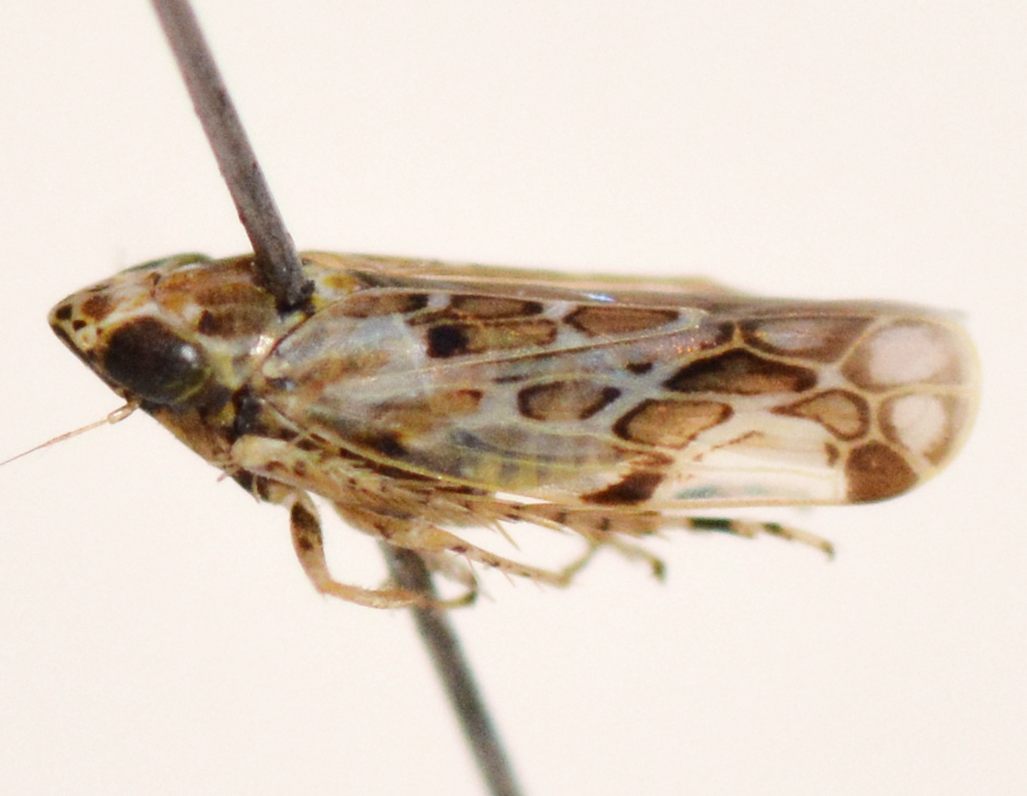
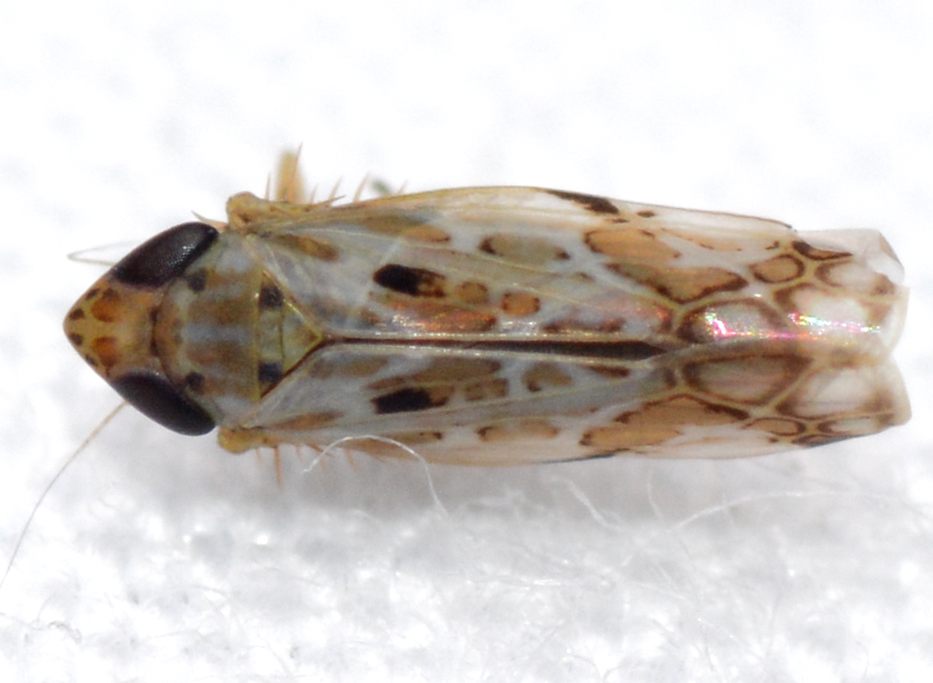
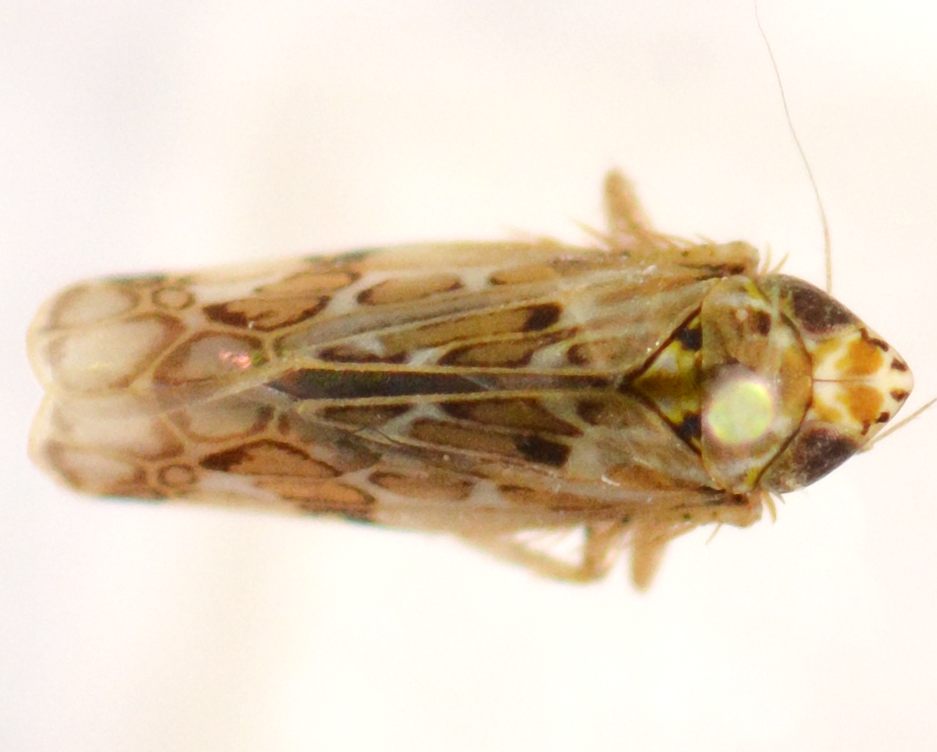
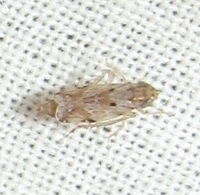
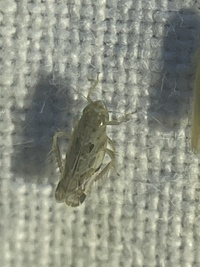
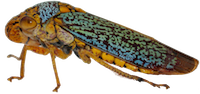
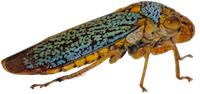
The vertex is creamy, with a pair of black triangular spots near the apex and one on each side of the eyes. There is a pair of large irregular, fuscous to orange-colored spots that form a somewhat broken band between the anterior margins of the eyes; these fuscous spots, contrasting with the smaller black spots along the vertex margin, are characteristic of this species. There is also a pair of oblique fuscous dashes on the base of the vertex. The pronotum is fuscous with five somewhat indistinct pale longitudinal bands (this tends to result in there being four orange longitudinal bands); there is an irregular dark spot behind each eye, along the anterior margin. The scutellum has a spot at the apex (not always present) and a dark spot in each basal angle. The wings are fuscous, with the nervures and venation a contrasting whitish color, margined with fuscous. There are three conspicuous dark, blackish spots on each wing (elytron): one on the middle of the clavus, one on the middle of the costal margin, and the other on the outer (lower) apical cell along the costa. There is a large pale area between the two dark spots along the costal margin, resulting in a fuscous arc of cells connecting each dot. The face is pale with fucous markings and heavy dark arcs. The vertex is bluntly produced, long and coming to a defined pointed apex, almost one-fourth longer in the middle than the width between the eyes. The female pregenital sternite is three times as long as the preceeding sternite, with the posterior margin trilobate. The lateral angles are roundingly produced in definite lobes, between which is a broadly rounded shorter median lobe; there is a distinctly rounded notch on either side of this lobe. The male subgenital plates are long, exceeding the valve by more than twice its length; the plates are concavely narrowed (outer margin) and produced into long acute tips. Adults are around 3.5 mm long. (DeLong 1926, DeLong 1946)
For diagrams of the genitalia of this species, see: 3I. For an image of a pinned specimen, see: BG. |
| comments |
This is the sole member of the genus Crumbana. This species is very similar to Sanctanus tectus in coloration and pattern, with tectus actually described as resembling arundineus but seemingly related to other Sanctanus species (DeLong and Hershberger 1946), and both species actually share the same host plant. Crumbana though tends to be paler overall, with a more pointed vertex that has a different spot pattern compared to Sanctanus tectus: two large orange-fuscous spots with two symmetric small black spots along the vertex margin, with the pair at the apex shaped like triangles. In contrast, tectus has two large black spots on the vertex, and there are black patches along the posterior margin of the vertex and anterior margin of the pronotum. The face pattern is also different, being darker with a dividing pale band in tectus and less dark but more uniformly colored in arundineus. The female pregenital sternites of both species also differ, with the sternite trilobate in arundineus and truncate in tectus.
Nymphs are reported to have a two-generation life-cycle, and have been taken in abundance in early July and in August (DeLong 1926). |
Species Photo Gallery for Crumbana arundinea No Common Name |
 | Photo by: Kyle Kittelberger, Brian Bockhahn, Paul Scharf
Warren Co.
Comment: open to mixed hardwood forest | 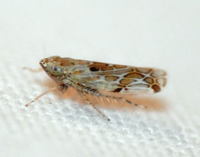 | Photo by: Kyle Kittelberger, Brian Bockhahn, Paul Scharf
Warren Co.
Comment: open to mixed hardwood forest |
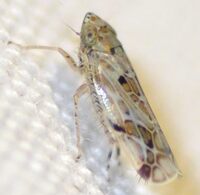 | Photo by: Kyle Kittelberger, Paul Scharf
Gates Co.
Comment: open, grassy area near mixed hardwood forest. Male 3.4 mm long | 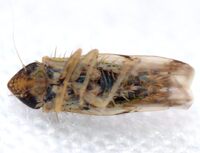 | Photo by: Kyle Kittelberger, Paul Scharf
Gates Co.
Comment: open, grassy area near mixed hardwood forest. Male 3.4 mm long |
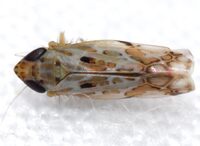 | Photo by: Kyle Kittelberger, Paul Scharf
Gates Co.
Comment: open, grassy area near mixed hardwood forest. Male 3.4 mm long | 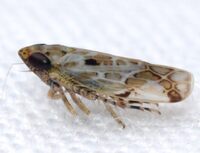 | Photo by: Kyle Kittelberger, Paul Scharf
Gates Co.
Comment: open, grassy area near mixed hardwood forest. Male 3.4 mm long |
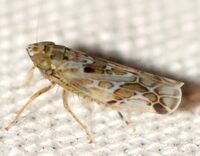 | Photo by: Kyle Kittelberger, Paul Scharf
Beaufort Co.
Comment: open, grassy habitat surrounded by pine and mixed hardwood forest | 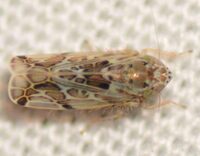 | Photo by: Kyle Kittelberger, Paul Scharf
Beaufort Co.
Comment: open, grassy habitat surrounded by pine and mixed hardwood forest |
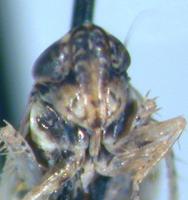 | Photo by: Bo Sullivan
Carteret Co.
Comment: | 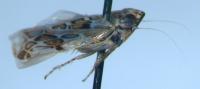 | Photo by: Bo Sullivan
Carteret Co.
Comment: |
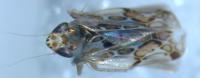 | Photo by: Bo Sullivan
Carteret Co.
Comment: | 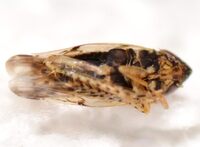 | Photo by: Erich Hofmann
Craven Co.
Comment: male; https://www.inaturalist.org/observations/46406484; photographed by K. Kittelberger |
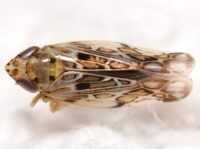 | Photo by: Erich Hofmann
Craven Co.
Comment: male; https://www.inaturalist.org/observations/46406484; photographed by K. Kittelberger | 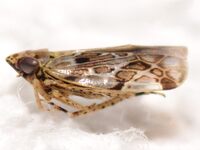 | Photo by: Erich Hofmann
Craven Co.
Comment: male; https://www.inaturalist.org/observations/46406484; photographed by K. Kittelberger |
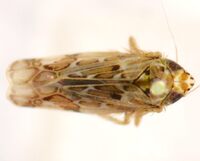 | Photo by: J. Bolling Sullivan
Jones Co.
Comment: males | 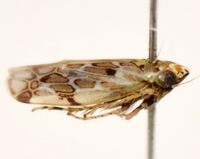 | Photo by: J. Bolling Sullivan
Jones Co.
Comment: males |
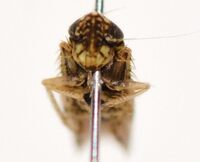 | Photo by: J. Bolling Sullivan
Jones Co.
Comment: males | 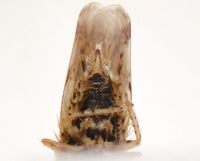 | Photo by: J. Bolling Sullivan
Jones Co.
Comment: males |
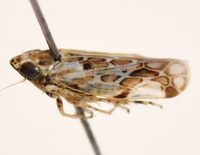 | Photo by: J. Bolling Sullivan
Jones Co.
Comment: males | 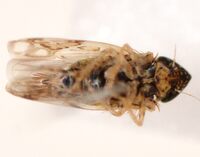 | Photo by: J. Bolling Sullivan
Jones Co.
Comment: males |
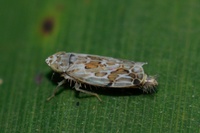 | Photo by: Scott Bolick
Pender Co.
Comment: | 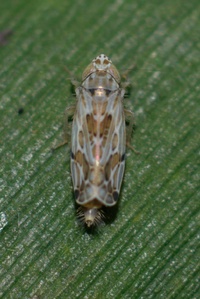 | Photo by: Scott Bolick
Pender Co.
Comment: |
 | Photo by: B. Bockhahn
Cumberland Co.
Comment: Sweep net | 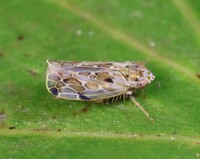 | Photo by: Rob Van Epps
Scotland Co.
Comment: Caught sweeping in grassy area near woods. |
 | Photo by: Larry Chen, Sarah Toner
Tyrrell Co.
Comment: |

 »
»