Moths of North Carolina
Scientific Name:
Common Name:
Family (Alpha):
« Home »
View PDFCarposinidae Members: Bondia Members: 14 NC Records

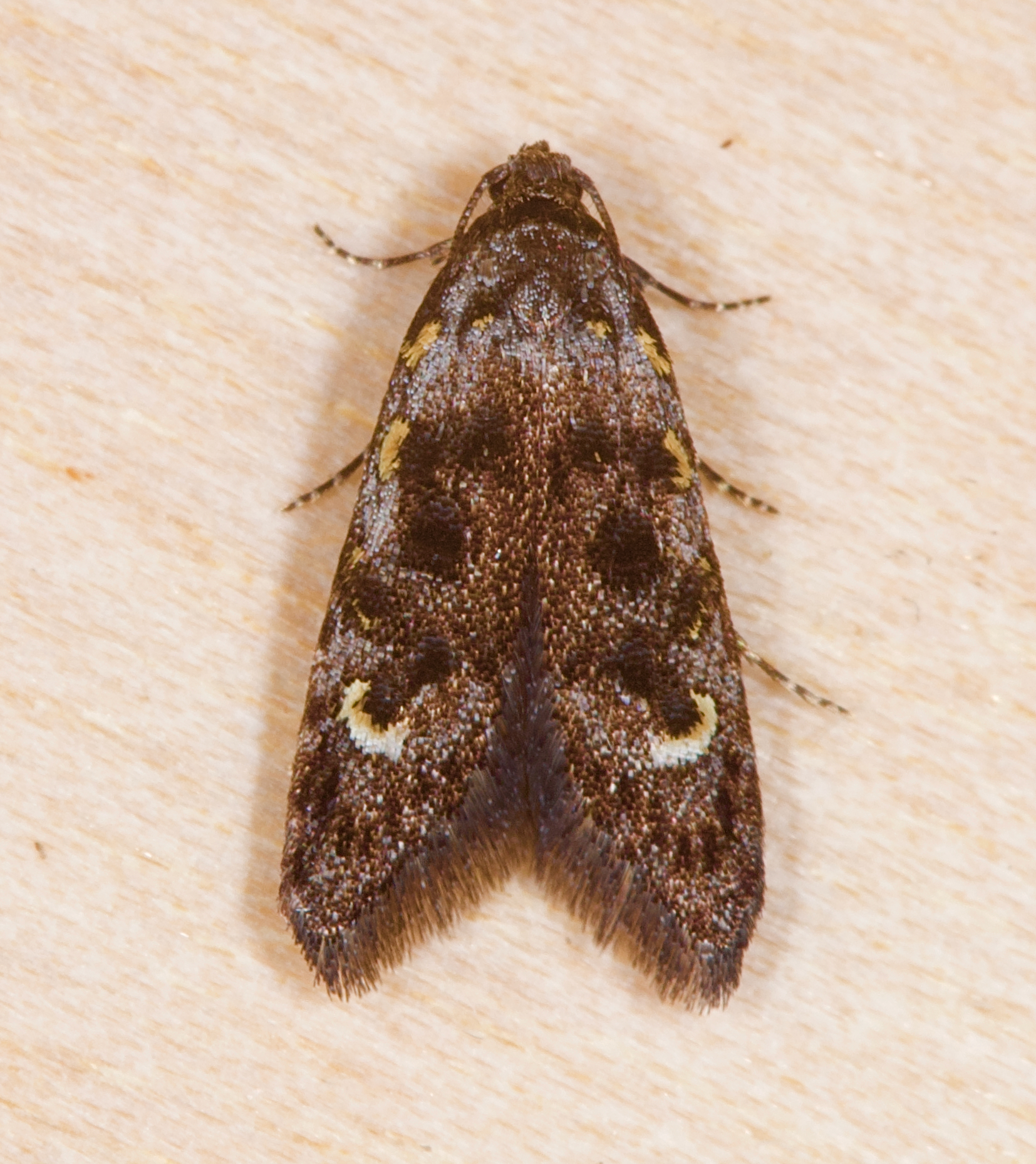
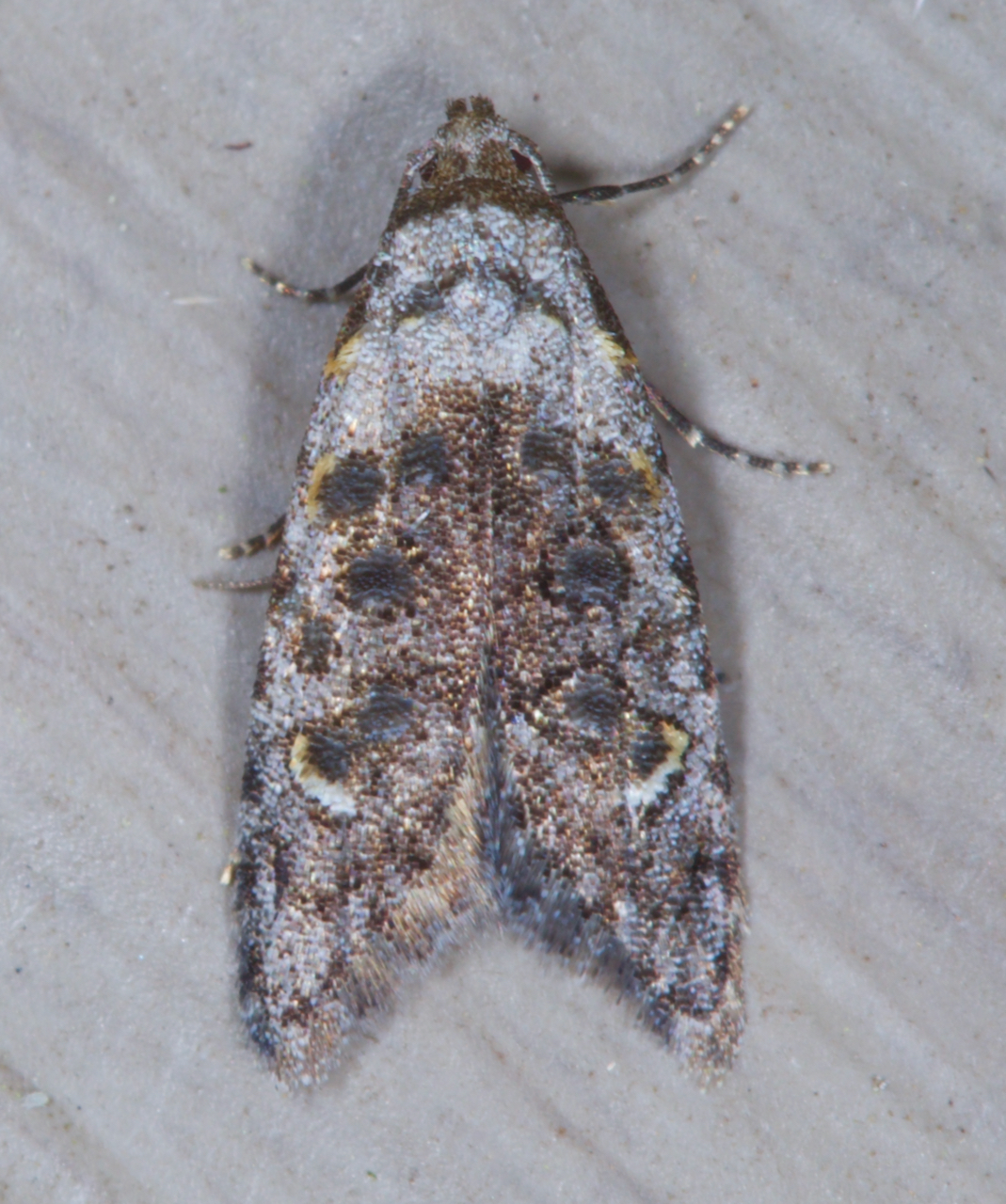
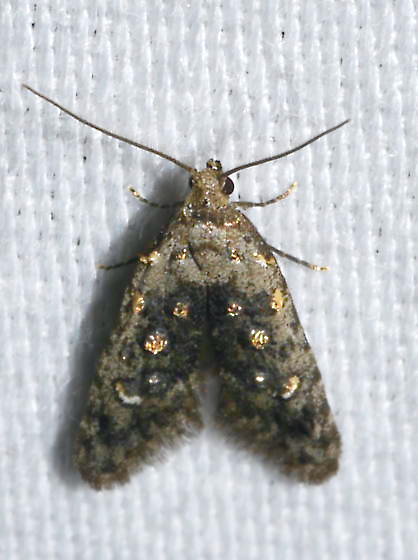
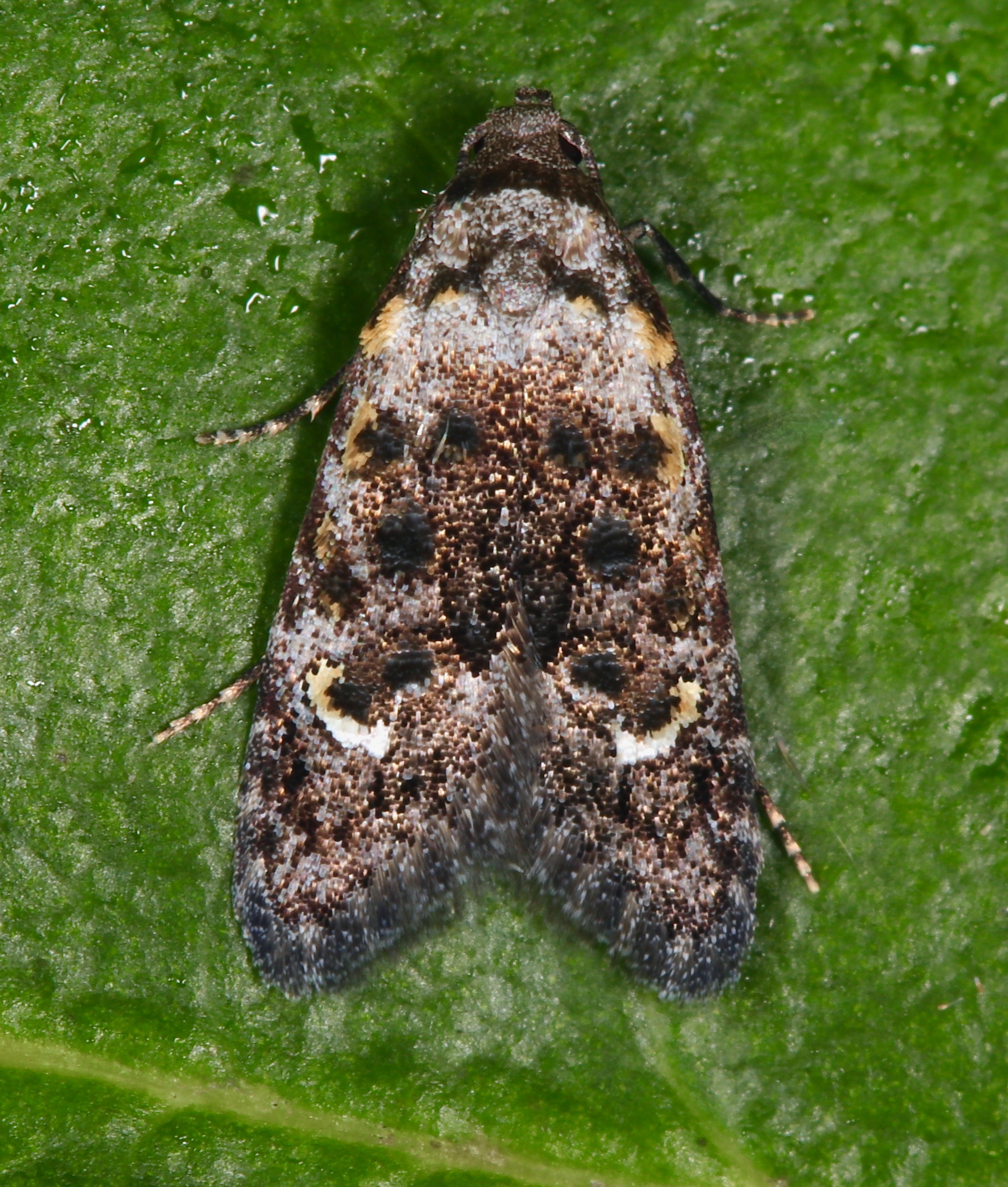
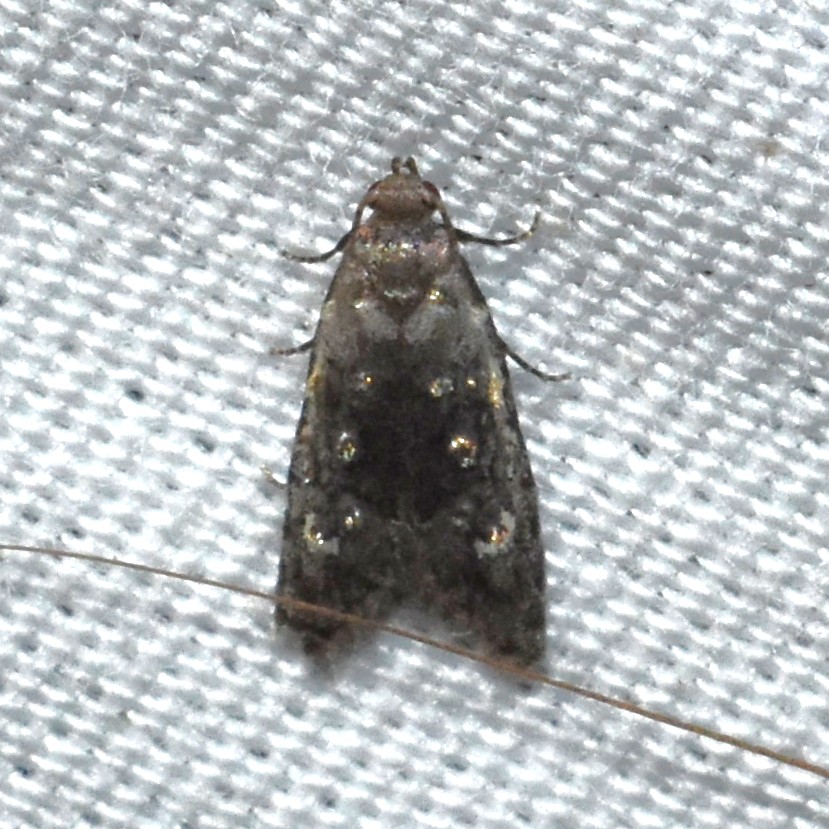
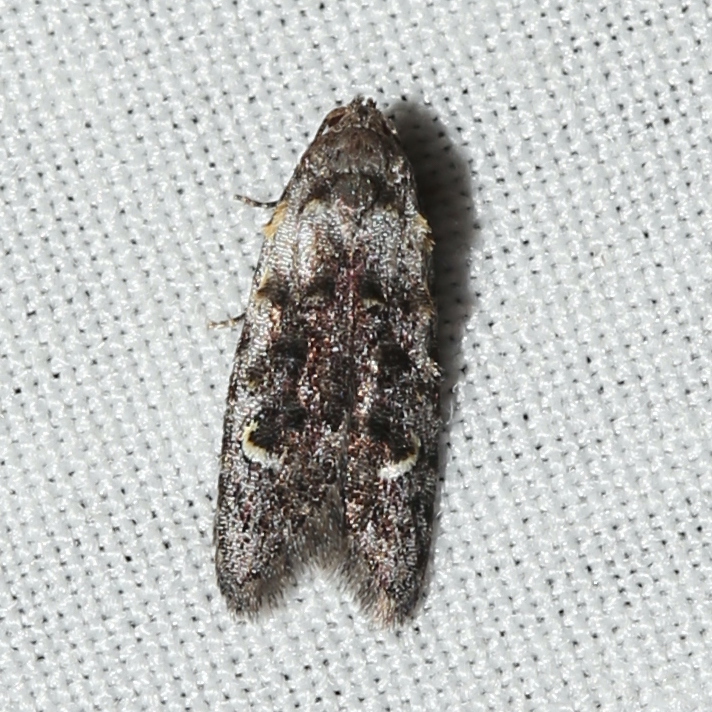
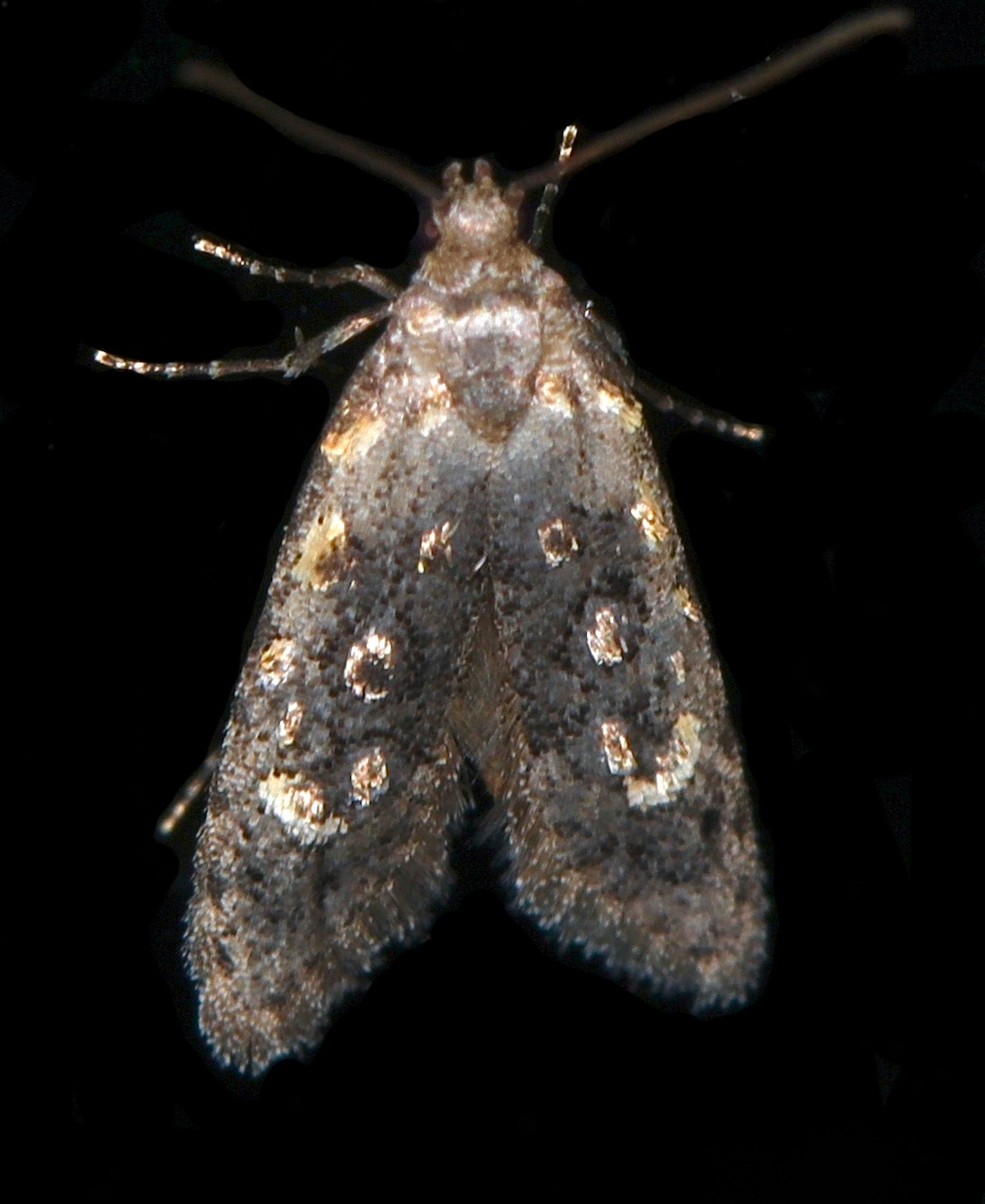
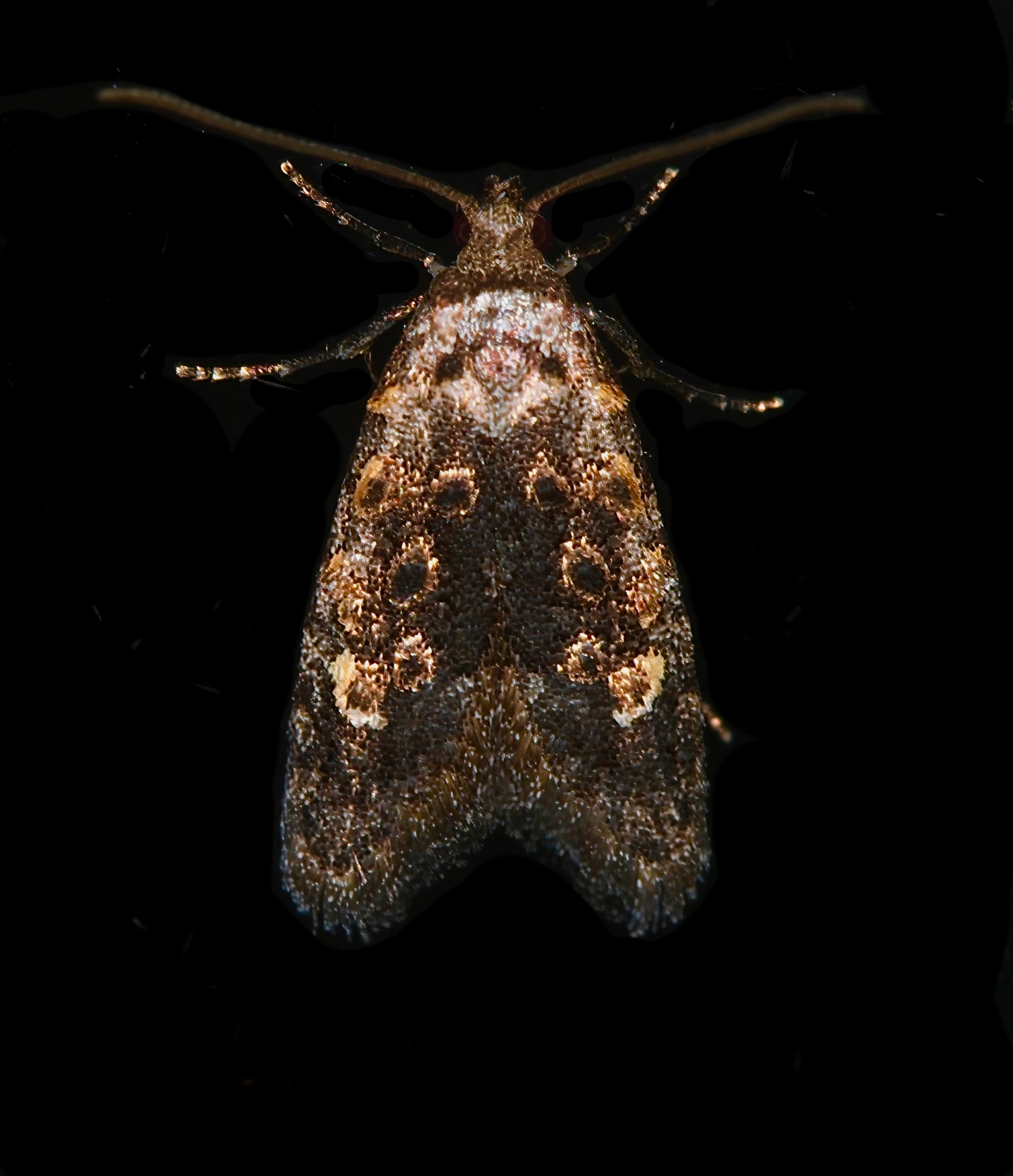
Bondia crescentella (Walsingham, 1882) - Crescent-marked Bondia


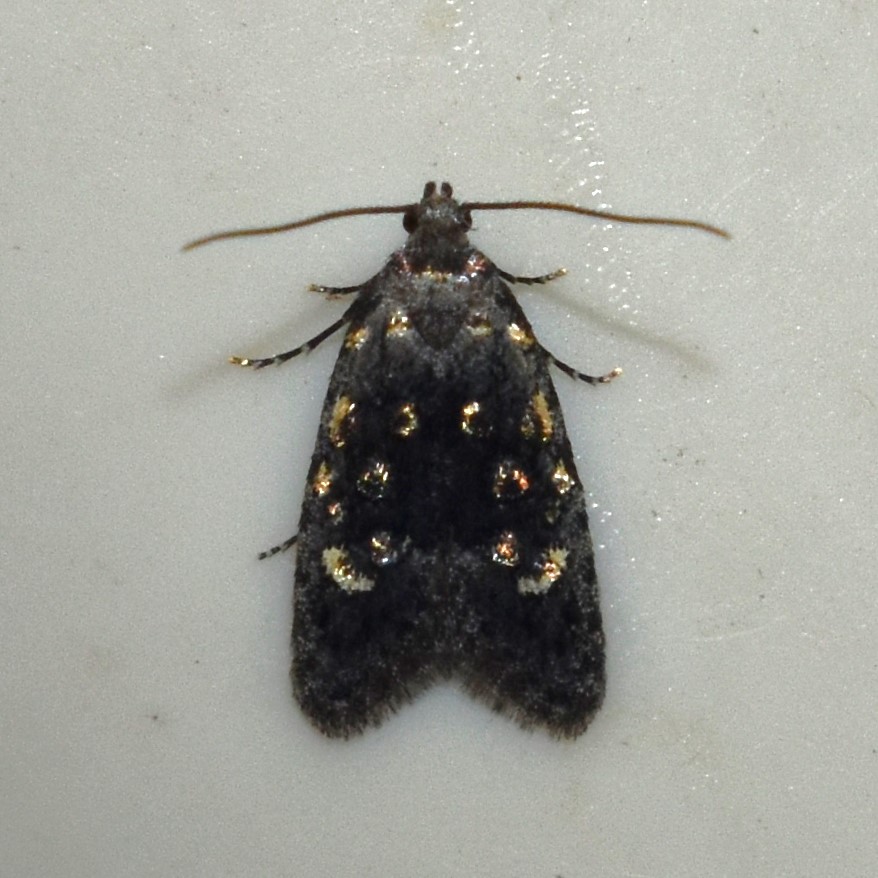
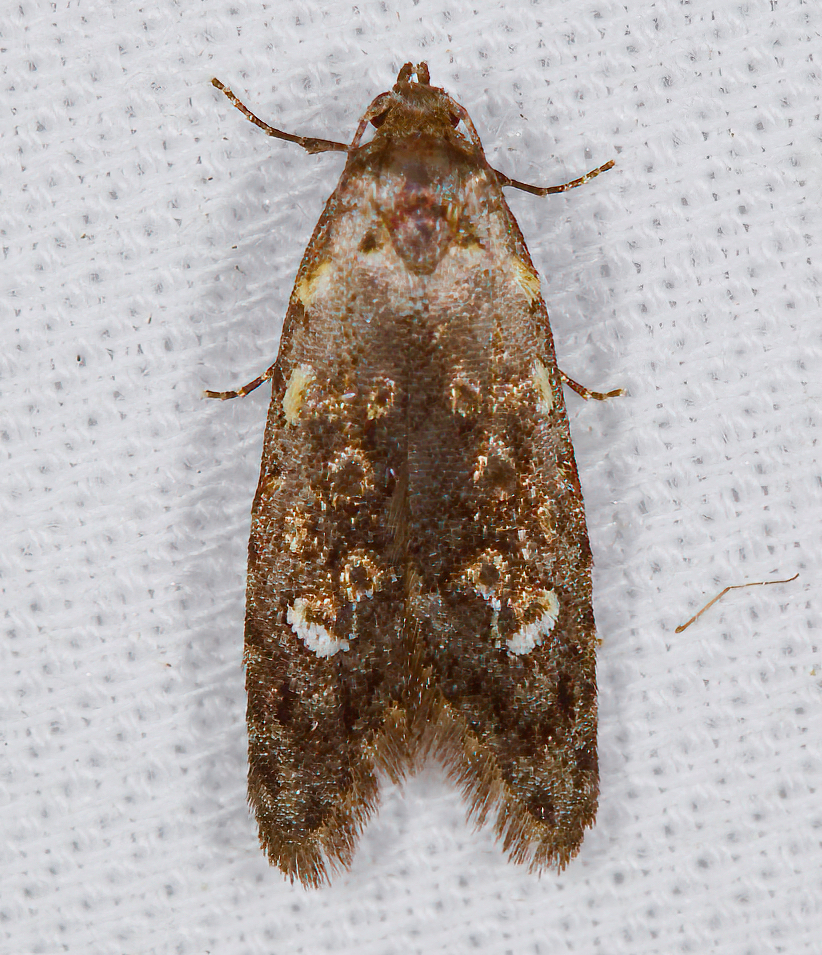
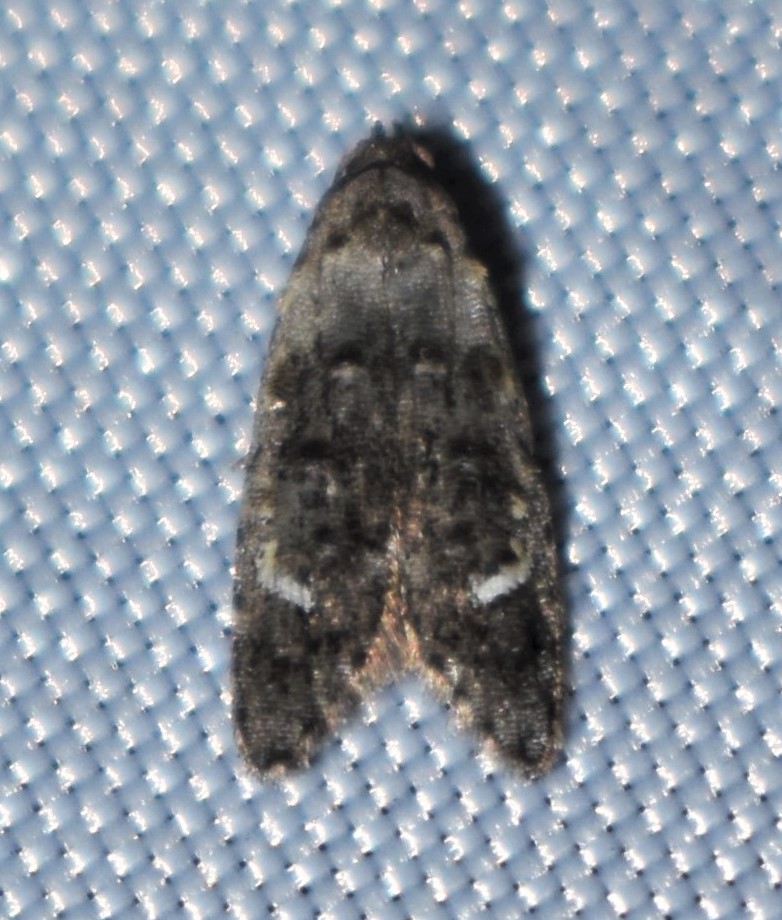
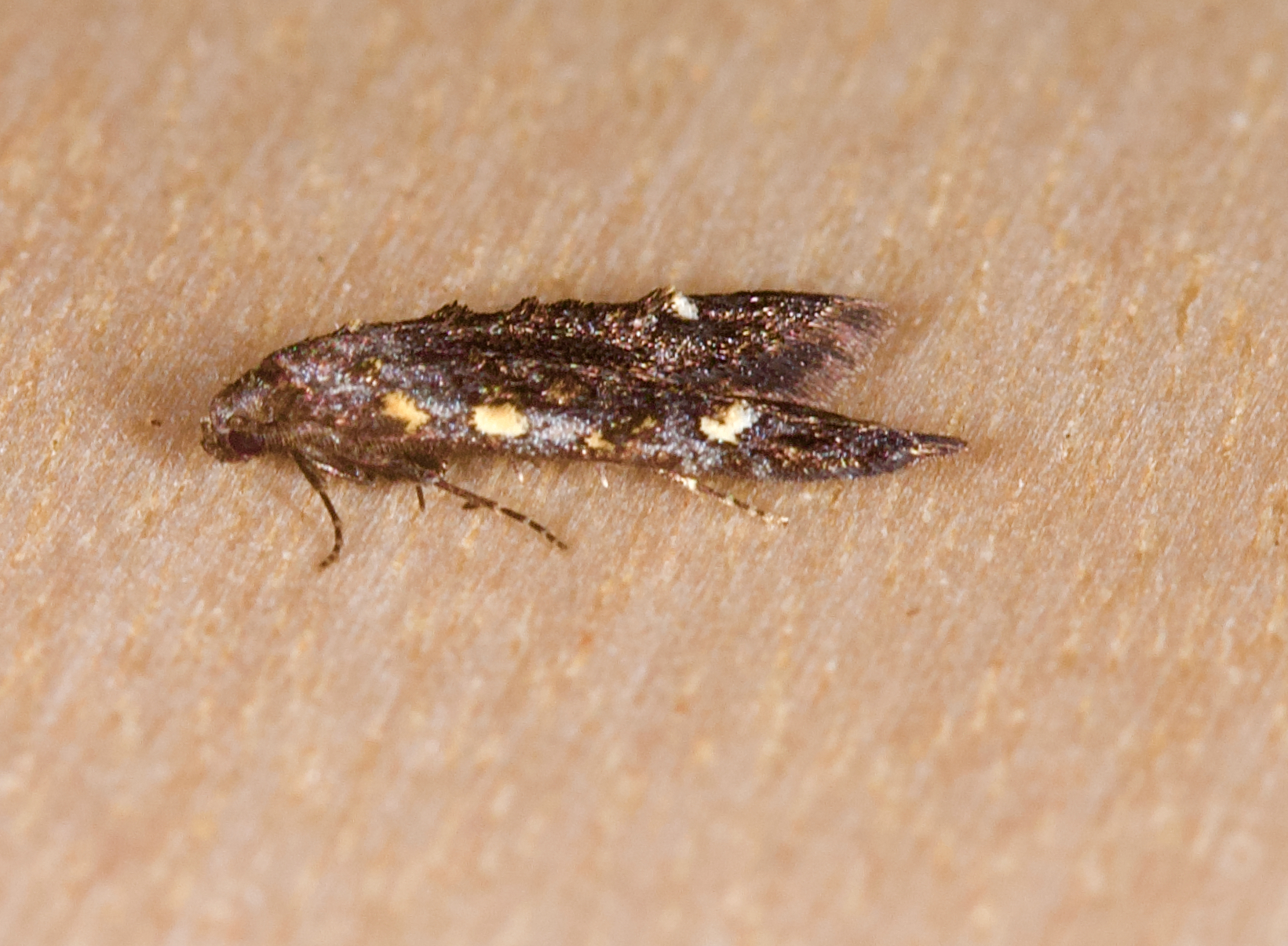
Bondia crescentellaBondia crescentellaBondia crescentellaBondia crescentella
Taxonomy
Superfamily:
Copromorphoidea
Family:
Carposinidae
Subfamily:
[Carposininae]
Tribe:
[Carposinini]
P3 Number:
65a0011
MONA Number:
2319.00
Identification
Field Guide Descriptions: Beadle and Leckie (2012)Online Resources: MPG, BugGuide, iNaturalist, Google, BAMONA, GBIF, BOLDTechnical Description, Adults: Davis (1969)                                                                                 
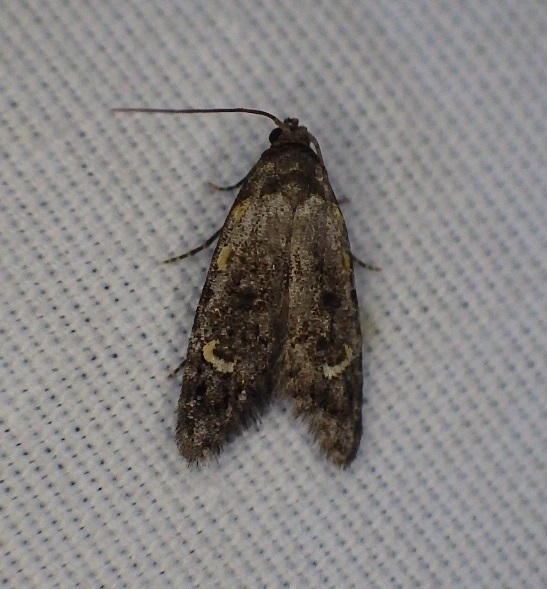
Adult Markings: Bondia crescentella is a small moth that has the forewing covered with varying amounts of grayish-white and grayish-brown to metallic-brown scales, with the darker scales often concentrated on the dorsal half of the wing. Fresh specimens have a series of five dark raised scale tufts, along with a white, crescent-shaped patch at around three-fourths the wing length. The following detailed description is mostly based on that of Davis (1969).

The head is brownish to pale fuscous and irrorated with white, with the majority of the scales having white tips. The antenna is mostly pale fuscous, with the apex of each segment faintly ringed with white. The labial palp is relatively short, with the outer surface fuscous and with a slight irroration of white. The inner surfaces are paler with more white scales, while the apex of the third segment is white. The thorax is frosted with grayish-white scales and has two dark bands, including a transverse one at the anterior end, and a more oblique one near the middle.

The pattern on the forewing is variable depending on the relative expression of the whitish and grayish-brown scales. The most conspicuous mark is a white, crescent-shaped patch at the apex of the discal cell at around three-fourths the wing length. The mark partially encircles a group of darker scales within. Fresh specimens typically have five large patches of raised, dark scales. These include a pair at around one-third the wing length, a large single one just behind these that is centered between the two, and a smaller one behind the second and along the costa. A final patch is present just before the white, crescent-shaped mark, with the dark patch often connected to the group of dark scales that the crescent partially encircles. The base of the wing has a scalloped or broken dark transverse band that has patches of orangish scales on the posterior margin. Similar orange scales often margin the costal edge of the outermost patch at one-third the wing length, and between the white crescent and the darker scales that it partially encircles. The hindwing is uniformly gray, and the foreleg and midleg are fuscous, with the apices of the tibial and tarsal segments distinctly ringed with white. The hindleg is much paler and has obscure tarsal rings, while the dorsal margin of the tibia has long whitish hairs.
Wingspan: 11-20 mm (Davis 1969)
Adult Structural Features: Davis (1969) has descriptions and illustrations of the male and female genitalia.
Genitalia and other structural photos
Adult ID Requirements: Identifiable from good quality photos of unworn specimens.
Immatures and Development: AS of 2025, the larval life history is undocumented.
Larvae ID Requirements: Identifiable only through rearing to adulthood.
Distribution in North Carolina
Distribution: Bondia crescentella is broadly distributed across North America and mostly in regions with cool climates. It occurs across most of southern Canada from British Columbia eastward to Nova Scotia, Prince Edward Island, Newfoundland and Labrador. Scattered populations are also known in the West in Montana, Washington and California. The range in the US extends from Maine and other New England states southwestward through North Carolina to Mississippi and southern Louisiana. Its western limits extend to western Tennessee, western Kentucky, Illinois, Wisconsin, Minnesota and northeastern North Dakota. This species appears to be absent from or rare in the southeastern Coastal Plain. As of 2025, we have scattered records from the Piedmont and lower elevations in the Blue Ridge.
County Map: Clicking on a county returns the records for the species in that county.
Bondia crescentellaAlamance Alexander Alleghany Anson Ashe Avery Beaufort Bertie Bladen Brunswick Buncombe Burke Cabarrus Caldwell Camden Carteret Caswell Catawba Chatham Cherokee Chowan Clay Cleveland Columbus Craven Cumberland Currituck Dare Davidson Davie Duplin Durham Edgecombe Forsyth Franklin Gaston Gates Graham Granville Greene Guilford Halifax Harnett Haywood Henderson Hertford Hoke Hyde Iredell Jackson Johnston Jones Lee Lenoir Lincoln Macon Madison Martin McDowell Mecklenburg Mitchell Montgomery Moore Nash New Hanover Northampton Onslow Orange Pamlico Pasquotank Pender Perquimans Person Pitt Polk Randolph Richmond Robeson Rockingham Rowan Rutherford Sampson Scotland Stanly Stokes Surry Swain Transylvania Tyrrell Union Vance Wake Warren Washington Watauga Wayne Wilkes Wilson Yadkin Yancey
Flight Dates:
High Mountains (HM) ≥ 4,000 ft.
Low Mountains (LM) < 4,000 ft.
Piedmont (Pd)
Coastal Plain (CP)

Click on graph to enlarge
Image showing flight dates by month for High Mountains greater than 4,000 feet, Low Mountains, Piedmont, and Coastal Plain: adults.
Flight Comments: The adults have been observed from March through August in different areas of the range, with a seasonal peak typically in April and May. Local populations in North Carolina are univoltine and have a relatively short flight period. As of 2025, our records extend from early-April through early-May.
Habitats and Life History
Habitats: As of 2025, our few site records include semi-wooded residential neighborhoods and a mesic hardwood slope.
Larval Host Plants: As of 2025, the hosts are apparently undocumented. - View
Observation Methods: The adults are attracted to lights.
Wikipedia
Status in North Carolina
Natural Heritage Program Status: [W-PK]
Natural Heritage Program Ranks: GNR SNR [S2S3]
State Protection: Has no legal protection, although permits are required to collect it on state parks and other public lands.
Comments: Bondia crescentella is more common in the northeastern US and southeastern Canada, and appears to reach its southern limits in the Appalachian region in North Carolina. It is uncommon in North Carolina, with only eight site records as of 2025.

 Photo Gallery for Bondia crescentella - Crescent-marked Bondia

Photos: 14
Bondia crescentella
Recorded by: K. Bischof on 2025-04-14
Chatham Co.
Comment:
Bondia crescentella
Recorded by: David George, Jeff Niznik on 2025-04-05
Chatham Co.
Comment:
Bondia crescentella
Recorded by: David George on 2025-04-04
Durham Co.
Comment:
Bondia crescentella
Recorded by: Jim Petranka on 2024-05-02
Madison Co.
Comment:
Bondia crescentella
Recorded by: Jim Petranka on 2024-04-27
Madison Co.
Comment:
Bondia crescentella
Recorded by: Jim Petranka on 2024-04-19
Madison Co.
Comment:
Bondia crescentella
Recorded by: David George, Jeff Niznik on 2024-04-01
Chatham Co.
Comment:
Bondia crescentella
Recorded by: Jim Petranka on 2022-05-03
Madison Co.
Comment:
Bondia crescentella
Recorded by: Jim Petranka on 2022-04-23
Madison Co.
Comment:
Bondia crescentella
Recorded by: Jeff Niznik on 2022-04-22
Wake Co.
Comment:
Bondia crescentella
Recorded by: Jim Petranka on 2021-04-12
Madison Co.
Comment:
Bondia crescentella
Recorded by: Jim Petranka on 2021-04-12
Madison Co.
Comment:
Bondia crescentella
iNaturalist
Recorded by: kyhlaustin - Kyhl Austin on 2017-04-16
Mecklenburg Co.
Comment: iNat record - https://www.inaturalist.org/observations/20423223***(c) Kyhl Austin, some rights reserved (CC BY-NC)| Public Positional Accuracy=28677 m
Bondia crescentella
Recorded by: Merrill Lynch on 2010-04-15
Watauga Co.
Comment:

Photos of Bondia crescentella from iNaturalist

Bondia crescentella
© kyhlaustin - Kyhl Austin - 2017-04-16 - Mecklenburg Co.
iNat record