Moths of North Carolina
Scientific Name:
Common Name:
Family (Alpha):
« Home »
View PDFTortricidae Members: Eucosma Members: 11 NC Records

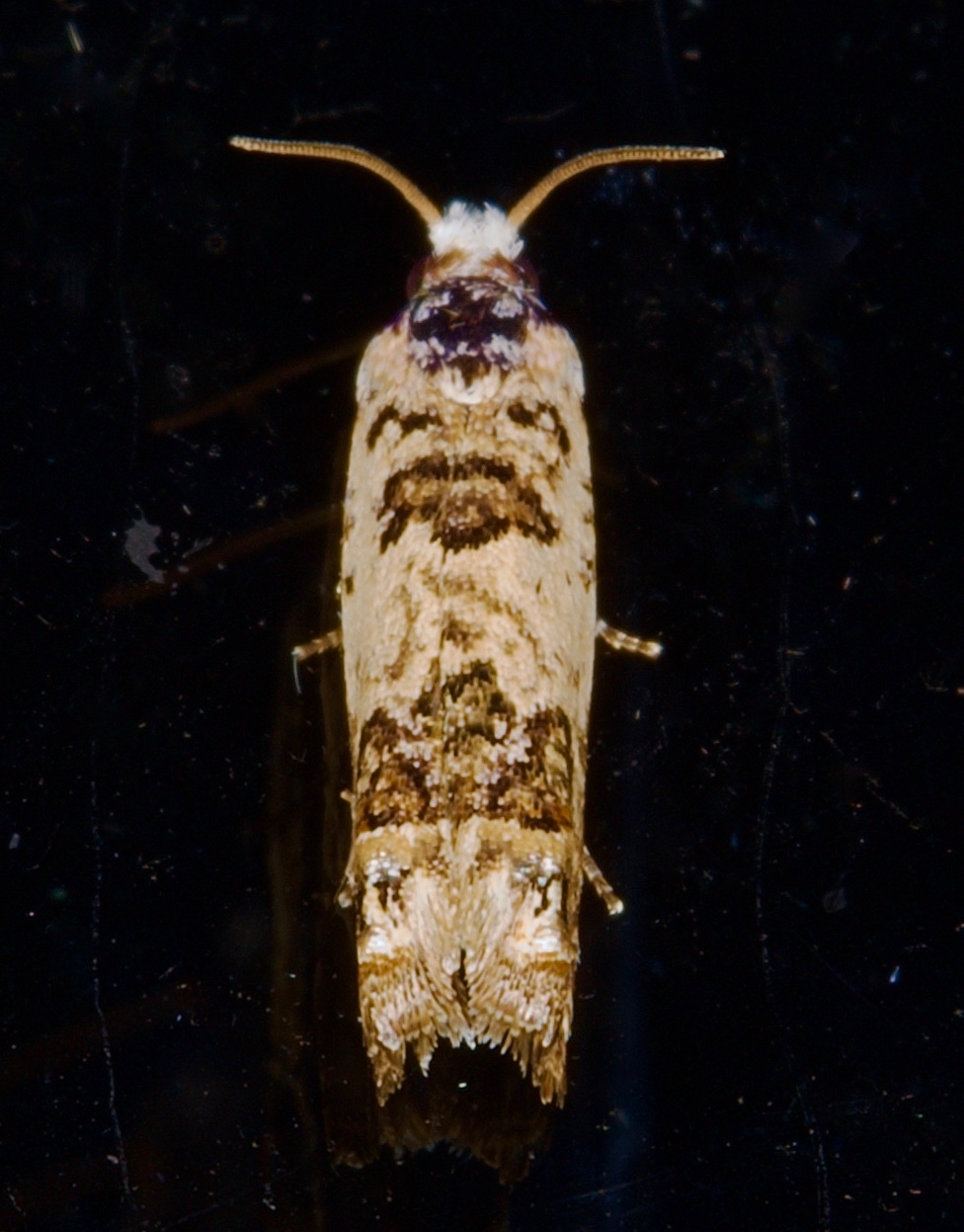
Eucosma ornatula (Heinrich, 1924) - Orante Eucosma


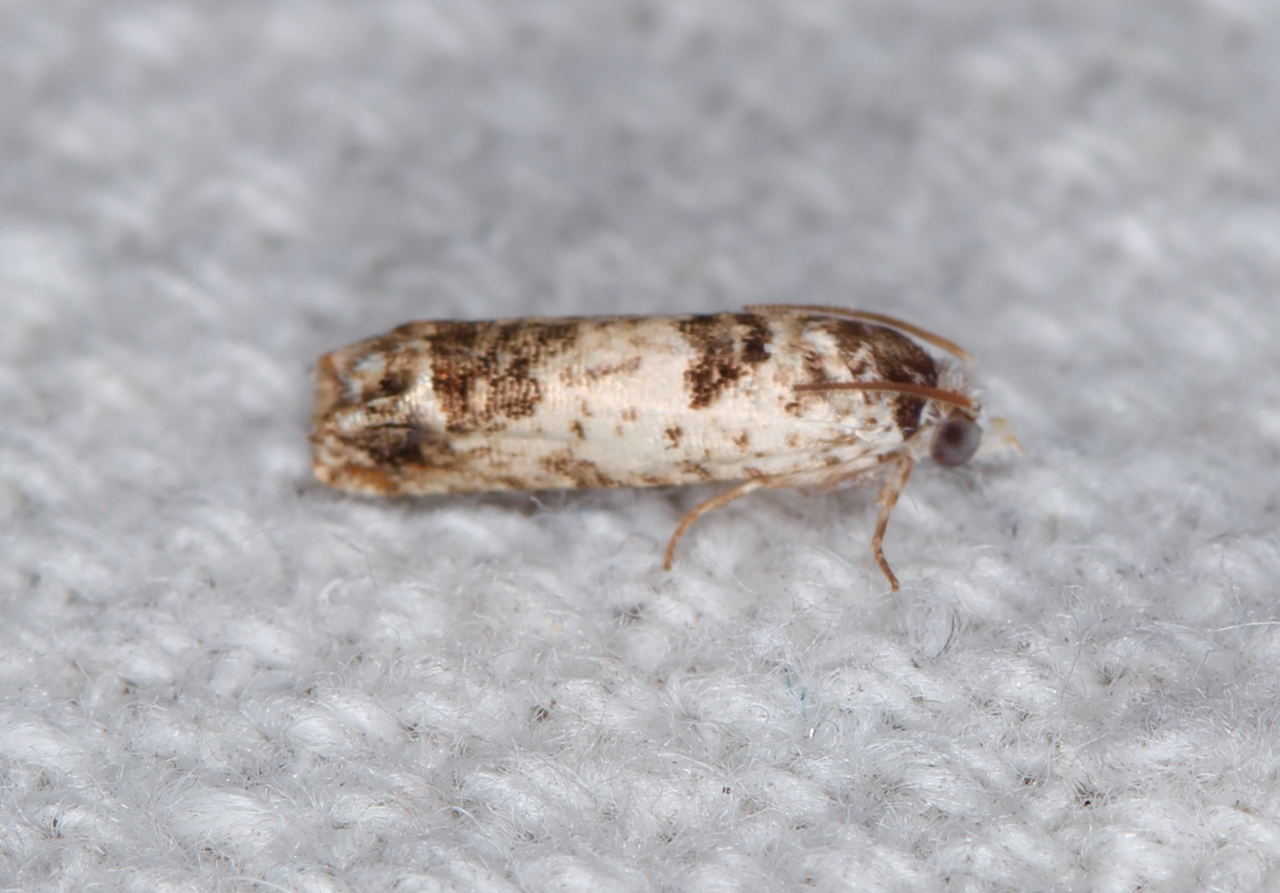
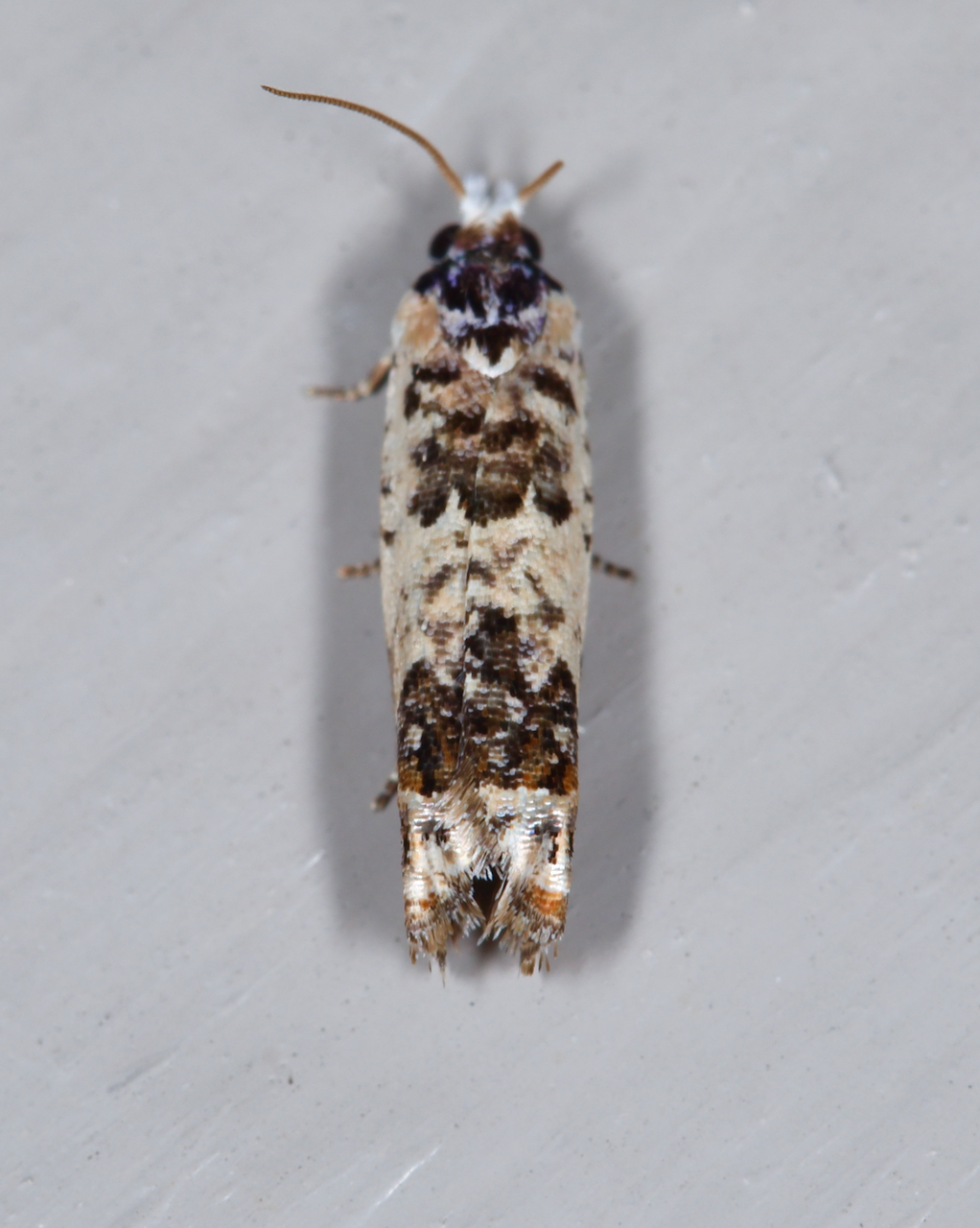
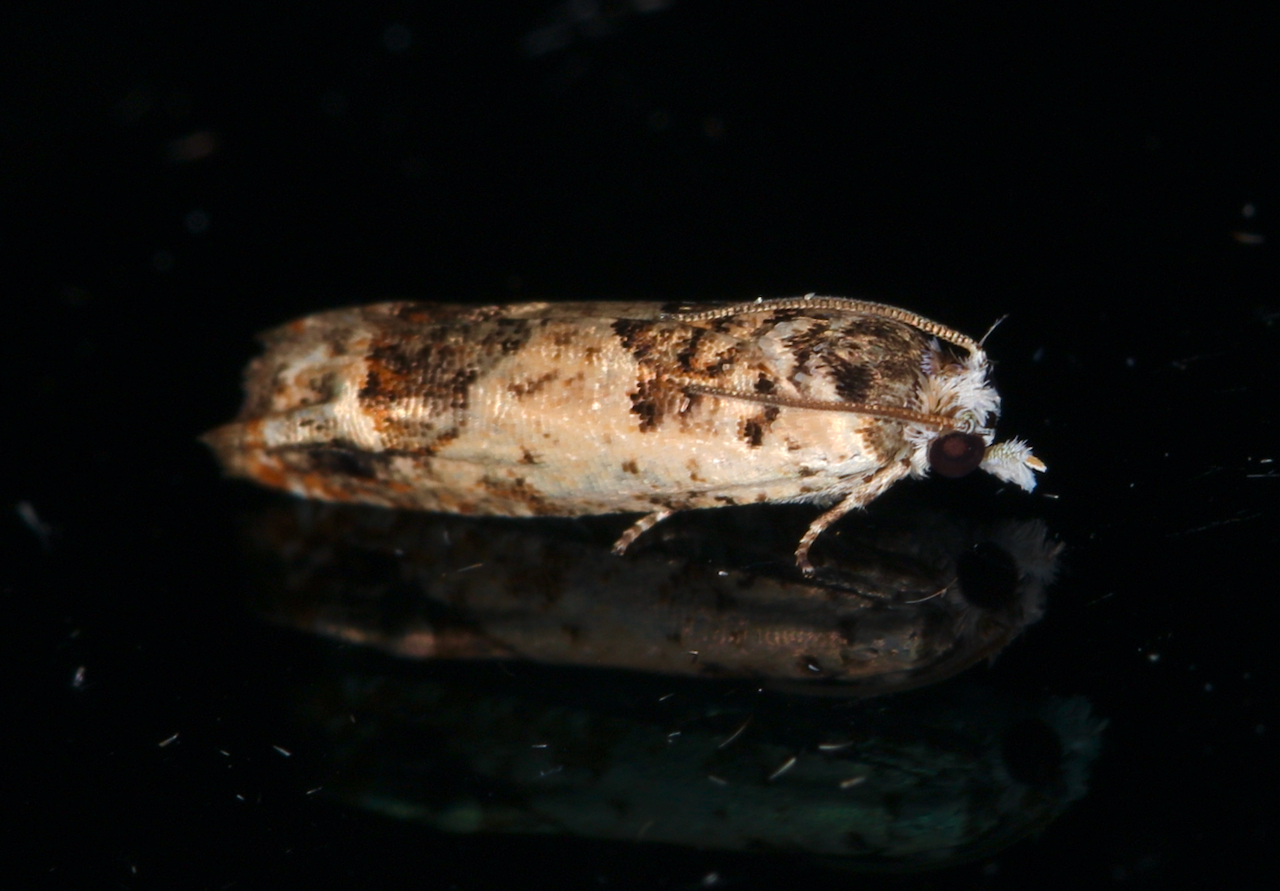
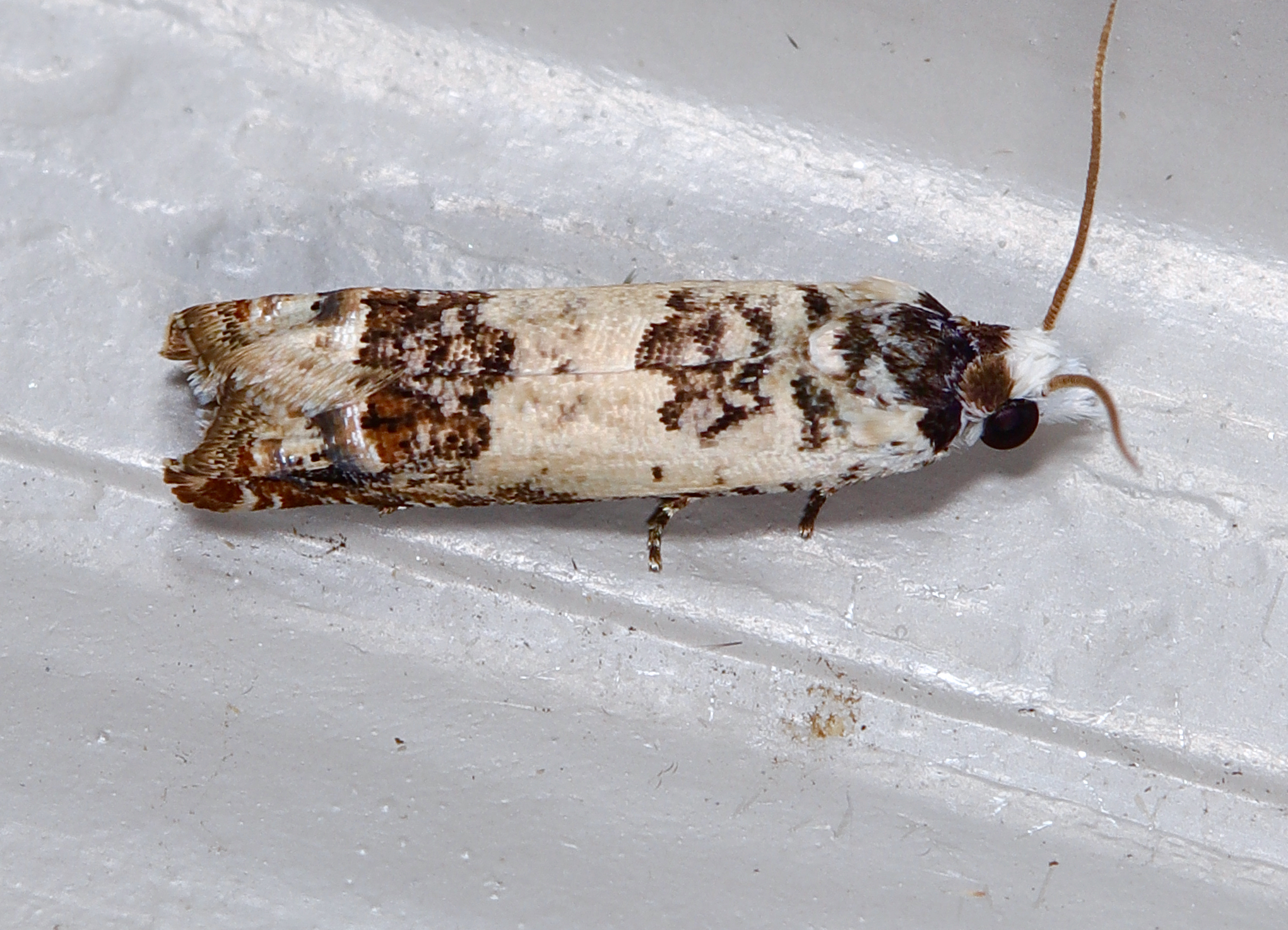
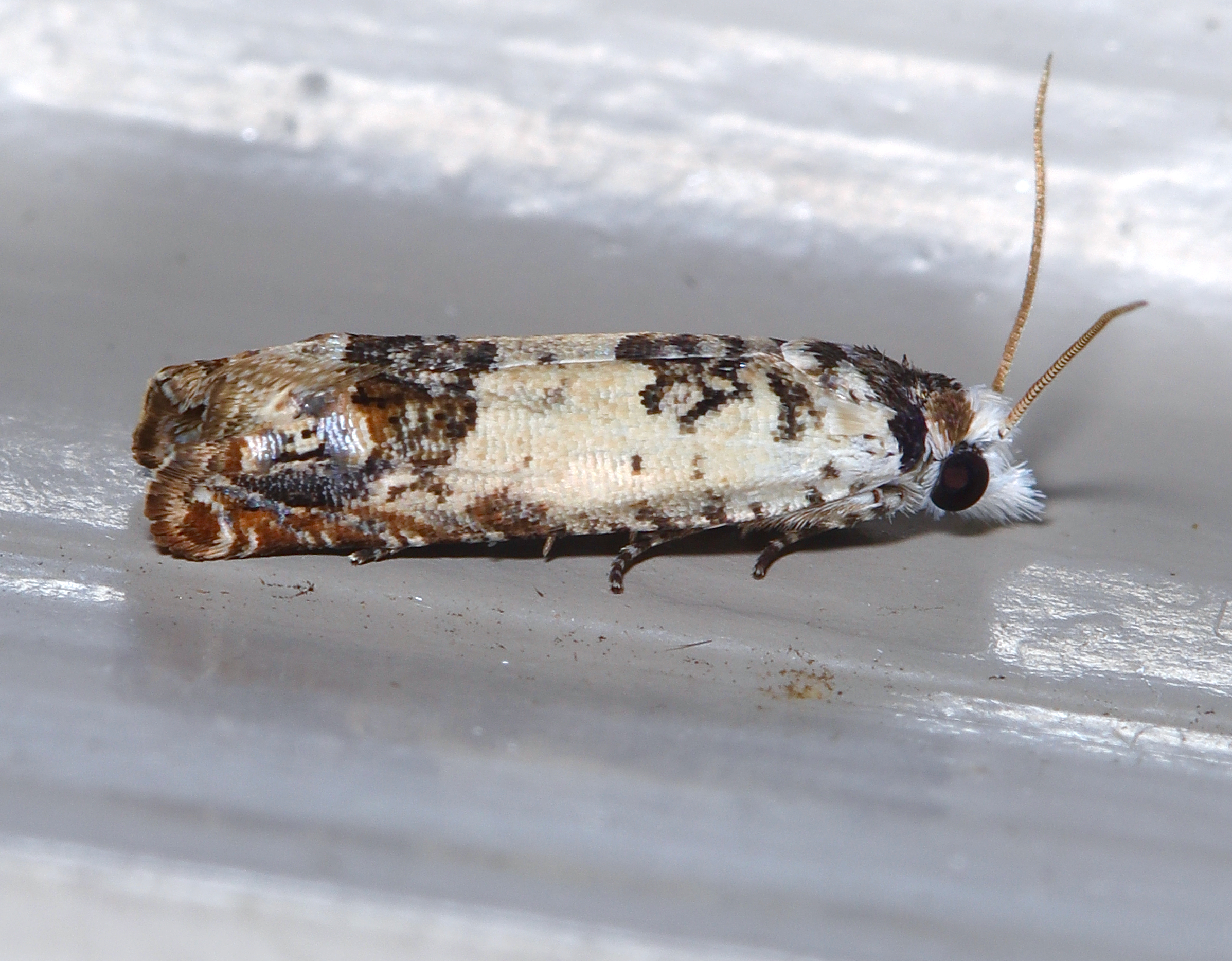
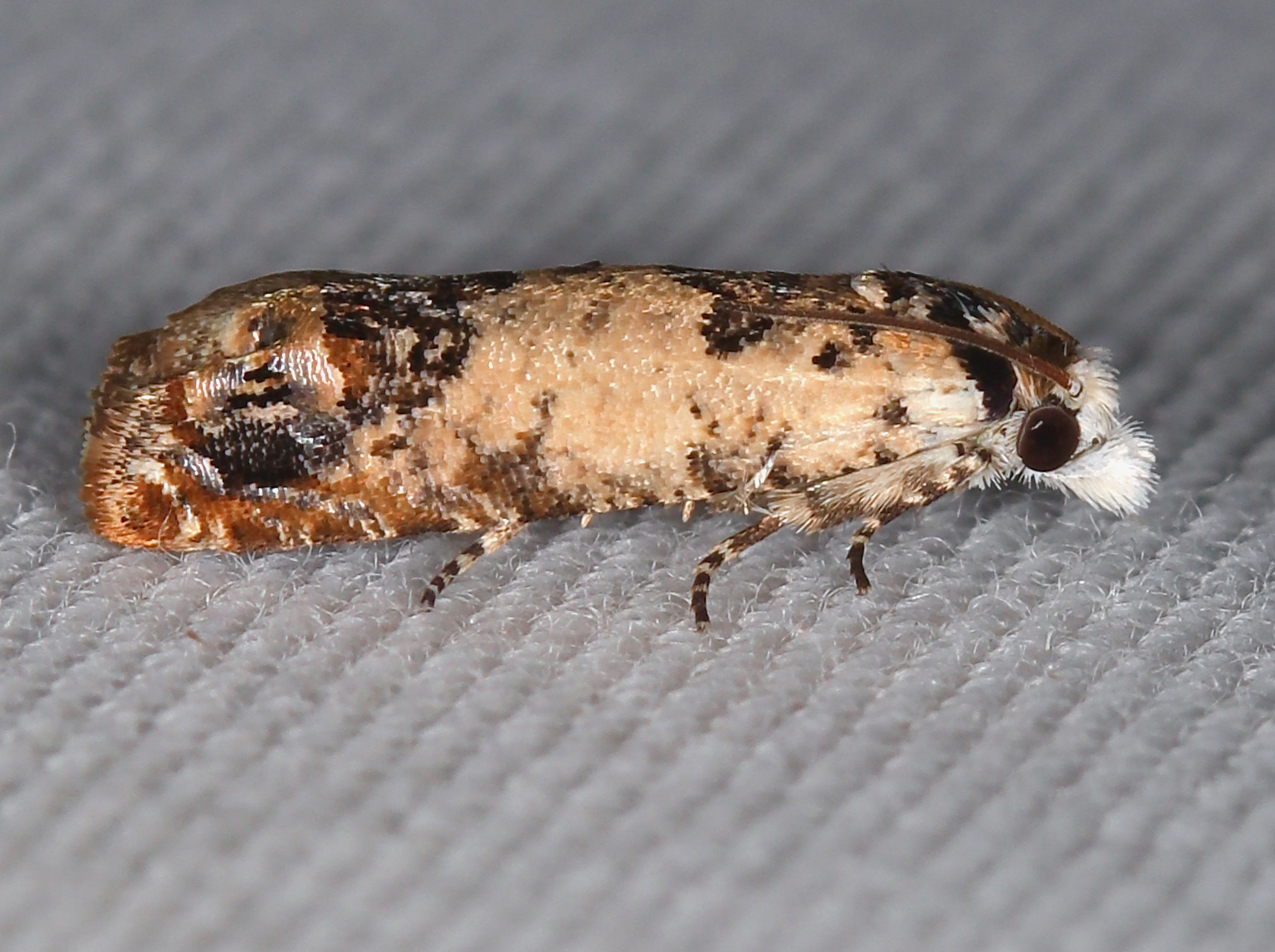
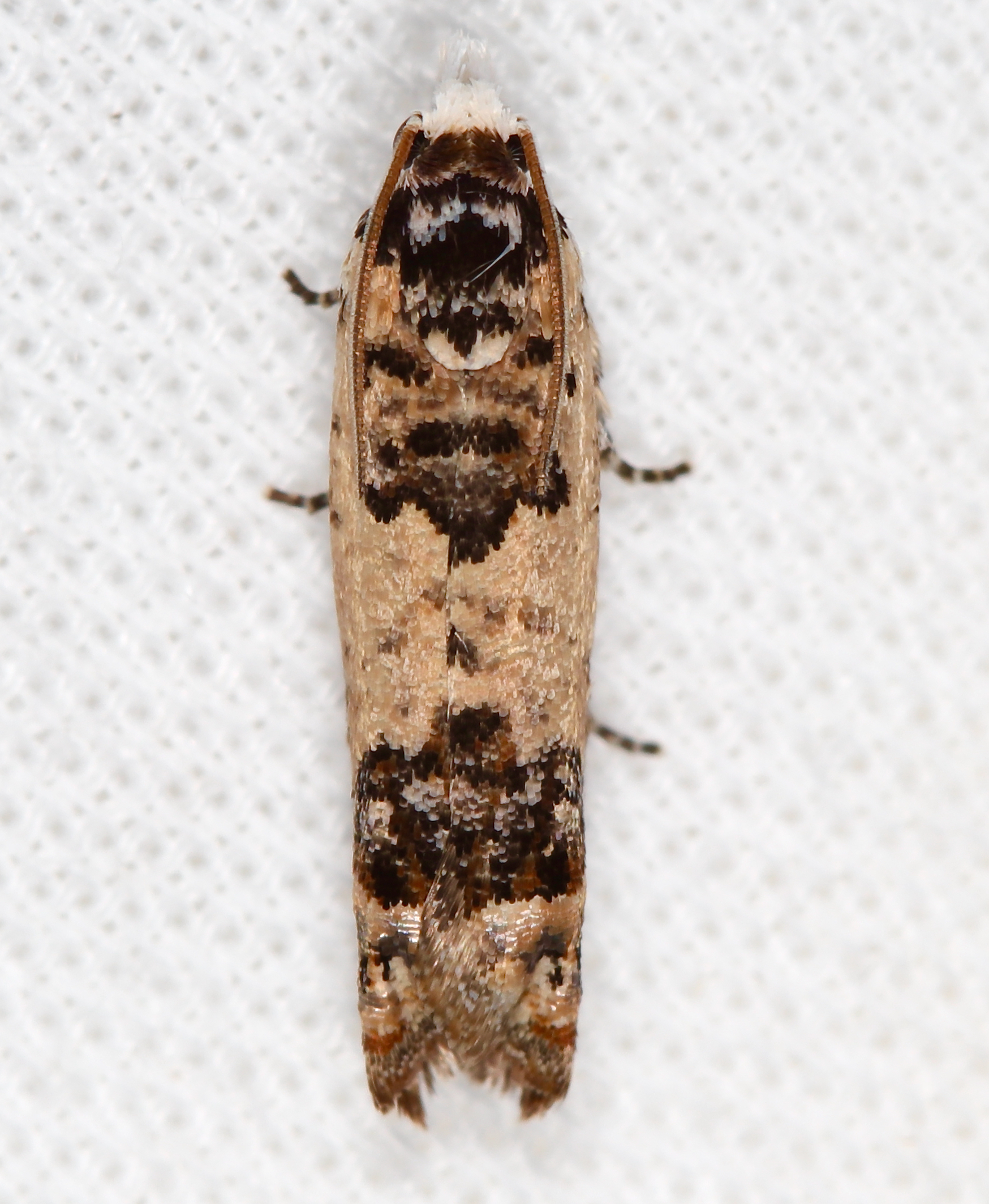
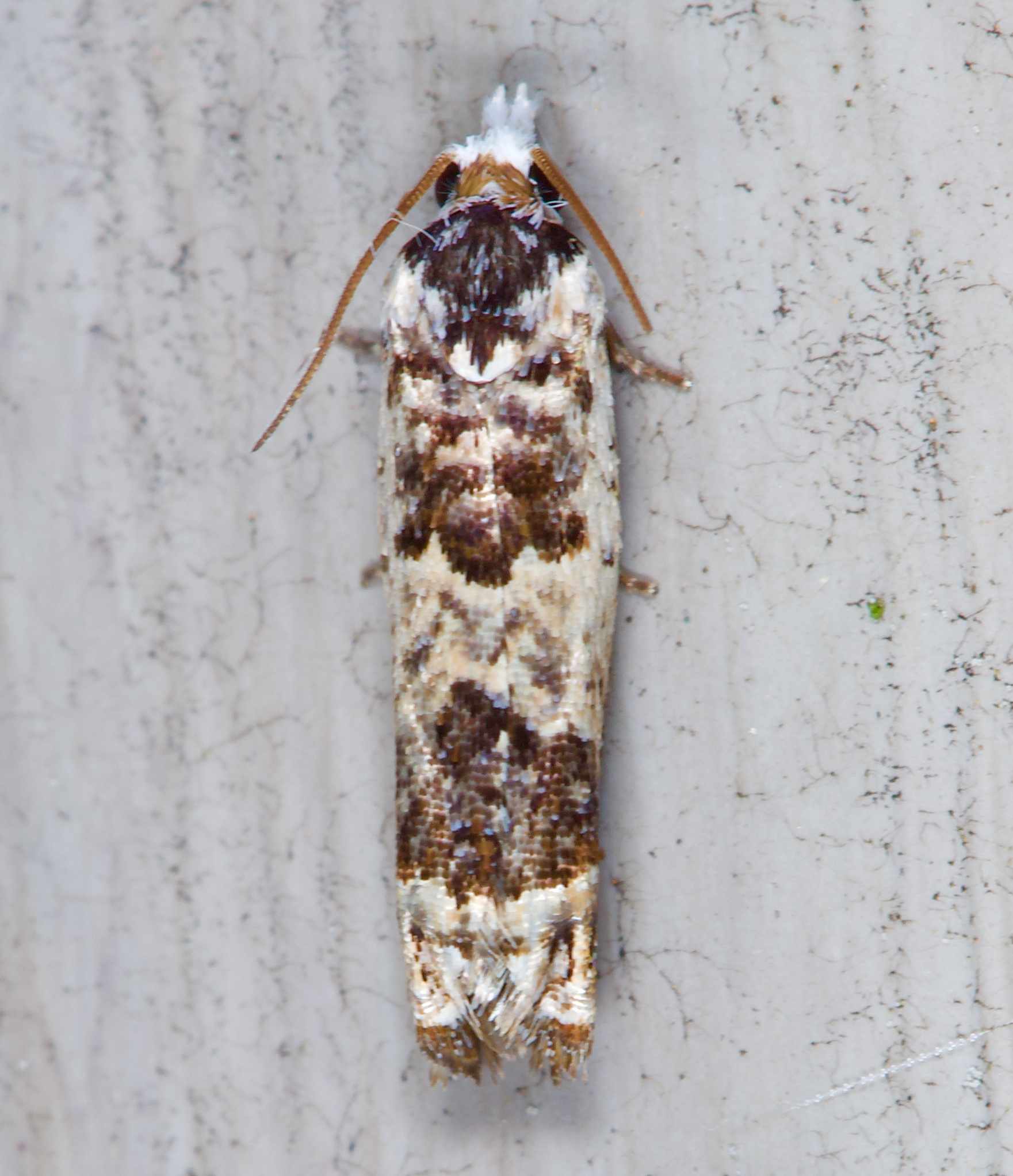
Eucosma ornatulaEucosma ornatulaEucosma ornatula
Taxonomy
Superfamily:
Tortricoidea
Family:
Tortricidae
Subfamily:
Olethreutinae
Tribe:
Eucosmini
P3 Number:
51a0872
MONA Number:
2951.00
MONA Synonym:
Phaneta ornatula
Identification
Field Guide Descriptions: Online Resources: MPG, BugGuide, iNaturalist, Google, BAMONA, GBIF, BOLDTechnical Description, Adults: Heinrich (1924); Wright and Gilligan (2015)                                                                                 
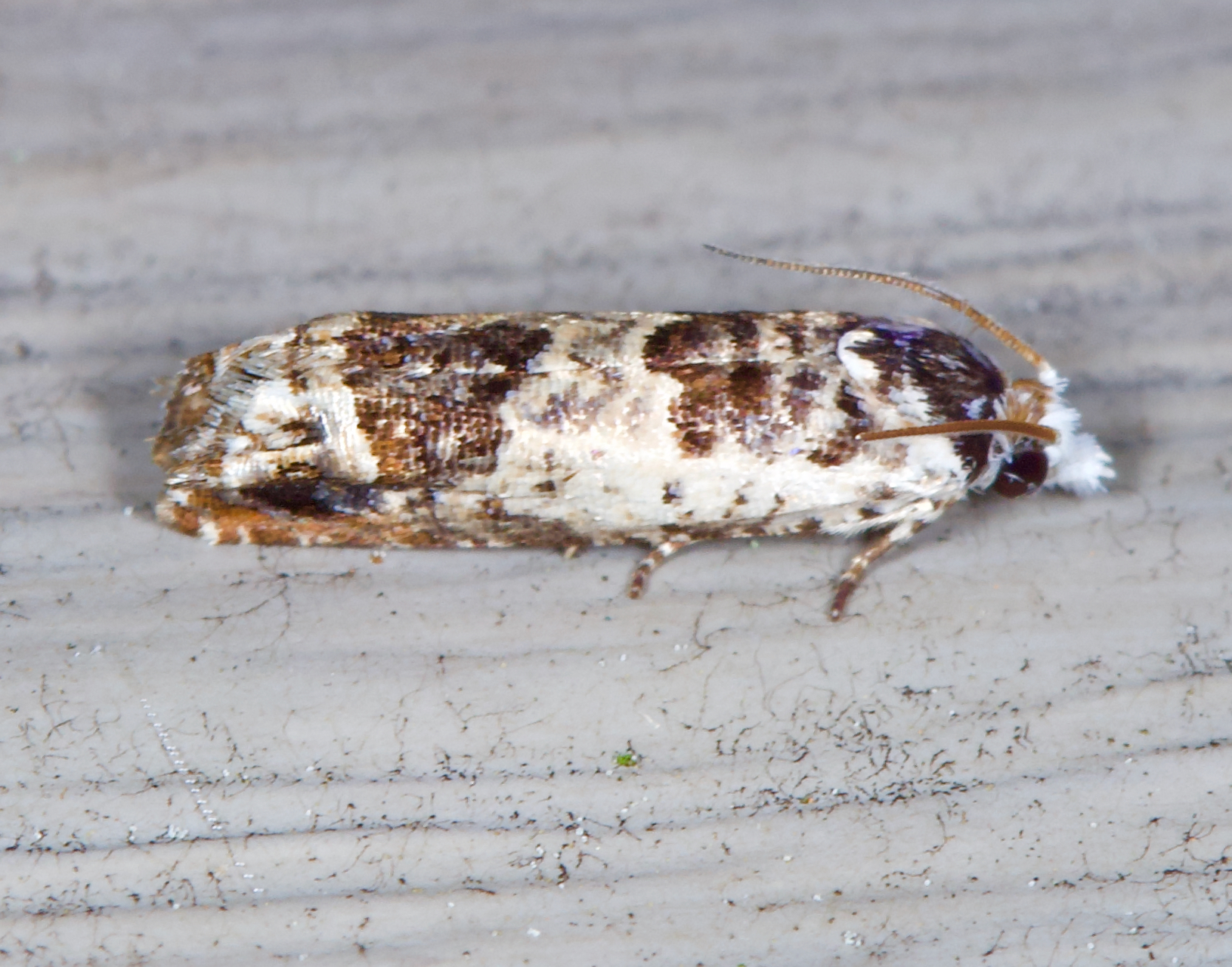
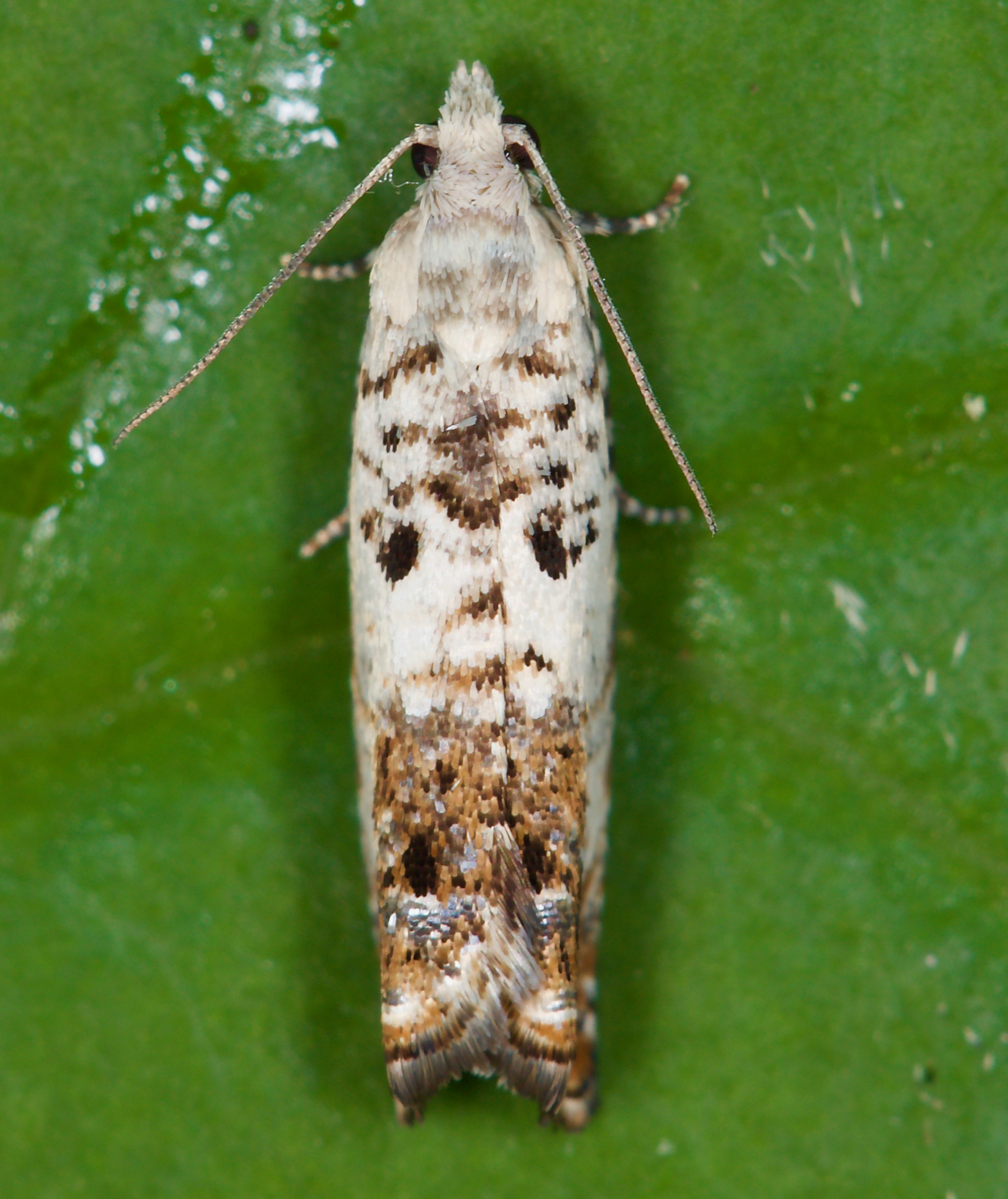
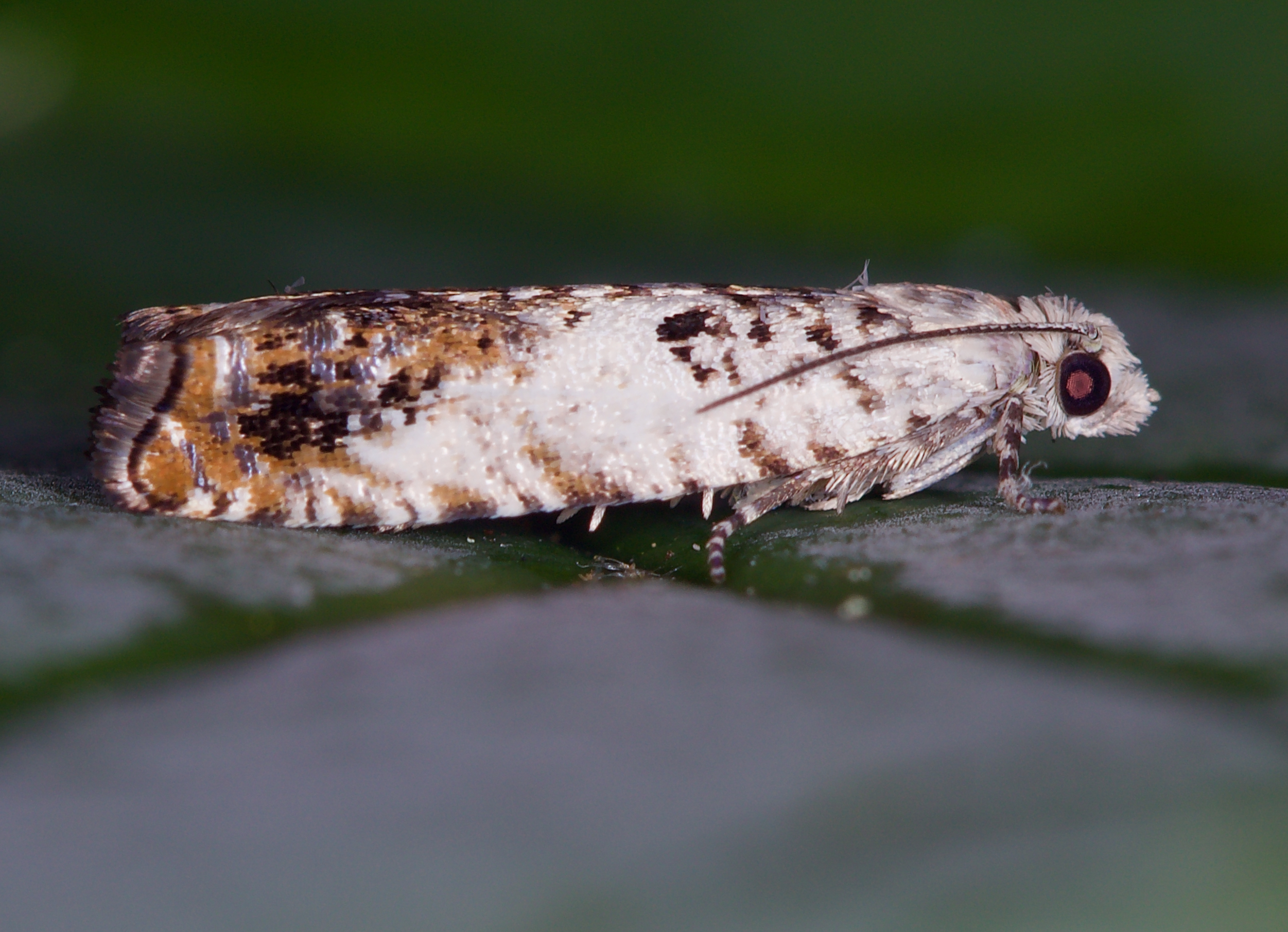
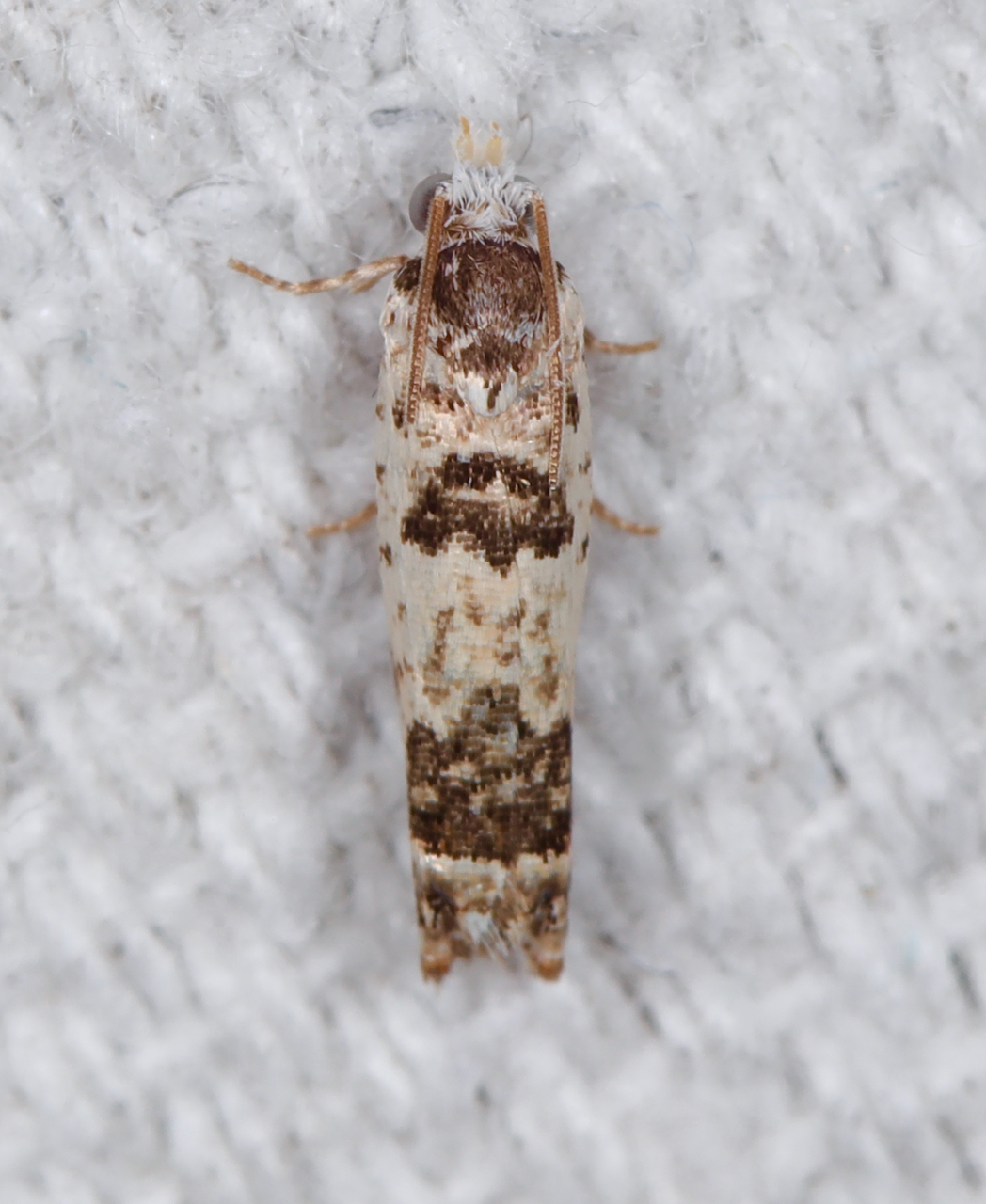
Adult Markings: The following description is based on that of Heinrich (1924). The palps and head are snowy white, while the thorax has a varying mixture of brownish-blackish and whitish patterning. The forewing ground color is pale creamy white and is overlain with scattered small blackish and reddish-brown blotches. A large blackish blotch is usually present along the inner margin at about one-third, while a larger post-median patch is present adjoining the ocellus that often has a mix of black and reddish-brown scales. The apical third of the costa has a zone of rusty-red to reddish-brown coloration that extends inwardly to the termen. The ocellus consists of two vertical metallic bars that enclose a blackish fuscous patch which expands towards the costa into a rather large blackish spot. The cilia are gray to brownish with a narrow dark fuscous basal band, while the hindwing is pale smoky fuscous with paler cilia that have a dark basal band.
Wingspan: 12.5-15 mm (Heinrich, 1924)
Forewing Length: 5.1-6.9 mm; mean = 6.3 mm (Wright and Gilligan, 2015)
Adult Structural Features: Wright and Gilligan (2015) provide illustrations of the male and female genitalia.
Genitalia and other structural photos
Adult ID Requirements: Identifiable from good quality photos of unworn specimens.
Immatures and Development: The larval life history is largely undocumented. Putman (1942) reared the larvae from the flower heads of a native lettuce.
Distribution in North Carolina
Distribution: Eucosma ornatula is widely distributed in the eastern United States and southern Canada where specimens have been documented from Alberta eastward to Prince Edward Island. In the US the range extends from the New England states westward to Nebraska and North Dakota and southward to northern Florida, Louisiana, and eastern Texas. As of 2022, we have only five site records, with all but one from the Blue Ridge.
County Map: Clicking on a county returns the records for the species in that county.
Eucosma ornatulaAlamance Alexander Alleghany Anson Ashe Avery Beaufort Bertie Bladen Brunswick Buncombe Burke Cabarrus Caldwell Camden Carteret Caswell Catawba Chatham Cherokee Chowan Clay Cleveland Columbus Craven Cumberland Currituck Dare Davidson Davie Duplin Durham Edgecombe Forsyth Franklin Gaston Gates Graham Granville Greene Guilford Halifax Harnett Haywood Henderson Hertford Hoke Hyde Iredell Jackson Johnston Jones Lee Lenoir Lincoln Macon Madison Martin McDowell Mecklenburg Mitchell Montgomery Moore Nash New Hanover Northampton Onslow Orange Pamlico Pasquotank Pender Perquimans Person Pitt Polk Randolph Richmond Robeson Rockingham Rowan Rutherford Sampson Scotland Stanly Stokes Surry Swain Transylvania Tyrrell Union Vance Wake Warren Washington Watauga Wayne Wilkes Wilson Yadkin Yancey
Flight Dates:
 High Mountains (HM) ≥ 4,000 ft.
 Low Mountains (LM) < 4,000 ft.
 Piedmont (Pd)
 Coastal Plain (CP)

Click on graph to enlarge
Image showing flight dates by month for High Mountains greater than 4,000 feet, Low Mountains, Piedmont, and Coastal Plain: adults.
Flight Comments: Local populations appear to be univoltine. The adults fly from June through September, with a seasonal peak in most areas of the range in July and August. As of 2022, we have records from early June through late August.
Habitats and Life History
Habitats: Our records are mostly from forested landscapes and semi-wooded residential neighborhoods. In the Blue Ridge individuals have been documented from the lower valleys to as high as Mt. Mitchell.
Larval Host Plants: The host plants are poorly documented. The only known host record is by Putman (1942) who reared the larvae from the flower heads of Tall Blue Lettuce (Lactuca biennis). - View
Observation Methods: The adults are attracted to lights.
Wikipedia
Status in North Carolina
Natural Heritage Program Status:
Natural Heritage Program Ranks: GNR[S2-S3]
State Protection: Has no legal protection, although permits are required to collect it on state parks and other public lands.
Comments: This species is seemingly uncommon in the state. More information is needed concerning its host plants, habitat requirements, and distribution and abundance before its conservation status can be accurately assessed.

 Photo Gallery for Eucosma ornatula - Orante Eucosma

Photos: 14
Eucosma ornatula
Recorded by: Jim Petranka on 2024-08-22
Madison Co.
Comment:
Eucosma ornatula
Recorded by: Jim Petranka on 2024-08-22
Madison Co.
Comment:
Eucosma ornatula
Recorded by: Jim Petranka on 2024-08-13
Madison Co.
Comment:
Eucosma ornatula
Recorded by: Jim Petranka on 2024-08-08
Madison Co.
Comment:
Eucosma ornatula
Recorded by: Jim Petranka on 2024-08-04
Madison Co.
Comment:
Eucosma ornatula
Recorded by: Jim Petranka on 2024-08-04
Madison Co.
Comment:
Eucosma ornatula
Recorded by: Jim Petranka on 2023-08-18
Madison Co.
Comment:
Eucosma ornatula
Recorded by: Jim Petranka on 2023-08-18
Madison Co.
Comment:
Eucosma ornatula
Recorded by: Jim Petranka on 2022-06-07
Madison Co.
Comment:
Eucosma ornatula
Recorded by: Jim Petranka on 2022-06-07
Madison Co.
Comment:
Eucosma ornatula
Recorded by: Jim Petranka on 2021-08-19
Madison Co.
Comment:
Eucosma ornatula
Recorded by: Jim Petranka on 2021-08-19
Madison Co.
Comment:
Eucosma ornatula
Recorded by: Jim Petranka and Becky Elkin on 2019-07-15
Madison Co.
Comment:
Eucosma ornatula
Recorded by: Harry Wilson on 2014-08-16
Wake Co.
Comment: