Identification
Field Guide Descriptions: Covell (1984); Beadle and Leckie (2012) Online Resources: MPG , BugGuide , iNaturalist , Google , BAMONA , GBIF , BOLD Technical Description, Adults: Forbes (1948; as Abbotana clemetaria)Technical Description, Immature Stages: Forbes (1948); Wagner et al. (2001); Wagner (2005)
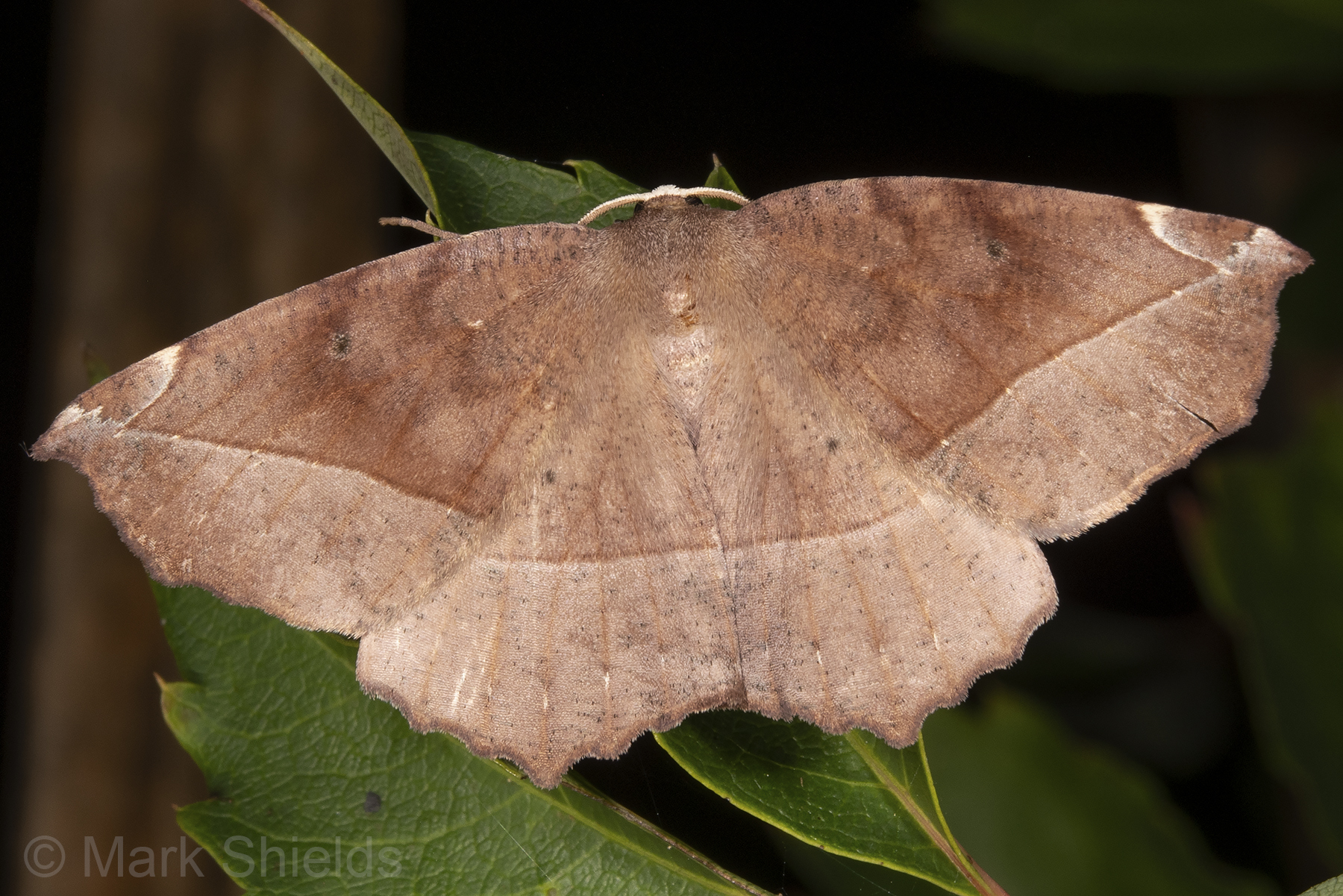
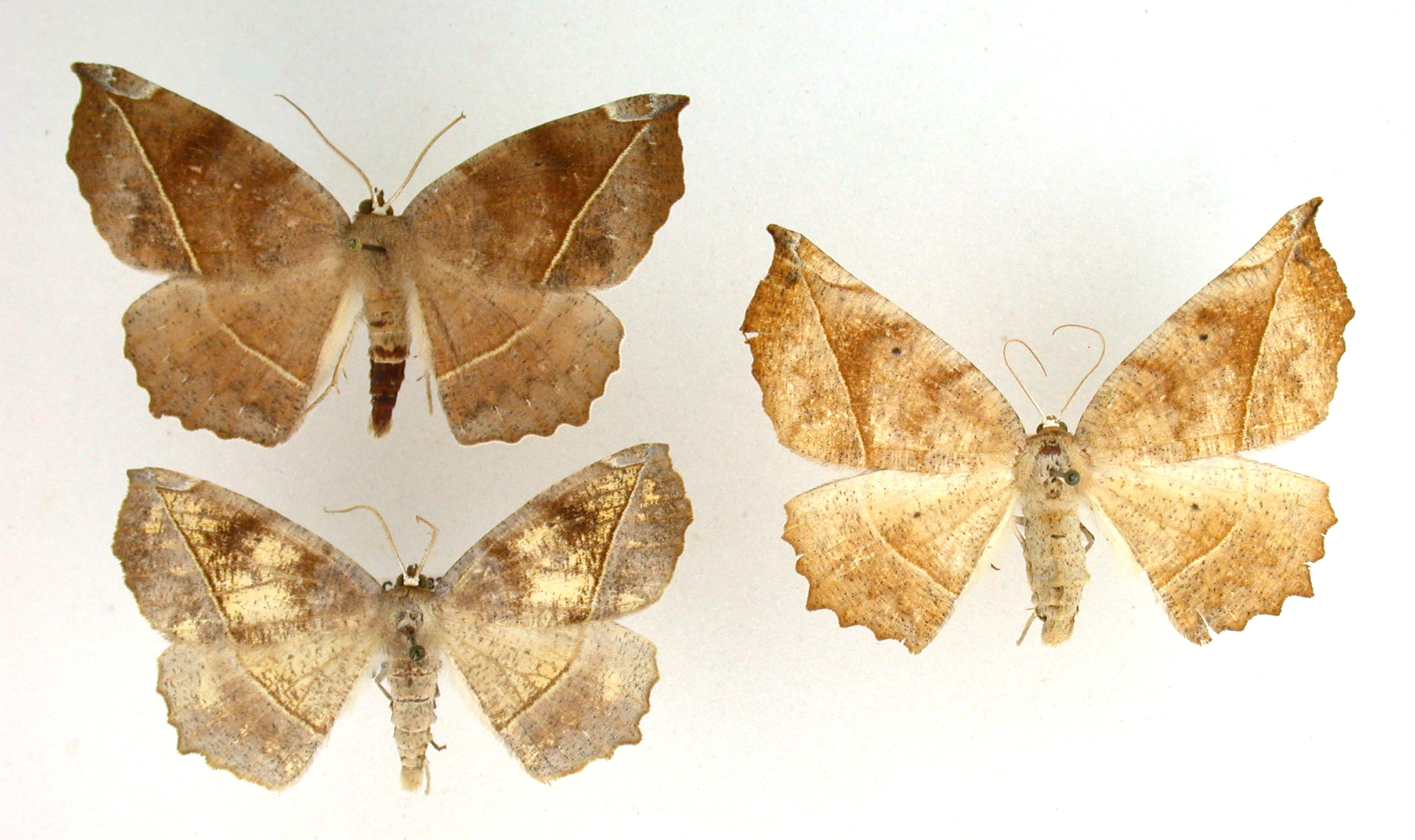
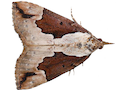
Adult Markings: One of our largest Geometrid moths. It is variable in pattern but usually dark brown with a conspicuous pale line that runs straight from the inner margin to just below the apex where in makes a sharp inward turn towards the costa. The apex of the wing is falcate and often has a pale patch. The inter-antennal ridge is a contrasting bright white. This species is is unlikely to be confused with anything other than Prochroedes, which is similar in size and pattern and sometimes in color, but has smooth wing margins as opposed to the crenulate margins of Eutrapela. Sexes similar but the female is much larger and far less common at light.
Wingspan: 45-60 mm (Forbes, 1948)
Adult Structural Features: Male antennae are serrate. Reproductive structures of both the male and female are quite distinct from other large Geometrids.
Genitalia and other structural photos
Adult ID Requirements: Identifiable from good quality photos of unworn specimens.
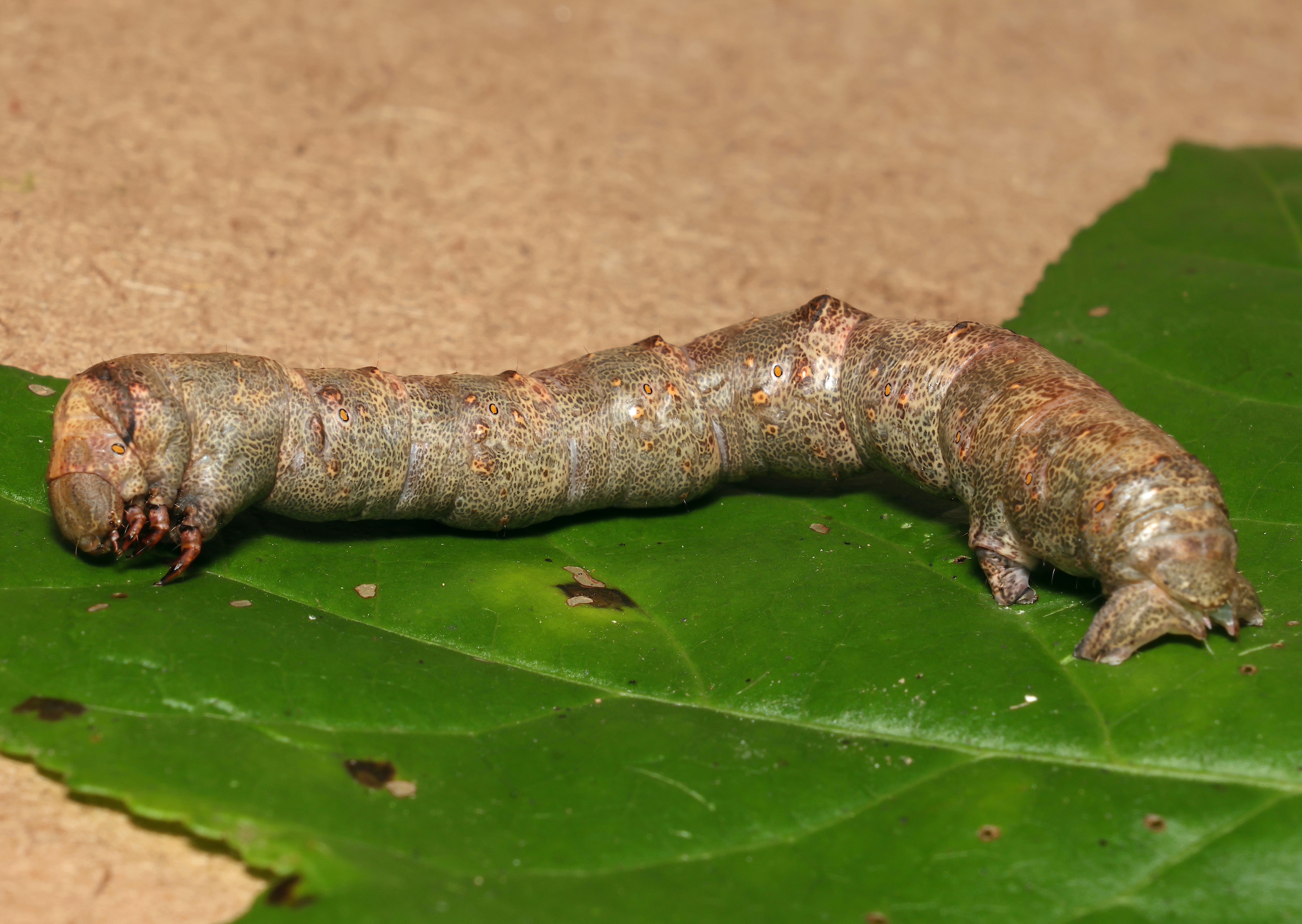
Immatures and Development: Larvae are twig mimics and easily recognized with practice; the older larvae are quite distinct with their knobby head region and warts over A4 and A8.
Larvae ID Requirements: Identifiable from good quality photos, especially where associated with known host plants.
 »
»