Moths of North Carolina
Scientific Name:
Common Name:
Family (Alpha):
« Home »
View PDFTortricidae Members: Episimus Members: 87 NC Records

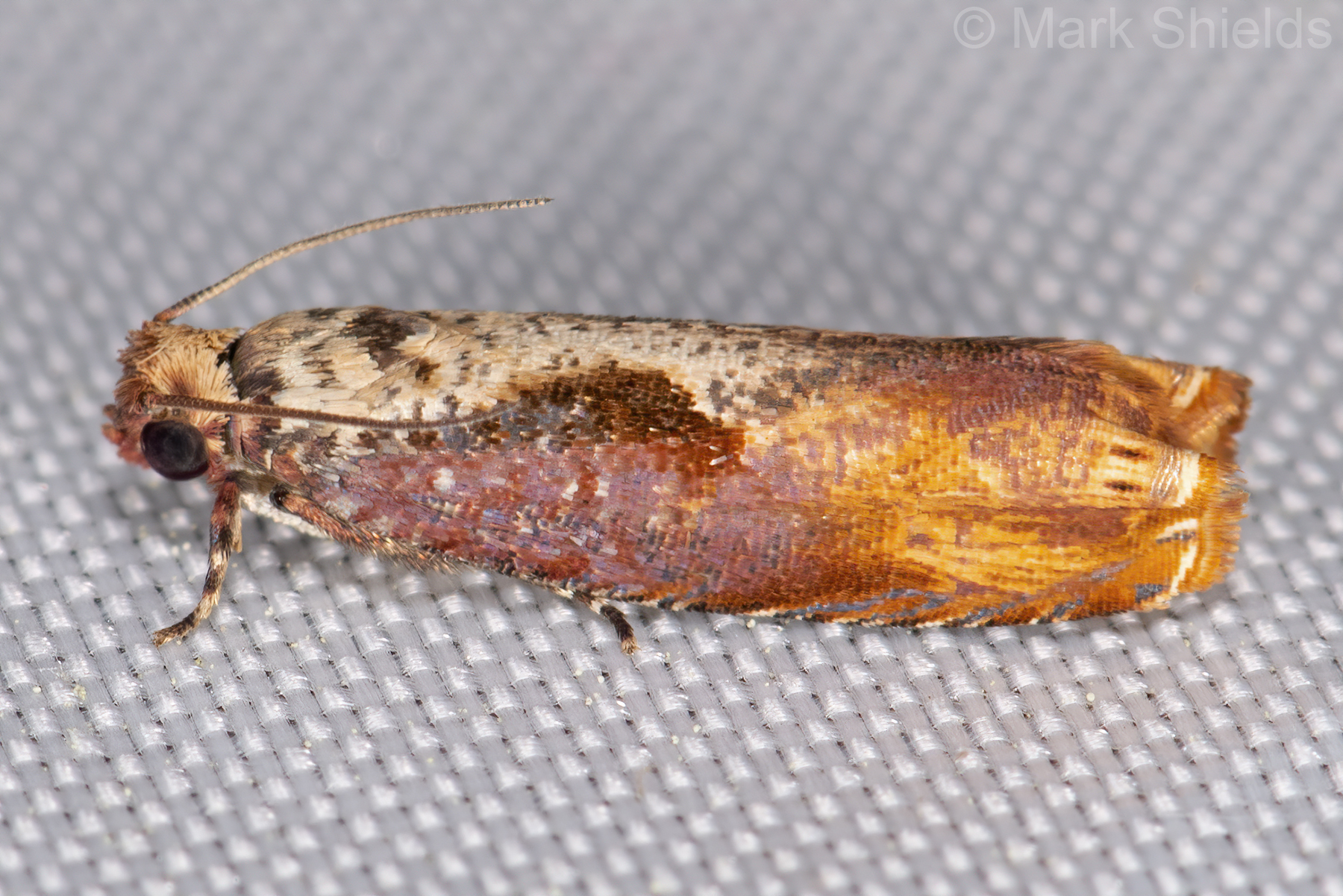
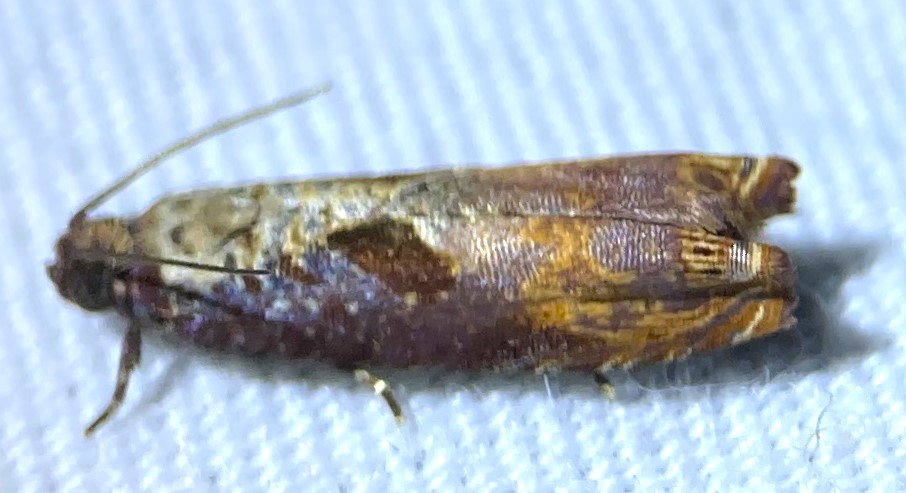
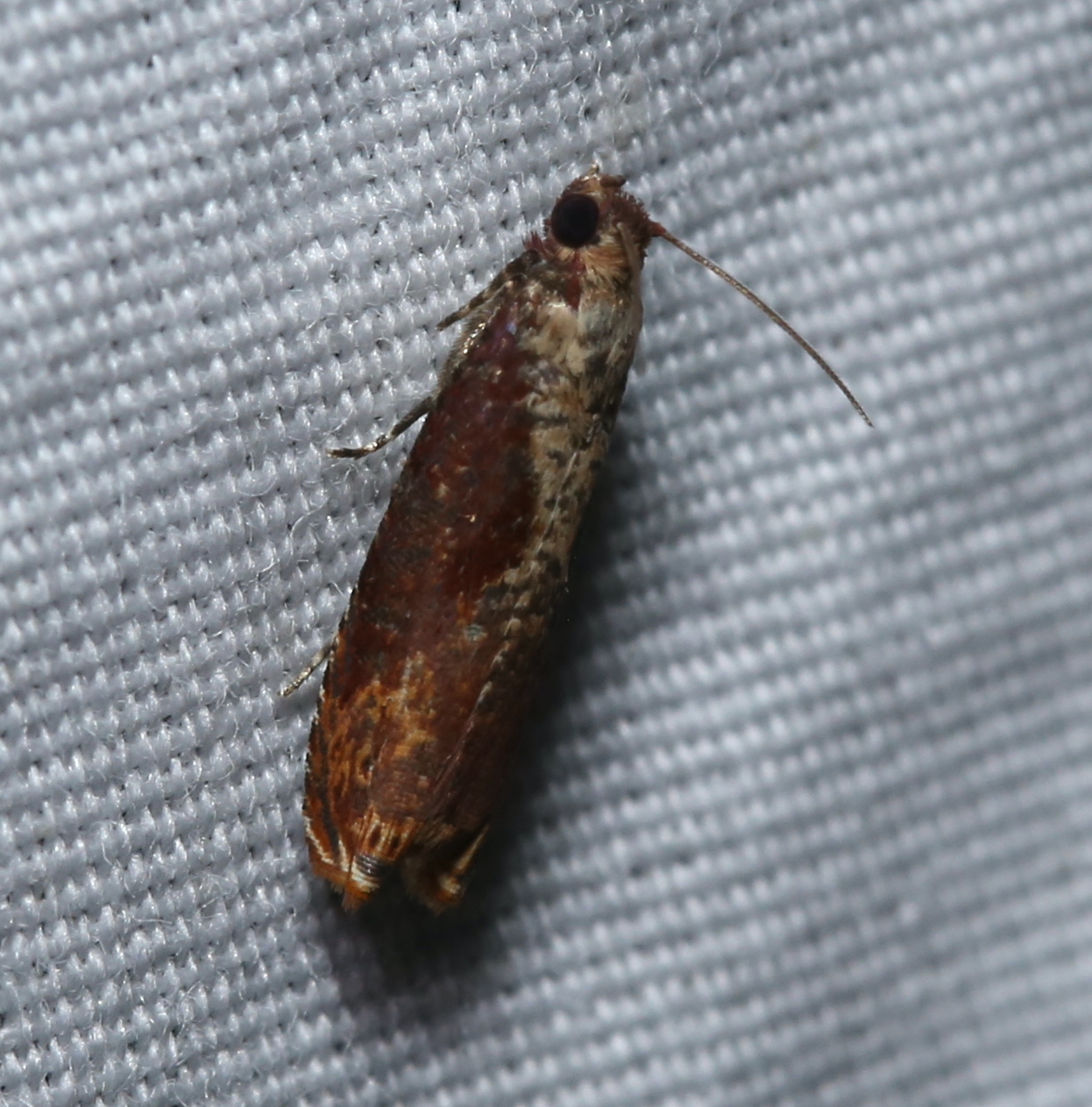
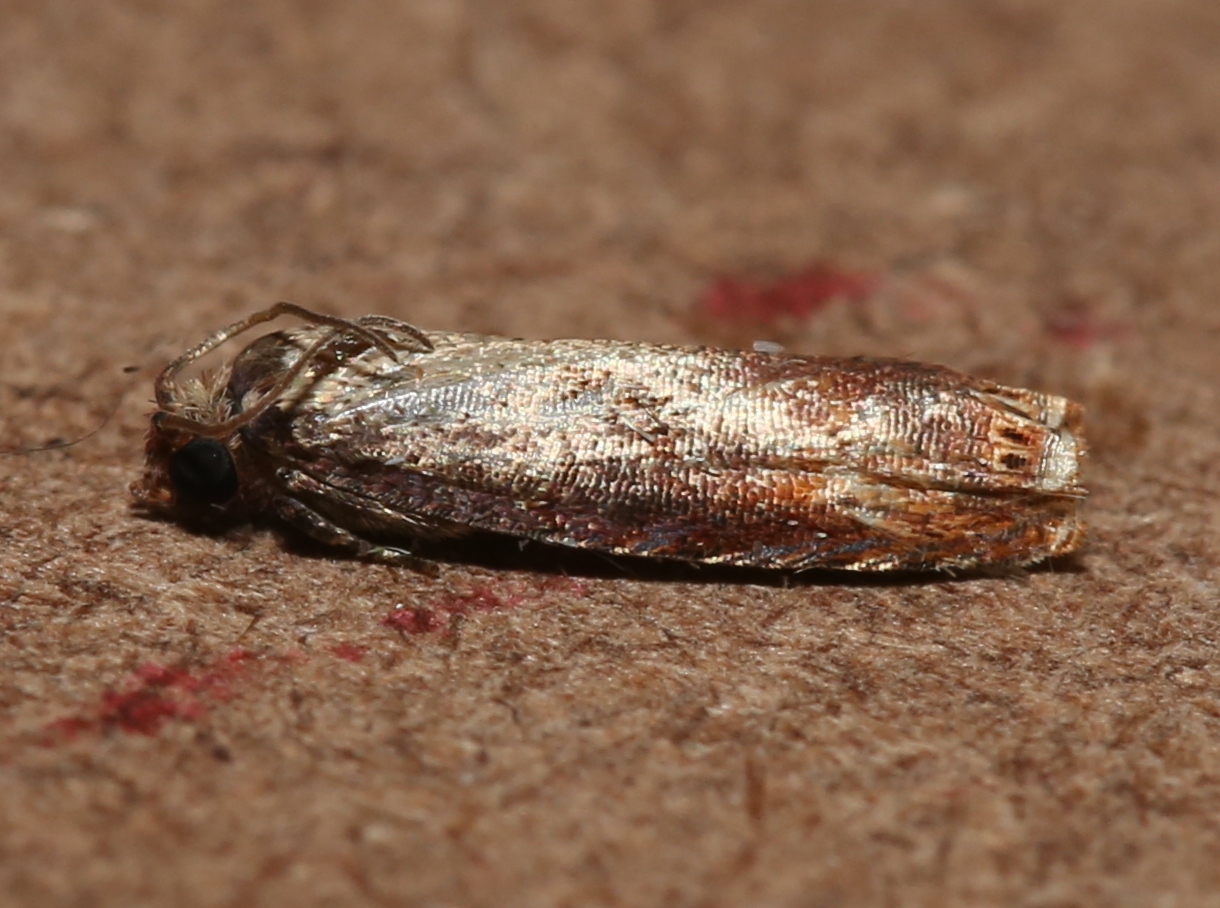
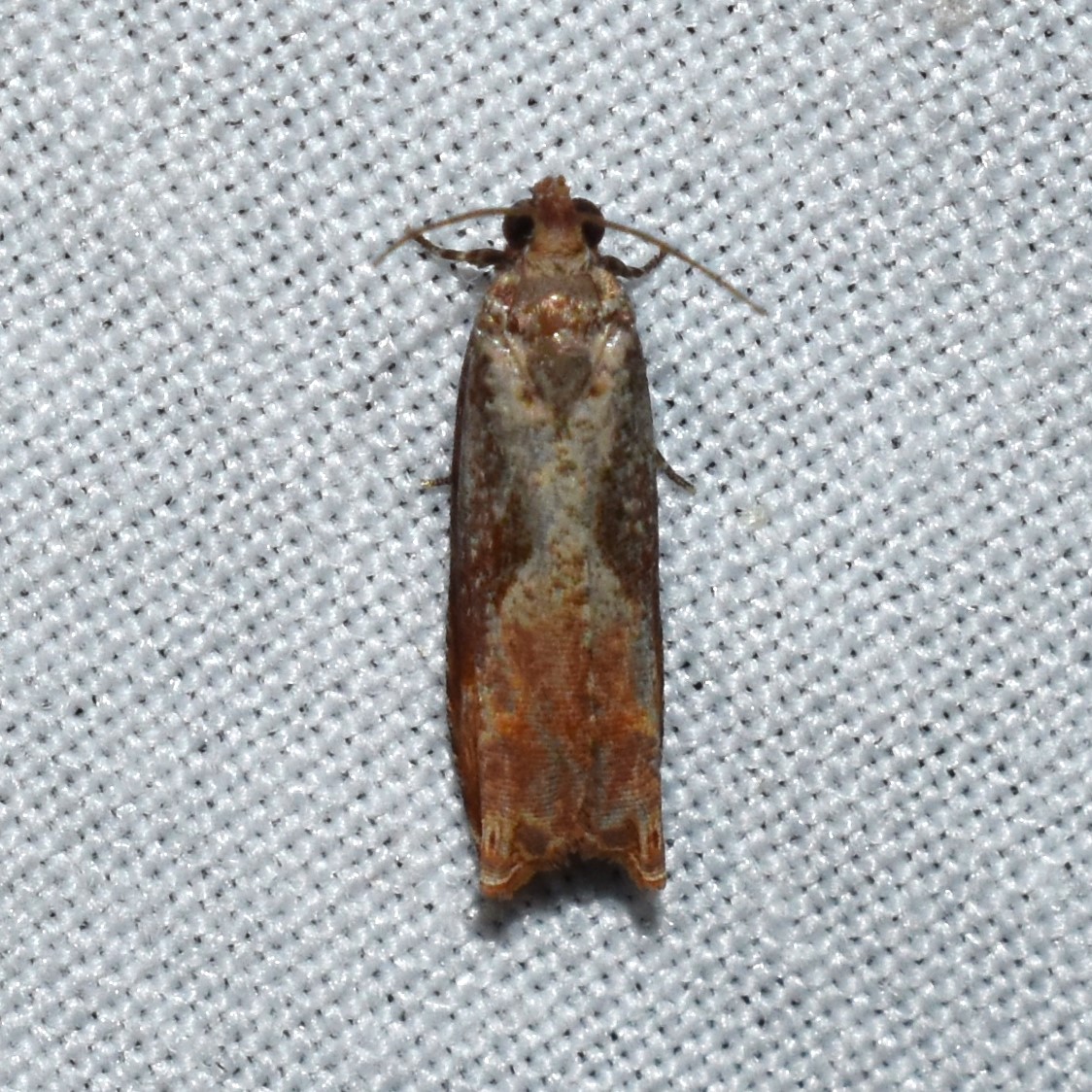
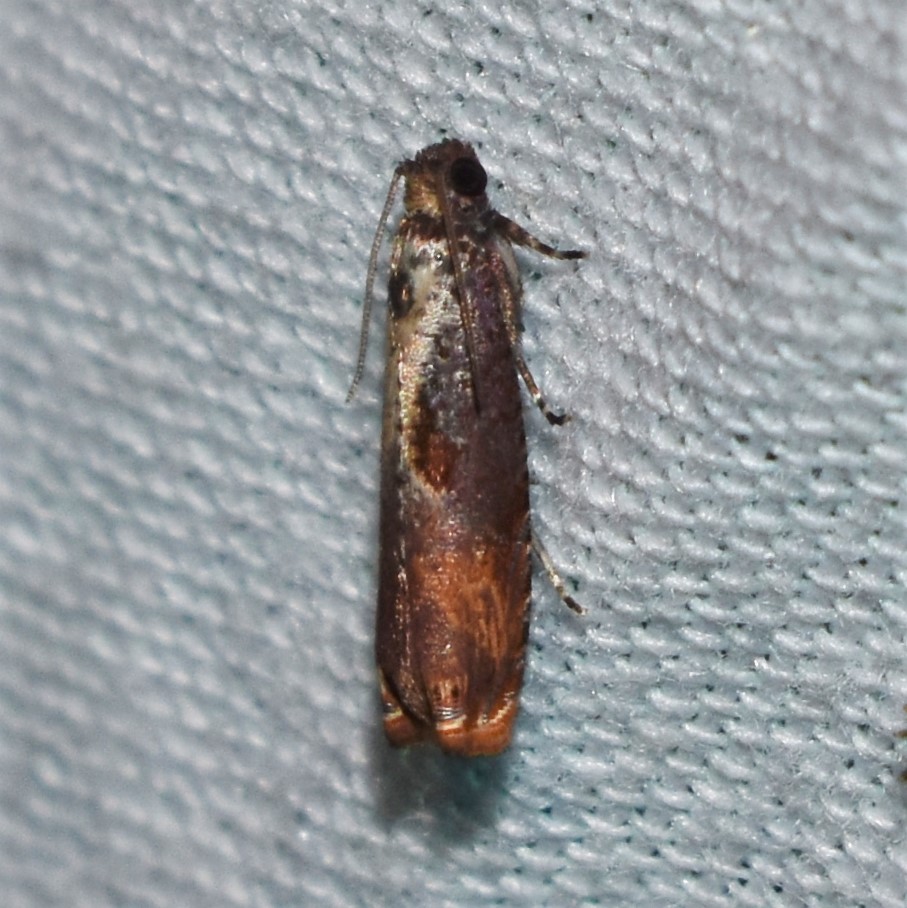
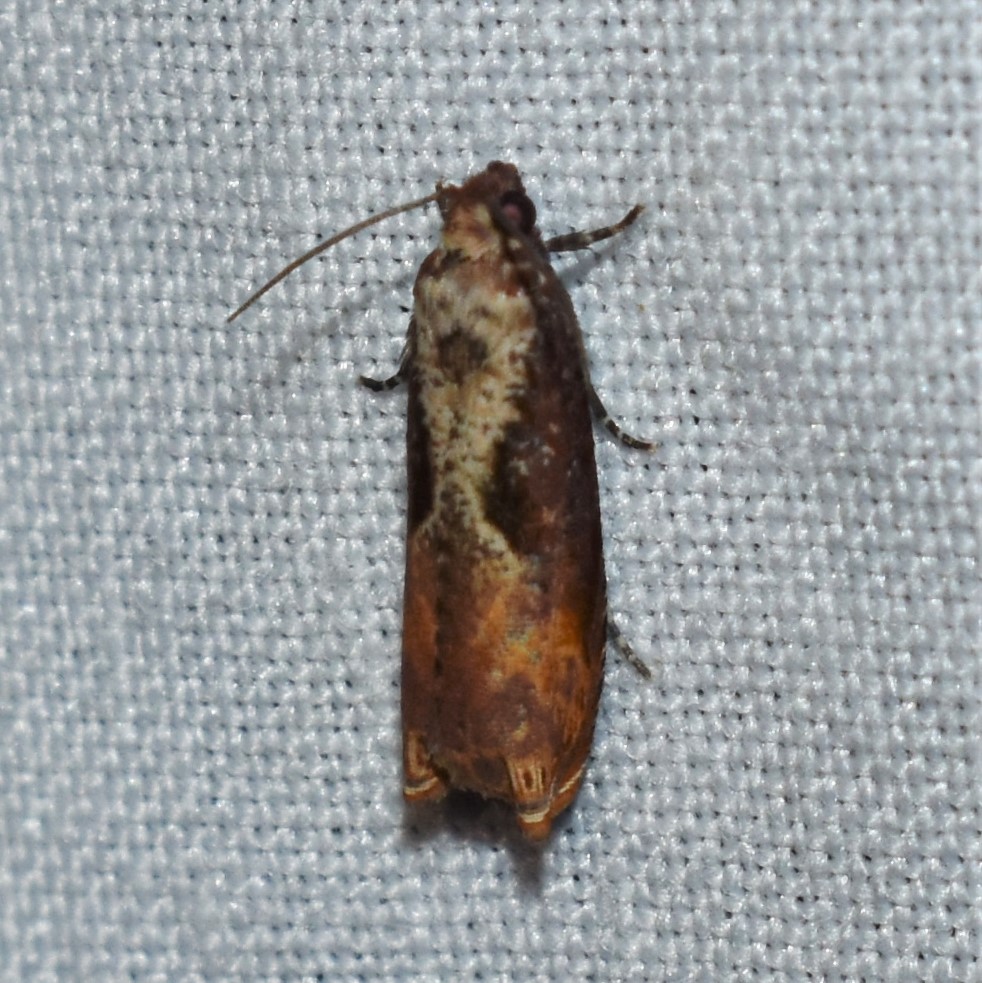
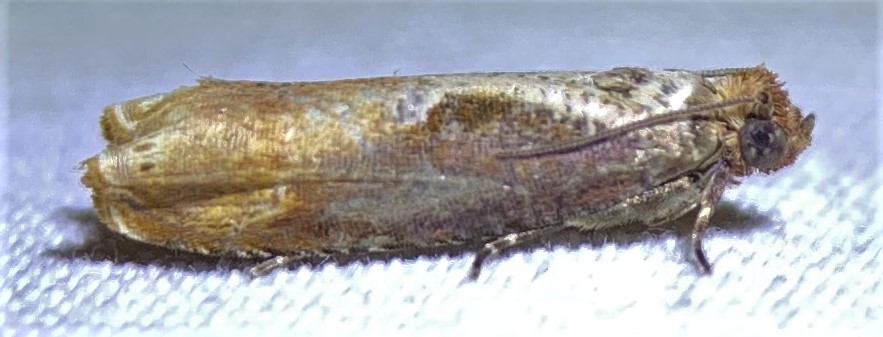
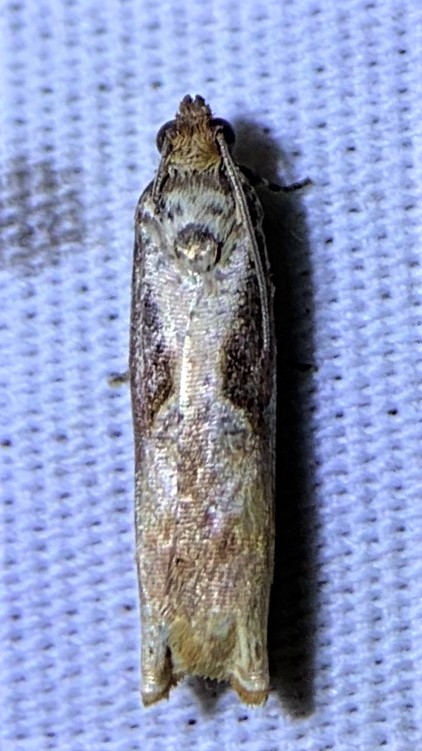
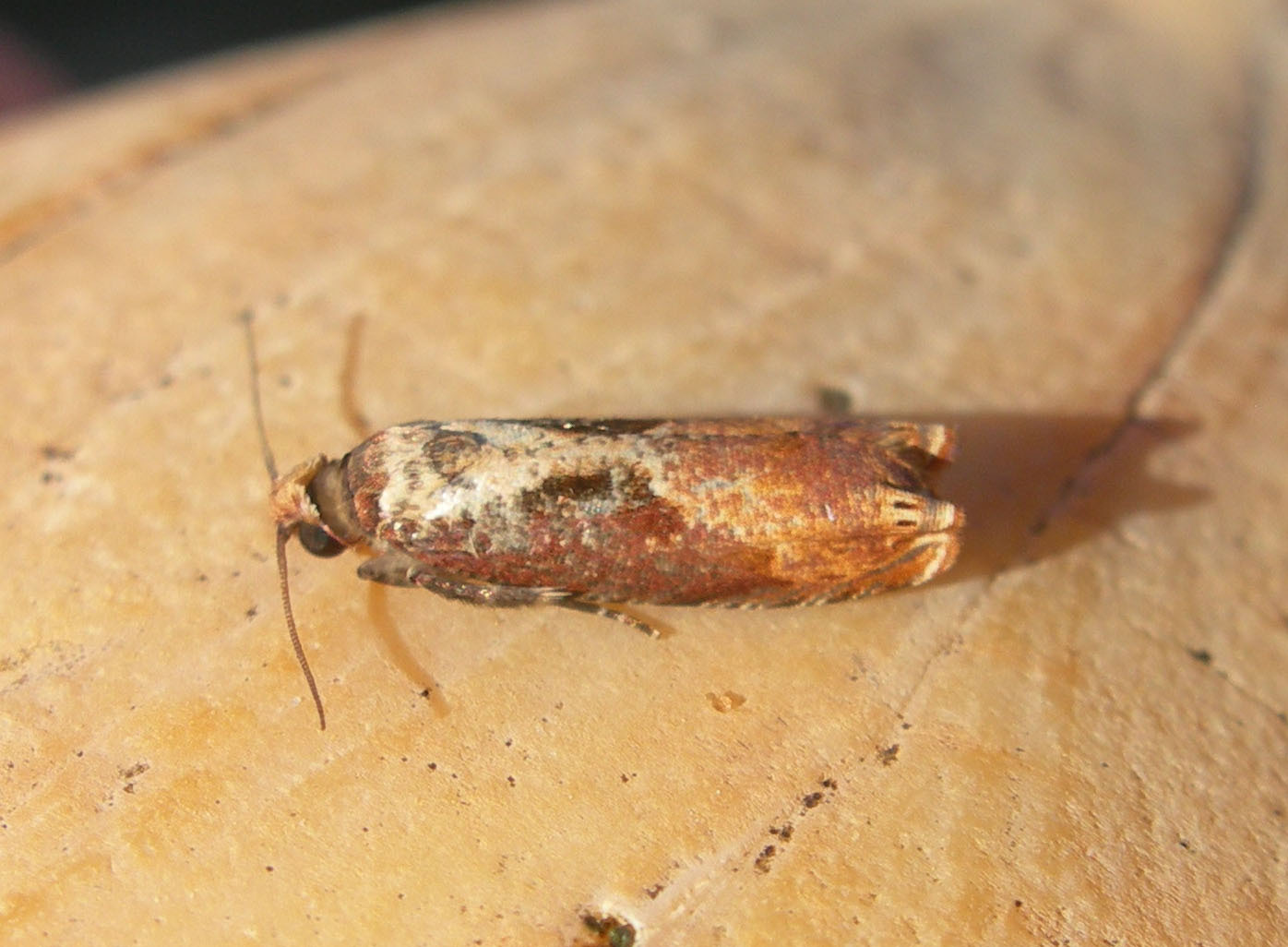
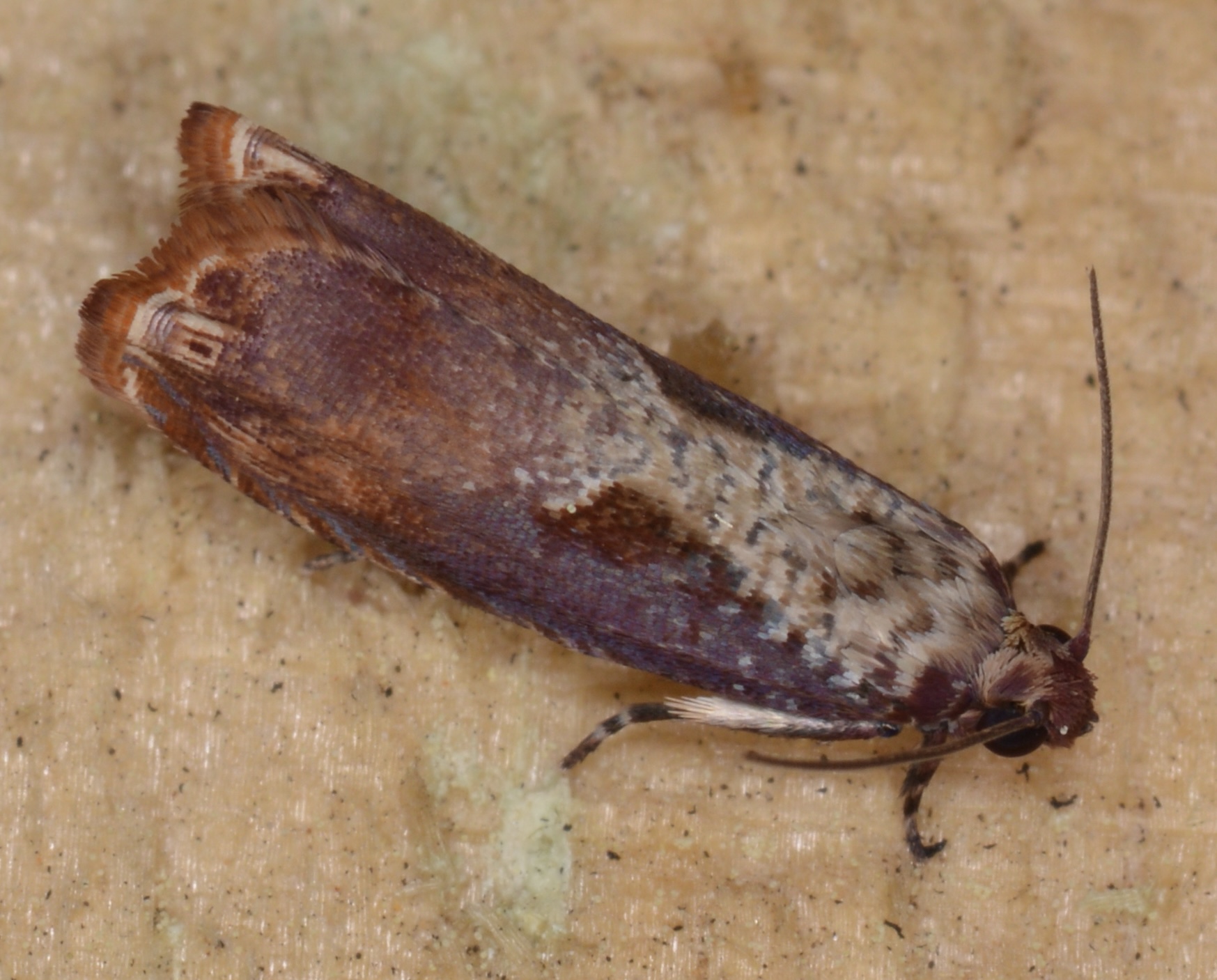
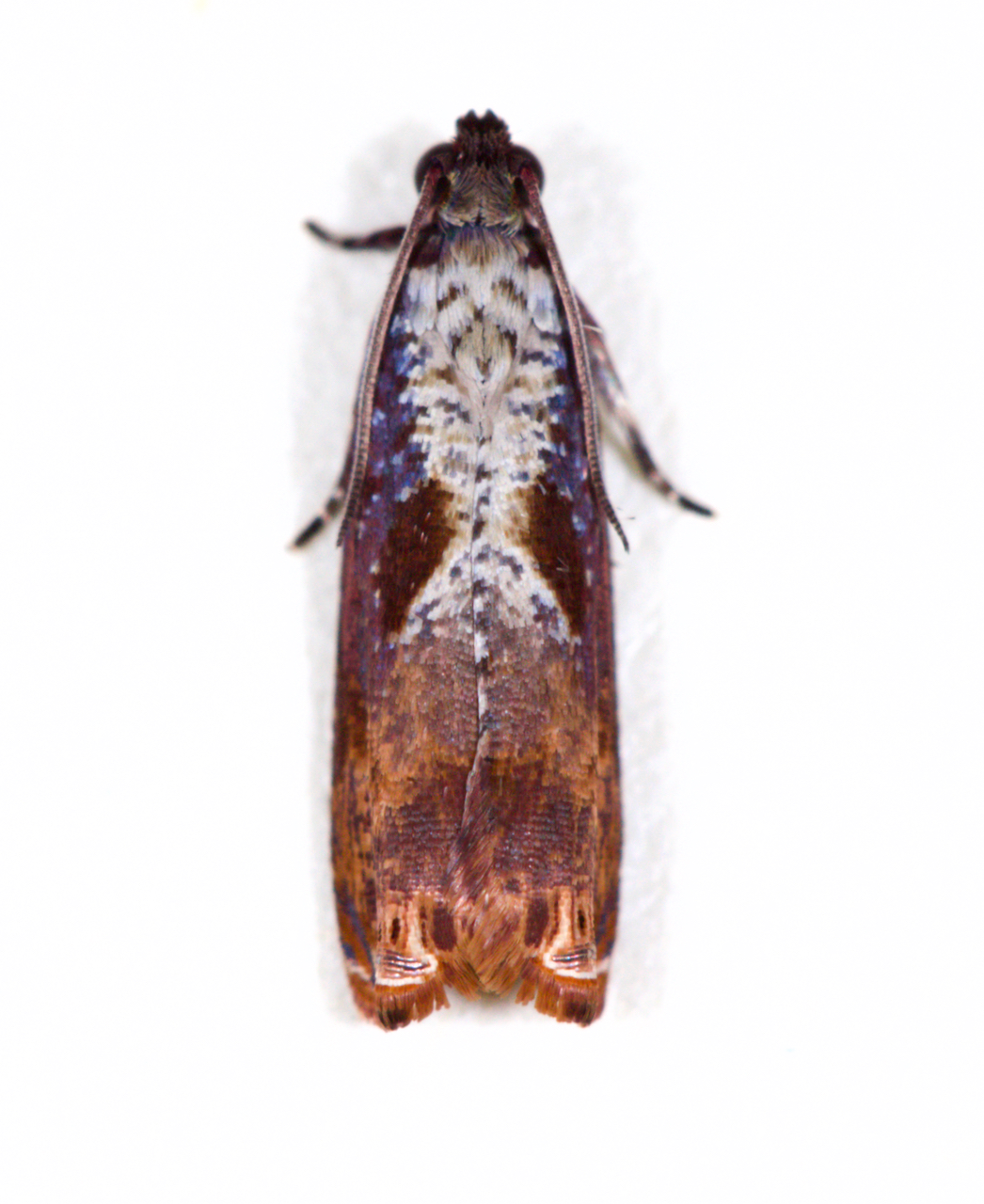
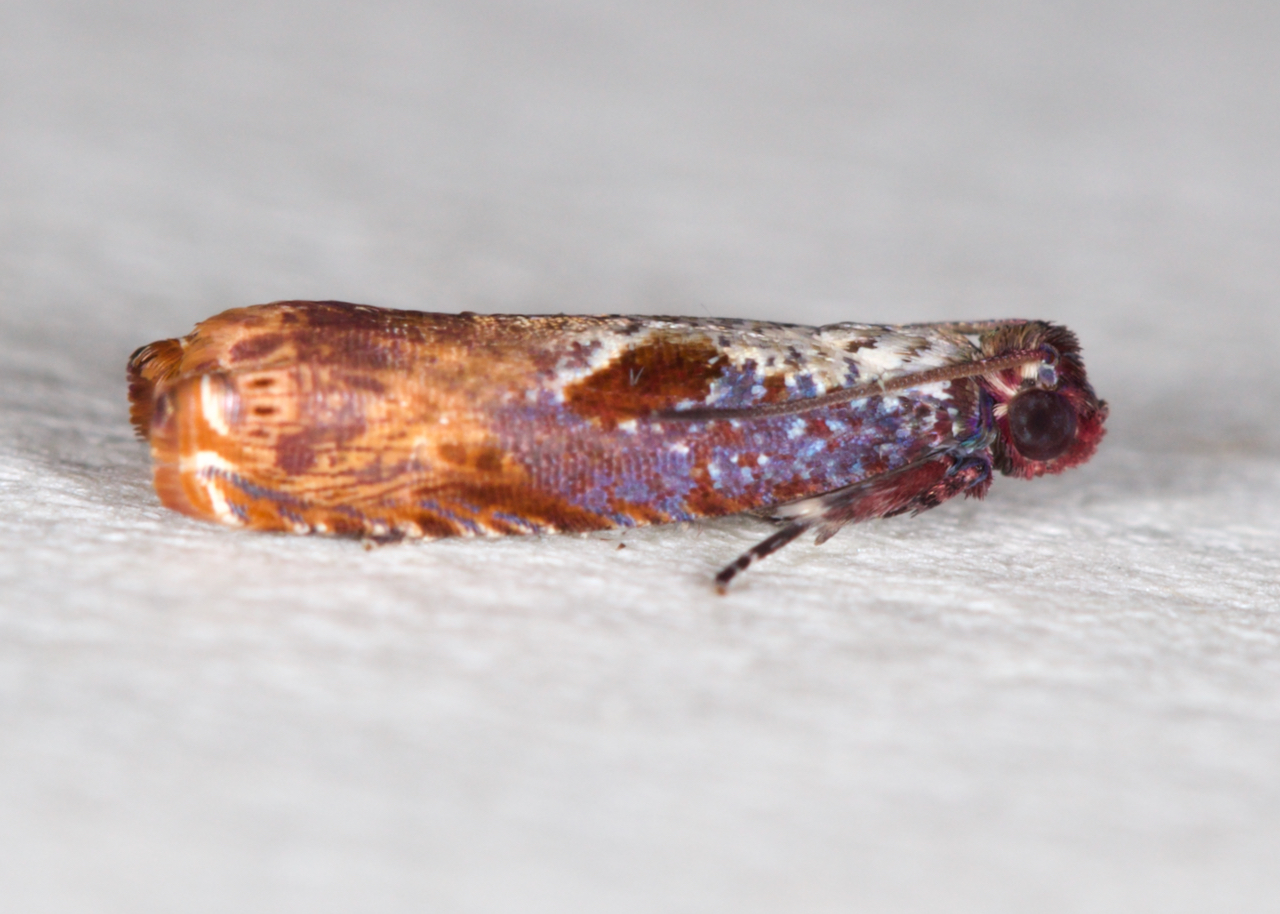
Episimus tyrius Heinrich, 1923 - Maple Tip Borer Moth


Episimus tyriusEpisimus tyrius
view caption
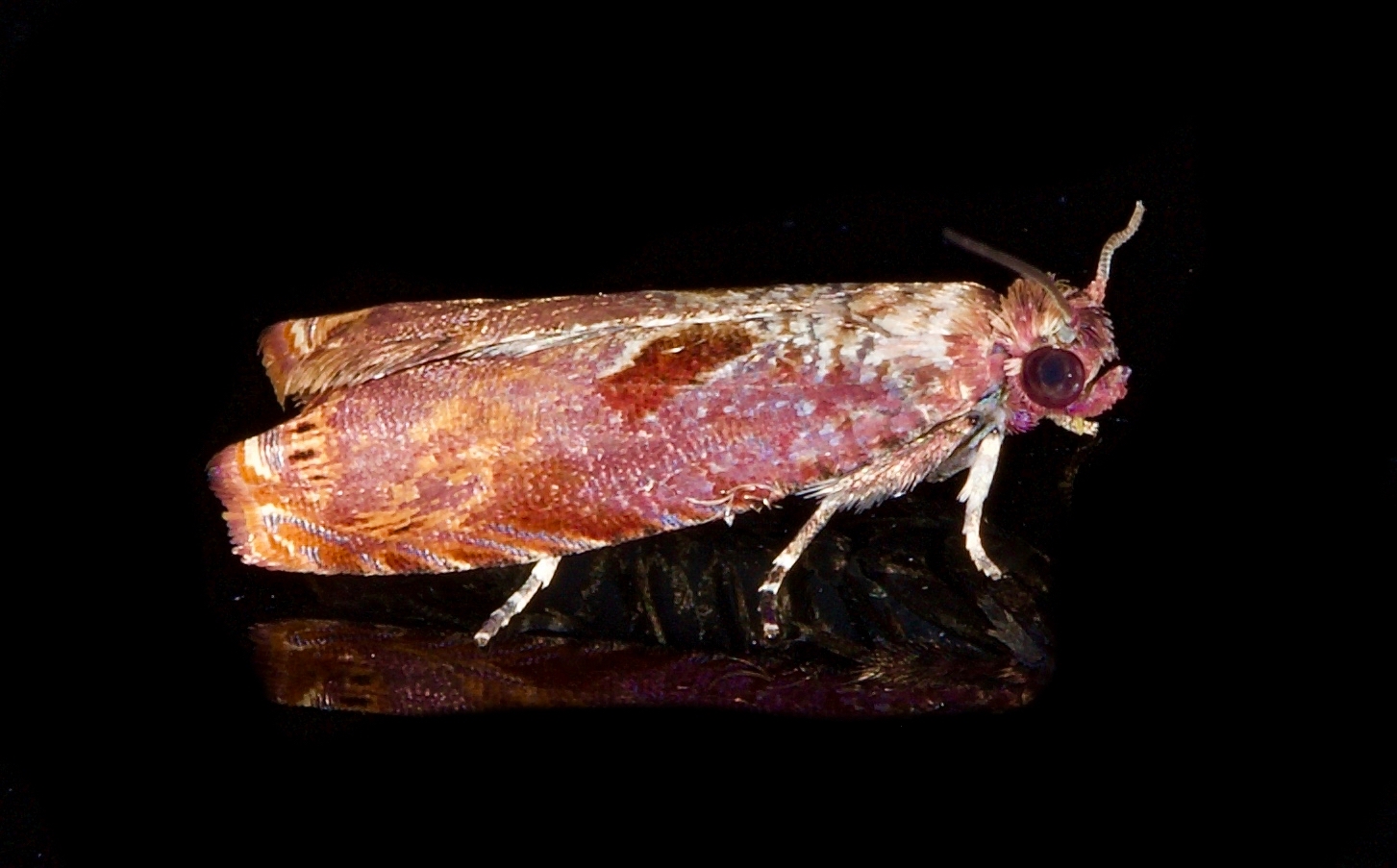
Episimus tyriusEpisimus tyrius
view caption
Taxonomy
Superfamily:
Tortricoidea
Family:
Tortricidae
Subfamily:
Olethreutinae
Tribe:
Olethreutini
P3 Number:
51a0483
MONA Number:
2703.00
Other Common Name:
Maple Leaftier Moth
Identification
Field Guide Descriptions: Online Resources: MPG, BugGuide, iNaturalist, Google, BAMONA, GBIF, BOLDTechnical Description, Adults: Heppner (1994)                                                                                 
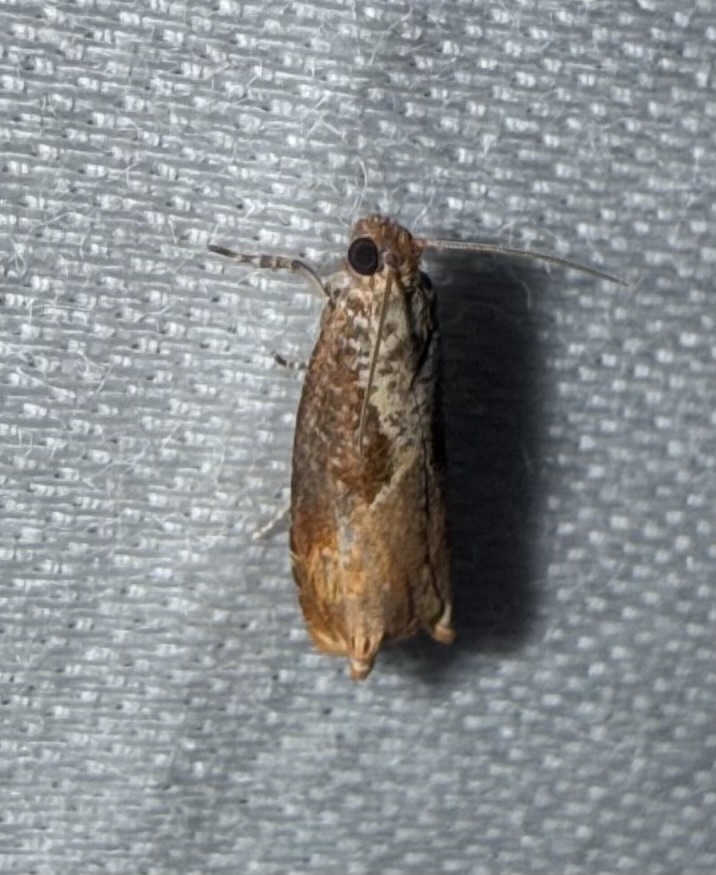
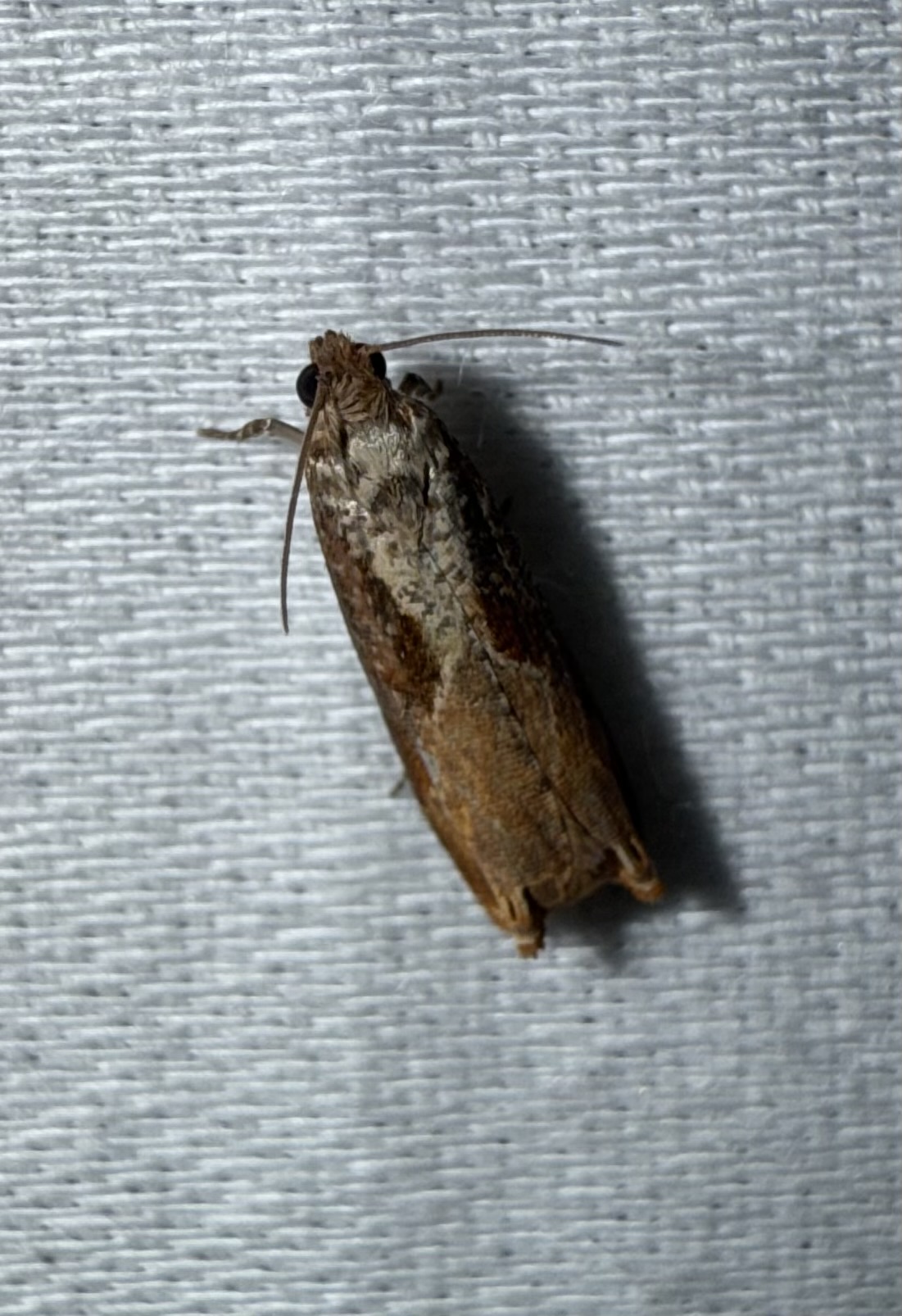
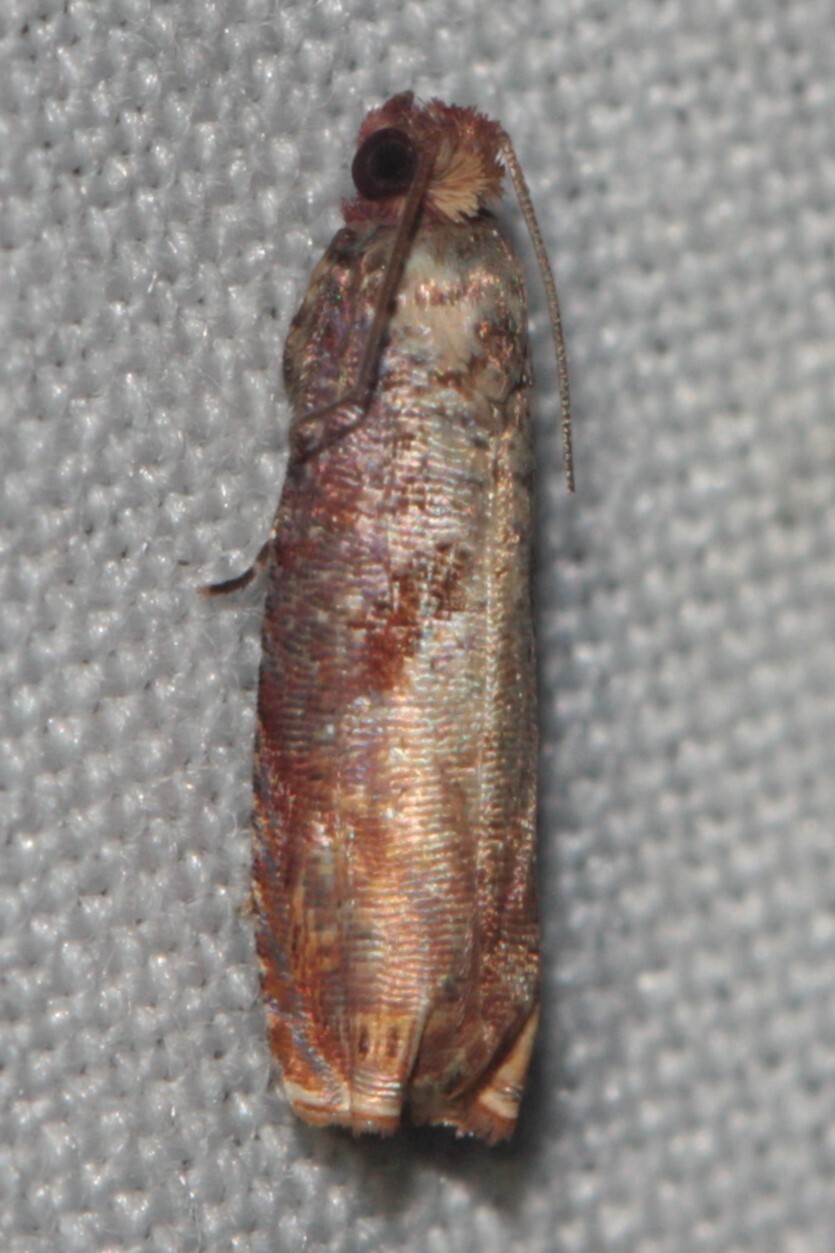
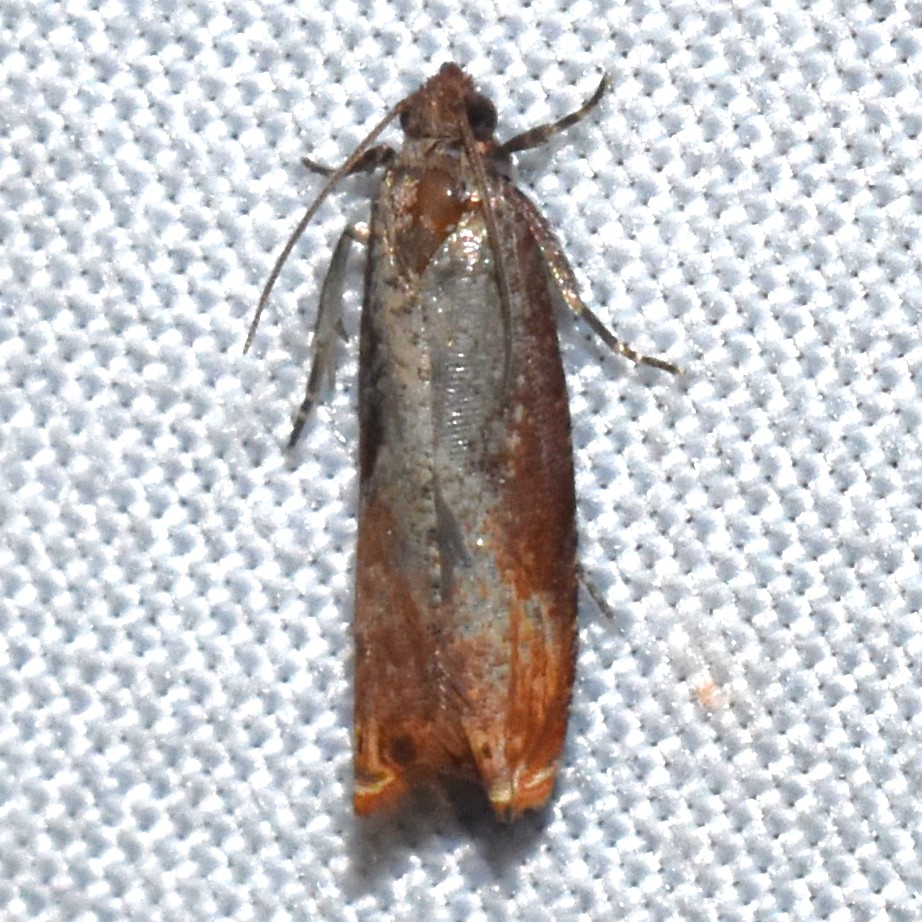
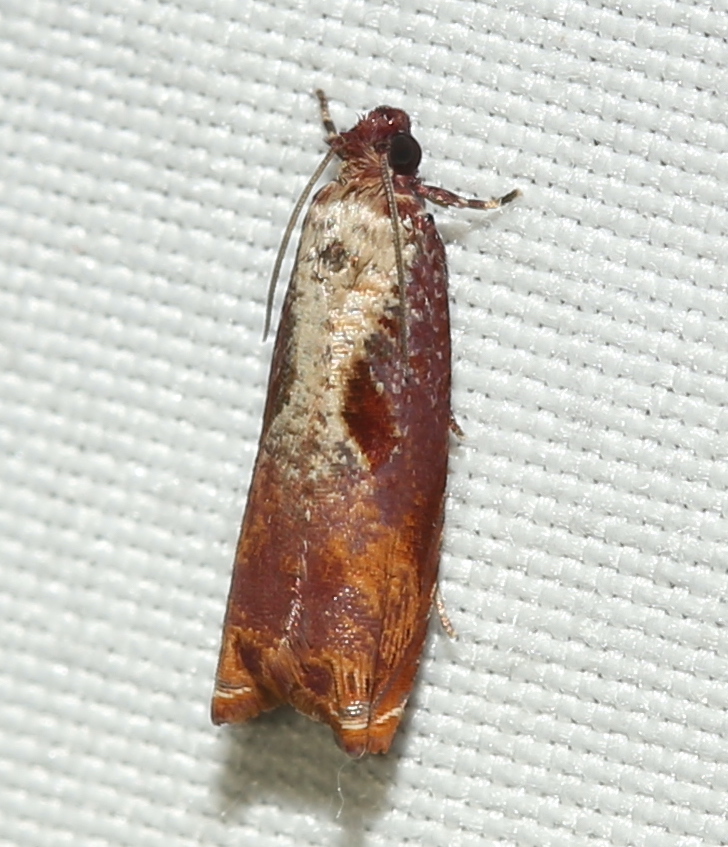
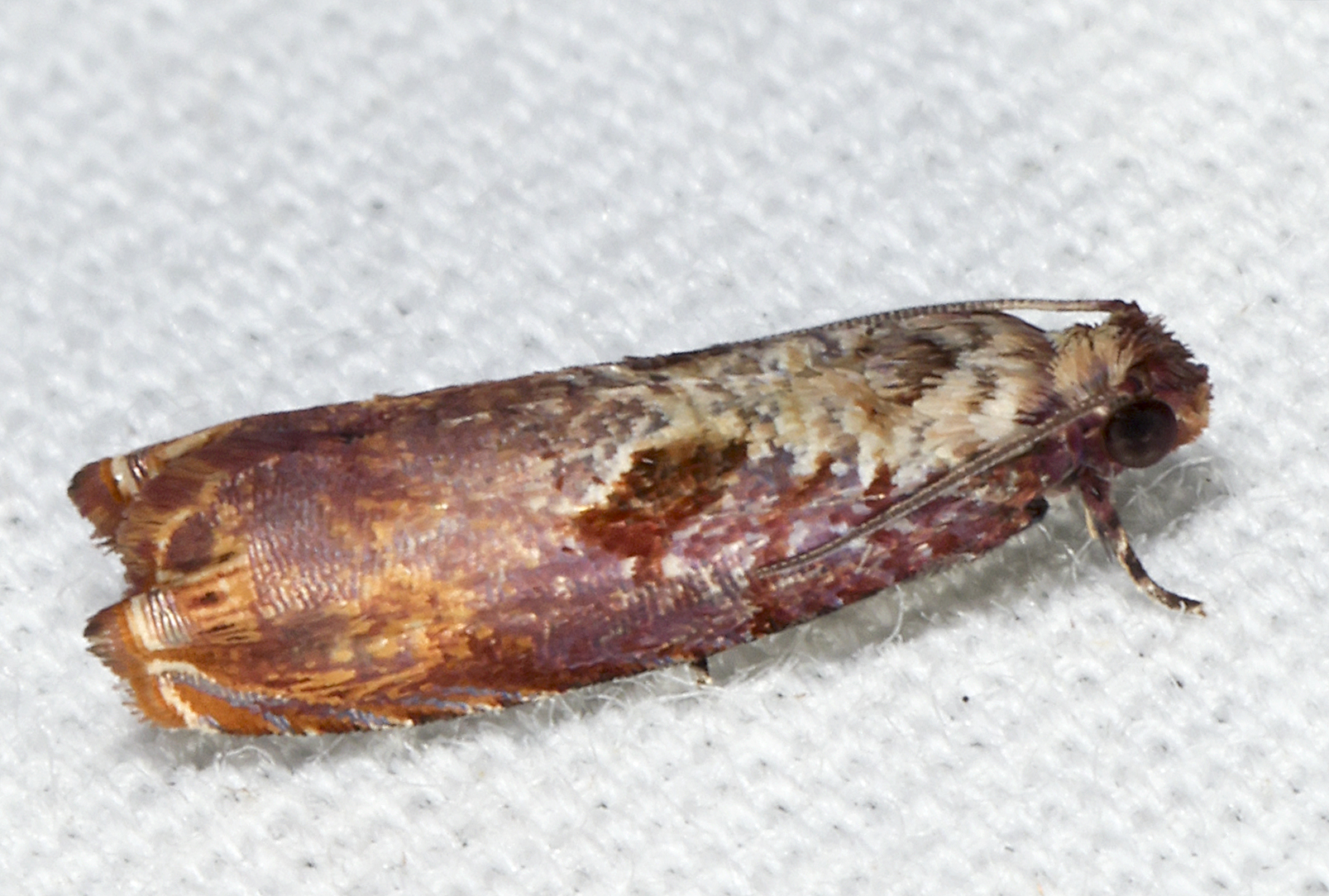
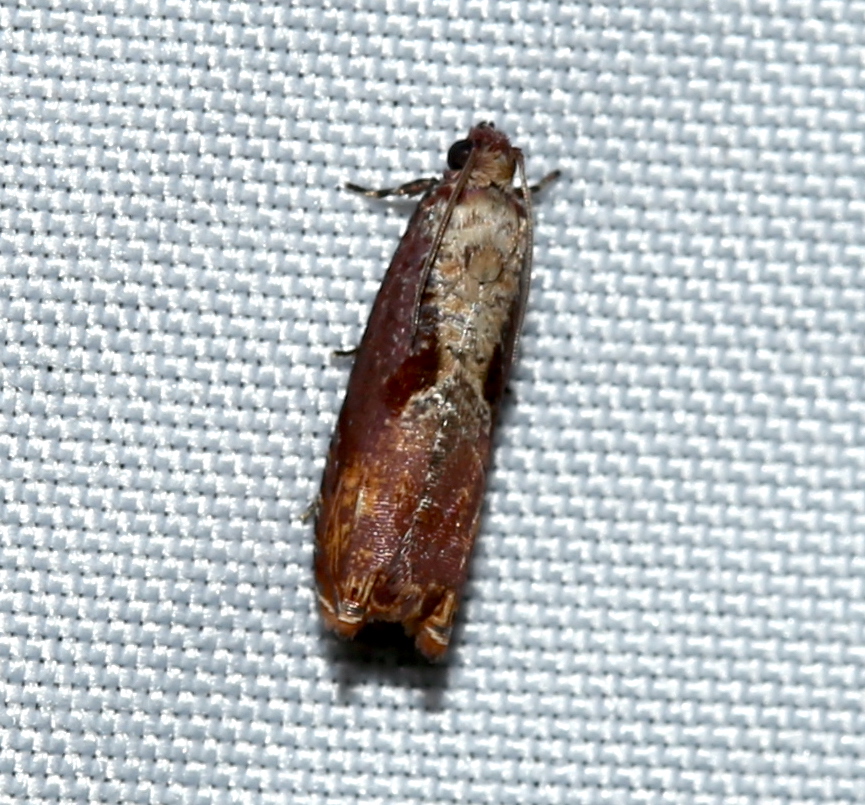
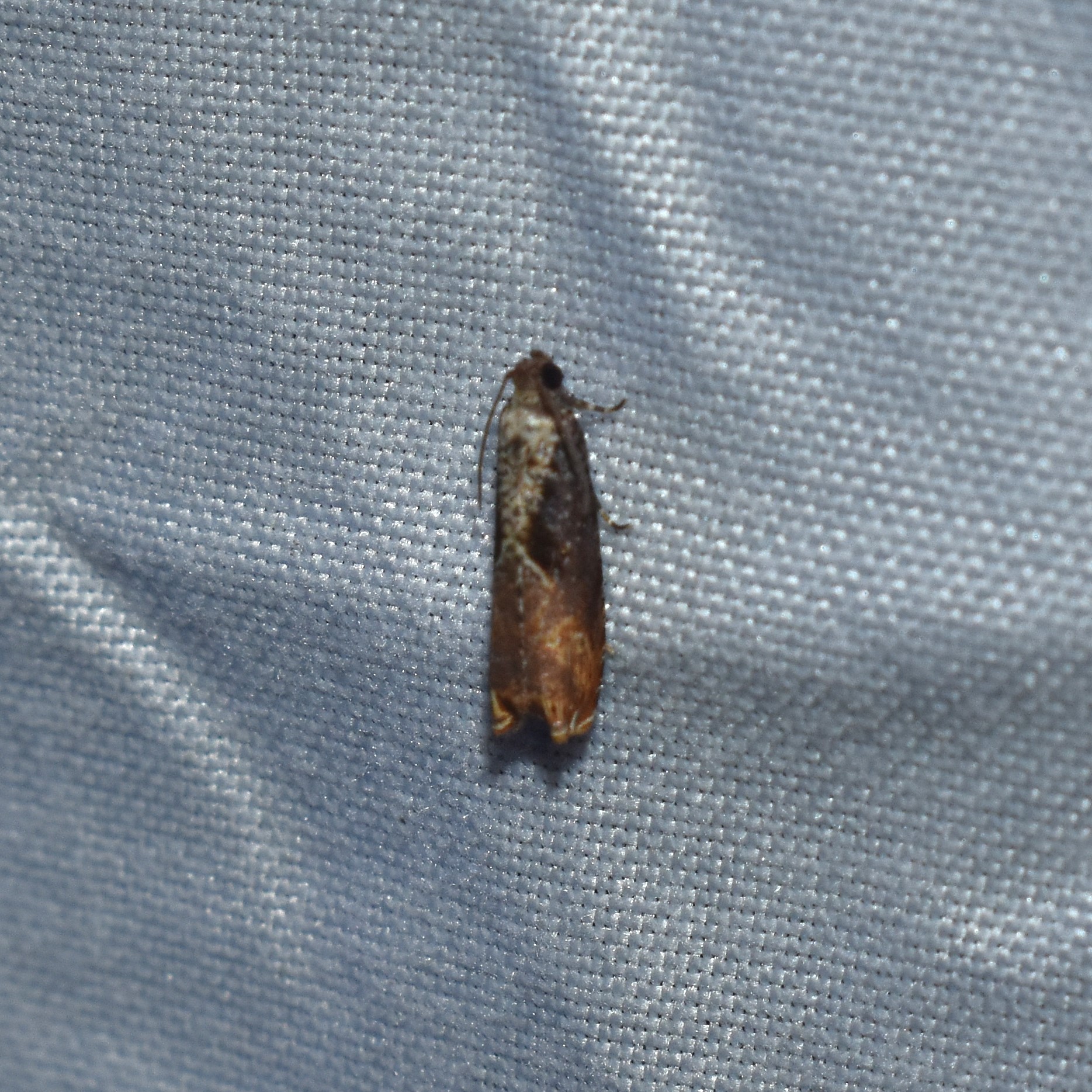
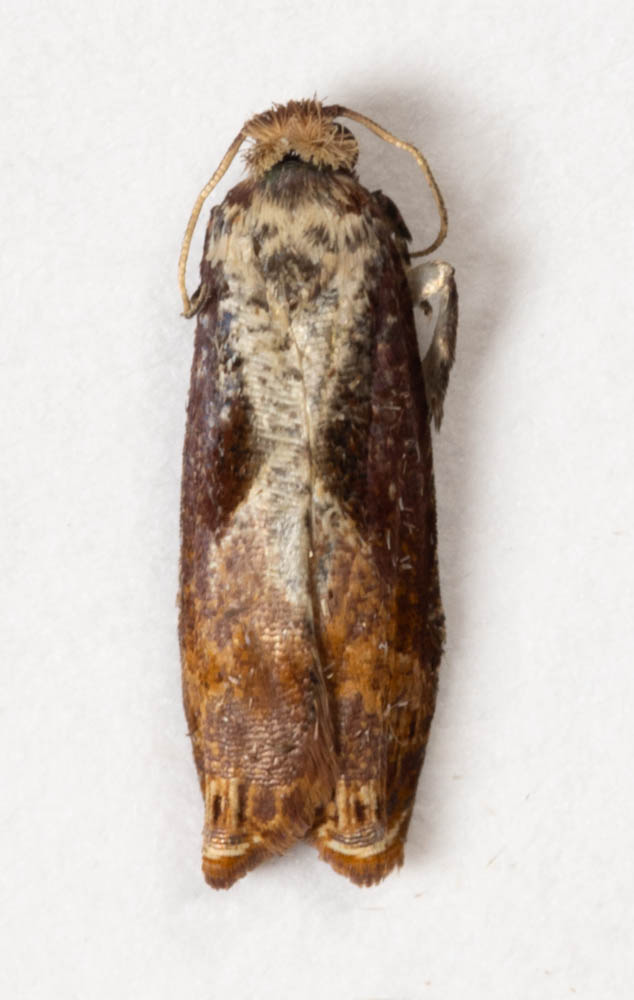
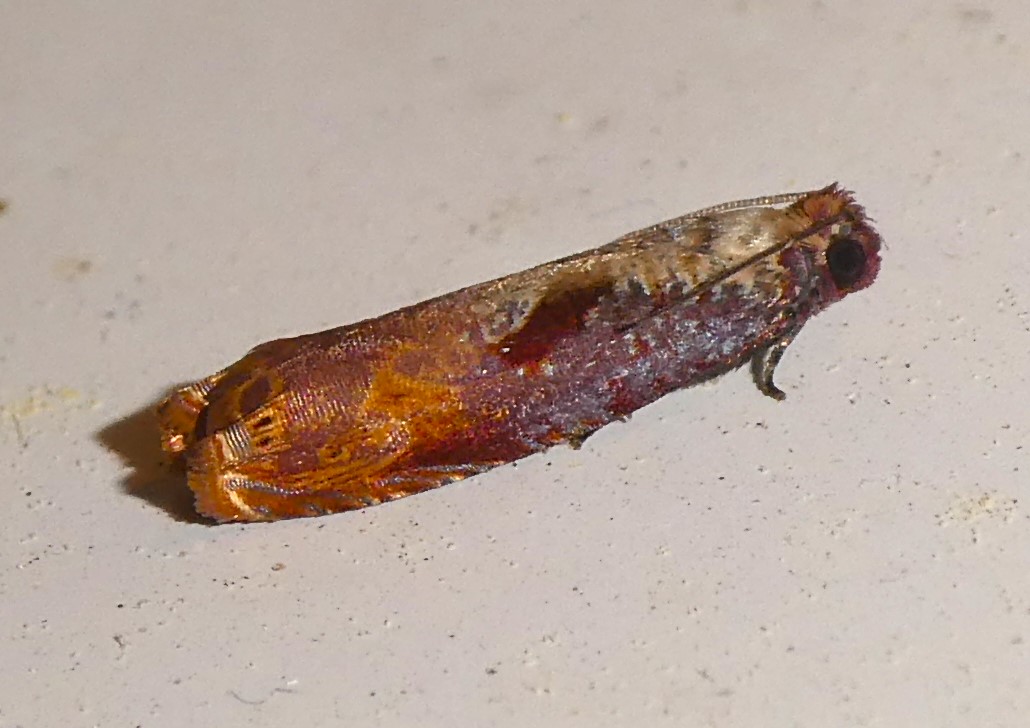
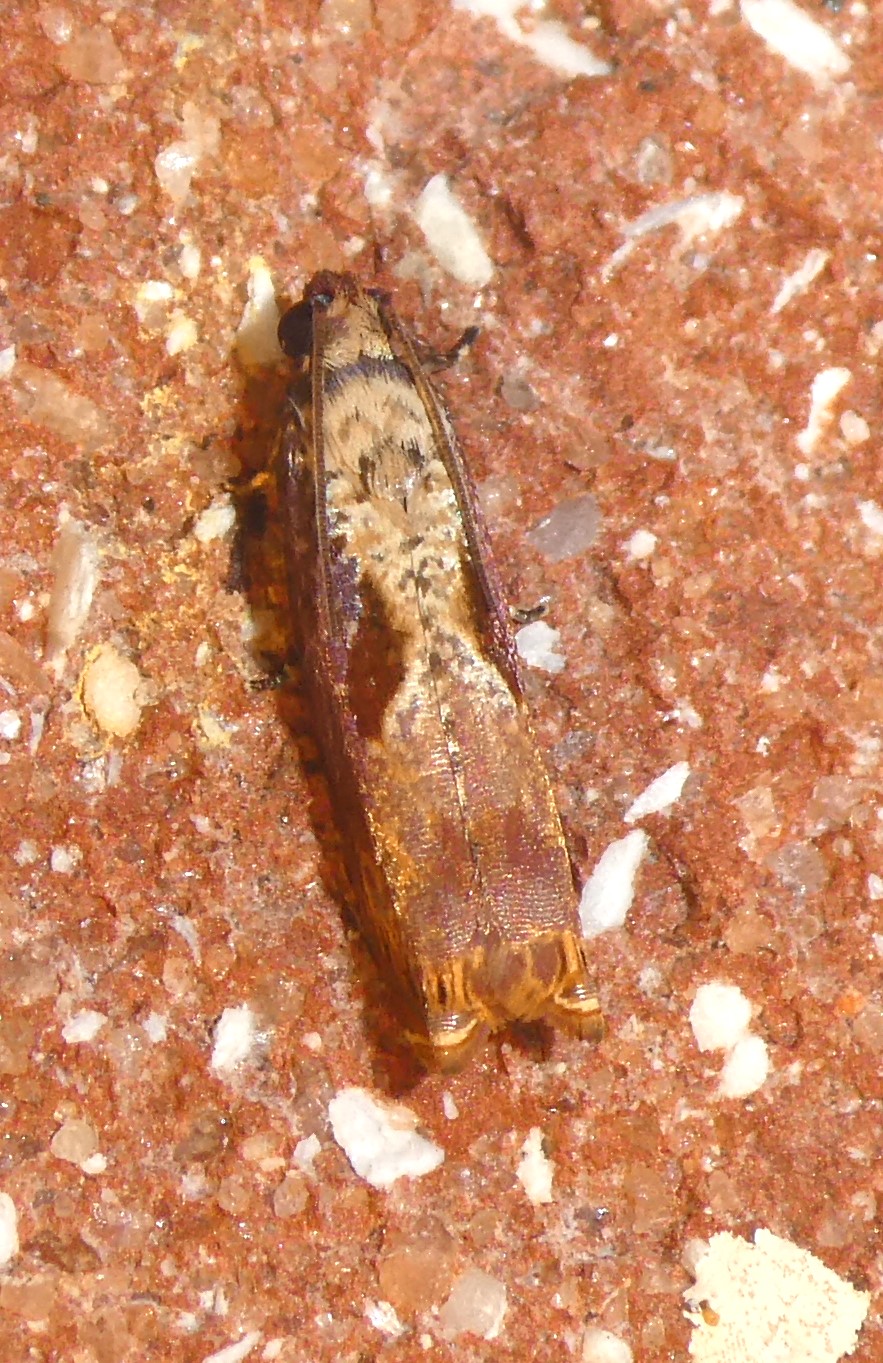
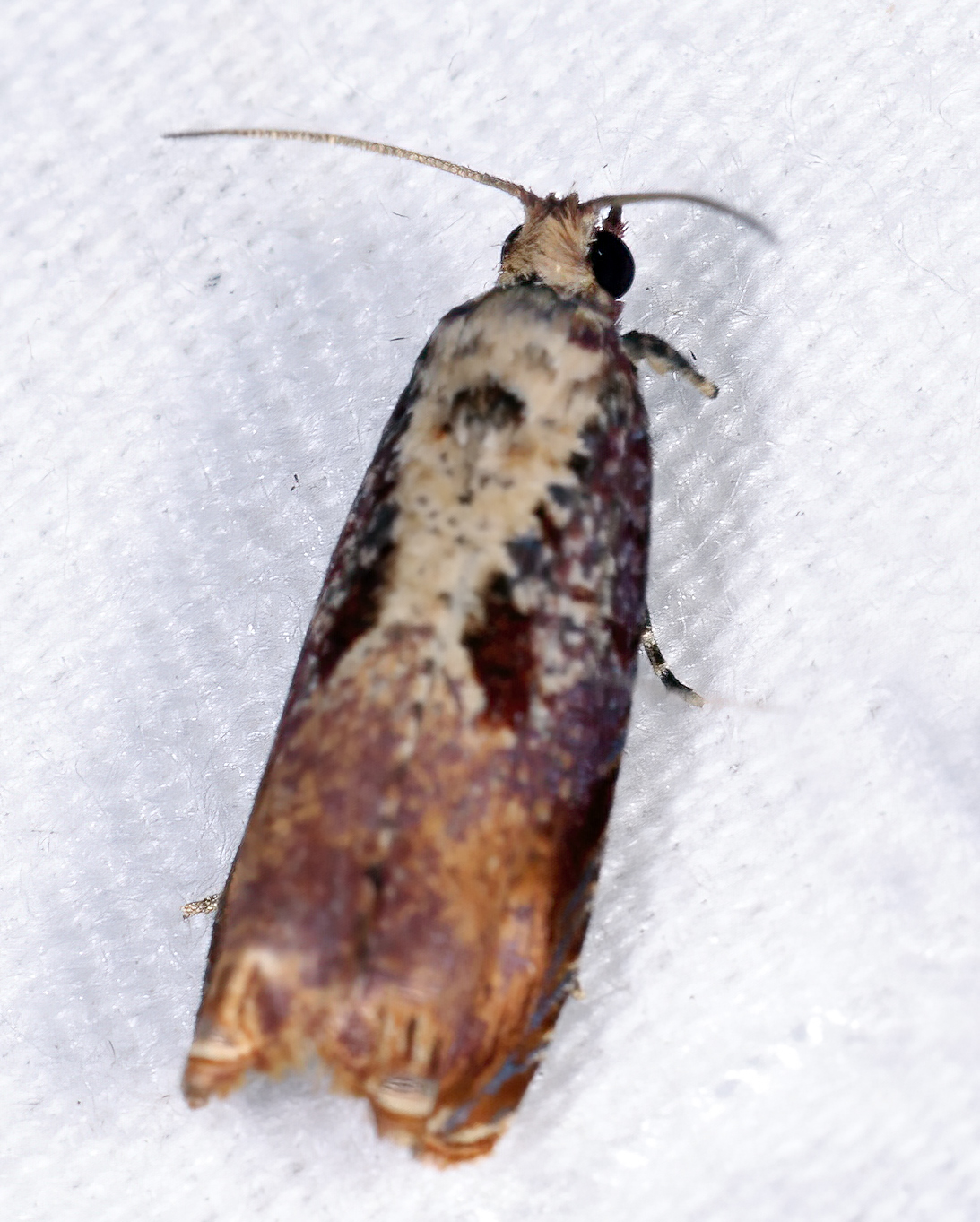
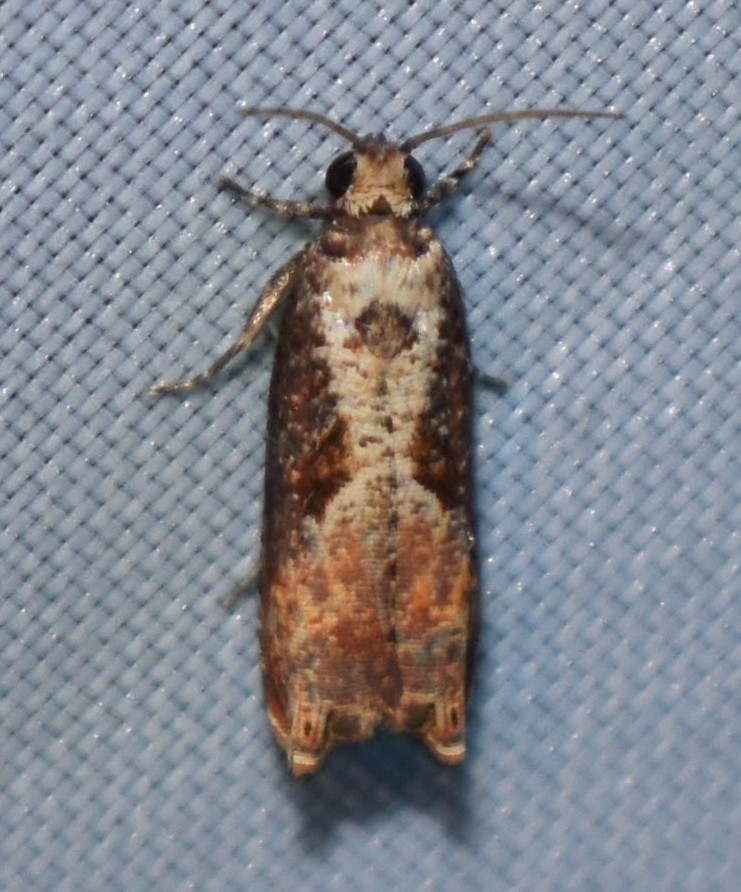
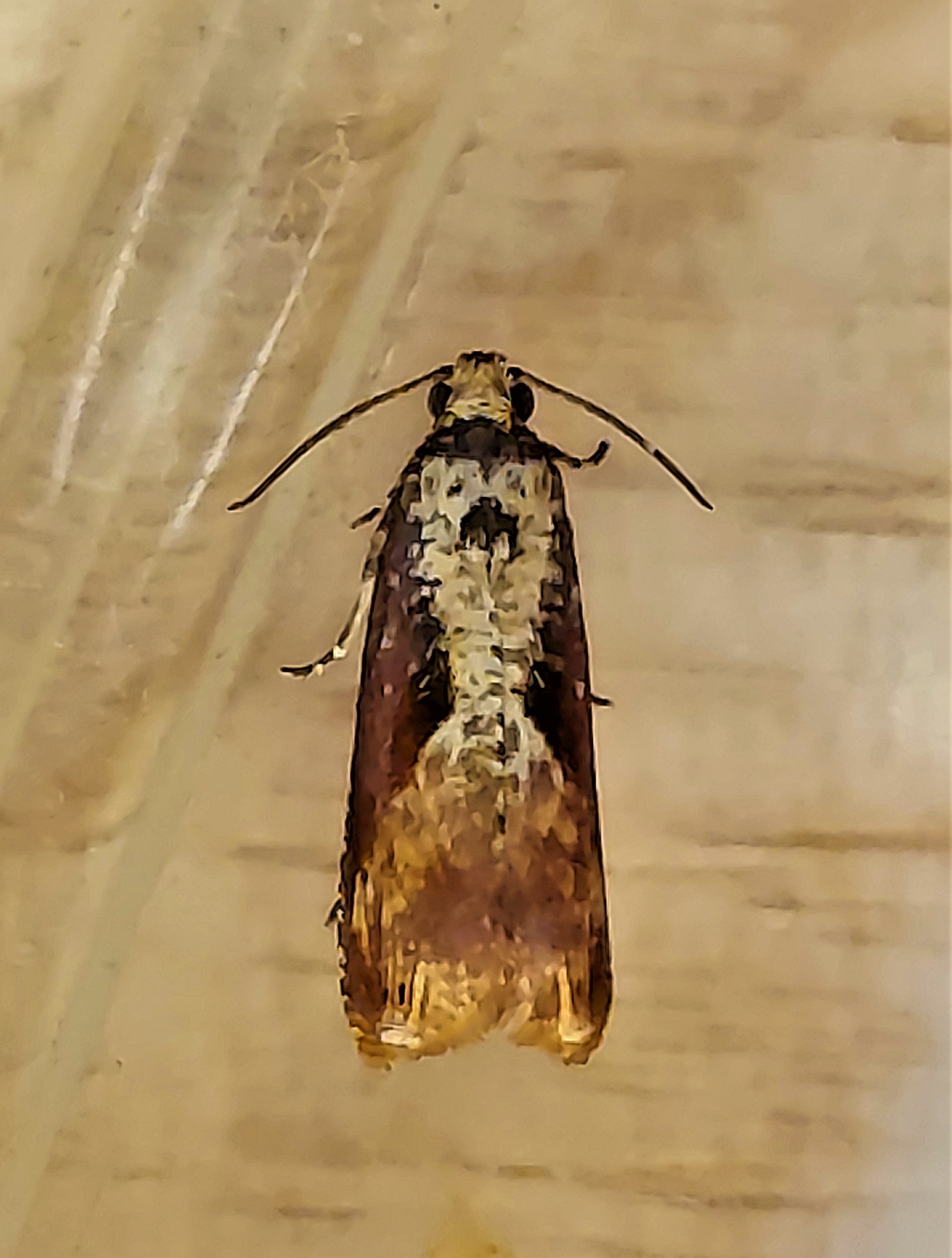
Adult Markings: Episimus tyrius is an easily distinguished species that has a wavy whitish wash along the basal half of the inner margin, a concavity below this that is filled with dark reddish-brown scales, and a large reddish-purple region that covering most of the basal three-fifths of the wing on the costal half. The outer portion is washed with orangish-yellow and the ocellus has two or three short dark-brown dashes. The following description is based in part on that of Heinrich (1923a).

The labial palp is reddish-purple, while the head is reddish-purple in front and ochreous white above. The thorax is whitish with the anterior margin reddish-purple and with a scattering of lead-colored to reddish-brown spots behind. The inner margin of the forewing has a wavy, longitudinal, whitish, basal band with a scattering of lead-colored to reddish-brown spots. The band is a continuation of the coloration on the thorax. The band terminates just beyond one-half the wing length, and has a concavity at around two-fifths that is filled with dark reddish-brown scales. Below this on the costal half is a large reddish-purple region that covers most of the basal three-fifths of the wing.

The outer two-fifths of the wing is orangish-yellow centrally, with reddish-purple broadly distributed from the subtornal region inward to beyond the center of the wing. The apical half of the costal has a series of metallic-gray, oblique lines that project towards the outer margin and are interspersed with short, white lines. The ocellus has two or three very short longitudinal dark-brown dashes. These are followed by a transverse metallic-gray bar, and an adjoining white bar. The outer margin and fringe are variably washed with a mixture of orangish-yellow and reddish-purple scales, while the hindwing is brown to purplish-brown with a whitish wash along the basal two-thirds of the costal margin.
Wingspan: 14-15 mm (Heinrich, 1926).
Forewing Length: 4.7-5.5 mm for males and 5.0-6.0 mm for females (Heppner, 1994).
Adult Structural Features: Heppner (1994) has descriptions and illustrations of the male and female genitalia.
Genitalia and other structural photos
Adult ID Requirements: Identifiable from good quality photos of unworn specimens.
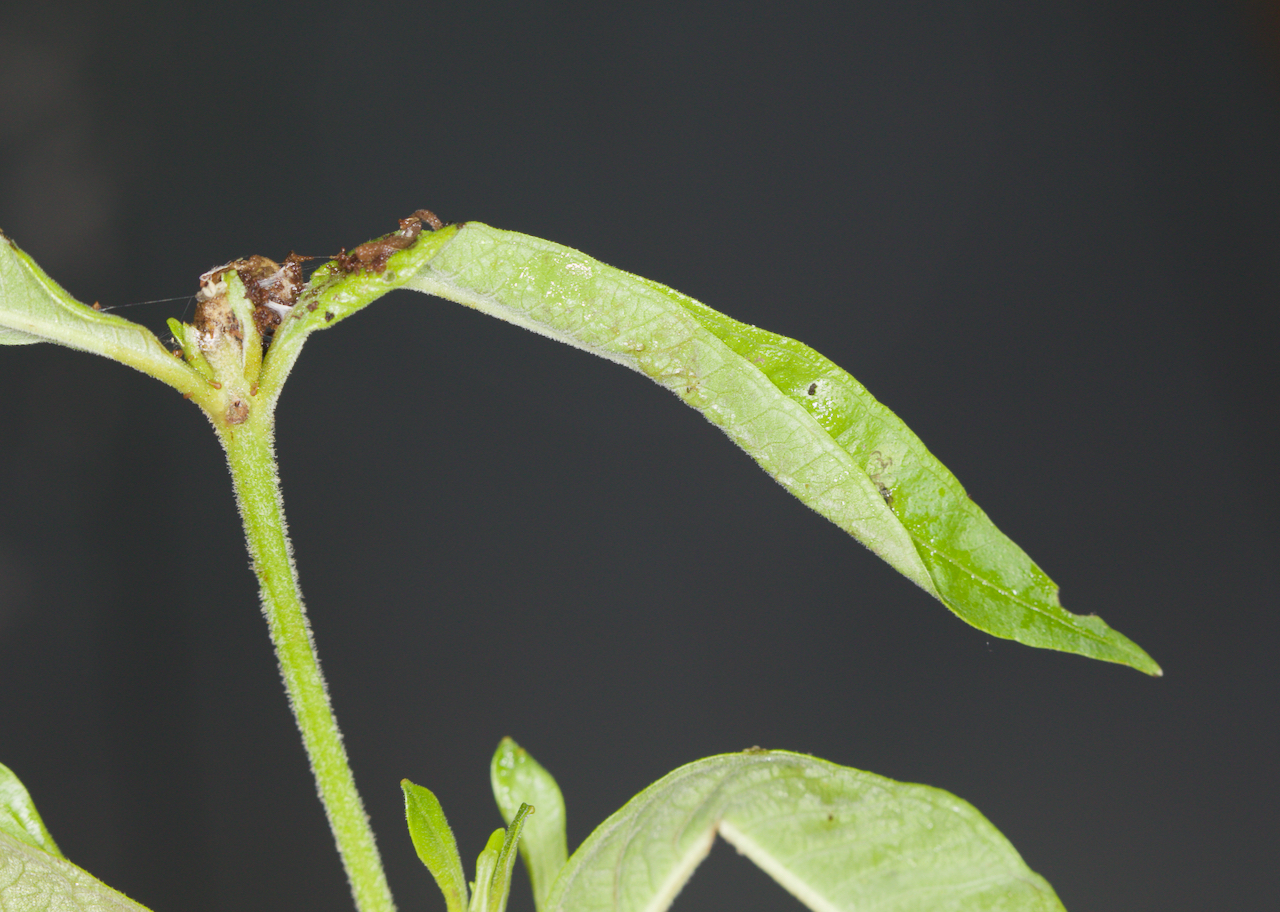
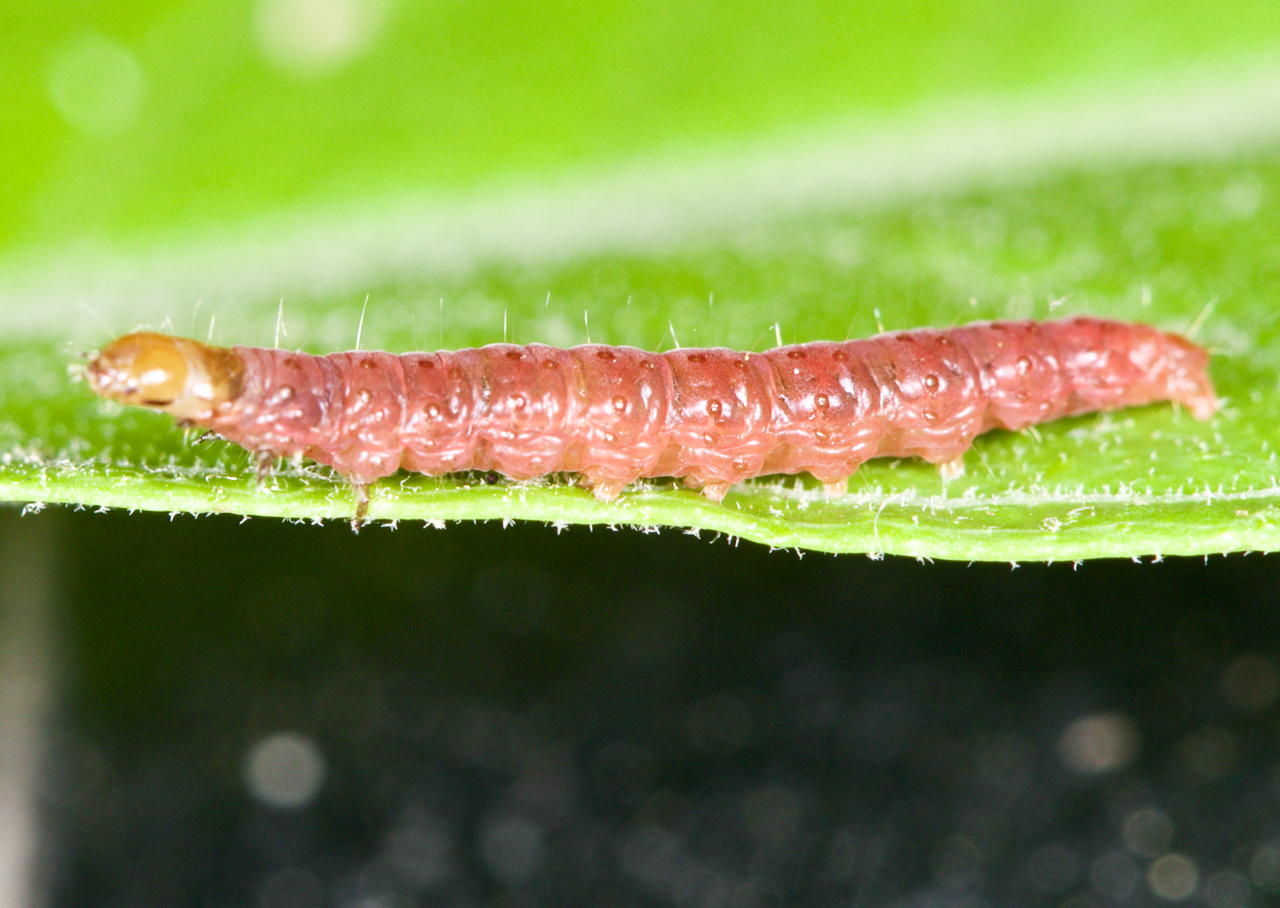
Immatures and Development: The larvae feed on the terminal buds and leaves of maples and other species. The young larvae often attack terminal buds and may bore into the stem for 2-3 cm. They also fold young leaves and skeletonize the tissues from within the fold. Feeding often causes the tips to die-back, which can be a significant issue when growing maples or ornamental plants in nurseries (Heinrich, 1923a; Mitchell and Schultz, 1996). Larvae that Jim Petranka and John Petranka observed feeding on Decodon verticillatus appeared to feed on the terminal buds initially, then abandon these and feed within nearby folded leaves. A larva that was in a leaf fold on 24 May produced an adult on 19 June. The larvae vary from reddish to reddish-brown and have slightly darker tubercles along the abdomen. The head varies from caramel-yellow to black (Heinrich, 1923a) and pupation occurs within the leaf fold. If disturbed, the larvae will rapidly thrash about and abandon their shelters.
Larvae ID Requirements: Identifiable from good quality photos, especially where associated with known host plants.
Distribution in North Carolina
Distribution: Episimus tyrius is found in the eastern US, with the range extending from New Hampshire southwestward along the Atlantic Seaboard to southern Florida, and westward across the Gulf Coast states to Louisiana and eastern Texas. The range extends northward from Mississippi and Alabama through Tennessee, western Kentucky, southern Illinois and southern Indiana. This species occurs statewide in North Carolina, but appears to be absent from higher-elevation sites in the Blue Ridge.
County Map: Clicking on a county returns the records for the species in that county.
Episimus tyriusAlamance Alexander Alleghany Anson Ashe Avery Beaufort Bertie Bladen Brunswick Buncombe Burke Cabarrus Caldwell Camden Carteret Caswell Catawba Chatham Cherokee Chowan Clay Cleveland Columbus Craven Cumberland Currituck Dare Davidson Davie Duplin Durham Edgecombe Forsyth Franklin Gaston Gates Graham Granville Greene Guilford Halifax Harnett Haywood Henderson Hertford Hoke Hyde Iredell Jackson Johnston Jones Lee Lenoir Lincoln Macon Madison Martin McDowell Mecklenburg Mitchell Montgomery Moore Nash New Hanover Northampton Onslow Orange Pamlico Pasquotank Pender Perquimans Person Pitt Polk Randolph Richmond Robeson Rockingham Rowan Rutherford Sampson Scotland Stanly Stokes Surry Swain Transylvania Tyrrell Union Vance Wake Warren Washington Watauga Wayne Wilkes Wilson Yadkin Yancey
Flight Dates:
High Mountains (HM) ≥ 4,000 ft.
Low Mountains (LM) < 4,000 ft.
Piedmont (Pd)
Coastal Plain (CP)

Click on graph to enlarge
Image showing flight dates by month for High Mountains greater than 4,000 feet, Low Mountains, Piedmont, and Coastal Plain: adults.
Immature Dates:
 High Mountains (HM) ≥ 4,000 ft.
 Low Mountains (LM) < 4,000 ft.
 Piedmont (Pd)
 Coastal Plain (CP)

Click on graph to enlarge
Image showing flight dates by month for High Mountains greater than 4,000 feet, Low Mountains, Piedmont, and Coastal Plain: immatures.
Flight Comments: Local populations appear to be multivoltine in North Carolina and elsewhere in the range. The adults have been found during every month of the year, and in most areas of the range the adults have prolonged flight periods. As of 2025, our records extend from early-February to early-November.
Habitats and Life History
Habitats:
Larval Host Plants: The larvae are polyphagous and have been reported to feed on maples (Acer), cherries (Prunus), holly (Ilex), Magnolia and bayberry (Morella) (Mizell and Short, 1992; Heppner, 1994; Brown et al. 2008). The specific species that are used include Florida Maple (Acer floridanum), Red Maple (A. rubrum), Silver Maple (A. saccharinum), Loblolly Bay (Gordonia lasianthus), Carolina Laurel Cherry (Prunus caroliniana) and Cherry Laurel (P. laurocerasus). Heppner (1994) questioned whether reports of this species using American Holly (Ilex opaca), Sweetbay Magnolia (Magnolia virginiana) and Common Waxmyrtle (Morella cerifera) were valid and encouraged further study. As of 2025, we have rearing records for larvae in North Carolina using Red Maple, Swamp Loosestrife (Decodon verticillatus) and Loblolly Bay. - View
Observation Methods: The adults are attracted to lights, and the leaf folds can be found on maples and other hosts.
Wikipedia
See also Habitat Account for General Forests and Shrublands
Status in North Carolina
Natural Heritage Program Status:
Natural Heritage Program Ranks: GNR S4S5
State Protection: Has no legal protection, although permits are required to collect it on state parks and other public lands.
Comments: This species primarily uses maples as hosts and appears be secure within the state.

 Photo Gallery for Episimus tyrius - Maple Tip Borer Moth

94 photos are available. Only the most recent 30 are shown.
Episimus tyrius
Recorded by: Marilyn Westphal on 2025-10-08
Henderson Co.
Comment:
Episimus tyrius
Recorded by: Marilyn Westphal on 2025-10-08
Henderson Co.
Comment:
Episimus tyrius
Recorded by: David George, Dale Morgan, Patrick Coin, Julie Tuttle, Becky Watkins, et al. on 2025-07-26
Orange Co.
Comment:
Episimus tyrius
Recorded by: Jeff Niznik, Larry Chen, Sarah Toner, Kaitlyn Elliott on 2025-05-01
Orange Co.
Comment:
Episimus tyrius
Recorded by: Mark Basinger and Miles Buddy on 2025-04-26
Brunswick Co.
Comment:
Episimus tyrius
Recorded by: Mark Basinger and Miles Buddy on 2025-04-26
Brunswick Co.
Comment:
Episimus tyrius
Recorded by: David George, Bonnie Eamick on 2025-04-25
Wake Co.
Comment:
Episimus tyrius
Recorded by: John Petranka, Jim Petranka and Becky Elkin on 2025-04-14
Bladen Co.
Comment:
Episimus tyrius
Recorded by: John Petranka on 2024-07-31
Orange Co.
Comment:
Episimus tyrius
Recorded by: David George, Jeff Niznik, Stephen Dunn on 2024-06-29
Chatham Co.
Comment:
Episimus tyrius
Recorded by: David George, Stephen Dunn, Jeff Niznik, Patrick Coin on 2024-06-22
Chatham Co.
Comment:
Episimus tyrius
Recorded by: Dean Furbish, Lior S. Carlson on 2024-06-17
Lincoln Co.
Comment:
Episimus tyrius
Recorded by: David George on 2024-06-14
Durham Co.
Comment:
Episimus tyrius
Recorded by: R. Newman on 2024-05-17
Carteret Co.
Comment:
Episimus tyrius
Recorded by: David George, Jeff Niznik on 2024-04-29
Chatham Co.
Comment:
Episimus tyrius
Recorded by: David George, Jeff Niznik, Rich Teper on 2024-04-17
New Hanover Co.
Comment:
Episimus tyrius
Recorded by: Stephen Hall on 2024-04-14
Orange Co.
Comment:
Episimus tyrius
Recorded by: Simpson Eason on 2024-04-10
Durham Co.
Comment:
Episimus tyrius
Recorded by: Simpson Eason on 2023-07-09
Durham Co.
Comment:
Episimus tyrius
Recorded by: John Petranka on 2023-06-25
Orange Co.
Comment:
Episimus tyrius
Recorded by: David George, Jeff Niznik, Rich Teper, Erich Hofmann, Jesse Anderson on 2023-05-22
New Hanover Co.
Comment:
Episimus tyrius
Recorded by: David George, Jeff Niznik, Rich Teper on 2023-05-21
New Hanover Co.
Comment:
Episimus tyrius
Recorded by: Dean Furbish and Joy Wiggins on 2023-05-11
Wake Co.
Comment:
Episimus tyrius
Recorded by: Dean Furbish and Joy Wiggins on 2023-05-11
Wake Co.
Comment:
Episimus tyrius
Recorded by: R. Newman on 2023-04-12
Carteret Co.
Comment:
Episimus tyrius
Recorded by: David George, Stephen Dunn on 2023-03-26
New Hanover Co.
Comment:
Episimus tyrius
Recorded by: Jeff Niznik on 2022-07-23
Wake Co.
Comment:
Episimus tyrius
Recorded by: Gary Maness on 2022-06-26
Guilford Co.
Comment:
Episimus tyrius
Recorded by: Jim Petranka on 2022-06-19
Beaufort Co.
Comment:
Episimus tyrius
Recorded by: Jim Petranka on 2022-06-19
Beaufort Co.
Comment: